Tag: Winnsboro Town Council

  • Town OKs first vote on Teacher Village

    FCSD Board Chair William Frick discusses a zoning map with FCSD Education Foundation president Dr. Sue Rex and fellow board member Henry Miller following Town Council meeting Tuesday night. | Barbara Ball

    WINNSBORO – After the Teacher Village property request for R3 zoning flew through the Winnsboro Planning Commission faster than a speeding bullet, the feat was duplicated at the Town Council meeting Tuesday evening.

    There was no discussion at either meeting, only a motion in favor and a unanimous vote to approve.

    “This will be the first residential teacher village in the state,” Sue Rex, president of the Fairfield County Education Foundation said, addressing Council. “We are asking you to rezone this 22 acres from C-2, commercial, to R3, residential zoning. [The project] will cost $3.6 million, and the developer is putting all that money into it. The developer will then own the land and rent out the homes but only to teachers in the district,” Rex said.

    “If there are several homes not rented to teachers, they will be available to help recruit law enforcement and first responders. This will contribute to the economic stimulus of the Winnsboro community,” Rex told council members.

    To make the project a reality, however, the school district wants a multi-county business park agreement in place and a seven-year, $600,000 property tax abatement for the developer. Both require County Council approval.

    At a special meeting in November between county and school district officials, there seemed to be little common ground. Citing a litany of potential legal issues, county attorney Tommy Morgan called attention to a 2010 attorney general opinion that raised doubts as to whether the county would be protected if litigation were filed over the Teacher Village.

    “It does give some cause for concern in my mind whether the special source revenue credit agreement would be the best way to accomplish what I understand the school district is wanting to do,” Morgan said.

    Dr. J. R. Green, district superintendent, brushed off concerns about potential litigation.

    But procedural and zoning issues represent added concerns for the county.

    Former Council Chairman Billy Smith said the county hasn’t received any formal requests from the developer, only from the Fairfield County Schools’ Education Foundation, a proxy of the school district.

    Smith suggested a list of conditions he’d like met regarding the Teacher Village:

    • An agreement with the developer to indemnify Fairfield County in the Teacher Village project.
    • An agreement to cover Fairfield’s legal expenses incurred in association with the Teacher Village.
    • A legal description of the Teacher Village property.
    • The Town of Winnsboro agreeing to place the property into the multicounty park since it’s in the town.

    Town Council will have a public hearing and final vote on the rezoning of the property on March 5.

  • Town highlights its merchants

    Splash Omnimedia was on scene in Winnsboro last week filming inside some of the town’s stores, interviewing customers and merchants. Town Council hired the marking firm to promote the merchants and the downtown area. | Barbara Ball

    WINNSBORO – With the intent of showing off its downtown merchants, the Winnsboro Town Council recently hired a marketing firm to produce a video to promote the various shops and restaurants on the town’s website, Town Clerk Lorraine Abel said in an interview with The Voice.

    Splash Omnimedia, a Lexington marketing firm, spent several days last week in the downtown area getting to know the merchants and their customers and what they love about the town.

    Abel, who organized the event, said she was extremely happy with how it all went, including a buffet luncheon the town government provided for the marketing crew during the filming on Thursday.

    In Oldies and Goodies, a vintage/consignment shop on South Congress Street, the film crew interviewed Wilson Chevrolet sales manager Lon Jackson who was browsing the store with his wife, Disa, and their two children Zoe and Lane.

    Moving up the street, the crew stopped in at The Donut Guy and spent some time in Petal Pushers Uptown flower and gift shop visiting with shop owner Christine Richardson and her daughter Paisley. They then proceeded to the Cornwallis House of Tea, Sunshine & Serenity, Song Bird Manor bed and breakfast, the Railroad Museum and the Fairfield Chamber of Commerce.

    The three-minute video, some of which was filmed with a drone, will also feature some of Winnsboro’s parks and historic homes.

    Abel said the Town Council spent about $3,800 for the video which will appear on the website in late November or early December.

  • County water authority explained

    WINNSBORO – An otherwise procedural vote to revise Fairfield County Council bylaws flowed into deeper discussion about how a proposed water and sewer authority will function.

    At its Oct. 8 meeting, the council voted 7-0 to approve a resolution to revise the bylaws addressing how authority board members are appointed.

    The county and town would each appoint three members to the seven-member authority.

    Both bodies would jointly approve the seventh member.

    In its early stages, the proposed authority is primarily a joint venture between Fairfield County and the Town of Winnsboro. The Mitford Rural Water District has expressed interest in participating, but nothing has been finalized.

    At the Oct. 8 meeting, Councilman Mikel Trapp asked several questions about the size of the proposed authority, how it would be constituted and who else is participating.

    “So is any other water company involved besides the Town of Winnsboro?” Trapp asked.

    “Initially we’re working with the town of Winnsboro. We do anticipate in the future to reach out to others,” County Administrator Jason Taylor replied. “But to form it initially, we’re working with Winnsboro because they’re the major provider of water and sewer in the county.”

    “So [there] is not going to be a board member coming from another water company,” Trapp asked.

    “We’re in discussions right now to look at one other water company,” Taylor said, identifying Mitford. Taylor said Mitford reached out to the county.

    Trapp later expressed concerns other water companies were being excluded.

    “I wasn’t making a statement that someone was trying to take over,” Trapp said. “I was concerned if we asked another member from another water company. It seemed like we’re picking one over the others.”

    Earlier this month, the Jenkinsville Water Company’s leader expressed concerns about the authority in an interview with The Voice.

    “They said they wanted ‘X’ amount of dollars for you to join a water authority, but they [haven’t said] what it’s going do for you, how it’s going to help, what it’s going to do or anything else,” said JWC president Greg Ginyard.

    Taylor said the proposed authority boils down to economic development and industrial recruitment.

    Aside from preliminary talks with Mitford, the proposed authority is primarily a Fairfield County and Winnsboro venture. Participation is not compulsory, Taylor said.

    “The genesis of this is primarily because our economic development sites, our industrial sites, are served by the Town of Winnsboro,” Taylor said. “We need to make sure those industrial sites are more than just land, but they have the water and sewer so they can attract the industry.”

    Later, during a different discussion, county officials said functioning water and sewer services are vital in economic development efforts.

    “We’ve got to get our act together. We need to get water in the ground. We need to get sewer in the ground in order to grow,” Ty Davenport, the county’s director of economic development, said. “Our capacity is 34,000 gallons a day. We should have a minimum of 800,000 gallons a day, probably a million gallons. At the [Fairfield County] mega site, we’ve got to have a million gallons. We’ve got a ways to go there.”

    Council Chairman Billy Smith said he’d like to see additional water providers join, noting it could shave costs for customers.

    “I’d love to see it so we could have everybody in the agreement if we possibly can and take advantage of economies of scale,” Smith said. “They [water providers] sell water back and forth back to one another. If we could get everybody under one roof,  that would be a good thing for the citizens of the county and help lower their rates over time.”

  • Counties differ on animal abusers

    WINNSBORO  – A man convicted of setting a dog on fire is serving a five-year prison sentence, the maximum allowed under state law.

    Another man who dragged a dog with a truck more than a mile didn’t spend one day in prison.

    So what makes these cases different?

    One was prosecuted in Richland County; the other in Fairfield County.

    Hykeem Dontavious Jabar Golson, 23, of Columbia, was sentenced to five years in prison and fined $5,000 after a Richland County jury convicted him in December 2017 of one count of felony ill treatment of animals, according to Richland County court records.

    Golson is one of only two South Carolina defendants to receive the maximum sentence, according to media reports.

    Billy Ray Huskey, 51, of Great Falls, pleaded guilty in July 2016 to dragging a nine-month-old dog with his Dodge Ram pickup truck in Fairfield County.

    Two other dogs were later found emaciated and had to be euthanized.

    Huskey had been charged with ill treatment of animals, torture – also a felony.

    But instead of going to prison, Huskey was allowed to plead to the misdemeanor charge of ill treatment of animals and sentenced to 90 days in prison, suspended to three years of probation.

    Richland throws book at abusers

    The disparity between the Richland and Fairfield cases is representative of how both counties traditionally handle animal abuse cases.

    A recent investigation by The Voice found that of 14 ill treatment of animals cases prosecuted since 2016 in the 6th Judicial Circuit, which includes Fairfield County, very few resulted in actual jail time.

    Often times, defendants either received probation or the cases were nolle prossed, meaning the cases weren’t prosecuted.

    Richland County, however, has quickly developed a reputation for a no-nonsense approach to animal cruelty.

    “Our pets need to be properly cared for and treated with love because they are a part of our families,” Richland County Sheriff Leon Lett said in a news release announcing Golson’s arrest.

    A lot of Richland County’s assertiveness appears to be in allocating resources to combat animal cruelty.

    In 2015, the Richland County Sheriff’s Office founded an animal cruelty task force.

    That year, its founder, senior investigator Holly Wagner, also investigated at least four dog fighting rings, according to a sheriff’s office news release, landing her honors from the American Society for Prevention of Cruelty to Animals and Humane Society of the United States.

    Judicial discretion

    Often times, how defendants are prosecuted hinges on the presiding judge, a point raised during a recent Winnsboro Town Council meeting.

    In June, Police Chief John Seibles told council members that officers have charged several people with cruelty to animals, with some facing felony counts.

    Penalties, however, are set “at the discretion of the court,” Seibles said. Katera Alexander, however, was arrested by a police officer in Seibles jurisdiction and charged with only a misdemeanor after it was discovered that she had tied a pit bull to her porch and starved it to the point that it had to be euthanized by the County’s Animal Control. Seibles’ comments were part of a larger discussion council members were having about proposed revisions to the Fairfield County animal control laws.

    While some Winnsboro town leaders were reluctant to follow the county’s lead, others were open to tougher penalties in more severe cases.

    Councilman Clyde Sanders, for example, said he thinks the town should mirror the county’s $500 fine for cruelty cases.

    “I can’t stand seeing dogs chained in the yard without anything to eat,” Sanders said. “If we catch someone doing that, the fine ought to be high enough to prevent them from doing it again.”

    In the Huskey case, Assistant Sixth Circuit Solicitor Melissa Heimbaugh, who prosecuted, told the Court she thought the state would not win a felony case with the available evidence.

    The presiding judge grudgingly agreed.

    “The State (solicitor) is right, they would have had a high burden to prove your guilt,” Gibbons said. “We have no evidence of intent, so I’m giving you the benefit of the doubt, which I have to do under the law.”

    Huskey faced up to five years in prison, but escaped prison by pleading guilty to the misdemeanor charge. He was also ordered to perform 30 hours of community service and banned from owning a dog.

    “I want to sentence you to the maximum jail time that I can under the guidelines,” Gibbons said. “I’m going to give you not two years of probation but three.”

    Lax laws

    Prosecutorial leniency is one reason most Fairfield defendants have escaped accountability in animal abuse cases, but not the only reason.

    One S.C. House member says South Carolina lags when it comes to meaningful protections for pets.

    “The laws need to be strengthened,” said Rep. Bill Taylor, R-Aiken. “It’s common knowledge that people who torture and abuse other animals are one step away from torturing or harming human beings.”

    In 2014, Taylor introduced a bill that would’ve toughened penalties for animal abusers, making most cases felonies. The measure, however, failed to gain traction.

    That year, though the General Assembly did revise animal abuse laws that cases are now heard in general sessions court versus magistrate or municipal court, where penalties tend to be lighter.

    But it’s not enough, Taylor says.

    “There’s a myriad of bills filed every session about this,” he said. “Very few of them ever get passed.”

    As recently as February, the S.C. Senate introduced a bill, which among other things, tightened anti-tethering laws. The Senate passed the bill, but it died in the House.

    Penalties for violating the tethering law would’ve included up to 90 days in prison and a $1,000 fine.

    The law also required magistrates to receive animal cruelty training and improving shelter standards, but the anti-tethering provisions drew opposition.

    “Serial killers over the years tortured animals at some point,” Taylor said. “These are serious crimes that can lead to other crimes, we need to be serious about this.”


  • Chairman contests response to proposed ordinance

    WINNSBORO – Fairfield County is shooing any notion that it’s trying to coax the Town of Winnsboro into adopting the tougher animal control laws that the County is considering.

    But that’s the perception Winnsboro Town Council expressed during its June 5 meeting.

    Mayor Roger Gaddy called the county’s proposed ordinance “cumbersome,” and he and other council members questioned the town’s ability to enact it.

    County Council Chairman Billy Smith, however, said the ordinance is in the very early proposal stages.

    Smith said it’s subject to change, and there aren’t any plans to nudge Winnsboro into passing a similar measure. He was especially surprised the document was presented and debated by Winnsboro Town Council.

    “I think that discussion was probably premature,” Smith said, noting he first learned about the Winnsboro discussion by reading about it in The Voice.

    Smith said staff prepared the draft ordinance, and that it hasn’t been presented to county council.

    “We haven’t even seen it (the ordinance),” he said. “I was told it was not something meant to go to any other council.”

    At its June 5 council meeting, the Winnsboro Town Council accepted as information a proposed county ordinance it said was aimed at strengthening animal control regulations.

    Gaddy held a copy of the proposed ordinance in his hands as he told council members about the county’s request.

    He and others, though, expressed concerns about the town’s ability to enforce a stricter animal control ordinance.

    “I think the ordinance is relatively lengthy and cumbersome and may impose some difficulty and cost in enforcing it,” Gaddy said. “We still have to deal with issues with animal control without passing something consistent with the county.”

    Gaddy also opposed a provision that limits dog ownership to three, noting he owns six dogs.

    “I don’t want an ordinance limiting the number of dogs I have as long as they behave and believe me, they’re treated right,” the mayor said.

    During the meeting, council members expressed general support for prosecuting overt acts of animal cruelty, but were reluctant to implement comprehensive changes to the law.

    Winnsboro Police Chief John Seibles said manpower remains a challenge, noting the town doesn’t have a full-time animal control officer.

    Seibles also said fines don’t always deter lawbreakers, noting penalties are set “at the discretion of the court.”

    Animal control and financial data, and how it relates to the number of animals the county houses, are elements that Fairfield County officials are reviewing with its proposed ordinance.

    Smith declined to comment about specific numbers, but acknowledged he’s interested in learning the percentage of animal calls originating from within Winnsboro town limits that county officers respond to and foots the bills for.

    “I have the concern, but I want to figure out to what extent,” he said.

  • Citizens open up to Winnsboro Town Council

    WINNSBORO – Winnsboro’s Town Council’s meeting agenda was light last week, but all the chairs in the room were filled, and many of those sitting in the chairs had something to say to Council.

    Winnsboro resident Jenyfer Conaway kicked things off by introducing herself as a “damn yankee” who works in Charlotte. She said she loves Winnsboro and purchased a house here 10 years ago for $78,000 which, she said, is now worth only $35,000.

    “Our town is dying,” Conaway stated, initiating a dialogue with council members, asking if they knew their oath of office.

    Mayor Gaddy intercepted the exchange and instructed Conaway that dialogue was not part of the program.

    “I just want someone to listen to us,” she added, before sitting down.

    Vanessa Reynolds said her position as a national sales manager gives her access to businesses in all areas of the country.

    “Small towns are not trending down overall,” she said.  She said they are trending up and cited the need for Winnsboro to enforce their code 96.5 Section B ordinances. These ordinances address decaying exterior exposures of buildings including peeling or cracked exteriors, broken doors and windows, etc.

    Reynolds said the Town’s lack of enforcement is extending the problem and called for cooperation among residents.

    “We need to roll up our sleeves,” she said.

    Mayor Gaddy responded, thanking her for giving Council solutions and not just complaints.

    Attorney and Ridgeway Municipal Judge, Adrian Wilkes, requested that Council record their meetings.  He said it would be a big benefit to have something to look back to when issues arise.

    “I was taken aback that merchants don’t know that grant money is available for downtown revitalization,” Mitford resident Wanda Carnes said. Carnes said she owns four buildings and would like to have been able to use the unspent money for revitalizing the look of her storefronts.

    “A line was added to the application saying that only one revitalization grant is available per owner,” Carnes said. “When was that line added and who voted to add it?”

    Gaddy said he would get that information to her.

    Keryn Isenhoward asked Council’s for the use of Mt Zion Green trail for a four-hour breast cancer walk on Oct. 20.  Keep Going Fairfield County will be the event title.  Council agreed to support the event by providing use of Mt Zion, electricity and maintaining the trash bins for the day.  Councilman McMeekin championed the event, making the motion to allow the walk.  The motion passed 5-0.

    Fairfield Central Band Director, Sir Davis, asked Council to allow gratis use of the Old Armory Building on June 1, for the band’s banquet.  Council voted 5-0 in favor.

    Also on the agenda was the Chamber of Commerce relocation discussion, but Terry Vickers asked that it be deferred.

    Councilman Danny Miller said he had held a council position for 23 years and expressed his love for concerned people.

    “We are all in it together,” Miller said, “and we are going to get there through love and working together.”

  • Winnsboro Town Council OKs water for BW senior center

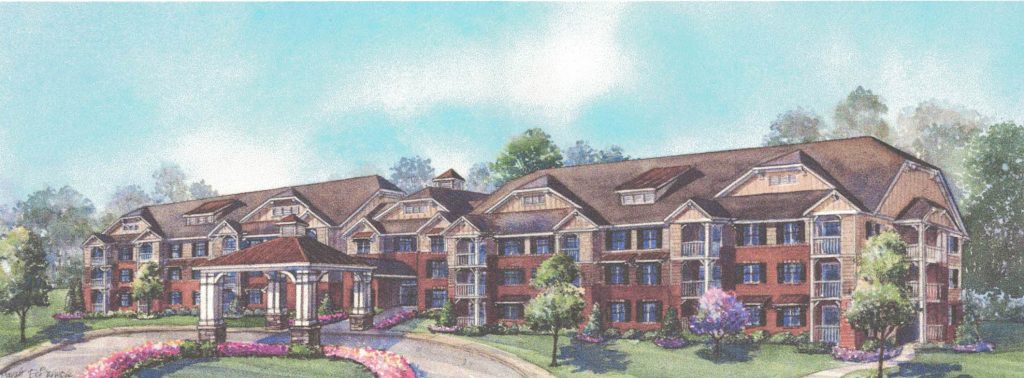
    Winnsboro Council OKs water capacity for proposed Senior Center in Blythewood

    WINNSBORO – A 64-room senior living facility proposed for downtown Blythewood crossed a major hurdle Monday night when the Town of Winnsboro voted unanimously to approve a Water Capacity Availability and Willingness to Serve Letter for The Pendergraph Companies. The letter approves 11,520 gallons per day (GPD) for the facility.

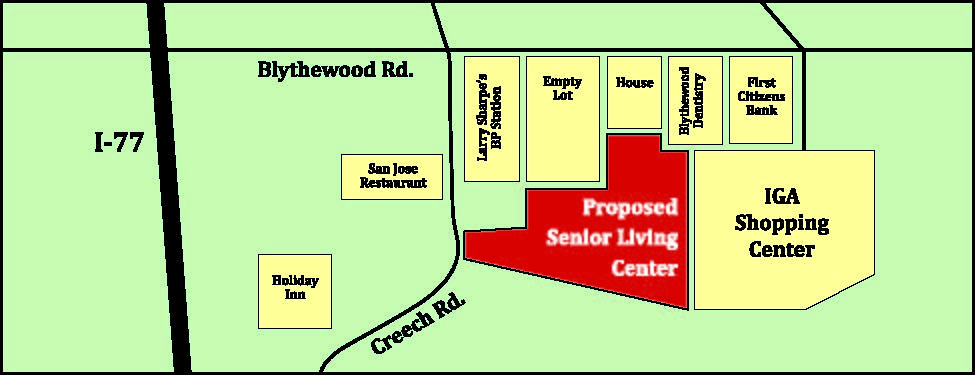
    The facility, to be named Blythewood Senior Living, is proposed for a five-acre site on Creech Road between the Russell Jeffcoat offices and the IGA and behind Larry Sharpe’s BP service station and three other lots facing Blythewood Road.

    According to Tom Ulrich, the project manager for the proposal, the water capacity is based on 32 two-bedroom apartment homes and 32 one-bedroom apartment homes. Ulrich told The Voice following the meeting that the facility would be for residents who live independently.

    “The rooms will all be in one building, like a hotel,” Ulrich said.

    Ulrich came before the Blythewood Town Council in the fall of 2017 to give Town Hall a heads up that his company was considering bringing a senior living facility to the town. Ulrich told The Voice that the company has been in discussions with Town officials for some months.

    “I wrote a reference letter for the developer stating this would be great for our town,” Mayor J. Michael Ross said, “but that we are not advocating for any more affordable living apartments. We are very excited that this facility might come to Blythewood.”

    “The project looks very positive from the developer’s perspective,” the Winnsboro’s utility attorney, John Fantry, said. “They’ve already built one of these facilities in Lancaster County. Now they’re taking that vision to Blythewood. They are currently doing due diligence for financing on a tract of about 52 acres on Creech Road. The developer will be coming back to us when financing is worked out. This particular request is to provide assurance to their financing process that Winnsboro does have the capacity to serve the proposed facility’s water needs,” Fantry said.

    Ulrich said he expects the project to be complete by the end of 2019.

    “We should have our water from Broad River by then,” Mayor Roger Gaddy said. “We oughta have all kinds of water to sell.”

  • Winnsboro Town Council plans Fortune Springs pool repairs

    WINNSBORO – Town Council voted Tuesday evening to move forward with discussions with the County about a collaborative effort to remodel/repair the Fortune Springs swimming pool so it will be ready for summer swimmers.

    Fortune Springs Park

    Town Manager Don Wood announced that the Town had received a bid from Genco Pools & Spa to remodel/repair the pool as it is for $180,000.

    “If we downsize it,” Woods said, “the cost would be $120,000.”

    “We’re reaching a point where we need to make a decision on this so the pool can open,” Mayor Roger Gaddy told Council members. “We’ve had conversation with the County about them taking over the pool and putting it under their recreation. They manage the vast majority of ball fields and recreation in the county.”

    Gaddy said the Town has had conversation with Russell Price, the County’s new recreation director, and that Price is in the process of preparing a presentation to County Council.

    “We’d like to find out if the County is interested in this,” Gaddy said. “And we’d like to expedite the decision. The Town can’t afford to keep the pool the same size as it is, but the County has indicated that it would like to keep it the size it is. So we need to get a decision on this. We don’t want to decide to downsize the pool and then find out that the County wants to keep the pool the size it is,” Gaddy said.

    “Time is growing nigh for rehabbing that pool and getting it ready for the summer,” Gaddy said.

    At the Finance Committee’s request, Council voted unanimously to move forward with talks with the County.

    Wood also updated Council on the waterline.

    “You may have noticed we’ve had numerous truckloads of pipe coming in. I hope this is all of it,” he joked. “We just got an invoice for $2.1 million for pipe.”

    Council voted to go into an executive session to discuss legal/contractual matters concerning Mt. Zion.

    Following executive session, there was no discussion and no vote.

  • Mt. Zion rehab hits potential snag

    WINNSBORO – On Nov. 21, Winnsboro Town Council voted to accept a Memorandum of Understanding (MOU) between Fairfield County and 1st & Main Development of Durham, N.C., regarding the revitalization of the Mt. Zion property.

    The MOU was proposed by Councilman Billy Smith last summer, but before it could be voted on, Council was distracted for several months by the VC Summer abandonment.  The MOU, which did not require Council approval, was later signed by County Administrator Jason Taylor on Nov. 11.

    According to the MOU, the Town of Winnsboro would deed the 3.27-acre Mt. Zion property and buildings to 1st & Main Development for the purpose of rehabilitation. The plan, according to the MOU, is for 1st & Main to be given 180 days to come up with a plan to develop the property. There is also a provision for additional days, should the project be on track but needed a reasonable extension of time. After the property is developed, the County would begin leasing it back from 1st & Main for use as a government complex. Through the lease agreement, the County would eventually own the rehabilitated property.

    The MOU states that “[Town] Council believes it is in the best interest of the citizens of Winnsboro that surplus public property with historic significance to the Community, be revitalized and put to private uses that blend with the residential neighborhoods while creating jobs and bringing quality commercial enterprise to the Town.”

    While Winnsboro Town Council has voted to accept the MOU between the County and 1st & Main Development, there is a significant bump in the road before the property deed would be binding. The deed, as it has been written by the Town of Winnsboro, stipulates that if, for some reason, 1st & Main Development does not move forward with the rehabilitation of the Mt. Zion property, ownership of the property would be assumed by the County.

    “That deed would have to be approved by a vote of County Council before it could be signed by the County Administrator,” Council Chairman Billy Smith said. “I don’t know what the outcome of that vote will be, but I’m not in favor of the property becoming the County’s should the project not materialize.”

    Smith was said he was not sure when the matter would come to Council for a vote.

  • Winnsboro Town Council OK’s Voting Districts

    Winnsboro Town Council approved the second reading July 17 of an ordinance to approve and put into place a redistricted voting map for the single-member district inside the Town limits. The redistricting aligns Winnsboro’s voting districts with Federal Census data collected in 2010.

    The ordinance is the next step in a process that began May 15 when Council heard a presentation on the process delivered by Wayne Gilbert of the S.C. Office of Research and Statistics.

    The process of redistricting, or redrawing the lines that separate elected representative’s districts, takes place every 10 years following a census cycle. Based upon that data, new lines are drawn that must adhere to federally mandated criteria set in the Voting Rights Act of 1965 to prevent the “cracking” and “packing” of minority districts. These criteria include creating equal populations, districts that do not dilute minority voting strength or communities of interest.

    The ordinance will now face a public hearing, and the scrutiny of the U.S. Department of Justice. Gilbert said in May that the U.S. Department of Justice, which must eventually approve the plan, will have up to 60 days to review and clear the plan.

    Gilbert said in May that based upon a town census of 3,550 persons, each of the Town’s four districts would need to target a number of 888 persons, which the plan presented May 15 would do. Currently, Gilbert explained, there are 689 people in District 1, 1,338 in District 2, 758 in District 3 and 765 in District 4.

    “The overall district plan now is way out of balance,” Gilbert said. “The overall balance should be within a 10 percent deviation between districts.”

    According to the Census data, District 1 (represented by Danny Miller) gained 15 voters, while District 2 (represented by Bill Haslett) lost 15. District 3 (represented by Clyde Sanders) picked up six voters, while District 4 (Jackie Wilkes) lost eight.

    Municipal Court

    After an executive session July 17, Council voted to preserve its Municipal Court system of three judges. In order to do so, Council approved the hire of two new judges to serve as associate judges under the current Chief Judge.

    In June, Council had approved first reading of an ordinance that would have dissolved their relationship with the Municipal Court, handing over that department to the Fairfield County Magistrates Court. At that time, the County had agreed to provide Magistrate Judge William F. Pope to the Town of Winnsboro for a contracted sum of $6,000 plus FICA and retirement annually for each of six judges that would have been contracted to the Town of Winnsboro. The July 17 vote put an end to that proposal.

    Other Business

    Council voted July 17 to purchase three new truck for the Town’s meter reading department at a total cost of $54,000 from Wilson Chevrolet, which Council said was the lowest bidder. Council also approved the replacement of the air conditioning system at the Old Armory by Smarr Heating and Air at a cost of $7,600.

    Freddie Lorick, Chief of Public Safety, was authorized to hire a new police officer to replace Ed White, who passed away last month. Council also OK’d the hire of one new staff member for the Gas, Water and Sewer Department. The department currently has three vacancies, Council noted. Council had previously approved the hire of a staff member for the department during their July 10 meeting.