Tag: Town of Winnsboro

  • Counties differ on animal abusers

    WINNSBORO  – A man convicted of setting a dog on fire is serving a five-year prison sentence, the maximum allowed under state law.

    Another man who dragged a dog with a truck more than a mile didn’t spend one day in prison.

    So what makes these cases different?

    One was prosecuted in Richland County; the other in Fairfield County.

    Hykeem Dontavious Jabar Golson, 23, of Columbia, was sentenced to five years in prison and fined $5,000 after a Richland County jury convicted him in December 2017 of one count of felony ill treatment of animals, according to Richland County court records.

    Golson is one of only two South Carolina defendants to receive the maximum sentence, according to media reports.

    Billy Ray Huskey, 51, of Great Falls, pleaded guilty in July 2016 to dragging a nine-month-old dog with his Dodge Ram pickup truck in Fairfield County.

    Two other dogs were later found emaciated and had to be euthanized.

    Huskey had been charged with ill treatment of animals, torture – also a felony.

    But instead of going to prison, Huskey was allowed to plead to the misdemeanor charge of ill treatment of animals and sentenced to 90 days in prison, suspended to three years of probation.

    Richland throws book at abusers

    The disparity between the Richland and Fairfield cases is representative of how both counties traditionally handle animal abuse cases.

    A recent investigation by The Voice found that of 14 ill treatment of animals cases prosecuted since 2016 in the 6th Judicial Circuit, which includes Fairfield County, very few resulted in actual jail time.

    Often times, defendants either received probation or the cases were nolle prossed, meaning the cases weren’t prosecuted.

    Richland County, however, has quickly developed a reputation for a no-nonsense approach to animal cruelty.

    “Our pets need to be properly cared for and treated with love because they are a part of our families,” Richland County Sheriff Leon Lett said in a news release announcing Golson’s arrest.

    A lot of Richland County’s assertiveness appears to be in allocating resources to combat animal cruelty.

    In 2015, the Richland County Sheriff’s Office founded an animal cruelty task force.

    That year, its founder, senior investigator Holly Wagner, also investigated at least four dog fighting rings, according to a sheriff’s office news release, landing her honors from the American Society for Prevention of Cruelty to Animals and Humane Society of the United States.

    Judicial discretion

    Often times, how defendants are prosecuted hinges on the presiding judge, a point raised during a recent Winnsboro Town Council meeting.

    In June, Police Chief John Seibles told council members that officers have charged several people with cruelty to animals, with some facing felony counts.

    Penalties, however, are set “at the discretion of the court,” Seibles said. Katera Alexander, however, was arrested by a police officer in Seibles jurisdiction and charged with only a misdemeanor after it was discovered that she had tied a pit bull to her porch and starved it to the point that it had to be euthanized by the County’s Animal Control. Seibles’ comments were part of a larger discussion council members were having about proposed revisions to the Fairfield County animal control laws.

    While some Winnsboro town leaders were reluctant to follow the county’s lead, others were open to tougher penalties in more severe cases.

    Councilman Clyde Sanders, for example, said he thinks the town should mirror the county’s $500 fine for cruelty cases.

    “I can’t stand seeing dogs chained in the yard without anything to eat,” Sanders said. “If we catch someone doing that, the fine ought to be high enough to prevent them from doing it again.”

    In the Huskey case, Assistant Sixth Circuit Solicitor Melissa Heimbaugh, who prosecuted, told the Court she thought the state would not win a felony case with the available evidence.

    The presiding judge grudgingly agreed.

    “The State (solicitor) is right, they would have had a high burden to prove your guilt,” Gibbons said. “We have no evidence of intent, so I’m giving you the benefit of the doubt, which I have to do under the law.”

    Huskey faced up to five years in prison, but escaped prison by pleading guilty to the misdemeanor charge. He was also ordered to perform 30 hours of community service and banned from owning a dog.

    “I want to sentence you to the maximum jail time that I can under the guidelines,” Gibbons said. “I’m going to give you not two years of probation but three.”

    Lax laws

    Prosecutorial leniency is one reason most Fairfield defendants have escaped accountability in animal abuse cases, but not the only reason.

    One S.C. House member says South Carolina lags when it comes to meaningful protections for pets.

    “The laws need to be strengthened,” said Rep. Bill Taylor, R-Aiken. “It’s common knowledge that people who torture and abuse other animals are one step away from torturing or harming human beings.”

    In 2014, Taylor introduced a bill that would’ve toughened penalties for animal abusers, making most cases felonies. The measure, however, failed to gain traction.

    That year, though the General Assembly did revise animal abuse laws that cases are now heard in general sessions court versus magistrate or municipal court, where penalties tend to be lighter.

    But it’s not enough, Taylor says.

    “There’s a myriad of bills filed every session about this,” he said. “Very few of them ever get passed.”

    As recently as February, the S.C. Senate introduced a bill, which among other things, tightened anti-tethering laws. The Senate passed the bill, but it died in the House.

    Penalties for violating the tethering law would’ve included up to 90 days in prison and a $1,000 fine.

    The law also required magistrates to receive animal cruelty training and improving shelter standards, but the anti-tethering provisions drew opposition.

    “Serial killers over the years tortured animals at some point,” Taylor said. “These are serious crimes that can lead to other crimes, we need to be serious about this.”
  • County taps into water authority

    WINNSBORO – Fairfield County is looking to tap into the water and sewer business.

    The county, though, says it’s merely looking to work with other water providers, such as the Jenkinsville Water Company, and has no plans to force the JWC and other water companies into any agreements.

    At its regular meeting Monday, County Council voted unanimously on a resolution authorizing it to proceed with creating a joint water and sewer system.

    “It doesn’t immediately affect the water companies that are in the county,” County Administrator Jason Taylor said in response to a question from Councilman Mikel Trapp.

    “What it does is it sets up the framework that the county can provide water and sewer services,” Taylor continued. “We can work with these companies. Once we get into the creation of it, we’ll look at various engineering.”

    Taylor said toward that end, the resolution references a memorandum of understanding the county recently reached with the Town of Winnsboro, the county’s largest water provider.

    State law authorizes two or more cities or counties to develop a joint water and sewer system. In the case of Fairfield County and Winnsboro, it would be called the Fairfield Joint Water and Sewer System.

    According to the resolution, the commission would start with at least seven members. If additional partners join the commission, Fairfield County and Winnsboro would maintain equal membership and represent a majority of votes on the commission.

    The county and town would be empowered to appoint commissioners by resolution. In the event of a disagreement over an appointee, “the decision shall be resolved by the flip of a coin,” the resolution states.

    “There’s a lot of ability now with this new ordinance to reach out to the individual companies and offer to assist them or work with them in providing water services more comprehensively than in the past,” Taylor said. “It doesn’t force anything upon anybody. It gives us the ability to move forward and provide water and sewer services.”

    Monday ’s vote follows a discussion of the agreement the county’s public works committee held last Thursday. At that meeting, Taylor said the purpose of the agreement is to establish a foundation that would allow the county and town to solicit grant money to help subsidize startup costs.

    “This is just to set up the legal framework so we can have an authority that has the authority to execute these kinds of agreements and then accept money,” Taylor said.

    In related business, the council also approved a new sewage disposal agreement with the Town of Great Falls, replacing the previous one county officials say was never entirely fulfilled.

    Per the agreement, the county agrees to purchase 250,000 gallons of sewage capacity for $517,000. Plus the county pledged to spend $52,800 in engineering services for a new sewer line.

    Taylor said Great Falls and the county previously had an agreement to provide sewer services in the Mitford area in the vicinity of I-77 and S.C. 200.

    “It was anticipated there was going to be a lot of development in that area so we wanted to bring in sewer [services] to facilitate that development,” Taylor said. “Unfortunately the growth in that area never occurred. It never was fully realized. Great Falls took essentially a big hit on this thing because they only got like 11 customers.”

    The $517,000 spent on added sewer capacity covers about $234,000 in costs that Great Falls incurred in providing sewer services, and buys out $230,000 that Taylor said the county should have paid the town, but never did.

  • Town of Winnsboro resists tougher animal control laws

    WINNSBORO – Winnsboro leaders think Fairfield County is barking up the wrong tree by asking the town to emulate the county’s animal control ordinance.

    On Monday night, Winnsboro Town Council members resisted the request, saying the county’s law is overly superfluous and restrictive.

    “I think the ordinance is relatively lengthy and cumbersome and may impose some difficulty and cost in enforcing it,” said Winnsboro Mayor Roger Gaddy. “We still have to deal with issues with animal control without passing something consistent with the county.”

    For example, Gaddy said he opposes a provision that would limit households to owning three dogs or less.

    “I have six, and as far as I know they’re not a nuisance,” Gaddy said. “I don’t want an ordinance limiting the number of dogs I have as long as they behave and believe me, they’re treated right.”

    Councilman John McMeekin said he was open to enacting a reasonable animal control ordinance, but noted the town needs adequate resources to enforce the law.

    Councilman Clyde Sanders agreed with Gaddy that the county law was burdensome, but also said he’d support higher fines for animal abuse. He proposed increasing animal cruelty fines to $500.

    “The one thing I would like to see the town do is have a fine of that amount,” Sanders said. “I can’t stand seeing dogs chained in the yard without anything to eat. If we catch someone, the fine ought to be high enough to prevent them from doing it.”

    Winnsboro Police Chief John Seibles said officers handle several animal cruelty cases, including a few felonies. He noted manpower is the greatest challenge.

    “We don’t have a full-time dedicated animal control officer, though our officers do a good job with that,” Seibles said. “If it is on the books, we’d be charged with enforcing it in some kind of way, but we don’t have the means to.”

    Council members accepted the county’s request as information, but took no action.

    “We have ordinances on the books that we don’t enforce now unless someone complains about it,” Gaddy said. “I don’t want us to vote on something if we’re not able to fulfill the letter of the law.”

    In other business, the council voted unanimously to appoint McMeekin as an ex-officio member to the Fairfield County Chamber of Commerce.

    The vote mirrors a similar action Fairfield County Council took last month.

    On May 14, the council voted to authorize the chairman to appoint a county council member to the board as a condition of receiving its annual grant of $87,507 in its entirety.

    The county’s appointee can vote, but cannot hold an office, such as president or secretary. The town’s appointee, however, would serve as an ex-officio member with no voting powers.

    “I think it would be a great idea. I think it would help give the chamber input from the town, and give a liaison from the town the opportunity to let us know what’s going on with the chamber,” Gaddy said. “There can be a line of communication, but not conflicted when it comes to voting on matters affecting the chamber.”

    First reading of the budget and annual tax levy by title only was also on the agenda Monday night.

    Second reading and a public hearing on both budget ordinances will take place at the next council meeting.

  • Town breaks ground for Broad River Project

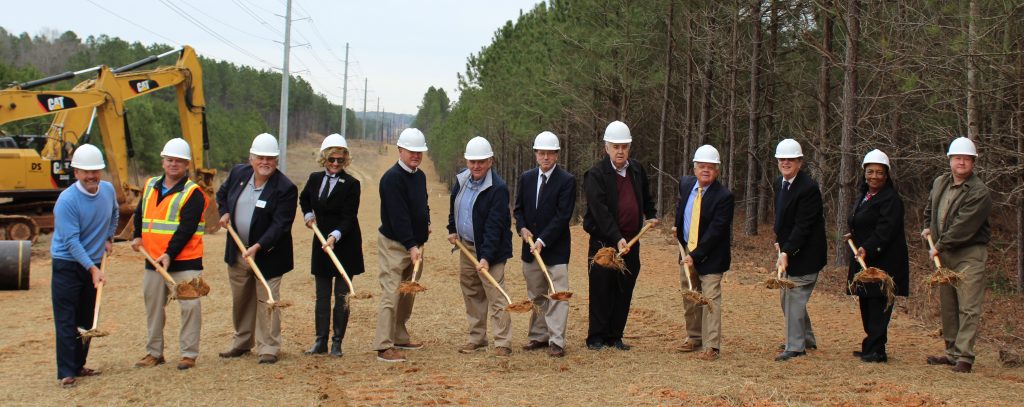
    WINNSBORO – HPG engineer Ken Parnell, Danny Stuck with DS Utilities, Blythewood Mayor J. Michael Ross, Ridgeway Mayor Charlene Herring, Winnsboro Town Councilmen Clyde Sanders, Jackie Wilkes (former), John McMeekin, Town Manager Don Wood, Winnsboro Mayor Roger Gaddy, attorney John Fantry, Fairfield County Councilwoman Bertha Goins and Fairfield County Administrator Jason Taylor broke ground for the Broad River Water Project on Wednesday.

  • Oldies & Goodies open for business

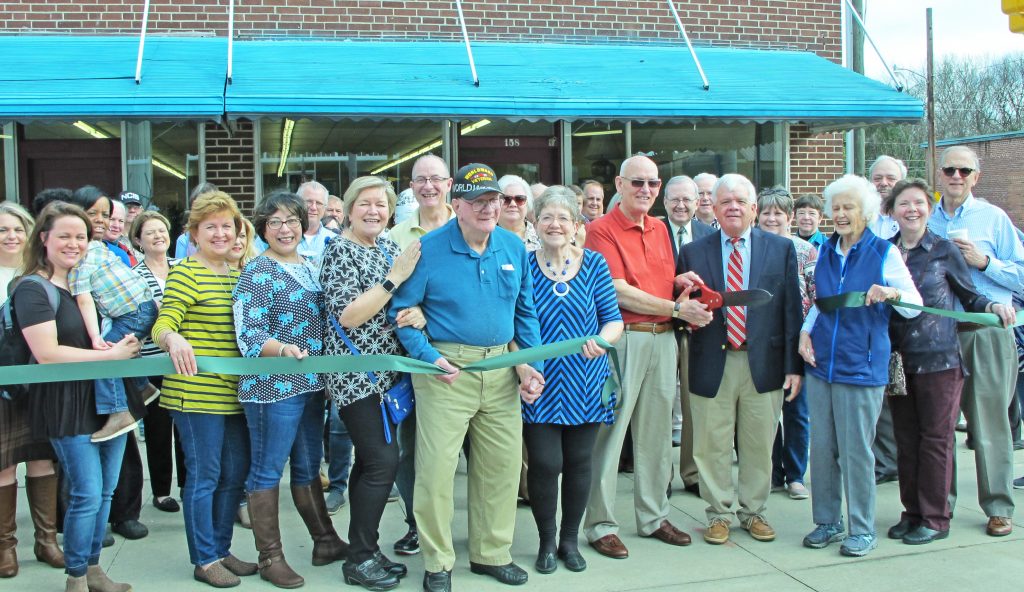
    WINNSBORO – A large crowd gathered last week for the grand opening of Robert and Bobbie Pemberton’s Oldies & Goodies consignment store at 158 S. Congress in downtown Winnsboro. The ribbon line, from left, Tamara Day, holding Carter, 2, Bobbie’s sisters Mamie Turner, Stephanie Levy and Nancy Grogan, Bobbie’s father Robert Moak, the Pembertons, Mayor Roger Gaddy, Betty Harden,  and Robert’s sister Marilyn George and her husband Joe.

  • Dru Blair art center in the works

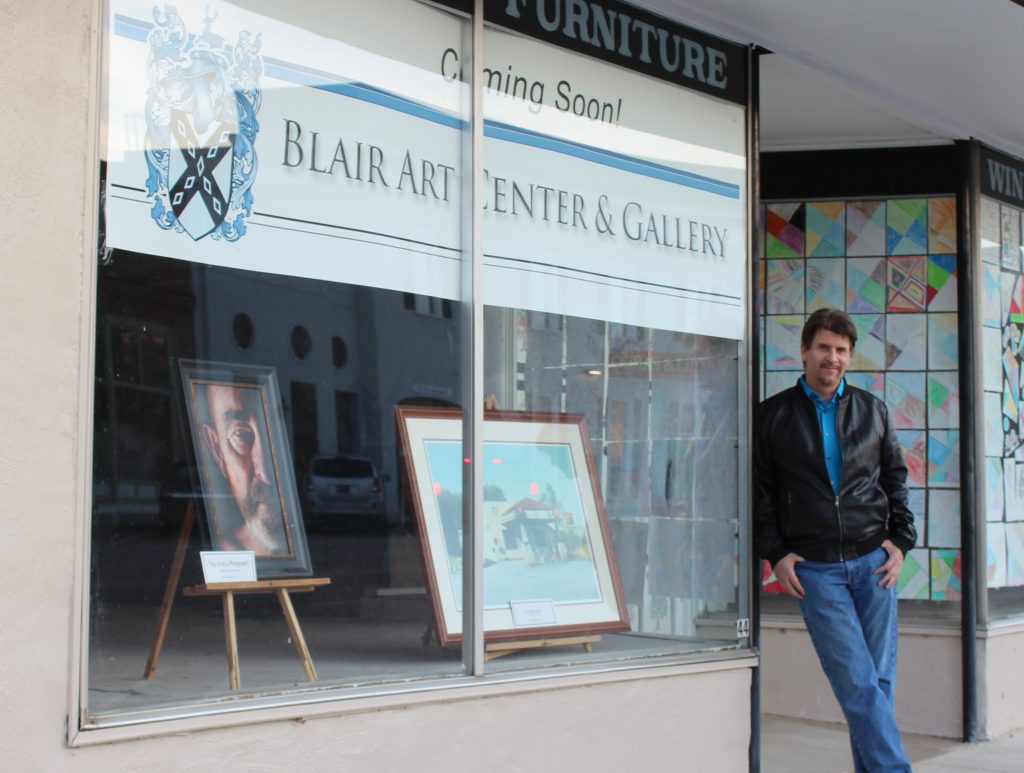
    WINNSBORO – Okay, everybody get out a pen and paper – it’s time for class! Art class, that is… in a vibrant new community art center coming to life in Winnsboro. Fairfield County’s Dru Blair, an internationally recognized photorealist painter who also manages a popular art school in Blair, is renovating the former Winnsboro Furniture Building on Congress St. into an energetic hub for creativity and artistic expression.

    “The concept we have right now is to make one side of it an art center that can be used by the community, and the other side a gallery to represent different artists,” Blair said. “It’s a large building – about 7000 square feet. So there’s plenty of room for many things.”

    Blair Art Center & Gallery on Congress Street, Winnsboro.

    Blair purchased the building five years ago, but because he was busy with other professional obligations and wasn’t able to start work on it right away, he allowed the STEM school to use the space free. He said the time has finally arrived, though, to start developing the art center, and he’s enthusiastic about the process.

    “We don’t have an exact time frame yet,” he said, “but we do already have people who want to use it. So I’m trying to move it along as fast as possible!”

    Blair said the new center will function as an extension of his art school in Blair, which he founded 20 years ago, originally in North Carolina.

    “In 2008, I moved the school to Blair, which is my ancestral hometown,” he said. “We have students come from all over the world to this school, but it’s not a ‘community center’. I figured it might serve the community better to have a place in a more accessible area. The Furniture Building seemed like an ideal location, and the owner, John McMeekin, had decided to retire and sell the building. So it worked out really well.”

    Blair said that community support for developing the center has been very encouraging.

    “Terry Vickers and Don Bonds both contacted me about moving forward with the art center. Don is an artist himself, and he recently retired from a position in the county tax assessor’s office. He volunteered to do some of the heavy lifting as we make changes with the building, so I purchased some paint and he got it painted. Changing the color was a big step,” he said.

    “I’ve also been working with Julianne Neal, the director of the arts in Fairfield County public schools. She works with the performing arts, and I’ve been talking to her for years about setting up something together. So we’re trying to make sure the building can accommodate not just visual arts but also performing arts.”

    Blair intends for the school to include a wide variety of artistic media, including his own instruction in photo-realism and traditional brushwork. .

    “We’re also planning to offer acrylic, watercolor, things like that,” he said. “And we’ll bring in guest instructors, even from around the world, who will come give classes or workshops in the building. What I’d like to see is a community center where people can explore a craft or an art, and where different art groups can meet. I think it will benefit Winnsboro greatly.”

    Blair, who holds a Master of Fine Arts in Painting from USC, has received a plethora of awards and recognition over the years for his photorealistic painting. He’s interviewed regularly for magazines, television and radio, and was even featured on the Japanese television show, ‘Battle of the Experts’.

    “That was about five years ago,” he said. “Two Japanese TV crews came to Blair to film the competition. The goal was for me to create a painting that would fool one of the world’s foremost photographic experts into thinking it was an actual photograph – and I won. Then I went over there and won again, against their champion. It was a great experience.

    “I think people like realism, and I think that’s what brings the students to visit me. Even if they’re not photo-realists, they certainly can pick up new techniques to apply to their own art.”

    Blair keeps a busy schedule of teaching workshops and classes around the world, and often receives invitations to over a dozen places a year. He just returned from teaching in Melbourne, Sydney, Brisbane and Perth, Australia.

    “I’m fortunate to have this life,” he said, “but I do get homesick – I miss Fairfield County. I always look forward to coming home after every trip.”

    He said that helping students develop into artists is what makes it all worthwhile.

    “Art is therapeutic,” he said. “A lot of my students are creative people who chose careers in other fields, like surgery or carpentry, and now they are realizing a creative outlet later in their careers and are taking great enjoyment from it. You’re never too old to learn, and anyone can improve and become a better artist.”

    Blair has no shortage of ambitions for fostering a new era of artistic expression in Fairfield County. Some of his upcoming project ideas include planning an illusionistic art mural near the Town Clock in Winnsboro and setting up a children’s art camp in Blair within the next few years.

    “And my ultimate goal is to bring a college – an art college – to Fairfield County. There’s a lot of support for the idea, but it’s not a small task. It takes money, of course, and the paperwork is probably 3 or 4 feet high just to apply for the license,” he said. “But everything begins with a dream!”

  • Questions Raised Over County-Pope Contract

    WINNSBORO (Sept. 15, 2016) – A contract signed by the County last June to retain former interim County Administrator J. Milton Pope as a consultant may have skipped a step on its way to execution, according to some members of County Council.

    According to the minutes from the May 23 meeting, Council came out of executive session and voted unanimously “to extend an agreement of retainer to Parker Poe Consulting, LLC for six months, pending approval of terms.”

    The motion was put forward by Mary Lynn Kinley (District 6) and seconded by Dan Ruff (District 1).

    While Ruff said this week that he did not recall the exact details of the motion, Kinley initially told The Voice that it was her impression that once the terms had been hammered out, the contract would come back to Council for a final vote.

    But that did not happen.

    On June 3, Chairwoman Carolyn Robinson (District 2) signed the deal on behalf of the County.

    “Who was supposed to ‘approve the terms’ is my question,” Kinley said.

    Noting that more than three months have passed since the vote and that her memory was not entirely clear, Kinley later added that it was possible that the terms had in fact been approved by Council by the time the deal was signed.

    The memory of Councilman Billy Smith (District 7), meanwhile, is crystal clear.

    “The phrase ‘pending terms’ is not confusing,” Smith said this week. “It means we would be bringing those back to look at them and approve them. That’s why it was put in the minutes that way – we would send it (the contract) out to them (Pope and Parker Poe), we would look at the terms and see if they were amenable. My understanding was Council would look at those terms and approve them, revise them, negotiate them, send them back – whatever. We never did that.”

    Smith said it was approximately three weeks after the May 23 vote that he learned that the contract had been signed, sealed and delivered – without Council approving any ‘terms’.

    Councilman Kamau Marcharia also said he was under the impression that Council would have a final review of the terms before the County officially entered into the deal.

    “I think it should have been brought back,” Marcharia (District 4) said. “Somebody’s got to make a decision on something like that. ‘Approval of terms’ – by who?”

    The minutes do not answer that question, but Smith said Council has a track record of delegating responsibility when it should not be doing so.

    And while Kinley said Council should possibly revisit the matter, Smith said such a thing was not likely.

    “Maybe I’m just resigned to the point that Council has in the past had a Chair who was allowed to do whatever they wanted, unrestricted, without any oversight,” Smith said. “It’s not something I support, but at the end of the day, a Chair can only do as much as Council will allow them to do. This is just one of many different things where the Chair has gone beyond the scope of our bylaws.”

    Phone calls to Robinson were not returned at press time.

    The agreement between the County and Pope (doing business as Parker Poe Consulting, LLC) keeps the former interim Administrator on retainer for six months, terminating on Dec. 31. The County agrees to pay Pope $3,500 a month for, among other things, Pope to “monitor” legislation that may impact the County’s fee-in-lieu of taxes deal with the SCANA Corp., as well as to assist in the “transition process” of new County Administrator Jason Taylor.

    Pope will also, according to the contract, serve as “a resource to County Council regarding past County projects, policies and/or operational questions.”

    The addendum to the contract comprises a list of 38 County projects for which Pope will make his services available, including an Animal Control ordinance, economic development plan/implementation, recreation and public safety projects, the budget process and phase two of Commerce Park. The list also includes Courthouse relocation, the hospital, the County’s proposed commerce mega-site in Ridgeway and water and sewer issues.

    The deal went into effect on July 1.


  • Council OK’s Utilities Bond

    WINNSBORO (Sept. 8, 2016) – Town Council gave final reading Tuesday night on an ordinance that will allow the Town to borrow up to $6 million to make improvements to their utility system.

    According to the ordinance, the funds will provide for the rehabilitation of Winnsboro’s wastewater treatment plant and related sewer improvements; construction, replacement and rehabilitation of electric distribution lines and substation breakers; and construction and extension of natural gas lines and “cathodic improvements.”

    “Cathodic improvements,” Town Manager Don Wood explained after a meeting last month, essentially means the grounding of natural gas lines to prevent electrical discharges into the lines. The replacement of some of the Town’s power lines, Wood said, was necessary because some of those lines are undersized by modern standards.

    “They were OK when we put them (the lines) in,” Wood said last month, “but we have more people on the system now and people use more electricity now.”

    “Most small towns our size, their infrastructure – water, sewer – most of the stuff under the ground has been there for quite some time, for years we’ve been doing a lot of patchwork,” Gaddy told colleagues at last June’s intergovernmental meeting. “Hopefully (with the bond) we can do larger stretches of infrastructure and get it to where it’s up to snuff and we don’t have as much problems with it – not that we’re always putting out fires, but as everything else, including me, its aging and wearing out.”

    The infrastructure improvements come ahead of the Town’s other major project – running a raw water line from the Broad River to the reservoir. That project, which is estimated to cost approximately $13 million, is expected to bring between 8 and 10 million gallons of water a day into Winnsboro’s system.

    Margaret Pope, of the Pope Zeigler Law Firm, said one of the objectives of taking on the $6 million debt before tackling the Broad River line project was to get a better rating from the State Revolving Fund (SRF) when it came time to borrow the $13 million.

    “If we get a good rating, then it will help us demonstrably on how much money the SRF requires,” Pope said.

    Typically, Pope said, the Fund requires a borrower to deposit one year’s worth of debt service into a reserve fund.

    “It has to sit there. It’s a rainy day fund in case you can’t pay,” Pope said. “We have convinced (the SRF) that if we get a good enough rating to waive that. That’s a huge savings. This (the Broad River project) is the big issue, so we kind of strategized that.”

    Capital Expenditures

    Council also gave the OK Tuesday to a total of $5,600 in capital expenditures for the Water Department. That total will cover a nitrate/TDS field monitor ($3,800), which Wood said would monitor the breakdown monochloramine in the water system; a computer for the wastewater lab ($1,400); and a leaf blower ($400) for cleaning grounds along pump stations.


  • Gaddy Wins Mayor’s Race. Klaus Returns to Council. Wilkes Gets Another Term.

    Mayor Roger Gaddy
    Stan Klaus

    WINNSBORO – Voters in the Town of Winnsboro re-elected Dr. Roger Gaddy to another four-year term as mayor Tuesday night, with the incumbent drawing 344 votes (52.76 percent). Gaddy’s opponents, out-going District 2 Councilman Bill Haslett and newcomer Michael Davis, netted 232 votes (35.58 percent) and 75 votes (11.5 percent), respectively. There was one write-in vote for mayor.

    “I appreciate all the support from all the citizens allowing me to have four more years in office to help Winnsboro move forward,” Gaddy said. “We all have a vision for Winnsboro’s prosperity, and hopefully we will get there in the not too distant future.”

    In the race to fill Haslett’s vacated District 2 seat, Stan Klaus edged out Sonya Kennedy by 31 votes, 81 to 50. Klaus brought in 61.83 percent of the vote to Kennedy’s 38.17 percent. This will be Klaus’s second tour of duty on Town Council, having served District 2 from 1997 to 2009.

    “I’ve had the butterflies all day,” Klaus said. “I was nervous throughout the whole election. I think my opponent ran a good race, and who knows, maybe she might run again one day. I plan to do the best I can for District 2 and the entire Town of Winnsboro. I’ve always devoted myself to the Town of Winnsboro, and I’m going to continue to do that.”

    In the District 4 race, incumbent Jack Wilkes bested Pam Smith, 175 votes (62.5 percent) to 103 (36.79 percent). There were two write-in votes for the District 4 race. This will be Wilkes’ fourth term for District 4.

    “I’m real excited and glad the people were willing to give me another four years,” Wilkes said. “We had a good turnout and it was a good race.”

    At press time, Tuesday’s results were still unofficial and will be certified later this week. Tuesday night’s winners will be sworn in at Council’s first meeting in July. Of 2,414 registered voters in Winnsboro, a total of 654 votes were cast Tuesday night, for a voter turnout of 27.09 percent.

    Lucas Vance contributed to this story.