A second vote will be taken on Tuesday at the regular monthly meeting of Town Council.
Taylor
WINNSBORO – The Town of Winnsboro has announced the hiring of Jason Taylor as its town manager effective July 5, 2021. The announcement was emailed to The Voice at noon on Friday, April 9.
Taylor, who currently serves as county administrator for Fairfield County, submitted his letter of resignation to the County on Thursday, April 8, effective June 7, 2021.
The Voice had not received an agenda for the Thursday meeting, which was a scheduled budget meeting, nor did the agenda, which was posted on the town website, make mention that a vote would be taken on the hiring.
A town official said the vote was taken under the discussion of ‘Other Business,’ which, along with improper posting of the agenda and lack of notification to the public does not comply with the S.C. Freedom of Information statute. There was also no vote to add the item to the agenda, according to Mayor Roger Gaddy in an interview with The Voice on Friday.
“Councilman Danny Miller said at the meeting that he thought we should wait and vote on it at our regular meeting on Tuesday, but I thought it was best to get it over with and clear the air. We certainly didn’t mean any harm,” Gaddy told The Voice.
Learning that there were possible illegalities with the vote, Mayor Gaddy said he would ask Town Manager Don Woods to place the item on the agenda for a re-vote at the regular monthly town council meeting on Tuesday, at 6:15, at the Old Armory to make the hiring official.
“I guess Danny was right,” Gaddy said. “I should have listened to him. We certainly want to do it right. We are very much looking forward to having Jason come over to the town and don’t want any missteps.”
Taylor was one of 28 applicants for the position.
This is a breaking story and more information will be available.
WINNSBORO – Dominion Energy South Carolina will be making
some electrical system upgrades to the transmission system that feeds the Town
of Winnsboro’s electrical substation. This will require a 3-to-4-hour power
outage, the primary outage date is Sat, April 17th with backup dates scheduled
for May 15th and May 22nd. The outage is scheduled to begin at 11:00 pm.
This outage will increase the reliability of Dominion Energy
South Carolina transmission system to feed the Town of Winnsboro.
Alexandra Watson, one of many Winnsboro residents who have lodged complaints with the Town over inconsistent and high utility bills – and the town’s lack of response to those complaints – said her family’s February gas bill was $408.26 for 27 days while their January gas bill was only $125.01 for 34 days. | Barbara Ball
WINNSBORO – After years of complaints about water billing from both Blythewood and Winnsboro customers, the town of Winnsboro is looking at options to upgrade its meter-reading and billing system.
Why now? The cost of better technology has finally come down
to a price that a small town can afford.
“Basically, we’re looking at trying to do a better job for
our citizens and our customers,” Winnsboro Mayor Roger Gaddy said. “We want our
billing process to be accurate, and we want to be proactive in identifying
problems in the system.”
Gaddy readily acknowledged longstanding complaints: that
variation in the length of billing cycles results in inconsistent billing, a
problem that’s worsened during the Covid-19 pandemic; that errors have
sometimes resulted in erroneous bills; and that leaks can go undetected for a
while, resulting in large and unexpected charges for water use.
Two Options
The two options now being considered by town leaders, he
said, are aimed at upgrading the meter-reading and billing system to address
these complaints.
The first option, presented by Elgin-based Ferguson
Waterworks at a town council meeting, is completely automated, enabling an
antenna to communicate with upgraded meters that send back usage data in real
time. This provides two advantages: a labor-free way to implement consistent
billing cycles and the ability to recognize unusual usage indicative of a leak
and alert homeowners early.
“What they can do is they can put an antenna on the top of
our water tanks, and of course put electronic meters on the water meters, that
will give them the ability to look at what people are using water-wise,” Gaddy
said, “so if they’ve got a leak at their houses… they can identify that and be
proactive in calling the people instead of people getting a big bill.”
This option has a higher up-front price tag but would result
in cost savings over time because the town would no longer need to employ
people to go and read utility meters, Gaddy said.
The second option, presented by Border States Meter-Reading
Group, would upgrade meters to communicate not with a tower, but with a device
that meter-readers could use from the road. It would streamline the collection
of meter information to eliminate errors and provide more consistent billing,
but without the ability to spot leaks as quickly. “What they do is they put a
meter on your water meter and… it’s kind of a ride-by meter reading where an
individual can ride by and read the meter without having to go in the backyard
and fight off dogs and that sort of thing,” Gaddy said.
The up-front cost of this option is lower, but it would
require continued employment of meter-readers and so could have a higher cost
over time, Gaddy said.
Of course, both options also require ongoing fees and
maintenance, and Gaddy said the town is still awaiting the cost estimate data
that will be needed to make a good comparison between them. He anticipates the
town council will have the information it needs to make a decision soon.
Blythewood Pilot
Gaddy said $800,000 for a Blythewood pilot project, which
would serve about 1,500 customers, is in the budget for this year.
Assuming all goes well with the chosen option, the plan
would be to then upgrade the system in the town’s main water service area – and
the town has the money to put this in its 2022 budget. The hope then would be
to extend the technology upgrade to Winnsboro’s other utilities – sewer, gas,
and electric.
Winnsboro is one of just five municipalities in South
Carolina that have these four utilities – which Gaddy credits with its ability
to avoid charging town property taxes.
While he said he’s still awaiting information and the town
council has yet to make a decision, Gaddy said he likes the idea of an
all-automated system because of its simplicity and the opportunity it offers to
be proactive about water leaks. It’s a plan that Mayor Pro Tem John McMeekin,
who is running for Gaddy’s seat in April, has been eyeing for some time.
“We’ve got a proposal from both of the companies,” Gaddy
said, “but we have not made a decision which one we are going to go with yet.”
He said the town looked at systems like these a few years
ago, but the cost then was too high. In the time since, the complaints have
continued – and the cost has come down.
Town Has The Money
“The good thing is we do have enough money in the budget
that we can certainly do the pilot project of the water in Blythewood, and we
have enough money in the budget that we could put the system in for water in
Winnsboro,” he said, “and then, once you have that basic system in, if you
decide to expand it to electricity and natural gas in Winnsboro, it’s not going
to be a major financial commitment.”
Gaddy, who after 12 years as mayor is not seeking re-election, says it’s likely the town will make its decision within the next six months and have at least the pilot project installed within the next year.
WINNSBORO – Efforts to potentially relocate Winnsboro’s
Confederate monument is unlikely until at least 2021, according to Fairfield
County officials.
Fairfield County Council discussed, but took no action on a request from the Town of Winnsboro to relocate the town’s Confederate monument from its current location at the Mt. Zion Institute grounds to the Fairfield County museum.
A confederate monument stands on the edge of the Mt. Zion Institute property. | Barbara Ball
County leaders cited the S.C. Heritage Act, which prohibits
governmental agencies from removing Confederate and other war memorials from
public property. A two-thirds vote in the state House and Senate is required to
override this requirement.
“I don’t think there’s any action that can be taken by this
council at this time,” said county attorney Tommy Morgan. “The town has brought
this to the council’s attention, but there’s nothing that can be done.”
The Winnsboro monument depicts a Confederate soldier and his
rifle atop an obelisk near the corner of Hudson and Zion streets in Winnsboro.
It was relocated from Congress Street to the school campus
in the 1960s after a street widening project in town, according to the S.C.
Picture Project, a non-profit that maintains an online database of historically
significant landmarks.
County Administrator Jason Taylor said it was the town that
initiated the request to the county to relocate the monument. That request was
made following a guest editorial published on June 25, in The Voice by
Fairfield County NAACP President Jennifer Jenkins calling for the removal of
the monument from the grounds of the former Mount Zion School.
During the July town council meeting, Winnsboro Mayor Roger
Gaddy said the town is merely exploring options.
“We’re not moving it [right now],” Gaddy said. “We’re just
exploring our different options and how to legally apply those options. We’re
not going to do anything illegal.”
Fairfield County Councilman Moses Bell asked if the county’s
legislative delegation would be able to request to move the monument.
Morgan said the delegation lacks that authority. He said the
town’s request is contingent upon any potential revisions to the Heritage Act.
Bills to that effect have been filed in the General
Assembly. However, due to the COVID-19 pandemic, a limited number of items are
likely to be taken up this year, meaning it will likely be at least 2021 before
bills addressing the Heritage Act are taken up, Morgan said.
Bell said that he’s “very appreciative that the Town of
Winnsboro looked at this and saw the harm that it’s doing to the community by
the confederate monument being directly in front of where we’re going to have
the new administration building.”
Councilman Douglas Pauley thought moving the monument should
be the town’s responsibility, not the county’s.
“This monument has always been in the Town of Winnsboro’s
jurisdiction and they’re responsible for it. I don’t see the need for them to
want to give it to us and for us to accept the monument and put it on a piece
of county property,” Pauley said. “If the heritage act is approved, they can
find a more suitable location that they own instead of it being on a piece of
county property.”
Adopted in 2000, the Heritage Act protects most monuments.
In part it reads:
“No Revolutionary War, War of 1812, Mexican War, War Between
the States, Spanish-American War, World War I, World War II, Korean War,
Vietnam War, Persian Gulf War, Native American, or African-American History
monuments or memorials erected on public property of the State or any of its
political subdivisions may be relocated, removed, disturbed, or altered.”
WINNSBORO – In a special called meeting on Tuesday evening,
the Winnsboro Town Council passed an emergency ordinance requiring face masks
to be worn in retail establishments and restaurants. The order goes in to
effect at 12:01 a.m., July 3 and will expire after 60 days. The order is
renewable.
The ordinance applies to everyone six years of age and
older.
The purpose of the ordinance, Mayor Roger Gaddy said, is to prevent the spread of the coronavirus. The ordinance notes that the S.C. attorney general issued a public statement on June 25 that said enacting local mask requirements is within the police power of municipalities and is not preempted by state law.
The ordinance states that face masks:
must be worn by all customers while inside the enclosed area of any retail establishment or foodservice establishment,
are required to be worn by staff of all retail establishments in areas open to the general public and where interactions with other staff are likely in areas where social distancing of at least six feet cannot be observed, and
must be worn in all foodservice establishments where staff interacts with customers (including, without limitation, delivery personnel).
Masks are not required to be worn in outdoor or unenclosed areas appurtenant to retail establishments or foodservice establishments in which social distancing of at least six feet is possible and observed and for other specific reasons outlined in the ordinance, such as when eating in a restaurant or undergoing dental procedures.
Anyone violating the provisions of the ordinance by failing
to wear a face mask when required shall be guilty of a civil infraction,
punishable by a penalty of not more than $25.
Any responsible person violating the provisions of the
ordinance by failing to require employees of a retail or foodservice
establishment to wear a mask when required, may be subject to a $50 fine.
Retail and foodservice establishments guilty of repeat offences could lose their
business license and/or be declared a public nuisance, which may be abated by
the Town of Winnsboro by restraining order, preliminary and permanent injunction
or other means provided for by the laws of South Carolina.
Establishments and responsible persons shall have a duty to
enforce the provisions of the ordinance only against employees of the
establishment, and can not require that customers, visitors or other members of
the general public wear face masks.
John Fantry, the town’s attorney, said the ordinance does not apply to the Courthouse, county government offices or other offices where elected officials preside. He also clarified that the ordinance does not require persons to wear masks while out on the streets, sidewalks or in their cars.
County Council Chairman Neil Robinson addressed council, saying that the county fully supports Winnsboro’s mask ordinance. He also said the county could not pass such an ordinance because only cities and towns, not counties, are granted this power under state law.
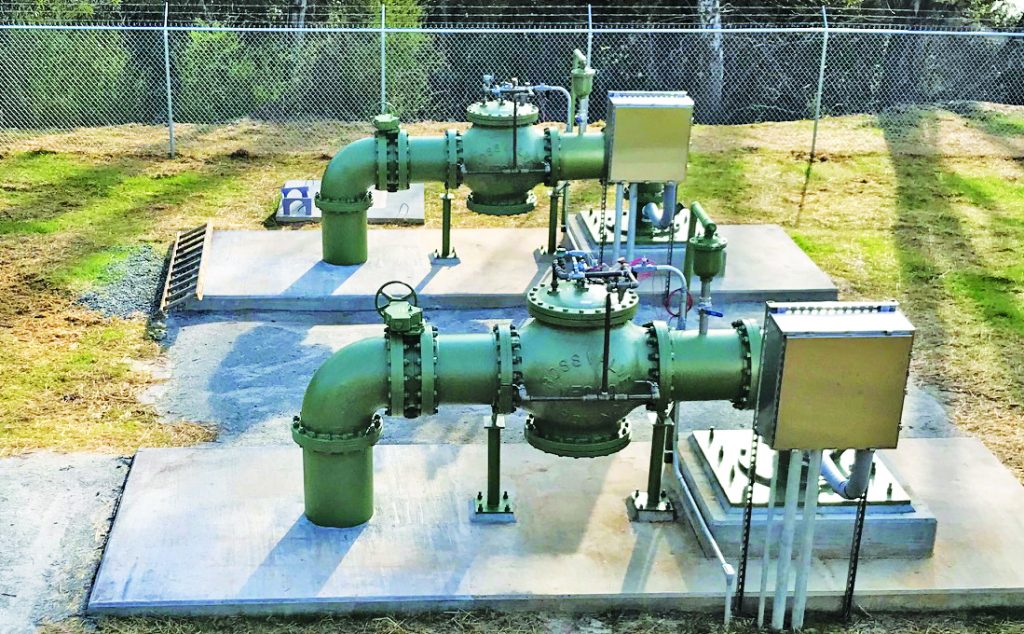
On March 13, the Town of Winnsboro’s new Pump Station on the Broad River was turned on for testing. The Town of Winnsboro funded this approximately $12 million dollar project, encompassing a new raw water intake pipe and construction of this pump station, with a State Revolving Fund State Drinking Water loan through the EPA.
WINNSBORO – Now that the initial paperwork is mostly finished, Fairfield County’s water and sewer plan is flowing closer to completion.
At the second meeting of the Fairfield Joint Water and Sewer Authority on Monday, the group received detailed reports covering everything from environmental impacts, roads to laying water and sewer pipes.
“They’re not in as [bad] shape as I thought,” said Neil Robinson, chair of Fairfield County Council and an authority board member. “They’re still going to need a lot of improvements.”
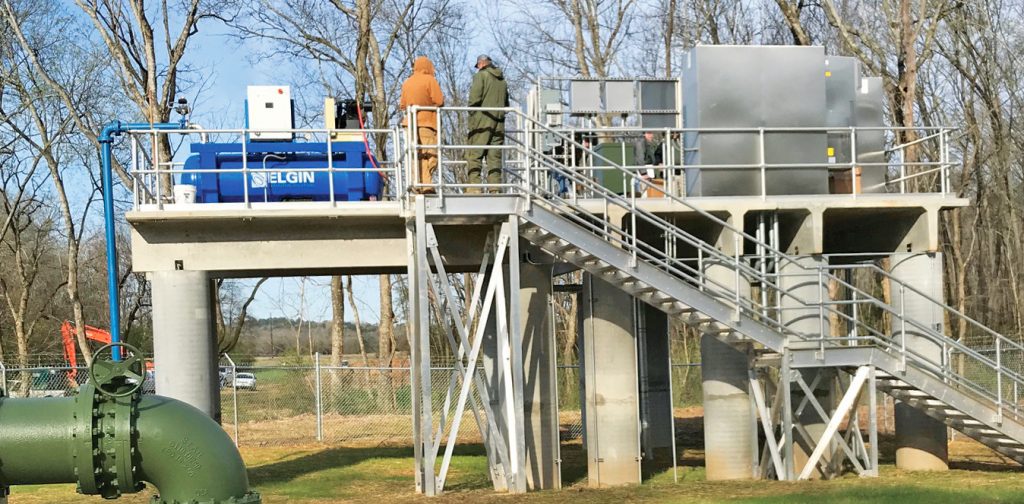
Formed earlier this year, the authority’s goal is to bolster the county’s water and sewer system, particularly at the mega-site, a 1,113-acre parcel east of I-77 at exit 41 that the county has designated as an industrial hub.
By installing proper infrastructure, Fairfield County and Winnsboro town officials believe it will make the megasite more enticing to industries interested in launching operations here.
The authority predicts flow demand at the megasite to be about 1.11 million gallons per day.
Another 1.09 million gallons per day would be needed to serve the Weyerhaeuser property to the north, totaling 2.2 million gallons per day for both properties, according to engineering estimates.
The Town of Winnsboro, the area’s largest water provider, is currently permitted for 1.6 million gallons per day, but only has an available capacity of about 540,000 gallons, roughly half the projected capacity needs at the megasite.
Prepping the megasite for industry will require a two-step process, officials said.
In the early stages, the Town of Ridgeway would facilitate the construction of temporary water service while an outside party would use a “pump and haul” method to transport wastewater to an outside location for disposal.
DHEC approval would be required for the latter process.
“Initially temporary service is needed for what we call trailer city,” said Lisa Muzekari, also with Thomas & Hutton. “We are going to have a significant amount of workers on site, therefore water and sewer service needs to be provided for those employees while they are on site working.”
Long-term, the Town of Winnsboro would play an integral role in establishing permanent infrastructure, Muzekari said.
Water service would be provided by the Winnsboro water treatment plant. New distribution lines and an elevated water tank would be needed.
The Town of Winnsboro wastewater plant would initially handle sewer services, but only temporarily.
“A future wastewater treatment plant would be needed to accommodate the full build out of the mega site and any other development in the area,” Muzekari said.
While ensuring sufficient infrastructure needed to entice industry is in place, expanding water and sewer also lays the foundation for potential residential growth, Muzekari noted.
“Right now the proposed lines are to serve the megasite,” she said. “But the plant capacity is up to 2 [million gallons per day] with potential for 4 [million gallons per day]. Expanding for 4 [million gallons per day] would allow for that additional development.”
Cost estimates for the proposed upgrades weren’t available, though Muzekari said she’s using a 2 million gallon per day facility as a baseline.
Roads are another component of the megasite infrastructure formula.
The site already benefits from interstate access; it’s located off I-77 between exits 34 and 41. A proposed interchange could improve that access.
Brad Sanderson, also with Thomas & Hutton, said one interchange option is a divergent diamond pattern. The other would be a cloverleaf design, which he said would be built in the vicinity of Old Camden Road.
There haven’t been any glitches from an environmental standpoint. Sanderson said a preliminary review looking at the Weyerhaeuser tract just north of the megasite found no problems with wetlands or negative impacts on protected species.
He also said Thomas & Sutton is continuing with evaluating site work, utility and transportation costs.
“We’re just trying to figure out the overall development cost for a large development at this site,” Sanderson said.
Monday’s meeting also comes on the heels of recent investigative reports about the state of South Carolina’s water system.
Officials at Monday night’s water and sewer authority meeting noted that Winnsboro’s water is of high quality.
County Administrator Jason Taylor said statewide, authorities like the Fairfield group are becoming more common.
“The state itself is pushing hard and heavy to move from small individual systems,” Taylor said. [The state is] “trying to more rationally provide water and sewer services.”
In other business, the authority also voted to continue an agreement with the Pope Flynn Group law firm. Attorney C.D. Rhodes with the firm has been assisting the authority.
Since the authority has yet to collect revenues, the deal approved Monday night continues the existing arrangement in which the county pays 75 percent and the town 25 percent.
“It’s a basic continuation of the arrangement,” said authority chair and Winnsboro Mayor Roger Gaddy.
WINNSBORO – It’s been years since Fairfield county and municipal leaders first floated a concept of a regional water and sewer authority.
Now that its composition has been finalized, the group plans to chart new waters as it attempts to define and fulfill its mission of enhancing economic development in Fairfield County.
“Industry absolutely has to have basic infrastructure,” County Administrator Jason Taylor said. “The Town of Winnsboro and other entities need to come together because none of us can do it alone.”
On Tuesday, County Council unanimously approved a resolution approving the final composition of the water authority.
Winnsboro Town Council approved a similarly worded resolution last week.
The resolutions passed by the Fairfield and Winnsboro councils shave the authority board from seven to five members, drawing two Fairfield County representatives – Council Chairman Neil Robinson and Taylor. Winnsboro Town Manager Don Wood and Gaddy.
Kyle Crager, the authority’s fifth member, was jointly appointed by the county and town.
Ensuring Fairfield County has sufficient infrastructure is particularly important as it relates to the mega site off I-77, where sufficient sewer capacity doesn’t exist.
Taylor said new sewer lines potentially cost tens of millions of dollars more than water lines. The state recently awarded a $2 million grant for infrastructure design and prep work and though helpful, it’s only a fraction of what’s needed.
“The Town [of Winnsboro] has done a wonderful job in getting water infrastructure in place so we have sufficient water capacity. However sewer is much more expensive.” Taylor said.
As the authority board mulls ways to generate funds, other ideas were put forward at Monday night’s council meeting.
Ridgeway resident Randy Bright repeated his call for a penny sales tax to fund water and sewer upgrades.
“Infrastructure is an imperative,” Bright said. “If we had started this five years ago, we would already have $10 million that we could put forward to water and sewer to bring families, homes, industry new jobs and grow the economy.”
Councilman Jimmy Ray Douglas proposed taxing agricultural real properties that receive a tax break from the state.
Douglas proposed adding a $1 per acre tax on qualifying properties, which he said would generate $450,000 a year that could be applied to water and sewer expenses.
“I have ag land that I own and I’m paying next to nothing,” he said. “Everyone else who has less than five acres is paying a lot more taxes. I feel like every [agriculturally exempt] acre in Fairfield County needs to have an extra dollar in taxes on it.”
In South Carolina, agricultural real property is taxed at 4 percent of its fair market value. Non-agricultural property is taxed at 6 percent.
For the owner of property valued at $100,000, a Fairfield County landowner receiving the tax break pays $814 less than owners not receiving it.
Critics, however, say the exemptions unfairly benefit developers who claim the exemption on undeveloped property, most harvesting trees to technically qualify for the exemption.
The 2 percent tax break isn’t permanent. Once the land use changes, the rate rolls back to 6 percent and landowners are responsible for paying the difference, according to state law.
BLYTHEWOOD – The town of Blythewood is looking to open discussions with the Town of Winnsboro in the coming new year as it prepares to renegotiate the town’s water supply contract.
During the Nov. 26 town council meeting, Mayor J. Michael Ross said that the town’s contract with Winnsboro as its fresh water supplier will expire in 2020, and that he hopes that in the next year the town can come to new terms in its usage agreement.
“We believe that we are probably one of their largest users. We would like to even suggest that we might use as much or more water than the town of Winnsboro, and we hope that we can use that position in the negotiations,” Ross stated.
In addition to rate concerns, Ross said that Blythewood has compiled an agenda list of approximately ten other items residents have brought to the attention of Blythewood’s administration that will be brought to Winnsboro.
“We have gotten what seems like constant complaints about bills, the billing system and even the smell of the water,” Ross stated.
While he said Winnsboro has attempted to resolve some of the issues, including flushing the water system on several different occasions, he said he has “some real concerns” regarding the issues.
Resident Dennis Drozdak, who opened the discussion Monday night during the citizen remarks forum of the meeting, told the council that he had conducted an at-home test of his water that same day.
“It registered at .83 particles. That’s pretty high and that might be the reason why the water smells,” Drozdak stated.
Drozdak also said that he once received a water bill of over $600, and that he believed the town of Winnsboro owed answers to the Blythewood community.
While Drozdak alleged that, over the summer, the town of Blythewood was marked the third highest in the state for water usage rates, that ranking is not reflected on the state’s Rural Infrastructure Authority website.
Drozkak also said that Winnsboro’s water rate recently increased by over nine percent.
Winnsboro Town Clerk Lorraine Abell told The Voice, however, that the increase came last July and was levied by the City of Columbia for water it sells to Winnsboro, and that Winnsboro only passed along Columbia’s rate increase.
Blythewood’s contract with Winnsboro began in 2000, when the Town of Blythewood needed water and the City of Columbia showed no interest in supplying water service requested by the Town. Until that time, the water source for Blythewood residents and businesses had been from private wells.
“The water was bad at both Bethel-Hanberry Elementary School and Blythewood Academy, plus we needed fire hydrants and improved fire ratings,” Jim McLean, a town councilman at the time, told The Voice. “Plus, we needed water for economic development.”
“Winnsboro stepped in and came to Blythewood’s rescue,” McLean said. “It was because of Winnsboro supplying us water when no one else would, that we were able to get fire hydrants and significantly better fire ratings for homeowners, better water for our schools and considerable economic development leverage for the town. We were able to bring in three hotels as well as residential development including Cobblestone Park.”
McLean recounted how Winnsboro’s then-mayor, Quay McMaster, sat down with Blythewood’s then-mayor, Roland Ballow, and the two worked out the contract that is still in effect.
“They probably should have had the advice of an attorney,” McLean quipped, “but they were just trying to do the right thing for Blythewood, to supply us with a much needed water source at a time when the Town had little money to work with.”
Winnsboro supplied the water lines to the Town and Fairfield Electric Cooperative and SCE&G covered most of the cost of the water tower.
Today, the hotels and restaurants in the town bring in more than $400,000 a year in accommodation and hospitality revenue for Blythewood.
While Winnsboro’s reservoirs have been so low at times in the last few years that it has had to purchase water from Columbia, Winnsboro water reserves are expected to increase dramatically when a new direct line into the Broad River becomes operational early next year, according to Town of Winnsboro officials.
Ross said that he will keep the public updated as the town navigates the negotiations of a new agreement with the town of Winnsboro.
“We don’t want the water to smell bad or taste bad, and we want it at a fair and reasonable price,” Ross stated.
WINNSBORO – The town of Winnsboro will be unveiling a new video on its website this week in the hopes of putting the small town “on the map” of local tourism and shopping destinations.
According to town clerk Lorraine Abell, the two and a half-minute video was filmed by the town’s website team this summer. The budget for the filming was presented and approved by the town council in April 2018.
“The town council has been fully on board for this video since the idea was first introduced,” Abell stated.
The video includes shots of key area focal points and landmark buildings, but it seems to truly shine with the commentaries and testimonies from local business owners who declare their love for the small town alongside their ability to successfully operate a homegrown shop in its downtown district.
“We knew we wanted to highlight our local businesses and so we created a list early on of both established businesses and new shops that recently opened that we wanted to offer a spot in the video to,” Abell stated.
Every business that the town approached jumped on board enthusiastically, Abell said, with only one business having to opt out because of scheduling conflicts.
The finished product, she said, exceeded all expectations.
“We (the town) are so very pleased with the result and we believe it accurately portrays the heart of Winnsboro,” she stated.
In addition to shining a light on the blossoming downtown shopping district, the video also spotlights the town’s railroad museum and Abell said she hopes the video will encourage viewers to see that there is much to do in the small town.
“Winnsboro really is a wonderful day trip destination with many hidden gems that people who don’t live here might not be aware of,” Abell stated.
Alongside the museum, which offers train rides for visitors in addition to its expansive historical collection, the town also features walking tours through some of its historical neighborhoods. All of which, she said, the town believes deserves the right to be noticed.
“The town of Winnsboro has a rich history and we have so much to offer, we hope to really showcase that through this video and reveal to the surrounding areas that our little town is a special place worth a visit,” Abell stated.
WINNSBORO – Mike Kelly thinks there’s more value beyond dollars and cents when it comes to a historic home in the Town of Winnsboro.
At the Sept. 4 town council meeting, the local attorney pitched a plan he says will rejuvenate the McCreight house located on North Vanderhorst Street in Winnsboro and honor deed stipulations at the same time.
“The odds of your having any legal liability of doing what I suggest are about the same as a meteor dropping and hitting us all in this room,” Kelly told town council members last week. “I’m not going to have any second thoughts or regrets about what I’m going to say.”
In a presentation to council members, Kelly proposed deeding the house (c1774 – 1800) to Palmetto Trust for Historic Preservation, which would repurpose the property.
Doing so, he said, helps relieve the town of some responsibilities associated with upkeep while also serving a public benefit.
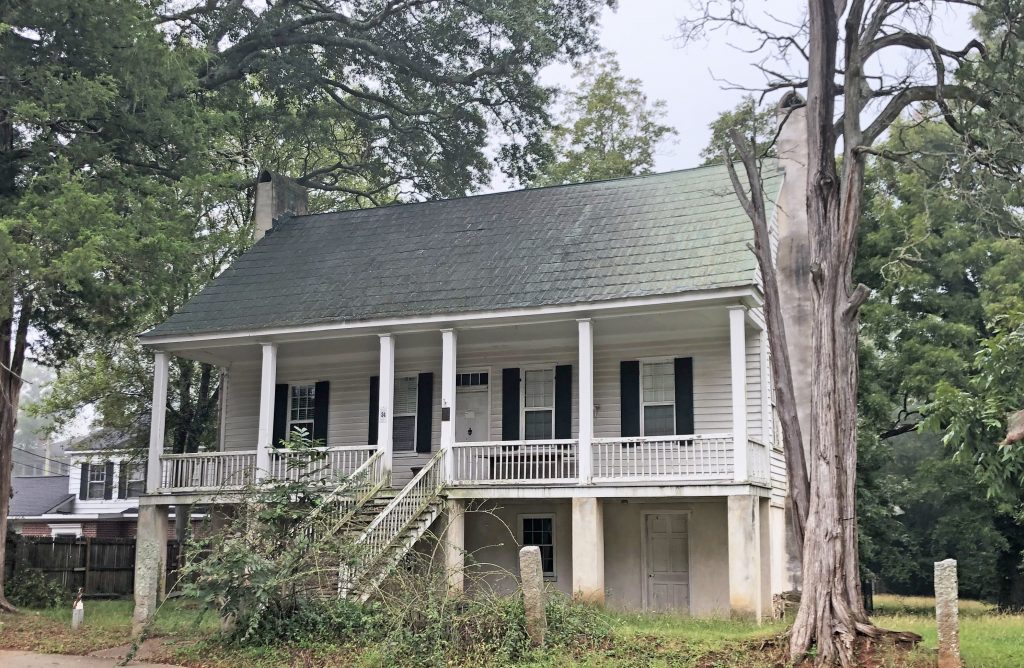
Believed to be the first ‘board’ house in Winnsboro, the house was built by a member of the McCreight family. There are three stories, with two large rooms on each floor.
“Let them undertake it and put a historic preservation easement on it so that there’s no way that anyone will do anything other than the intent of the will,” Kelly said.
Winnsboro attorney Paul Swearingen, who accompanied Kelly, suggested the repurposed property could be marketed, with proceeds divided between the Palmetto Trust, surviving relatives and the town.
Though deed restrictions technically prohibit selling the property, Kelly and Swearingen said the family is indifferent to those restrictions.
“Most of the stipulations died with Ms. Quattlebaum,” Swearingen said. “The only important ones that didn’t were that the Town government maintain and preserve the property, which you all have been doing for all these years, and that it not be sold.
“Ultimately what she wanted is going to happen, whether the Town pays to upkeep this property in perpetuity or the Town gets help from the preservation society,” Swearingen continued.
Council members expressed intrigue over the proposal, but the town’s attorney John Fantry suggested instead that Kelly and Swearingen look at a quitclaim deed accompanied by a resolution of abandonment.
“The town would get no benefit from the sale, period,” Fantry said. “It would be an abandoning of the property and transfer of any rights, which may help you in your economic endeavors.”
A quitclaim deed is a deed in which a property transfers ownership without being sold, according to www.realtor.com.
“No money is involved in the transaction,” the website states.
Mayor Roger Gaddy agreed with the quitclaim deed option. He thought it would be pointless for the Town to profit from the sale, and asked Kelly and Swearingen to develop a proposal that could be voted on at the next council meeting.
“I don’t have a problem abandoning and deeding it over to them with a quitclaim deed,” Gaddy said. “I don’t think the property is worth much money. It might not do much more for the family than give them dinner out one night somewhere.”


 Formed earlier this year, the authority’s goal is to bolster the county’s water and sewer system, particularly at the mega-site, a 1,113-acre parcel east of I-77 at exit 41 that the county has designated as an industrial hub.