Tag: Tom Poland

  • Revolutionary Road to Walnut Grove

    Here’s a “daycation” you can take this summer or plan for the fall: An 80-mile drive to Walnut Grove Plantation near Spartanburg. About 80 minutes’ drive up I-26 will take you to a farm/plantation of the 1780s that’s on the National Register of Historic Places.

    Named for the walnut trees planted on the property by Kate Moore Barry, Walnut Grove Plantation’s story begins around 1765 when Charles and Mary Moore established Walnut Grove Plantation on a 550-acre king’s land grant. Many of Walnut Grove Plantation’s outbuildings from the 18th century still stand. Among them are a blacksmith shop, wheat house, barn, meat house, a well house with dry cellar, a school and doctor’s quarters. Kitchens of that era generally stood apart from the main dwelling because they were hot, prone to being smoky and, more to the point, they often caught fire. Note how gourds provided useful homegrown wares: bowls, scoops and funnels, all essential to preparing food. You’ll find them more picturesque than plastic bowls.

    Put Walnut Grove Plantation on your fall itinerary if you like. FestiFall, a two-day festival at Walnut Grove, gives visitors an opportunity to see Colonial-era people practice crafts and trades. Aptly named craftsmen like Ike Carpenter of Edgefield demonstrates his pioneer woodworking skills at FestiFall at Walnut Grove. In early days men like Carpenter shaped wood into useful tools and beautiful furniture. A steady hand and an eye for detail rendered oak into functional works of art. See how Ike Carpenter’s handcrafted spoons replicate the look and feel of Colonial America. Today the indispensable wooden spoon brings a pioneering touch to modern kitchens.

    Other craft artists like Greenville’s Mary Alice Goetz come to FestiFall to demonstrate basket weaving. She weaves split oak strands into heirloom baskets that will bring function and beauty to generations of users. See a blacksmith work his forge, a cooper make barrels and other craftsmen demonstrate how essential goods were made.

    In 1961, Thomas Moore Craig Sr. and wife Lena Jones Craig, descendants of the Moore family, donated Walnut Grove Plantation and 8 acres to the Spartanburg County Foundation in a special trust fund. Now the public can tour and learn from this historic site. Walnut Grove Plantation chronicles how free and enslaved people settled South Carolina and other colonies. Part of its story is the fight for independence and the building of a new nation. Take a tour and see that story come alive.

    If You Go …

    Walnut Grove offers guided hourly tours of the site’s 250-year-old buildings. Learn about Colonial and Revolutionary Era history and see reenactors portray people of the time.

     • Walnut Grove Plantation

    1200 Otts Shoals Rd, Roebuck, S.C. 29376.

    $6 per adult, $3 ages 5 to 17, free to infants to 4.

    Call ahead to plan group tours.

    864-576-6546

    www.spartnaburghistory.org/walnutgrove.php

     Learn more about Tom Poland, a southern writer, and his work at www.tompoland.net. Email day-trip ideas to him at tompol@earthlink.net.
  • Myrtle Beach Daze

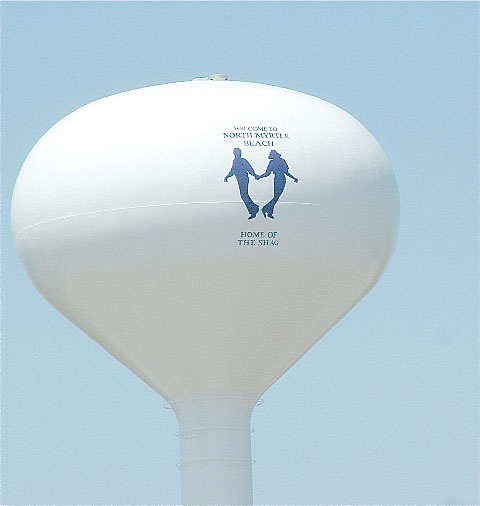
    South Carolina’s beaches are popular, especially in the summer, but one beach is popular year-round. A little over a three-hour and 173-mile drive will take you to a town that was and is an icon. Once known as Ocean Drive, or OD, North Myrtle Beach is the epicenter of all things shag and beach music. Thousands return to North Myrtle Beach fall, winter and spring, to shag and share good times and memories.

    Now you don’t have to be a shagger to enjoy a journey to this dance kingdom. If you recall or are just plain curious about the good old days of open-air pavilions, cars with fins, sno-cones, glowing Wurlitzers, rhythm and blues music and lifeguards, you’ll enjoy a trip to North Myrtle Beach.

    The shag was “the dance” along the Grand Strand in the late 1940s and early 1950s — a memorable time of classic cars, ice cream sodas, cold beer and nights afire with love. Many would look back on this golden era as the apex of youth and romance. It was a glamorous, chivalrous time. As evening fell, the lights of open-air pavilions beckoned. As gleaming lines of surf broke outside pavilions and clubs, couples danced. Neon Wurlitzers and Rock-Olas gobbled change. Shaggers danced along the leading edge of a pop culture revolution in places indelibly etched in memories: the Myrtle Beach Pavilion, Sonny’s Pavilion, Spivey’s, Robert’s Pavilion and other cramped “jump joints.”

    Ocean Drive assumed iconic stature. Lifeguards were bronzed gods. Women were sun-kissed “peaches” to be plucked by men with perfect dance floor cool. There was nothing like an evening of club hopping, and the shabbier they were, the better. Ask shaggers about OD. If you tell them you’re going they’ll want to hitch a ride with you. They’ll regale you with stories of OD and culture-shocking times.

    Back in OD’s heyday, young people were the original rebels and their hangouts were the iconic pavilions. The pavilions were ordinary but exalted. In the early 1980s, a writer for the Greenville Piedmont, Melissa Williams, described Spivey’s Pavilion as “a ramshackle, tattle-tale gray, paint-chipped pavilion. It was an old haunt where people carved their names in wooden booths overlooking the dance floor. It was their domain, where engulfed by friends, their music and their self-designed lifestyle, they could revel in rebellion.”

    All the old pavilions are gone but you can recapture this wonderful time, a bit of Americana, and for certain a South Carolina legend by making the trip to North Myrtle Beach. You’ll see plenty of men wearing penny loafers and old classic beach tunes will mingle with the salt air to take you back in time. You’ll be at the Grand Strand so there’s no way you’ll hurt for restaurants and things to do. Pack a bag ‘cause you may decide to stay overnight.

    If You Go …

    • Fat Harold’s Beach Club

    www.fatharolds.com

    • Beach Memories

    www.beachmemoriesart.com

     • OD Pavilion

    www.odpavilion.net

    *This column consists of excerpts from “Save The Last Dance For Me, A Love Story of the Shag and the S.O.S.,” USC Press, written by Tom Poland and Phil Sawyer.

    Learn more about Tom Poland, a Southern writer, and his work at www.tompoland.net. Email day-trip ideas to him at tompol@earthlink.net.
  • Whitewater Fever

    From springs and steams near Cashiers, N.C., grows a mighty river. Rising as a glittering mountain stream near Whitesides Mountain, the Chattooga flows 10 miles in North Carolina before forming a 40-mile border between Georgia and South Carolina. The river drops 2,469 feet over 50 miles (49.3 feet per mile), creating a wild, dangerous run. The river surges, pools and slashes through Chattooga Country, as National Geographic referred to it. It’s known too as “Deliverance Country,” owing to the 1972 film, Deliverance, that made it a legend.

    Chattooga Country is up in Oconee County, approximately 150 miles away. Take I-26 to I-385 North to I-85 south and take SC-11 at Exit 1 toward Walhalla. It’s slow going in the mountains so allow yourself at least three hours to arrive at your chosen outfitter’s headquarters. A night-before stay is advisable.

    Let’s make a very important point right up front: You do not want to run the Chattooga without the assistance of trained professionals. Note that this column provides three outfitters who can take you down the river. These outfitters provide safety equipment and trained guides familiar with the river’s ways and dangers. The National Forestry Service regulates all three.

    This savage-but-stunning river flows through ancient Cherokee lands and to this day it remains untamed. Dams straddle most rivers in the Southeast; not the Chattooga. It runs free. It attracts people from throughout the world. Fishermen, naturalists, novelists, environmentalists, essayists, filmmakers and the curious come to the Chattooga. Rafters and veteran kayakers brave its Sections III and IV. The river has long attracted thrill seekers, many times fatally. The intimidated cling to its banks and stare.

    Geological forces over millions of years carved out the Chattooga’s path. When first formed, the Blue Ridge Mountains reached higher than the Rockies. Millennia of water and weather whittled away the jagged peaks and carved deep narrow valleys in the terrain. The Chattooga courses through this tumbled topography to become a river steeped in myth. The true Earth lives along this National and Scenic River, the Earth too wild to tame.

    Hurdling downriver between canyon walls, rafters glide, pitch, jostle and buck on an untamable river. Guides who run the Chattooga must be unerring judges of depths, colors and shadows to avoid death traps perfected by geological processes 250 million years old.

    Be advised. Rafters on the Chattooga go from smiling to terror in the blink of an eye. Helmets and lifejackets are mandatory on this river that has claimed many a life. As quick as a pencil point breaks, rafters find themselves hurled into the river where swift currents slam them against rocks. Approach this adventure with a serious attitude. Several deaths have occurred here, one as recently as mid-July 2012.

     Learn more about Tom Poland, a Southern writer, and his work at www.tompoland.net. Email day-trip ideas to him at tompol@earthlink.net.
  • The Sites of Landsford Canal

    Up Chester County way, Landsford Canal is so beautiful it ended up in a coffeetable book, “Reflections Of South Carolina” (Clark & Poland). You could say it’s as pretty as a picture. Getting to the canal is easy. From Blythewood and Winnsboro, it is only about 40 miles, much of which is on I-77 North. Go visit Landsford Canal State park and the Catawba River, all blue and rocky, that once upon a time was an avenue of commerce.

    The locks at the south end of Landsford Canal remind us that man can make beautiful structures from rocks. Irish masons crafted the canal’s guardlock, a structure that lowered boats into the canal during floods. The finely cut, precise granite stones still stand, only now lush greenery grows between them where water once stood. In the river, an old diversion dam of rock continues its prolonged tumble. It’s as if time stands still while this old wall decides if it’s going to fall. Men built this diversion dam to direct water into the canal and to offer riverboat pilots a haven during floods.

    People come to the canal all day, especially in May and June when the rocky shoals’ spider lilies burst into large white blooms. Anchored among rocks, the flowers festoon the river. You can see the earth’s true colors in the river and its load of jammed logs: blue, brown, green and white. One of the world’s largest stands of these exquisite white flowers lives here. This large plant has adapted to a very harsh environment and puts on one of the greatest natural “shows” on the East Coast. During their peak bloom from about mid-May to mid-June, these plants blanket the river in white blossoms. Their needs are simple: swift, shallow water and sunlight. Therein lies a problem. Man’s penchant for damming rivers leaves them few places to grow now.

    Riverboat pilots used to ply the Catawba’s waters, but no more. Now kayakers do. Watch folks kayak by, deftly avoiding rocks. On land and by water, people come here to marvel at the old canal. These venerable stone structures stand as monuments to workers who toiled long and hard in the days before power and pneumatic tools came along. And yet their work not only endures, it gives us places stone cold beautiful and places to escape our modern, monotonous version of civilization.

    Fishing, boating and just watching nature are fine activities to enjoy. Playground equipment is on hand for kids. Hike the interpretive trails and see the foundations of an early 1800s mill site. Pack a picnic and enjoy it at a shelter. Spend time in the museum, a restored Great Falls Canal lock keepers house. Check out its pictorial displays. (Open by appointment only. Call to schedule a visit.) You will love every minute of your visit. Keep an eye out for bald eagles, and best of all go when the rocky shoals spider lilies are in bloom from mid-May to mid-June.

     Learn more about Tom Poland, a southern writer at www.tompoland.net. Email day-trip ideas to tompol@earthlink.net.

  • Touring the Old South

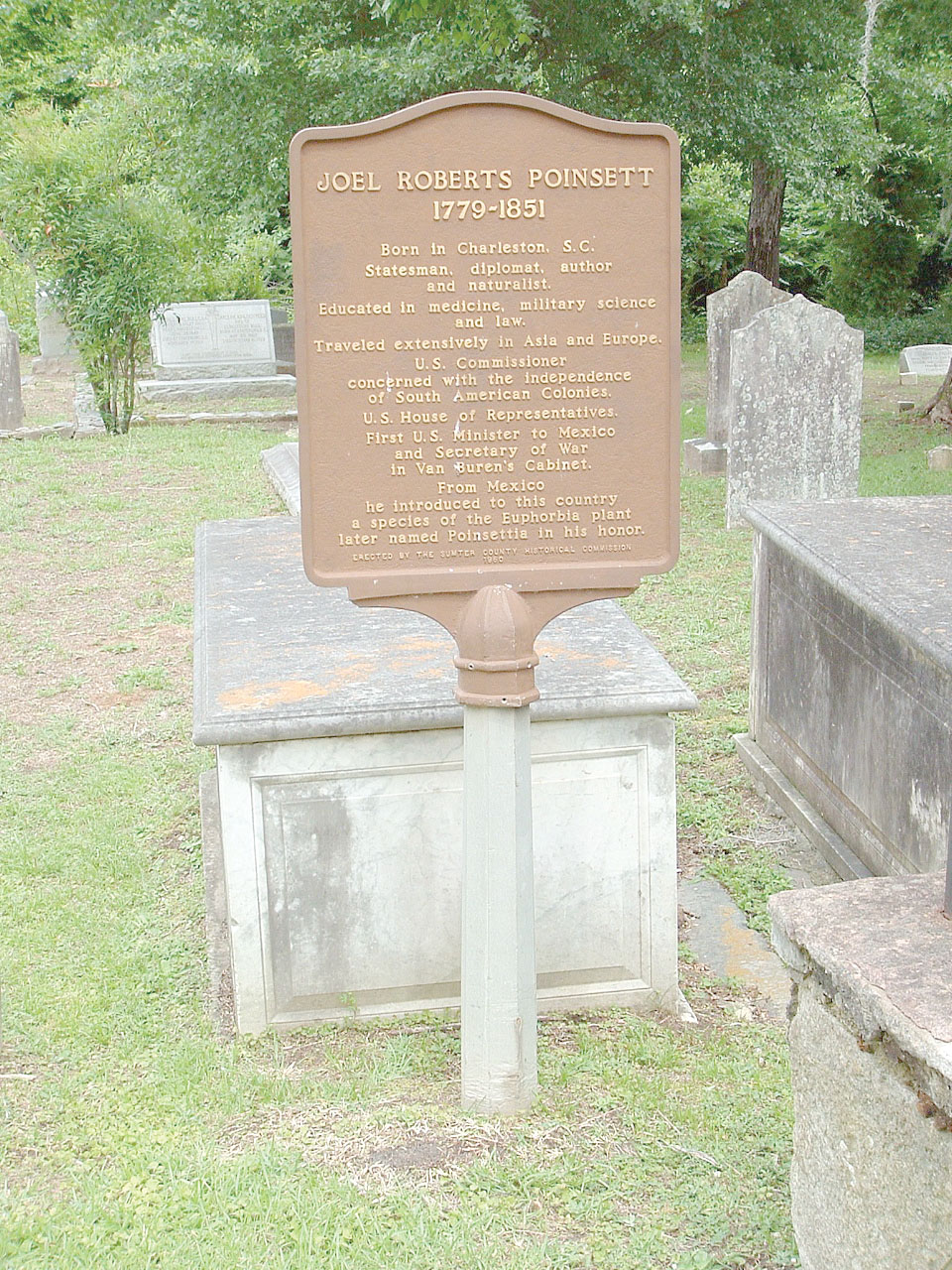
    Nothing says ‘Old South’ quite like an Antebellum cemetery, like the one located at the Church of the Holy Cross in Santee, near Sumter, where you’ll find the gravesite of the man who brought South Carolina the Poinsettia.

    There’s an old road that makes for a great Sunday drive, SC Highway 261. You’ll see historic sites; feel you are in the mountains, yet feel you are at the coast. More than that, you’ll come across the ghosts of history. Best of all, it’s about an hour’s drive southeast. An historical marker greets travelers, reading, “Over it came Indians, pack animals laden with hides, drovers, rolled hogsheads of produce, wagoners, and stagecoaches. The armies of two wars passed over it.” Some called it the King’s Highway.

    Highway 261 winds through the High Hills of Santee. This area is rural, isolated and heartbreakingly antebellum. The land plunges, opening up vistas of distant ridges. You think at once of the mountains. It’s a curious sight to see Spanish moss in the mountains, but Highway 261 gives you massive oaks with limbs draped in Spanish moss.

    You’ll find enough history here to fill several good-sized books. For starters, there’s the Church of the Holy Cross. This stately old church was built from 1850 to 1852 of rammed earth. In its old cemetery lies Joel Roberts Poinsett, the man who brought us the poinsettia. A ways down the road, off the beaten path, you’ll come across the grave of General Thomas Sumter, the “Carolina Gamecock.” He earned his nickname when he killed British soldiers for burning down his house.

    Those of you who recall Ken Burn’s Civil War documentary will recognize the name Mary Boykin Chestnut. She grew up in Stateburg, a stone’s throw from Highway 261. Chestnut published her Civil War diary as a “vivid picture of a society in the throes of its life-and-death struggle.”

    Along Highway 261 you’ll find the hamlet of Boykin Mill Pond and its quaint old sanctuary, the Swift Creek Church. In May 1860, approximately 75 young people met at Boykin Mill Pond to picnic right near the church. Late that afternoon, 30 or more crowded onto a flatboat, overturning it. Close to 25 young people drowned, mostly women. You’ll find an old mill here, too. Boykin Mill and its 100-year-old turbines have long preserved a time when mills provided communities cornmeal, grits and flour. A few steps away is the Broom Place, where Susan Simpson makes sturdy, colorful brooms the old-fashioned way.

    As you drive along, the winding oak-shaded lane summons up images of a horse and buggy with men in powdered wigs and women in colonial attire. Then visualize a regiment of Confederates marching down the road, the dust rising around their feet. Imagine Mary Boykin Chestnut seeing the men and reaching for her diary as all, one by one, vanish into the eternal mists we call history. You’ve rediscovered the Old South and it’s just a short drive away.

    Learn more about Tom Poland, a southern writer, and his work at www.tompoland.net. Email day-trip ideas to him at tompol@earthlink.net.

  • Mountain Mecca

    An easy 151-mile drive into the mountains will take you to Asheville, N.C., a place that brings author James Salter’s words to mind: “There is a feeling. That somewhere the good life is being lived but not where you are.” Well, you won’t feel that way in Asheville. Whether its cloudscapes, art deco architecture or upscale cafes, you’ll feel very much alive “where altitude equals attitude.” There’s a timeless quality here as well as a curious mingling of the old and new. Take art deco architecture, for instance. There’s more here than any other Southeastern city except Miami.

    History too. In 1888, George Vanderbilt, grandson of railroad baron Cornelius Vanderbilt and one of America’s wealthiest men visited Asheville with his mother. Smitten, he purchased 125,000 acres, and soaring dreams of a palatial estate took flight, one modeled after 16th century chateaux in France’s Loire Valley. We know it as the Biltmore House & Gardens.

    In 1913, the Grove Park Inn, raised from granite quarried from Sunset Mountain, opens. Set like a jewel in Sunset Mountain at 3,100 feet, the resort overlooks the Asheville skyline and guests feast on sumptuous mountainscapes. Notables Thomas Edison, Henry Ford and Will Rogers stayed here, as did Presidents Franklin D. Roosevelt and Woodrow Wilson.

    Thomas Wolfe, of course, lived here. Born in 1900, Wolfe spent 10 childhood years in his mother’s boarding house, the “Old Kentucky Home.” Wolfe’s epic autobiographical novel, “Look Homeward, Angel,” depicted life in a turn-of-the-century Altamont, a thinly disguised Asheville. It didn’t sit well with many residents. Wolfe, however, did go home again in 1937. Though his book was officially banned there, Asheville gave him a warm welcome. Wolfe drew other writers to the area. F. Scott Fitzgerald wrote in Asheville a smidgen (Grove Park Inn, Suite 441), but his memories perchance may not have been the best. Wife Zelda died in an Asheville sanitarium fire in 1948. Sherwood Anderson dwelled nearby. A short walk from downtown to 53 Birch Street, the Riverside Cemetery slopes steeply to the French Broad River. Thomas Wolfe sleeps at the hilltop not far from O. Henry.

    Wolfe today is a favorite son, part of the charm that beguiles visitors. You see them sitting in bistros, standing in galleries, strolling through craft and antique shops and admiring the art deco architecture. They gravitate to the newly renovated Grove Arcade. Luxury apartments top its 50 shops and restaurants.

    Biltmore Estate is the number one attraction, but once in Asheville you’ll see so much else you like . . . eclectic shops, specialty stores, an art deco skyline and historic trolley tours. The Grove Park Inn, Biltmore Village, the Grove Arcade, the Montford Historic District’s bed and breakfasts, the Thomas Wolfe Memorial, Asheville Museum and art galleries add allure. There’s so much to see, I suggest you start at the Visitors Center. Make this a two-day trip. You’ll be glad you did.

    If You Go …

    • GPS: Visitors Center, 36 Montford Ave., Asheville, N.C. 28801

    • 828-258-6101

    • www.exploreasheville.com

    Learn more about Tom Poland, a southern writer, and his work at www.tompoland.net. Email day-trip ideas to him at tompol@earthlink.net.

  • Riverbanks Safari

    A 31-mile drive can take you to Africa, Australia, the Galapagos Islands and beyond. Go to Riverbanks Zoo in ‘famously hot’ Columbia and learn about animals from the world over. And be sure to walk the footbridge over the Saluda River to the Botanical Garden where you’ll see one of the world’s largest public collections of noisettes. Inhale their sweet perfume and discover their ties to South Carolina.

    More than 2,000 animals call the zoo home, but you won’t see bars and cages. Natural habitat exhibits use psychological barriers such as moats, water and light to keep animals from straying. Strolling through the zoo is akin to going on safari. See ring-tailed lemurs, Grants zebras and African elephants.

    Kids love to feed the giraffes and ride the animal-themed merry-go-round. And the Aquarium Reptile Complex houses Eastern diamondback rattlesnakes, crocodiles, reticulated pythons, moon jellies and green mambas — a name that tells you this is one deadly snake. The zoo is more than a place that houses exotic species, however. The zoo helps protect the earth’s wildlife and promotes the appreciation of diverse life forms.

    History lives here, too. On zoo grounds lie ruins of one of the South’s oldest cotton mills, which Sherman burned. Listed on the National Register of Historic Places, Riverbanks’ 170-acre site has a deep-rooted history dating back to the early 1800s with South Carolina’s textile industry and the Civil War.

    The zoo has an indoor fast-food restaurant, a pizza and sandwich restaurant, and food and refreshment stands. You’ll find a free picnic area at the park’s west end. Unlimited rides and attractions wristbands are available at the front gate for $20/person and include unlimited lorikeet feeding, giraffe feeding, carousel rides, train rides, pony rides, rock climbing and 3D Adventure shows. Gift shops offer unique souvenirs for all ages. Strollers and a limited number of wheelchairs are available for rent.

    Keep in mind that all animals are on exhibit daily except when extreme heat, cold and exhibit repairs or medical reasons take precedent — all of which are fairly rare occurrences. In general, animals are most active when they go on exhibit in the morning and when they return to their evening quarters prior to closing. Plan your visit so you get to see penguin feedings, the gorilla presentation, elephant presentations and more. A day at the zoo and its gardens and historical sites will show you why Riverbanks Zoo is South Carolina’s number one attraction with approximately one million visitors each year.

    If You Go …

    500 Wildlife Parkway, Columbia, S.C. 29210

    Adults: $11.75; Children (3-12 years): $9.25; Children (2 and under): Free

    (Family memberships are a great deal)

    Military (with military ID): $10.75; Senior Citizens (62 and up): $10.75.

    Open Daily 9 a.m. – 5 p.m.

    Extended spring/summer weekend hours: 9 a.m. – 6 p.m. Saturdays and Sundays

    March 29 – September 29.

    803.779.8717

    http://www.riverbanks.org/

    Learn more about Tom Poland, a southern writer, and his work at www.tompoland.net. Email day-trip ideas to him at tompol@earthlink.net.

  • A Night at the Movies, ‘50s Style

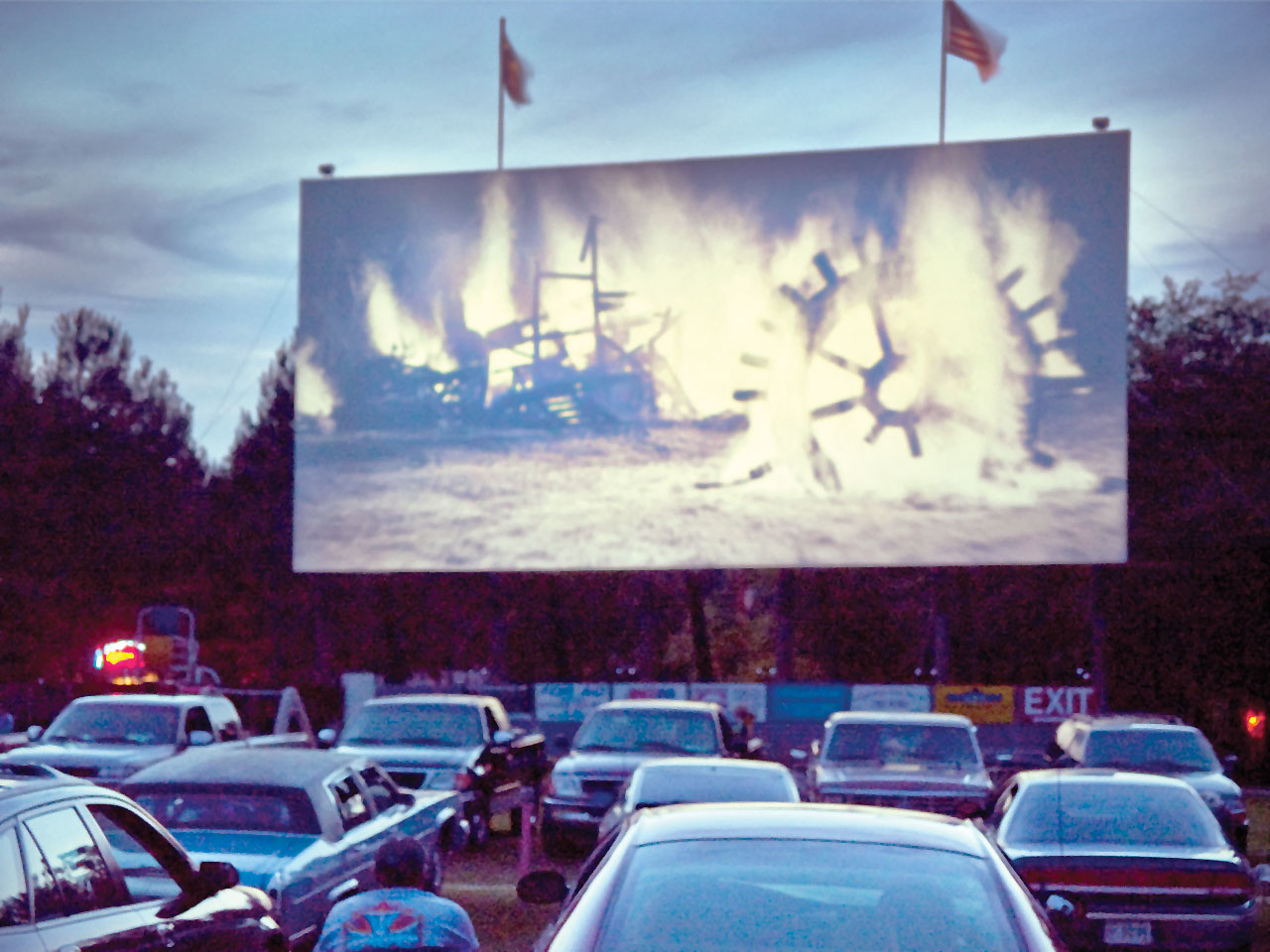
    The Monetta Drive-In, a blast from the past.

    A 70-mile afternoon drive to Monetta takes you to a 1950s cultural icon: the drive-in theater. Consider a “dusk trip” to the Big Mo, which begins its season March 1. Make your way to I-20 West and take Exit 33 (S.C. Route 39). Follow S.C. 39 to Monetta (approximately 7 miles), then turn right onto U.S. 1. The drive-in is a mile down U.S. 1 on the right. If you use GPS, the physical address is 5822 Columbia Highway North, Monetta S.C.

    Ease along to a parking spot with a good view of the screen and get ready for a great family event. Bring your dog if it’s well behaved. Bring lawn chairs too and sit on the grass if you like. Tune in movie audio over three different frequencies and get ready for the show. The days of hanging a clunky speaker on your car window are passé.

    When the lights drop, that one-time Mecca for wanderlust teenagers — the drive-in — flashes Hollywood idols onto the silver screen and the aroma of grilled hot dogs and buttered popcorn fills the air. At the Big Mo you partake of Americana. The drive-in is unique in that it is the only one in South Carolina to survive since the heyday of drive-ins in the 1950s.

    The concession serves standard fare, such as hot dogs, hamburgers and pizza. Funnel cakes and cotton candy bring a state fair feel to the evening. Popcorn is a given, as are soft drinks. Prices are very good, nothing like the big fees multiplex theaters charge. (You can’t bring your own food. No alcohol.)

    When Richard and Lisa Boaz opened the Big Mo March 26, 1999, they saved a cultural icon from junkyard duty. “The Wizard Of Oz” debuted, and some 60,000 cars have since rolled in for family fun and a return to the 1950s. Here’s your chance to add to the total. Just get there an hour early because people get turned away when tickets sell out. During inclement weather the show goes on. Go when peach trees are abloom for a touch of Palmetto State beauty.

    Frequent patrons get Stargazer cards for a $10 credit, and it’s not just marketing. The Monetta heavens, free of big-city light pollution, sparkle with celestial treats. One night a total lunar eclipse occurred, and, “One year,” said Richard Boaz, “Mars put on a fantastic show.”

    An evening at the Big Mo is quite a treat. Visit the Big Mo’s Web site and see what’s coming soon. Gates open one and a half to two hours before show time. Rediscover what it’s like to be 17 again at a ‘50s icon in peach country. The Big Mo.

    If You Go …

    • Admission (cash only) $8 adults (12 & over), $4 kids (4 to 11), under 3 free.
    • Gates open at 6:30 p.m. • Show starts around 8:15 p.m.
    Friday, Saturday and Sunday nights.

    • For Directions:

    NOW SHOWING

    803.685.7949


    Learn more about Tom Poland, a southern writer, and his work at www.tompoland.net. Email day-trip ideas to him at tompol@earthlink.net.