Tag: Tom Poland

  • A Little Bit of Everything

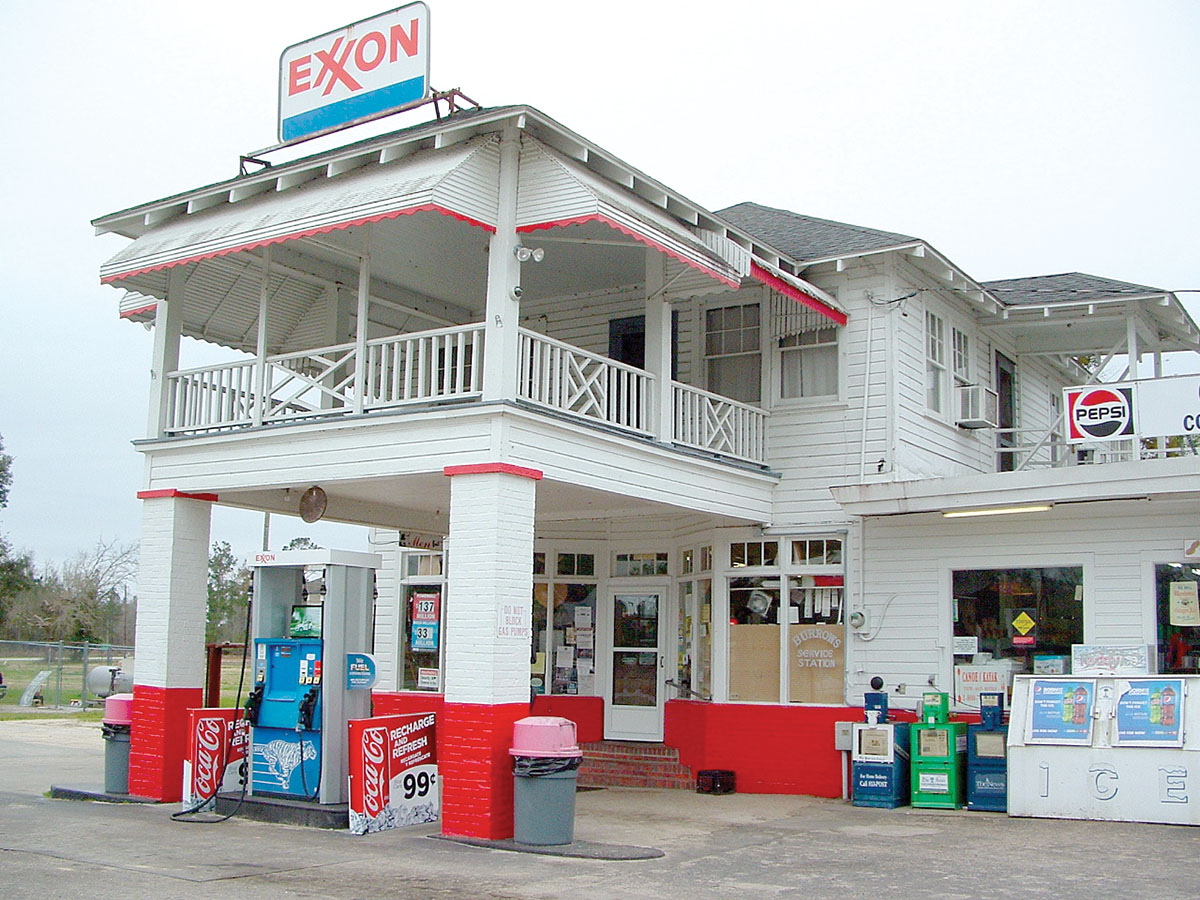
    Everything but Leaded Gasoline – Cooper’s Country Store in Salters. Come on in and browse.
    Everything but Leaded Gasoline –
    Cooper’s Country Store in Salters. Come on in and browse.

    It’s been called the best country store in South Carolina. You can buy Virginia cured hams there, and you can buy gas, diesel, propane, shotgun shells, wrenches and frying pans. Why you can even buy hog heads for headcheese, red hash, fig jam, hoop cheese, Blenheim’s Ginger Ale and cheap wine there.

    As country stores in this part of the South go, it’s famous. Its fame, in fact, earned it a spot in the esteemed Southern magazine, “Garden & Gun.” So, if you have a hankering to see a genuine survivor, an honest-to-goodness country store, get in your car and drive US 521 to Salters, S.C. There sits Cooper’s Country Store on a major backroad to the Grand Stand.

    You can’t miss it. The red-and-white two-story store commands the eye. The big Exxon sign on top the living quarters adds its splash of patriotic colors to the scene. So does the Pepsi sign to the right in front of the upstairs porch. The store is classic and just about everything about it delights the senses. Go to the rear and stand near the fine Southhampton hams hanging in a screened-off cage. Inhale an aroma that has been making mouths water for many, many decades.

    Everywhere you look, a jumble of sights delights the eyes: cookies, candies, hand-lettered signs and an amazing table featuring the shiny brass heads of 12-gauge shotgun shells. Fan belts hang on racks. The bacon here makes many a breakfast at the beach a feast. Curiously out of place is a surveillance camera, a sign of the times and not at good one.

    Toilet tank repair kits, eyebolts (good for hanging Pawley’s Island hammocks), and collectible but not for sale old farm implements grace the store. A precursor in a way to Walmart, old country stores like Cooper’s provided just about anything country folk needed.

    Cotton farmer Theron Burrows built the store in 1937. Known from the start as Burrow’s Service Station, it sold Esso gas. The name changed in 1974 when Burrow’s son-in-law, George Cooper, and Burrows’s daughter, Adalyn, took over the venerable store. Russell Cooper runs the store today.

    Like a lot of old country stores that surrendered to time, Cooper’s Country Store is a two-story affair with a home upstairs where the proprietors once lived and occasionally still stay. The French have a beautiful architectural term describing the covered entrance beneath which vehicles drive through: “porte cochere,” a porch where vehicles stop to discharge passengers. Well, you can be sure a lot of vehicles and passengers have passed through here, and so should you.

    I should issue a warning to people hell bent to get to the beach. Don’t stop at Cooper’s Country Store. You’ll linger far longer than you intend. God knows you may end up late to the land of traffic congestion, Yankee accents, “anyways,” and wacky golf. But, for those who want to see what was a common part of their grandparents’ lives, you’ll find the old store at the intersection of 521 and 377, the junction where the past meets the present.

    If You Go …

    About 115 miles away, a little over 2 hours. Take I-20 East and take Exit 98. Work your way to Salters along some fine back roads. Be sure to drive through nearby Salters to see an old whistle-stop town.

    www.southernfoodways.org/interview/coopers-country-store/

    Learn more about Tom Poland, a Southern writer, and his work at www.tompoland.net. Email day-trip ideas to him at tompol@earthlink.net.
     

  • Compelling McClellanville

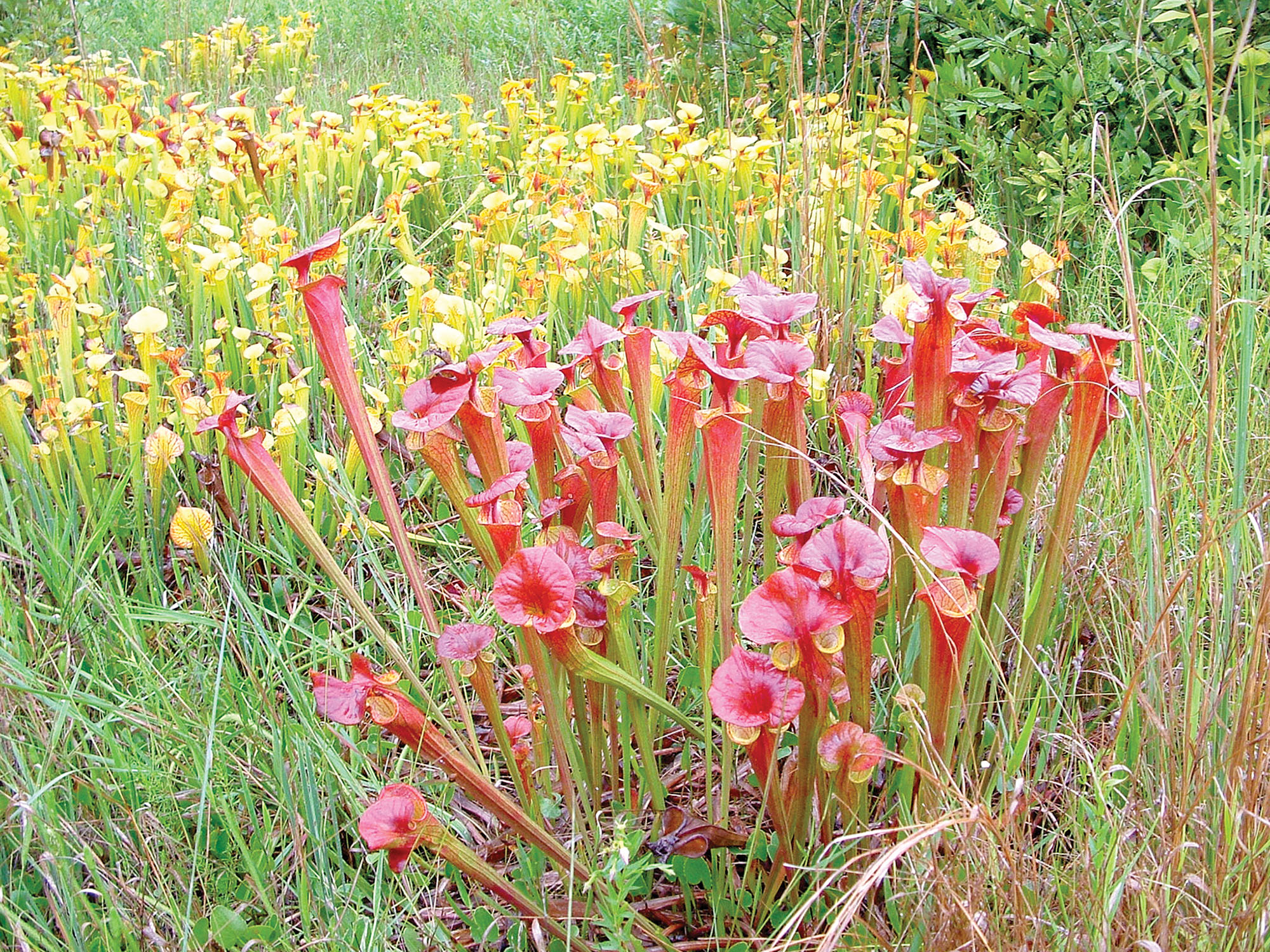
    Red Bluff Pitcher Plants, part of the flora on display in the wilds near McClellanville.

    Drive south about 177 miles to McClellanville and you will find yourself at the intersection of two imaginary streets: “Much To See” and “Much To Do.” McClellanville, often described as a quaint fishing village, is in fact picturesque and strategically located. It sits in an area where there is much to do and see and eat.

    Many recognize McClellanville as the port of call for Hurricane Hugo back on Sept. 21, 1989, but despite suffering heavy damage it survived. To this day it remains a charming village laden with live oaks, salt marsh and salty air from the nearby Atlantic. Rich, too, with fragrant salt marsh smells, McClellanville is a fishing village. Known for its close ties to the sea, McClellanville sits between the Cape Romain Wildlife Refuge and the Francis Marion National Forest, two vastly different but equally rich ecosystems.

    The village of McClellanville sprang up in the late 1860s when area plantation owners A.J. McClellan and R.T. Morrison sold lots near Jeremy Creek to Santee Delta planters seeking relief from summer fevers. Today McClellanville remains best known for its shrimping fleet and seafood industries. It’s a favored place to many and sits near Hampton Plantation, one-time home to Archibald Rutledge, South Carolina’s first poet laureate.

    Approximately halfway between Mt. Pleasant and Georgetown, McClellanville is close to one of South Carolina’s more beautifully named towns, Awendaw, home of the Blue Crab Festival. The nearby Sewee Visitor and Environmental Center, operated by the U.S. Fish & Wildlife Service, provides a home to endangered red wolves. Across Highway 17 sprawls the 259,000-acre Francis Marion National Forest, a luxuriant landscape fully recovered from Hugo. A home to diverse wildlife species it also hosts mysterious Carolina bays and their carnivorous pitcher plants.

    If all the things to do and see whip up a good appetite, stop at the Sewee Restaurant and try its she crab soup. When you eat a bowl of this Lowcountry delicacy you’re dining on history. Scottish settlers brought a crab-and-rice soup to the Charleston area in the early 1700s, according to culinary historian John Martin Taylor. Legend holds that Charleston’s 50th mayor, R. Goodwyn Rhett, entertained William Howard Taft at his home several times. The Rhetts asked their butler and cook, William Deas, to “dress up” the pale crab soup. Deas added orange crab eggs to achieve better color and flavor. A delicacy resulted.

    Enjoy that delicacy at the Sewee Restaurant. Look for the red tin roof, for that’s where you’ll find fresh seafood and down home cooking. Look, too, for the white board and its daily specials. Start with a bowl of she crab soup and follow that with Seewee’s famous fried combination platter. Looking around is a treat too in this old general store converted into a Lowcountry eatery.

    You might want to make this trip an overnighter — there’s that much to see and do.

    If You Go …

    McClellanville:

    www.townofmcclellanville-sc.net/

    Sewee Environmental Center:

    www.fws.gov/seweecenter/

    Cape Romain National Wildlife Refuge:

    www.fws.gov/seweecenter/caperomain.html

    Seewee Restaurant

    4808 N. Hwy 17

    Awendaw, S.C. 29429

    843-928-3609

    Learn more about Tom Poland, a Southern writer, and his work at www.tompoland.net. Email day-trip ideas to him at tompol@earthlink.net.
  • White Lake’s Triple Treat

    White Lake, N.C. – Myrtle Beach without the frenzy.

    Drive east about 173 miles to White Lake, N.C., (about three hours) and you’ll get a triple treat. You’ll see a Carolina bay, White Lake, which was a legendary shag haunt during the early days of North and South Carolina’s official state dance. You’ll see to a miniature Myrtle Beach.

    It was here that the Queen of Shag, Clarice Reavis of Fayetteville, N.C., danced during the shag’s formative days at Goldston’s Beach in the 1930s. The late Harry Driver, considered the “Father of the Shag” by some, recalled listening to “race” and Hit Parade music at White Lake’s Crystal Club during World War II when German submarines prowled coastal waters and blackouts forced the dancers inland. The Crystal Club, by the way, was notorious for the male dancers’ fistfights. That was back in shag’s rowdier times. Today it’s a family oriented place.

    At White lake you have a fascinating natural and cultural confluence: one of the larger Carolina bays in the region, an historic shag venue, and a summer hotspot for people who like the trappings of Myrtle Beach without having to go to the beach. The population is small during the off season but when the summer vacation season arrives the population skyrockets as families and visitors from West Virginia, Virginia, North and South Carolina, and beyond come to the shores of this Carolina bay known for its white, sandy bottom and clear waters. Swimming here is not as dangerous as the beach with its currents. Some, in fact, refer to this shallow lake of 1,100 acres as “The Nation’s Safest Beach.”

    You don’t have to be a beach goer or a shagger to enjoy a visit to White Lake. Let the naturalist in you enjoy this Carolina bay, a unique landform that has long baffled scientists as its origin goes. Was it created by artesian springs? Spawning fish? A meteorite bombardment or limestone sinkholes? Or as many believe, the long-term effects of prevailing winds and associated currents? Given the fact that all bays are oriented from the northwest to the southeast, the oriented wind theory holds water . . .

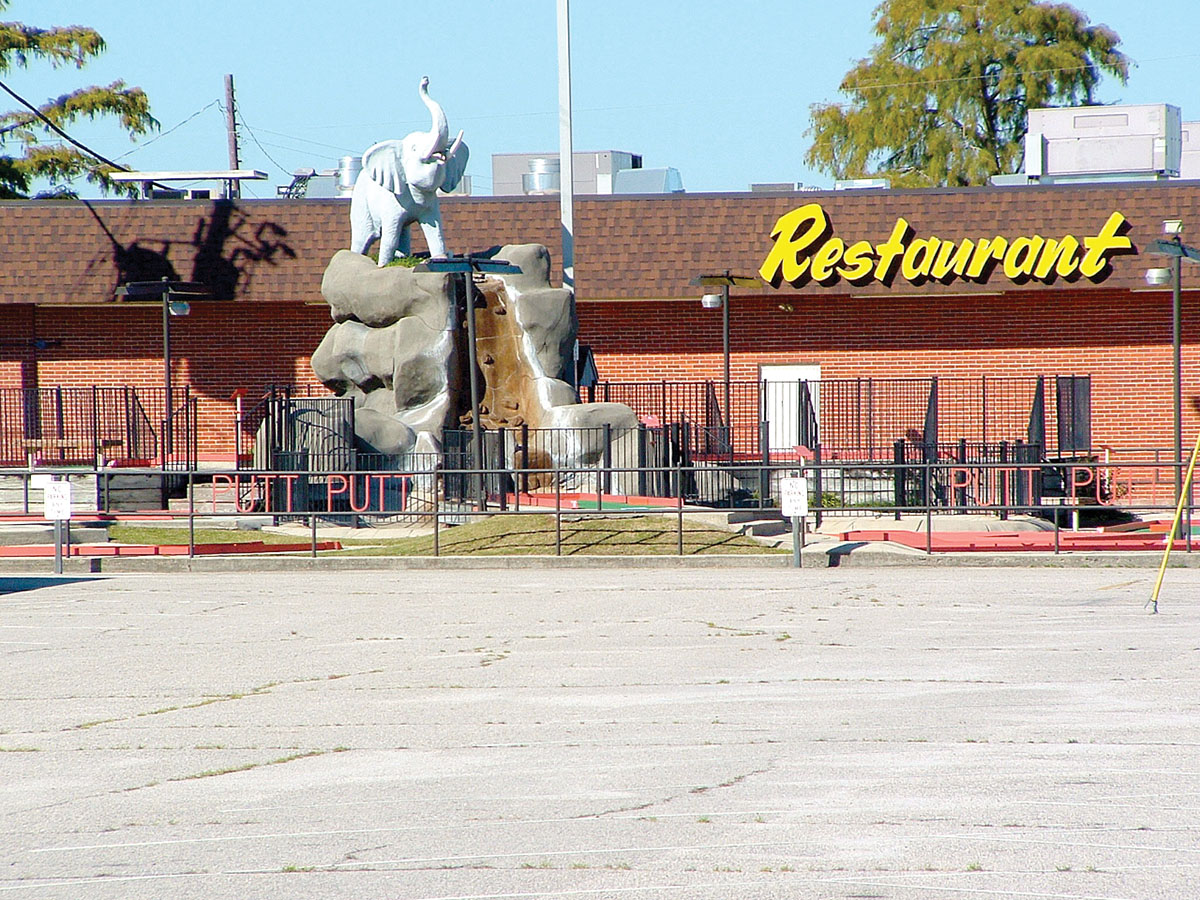
    White Lake is a place to remember as winter sets in. Why not plan a daytrip to White Lake next summer to see this miniature version of Myrtle Beach. You’ll see water parks, putt putt courses and houses on stilts — just like you see at the beach. You’ll find motel, cottage and campground accommodations available as well as permanent home sites.

    It’s a lot like Myrtle Beach, but nowhere as frenzied. It’s family friendly with a laid back style. A lady working on the sign for her rental property summed things up nicely: “We don’t get excited about anything here.”

    Pay it a visit and take the road that circles the lake and see if you don’t get the feeling you’re at Myrtle Beach. You’ll get excited when you realize just how unique it is to get a real “beachy” feeling some 90 miles from Myrtle Beach.

    If You Go …

    www.whitelakenc.com/

    Learn more about Tom Poland, a Southern writer, and his work at www.tompoland.net. Email day-trip ideas to him at tompol@earthlink.net.
  • Midnight Garden

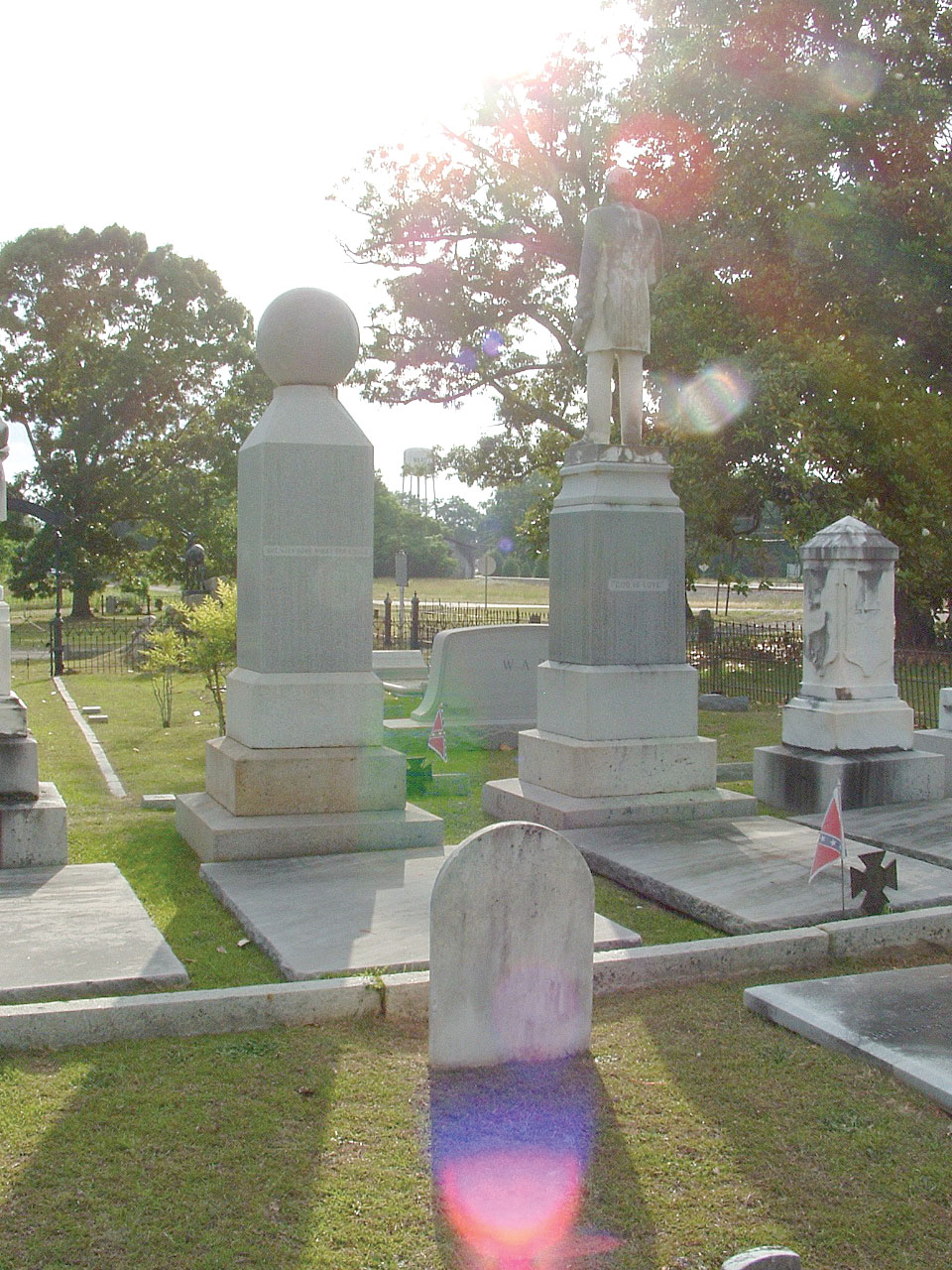
    Peaceful Southern Gothic at Savannah’s Bonaventure Cemetery. (Photo/Tom Poland)

    Perhaps you recall the book and movie, “Midnight in The Garden of Good and Evil.” If you do, you will recall, too, that I was set in a special Southern locale. Drive 3 hours south, about 191 miles, and you’ll arrive in a distinctive Southern city, Savannah, Ga.

    We have to go way back to the early 1980s to a time when Savannah found itself in the midst of a social firestorm. John Berendt, a one-time editor at Esquire magazine, found Savannah so fascinating he moved there and documented the unbelievable characters and their shenanigans in a book that Clint Eastwood turned into a movie.

    Now let it be said that there’s much to do and see in Savannah and its popular riverfront, but this column focuses on a part of Savannah deservedly described as quintessential Southern Gothic and hauntingly beautiful. This column takes a look at one of the memorable settings in the book and movie, Bonaventure Cemetery. It was there that a voodoo scene took place in the “Garden of Good and Evil.”

    Bonaventure’s story goes back to two early and prominent colonial families, the Mullrynes and the Tattnalls. In 1771 John Mullryne, and son-in-law, Josiah Tattnall, owned well over 9,000 acres of land, including 600 acres 3 miles from Savannah on St. Augustine Creek. This site became the family plantation, Bonaventure, French for “good fortune.” A subsequent owner set aside 70 acres of it as the Evergreen Cemetery of Bonaventure, a public burial ground. The City of Savannah bought Evergreen Cemetery in 1907 and much later, in 1982, the city’s Department of Cemeteries took oversight of it.

    Today Bonaventure is more than a beautiful place of eternal rest. It’s historical. Buried there are Johnny Mercer, the songwriter of “Moon River” fame, poet Conrad Aiken and Georgia’s first governor, Edward Telfair. I’ve been there and it’s historically significant for another reason. The nearly 100-acre cemetery provides a walkabout reflection of how views changed on death and dying in the Victorian Era. Death, romanticized and more ritualistic, led to cemeteries becoming opulent “cities of the dead.”

    I walked the cemetery one green April afternoon. Spanish moss, ancient oaks, beautiful monuments and a view of the marsh give this cemetery an atmosphere rivaled by few. The Bonaventure Historical Society poetically expresses all that the cemetery is. “Part natural cathedral, part sculptural garden, Bonaventure transcends time.”

    You can transcend time too if you visit this magnificent setting of mausoleums and more. Savannah is close by with its great shops and seafood restaurants. One more thing: Berendt’s book made the “Bird Girl” statue in Bonaventure Cemetery so famous it had to be moved to the Telfair Museum of Art. Another good stop on your trip.

    If You Go …

    330 Bonaventure Road, Thunderbolt, Ga. 31404

    912-651-6843

    www.bonaventurehistorical.org

    Learn more about Tom Poland, a Southern writer, and his work at www.tompoland.net. Email day-trip ideas to him at tompol@earthlink.net.

  • Vintage Yard Art

    Your Yard Looks Tired –
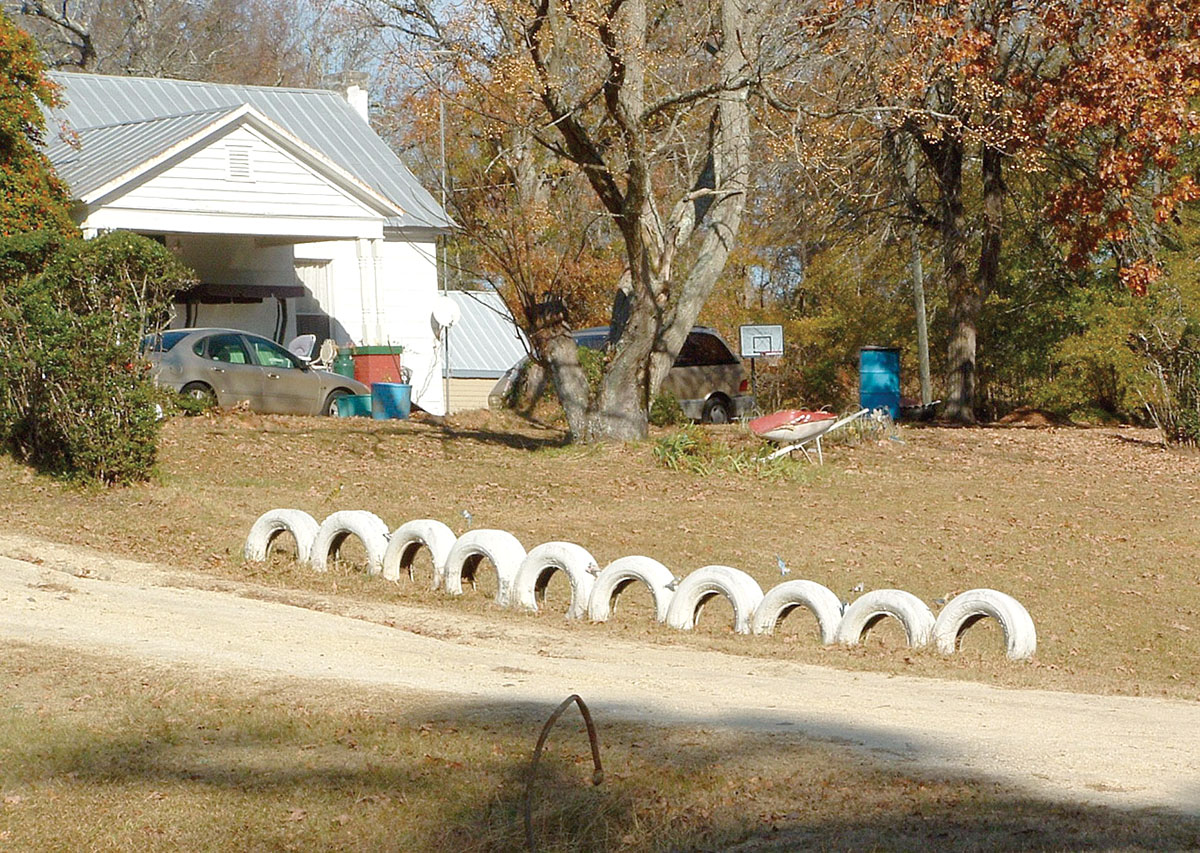
    Classic Southern yard art comes in many forms and puts old items to new use. (Photo/Tom Poland)

    Remember these lines from an old Chuck Berry song? “Cruisin’ and playin’ the radio/With no particular place to go.” Well, the next time you have no particular place to go I have a suggestion. Drive into the countryside and see what “vintage Southern yard art” you can find. Take a camera. Look for tree trunks painted white. Look for swings suspended from big oak limbs. See if you can find purple martin gourds, and give yourself extra points if you can find a row of tires half buried in the ground and painted white. You may have to drive many a mile, because vintage yard art is rarer than ever.

    Anyone who’s bought new tires knows they have to pay a tire disposal fee. No problem back in the day. Just turn it into yard art. Growing up, it was nothing to see truck tires made into flowerpots. Painted white and featuring scalloped edges, the pots held red geraniums. Around the curve, rows of white-painted trees flanked a driveway, and up by a big, old clapboard home, a homemade swing hung from a big oak. I’d see tires made into swings too. A tire swing is pure Americana, a scene right out of a Norman Rockwell painting.

    Giving junk a second life was alive and well back in the day, though it wasn’t thought of as recycling. A nail-ruined tire could be turned into a flowerpot or swing. People found new uses for things before the era of plastic this and that arrived. And some practicality backed some customs. Painting orchard trees white was considered a safeguard against fungi, disease and insects. The white paint deflected sunlight too. I don’t believe the painted trees I saw were being protected. No, I believe the folks who painted pine trunks white were simply trying to achieve a pleasing appearance.

    When I see a pole dangling gourds for purple martins I know I am deep into the country. Putting up gourds for cavity-nesting birds is something you see rarely, if at all, in the city. How many people even grow gourds in the city?

    No doubt you’ll spot bottle trees, but they have seen a bit of a revival of late. Once the domain of the Lowcountry you see bottle trees most anywhere. People in the Congo hung bottles from trees to ward off evil spirits, and slaves brought the practice here. Now they please the eye more so than capturing evil spirits as designed. Other oddities include miniature windmills and carved ducks with “windmill” arms that spin with the wind.

    For me, though, the true yard art of yesteryear is a row of half-buried tires edging a driveway. It steered you straight and most likely made finding the driveway at night a whole lot easier. Hit the backroads and see what you can find as yard art from yesteryear goes. Take some good photos because you’ll not see the likes of it again. For sure, your grandkids won’t.

    If You Go …

    Take the lesser-traveled roads, roads like the ones in the 200s and 30s. Highways 34 and 39 come to mind. Should you find an old tar-and-gravel, or even better a dirt road, take those and go exploring.

    Learn more about Tom Poland, a Southern writer, and his work at www.tompoland.net. Email day-trip ideas to him at tompol@earthlink.net.

  • Sandburg’s Place

    Carl Sandburg’s study, Flat Rock, N.C.

    A 2-hour and 12-minute drive into North Carolina, about 132 miles, will take you to the home of Pulitzer Prize-winning poet and writer Carl Sandburg. For a bonus, plan a trip when the leaves are in rich color. Combine literature and leaves in one trip to Flat Rock.

    Born in Galesburg, Ill., in 1878, Carl Sandburg’s life is a classic American story. That he ended up in the American South is due in part to goats. Sandburg and his wife chose a farm and summer-home setting built by Charleston’s Christopher Memminger in the mid 1830s. Later, a Confederate veteran, Colonel William Gregg Jr. assumed ownership of the home and eventually he sold it to Captain Ellison Adger Smyth who named the place Connemara after his ancestral district in Ireland. Previously it was known as Rock Hill.

    It’s ironic that Lincoln’s biographer bought this home once owned by a Confederate officer. Mrs. Sandburg had been looking for a warmer climate for her Chikaming dairy goats. It’s said that when his wife showed him the site, he said, “This is the place. We will look no further.” Sandburg purchased this Greek-Revival home near Hendersonville in 1945 for $45,000. He liked the place for its serenity.

    Like many writers before and after him, he worked at various jobs. He left school at 13 to drive a milk wagon. From 14 until he was 17 or so, he worked as a porter at the Union Hotel barbershop in Galesburg, Ill. Other jobs included bricklayer and farm laborer on the wheat plains of Kansas. After time at Lombard College in Galesburg, he became a hotel servant in Denver, and later a coal-heaver in Omaha. His writing career began as a journalist for the Chicago Daily News. He spent most of his life in the Midwest before moving to North Carolina where he wrote many of his works. Sandburg wrote of the American people and their struggles, victories and hopes and he enjoyed national fame as a poet, lecturer, folksinger and biographer. He wrote, as mentioned above, a biography of Abraham Lincoln.

    More than 26,000 people go to Carl Sandburg’s home a year. They tour the grounds and the home where he published more than a third of his works. The day I was there I had a park ranger to myself and it was great to take a leisurely stroll through this national historic site. It’s interesting to see where the famous lived and worked. His study looks much like the studies of other writers. Go for yourself and see.

    Not far off 1-26 the 262-acre farm is easy to find. A small goat herd still lives there. While you are in the region keep in mind that Asheville is just 30 miles away. There’s much to see and do in this beautiful, historic region, and if the leaves are in full color, well what a bonus.

    If You Go …

    Turn onto Little River Road at the brown Sandburg Home sign, go approximately 100 yards, turn left into the parking area of the Carl Sandburg Home.

    No park entrance fee

    Guided House Tour Fee: $5 for adults 17 and older. $3 for senior citizens (No credit cards) Children 16 and younger admitted free

    Hours: 9 a.m. – 5 p.m. except Christmas day.

    Learn more about Tom Poland, a Southern writer, and his work at www.tompoland.net. Email day-trip ideas to him at tompol@earthlink.net.
  • Murray’s Locks

    Locks of Love above the Lake Murray dam.

    Ready for a long trip to Paris, France? How does 4,208 miles across the Atlantic sound? Much too far? No passport? Well no need to fret. You don’t have to fly to Paris. Just drive 40 miles southwest to the Lake Murray Dam and you’ll see a touch of Paris and more. The Pont des Arts footbridge in Paris is where thousands of couples lock padlocks to a fence-like rail. They inscribe their names and messages onto the locks and throw the keys into the River Seine to eternalize their enduring love. There for all to see is an unbreakable bond.

    You can see symbols of enduring love in the Midlands too. Paris’s “love locks” have crossed the Atlantic to festoon the fence at Lake Murray Dam. What captures your emotions are the many locks and the sentiment and emotional messages they send. I drove over to the dam on a sultry September afternoon. Billowing thunderheads shot into the sky, their images reflected onto Lake Murray. As I drove over the dam to the Lexington County side I saw all types of locks glittering in late summer sunlight.

    The locks celebrate romance, the birth of babies, and sadly they offer up sentiment for the dearly departed. One lock gave the birth and death dates of one soul along with the words, “God Only Knows.” One lock secured a giant red heart to the fence. Two locks had sparkling glitter glued to them. The fence amounts to an art gallery in a way. People express love in creative ways. If you go, see if you can find the antique lock covered in rust. It’s a lock from yesteryear that requires a key like great grandparents used.

    When you’ve taken in all the locks and their messages, be sure to walk the dam. Across the dam and back is 3.4 miles, a decent walk but walking it in the heat of the day can be taxing. Why not plan a fall walk when the humidity is low. If you do, you can see the skyline of Columbia down river. On the dam’s lake side, you’ll see a huge expanse of deep water flecked white with sails and power boats’ feathery wakes.

    You’ll be walking over a historic spot too. The Lake Murray Dam, officially known as Dreher Shoals Dam, possesses a rich history. General Robert E. Lee’s Engineering Corps first envisioned a waterpower facility where the dam stands. The dam was built from 1927 to 1930 and at the time it was the world’s largest earthen dam. The Midland’s signature lake takes its name from William S. Murray, an engineer involved in the dam’s design and creation. When you walk the dam, you tread across an engineering miracle. The Dreher Shoals Dam runs approximately 1.5 miles long and stands 213 feet high. It holds back an impoundment 41 miles long and 14 miles wide at its widest point. The lake’s surface covers approximately 48,000 acres. All that water forms a 640-mile shoreline. Head down to Lake Murray and enjoy a touch of Paris. Choose a clear blue October or November day and fall foliage will make the journey all the prettier.

    If You Go …

    Dreher Shoals Dam

    Just outside Irmo on Highway 6

    Park for free in the area reserved for dam walkers

    Learn more about Tom Poland, a Southern writer, and his work at www.tompoland.net. Email day-trip ideas to him at tompol@earthlink.net.
  • Autumn Pilgrimage

    Fall is on display. Catch it if you can.

    A buddy of mine lived in Florida for a few years and what he missed most were the seasons, especially fall and its splendid colors. You can have flat, sandy, mono-season Florida. I’ll take a granite ledge that hangs 1,000 feet over a valley carpeted with red, yellow and orange leaves every time.

    As summer winds down, the dwindling of chlorophyll is a beautiful thing. As the sun sets earlier, as temperatures drop, summer’s green palette gives way to autumn’s shades of red, orange and gold. Of late November has been the time when trees burst with brilliance. Typically, foliage in South Carolina’s mountains has peaked later in the fall because of warm weather with bursts of color here and there.

    Planning a trip when the colors peak is not easy, especially if reservations are in order. You’ll find websites and weathermen galore who try to predict the peak season (elevation and latitude make a difference).

    Predicted with accuracy or not, the arrival of fall colors kicks off a tourism season. For many, driving through the Upstate into the North Carolina mountains is an annual pilgrimage. Rather than a long day trip, I like a three- to four-day adventure. I plot a rambling, roundabout route that goes up through Greenville, up to Walhalla, into Highlands, N.C., over to Brevard, Hendersonville and on to Asheville, the town where Thomas Wolfe and O. Henry sleep by the French Broad River.

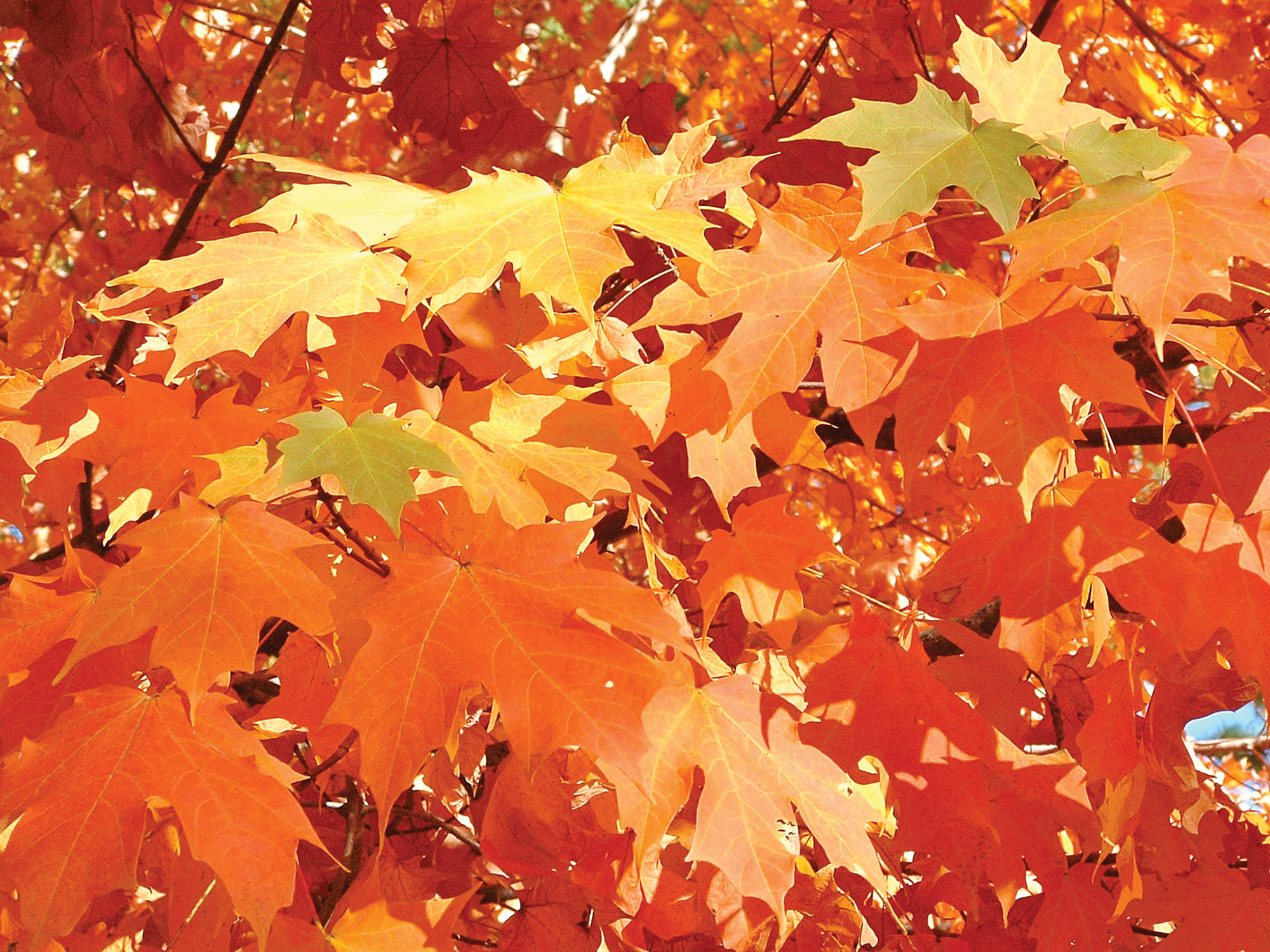
    I enjoy departures from the main route. You’ll find that a lot of small towns in the mountains hold festivals during fall. If you plan a fall color trip be sure to build in some time for explorations. Go to South Carolina’s rooftop, Sassafras Mountain. See its maples flaunt their colors. Look for roadside stands selling apple jelly and other treats from the land. Among the stands’ offerings are pumpkins and gourds. Rainbow foliage finds rivals in red apples, golden honey and bright jams and jellies. Look too for wild grapes and vineyards. Take your time. Stop and buy honey – sunshine in a jar – and apples too. Check out an Appalachian tradition, handmade quilts for sale.

    Driving from Brevard to Hendersonville, look for the cemetery where Thomas Wolfe’s legendary “Look Homeward Angel” stands with outspread wings. Detour to Flat Rock and tour Connemara, the home where Carl Sandburg lived, now a national historic site.

    On to Asheville. In his memoir “Burning The Days,” James Salter writes, “There is a feeling. That somewhere the good life is being lived but not where you are.” That’s how I feel about Asheville. I spent a few days there on assignment for a magazine. One morning there as crystal clear as a photo taken by a fine Hassleblad. Deer grazed in the meadow behind the estate. Fog rolled in and auburn deer faded into gray phantoms. Sunlight burnt off the fog and blazing fall foliage lay upon October’s hills like sun-struck jewels.

    Fall colors are one of Earth’s better performances. There’s music in the leaves and there’s no resisting their siren song. Keep checking the forecasts and enjoy the absence of green.

    If You Go …

    Check websites that predict fall color:

    www.weather.com/outlook/driving/fallfoliage/statelist/

    gosoutheast.about.com/od/wintereventsfestivals/ss/fall_foliage_8.htm

    Check the Table Rock Foliage Cam

    www.southcarolinaparks.com/trip-planning-tools/photos-videos/webcams/table-rock-state-park/

    Learn more about Tom Poland, a Southern writer, and his work at www.tompoland.net. Email day-trip ideas to him at tompol@earthlink.net.
  • Back to the Bush

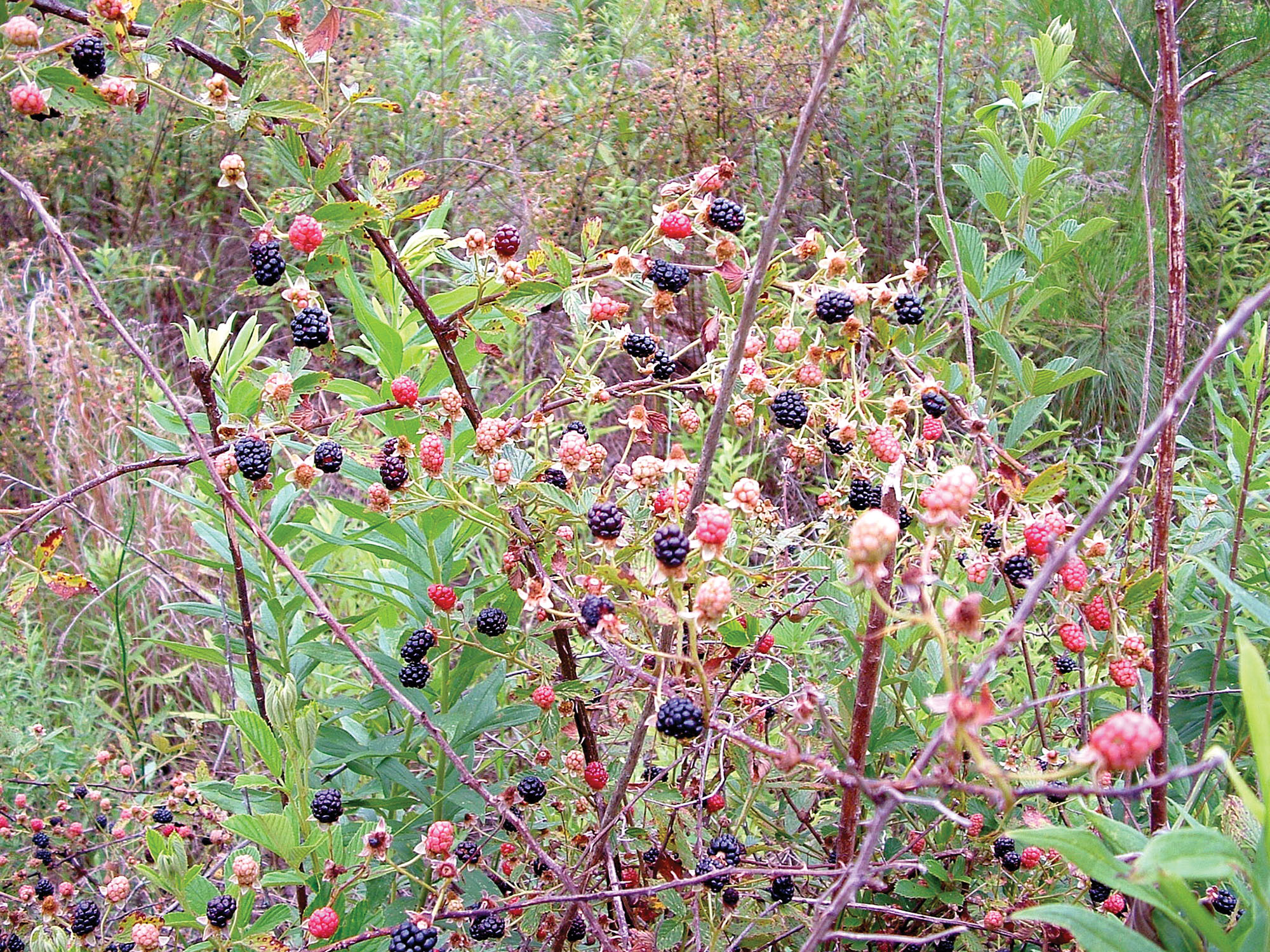
    Plump, juicy blackberries, available at a roadside near you. (Photo/Tom Poland)

    Last month I was on assignment in a remote place; the kind of place where you see trucks and tractors but few cars. Farm territory. I parked along a weedy, poorly maintained road and as I stepped from the car I saw a sight from childhood. A tangled thicket of briars with succulent, shiny blackberries glistening like onyx pendants. Red berries, hard and yet to ripen, waited their turn for sunshine to do its magic.

    Seeing this explosion of blackberries brought back childhood memories. Pickin’ berries was great fun, a tradition. I imagine country kids still look for blackberry patches. We sure did. A bucket: that’s all we needed. The juice stained my clothes but I didn’t care. All those memories and more came rushing back when I parked along the tangle of berries you see pictured here. My timing was perfect. In the South, blackberries peak during June. I just happened to have a container in the car and I set out picking berries. The best berries were hiding deep in the “nettles,” as the British call briars.

    I sprinkled them onto my shredded wheat the next morning. Not once did I get sick. I read that anyone picking blackberries today in wild places should contact the landowner and ask if he’s sprayed anything toxic on them. Why does everything we did as kids have to seem so dangerous now? You know, if your child rides a bike he must wear a helmet. That kind of thing. I swear we live in the era of pending disaster at every turn. Now I’m supposed to look up the landowner and ask him if he’s sprayed the wild blackberries? Surely not. I’d sure hate to see picking blackberries go the way snow ice cream went. Ruined by chemicals.

    Today it’s advisable to pick blackberries at “agritourism” farms. That’s better than not picking them at all, but I prefer to discover blackberries along a forgotten country lane. It revives the sense of adventure I had as a kid growing up.

    Another source of fun and food were plum trees. We had a plum tree down by our driveway. As the days grew warmer, the plums turned from green to yellow and red. We’d pick ’em, eat ’em and spit out the pulp. Didn’t take long to learn that the sweetest plums often had fallen to the ground.

    When I was a boy I didn’t keep a bag of gummy bears or skittles around. Such things were foreign to me. I picked and ate wild plums, wild black cherries and blackberries, and not once did I get sick. You knew you were in for a mess of chiggers but that was the price you paid.

    I know you fine Southern ladies reading this column have taken kids blackberry picking. As for you young girls recently married or planning a wedding, when you have kids take them into the countryside and let them pick blackberries. It’ll come natural to them and they’ll thank you. Make ’em a pie, and they’ll never forget this day trip I assure you.

    If You Go …

    Drive out into the countryside and look for read-and-black berries, complete with briars. Free. Chiggers included.

    Learn more about Tom Poland, a Southern writer, and his work at www.tompoland.net. Email day-trip ideas to him at tompol@earthlink.net.

  • Old Man River

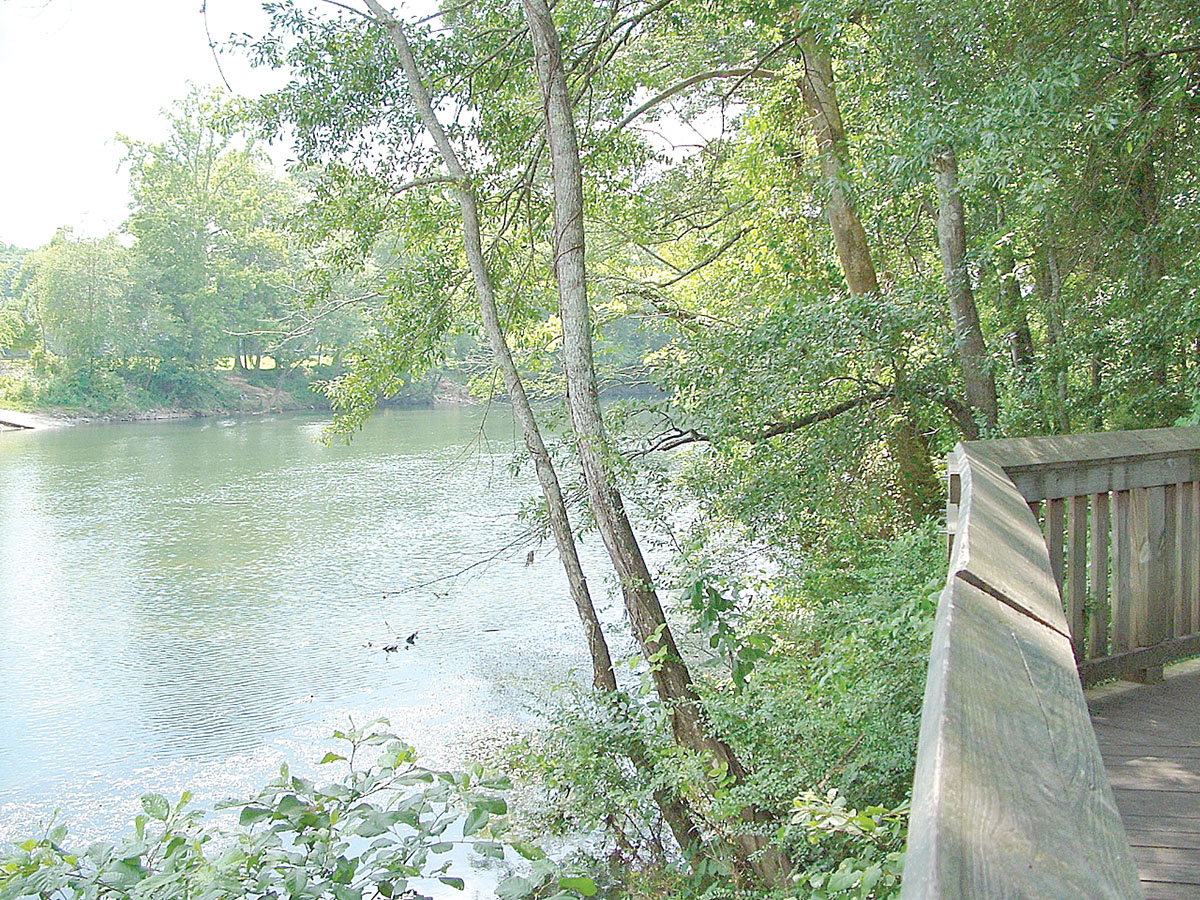
    The Saluda River, from one of the many stopping points along the trails at Saluda Shoals Park. (Photo/Robert Clark)

    Experience the outdoors. Enjoy nature. Fish. Kayak and canoe, and walk the nature trail. You can do this and more at a stretch of river that reveals how many Southern rivers used to be.

    In older days a lot of hardworking inland farm families vacationed by the banks of shoals. It was their Myrtle Beach. Less than an hour’s drive, about 35 miles, will take you to a river that none other than Robert E. Lee first suggested could be dammed: the Saluda. Just 1.5 miles from the Dreher Shoals Dam, the Saluda Runs free here and you can spend a relaxing day with Old Man River, unleashed as if no dam ever existed.

    Located along the banks of the Saluda River, the 350-acre Saluda Shoals Park features an 11,000-square-foot Environmental Education Center, Exhibit Hall, Auditorium, Classrooms and 3,776 square-foot outdoor deck. Miles of paved and unpaved trails provide wonderful places to walk and bike. You can rent bikes, canoes and kayaks here.

    A river observation deck provides a good place to watch the Saluda River run by. And know too that the South Carolina Department of Natural Resources has established the Saluda Shoals Park Fishing Pier off Old Bush River Road, between St. Andrews Road and Lake Murray, south of Irmo. This wooden fishing pier parallels the Saluda River bank. A paved sidewalk to the pier from the paved parking area provides easy access. A boat ramp and canoe and kayak launch points make it convenient for water enthusiasts. Guided horse trails exist for equestrian-minded people too.

    Families and organizations make good use of the picnic shelters and kids make good use of the playground. The River Center provides a good setting for receptions, meetings and other events.

    Got some nature lover in you? You’ll find the Saluda Shoals Wetland Preserve to be a tranquil sanctuary. The quiet waters and woodlands provide habitat for many species of birds, animals, and wetland plants. Down near the river you can feel the temperature — and stress levels — drop. It’s hard to imagine that you’re only minutes from Harbison Boulevard and all its accommodations.

    Saluda Splash is a good place to cool off on a hot summer day, and it’s a good place, too, to let the kids expend energy. Children love the interactive, zero-depth water playground, making it quite safe with no need to wear life preservers. Splash opened for the season on April 26, and closes Sept. 28. Pack a picnic lunch and enjoy it at one of six shelters, all equipped with ceiling fans, charcoal grills and conveniently located restrooms. Plan a mini-vacation this summer at Saluda Shoals Park.

    If You Go …

    5605 Bush River Rd.,

    Columbia, S.C.

    803-731-5208 / 803-213-2050

    Car or mini-van: $5

    12+ passenger van: $7

    Bus: $11

    Saluda Splash Wristbands: $3 each; Seasonal, Open 9 a.m.– 8 p.m.

    From Columbia, take I-26 west toward Spartanburg. Exit Piney Grove Road and turn left. Proceed approximately 1.5 miles to St. Andrews Road. Turn right, then left at the first traffic light. Saluda Shoals Park is 1.5 miles on your left.

    www.scgreatoutdoors.com/park-saludashoals.html

    Learn more about Tom Poland, a Southern writer, and his work at www.tompoland.net. Email day-trip ideas to him at tompol@earthlink.net.