Tag: slider

  • Surprise! Grace Coffee complies with zoning

    BLYTHEWOOD – While it may come as a surprise to the owners of brick and mortar commercial buildings in downtown Blythewood, Grace Coffee, a small turquoise and white mobile home housed on a parking lot in downtown Blythewood, is now a business in good standing and is in compliance with the necessary zoning approvals from the Town of Blythewood, according to an interpretation of the Town’s Zoning Administrator Brian Cook.

    How that came about is confusing to many and being questioned by some who run businesses out of brick and mortar buildings and have spent years adhering to the Town’s zoning and architectural review standards or face stiff daily fines.

    But Grace Coffee is apparently not required to meet the Town’s standards for materials, landscape, paint color, sign and other things, yet is not fined for not doing so.

    As the Town’s Planning Consultant Michael Criss, explained to the BAR Board Monday evening, Grace Coffee’s owner was initially removing the trailer every night as it had agreed to do when it was allowed to set up shop. But as the business became successful, the owner, Matt Beyer, balked at removing the trailer at night, Criss said.

    Next, Grace Coffee wanted a Certificate of Appropriateness (COA).

    The BAR met on April 17, 2017 to consider Grace Coffee’s request for a COA for its location in the parking lot of 208 Main Street.

    Under what one board member described to The Voice as ‘pressure’ from Town Hall, the BAR reluctantly granted Grace Coffee a temporary COA for a period of one year. According to the Town’s former administrator, Gary Parker, the Town had no ordinance in place to address the vending stand, but Criss interpreted it to be a structure.

    The temporary COA was supposed to allow the Town time to review and create regulations to address vending stands.

    Adding another layer of confusion, Council was then presented Ordinance 2017.002 for consideration. The passage of that ordinance on April 24, superseded the temporary COA issued by the BAR a week earlier, and made Grace Coffee a non-conforming use, Cook wrote in a memo to the BAR. This also gave Grace Coffee the same zoning protections of other brick and mortar buildings. However there was no announcement at the time to that effect and former Councilman Tom Utroska, who voted for the ordinance, told The Voice that he had not been aware that, when passed, the ordinance would supersede the temporary COA.

    Section 155.276 of the ordinance offers definitions of itinerant merchants and vending stands. Item B of the ordinance says that vending stands are to be removed daily and cannot be stored on property within the TC District – but that does not apply to Grace Coffee. Item C addresses nonconforming uses.

    “Any vending stand in lawful operation upon the date of first reading of this section may continue to operate without regard to the daily removal requirement…” That, according to Town Hall, is Grace Coffee. It can now operate as a nonconforming vending stand in the Town Center District, according to the interpretation of the Town’s zoning administrator. And while Grace Coffee’s one-year COA has expired, the issue is moot if, indeed, Ordinance 2017.002 superseded it.

    Cook drafted a version of the City of Columbia’s Temporary Vending Ordinance that has the Blythewood Chamber’s backing and presented it to the BAR Monday night for information. It will next go to the Planning Commission’s June 4 meeting for a vote.

    Jim McLean, Co-Chair of the Board of Architectural Review, expressed his concern that the proposed ordinance will allow a temporary food truck vendor the potential to set up 365 days a year in Blythewood.  As long as they meet the zoning district requirement, locate at least 100 feet from the door of a lawfully established eating place, maintain within the food truck proof of written permission from the private property owner, receives annually a zoning permit to operate a food truck, move the food truck off the property each evening and operates for no more than 10 consecutive hours within a calendar day, does not operate between 9 pm and 9 am and the parcel on which the vendor operates is more than 400 feet from a parcel zoned residential., they would be eligible.

    “I really have a struggle with the fairness of this,” McLean said.  “Are the brick and mortar stores being undercut?  They have made a hard investment in the town and are abiding by the regulations and restrictions.  The caveat of unfair competition needs to be addressed.”

    There was general consensus that food trucks and temporary vendors associated with events would continue to be acceptable.  And there appears to be no problem with concessionaires and persons selling only seasonal merchandise, such as fireworks, pumpkin stands and Christmas trees are also permitted under the ordinance.

    BAR member Alan George brought a “what if” to the discussion regarding the possibility of a tattoo truck setting up shop.  Cook said that if the vendor met all other criteria he would be eligible.  The question was raised regarding sexually oriented businesses (SOBs) being eligible under this ordinance.  Criss confirmed that the TC (Town Center) zoning would not have to accommodate the SOB use.

    The BAR committee asked that there be some criteria addressed for mobile vending and standards dealing with the appropriateness of the vendors.

    Criss said there are several options including adopting an ordinance to accommodate vendors, go back to only allowing them for special events or seasonal sales or something in between.

  • Citizens open up to Winnsboro Town Council

    WINNSBORO – Winnsboro’s Town Council’s meeting agenda was light last week, but all the chairs in the room were filled, and many of those sitting in the chairs had something to say to Council.

    Winnsboro resident Jenyfer Conaway kicked things off by introducing herself as a “damn yankee” who works in Charlotte. She said she loves Winnsboro and purchased a house here 10 years ago for $78,000 which, she said, is now worth only $35,000.

    “Our town is dying,” Conaway stated, initiating a dialogue with council members, asking if they knew their oath of office.

    Mayor Gaddy intercepted the exchange and instructed Conaway that dialogue was not part of the program.

    “I just want someone to listen to us,” she added, before sitting down.

    Vanessa Reynolds said her position as a national sales manager gives her access to businesses in all areas of the country.

    “Small towns are not trending down overall,” she said.  She said they are trending up and cited the need for Winnsboro to enforce their code 96.5 Section B ordinances. These ordinances address decaying exterior exposures of buildings including peeling or cracked exteriors, broken doors and windows, etc.

    Reynolds said the Town’s lack of enforcement is extending the problem and called for cooperation among residents.

    “We need to roll up our sleeves,” she said.

    Mayor Gaddy responded, thanking her for giving Council solutions and not just complaints.

    Attorney and Ridgeway Municipal Judge, Adrian Wilkes, requested that Council record their meetings.  He said it would be a big benefit to have something to look back to when issues arise.

    “I was taken aback that merchants don’t know that grant money is available for downtown revitalization,” Mitford resident Wanda Carnes said. Carnes said she owns four buildings and would like to have been able to use the unspent money for revitalizing the look of her storefronts.

    “A line was added to the application saying that only one revitalization grant is available per owner,” Carnes said. “When was that line added and who voted to add it?”

    Gaddy said he would get that information to her.

    Keryn Isenhoward asked Council’s for the use of Mt Zion Green trail for a four-hour breast cancer walk on Oct. 20.  Keep Going Fairfield County will be the event title.  Council agreed to support the event by providing use of Mt Zion, electricity and maintaining the trash bins for the day.  Councilman McMeekin championed the event, making the motion to allow the walk.  The motion passed 5-0.

    Fairfield Central Band Director, Sir Davis, asked Council to allow gratis use of the Old Armory Building on June 1, for the band’s banquet.  Council voted 5-0 in favor.

    Also on the agenda was the Chamber of Commerce relocation discussion, but Terry Vickers asked that it be deferred.

    Councilman Danny Miller said he had held a council position for 23 years and expressed his love for concerned people.

    “We are all in it together,” Miller said, “and we are going to get there through love and working together.”

  • Millions in debt, no rescue in sight

    Doscher, Board at odds over cutting expenses

    WINNSBORO – The harsh reality of Fairfield Memorial Hospital’s financial situation – millions of dollars in the red and no rescue forthcoming from Fairfield County Council – was the all-consuming topic of discussion during the Finance and Audit Committee meeting before the regular FMH Board meeting April 24.

    Committee chairman Randy Bright attempted to tackle the issue head on by asking hospital administration to look for more ways to cut costs. “In light of our fast-approaching $3.4 million in vendor payables, and $5.3 million in additional long term liabilities, and that we are dropping revenue and we are dropping traffic (patient) census in our operations” … expenses are “something we can impact… instead of looking back, we can look forward.” Bright said.

    “Also, the (Fairfield County) Council has committed to not giving us any extra money aside from the potential land sale,” he said.

    During Council’s April 16 budget workshop, Council declined to budget either the $4,000,801 that the hospital requested for 2018-19 or the $1,043,000 recommended at the administration.

    “So that being said, do you have any particular expense cuts you would like to propose?”  Bright asked hospital CEO Suzanne Doscher.

    “We evaluate the entire budget constantly,” Doscher responded. “I had the impression that if we were on target with the (current) budget then it wasn’t the board’s decision to redo the financials – the budget – again.”

    Bright agreed, but said “The only problem with that is, however, that budget through September is expected to lose a million six, and if we go all the way through December, then we are going to lose well over two million dollars.  We don’t have that kind of financing.

    “And the real kicker is,” Bright continued, “the county council is not going to give us any more money. We need to start looking at even more expense savings or anything that gets us away from losing two million plus by the end of the year. Because we are not going be able to sustain that.”

    Bright pointed out line items in the current hospital budget as examples of expenses that could be cut: “travel and education – we are going to shut down in December.  Do we really need this?  We have budgeted more than $12,000 (in the budget) for travel and education,” Bright said.

    “We evaluate it every time,” Doscher responded.

    “Give me an example, what do we have on the agenda for travel now…no seminars, no sessions for hospital staff in Greenville…” Bright persisted.  “Aren’t these things planned some time in advance?”

    “I can’t keep up with other people’s schedules to tell you that right now. I don’t get into the weeds like that,” Doscher said.

    Bright noted that hospital expenses are currently 80% of gross revenue versus 70% of gross revenue a year ago.  “It’s our balance in our revenues and expenses that has worsened and we have got to do more.”

    However, His comments did not go over well with Doscher, who quickly defended the hospital’s fiscal management.  “We are running operations and we are managing the operations. If you want to rebase the budget again, we can do that.  But we have to run the operations.”

    “Yeah, we were saying that right up to the point we got rid of – finally – three under-performing departments; that is my point. We did that way too late, two years too late.” Bright said.

    “In your opinion but not in everybody’s opinion.” Doscher shot back.

    “It was the opinion of the consultants.  No one wanted to get rid of them, we had to,” Bright said.

    “So we are exactly where you started from,” board member William Turner added.  “I don’t know how we do expenses and such when we don’t have any money?  …How much did we spend last month? I don’t see how we have the doors open now.  But every day it’s money lost, money lost.  I don’t see how we can spend anything without approving every penny and I don’t know how you approve money you don’t have.  And we don’t have any money.  That’s how simple it is!”

    “We are five million dollars in debt and we only have current assets of about 1.2 million dollars,” Bright added.

    Bright and other committee members continued to press for more specific cuts to the hospital budget. “We should look at memberships,” Trustee Ron Smith suggested.

    After discussion, the committee approved a motion to ask hospital administration to come back with more cuts.  At minimum, the categories of expenses for review would include dues, subscriptions, mileage, advertising, marketing, and hosting and participating in events except for the purposes of employee appreciation.

    Bright said the hospital has “carte blanche” to make any cuts to the budget as long as patient care was not affected.

    “And employee morale,” Fantry added.

    March Financials

    CFO Timothy Mitchell’s monthly financial briefing did have some good news – the month of March brought in extra revenue in the form of collections from the SC Department of Revenue of outstanding patient debt.  As a result, the hospital ended the month of March with $96,136 in revenue over expenses.   However, excluding bad debt recoveries and a premium refund, the hospital experienced operating losses of $241,777 for the month. For first six months of the current fiscal year (July through March, the hospital’s EBIDTA (earnings before interest, depreciation, taxes and amortization) was a negative $610,077.

  • FMH employees air concerns about leadership

    WINNSBORO—At Monday’s meeting, council members listened intently as the director of Fairfield Memorial Hospital’s Rehabilitation Center openly criticized hospital leadership during public input.

    “We question and don’t quite understand decisions made by administration, such as finances, priorities at this stage of the game and treatment of employees,” Laura Willingham, the hospital’s rehabilitation director, said. “Of course we’ll do what we’re asked to do. But it’s still disconcerting.”

    Willingham also emphasized the need to keep a rehab facility in Fairfield County as opposed to having rehab patients travel to Columbia for service.

    Smith commended Willingham for speaking publicly.

    “I think probably since I’ve been on council, it’s the most brave thing I’ve heard spoken to  us,” he said. “When we question some of the hospital administration, we’ve been chastised. I hope there are no reprisals against you.”

    Councilman Cornelius Robinson also signaled support for the rehab center.

    “Rehab is something that we need in Fairfield County,” Robinson said. “Each one of us is definitely thinking about it.”

    Sexual harassment suit filed

    Willingham’s address was unrelated to a developing legal matter involving Fairfield Memorial Hospital – a sexual harassment lawsuit filed by a former employee.

    Tabitha Williams, a former certified nursing assistant, made that claim in a lawsuit Feb. 22 in Kershaw County Circuit Court. The litigation was removed to federal court in March.

    The lawsuit says a human resources employee made several unwanted sexual comments to her shortly after he started working at the hospital in October 2016.

    The comments came during conversations at work, on the phone and via text message, according to the litigation.

    Williams further says the employee tried to “lure” her into a sexual relationship. The lawsuit calls him a “sexual predator.”

    She said the man fired her in August 2017, “ostensibly for reasons related to job performance,” the suit continues.

    “He began a period of inappropriate and aggressive communications with Plaintiff in and out of the workplace,” the suit states. “Plaintiff is informed and believes that her termination resulted from her refusal to engage in sexual activity with Defendant.”

    In its response, the hospital denies the allegations.

    The hospital’s response says Williams refused to cooperate in an investigation of her claims. It further states Williams was fired for poor performance and attendance issues, court documents state.

    Williams is seeking damages for lost pay, embarrassment and humiliation, punitive damages, legal fees and other unspecified damages.

    No trial date has been set, though in April a deadline of Jan. 2, 2019 was set to complete mediation.

    County Mulls FMH purchase

    While the diagnosis doesn’t look good for Fairfield Memorial Hospital, efforts to resuscitate parts of it by buying some health care properties are underway.

    At Monday night’s meeting, some hoped the county would vote to purchase several parcels associated with the hospital property. That was one of three items on the agenda for discussion in executive session, but a vote did not materialize.

    Council Chairman Billy Smith predicts a vote will come soon.

    Smith said the county is interested in purchasing parcels encompassing the rehab center, as well as a couple of private practice offices. He hopes a third party will take over operations.

    “We’re close to making a decision. I was actually hoping for a little bit more in executive session tonight,” Smith said. “Certainly we hope to set it by the next meeting.”

  • Moonshine bust nets Blythewood man

    WINNSBORO – While conducting a lawful search warrant at about 6 p.m., May 8, at a residence on West College Street in Winnsboro, officers from the Fairfield County Sheriff’s Narcotics Unit, the Winnsboro Department of Public Safety and the Chester County Sheriff’s Narcotics Unit, encountered numerous subjects in the front yard of the residence and discovered 25 mason jars of liquid believed to be moonshine inside the house, the incident report states. It was also reported that officers found substances believed to be cocaine and marijuana in a vehicle on the property registered to Derrick Jones, 41, of Blythewood.

    Jones

    Upon the officers’ arrival, one of the subjects, Donald Glenn, Jr. who, it turned out, is on federal probation/supervision for a previous arrest, immediately bolted from the location, but was captured in the next block, detained, handcuffed and taken back to the residence.

    All the other subjects were also handcuffed and secured by perimeter units in the front yard. A search team along with a K-9 officer reportedly entered the residence where the K-9 made several narcotic alerts.

    Outside the residence, Jones, who had been seated at a picnic table, still handcuffed and under legal confinement, also bolted from the property, the report states. While officers were unable to catch or locate Jones, he contacted officers about 11:30 that evening and made arrangements to turn himself in.

    Jones was arrested and charged with trafficking cocaine over 10 grams and common law escape and transported to the Fairfield County Detention Center. Jones was released on $25,000 bond for drug trafficking and $5,000 bond for escape. According to the report, Glenn was turned over to federal authorities.

  • Cauthen gets 30 days; must pay $1.8M restitution

    Blythewood—A former Blythewood Town Councilwoman who helped bilk an estimated 17,000 people out of $28 million in fraudulent health care claims will spend 30 days in prison.

    Kathleen (Katie) Cauthen, 47, was also sentenced to 12 months of supervised release and ordered to pay nearly $1.8 million in restitution, according to a sentencing order filed Monday.

    Cauthen

    Cauthen could’ve received up to three years in prison and a $250,000 fine for the misprision of a felony count to which she previously pleaded guilty. Prosecutors recommended an “advisory sentence of 21 to 27 months.

    The one-page sentencing document says the sentence was part of a plea agreement that the court accepted. No further details from the nearly 90-minute hearing were contained in the document.

    Cauthen has been a cooperating witness in the government’s investigation and prosecution of others in the health care fraud case. Others received more harsh penalties.

    William Madison Worthy, the ringleader and a former client of Cauthen, got 82 months – or about seven years – and three years of supervised release after pleading guilty in 2016. Worthy was also ordered to pay $6.5 million in restitution, according to court records.

    Other codefendants have also pleaded guilty, including Angela Posey and Bart Posey.

    Angela Posey was sentenced in March to six months of probation. Bart Posey pleaded guilty in January and his sentencing was rescheduled from April 30 to July 13, documents state.

    Cauthen’s sentencing concludes a case that originated in 2013 and involves acts dating back to at least 2008, according to court documents. Cauthen is one of several people indicted in the multi-state health care fraud scheme.

    The suspects embezzled funds from premiums paid by people who had signed up for health plans that were unauthorized, diverting millions of dollars in premiums for the defendants’ own personal use, according to an FBI news release.

    Shell companies were set up to facilitate money laundering.

  • USA Today recommends Laura’s Tea Room for Mother’s Day

    Laura’s Tea Room’s proprietress, Carol Allen, standing, pampers her customers with fussy attention, delectable sweets and never-ending pots of tea. | Barbara Ball

    RIDGEWAY – The May 7 issue of USA Today, on newsstands Monday, featured Carol Allen’s Laura’s Tea Room in Ridgeway as one of ten tea rooms around the country that it considers perfect settings for Mother’s Day celebrations. Tea rooms in Pasadena, CA; New York City; Tampa, Florida and Salt Lake City, were among those included in the article.

    No sooner had the newspaper hit the streets on Monday, than customers and friends began calling and emailing Allen with the news. Allen said she was incredulous.

    “You saw it where?” she asked repeatedly.

    “I was shocked,’ she laughed. “But it’s been one thing after another ever since the story broke,” Allen said.

    “A British couple called saying they were vacationing in Atlanta and would be leaving for Florida that afternoon. They told Allen they had seen the story in USA Today made reservations for High Tea the next day. They arrived about 1:30 p.m. and we had a wonderful visit,” Allen said. “And they enjoyed High Tea.”

    “It’s been crazy ever since the story came out,” Allen said.

    Allen and her now 96-year-old mother, known as Gramma, started the tea room in the spring of 2008 in the former Thomas Company Mercantile Store built in 1911 at the corner of Palmer and Church Streets in downtown Ridgeway.  Laura Thomas was the last member of the Thomas family to run the mercantile before it closed in the mid 1990’s.

    “My mom, my daughter and I would visit tea rooms wherever we saw one,” Allen said.  “I had so many dishes in my house that I had to do something with them.  And I am certainly a tea drinker, so it all fell into place.

    “I was playing around with a number of names for the tea room while we were working to turn the mercantile into a restaurant.  We wanted to maintain the ambiance of this beautiful building.  Locals would stop by frequently and make the same statement over and over again – that Laura Thomas would have been so happy to see it as a tea room.  I finally decided to call it Laura’s Tea Room.”

    According to the article, Laura’s Tea Room offers customers a choice of over 150 tea cups, a large assortment of teas and as a colorful collection of hats in case a customer forgets to bring her own.

    Allen gives credit for the tea room’s success in large part to her staff who she considers extended family. “My staff really cares about their customer’s experience and it shows in everything they do,” Allen said.

    Laura’s Tea Room features high tea in an exquisite setting on the upper floor of the over 100-year-old building. Lunch is served in the downstairs Deli. A first floor gift shop offers eclectic choices related to dinning and many choices for tea. The gift shop has retained the original mercantile cabinetry, which is a walk back in time.

  • Lack of transparency still dogs JWC

    JENKINSVILLE – Transparency complaints continue to muddy the waters of the Jenkinsville Water Company.

    Continuing a dispute that arose during the JWC’s meeting in April, several members of the public contested a murky vote taken by the board last month.

    “When you vote on items, when you don’t tell us what it is, we as a member of the company have a right to know what those items are,” Donald Melton with the Broad River Campground, who is in litigation with the JWC, said during public comments Monday.

    Specifically, Melton took issue with a series of votes the JWC conducted during the April meeting.

    After a lengthy executive session, the board voted merely to accept “Item A,” “Item B” and “Item C” without specifying what those items involved.

    “The board cannot vote on just a name and a number. Will that be different tonight and here on out?” Melton asked.

    Board members remained mainly silent, responding only to say they couldn’t and wouldn’t respond to questions posed in public input.

    “We’re not going to go back and forth in meetings like that. We’ve told you that before,” Greg Ginyard, president of the JWC, stated.

    Melton took the entire three minutes allotted in public input, even though he spoke for roughly half that time.

    Ginyard did respond to Jeff Schaffer, another member of the public, who also criticized what he characterized as a lack of transparency.

    “Is it the new policy not to answer questions a member asks? Is there a policy for that?” Schaffer asked.

    “No sir, I’m giving you this because you haven’t been here in a while, but we’re not taking time to go back and forth between the board,” Ginyard said.

    Ginyard went on to say that numerous government bodies don’t respond to questions. He directed anyone desiring a response to submit written questions to the board.

    The Voice newspaper also addressed the board, cautioning members that JWC votes could be legally overturned when they’re conducted during meetings in which violations of the state’s Freedom of Information Act occur.

    In 1991, the S.C. Supreme Court upheld the invalidation of a Sumter County business license tax ordinance because the ordinance was passed following improper executive sessions, according to Supreme Court records.

    During an interview with The Voice following Monday’s meeting, Ginyard said he doesn’t think the water company is subject to FOIA.

    “We don’t feel that we are a governmental body,” he said.

    Ginyard didn’t respond to follow-up questions referencing a 2011 attorney general opinion classifying the JWC is a public body, and promptly left the building.

    That opinion stated the JWC was chartered in 1970 through a U.S. Department of Agriculture loan.

    The opinion also stated that through the years, the JWC has received government funding totaling at least $200,000 from the S.C. Budget and Control Board, as well as additional funding from Fairfield County Council.

    The council later threatened to cut off funding, citing transparency issues. Specifically, the county demanded copies of audits and federal tax records, the attorney general opinion stated.

    “Unfortunately, until you are able to provide the County with this information, the County will not be able to consider any funding requests from your organization; will discontinue and County funding to your organization; plus, will not be able to act as a pass-through for you on any grants or loans from any other governmental or charitable organizations,” the county stated in a letter cited in the attorney general opinion.

    Jay Bender, an attorney for the S.C. Press Association and expert on the FOIA, agreed with the attorney general’s opinion.

    “This organization (JWC) does not understand it is a public body and it is obligated to follow the law,” Bender said. “If it wants to act privately, what it does is give the money back. Don’t take public money if you want to act like a private corporation.”


  • Prowler caught on home surveillance in Blythewood

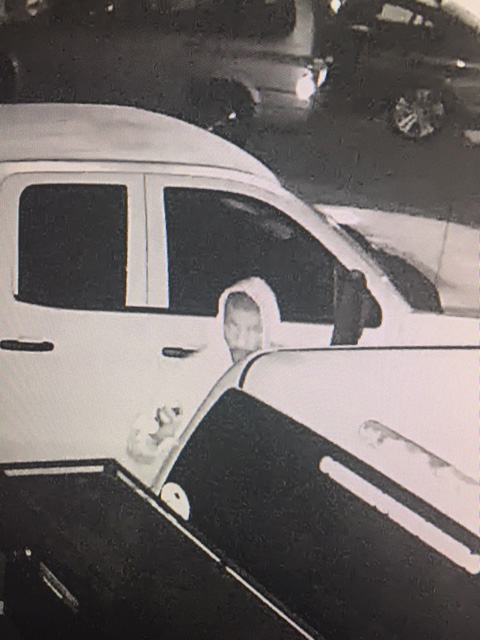
    BLYTHEWOOD – When Summer Pines resident Kristen Locklear received a text from her home surveillance system Saturday morning, April 28, she said she checked the camera video and found footage showing a male driving into the cul-de-sac where her home is located. The time on the video was 2:30 a.m.

    Prowler caught on surveillance video

    “He parked his car, a dark sedan, and calmly got out and walked up to our neighbor’s car in the driveway, looked in the window, then walked over to my husband’s personal pickup truck and then to his work truck, both parked in our driveway.  He looked in the windows and checked the tool boxes in the back of the truck. He attempted to open doors and tool boxes and appeared to be covering his hand with his sleeve so as not to leave fingerprints,” Locklear said.

    Locklear reported that the doors on the trucks were locked, and that there were no valuables in the vehicles, but that seeing the scene unfold on the video unnerved her.

    About five minutes after the man drove up, she said, he left.

    “He did not stop on his way in or out of our street to check any other vehicles. He came straight down into the cul de sac, parked and checked out all of our stuff, and then left. It looked like he had damage to the rear hubcap on the driver’s side of the car,” Locklear said.

    Locklear said she reported the incident to the Richland County Sheriff’s Department. She said this was the second time this kind of incident has occurred at their home.

    Prowler caught on surveillance video

    “In October, 2016, burglars stole over $1,000 worth of items from my husband’s truck sitting in the driveway,” Locklear said.

    “We just hope everyone will be on the lookout for this man and his vehicle. Keep your car doors locked and don’t leave valuables in vehicles,” Locklear warned.

    Locklear described the suspect as a dark-skinned, tall, thin male, with short dark hair, a mustache and goatee, wearing jeans and a light colored hoodie.

  • Vickers returns to shore up Chamber

    WINNSBORO – Terry Vickers, who retired last October from her post after 20 years as President and CEO of the Fairfield County Chamber of Commerce, is back in the saddle, but only long enough, she says, to help get the Chamber up and running after it foundered recently under new leadership.

    Alarmed after learning last week that the Chamber’s board had voted to become ‘inactive,’ Vickers sprang into action.

    “I contacted Harper (Shull, Chairman of the Chamber board) and asked what I could do. He was receptive to my offer to help and suggested I talk with County Administrator Jason Taylor as well as contact each of the Chamber’s board members,” Vickers said. “I did that and I had a 100 percent positive response from both Jason and the board members.”

    Two weeks earlier, when the Chamber’s new leadership failed to satisfy Council’s concerns during a budget workshop regarding the Chamber’s plans for the upcoming budget year, Council, which has no oversight over the Chamber other than funding, threatened to reduce the annual funding it provides for the Chamber from $87,500 to $25,000 unless the Chamber provided a financial roadmap by May 9, for how it plans to spend that funding in the 2018-19 fiscal year.

    The Chamber board responded by voting, in a meeting not announced or open to the public, that it would become inactive as of June 30, the day before the beginning of the new budget year. It also announced piecemeal on Facebook and via email to The Voice and others that the newly hired Interim Director was no longer employed, and that all Chamber employees, which consisted of Susan Yenner at that time, would be let go on June 30. Yenner has been managing the Chamber since Vicker’s retirement in October.

    “I explained to Harper and Jason that I would be happy to do what I can to help the Chamber get back on its feet and remain a viable organization,” Vickers said.

    Without meeting, the Chamber board reportedly voted electronically to approve Vickers as the new Interim Director for an unspecified period of time. Vickers said she has asked for the Board to ratify that vote during a public meeting. That meeting is to be held in the Chamber on Thursday, May 10, at 9:30 a.m., which is the board’s regularly scheduled monthly meeting date. That meeting, Vickers said, is open to the public.

    While her tenure at the Chamber is open-ended, Vickers said she doesn’t expect it to last longer than about six months.

    “I’ll stay as long as I need to for things to smooth out,” Vickers said.

    Vickers said she has been tasked with two primary duties in her new role: write a proposal for the Chamber’s funding for 2018-19 and submit it to Council by May 9 and conduct a search for a new director who Vickers will spend an as yet undetermined amount of time training. Vickers said she would also like to work on updating the Chamber’s website.

    Vickers said the work before her is more than a job. It’s a passion she says she has always had for the well-being of the County.

    “Since 1945, when the Chamber was chartered, too many people have put too much effort into making it successful for it to suddenly end. My goal in getting the Chamber back on its feet, is simply to stick to the purpose in the Chamber’s bylaws, to advance the commercial, industrial, educational, civic and general interest of Fairfield County,” Vickers said. “The Chamber’s mission will be what it has always been, to promote and improve the business environment so that our local economy is stimulated. What we all want is a wonderful quality of life in Fairfield County.

    “The County needs a Chamber,” Vickers said. “And the Chamber events need support from the merchants, the local governments and the residents if they are to thrive. I have a lot of faith that everything will work out so long as we are all working toward the same goal.”


    Related: Chamber Board meets secretly; votes to become ‘inactive’FC Chamber Board votes to become inactiveCouncil gives Chamber notice