Tag: slider

  • Blythewood artist shines at WEG

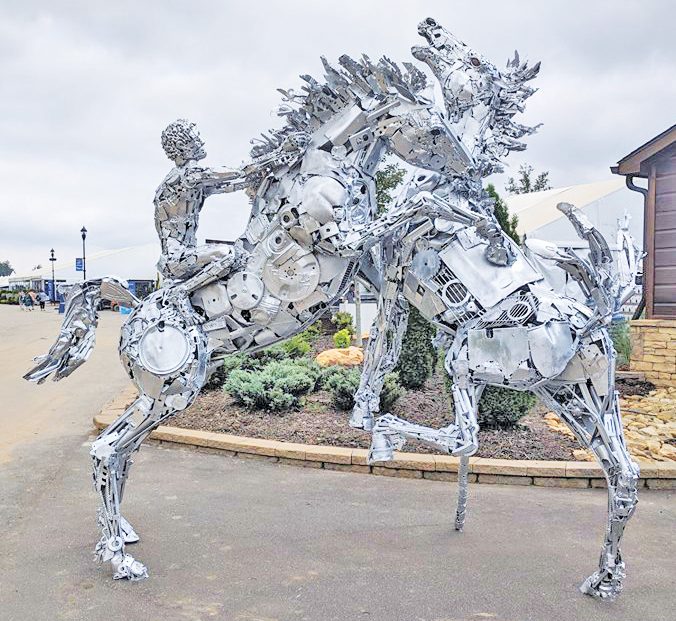
    These ‘Fighting Stallions’ designed and created by Thomas Humphries, who grew up in Blythewood, brought bigger-than-life art to the World Equestrian Games. | Maria Ott

    TRYON, NC – Blythewood sculptor Thomas Humphries, 45, is enjoying the international limelight after receiving a last-minute request from the World Equestrian Games in Tryon, North Carolina to display one of his recent works of art. The shimmering metal sculpture – a ten-foot-tall depiction of clashing stallions – was, until Saturday, Sept. 8, sitting in Humphries’ backyard. Two days later, the sculpture was prominently displayed at an entry point of the Games, attracting the attention of equestrian sports spectators from all around the world. And Humphries, a longtime hobbyist sculptor, said he couldn’t be more thrilled by the twist of fate.

    Humphries

    “When I started this piece in 2014, I’d been looking for a new idea, something that would challenge me and really push my abilities,” he said in an interview with The Voice.  “I was thinking of the wonderful ‘Fighting Stallions’ piece by Anna Hyatt Huntington at the entrance to Brookgreen Gardens in Murrells Inlet, and I thought, wow, something like that would be exciting to do. That’s where this piece came from. It’s a tribute to Huntington’s sculpture.”

    Humphries, who also owns and manages a roofing and home maintenance business, has other sculptures on display at locations closer to home, including a giraffe, lions and zebra at Riverbanks Zoo and a dancing couple at the Blue Room Ballroom in West Columbia. He creates his often larger-than-life art from discarded odds and ends of metal that he regularly finds and collects.

    “It’s like an Easter egg hunt every day,” he said with a laugh. “I’ve got a certain eye, and I can spot metal in a pile of leaves. I’m always scanning and looking for it. I average about one to three pieces a day. I find them in parking lots or wherever I happen to be doing roofing or maintenance jobs. Old barbell pieces, old caulk guns, stuff that people consider trash. I know I can weld it together, so I add it to my big pile of stuff.”

    Humphries said the 1500-pound equestrian sculpture consists of about 500 pieces of stainless steel and carbon steel. He used a stick welder to bind it all together before spraying the whole thing with shiny silver paint.

    His fiancé, Maria Ott, spent time reaching out to a number of people about the possibility of displaying Humphries’ work, and one of the people she connected with was Annette Compson-Goyette, the Director of Vendors at the Tryon Equestrian Center.
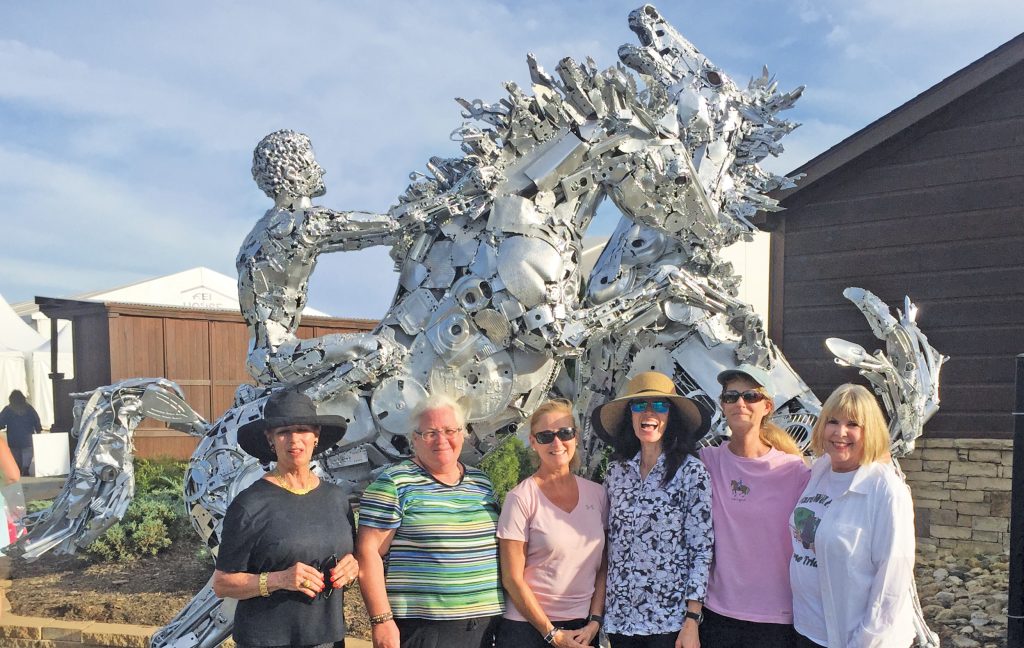
    A group of Blythewood residents attending the World Equestrian Games in Tryon, NC last week, had their photo snapped with Thomas Humphries’ ‘Fighting Stallions’ sculpture. From left: Carroll Ann Bowers, Jan Reynolds, Diane Smith, Paula Spinale, Kit Turner and Joyce Hill. | Submitted by Joyce Hill

    “It was really exciting to get that call from Annette, asking us to bring it on up,” he said. “But getting it up there was a big ordeal.”

    At a cost of $2500, Humphries hired a team of professionals who came with the necessary heavy-duty equipment to place the sculpture onto a flatbed and transport it safely. He also spent about 10 hours welding a cage around the outer sides of the horses to secure them for travel.

    “That was made from some old bedframes that I’d picked up along the side of the road,” he said. “It made a really strong frame.”

    It had rained before they arrived, and Humphries said it was nerve-wracking to watch the huge flatbed truck navigate a steep, wet clay hill at the event grounds.

    “The truck started to slide, almost into a jackknife,” he said. “It was pretty scary, but luckily the driver was able to stop it completely before the truck flipped over with the sculpture. It was a really close call. But those guys did a great job.”

    The sculpture was on site by Monday, though he still had to stabilize it against the threat of heavy winds from the approaching Hurricane Florence, remove the shipping supports and touch up the paint.

    “By the early afternoon on Tuesday, it was ready for action,” he said. “And I’ll be up there again this week. They’re going to set up a tent where I can talk to folks [about the artwork] and hold a silent auction for the piece.”

    Compson-Goyette has also invited him to display the horse sculpture at the 2019 Winter Equestrian Festival in Wellington, Florida, unless it ends up being purchased in Tryon. Humphries said that he’s delighted to be able to reach more people with his art.

    “The enjoyment that people get out of what I make is one of the biggest things that I enjoy about it,” he said. “I was down at the zoo, refurbishing a lion sculpture I’ve got there, and a gentleman said to me, ‘man, I’ve never really cared about art, but I like that.’ It makes me feel good, to take art and put a twist on it that people enjoy.”

    Humphries said his goal is to work full-time as an artist.

    “Until now it’s strictly been a hobby,” he said, “but I’m hoping that will change here in the near future, to become something that I can share regularly with people and maybe make an income from.”

    Spectators will be able to view Humphries’ sculpture in Tryon until the World Equestrian Games wrap up on Sept. 23.
  • Mt. Zion/Admin forum set for tomorrow night

    WINNSBORO – “Council will be bringing good news to the public forum Thursday evening [Sept. 20],” Council Chairman Billy Smith reported to The Voice earlier this week, regarding the proposal to repurpose Mt. Zion for new county offices.

    “An important part of making this project affordable for the county is for the developer to be able to receive about $5.4 million in tax credits,” Smith said. “To get a majority of those credits, the property must be listed in the National Register of Historic Places.”

    To that end, Smith said that on Sept. 12, the county received word from the United States Department of the Interior, which certifies properties for listing status in the National Register of Historic Places, that the Mt. Zion property ‘will likely be listed in the National Register if nominated by the State Historic Preservation Office.’

    “And we have also received notification from the SC Historic Preservation Office stating that, ‘The property appears to meet national Register Criteria for Evaluation and will be nominated,’” Smith said.

    “This is a big step towards being granted these historical preservation tax credits,” Smith said. “It’s great news for the taxpayers of Fairfield County.”

    The two-part tax credit proposal consists of a New Market tax credit of $2.2 million and a historical tax credit of $3.2 million. The state and federal tax credits may also include abandoned building tax credits, according to Rory Dowling of 1st and Main, the North Carolina firm working with the county to renovate the building.

    The developer owns the building and will bear the costs of the renovation. To help finance the project, the developer will sell the tax credits to a third party at a discount.

    Smith has said the project will cost about $11.4 million total and will be paid for by 1st and Main from several sources – the $5.4 million in tax credits, $1.1 million in equity, and (after the property is developed) the county will buy the building via interest free annual lease payments of approximately $4.9 million over seven years. At the end of those seven years, the county will make a final payment to purchase and take ownership of the property from 1st and Main.

    “Getting the tax credits is what makes this project possible,” Smith said.

    While project naysayers have criticized the county for not renovating the current administration building or building a new one, Smith said to do either is cost prohibitive.

    “[Mt. Zion] is the only thing we can do and afford to do,” Smith said. “It’s not the ideal situation, but when you’re $40 million plus in debt and unable to borrow any more, you have to dig out.”

    Smith blamed Fairfield County’s financial predicament on past council members who, he said, borrowed $24 million in 2013, banking on revenues from the failed VC Summer nuclear plant to repay the bond –   revenues that never materialized.

    “Replacement of just the electrical, HVAC and roof of the current county building would cost over $4 million,” Taylor said. “To renovate and expand that building would cost much more than it would cost to repurpose Mt. Zion, which will offer so much more space.”

    “Even if we had the up-front money to renovate the current county building, there would be additional costs to find offices for employees while the renovations were being done,” Smith said. “Building out a temporary location would cost just as much, if not more. In 2015 it was estimated that housing the Courthouse temporarily in the HON building during renovations would cost $3.6 million. That would bring the cost of renovating the current building to right under $7 million and would not include any expansion to meet even our current needs. Those costs would be even higher if quoted today. That would not make sense financially.”

    County leaders say the 45,000 square foot Mt. Zion Institute would more than double the existing 21,000-square-foot building to include not only council chambers and county offices, but possibly the recreation, sheriff’s and other departments as well. There would also be space to house the Courthouse offices while renovating the current Courthouse.

    The proposed renovation of Mt. Zion would feature more parking, increased police presence and could lead to the county’s 120 employees shopping and eating in downtown Winnsboro, spending more money downtown, Smith said.

    Council could take a third and final vote on the project as early as Sept. 24.

    Council will hold a public forum on the proposed project Sept. 20 to answer questions that have been submitted by the public and to review and explain the financial and construction details of the project.

    Smith said the public will have a chance to talk informally with the developer and council members prior to the developer’s presentation and council’s discussion of citizen’s submitted questions.

    If you are going to the public forum, here are the details: Thursday, Sept. 20, 6 p.m. at the Midlands Technical College campus, 1674 U.S. Highway 321 N in Winnsboro.

  • Element TV spared from tariffs

    WINNSBORO – Element Electronics has been notified that the components it uses to manufacture television sets in Winnsboro are no longer subject to federal tariffs. The latest U.S Department of Commerce list of tariffs was released yesterday, and Element was not on it.

    “All is well that ends well,” County Council Chairman Billy Smith said. “We could have done without the unnecessary scare, but we’re glad the administration listened to our pleas and has removed the tariffs from the parts Element imports for their products. I know there had been some public reporting about Element looking to possibly expand. I don’t know whether that’s on the table right now; but to Element, if you’re thinking about expanding in Fairfield County, we’re here to help you do that in every way we can.”

    Element announced in early August that it would be closing beginning Oct. 5, due to the issuance of federal tariffs on the parts. In a letter issued to employees, Element’s Vice President of Human Resources, Carl Kennedy, announced that the company would be laying off most of its employees and closing its facility located at 392 Hwy 321 South in Winnsboro.

    Element Manager Mike O’Shaughnessy blamed the closure entirely on ongoing and increasingly difficult tariff related matters.

    The announcement that it would close came just months after Element Electronics sought the county government’s help as it began looking to expand its footprint and potentially increase employment and tax revenue in the county.

    On Wednesday, Element released a statement, that “Our South Carolina factory will remain open!”

    “Our South Carolina and Fairfield teams really came together on this, working with Element to make this possible, and I’m ecstatic at this news that all the hard work paid off,” Smith said. “It’s a great day in Fairfield County.”


    Related: Element blames closing on tariffs; Fairfield asks feds to exempt Element

  • Blythewood writers rub elbows with Pat Conroy in State of the Heart

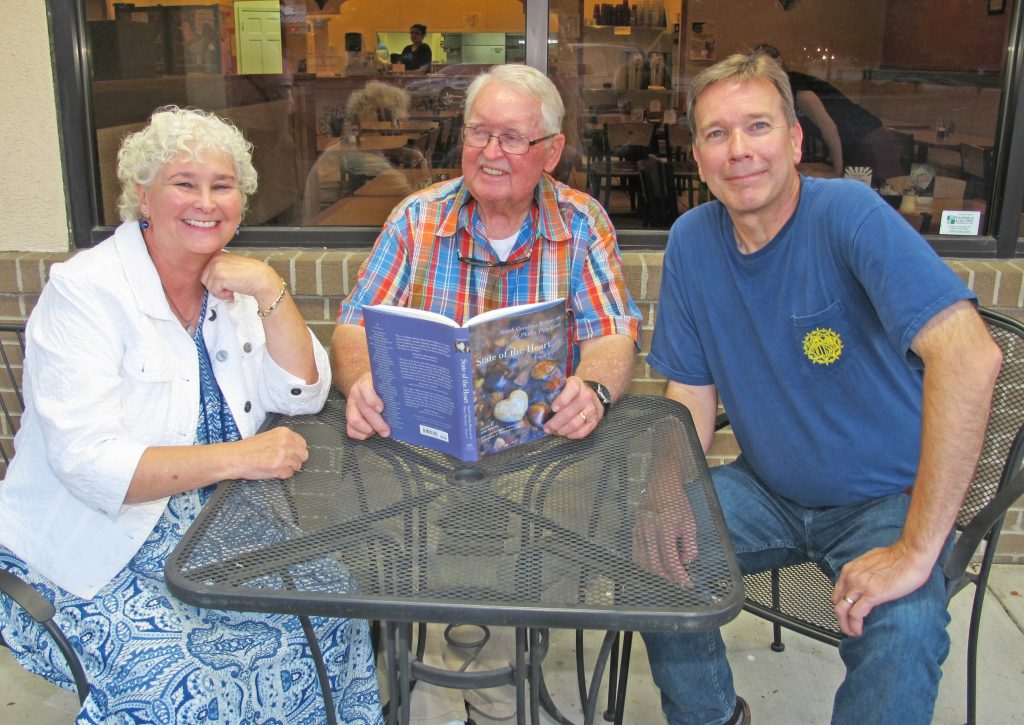
    Blythewood outdoor writer Pat Robertson, center, displays the final of three volumes of State of the Heart that includes contributions from him and fellow Blythewoodians Jane Zenger, left, and Chris Horn. | Barbara Ball
    Book Signing Set for Nord House, Sept 20

    BLYTHEWOOD – When Blythewood outdoor writer Pat Robertson, 80, was asked to contribute a piece about one of his favorite places in South Carolina for inclusion in the third volume of the State of the Heart book series published by The University of South Carolina Press, he didn’t hesitate.

    “When I saw who some of the writers were who had been asked to contribute to the previous two volumes, I jumped at the chance,” Robertson said.

    Indeed, that list was formidable, including the state’s best playwrights, sportswriters, historians and more.

    Novelist Pat Conroy had been so impressed after a sneak preview of the first volume while it was still in the works, that he wrote the forward. His widow, Cassandra King, wrote the afterward for the recently published third and final volume.

    Upon Conroy’s death, The State newspaper chose that forward from the first volume to memorialize him.

    The series has been described by New York Times bestselling author Mary Alice Monroe (Beach House Memories) as “a rich collection of personal stories, reflections, historical facts and front porch yarns as colorful, timeless and inspiring as the people and landscape of the Palmetto State.”

    Sometime prior to 2013, South Carolina writer and former publisher of The Sandlapper magazine, Aida Rogers, came up with the idea for a book about some of the special places in South Carolina – some of them well known, others known well only to the people who cherished them. Those stories eventually became the acclaimed State of the Heart book series.

    The third volume contains the writings of Robertson and two other Blythewood writers: Chris Horn and Jane Zenger.

    The places these three write about are not necessarily famous nor frequented by tourists. They are just places that are special to these writers, places that, for one reason or another, became places in their hearts.

    Robertson, a longtime South Carolina award-winning newspaper writer and photographer, may be best known for his outdoor sports columns that appeared in the Columbia Record and The State for over 30 years.

    “Summers on Stevens Creek,” Robertson’s contribution to the third volume of State of the Heart, is rooted in what he says are fond memories of fishing Stevens Creek with his Grandaddy Bridges. But the story is not just about fishing. It is a summation of his youth and the outdoor life that became him. There, just upstream from Stevens Creek, Robertson, as a teenager, took mental note of the mundane details of a fishing day – of his grandfather’s nearby logging crew who felled and trimmed trees by hand, their bulging biceps, shiny with coal oil used to repel mosquitoes, the cool shade on the riverbank where Robertson and his grandfather shared fresh tomato sandwiches as they kept one eye on their fishing lines.

    Robertson’s story is testimony to his deep connection with the out-of -doors, his appreciation of “a rare plant community like no other,” common rock formations, lazy streams, trees, directions, weather and sloping banks – the landscape of his world.

    “If Stevens Creek is itself a near-hidden scenic wonder, then the bluff just above the bridge on County Road 88 near where my Granddaddy Bridges cut pine trees is the crown jewel in the setting,” Robertson wrote.

    Chris Horn, a writer who has spent his career at The University of South Carolina, the author of two books and now a podcaster, wrote a short piece called “Once More to Campbell’s Pond.”

    While the story on the surface is little more than a nostalgic fishing story of a teenager’s simple dreams of catching the big one, Horn’s anecdotes about his favorite minnow-mimicking lure – a red-and-white Cisco Kid – are threaded through the story, leading the reader effortlessly to the end.

    “I clipped the line to tie on a different bait, but absentmindedly didn’t notice that the tip of the rod was hanging over the water, not the boat. Gravity did its work, and the Kid hit the pond. I watched as the untethered lure faded into the murk in slow motion. Only when it vanished did it dawn on me that my favorite lure, the same one I had rescued time and again that day, was now irretrievably gone,” Horn wrote.

    In just two and a half pages, Horn grows into adulthood and finds himself once again on the dam overlooking and appreciating all the more the pond of his youth and all it meant to him.

    If Jane Zenger’s story, “My Wild Life in Cedar Creek” tells you anything, it’s that she is besotted with where she lives “on the edge of a magical forest” in the Cedar Creek community.

    “We knew this property from our college days, having fallen in love with it when three friends purchased the original 80 acres. We were all students or faculty members at USC then. During those years we hiked the property and enjoyed peaceful parties at their 100-year-old farm house,” Zenger wrote.

    Her story is about everything Cedar Creek – her neighbors, the land her family finally came to live on, the house that she and her husband built and the glorious history of Cedar Creek and the people who lived there over the last few hundred years. It is about the rare flora and fauna, the trees, the undergrowth, mushrooms, ferns, birds, river bamboo, fireflies, the seasons and ring-necked snakes who warm themselves on flat rocks in Cedar Creek.

    The three books are each thematic. The stories in the third volume, like those of the Blythewood writers, revolve around a love of the easy, natural worlds they live in – fishing, fresh air markets, island people, land, water, mornings, animals and birds, homes and gardens.

    A wine and pound cake book release party for the third volume of State of the Heart will be held Thursday, Sept. 20, from 6-8 p.m. at the Blythewood Historical Society, 100 McNulty Street in Blythewood. Moderator Aida Rogers will lead a lively discussion about the stories in the book, and there will be readings by Robertson, Horn and Zenger.

    The book has just been released and is available currently in hardback at Uptown Gifts in Columbia for $39.99. Rogers said copies will be available at the Blythewood release party.

  • Attorney pitches plan to preserve McCreight House

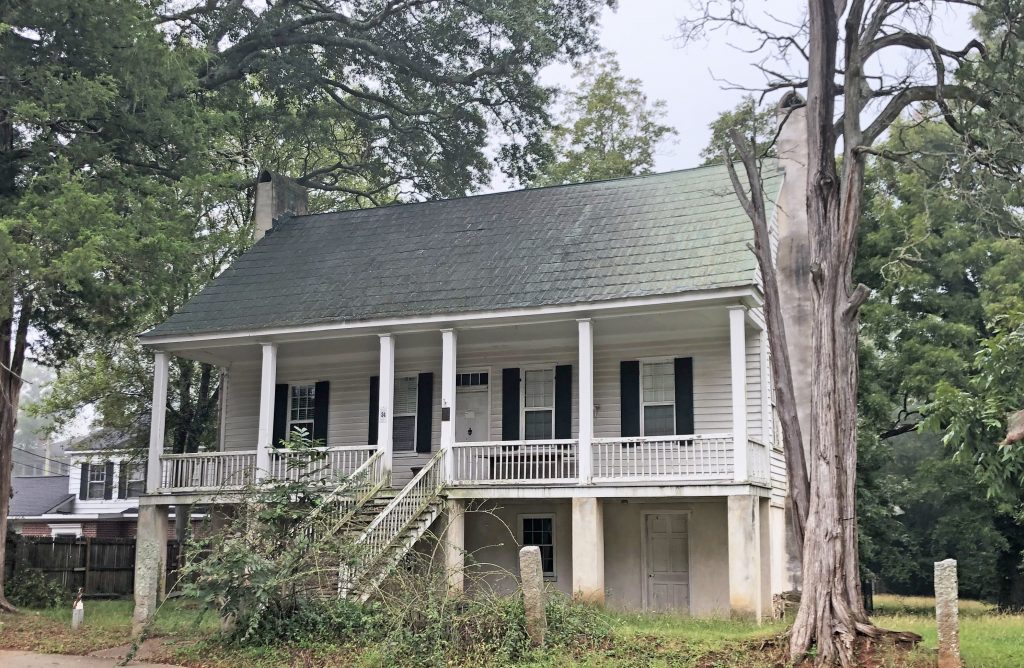
    The McCreight House (circa 1774-1800)

    WINNSBORO – Mike Kelly thinks there’s more value beyond dollars and cents when it comes to a historic home in the Town of Winnsboro.

    At the Sept. 4 town council meeting, the local attorney pitched a plan he says will rejuvenate the McCreight house located on North Vanderhorst Street in Winnsboro and honor deed stipulations at the same time.

    “The odds of your having any legal liability of doing what I suggest are about the same as a meteor dropping and hitting us all in this room,” Kelly told town council members last week. “I’m not going to have any second thoughts or regrets about what I’m going to say.”

    In a presentation to council members, Kelly proposed deeding the house (c1774 – 1800) to Palmetto Trust for Historic Preservation, which would repurpose the property.

    Doing so, he said, helps relieve the town of some responsibilities associated with upkeep while also serving a public benefit.

    Believed to be the first ‘board’ house in Winnsboro, the house was built by a member of the McCreight family. There are three stories, with two large rooms on each floor.

    “Let them undertake it and put a historic preservation easement on it so that there’s no way that anyone will do anything other than the intent of the will,” Kelly said.

    Winnsboro attorney Paul Swearingen, who accompanied Kelly, suggested the repurposed property could be marketed, with proceeds divided between the Palmetto Trust, surviving relatives and the town.

    Though deed restrictions technically prohibit selling the property, Kelly and Swearingen said the family is indifferent to those restrictions.

    “Most of the stipulations died with Ms. Quattlebaum,” Swearingen said. “The only important ones that didn’t were that the Town government maintain and preserve the property, which you all have been doing for all these years, and that it not be sold.

    “Ultimately what she wanted is going to happen, whether the Town pays to upkeep this property in perpetuity or the Town gets help from the preservation society,” Swearingen continued.

    Council members expressed intrigue over the proposal, but the town’s attorney John Fantry suggested instead that Kelly and Swearingen look at a quitclaim deed accompanied by a resolution of abandonment.

    “The town would get no benefit from the sale, period,” Fantry said. “It would be an abandoning of the property and transfer of any rights, which may help you in your economic endeavors.”

    A quitclaim deed is a deed in which a property transfers ownership without being sold, according to www.realtor.com.

    “No money is involved in the transaction,” the website states.

    Mayor Roger Gaddy agreed with the quitclaim deed option. He thought it would be pointless for the Town to profit from the sale, and asked Kelly and Swearingen to develop a proposal that could be voted on at the next council meeting.

    “I don’t have a problem abandoning and deeding it over to them with a quitclaim deed,” Gaddy said. “I don’t think the property is worth much money. It might not do much more for the family than give them dinner out one night somewhere.”

  • FCDC inmate dies after arrest

    WINNSBORO – A Winnsboro man was found unresponsive in his cell at the Fairfield County Detention Center on Saturday, almost 24 hours after being arrested for disorderly conduct.

    Vernon Branham, 38, was taken by ambulance to the emergency room at Fairfield Memorial Hospital where he was pronounced dead at 4:52 p.m. Saturday, according to Fairfield County Deputy Director Davis Anderson.

    Anderson said Branham was arrested around midnight on Friday night at the Bi-Lo shopping center on the Highway 321 Bypass intersection with Columbia Road.

    According to Anderson, Branham was taken to the FMH emergency room for treatment of a laceration over one eye. Anderson said he under stands that Branham was also administered a drug to counteract what medical personnel believed to possibly be a drug overdose.

    Branham was transported to FCDC where he remained until detention center personnel came to transport him to court for a bond hearing around 4:30 p.m. It was then that Branham was found to be unresponsive, Anderson said. He was then rushed by ambulance back to the emergency room.

    The incident is under investigation by the South Carolina Law Enforcement Division (SLED).

  • Admin forum scheduled for Sept. 20

    WINNSBORO – Fairfield County residents with a vested interest in an $11.5 million project that would repurpose the old Mt. Zion Institute into new county offices will have a chance to have their questions answered at an upcoming public forum.

    The forum is scheduled for Thursday, Sept. 20 at the Fairfield County campus of Midland Technical College. It will be held from 5 to 8 p.m., and residents are asked to submit written questions in advance.

    Thursday’s forum follows considerable debate on the proposed administration office project, which for the third meeting in a row, received considerable discussion among County Council members and residents alike.

    At least four supporters addressed the council Monday night, each saying repurposing the Mt. Zion property is exactly what the Town of Winnsboro needs.

    “It has sadly become a tragic site,” retired State newspaper columnist Bill McDonald said about the Mt. Zion property. “I can’t understand why a certain group of people oppose the reincarnation of the Mt. Zion Institute.”

    Donnie Laird, also speaking during public input, said the current proposal of seeking tax credits to help pay for the work is the only feasible option.

    “The county cannot borrow any more money,” Laird said.

    The strongest comments, however, came from Bill Haslett.

    “It’s very difficult to see a town dry up like Winnsboro has done. People don’t want to live in Winnsboro because it looks like the devil,” Haslett said.

    “I’m disappointed in the two council members who have sat on the fence,” Haslett continued. “I believe that’s a political move to get votes in the next election.”

    The latter remarks drew a response from Councilman Dan Ruff, one of two council members Haslett indirectly referenced. Ruff denied that he is on the fence.

    “It’s about trying to make the best decision you can make. If you don’t know and you’re not sure, you can’t vote,” Ruff said.

    Some candidates seeking office and other private residents opposed to the Mt. Zion plan took to the podium as well.

    “It’s a neighborhood that needs to stay a neighborhood,” local resident Pam Smith said. “We’ve spoken to an attorney to see what we would have to do to protect the properties.”

    As proposed, about half of the $11.5 million project would come from a series of state and federal historic tax credits totaling $5.4 million.

    Another $4.5 million would come in the form of a construction loan, as well as $1.1 million in equity from money the developer would raise.

    If built, the new administration building would more than double the square footage of the existing 21,000-square-foot space of the old one.

    Council members discussed the proposal in executive session later in the meeting, but took no action.

    In other business, the council unanimously approved second reading of an ordinance accepting the conveyance of 2.72 acres on Old Windmill Road near Ridgeway.

    Councilman Jimmy Ray Douglas, who’s spearheading the plan, said it’s his hope that a four-bay public safety building can be built on the property.

    Two bays would serve fire engines, one would serve the sheriff’s office and the final bay would be dedicated to EMS.

    Lake Wateree Presbyterian Church is providing the property. Land would revert back to the church if the station isn’t built.

  • Hotel vote set for Sept. 17

    BLYTHEWOOD – After not receiving a vote from the planning commission last week for lack of a quorum of commission members, representatives of Hilton Hotel’s Home 2 Suites will have another go at it on Monday evening.

    The hotel chain is seeking the commission’s approval to situate a hotel on a 1.93-acre parcel located behind San Jose’s restaurant and adjacent to I-77. The building is proposed to be four stories with 88 beds.

    The representatives must also meet with the Board of Architectural Review (BAR) before they can receive a Certificate of Occupancy. To eliminate an extra trip, Town Hall arranged for them to meet with both boards on Sept. 17. The BAR will meet at 6 p.m. and the planning commission at 7 p.m. at the Manor.

    The request first came before the commission in early August but was deferred by the commission until the September meeting so the commissioners’ concerns regarding what they considered problematic traffic access to the hotel off Blythewood Road could be resolved.

    Town Administrator Brian Cook said last month that Town Hall staff had been working with SCDOT on the issue and that SCDOT had conditionally granted access to the site using SCDOT’s right of way.

    While those attending the Tuesday evening meeting were waiting for enough planning commissioners to arrive for a quorum, engineer Jeff Carter, representing the hotel chain, reviewed for the commissioners the conclusions of a traffic study conducted by Seneca engineer Roger Dyar which stated that the overall effects on the peak hour traffic flow on the hotel access are minimal.

    The report recommended that the proposed site’s access plan should be approved since the increase in traffic will result in only very minor additions to delays and queues in the study network.

  • Ridgway picnic postponed

    RIDGEWAY – Ridgeway’s Family Night on the Ridge picnic that was scheduled for Saturday, Sept. 15, in the Ridgeway park has been postponed to a later, undetermined date due to the expected arrival of Hurricane Florence late Thursday or early Friday.

    There could still be damaging winds and heavy rains affecting the park on Saturday, plus many of those attending may have friends or relatives in harm’s way when the hurricane hits the coast and moves inland, organizers have told The Voice.

    “The Ridgeway Public Relations Committee will meet in the near future to discuss an alternate date for the event,” a spokesperson for the committee said.

  • Fatality in single vehicle accident

    MITFORD – Fairfield County Coroner Chris Hill is releasing the name of the individual who died as a result of a single vehicle accident that occurred Sept. 11 at approximately 6:40am.  The accident occurred on SC Hwy. 21 North between Gibson End Road and Rainbow Road in Fairfield County.

    The vehicle driven by Gary Alexander, age 69 of 749 Shangrila Drive, Winnsboro, SC was headed south on SC Hwy. 21 N. when it left the roadway, went down an embankment and struck a tree.

    The accident remains under investigation by the South Carolina Highway Patrol.