The proposed widening and straightening of Rimer Pond Road (in red), set to begin in June.
BLYTHEWOOD – Construction is expected to begin in June to straighten and widen some of the curve on Rimer Pond Road. The half-mile long project is federally funded as part of the S.C. Department of Transportation’s Safety Improvement Program.
When a statistical comparison was made with other one-half mile sections of roads around the state with high crash incidents, the locally notorious curve on Rimer Pond Road easily met the qualifications for improvement – 29 crashes in four years with 12 of those being injury crashes, according to Joey Riddle, Safety Program Engineer with SCDOT.
Riddle said the project is expected to be completed by the end of 2013.
The correction will begin between the entrance to Eagles Glen and the new Perfecting Faith Church and continue toward Round Top Elementary School.
“To make the road safer, we’ll be widening the two existing 10-foot lanes at the curve to 12-foot lanes with 2-foot paved shoulders beyond the white line on the edges of the road,” Riddle said. “This will make the road about 28-feet wide, from edge to edge.”
Rumble strips will also be added to the road’s edges to warn drivers when they are departing from the road. Riddle said that while rumble strips are expensive to install, a study of the road’s accidents showed that 23 of the 29 crashes were lane departures.
Riddle said that in order to eliminate some of the curve, the road will actually be moved as much as 8 feet in some places.
A guard rail will be installed on both sides of the road at the low point of the curve where there are a couple of creeks alongside the road across from the pond dam.
SCDOT surveyed the road last February when Richland School District 2 was considering locating a bus barn near Round Top Elementary School not far from the curve.
Riddle said the road corrections should make the curve safer.
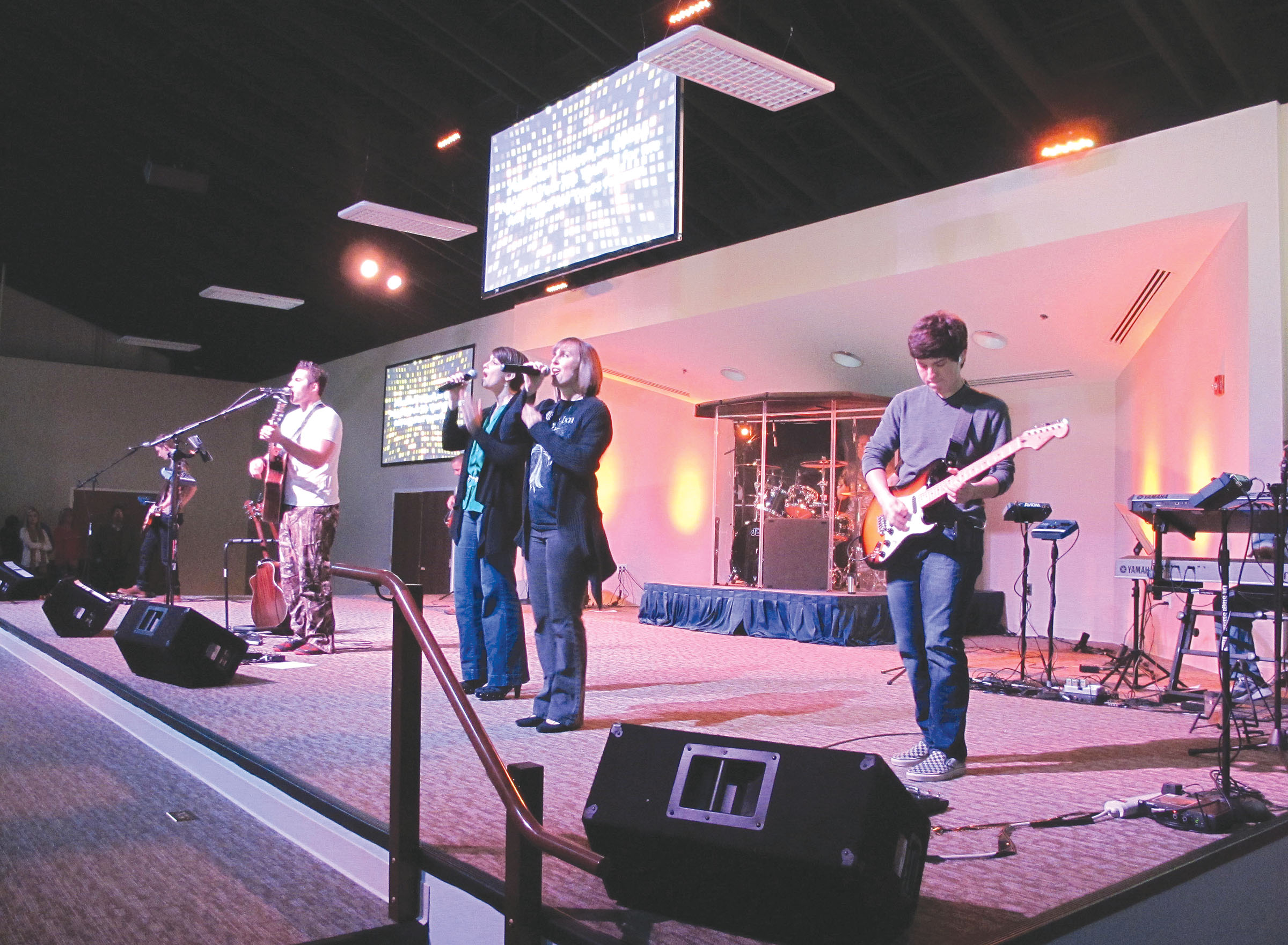
Youth members of the church make up the Christian rock band that calls the congregation to worship Sunday mornings.
In 2002, Wendell Estep, pastor of the First Baptist Church on Forrest Drive in Columbia, sent out five church seeds around the Midlands to be planted. His son, Pastor Erik Estep and his wife Emily and their three young children Hank, Glyn and Janie were to plant one of those seeds in Blythewood. That seed was called The Village Church.
“We started off as a home Bible study with only our family and a few others,” Erik Estep recalls. “We moved into Bethel-Hanberry Elementary School in March 2002, averaging about 70 members each Sunday. That fall, we moved to Lake Carolina.” All the while the seed was growing.
In August 2009, the church built its first sanctuary on Rimer Pond Road. That building seated 400. Last week, less than four years later, the church welcomed the community into its second sanctuary, built to seat 900. And all those seats were full of people ready to worship.
As the congregation arrived, they milled and visited, enjoying coffee and donuts. Then a Christian rock band, made up of the church’s youth, called them to worship. As the music filled the sanctuary, changing colored lights filled the stage. Three large video screens flashed messages and the words to the music.
The first four Sundays in the new building have themes. This particular Sunday was “camo day” and as Estep looked out over the audience dressed in green and brown camouflage clothing, he quipped in his natural turn of humor, “Maybe this was a mistake. I can’t see you.” The congregation laughed.
During the service, Estep introduced several community leaders and school principals in attendance, including U.S. Rep. Joe Wilson.
The front rows were filled with children and older youth. The outgrown sanctuary will be the new Student/Children’s Ministry facility where the youth will normally worship.
The church’s history may be short, but it has nonetheless made its mark on the community, particularly in the schools.
The church has a pastor of students, Matthew Phillips, who serves as chaplain for both the BHS and WHS football teams. And the Church sponsors a Post Game get together at the high schools after every Friday night home game. Post Game is intended to provide a safe atmosphere for students and football players to relax and have fun after the game.
“This is a wonderful community,” Estep said, “and we are so happy to be a part of it.
This painting of photo-like quality is the essence of Dru Blair’s work.
The face of downtown Winnsboro is on the cusp of a new era, an era of growth and revitalization that stands to spill over into the entire county and surrounding areas. Riding the first wave of that change is the proposed Blair College of Art, the offspring of Dru Blair’s Blair School of Art currently nestled in Fairfield County’s Blair community.
Blair, an internationally known artist, best known for his photorealistic paintings and portraits, began his career as a commercial illustrator in 1987 producing work for clients such as Budweiser, Continental Airlines, United Airlines and many others. In 1988 he won the National Airbrush Excellence Award, and in 1989 he produced his first aviation painting, “Power,” which remains the number one selling aviation print in the world. Other prints followed after the start of a publishing company, Blair Art Studios. In 1997 his skills with the airbrush and creating photorealistic paintings led him to open the Blair School of Art in his ancestral home of Blair. The school is dedicated to the advancement of realism in art and has trained thousands of artists from all over the world. In addition to teaching workshops at the Blair School of Art, Blair travels to teach in other countries, including Italy, Germany, Spain, Belgium, Denmark, Holland and the U.K., and has been featured in U.S and Japanese television shows.
Most recently Blair has joined with the Fairfield County Strategic Planning Committee for the Arts. In addition, Blair and his staff are actively working to found a private, not-for-profit, four-year-degree granting International Art College in Winnsboro. The Blair College of Art will be the only art college in the world dedicated to teach Photorealism and Classical Realism. Although Blair’s vision is to impact the entire art world, establishing an art college can have a great influence on a local and regional level. One of the missions of the Blair College of Art is to serve as a catalyst to help restore and revitalize Fairfield County by bringing 1,500 students from all corners of the world to downtown Winnsboro. Combining this with educators, staff and visitors will have a tremendous impact on development and prosperity of the region. Indeed, the College of Art could very well set off an avalanche of downtown development, as businesses designed to serve the art students and staff settle in along Congress Street.
As the project progresses, look in upcoming editions of The Voice as we continue to preview the coming Blair College of Art and its role in revitalizing Winnsboro and Fairfield County. Blair, meanwhile, will be speaking at the Blythewood Artists Guild at 100 McNulty St. in Blythewood on Feb. 11 at 6:30 p.m.
This map of the South Winnsboro area shows the progress, in green and yellow pins, made by Code Enforcement Officers in recent months. Red pins indicate remaining violations.
FAIRFIELD – Fairfield County is nearing the end of the first phase of enforcing their new property maintenance codes, which concentrated efforts on the South Winnsboro area, and as code enforcement officers gear up to target a second area of the county, Council Monday night received an update on the progress made thus far.
Standing before a map dotted with color-coded push pins, Dan Vismor, the consultant who helped the County put together the new rules, told Council that only 4 percent of the properties in the neighborhood remain in violation of the County’s new, tougher property codes. Twenty percent of the properties have corrected violations, while 9 percent are in the process of coming up to code.
Rental properties are the top violators of the maintenance codes, Vismor said, with investment properties accounting for 17 violations during the first months of enforcement. Vismor said the County will hold a public meeting this month to inform property owners of what they’ll need to do to keep their properties up to code as the department prepares to shift its focus to a new area, just outside of the Town of Ridgeway.
“We want to make sure that folks who have rental properties are invited to that meeting,” Council Chairman David Ferguson said. “In South Winnsboro, there’s a lot of that rental stuff – some of them in the houses aren’t taking care of them, but some of them, the houses aren’t being taken care of either. We want to make sure those folks are invited to that meeting and told what the expectations are. When you start looking down that list and you see investment properties and rental properties and that kind of stuff, they need to clean their act up. If they rent to folks, they need to do what they need to do.”
Vismor said that prior to the adoption of the tighter codes and the addition of enforcement officers, the County operated solely on a complaint basis. Now, officers are on patrol in targeted neighborhoods, armed with a revised checklist to simplify their search for violations. Officers are certified to issue citations — $25 for a first offense, $50 for a second, $100 for a third. A fourth offense will put the offender into the court system. Ferguson said in many cases it has been found to be cheaper and more expedient for the County to provide a dumpster to properties, allow the homeowner or resident to fill it up, then haul it away.
“The code enforcement group has done a wonderful job,” Ferguson said. “You see the things that they’re cleaning up, but that’s just scratching the surface over our whole county. There are a lot of things that have been abused and misused and left to make this county look like nobody cares about it.”
Dwayne Perry, Vice Chairman, said the State Department of Commerce told Council that the appearance of a county plays a significant role in economic development.
“You never know sometimes, but when perspective companies are looking to move to your county, one of the things they do is ride around and look at the county and abandoned homes and see how much pride potential prospective employees take in their county,” Perry said, “because it comes through in your work as well. It means a lot that we are following through with getting this county cleaned up and showing that we take pride in this county.”
LaShonda Holmes, one of the County’s code enforcement officers, said Monday night that many of the County’s repeat offenders are located along Columbia Road, an area of particular interest to Ferguson.
“Columbia Road was one of my pet peeves,” Ferguson said. “That’s the main thoroughfare into the county. You go by and look at that, it certainly doesn’t give us a good picture. They need to pay if they don’t play.”
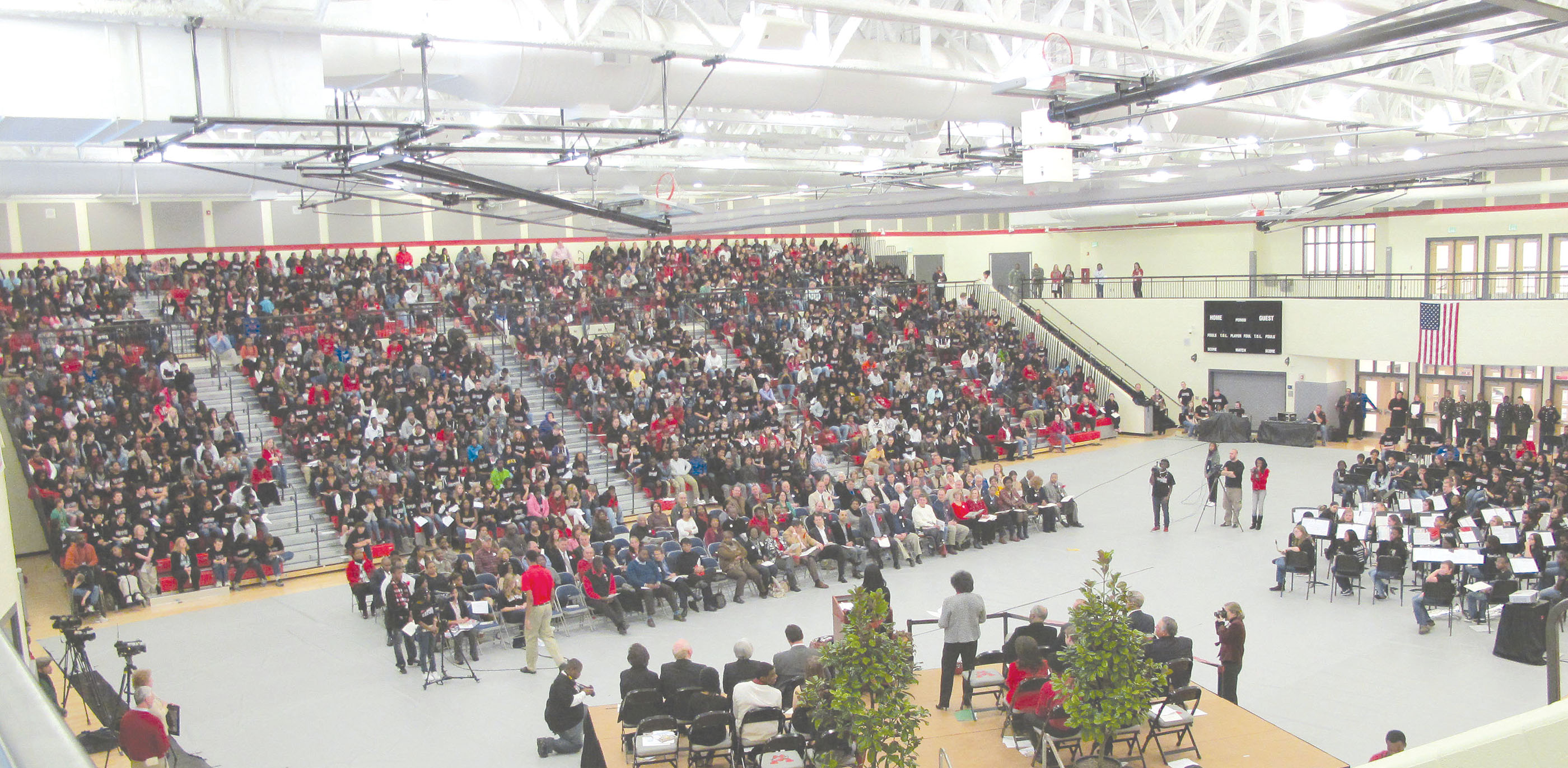
Students, parents and the community gathered in the Westwood High School gym for the school’s dedication last Friday.
BLYTHEWOOD – Redhawk feathers were everywhere at Westwood High School last Friday. And so was the media. The JROTC was on hand at every door, spit and polished, to welcome guests. It was the dedication of Blythewood’s Westwood High School and no one could have been prouder than it’s principal, Ralph Schmidt.
Schmidt extolled the school’s virtues throughout the morning – first to the media, then to the full house audience and to anyone else in earshot.
Prior to the dedication ceremony in the school’s gymnasium, guests were given tours of the school and enjoyed refreshments in the lobby.
The event opened with a prelude performed by the school’s orchestra. Then there were various introductions, presentations, pledges, recognitions and remarks.
The Westwood chorus performed “For the Beauty of the Earth,” and there were more dedications, pledges and plaque presentations.
The Soaring High Dance Company, under the direction of Dr. Anne Richardson, performed a colorful dance titled “Defying Gravity.”
Class photos, school symbols and other items were assembled by the classes and teachers for a time capsule to be sealed at a later date.
After the Westwood Band gave the premier performance of the Westwood Alma Mater, Principal Schmidt, the school board, student leaders and other dignitaries cut the red and black ribbons, thus officially dedicating the school.
The Band then closed the ceremony by playing the school’s fight song. And Westwood High School was dedicated.
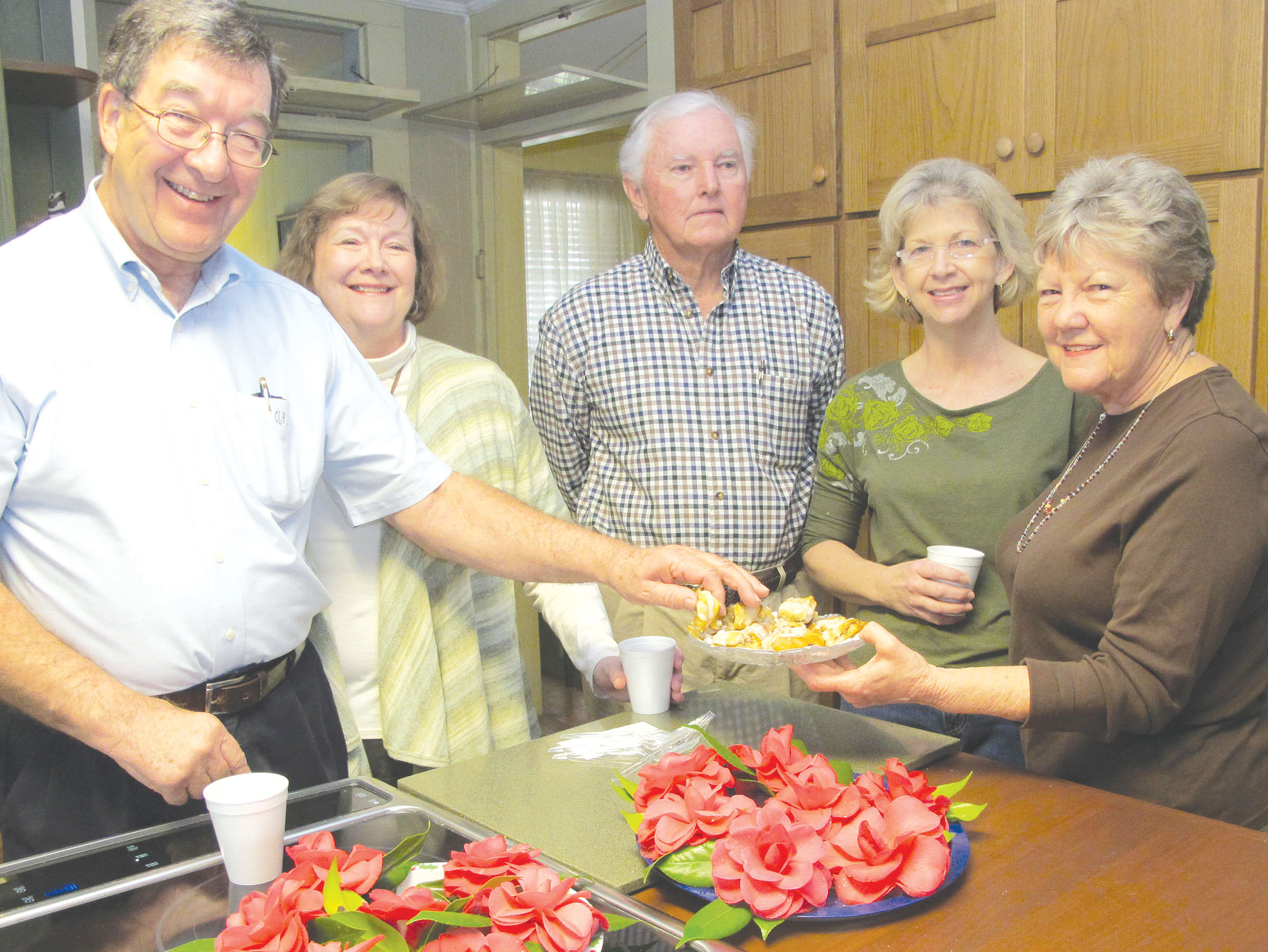
Before the Bible study began, Sylvia Wilson, right, served pastries and coffee to three of the Wilson’s guests, Christie and Carolyn Lomas (left), Woody Wilson and Jenny Dickert. As the guests departed, Silvia handed each a container of the red camellias (shown on table).
The little yard sign outside the yellow house at 110 McNulty St. says it all—Believers Fellowship. Come Join Us.
At 10:30 every Thursday morning, a handful of folks from the community arrive at the historic home in downtown Blythewood for an informal Bible study. As the Believers arrive with their Bibles and study guides in hand, they are greeted warmly and invited inside by their hosts, Sylvia and Woody Wilson. Woody, who like his mother and grandmother before him, grew up in the home, descends from ancestors who are still remembered by many in Blythewood for their genuine love of community and commitment to hospitality.
After chatting a few minutes over cookies and coffee, the group settles into sofas and chairs in the Wilsons’ living room where they open their Bibles and begin a casual but earnest conversation that is part scripture, part Blythewood history and wholly about doing good—not only in the community, but around the world. While that might seem presumptuous for this small, unassuming band of 10 or so locals, wherever their conversation wonders, it is threaded through the scriptures and teachings of the Bible with enormously good intent.
Most in the group, like retirees Carolyn and Christie Lomas, have ventured into foreign mission fields with their children during summers and family vacations, and currently distribute Bibles for the Gideons.
One regular in the group, Geri Hood, missed the last meeting while on a mission trip to Nicaragua. Woody said his and Sylvia’s primary ministry is helping those with special needs in the Blythewood area.
Another member of the group, Jenny Dickert, said she’s a ‘behind the scenes person.’ A quiet woman with a sweet smile, Dickert volunteers a couple of days a week at the Cooperative Ministries clothing bank. Dickert said she prays every day for help in knowing what to do and say to help others.
But a person doesn’t actually have to be a Believer to join the group, Woody said. “We welcome all.”
The Wilsons, who worshipped regularly at the Zion Methodist Church on Zion Church Road, began opening their home for community Bible study about a year ago. They recently started holding a Friday evening study as well.
“We feel it’s a natural way to get to know people in the community and to visit and share the Word of God,” said Sylvia.
But the Wilson’s, who are well known for their kindness and concern for others, offer more than the Word of God to their Bible study guests. They also offer a sack of groceries to anyone who stops by needing more than spiritual food.
While those attending the Thursday morning meetings represent different churches in the community, Sylvia said they are all one when they come together at the Wilson home. “They all have a similar passion—to reach out and help others,” she said.
“That,” said Woody, “is why we gather here.”
“Most people think it’s the preachers who are supposed to be out there doing God’s work and spreading His love,” said Christie Lomas, “but we all have the opportunity every day to share God’s message and do good deeds. Being kind to others, even if it’s just secretly paying for the meal that’s been ordered by the person in line behind you at the McDonald’s drive-thru window, a kindness like that can have a pleasant, lasting consequence. Small, sincere kindnesses can change people’s lives.”
Woody Wilson added, “God prepares us in different ways. He gives us what we need to carry on his work—and we are carrying it on. I feel this spiritual fellowship, this support group, is preparing us all for that journey. And we invite others in the community to join us.”
For more information, call 803-409-9602. Bible study times: Thursdays at 10:30 a.m.; Fridays at 7:30 p.m.
Fairfield County Treasurer Norma Branham delivers the $23,356,773.56 check to teller Sharon Hollis Tuesday for deposit into the County’s bank account at First Citizens Bank in Winnsboro.
WINNSBORO – South Carolina Electric & Gas Company (SCE&G) presented Fairfield County a check for $23.4 million for 2012 property taxes Tuesday.
“We are very pleased that V.C. Summer Nuclear Station continues to be a major contributor to the local economy through property taxes that support schools, roads and critical public services for the residents of Fairfield County,” said Dan Gatlin, vice president of Nuclear Operations at V.C. Summer.
V.C. Summer Unit 1, which has been in commercial operation since 1984, currently employs about 800 SCE&G employees and contractors.
Of the $23,356,773.56 total paid by SCANA into Fairfield County tax coffers, $10,782,680.30 goes to the Fairfield County government’s various funds. The County’s general fund receives $7,752,238.59. The hospital receives $473,591.16. EMS receives $969,734.37. The Library receives $217,659.98. The Fire Board receives $468,238.94. The fire capital fund receives $111,898.67. The EMS capital fund receives $202,967.60. And the County receives $586,350.99 for its 2010 bond issue.
The Fairfield County School District takes in $12,878,218.31 from the SCANA total. Of that, $598,564.95 goes into the District’s debt fund, while $12,279,653.36 goes into the operation fund. The Town of Winnsboro receives $15,712.16 from SCANA, while the Town of Ridgeway receives $4,579.22.
Blythewood attorney Shannon Burnett riding her horse Axel Rhodes.
Born in the spring of 2004, the fine bay Thoroughbred colt is a grandson of Secretariat, the Triple Crown winner in 1973; and a great grandson of Bold Ruler, the 1957 Horse of the Year. Northern Dancer and War Admiral are also in his lineage. The colt showed promise as a 2-year-old, winning his first race at Aqueduct, the prestigious New York track. Like his ancestors, he too seemed destined for greatness.
But there is no such thing as ‘a sure thing’ at the track. That’s why it’s called a horse race.
As a 3-year-old, the colt apparently suffered a career-ending knee injury. Still, he was one of the lucky ones. He showed up for sale a year later at a respected hunter barn in Aiken, then again in Camden, where he caught the eye of Mary Werning, a top dressage trainer. Werning was impressed with the big bay horse. She felt he had potential in the dressage ring – not the worst place a washed up race horse can end up.
While the horse made an impressive appearance, he turned out to have some behavioral issues that potential buyers may have seen as insurmountable for the show ring. But Werning was fond of him and didn’t want to unload him to just anyone. She convinced a friend to buy him, and he spent the next two years grazing in the friend’s pasture interrupted only by the occasional trail ride.
The horse’s name is Axel Rhodes.
Last winter, horsewoman Shannon Burnett, who owns a farm with her husband, Chris Knierim, in Blythewood and is a partner in the law firm of Burnett and Cairns, was looking for a new dressage horse. She consulted her trainer, who happened to be Mary Werning. Werning suggested Burnett try Axel who was by then 7 years old.
“He was big and beautiful — just what I was looking for,” Burnett recalled cheerfully of seeing the horse for the first time. “He looked more like a beefy Warmblood than a fragile Thoroughbred, and I liked him immediately. But when I got in the saddle, he was stiff, clinched the bit and seemed disconnected from what I was asking from him.”
Like the perspective buyers before her, Burnett just as immediately had second thoughts about the horse.
“Dressage is a discipline that requires fluid, subtle movement and a close relationship between horse and rider, just like ice skating partners. Dressage is like dancing. The horse must be very connected with you and he must love the dance. With a trained dressage horse, those movements,” Burnett explained, “are made in response to barely perceptible hand, leg and body pressure signals from the rider. I wasn’t convinced that was where Axel’s strength would ever lie.”
In spite of Burnett’s misgivings, Werning insisted he had great potential. She felt Burnett was the rider to bring out that potential and suggested she work with him for a month or so.
While Burnett trusted Werning’s instincts, she worried that Axel’s fate was sealed by his inability to connect.
“Thoroughbreds are naturally sensitive, and the gruelling discipline and work at the track can leave horses not only broken physically at a young age, but emotionally checked out as well,” she said. “Some just don’t make the transition well to new jobs when their racing career ends.”
A kind-hearted animal advocate whose two dogs, Felon and SueMe, sleep under her desk at her law office in downtown Blythewood, Burnett’s trademark calm demeanor and endless patience transmits quickly to her animals. By the second week of working with Axel, Burnett noticed him following her with his eyes as she walked around the barn.
“He seemed both smart and clever. He started coming to me from the paddock,” Burnett said, “and was soon following me around. Before the month was out, he was trotting up to me and then alongside of me. I could see his potential blooming.
“In the riding ring, I asked him to do things the same way each time, consistently and without stressing him. It wasn’t long before he realized I was communicating with him with my hands, seat and legs,” Burnett recalled with a smile. “As soon as he realized that he could do what I was asking, he immediately began answering with everything he knew. He was like: Do you want me to do this? How about this? He was enjoying the dance!”
She bought the horse and, before long, both horse and rider were training in earnest.
By the end of last summer, the pair had entered their first low-level dressage competition, winning both classes they entered. Burnett was ecstatic. Suddenly, she and Axel had plans, big plans.
Then in October, Burnett began noticing something different in Axel’s movement and behavior — something that worried her.
“He began to stomp and kick in his stall. He would sometimes put one hoof on top of the other and he would stand there on his own hoof without realizing it. He bounced his head up and down a lot, and his balance was off,” Burnett said. “He didn’t seem to know where his hind hooves were.”
She asked her veterinarian to examine him. After neurological tests and blood work, the vet’s diagnosis was not good. There was a high probability that Axel had contracted Equine Protozoal Myeloencephalitis (EPM), a progressive, potentially deadly disease caused by a protozoa infestation of the spinal cord and brain. Usually transmitted to horses by opossums, the disease is not easy to positively identify without surgery of the spine or brain. While it is not contagious between horses, there is no cure.
The veterinarian explained that while in rare cases a horse’s immune system will fight off the protozoa, most do not. She told Burnett that the medications she prescribed would only kill the adult protozoa.
“My heart was broken for Axel,” Burnett said. “I felt he was just starting to dream new dreams. We had big plans.”
But by that evening, Burnett had marshalled her heartbreak and hit the Internet. She found a biochemist in South Dakota who specialized in holistic treatment of horses with issues such as EPM, without the use of typically prescribed drugs, which the biochemist explained can be caustic. “I kept her on the phone until about 10:30 that night,” Burnett said.
The biochemist’s approach would fight the protozoa by strengthening Axel’s immune system. That meant switching to a special grass-based feed and supplements the biochemist would create after doing a hair analysis and gathering other information about the horse.
“Traditional veterinary medicine, of course, is not sold on this approach, and I understand why,” Burnett said with a shrug that reflected her own worrisome, underlying concern as she dumped the expensive special feed into Alex’s feed tub. “This may be voodoo,” she confessed, “but I have to try it.”
Burnett’s hope was buoyed when Axel began showing marked improvement within two weeks of starting the treatment, the projected time table mapped out by the biochemist.
“Now, three months later,” Burnett said, as she turned Alex out in the paddock on a recent cool, crisp afternoon, “he continues to improve and acts like his old self again, trotting along beside me and enjoying our rides.”
With her fingers crossed, Burnett said Axel’s training has resumed and is going well. She plans to start competing him again in the spring.
“We just work on the level that he’s comfortable with right now,” she said. “He always steps up to the plate and seems to say, ‘Let’s do this.’ Pretty amazing guy!”
Watching her horse rip around the paddock like a playful colt, Burnett joked, forever optimistic, “I hope the voodoo works. I think this is really his best hope, long term,” she said, turning thoughtful. “He’s forever missed his chance at greatness on the track. But he can still have a great life and make his grandpa proud in the dressage ring. Anyway, he’s depending on me for another chance, and I can’t let him down.”
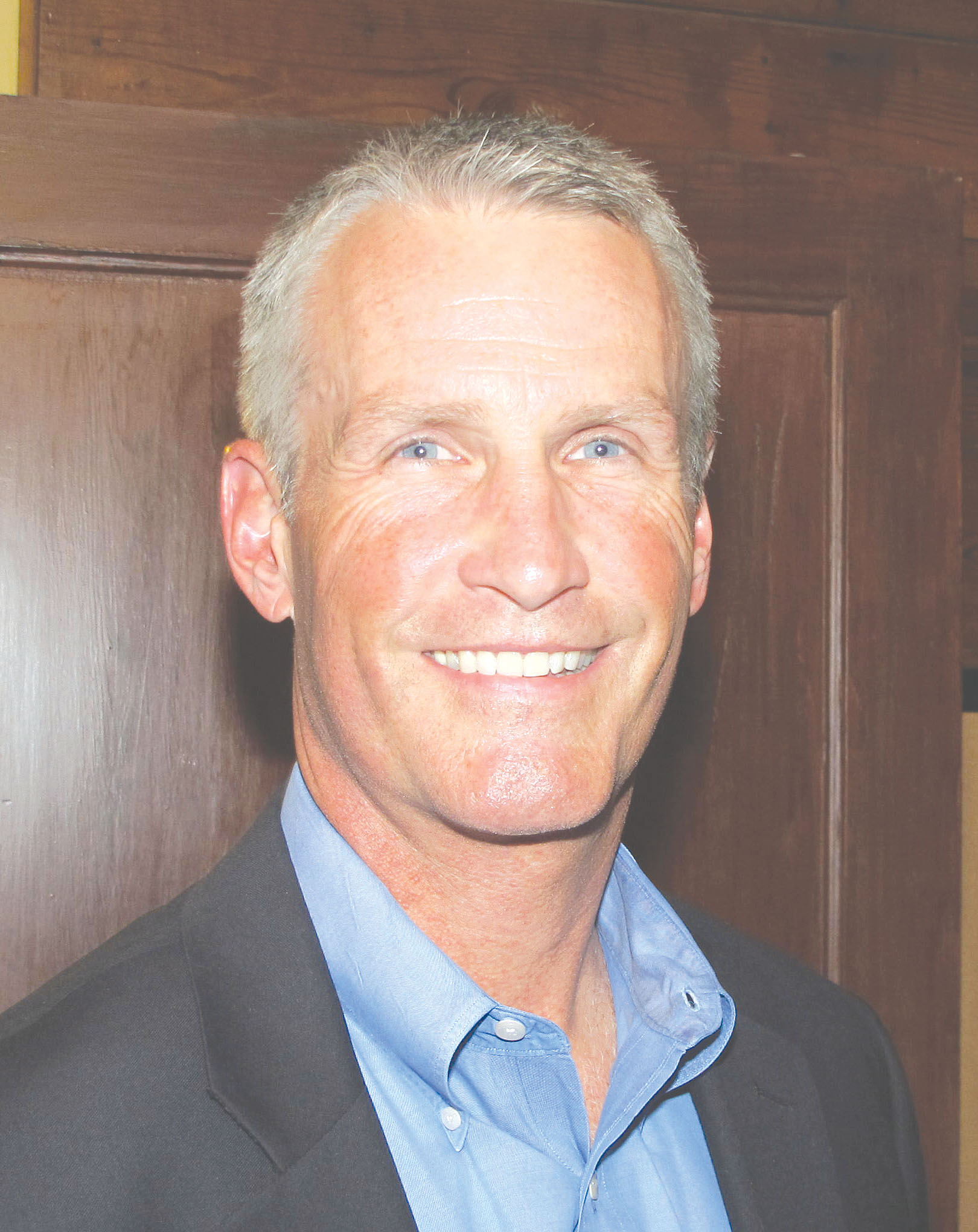
BLYTHEWOOD – Tuesday evening, a subcommittee appointed by Blythewood Town Council selected William (Bill) Wiseman to represent Blythewood on Richland County’s proposed 15-member Penny Tax oversight committee. Wiseman was chosen from a field of three finalists that included Malcolm Gordge of Ashley Oaks and Sean King of Lake Ashley. Town Council will confirm Wiseman’s selection before recommending his appointment to County Council. The 13-member committee is to be seated by Jan. 31.
Wiseman, an engineer, is currently Managing Principal with Cumming where he is responsible for overall guidance, direction and leadership for the company.
The Penny Tax committee will provide oversight to Richland County Council in carrying out a $1.07 billion improvement program over 20 years to fund roads, bus routes, trails and bike paths in the County. The initial expenditure will be about $450 million. Wiseman will serve a four-year term on the committee and will report back to Town Council and the community on a regular schedule.
Wiseman, who has 30 years in the building profession, said he applied for the appointment out of a desire to give back to the community. “I think my skill sets and experience will be of benefit in this area,” Wiseman told the subcommittee. The vote to appoint him was unanimous.
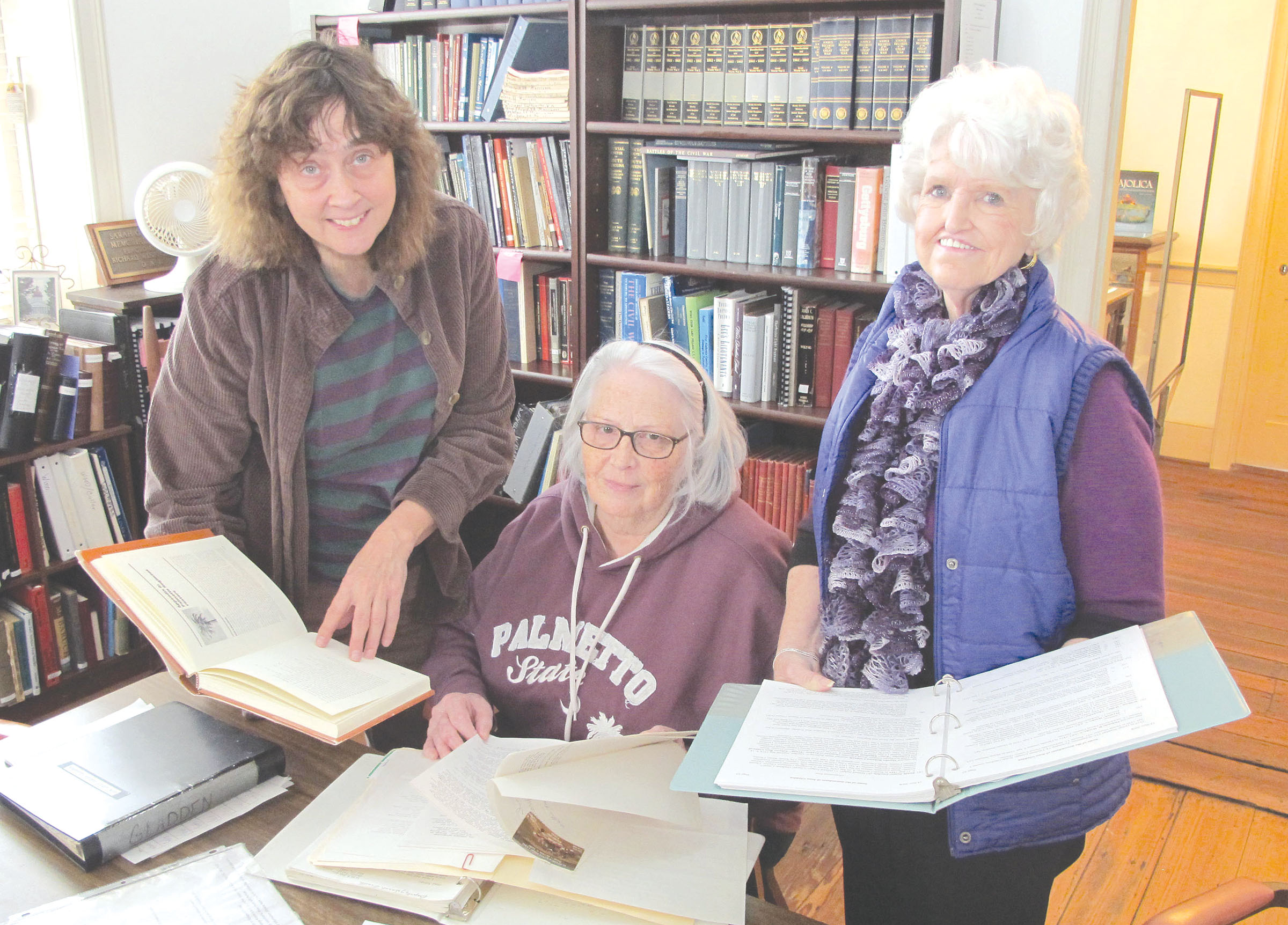
Pelham Lyles, Director of the Fairfield County Museum (left) and museum assistant Shelbia Trotter (right) assist Sylvia Collins of Chester Highway in researching her family history in the second floor archives of the museum.
WINNSBORO — Following on the heels of last month’s successful Christmas Open House, the Fairfield County Museum has some intriguing events lined up for early 2013.
First up in 2013 is a second appearance and historical presentation on Native American History by Val Green at 11 a.m. on Jan. 24 in the Christ Central Community Center at 235 S. Congress St., next door to the museum. In February, Kadena Woodard, an African-American researcher and author of an expansive publication on Fairfield County Black cemeteries and funeral records, will be at the museum to assist with African-American research. In March, researcher James Green will present a program on utilizing DNA studies in your family research.
The Museum is Fairfield County’s gateway to family histories. The family research room of the museum is staffed by enthusiastic volunteers, there to help folks use the resources collected through the years. There are small charges for copies and research by mail, but admission and available files are free. Anyone wanting to take advantage of these resources should call the museum at 803-635-9811 to be sure someone will be present to assist you. An informative quarterly newsletter, stocked with genealogical information and historical articles, can be seen on the website at http://www.scgen.org/. The museum and the Fairfield County Historical Society are collaborating with architectural historian Wade Fairley to produce a searchable online project featuring the old homes of upcountry South Carolina. This is presently under construction for Fairfield County.
As always, the collection assembled by the local Daughters of the American Revolution is on display at the Museum. This collection includes furniture, clothing and intricate jewelry woven out of strands of hair. Also on display in the Museum’s back lot is a 1780s log barn, as well as a period log cabin.
The Museum is truly a beautiful resource for Fairfield County and is managed with pride by Director Pelham Lyles. Lyles has been with the Museum since 1997 and is a piece of walking history herself. She is the ninth generation descendant of the first European child born in Fairfield County. She has studied the items and area, traced her roots and can talk on most any subject with authority. While a student of history, however, Lyles is also focused on the future, particularly the future of the Museum and its place in Fairfield County.
“The museum is an ongoing project that needs resources,” she said. “Pride in our ancestors and pride in ourselves will lead to pride in our community.”
Museum Calendar
Jan 24 – Val Green: Part 2 of Searching for your Native American Ancestors.
Feb. 21 – African-American Records found in the Fairfield Genealogical Reference Room.
March 21 – James Green: Family Information found in your DNA report.
April 18 – Beginning the search for your ancestors.
Meetings to be held at 11 a.m. in the Christ Central Theater next door to the Fairfield Museum located at 231 Congress St., Winnsboro.
For more information, call Frances Lee O’Neal at 803-635-3027.