Tag: slider

  • Life Sentence for 2012 Shooter

    Derekee Johnson

    WINNSBORO – A Winnsboro man charged with the 2012 murder of Bobby Lee “Clyde” McCloud was found guilty by a jury of his peers last week and sentenced to life in prison without the possibility of parole in a trial presided over by 6th Circuit Court judge Knox McMahon.

    Derekee Johnson, 36, of Crawford Circle in Winnsboro, was arrested in Blythewood a day after the May 18, 2012 shooting that took place at approximately 6:45 p.m. near the intersection of Russell and Spring streets in Winnsboro. McCloud, 22, of Chatham Forest Circle in Winnsboro, was shot four times in the chest and pronounced dead at the scene, according to the incident report.

    McCloud was discovered by a passer-by behind a vacant home in the 500 block of Russell Street in the Zion Hill neighborhood at approximately 7:15 p.m. on May 18, 2012. When officers arrived at the scene, they found the witness squatting over McCloud’s body, compressing McCloud’s chest wounds with a shirt.

    Winnsboro Department of Public Safety Chief Freddie Lorick told The Voice in 2012 that witnesses had reported that an altercation between Johnson and McCloud had occurred earlier that evening. By 6:45 p.m., the altercation had escalated and witnesses reported seeing Johnson chasing McCloud through the neighborhood at that time, firing shots at him. McCloud led Johnson down Spring Street, but was eventually cornered behind the empty home on Russell Street where Johnson reportedly fired the fatal shots. Witnesses reported seeing Johnson flee the scene on foot, running into the woods near the basketball courts. After a manhunt of a little more than 24 hours, investigators with the Richland County Sheriff’s Department, the State Law Enforcement Division (SLED) and the Winnsboro Department of Public Safety arrested Johnson at a home in Blythewood.

    Lorick said Johnson had been previously arrested on March 6, 2012 on charges of aggravated assault and pointing and presenting a firearm after he reportedly pulled a gun on another man in the restroom at McDonald’s on the Highway 321 Bypass.

    Shortly after the trial began on April 14, Johnson’s attorney, Geoff Dunn, filed a motion for immunity under the S.C. Stand Your Ground law and a hearing was held without the jury present on April 15. McMahon denied Johnson’s motion and witness testimony began before the jury on April 16. The jury began deliberations late in the afternoon on April 18 and reached a verdict on April 21. Johnson was also found guilty on two related weapons charges, the Solicitor’s Office said.

    The case was investigated by the Winnsboro Department of Public Safety with assistance from SLED and was prosecuted by Assistant Solicitor Riley Maxwell.

  • School Board Member Calls 9-1-1 on Reporter

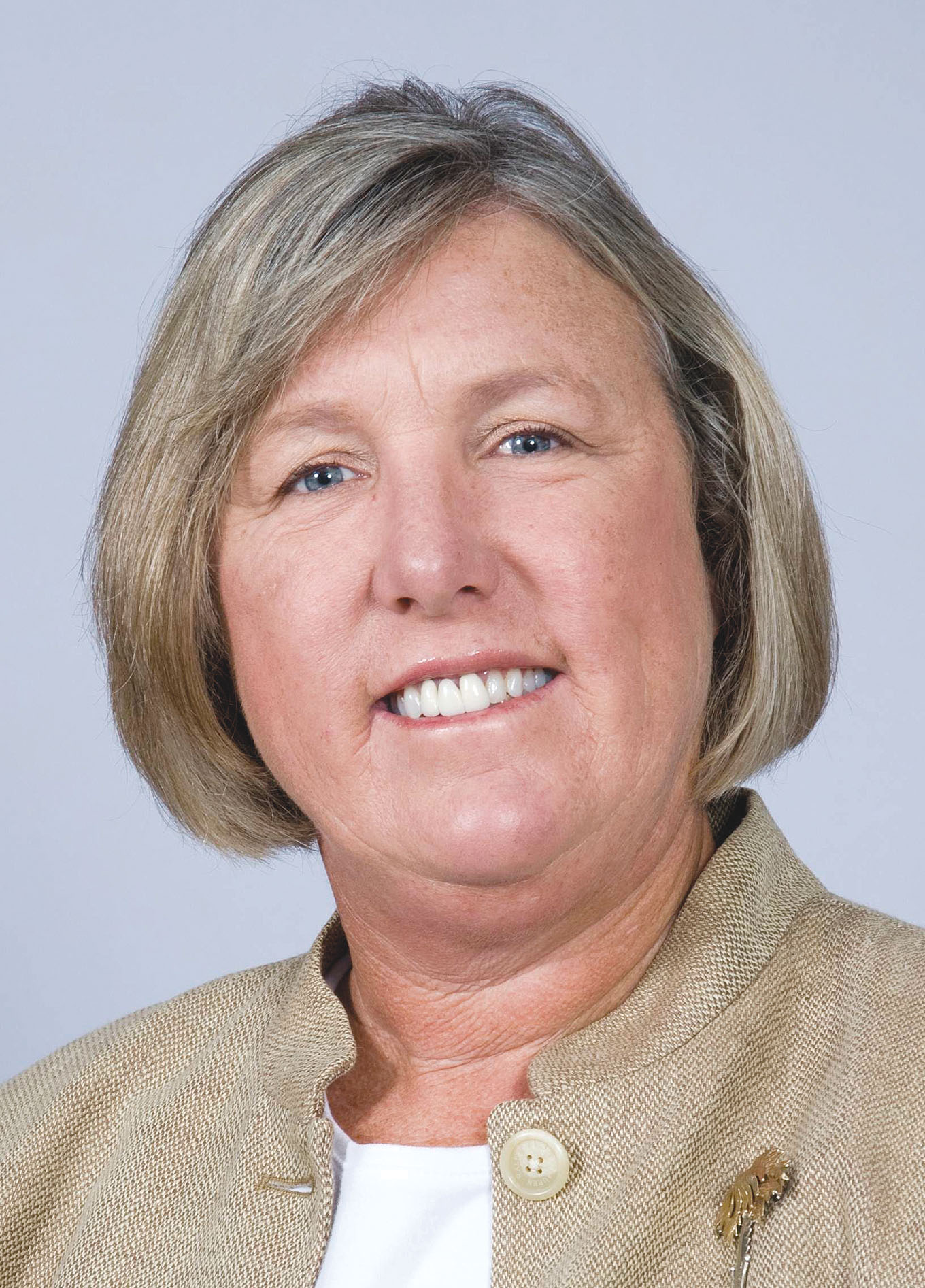
    Annie McDaniel

    WINNSBORO – A Fairfield County School Board member, either unwilling or unable to answer questions from the news media Tuesday night, instead dialed 9-1-1 to report that she was being harassed.

    “Yes, I am at the District Office and I am being harassed,” Board member Annie McDaniel (District 4) said into her cell phone after the 9-1-1 dispatcher answered her call.

    While The Voice clearly heard the dispatcher answer McDaniel’s call, afterwards only McDaniel’s side of the conversation could be discerned for the record. It was as follows:

    “The District Office at the School District. My name is Annie McDaniel. . . . Annie. McDaniel. . . . Mr. James Denton, with The Voice newspaper. . . . He’s standing right here in front of me . . . 803-960-5782 . . . He’s got on a beige jacket and a beige shirt . . . He approached me after the Board meeting, yelling at me, asking me questions . . . No, I’m sitting right here at my desk and he’s standing in front of me and he asked me a question and I told him I didn’t have an answer, and he’s yelling and harassing me. . . . OK. Thank you. Bye.”

    A review of the recording of the conversation clearly shows that no voices other than McDaniel’s were raised during the question and non-answer session.

    No emergency responders arrived at the District Office before the auditorium cleared, but a School Resource Office was on site throughout the entire meeting. Phyllis Watkins, Director of Fairfield County’s 9-1-1 system, said McDaniel’s choice of dialing 9-1-1 instead of answering questions from the media did not qualify as abuse of the system, but that it did exhibit a lack of understanding as to what the system should be used for.

    “We prefer people call when they are facing a life-threatening emergency,” Watkins said Tuesday night. “That’s what we prefer. Unfortunately, that’s not what always happens.”

    The questions that McDaniel refused to answer stemmed from accusations she had made during the meeting that J.R. Green, Superintendent of Schools, was not distributing funds from his discretionary account equitably among the District’s various clubs. McDaniel said Green’s focus appeared to be primarily on the Bow Tie Club at the expense of other clubs. Green said he had supported “a host of different clubs over the course of the year from the Superintendent’s contingency account,” and reminded McDaniel that the expenditure of those funds were, as the definition of the account would indicate, at his discretion.

    “I guess the problem, Mr. Green, is that allows so much latitude for injustice to our kids in the district,” McDaniel said. “That’s like giving you a pile of money to do whatever you want to do with it. All I’m saying is that lends itself to unfairness, and if we are going to allow that to exist, there be some kind of communication on how it’s going to be used so that all our students are treated fairly, and not just one group of students that happen to be one you’re intimately involved with.”

    Green said McDaniel’s statements were “pretty close to an indictment that I have been unfair to students, which I categorically reject. I guess the question is do you think I’m going to be fair to students or do you think I have been fair?”

    After the meeting, The Voice asked McDaniel which clubs had received short shrift in favor of the Bow Tie Club. In lieu of an answer, McDaniel suggested The Voice obtain a list of district clubs from Green. Thinking the question had been misunderstood, The Voice restated the query, asking McDaniel directly which clubs were being treated unfairly.

    “Do I need to call the Sheriff’s Department to ask them to come escort you? Because you’re really harassing me right now,” McDaniel said. “The questions you’re asking me, Mr. Green is the only person that can provide you that information.”

    McDaniel could also not explain why she was the only Board member who failed to turn in her assessment worksheet for the District’s selection of a contractor for the construction of the new career and technology center, a matter the Board took up at the outset of the meeting.

    “The Chair is the spokesperson for the Board, so any questions you have regarding this Board you need to ask her,” McDaniel answered. “I have no comment.”

    But with six of the seven assessments delivered on time, Green recommended and the Board voted to award the contract to MB Kahn of Columbia. MB Kahn beat out Shiel Sexton, KBR Building Group and Edifice, Inc. all of Charlotte. Andrea Harrison (District 1) cast the lone dissenting vote. After the meeting, Harrison would not divulge which of the other firms she would have preferred.

  • Sumter to Prosperity

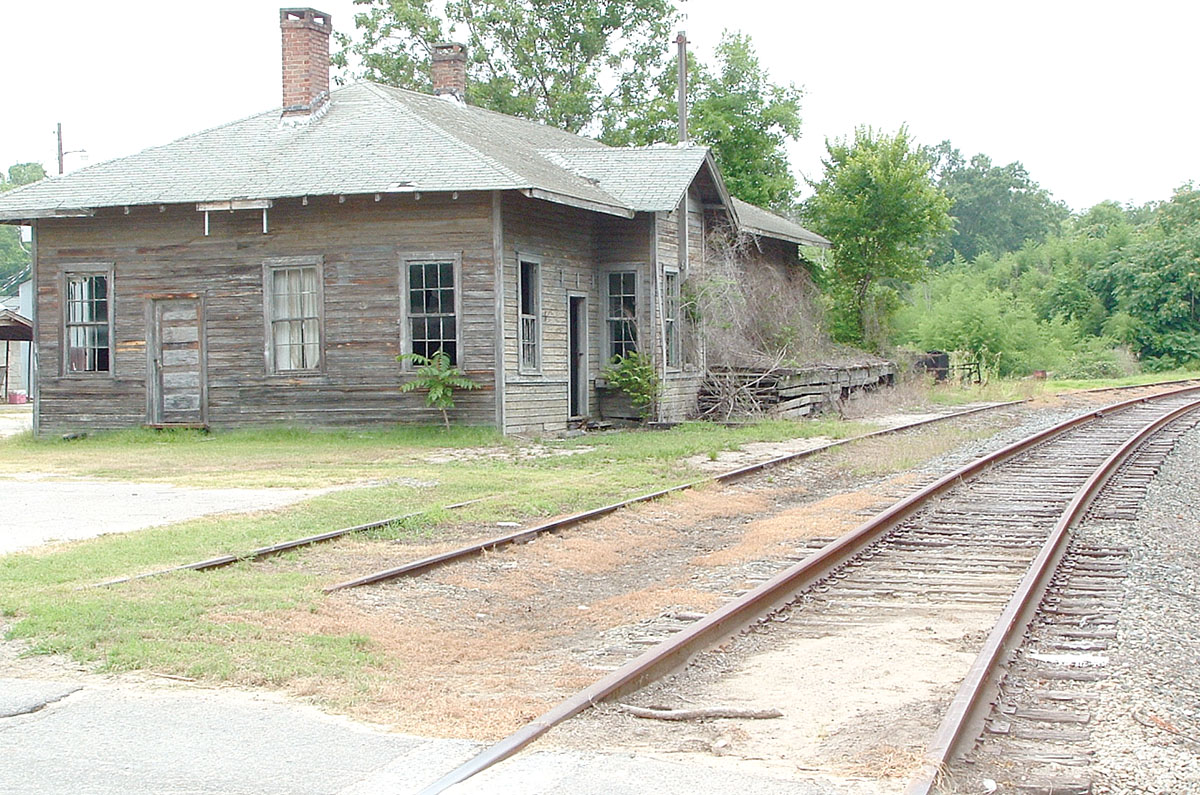
    The old train depot in Prosperity, one of the many relics along Highway 76 as it winds through South Carolina.

    A Summer Road Trip Across SC, Part Two of a Three-Part Guide to Crisscrossing South Carolina

    Sumter’s regal O’Donnell House commands the eye. Built circa 1840 in the Italianate style, Frank Pierce Milburn remodeled it in 1905 in the Neo-Classical style. Once a funeral home, now a social venue, it’s on the National Register of Historic Places.

    So is Sumter’s restored Opera House. Built in the mid-1890s, it houses City Hall offices. Stately and evocative of Europe, I wouldn’t trade this classic opera house for 100 multiplex cinemas.

    West of Sumter, the highway’s military character strengthens. Jets from Shaw Air Force Base’s 20th Fighter Wing scream over Manchester Forest. Across the Wateree River, jets streak over Highway 76 from McEntire Air Base, once known as Congaree Army Airfield.

    Close by stands the last old-growth bottomland forest, Congaree Swamp National Park. World-record trees take their place among redwoods and sequoias as arboreal legends. Alas, past car dealerships and fast food restaurants and into Columbia where 76 joins I-126 near Elmwood Cemetery. Here on a bluff, the Broad River purling below, Confederate soldiers sleep.

    Approaching Riverbanks Zoo, fall line rapids churn, plummet, stair step, froth and run white. On zoo grounds lie ruins: a covered bridge and one of the South’s oldest cotton mills, which Sherman burned. Confederates torched the bridge, a futile attempt to keep Sherman out of Columbia.

    I-26 soon steals Highway 76’s identity, but thankfully, 76 divorces it near a gleaming Toyota dealership. Now 76 strings beautiful beads together — small towns. It curves into Ballentine, named for E. A. Ballentine, who ran a general store in this Lexington County settlement.

    Built in 1929, it’s the town’s last original building. Political candidates once waxed eloquent here as wise old men played checkers by the wood stove.

    Angie Rhame opened High Noon here on Valentine’s Day 2007. In walked an elderly woman.

    “This does my heart good,” she told Rhame. “I was so afraid they’d tear this place down. I have so many memories here.”

    A train rumbles by each day at high noon, (thus the name). In the old days as the train rolled through, an attendant snagged a mailbag from a hook and hurled a sack of incoming mail to the ground.

    High Noon was Farm House Antiques from 1995 until 2006. Proprietor was Carlos Gibbons, father of Leeza, South Carolina’s gift to national television.

    Ballentine leads into White Rock, which melts into Chapin. From 76, you’re a stone’s throw from Beaufort Street and its eclectic shops, among them a gallery and NASCAR collectibles shop.

    Just inside Newberry County, a thicket veils a vanquished farm. A poignant reminder of a time when small farms sustained this country. Just beyond Prosperity’s old train depot sits the town square. There, too, sits a 1935 granite block building.

    A Swede laid the granite blocks quarried in Winnsboro for $3.25 a day. This was where C. Boyd Bedenbaugh operated Bedenbaugh Mules and Horses. Saturdays, farmers came to buy horses and mules. To gauge an animal’s temperament, farmers walked it around the public square before buying it.

    Down the road apiece, an old ’50s gas station, now a dusty antiques shop, speaks volumes about I-26’s arrival. Toward Clinton, orange tiger paws adorn a shed’s roof near a Christmas tree farm in 76’s ongoing crazy quilt culture.

    Next week: Part Three — From Joanna To the Chattooga

    Learn more about Tom Poland, a Southern writer, and his work at www.tompoland.net. Email day-trip ideas to him at tompol@earthlink.net.

  • The Spirit of 76

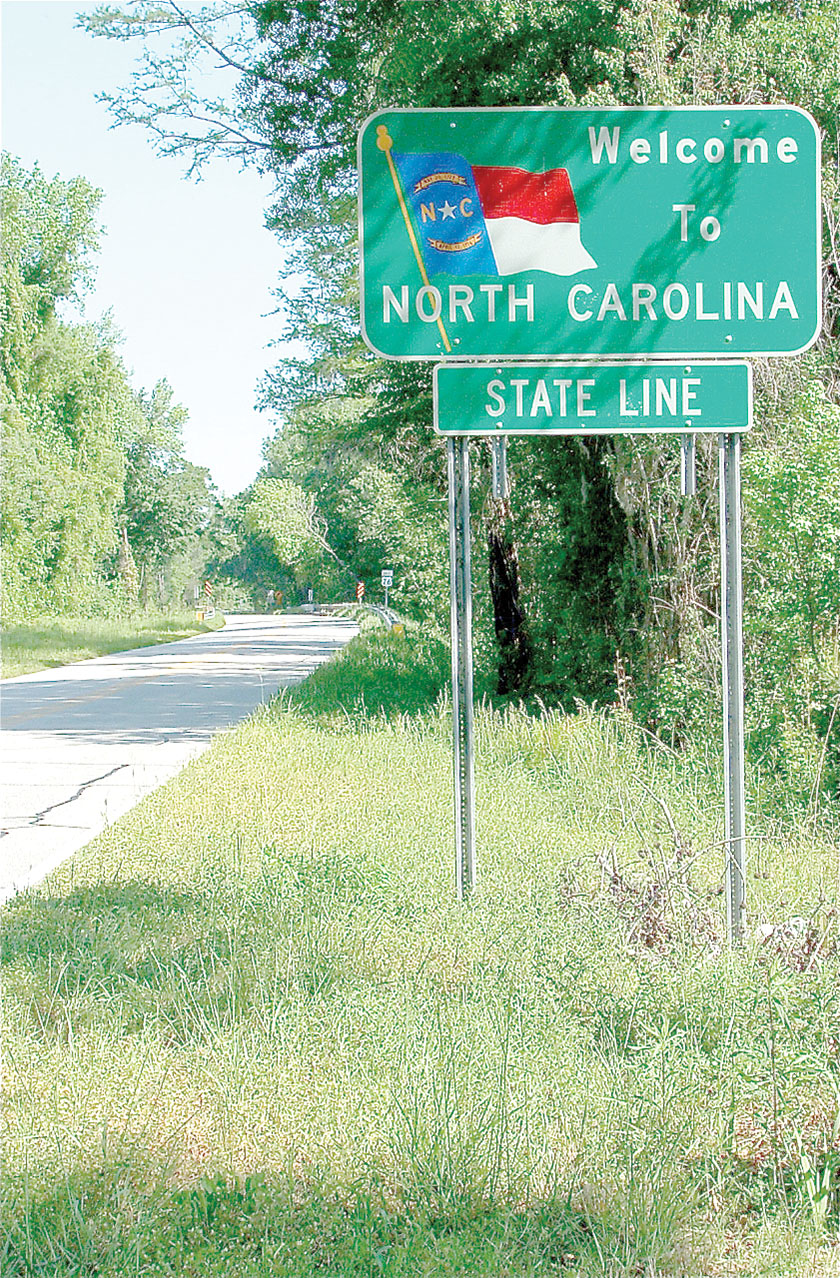
    Your starting point, the N.C. state line. Begin here and follow Highway 76 through rural South Carolina.

    A Summer Road Trip Across S.C.,

    Part One: From Spring Branch to Mayesville

    Summer means road trips. Here’s a guide to crossing South Carolina in three drives.

    Slung across the Palmetto State like a thin, low-hung belt and cosigning with 176, 378, 301, I-26, I-126, and other roads, 76 runs across the Palmetto State entire. In all, 76 runs 548 miles, east to west, from Wrightsville Beach, N.C., to Chattanooga, Tenn.

    And it runs through my mind, this asphalt river lost in time. For I have driven every inch of it, and I know that for those who live along its path and those who go to work on it, it flows as essential as ever. On three Sundays, I journeyed its length – past remnants of an old South Carolina and a shiny new South Carolina. My escort? The goddess Change.

    Highway 76 begins unceremoniously, easing into South Carolina from Tar Heel Land. No state sign welcomes me, just a sign heralding my arrival in the Horry County community of Spring Branch. Crossing the Little Pee Dee, I’m in vintage country. A tire swings from a tree near the Spring Branch Country Store. And then Nichols, all 1.4 square miles, arrives.

    From a weathered mansion’s column, a framed deer head stares at 76 passersby. Man’s oldest calling, hunting, thrives here. And fighting too. The town of Marion honors Francis Marion, Revolutionary War hero, and just beyond flows the Great Pee Dee, the river that missed renown in Stephen Foster’s “Old Folks at Home.” Spying the Suwannee River on a map, Foster preferred “Swanee’s” lyrical fit.

    Highway 76 can be surreal. A “Broken Arrow” incident, the first, happened at Mars Bluff. A B-47 bomber, No. 876, left Savannah’s Hunter Air Force Base for North Africa. At 4:19 in the afternoon of March 11, 1958, it accidentally dropped an unarmed nuclear bomb in the woods behind Bill Gregg’s home. The bomb slammed down in gummy loam and its high-explosive trigger dug a crater 50 feet wide and 35 feet deep. No one died.

    Not far away, a gunboat sleeps way down beneath the Pee Dee. The Confederate Mars Bluff Naval Shipyard built the C.S.S. Pee Dee upriver from the 76 Bridge. Because Sherman was coming, Confederates sank the Pee Dee March 15, 1865.

    Fields and forests fly by until I arrive in Florence, where the Drive-In Restaurant claims to have the Pee Dee’s greatest fried chicken. That would please those Chic-Fil-A bovines who take matters into their own hooves and their famous cousin who lived here. In 1925 Commerce Secretary Herbert Hoover visited Fred Young’s dairy farm whose Jersey, “Sensation’s Mikado’s Millie,” set a world-champion butter-fat record.

    In Timmonsville, “Cale Yarborough” says it all. NASCAR racing through my mind, I approach Cartersville and pass JB’s CB Shop, a reminder of the 1970s citizens band craze. Outside Mayesville, veins of tar run like rivers through 76, now a gravel reminder of Sumter County’s old days. From here came Mary McLeod-Bethune, civil rights leader, unofficial advisor to Franklin Roosevelt and founder of Bethune-Cookman College in Daytona Beach, which she opened for African-American girls in 1904.

    Next week: Part Two — From Sumter to Prosperity

    Learn more about Tom Poland, a Southern writer, and his work at www.tompoland.net. Email day-trip ideas to him at tompol@earthlink.net.

  • Major Coach of the Year

    Boo Major

    BLYTHEWOOD – South Carolina head coach Boo Major of Blythewood has been named SEC Equestrian Coach of the Year for the second straight season. Major’s selection was determined by a vote of the league’s four head coaches. Major, in her 17th season at the University of South Carolina, led the Gamecocks to the 2014 SEC Equestrian Championship, their second in a row, becoming the first team at South Carolina (in any sport) to win back-to-back SEC titles. This year, the Gamecocks have posted their best regular season in team history, going 11-2 overall and 4-2 in conference action.

    “I’m certainly honored to receive this award from an outstanding group of SEC coaches, but this is a reflection on our team and the riders,” Major said. “We have a terrific group of student-athletes who have committed themselves to succeeding in the classroom and in the competition arena. This year, we had 21 riders named to the NCEA Academic Honor Roll, seven of which were named to the Academic First Team, and that’s something we take a lot of pride in. I want to thank Athletics Director Ray Tanner and our University President Dr. Harris Pastides for their leadership and support of our program. I also want to thank everybody in the athletics department for their work and commitment to our team’s success, and certainly I want to recognize our assistant coaches Ruth Sorrel and Carol Gwin for what they’ve done.”

    Major has led the Gamecocks to two NCEA National Championships, in 2005 and 2007. South Carolina is currently the top-ranked equestrian team in the country in the National Collegiate Equestrian Association’s coaches’ poll.

    The Gamecocks are in Waco, Texas this week for the 2014 NCEA National Championships, which will run April 17-19.

  • A County Divided: How — and Why — Blythewood Fled Fairfield

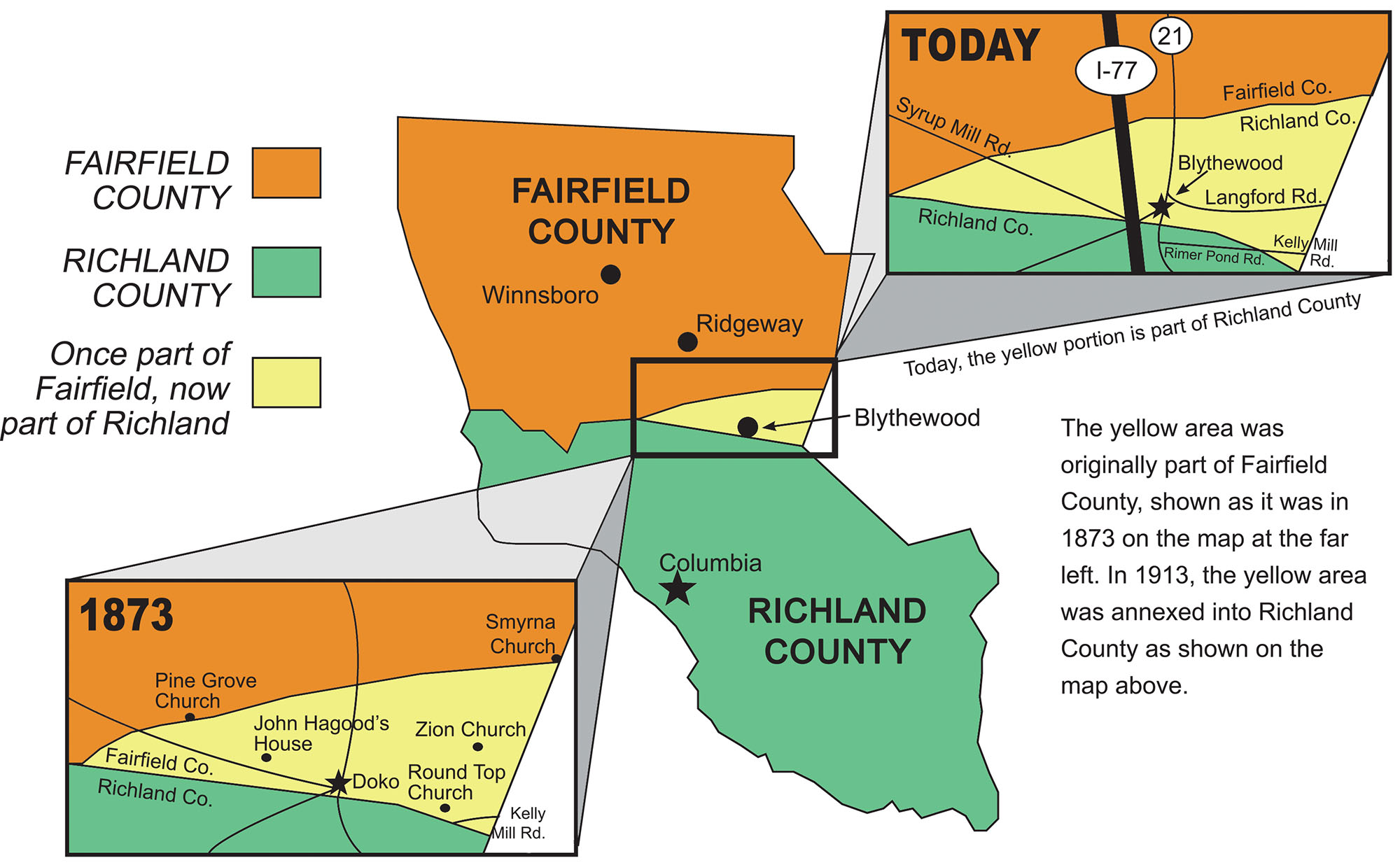
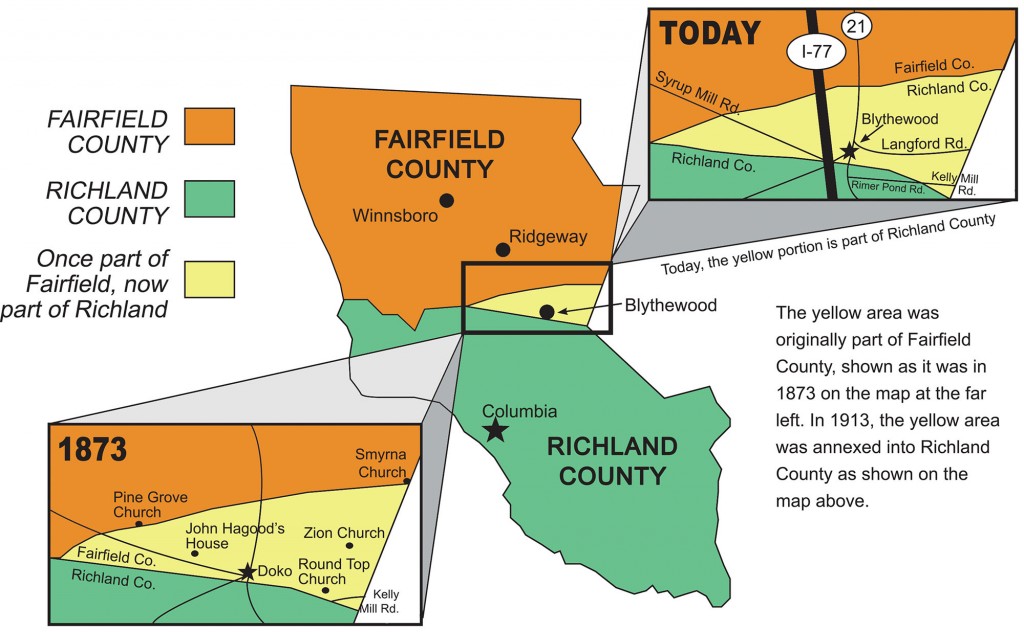
    On Nov. 16, 1910, a group of Fairfield County residents petitioned their state government for annexation into Richland County. Here is their story – which is also the story of How Doko of Fairfield County became Blythewood of Richland County . . .

    Blythewood in Fairfield County

    Until 1910, Blythewood was content to be in Fairfield County. But a great dissatisfaction arose with the treatment of the Blythewood section by the Fairfield County government. This inspired the Blythewood gentlemen to try something new. Under the terms of the 1895 Constitution, written to the specification of Sen. Benjamin R. ‘Pitchfork Ben’ Tillman, new counties could be created and sections of counties could be transferred from one county to another.

    There were several conditions: 1) a petition bearing the signatures of at least one-third of the registered voters in the affected area must be obtained; 2) no area could be taken from a county if the transfer would leave the old county with fewer than 15,000 inhabitants; 3) no old county could dip below 500 square miles; 4) the old county could not dip below $2,000,000 in taxable property; 5) the new county lines could be no closer than eight miles from the courthouse; 6) once these condition were met, an election could be held in the area proposed for transfer and at least two-thirds of the voters had to vote for the transfer and 7) if the question passed the election, the General Assembly then could, if it chose to, pass a bill to effect the annexation.

    Fairfield officials try to appease defectors

    In an apparent attempt to dissuade the petitioners from annexing into Richland County, the Fairfield County Board of Commissioners, on Sept. 12, 1910, passed a resolution regarding the complaints of the ‘Inhabitants of Lower Fairfield.’ It promised in a handbill distributed all around to make several concessions. First it would split the chain gang into two forces of equal numbers, one to work in the northern half of the county and one to work in the southern. The gang in the southern half was to be ‘put to work immediately under the supervision of Mr. Joseph B. Stewart…to improve and construct first class roads through Bear Creek and Blythewood sections.’ Second, the State Senators and Representatives pledged to give each section of the County a voice in the Democratic Party organization of the county. It would appear from this that a lack of fairness in road construction and upkeep as well as influence in Democratic Party circles was inspiring the movement to separate Blythewood from Fairfield and add it to Richland.

    The promises of Fairfield’s leaders must not have had much effect on the Blythewood citizens as on Nov. 16, 1910, they presented petitions to Gov. Martin Ansel asking to be annexed into Richland County. The petitions were sworn to by Furman E. Hood, B. P. Hoffman and Dr. Michael Langford. They contained 139 names, well beyond the one-third required to set the annexation machinery in motion. These petitions are a who’s who of early Blythewood.

    Gov. Ansel had Assistant Attorney General M.P. DeBruhl look over the petitions and on Nov. 16, 1910, he received the legal go-ahead to appoint commissioners to survey the area and arrange for a possible transfer. He appointed W.W. Cloud and Dr. Michael Langford of Blythewood, W.R. Brooker of Columbia and J.E. McDonald of Winnsboro as commissioners in this matter.

    Fairfield government tries to block annexation

    Then, on Nov. 20, 1910, R.A. Meares, a member of the Fairfield Delegation to the S.C. House of Representatives residing in Ridgeway, wrote to Gov. Ansel asking him to postpone further action in the matter as it was ‘a local matter of discord…in process of adjustment.’ The Governor replied that the Commission had already been appointed.

    In January 1911, Coleman L. Blease became Governor. The Blythewood annexation matter stewed along until March 15, 1911, when the Commissioners reported to the new Governor that all the statutory provisions regarding wealth, area and population were complied with and a survey of the area completed. The Commissioners asked that an election be held in early May 1911. Gov. Blease was generally opposed to any changes in county lines, and therefore sat on the Commissioners Report until June 8, 1911, when the Blythewood Commissioners again wrote asking him to speed things along and give them the election they felt entitled to.

    Blease wrote Sen. Dixon of Fairfield that he had held the matter up so far, but he was being pressed to act so he was inquiring of the Clerks of Court in Columbia and Winnsboro whether the required expenses for holding an election had been paid. He found the funds had not been deposited, which gave him and the Fairfield County political leaders an opportunity to further hold up the election.

    On Aug. 12, 1911, W.W. Cloud of Blythewood paid the Clerk of Court in Winnsboro $55 for the costs of holding an election. A new question then arose over the amount of money required. Were the petitioners required to pay for the election only (a relatively small sum) or for the election, survey and costs for the Commission? Rep. Meares used this argument in a letter to Blease asking him to further postpone the election, all the while assuring him that the work on the roads around Blythewood continued and would surely pacify the residents if enough time could be bought.

    Fairfield power structure runs out of time

    By December 1911, the Fairfield County power structure was running out of time. Assistant Attorney General DeBruhl gave an opinion that all requirements had been complied with, and the Governor was therefore free to order an election on the question. On Dec. 16, 1911, Blease ordered that an election be held on Jan. 11, 1912. The Clerk of Court of Fairfield County as well as J.M. McDonald (annexation commissioner from Fairfield) continued an exchange of letters with Gov. Blease, arguing that still not enough money had been deposited by the Blythewood men. At this point, Blease became annoyed and his letters took on a short, flippant style. He eventually told Mr. McDonald, “You will please have the election ordered or send me your resignation as Commissioner of Election, and I will appoint someone who will obey the mandates of the law.” McDonald replied that he would order the election, although he ‘hated to see them leave us, but if they will go, let them go, and may the Devil take the hindermost.”

    Writers Note: While I have been unable to locate the results of the election ordered for Jan. 22, 1912, the annexation into Richland County did pass. On Feb. 18, 1913, a bill passed the General Assembly that transferred 47.07 square miles from Fairfield County to Richland County. There were about 3,500 people in the area, with between 170-200 registered voters. This extremely low number of voters can be understood by remembering that only white men over the age of 21 could vote then. Gov. Blease did not sign the act, letting it become law without his signature. Because of the neglect of an unresponsive government, Blythewood left its former home in Fairfield County to join Richland County.

  • Write-In Pulls Election Night Upset

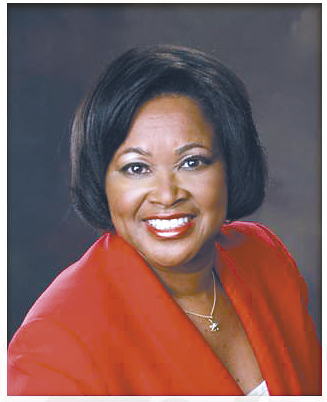
    Heath Cookendorfer

    RIDGEWAY – Although the results are still unofficial, the final numbers rolling in Tuesday night appear to have carried a surprise candidate to victory in Ridgeway’s municipal elections.

    Charlene Herring easily won her third term as mayor Tuesday night, besting challenger and sitting Councilwoman Belva Bush 91 votes to 27. Russ Brown also coasted to his second term on Town Council with 98 votes. The big shock, which will not be confirmed until 10 a.m. Friday by the Fairfield County Election Commission, came in the race for the second spot on Council, as write-in candidate Heath Cookendorfer appears to have ousted Bush from her Council seat, 47 votes to 41.

    Cookendorfer, 42, is originally from Alexandria, Ky., and has lived on N. Palmer Street in downtown Ridgeway for approximately 10 years. He made his intentions to run as a write-in known to the Fairfield County Elections Office on March 29, according to Debbie Stidham, Director of Fairfield County Voter Registration & Elections, in a phone call to the office. While all of Cookendorfer’s information was written down by office staff at that time, Stidham said, staff also informed him that a written declaration would also be necessary and asked him to send that declaration by email. After polls closed Tuesday night, the Elections Office was unable to locate Cookendorfer’s email containing the written declaration. Stidham said Cookendorfer sent the information via email late Tuesday as a precaution, but added that her office did have the information that was written down at the time of the March 29 phone call.

    The written declaration is necessary, Stidham said, in order to confirm spelling of a candidate’s name so that the Election Commission can verify voter intent when confirming results.

    “I decided at the 11th hour to put my candidacy in for Town Council,” Cookendorfer said Tuesday night. “I’ve always been interested in politics. It’s been a passion of mine since I was a little kid.”

    Cookendorfer said he had made two previous bids for Town Council, both with no success. When he saw that Bush was running for both the mayor’s seat and reelection to her Council seat, Cookendorfer said he saw an opportunity, especially if Bush won the mayor’s race.

    “I look forward to working with everyone on Council and serving the people of Ridgeway,” Cookendorfer said. “I think Charlene Herring has done a good job and I think Council has done a good job of putting Ridgeway on the map.”

    While results were still unofficial, Bush accepted the outcome graciously.

    “I am thankful for the time I’ve spent with the town,” Bush said, “but I’m also grateful for the rest. I thank all the people who supported me. I admire the work Charlene has done and I’m sure she will continue to do a good job. It was a pleasure to be the first African-American to run for mayor in Ridgeway.”

    Herring could not be reached for comment at press time.

  • Sentimental Journey

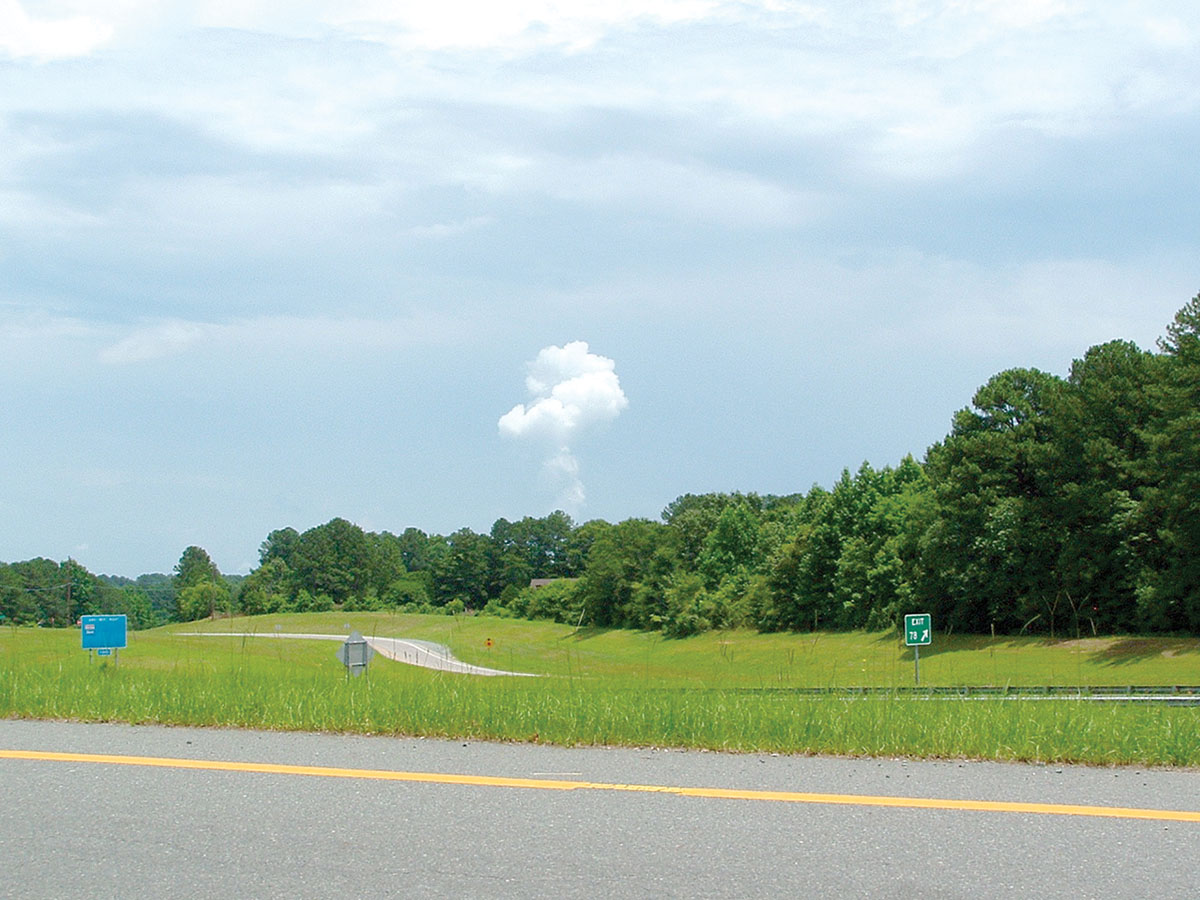
    Take Exit 78 to Hiroshima?
    Not quite. A little to the east, near Apex, N.C., where there is a nuclear power plant. And just ignore that cloud. It’s perfectly safe. Trust us.

    Want to take a trip down memory lane? Want to just drive with no particular place to go? Drive U.S. 1 north into the Tar Heel state. You’ll pass through many a small town, hailed as a place where values and virtues die with the greatest of reluctance. Mayberry comes to mind. It was a sleepy little town where good people and memorable characters lived.

    I avoid interstates when I can, so I pass through a lot of small towns and I can tell you small town America is dying, thanks in large part to interstate highways. See ‘em while you can. Last summer I drove from Raleigh to Columbia down a road once mighty, U.S. 1 South — the main road from New York City to Miami, once upon a time. It strung prosperous towns together like beads on a silver chain. Then I-95 came and tarnished the chain and the beads lost their luster. Today No. 1 runs past many an abandoned mom and pop store. All along its route, dust covers places that once thrived.

    In the glory days to have a business on the shoulder of U.S. 1 was to prosper. No more. It’s easy to spot forsaken diners and gas stations from the 1950s and 1960s. Dust can cover them but it cannot destroy their classic architecture’s lines. I urge you to drive this highway to see just how much our country has changed.

    Not far from Apex, N.C., you’ll see an odd white cloud ascending into the sky, a tornado of steam. It comes from a nuclear power plant. That’s how much things have changed.

    As for the old diners, stores and “filling stations,” what happened to the people who built and ran these places? Where did they go?

    Driving along I tried to summon up what it must have been like to see your livelihood destroyed by a monstrous freeway and the lure of saving time. Below Sanford I drove by a service station/grocery store covered in vines and suddenly it became easy. I imagined a thriving business with green-and-white hand-painted signs out front. “Fresh Vegetables.” “Red, Ripe Tomatoes.” “Cheap Gas.” And then I-95 snaked its way across the land and fewer eyes saw those simple advertisements.

    The hum of tires faded and the clanging of cash registers quieted. More than one owner I’m sure made it a habit to stand in front of his store, hand shielding the sun from his eyes, scanning the road.

    “No traffic. Well, not like it used to be.”

    In leveling forests and plowing up fields and God knows what else to build 42,793 miles of limited-access pavement, the interstates changed America in ways few could have imagined. In 2004 Forbes magazine published “The Great Paving,” which said, “The Interstate system was sold as a savior for both rural America and declining urban cores; instead it speeded the trend toward suburbanization at the expense of both city and country. It was heralded as an antidote to traffic jams; instead it brought ever more congestion.”

    You can still see vestiges of pre-interstate days. Work your way over to Camden and make a sentimental journey north on U.S. 1.

    If You Go …

    • Take a camera

    Learn more about Tom Poland, a Southern writer, and his work at www.tompoland.net. Email day-trip ideas to him at tompol@earthlink.net.

  • Rimer Pond Road Closes April 14

    The DOT will close a portion of Rimer Pond Road Monday as work begins on ‘Dead Man’s Curve.’

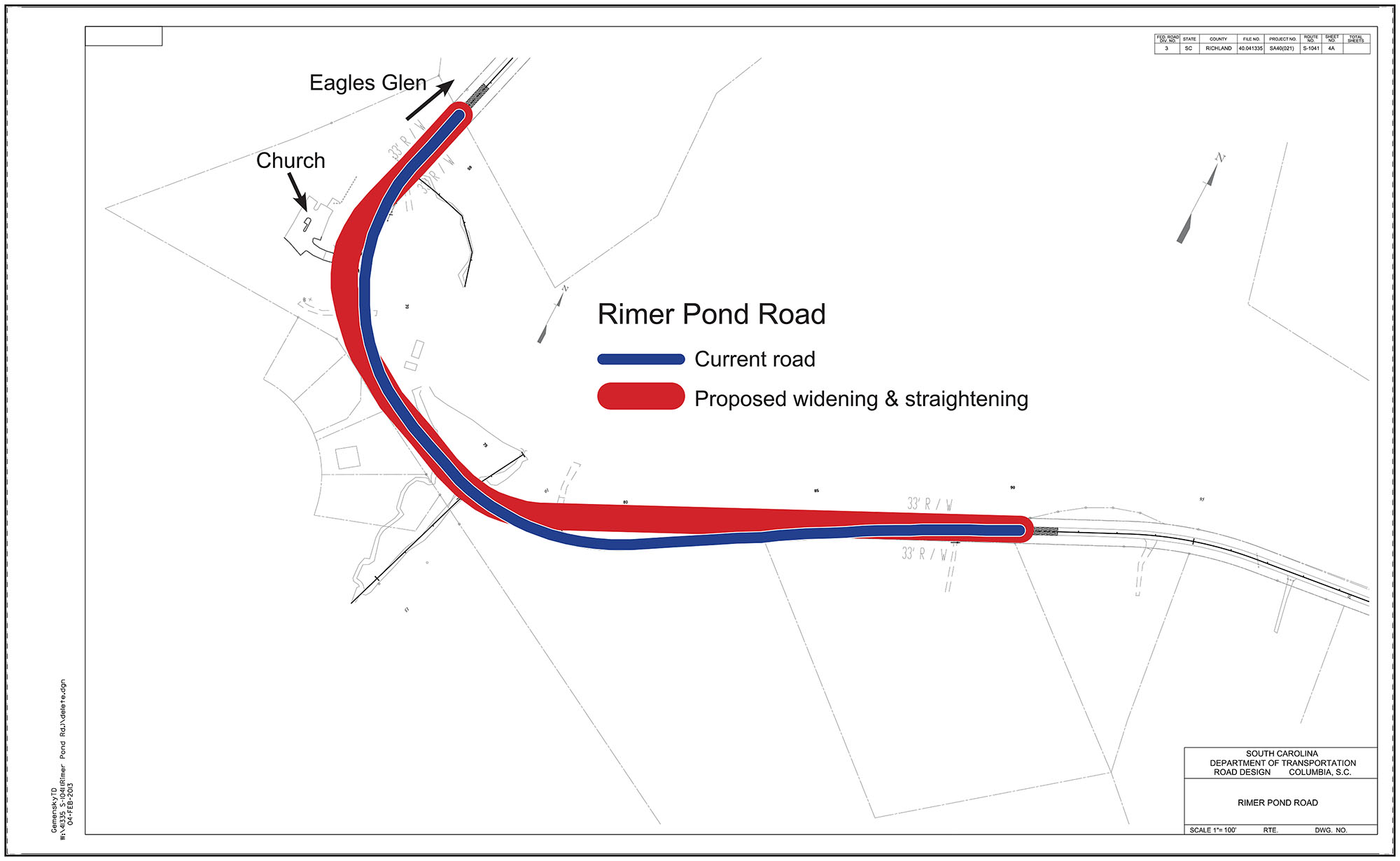
    BLYTHEWOOD – The S.C. Department of Transportation (SCDOT) will close Rimer Pond Road to thru traffic from April 14 until Aug. 31 while construction crews straighten and widen the road’s infamous curve, according to Allen Thompson, Resident Construction Engineer with SCDOT’s Richland Construction Department.

    The curve will be re-aligned starting between the entrance to Eagles Glen and Perfecting Faith Church and continue to a point near Round Top Elementary School. Traffic south of Eagles Glen subdivision will enter and exit Rimer Pond Road where it intersects with Highway 21 (Wilson Blvd.). Traffic north of the construction will be detoured via Round Top Church Road to Langford Road.

    Bryan Jones, District Engineering Administrator, released a statement on March 31 explaining that while schools in the area (Round Top Elementary and Blythewood Middle) would be impacted by the detours, the school administrations would be informed so they could reroute school bus traffic during the four-month construction period.

    When a statistical comparison was made a few years ago with other one-half mile sections of roads around the state with high crash incidents, the locally notorious curve on Rimer Pond Road easily met the qualifications for improvement – 29 crashes in four years with 12 of those being injury crashes, according to Joey Riddle, Safety Program Engineer for SCDOT.

    “To make the road safer,” Riddle told The Voice in early 2013, “we’ll be widening the two existing 10-foot lanes at the curve to 12-foot lanes with 2-foot paved shoulders beyond the white line on the edges of the road. This will make the road about 28 feet wide, from edge to edge.”

    Riddle said rumble strips would also be added to the road’s edges to warn drivers when they are departing from the road. He said that while rumble strips are expensive to install, a study of the road’s accidents showed that 23 of the 29 crashes were land departures.

    Thompson said that in order to eliminate some of the curve, the road will have to be moved as much as 8 feet in some places.

    A guard rail will be installed on both sides of the road at the low point of the curve where there are a couple of creeks alongside the road across from the Rimer Pond dam.

    Thompson said the road corrections should make the curve safer.

  • Magnet School Makes History

    Magnet School principal Gale Whitfield hoists the school’s Palmetto’s Finest Award in a display of victory.

    FMSMS Earns Palmetto’s Finest Award

    WINNSBORO — Fairfield Magnet School for Math and Science (FMSMS) has achieved something never before done in the history of Fairfield County. The school is the winner of a Palmetto’s Finest Award, the state’s top honor given to five schools that offer excellent instruction and outstanding leadership. School District Superintendent J.R. Green said it was an exciting time in Fairfield County.

    “This is indicative of multiple things we have going on here in the district,” Green said. “We understanding we can do anything if we work together.”

    Each school goes through an intensive application process that includes self-evaluation, peer review and on-site examinations, and is evaluated on student achievement, instructional programs, professional learning communities and school culture.

    “This award has come about through hard work and dedication of the wonderful students, dedicated parents, teachers, administrators and staff,” Green said. “I am here to tell the community that this is a new day in Fairfield County.”

    Principal Gale Whitfield shed a few tears at the school’s win.

    “This prestigious Palmetto Finest Award validates that great leadership with exceptional teachers and dedicated parents results in students being academically successful,” Whitfield said, “and we earned the right to be a Palmetto Finest school.”

    Students cheered and weighed in on the excitement of winning, too.

    “Being a Palmetto’s Fines school feels awesome!” sixth-grader Dhvani Patel said. “I am very happy that we won this award for our school. The students, our teachers and our principal have worked very hard for this achievement. It is great to see our hard work paying off.”

    FMSMS is the recipient of the two consecutive Palmetto Gold awards and earned an absolute report card rating of Excellent.