Tag: slider

  • Autumn Pilgrimage

    Fall is on display. Catch it if you can.

    A buddy of mine lived in Florida for a few years and what he missed most were the seasons, especially fall and its splendid colors. You can have flat, sandy, mono-season Florida. I’ll take a granite ledge that hangs 1,000 feet over a valley carpeted with red, yellow and orange leaves every time.

    As summer winds down, the dwindling of chlorophyll is a beautiful thing. As the sun sets earlier, as temperatures drop, summer’s green palette gives way to autumn’s shades of red, orange and gold. Of late November has been the time when trees burst with brilliance. Typically, foliage in South Carolina’s mountains has peaked later in the fall because of warm weather with bursts of color here and there.

    Planning a trip when the colors peak is not easy, especially if reservations are in order. You’ll find websites and weathermen galore who try to predict the peak season (elevation and latitude make a difference).

    Predicted with accuracy or not, the arrival of fall colors kicks off a tourism season. For many, driving through the Upstate into the North Carolina mountains is an annual pilgrimage. Rather than a long day trip, I like a three- to four-day adventure. I plot a rambling, roundabout route that goes up through Greenville, up to Walhalla, into Highlands, N.C., over to Brevard, Hendersonville and on to Asheville, the town where Thomas Wolfe and O. Henry sleep by the French Broad River.

    I enjoy departures from the main route. You’ll find that a lot of small towns in the mountains hold festivals during fall. If you plan a fall color trip be sure to build in some time for explorations. Go to South Carolina’s rooftop, Sassafras Mountain. See its maples flaunt their colors. Look for roadside stands selling apple jelly and other treats from the land. Among the stands’ offerings are pumpkins and gourds. Rainbow foliage finds rivals in red apples, golden honey and bright jams and jellies. Look too for wild grapes and vineyards. Take your time. Stop and buy honey – sunshine in a jar – and apples too. Check out an Appalachian tradition, handmade quilts for sale.

    Driving from Brevard to Hendersonville, look for the cemetery where Thomas Wolfe’s legendary “Look Homeward Angel” stands with outspread wings. Detour to Flat Rock and tour Connemara, the home where Carl Sandburg lived, now a national historic site.

    On to Asheville. In his memoir “Burning The Days,” James Salter writes, “There is a feeling. That somewhere the good life is being lived but not where you are.” That’s how I feel about Asheville. I spent a few days there on assignment for a magazine. One morning there as crystal clear as a photo taken by a fine Hassleblad. Deer grazed in the meadow behind the estate. Fog rolled in and auburn deer faded into gray phantoms. Sunlight burnt off the fog and blazing fall foliage lay upon October’s hills like sun-struck jewels.

    Fall colors are one of Earth’s better performances. There’s music in the leaves and there’s no resisting their siren song. Keep checking the forecasts and enjoy the absence of green.

    If You Go …

    Check websites that predict fall color:

    www.weather.com/outlook/driving/fallfoliage/statelist/

    gosoutheast.about.com/od/wintereventsfestivals/ss/fall_foliage_8.htm

    Check the Table Rock Foliage Cam

    www.southcarolinaparks.com/trip-planning-tools/photos-videos/webcams/table-rock-state-park/

    Learn more about Tom Poland, a Southern writer, and his work at www.tompoland.net. Email day-trip ideas to him at tompol@earthlink.net.

  • Stickup Spree Ends in Arrest

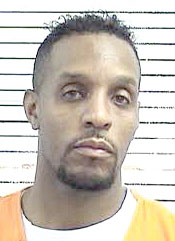
    Stephen Delano Jackson

    WINNSBORO – A Winnsboro man is behind bars after confessing to back-to-back armed robberies late last month.

    Stephen Delano Jackson, 40, of 249 Ashford Ferry Road, was arrested outside a home on Maple Street on Sept. 30, Public Safety Chief Freddie Lorick said last week. Jackson was identified by clerks from the Master Shell convenience store as the man who walked into the store earlier that afternoon with a handgun tucked into his waistband demanding money. Jackson reportedly fled the Master Shell with $80 in cash from the register and got into a gray Chevrolet Impala parked right outside the store.

    When the call came in on the Master Shell holdup, Lorick said, investigators were still following up on the Sept. 25 armed robbery of the Dollar General on the Highway 321 Bypass. According to Lorick, a man later identified as Jackson came into the Dollar General at approximately 8:40 p.m. and asked one of the clerks to show him where the deodorant was located. The clerk escorted Jackson down one of the aisles where Jackson then stuck a hand under his shirt and told the clerk that he would start shooting unless she opened the registers and handed over the cash. Jackson made off with an estimated $500 in cash, fleeing on foot.

    The Fairfield County Sheriff’s Office brought out their bloodhound team and searched the area, but with no luck. Lorick said the video from the security cameras, however, gave investigators a pretty good look at the suspect.

    Five days later, at around 1:30 p.m., Jackson struck again, walking into the Master Shell, showing clerks a handgun tucked into his pants and demanded money. Witnesses were able to note the license plate numbers on the Impala after Jackson left the store and police later stopped the car near Palmer and Frazier streets.

    Jackson was not in the car at the time, and the driver, 23-year-old Christopher Eugene Jamison, told investigators that he had only offered to give Jackson a ride to the Master Shell and had no idea Jackson intended to pull a holdup. Lorick said Jamison’s account rang true and Jamison faces no charges connected to the robberies.

    Lorick said Jamison told investigators that he had dropped Jackson off outside a home on Maple Street, where he was picked up by police later that day. Neither the money nor the gun have been recovered, Lorick said. Lorick said Jackson reportedly place the remaining money on the tailgate of a pickup truck parked in the yard of the Maple Street home, but when investigators returned to the scene the money had vanished and witnesses at the scene claimed to have no knowledge of the money.

    At press time, Jackson was being held at the Fairfield County Detention Center, facing two counts of armed robbery. No one was injured in either incident, Lorick said.

  • Swell on Wheels: Classic Cars Cruise Festival

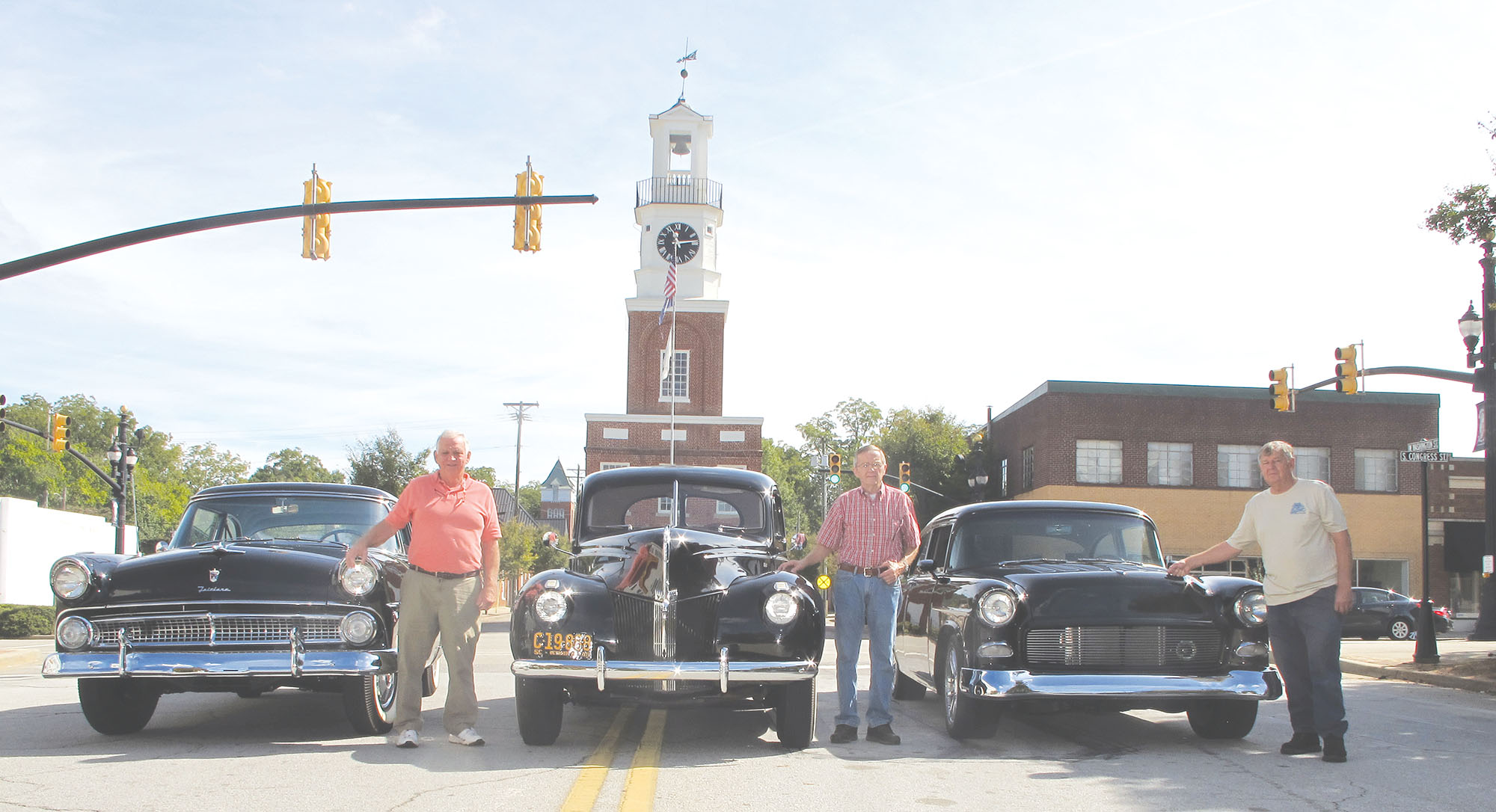
    Three longtime Winnsboro friends show off the antique cars they each have owned for about 50 years. At left, Town Councilman Jackie Wilkes and his 1955 Ford; Buddy Castles and his 1940 Ford Deluxe and Sam Edenfield and his 1955 Chevrolet 150 Businessman’s Coupe. The cars will be on display during the Rock Around the Clock Car show Friday and Saturday. (Photo/Barbara Ball)

    WINNSBORO – The 16th annual Classic Car Show at Rock Around the Clock in Winnsboro on Saturday will host 175 classic cars, many from Fairfield County and some from as far away as Florida, Tennessee and Virginia.

    Show organizer and Winnsboro native Sam Edenfield, 71, has managed the show since its inception and said there is an exceptionally good turnout this year.

    “It’s going to be a lot of fun for the spectators and the exhibitors,” he said. “We’re awarding 50 trophies, $500 in cash and a couple thousand dollars’ worth of prizes and giveaways. The popular Poker Walk is returning this year at noon, and we have our terrific singing DJ, Fitz McGill, back again this year.”

    Edenfield is bringing two of his own classic cars, a 1929 Ford Roadster hot rod he built from scratch 10 years ago and a 1955 Chevrolet with which he shares over 50 years of history.

    “My brother bought it in 1959 from Central Chevrolet of Columbia,” he recalled, “and then in 1961 he traded it to our neighbor, Bruce Baker, who was in my high school class. Bruce drove the car to Los Angeles, Cal., but it got stolen there and was missing for six months before they found it – all the way up in San Francisco! Bruce drove the car back home in 1962, my dad traded him a car for it, and after my dad’s death in 1966 the car became mine.”

    His Chevrolet is a 150 Businessman’s Coupe, a rare car that sold new for about $1,500. It was outfitted for executives of the 1940s and ‘50s – for instance, instead of a backseat, it had a plywood platform to hold a briefcase and a suitcase. Over the years, Edenfield has completely updated it with a digital dash, power steering, cruise control, heat and air conditioning.

    “Mine’s all modern,” he said. “I’ve repainted it, redone the interior, redone the complete running gear. I’ve got it to where I could drive it to California again if I wanted to!”

    Edenfield takes his car to several shows a year, but also drives it regularly and plans to eventually pass it to his son, Bill, who runs Independent Body and Tire, the Winnsboro body shop that Edenfield started with his wife 26 years ago and is now retired from.

    Edenfield has enjoyed working with classic cars his whole life, and in school became friends with classmates and fellow car enthusiasts Jackie Wilkes and Buddy Castle. The three Winnsboro friends are bringing cars to this year’s show that they have each owned and worked on for around 50 years – decades of trading notes and brainstorming with each other about restoration issues with their cars.

    “Jackie got his 1955 Ford in 1956, and he’s just finished completely restoring the car to its original factory condition,” Edenfield said. “And Buddy has a 1940 Ford Deluxe that he bought in 1961 and has restored to original condition. He originally redid the car 30 or 35 years ago and has kept it in great shape. He brings it to the show every year.”

    Edenfield said that when the guys first got their cars, working on them wasn’t just a fun hobby, but also a necessity.

    “Back in the day,” Edenfield recalled, “if you had a car, you had to keep it running – you couldn’t just take it down to the dealership for repairs. You and your buddies had to figure out what was wrong with it and then repair it or go find an old part that would work. I saved up $35 to buy my first car by working at a filling station, cutting grass, washing cars – it was a different world back then,” he recalled fondly. “That’s why I enjoy doing the show so much – it’s great to see these classic cars kept in wonderful condition and enjoyed by people who remember how things were back then.”

  • See You in Two Weeks . . .

    Keith Lewis
    Will Montgomery

    Sheriff’s Race Heads to Run-Off

    WINNSBORO – Voters failed to pick a clear winner in Tuesday’s primary for the special election for Fairfield County Sheriff. They did, however, narrow the field of candidates down to two.

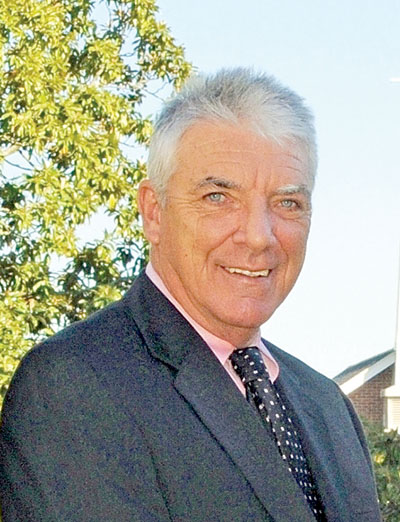
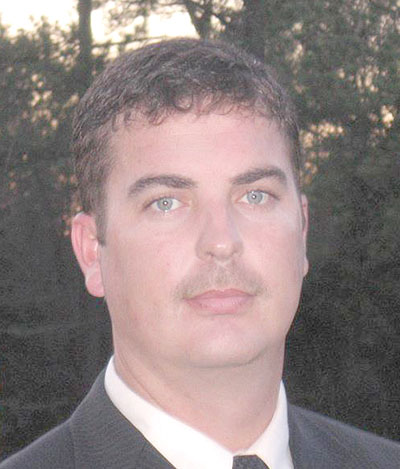
    Keith Lewis, currently the Chief Deputy for the Fairfield County Sheriff’s Office, and Will Montgomery, a Richland County Sheriff’s deputy, will square off again in two weeks for a run-off. Lewis earned 1,595 votes in Tuesday’s primary pick-‘em, while Montgomery hauled in 1,613.

    “I’m pleased with the turnout and hopefully it will happen again,” Montgomery said Tuesday night. “I am concerned about getting people out for the run-off.”

    Looking ahead, Montgomery said his strategy was to “keep on moving like I’m moving and not slow down.”

    Lewis, meanwhile, was more philosophical about the results and the pending mano a mano showdown.

    “I want to thank all my supporters and ask them to please come back out in two weeks and do it again,” Lewis said. “My strategy moving forward is to continue doing what I’ve been doing and leave it in the Lord’s hands.”

    Lewis said he had hoped the turnout would have been more robust, but said he understands the turnout challenges of a special election. Odell Glenn, who finished a distant fifth with only 95 votes, said the low turnout was “truly a shame in such an important election.”

    Ricky Gibson finished third with 925 votes. John Seibles garnered 550 votes.

    “The people’s voice has been heard,” Gibson said. “I wish them both well.”

    Gibson and Seibles said they were not officially endorsing either of the remaining candidates at this time. Glenn, meanwhile, said he was throwing his support behind Montgomery.

    The primary run-off will be Oct. 14.

  • Lawmen Stump for Top Cop Spot

    Candidates for Fairfield County Sheriff at a recent Chamber of Commerce forum: Will Montgomery, Ricky Gibson, Odell Glenn, Keith Lewis and John Seibles.

    WINNSBORO – All five candidates running for Fairfield County Sheriff answered questions in a forum at the Winnsboro Woman’s Club on Sept. 18. Participating were Ricky Gibson, a Fairfield County school resource officer; Odell Glenn, a Richland County investigator; Keith Lewis, the Chief Deputy of Fairfield County; Will Montgomery, a Richland County deputy; and John Seibles, a Major in the Town of Winnsboro Department of Public Safety. Although a set of questions had been sent to the candidates in advance by the event’s sponsor, the Fairfield County Chamber of Commerce, moderator Tyler Cup, after asking the candidates to introduce themselves, began with a question from a member of the audience.

    What is the one thing that will change in the Sheriff’s office if you are elected Sheriff?

    Seibles said the Sheriff’s office would better connect with the residents. “People need to trust us,” he said, and talked about ways to gain their trust, something he said he does in his job and in his neighborhood.

    Lewis agreed that communication “is one of the biggest issues in every sheriff’s office in the country. If I do become Sheriff,” Lewis said, “I plan to meet at least every quarter with residents in one of the seven county districts and ask that district’s Council representative to go with me. We need to work together with the community.”

    Glenn said he would fully invest in the community and families and put programs in place to assist families. He said that when kids get in trouble, families don’t always know what to look for or how to deal with their kids’ problems.

    Gibson said resource allocation would change. “Management of our manpower is insufficient.” He suggested split shifts, “so there is a minimum of four people covering an area at all times.”

    Montgomery said he would put more manpower on the roads by cutting the county into three areas (east, middle and west) and assign deputies to each of those districts and hold them accountable to each district.

    Asked their thoughts on spousal abuse and what they could do about it, Lewis said his department currently works closely with Sistercare to give victims of domestic abuse a way out. “It often gets back to economics,” Lewis said. “They are locked in and don’t have any place to go. We need to open up the doors to help them.” Lewis also said that while his deputies make domestic violence arrests every day, about 75 percent of the cases are dropped to a simple assault charge or end up in a lower court where nothing is done.

    Glenn agreed that victims of domestic abuse are often trapped and don’t have the financial ability to get out. He called for more victim services outlets and a better way to report domestic abuse.

    Gibson, a pastor, called for better education for women and, “We need to tap into the church with this issue,” he said. He also said business and industry are sometimes reluctant to come in when the crime rate is high.

    Montgomery said he would train deputies to know how to handle a domestic abuse case. “You must have the evidence to make a case.” He said it is also important to educate the public to report domestic abuse.

    Seibles said South Carolina is No. 2 in domestic violence and that, if elected Sheriff, he would connect with pastors in the community. “That would make our job a lot easier. We need community leaders with a spiritual side.”

    Fairfield County has been open and transparent with the public in the past. If you become Sheriff, will you continue this openness?

    Glenn stressed the importance of transparency in the Sheriff’s office. “There is no reason for (the public) to not know what we’re doing. Transparency will be my Job No. 1,” Glenn said.

    Gibson, too, said transparency would be the order of the day if he is elected Sheriff. “I believe there are times, such as an ongoing investigation, when we cannot be open about something,” Gibson said. “But after it’s over, we must open up. Transparency is better served when we realize we should be held to a higher level.”

    Seibles agreed with Glenn and Gibson on the importance of transparency in the Sheriff’s office and said, “If the citizens trust you enough, I think they will know that we will let every bit of information out that we can.”

    Lewis also championed transparency, saying, “When you’re using taxpayers’ money, they have a right to know what’s going on.” He also said when (law enforcement) makes a mistake, they must admit it openly. “A Sheriff’s only as good as his Indians,” Lewis said, adding that the Sheriff must lead by example. “If the Sheriff treats the public right, his men are going to see that and treat the public right.”

    Montgomery said he thought transparency was important, but side-stepped the transparency question, and instead referenced his boss, Richland County Sheriff Leon Lott, saying he had watched Lott gain the trust of the community and was part of that. “We have to have unity in the community. Without that we don’t have nothing.”

    Why do you think you are the best man for the job of Fairfield County Sheriff?

    Gibson said he would bring common sense to the job. “I will be open, no hidden agendas. I can motivate the workers to do better. I will come out and talk to the people and address their concerns. We must hold ourselves above reproach. I want this job because I know what I can do,” Gibson said.

    Montgomery said this is his third time to run for the office. “I really want it,” he said. “It’s my life-long goal. I’m a proven leader. My education speaks for itself. I was there for my people (in Richland County) and I’ll be there for you. I’m a hard worker.”

    Seibles said he is not looking for a job or a career. “I have a heart to serve and this is a way of life for me.” He referenced his spiritual faith, his closeness to the community and his ability to build trust. He expressed confidence in his ability to carry out the duties of the office of Sheriff and rested his trust in God. “It’s truly an honor to serve the community. I’m very thankful for that opportunity.”

    Glenn said he was the best choice for Sheriff because of his 20 years of leadership experience, management skills, being in charge of large organizations and making decisions that can mean life or death. “Being a crime victim myself made me want to go into law enforcement,” Glenn said. “I will be the Sheriff you can depend on to be in your community and in your neighborhood. I will bring energy and advanced skills. I know how to make the tough decisions.”

    Lewis said, “It’s hard for me to stand up here and say I’m a better candidate than these men. They are all good people. But let me tell you what I can about me.” He said there’s more to being Sheriff than the duties of the office. “It’s the responsibility of the Sheriff to help assure that the County is a productive, healthy, safe place to live,” and he said Fairfield County is on the doorstep of economic growth and that the crime rate plays a big role in economic development. “Our crime rate is 34 percent, one of the lowest in the state and better than some of the surrounding counties. In the next two years we could become one of the best law enforcement agencies in the state.”

    A second forum for the Sheriff candidates was held last evening in Ridgeway. The special election for Sheriff will be held this Tuesday, Sept. 30.

  • County Tackles Bond Questions

    County to Review $24.06M Mechanics
    WINNSBORO – Fairfield County Administrator Milton Pope plans to make good Monday evening on his promise to explain the County’s newest general obligation (GO) bond, issued by Council on Aug. 7 for $1,156,000. That explanation is expected to also include a GO bond issued on Feb. 14 for $769,177.88, the $24 million bonds ($3,710 SeriesA & $20,980,000 Series 2013B) issued in April 2013 and clarification as to how many more GO bonds Council plans to issue over the next 30 or so years to finance the semi-annual installment payments due to the Fairfield Facilities Corporation (FFC) to pay off the 2013 $24 million bonds.

    Council’s critics say Council has not provided an honest and thorough explanation of the bonds except to say (1) the bonds will not increase residents’ property taxes, (2) the 2013 plan set in motion by the Council to finance a $24 million economic development plan with bonds was intended (by Council) to obligate the new revenue from V.C. Summer’s Units II and III reactors so as to possibly protect the County from other governments in the state that might threaten to raid that revenue in the future and (3) that the media has stirred up misconceptions about the bonds.

    Council Chairman David Ferguson further propagated the perception of secrecy on the part of Council when he told The Voice at an Aug. 18 meeting with the Legislative Delegation that he didn’t know how the County plans to spend the proceeds from the $1,156,000 bond. This, combined with false and misleading information provided by the former County Administrator to the public and local newspapers as to which bonds, exactly, the County did or did not issue in 2013 as well as the repercussion of those bonds on the issuance of future GO bonds, has raised questions and suspicion from the county’s citizenry.

    Why are the GO Bonds Being Issued?

    According to the $24 million bond documents, Council’s initial plan, in 2013, though it was not explained to the public at that time, was to begin issuing GO bonds in early 2014 to make the semi-annual installment payments on the $24 million bonds from 2013 until 2020 (part of the bond issued on Feb. 14 was to reimburse the County’s general fund for the Sept. 1, 2013 installment payment). According to the bond documents, the County planned to begin making the larger installment payments from surplus revenue in 2021. Surplus revenue is a term in the $24 million bond documents that refers specifically to that revenue that will be produced by the two new V.C. Summer nuclear reactors, which are currently under construction.

    When the $24 million bond was issued in 2013, Council expected the surplus revenue to materialize in 2019. Because of delays in construction of units II and III, that revenue is now not expected to start rolling in until late 2020 or early 2021.

    In recent weeks, several conflicting documents have surfaced indicating that the County may have changed some aspects of its payment schedule to the FFC. In one document (See Document B), the numbers line up so perfectly as to indicate the proceeds from the $1,156,000 bond would be used to pay off the principal of that same bond and for nothing else. Pope has not yet responded to inquiries by The Voice asking him to confirm or deny this possibility.

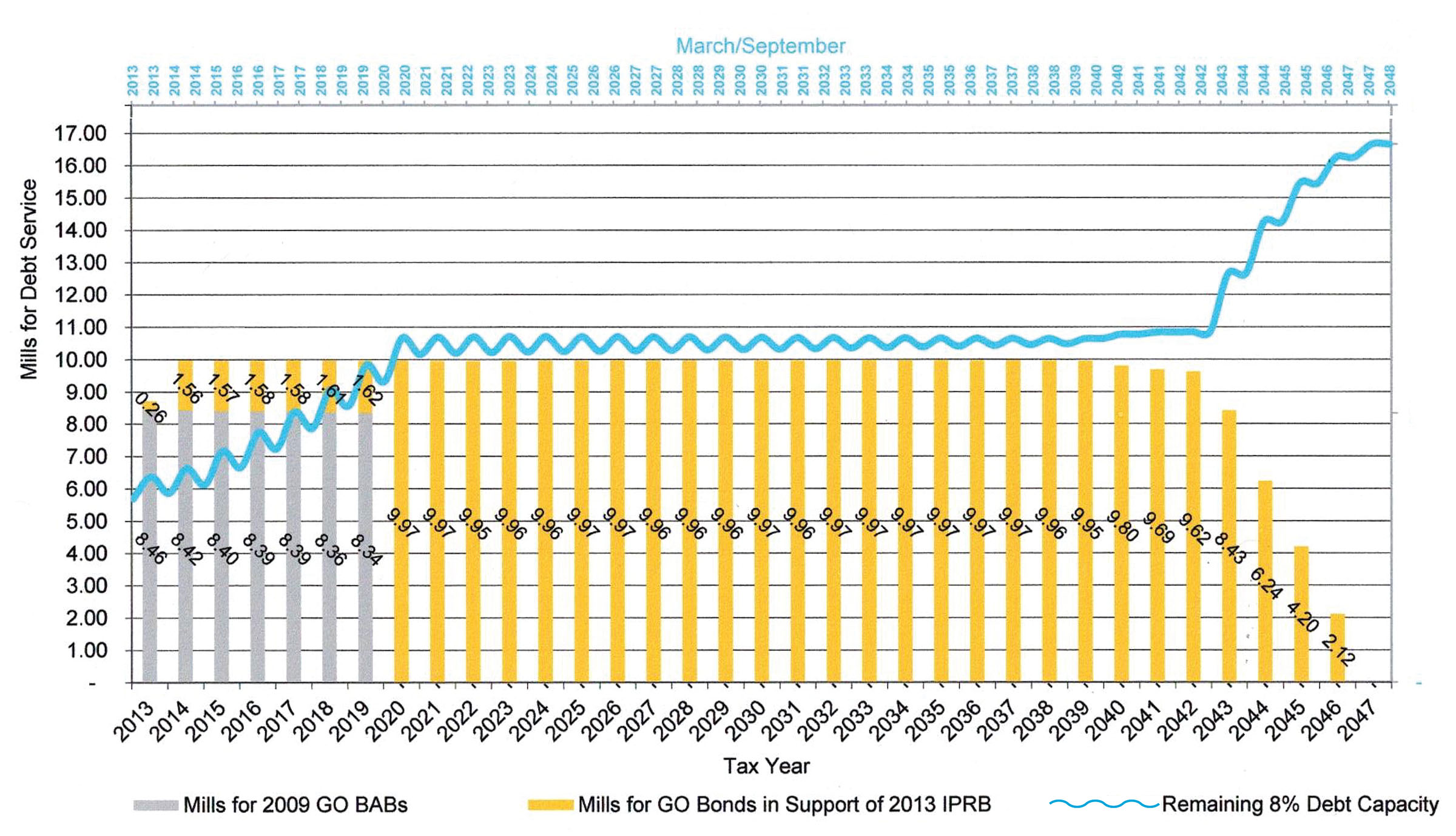
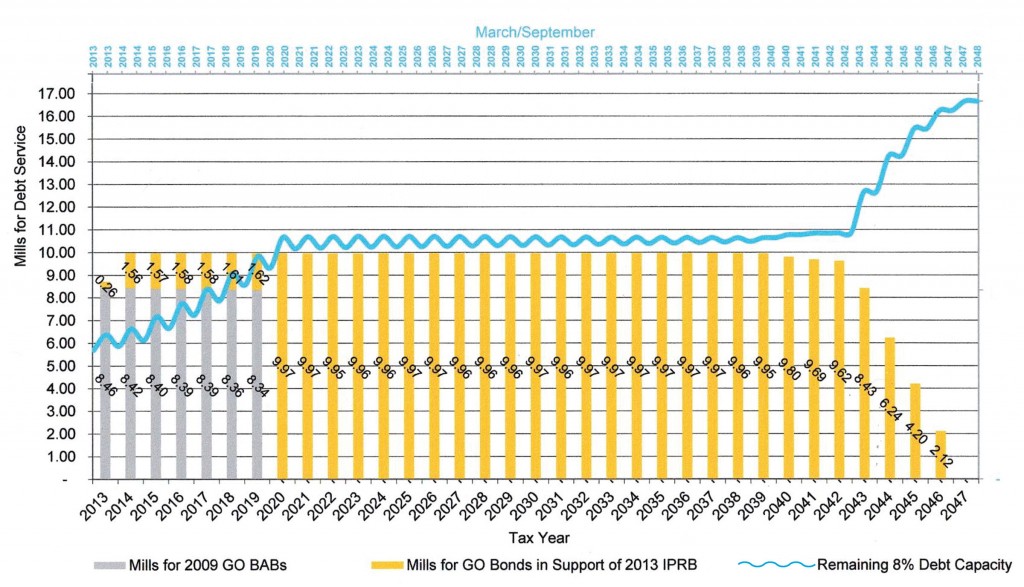
    Another newly released flow chart (see Document C) appears to forecast a 10 mills debt service for the County from 2020 through 2043 to make installment payments on the $24 million bonds. That debt service millage continues in decreasing amounts until 2047. This would indicate that the County’s taxpayers could be paying as much as $1.3 million in debt service millage (already being collected) on the semi-annual GO bonds each year for 22 years and lesser amounts the following four years for a total of about $30 million.

    How did the County get so Deeply in Debt?

    In 2013, Council members wanted, but could not afford, to finance a $24 million economic development program that would construct, renovate, etc., “certain projects (2013 Projects) to be used by the County on real property (2013 Real Property) owned or to be acquired by the County.” Pope, who was not employed with the County when the bonds were issued, now says that plan was an effort to possibly protect the new V.C. Summer revenues from being raided in the future by other governments in the state.

    Without discussion or explanation to the public as to how the bonds were going to be issued or paid for, however, Council passed a resolution on March 25, 2013, that legally allowed it to create the Fairfield Facilities Corporation, a non-profit shell corporation that could issue an unorthodox Installment Purchase Revenue Bond (IPRB) in the amount of $24 million without being constrained by standard legal regulations and safeguards designed to keep county and municipal governments from over-borrowing.

    One thing that makes the IPRB bonds unorthodox is the source of revenue with which they can be repaid. While standard revenue bonds are to be paid from a revenue stream such as a government owned toll road, water plant or other legitimate revenue stream (which Fairfield County does not have), the IPRB’s can be paid off with virtually any revenue source available to the County. While GO bonds do not qualify as a revenue stream for standard revenue bonds, they are an approved revenue stream for paying off IPRB’s.

    Details, Details

    While the resolution that created the FFC appeared on Council’s agenda on March 25, 2013 (resolutions require only one reading), and was passed by Council in a public meeting that night, there was no explanation by Council or then Administrator Phil Hinely as to any ramifications of the resolution. A digital recording of that meeting confirms that the resolution was neither discussed nor explained in public. Instead, Ferguson read only the title of the resolution: “To provide authorization for an installment purchase plan of finance for certain capital projects in the county and other related matters.” And with that, the FFC and the subsequent $24 million bond were launched so discretely that not even the newspaper reporters in the room noticed or reported it to the public.

    On April 12, 2013, three men in the County who had been asked by Hinely to serve as volunteer members of the FFC board of directors signed a resolution to issue the $24 million IPRB bonds. One of those members, Bob Drake, told The Voice that the board never met, that the bond was never explained to him nor was he made aware that a multiple number of GO bonds would follow to help pay off the $24 million bonds.

    “Signing that resolution was our one and only job,” Drake, a local banker, said.

    Shortly thereafter, on or about April 29, 2013, the newly created FFC quietly issued two bonds totaling $24 million to fund the Council’s economic development projects. Pope recently clarified in an email to The Voice that it was the FFC, not the County, that actually borrowed the $24 million, making it the FFC’s debt, not the County’s. The debt itself is unique as well. While the debt belongs to the FFC and not the County, the FFC is a shell corporation with, according to the bond document, no operating history and no assets except for the interest it acquired in the County’s projects when they were conveyed to the FFC to be constructed/renovated. While the County is not obligated to use GO bonds to make the semi-annual installment payments to the FFC, it is obligated to use a portion of the surplus revenue to make those payments that are then used by the FFC to pay off the $24 million bond debt.

    What if the County defaulted on those payments? A surety deposit and an insurance policy paid for with the bond proceeds offer temporary assistance. A Columbia bond attorney, who asked not to be identified, said the Council would have a couple of other options to raise funds for the installment payments in the event of default. It could either ask voters to pony up with a GO bond that would increase property taxes on those properties in Fairfield County that do not pay a fee in lieu of taxes or it could do nothing and lose its bond rating. There would be few other repercussions except that the County could also lose some of the projects that were funded by the $24 million bonds in the first place.

    Raising Funds to Pay Off Debt

    According to the bond document, Council’s $24 million IPRB was enabled by the County signing an agreement with the FFC that set up a convoluted, circuitous payment/leasing plan that would have been difficult for the Council members to explain to the public had they even tried, although there is no evidence that they did try.

    The agreement between the County and the FFC involves 2013 Projects (those projects of construction/renovation to be paid for with the $24 million bonds) and 2013 Real Property (those facilities that already exist on the properties where construction/renovation will occur). In the agreement between the County and the FFC, Council, in exchange for a small fee from the FFC, leased to the FCC “the land on which the 2013 Projects are or will be located (which consists of sites presently owned by the County) and the 2013 Real Properties.” The FFC will then use the proceeds from the $24 million bonds to construct/renovate, etc., the 2013 Projects for the County and, for its part, the County, incrementally purchases the 2013 Real Property and the 2013 Projects back from the FCC over the life of the bond by making semi-annual installment payments to the FFC “in amounts calculated to be sufficient to enable the FFC to pay the principal and interest,” as stated in the bond, on the $24 million bonds as well as any other payments agreed to by the parties.

    The only clue that Council planned to unleash years of semi-annual GO bonds on the county was an unheralded listing on the County Council’s agenda in the first paragraph of Ordinance 614 that provided for the bonds and that was voted on at three council meetings: March 25, April 8 and April 15, 2013. The first paragraph was read aloud at a brief public hearing on April 8, 2013: “Providing for the issuance of, not exceeding, in the aggregate, the County’s constitutional bonded debt limit in general obligation bonds, in one or more series, tax-exempt or taxable, to be used to fund one or more capital projects; authorizing the County Administrator to prescribe the form and details of the bonds; providing for the payment of the bonds; providing for the borrowing in anticipation of the issuance of the bonds; providing for the disposition of property related to the bonds; providing for the distribution and pledge of certain revenues related to certain capital projects in the county; and other related matters.”

    There is no indication that copies of Ordinance 614 were provided to reporters and other members of the public at the meeting and it was not posted on the County’s website.

    Both county newspapers reported that Council voted 4-1 in favor of the ordinance (councilmen Kamau Marcharia and David Brown were absent) with Councilwoman Carolyn Robinson being the lone nay vote. Robinson complained that there were things in the bond that the whole Council had never discussed. She complained further that the ordinance had been dictated to the Council by a few members.

    The passing of Ordinance 614 paved the way for Council to issue any number of GO bonds in any amount in the future without voter approval so long as it did not exceed the County’s bonded debt limit, which is 8 percent of the assessed value of County property. That amount as of March 1, 2013 was approximately $4.5 million. The County would make semi-annual installment payments to the FFC from 2013 through 2043 for a total amount, including interest, of $43 million. The FFC, in turn, agreed to use those installment payments to pay off the $24 million bonds. To make these payments to the FFC, the County agreed to use two sources of revenue: (1) proceeds from GO bonds issued by Council and (2) a portion of the special revenue (when it materialized) from units II and III.

    Citizens’ Committee

    At Council’s Sept. 8 meeting, Councilwoman Mary Lynn Kinley staunchly refuted complaints from the audience that citizens had not had input into the $24 million bond process, saying, “We had a citizen committee to sit in and listen to that before anything was decided. We have never done anything up here without public input.”

    The Voice sent Kinley an email the following day asking for names of the members of that citizens’ committee as well as when they met, how, when and by whom they were appointed, what their role was in the bond process and any documentation regarding their input. Kinley replied, asking that The Voice request that information directly from the County (Pope).

    “From what I recall,” Kinley added, “there were no minutes required by law for this group when they met. It was actually not a ‘committee.’ They were a group selected to do a specific job with the bond.”

    In a follow up email, Pope wrote that, after a conversation with Kinley, he believed that she was referring to the ‘citizens’ on the FFC board of directors. The Voice contacted Drake, who confirmed that, as a board member, he never met or had any input whatsoever into the bond or the bond process other than to sign a few pieces of paperwork on April 12, 2013, that were emailed to him and picked up by a courier.

    “The signing of those papers was really a formality,” Drake said, “I was not involved with the bond process at all and never had any conversations with the Council about it.”

    County Administrator Milton Pope is scheduled to make a presentation about the bonds at the regular Council meeting on Monday, Sept. 22 in Council chambers.
  • Crocheting a Thousand Prayers

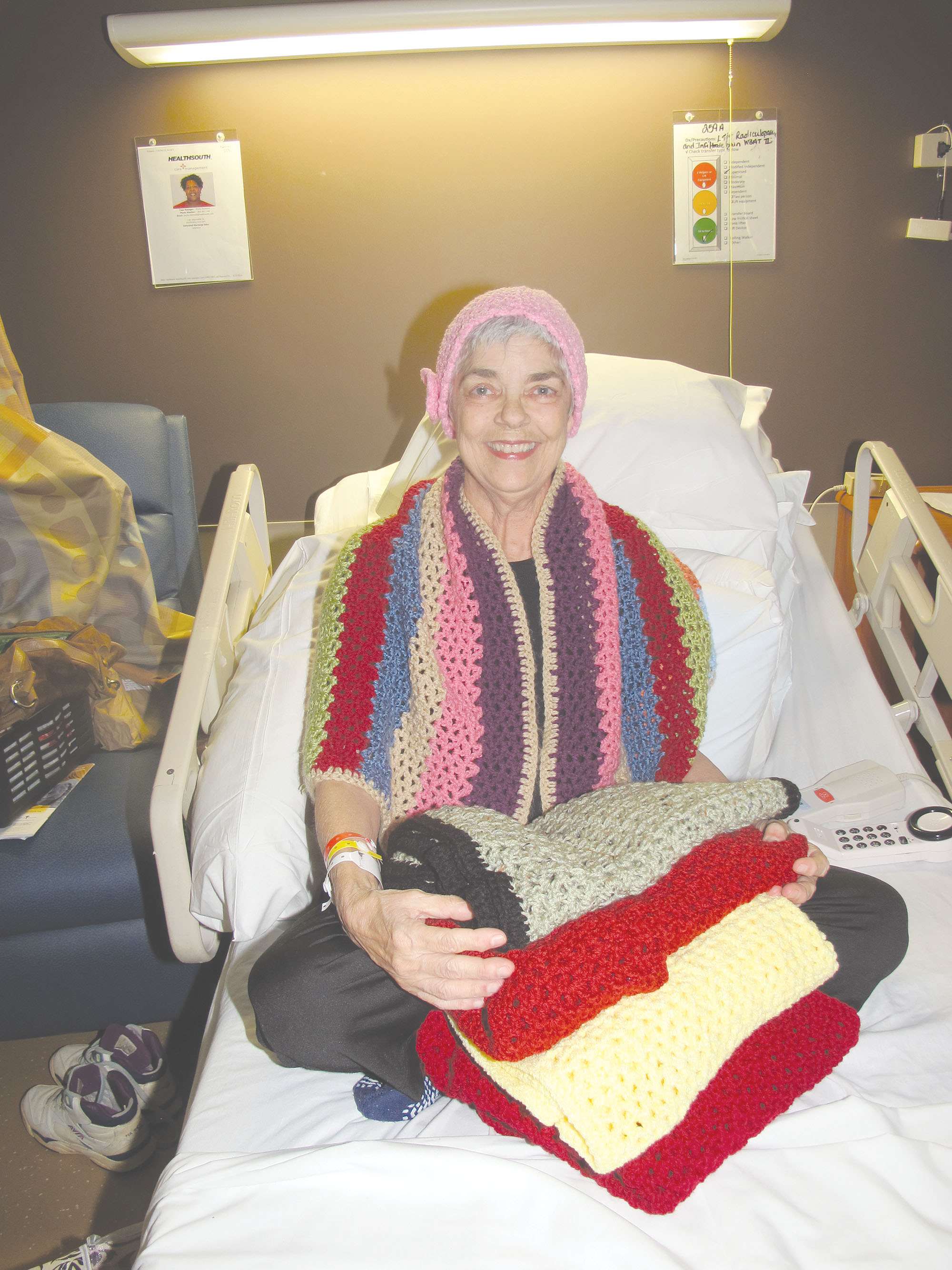
    Wearing a colorful prayer shawl crocheted for her by Margaret Richardson and a pink hat knitted by Peni Chandler, Mary Thomas holds a lap full of crocheted prayer shawls that she plans to distribute to other patients in need of comfort. (Photo/Barbara Ball)

    WINNSBORO – When Mary Thomas, 68, of Winnsboro underwent surgery last year for a stomach aneurysm and a month later for lung cancer, she faced many challenges, not the least of which was survival. Although optimistic by nature and full of enthusiasm, Thomas, a widow, realized she was facing a daunting battle. To comfort Thomas during those difficult days after her diagnosis, a friend and fellow member of the Church of the Nazarene in Winnsboro, Norma Branham, gave Thomas a shawl that Branham had hand-crocheted especially for her.

    “Norma told me she said a prayer for me with every stitch and there were thousands of stitches,” Thomas said, smiling sweetly, remembering the gift with tears shinning in her eyes. “Norma wrapped the shawl around my shoulders. She said it would bring me comfort. And it did. It was warm and the knowledge that I was wrapped in a thousand prayers brought me amazing comfort.”

    Following her surgery, Thomas underwent several weeks of chemotherapy at the South Carolina Oncology Association in Columbia. There she waited mornings with other women, most of whom, Thomas said, were undergoing radiation for breast cancer.

    “I noticed one young woman was upset, alone and seemed scared. It was cool in the room and she was shivering, so I took off my shawl and put it around her shoulders. I told her it had many prayers crocheted into it and that it was made with love,” Thomas said. “I could see my gesture brought her comfort. Her reaction made me feel like I had given her something very special But I think the comfort came from the shawl.”

    Branham crocheted another shawl to replace the one Thomas had given away. Before long Thomas had given that one away as well, and Branham crocheted another one. Thus began what Thomas refers to as her prayer shawl ministry. Other friends, including Cindy Zimmerman, Velma Defibough and others also began crocheting shawls to supply Thomas’ ministry. Twelve shawls were sent from Mississippi friends of Norma and Eddie Branham’s. During the last year Thomas has given away more than 200 shawls.

    Then last month, Thomas learned that her lung cancer had metastasized to her brain. Surgeons removed a large malignant tumor about 10 days ago, Still, Thomas is bright-eyed and cheerful, and her prayer shawl ministry is in high gear. After a week at Health South in Columbia for rehabilitation, she had given away another 20 or so shawls.

    “Word about the shawls has gotten around the hospital, and other patients are now coming to my room asking for them,” Thomas said.

    A native of Virginia, Thomas spent a rather glamorous career in the Army as a receptionist, first for the Army Chief of Staff and later to a string of generals, including General W.C. Westmorland. Along the way she met folks like General Omar Bradley and was photographed visiting with President Lyndon B. Johnson at the White House. At 42, she married Ricky Thomas and settled in Winnsboro.

    “I had a nice life,” Thomas recalled, “and I still do.” While she admits her life changed drastically when she was diagnosed with cancer, she said, it hasn’t been all bad.

    “That’s when I decided to start living my life for the glory of God,” Thomas said. “I now have a greater purpose and a new outlook on life.”

    Thomas said she doesn’t yet know what her prognosis is, but she will be meeting with her doctors next week to learn what lies ahead.

    “But, no matter what, I’m not afraid. I’m in God’s hands, so everything is going to work out. Besides,” she said, gently patting the soft pile of crocheted prayer shawls on the foot of her hospital bed. “I have my work, my ministry, to keep me busy, I have lots of work ahead of me that I’m really looking forward to.”

  • Back to the Bush

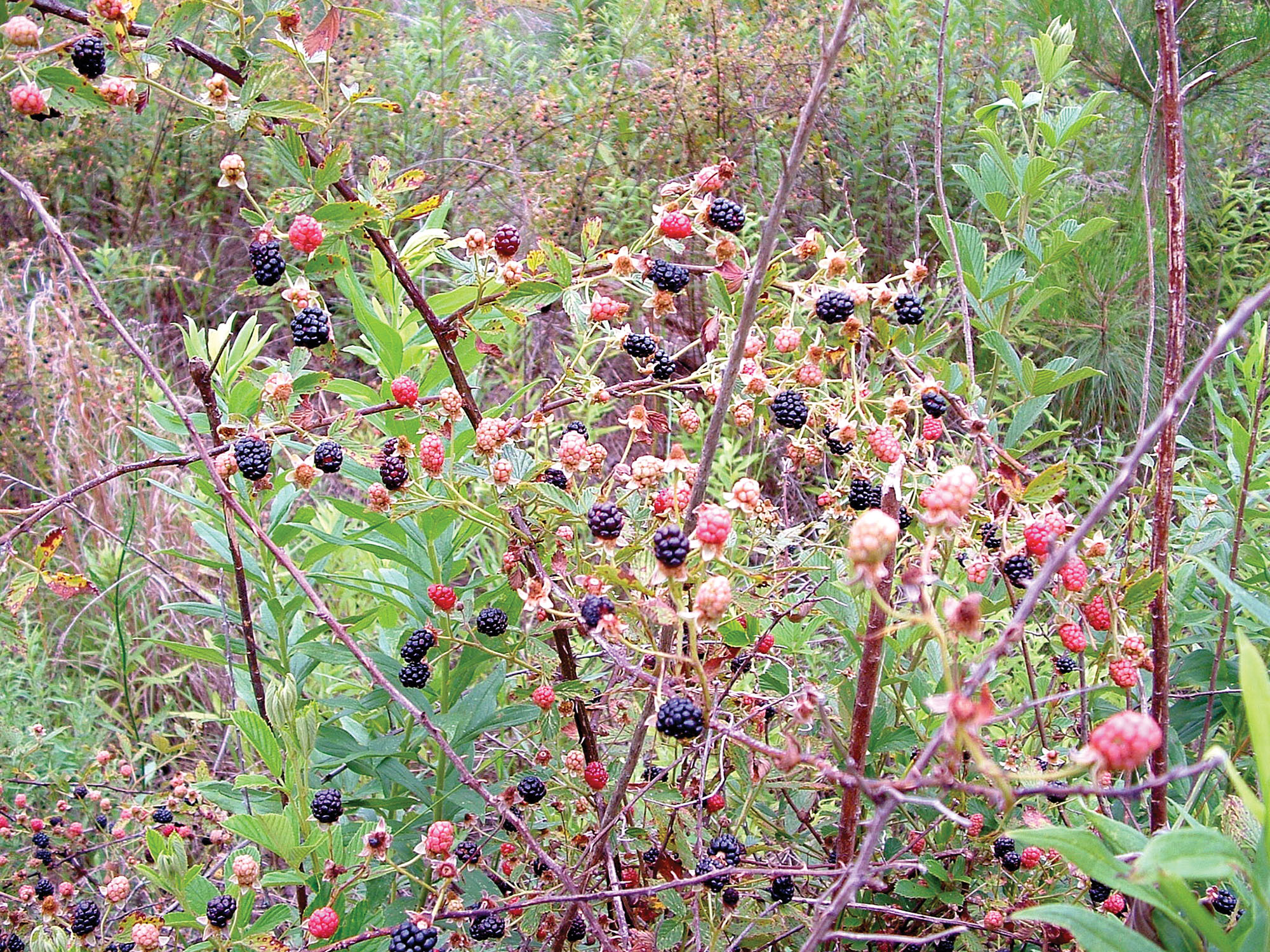
    Plump, juicy blackberries, available at a roadside near you. (Photo/Tom Poland)

    Last month I was on assignment in a remote place; the kind of place where you see trucks and tractors but few cars. Farm territory. I parked along a weedy, poorly maintained road and as I stepped from the car I saw a sight from childhood. A tangled thicket of briars with succulent, shiny blackberries glistening like onyx pendants. Red berries, hard and yet to ripen, waited their turn for sunshine to do its magic.

    Seeing this explosion of blackberries brought back childhood memories. Pickin’ berries was great fun, a tradition. I imagine country kids still look for blackberry patches. We sure did. A bucket: that’s all we needed. The juice stained my clothes but I didn’t care. All those memories and more came rushing back when I parked along the tangle of berries you see pictured here. My timing was perfect. In the South, blackberries peak during June. I just happened to have a container in the car and I set out picking berries. The best berries were hiding deep in the “nettles,” as the British call briars.

    I sprinkled them onto my shredded wheat the next morning. Not once did I get sick. I read that anyone picking blackberries today in wild places should contact the landowner and ask if he’s sprayed anything toxic on them. Why does everything we did as kids have to seem so dangerous now? You know, if your child rides a bike he must wear a helmet. That kind of thing. I swear we live in the era of pending disaster at every turn. Now I’m supposed to look up the landowner and ask him if he’s sprayed the wild blackberries? Surely not. I’d sure hate to see picking blackberries go the way snow ice cream went. Ruined by chemicals.

    Today it’s advisable to pick blackberries at “agritourism” farms. That’s better than not picking them at all, but I prefer to discover blackberries along a forgotten country lane. It revives the sense of adventure I had as a kid growing up.

    Another source of fun and food were plum trees. We had a plum tree down by our driveway. As the days grew warmer, the plums turned from green to yellow and red. We’d pick ’em, eat ’em and spit out the pulp. Didn’t take long to learn that the sweetest plums often had fallen to the ground.

    When I was a boy I didn’t keep a bag of gummy bears or skittles around. Such things were foreign to me. I picked and ate wild plums, wild black cherries and blackberries, and not once did I get sick. You knew you were in for a mess of chiggers but that was the price you paid.

    I know you fine Southern ladies reading this column have taken kids blackberry picking. As for you young girls recently married or planning a wedding, when you have kids take them into the countryside and let them pick blackberries. It’ll come natural to them and they’ll thank you. Make ’em a pie, and they’ll never forget this day trip I assure you.

    If You Go …

    Drive out into the countryside and look for read-and-black berries, complete with briars. Free. Chiggers included.

    Learn more about Tom Poland, a Southern writer, and his work at www.tompoland.net. Email day-trip ideas to him at tompol@earthlink.net.

  • Big Grab Brings Big Bucks

    You’ve Been Grabbed –
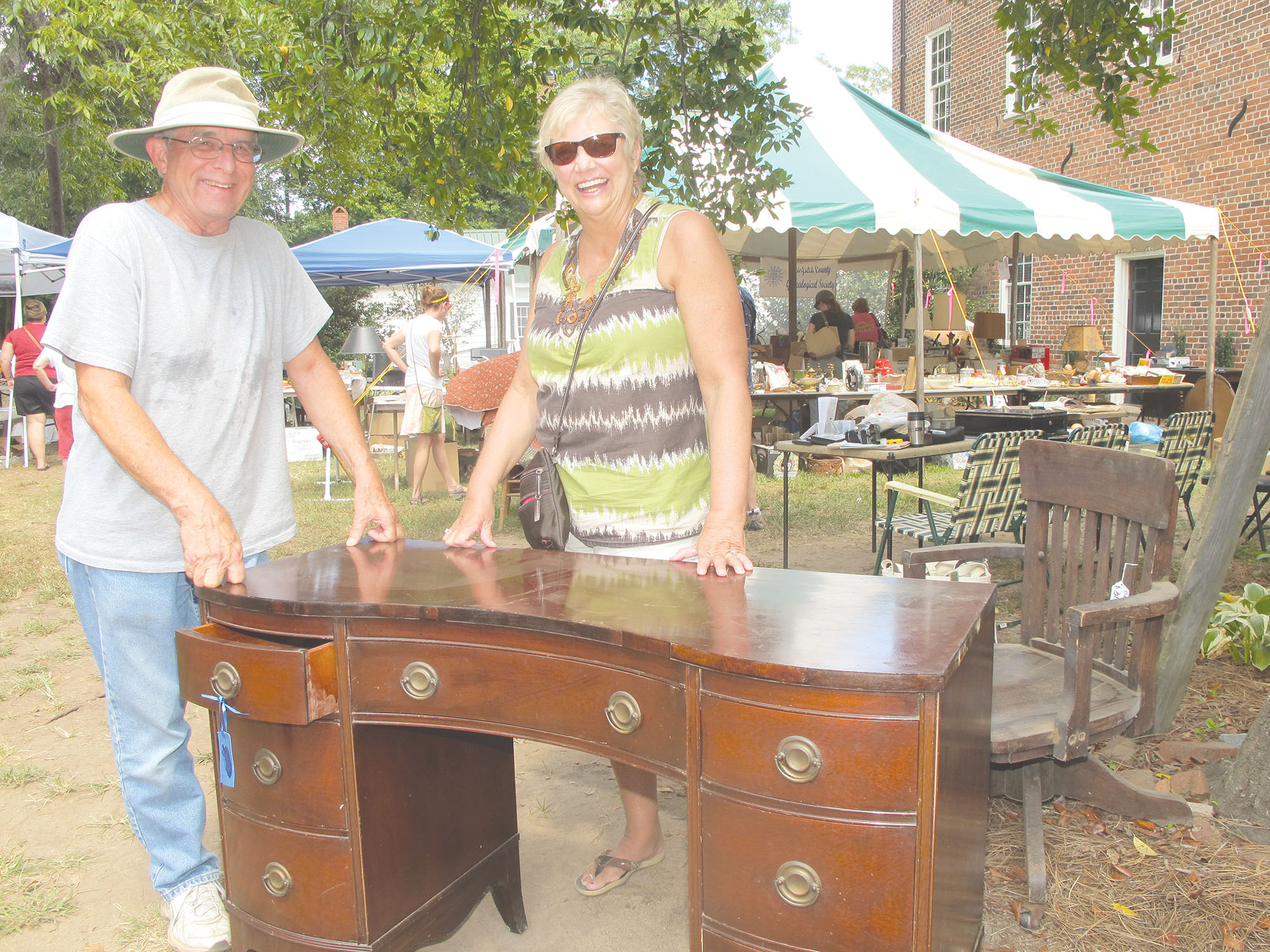
    John Davis, a Fairfield County Museum volunteer, helps Janet Spires of Lexington carry her Big Grab $35 purchase (a mid-century vanity that she plans to refurbish and use as a desk) to her truck. Pelham Lyles, director of the museum, reported that the museum’s ‘back yard shade tree’ sale was a huge success.

    On Shoestring Budget, Event Gives Local Merchants Shot in the Arm

    BLYTHEWOOD/FAIRFIELD – Friday and Saturday were good days for the shops, restaurants, service stations, hotels and other merchants in Blythewood, Winnsboro and Ridgeway. Long lines of cars and trucks began snaking into the towns early Friday for the annual Big Grab Yard Sale. The vehicles’ occupants arrived with large amounts of cash for two days of non-stop bargaining and buying . . . and bargain and buy they did.

    “It was two of the best days of the whole year for us,” said Kristen Stratton, owner of Bits and Pieces Consignment Shop in Blythewood where everything in the store was 25 percent off with some items marked down to half price.

    “Us, too,” echoed Liz Humphries, owner of Blythewood Consignment. “Our store was packed both days. It was great.”

    “We were slammed on Friday,” reported Christine Fair, owner of Winnsboro’s Cornwallis Tea Room. Tina Johnson, owner of Over The Top in Ridgeway, said she had multiple lines at the checkout counter most of the time both days. “It was way more than I expected. Two great days!”

    One church that had a sale booth on Congress Street in downtown Winnsboro reported sales of $4,000 before the booth closed on Friday.

    Louise Ruff, 10, cashed in big on the home-baked cookies, brownies and breads she sold at her little sidewalk booth in downtown Ridgeway.

    “I made about $200,” she said. “I sold everything my mom and I had baked by noon on Friday, so we had to bake more that evening. And on Saturday I sold everything by mid-afternoon. It was a good day,” she said, quite pleased.

    Blythewood’s hotels and fast food restaurants as well as service stations in all three towns reported a significant uptick in business.

    Larry Sharpe, owner of three Sharpe Shoppes and the Bojangles in Blythewood said his business during the two days was up 25 percent more than when the Rodeo comes to town.

    “Until this, the rodeo gave us our big sales days,” Sharpe said. “But there was lots of foot traffic from The Big Grab, lots of people buying snacks and Bojangles. It’s a good thing for the town’s merchants.”

    The Big Grab was advertised online, on radio and in newspapers. Vendors came from as far away as Alabama, and shoppers from as far away as Ohio and Florida.

    But for all the business it brings the town’s merchants, it doesn’t get the big bucks of support from the respective town governments that other events do. The Blythewood town government donates $15,000 to the rodeo and similar amounts to the Band and Baseball Tournaments each year. But merchants say those events do not bring as much business to the town during shopping hours as The Big Grab. The Town of Blythewood, which had the greatest number of vendors and shoppers over the two days, donated $1,000. Winnsboro Town government donated $300 and Ridgeway, $175. Vendors paid from $20 to $50 for sponsorships.

    Terry Vickers, one of the organizers said the event’s no-frills budget is a little more than $3,000, small for such a large event.

    “That has to cover insurance, advertising, portable restrooms and other expenses,” she said.

    While he agreed that The Big Grab could benefit from more hands on deck to help with the planning, Blythewood Mayor J. Michael Ross said, “if the town gets all this and the organizers only need $1,000 from us, I think that is the way we want it to work.”

    He said he is going to get some numbers from the restaurants, hotels and merchants for the weekend to see how much the event might have generated over regular weekends here in Blythewood.

    “If the numbers come back with increases, we would certainly entertain increasing the amount if they need it,” Ross said.

    The brainchild of Blythewood’s Denise Jones who co-owns the Cottonyard Market in Ridgeway, the sprawling yard sale now in its third year covers 43 miles encompassing Winnsboro, Blythewood and Ridgeway. All but the long stretch on Highway 34 from I-77 to the bypass in Winnsboro was fairly solid with yard sales. Vendor tent cities cropped up in several locations between Blythewood and Ridgeway, at times bringing traffic to a crawl.

    “But when it slowed down,” said shopper Nadine Branham, “we just got out and shopped!”

    Jones expressed her gratitude to the shoppers, the vendors and the sponsors who signed on with financial support.

    “It’s a volunteer effort and we are dependent on volunteers for things to run smoothly,” Jones said. “The organizers try to think of ways each year to improve on the previous year.

    “The Big Grab provides a big financial boost for our businesses as well as our church and resident vendors,” Jones said. “Plus, it brings a big selection of bargains for shoppers. It’s a win-win for everyone.”

  • Toys in the Attic . . .

    A Tale of the Grail –
    Dr. John Nicholson, Bobby Arndt and Rufus Jones proudly show off the Ridgeway High School state championship trophy that the school’s 6-man basketball team brought home in 1935. The trophy was recently found after it went missing in 1960. (Photo/Barbara Ball)

    Title Trophy Turns Up After 54 Years in Exile

    RIDGEWAY – The Ridgeway Cardinals, the former Ridgeway High School’s 6-man basketball team, made their town proud in 1935 when they brought home the state championship trophy for Class C schools.

    “It was the only time Ridgeway High School had ever won a state championship and the whole town was proud,” recalled Rufus Jones whose dad, Rufus Baxter Jones, played guard on the team.

    Indeed, the folks in Ridgeway were proud of their boys. And the sports reporter for the Winnsboro newspaper at that time, A. B. Fennell, was euphoric in his story about the game.

    “Displaying a brilliant-brand of basketball, the Ridgeway class C basketball team defeated Mt. Croghan at the University of South Carolina annual high school basketball tournament. The score was 39 to 23. The Ridgeway floor game was superior to that displayed by the Mt. Croghan team, and this was the biggest factor in their favor,” Fennell wrote.

    But when the Fairfield County schools were consolidated in 1960, and all the county’s students were sent to the new Winnsboro High School (now Fairfield Central High School), the prized trophy went missing and was never seen again, until recently when Ridgeway resident Sarah Arndt was cleaning out her attic searching for treasures to sell in the Big Grab Yard Sale this weekend.

    “She brought down this trophy and showed it to me and said, ‘What is this?’” her husband, Bobby Arndt, told The Voice.

    After examining the slightly battered pewter trophy, Arndt realized it was the missing 1935 championship trophy. His mother, Frances Arndt, a first-grade teacher in the Ridgeway School for over 30 years, had apparently saved it from being discarded when the school was abandoned after the consolidation and eventually packed it away. Upon her death, the trophy passed to her daughter Sarah among boxes of household items.

    Arndt immediately contacted Ridgeway brothers Rufus and Minor Jones to tell them that he had their dad’s trophy. Then he contacted retired Ridgeway dentist, Dr. John Nicholson, whose grandfather, A. R. Nicholson, had been both coach of the championship team and principal of the school in 1935.

    The players’ names were engraved on the trophy: brothers Lawton and Billy Harley, Robert Hinnant, Rufus Baxter Jones, W. D. Watson, Arthur Heins and coach A. R. Nicholson.

    Billy Harley, a cousin of Rufus and Miner Jones, is the only member of the team still living. He moved to Clemson several years ago where he lives with his son, Little Billy.

    Arndt, Nicholson and Rufus Jones recently met at Ridgeway’s City Gas & Oil Café (formerly Stevie D’s) to pose for pictures with the trophy and make plans for its future safekeeping.

    “As soon as the story about the trophy comes out in the paper,” Jones said, “Little Billy is going to drive down here and pick up the trophy and the newspaper and take them back to Clemson for his dad to see. Then he’ll return it and we’re going to put it in the Ridgeway Museum in The Century House where it can stay on display.”

    “It has a few dents in it,” Jones said, examining the trophy closely, “but otherwise it’s in good shape to be 79 years old.”