Tag: slider

  • County Launches New Era

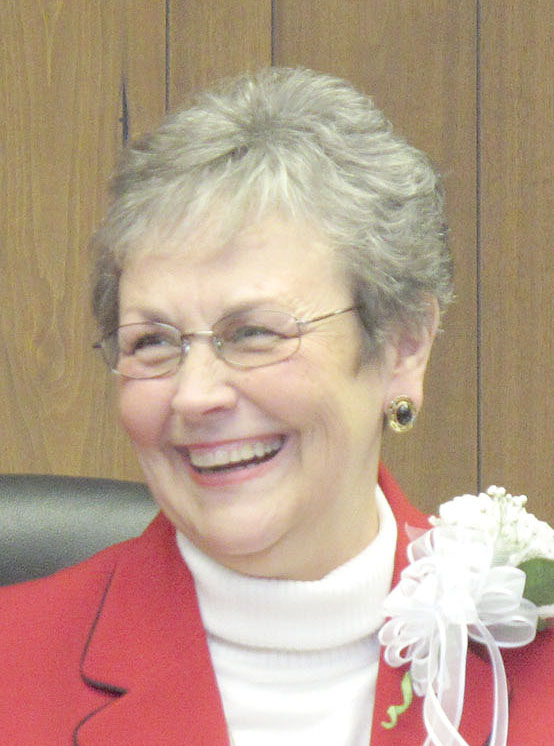
    Carolyn Robinson, Chairwoman
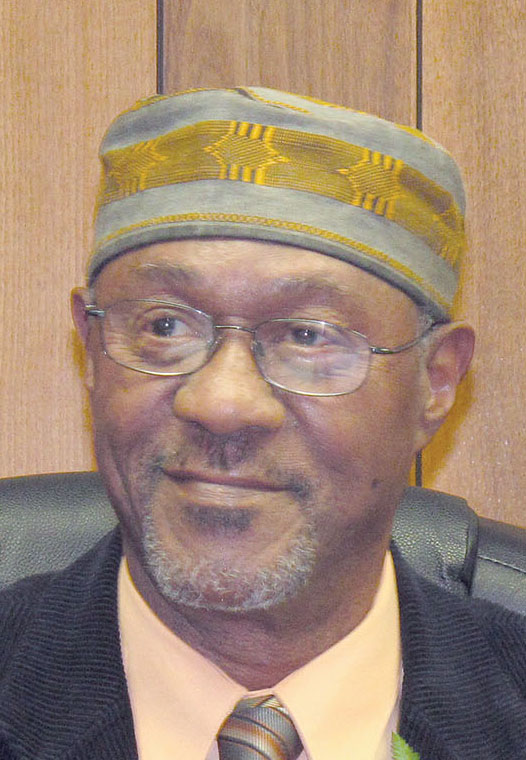
    Kamau Marcharia, Vice Chairman

    Robinson Elected Chair, Marcharia Vice Chair

    WINNSBORO – County Council launched its 2015 session Monday night by tapping Councilwoman Carolyn Robinson (District 2) as its new chairwoman. Robinson took five of the seven votes in the secret ballot election. Councilwoman Mary Lynn Kinley (District 6) earned two votes.

    Councilman Kamau Marcharia (District 4) was elected vice chairman with four votes over District 5 newcomer Marion Robinson’s three votes. Marion Robinson, Dan Ruff (District 1) and Billy Smith (District 7) were all sworn in earlier in the evening in a ceremony prior to Monday’s meeting.

    “I know we are going to have some changes,” Carolyn Robinson said after her election as chairwoman. “One of the things is we are going to have to continue to promote economic development. It’s most important for our county, but in order to meet the challenges that are going to be facing us, we’re going to need to communicate and to work together so that we can face all of the problems, all of the challenges that are presented to us.”

    On the Road Again

    Chairwoman Robinson, adding the item to the agenda after the meeting had convened, informed Council that State Rep. J. Gary Simrill (R-46, York County) and his House Transportation, Infrastructure and Management ad hoc committee had met earlier in the day to consider moving forward with a state plan to turn over to S.C. counties about half of the state’s roads and highways. Part of that plan, she said, includes a promise to fully fund the state’s local government fund, but even that, County Administrator Milton Pope said, would not be enough for counties to maintain roads.

    “We don’t have anywhere near the funding to take over and to maintain state roads,” Pope said. “In regards to the local government fund, that’s really a separate issue altogether. The state actually owes local governments to be able to fund the local government formula fully, as to what’s due for local governments to where we can help to reduce taxes on the local level. Combining those two issues, it’s a little skeptical packaging it that way. Even if we were to get what’s fully funded, that’s not going to go anywhere near where we need to be.”

    On Robinson’s recommendation, Council voted to send a letter detailing their opposition to the Simrill plan to every member of Simrill’s committee, as well as to Fairfield County’s local legislative delegation.

    State Sen. Creighton Coleman (D-17) told The Voice last month that he was not in favor of turning over state roads to the counties, adding that he did not think the plan would muster enough votes to pass.

    “It’s a pretty radical idea,” Coleman said in December. “To me, it’s a state problem and the state ought to find a solution.”

    Jenkinsville Sidewalks

    Jenkinsville Mayor Gregrey Ginyard, addressing Council during Monday night’s second public comment session, asked Council for support in completing a sidewalk project in the western Fairfield town. Ginyard said three-quarters of the project, from Buttercup Lane to approximately a quarter of a mile shy of Baltic Circle where the Lake Monticello Park is located, had been completed using Department of Transportation grant money. To take the sidewalk all the way to the park, Ginyard said Jenkinsville is applying for another grant and needs $100,000 in matching funds. Ginyard said the town only needed half of that – $50,000 – from the County, and in two installments of $25,000 each in 2015 and in 2016. Ginyard said Jenkinsville didn’t need the cash right away, but did need a letter of commitment from the County by March to submit with their grant application.

    Council took no action on Ginyard’s request Monday night.

    Meeting Schedule

    Council also reviewed and approved their meeting schedule for the remainder of 2015, voting to delay their Feb. 22 meeting until 7 p.m. to accommodate a drop-in at the Carolina Events Center to honor former Sheriff Herman Young.

    During the discussion, Smith noted that the Aug. 10 meeting had been listed as ‘canceled’ on the schedule. The meeting would have come on the heels of the annual Association of Counties conference on Hilton Head Island, but Smith pointed out that the conference ran from Aug. 2 through Aug. 5.

    “You would have five days to get back from Hilton Head to Fairfield County,” Smith said, and moved to hold the regularly scheduled meeting.

    Ruff seconded the motion, which passed with only Mikel Trapp (District 3) voting in the negative.

  • Chappell, Epics Enter Hall of Fame

    Blythewood’s Jim Chappell and the Sensational Epics were inducted recently into the Carolina Beach Music H.O.F.

    MYRTLE BEACH – Jim Chappell of Blythewood, and the other members of the 1960s beach music band The Sensational Epics, were inducted into the Carolina Beach Music Hall of Fame recently along with another great beach music band, The Coasters. The two groups join Ray Charles, The Drifters, The Platters and more.

    Back in the ‘60s, the group, which also included Gregg Pierce, now a Richland County Councilman, was the hottest beach band in the Southeast playing on stage with Gladys Knight and the Pips, the Tams, the Drifters, Curtis Mayfield, the Impressions and other top recording artists of the era. They recorded several national hits including “I’ve Been Hurt” and “Be Young, Be Foolish, Be Happy” for Cameo, Warner Brothers, Capitol and other record labels.

    It all started in Chappell’s parents’ living room in 1963 when he and four buddies organized themselves into one of the umpteen jillion high school bands that were sprouting up in garages across the country. But this one proved to be different. They quickly went from performing at high school assembly programs to touring the university circuit throughout the South to performing in the biggest beach music venue in the country at that time, The Beach Club in Myrtle Beach.

    The Epics eventually evolved into a nine-piece show and party band, featuring five horns and a talented rhythm section. As college graduation, marriage and the raging Vietnam War entered the picture, the band dissolved. Then, in 2000, they were asked to reunite at the fountain in Five Points for a charity performance and they were a hit all over again. They now have a solid schedule of venues booked months in advance performing classic hits from the 1960s and ‘70s.

    Chappell no longer performs with the band, except for a cameo appearance when the band plays Blythewood’s Beach Bash each spring.

    “The idea of tearing down a band stage at 1:30 in the morning doesn’t appeal to me anymore,” Chappell said with a laugh. “But it was a good time.”

    And now he’s got the trophy to prove it.

  • Still True to Their School

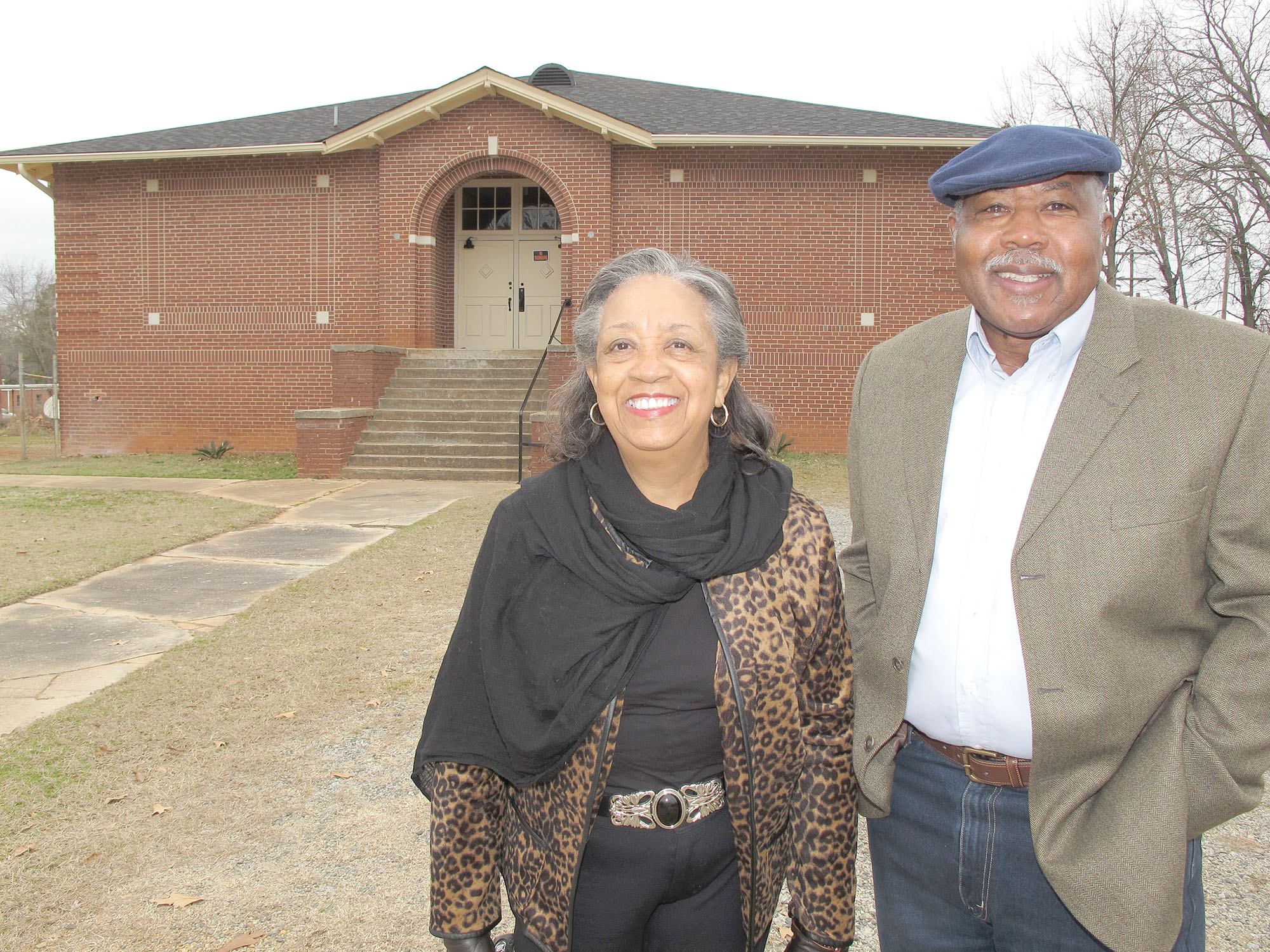
    Standing in front of the Fairfield High School main building are Jean McCrory, Class of ’64 and member of the alumni historical restoration committee, and Robert Davis, Class of 66 and vice president of the alumni association. (Photo/Barbara Ball)

    Alumni Association Restoring Historically Black School

    WINNSBORO – The red brick school located at 403 Fairfield St. in Winnsboro was built in 1924 and initially accommodated grades 1-9. During the ensuing years, the school added secondary grades, but it was not referred to as a high school. In those days, African-American high schools were generally called ‘training schools,’ with the idea of training students for certain jobs rather than offering a true academic curriculum.

    But the students and teachers at the Fairfield Training School rose above that distinction and the negative implication of its name. In 1963, they changed the name to Fairfield High School, and today the Fairfield High School Alumni Association owns the school’s main building and is in the process of restoring it to its glory days when it was the center of their world.

    The school compound, which consisted of a main building, a gymnasium and two other buildings, closed in 1970 when Fairfield County schools were integrated. FHS students were transferred to Winnsboro High School, which was located across the bypass from where the Winnsboro Wal-Mart is today. Owned by the Fairfield County School District, the school’s stately main building sat empty for years and would have simply deteriorated with age, if not for the efforts of its devoted graduates.

    By the late 1980s, several former FHS students began exploring the possibility of saving their old school building. The idea gained momentum, and they were soon planning an alumni reunion for the fall of 1989. It was a roaring success with almost 800 people coming together for a weekend of socializing, celebrating and planning the restoration in earnest.

    According to Donald Prioleau, Class of ’62 and president of the alumni group since 1995, they were determined to save their beloved alma mater from desolation.

    “This building has the kind of quality you don’t see much of anymore,” said Jean McCrory, the representative for the Class of ‘64 and a member of the alumni group’s Historical Committee. “It’s very well constructed, with high ceilings, thick walls and the hardwood floors are in great condition. Our goal is to preserve the original character as much as possible.”

    On April 22, 2010, the association acquired the building for $5 and a promise to complete a laundry list of improvements within the first 10 years. Prioleau said they’ve kept those promises and more. So far, the group has volunteered untold hours of labor and raised funds to hire out other projects such as installing a new roof, gutters and windows and painting the exterior trim. Prioleau said future projects include restoring the restrooms to working order, painting the interior walls and refinishing the hardwood floors.

    “The main building housed the principal’s office, several classrooms and the home economics room. The teachers’ lounge and the old cafeteria were in the basement,” McCrory said. “We’re hoping to restore all of that to its original state. But it’s going to take a lot more money and a lot more work.”

    McCrory said the finished building will ideally be used for a variety of recreational and community educational endeavors, such as a meeting place for scout troops and tutoring services.

    Paging through the school’s yearbooks, it is evident there was a sweet bond between the teachers and the students and the teachers are still cherished in their former students’ comments. Several, in fact, are still active in the alumni group.

    “Each class stayed with the same home room teacher for all three years of high school,” McCrory recalled fondly, “from ninth grade to 11th grade, which back then was when you graduated. I’m still in touch with my homeroom teacher, Mrs. Bernice J. Brown, all the time! She lives across the street from the school, where she’s lived since she started teaching. When new teachers came to the school, they always boarded with Mrs. Brown until they got settled somewhere. And two other teachers, Miss Margaret Roseborough and Mrs. Maude Ross, are both in their 90’s and very much part of our group.”

    The devotion the former students have for the school is alive and well. As McCrory and Alumni Association Vice President Robert Davis (Class of ’66) paused for their photo in front of the school recently, an unidentified woman driving past the school rolled down her window and called out proudly: “Class of ‘52!”

    McCrory and Davis smiled and waved.

    Alumni meetings are held at 7:30 on the third Tuesday evening of every month at the school, and individual graduating classes hold their reunions at various times throughout the year. Lively reunions for the entire 650 registered alumni are planned every two or three years, with the next one scheduled for 2016. They’re always held on Thanksgiving weekend and begin with a Friday evening banquet.

    “Then, on Saturday, we have a parade through downtown Winnsboro,” McCrory added, eager to go on about the weekend of fun, “and each class is represented on a beautiful float – we have about 20 floats. After that, we have a big tailgate party on the football field at Garden Street behind the school. On Sunday, we end our weekend with a church service. It’s always a wonderful event. At our last reunion, in 2013, we had over 400 people.”

    “But we’re getting older and we’re dying off,” Prioleau, 70, laughed. “The class of ’55 is about our oldest class to actively participate. But the school will go on through our kids and grandkids. We’ve passed down the importance of it and many of them now volunteer their time and donations to further the project.” Prioleau said the next fund raiser is a Chinese auction planned for April or May.

    “The combined work of so many people has kept the spirit of the restoration alive,” McCrory said fondly. “This project is very dear to our hearts. That school produced some very good people.”

    For more information or to donate to the Fairfield High School historical restoration, contact Donald Prioleau at 803-337-2105, or mail donations to the Fairfield High School Alumni Committee, P.O. Box 1182, Winnsboro, S.C. 29180.

  • Source: Trapp May Keep Seat

    Mikel Trapp

    New Council Sworn in Monday

    WINNSBORO – With three new County Council members waiting in the wings to be sworn into office at an official public ceremony on Monday evening, a fourth Council member in the yet to be decided race for District 3 will apparently be allowed to keep that seat until the March 3 special election.

    Councilmen-elect Dan Ruff (District 1), Marion Robinson (District 5) and Billy Smith (District 7), who rode a wave of anti-incumbent sentiment into office in last November’s elections, will take their oaths Monday in Council chambers at 5:15 p.m. A reception will follow at 5:30, after which Council will get straight to work with the election of officers at 5:55 before convening their 6 p.m. meeting.

    Councilman Mikel Trapp will, in all likelihood, remain in his District 3 seat to start the new year, sources wishing not to be identified indicated Tuesday. Trapp faces a special election on March 3 against Walter Larry Stewart and Tangee Brice Jacobs. Stewart successfully challenged Trapp’s four-vote margin of victory in the November election and last month Gov. Nikki Haley officially ordered a new election. While only Stewart protested the November results, just this week The Voice learned that Jacobs’s name would also be on the March 3 ballot.

    At the time of Gov. Haley’s order, her office said it was considering the appointment of an interim to serve in Trapp’s stead between Jan. 1 and the March 3 do-over. However, sources said, the governor’s authority to appoint such an interim does not extend to cases where a special election is pending and an incumbent is still in place. Incumbents are legally authorized to continue serving until the special election, sources said.

    The public is invited to attend Monday’s ceremony.

  • Town Puts Attorney on the Payroll

    Jim Meggs

    BLYTHEWOOD – With a 3-2 vote Monday night, Town Council created and filled the position of full-time town attorney, hiring Jim Meggs for $40,000 a year. Councilmen Bob Mangone and Bob Massa voted against the hire.

    Meggs, who has served as the town’s attorney through his law firm, Callison, Tighe & Robinson, since 2011, said his firm was fully aware of the proposed transition from contracted attorney to full-time town employee. Meggs said he would provide his own computer, telephone and IT and would maintain his ability to practice law in S.C. at his own expense.

    “I think folks have found me to be pretty reasonably available,” Meggs said. “This would be an at-will arrangement, so if you get tired of me give me the nod and I would give you the same courtesy.”

    Mayor J. Michael Ross said he has discussed the transition with Meggs on “several occasions,” and that the move would save the town between $6,000 and $7,000 a year in legal expenses. But Mangone, who said he had no objections to Meggs specifically, said he disagreed with the process.

    “I think the process is wrong,” Mangone said. “We’re creating a position within the Town and to do that we need to follow a different procedure and not just say we’re going to be changing money from one budget to another. So my objection is not to Mr. Meggs, but to the process. I would like to see a more open process. I would like to see us post the job and see what other candidates may be available.”

    “(When) the town administrator left we had an open position,” Ross responded. “This position has never been open. This is just, really, a re-doing of the contract.”

    Councilman Tom Utroska said that the only real difference between hiring Meggs outright and keeping his current contract in place would be to whom the Town cuts the checks. Under the prior agreement, he noted, the town paid Meggs’ law firm, who then paid Meggs. Now, he said, the town will simply be paying Meggs directly.

    Councilman Bob Massa disagreed. “Since I have been critical of previous administrations that  hired employees similarly. despite liking Mr. Meggs and being pleased with his work, I could not approve his hiring.

  • Two Jailed in Ridgeway Shooting

    Leonard Mitchell
    Darius Heyward

    RIDGEWAY – A Winnsboro man was arrested last week and charged with attempted murder in the Dec. 14 shooting of 25-year-old Michael Samuel Thompson outside a Ridgeway nightclub.

    According to the Fairfield County Sheriff’s Office, 23-year-old Leonard Earl Mitchell Jr. of 100 Castlewood Drive was arrested on Dec. 17 and charged with the shooting that sent Thompson to Palmetto Richland Hospital with a gunshot wound to the abdomen. Mitchell was also charged with possession of a weapon during a violent crime and possession with intent to distribute crack cocaine. Distribution of marijuana charges were also levied against Mitchell from a previous investigation.

    Investigators also arrested Darius Heyward Jr., 18, of Shade Tree Lane in Blythewood, during their investigation. Heyward was charged on Dec. 17 with unlawful carrying of a handgun.

    Three Fairfield County Sheriff’s deputies were assisting with crowd control outside the C&B Bar and Grill at 7480 Highway 34 E. in Ridgeway as the club was closing down for the night. At approximately 3:13 a.m. on Dec. 14, deputies heard a single gunshot from the side parking lot, between the club and the Ridgeway Motel. A witness told deputies that the shooter was attempting to leave the scene in a Honda Accord. Deputies intercepted the vehicle and turned out its occupants: three men and a woman. Thompson was located a short distance from the vehicle, surrounded by members of his family. Deputies instructed them to keep pressure on the wound until the ambulance could arrive.

    Meanwhile, a crowd had formed around the Honda Accord and began making threats toward the suspects. The suspects were placed into a squad car and transported to the Sheriff’s Office while investigators processed the scene. Inside the Honda Accord, investigators located a Ruger 9MM handgun underneath the driver’s seat and found a spent shell casing inside the center console. Later that morning, investigators performed gunshot residue tests on the suspects.

    Mitchell was still being held at the Fairfield County Detention Center at press time. Heyward was released Dec. 19 on a $2,500 bond. The Sheriff’s Office said last week that it expects additional arrests to be made in connection with the shooting.

  • Governor Sets Date for District 3 Do-Over


    Mikel Trapp


    Walter Larry Stewart

    WINNSBORO – Nearly three weeks after the State Election Commission upheld the County Commission’s decision to overturn the results of the Nov. 4 election for the District 3 County Council seat, Gov. Nikki Haley issued her official order for a new election Friday. Incumbent Mikel Trapp and challenger Walter Larry Stewart will square off in a do-over on March 3.

    The decision marks the end of a long legal battle by Stewart and his attorney, Debra Matthews, taking the election out of the realm of protest and putting it back into the hands of voters.

    Trapp edged out Stewart by five votes on Nov. 4, but following a Nov. 7 recount, that advantage was trimmed to four. Irregularities found on absentee ballot envelopes by Stewart supporters, as well as reports of voters in District 3 receiving the incorrect ballot style at their polling places, prompted Stewart to file an official protest of the results, which the County Election Commission heard on Nov. 17.

    Matthews successfully argued before the Commission that five voters – two in Mitford and three in Monticello – had been presented with the wrong ballot style on election day and therefore were unable to cast a vote in the District 3 race for County Council. The State Commission, hearing Trapp’s appeal on Dec. 1, upheld the County’s ruling.

    Trapp’s appeal hinged on the ability of his attorney, John C. Moylan III, to introduce to the State Commission new evidence – sworn affidavits from two of the five voters who had been given incorrect ballot styles, testifying that both voters would have voted for Trapp had they received the correct ballot styles. The State Commission, however, bound by the rules of the Circuit Court, could not accept new evidence in an appeal and upheld the County’s decision without considering the affidavits.

    Trapp and his attorney had the option of appealing the State’s decision to the S.C. Supreme Court, but the Dec. 11 deadline to do so passed without them doing so.

    As Trapp’s term is officially up at the end of the month, the Governor’s Office said it is also considering the appointment of an interim to fill the District 3 seat between Jan. 1 and the March 3 election. A decision on the appointment is expected before the end of the year.

  • Town Eyes New Rec Site

    The Ridgeway Arch, as envisioned by former Councilman and Ridgeway attorney Robert Hartman. Council is considering the future of the Arch, as well as the possibility of a new recreation facility nearby. (Painting/Robert Hartman)

    Council Out of the Loop on Ridgeway Plan

    RIDGEWAY – As County Council forges ahead with its comprehensive recreation plan that will spend as much as $500,000 in each of the county’s seven districts, Town Council reacted with some surprise at their Dec. 11 meeting to the County’s choice of location for the District 1 recreation facilities.

    The County has recently erected a sign near one of their recycling centers just outside the Ridgeway town limits, on Highway 21 S. across from Smallwood Road, announcing the future site of a community center, as well as an outdoor basketball court. But Town Council last week said they had been left largely out of the loop on the decision and suggested an alternative site in town.

    “When the sign went up by the recycling center, I got a lot of people who called and asked me why the County was putting a community center down the road where nobody can get to it and people fly by there,” Councilman Russ Brown told Council. “At the time I didn’t really keep up with what County Council was doing.”

    But since then, Brown said, he had learned that District 1 County Councilman Dwayne Perry initially contacted Ridgeway Mayor Charlene Herring to inquire about constructing the facility in town at the corner of Church and Means streets, where Ridgeway already has a baseball/softball field. But Herring, Brown said, had told Perry no.

    “I told him there were already plans in the strategic plan, that the Arts on the Ridge committee wanted to put some other things there,” Herring said. “We had looked at adding another maintenance shed over there.”

    The strategic plan, Brown said, was only a recommendation or suggestion, not something written in stone. Herring, on the other hand, pointed out that the strategic plan comes from input from the community.

    “The community was not aware of this, or the potential of this going over there,” Brown said, “and you said no to him and told him why before (Council) even had a clue what they were doing.”

    Brown said he had recently spoken with Perry and that the County could move the facility to the downtown location.

    “We have 5 acres over here with the ball field,” Brown said. “This center is going to have a place for adults and children for exercise. You’re talking about having something centrally located in a town that has children and people looking for something to do other than go to Dollar General. And we already have a walking trail, we already have a ball field and we can lease (the land) to them for $1 a year and still retain ownership of it and put a nice attractive facility on it.”

    Herring said she thought it was a good idea, but added that she had some concerns about who would maintain and monitor the facility.

    “But you’re saying no before you explore it,” Brown said.

    “No, I’m not saying no,” Herring said. “I’m saying it’s a good possibility, but I’m saying there are other things we probably needed to discuss with it. But we never got those details.”

    Councilman Heath Cookendorfer told Council he would ask Perry, who attended his last meeting as District 1’s County Councilman Monday night, and Perry’s successor, Dan Ruff to come discuss options for the relocation of the site at a future Council meeting.

    The proposed new site at the corner of Church and Means streets is also home to the Ridgeway Arch, all that remains of the old Ridgeway School and its auditorium. At Council’s Nov. 13 meeting, Robert Hartman, a Ridgeway attorney and former Town Councilman, told Council the arch was not structurally sound, nor was it “artistically finished.”

    “It needs to be finished,” Hartman said. “The Town saved it to finish it. It wasn’t meant to be left like that.”

    Hartman presented Council with a conceptual painting, which he had done himself, of how the arch might look once complete. In 2008, the auditorium suffered severe storm damage, for which the Town received an insurance payment of $478,185.

    “We netted about $420,000 (after fees and expenses from the demolition of the auditorium),” Hartman told Council last month. “I don’t know how much is left now, but I would assume a good bit of it. Why not take some of that money and do an engineering study and get a price on what it would take to do this?”

    But at last week’s meeting, Brown suggested a different strategy.

    “Even though that money was from the building, I wouldn’t mind seeing if we can’t try to have some type of campaign to help raise some money and help support that expense,” Brown said. “Rather than just dip into a CD (Certificate of Deposit, in which the funds are held) it wouldn’t hurt to see if we can get people or ways to get people who want to contribute.”

    Councilman Donald Prioleau said Council needed to appoint a committee to spearhead the project, while Councilman Doug Porter said the fundraising portion of the campaign should have a deadline, after which time the Town would take funds from the CD.

    Council made no final decision on the project.

  • Compelling McClellanville

    Red Bluff Pitcher Plants, part of the flora on display in the wilds near McClellanville.

    Drive south about 177 miles to McClellanville and you will find yourself at the intersection of two imaginary streets: “Much To See” and “Much To Do.” McClellanville, often described as a quaint fishing village, is in fact picturesque and strategically located. It sits in an area where there is much to do and see and eat.

    Many recognize McClellanville as the port of call for Hurricane Hugo back on Sept. 21, 1989, but despite suffering heavy damage it survived. To this day it remains a charming village laden with live oaks, salt marsh and salty air from the nearby Atlantic. Rich, too, with fragrant salt marsh smells, McClellanville is a fishing village. Known for its close ties to the sea, McClellanville sits between the Cape Romain Wildlife Refuge and the Francis Marion National Forest, two vastly different but equally rich ecosystems.

    The village of McClellanville sprang up in the late 1860s when area plantation owners A.J. McClellan and R.T. Morrison sold lots near Jeremy Creek to Santee Delta planters seeking relief from summer fevers. Today McClellanville remains best known for its shrimping fleet and seafood industries. It’s a favored place to many and sits near Hampton Plantation, one-time home to Archibald Rutledge, South Carolina’s first poet laureate.

    Approximately halfway between Mt. Pleasant and Georgetown, McClellanville is close to one of South Carolina’s more beautifully named towns, Awendaw, home of the Blue Crab Festival. The nearby Sewee Visitor and Environmental Center, operated by the U.S. Fish & Wildlife Service, provides a home to endangered red wolves. Across Highway 17 sprawls the 259,000-acre Francis Marion National Forest, a luxuriant landscape fully recovered from Hugo. A home to diverse wildlife species it also hosts mysterious Carolina bays and their carnivorous pitcher plants.

    If all the things to do and see whip up a good appetite, stop at the Sewee Restaurant and try its she crab soup. When you eat a bowl of this Lowcountry delicacy you’re dining on history. Scottish settlers brought a crab-and-rice soup to the Charleston area in the early 1700s, according to culinary historian John Martin Taylor. Legend holds that Charleston’s 50th mayor, R. Goodwyn Rhett, entertained William Howard Taft at his home several times. The Rhetts asked their butler and cook, William Deas, to “dress up” the pale crab soup. Deas added orange crab eggs to achieve better color and flavor. A delicacy resulted.

    Enjoy that delicacy at the Sewee Restaurant. Look for the red tin roof, for that’s where you’ll find fresh seafood and down home cooking. Look, too, for the white board and its daily specials. Start with a bowl of she crab soup and follow that with Seewee’s famous fried combination platter. Looking around is a treat too in this old general store converted into a Lowcountry eatery.

    You might want to make this trip an overnighter — there’s that much to see and do.

    If You Go …

    McClellanville:

    www.townofmcclellanville-sc.net/

    Sewee Environmental Center:

    www.fws.gov/seweecenter/

    Cape Romain National Wildlife Refuge:

    www.fws.gov/seweecenter/caperomain.html

    Seewee Restaurant

    4808 N. Hwy 17

    Awendaw, S.C. 29429

    843-928-3609

    Learn more about Tom Poland, a Southern writer, and his work at www.tompoland.net. Email day-trip ideas to him at tompol@earthlink.net.

  • Future of Manor in Doubt

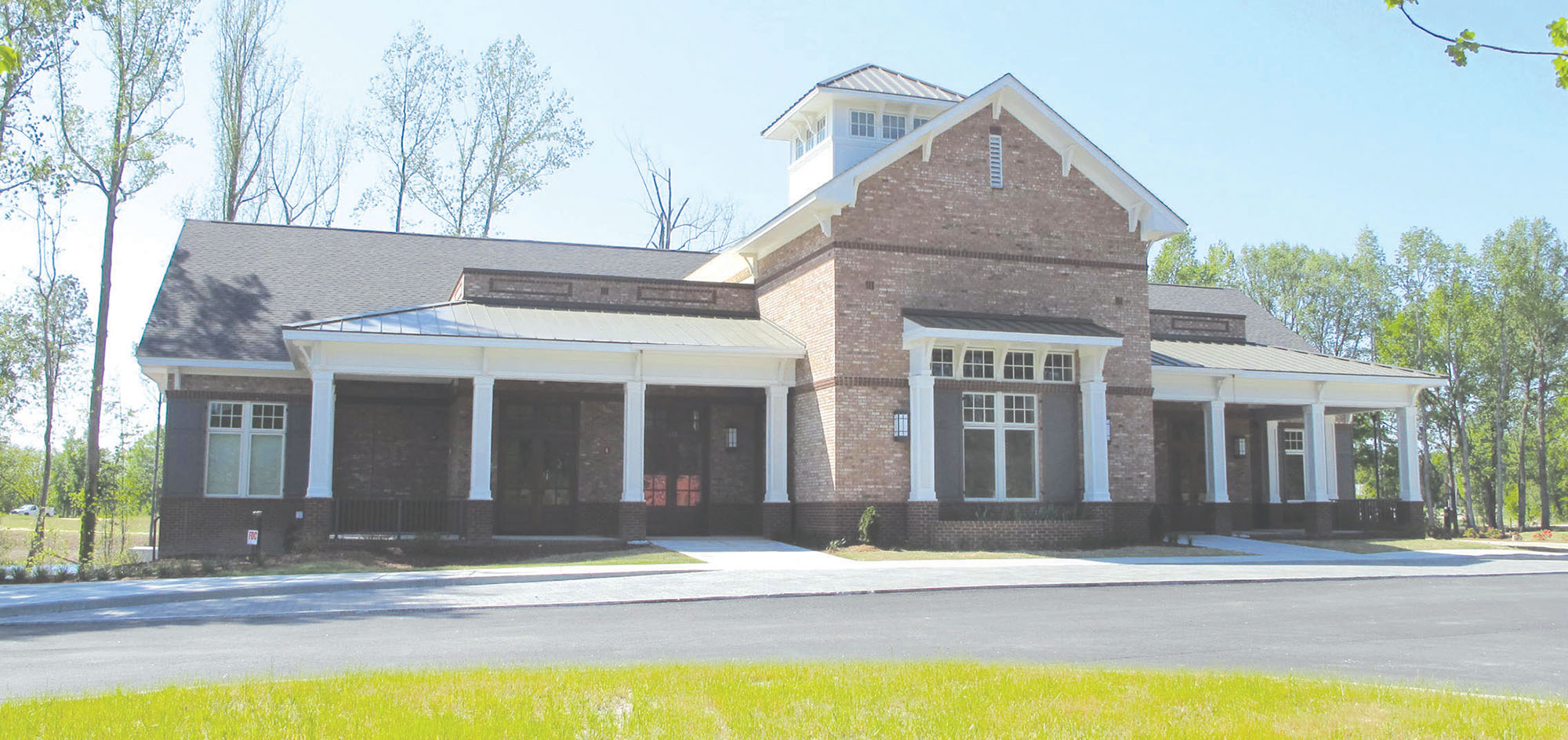
    BLYTHEWOOD – A discussion at the Dec. 9 Town Council work session revealed that while the finances of The Manor, the two-year-old Town-owned conference center, have improved since last year, the facility is still hemorrhaging money, and with no end in sight.

    “A year ago we were losing about $8,000 each month. Now it looks like we’re losing about $4,200 each month,” said Councilman Tom Utroska. “I don’t understand how it shows a minus $91,922 on page 1 of the Profit and Loss Statement. It looks like we’ve double dipped and added the numbers twice, but we show having a shortfall of ordinary income of $45,961 for the year. And it appears that’s going to be the case.”

    While Utroska and Town Administrator Gary Parker had high praise for the efforts of Booth Chilcutt, Events and Conference Center Director of the Manor, and his Assistant Director, Pat Connolly, in renting the facility, Council agreed that the Town faces an uphill battle for The Manor to break even.

    Utroska said that while weekends are booked through the end of 2015, the pricing has not been set high enough to break even on weekends alone.

    “We have a building that we can rent out every weekend but not during the week,” Utroska said.

    Wondering what to do to solve the financial dilemma of The Manor, he asked, “Do we just double the rates in 2016? Do we try to get someone to help Booth and Pat with the marketing? I’m concerned about the outflow here and then if something happens with the SMS4 (a newly state-mandated storm water management program that could cost the town $50,000 or more annually) and the outflow there, what’s going to happen with the Town’s reserves and where are we going to get the money?”

    Parker said he planned to put together a budget addressing maintenance expenses, which has not been done previously.

    “The revenues from the operation (of the Manor) were supposed to cover the costs,” Parker said. “And that’s not the case.” But Parker said progress is being made. “And if you raise the rates, there will be further progress by the end of the year.

    But Councilman Bob Mangone pointed out, “We’re so far behind the curve. We’ve got to stop the downward spiral.”

    Concerned that there is no reserve or enterprise fund to cover long term expenses of the park and Manor, Utroska suggested the Town would need “somewhere between 1 and 1-1/2 percent of the cost of the building per year. Since the building cost $2.3 million, that’s $20,000-$30,000 we need for reserves.”

    “Can we even afford to keep the building open?” Mangone asked.

    Utroska agreed, “That’s a worry.”

    Councilman Bob Massa suggested that to help defray the heavy fixed costs of the building during the week, “Instead of raising rates during the week, perhaps we should lower the weekday rates to make it more affordable for businesses to hold meetings there. Those fixed costs during the week are killing us.”

    “As a local government administrator,” Parker said, “I’ve never been faced with an enterprise quite like this.”

    He suggested that a couple of the members of Council might want to meet with him, Chilcutt and Connolly to talk about how to best improve the financial situation of The Manor.