Tag: slider

  • Town Shifts Gears on Penny Tax Projects

    Street Repair Priorities Change at Retreat
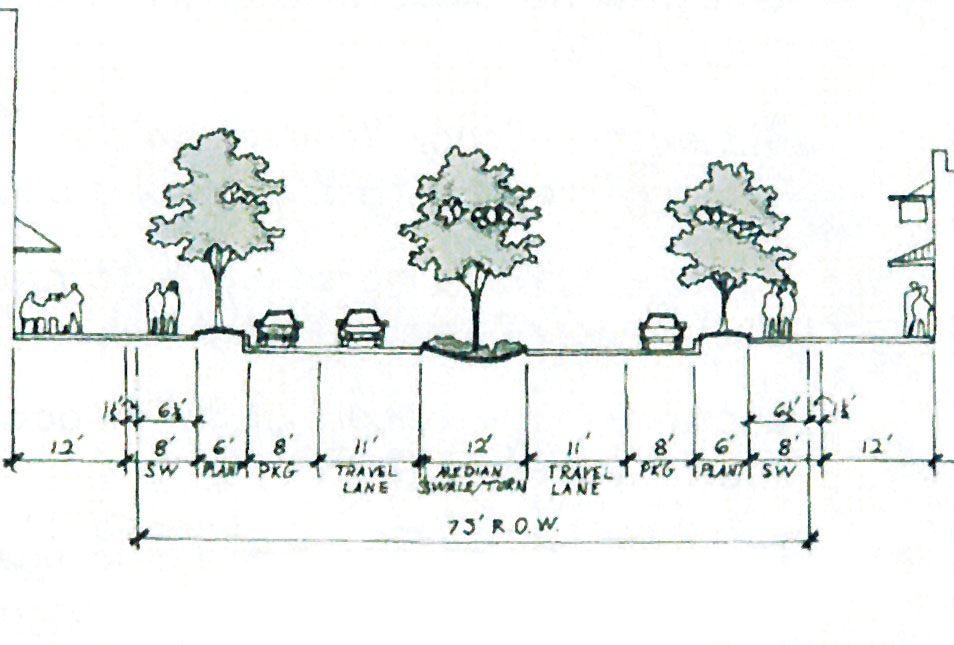
    In an effort to create a more walkable Town Center District in Blythewood, Council is considering fast-tracking a McNulty streetscape, and then doing the same for the section of Blythewood Road that runs through downtown instead of widening it to 5 lanes. In this proposed streetscape, that portion of Blythewood Road would include 9-foot-wide sidewalks, 6-foot-wide tree planters, 8-foot-wide parallel parking space on each side of the road and one lane in each direction with a 12-foot-wide median planted with trees. Proponents on Council say these improvements would be safer and more attractive than the currently proposed five lanes of traffic.
    In an effort to create a more walkable Town Center District in Blythewood, Council is considering fast-tracking a McNulty streetscape, and then doing the same for the section of Blythewood Road that runs through downtown instead of widening it to 5 lanes. In this proposed streetscape, that portion of Blythewood Road would include 9-foot-wide sidewalks, 6-foot-wide tree planters, 8-foot-wide parallel parking space on each side of the road and one lane in each direction with a 12-foot-wide median planted with trees. Proponents on Council say these improvements would be safer and more attractive than the currently proposed five lanes of traffic.

    BLYTHEWOOD (March 10, 2016) – After having spent the better part of a year planning and prioritizing Blythewood’s Penny Tax road widening and improvements projects that would, in its second phase, turn Blythewood Road into five lanes all the way from I-77 to Main Street, Town Council made an about face at its annual retreat on Saturday, opting instead to put that five-lane section of Blythewood Road on the back burner and upgrade the McNulty Road area with a walkable streetscape. That would include a road with two lanes and a median or a center lane, and then do the same for Blythewood Road but with parallel parking on either side, one lane each way and a landscaped median.

    The issue was raised by Town Administrator Gary Parker last week in notes in the agenda packet asking the town government to come to terms with whether they wanted the Town Center to be walkable as provided in the Town’s Master Plan or divided by a high-traffic, five-lane road.

    “The Master Plan calls for a walkable Town Center,” Parker told The Voice, “but that plan got set aside for a few years and I think the Council and residents lost sight of it.”

    “Businesses like a walkable downtown area,” Parker told Council. “People spend more time looking in store windows and spend more dollars. The difficulty, as I see it, for McNulty and Blythewood roads to be made walkable is their proximity to I-77. Traffic comes off those ramps and into the gas stations and fast food restaurants. That makes walkability difficult.”

    The current Penny Tax plan for Blythewood is divided into two phases. The first phase calls for the widening of Blythewood Road from I-77 to Syrup Mill Road. All the other projects are lumped into phase two, and include the McNulty Road and Blythewood Road (from I-77 to Main Street) projects.

    But Parker said the Penny Tax program just budgets the dollars for improvement, leaving it up to Council to prioritize the projects.

    Councilman Malcolm Gordge said when he recently broached the subject with Bob Perry, Transportation Director of Richland County, Perry seemed amenable to switching the priorities if they are brought to the Penny Tax committee’s attention in a timely manner.

    Councilman Tom Utroska said he “would like for us to come up with a plan first and have a public comment meeting before we go to the Penny Tax Committee. And we need to put our plan together and present it before SCDOT (S.C. Department of Transportation) gets started. We need to listen to the people on this. They may say we’re nuts,” Utroska said. “But do we want to be a sleepy, at-ease town? Or do we want to become a thoroughfare? That’s where we’re headed.”

    “This would be a wonderful opportunity for McNulty Road,” Mayor J. Michael Ross said, again stressing the importance of having a town hall meeting. “I think that’s the one (McNulty) we could showcase first, as a prototype, to see if it works. People could ride their bicycles and there wouldn’t be the traffic there that would get them killed. McNulty might be the very thing that we would say, let’s do this first and show what it’s like to have parallel parking downtown and it would be manageable.”

    “The intent is to brainstorm and not let it drop,” Parker said. “Staff and I need to set down and figure out a schedule on the streetscape. We need to see this through.”
     

  • Town Reclaims Mt. Zion

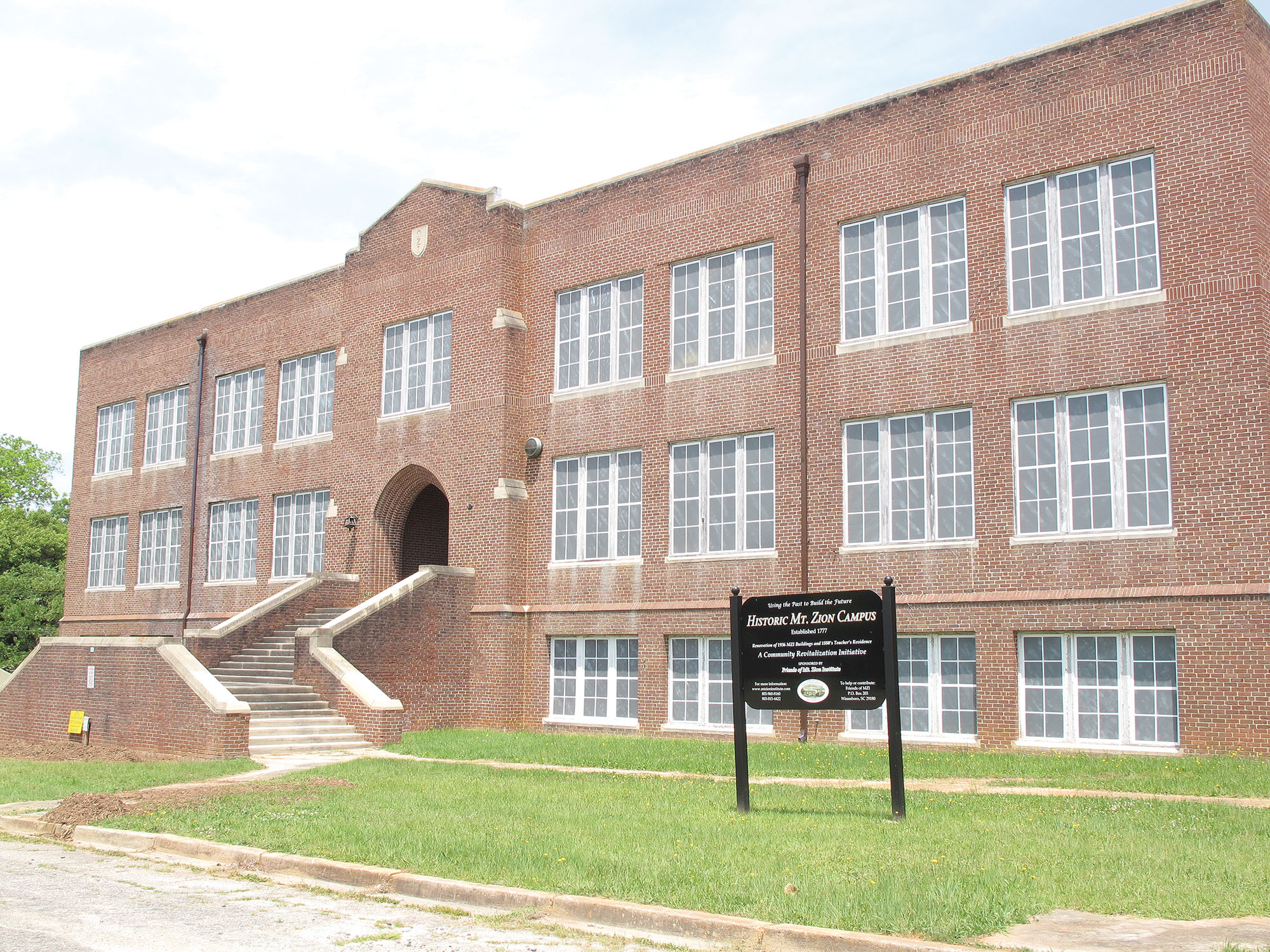
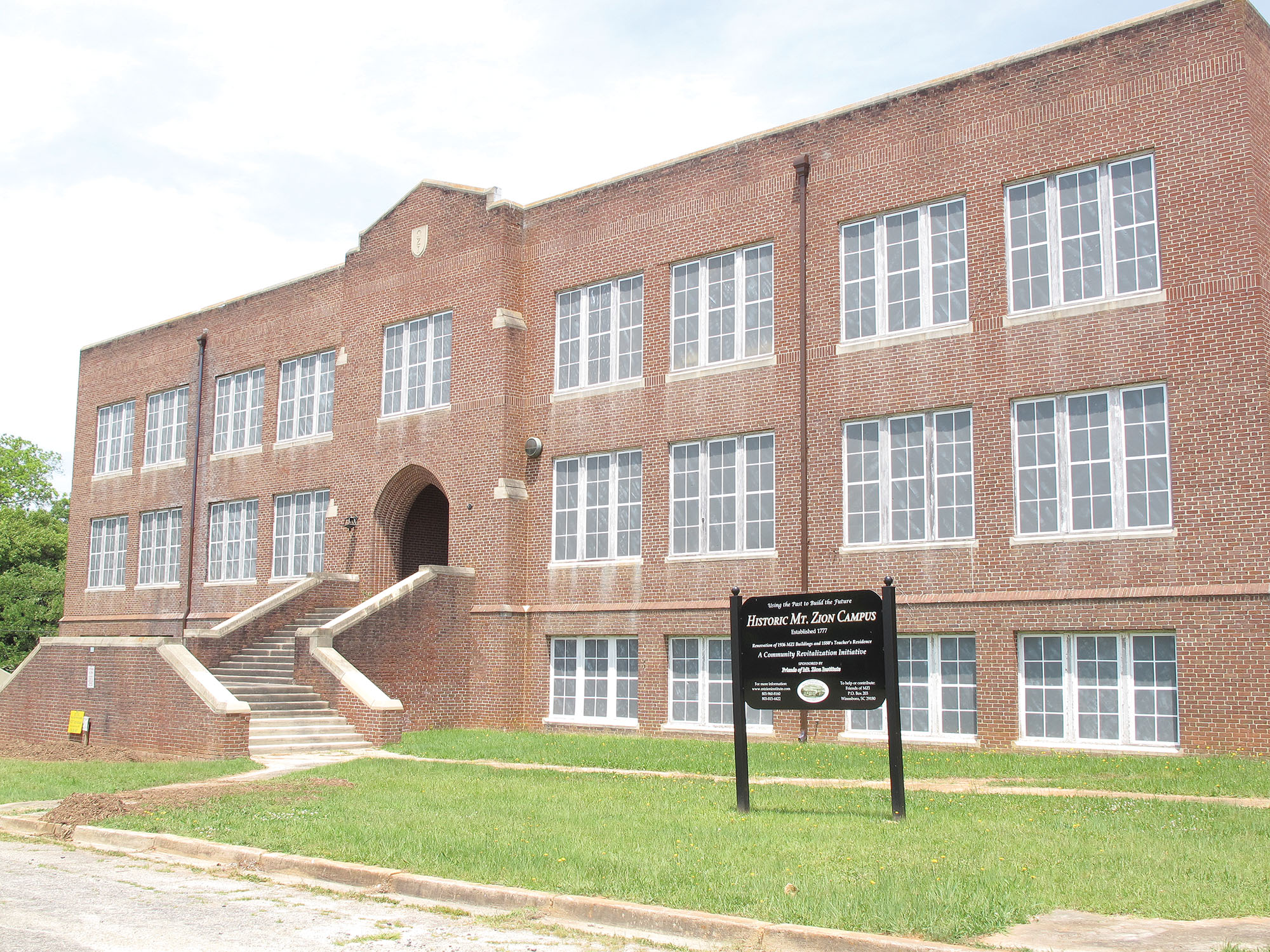
    IMG_3312 copyWINNSBORO (March 4, 2016) – After two years, efforts by a group of citizens to save and restore the Mt. Zion Institute at 205 N. Walnut St. may have finally come to an end.

    Town Council voted unanimously Tuesday night to begin the process of transferring the deed to the property from the Friends of Mt. Zion Institute (FOMZI) back to the Town of Winnsboro. The decision came after a brief executive session during Tuesday’s regularly scheduled Council meeting.

    “We had an agreement with FOMZI and the building was to be stabilized and we had an independent person to look at it and it’s not stabilized,” Winnsboro Mayor Roger Gaddy said after the meeting. “The deadline on that was September, so we’re about six months past that deadline. With them not being able to do that (stabilize the old school building), the agreement says we will transfer the deed back to the Town. That’s what we’re going to do.”

    Gaddy said transferring the deed back to the Town does not necessarily mean the wrecking ball is on its way. At least not right away.

    Council still has before it a proposal from the Banyan Foundation, presented in part to Council last month, to develop the former school building into market-value senior-living apartments. That proposal met with vociferous opposition during Council’s Feb. 16 meeting, but Tuesday night Gaddy said no decision had yet been made on the project.

    “We don’t know what’s going to happen with that,” Gaddy said. “The first thing we want to do is get the possession of it (Mt. Zion) so we can make a decision ourselves on what we’re going to do.”

    A major concern about the Banyan Foundation’s proposal, which Gaddy noted during the Feb. 16 meeting and reiterated Tuesday night, is whether or not the project would involve taxpayer dollars in the form of federal grants or loans. Federal money, Gaddy said, could eventually open the property to low-income housing – something Gaddy and Mt. Zion neighbors do not want.

    Vickie Dodds, FOMZI Chairwoman, said during the Feb. 16 meeting that she also opposed low-income housing on the site, but urged Council to give the developer, Rob Coats, time to do his due diligence.

    Reached by phone after Tuesday’s decision, Dodds said she was not surprised to learn of Council’s move to take the property away from FOMZI.

    The citizens group has had control of the property since purchasing it from the Town for $5 two years ago. The transfer of the property to FOMZI came with the stipulation that the buildings had to be stabilized within 18 months in order to meet Winnsboro’s Dangerous Building Code or else be demolished. Dodds said Tuesday night that FOMZI’s efforts failed for lack of general support.

    “From the get-go this has been a project that needed the Town, the County and the community behind it,” Dodds said, “but we haven’t gotten it from any of them. It’s just been a handful of us.”

    Following Tuesday’s meeting, Gaddy said there had been some suggestions from FOMZI supporters that the group may attempt legal action in order to prevent the Town from taking back the property. Dodds said later that while that may be true, it was a position she did not share.

    “We took it (the property) under the conditions they offered us and we didn’t do what they wanted us to do,” Dodds said. “But that doesn’t mean they (FOMZI board members) won’t do it (sue the Town). But they won’t do it with me as chairman.”

    John Fantry, Winnsboro’s legal counsel on utilities, said the transfer could be completed in as little as 10 days if FOMZI didn’t put up a fight. If FOMZI did contest the transfer, he said, it could take as long as 18 months.

    “I’m not sure what they’re going to do with it,” Dodds said. “If they tear it down, they’re making a big mistake.”


  • Penny Tax Funds to Pave Blythewood

    Councilman Larry Griffin questions Tyler Clark of the DOT on Blythewood road improvements. (Photo/Barbara Ball)
    Councilman Larry Griffin questions Tyler Clark of the DOT on Blythewood road improvements. (Photo/Barbara Ball)

    BLYTHEWOOD (Feb. 25, 2016) – Enticed by free Chick-Fil-A sandwiches and super food salads at a Chamber meeting on Tuesday at The Manor, a large crowd of Blythewood Chamber members and guests lunched and learned what’s in the Richland County Transportation Penny Program for Blythewood 29016.

    Bob Perry, Transportation Director of Richland County and Tyler Clark of the S.C. Department of Transportation explained that Blythewood transportation penny improvements, totaling $29 million, will include a myriad of projects – road widenings, bikeways, sidewalks, intersection improvements, paving of dirt roads and resurfacing.

    The crown jewel of the Blythewood improvements is the widening of Blythewood Road from I-77 to Highway 321. The first phase of that project will widen Blythewood Road to five lanes from I-77 to Syrup Mill Road at a cost of $10,519,000, not to include preliminary engineering costing $300,000 slated to begin this year. Right of way acquisition is expected to begin in 2017 and construction in 2018.

    The second phase of Blythewood improvements includes the following:

    -Widen Blythewood Road to five lanes from I-77 to Main Street.

    -Widen Blythewood Road to three lanes from Syrup Mill Road to Fulmer Road.

    -Widen McNulty Road to three lanes from Blythewood Road to Main Street.

    -Construct traffic circles at Blythewood Road and Creech Road and at Blythewood Road and Cobblestone.

    -Extend Creech Road to Highway 21 with a three-lane road.

    When asked where on Highway 21 Creech Road would exit, Town Councilman Malcolm Gordge told The Voice that consideration was being given to two exit areas: 1) the road would run behind the IGA and on out to Highway 21 or 2) Creech Road would extend down to run Firetower Road and then exit Firetower Road out to Highway 21.

    While Perry said there is no prioritization for the phase two projects at this time, the preliminary engineering is anticipated to begin in 2019 at a total cost of $21,911,000 for right of way acquisition and construction costs and $2 million for preliminary engineering.

    While paving has been completed on five dirt roads in the Blythewood 29016 zip code – Overlook Drive, Annie Entzminger Court, Dunes Point, Peafowl Road, Elton Walker Road and Entzminger Road – 13 more roads in Blythewood 29016 are in the design phase and another 11 are in the planning phase.

    Roundtree Road has been resurfaced and 12 more roads are in the resurfacing construction phase.

    Bikeways planned for Blythewood Road from Winnsboro to Main Street have not begun.

    Perry told the audience that the most important of 14 prioritization factors for completion of the Blythewood projects are public safety, potential for economic development, right of way obtained, design work completed and dedicated funds.

    For updated information on the road improvements in the Blythewood community, go to www.RichlandPenny.com, email info@richlandpenny.com or call 1-844-RCPENNY.


  • Low-Income Fears Fuel Mt. Zion Debate

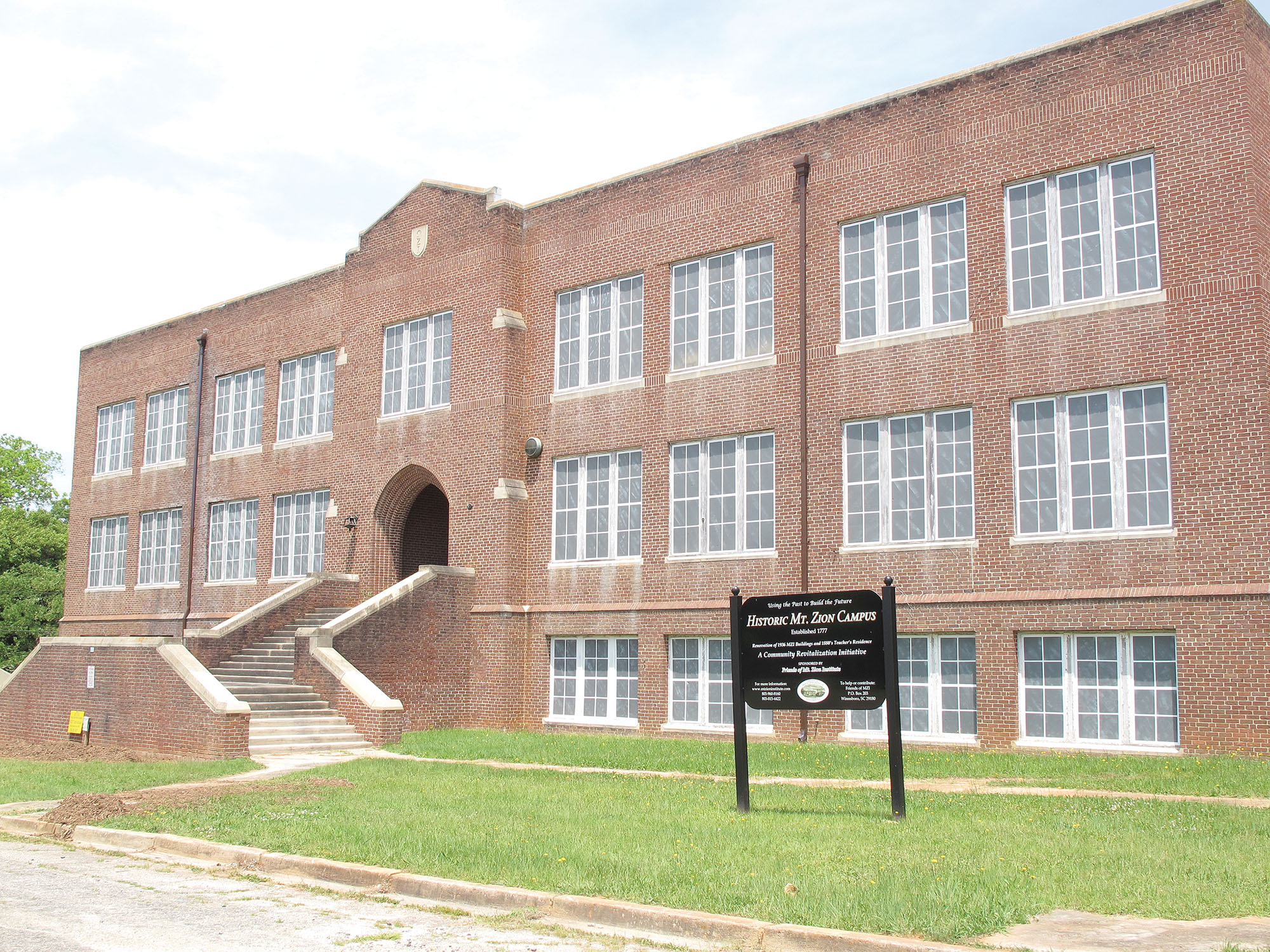
    The faux windows went up last summer, but Tuesday night the debate was less about Mt. Zion’s exterior and more about what – or who – could be residing in its interior.
    The faux windows went up last summer, but Tuesday night the debate was less about Mt. Zion’s exterior and more about what – or who – could be residing in its interior.

    WINNSBORO (Feb. 19, 2016) – Emotions ran high Tuesday night as residents spilled out of Town Council chambers and into the hallway for what may have been the last appeal for the life of Mt. Zion.

    Leading the charge for demolition was Marie Rosborough, who presented Council with what she said was a survey she conducted last week of neighborhood residents pitted with the question of whether or not they favored a plan to convert the old school building into senior living apartments. All but two respondents, she said, were flatly opposed to the notion.

    “We don’t want apartments,” Rosborough said. “It needs to be torn down. We ask Town Council to please close this issue, tear the building down and move on to some more pressing issue you have. You’ve done everything you can do.”

    Boyd Brown, who delivered to Council last Friday a letter of intent from developer Rob Coats, did his best to quell fears that Mt. Zion, even if intended for market-level senior living apartments, might end up as a low-income housing project.

    “This is not low-income housing. I’ve heard that from about three or four people today,” Brown told Council. “The Banyan Foundation (Coats’s non-profit organization) does do low-income housing projects – fact. This project does not score in the H.U.D. database to qualify for the 4 percent tax credits for low-income housing, nor does it score the other tax credits for low-income housing.”

    Mayor Roger Gaddy, however, subjected Brown to intense interrogation on the potential use of federal money on the project. Brown said that, as far as he knew, there would be no federal loans or grants, but that federal and state historic tax credits may be applied.

    “One of the Council’s concerns is if there’s any federal money involved,” Gaddy said, “any taxpayer money involved and the market-value apartment – it’s not even zoned for that now – if that were to occur and it not be successful and the federal government wants their money back, then they tell you you’re going to open it up to low-income housing. Council is not interested in even talking to anybody that’s going to use any federal money that’s going to put that neighborhood at risk.”

    Brown acknowledged Gaddy’s concerns, and said that federal historic tax credits were different than loans and grants.

    “We can do a workshop on federal tax credits and state tax credits,” Brown said, “and explain how that is what is driving all this growth in Columbia and even places like Edgefield and Lake City.”

    Dina Borda, an attorney living on Bratton Street, countered Brown’s claims by producing articles of incorporation for a company called The Peaks at Raleigh, Inc., filed in N.C. in 1998. The Peaks later became the Banyan Foundation, she said, and according to the articles was almost exclusively involved in low-income housing projects.

    “I am not saying I am against any kind of development,” Borda said. “I would just like to know the scope and method of execution before any contract is executed so that we can make an informed decision as to what’s going to occur. But I am absolutely against low-income housing.”

    Brown rebutted later, noting the date (1998) and the name on the articles, but said Coats does represent some of the people named in the articles.

    “These article of incorporation are from North Carolina. They are now in Alabama. This is dated,” Brown said. “You can Google search anything and you’re going to find all sorts of information. But I am here to tell you this is not going to be low-income housing. During the due diligence period if you want to go so far as to put that in the contract, if we ever get to that, I’m sure he will be just fine putting it in the contract.”

    But Gaddy said a contract means nothing if the federal government is involved.

    “I’m telling you the federal government is not going to loan him a dime for this project,” Brown said.

    “I don’t want any association, period,” Gaddy replied.

    “The council is going to have to have significant reassurance – I mean significant reassurance – that there would not be one iota of a chance and there would be some ramifications liability-wise if that would occur,” Gaddy continued. “I think that certainly is a major concern when you tell us the Banyan Corporation is the one doing it, from my standpoint, and the (articles) say that (low-income housing) is their sole purpose.”

    Vickie Dodds, Chairwoman of the Friends of Mt. Zion Institute (FOMZI), said she agreed with opposition to low-income housing. But what she didn’t understand, she said, was the feeling from those who “just want it torn down for the sake of tearing it down.”

    Responding to a point made by Faye Johnson, that the buildings were not historic buildings, Dodds said the old school had been approved for submission of placement on the National Historic Register.

    “All we have left to do it is finish the editing of the actual application,” Dodds said, “which cannot happen unless they (the Registry) qualify it as permissible to be on there. They consider anything over 50 years to be historic.”

    Betty Gutschlag also spoke up for Mt. Zion, saying it was an opportunity for retiring seniors to stay in their community. But when Rosborough spoke up again, she made it clear that it made no difference to the majority of respondents to her survey what type of apartments Banyan has in mind.

    “The residents who signed it (her survey) said ‘No, we don’t want Mt. Zion turning into apartments’. No conditions,” Rosborough said.

    Rosborough was interrupted by shouts from the back row.

    “Do you speak for everybody in the community?” Pelham Lyles asked. “The whole town?”

    Gaddy lowered the gavel and Rosborough attempted to continue, but Lyles interrupted again, shouting, “You didn’t put it in everybody’s mailbox!”

    When Gaddy called Lyles out of order, she exited the chambers.

    “We would hope you would consider what the community wants,” Rosborough finally concluded. “We’ve been talking about this for 15 years, at least. Now you want to add some more of this same over and over. You need to put an end to this because it will never end if you don’t.”

    Brown asked Council for 180 days for Coats to perform his due diligence on the project.

    “I’m not going to be unrealistic about this,” Brown said. “If there comes a point during that 180-day due diligence period where we just realize it cannot be done, we’re going to call you that day and tell you.”

    Gaddy said after the meeting that Council would consider Brown’s request.


  • Library Plans Unveiled

    Architect Jennifer Charzewski, Associate Principal of Liollio Architecture of Charleston, explains the firm’s final plans for the Blythewood Library renovation to Shirley Carter, Manager of the Library, left, and Library Associate June Smith, right, during the unveiling of the plans at the library earlier this month. (Photo/Barbara Ball)
    Architect Jennifer Charzewski, Associate Principal of Liollio Architecture of Charleston, explains the firm’s final plans for the Blythewood Library renovation to Shirley Carter, Manager of the Library, left, and Library Associate June Smith, right, during the unveiling of the plans at the library earlier this month. (Photo/Barbara Ball)

    BLYTHEWOOD (Feb. 18, 2016) – The community got its first peek Feb. 6 at final plans for the renovation of the Blythewood Branch Library as well as a 2,400 square foot addition to the facility. Architects from Liollio Architecture were on hand to answer questions and explain the changes to be made to the library.

    Architect Jennifer Charzewski told those gathered around the renderings that the reconfiguration of the existing space and the addition will provide for more program space, two large gathering areas, a quiet adult area, a sunroom overlooking the outdoor area to the side of the building, a children’s and family area, a nursing mothers’ room, a multi-generational computer room, a copy center, tutor room and other areas including a maker room or teen space, outdoor programming space as well as parking lot enhancements.

    Focus areas in the library will include education and growth, teen engagement and arts and literature, Charzewski said.

    The Town’s Board of Architectural Review granted a conditional approval of a Certificate of Appropriateness for the project in November. The final approval will come once the Board approves the shade of grey paint to be used on the building’s exterior.

    The architectural goal, Charzewski told the Board last November, is to achieve a timeless look for the 1992 building with painted brick, vertical windows and inclusion of the natural outdoor setting with the sunroom, window placement and additional trees and shrubbery.

    Bids are expected to go out in March with construction to begin in May.


  • Deadline Looms for Mt. Zion

    Developer May Come to the Rescue

    Next week may be FOMZI's last stand.
    Next week may be FOMZI’s last stand.

    WINNSBORO (Feb. 12, 2016) – Next week could be the end of the line for a local citizen’s group battling to save the Mt. Zion Institute from the demolition man, unless Town Council is willing to wait a little longer for a proposed developer to get into the game.

    The 18-month deadline for the Friends of Mt. Zion Institute (FOMZI) to stabilize the buildings elapsed last Sept. 4. While faux windows were installed on the front of the school building last summer, FOMZI learned from Council during their Jan. 5 meeting that the building had failed to pass a Town inspection.

    Vickie Dodds, FOMZI Chairwoman, said the inspection was skewed to fit Council’s agenda to demolish the buildings.

    “They have stretched the inspection report to suit their purposes,” Dodds said. “They have stretched the wording of the ordinance to suit their purposes. And when I say ‘They,’ I mean Roger (Gaddy, mayor).”

    Gaddy said he disagreed with Dodd’s assessment of the inspection and said the Town hired an outside inspector to perform the work specifically to avoid any perception of bias. But the Mayor has never concealed his feelings toward the former school site.

    “When I became mayor, I said Mt. Zion would be torn down in 90 days,” Gaddy told The Voice after a Sept. 1 Council meeting, adding that he had made that pledge 10 years ago.

    Dodds said Gaddy has also expressed to FOMZI the Town’s concern for liability, should anyone be injured by loose bricks falling from the school building. However, she said, the Town has no such liability.

    “We own the building,” she said. “We carry the insurance on it. They are disseminating erroneous information.”

    And although the building failed its inspection, she said there were no bricks loose enough to fall.

    But Gaddy said the Town had been advised by legal counsel that should someone be injured because of an unstable building, the Town could be on the hook.

    “The Town’s liability is knowing it’s an unstable building and not doing anything about it,” Gaddy said, “not requiring the owners to do anything. Our legal advice was that we were vulnerable.”

    Council officially approved the transfer of the property, located at 205 N. Walnut St., on March 4, 2014. FOMZI purchased the site and its four buildings (the Mt. Zion School, the auditorium and gymnasium, the cafeteria and the Teacherage) for $5, with the caveat that the buildings had to be stabilized within 18 months to meet Winnsboro’s Dangerous Building Code or be torn down. The contract also gave FOMZI 30 months in which to hire a contractor or developer for the historic rehabilitation of the buildings.

    But, Dodds said, this Tuesday’s Council meeting might be the end of the road.

    “Tuesday would be the deadline to do everything they think we should already have done,” Dodds said. “And that’s not going to happen. I’m not sure what we can do to please them.”

    A developer willing to stabilize the building, Gaddy said, would go a long way toward pleasing them.

    Dodds said after the Jan. 5 meeting that FOMZI had received significant interest from a developer, who had made two visits to the site. That developer, Rob Coats, was introduced to Mt. Zion by Boyd Brown.

    “I was approached by a developer independently of FOMZI,” Brown said. “I’m not getting a fee for it. He has developed several old school buildings, and he was looking for one around here. He made two visits to Mt. Zion and said it was a better fit than any project he has yet done.”

    Brown said Coats is interested in converting the school building into market-rate apartments for seniors.

    “We’ve got an aging population here, and we have to cater to them at some point,” Brown said. “It would be a good deal. And this is someone who actually has some experience in restoring school buildings in rural areas.”

    Brown said he plans to have a letter of intent from Coats delivered to the Town late this week. But even then, he said, the project would be 180 days out from launch while Coats performed his due diligence. Hopefully, he said, that would not be a deal killer.

    “Those buildings have sat there empty for 25 years,” Brown said. “It can wait another 180 days.”

    While Gaddy said the Town would not be willing to wait another eight or nine months, whether or not they will sit tight for six months remains to be seen.

    “That would be a Council decision,” Gaddy said.


  • Closing Threatens Property Tax Relief

    Walmart was Top Contributor to LOST

    Without revenues from Walmart sales, property tax relief may suffer. (Photo/Barbara Ball)
    Without revenues from Walmart sales, property tax relief may suffer. (Photo/Barbara Ball)

    WINNSBORO (Feb. 12, 2016) – When Walmart closed its doors for the last time in Winnsboro on Jan. 28, it shut off the spigot for more than just major retail in Fairfield County. As the county’s single largest contributor to the Local Option Sales Tax – the pot of money by which Fairfield County property owners are afforded property tax relief – taxpayers may see the amount of credit they receive on future tax notices diminish.

    “With the loss of that revenue (from Walmart), I don’t see how County Council is going to be able to continue to provide that relief,” said Robert Martin, who serves on the Board of Economic Advisors governing the S.C. Revenue and Fiscal Affairs Office. “I don’t see how County Council is going to get around increasing property taxes somewhat next year.”

    While the S.C. Department of Revenue would not divulge exactly how much money Walmart contributed to the Local Option Sales Tax (LOST), the big-box retailer was Fairfield County’s largest contributor.

    In spite of Martin’s grim forecast, Interim County Administrator Milton Pope said Fairfield County’s losses would be offset somewhat by the fact that Fairfield is a “receiver” county among the counties participating in the property tax relief formula. A portion of the penny sales tax collected by more prosperous counties – “donor” counties – is redistributed among the “receiver” counties annually.

    But while funds coming back to Fairfield from donor counties might mitigate some of the fiscal damage, Martin said it would only be a fraction of what Fairfield is losing with the absence of Walmart.

    “Some of it would be offset by the donor counties,” Martin said, “but I wouldn’t think it would be that much.”

    Fairfield County’s municipalities are also credited with LOST funds that offset their local property taxes. According to the Department of Revenue, 33 percent of the penny tax is distributed to municipalities, based on their population. The remaining 67 percent goes to property tax relief in the unincorporated areas of the county. With the LOST funds diminished, Town council’s may have to rethink their annual budgets.

    Ridgeway’s millage rate for the 2015-2016 fiscal year, for example, brought in $44,350 to their meagre general fund budget of $222,840. While Ridgeway is still bolstered by rental properties and an insurance tax, every penny counts.

    Don Wood, Winnsboro’s Town Manager, said the loss of Walmart’s contribution would be “significant;” however, how significant remains to be seen. As of last week, Wood was still seeking exact figures from the Department of Revenue.

    Walmart also contributed to Winnsboro’s bottom line with utility bills. According to Kathy Belton, Director of Winnsboro’s Finance Department, Walmart paid an approximate average of $23,000 a month in electricity bills, $190-$200 a month in water bills and $1,100 a month in gas bills.

    All of that, too, has now dried up.

    “That will certainly be a concern,” Winnsboro Mayor Roger Gaddy said. “That’s more than a quarter of a million dollars a year.”

    Of course, Gaddy added, Winnsboro purchases electricity from SCE&G before reselling it to customers. So Winnsboro will only be losing its profit margin, not the entire $23,000 a month bundle.

    “It will have some impact,” Gaddy said, “but I don’t think it will kill us.”

    The ultimate impact of the loss of Walmart won’t be known until August, Pope said, when the final LOST figures come in. As Council begins its budgeting process in the coming months, Pope said the County will have to bear in mind the potential reduction in LOST funds when estimating property tax credits.

    And while Pope was reluctant to discuss the potential for a millage increase, he did say that taxpayers would feel some impact.

    “The Local Option Sales Tax is a credit on your tax bill that helps to lower taxes on property,” Pope said. “There may not necessarily be an increase, but yes, there is a possibility that folks may not see as much of a credit.”


  • Benefit Slated for Injured Redhawk

    Booster Club Seeks Donations for Auction

    Mark "MJ" Mickens is taken off the field following his injury during the Sept. 4 game vs. Clover. (Photo/Ross Burton)
    Mark “MJ” Mickens is taken off the field following his injury during the Sept. 4 game vs. Clover. (Photo/Ross Burton)

    BLYTHEWOOD (Feb. 4, 2016) – It is the worst nightmare of any player, parent or coach – a debilitating injury that can end a season, terminate a career or alter a life forever. Sadly, that nightmare came true last fall.

    On Sept. 4, during week three of the 2015 football season, Westwood High School’s Mark “MJ” Mickens was injured while making what appeared to be nothing more than a routine tackle in the Redhawks’ home game against Clover. But as Mickens was carted off the field by emergency responders, it quickly became evident that it had been anything but a routine play.

    Mickens, a junior defensive back, suffered a traumatic neck fracture/dislocation that has left him a quadriplegic.

    Mickens spent the better part of three months in the hospital, including an extended stay in ICU and long-term inpatient rehabilitation on top of his emergency surgery and numerous medical procedures. He has thus far made considerable strides, returning home the week of Thanksgiving. But his injuries have left him needing around-the-clock care, as well as specialized transportation and medical modifications to the Mickens’ home.

    And all those things cost a great deal of money.

    To help offset some of those expenses, the Redhawk Football Club is holding the Taste of the Town & Benefit Auction at Westwood High School on Saturday, March 5. Food will be available from local Blythewood vendors from 11 a.m. to 5 p.m., with the auction beginning at 3 p.m. The booster club has set a goal of $20,000 for the event, with all proceeds going directly to the Mickens family’s medical expenses.

    In addition to coming out and enjoying the event, the Football Club is also asking the community to assist with donations.

    The booster club is accepting cash donations, as well as assistance in construction of home modifications, donations of medical equipment and any new or gently used items that could be sold individually or as a set during the March 5 auction.

    Examples of items for auction would include: gift certificates or coupons, vouchers for service, merchandise, sports memorabilia or tickets, collector’s items, antiques, etc. All donations and contributions are 501(c)3 tax deductible.

    To donate, call 803-200-2689 or email Redhawk.football.club@gmail.com.

    For additional information about the March 5 event, current auction list or additional giving opportunities, visit www.gofundme.com/prayformark.


  • Blythewood to Host War Memorial

    The Wall that Heals, a half-scale replica of the Vietnam Veterans Memorial in Washington, D.C., will be featured at Doko Park in Blythewood Memorial Day weekend.
    The Wall that Heals, a half-scale replica of the Vietnam Veterans Memorial in Washington, D.C., will be featured at Doko Park in Blythewood Memorial Day weekend.

    BLYTHEWOOD (Jan. 28, 2016) – Before signing a contract for $7,500 to bring The Wall that Heals to Doko Park in Blythewood this Memorial Day, Town Council put out a call for a large number of volunteers from the community that will be required to make the mega event possible.

    “It’s a big undertaking, but it’s a big deal for our town,” Councilman Eddie Baughman said.

    The contract calls for the exhibit to be open 24 hours a day from May 26 – 30, with approximately 140 volunteers to work 4- or 6-hour shifts. The Town is required by the contract to also provide round-the-clock security and emergency medical service during the event.

    Baughman, a Vietnam War veteran, suggested last fall that Council bring The Wall to Blythewood. The exhibit features a half-scale replica of the Vietnam Veterans Memorial in Washington, D.C. The chevron-shaped Wall is made up of 24 panels that will stretch across approximately 250 feet of lawn in the park next to Town Hall. The Wall is accompanied by a mobile Education Center that tells the story of the Vietnam War and the era surrounding the conflict and includes displays of photos of service members whose names are found on The Wall, along with letters and memorabilia left at The Wall in Washington, D.C. The Center also includes a map of Vietnam and a chronological overview of the conflict.

    Hazel Kelly, a Town Hall employee, will receive training to serve as the Town’s representative to organize and oversee the event which will be paid for out of the Town’s Hospitality Tax fund. As many as 20,000 people could visit The Wall while it is in Blythewood, Baughman told Council last month.

    Council voted unanimously to accept the contract. Those who would like to volunteer to help with the event should contact Kelly at 754-0501.

    In other business, Council unanimously adopted amendments to the Landscape, Buffer Yard and Tree Preservation Ordinance that would ease previous requirements for tree studies and replanting. It also adopted the 2015 Comprehensive Plan and an Ordinance annexing property located at 355 Langford Road.

    Council members also decided to discuss at a future meeting whether to continue to sponsor a New Year’s Eve fireworks event since the weather has not cooperated the last two years. They also postponed finalizing a policy regarding presentation of Keys to the Town.

    Town Council will hold their annual retreat on Saturday, March 5 at the Langford Nord House at McNulty and Main streets in downtown Blythewood. The public is invited.


  • Pointe Gets Variances

    Now known as ‘Just the Pointe,’ the housing development planned for Main Street Blythewood was granted 16 variances by the BAR this week.
    Now known as ‘Just the Pointe,’ the housing development planned for Main Street Blythewood was granted 16 variances by the BAR this week.

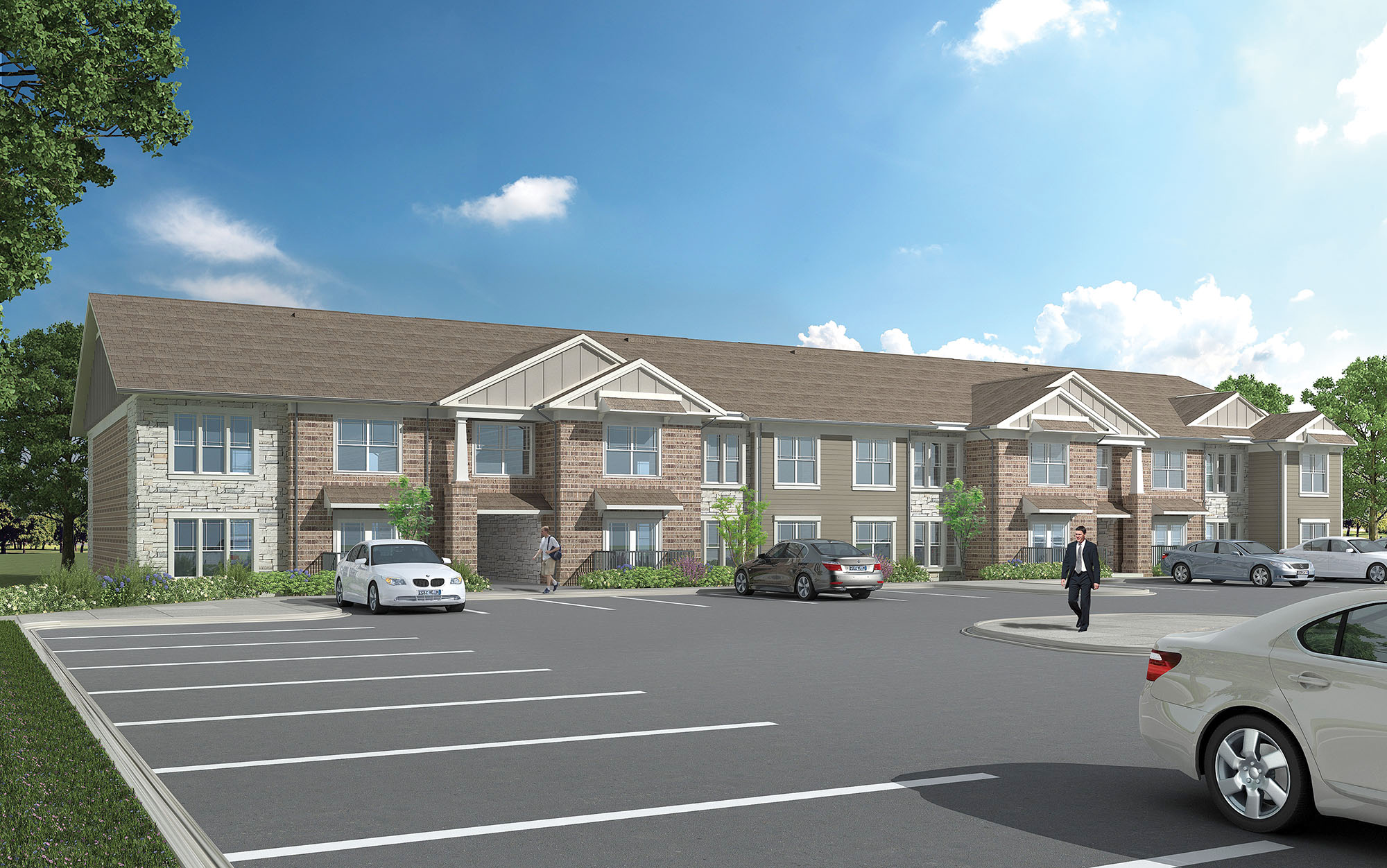
    BLYTHEWOOD (Jan. 28, 2016) – After the Board of Architecture Review unanimously approved a Certificate of Appropriateness (COA) last week for The Pointe, a 56-unit apartment complex proposed for Main Street in downtown Blythewood, the Richland County 9-1-1 addressing system required that the project’s official name to be changed to Just the Pointe since a nearby street is named Blythewood Pointe.

    Prior to granting the COA to the project, the BAR unanimously granted the developer, Prestwick Development LLC, 16 variances, including a request to omit the Town’s requirement that principal building facades provide a stoop or porch with a minimum height of 24-inches for all first-floor residential units. The Board did not omit the height requirement, but amended it to allow Prestwick to lower the height of the stoops on the principal building to 12 inches. The Board also allowed Prestwick to lower the required 48-inch elevation height on the building.

    The developers of the project told the Board last November they planned to install a chain-link fence on two sides and back of the property. At the December meeting the Board asked that the fence be changed to a wrought iron or similar decorative material. But at the January meeting, the project’s architect, Robert Byington, told the Board the owner had decided not to install a fence at all since one was not required by code.

    There was, however, some give and take between the Board and Prestwick in the finished design.

    “We wanted the developer to upgrade the building to be more than what was proposed,” Board chairman Michael Langston told The Voice following the December meeting. “I’ve been on the phone to them the last couple of weeks to get them (Prestwick) to come up to our codes instead of us giving them variances. They have met us about half way.”

    At that meeting, the Board negotiated for Prestwick to add several design changes to the window and entrance openings on the principal building to provide for a more upscale appearance on the street side.

    No one signed up to address the architectural requirements during public comment time on Tuesday evening. A representative of the company said he expected that the project is on track for completion by the end of the year.