Tag: slider

  • Candidates banter over property tax, vendors, growth, less restrictive zoning

    BLYTHEWOOD – This year’s Town Council debate was more entertaining than those in the past – a little fun, a little banter. The five questions presented by the Chamber were long and convoluted. Question 3 was 73 words long.
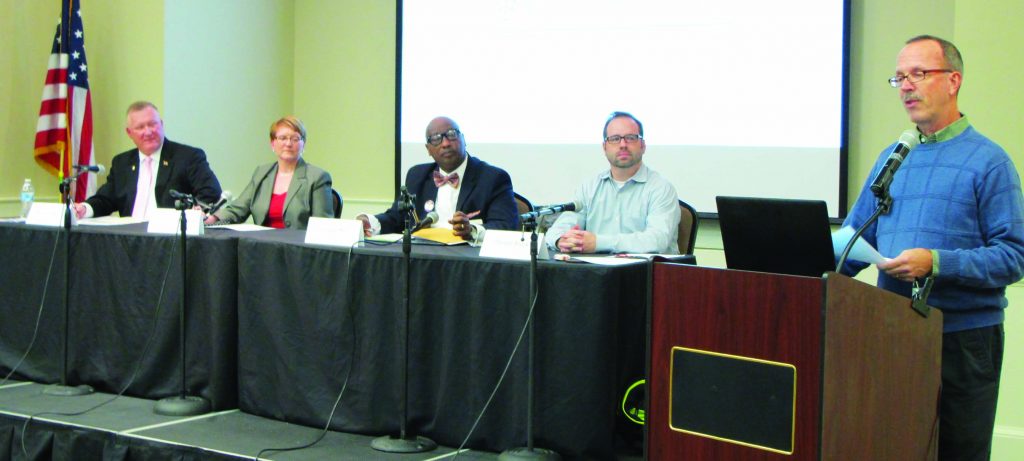
    Candidates for Town Council, from left, Bryan Franklin, Michelle Kiedrowski, Larry Griffin and Donald Brock, listen to the first question from moderator Mike Switzer, Executive Director of the Blythewood Chamber of Commerce. | Photo: Barbara Ball

    A priority for the Chamber, which has received $63,000 from the Town in the last year and a half, was what priority the candidates would give to a close relationship between the town government and the Chamber.

    The short question: What is your current opinion of the relationship between the town government and the business community which is the town’s primary source of revenue?

    Michelle Kiedrowski said more priority must be given to bringing in more hospitality and accommodation taxes as a financial resource, and the Town should market itself to the kind of business the town needs.

    Larry Griffin suggested the town needs to bring in the right businesses that will generate income for the town.

    Donald Brock said the nu

    mber one goal of the Chamber should be to help the businesses that are here survive. He suggested creating sources of revenue other than business-generated revenue – like a recreation department and sports complex.

    Bryan Franklin agreed that a sports complex would be a good revenue source, but Franklin said the town must first look at what it needs to spend money on and then ask how to generate that income.

    The short question: Are you open to a tax millage and/or a bond referendum for the purpose of accelerating the pace of street improvements?

    All the candidates pretty much skipped the street improvements part of the question and got right down to the tax millage/bond referendum issue.

    Larry Griffin said he is not opposed to a millage, but it has to be done with caution. If a tax would be beneficial and help us eliminate our traffic problems, I’m for it.

    Donald Brock: Millage is a bad thing when it is wasted. He might like to see bonds or a property tax used to create a recreation center or to diversify events and attractions in Blythewood. The town has to give serious thought to establishing a stable revenue stream. I’m not opposed to a property tax, but I would use caution.

    Bryan Franklin: I would be open to a referendum of the people. If the majority of the people want to impose a millage, I would not be opposed to it.

    Michelle Kiedrowski: I agree. A millage needs to be considered only when the town is ready. There are benefits, but the citizens have to be involved.

    The short question: How do you feel about Council’s decision to reduce design restrictions for businesses locating on Blythewood Road between 1-77 and Main Street, making it easier for more fast-food restaurants to locate there?

    As Planning Commissioners, Brock, Franklin and Kiedrowski did not recommend easing the design restrictions. They remained united in their opposition during the debate, noting that they felt it was important to follow the master plan to improve the town. Brock said businesses coming in must not be allowed to hold the purse over our head and say, we’ll move into the town, but we are going to operate by our rules, not yours.

    Griffin, on the other hand, voted for the easing of the restrictions. Griffin said the master plan should be changed when needed to meet the needs of growth.

    The short question: How do you feel about mobile/itinerant vendors doing business in Blythewood?

    Michelle Kiedrowski: When itinerate merchants come in and stay, they take business away from our local businesses. I’m not against vendors; vendors effect how Blythewood looks. I’m not a fan of them sitting overnight.

    Larry Griffin: Some merchants like it and some don’t, so we need to have an ordinance to abide by. If we change the ordinance we have to be fair. What we do for one, we have to do for all.

    Donald Brock: Itinerant merchants don’t have the same overhead and responsibility as a brick and mortar business. Perfect example is Grace Coffee and Bloomin’ Bean Coffee Shop.  I’m sure the monthly expenses for Bloomin’ Bean exceed those of Grace Coffee. Food Trucks should come for events and then leave. That’s the nature of an itinerant merchant. They must not interfere with the businesses that are here. We need to hear from and fight for the local businesses, the ones in the trenches who provide the town’s revenue.

    Bryan Franklin: Fairness is the word, but it has to be fair for the businesses that are already here.
  • Vickers bid emotional farewell

    WINNSBORO – For 21 years, she was the face of the Fairfield County Chamber of Commerce. And on Oct. 26, her many friends stopped by during a retirement reception in her honor to bid her farewell.

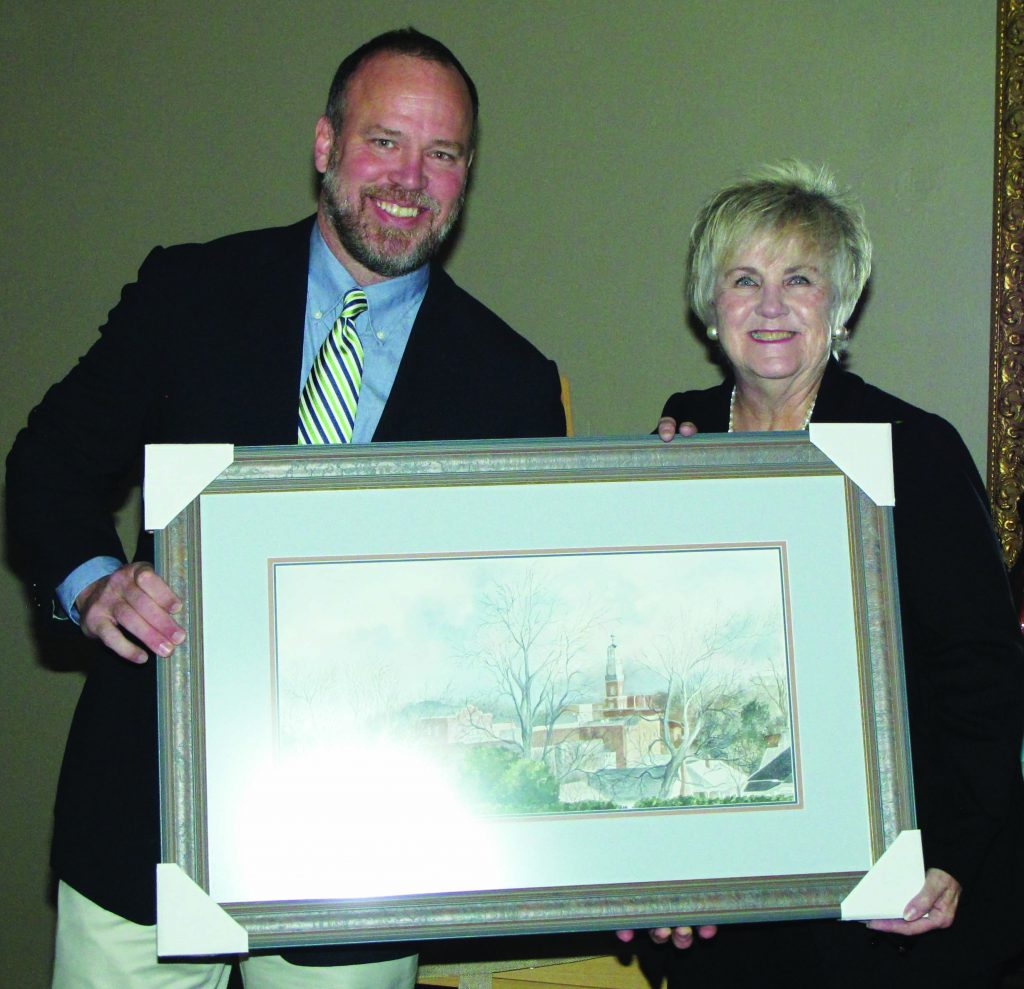
    Fairfield County Chamber of Commerce Chairman Harper Shull presented retiring Chamber Director, Terry Vickers, with her favorite painting of downtown Winnboro that hung it her office.

    Chamber Chairman Harper Shull thanked her for her service and presented her with an engraved remembrance and her favorite painting, newly framed. More than a hundred friends, downtown merchants and fellow Chamber members were there to thank her for what they say she did for the County, for the town and for them during those 21 years.

    “It’s time for Steve and me to move back home to North Carolina for the next phase of our lives,” Vickers said. “We love Fairfield County and we’re going to miss all of you.”


  • Solicitor: Officer’s actions not unlawful


    WINNSBORO – Deputy Solicitor Riley Maxwell of the Sixth Judicial Circuit notified the South Carolina Law Enforcement Division (SLED) on Tuesday that, after reviewing the file, he does not believe the actions of Winnsboro Public Safety Department (WDPS) Officer Peter Jackson, regarding his treatment of a handcuffed prisoner on Oct. 8, violate South Carolina criminal law.

    “Therefore, it is the opinion of the Solicitor’s Office that no criminal charges be filed against Officer Jackson,” Maxwell wrote.

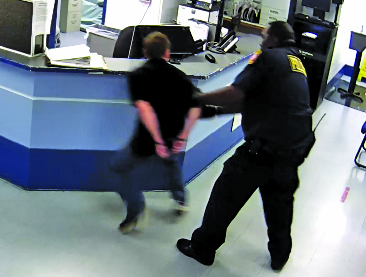
    A Fairfield County Detention Center video acquired by The Independent Voice through a Freedom of Information Act shows Jackson jerking Campanelli, 31, off the floor and throwing him through the air several feet, face first, into a wall in the intake room at the Detention Center. Campanelli was already under arrest and his hands were cuffed behind his back when the incident occurred.

    But WDPS Police Chief John Seibles told The Independent Voice that it was Campanelli who assaulted the police officer by jumping in the air under his own power and intentionally headbutting Jackson under his left eye.

    According to the Sixth Judicial Public Index, Campanelli, was charged with assaulting the police officer and resisting arrest at the Detention Center. Campanelli was released on a $3,000 bond.

    While Maxwell stated that it is his opinion that no criminal charges should be filed against Jackson, it is not clear whether he will pursue assault charges against Campanelli.

    View related articles: ‘SLED investigating assault involving WDPS officer, detainee,’ Oct. 19, 2017 and County bans officer from jail,’ Oct. 26, 2017.  To view an extended version of the detention center video, visit our Facebook page. A full report will appear in the Nov. 2 edition of The Independent Voice.

  • Burglar leaves ID at crime scene

    WINNSBORO – When Winnsboro resident Barry Gilbert reported that his backyard workshop on Garden Street and four of his vehicles had been burglarized during the night of Oct. 14, he was also able to give some unexpected helpful information to the Winnsboro Department of Public Safety officers when they arrived to look into the incident.

    Chambers

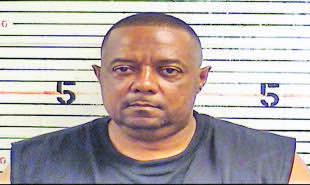
    Gilbert handed them a driver’s license that, it turned out, had been dropped by the burglar on the floor of the workshop during the burglary. Then Gilbert linked the ID to video footage his surveillance camera shot of the suspect entering the workshop with a long gun.

    Armed with the suspect’s name, address and other information, the WDPS officers promptly arrested the suspect, Curtis Chambers, Jr., at his home on Hudson Street, just a few blocks from Gilbert’s home.

    According to WDPS Chief John Seibles, that arrest led to the solution of several other burglaries in the neighborhood.

    Chambers was charged with larceny from vehicle, burglary 2nd degree and malicious damage to property. While Gilbert said some of the stolen items were recovered, he said damage to his vehicles, computers and other items was extensive.

    Chambers, who remains jailed, is currently serving a five-year probation for grand larceny from May, 2016. A separate charge of grand larceny from November, 2016 is pending.

    His bond is set at $40,000.

  • Former students return to alma mater… the restored Fairfield High School

    WINNSBORO – Don Prioleau has been saying to many people lately, “You’re going to be surprised what you see inside.” He was talking about the extensive restoration of Fairfield High School by some of its alumni, still true to their school.

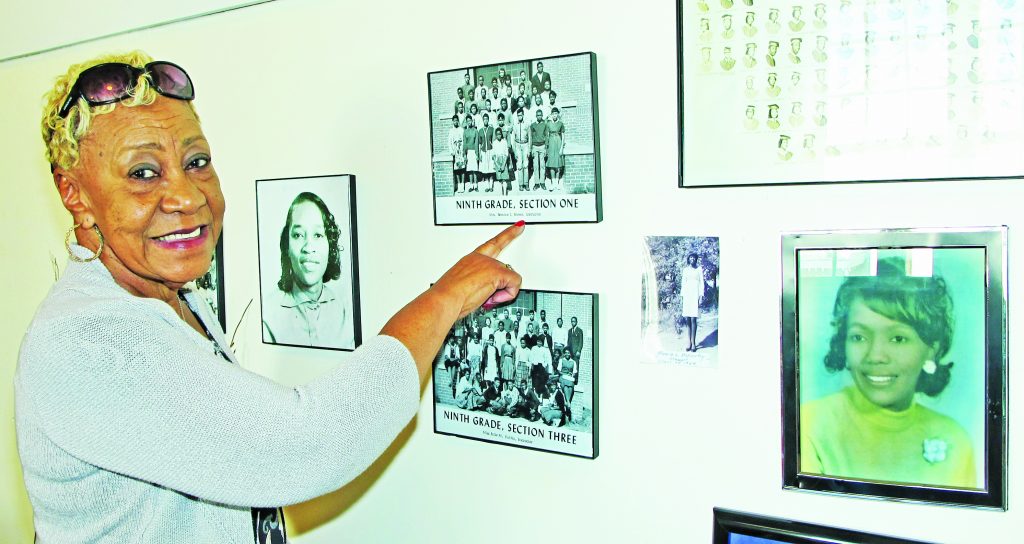
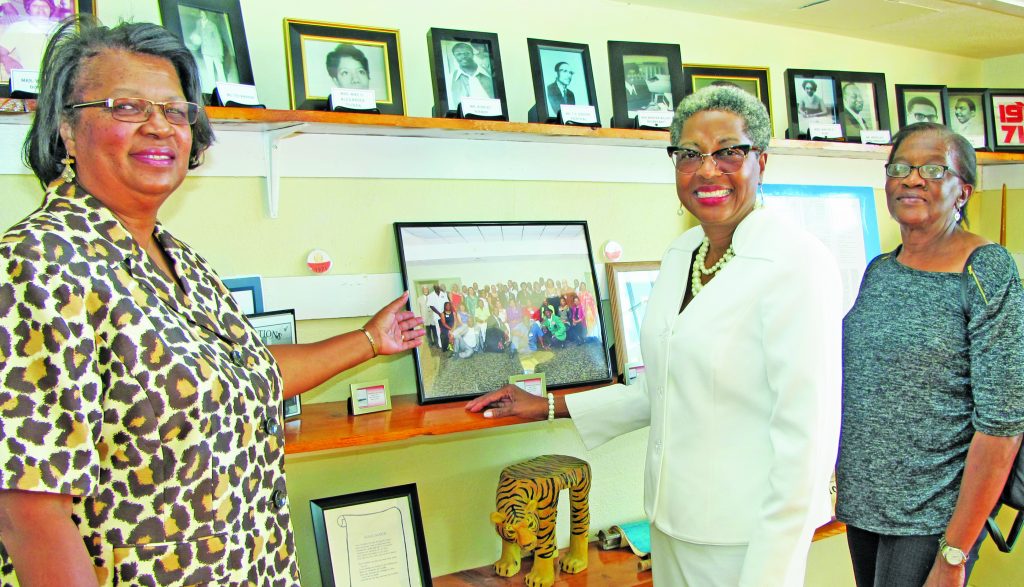
    Fannie Ford, Easter Samuels and Dorothy Smith, members of the class of ’71, admire the walls of Fairfield High memorabilia, including their class picture. | Photos/Barbara Ball

    And on Sunday, everyone found out that he was right.

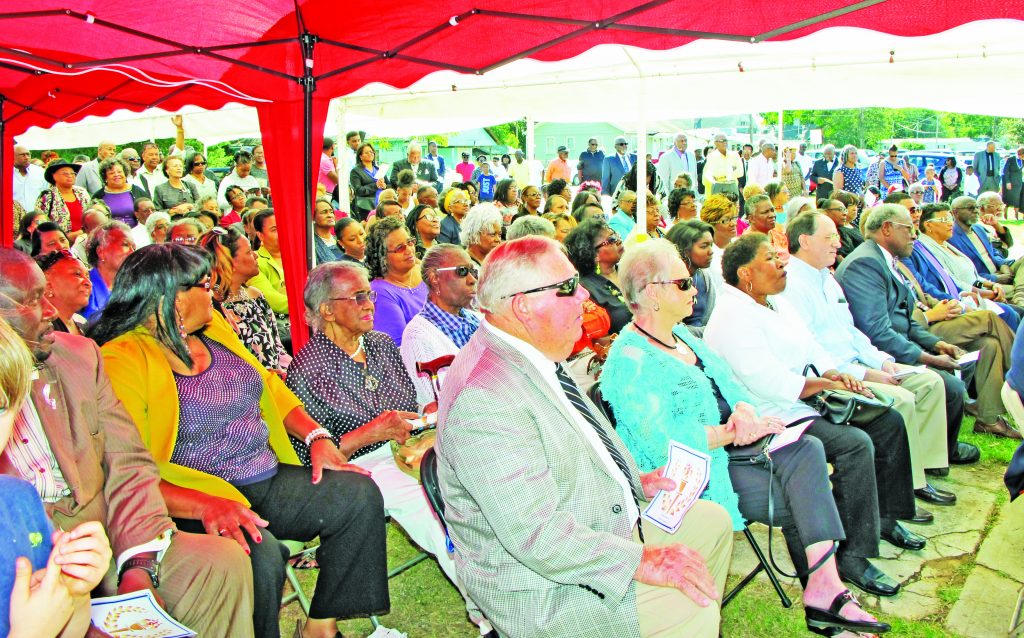
    It was a day to behold as about 300 former students, local dignitaries and friends entered the building to relive the students’ glory days through not only the restoration, but through the memorabilia displayed for each class.

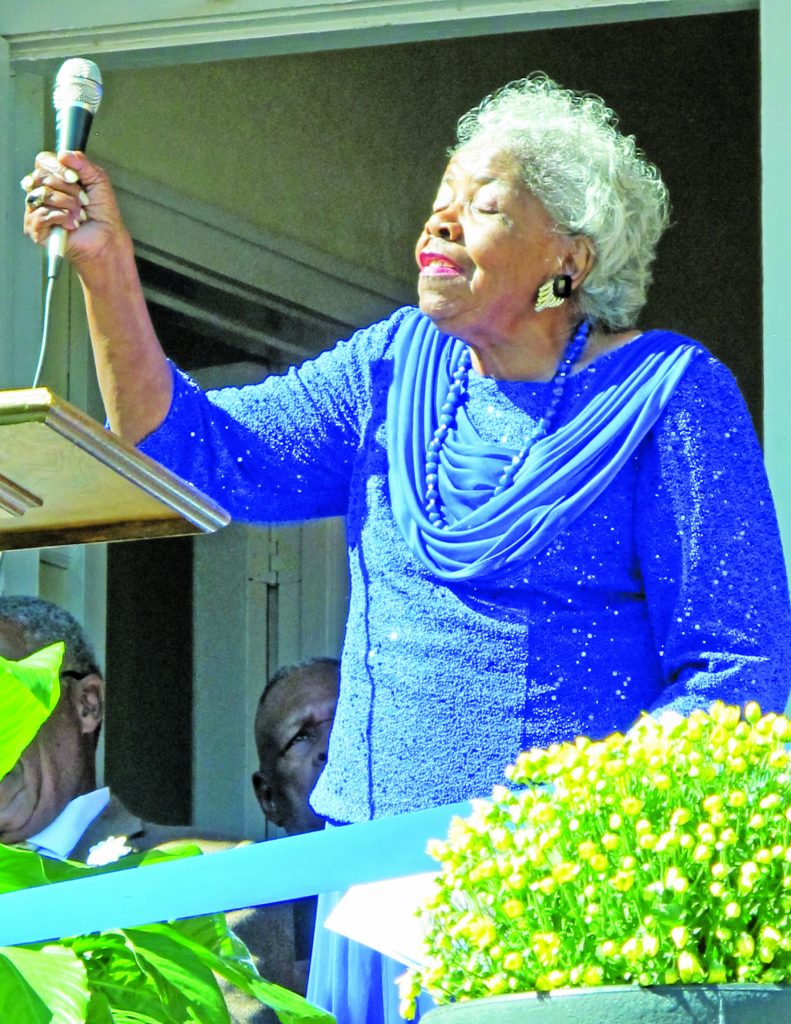
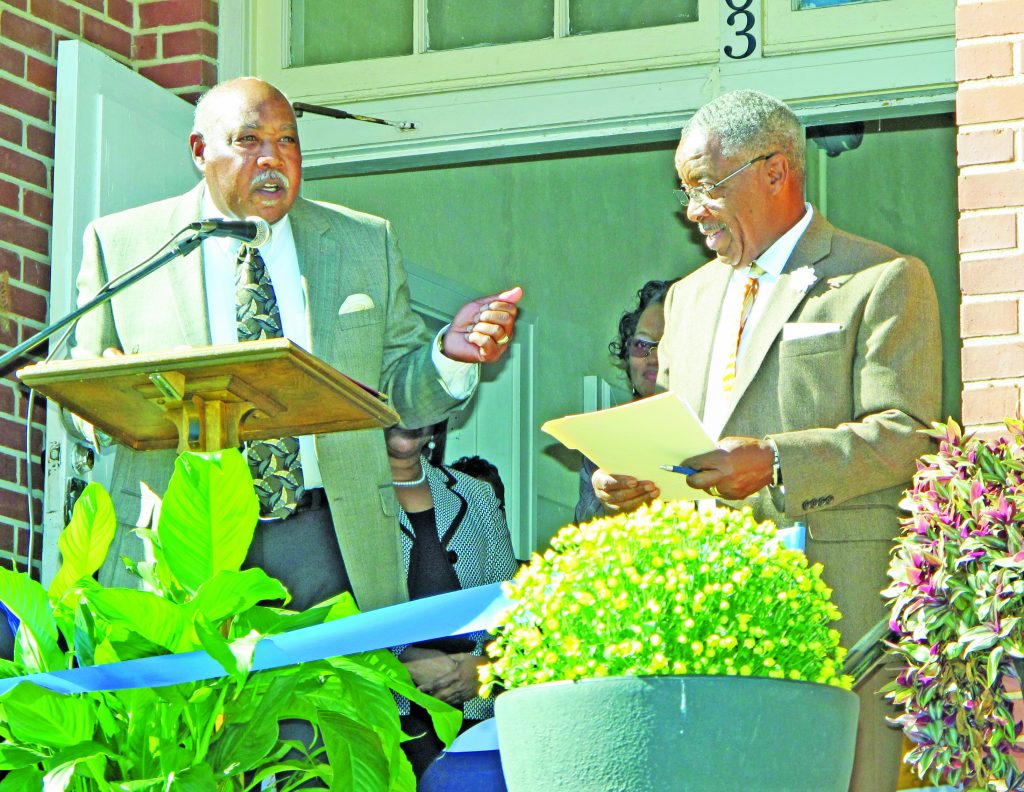
    Following opening ceremonies Alumni President Don Prioleau and Vice President Robert Davis introduced town, school, county and state dignitaries. An entertaining welcome speech by Eva Armstrong brought the house down. Fannie Ford introduced alumni officers and Janie Davis gave a brief history of the school.

    After a ribbon cutting and tour of the facility, refreshments were served in the cafeteria. For those who had attended the school, the day was one of catching up with former classmates and savoring the days when they were young.

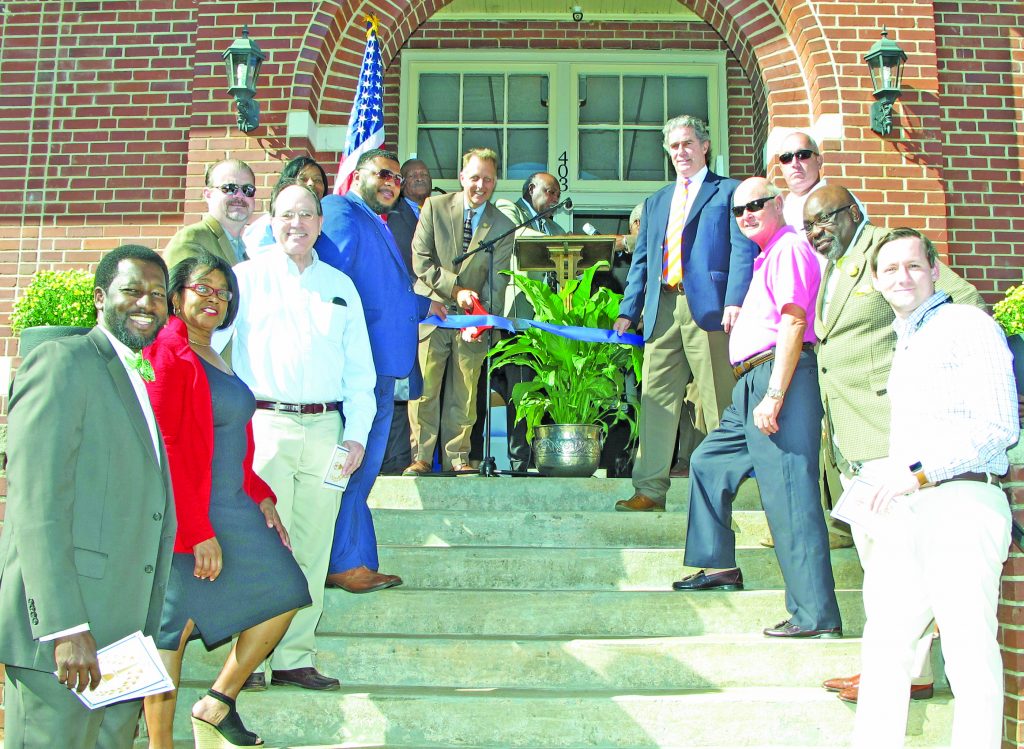
    Senator Mike Fanning cut the ribbon held by a collection of members from County Council, Town Council, School Board and Alumni Officers. (Look for more photos in next week’s Voice.)

    The red brick school located at 403 Fairfield St. in Winnsboro was built in 1924 and initially accommodated grades 1-9. During the ensuing years, the school added secondary grades, but it was not referred to as a high school. In those days, African-American high schools were generally called ‘training schools,’ with the idea of training students for certain jobs rather than offering a true academic curriculum.

    But the students and teachers at the Fairfield Training School rose above that distinction and the negative implication of its name. In 1963, they changed the name to Fairfield High School, and today the Fairfield High School Alumni Association owns the school’s main building and restored it to the days when it was the center of their world.

    The school compound, which consisted of a main building, a gymnasium and two other buildings, closed in 1970 when Fairfield County schools were integrated. FHS students were transferred to Winnsboro High School, which was located across the bypass from where the Winnsboro Wal-Mart building stands today. Owned by the Fairfield County School District, the school’s stately main building sat empty for years and would have simply deteriorated with age, if not for the efforts of its devoted graduates.

    Mrs. Eva Armstrong, class of ‘47, welcomed the crowd to the Open House. (See her entertaining speech on our Facebook page – The Independent Voice of Blythewood & Fairfield County)

    By the late 1980s, several former FHS students began exploring the possibility of saving their old school building. The idea gained momentum, and they were soon planning an alumni reunion for the fall of 1989. It was a roaring success with almost 800 people coming together for a weekend of socializing, celebrating and planning the restoration in earnest.

    According to Donald Prioleau, Class of ’62 and president of the alumni group since 1995, they were determined to save their beloved alma mater from desolation.

    “This building has the kind of quality you don’t see much of anymore,” said Jean McCrory, the representative for the Class of ‘64 and a member of the alumni group’s Historical Committee. “It’s very well constructed, with high ceilings, thick walls and the hardwood floors are in great condition. Our goal is to preserve the original character as much as possible.”

    On April 22, 2010, the association acquired the building for $5 and a promise to complete a laundry list of improvements within the first 10 years. Prioleau said they’ve kept those promises and more. So far, the group has volunteered untold hours of labor and raised funds to hire out other projects such as installing a new roof, gutters and windows and painting the exterior trim. Prioleau said they restored the restrooms to working order, painted the interior walls and refinished the hardwood floors.

    Alumni Vice President Robert Davis (‘66) and President Donald Prioleau (‘62)

    “The main building housed the principal’s office, several classrooms and the home economics room. The teachers’ lounge and the old cafeteria were in the basement,” McCrory said. “Our goal was to restore all of that to its original state. We did. But it took a lot more money and a lot more work.”

    McCrory said the finished building will now ideally be used for a variety of recreational and community educational endeavors, such as a meeting place for scout troops and tutoring services.

    Paging through the school’s yearbooks Sunday afternoon, it is evident there was a sweet bond between the teachers, and the students and the teachers are still cherished in their former students’ comments. Several, in fact, are still active in the alumni group.

    “Each class stayed with the same home room teacher for all three years of high school,” McCrory recalled fondly, “from ninth grade to 11th grade, which back then was when you graduated. I’m still in touch with my homeroom teacher, Mrs. Bernice J. Brown, all the time! She lives across the street from the school, where she’s lived since she started teaching. When new teachers came to the school, they always boarded with Mrs. Brown until they got settled somewhere. And two other teachers, Miss Margaret Roseborough and Mrs. Maude Ross, are both in their 90s and very much part of our group.”

    Gladys Allen, class of ‘64, shows the photo of her ninth grade class with a wall of memorabilia in a renovated classroom.

    The devotion the former students have for the school is alive and well. As McCrory and Alumni Association Vice President Robert Davis (Class of ’66) paused for their photo in front of the school recently, an unidentified woman driving past the school rolled down her window and called out proudly: “Class of ‘52!”

    McCrory and Davis smiled and waved.

    Alumni meetings are held at 7:30 on the third Tuesday evening of every month at the school, and individual graduating classes hold their reunions at various times throughout the year. Lively reunions for the entire 650 registered alumni are planned every two or three years. They’re always held on Thanksgiving weekend and begin with a Friday evening banquet.

    “Then, on Saturday, we have a parade through downtown Winnsboro,” McCrory added, eager to go on about the weekend of fun, “and each class is represented on a beautiful float – we have about 20 floats. After that, we have a big tailgate party on the football field at Garden Street behind the school. On Sunday, we end our weekend with a church service. It’s always a wonderful event. At our reunion, in 2013, we had over 400 people.”

    Almost 300 attended the open house and toured the school.

    “But we’re getting older and we’re dying off,” Prioleau, 73, laughed. “The class of ’55 is about our oldest class to actively participate. But the school will go on through our kids and grandkids. We’ve passed down the importance of it and many of them now volunteer their time and donate to further the project.”

    “The combined work of so many people has kept the spirit of the restoration alive,” McCrory said. “This project is very dear to our hearts. That school produced some very good people.”

    For more information or to donate to the Fairfield High School historical restoration, contact Donald Prioleau at 803-337-2105, or mail donations to the Fairfield High School Alumni Committee, P.O. Box 1182, Winnsboro, S.C. 29180.

  • Ridgeway man arrested for Moonshine

    RIDGEWAY – Curtis Perry, 49, of Bellfield Rd. in the Ridgeway area of Fairfield County was arrested by Fairfield County Sheriff’s officers for the unlawful possession of moonshine. This investigation followed  numerous complaints about “bootlegging” at Mr. Perry’s residence, the officers report.

    At the time of the arrest, officers also seized large quantities of alcohol and moonshine, nine firearms, and over $15,000 US currency. This investigation was conducted by the Fairfield County Sheriff’s Office Narcotics Unit, assisted by Chester County’s and Union County’s narcotics units.

  • BAMA hosts Back to School give away

    BLYTHEWOOD – For those students who haven’t yet stocked up on school supplies, drop by the Farmers Market in Doko Park next Wednesday.

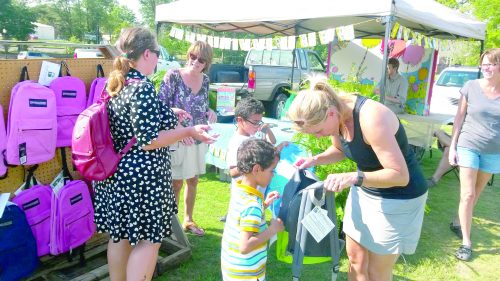
    The Blythewood Area Ministers Association (BAMA) will sponsor their annual Back to School Supplies Give-Away at the market on Wednesday, Aug. 2 from 4 – 7 p.m. The market is located in Doko Park.

    Free school supplies will be given to the first 200 elementary students that visit the market, said Rhett Sanders, BAMA secretary and pastor of Blythewood Presbyterian Church that meets in Blythewood High School.

    Churches participating in the event are Blythewood Presbyterian, Calvary Baptist, Cedar Creek Baptist, Covenant Worship Center, New Kirk Presbyterian, Pine View Baptist, Sandy Level Baptist and Saint Marks Lutheran.

    “The mission of BAMA is to support and encourage biblical diversity and unity within the context of the association’s leadership, ministerial relationships and community ministries,” Sanders said.

    “BAMA is for all pastors in the Blythewood area to come together in a fellowship of genuine Christ-Centered friendship and encouragement,” he said.

    For more information, contact their  at Sanders rhett@blythewoodpres.com.

  • Kerr and Edwards to wed

    James Edwards and Cheyenne Kerr

    Mr. & Mrs. Brent Kerr of Jonesville, SC are pleased to announce the engagement of their daughter,

    Cheyenne Leigh Kerr to James Brandon Edwards Son of Douglas M. Edwards Jr. and Helen Edwards

    Of Winnsboro, SC.

    Miss Kerr, 21, is a 2014 graduate of Broome High School who received her Associates Degree in early Childhood Education from Spartanburg Community College in 2017. A resident of Jonesville, Miss. Kerr is employed as a Teacher’s Assistant at the Mon-Aetna Child Enrichment Center.  She is a member of Jonesville Volunteer Fire Department and the Lebanon Volunteer Fire Department.

    Mr. Edwards, 24, is a graduate of Blythewood High School and holds an Associate Degree in Fire Science Technology from Greenville Technical College.  A resident of Winnsboro, Mr. Edwards is employed as a Firefighter with Cayce Department of Public Safety.  He is also a member of Fairfield County Rescue Squad and Lebanon Volunteer Fire Department.

    The wedding with be held September 9, 2017 at Winnsboro Church of the Nazarene.

  • Pinetree Players perform Snow White

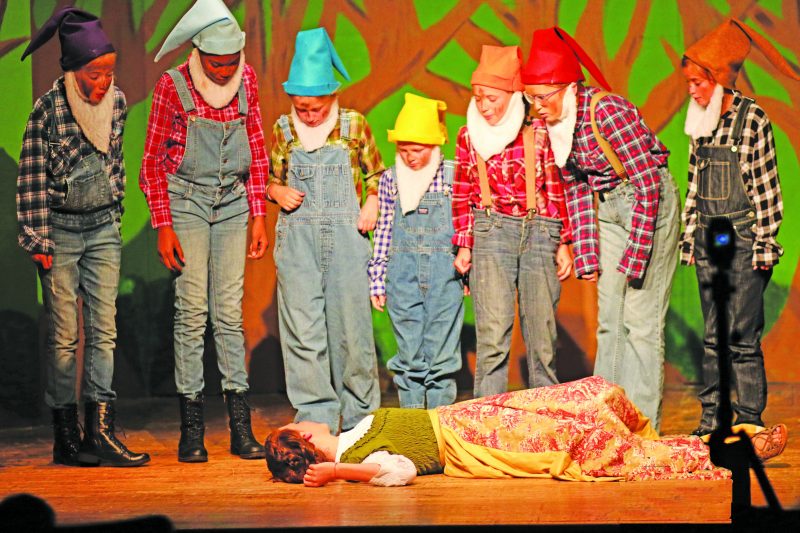
    WINNSBORO – Even if you have seen multiple versions of “Snow White,” the Pine Tree Playhouse’s presentation of the classic fairy tale will still give you a new experience.

    For one thing, the dwarves have different names:  Gabby (who talks a lot); Snore (who likes to sleep); Ticklish (who likes to laugh). “The dwarves are a little different; as with any adaptation, you have to change some things up a little bit,” Dee Pullen, one of the directors of the play, said.

    And, there are girl dwarves, cats, a fox and music.  There is still Snow White, of course, an apple, a wicked queen, a huntsman and a prince.

    What you will also see is a young cast, drawn from kids and teens in the Fairfield County and Blythewood areas, excited about being on stage and learning theater craft.

    This is only the second time Pullen has directed a summer children’s play, although as a teacher by training, she has lots of experience working with young children. Pullen started with playhouse six years ago and has learned as she went along. In getting a play to production, everybody in the theater just pitches in to help, she said.

    “We are a really close-knit family as far as the board and the people in the theater go,” Pullen said.

    The director typically choses which play to present, Pullen said, and the playhouse likes to do a musical in the summer because it draws a good crowd, and the children’s plays bring in the biggest audiences.  “We have a good group of kids that keep coming back year after year. My own kids have done the children’s plays for about six years now. For the past couple of years we have had a new influx of kids.  But kids do age out – they can audition for the children’s plays up to age 17 or 18.”

    What are some of the challenges in working in community theater?

    “Especially with a children’s play in the summer time, it’s a big commitment.” Pullen said. “We practice two to three days a week and two to three hours a day in the evening.  We are board members who also direct and we have full time jobs.”

    It’s hard for parents to find the time to bring the children, and with different summer schedules, she said, last Monday was the first time she had her full cast together even though they have been practicing for this play since the first of May.

    “It makes for a big challenge but it always pulls together,” Pullen said.

    The 88-seat Pine Tree Playhouse started in 1972 and produces about five plays a year, totally with volunteer talent for all aspects of the production, from directing to costume making.  The theater is always seeking new blood and is asking anyone with an interest in community theatre to come by.  As Dee and her kids demonstrate, this can be a truly family project.  Not only are her daughters in the play but her son is in charge of sound effects.

    “Snow White” is directed by Dee Pullen and Dori Brandenburg. Performances are at 8 p.m., Friday, July 21, Saturday, July 22 and at 3 p.m., Sunday 22. Tickets are $10. The theater is located at 230 S. Congress Street in Winnsboro. For information, call 635-6847.

  • Magic happens while you’re quilting

    Lets make a quilt!

    When people come together with a collective intention, it’s a powerful thing.  Magic happens.

    And it’s happening at the Blythewood Historical Society and Museum where folks in the community are learning the history, techniques and art of quilt making. They are learning not only through films and lectures made possible through grants from the Nord Family Foundation and the Richland County Conservation Commission, but they are learning from hands-on instruction, how to make quilts, the art of our grandmothers.

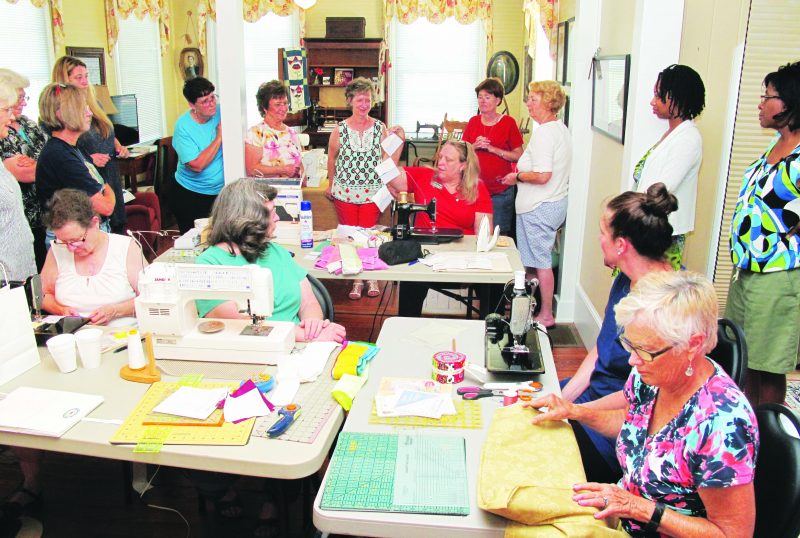
    On a recent Thursday, magic happened when a quilt gathering at the Langford Nord house brought together residents from Blythewood and Fairfield County to learn to quilt or to pursue and share their passion of quilting as a hobby. It was the first of three such quilt gatherings or classes that will be offered this summer.

    At the first of the classes, beginner, intermediate and experienced levels of quilters begin their quilts.  Each participant brought her own portable sewing machine. Quilter Donna Royson was the instructor.

    Using a pattern called Whirligig from the company Quilt In A Day where Royson is a certified quilting instructor, the quilters used basic sewing machine quilting skills and consistent-sized strips of fabric to complete a whimsical yet traditional pinwheel square.

    During the three-hour class, participants learned the techniques necessary to make the square and most completed as many as four squares during the session.  The final product, a lap-size quilt, will need 40 of the squares which each quilter will finish at home. Once the squares are constructed, pressed and trimmed, participants will sew the squares together into rows and then sew the rows together to make the quilt top.

    Although there were the various levels of expertise in the group, participants enjoyed a commaraderie and showed a willingness to assist each other.   Friendships were formed and skills were enhanced.

    Blythewood quilter Duane Walker will instruct the second class on Thursday, July 20 using a technique called paper piecing in which pieces of fabric are sewn to lines on paper to form unique patterns of squares.  Later, the paper is removed and the squares are sewn together to form a quilt top.  The beauty of this technique is that it provides accuracy of the final product by ensuring that all geometric shapes are exact and, in the end, are consistent and form a specific pattern.

    The third and final class will be taught by Stephanie Alexander on Thursday, Aug. 3. During this class, quilters will sew various size strips of fabric to a foundation fabric to create a scrappy quilt top.  This method has been used for centuries and is made from scraps of fabric left over from various other quilting and sewing projects. In other words, as mom made the family’s clothes, she saved the leftover scraps and sewed them together into a quilt.

    While there is not sufficient time in a three-hour class to finish a quilt, the goal is to learn the technique and retain the instruction by constructing several blocks during the class period.

    “I am excited and encouraged at the amount of talent and intrest in the quilting hobby in our area,” Royson said, “and it is my hope that we will have more classes on quilt construction and completion in the future.”

    To drive interest in quilts and quilting, The Langford-Nord house has hosted video parties, “show and tell” times, quilting lectures and lesson as well as a Quilt Show during the last year.  Over 60 local quilts have been photographed and documented for the Society’s Quilt Index.

    “Making a quilt is fun and gratifying.  We admire them, gift them, hang them, photograh them, treasure them and warm ourselves with them,” Royson said.

    Beyond all this, why are quilts and their history important?

    The study of quilts reveals the diversity of the makers.  Quilting is a multi-cultural art unbound by race, class or ethnicity.  Facts about the maker, quilt design, fabric and sewing techniques were used to revise history as they told stories from a woman’s perspective not previously documented.

    In the United States, quilting became popular during the Colonial Era (late 19th century to the 1920s) as Americans were moving away from European influence.  Many quilts were made to commemorate the Centennial (1876).  However, most were made of necessity and used to keep a family warm. Although initially made for utilitarian purposes, they were no less artfully constructed.  The makers’ ingenuity, originality, frugality and artistry is evident from studying of quilts of this era.

    In the 1970s the Whitney Museum in NYC held a quilt exhibit which enjoyed a large attendance and wide media coverage.  The display honored the inherent worth of quilts as “art objects with considerable visual eloquence.” The quilts strongly resembled abstract paintings through manipulation of geometric patterns, optical effects with color and form on a large scale.

    Janet Catherine Berlo, Professor of Art History at the University of Rochester, wrote,  “Quilts are one of our country’s most important artifacts.  By studying quilts, we study the social like of things – we deepen our understanding of how we shape our culture through objects, and shape our understanding of objects through the various ways we interpret and value them at different points in history.”

    Next time you encounter a quilt, study it and let it speak to you about its artistry, its history and its maker.  Be reverent and honored that you are looking at a vital part of history.

    To register for the second of the Historical Society’s summer quilt gatherings, email bgamble@kemsmithcpa.com or call 786-5200.

    A QUILT is a multi-layered textile, traditionally composed of three layers of fiber: a woven cloth top, a layer of batting, and a woven back, combined using the technique of quilting, the process of sewing the three layers together. (Wikipedia)