Tag: slider

  • Father jailed for cruelty to child

    WINNSBORO – A 43-year-old Winnsboro man was arrested on Nov. 14 for both ‘cruelty to children (torture, deprivation)’ and ‘assault and battery’ 1st degree.

    A 38-year-old woman came to the Winnsboro police station on Nov. 6, stating that her ex-husband had stabbed their 16-year-old son in the leg, causing the child to have to have stitches in his leg.

    In an earlier report, the father told police that he has full custody of the couple’s son. There is no other stabbing information about the incident in the WDPS report.

    The father, who is not identified to protect the identity of the victim, was released on a $25,000 surety bond. The case continues to be investigated according to WDPS. This story will be updated as information is available.

  • County owes $9,600 for unregulated airport tanks

    WINNSBORO – Fairfield County administration discovered, during the recent reorganization of the County’s airport management, that the airport’s gas tanks had never been properly regulated by the Department of Health and Environmental Control (DHEC).

    In September, the Administration and Finance Committee approved the restructuring of the airport’s management from an independent fixed based operator (FBO) to a director who answers to the County Administrator.

    County Administrator Jason Taylor told Council Monday night that the County is now faced with the $9,600 bill for all past permitting fees that were not paid under the management of the former FBO.

    “Is there any way we can charge that to the previous fixed based operator?” Council Chairman Billy Smith asked.

    “I don’t know that’s the case that we can do that,” Taylor said.

    “I think we need to find out,” Smith said.

    According to Taylor, due to lack of proper inspection, the current tanks are going to be removed and have to be replaced.

    “We’ll find a temporary solution and, hopefully, we’ll have that resolved by Wednesday so there will be almost no interruption for gas services at the airport,” Taylor said.

    The FBO was previously responsible for airport management, collecting gas fees and fees for hangar rentals. An operational assessment conducted in June found the airport to be below average in safety levels and professionalism.

  • Town selling Doko shell building to developer

    Doko Depot

    BLYTHEWOOD – Failing after a year and a half to sell the Doko Depot shell building across from Town Hall as a restaurant, Council passed first reading Monday evening to authorize the sale of the building to a developer, Wheeler and Wheeler, LLC of Columbia for $325,000.

    About five years ago, Town Council borrowed $900,000 from Santee Cooper Electric and received a $456,881 grant (free) from Fairfield Electric that had to be spent on economic development or returned.

    The original intent of that Council was to build a restaurant on park property in front of Town Hall (for approximately $1.4 million) and lease it to an established restaurant operator. The loan was to have been repaid from the proceeds of lease payments.

    In the interim, the proposed lessor was unable to obtain a performance guarantee to cover the Town’s expense and the lease was never finalized. As a result, the Town returned $900,000 to Santee Cooper, and a new council voted to construct a smaller, less expensive building with the $325,916 remaining from the $456,881 Fairfield Electric grant.

    But the building could only be used for “economic development” such as an office building, start-up company or restaurant.

    The Town budgeted $410,000 for the new building.

    The winning base bid to build the shell building was $379,850 submitted by Lyn-Rich Contracting Co., Inc. of West Columbia. With options, which Council voted to accept, the bid came to $388,100. Those options included walkways and special fire protection equipment.

    Town Administrator Gary Parker suggested that any costs over the $325,916 could probably be taken from Hospitality Tax revenue.  He said the intent was to recover that revenue with the sale of the shell building.

    When the Town broke ground on construction of the building in September, 2016, The Town’s economic development consultant, Ed Parler, said he expected to begin marketing the building in November and that he expected to have a buyer shortly after the first of 2017.

    While Parler has had several prospects for a restaurant, none have materialized.

    “We’ve been dealing with this for a long time,” Mayor J. Michael Ross told Council, “and we finally have a contract.”

    “Since this company (Wheeler) is a developer, we still don’t know how this property is going to be used. Is that correct?” Councilman Malcolm Gordge asked.

    “As part of the contract, the property is in the Town Center District (TCD) and there are certain activities in the TCD that would not be appropriate for use on that property,” Parler said. “The excluded uses and allowed uses are defined in the contract.

    “Mr. Wheeler has indicated that the clients he is working with seem to be very conforming to the nature of the property’s intended use,” Parler said.

    “If we decide not to go through with this on second reading, can we void the contract?” Councilman Larry Griffin asked.

    “No,” Parler answered.

    But Town Attorney Jim Meggs said that if the ordinance doesn’t get enacted on the second reading, the deal is off.”

    Council voted 5-0 to authorize the mayor to sign the contract.

  • County files injunction against SCANA

    VC Summer Nuclear Plant, May 2017 | Courtesy of High Flyer

    WINNSBORO – In a unanimous vote Tuesday night, County Council approved a motion by Councilman Neil Robinson to authorize the County’s attorneys to move forward with the filing of a lawsuit against SCE&G/SCANA and any other necessary parties based upon SCE&G/SCANA’s failure to comply with the terms of the fee-in-lieu contract between SCE&G/SCANA and the County, and to also file a temporary restraining order to prevent SCE&G from abandoning this project and not protecting the assets at V.C. Summer.

    “SCE&G and the V.C. Summer Station have been valuable members of our community for many years,” Council Chairman Billy Smith said. “However, the Council owes it to the citizens of our County to do whatever we can to recoup the financial losses created by SCE&G’s decision to abandon the project.

    The County is not looking for any kind of financial windfall, we just hope that this litigation can get our County closer to the position it would have been in had SCE&G acted in good faith, diligently completed these projects, and not chosen to abandon the construction of the plants.”

    The County issued a statement explaining that, on Nov. 21, 2017, Council approved filing a lawsuit against SCE&G over the decision to abandon construction of two new power plants located at the V.C. Summer nuclear power station in Jenkinsville.

    In July of 2010, the County and SCE&G entered into a contract known as a fee-in-lieu of taxes agreement. That gave the utility preferential tax treatment by the County in exchange for future payments of fees by SCE&G to the County once the new nuclear units were generating power.

    In reliance on the agreement, according to the statement, Fairfield County undertook a number of long term financial obligations including the issuance of $24 million in bonds to finance multiple construction projects and upgrades that were needed in anticipation of SCE&G’s operation of the plants. SCE&G’s decision to abandon the projects has left the County with significant obligations that would not have been undertaken but for the company’s representations to the County.

    Also, according to the statement, the decision will cost the County millions of dollars of lost revenue from the abandonment of the fee in lieu of taxes agreement.

  • Stem school to expand to White Oak Conference Center in 2018

    WINNSBORO – The Midlands S.T.E.M. Institute (MSI) board of trustees announced Wednesday that the school will begin its 2018-19 academic year in a new location.

    The Winnsboro-based public charter school’s board voted to purchase the White Oak Conference Center in Fairfield County and will move its entire operation from Rockton Baptist Church to the new facility next summer.

    Now in its fourth year of operation, MSI will expand to grade nine for 2018-19, a move made possible by the board’s decision to relocate, board chair Kevin Thomas said.

    “We are enormously grateful for the congregation of Rockton Baptist Church and all of its support during our first few years of operation,” Thomas said. “We would not be in the position we are in without them.  But we also have grown to the point where moving is necessary. This will be an exciting new chapter for MSI as we continue to fulfill our mission to provide a quality educational choice for students and parents.”

    The 200-acre site will give MSI 23 classrooms, a 400-seat dining hall, an 850-seat auditorium, and a 230-seat lecture hall. The facility also has an outdoor pool and a gymnasium.  MSI plans to offer busing services from multiple Fairfield County pickup locations as well as sports for their students.

    In addition to giving MSI more room for enrollment growth, the new facility’s amenities will give the school greater capacity for extracurricular offerings and scientific discovery, executive director Marie Milam said.

    “The new school facility offers a great deal of potential for growth not only in our student body, but also what courses of study we might offer in the life and earth sciences just by having more outdoor space,” she said. “The large auditorium also gives our students more room to explore their creative, performance potential and a larger campus with a gymnasium will also give our students opportunities to compete in sports.”

    MSI is currently accepting students in grades K5- 8th grade and ninth grade students for the 2018-2019 school year.  MSI anticipates maxing out enrollment when the facility opens next fall.

    MSI will add a grade each year until they offer grades K5-12 in the fall of 2021.

  • Sheriff updates Greenbrier on Cambio

    Fairfield County Sheriff Will Montgomery updated neighbors of the Cambio Academy last week on what his department is doing to keep residents safe from Cambio runaways who, Montgomery said, roam Greenbrier day and night causing damage, leaving residents fearful for their safety.

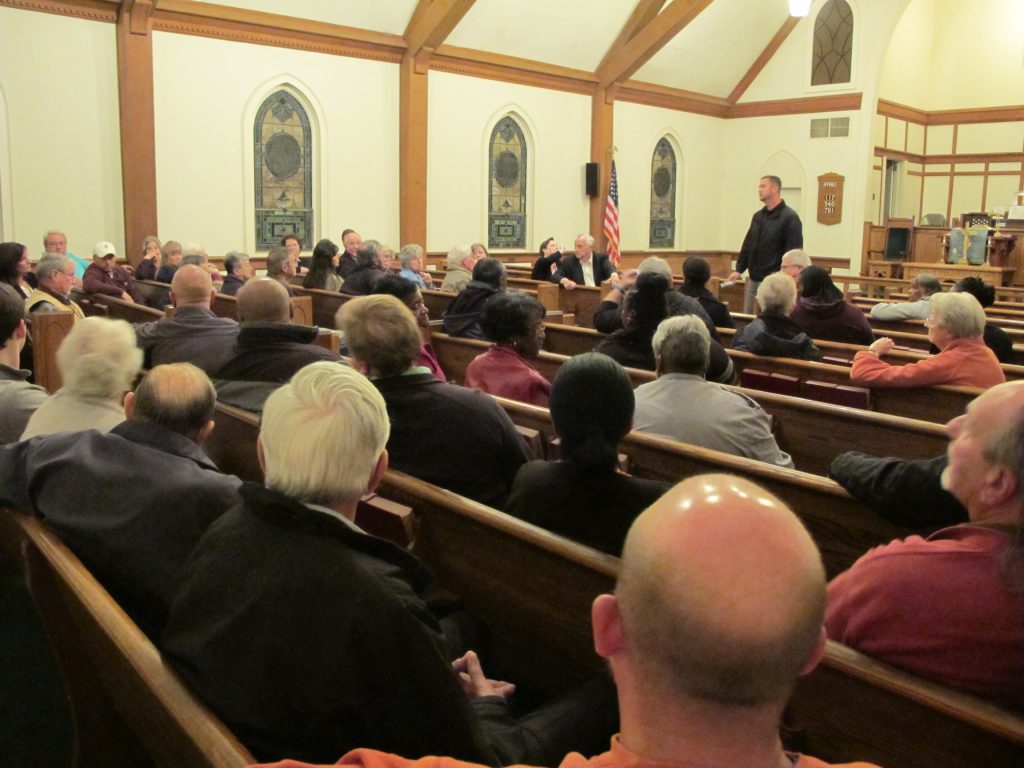
    GREENBRIER- After making more than a hundred calls to Cambio Academy in the Greenbrier community since May and hearing from many residents about runaways from Cambio breaking and entering and causing property damage and harrassing Greenbrier residents, Sheriff Will Montgomery held a community meeting last week at Greenbrier United Methodist Church.

    While Montgomery didn’t have a lot of answers, the Greenbrier neighbors had a lot of questions:

    “What kind of in-house security does Cambio have?”

    “What are you (the Sheriff) doing about this?

    “What structure does Cambio have in place to keep these kids busy?”

    The Sheriff’s answers:

    “None.”

    “I’m working on it.”

    “Breaking and entering,” someone in the audience joked

    There were numerous testimonials about property damage and runaway teens roaming the neighborhood day and night.

    “How long is it going to be until something serious happens? That what worries me,” a woman from the audience said.

    Another asked, “When one of these kids goes missing, why aren’t we notified?”

    Montgomery suggested residents could sign up for the County’s reverse 911 service that will notify them of emergencies and that he will consider using the service for the Cambio issue.

    Cambio Academy is located in Greenbrier.

    Montgomery said that after talking with the Academy’s Director, Pamela Woods, he is trying to work out some type of security for the facility such as fencing or an alarm system that will alert management when a teen is leaving the facility.

    Resident Laura Thomas suggested residents call the governor’s office to complain about the community chaos created by Cambio.

    Asked how the facility got approval to operate in the County, Administrator Jason Taylor said Cambio representatives did not have to come before the County to ask for rezoning of the property.

    “It was already zoned for that use,” Taylor said.

    County Council Chairman Billy Smith addressed the process for getting the state to close the facility.

    “Part of the process of trying to get them closed is to basically identify to them what problems they are causing, give them a period of time to fix those problems and then if they don’t, we can petition the court to grant an injunction to close it,” Smith said. “So it is very important that we have everything documented, anything that you are aware of, be sure to make those phone calls to the County or the Sheriff’s department. That will be the information we have to have to present to a judge.”

    Another community meeting is set for Tuesday, Dec. 19 at 6 p.m. at Greenbrier Methodist Church to discuss the issue.

  • Fairfield Man killed in Hit and Run

    FAIRFIELD COUNTY – The Fairfield County Coroner’s Office along with the South Carolina Highway Patrol, are investigating a pedestrian fatality which occurred at 17895 Highway 34 West in Fairfield County at approximately 12:48 AM, on November 19, 2017.

    Coroner Chris Hill states that Tavares Deantonio March, age 33, of 1517 Chappelltown Road in Winnsboro died from injuries received when he was struck by an oncoming vehicle.

    The incident remains under investigation by the Fairfield County Coroner’s Office and South Carolina Highway Patrol.

  • Cambio break-ins burdening County

    WINNSBORO – Cambio Academy in Greenbrier has been the source of numerous complaints from neighbors and, earlier this month, four juveniles from Cambio were arrested for breaking into Greenbrier United Methodist Church. During the Nov. 13 Council meeting, County Administrator Jason Taylor updated citizens on the County’s recent meeting with Cambio Academy Director Pamela Wood concerning the Academy’s mounting problems.

    According to Taylor, Wood said several female teens had been inappropriately placed at Cambio. Wood identified 8-10 juveniles that she said would be better suited for a facility with a more intense level of care.

    “DSS has a need to place some of these difficult clients and that’s what happened,” Taylor said. “They’re inappropriately placed at Cambio as a path of least resistance, and they probably should have been placed somewhere else.”

    Currently, Taylor said he was told the doors at Cambio Academy are not kept locked. He said County officials and Wood explored ways to make the facility more secure. They looked at fencing, but according to Taylor, they were not comfortable with the placement of a barbed wire fence.

    The County’s new interim fire marshal, Greg Gerber, is slated to visit Cambio to find out if a lock system or an alarm system could be the answer for the security issues. Council has a follow up meeting with Wood later this week.

    “We will follow up with Mrs. Wood with a list of these things,” Taylor said. “And, hopefully, attach a time frame as to when we can hope to see improvements.”

    Council Chairman Billy Smith issued a stern warning.

    “I’ll just say I hope the concerns and the things that are going on now can be curtailed and corrected,” Smith said. “Because otherwise I just don’t see where we can allow that facility, without trying to do anything, to keep operating in that community in the way that it is right now.”

    Cambio has not only been a source of ire for citizens, but it has created a massive workload for the Fairfield County Sheriff’s Department. Sheriff Deputies have responded to over 100 incidents at Cambio in its five-month existence, something that Councilman Douglas Pauley addressed in an editorial in the Oct.26 issue of The Voice.

    “Another concern is how time consuming it has become for the Fairfield County Sheriff’s department to respond to these calls. It diverts them from other matters within the County that need their attention as well,” Pauley wrote. He said he understood that the Academy, which opened in May, 2017, was supposed to be a private residential treatment and rehabilitation center for troubled female teens ranging in age from 13 to 18.

    Sheriff Will Montgomery told The Voice last week that his deputies have answered more than 100 calls related to Cambio in the last five months.

  • FMH closes Blue Granite Center, home health and cardiac rehab

    WINNSBORO − The tipping point for Blue Granite Medical Center and for Caring Neighbors, Fairfield Memorial Hospital’s home health business, may have occurred during the Finance and Audit Committee meeting Halloween night.

    Agenda items that evening included profitability reports, Blue Granite Medical Center and Home Health, but FMH Board of Trustees Chair Catherine Fantry requested discussion of these items be moved into executive session since it would encompass “personnel and contractual matters.”
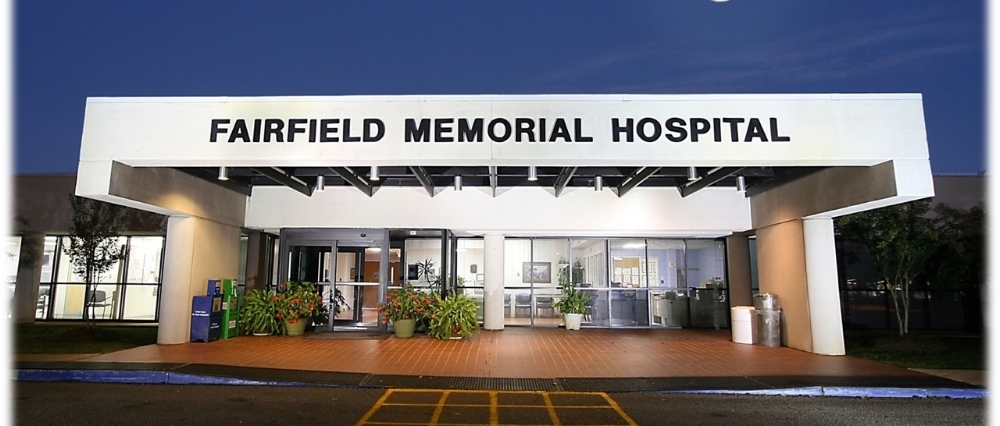
    After another executive session during a special called meeting Nov. 7, announced to the public with only a notice on the front door of the hospital, the full Board voted to close Blue Granite Medical Center along with the FMH home health business and its cardiac rehab program.

    According to information provided in response to questions from The Voice in September, on average 162 patients per month are seen at the Blue Granite Medical Center, and there is a case load of 48 patients in Caring Neighbors Home Health.

    A week after the vote to close the three departments, The Voice was told that hospital CEO Suzanne Doscher was too busy to meet with The Voice staff to answer questions about the impact of closing these services until after the newspaper’s publication deadline. The Voice learned from reliable sources that Doscher planned to inform 11 or so hospital employees of their pending layoff on Tuesday.

    In spite of the apparent haste of the special called meeting and vote, the writing has been on the wall for some time. Month by month, Blue Granite and the other hospital programs have shown declining gross patient revenues and were seen by some board members to be large contributors to the hospital’s overall negative position.

    “If it wasn’t for Blue Granite and home health, we would not be under water with EBITDA (earnings before interest, taxes, depreciation, and amortization),” Trustee Randy Bright said during the FMH September Finance and Audit Committee meeting. “If we would have taken the suggestion to close those at the beginning of the year, we would now have a positive EBITDA.”

    The detailed service line reports reviewed each month by the Board show why.  For Blue Granite Medical Center, at the beginning of the prior fiscal year (Oct.1, 2016 – Sept. 30, 2017), the hospital had hoped for $286,908 in gross patient revenues (what the hospital bills for services, not what it actually collects), but it grossed only $164,303 or almost 75 percent less budgeted.  Even though expenses for the medical center were reduced, it still cost about $250,000 to operate the center.

    Similarly, for its cardiac rehab program, the hospital grossed only $78,916 last year, 136 percent less than what it had expected. While FMH’s home health business took in $479,505 or 74 percent more than expected, the cost of providing home health services, $655,840, far exceeded what the hospital had budgeted. It still lost money on that service.

    Chief Finance Officer Timothy Mitchell also noted during the September finance meeting that in the 2017-2018 fiscal year budget, home health and home care were projected to lose about $437,000.

    In spite of this, hospital management had included Blue Granite and home health in the current 2018 budget, which runs from Oct. 1, 2017 through Sept. 30, 2018, and were optimistic about the future of Blue Granite, at least. During the hospital’s September budget meeting, Mitchell said that increases in patient volume and revenues at Blue Granite Medical Center were expected because the staffing had finally stabilized.

    Unfortunately, that hope of stability lasted only one month. Doscher reported at the Oct. 24 meeting that the full-time nurse practitioner would be leaving Blue Granite and the center would be open only two days a week.

    Throughout its budget deliberations and policy setting, FMH has proceeded as if all departments would remain open in the near future and that it would, at some unspecified time, begin looking at what services it will close and what it will keep. The hospital also hired an outreach coordinator his past summer whose job is to promote outpatient services to the community and gain more visibility – and patients – for the facility. In addition, the medical center and home health services have been characterized by Board members as services the hospital has to keep because of need in the community.

    While FMH has developed an employee retention plan with bonuses and an overall strategic plan to guide the hospital for the current year, there has been no indication to date that the hospital has a transition plan in place for those programs it intends to shut down.

    Hospital management and the Board of Trustees have been reluctant to publicly state what Fairfield Memorial will look like once the inpatient hospital fully shuts down and Providence Hospital builds a new stand-alone emergency room.  The closure of Blue Granite, home health services and cardiac rehab, leaves the other rehabilitation services (physical therapy and respiratory therapy), imaging services, and diabetic education as the core services around which a reconstructed FMH could be formed.
  • Cash-strapped hospital to ask County Council for more funds

    WINNSBORO – Going over its year-end financial reports on Halloween night, the Fairfield Memorial Hospital Finance and Audit Committee found the information rather scary.  By the end of the meeting, CFO Timothy Mitchell conceded that, with little reserves going into next year, the Board will need another infusion of cash from County Council by January.

    Mitchell moved quickly, however, to put a pretty face on the financial reports for the fiscal year ending Sept. 30, 2017.

    “First and foremost, the loss for the month of September ($106,987) is substantially reduced from the previous month’s loss ($282,619). This is driven by improvement in our gross revenue and an increase in the average daily revenue from $35,670 in August to $45,227 in September,” Mitchell said.

    However, committee chairman Randy Bright said the hospital has dropped in total gross revenue year after year by $840,000.

    Mitchell also noted that it has been an “abysmal” month in terms of collections, and that he was seeing an alarming trend.

    “We’re seeing more and more denials for the ED (emergency department) claims because the insurance companies are deeming them not emergencies and denying them as non-covered services,” Mitchell said. “We do have the ability to bill it as a non-covered charge, but the collection experience with self-pay is typically low.”

    “We are between a rock and a hard place,” Mitchell said, “because EMTALA (the federal Emergency Medical Treatment and Labor Act) requires that we not turn people away who present for services.”

    Bright noted that net patient receivables have also dropped.

    “As you get declining revenues, you get declining receivables,” he said, noting that this has a domino effect on reserves and cash balances.

    Another issue, Mitchell said, is that even with losses in patient revenues, the hospital continues to see increases in accounts payable (what it needs to pay businesses and vendors) which climbed almost $100,000 in one month.  “That is alarming,” Mitchell said.

    Cash balances were also looking slim, Mitchell said.  By the end of September, he said the hospital had only four days of unrestricted cash and only 21-22 days of total cash on hand, including cash that the Board had previously decided to restrict.

    “What this means is that we have very little reserves, as we go into the next year,” Mitchell said.  “Of course, in January, we will make another DSH payment and will need another appropriation from the county.  That will bring the cash balances back up, along with normal patient collections.”

    “That’s if we don’t make any changes to our fiscal plan or the services we are offering,” Smith said.  “That would be extra cash coming in if we won’t be paying out for expenses.”

    “If we were to eliminate any services, obviously,” Mitchell said, “since the hospital would not have to pay the salaries or benefits associated with those services.

    “That makes it essential for us to streamline before the end of the year,” Smith said.

    “And that means making tough decisions about certain departments,” Board member William Turner added.

    “Now is the time for us to start to wrestle with those questions.” Mitchell said.

    “We’ve never stopped wrestling with those questions,” hospital CEO Suzanne Doscher replied.

    Mitchell also reported that the 2015 hospital financial statement audit is essentially complete, and that he expects to schedule a meeting to review it soon.  He also said he is setting dates for the 2016 audit and his goal is to have the 2017 audit done by the end of the first quarter.