Tag: slider

  • FMH finances still sliding; Douglas proposes new use for building

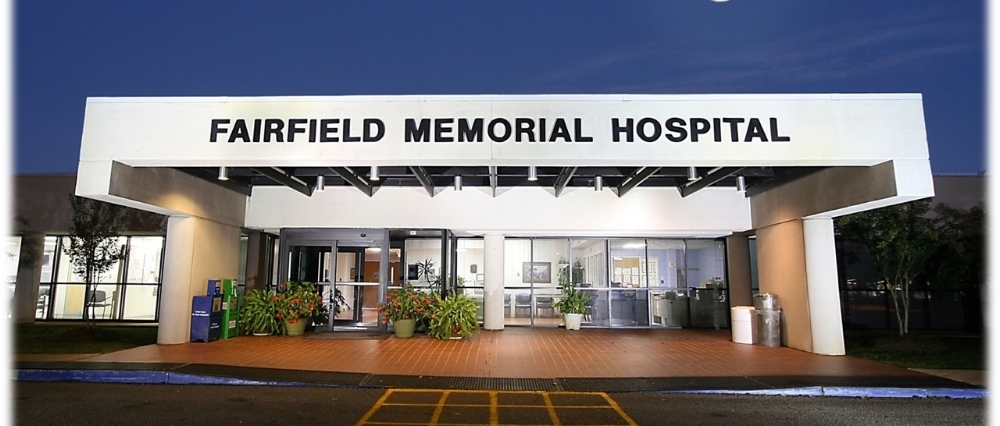
    WINNSBORO – For the first time since the demise of the hospital was anticipated, the Fairfield Memorial Hospital Board of Trustees is entertaining a proposal with the potential to bring a new purpose and mission to the facility.

    State Rep. MaryGail Douglas, District 41, which includes Chester, Fairfield and parts of Richland County, presented her vision for one possible future use of the FMH buildings and campus – a stand-alone respite center.

    Respite care, Douglas explained, is intended to give relief for those caregivers who are providing home care for a loved one, typically an aged or disabled parent.

    Trained as a nurse, Douglas said she spent 13 years at Fairfield Memorial.

    “This is an opportunity for Fairfield County and this place we are in right now to transition into a place to take care of family members who are taking care of family members,” Douglas said.

    “We often find that the caregiver falls apart in the care of that person,” she said.  “Right now in South Carolina we are spending millions and millions of dollars on long term care for older adults. We spend very little on those who decide to keep their loved ones at home.”

    She said she started seven or eight months ago to “plant some seeds” in considering what will happen to the FMH facility when the emergency room is moved to another location.

    “For me, I know if these doors ever close, we will never get them open again.  So that is my plea as I tell you tonight about my vision and the players that can make it happen.”

    She brought some of those players to the meeting – Cindy Curtis, Director of the Area Agency on Aging (AAA); Fairfield County Administrator Jason Taylor; Peatra Cruz, Director of Organizational Development and acting COO for Eau Claire Cooperative Health and Dr. G. Cleve Pilot, Director of the Fairfield County Career and Technology Center.  Scott Campbell, Market Chief Executive Officer of Providence Health, was also in attendance.

    In the hour-long discussion that followed, Rep. Douglas laid out her vision for a stand-alone facility that would become a midlands center for respite care, where families could take their loved one for one or two weeks so the caregiver could take time out for personal health care needs, a family reunion or even a vacation.

    This would be a resource for the surrounding counties, she said. She sees a collaborative effort with Eau Claire, with its management and health care expertise, as well as with the Career Center, since it has a certified nursing assistant program but could also send its cosmetology and barber students to give grooming care to the respite patients and the culinary students could learn about healthy meal preparation in a residential care setting.  She said she envisions that the respite center could help its elderly clients with medication management and other health services which in turn would help keep them out of the ER.

    But while the focus of the facility would be caring for the elderly and home-bound who need care, the purpose of the respite center would be to give their caregivers a break from the 24-7 job of providing home care.

    “If we don’t take care of the caregiver, then we are going to pay the price in the long term with that patient,” Douglas said.

    Both Douglas and Curtis talked about the availability of state funds, federal aging funds and other grants for respite care. While the dollars are limited, Douglas said, “I am telling you, the market is out there. Family members will pay to get their caregivers some relief. … The need is severe.”

    She also said she has pitched this concept to both the lieutenant governor’s office and US Senator Tim Scott.

    While both Douglas and Curtis pointed out that there is no model in the state to judge the merits and challenges of such an operation, Cruze said she felt that was problematic.

    Still, Curtis joined in about the need for respite care.

    “While the AAA already gives vouchers for respite care, there is great need for a place where families can place their loved ones for a short time and know they will be well-cared for,” she said.  “The respite care is critical for the caregivers themselves.  And the population of the US is aging and, within a few years, one in five will be over age 65,” she said.

    Board members kept the session going with multiple questions for Douglas and Curtis and, before adjournment, Board Chairperson Catherine Fantry directed Suzanne Doscher, FMH CEO, to keep the discussion going about using Fairfield Memorial Hospital for respite care.

  • Earnest money kinks Doko sale

    Doko Depot

    BLYTHEWOOD – While Town Council struck a deal more than two months ago to sell the Doko Depot building and the property it sits on to a Columbia developer, Wheeler & Wheeler, it turns out the deal is not done yet.

    Council voted Dec. 16 to authorize Mayor J. Michael Ross to sign the contract which called for Wheeler & Wheeler to make a $16,250 earnest money deposit on the $325,000 sale prior to a 60-day inspection period. Now Wheeler’s lawyer has reported to the Town’s attorney Jim Meggs that Wheeler wants to back out of the original earnest money schedule.

    “I had a call from Mr. Wheeler’s lawyer complaining about the $16,250 earnest money,” Meggs reported to Council Monday night. “He said Wheeler doesn’t want to tie up $16,250 for 60 days. [He wants to] split the earnest money into two chunks – $5,000 initially [5 days after receipt of a fully executed agreement] and the balance ($11,250) at the end of the 60-day inspection period, when the contract is closed,” Meggs said.

    “But we’ve lost some time,” Meggs said.

    While Meggs suggested the Town allow Wheeler & Wheeler to split the earnest money into two parts, he said the amended contract would shorten Wheeler’s inspection period to 45 days and would not be delayed for everybody to sign the contract or for second reading of the amended ordinance.

    In regard to depositing the two earnest money payments, Meggs said, “We would specify that the effective date of the contract is tomorrow (Jan. 23) and that the 45 days inspection period commences tomorrow as well,” Meggs said.

    Council voted unanimously to approve the amended contract.

  • Davis wins school board seat

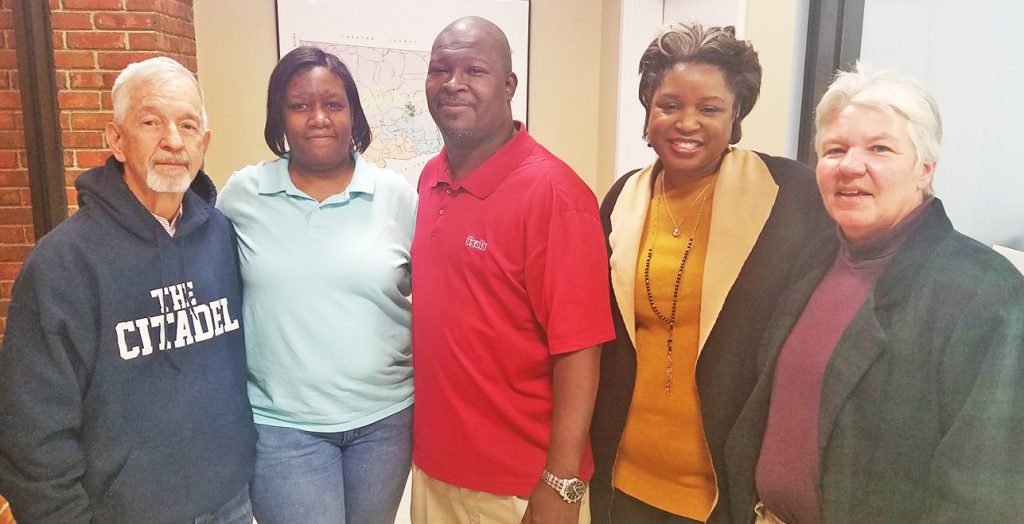
    Newly elected school board member, Darreyl Davis, is congratulated by candidate Herb Rentz, left, Davis’s wife, Tamika, Tonya Green and candidate Lisa Brandenburg.

    WINNSBORO – Political newcomer Darreyl Davis bested two opponents in a special election Tuesday night to win the District 7 School Board seat vacated by Beth Reid, who passed away in November.

    Davis garnered 186 votes (46.43 percent) over opponent Herb Rentz who received 155 votes (36.21 percent) in his bid to win the seat held by Reid, his late wife. Lisa Brandenburg received 87 votes (20.33 percent.)

    Of the 2,165 voters in the district, 430 (19.86 percent) turned out to cast ballots Tuesday.

    “I want to thank my supporters for having faith that I’ll be an asset to the school board, to the school district and to the community.” Davis told The Voice he has a passion for helping children.

    “I’m going to help improve our education system here in Fairfield. I’m just looking forward to getting started,” Davis said.

    While Davis is new to the political arena, the father of six is not a newcomer to the school district. He is currently president of the Fairfield Elementary PTO, is past chair of the FES Improvement Council and is a board member for First Steps. Davis is the founder and president of Believers and Achievers and two years ago received the ‘Service Above Self’ award from the Winnsboro Rotary Club. Davis is employed in the environmental health and safety department at Isola in Ridgeway.

  • Green appointed to Board of Education

    WINNSBORO – Fairfield County School District Superintendent Dr. J. R. Green has been appointed to the State Board of Education by the Fairfield, Chester and Lancaster legislative delegation.

    Green

    “In December, we were notified by Molly Spearman, S.C. Secretary of Education, that a seat was coming open on the Board effective Jan. 31,” Rep. MaryGail Douglas said last week. “The seat rotates between Fairfield, Lancaster and Chester School Districts, and it was Fairfield’s turn to fill it. Senator Fanning and I felt, of course, that Dr. Green is an excellent choice for this appointment.”

    “We were looking for someone to be a voice for teachers in our district and in our state,” Douglas said. “They don’t really have a strong voice on the state level.”

    “It is an honor to be provided an opportunity to serve on the State Board of Education,” Green said.  “I look forward to contributing to the crafting of education policy in South Carolina.”

    The State School Board seat is for a four-year term.

  • Members wary to sit on JWC board

    JENKINSVILLE – While the Jan. 11 annual meeting of the Jenkinsville Water Company (JWC) was not the donnybrook it was the last two years, there were still a number of angry outbursts and shouting matches between the president of the Water Company Board and several of the 20 or so water company members who attended the meeting.

    The main event of last week’s meeting was the election of new Board members for four open seats.  According to the by-laws, each member is allowed one vote for each of the four seats. As members arrived and registered, they were each handed one set of four ballots.

    In past years, members have complained that the balloting was rigged and that some members, including Board members, voted multiple times for a seat. Some notice was taken at this meeting when Secretary Tangee Jacobs entered the meeting room with a handful of ballots. She later turned them over to the JWC attorney, Chris Archer with Goodwin law firm in Columbia, saying, “I don’t want anyone to think I’m stuffing the ballot box.”

    As it turned out, however, no ballots were needed for the election.

    Unlike last year, when many of the 100 or so members were clamoring to be elected to the Board to gain some control over what they said was an errant Board, this year no one at all sought election to the Board, not even the four Board members whose seats were open. With a lawsuit, filed by member D. Melton, breathing down the neck of JWC and with JWC Board President Gregory Ginyard and Vice President Joseph McBride also named in the suit and the growing worry that more or, perhaps, all of the Board could be named as defendants, there was no interest in joining the fray.

    When there were no takers for Seat 1, Ginyard nominated incumbent Mary White who reluctantly accepted the nomination and was elected by acclamation.

    While several members were nominated for Seat 2, none accepted.

    “Doesn’t anyone here want to be on the Board?” Ginyard pleaded. Finally, Seat 2 incumbent Julie Bernell agreed to continue in her seat and she, too, was elected by acclamation.

    “If you don’t like it [being on the Board], you can quit at any time,” McBride assured members as he pleaded with the audience for someone to accept the nomination for Seat 3. Finally, member Rose Yarborough agreed reluctantly, asking for assurance that she could quit anytime.

    When no one could be cajoled into serving in Seat 4, a motion was made to limit the Board to nine members instead of 10 and move on. The vote was unanimous to do so.

    With a new Board in place, Ginyard called for the election of Board officers. Ginyard, McBride and Jacobs were re-elected to their offices. The Board’s CPA, Yvette Jones, was elected treasurer, and Preston Peach was elected Chaplain.

  • Ridgeway Councilman wants vote rescinded; Mayor’s economic interest questioned

    RIDGEWAY – After a controversial 3-1 vote by the Ridgeway Town Council on Dec. 14, 2017 to purchase the Cotton Yard from Norfolk-Southern Railroad for $73,000 plus an estimated $11,000 for associated costs, that vote is now under the microscope with the possibility of being rescinded.

    That possibility was raised at the Jan. 11 council meeting when Mayor Charlene Herring called for approval of the Dec. 14 meeting minutes. Councilman Heath Cookendorfer, citing a potential economic interest on the part of Herring when she voted for the Cotton Yard purchase, called for those minutes to be tabled and for the Dec. 14 Cotton Yard vote to be rescinded and re-discussed at the Feb. 8 meeting.  Herring’s vote was one of the majority three votes for the purchase.

    Cookendorfer, who voted against the purchase, said Herring’s home, The Ivy Veranda, which is directly across the street from the Cotton Yard, was registered as an event business with the S.C. Secretary of State in June, 2017. He made the argument that Herring’s event business depends on the Cotton Yard for parking, thus giving Herring an economic interest in the vote.

    As he began his presentation to Council last week, Cookendorfer said he had contacted [Steve] Hamm, an attorney with the South Carolina Ethics Commission, who, “confirmed that, based on the information I provided him, that the motion [to approve the Cotton Yard purchase] included a vote that violated S.C. law, Section 8-13-700 which talks about someone voting that has a potential economic interest. Section A & B talks about a…”

    Councilwoman Angela Harrison interrupted Cookendorfer, asking for a copy of the document.

    Cookendorfer said he would give her one.

    “Can I ask, what’s the conflict of interest?” Harrison asked, again interrupting.

    “I’m getting ready to…” Cookendorfer said before being interrupted by Harrison a third time.

    “Who has a conflict of interest?” Harrison demanded.

    “I’m sorry, we’re…”

    Harrison and Herring began talking over Cookendorfer.

    “I’m getting ready to tell you…” Cookendorfer continued before being interrupted again.

    “Well, we don’t need you to. I can read, so…” Harrison countered.

    “Anyone who has a business can park there,” Herring interrupted.

    “Right,” Cookendorf said. “If I can get through this, I’ll be more than happy to answer any questions.  Mr. Hamm asked me if the mayor had parking space for her business,” Cookendorfer said. “The answer was ‘No.’

    “Yes, I do,” Herring interrupted.

    “Do you have spaces for 40-50 cars?” Cookendorfer asked.

    “Probably not 40-50,” Herring said.

    Cookendorfer read from documents that he said were submitted to Hamm who, Cookendorfer noted, is a close friend of Herring’s. Herring acknowledged that he is.

    Those documents contained two pieces of information Cookendorfer said supported his claim that Herring had an economic interest in the Cotton Yard vote:

    1) an event advertisement from the Ivy Veranda Facebook page stating that, “Plenty of parking is available in the adjacent Cotton Yard,” and

    2) a copy of a statement that Herring submitted to Council on Dec. 8, 2016, recusing herself from voting on an ordinance to rent portable restrooms for the Cotton Yard for a special town event, in which she cited her economic interest.

    That recusal stated, in part, “I, Charlene Herring, Mayor of Ridgeway, recuse myself from voting because of conflict of interest. My husband and I are members of the Merchants Association.”

    Cookendorfer said the Dec. 8, 2016 recusal set a precedent for Herring to recuse herself on the Dec. 14, 2017 Cotton Yard vote.

    A brochure advertising The Ivy Veranda states that it is the “ideal place to host your intimate Southern style wedding reception.”

    “He [Hamm] asked, ‘By purchasing that land, will it be used for her business and other businesses?‘  I said, ‘Yes.’”

    “He then asked if anyone parks [in the Cotton Yard] currently. I said, ‘Yes,’” Cookendorf said.

    “If Ridgeway ever decides to discontinue its [Cotton Yard] leasing agreement, then that could potentially affect parking spaces available for your business,” Cookendorfer said to Herring. “So, because it could affect parking for your business, it could affect your business,” Cokendorfer said. “This means there’s an economic interest.”

    Cookendorfer said Hamm referred to S.C. Statute, Sec. 8-13-700 which states:

    (A)         No public official…may knowingly use his official office…to obtain an economic interest for himself, a family member, an individual with whom he is associated or a business with which he is associated.

    (B)          No public official…may make, participate in making or in any way attempt to use his office…to influence a governmental decision in which he…is associated, or a business with which he is associated has an economic interest.

    The statute continues with step–by-step details of how a public official with an economic interest should recuse him/herself.

    “Again, this is something that he [Hamm] concluded from the same information I’m handing you. He [Hamm] recommends that we rescind the vote and bring it back up for discussion. You’re welcome to talk to him,” Cookendorf said. “We can ask Mr. Hamm for a written recommendation. In the meantime, we can talk about this in open session.”

    “We’re not going to have this discussion, ok?” Harrison snapped. “The discussion will be, let’s call our attorney. We have legal advice for a reason, so let’s just take it from here.  We don’t need to rescind the motion,” Harrison repeated.

    “We don’t need that parking,” Herring interrupted, “and I can take that out [of the advertising].”

    “So you’re going to leave the motion and contact our attorney?” Cookendorf asked.

    “Yes,” Harrison snapped again. “They’ll understand it.”

    While Harrison, Herring and Porter fought on against tabling the Dec. 14 meeting minutes, in the end, Councilman Donald Prioleau made a motion to table them until the Feb. 8 meeting, and Council voted 5-0 to do so.

    Harrison added, however, that she wanted to correct a line in the Dec. 14, 2017 minutes from, “Councilman Prioleau left for an emergency…” to “Councilman Prioleau ‘said’ (Harrison’s emphasis) he left for an emergency.”

    Following the meeting, The Voice asked Herring if she had already signed the Cotton Yard contract, as authorized by Council on Dec. 14.

    “Some of us have,” Herring answered after thinking about it for a few seconds.

    However, contacted by email and phone, the other four council members, Harrison, Cookendorfer, Prioleau and Doug Porter told The Voice that none of them had signed the contract. That only the mayor was authorized to sign it.

    The Voice emailed Herring last week, asking if she planned to contact the Ethics Commission about whether her business constituted an economic interest in the Cotton Yard vote or to only contact the Town government’s attorney for advice about the issue. At press time, Herring had not answered the email.

  • UPDATE: Arrest made in barn theft

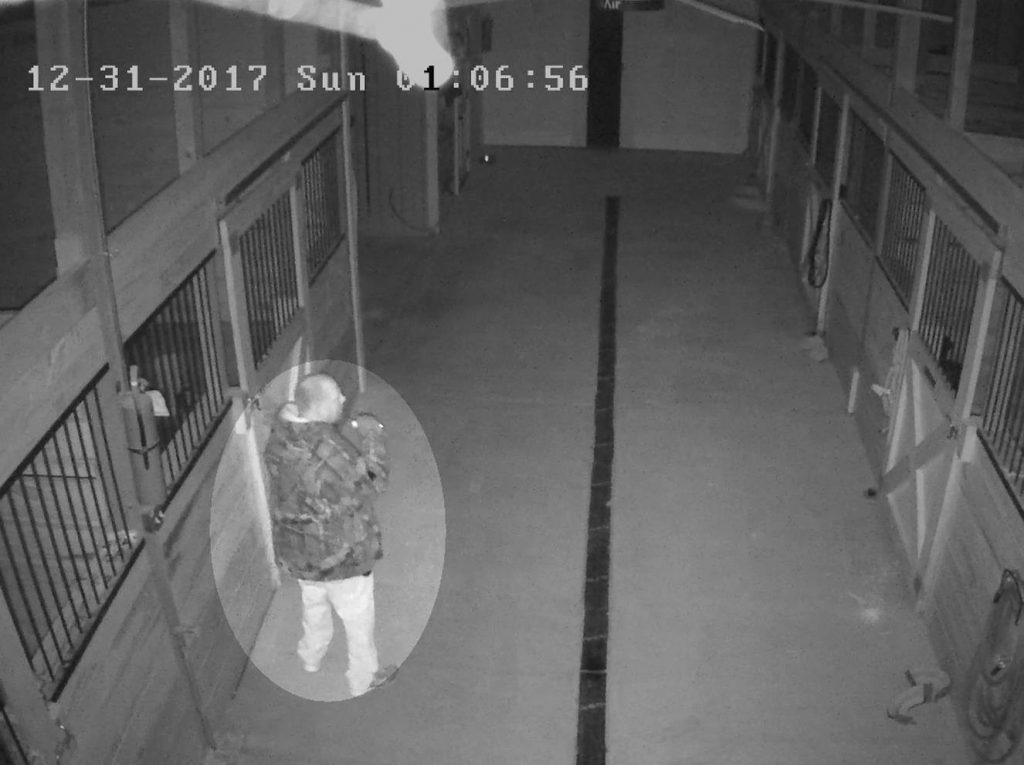
    WINNSBORO – James H. Richardson, 39, of Lancaster has been charged with 2nd degree burglary and grand larceny for an incident that occurred on River Road in the Lake Wateree area on December 31, 2017. Richardson stole horse saddles, riding equipment and a pressure washer.

    Through information received from the public, the Fairfield County Sheriff’s Office identified and arrested Richardson on Tuesday, Jan. 9 with assistance from the Lancaster County Sheriff’s Office.

    “I want to thank those citizens who provided us with valuable information that helped us to identify Mr. Richardson,” Fairfield County Sheriff Will Montgomery said. “This is truly a great example of law enforcement and the community working together to make our county safer.”

    The investigation is on-going as Richardson is believed to be linked to other similar crimes in surrounding counties.


    Sheriff seeks suspect in barn theft

    January 11, 2018
    Photos/Fairfield County Sheriff’s Office Facebook

    FAIRFIELD COUNTY – The Fairfield County Sheriff’s Office is investigating the theft of 6 horse saddles, horse riding equipment and a pressure washer that occurred at a farm in the Lake Wateree area of Fairfield County in the early morning of Sunday, Dec. 31, 2017.

    The Fairfield County Sheriff’s Office is requesting assistance in identifying this individual on video.

    If the identity of this individual is known, contact Fairfield County Sheriff’s Office 803-635-4141.

  • RW Council to amend budget by 30.46%; Prioleau Criticizes Cotton Yard Purchase

    RIDGEWAY – Town Council will will hold a public hearing and take a final vote Thursday night to amend the budget for the 2017-2018 fiscal year by 30.46 percent.

    The Town’s current revenue will be amended from $744,200 to $970,900. However, the difference of $226,700 is not newly generated revenue, administrative consultant David Hudspeth told The Voice on Tuesday.

    “This money is currently in the Town’s bank account, but not allocated in the budget,” Hudspeth said. The transfer was necessary, he said, to put it into the Town’s budget so it could be used.

    Much of this additional revenue comes from the Town’s savings account. At the Dec. 14 meeting, Hudspeth recommended cashing in the Town’s CD’s and moving the proceeds into the general fund.

    While Ridgeway Town Council voted 3-1 last month to purchase the Cotton Yard for $73,000 +, Councilman Donald Prioleau told The Voice afterward that, had he been present for the vote, he would have joined Councilman Heath Cookendorfer in voting against the purchase.

    Prioleau said because of a prior commitment he had to leave the meeting before the executive session and had not thought the issue would come up for a vote that night since it was only on the agenda for executive session.

    “I don’t think we need to be spending that kind of money right now,” Prioleau said. “And when we spend that kind of money, we need to give the public better notice. I understand that there has since been talk that the Pig on the Ridge steering committee is all for this and is considering throwing a lot of money into it, but that’s not exactly correct,” Prioleau said. “We said we would be interested in helping out on a depot-style building with an outdoor platform and maybe room inside for community gatherings, but the library thing came up much later. The only sketch I’ve seen of a library is not a depot-style building. And I am not interested in that,” Prioleau said.

    “I also want to weigh in on the library location,” Prioleau added. “I’m all for a new library but as much as we need merchant space downtown and as congested as Palmer Street already is, we need to think about moving the library next to the park and ball field. A lot of children use the library and that would be a better location, near the park and it would not take up merchant shopping and parking space.”

    Another member of the POR steering committee, Tom Connor, agreed that the park would probably be a better location for the library.

    “I think the steering committee is most interested in a depot style building and also we would like to see a nice clock built in the downtown, in the Cotton Yard area,” Connor said.

    The next Town Council meeting is set for Thursday, Jan. 11.

  • County gingerly pursues Mt. Zion

    WINNSBORO – Before going into executive session Monday evening to discuss a contractual matter concerning a Memorandum of Understanding and proposed deed agreement between the County and the Town of Winnsboro aimed at renovating Mt. Zion for use as County office space, County Administrator Jason Taylor laid out the sticking point. To go forward with the project, Council would have to allow Taylor to sign a deed requiring the County to accept Mt. Zion from the developer should the renovation project prove, in the end, not to be feasible.

    During the first public comment period, residents Shirley Green and Yvette Howard urged Council not to accept the deed to Mt. Zion. Their myriad reasons included: that the project would be wrought with challenges, that a Confederate monument faces the main entrance to the complex on College Street; that protests to the monument would be a major hindrance to economic development and that moving the County’s administration building would blight the Mill Village.

    Taylor readily addressed the monument, saying the Town had agreed the confederate monument could be moved. When pressed for assurance of that, Taylor said he would have a document drawn up to request the Town to sign, giving up the monument at the same time he signed the deed.

    Councilman Billy Smith said that while the Heritage Act, a S.C. statute, prohibits public bodies from moving monuments of any kind, there is no prescribed penalty for them doing so. Smith also said the property where the monument stands, which is separate from the Mt. Zion grounds, could also be transferred to 1st and Main, a private company seemingly not governed by the statute. And if, in the end, Smith said, the project does not move forward and the building must be demolished, the County will still own the land.

    Taylor addressed the more pressing issue for the County.

    “It has long been known that at some point in the near future, the County must address the need to improve and provide additional space for both the Courthouse, Sheriff and administrative functions,” Taylor said.

    He said rehabbing the existing administration building would cost an estimated $2.5 million just to replace the roof and all the mechanical systems. He cited problems with the building including near-waterfalls down the back stairs during hard rains. That $2.5 million would not include more space or replacing an antiquated, possibly unrepairable HVAC system that, Taylor said, could go anytime. Taylor said it would cost $17 million to build a new courthouse on Congress Street, then relocate much of the courthouse staff to it before beginning renovation of the existing courthouse.

    “With the abandonment of the two nuclear reactors,” Taylor said, “we cannot afford that. Renovating either the administration building or Courthouse, we are looking at considerable disruption to operations and significant cost associated with temporality relocating staff and services while the work is being done.”

    Taylor said repurposing Mt. Zion’s school building poses a solution. He said it would increase the County’s office space by 10,000 square feet, cost less than renovating current offices and help revitalize downtown Winnsboro. He said a previous study commissioned by the County identified Mt. Zion as a catalyst for redevelopment, saying it would help improve the community and spur new growth.

    “To explore this possibility, we began working with 1st and Main Development, a company that specializes in historic renovation and reuse,” Taylor said. “They have a successful track record of using historic tax credits to affordably redevelop old buildings. With their expertise and taking advantage of the tax credits, they can [renovate] the building far cheaper than we could.”

    “The County’s lease agreement (rent-to-own) with 1st and Main would allow us to get the space we need in a timely manner and at a price that would not burden our budget or preclude our ability to pursue other important economic development and community projects,” Taylor said.

    After a lengthy executive session Monday night, however, Council seemed no closer to reaching an agreement on signing the deed.

    “There was no vote on the deed tonight because, collectively, we need a couple questions and concerns more fully addressed before making a decision,” Smith told The Voice following the meeting.

    “These concerns are mainly centered on the nearby confederate soldier monument and what the State’s short-sighted Heritage Act does and does not allow pertaining to monuments on public grounds,” Smith said. “As long as all involved parties remain interested after the County is able to gain more information on these matters, the Council does plan to hold an up or down vote on the proposed deed agreement.”

  • Burgular pre-sells heist items

    WINNSBORO – When Christopher Steven Ransom, 32, returned to his Fairfield Hill Road home in Winnsboro on Dec. 1, 2017 after having been incarcerated at the Fairfield Detention Center (FCDC) since Aug. 17, he reported to Fairfield County Sheriff’s deputies that the front door of his home had been kicked in and his home and autos burglarized and ransacked.

    Hinson

    Ransom identified the burglary suspect as Justin Wayne Hinson who had occupied the cell next to his at FCDC until Hinson was released sometime in early November. Ransom allegedly asked Hinson, upon his release, to drive by and check on his (Ransom’s) house since no one was living there.

    It was reported that Ransom told officers that his and Hinson’s families were acquaintances. The incident report states that Hinson’s parents gave Ransom a ride home following his release from the FCDC on Dec. 1. That’s when Ransom discovered the burglary.

    A female friend of Ransom’s showed sheriff’s deputies Facebook messages from the suspect with photos of items the suspect had allegedly attempted to pre-sell online while the items were still in the victim’s home. Those items included a washer and dryer, two grills, a DeWalt saw, Monte Carlo poker machine, two sets of tires and a refrigerator.

    Officers reported that the inside of the home was in complete disarray and contained such items as drug paraphernalia, cigarette butts, empty liquor bottles, a pair of women’s heels, leopard print lingerie and other clothing that the victim said did not belong to him.

    “It appeared that the offender was aware that the victim was incarcerated and had been residing in the home for some time,” the report stated.

    Hinson was arrested on Dec. 27, 2017 and charged with burglary, larceny and grand larceny. He was denied bail and remains in the FCDC.