JENKINSVILLE – Motions relating to pending lawsuits against the Jenkinsville Water Company and some of its officers are scheduled to be heard in a Fairfield County courtroom this week. In all, four motions will be heard on Friday, April 27. A trial date of May 7 has been set in one of the lawsuits, according to Fairfield County court documents.
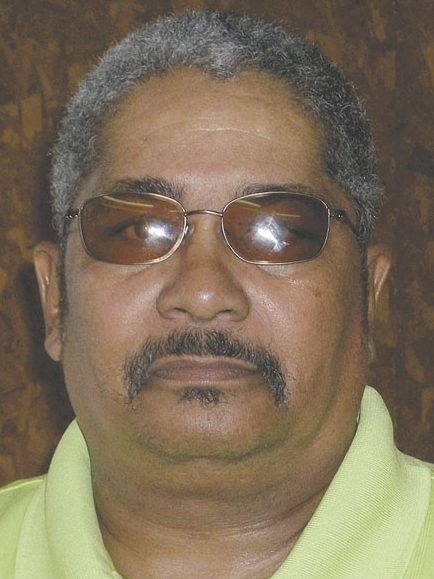
Ginyard
One motion on Friday’s docket seeks to merge two similarly worded lawsuits – one filed in 2014 and the other in 2016. Both suits were filed by the Broad River Campground. JWC is named as the lone defendant in the 2014 suit, while JWC president Greg Ginyard and vice president Joseph McBride are co-defendants in the 2016 litigation.
Both suits concern a dispute over water usage agreements between the campground and the JWC. They also dispute how rates were calculated. Many people living at the campground were workers at the V.C. Summer nuclear plant in Jenkinsville. More water service was needed to accommodate growth in the campsites, the lawsuits state.
“Jenkinsville Water Co., led by Ginyard and McBride, unfairly, unreasonably, and dishonestly used an inflated estimated water usage rate rather than the actual water usage rate … in making the decision to deny the additional 49 campsites,” the campground states in its complaint.
Another motion the campground filed seeks permission to amend its original complaint. Additional details were not contained in court documents, and will be presented during Friday’s hearing, court documents state.
The court will also hear a motion for summary judgment filed by the JWC.
In a memo, the JWC said water is a finite resource that must be regulated.
“JWC’s actions did not harm the public interests, as the Company acted prudently to ensure that the water would be conserved properly and would be available to other customers and potential customers,” the memo states.
Specifically, a 2009 letter the JWC wrote to Broad River Campground stated water usage was capped at 8,050 gallons per day, but the number would rise to 21,000 gallons per day if service to the additional sites was approved.
JWC also disputes the assertion that the letter constitutes a contract.
“The parties never had a meeting of the minds and never entered into a valid contract,” the memo states.
Broad River Campground filed another lawsuit in December 2016 that alleges the JWC has violated the state’s Freedom of Information Act. That case is still pending and it is not on the docket Friday.
As rain pelted Blythewood on Monday, stormwater gushed into the streets and onto lots in the Cobblestone Park neighborhood in Blythewood, causing several lots to flood. It’s become a common theme after any heavy rainstorm, residents say.
Some homeowners think the root cause is traced to trees they say homebuilder D.R. Horton has been clearcutting in preparation for additional home construction.
“We really don’t want to see any more lots that are left with zero trees,” said Bob Zedosky, who addressed Blythewood Town Council during public input Monday evening. “What happens when you cut down all the trees is, if you’re brave enough, put on your hip boots and go on these lots,” Zedosky said. “Be prepared to sink in … with mud and stuff. It’ll be a nice, muddy mess.”
Zedosky and other Cobblestone Park residents want council members to reverse a section of the town’s landscape and tree preservation ordinance that, the town attorney says, can be interpreted to exempt developers from the town’s tree preservation requirements. Council members already have passed first reading on an ordinance repealing the exemption.
On Monday, Council voted 4-1 to postpone second reading until May 10, with Councilman Bryan Franklin dissenting.
Developers, however, oppose lifting the exemption. They sympathize with the flooding issues, which they characterize as temporary, but also insist lifting the exemption impedes their ability to do business.
Jesse Bray with D.R. Horton, the developer building out Cobblestone Park, said the proposed ordinance singles out the homebuilder.
“Developers and others will start looking elsewhere before doing business,” Bray said. “They want to know what the rules are from the start.”
Shane Alford with Essex Homes took things a step further, playing what he said were audio recordings of council members showing support for the original ordinance that allowed the exemptions.
Alford likened the effort to rescind the exemption to “finding soccer goals on the field at the end of a football game. We do not want rules to change halfway through the game. It may jeopardize the investment that we have,” he said. “It is our opinion that for the town to operate in a principled and thoughtful manner, repealing this covenant between it and the public would be wrong.”
Blythewood Mayor J. Michael Ross, who supported removing the exemption, responded with a sporting analogy of his own.
“So much water came from those lots because there’s no vegetation there. It ran into the drain on the opposite side of the street,” Ross said. “The fields have been torn up and there are no fields for anyone to watch any sport.”
Tensions have been simmering for years since the ordinance exempting developers was enacted in March 2015.
In 2017, two Cobblestone Park families sued D.R. Horton and the town, saying prior covenants were breached when D.R. Horton began subdividing lots near their homes for residential development.
The suit contends that their properties were supposed to border a nine-hole golf course or greenspace if a golf course wasn’t built.
The suit is still pending. On March 1, a circuit judge issued a temporary injunction barring development of the lots as the case proceeds.
As for the landscaping and buffer ordinance, council members said they plan to revisit the issue during the council’s budget work session May 10. An executive session for the receipt of legal advice concerning the proposed ordinance is likely to be added to the agenda, Ross said.
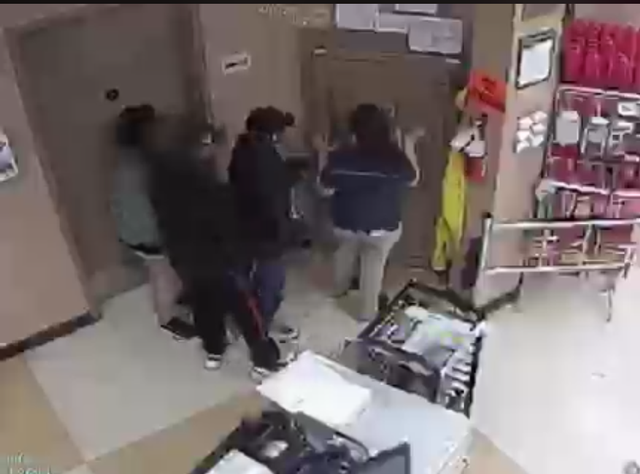
BLYTHEWOOD – The Richland County Sheriff’s Department is looking for two black males in connection with an armed robbery at the Food Lion Grocery Store located in the Food Lion Shopping Center on University Village Drive in Blythewood.
The robbery occurred on Sunday evening at approximately 10:15 p.m., according to a Sheriff’s report. A spokesperson for the Sheriff’s Department said the two robbers entered the store with hand guns and demanded money. The report stated that the amount taken is unknown.
It is believed the subjects then fled the location on foot. Investigators said they are in the process of obtaining a video from the store.
The Sheriff’s Department had not made an incident report available to The Voice at press time. The story will be updated as more information is available.
RIDGEWAY – Two new town councilmen and a new mayor held their first council meeting last week, four days after being elected to office. The first order of business was to elect a new Mayor Pro Tem to replace Mayor Pro Tem Doug Porter who did not seek re-election for his council seat.
Longtime Councilman Don Prioleau was nominated, and Mayor Heath Cookendorfer and the two new Councilmen, Rufus Jones and Dan Martin, voted 3-0 to approve Prioleau. Councilwoman Angela Harrison did not vote but looked down at her desk with no acknowledgement of the vote taking place.
Water Tower Bids
Council voted 5-0 to accept the lower of two bids submitted for construction of an elevated water tank near the Geiger Elementary School. That bid, for $549,153 was submitted by Phoenix Erectors and Fabricators, Inc. A second bid in the amount of $572,930 was submitted by Caldwell Tanks, Inc.
Matching Sidewalk Grant
Council also voted 5-0 to accept the Fairfield County Ordinance match requirement for a grant for $57,000 to help pay for an extensive sidewalk project in Ridgeway. The County grant requires a 20 percent match of $11,400 from the Town.
The Town is seeking a total of $500,000 for the sidewalk project. Council plans to apply for a $400,000 grant from the South Carolina Department of Transportation’s (SCDOT) Transportation Alternative Program (TAP) which requires matching funds from Ridgeway in the amount of $100,000 or 20 percent of the project’s total cost ($500,000).
To come up with that $100,000, the Town has applied for $43,000 from the Fairfield County Transportation Committee (CTC) and hopes to receive $45,600 ($57,000 less $11,400) from Fairfield County.
“If we want to come up with that TAP grant of $400,000, then we will have to commit $11,400 out of Town funds [toward the $100,000 match],” Harrison said. “It could come out of our capital improvements or we could wait and put it in our budget for next year.”
Harrison said the Town must get all the matching funds together – $43,000 from CTC, $45,600 from the County and $11,400 from Ridgeway – before Council can apply for the $400,000 TAP grant.
Zoning Administrator Resigns
In other business, Council accepted a letter, dated April 6, from Rick Johnson notifying Council that he was resigning his post as Zoning Administrator for Ridgeway, effective immediately.
The next meeting will be held at the Century House, at 6:30 p.m. on May 10.
WINNSBORO – Featuring catchy rap lyrics and quirky dance steps by some of the County’s finest, a fun and wildly entertaining rap video produced by Fairfield Magnet School art teacher Kimi Daly’s first and second graders, extols the service provided by the County’s first responders.
The idea for the video came to Daly as part of the school district’s Opening Minds to Academics and the Arts (OMA) program. The theme for this year’s OMA classroom study is Community.
“To help my first and second graders learn about and better understand Community, I integrated music, dance and language arts into the classroom art work,” Daly said. “For the focus of our study of Community, I choose our county’s first responders and military personnel.”
After creating, from boxes, a church, school, store, police car, helicopter, ambulance and other emergency facilities and vehicles, Daly asked her students to draw pictures of the uniformed emergency personnel who serve the county and the equipment they use.
“I also wanted to make the learning fun, so I wrote a rap that I felt would help the students remember what they learned about these first responders. As I wrote, I interjected questions and statements from the students about emergency situations, like, ‘What do I do if someone breaks into my home?’ I wanted them to sing and dance it and believe it so they would pass it on,” Daly said. “From there the kids and I recorded the audio.
“We talked about what emergency personnel do and how they each help us – but I heard things like, “What’s inside of an ambulance” and “Police shoot people.” So I wanted to go beyond the classroom and invited some of our first responders and military personnel to visit us at school and bring their vehicles and equipment for the kids to see,” Daly said. “The emergency personnel talked with my kids about their jobs, and the kids responded. The first responders really had fun and were soon dancing along with the kids as I videoed. That was the beginning of the rap video.”
Daly said a couple of the students actually spoke the rap with her, and the video, for the most part, features the kids and the responders.
Then Daly put the 4 minute, 23 second video together.
“I edited it over spring break. That’s all I did during vacation,” she said, with a half-smile and an exaggerated sigh of relief. “I’ve been living and breathing this video. It was a lot of work, but a lot of fun for me and for the students.”
Viewing the video, which is both educational and highly entertaining, it appears to have been lots of fun for the first responders, too, as they largely shed their public personae as first responders and are seen dancing and miming with abandon, as they try to keep up with the first and second graders’ fancy footwork.
On May 24, Daly is holding a showing of the video for the parents, kids, the first responders, school personnel, and other interested parties. We will also have on display all the art work the students created for their study of Community.
“As a result of making the video, I think the kids have a whole new perspective on our emergency and military personnel and what they do for us,” Daly said. “Plus, the kids made lots of new friends through the process of creating the video. When they see these first responders on the street, now, they’re going to recognize them and maybe give them a hug,” Daly said. “But, more than that, I think they’ll appreciate what these first responders can do for them if there’s an emergency.
“My hope is that the video will go viral, carrying our message of trust and appreciation for our emergency personnel all over the world. We hope everyone will come to our showing on May 24,” Daly said.
Charlie Robertson stands in front of what’s left of one end of his home on Highway 21 on the edge of Ridgeway after a giant tree fell on top of it, crushing the kitchen and family room areas of the home. | Photos: Barbara Ball
FAIRFIELD COUNTY – Storms moved through Fairfield County between 2:30 and 3 p.m. Sunday bringing rain, high winds and spawning at least one tornado along the east side of the County with many reports of trees down causing considerable damage to structures from Ridgeway to Mitford.
The National Weather Service notified the County offices Monday that a tornado, with winds in excess of 86 miles per hour, touched down in the Ridgeway-Lake Wateree area.
Some of the storm’s worst destruction could be followed from the Ridgeway area north, along Lake Wateree, to the Mitford area, as it toppled giant oak and pine trees in its path. Some of those trees crashed through roofs and sliced into homes causing heavy damage. Several roads were blocked by fallen trees.
Some areas along the storm’s path were reported to be without electricity until Monday.
WINNSBORO – At approximately 2 a.m. on Tuesday, April 17, burglaries occurred at UpCountry and Tierra Azul restaurants.
Both restaurants are located on 321 Bypass in Winnsboro, approximately one mile from each other.
The three suspects are believed to have been involved in burglaries in Greenville as well as other jurisdictions.
The Fairfield County Sheriff’s office asks that Investigator Dove be contacted at (803)718-4067 or bill.dove@fairfield.sc.gov with any information on the burglary, vehicle or suspects.
The Voice will updated this story as more information is available.
JENKINSVILLE – An annexation vote scheduled for May 1 could literally quadruple the size of Jenkinsville town limits. And chances are most of the affected property owners don’t even know the vote is taking place.
That’s because Jenkinsville is utilizing the “25 percent petition and election method” in state law to annex 143 properties into the town of 46 residents.
Passed in 1988 and enacted in 2000, the 25 percent method would allow annexation of the 143 properties to move forward with only 25 percent of those 143 properties’ owners petitioning the town government. It requires the least amount of public support to pass.
Jenkinsville Mayor Gregrey Ginyard deferred comment about why the 25 percent method was selected to Columbia attorney Christopher Archer, who’s representing the town.Archer couldn’t say why the 25 percent method was chosen, nor could he say exactly how many people signed the petition, only that there was a door-to-door effort to solicit signatures.
“I can’t really speak to the history that much. All I can tell you is that the 25 percent of the names are considered qualified electors,” Archer said. “There was an effort to go door to door to ask them if they were in agreement with the petition.”
Debby Stidham, director of Fairfield County Voter Registration and Elections, said state law doesn’t require Jenkinsville to submit the list of names signing the petition.
“He does not have to give that to me,” Stidham said.
All that’s required is a letter stating the town met the 25 percent threshold. That letter was written March 21. According to the letter, obtained by The Voice, the Jenkinsville Town Council on March 15 adopted a resolution “certifying that a proper petition has been received for annexation of the area described in the resolution,” the document states.
Archer said state law generally doesn’t require notification of individual property owners that they might be annexed into the town. He said that’s accomplished through public notices or media coverage. That notice has appeared twice in The Voice.
“You would be notified by local media,” Archer said.
Exceptions exist for properties greater than 10 acres or if a property exceeds 25 percent of the territory to be annexed. In those cases, qualifying property owners would be notified via certified mail that they could opt out.
Polling will occur at the new Jenkinsville Fire Department at 7104 Highway 215, and polls will remain open from 7 a.m. to 7 p.m.
Only registered voters within the territory proposed for annexation are eligible to cast ballots May 1. Stidham estimated there are at only about 53 eligible voters in the annexation territory, meaning annexation of the 143 properties could pass with as few as 27 votes in favor.
Massive growth
If the annexation is adopted, the town’s geographic boundaries would grow at least fourfold, and its taxable property value would surge by a factor of five, according to Fairfield County property records.
A review by The Voice of the 143 properties on the annexation ballot found they have a cumulative fair market value of $12.3 million. Parcels currently making up the Town of Jenkinsville have a total fair market value of $2,467,200, nearly five times less, land records show.
Ginyard said the annexation effort is not a money grab. Rather, he said growing the town’s population would make it easier for Jenkinsville to attract new businesses.
“We’d like to be able to have a Dollar General and things like that,” Ginyard said. “We’re not trying to be a Columbia, we’re trying to be a community that has a few amenities.”
Jeff Shacker, field services manager for the Municipal Association of South Carolina, said municipalities usually spend new tax revenue from annexation on operations, such as police or parks and recreation. Some towns, however, choose to apply the money toward matching grants, Shacker said.
“Jenkinsville has been pretty successful with that,” Shacker said, citing streetscaping and adding sidewalks as examples. “I’ve talked with Mayor Ginyard about interest in building a new town hall.
“I’m not sure what all the motives are,” Shacker added. “But Fairfield County is a local option sales tax county. That is distributed by and large by population, so any population growth would mean more tax revenue for them.”
Ginyard said there are no specific plans to seek grants, though he didn’t rule out funding more town services.
“Annexation is good for the town because it puts more people into the town. It’s a good thing for everybody,” Ginyard said. “It’s not something that’s going to boost Greg Ginyard. It’s going to boost the town.”
By the numbers
Because a majority of the 143 properties included on the annexation ballot are owned by residents living outside Fairfield County, they will not be eligible to have a vote as to whether their property is annexed into the town.
Only 56 of the parcels, or 39.1 percent, are taxed at the 4 percent assessment that primary property owners pay, property records show. With few exceptions, the rest are taxed at 6 percent, which is what non-residents and residents owning second properties pay.
One parcel on the list is owned by Whitehall AME Church, which has a zero percent assessment. Four other property owners are also assessed at zero percent – Jenkinsville Water Company, Blue Valley Masonic Lodge, Eau Claire Cooperative Health and a fourth parcel whose owner couldn’t be identified.
It’s unclear how much of a windfall annexation would generate for the Town of Jenkinsville. Using other Fairfield County towns as a guide, the financial gain would be substantial. Jenkinsville would reap $25,251 (for properties taxed at 4 percent) and $37,877 (6 percent) in tax revenue if it adopted Ridgeway’s millage rate of 51.3 mills, according to Fairfield County tax formulas. Winnsboro’s millage rate of 38.9 mills would generate between $19,148 and $28,722.
Challenging the vote
Ginyard said the upcoming vote is actually the second attempt to annex the properties that are listed on the May 1 ballot. He said it has always been the intent to annex these properties since the town incorporated in 2008.
If the vote passes, Ginyard hopes to organize a third annexation vote in the future to bring in even more properties.
“What we’re trying to do is to grow the town,” he said. “Once that happens, that opens more doors to do things.”
Only a handful of S.C. towns have used the 25 percent election method, Shacker said, noting Pelzer in Anderson County used it in 2015.
Despite community objections, the Pelzer annexation vote passed 122-106, according to media reports. As a result, the town of Pelzer tripled in size, with several hundred properties added to the tax rolls.
Regardless of how the Jenkinsville vote unfolds, the town council must first conduct a public vote to adopt the annexation election results. That vote, though, can be delayed or halted altogether by petition. For that to happen, the petition would need signatures from only 5 percent of registered voters within the town limits, according to state law.
According to Fairfield County election records, there are 54 registered voters currently in the Town of Jenkinsville, meaning any petition contesting the annexation vote would need only three signature.
State law says that petition must then be submitted within 30 days of the town government publishing the annexation election results. Jenkinsville would then have 30 days to publish a public notice for a second annexation election. But, for a second election, only the 54 registered voters within the Jenkinsville town limits would be voting on the annexation of the 143 properties.
If a second election were held, stopping annexation at that point would likely face an uphill battle.
WINNSBORO – The Fairfield County Family Court computer system crashed last week, wiping out all data for February, March and early April. The computer’s data had not been backed up since Jan. 31, 2018, according to the County’s Information Technology (IT) Director Marvin Allen. More than $400,000 of Fairfield County child support payments to hundreds of families are being delayed as a result.
That delay could extend for as many as eight weeks since two-and-a-half months of data for 800 – 1,200 cases must now be re-entered into the system manually, Deputy Administrator Davis Anderson told The Voice.
During Monday night’s County Council meeting, Administrator Jason Taylor asked Allen to explain, “what happened, what we’re doing to fix it and what we’re doing to keep that from happening again.”
“First, the Family Court staff is not to blame for the crash,” Allen said. “The blame is on several entities, including me.”
Allen explained in technical terms a complex sequence of events in which he said the County’s IT staff had been manually backing up the server as it waited six months for a cost estimate for regular backup service from QS1, the company that has managed the Family Court server for 25 years. Allen said the last manual backup was performed by the County staff on Jan. 31, 2018.
Since Jan. 31, Allen said he had placed his trust in faulty information from the Department of Social Services (DSS) that the Family Court’s data was being copied directly to the DSS server. Allen said he stopped backing up the server manually because he understood ‘copied’ to mean the data was being backed up by DSS.
“Apparently, that was not the case,” Allen told Council. “Although we depend on vendors, it’s still, ultimately, me who’s responsible for the county’s data, regardless. And I take full responsibility,” Allen said, apologizing to all the people the crash affected.
Allen assured Council that, from here out, his department will do a daily manual backup of the QS1 server.
“That’s all we can do with this server,” Allen said.
Taylor said the County took immediate steps after the crash to find a solution to restore the lost data.
“After the crash, we quickly contacted a company in Charlotte and took the server to them to see if they could recover the data or at least some of it,” Taylor said. “They said they could not recover from what we have on the server. We talked to DSS to find out what data could be recovered from them. We found out that wouldn’t work because the way their system inputs data is different than ours. So we’re having to re-enter all the data back to Jan. 31, more than two months. It’s a lot of data so it’s going to take some time,” Tailor said.
“We don’t know just yet when we will be able to resume mailing child support checks,” Fairfield County Clerk of Court Judy Bonds told The Voice. “The Family Court staff is manually re-entering all the data back into the system, but they have to enter the oldest data first to make everything balance. It’s very time consuming.”
“We’re going to get the problem resolved as soon as possible,” Taylor said. “But it’s going to take some time.”
BLYTHEWOOD – A former Blythewood Town Councilwoman pleading guilty for her role in a multi-million dollar health care fraud scheme could soon learn her fate.
Kathleen Cauthen, 47, is scheduled for sentencing on May 14, according to federal court records. In 2015, Cauthen pleaded guilty to one count of misprision of a felony. A second count of conspiracy to commit theft or embezzlement in connection with health care was dropped as part of a plea deal.
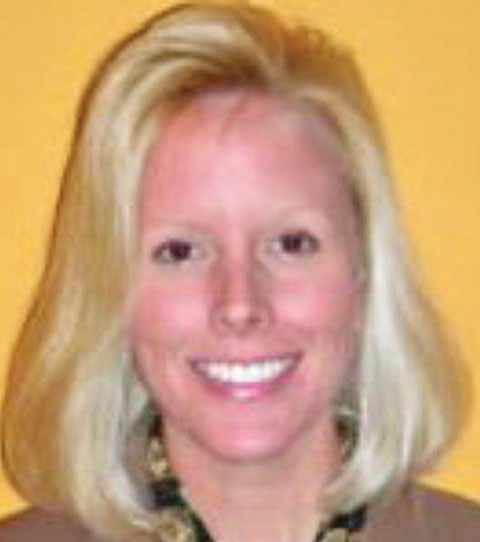
Cauthen
Court documents state the misprision of a felony has a maximum sentence of three years in prison and a $250,000 fine. The embezzlement count carries the same penalty. Documents list an “advisory” sentence of 21 to 27 months for the misprision count, though the judge could sentence Cauthen to probation or house arrest.
Cauthen has been a cooperating witness in the government’s investigation and prosecution of others in the health care fraud case. She has also been subject to subpoena from the prosecution.
Cauthen’s sentencing was set for March 16, but her attorney requested a continuation seeking more time to respond to a presentencing report. Complicating matters, the report that was emailed to Cauthen was delivered to her spam folder and wasn’t discovered until weeks later, the motion states.
“Ms. Cauthen would request the full period of time in which to respond to the lengthy presentence report, which is not possible due to the March 16 hearing date,” the motion says. “Based on the foregoing, Ms. Cauthen requests a continuance of this cause to fully respond and prepare for this critical hearing.”
Cauthen is one of several people indicted in a multi-state health care fraud scheme totaling at least $6.5 million and impacting approximately 17,000 people.
The scheme involved embezzling funds from premiums paid by individuals who had signed up for unauthorized health plans, diverting more than $5.4 million in premiums for the defendants’ own personal use, according to an FBI news release.
Shell companies were set up to facilitate money laundering, court documents state.
The ringleader was William Madison Worthy, a former client of Cauthen. Worthy was sentenced to 82 months – or just shy of seven years – in prison and three years of supervised release after pleading guilty in 2016.
Worthy was also ordered to pay $6.5 million in restitution, according to court records.
The sentence is concurrent with an 87-month sentence Worthy received in 2011 for similar, but unrelated fraud-related counts from when he lived in Spartanburg before moving to Isle of Palms.
Other codefendants have also pleaded guilty, including Angela Posey and Bart Posey. Angela Posey was sentenced March 26 to six months of probation. Bart Posey pleaded guilty in January and is scheduled for sentencing April 30.
In addition to criminal penalties, Cauthen and others pleading guilty have been slapped with cease and desist orders from departments of insurance in South Carolina, Delaware, Oklahoma and other states.
The S.C. Supreme Court suspended Cauthen’s law license in 2014. It later accepted a request from Cauthen to resign in lieu of discipline in January 2017, according to court documents. The resignation is permanent, court documents state.