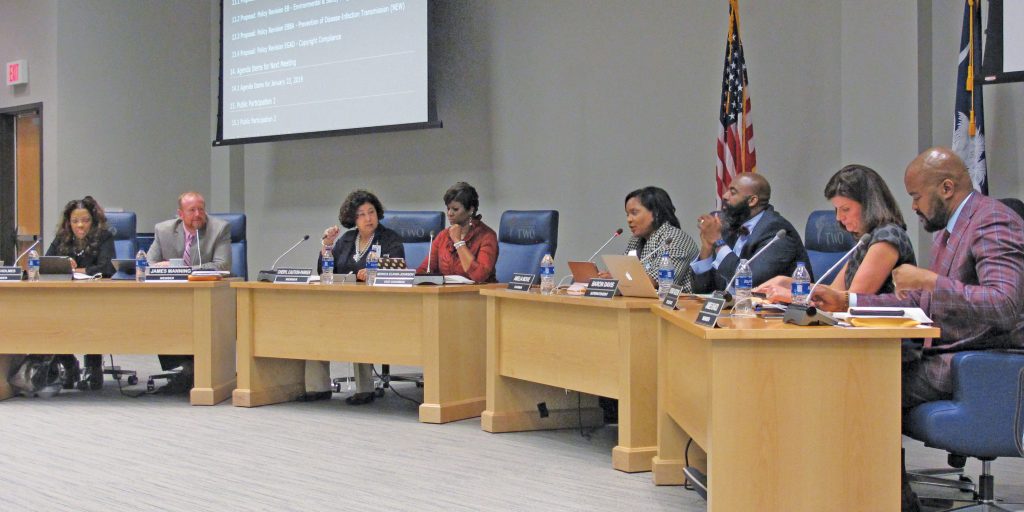
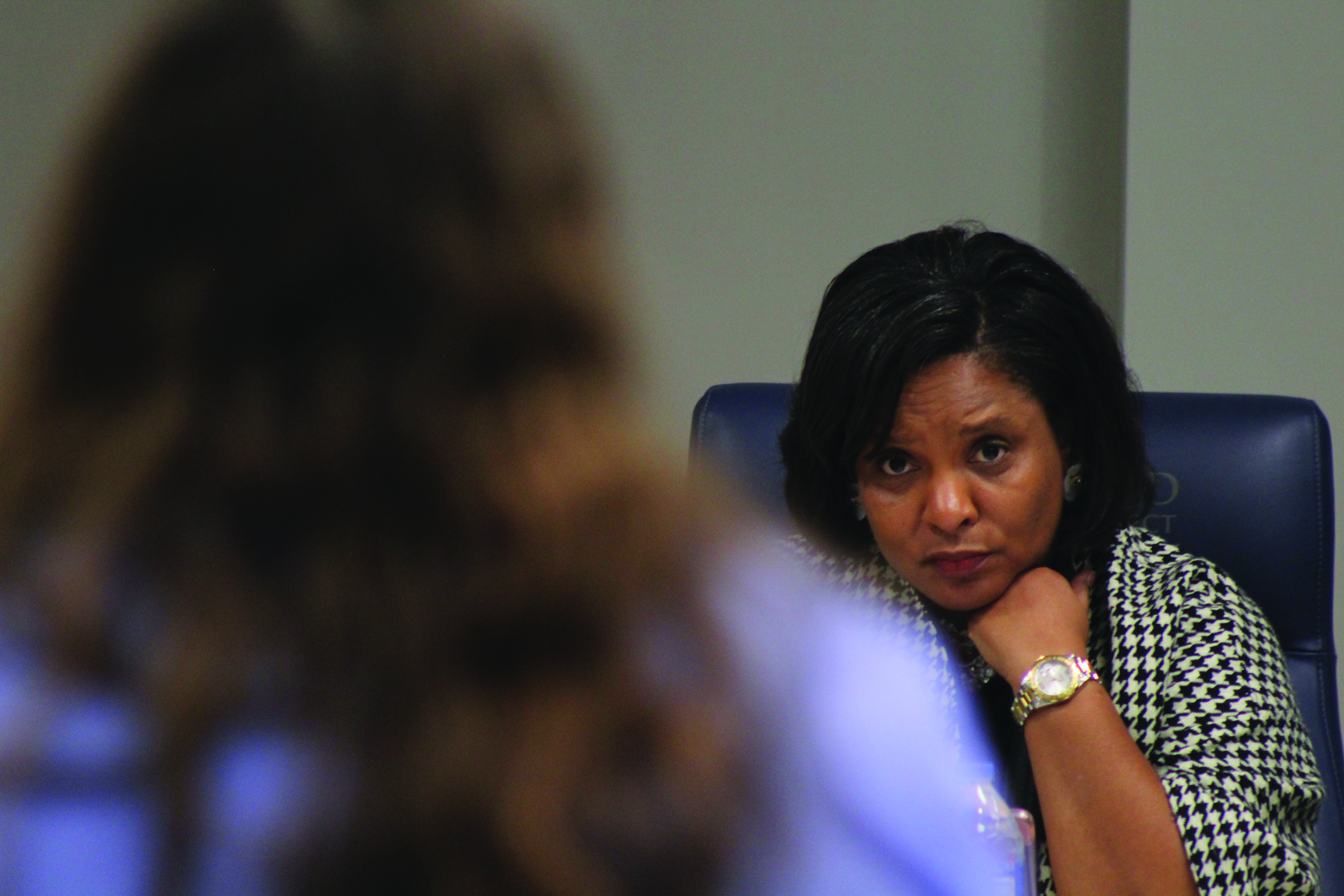
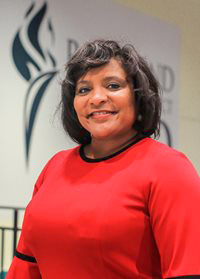
COLUMBIA – An altercation involving a state senator, the spouse of the Richland Two school board chair and a person who sources have told The Voice is a Richland Two School Board member, erupted following Tuesday night’s Richland Two school board meeting, according to police records obtained by The Voice.
The skirmish ended with two separate police reports being filed against the subject (the reported school board member).
The incident type is listed as “simple assault” in one report and “all other offenses” in the other. One report states the subject “was threatening to kill” board chair Amelia McKie’s husband.
Names of elected officials and two relatives are redacted in the report, though Sen. Mia McLeod’s name is unredacted in the narrative. McKie, the school board chair, is also identified in the report by her elected post.
In one of the reports, McLeod and her sister are identified as saying they wish to prosecute.
Jay Bender, an attorney with the S.C. Press Association, of which The Voice is a member, said there’s no legitimate reason to redact the names of elected officials in any incident report, especially if they’re involved in an altercation following a school board meeting.
“Taking the names out doesn’t mean it didn’t happen,” Bender said. “The law is very clear, when you’re involved in a matter of public interest and at a public meeting getting into a fracas, there is no right of privacy.”
Things turned chippy shortly after Tuesday night’s meeting in which the board discussed proposed changes in board policy that would allow for the removal of the chairman, vice-chairman and secretary with cause.
The policy change comes in response to investigative reports by The Voice into board member ethics violations.
In June 2018, the S.C. Ethics Commission fined McKie $41,000 for failing to file several ethics reports. The fine jumped to $51,750 on Dec. 31 when she failed to pay the first $21,000 in fines.
Five other board members have had missing ethics forms as well, according to the ethics commission.
According to the incident report from Tuesday night, McLeod and her sister were leaving Tuesday night’s board meeting after the subject had an altercation with McKie’s spouse.
The subject, the report said, aggressively approached one of the sisters whose name is redacted, while the other (also redacted) moved between them, the report continues.
The subject then pushed one of the sisters and cursed at McLeod and others according to the incident report. There were no injuries, but McLeod said she was in fear for her safety, and security had to restrain the subject, the report stated.
A second report filed by a man who sources say is McKie’s spouse stated that the subject called him several “offensive words” and threatened to kill him. He said in the report that the subject also punched another person.
The altercation continued into the parking lot. When the subject approached McKie’s spouse a second time, she had to be restrained, the report continued.
“[Complainant/Victim] is concerned about the subject possibly approaching him again in a volatile and confrontational manner,” the report states.
The subject couldn’t be reached for comment Friday evening.
In the parking lot after the meeting, The Voice observed two board members waiting near a car, with two security guards standing close by. Superintendent Dr. Baron Davis was present too, though he is not named in any of the police reports obtained by The Voice.
This story will be updated as more information is available.
Board Opens Door for Removal of Members from Office
COLUMBIA – Calls for the resignation of Richland Two school board chair Amelia McKie grew Tuesday night, with a fellow board member joining in those calls.
Meantime, two other board members are suggesting publicity of missing school board ethics forms has been “racially motivated.”
During the Board and Superintendent Comments portion of Tuesday’s board meeting, board member Lindsay Agostini publicly called for McKie to step down as chair.
Agostini said McKie has been evasive and dishonest in addressing unfiled ethics reports and subsequent fines from the state.
“After being informed by media of missing documents which took over a month for the chair to complete, she has taken no ownership of any wrongdoing,” Agostini said. “As you try to straighten things up for you and your family, I at a minimum ask that you step down as chair. A premier district deserves a premier board.”
In prepared remarks, McKie apologized later in the meeting for not filing her ethics forms. She said her forms are now current, and that she’s working with legal counsel to address nearly $52,000 in fines she owes the S.C. Ethics Commission.
“I am responsible and I am not running from those problems,” she said in prepared remarks.
McKie went on to state she’s faced numerous personal attacks since her ethics problems came to light.
“I have a problem that my character is maligned. Everything that I have said has been accurate at the time. My filings are accurate with the commission,” she added. “Not necessarily everything you have read or seen is accurate. I will not have my character maligned when there are two sides to a story.”
McKie’s statement didn’t address whether or not she planned to resign.
After the meeting, she declined to comment, deferring The Voice to her prepared statement.
Board members float race issues
At the Jan. 8 meeting, Board member Teresa Holmes thanked The Voice for its news coverage of missing ethics forms, including her own.
“I’m brand new to this, I had no idea,” Holmes said. “I’m glad that you actually did the story. Nobody tells you these things when you’re running.”
But at the Tuesday night meeting, Holmes did an about face, questioning the accuracy of the news reports about ethics issues, hinting race factored into it.
“All of the stuff you saw in the paper wasn’t necessarily factual,” Holmes said. “Some of it was racially motivated, I really do believe that.”
When asked after the meeting what specifically was reported incorrectly, Holmes would not comment.
Board member Monica Elkins-Johnson challenged the accuracy of news reports as well, but also could not say what was incorrect.
“I hope that we will not judge people on their skin tone, on mistakes, on their actions,” Elkins-Johnson said. “Give people an opportunity to prove themselves. People don’t know what’s going on in your household. Sometimes the media doesn’t always report things accurately.”
Stephen Gilchrist, a board member with the Richland Two Black Parents Association, said following state ethics laws is not about race.
“It’s not a racial issue from our perspective,” Gilchrist said. “This is about ethics issues Ms. McKie is dealing with, and of course the board in Richland 2.”
Similar messaging appears on the association’s website and Facebook page.
“Ethics is not synonymous with race! Let’s not draw that association,” the group’s Facebook page states. “When an issue is about personal ethics, let’s not attempt to draw parallels to our turbulent socio-politically, charged racial climate. Wrong is wrong and right is simply right!”
Jay Bender, an attorney with the S.C. Press Association, of which The Voice is a member, noted that in 2012 about 250 Republican candidates for state office were booted off the ballot for not properly filing ethics forms.
Most of the candidates were white, Bender said.
“Ethics problems in South Carolina appear to be as neutral as anything,” he said. “The threshold is are you a public official, not whether you are white or black.”
The Ethics Commission’s debtor list, a running public list of individuals with unpaid ethics fines, also consists of a clear mix of black and white candidates and lobbyists.
More resignation calls
Richland Two parent Rhonda Meisner once again asked McKie to resign during public comments. She also asked McKie to return any public money she’s received as a board member.
“I know that is not a very nice message, but that is a message that needs to be addressed in my opinion,” Meisner said.
Columbia resident Gus Philpott called for McKie’s resignation as well.
“In view of the $52,000 amount of her fines from the ethics commission, I request that she immediately and voluntarily step down from the board,” Philpott said. “If she fails to step down, I believe that the board must remove her.
“Matters of ethics are definitely not a distraction,” Philpott added. “This is an ethical issue, please address it now.”
Calling McKie a “doer,” Innocent Ntiasagwe spoke in support of the board chair.
“It’s good for us to pay attention to look at the good in the work that we do, not just some innuendos that may arise every now and then,” Ntiasagwe said. “Some people only look back and see what is wrong and don’t offer solutions.”
In June 2018, the ethics commission fined McKie $41,000 in connection with multiple violations of not filing campaign disclosure reports.
McKie was ordered to pay $21,000 by Dec. 31, 2018. When she didn’t, the fine jumped to $51,750, agency records state.
Board proposes policy change
Almost unnoticed, the district unveiled proposed revisions to a board policy relating to the election of officers, such as chairperson, vice-chair and secretary.
According to the proposed change, a supermajority can vote to remove a Board officer from his or her office, which would require five votes.
“In such a case, or in any case where there is a vacancy in a board office, the board may as soon as practical elect a member to fill the vacated office for the remainder of the term,” the revision states.
If enacted, the board under the policy could strip a board member of their office position, but not their board seat.
“I’m saddened that we had to revise this policy, but I’m grateful for those who’ve worked expeditiously to get this to us tonight,” Agostini said.
Board member James Manning said the purpose of the policy is to address edge cases. He cautioned against using it for political purposes.
“It gives us an opportunity should the need arise for us to address potential issues,” Manning said. “It really has to be a high bar for cause.”
No votes were taken on the policy Tuesday night. That would likely occur at the next meeting scheduled for Feb. 12.
The policy proposal comes in response to an investigation by The Voice into McKie and other board members with previously unfiled ethics forms. Six of seven board members either filed late or failed to file.
Manning, previously believed to have filed his forms, told The Voice on Tuesday that he was recently fined $200 for two late filings. That information, Manning told The Voice, was only released by the Commission last week.
He said the ethics commission reviewed all board members’ ethics filings after The Voice’s reports, and that he has since paid the fine.
Other board members filed missing forms in December and January following reports in The Voice, public records show.
COLUMBIA – Calls for the resignation of Richland Two school board chair Amelia McKie grew Tuesday night, with a fellow board member joining in those calls.
Meantime, two other board members are suggesting publicity of missing school board ethics forms has been “racially motivated.”
Board member Lindsay Agostini led the charge of those calling for McKie’s resignation.
“As you try to straighten things up for you and your family, I at a minimum ask that you step down as chair,” Agostini said. “A premier district deserves a premier board.”
In prepared remarks, McKie apologized later in the evening for not filing her ethics forms. She said her forms are now current, and that she’s working with legal counsel to address nearly $52,000 in fines she owes the S.C. Ethics Commission.
“I am responsible and I am not running from those problems,” she said in prepared remarks.
She declined to comment on calls for her resignation, referring The Voice to her prepared statement.
At least two board members injected race into the ethics debate.
Board members Monica Elkins-Johnson and Teresa Holmes said news reports have been inaccurate, but, when asked, wouldn’t say what was incorrect.
“All of the stuff you saw in the paper wasn’t necessarily factual,” Holmes said. Some of it was racially motivated, I do believe that. “Some of it was racially motivated, I really do believe that.”
Stephen Gilchrist, a board member with the Richland Two Black Parents Association, said following state ethics laws is not about race.
“It’s not a racial issue from our perspective,” Gilchrist said. “This is about ethics issues Ms. McKie is dealing with, and of course the board in Richland 2.”
Read more about this story in Thursday’s edition of The Voice.
COLUMBIA – Once again the Richland Two school board plans to discuss ongoing ethics issues behind closed doors.
Only this time the board is also slated to discuss board policies that address how board officers are chosen, suggesting changes to one or more leadership positions.
An agenda for Tuesday night’s meeting lists six executive session items, including one for the “receipt of legal advice regarding Ethics Act issues and Board Policy BD.”
Board Policy BD involves “Organization of the Board,” according to the school district’s website.
Among other things, the policy details the process for the election of officers: chairman, vice-chairman and secretary. Officer elections occur in June, the policy states.
Legally, the board couldn’t proceed with electing officers at Tuesday’s meeting.
Recent changes in state law prohibit public bodies for taking action on an executive session item without also stating on the agenda that action may be taken.
Tuesday night’s agenda lists three executive session items that may receive a vote, but the ethics discussion isn’t among them.
At the board’s Jan. 8 meeting, concerned parent Rhonda Meisner called for board chairwoman Amelia McKie to resign.
Meisner cited a section of state law that says elected officials failing to file Statements of Economic Interest forms with the S.C. Ethics Commission can’t be legally sworn in to office.
A week later, the board scheduled a special meeting that consisted of a single agenda item – an executive session to “receive legal advice concerning Ethics Act issues.” The session lasted an hour and a half. No action was taken in public session.
An investigation by The Voice found that McKie and four other board members failed to file either SEI forms or quarterly campaign disclosure reports, also required under state law.
In June 2018, the ethics commission fined McKie $41,000 and ordered her to pay half by Dec. 31, 2018. When she didn’t, the fine jumped to $51,750, agency records state.
Tuesday’s meeting will be held at the Richland Two Institute of Innovation at 763 Fashion Drive, Columbia. The executive session starts at 5:30 p.m., followed by a business meeting at 7 p.m.
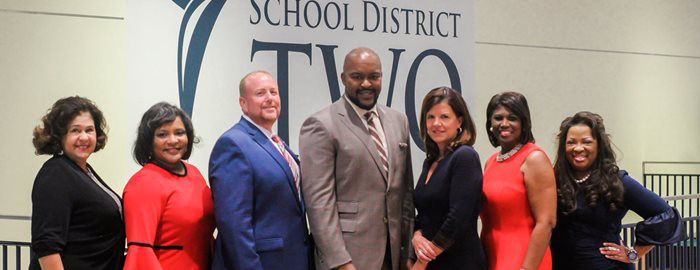
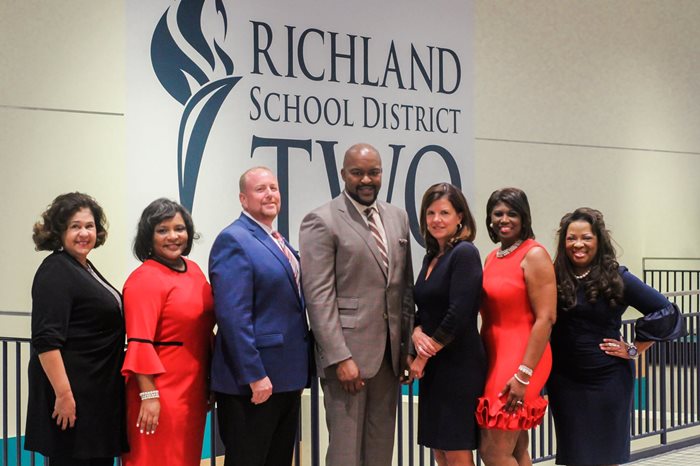
Richland Two school board members, from left: Teresa Holmes, James Manning, Cheryl Caution-Parker, Monica Elkins-Johnson, Amelia McKie, Superintendent Dr. Barron Davis, Lindsey Agostini and James Shadd III. | Barbara Ball
COLUMBIA – Despite some members dismissing an ongoing ethics flap as merely a distraction at a meeting last week, the Richland Two school board spent 90 minutes behind closed doors Tuesday night discussing that topic.
At a special meeting, the board immediately retreated into executive session to receive “legal advice regarding Ethics Act issues.”
No action was taken after the executive session – some of which was audible in the hallway – and the board promptly voted to adjourn.
When pressed by The Voice about whether the executive session pertained to an individual member or the entire board, board chairwoman Amelia McKie wouldn’t say.
“I can’t clarify that any more than what was said in the motion,” McKie said.
Jay Bender, an attorney with the S.C. Press Association, of which The Voice is a member, said if the board discussed individual members’ ethics issues behind closed doors, the discussion would violate state law.
“I don’t see any legitimate reason to get advice unless it’s regarding other board members,” Bender said. “If it’s regarding board members with individual ethics problems, I don’t think they can discuss any punishments that may be meted out.”
During executive session some board member conversations were discernable in the hallway beyond the closed doors to the boardroom.
Those conversations seemed to focus on violations of individual board members, which Bender said is not permitted under the S.C. Freedom of Information Act.
The session appeared to become heated at times.
Board member James Manning, one of two sitting board members with no previously missing ethics forms, wouldn’t comment on the specifics of what was discussed.
“There was nothing to take action on. It was all just legal counsel,” Manning said.
Manning noted the issue of ethics is likely to arise at a future board meeting.
“I would keep an eye on the agenda,” he said.
That was difficult to do with Tuesday’s meeting agenda, which was buried among four unrelated press releases in an email titled, “Dear reporters and editors, please find attached four news releases from Richland Two…” with no mention of the agenda or the special called board meeting in the body of the email. The agenda also did not appear on the school’s board docs.
In recent weeks, several board members have come under scrutiny for failing to file various ethics forms required by state law.
Richland Two parent Rhonda Meisner called upon those board members to resign. At the Jan. 9 meeting, Meisner stated during public input that state law prohibits members from being sworn into office if they haven’t filed Statements of Economic Interest (SEI) forms.
In the 2018 election, board members James Shadd III, Cheryl Caution-Parker, Monica Elkins-Johnson, Teresa Holmes and McKie failed to file either SEI forms or quarterly campaign disclosure reports by deadlines set in state law, according to the State Ethics Commission.
Those board members have since filed their forms following a series of investigative reports by The Voice.
McKie, however, has garnered the most attention.
In July 2018, the ethics commission fined her $41,000 for failing to file multiple quarterly campaign reports between 2015 and 2018. Those forms were not filed until last week, the ethics commission website states.
The fine zoomed to $51,750 after McKie failed to pay the first $21,000 of the original $41,000 fine on Dec. 31, 2018.
In all, McKie filed 16 forms on Jan. 9, 2019, including her 2019 SEI form that isn’t due until March 30. Also on Jan. 9, she filed her first quarterly campaign report of 2019, which was due Jan. 10.
After the Jan. 8 board meeting, McKie said she planned to issue a press release addressing the ethics issues, but no statement had been released as of press time.
The status of McKie’s fine remained unclear, however, as the ethics commission, as of Tuesday, listed her outstanding debt at $41,000, the original fine amount, instead of the $51,750, according to the agency’s debtor’s list.
R2 parent Rhonda Meisner, left, addresses Board Chair Amelia McKie and calls for her resignation. | Michael Smith
BLYTHEWOOD – Amelia McKie didn’t respond to a public call for her resignation Tuesday in the first Richland Two school board meeting of the year amid mounting ethics fines for the board chair.
After missing a recent payment deadline, McKie now owes nearly $52,000 to the South Carolina Ethics Commission, an agency spokesperson confirmed last week.
In July 2018, the commission fined McKie $41,000 as part of an eight-count complaint that said she failed to file quarterly campaign disclosure reports.
McKie was ordered to pay the first $20,000 by New Year’s Eve. She missed that deadline, meaning the total fine increases to $51,750, according to the complaint.
“No payments were made prior to Dec. 31, 2018 and the fine amount for that particular order reverts as outlined in the order,” an ethics commission representative said via email.
Richland Two parent Rhonda Meisner called for McKie’s resignation while speaking during the second public comment period at Tuesday night’s meeting.
“I would respectfully request that you resign from the school board,” Meisner said from the lectern. “I think that as a person you’re a very nice person, you’re very sweet, but unfortunately you put the community at risk in my opinion.”
Meisner pointed to state law, which says candidates who’ve not filed Statements of Economic Interest, or SEI, forms cannot be legally seated until they do.
Section 8-13-1110 of state law says no public official “may take the oath of office or enter upon his official responsibilities” unless an SEI form is filed.
State law also says SEI forms must be filed by March 30 each year.
Board members with previously unfiled SEI forms include James Shadd III, Teresa Holmes and McKie. All have since filed SEI reports following investigative reports by The Voice.
Holmes and McKie filed their missing SEI forms shortly after The Voice contacted them on Dec. 4, according to the ethics commission’s online database. Shadd III filed his 2017 and 2018 forms on Jan. 7, 2019.
Meisner said any recent past votes taken by those board members should be invalidated because SEI forms hadn’t been filed when they were sworn in.
“There are others of you on the board that are in the same situation,” she said. “I would ask that you look at your situation and resign.”
Board members respond
Board member Lindsay Agostini, during comments by board members, said, “My integrity and my character are very important to me.” She noted that The Voice’s investigation made it clear that she and James Manning were the only two sitting board members who had filed all their eithics forms on time. Agostini ended her comment saying, “A premier district deserves a premier board.”
Other Richland Two board members didn’t directly address Meisner’s comments or missing ethics filings listed in public records during the business portion of Tuesday’s meeting.
However, several made veiled comments from the dais amid the ethics filing fallout. At least two made references to “special interest” groups or attempts to “undermine the district.”
In a prepared statement, McKie thanked teachers and district staff, encouraging them to “stay the course regardless of the slings and arrows that come your way.”
“We don’t need to let side things distract us,” board member Teresa Holmes said. “We’re here for the business of educating children. That’s what I’m here for.”
After the meeting, Holmes declined to comment on McKie or Meisner’s call for board member resignations. She did, however, address what happened with her own 2018 SEI form.
“I’m brand new to this, I had no idea,” Holmes said. “I’m glad that you actually did the story. Nobody tells you these things when you’re running.”
Holmes’ 2019 SEI form has already been filed, according to the ethics commission website.
Others, including board members Monica Elkins-Johnson and Cheryl Caution-Parker, had previously missing quarterly campaign reports. Those reports were filed in December, ethics filings state.
McKie’s ethics record, though, has the most gaps.
As of Wednesday morning, McKie still hadn’t filed a campaign disclosure report since here last one in January 2015, according to the ethics commission database.
An investigation by The Voice also found inconsistencies in her SEI and lobbyist forms, which listed different amounts of income in 2015 and 2016.
McKie said she soon plans to issue a statement addressing the ethics filings.
“I’ve been working with the ethics commission to clear up some things that haven’t been accurate, and I’m going to issue a press release about that,” she said.
If McKie’s fines go unpaid and unresolved, the ethics commission has strategies it can employ to collect.
In 2015, the commission partnered with the S.C. Department of Revenue to increase ethics debt collection efforts through the DOR’s Setoff Debt Governmental Enterprise Accounts Receivable, or GEAR, collection programs.
Debtors who have reached “bad debt status” are referred to the Department of Revenue, according to the Ethics Commission website.
The Department of Revenue is authorized to garnish wages and tax refunds, or also impose liens to satisfy debts.
Richland 2 board members are responsible for a $273.9 million annual budget.
In 2017, school district millage accounted for more than two-thirds of a typical Richland 2 property tax bill, according to a report by the S.C. Association of Counties.
Lobbyist Income Report Doesn’t Match SEI Filing, Investigation Reels in 19 More Late Filings
Richland Two School Board memberes include Cheryl Caution-Parker, left, Chairwoman Amelia McKie, Jim Manning, James Shadd III, Lindsay Agostini, Monica Elkins-Johnson and new member Teresa Holmes. | Richland Two Website
BLYTHEWOOD – As the deadline to pay a hefty ethics fine nears, more questions are arising over reports filed by Amelia McKie, chairwoman of the Richland Two Board of Trustees.
Meantime, more previously unfiled ethics forms have been submitted by another Richland Two board member following an investigation by The Voice of campaign finance violations, according to public records.
The latest issues involving McKie revolve around lobbying activity reported on her 2015 and 2016 Statements of Economic Interest, or SEI, forms.
McKie’s SEI form for 2016 doesn’t list any lobbying activity or income.
However, on her Individual Lobbyist report, McKie reported earning $13,562.50 as a lobbyist for the S.C. Association of Developing Colleges, or SCADC, between Jan. 1, 2016 and May 31, 2016,
Her 2015 forms don’t match either.
In 2015, McKie reported $15,000 in lobbying income from the SCADC on her economic interest form. But her lobbyist report lists a year-to-date number of $27,125.
In addition, $2,000 in lobbying income from the Coalition for Access to Healthcare appears on her individual lobbyist report, but not her SEI form.
McKie couldn’t be reached for comment.
In response to inquiries from The Voice, McKie filed previously missing SEI forms for 2015-2018 on Dec. 4, according to Ethics Commission records.
As of Friday, Dec. 28, she still hadn’t filed quarterly campaign disclosure reports since early 2015, ethics records show.
The commission has already fined McKie $41,000 as part of an eight-count complaint alleging unreported campaign contributions dating back to 2015.
She had until Dec. 31 to pay the first $20,000. If she misses that deadline, the fine increases to $51,700. That information was not available to The Voice at press time.
In related news, board member Monica Elkins-Johnson filed a slew of outstanding quarterly campaign finance reports and amendments on Thursday, Dec. 27, nearly two months after the Nov. 6 general election, according to the S.C. Ethics Commission online database.
Elkins-Johnson joins fellow board members Teresa Holmes, Cheryl Caution-Parker and McKie among those who filed missing ethics forms only after being contacted by The Voice.
The Richland Two school board plays a direct role in developing the district’s annual budget, which for the 2017-2018 fiscal year totaled $273.9 million, according to the school district website.
Because Richland Two board members are entrusted with spending millions of dollars in taxpayer money, greater scrutiny of their ethics filings is appropriate, said Jay Bender, a media law attorney representing the S.C. Press Association.
“You have all these people who take office who pay no attention what the requirements are, and that’s unfortunate,” Bender said.
Since The Voice’s investigation began in early December, Richland Two candidates have rushed to file at least 19 tardy ethics forms, detailing previously unreported campaign contributions, income sources and potential conflicts of interest.
Here’s a breakdown of each board member’s campaign contributions and statements of economic interest, when available, for recent election cycles.
Amelia McKie
On her 2018 SEI form, McKie reported $15,000 in income from lobbying activity for NextEra, a Florida-based energy company that recruited people to lobby the state to sell Santee Cooper, ethics forms state.
She performed additional consulting work for Infusion and LHI, though ethics forms don’t list income from those sources.
In addition to lobbying activity, McKie reported $9,600 in annual income from her position as school board chair.
McKie’s most recent quarterly campaign disclosure report was filed Jan. 10, 2015, ethic filings show.
She filed two amendments, one on Jan. 11, 2015 and the other Feb. 10, 2015.
Her Jan. 10, 2015 disclosure form, filed two months after the Nov. 4, 2014 general election, reported $10,861.95 in total contributions. She spent $9,524.41, leaving $1,337.54 cash on hand.
One contribution, a $1,000 donation from the Lou-Von Family Foundation in Sumter, was returned at the donor’s request, ethics forms state.
Though nearly four years old, an amendment McKie filed to her campaign disclosure reports in February 2015 raises additional questions.
In that filing, McKie lists 889.5 miles driven by various Columbia vendors for Get Out the Vote-related work, totaling $498.72 in mileage expenses at 56 cents a mile. The expenses were incurred on four dates in 2014: Nov. 3, Nov. 21, Dec. 11 and Dec. 22.
It is unclear from the forms what would require driving 890 miles in four days – roughly 222.5 miles per day – in the Columbia area.
James Shadd III
Board member James Shadd III has experienced issues with his ethics forms since 2014, when the ethics commission fined him $13,000 for failing to file several quarterly campaign disclosure reports, documents state.
The complaint has since been resolved, according to the ethics commission website. More recently, Shadd III hasn’t filed quarterly campaign disclosure or SEI reports since October 2016, according to ethics filings.
The absent filings only pertain to his school board seat. Quarterly reports for his 2014 solicitor’s office bid are available for public inspection.
Shadd III couldn’t be reached for comment.
In 2016, the last year Shadd III filed an SEI form, he only listed his school board trustee position, but not his income. He didn’t report any lobbying activity or any other potential conflicts of interest.
Shadd III filed three campaign disclosure reports in 2016, all on Oct. 31 of that year, which included his initial report, October quarterly report and his pre-election report.
He reported $10,375 in contributions for the election cycle, mostly from attorneys, physicians and other individual professionals. He spent $7,244.88.
Monica Elkins-Johnson
In all, Elkins-Johnson filed 14 previously missing quarterly campaign disclosure forms last week on Dec. 27, 2018, some of them dating back to 2016, according to ethics records.
One of the filings was a final campaign disclosure report for her 2016 campaign.
The report listed $12,860.52 in total contributions, most of which came from personal funds ($7,341). Most other contributions came from individual donors, filings show.
Elkins’ SEI forms have been filed on time most years. Her 2018 SEI report only listed $9,600 in income for her school board seat.
Teresa Holmes
Most of Holmes’ campaign contributions before the 2018 election come from personal funds.
For the 2018 election cycle, she reported $3,683.94 in contributions, of which $3,183 came from her personally, ethics records show.
The remaining $500 consisted of a donation from Sam Green, whose occupation is listed in ethics records as bishop of the 7th Episcopal District.
After the election, Holmes filed two amendments on Dec. 10 and Dec. 12, respectively amending her pre-election and initial reports to include additional contributions and expenditures.
As before, contributions mainly consisted of personal loans and small, individual donations.
Like McKie, Holmes filed her 2018 SEI forms after she was informed by The Voice that they had not been filed.
On her SEI form, Holmes reported $83,000 in personal income from the Fairfield County School District. She’s an assistant administrator and guidance counselor at the Fairfield Career and Technology Center, the Richland Two website states.
Cheryl Caution-Parker
Caution-Parker filed her four 2018 quarterly campaign disclosure reports on Dec. 17, shortly after The Voice contacted her that the forms hadn’t been filed prior to the Nov. 6 election.
Caution-Parker previously told The Voice that she had correctly entered the information, but didn’t complete the submission process because she failed to click the “File” button.
Her October 2018 pre-election report listed $5,150 in contributions and $5,129 in expenditures. She reported two contributions from developers: M.B. Kahn Construction Co., $1,000; and Stevens & Wilkinson, $250.
Caution-Parker spent the bulk of her funds on billboard advertising and campaign signs.
James Manning
Manning filed his quarterly campaign disclosure and SEI forms on time.
While it was previously reported that these fillings were late, most of his campaign disclosure reports are associated with the 2014 election cycle. Only a pre-election report filed Oct. 28, 2018 is associated with the 2018 election cycle, records state.
Manning said that’s because he announced his intentions to seek re-election late in the election cycle, which explains why his other quarterly reports are linked to 2014.
For the 2014 election cycle, Manning reported $9,198.76 in total contributions.
Manning reported an additional $7,775 in contributions for 2018. Notable donations for the most recent election cycle include: M.B. Kahn Construction, Co., $1,000; Brownstone Construction Group, LLC, $1,000; Darrell Campbell, construction, $500; and Grayson Thompson, architect, $300.
Manning reported $118,737 in personal income from working in state government. He works for the S.C. Public Employee Benefits Authority as a risk and compliance manager, according to the state’s online salary database.
Manning reported additional family income of $69,289, also from state government, and his $9,600 school board salary.
Lindsay Agostini
Besides Manning, Agostini was the only other current board member to file all her Campaign Disclosure and SEI forms on time. As reported previously in The Voice, Agostini hasn’t been required to file quarterly campaign disclosure reports since March 24, 2017, when according to ethics records, she submitted a final report.
Office holders may file final reports only after he or she closes their campaign account, which is what Agostini did, according to the Ethics Commission.
To qualify for this exemption, a candidate must have a zero balance and no outstanding campaign debts, according to the Ethics Commission websit, which Agostini met.
When her campaign accounts were open, Agostini was one of the school board’s top fundraisers. Her final report listed $22,947 in total contributions for the 2016 election cycle.
Contributions mainly came from attorneys, physicians and other business professionals. She spent the bulk of her funds on mailers and signage, records show.
On her 2018 SEI form, Agostini reported board member pay of $9,600 and various food and gas reimbursements totaling $1,146.89.
Under personal income, she listed Agostini and Associates as the source and event planner/swim lessons under the type. A dollar amount was not specified.
Agostini also listed 11 sources of family income, which include DaVinci Financial Designs, LPL, Midland Insurance, The Members Club, Washington & Lee University, Pomona College and other entities.
Craig Plank
Craig Plank, who did not win re-election to the board in November, but has filed all his forms on time during his time on the board, reported $13,090 in contributions this past election cycle, which included $2,100 from personal funds. He spent $9,483.85, mostly on advertising and direct mailing, records state.
Most of Plank’s donors consisted of individual business professionals, including several insurance agents.
Plank reported several contributions from developers: SC Builders PAC, $250; Stevens & Wilkinson SC, Inc., $250; Covert Homes, LLC, $250; LCK, LLC, $500; and M.B. Kahn Construction Co., $1,000.
On his 2018 SEI form, Plank reported a $12,000 stipend from the district.
Plank also reported receiving unspecified income from four sources: WIS TV, family income; State Farm Insurance Co., personal income; Millie Lewis of Columbia, personal income; and NFIP, personal income.
BLYTHEWOOD – Most sitting members of the Richland 2 Board of Education have major gaps in their state-mandated ethics filings, a review of public records shows.
Three board members failed to file Statements of Economic Interest forms for at least one calendar year.
Two of those three board members also haven’t filed quarterly campaign disclosure forms since 2016.
And virtually everyone currently on the board has either been late or missed at least one quarterly report, according to the S.C. Ethics Commission online database.
Craig Plank, who did not win election to the board last month, filed his SEI form on time every year. He also filed an initial report, one quarterly report and a final report, documents show.
The Richland 2 school board plays a direct role in developing the district’s annual budget, which for the 2017-2018 fiscal year totaled $273.9 million, according to the school district website.
The board also recently voted to place a referendum question on the November ballot that asked taxpayers for permission to borrow an additional $476 million to pay for school facility projects.
Voters approved the referendum, resulting in a property tax increase for homes and businesses in Richland 2.
Because Richland 2 board members are entrusted with spending millions of dollars in taxpayer money, greater scrutiny of their ethics filings is appropriate, said Jay Bender, a media law attorney representing the S.C. Press Association.
“You have all these people who take office who pay no attention what the requirements are, and that’s unfortunate,” Bender said.
Forgotten forms
As of Tuesday, Richland 2 board member James Shadd III still had not filed Statements of Economic Interest forms for 2017 or 2018. SEI forms disclose an elected official’s income and potential conflicts of interest.
Shadd III, who ran a separate campaign for solicitor, hasn’t filed quarterly campaign disclosure statements since Oct. 31, 2016. State law requires quarterly reports to be filed in January, April, July and October.
“All candidates with contributions on hand must file a quarterly report covering from the last report through the end of the calendar quarter,” the Ethics Commission web site states. “The quarterly report is required of all candidates once they have begun to file, whether there has been any financial activity or not.”
Shadd III couldn’t be reached for comment Tuesday.
Board chairwoman Amelia McKie (2015-2018) and newly elected board member Teresa Holmes (2018) also missed filing SEI forms.
The forms weren’t filed with the Ethics Commission until Dec. 4, nearly a month after the general election. They were due March 30.
Both McKie and Holmes filed their SEI forms after The Voice informed them that they hadn’t been filed.
McKie said she had filed her forms “months ago.” The Voice has been unable to reach Holmes for comment.
Richland 2 board member Cheryl Caution-Parker, who was more than a month late in filing all of her 2018 quarterly campaign disclosure reports, said she saved her work when filing online, but forgot to click ‘File.’
As with McKie and Holmes, Caution-Parker filed shortly after being contacted by The Voice.
“It just didn’t cross my mind to double check because I thought everything was fine when I sent it,” Caution-Parker said.
“A lot of times when you’re smack in the middle of the campaign and things are coming at you from so many different directions, it’s very hard to keep up with everything,” she continued.
Walker said filing dates published on the Ethics Commission website are considered the official filing dates. She said that “it’s the duty of every candidate” to file the forms correctly.
Two other Richland 2 board members have late or missing ethics forms, according to the agency’s online database:
James Manning – Campaign Disclosure Initial Report not filed. Initial reports must be filed within 10 days of spending or receiving the first $500 of campaign funds. Manning reported receiving a $1,000 contribution from Brownstone Construction Group, LLC on Aug. 21, 2018.
Monica Elkins – Quarterly campaign disclosure reports not filed since April 10, 2017.
Board member Lindsay Agostini’s last Campaign Disclosure report on file was a final report dated March 24, 2017.
Final reports are filed only after a candidate’s campaign account is closed. To qualify, a candidate must have a zero balance and no outstanding campaign debts, according to the Ethics Commission website.
“Once a final report is filed, a candidate may not accept or spend any funds for the campaign,” the website states.
Agostini’s final report listed a zero balance on her form. She would have to file a new initial report once she spends or receives at least $500 in new donations, according to the commission.
Her last SEI report was properly filed March 29, 2018.
More trouble for McKie
Walker, the ethics commission spokeswoman, said she “can neither confirm or deny” whether any new complaints have been filed against Richland 2 board members.
Complaints only become public when the commission determines that probable cause exists.
So far, McKie is the only sitting board member who’s been fined for prior ethics violations, according to ethics commission records.
In July 2018, the commission fined McKie $41,000 as part of an eight-count complaint for failing to disclose campaign contributions.
The agency’s online database states McKie hasn’t filed any campaign disclosure reports since February 2015.
McKie has until Dec. 30 to pay the first $20,000 and if she doesn’t, the fine increases to $51,750, public records show. She hadn’t paid any of the money as of Tuesday, Walker said.
In addition to ethics fines, McKie recently faced legal troubles in Richland County civil court.
McKie is listed as a co-defendant in a foreclosure lawsuit that was filed in June 2017.
According to the suit, McKie’s homeowner’s association placed a lien on property located on Hunters Pond Road after $1,800 in assessments went unpaid. The HOA later foreclosed on McKie’s home.
“The Defendant(s) has failed to make consistent payments of the assessments and interest, although demand for payment has been made,” the suit states.
The suit also sought legal fees and expenses, bringing the total bill as of August 2018 to about $6,050, court filings state.
On Oct. 2, a judge signed off on the foreclosure and request for sale at public auction.
The case, however, was disposed Nov. 29 after court documents were filed stating that sufficient funds had been paid to satisfy the judgment.
How did this happen?
As ethics reporting deadlines have eluded Richland 2 board members, tracing how the tardy filings went unchecked remains equally unclear.
Section 8-13-1110 of state law says no public official “may take the oath of office or enter upon his official responsibilities” unless a Statement of Economic Interest form is filed.
According to that definition, it would mean that McKie has illegally served on the school board since 2015, the first year she failed to file an SEI form. The oath of office statute likely doesn’t impact Holmes since she only filed a month late.
Chris Whitmire, spokesman for the State Election Commission, said the agency is only responsible for ensuring that candidates file statements of candidacy.
Whitmire said the agency would only remove from the ballot any candidate who fails to file that form. He noted campaign disclosures and SEI forms fall under the Ethics Commission’s purview.
“I would think compliance would be a question for that body,” Whitmire said.
Walker, the ethics commission spokeswoman, said only the election commission has the power to remove a candidate from the ballot.
Instead, the ethics commission only fines candidates, and only for violations of campaign finance and ethics laws, Walker said.
“We don’t file an injunction or anything,” she said.
Fines wouldn’t kick in until after candidates are notified by mail and a formal complaint is filed.
Complaints aren’t made public until the commission determines “probable cause” exists that a violation occurred, Walker said.
Failing to file SEI forms previously carried dire consequences for more than 200 candidates in one recent election.
In 2012, the S.C. Supreme Court ruled anyone failing to file SEIs when officially filing for public office must be removed from the ballot.
“We fully appreciate the consequences of our decision, as lives have been disrupted and political aspirations put on hold,” the ruling stated.
“However, the conduct of the political parties in their failure to follow the clear and unmistakable directives of the General Assembly has brought us to this point. Sidestepping the issue now would only delay the inevitable.”
In 2013, the General Assembly passed a new ethics law which placed the election commission in charge of candidacy filings and the ethics commission in charge of campaign finance and ethics-related reporting.
The issue of public officials being sworn in after failing to file economic interest forms has yet to be tested in court.
In August 2017, the S.C. Attorney General’s Office issued an opinion relating to economic interest forms.
The opinion, though, only affirms that candidates must file an SEI form after either filing a statement of candidacy or if the candidate has an open campaign account. It doesn’t address what happens if a candidate fails to file an SEI, and is subsequently sworn in.
An attorney general spokesperson couldn’t be reached for comment.
BLYTHEWOOD – Amelia McKie, chair of the Richland 2 Board of Education, owes at least $41,000 in fines to the S.C. Ethics Commission, according to agency documents obtained by The Voice.
McKie
McKie has until Dec. 31 to pay the first $20,000. The remaining $21,000 is due June 30, 2019, documents state.
The fines are spelled out in an order the ethics commission issued July 3.
According to an eight-count complaint the commission filed, McKie failed to file quarterly campaign disclosure reports on seven occasions in 2015 and 2016 for the 2014 election.
The eighth count says McKie failed to disclose expenditures on a campaign report, documents show.
As of Thursday, the forms still had not been filed. The most recent quarterly report appearing on the ethics commission’s online database is dated Jan. 10, 2015.
Campaign disclosure reports for the 2018 election also don’t appear on the ethics commission’s website.
If the fines aren’t paid, McKie faces a judgment of $51,750, the order states.
Attempts to reach McKie by phone and email were unsuccessful.
More ethics forms remain unfiled
McKie’s $41,000 fine is in addition to any additional fines or penalties she may face for failing to file Statements of Economic Interest forms with the ethics commission.
On Dec. 4, McKie filed her 2018 economic interest forms, hours after The Voice telephoned her about the forms not being filed, according to the ethics commission website and an agency spokeswoman.
The forms were due March 30, according to state law.
In a telephone interview Tuesday, McKie told The Voice that she had filed her 2018 form “weeks ago.”
“I’ll try to find out where the disconnect was,” McKie said. “There here shouldn’t have been a problem. Certainly I want to get to the bottom of whatever the disconnect is.”
The ethics commission stood by its assertion that the form was filed Friday, Dec. 4, not weeks ago.
“The statements were filed on the date and time shown on the website,” the agency said via email. “I am aware of no glitch in the application that would cause a document to become ‘lost’ in the system.”
In addition to 2018, McKie also didn’t file economic interest forms for 2015-2017 until Dec. 4, 2018.
McKie filed her 2014 form on Aug. 15, 2014, the ethics commission online database shows.
The ethics commission spokesperson declined to comment about the potential for additional fines relating to McKie’s economic interest forms, but reiterated that the online database is correct.
“Everything on the website is accurate but may not contain the latest information,” the spokesperson said.
According to state law, a $100 civil penalty is levied to candidates failing to file on time following a five-day grace period. Penalties increase to $10 per calendar day starting 10 days after the commission provides notice by certified or registered mail.
Daily fines increase to $100 for every day the form isn’t filed, with total fines capping at $5,000. Criminal penalties kick in if forms still aren’t filed.
The ethics commission website also lists McKie on the agency’s debtor’s list, a list consisting of public officials with unpaid fines and civil penalties.
As of Dec. 6, the list said McKie owes $233.30 stemming from an unspecified 2016 debt. It’s unclear whether or not that debt is associated with the $41,000 judgment.
The ethics commission said it couldn’t respond to The Voice’s inquiries about McKie’s inclusion on the debtor’s list.
Why McKie owes $41,000
McKie’s $41,000 fine includes a “reduced late-filing penalty” of $24,245, a $16,000 civil penalty and a $575 administrative fee, documents show.
According to the order, McKie’s failed to file campaign disclosure reports after January 2015. The ethics commission fined McKie $600 for late filings of her 2015 and 2016 quarterly contribution reports.
Daily fines began accruing in August 2016. A complaint was then filed after the ethics commission said it received no response from McKie.
The filing further states that an agency investigator telephoned McKie on Sept. 29, 2016, instructing her to file the required paperwork.
“From October 27, 2016, and January 10, 2017, Commission investigators made multiple attempts to bring Respondent into compliance with no success,” the order states.
Investigators visited McKie’s home on Jan. 10, 2017, “to advise Respondent of the accruing penalties and the need to file the requisite reports,” the order continues.
McKie made an appointment with the agency the following day, but failed to file the reports, according to the order.
At that point, the ethics commission subpoenaed McKie’s campaign bank records. The last check written from that account was dated April 3, 2016.
“Respondent’s campaign bank account records revealed no other activity with the exception of bank fees in the amount of $10.00 per month until the bank account was force-closed on January 30, 2017,” ethics documents state.
The commission issued a Notice of Hearing to McKie in May 2018. The hearing took place June 21, but McKie didn’t appear, agency records state.
BLYTHEWOOD – Nearly a month after the November elections, two Richland 2 school board members still had not filed ethics disclosure forms required by state law, according to the South Carolina Ethics Commission.
As of 1 p.m. Tuesday, the ethics commission’s online Statements of Economic Interest database listed all of the school board candidates who filed except for two notables – new board member Teresa Jones Holmes and board chairwoman Amelia McKie.
Holmes couldn’t be reached for comment Tuesday.
McKie expressed shock that her name wasn’t listed online for public viewing.
“I’ll try to find out where the disconnect was,” McKie said during a 4:30 p.m. phone interview. “There shouldn’t have been a problem. Certainly I want to get to the bottom of whatever the disconnect is.”
McKie contacted The Voice about an hour later to say that the ethics commission had her forms, saying they had been submitted weeks ago.
The ethics commission website listed McKie’s time of filing at 5:26 p.m. Tuesday. Holmes filed at 4:50 p.m., after The Voice telephoned her at 1:07 p.m.
At 11:02 a.m. Tuesday, an unidentified ethics commission representative said via email that the agency’s website was “up to date and accurate” as of that time.
The spokesperson declined further comment.
“The statements were filed on the date and time shown on the website,” the ethics commission said via email Wednesday morning. “I am aware of no glitch in the application that would cause a document to become ‘lost’ in the system.”
The ethics commission website says all candidates must electronically file Statements of Economic Interests forms, and that they’re posted online immediately.“Upon filing, the information is immediately available to the public through public reporting,” the website states.
The apparently late filings come months after the Richland 2 board voted to modify the procurement code.
In July, the board voted to strike several provisions from the code, including one that prohibited the district from doing business with board members.
At the time of the vote, Dr. Harry Miley, the district’s chief financial officer, said via email that the prohibition already exists elsewhere in the board’s policy.
“We are undertaking a comprehensive review and update of all of our policies with particular attention to trying to eliminate places where the same topic is addressed in multiple policies,” Miley said. “We are also undertaking a review of our procurement code to see if revisions are needed.”
McKie’s form lists $9,600 in personal income from her position on the school board. She receives additional income from consulting, but those amounts are not included on the online forms.
NextEra also purchased $15,000 in consulting services from McKie, according to ethics documents.
Holmes reported $83,000 in personal income from a position with the Fairfield County School District, documents show.
Neither McKie nor Holmes listed any property interests, business interests, gifts or government contracts, according to the forms.
Nearly all of the other seven school board candidates filed their economic interest forms by August, according to state ethics records.
One candidate, a challenger and not an incumbent, filed his in October, records show.
State law requires all elected officials to file Statements of Economic Interest and campaign contribution reports.
Forms document a candidate’s income sources, including any sources doing business with the government agency the elected office oversees.
High-ranking appointed officials, such as city administrators, superintendents and chief financial officers, must also file, according to the ethics commission website.
Candidates who fail to file, or who file late, face a variety of civil and criminal penalties.
Civil penalties begin at $100 for reports not filed within five days after the deadline. Fine amounts increase by $10 per calendar day for the first 10 days after notice is provided by certified or registered mail.
Daily fines increase to $100 for every day the form isn’t filed, with total fines capping at $5,000.
If forms still aren’t filed, failing to file becomes a criminal violation, with violators facing additional fines and possible prison time.
In addition, state law prohibits public officials who haven’t filed Statements of Economic Interest from being sworn in.
“No public official, regardless of compensation, and no public member or public employee as designated in subsection (B) may take the oath of office or enter upon his official responsibilities unless he has filed a statement of economic interests in accordance with the provisions of this chapter with the appropriate supervisory office,” the law states.
This requirement still exists even if a public official has no economic interests to disclose.
“He shall nevertheless file a statement of inactivity to that effect with the appropriate supervisory office,” the statute states.