Tag: Mt. Zion

  • New hurdles to Mt. Zion relocation

    WINNSBORO – During Monday night’s county council meeting, Council Chair Moses Bell called on several county officials to voice their concerns about plans to relocate the county’s administration operations into the newly renovated Mt. Zion building when it’s completed in October, 2021.

    Bell and Councilwoman Shirley Greene took the lead in voicing those concerns, stating repeatedly that the cost of the renovations to the county has now reached $10 million, up they said, from the initial $8.7 million.

    “That $8.7 million was adjusted to $8.9 million two years ago when council voted to add the teacherage to the project,” according to County Councilman Clarence Gilbert.

    “And the county’s costs are still at $8.9 million, I don’t know where they’re getting those amounts,” Rory Dowling, principal of 1st and Main (the developer), told The Voice on Tuesday, the day after the council meeting. “If they’re including the $900,000 state allotment for the 911 call center, or the [Dominion settlement’s] monument or museum, those are outside the county’s project. The county is only paying $8.9 million for the project.”

    “I think this project is on an extremely high budget,” the county’s newly hired consultant Ed Driggers told council Monday night.

    “You’re going to have cost overruns. Most of those cost overruns have already been approved. That was true with the 911 call center and the changes required to do that. You can’t reverse those types of things,” Driggers said. “Those decisions were made and you’ve moved forward. But they will have implications as you move forward,” he warned.

    Asked following the meeting whether the county’s costs were actually at $10 million, Driggers said he didn’t know.

    “Those are their (council’s) numbers, not mine,” Driggers said.

    Almost a million dollars of those cost overruns, however, were earmarked for the 911 call center’s relocation and upgrades that are state-mandated and state-funded and were not paid for out of the county’s general fund, according to Councilman Doug Pauley, during an interview following the meeting.

    “Those funds are restricted and could only be spent on upgrades for the call center whether the call center relocated to Mt. Zion or stayed in its current location,” Pauley said.

    Fairfield County Interim Administrator Brad Caulder called on Fairfield County Sheriff Will Montgomery to talk about his office’s concerns regarding relocating to the Mt. Zion campus.

    “We have some concerns about our offices being at Mt. Zion, mainly safety,” Montgomery said.

    “The windows are on ground level in the investigator’s office and in my office. So anytime the public is in these places somebody would be able to see them talking to us or could do some type of harm to them.

    “We also have 75 sex offenders who come to our offices every month to register and we’re going to have the rec building right next to our offices,” he said.

    “Another problem is space,” Montgomery said.

    He said the space is smaller than where they are now and that they have lots of training equipment they will need storage space for.

    Driggers added that another concern for Montgomery is that the space that was designated for the Sheriff’s office has since become smaller.

    After Montgomery spoke at the podium, Bell prompted him to lay blame on Taylor.

    “Did you bring these concerns forward with Mr. Taylor and others about the safety and space?” Bell asked.

    “The concerns were brought up day one when we started this project,” Montgomery said.

    Later in the meeting, Bell again prompted Montgomery.

    “I want to be clear,” Bell said. “I really need to be clear. You’re telling us that you shared all these concerns prior to when they started building?”

    “Absolutely,” Montgomery responded. “Everything but the windows.”

    Asked about Montgomery’s concerns, former County Councilman Jimmy Ray Douglas, who voted for the Mt. Zion renovation in 2018, said he never heard Montgomery express these concerns previously and that Montgomery never came before council with them that he could remember.

    Dowling told The Voice that he is not aware that any space designations for the Sheriff have been modified.

    “Their space has never changed. The Sheriff’s department approved the plans two years ago and we have never heard anything more from them or anyone else about their space changing,” Dowling said. “They have the entire first floor and about a third of the second floor. The 911 call center, which is separate from the Sheriff’s offices, is also on the second floor.”

    Former County Administrator Jason Taylor, too, told The Voice that he has not been made aware that the space for the Sheriff’s offices changed after he left the county in June.

    “I went over there with the Sheriff and went over everything about a week before I left,” Taylor said. “We had numerous meetings with all the departments and everyone was always encouraged to look at the plans and tell us how we could make it better. And we had a number of public meetings.”

    Asked by Pauley if he would prefer to relocate or stay in his current building, Montgomery said he would leave that up to the county to decide, but he added, “We’re comfortable where we are.”

    Caulder then called on Driggers to express his opinion about the Sheriff’s concerns.

    “Mr. Driggers has done a great job digging into the construction and contractual obligations of the Mt. Zion renovation,” Caulder said.

    “Mr. Bell, you do remember that you’re about to spend $3.5M on recreation that could be used for a new Sheriff’s building, right?

    — Douglas Pauley, Fairfield County Councilman

    “Talking with Mr. Caulder, I believe the most cost beneficial path for the county would be to allow the Sheriff to stay in his existing situation, to allow resources to be used for the building we are in now,” Driggers said. “For upfit of that, we have some engineering studies that have given us some costs on that.” He did not say what those costs are.

    Bell said another eleventh hour concern is parking.

    “What you (Driggers) told me is that we don’t have near enough parking,” Bell said.

    Asked about the parking, Dowling said that, based on the amount of parking they currently have, there is ample parking at the new facility.

    “And there’s still plenty of space for overflow parking,” Dowling said. “No one from the county has consulted us about this.”

    Bell continued expressing his dissatisfaction with the building.

    “The way you heat it, they got all them open glass windows, so you’re going to have heat and air blowing out the windows. I cannot understand,” Bell said, raising his voice, “why a Sheriff, elected county wide, would not have his voice listened to by the decision makers. It is beyond me to understand that. We’re at a cross roads. This is a bad situation.

    “This is beyond where we ought to be,” Bell continued, becoming emotional.

    He then read from the 2018 council minutes when council approved the Mt. Zion project.

    “‘He (Bell) feels we made a grave mistake,’” he quoted. “‘There are other builders who build new buildings with this type of financing. He said this is a bad mistake.’”

    “People talk about my decisions – that was one,” Bell said.

    “Mr. Bell,” Councilman Douglas Pauley addressed the chair. “You do remember that you’re about to spend $3.5 million on recreation that could be used for a new Sheriff’s building, right?”

    After a pause, Bell shot back, “Mr. Pauley, I’ve not directed any questions to you, and you’re not to direct any questions to me. And it ain’t $3.5 million. It’s $2.5 million. Get your facts straight,” Bell said.

    “What about the mini park?” Pauley asked. “That’s another $1 million, right?”

  • Revelations lacking in Greene’s MZI report

    WINNSBORO – A Fairfield County ad hoc committee report takes several jabs at financial decisions tied to the Mt. Zion renovation project but the financial facts regarding the renovation of Mt. Zion did not vary from what had earlier been made public.

    The report, delivered at a special meeting last week by Councilwoman Shirley Greene, chair of the ad hoc committee, rebukes the decision to repurpose Mt. Zion into a new county building for reasons she claims are divisive.

    “The choice to place the seat of local government on a site that embodies Fairfield County’s segregated past excludes the total community,” her report states.

    “Hopefully, this report and observations will help us as citizens examine ourselves and our commitment to fairness and unity.”

    While at one time Mt. Zion was attended primarily by white students, it was later desegregated and attended by both black and white students.

    Greene insisted the primary focus of the committee was advisory in nature, noting there have been “many efforts to give misinformation about what the role of the ad hoc committee was, and other things.”

    Greene and council members Moses Bell, Mikel Trapp and Tim Roseborough have commented negatively on the use of the building as a county administration building. According to public records, one council member spoke publicly to cancelling of the contract.

    In March, Councilman Tim Roseborough, who also serves on the ad hoc committee, quizzed developers about what consequences the county would face if it canceled the contract.

    “If the county decides to break the lease, it would cost the county $1 million,” Roseborough said, referencing a $1 million contingency fund that was established for the project. “Is that what you’re saying?”

    “No sir,” Rory Dowling with 1st and Main, the project developer, replied. “We would be forced to enter into some legal ramifications with the county because we’re on the hook for $13.5 million.”

    Greene criticized 1st and Main and Taylor for having joint access to the account without going through procurement or receiving council approval.

    “That is how the previous council agreed it should be done,” Taylor said. “Council approval was not required because it was more practical to work through the escrow to pay for change orders rather than be delayed for weeks getting council approval for every change order.”

    Greene also took aim at 1st and Main’s decision at one point to stop allowing the county to dip into a $1 million escrow fund. But Dowling took that action only after Bell refused to pay for various change orders that eventually totaled over $328,000, including penalties for delay in the work.

    County Administrator Jason Taylor said one benefit of the escrow account was that it offered convenience. He said it gave the county a quick way to cover unexpected expenses.

    Greene further criticized 1st and Main for locking Fairfield out of the account.

    “The developer assumed that the council was seeking to cancel the contract and stopped allowing Mr. Taylor, our county administrator, to use the escrow account, resulting in additional costs after March 15,” Greene said.

    Emails obtained by The Voice state that 1st and Main moved to protect the escrow by locking out the county only after council members Mikel Trapp, Greene, Roseborough and Chairman Moses Bell broached canceling the contract.

    Taylor said it was Bell who asked him in an email to stop paying for the change orders. This, Taylor said, made 1st and Main developer Rory Dowling uncomfortable to the point that he moved to protect his escrow.

    Greene also took issue with 1st and Main’s expenditure of over $900,000 on various upfits. She claimed this has driven the actual Mt. Zion cost from $8.7 million to about $9.7 million.

    Most of those upfits, however, relate to an E911 center that the county would have had to fund even if the county stayed in its current administration building.

    Taylor said all counties, including Fairfield, collect an E911 tariff on residential phone bills, which subsidize E911 operations.

    “That money is collected and put in a separate account for periodic upgrades to E911,” Taylor said. “We would have to start to replace the [E911 center] here even if we stayed in this building.”

    Not everyone on the ad hoc committee embraced its findings.

    “I just want to thank Ms. Greene for her research. I’d be remiss if I took any credit for it,” Councilman Neil Robinson said at an April 21 meeting. Robinson was appointed by Bell to serve on the committee with Greene and Roseborough.

    Asked Tuesday about his remark, Robinson said it was intended as tongue-in-cheek. Re-examining the contract now is unnecessary and unproductive, he said.

    “I was being sarcastic in a sophisticated kind of way,” Robinson said. “She’s doing research on information that’s been out there for two years already.”

    Bell, the council chairman, said Monday night the committee’s work was necessary in reviewing the totality of the contract.

    “We had been hearing concerns about how much money it was costing us. There was some discrepancy that we had to pay versus what we didn’t have to pay. We wanted to have a total look at the contract,” Bell said. He did not reveal what those discrepancies were.

    In addition to big ticket items, Greene also took issue with a $13,000 expenditure to hire Dr. Elijah Gaddis and Peter Thomas to research the history of Mt. Zion. Fairfield County and 1st and Main split the cost 50-50, she said.

    “This inequitable allocation of research funding produced a narrative that reinforced and affirmed Mt. Zion’s past … without consideration of how presentation of this historical perspective in isolation affects Black citizens,” the report states.

    The study referenced by Greene actually concentrated on Fairfield County’s entire education system, not just Mt. Zion, Taylor said. It was suggested by the study to perhaps house exhibits from all of the county’s education facilities over the years. The teacherage was purchased with those and other exhibits in mind.

    Dowling also explained that some portion of the wide hallways in the Mt. Zion building might be used for displays reflecting all the county’s schools.

    Greene cited other racial grievances, including the Confederate monument that stands on the Mt. Zion property.

    However, she didn’t mention at the meeting that the county and Town of Winnsboro have previously offered to move the monument, but are prohibited by state law.

    The Winnsboro monument likely falls under the South Carolina Heritage Act, which prohibits any war monument from being moved or disturbed.

    The S.C. Attorney General’s Office has issued several opinions stating that similar monuments elsewhere in South Carolina fall under the act.

    Enacted in 2000, the Heritage Act requires a two-thirds majority vote in both houses of the S.C. General Assembly.

    Such a vote has occurred only once, when the state in 2015 voted to remove the Confederate battle flag from Statehouse grounds following a mass shooting at a Charleston church.

  • Bell calls for review of Mt. Zion contract costs

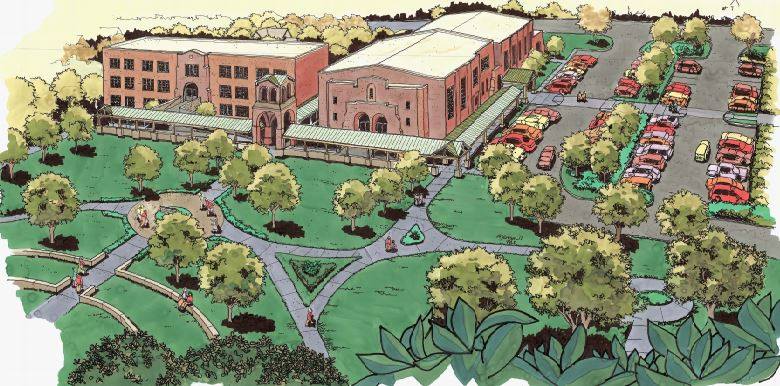
    A rendition of the planned restoration of Mt. Zion.

    WINNSBORO – Cancelling plans for a new county building would trigger litigation that could cost Fairfield County upwards of $13 million, some council members say.

    “If the ultimate goal is to tear down this project, we’re probably looking at a $13 million lawsuit we can’t afford,” Councilman Neil Robinson said during a special meeting Feb. 10. “We’re looking at our bond rating going down and we’re looking at no other plan to house [county] employees.”

    Robinson’s grim warning came in response to Council Chairman Moses Bell’s suggestion to create an ad hoc committee to “review the Mt. Zion contract to determine the costs to the county from the beginning to the end.”

    Council members voted 4-3, with Bell and council members Mikel Trapp, Shirley Greene and Tim Roseborough supporting the committee. Bell appointed Greene, Roseborough and Robinson to serve on the committee.

    In October 2018, the council in a supermajority 5-2 decision voted to repurpose the old Mt. Zion Institute into a new county building and lease it at an estimated cost of $4.2 million.

    The current council, however, has consistently voted 4-3 since they were seated on Jan. 11, 2020, and in the opposite direction as prior councils recently have voted.

    Bell stated an ad hoc committee was needed to determine the true costs associated with the Mt. Zion plan.

    “We continue to get this question—how much is it costing us?” Bell said, not specifying who is asking the question. “The purpose of this [committee] is just to see how much this is costing us from inception up until now.

    “We need to look at the cost end of the building,” Bell continued. “We don’t know what that’s going to look like.”

    “Is the true intention of Mt. Zion committee to lay the groundwork for canceling the contract?

    – Councilman Neil Robinson

    Gilbert, though, said spending time revisiting the Mt. Zion vote also risks hampering ongoing projects, such as infrastructure upgrades and recruiting industry.

    “Shouldn’t we be looking forward instead of looking backwards?” he said. “It just doesn’t make any sense. We as a council and the administrator should be moving Fairfield County forward.”

    Greene countered by saying it’s the council’s responsibility to evaluate how taxpayer money is spent.

    “We’re responsible for making sure our money is spent judiciously. We can’t do that if the information isn’t in front of us,” Greene said. “If we’re going to move Fairfield forward, we have to make sure we have all the financial information that we need.”

    Robinson said he worries the true intention of the Mt. Zion committee is to lay the groundwork for canceling the contract.

    “Before this new council came in, it was already said that the first thing on the agenda was to tear down old projects,” Robinson said. “It kind of seems like we’re following suit with that. If we spend two years digging up all old stuff to make sure it’s correct, we won’t get anything done,” Robinson added.

    Bell responded that he’s heard conflicting figures about the true cost and forming a committee will help pin down the exact figure.

    “We want to settle all the questions,” Bell said.

    Councilman Doug Pauley reminded Bell that the answers to cost-related questions can be found in recordings of the various public meetings and town halls the council held on the subject.

    “I’ll tell you what’s amazing to me, except for Ms. Greene and Mr. Roseborough, who have recently been elected, all five of us were here when the Mt. Zion contract was done,” Pauley said. “Now we get to this point and you don’t have a clue what was spent, what was discussed. The five of us already on council should’ve already answered these questions.”

    The Mt. Zion committee has been tasked with reporting back to the council within 60 days.

    Also during the Monday night special meeting, council members voted 4-3 to create another ad hoc committee, this one to hire a new county attorney.

    Former county attorney Tommy Morgan is resigning effective March 1, citing the shifting political landscape in Fairfield County following the November election.

    The Feb. 10 vote initially began as a motion for “the council to hire the new attorney” without any additional details.

    Pressed by Robinson, Gilbert and Pauley for details, Bell said he’s looking to form a committee, which wasn’t stated in the original motion. 

    Bell said he would be chairing the committee, which would also include Councilman Trapp, and that County Administrator Jason Taylor would serve in an advisory capacity.

    The committee will interview the attorney candidates and make a recommendation to the council.

    There was no discussion of advertising the county attorney vacancy. Rather, Bell said, “We’re thinking about reaching out to those persons we know with the help of attorneys that we know today.”

    The agenda for last week’s meeting also contained an item regarding forming a third ad hoc committee to review census data, but action on that item was postponed.

  • Council votes 5-2 to renovate Mt. Zion for Administration Building

    WINNSBORO  – It wasn’t quite as dramatic as the Brett Kavanaugh hearings, but there still was plenty of suspense at Monday night’s Fairfield County Council meeting.

    Council members gave final reading to an ordinance authorizing the county to move forward with an $11.5 million plan to build a new government center at the site of the former Mt. Zion Institute.

    Though the announced vote was 5-2, Councilman Cornelius Robinson said after the meeting that he abstained (an abstention is recorded as a yes vote according to the Council’s bylaws).

    “I believe in this project but I couldn’t convince many of my constituents that it was good thing for the county. Rather than vote no I abstained,” Robinson said.

    Council members Douglas Pauley and Mikel Trapp voted against the ordinance.

    Trapp didn’t comment on the Mt. Zion project from the dais.

    Pauley, one of two holdouts during first and second reading, said he previously abstained so he could gather more information. He expressed concerns about cost.

    “Fairfield County is in possession of 80 or more county maintained buildings,” he said. “Adding one more to it would definitely add more cost to the county.”

    Councilman Dan Ruff, the other council member who previously abstained, said he remained undecided as recently as Monday morning.

    Ruff said he had concerns about traffic and a monument on the property, but ultimately voted yes, saying he didn’t see a better plan to remediate the woes with the County’s current government building. He also thinks it’ll be an economic boost to Winnsboro.

    “This has been a very, very tough decision for me,” Ruff said. “This morning I was still very uncertain, back and forth. This to me isn’t ideal, but I haven’t seen a better solution”

    The proposal calls for repurposing the Mt. Zion campus into a new government complex. More than half of the funding would come from state and federal tax credits associated with the property.

    Once complete, the new complex would be more than double the size of the existing admin building, encompassing nearly 45,000 square feet.

    No plans have been announced for what would become of the existing county building.

    Ten people signed up to speak specifically about Mt. Zion during public input time Monday night, with a majority of those speaking supportively and urging the council to vote yes.

    Claudia Cathcart, the first person to speak, noted that Fairfield County has been struggling to keep jobs.

    Council members supporting the repurposing of Mt. Zion have said plans for the new government complex could help increase foot traffic in downtown Winnsboro, and help offset losses after the recent closure of Walmart, as well as the failed nuclear project at V.C. Summer.

    Element recently announced it would cut more than 100 jobs, citing Trump administration tariffs, before reconsidering, adding further uncertainty in Fairfield County.

    “We’ve had some bad luck in the county,” Cathcart said. “Now is the chance to overcome some bad thoughts. Please vote yes for this project.”

    Also supporting the Mt. Zion proposal was Joan Cumbee.

    “This is the least expensive and most energy efficient option,” Cumbee said. “It is the only option that will not require a tax increase to do needed repair work.

    “The claim that all neighbors are opposed is not true,” she added. “I live in the neighborhood and nobody asked my opinion.”

    Winnsboro resident Susan Taylor touted economic benefits the project would bring.

    “This is a plan that our county can afford,” Taylor said. “It’s the only plan that our county can afford. I believe that the refurbishment of these buildings would bring property values up.”

    Not all supported the plan, however.

    Dr. Marie Rosborough, a frequent critic of the Mt. Zion plan, once again voiced her opposition.

    “Your budget has increased $13 million over the past three years,” Rosborough said. “That concerns me. Exactly how did you come up with these figures? So many people support your effort if you don’t live next door.”

    In the end, however, council members approved third reading following a discussion in executive session.

    Right before the vote, Council Chairman Billy Smith, who has pushed in favor of the project since its first proposal, took note of the considerable dialogue the Mt. Zion plan has received.

    “That’s the most involvement I’ve seen us have on any issue,” he said, adding, “I hope the involvement continues.” Reached after the meeting for comment on the proposal’s advancement, Smith said, “I’m glad council had the vision to take advantage of such a rare opportunity as this. I think it gives us a shot at revitalizing Winnsboro and making the first step of turning things around. There’s risk in everything that ends up good and I acknowledge that, but if this is successful, in two years, we’ll look back and know we made the right decision. Then in 10 years, we’ll be known across the state for it as a model for others to follow.”

  • Admin details aired in forum

    WINNSBORO – If people left a recent Mt. Zion Institute forum with reservations, it wasn’t due to a lack of information about the proposed project.

    Fairfield County Council members, staff and the developer spent two hours Thursday evening addressing residents’ questions about the project during a forum at Midlands Tech-Fairfield Campus.

    If built, the $11.5 million project would repurpose the Mt. Zion property into a new county administration building. It would stand three stories tall and span 45,000 square feet, more than double the current 21,000-square-foot structure. The total cost to the county would be about $8 million over seven years.

    “We’d like this to be the first of many revitalization efforts in Winnsboro and Fairfield County,” said Rory Dowling with 1st & Main, a Raleigh, North Carolina firm working with the county on the project.

    If approved, construction could start as soon as April 2019 and be completed by summer 2020.

    “I think it’s going to be a fantastic asset once it’s completed,” Dowling said. “We hope to have this agreement in place shortly.”

    Earlier this month, council voted to approve second read ing of the project following an executive session discussion.

    “If you really and truly want growth, there’s going to be changes. Folks say they want it, but some of them pull back on it a little bit,” said Council Chairman Billy Smith. “You’ve got to have a little vision to make it grow; things don’t happen on their own.”

    Sixty-four questions – all submitted by only 12 people – were answered at Thursday night’s forum.

    An informal drop-in meeting, which included renderings of the proposed project, preceded the forum.

    One by one, county staff drew citizen questions from a fish bowl. Questions ranged from the cost of renovating the existing county building to what will happen to it if a new building is constructed.

    In response to one question, Dowling pledged that 1st & Main wouldn’t build multi-family housing on the site should the county building project fall through.

    County leaders said a deed restriction prohibiting multi-family housing could be built into the contract. The property itself isn’t zoned for that, either.

    “Our zoning doesn’t allow for it to be used for multi-family and we would never use it for that,” County Administrator Jason Taylor said. “Our only use would be as an administration building.”

    Council members, some of whom have remained silent about Mt. Zion, spoke up at Thursday’s meeting.

    Councilman Cornelius Robinson expressed concerns about the fate of a monument at the Mt. Zion property, but also voiced optimism for the project’s potential.

    “It would just add value to the neighborhood,” Robinson said, comparing the project’s potential to a similar one that helped revitalize Greer.

    Councilman Dan Ruff, who’s abstained from previous votes while searching for more information, said he’s also interested in the monument.

    “I would like to address this in some form,” he said.

    Ruff and other council members said there’s no Plan B for the property if an administration building isn’t built there.

    “If we can’t make this happen, nothing is ever going to happen on that property, so you might as well tear it down,” Ruff said. “Folks need to consider that as well, what might happen after demolition.”

    A big point of discussion revolved around money.

    Responding to a question about alternate options, County Administrator Jason Taylor said renovating the existing administration building would be north of $8.5 million.

    About half of the cost would come from housing county staff at a temporary facility during renovations. It would also cost several hundred thousand dollars in additional taxpayer money to solicit bids, county officials said.

    Although Mt. Zion would appear more costly at $11.5 million, a majority of that amount would be paid for with tax credits. The remaining $3 million to $4 million would come from lease payments stretched out seven years.

    “We’re essentially getting an $11-$12 million dollar project for $8 million,” Taylor said.

    Council members fielded several questions about the potential of default, either by the county or 1st & Main. Smith said the larger issue would be the cost of inaction.

    “I don’t think default is an option. The biggest problem isn’t what’s going to happen to this property, it’s where in the heck are these people going to work?” Smith said. “I don’t think they want to work on the street. I don’t care if we have one employee, they have to have a place to work.”

    Council discussed finalizing the project in executive session Monday night during the council meeting, but the third and final vote isn’t expected for at least another two weeks.

  • Mt. Zion/Admin forum set for tomorrow night

    WINNSBORO – “Council will be bringing good news to the public forum Thursday evening [Sept. 20],” Council Chairman Billy Smith reported to The Voice earlier this week, regarding the proposal to repurpose Mt. Zion for new county offices.

    “An important part of making this project affordable for the county is for the developer to be able to receive about $5.4 million in tax credits,” Smith said. “To get a majority of those credits, the property must be listed in the National Register of Historic Places.”

    To that end, Smith said that on Sept. 12, the county received word from the United States Department of the Interior, which certifies properties for listing status in the National Register of Historic Places, that the Mt. Zion property ‘will likely be listed in the National Register if nominated by the State Historic Preservation Office.’

    “And we have also received notification from the SC Historic Preservation Office stating that, ‘The property appears to meet national Register Criteria for Evaluation and will be nominated,’” Smith said.

    “This is a big step towards being granted these historical preservation tax credits,” Smith said. “It’s great news for the taxpayers of Fairfield County.”

    The two-part tax credit proposal consists of a New Market tax credit of $2.2 million and a historical tax credit of $3.2 million. The state and federal tax credits may also include abandoned building tax credits, according to Rory Dowling of 1st and Main, the North Carolina firm working with the county to renovate the building.

    The developer owns the building and will bear the costs of the renovation. To help finance the project, the developer will sell the tax credits to a third party at a discount.

    Smith has said the project will cost about $11.4 million total and will be paid for by 1st and Main from several sources – the $5.4 million in tax credits, $1.1 million in equity, and (after the property is developed) the county will buy the building via interest free annual lease payments of approximately $4.9 million over seven years. At the end of those seven years, the county will make a final payment to purchase and take ownership of the property from 1st and Main.

    “Getting the tax credits is what makes this project possible,” Smith said.

    While project naysayers have criticized the county for not renovating the current administration building or building a new one, Smith said to do either is cost prohibitive.

    “[Mt. Zion] is the only thing we can do and afford to do,” Smith said. “It’s not the ideal situation, but when you’re $40 million plus in debt and unable to borrow any more, you have to dig out.”

    Smith blamed Fairfield County’s financial predicament on past council members who, he said, borrowed $24 million in 2013, banking on revenues from the failed VC Summer nuclear plant to repay the bond –   revenues that never materialized.

    “Replacement of just the electrical, HVAC and roof of the current county building would cost over $4 million,” Taylor said. “To renovate and expand that building would cost much more than it would cost to repurpose Mt. Zion, which will offer so much more space.”

    “Even if we had the up-front money to renovate the current county building, there would be additional costs to find offices for employees while the renovations were being done,” Smith said. “Building out a temporary location would cost just as much, if not more. In 2015 it was estimated that housing the Courthouse temporarily in the HON building during renovations would cost $3.6 million. That would bring the cost of renovating the current building to right under $7 million and would not include any expansion to meet even our current needs. Those costs would be even higher if quoted today. That would not make sense financially.”

    County leaders say the 45,000 square foot Mt. Zion Institute would more than double the existing 21,000-square-foot building to include not only council chambers and county offices, but possibly the recreation, sheriff’s and other departments as well. There would also be space to house the Courthouse offices while renovating the current Courthouse.

    The proposed renovation of Mt. Zion would feature more parking, increased police presence and could lead to the county’s 120 employees shopping and eating in downtown Winnsboro, spending more money downtown, Smith said.

    Council could take a third and final vote on the project as early as Sept. 24.

    Council will hold a public forum on the proposed project Sept. 20 to answer questions that have been submitted by the public and to review and explain the financial and construction details of the project.

    Smith said the public will have a chance to talk informally with the developer and council members prior to the developer’s presentation and council’s discussion of citizen’s submitted questions.

    If you are going to the public forum, here are the details: Thursday, Sept. 20, 6 p.m. at the Midlands Technical College campus, 1674 U.S. Highway 321 N in Winnsboro.

  • Admin forum scheduled for Sept. 20

    WINNSBORO – Fairfield County residents with a vested interest in an $11.5 million project that would repurpose the old Mt. Zion Institute into new county offices will have a chance to have their questions answered at an upcoming public forum.

    The forum is scheduled for Thursday, Sept. 20 at the Fairfield County campus of Midland Technical College. It will be held from 5 to 8 p.m., and residents are asked to submit written questions in advance.

    Thursday’s forum follows considerable debate on the proposed administration office project, which for the third meeting in a row, received considerable discussion among County Council members and residents alike.

    At least four supporters addressed the council Monday night, each saying repurposing the Mt. Zion property is exactly what the Town of Winnsboro needs.

    “It has sadly become a tragic site,” retired State newspaper columnist Bill McDonald said about the Mt. Zion property. “I can’t understand why a certain group of people oppose the reincarnation of the Mt. Zion Institute.”

    Donnie Laird, also speaking during public input, said the current proposal of seeking tax credits to help pay for the work is the only feasible option.

    “The county cannot borrow any more money,” Laird said.

    The strongest comments, however, came from Bill Haslett.

    “It’s very difficult to see a town dry up like Winnsboro has done. People don’t want to live in Winnsboro because it looks like the devil,” Haslett said.

    “I’m disappointed in the two council members who have sat on the fence,” Haslett continued. “I believe that’s a political move to get votes in the next election.”

    The latter remarks drew a response from Councilman Dan Ruff, one of two council members Haslett indirectly referenced. Ruff denied that he is on the fence.

    “It’s about trying to make the best decision you can make. If you don’t know and you’re not sure, you can’t vote,” Ruff said.

    Some candidates seeking office and other private residents opposed to the Mt. Zion plan took to the podium as well.

    “It’s a neighborhood that needs to stay a neighborhood,” local resident Pam Smith said. “We’ve spoken to an attorney to see what we would have to do to protect the properties.”

    As proposed, about half of the $11.5 million project would come from a series of state and federal historic tax credits totaling $5.4 million.

    Another $4.5 million would come in the form of a construction loan, as well as $1.1 million in equity from money the developer would raise.

    If built, the new administration building would more than double the square footage of the existing 21,000-square-foot space of the old one.

    Council members discussed the proposal in executive session later in the meeting, but took no action.

    In other business, the council unanimously approved second reading of an ordinance accepting the conveyance of 2.72 acres on Old Windmill Road near Ridgeway.

    Councilman Jimmy Ray Douglas, who’s spearheading the plan, said it’s his hope that a four-bay public safety building can be built on the property.

    Two bays would serve fire engines, one would serve the sheriff’s office and the final bay would be dedicated to EMS.

    Lake Wateree Presbyterian Church is providing the property. Land would revert back to the church if the station isn’t built.

  • Community forum set for admin building

    Forum Set For Sept. 20 At Fairfield Midlands

    WINNSBORO – A community forum and county council work session concerning the proposed new county administration building project will be held from 5 – 8 pm at the Midlands Technical College’s Fairfield Campus on Wednesday, Sept. 20.

    The forum will include a 5 p.m. reception where citizens can speak openly with the developers, council members and lead county administration staff, County Council Chairman Billy Smith said.

    The work session, which will include an updated presentation on the proposed project, will focus on addressing and discussing questions submitted by citizens prior to the meeting. Citizens may submit questions in any of the following ways:

    • Email question(s) to the Clerk to Council, Mrs. Patti Davis, via patti.locklair@fairfield.sc.gov. The clerk will reply to all questions received to provide confirmation. If you do not receive a response, in order to ensure that your question(s) have been received, please call the clerk directly at (803) 635-1620.
    • Turn in your written question(s) to the front desk receptionist at the Fairfield County Government Complex, 350 Columbia Road, Winnsboro, SC 29180.
    • Mail your written question(s) to P.O. Drawer 60, ATTN: Patti Davis, Winnsboro, SC 29180.
    • Or submit questions on the form found at www.surveymonkey.com/r/newadminbldg

    “We ask that those submitting questions provide their name, address and contact information along with the submission,” Smith said. “Submissions without this information will not be considered for discussion during the work session. All questions must be received by Friday, September 14, 2018. If you have any questions concerning this process, please do not hesitate to contact the Clerk.”

  • Admin building faces opposition

    Smith Pushes Back In 15-Minute Soliloquy

    WINNSBORO – Council members voted 4-0 to approve second reading of an ordinance authorizing development of a new administration building and a lease agreement and other contracts associated with the Mt. Zion site.

    But repurposing the old Mt. Zion institute into a new Fairfield County administration building is far from a slam dunk.

    Council members Dan Ruff and Douglas Pauley abstained as they did during first reading two weeks ago.

    Mikel Trapp was absent Monday, though he voted against first reading.

    Council members Cornelius Robinson, Ruff and Pauley called for public forums to be held before third reading, though Robinson ultimately voted in favor of second reading.

    “We need to have an open forum before we have third reading so everyone is aware of what’s going on,” Ruff said. “Also I would like to get written estimates for this building and other options. This is a big deal. We have to take time to make sure what we do is right.”

    “We still have some things with the contract to button up,” Smith conceded. He said the $11.4 million proposal relies heavily on selling tax credits, which is why he thinks it’s the best option. But if the deal falls through, the alternative is to demolish the building altogether, he said.

    “[Mt. Zion] is the only thing I see that we can do and afford to do,” he said. “It’s not the ideal situation, but when you’re $40 million plus in debt and unable to borrow any more, you have to dig out of those holes.”

    Fairfield County is working with a North Carolina developer proposed plans to redevelop the site.

    More than half of the estimated cost – about $6.5 million – would come from tax credits and private equity from the developer, with county lease payments covering the difference.

    County leaders say the 45,000-square-foot building would more than double the existing 21,000-square-foot building, which faces $3 million in repairs.

    Once again, the Mt. Zion issue drew several residents to the podium Monday night, including candidates for public office.

    Marie Rosborough, who opposes the site, said she fears it limits citizens’ access to law enforcement.

    “There’s no justification for putting the sheriff’s office there,” Rosborough said. “You’re not responsible for saving buildings. That’s not your role. Your job is to provide taxpayers the most for their money.”

    Randy Bright of Ridgeway cautioned the council against moving forward too quickly.

    “The reasons and details of the plan were poorly communicated. We don’t know the final cost,” Bright said. “That was clear in last week’s meeting and it was so clear, the numbers didn’t even add up. We’ve got to get a whole lot more details and better communication of this plan.”

    Dena Boorda said she and her husband had more at stake than anyone else because they live directly across the street from the teacherage.

    “It’s literally out our front door,” Boorda said. “We are not opposed to the project given certain criteria can be met. We are willing to hear the facts. We haven’t seen any documents so I’m respectfully requesting that we have an opportunity to get the facts and be able to ask questions.”

    Some Fairfield County residents propose looking at Wal-Mart instead of Mt. Zion for an administration building.

    Ordinarily reserved and guarded in his comments, Smith spoke from the heart during a 15-minute soliloquy during the council comments portion of the meeting, He systematically shot down the various populist arguments against repurposing Mt. Zion Institute property into a new county administration building.

    “If third reading were tonight, I’d vote no,” he said. “But I would ask those who are opposed to say where the money for an alternative[new administration building or renovation] is going to come from.”

    Smith touched on a variety of subjects, including economic development, public safety and fiscal responsibility. His rebuttals were candid.

    “If we want to take that asset[Walmart]  off the market, we can do that,” Smith said.

    But he said that the day after Element announced it may slash 126 jobs due to U.S. tariffs on Chinese imports, an economic prospect representing up to 250 jobs toured the shuttered Wal-Mart building at 721 Highway 321 Bypass.

    The City of Aiken, for example, is following a similar route, spending $9.5 million from a 20-year bond to refurbish a former Food Lion into a new public safety headquarters.

    Smith said that wouldn’t work in Fairfield County because frivolous spending by the previous council has eroded the county’s borrowing capacity.

    He also said Wal-Mart is ineligible for the tax credits for which Mt. Zion qualifies. And, Wal-Mart continues to pay property taxes and as it does, the building gets looks on a regular basis from prospective industries. The same is true of the Fairfield Memorial Hospital site, Smith said.

    “These alternatives would be no less expensive,” he said. “They would be the same, if not more. And we wouldn’t get tax credits to help pay for those.”

    He debunked an argument that the new building would attract vagrants, noting in recent weeks that homeless people were living in the structure and commonly loiter around it at present.

    Smith said the proposed facility would feature more parking, increased police presence and could lead to employees spending more money downtown.

    He said he’d support deed restrictions to prevent developers from using the administration building proposal as a launching pad to develop any residential properties, addressing the fears of low-income housing coming into the area.

    “If you have a better plan, bring it forward and we’ll consider it,” Smith said. “If this plan doesn’t go forward, my next move is to push demolishing the building so that we can solve its future, once and for all.”

    Blaming Fairfield County’s financial predicament on past council members who he said pushed for a $24 million bond issue in 2013, Smith said they banked on revenues from the failed V.C. Summer nuclear plant to repay the bond, revenues that never materialized.

    “Because of that $24 million bond, we can’t finance a thing,” he said.

  • Council OKs first Mt. Zion vote

    Proposed Mt. Zion renovation

    WINNSBORO – With Fairfield County stung by massive job losses and another 120 positions expected to vanish, development of a new $11.4 million county administration building aims to ease some of that pain.

    Supporters also note tax credits would finance the majority of costs of renovating the Mt. Zion Institute site in Winnsboro, lowering the county’s costs to about $5M.

    But a large number some residents opposing the plans fear it will threaten the property’s historical character and turn the area into a traffic nightmare.

    “I applaud council finding alternative ways to funding this county council building. However this project is wrought with controversy,” said Ridgeway resident Shirley Green. “Let’s not court controversy. It’s the kind of controversy that pits our citizens against each other. An administrative building is not an economic driver.”

    Winnsboro resident Bill Haslett, however, said revitalizing the Mt. Zion property would unite the county, not divide it.

    “Fairfield County is not going to grow unless we take down the dividing line between Zion Hill and Mount Zion. Mt. Zion needs to be redeveloped,” he said. “We’ve had nothing but negative news in this county for the past six months and I’m tired of it. We need some positive news instead of people bickering back and forth.”

    On Monday, Fairfield County Council voted 4-1 for first reading of an ordinance authorizing development of a new administration building, as well as a lease agreement associated with the project.

    Councilman Mikel Trapp cast the lone dissenting vote. Council members Dan Ruff and Douglas Pauley abstained.

    Trapp didn’t specifically why he voted against the ordinance, though during discussion of the proposed measure, he raised concerns about revenue sources and costs, which are not finite.

    “Once that number changes, we’ll have to revote,” Trapp said.

    Council Chairman Billy Smith said the county is “in the driver’s seat,” noting that the builder faces the most risk.

    “I think the best way to structure it is to put the contractor at risk, not the county,” Smith said. “We’ve got two more readings to flush this out. We all know the first reading is procedural.”

    Both Ruff and Pauley said they wanted more information before casting a vote.

    “I just need a little more time to get information and feedback,” Ruff said.

    Pauley asked for a lot more.

    “The vote concerning the project is a very important vote and a vote I would not take lightly,” he said. “My reason for abstaining tonight, there are a few questions I’ll present to the county administrator before I make my decision.”

    Pauley requested detailed information about the county’s outstanding debts, as well as alternative sites for the administration building.

    “We can get that information together for you,” County Administrator Jason Taylor said.

    Two more readings are required before the deal becomes official.

    Rory Dowling with 1st & Main, a Durham, North Carolina firm working with the county, hopes that will be soon.

    Dowling said he hopes an agreement can be finalized within 30 days, and to apply for a building permit by early 2019. The goal, he said, is to begin construction within 10 months, with a grand opening by April 2020.

    As for spurring economic development, Dowling noted that the building would bring about 120 employees daily to downtown Winnsboro.

    “When you have 120 people within walking distance, it helps keep the lights on at some of these establishments,” he said.

    If constructed, the four-story structure would include 45,000 square feet of space, more than doubling the existing 21,000-square-foot administration building at 350 Columbia Road.

    The new structure would house administrative offices, the sheriff’s office, a daycare center, and parks and recreation with a new gym. County council chambers would also move to the new building, making use of the old auditorium.

    About half of the $11.5 project would come from a series of state and federal historic tax credits totaling $5.4 million.

    Another $4.5 million would come in the form of a construction loan, as well as $1.1 million in equity from money 1st and Main would raise itself.

    Dowling said he felt confident the tax credits would be awarded, but acknowledged there aren’t any guarantees.

    “This is a tax credit program that’s geared toward a low income tax tract, which this is,” he said. “We hope to know more in October when some of these [organizations] receive some feedback on a federal level on whether they can expect some level of credits.”


    This article was updated 8/20/18 at 3:06 p.m. to correct the county’s cost from $5K to $5M.