JENKINSVILLE – Contamination has been reported again in Jenkinsville water.
In July, the S.C. Department of Health and Environmental Control, or (DHEC) issued a new notice of violation against the JWC, the fourth such violation in five years, and fifth since 2010, according to public records.
The latest violations occurred at Well 15 on Clowney Road. Other wells are in compliance.
JWC exceeded Gross Alpha radiation levels on two occasions in 2018 — July to September, and October to December, DHEC records show.
Gross Alpha is a test that measures radioactivity levels in water, according to the Environmental Protection Agency, or EPA.
During the October to December testing period, Gross Alpha levels peaked at 34 pCi/L (picoCuries per liter). July to September radioactivity levels came in at 23 pCi/L.
The state legal limit for drinking water is 15 pCi/L, according to DHEC.
Samplings taken since then have been in compliance.
From January to March, radioactivity was 11 pCi/L. From April to June, it was 12 pCi/L, documents show.
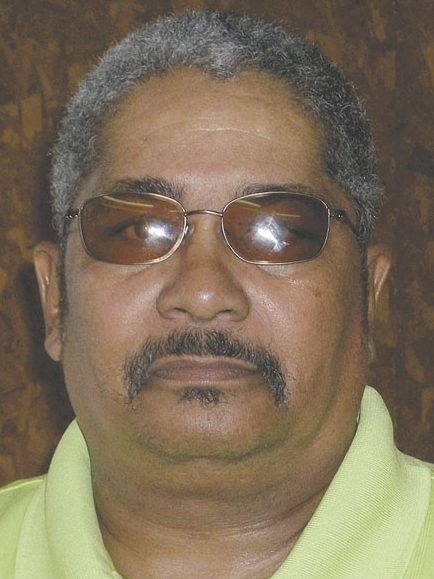
JWC chairman Greg Ginyard said he couldn’t explain the 2018 measurements found in violation. He said the JWC has done nothing different in the past 12 months, yet radioactivity levels dropped to acceptable levels.
“It doesn’t make sense to me. Was it a blip in the lab somewhere? I don’t know,” Ginyard said. “They had two that were bad that were a year ago. I don’t have any answers.”
In 2010, DHEC issued a notice of violation when uranium was found in a JWC water storage tank in Blair. Radium has been found on multiple occasions at the Clowney Road well, records show.
“Effects of Exposure to Radium”
DHEC spokeswoman Laura Renwick said Jenkinsville water customers should not worry about ill effects from short time exposure.
“Over a long period of time and at elevated levels, ingestion of radium increases the risk of bone cancer and uranium increases the risk of kidney damage,” Renwick said via email. “There are no immediate short-term health risks or symptoms from drinking water that contains gross alpha radiation.”
No fines or penalties had been imposed as of press time. An enforcement conference will be held at a later date.
Renwick said the JWC must submit to DHEC a corrective action plan that addresses the violation. The JWC must also publicly notify customers within 30 days of the violation, which is dated July 23.
The latest violation is the fourth in five years that DHEC has issued against the Jenkinsville water provider, agency records state.
It also comes amid pushback and threats of litigation from the JWC and its attorneys against Fairfield County Councilwoman Bertha Goins, who’s publicly criticized the authority over its water quality. No lawsuits had been filed as of press time, according to the Fairfield County Public Index.
In June, the JWC went as far as to issue an ultimatum demanding Goins retract her statements. She refused, saying publicly and through her attorney that the JWC’s threats are meant to intimidate and silence her.
In one of its letters to Goins, the JWC called its water “award winning,” asserting that no contaminants above DHEC levels have been detected in seven years.
Legal Victory for JWC
The violations reported in July overshadow a legal victory for the JWC, which succeeded in having one of two pending lawsuits partially dismissed.
In 2014, D. Melton of Broad River Campground sued the JWC for breach of contract after the body rejected his request for increased capacity.
Melton later amended his suit to include JWC chairman Greg Ginyard and vice-chairman Joseph McBride individually as defendants. The amended suit also alleged violations of the S.C. Unfair Trade Practices Act, or SCUTPA.
In February, a circuit judge dismissed the SCUTPA claim as well as individual suits against Ginyard and McBride while allowing the breach of contract litigation to continue.
Circuit Judge Brian Gibbons wrote in his order that he found no evidence the JWC was guilty of unfair trade practices.
“Plaintiff BRC failed to prove that Mr. Ginyard and/or Mr. McBride acted with reckless, willful, wanton, or gross negligence,” Judge Gibbons wrote. “To the contrary, the evidence shows that Defendant JWC acted in accordance with the advice and recommendation of its third-party engineers, and no evidence showed, or even inferred, that Mr. Ginyard or Mr. McBride attempted to undercut, disregard, or deviate from those recommendations.”
Ginyard declined to comment on the pending litigation, but did say he doesn’t see the partial dismissals as legal victories.
“To me it’s not a victory because I didn’t do anything wrong. I knew all the time that there was going to be vindication,” Ginyard said. “I took a polygraph. I passed it.”
NOTE: This story has been corrected to say customers should not worry about ill effects from short term exposure.