Tag: Fairfield Memorial Hospital

  • FMH finances still sliding; New FMH fund request may be near

    WINNSBORO – A presentation of Fairfield Memorial Hospital’s increasingly difficult financial situation during recent Board meetings indicates that the Board may be inching closer to having to ask County Council for a new infusion of funds. So far, a funding request has not been discussed in public meetings. Sources say a funding request could come as early as February.

    Meanwhile, the hospital’s December financial statement continued to show how FMH is shrinking since it closed Blue Granite Medical Center, cardiac rehab services, and its home health business. The hospital reported a net operating loss for December of $225,886; this did not include any bad debt recoveries. However, this loss was improved from November which showed a $421,171 operating loss.  Average daily gross revenues also increased slightly, from $32,045 in November to $33,431 in December.

    While the hospital has reduced operating costs by $388,115 so far this fiscal year, gross patient service revenues have fallen even faster, by $886,484 during the same period.  Earnings before interest, taxes, depreciation and amortization for the past three months were a negative $634,538.

    Remarkably, there was no public discussion about how the hospital could potentially plug this hole in the face of continually shrinking revenues.

    However, chief financial officer Timothy Mitchell said he is already seeing positive trends in January as a result of shedding those hospital services which were losing money.  The Finance and Audit Committee also approved a revised fiscal year budget to reflect the changes in hospital operations.

    Ground breaking for new ER Feb. 15

    The ground breaking for the new Providence Health free-standing emergency department will be Feb. 15 at property located across the street from the Winnsboro Bi-Lo.

  • FMH finances still sliding; Douglas proposes new use for building

    WINNSBORO – For the first time since the demise of the hospital was anticipated, the Fairfield Memorial Hospital Board of Trustees is entertaining a proposal with the potential to bring a new purpose and mission to the facility.

    State Rep. MaryGail Douglas, District 41, which includes Chester, Fairfield and parts of Richland County, presented her vision for one possible future use of the FMH buildings and campus – a stand-alone respite center.

    Respite care, Douglas explained, is intended to give relief for those caregivers who are providing home care for a loved one, typically an aged or disabled parent.

    Trained as a nurse, Douglas said she spent 13 years at Fairfield Memorial.

    “This is an opportunity for Fairfield County and this place we are in right now to transition into a place to take care of family members who are taking care of family members,” Douglas said.

    “We often find that the caregiver falls apart in the care of that person,” she said.  “Right now in South Carolina we are spending millions and millions of dollars on long term care for older adults. We spend very little on those who decide to keep their loved ones at home.”

    She said she started seven or eight months ago to “plant some seeds” in considering what will happen to the FMH facility when the emergency room is moved to another location.

    “For me, I know if these doors ever close, we will never get them open again.  So that is my plea as I tell you tonight about my vision and the players that can make it happen.”

    She brought some of those players to the meeting – Cindy Curtis, Director of the Area Agency on Aging (AAA); Fairfield County Administrator Jason Taylor; Peatra Cruz, Director of Organizational Development and acting COO for Eau Claire Cooperative Health and Dr. G. Cleve Pilot, Director of the Fairfield County Career and Technology Center.  Scott Campbell, Market Chief Executive Officer of Providence Health, was also in attendance.

    In the hour-long discussion that followed, Rep. Douglas laid out her vision for a stand-alone facility that would become a midlands center for respite care, where families could take their loved one for one or two weeks so the caregiver could take time out for personal health care needs, a family reunion or even a vacation.

    This would be a resource for the surrounding counties, she said. She sees a collaborative effort with Eau Claire, with its management and health care expertise, as well as with the Career Center, since it has a certified nursing assistant program but could also send its cosmetology and barber students to give grooming care to the respite patients and the culinary students could learn about healthy meal preparation in a residential care setting.  She said she envisions that the respite center could help its elderly clients with medication management and other health services which in turn would help keep them out of the ER.

    But while the focus of the facility would be caring for the elderly and home-bound who need care, the purpose of the respite center would be to give their caregivers a break from the 24-7 job of providing home care.

    “If we don’t take care of the caregiver, then we are going to pay the price in the long term with that patient,” Douglas said.

    Both Douglas and Curtis talked about the availability of state funds, federal aging funds and other grants for respite care. While the dollars are limited, Douglas said, “I am telling you, the market is out there. Family members will pay to get their caregivers some relief. … The need is severe.”

    She also said she has pitched this concept to both the lieutenant governor’s office and US Senator Tim Scott.

    While both Douglas and Curtis pointed out that there is no model in the state to judge the merits and challenges of such an operation, Cruze said she felt that was problematic.

    Still, Curtis joined in about the need for respite care.

    “While the AAA already gives vouchers for respite care, there is great need for a place where families can place their loved ones for a short time and know they will be well-cared for,” she said.  “The respite care is critical for the caregivers themselves.  And the population of the US is aging and, within a few years, one in five will be over age 65,” she said.

    Board members kept the session going with multiple questions for Douglas and Curtis and, before adjournment, Board Chairperson Catherine Fantry directed Suzanne Doscher, FMH CEO, to keep the discussion going about using Fairfield Memorial Hospital for respite care.

  • FMH funds dwindling

    WINNSBORO – Even as Fairfield Memorial Hospital sheds departments and services in the hope of remaining afloat, the Board of Trustees continued to grapple with the reality of its cash shortages during the Nov. 27 Finance and Audit Committee meeting.

    “The overriding theme here is that while we made some hard decisions the last meeting, our cash flow is still very troubling,” Finance Committee Chairman Randy Bright said. “We’ve got more work to do to stabilize our cash flow.”

    In a special called meeting Nov. 7 the Board voted to close the Blue Granite Medical Center, the Caring Neighbors home health service and the hospital-based cardiac rehab program.

    The hospital is still getting less money in the door, especially in its emergency department, which exacerbates its cash shortage. Chief Financial Officer Timothy Mitchell explained why patient collections are decreasing.

    “We are doing less of the more profitable books of business/services such as imaging and rehab and more of the unprofitable books of business such as the ED (emergency department),” Mitchell said.

    Second, he said the ED is getting more Medicaid and self-pay patients.

    “Medicaid pays less than private insurance companies, and patients who are self-pay often don’t have any health insurance at all,” he said.

    Finally, the hospital is seeing more denials because of not meeting medical necessity.  When a patient seeks primary care in an emergency room and does not present with a true emergency, the insurance company will not pay the hospital claim.”

    Mitchell also pointed out that the last time the hospital received state DHS (disproportionate share) and county funds was the first week in July 2017, when they had 22.5 days cash on hand.  By October this had shrunk to 9.6 days cash on hand.

    While the hospital does have enough funds to pay its key vendors and staff, Mitchell said, “We won’t have a whole lot of cash once those checks clear”.

    Mitchell also pointed out the cost savings he expected would accrue with the elimination of Blue Granite, home health, and the other departments. For example, while the expenses last month of running these departments were more than $96,000, they took in only $47,000 in revenues.

    “However, even taking these savings into account,” Mitchell said, “We are still looking at a large cash loss over the next 12 months…as best we can project”

    The hospital’s operating expenses were 66.8 percent of revenue in October, 2016. These increased to 71.5 percent in October 2017.

    The hospital experienced a net loss of $273,351 for October 2017; this did not include any bad debt recoveries.  Both the October and the November GEAR and tax set off payments will be reflected in the November financials, Mitchell said.  Daily gross patient revenue was also off in October, down to $39,578 from $45,227 the previous month and from more than $51,000 per day in October of last year.

    At Mitchell’s suggestion, the Board moved $125,000 of the $517,000 in Board-restricted cash to the hospital’s operating fund. Board-restricted cash is money the Board has previously set aside and that the hospital cannot use without the Board’s permission.

    “It would be difficult to get through December without tapping into these reserves,” Mitchell said.

    Also based on a recommendation from the Finance and Audit Committee, the Board approved an increase in the prices charged by the hospital based on a charge master review that was completed last year. This would result in an overall 17 percent increase in FMH charges.

    Hospital CEO Suzanne Doscher updated the Board on the closing Blue Granite and the FMH’s home health and cardiac rehab services. She said physicians and patients have been provided with notifications about the closure, and the goal is to complete care or transition care to other providers by year end, Doscher said.

    The five employees who are losing their jobs have been formally notified with letters, she said, and the hospital is actively helping them find new jobs.

    No nurses have been notified yet since the hospital is working with them to see who can fill vacant positions within the ER, she said. The transition will be finalized within the year, Doscher said.

    The Board also heard a presentation from Dawn Catalano, the executive director of the FMH Foundation.  She reported that since its inception in 2010-2011, the Foundation has donated $418,090 in total contributions – cash, grants, and items – to the hospital.

    Finally, the Board approved two motions after coming out of executive session:

    Approved the Hospital Transformation Agreement (Nov. 20, 2017) which would supersede the Board’s prior approval of the Hospital Transformation Agreement (Oct. 5, 2017), and

    Authorized Board Chair Catherine Fantry to sign the Hospital Transformation Agreement on behalf of the Fairfield Memorial Hospital Board of Trustees.
  • FMH closes Blue Granite Center, home health and cardiac rehab

    WINNSBORO − The tipping point for Blue Granite Medical Center and for Caring Neighbors, Fairfield Memorial Hospital’s home health business, may have occurred during the Finance and Audit Committee meeting Halloween night.

    Agenda items that evening included profitability reports, Blue Granite Medical Center and Home Health, but FMH Board of Trustees Chair Catherine Fantry requested discussion of these items be moved into executive session since it would encompass “personnel and contractual matters.”

    After another executive session during a special called meeting Nov. 7, announced to the public with only a notice on the front door of the hospital, the full Board voted to close Blue Granite Medical Center along with the FMH home health business and its cardiac rehab program.

    According to information provided in response to questions from The Voice in September, on average 162 patients per month are seen at the Blue Granite Medical Center, and there is a case load of 48 patients in Caring Neighbors Home Health.

    A week after the vote to close the three departments, The Voice was told that hospital CEO Suzanne Doscher was too busy to meet with The Voice staff to answer questions about the impact of closing these services until after the newspaper’s publication deadline. The Voice learned from reliable sources that Doscher planned to inform 11 or so hospital employees of their pending layoff on Tuesday.

    In spite of the apparent haste of the special called meeting and vote, the writing has been on the wall for some time. Month by month, Blue Granite and the other hospital programs have shown declining gross patient revenues and were seen by some board members to be large contributors to the hospital’s overall negative position.

    “If it wasn’t for Blue Granite and home health, we would not be under water with EBITDA (earnings before interest, taxes, depreciation, and amortization),” Trustee Randy Bright said during the FMH September Finance and Audit Committee meeting. “If we would have taken the suggestion to close those at the beginning of the year, we would now have a positive EBITDA.”

    The detailed service line reports reviewed each month by the Board show why.  For Blue Granite Medical Center, at the beginning of the prior fiscal year (Oct.1, 2016 – Sept. 30, 2017), the hospital had hoped for $286,908 in gross patient revenues (what the hospital bills for services, not what it actually collects), but it grossed only $164,303 or almost 75 percent less budgeted.  Even though expenses for the medical center were reduced, it still cost about $250,000 to operate the center.

    Similarly, for its cardiac rehab program, the hospital grossed only $78,916 last year, 136 percent less than what it had expected. While FMH’s home health business took in $479,505 or 74 percent more than expected, the cost of providing home health services, $655,840, far exceeded what the hospital had budgeted. It still lost money on that service.

    Chief Finance Officer Timothy Mitchell also noted during the September finance meeting that in the 2017-2018 fiscal year budget, home health and home care were projected to lose about $437,000.

    In spite of this, hospital management had included Blue Granite and home health in the current 2018 budget, which runs from Oct. 1, 2017 through Sept. 30, 2018, and were optimistic about the future of Blue Granite, at least. During the hospital’s September budget meeting, Mitchell said that increases in patient volume and revenues at Blue Granite Medical Center were expected because the staffing had finally stabilized.

    Unfortunately, that hope of stability lasted only one month. Doscher reported at the Oct. 24 meeting that the full-time nurse practitioner would be leaving Blue Granite and the center would be open only two days a week.

    Throughout its budget deliberations and policy setting, FMH has proceeded as if all departments would remain open in the near future and that it would, at some unspecified time, begin looking at what services it will close and what it will keep. The hospital also hired an outreach coordinator his past summer whose job is to promote outpatient services to the community and gain more visibility – and patients – for the facility. In addition, the medical center and home health services have been characterized by Board members as services the hospital has to keep because of need in the community.

    While FMH has developed an employee retention plan with bonuses and an overall strategic plan to guide the hospital for the current year, there has been no indication to date that the hospital has a transition plan in place for those programs it intends to shut down.

    Hospital management and the Board of Trustees have been reluctant to publicly state what Fairfield Memorial will look like once the inpatient hospital fully shuts down and Providence Hospital builds a new stand-alone emergency room.  The closure of Blue Granite, home health services and cardiac rehab, leaves the other rehabilitation services (physical therapy and respiratory therapy), imaging services, and diabetic education as the core services around which a reconstructed FMH could be formed.

  • FMH Receives Grant

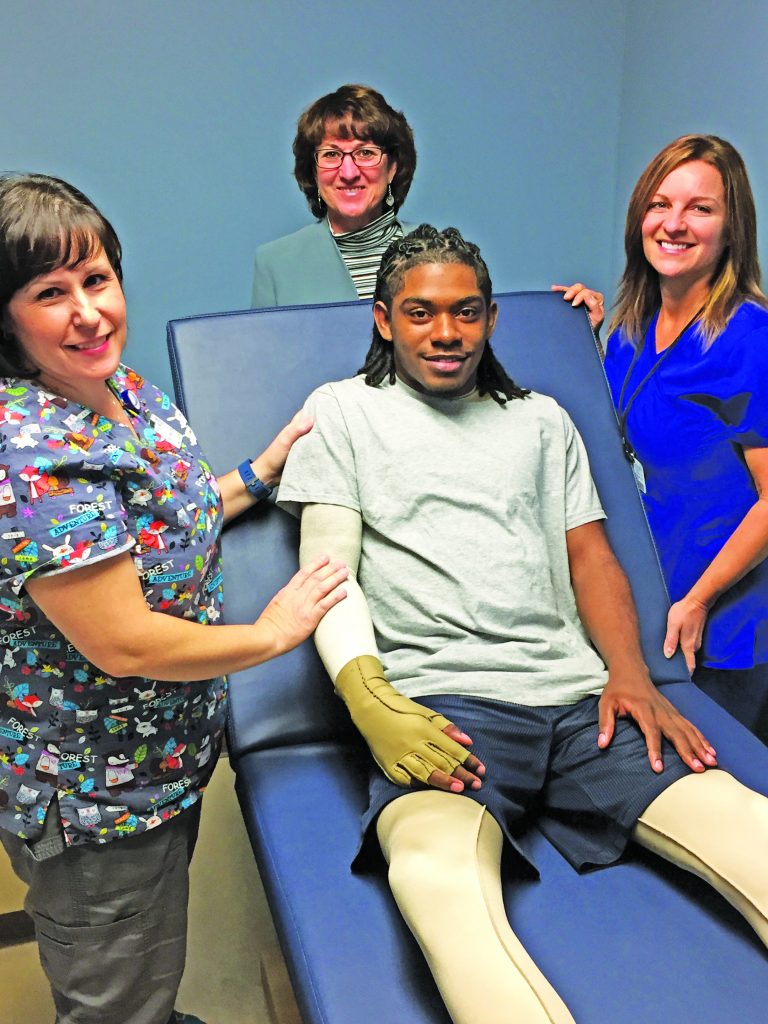
    Fairfield Memorial Hospital Foundation has been awarded a $4000 grant from AFLAC for a powered adjustable Hi-Lo treatment table for FMH’s Outpatient Rehabilitation Department. Burn victim Jaykwan Gibbs, 20, center, receives four physical and four occupational treatments at FMH twice a week. Tonja Oliphant, Certified Occupational Assistant, Suzie Doscher, FMH CEO, and Laura Willingham, Director of Rehabilitation Services. One of greatest benefits of the hi/lo table is the patient can get on and off the table easier because the table height can be adjusted to the patient’s specific needs.

  • Cash-strapped hospital to ask County Council for more funds

    WINNSBORO – Going over its year-end financial reports on Halloween night, the Fairfield Memorial Hospital Finance and Audit Committee found the information rather scary.  By the end of the meeting, CFO Timothy Mitchell conceded that, with little reserves going into next year, the Board will need another infusion of cash from County Council by January.

    Mitchell moved quickly, however, to put a pretty face on the financial reports for the fiscal year ending Sept. 30, 2017.

    “First and foremost, the loss for the month of September ($106,987) is substantially reduced from the previous month’s loss ($282,619). This is driven by improvement in our gross revenue and an increase in the average daily revenue from $35,670 in August to $45,227 in September,” Mitchell said.

    However, committee chairman Randy Bright said the hospital has dropped in total gross revenue year after year by $840,000.

    Mitchell also noted that it has been an “abysmal” month in terms of collections, and that he was seeing an alarming trend.

    “We’re seeing more and more denials for the ED (emergency department) claims because the insurance companies are deeming them not emergencies and denying them as non-covered services,” Mitchell said. “We do have the ability to bill it as a non-covered charge, but the collection experience with self-pay is typically low.”

    “We are between a rock and a hard place,” Mitchell said, “because EMTALA (the federal Emergency Medical Treatment and Labor Act) requires that we not turn people away who present for services.”

    Bright noted that net patient receivables have also dropped.

    “As you get declining revenues, you get declining receivables,” he said, noting that this has a domino effect on reserves and cash balances.

    Another issue, Mitchell said, is that even with losses in patient revenues, the hospital continues to see increases in accounts payable (what it needs to pay businesses and vendors) which climbed almost $100,000 in one month.  “That is alarming,” Mitchell said.

    Cash balances were also looking slim, Mitchell said.  By the end of September, he said the hospital had only four days of unrestricted cash and only 21-22 days of total cash on hand, including cash that the Board had previously decided to restrict.

    “What this means is that we have very little reserves, as we go into the next year,” Mitchell said.  “Of course, in January, we will make another DSH payment and will need another appropriation from the county.  That will bring the cash balances back up, along with normal patient collections.”

    “That’s if we don’t make any changes to our fiscal plan or the services we are offering,” Smith said.  “That would be extra cash coming in if we won’t be paying out for expenses.”

    “If we were to eliminate any services, obviously,” Mitchell said, “since the hospital would not have to pay the salaries or benefits associated with those services.

    “That makes it essential for us to streamline before the end of the year,” Smith said.

    “And that means making tough decisions about certain departments,” Board member William Turner added.

    “Now is the time for us to start to wrestle with those questions.” Mitchell said.

    “We’ve never stopped wrestling with those questions,” hospital CEO Suzanne Doscher replied.

    Mitchell also reported that the 2015 hospital financial statement audit is essentially complete, and that he expects to schedule a meeting to review it soon.  He also said he is setting dates for the 2016 audit and his goal is to have the 2017 audit done by the end of the first quarter.

  • Qualls Helping FMH Cut Costs

    linda-qualls-web
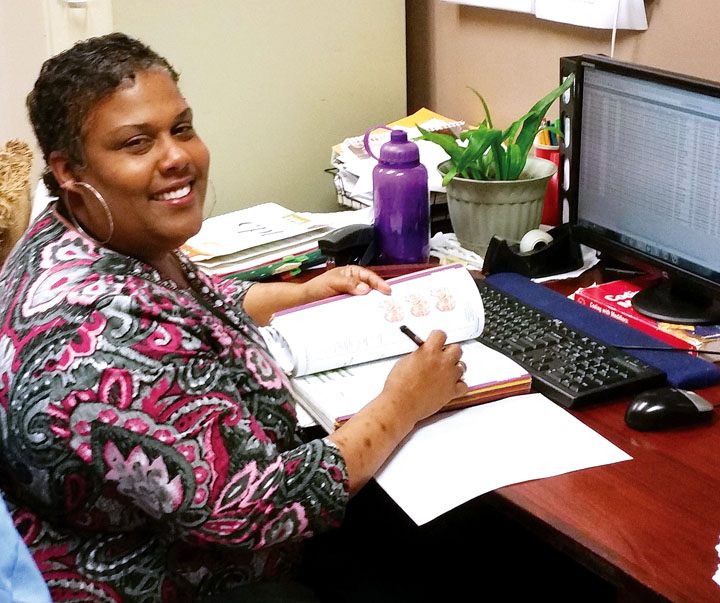
    Linda Qualls, Certified Coding Associate for Fairfield Memorial, looks up coding information for her newest batch of hospital files.

    WINNSBORO – It’s no secret that the future of Fairfield Memorial Hospital is up in the air and has been for a long time. As the hospital has struggled in recent years to stay afloat with County funds until it can work out a partnership with another health care facility, its problems and debt have mounted as solutions remained elusive.

    But there are beginning to be some bright spots – new management, new board members and Linda Qualls.

    Last year, Qualls, employed by the hospital for 12 years, with much of that time as a billing records clerk, took it upon herself to help the hospital save money, a lot of money, by becoming a certified billing and medical coder. This year the hospital is on track to save as much as $50,000 because of Qualls’ certification.

    “Regulations and laws require that billing records be coded for us to get paid,” Karen Reynolds, Senior Director of Health Information at FMH, told The Voice. “Because we had no one in house to code our billing records, we’ve had to outsource that work at a significant cost every year. By becoming a certified coder, Linda has been able to take on many of those coding duties such as our new Mako Laboratory account claims, provide all coding and billing for our Blue Granite outpatient clinic and handle roughly fifty percent of all other medical coding needs within the hospital. What Linda has accomplished for the hospital is no small feat. She has earned both the Certified Coding Associate and the Rural Health Coding and Billing Specialist credentials. ”

    Those certifications required course work at Midlands Technical College, various coding boot camps, independent study and sitting two national exams, Reynolds said. “I’m very proud and the hospital management is thankful for what Linda has done.”

    The courses, training and certifications are regulated by the Association for Rural Health Professional Coding (APHPC), Office of Rural Health and American Health Information Management Association.

    “There are certain nuances about Rural Health coding that are a little bit different than in a doctor’s office or a hospital,” Reynolds said. “So to understand those nuances and be certified to not only code, but bill as well, is a unique certification that not a lot of people have.”

    Qualls told The Voice that she was hesitant, at first, to take the qualification classes, even though she knew she liked to code and had a natural knack for it.

    “I was scared the classes would be too hard, but Karen really encouraged me,” Qualls said.

    “My advice to her was ‘nothing ventured, nothing gained,’” Reynolds said. “I felt confident that she could do it.”

    With a dedicated support system, Qualls pushed past her fears and finished her certification with flying colors. Now she says she feels like she’s accomplished something really big and is proud of herself for it.

    “It really has made all the difference,” Qualls said.

    Reynolds said that while the hospital has lowered its costs by no longer having to outsource most of its coding and billing paperwork, she doesn’t think the hospital will eliminate outsourcing coding and billing altogether.

    “Those (coding) companies have 25-100 coders and so the advantage is having them as kind of our back up,” Reynolds said. “They can essentially code around the clock and on weekends. There’s great value in having both (in house and outsourcing),” Reynolds said.

    For her part, Qualls says she is willing to help out however possible in the hospital’s struggle to not only survive but to thrive.

    “I love this hospital. It’s like my home, and I’m glad to do what I can to save the hospital money and hopefully it will be here for years to come for the County’s residents,” Qualls said.

    But for Qualls, her accomplishments are not a signal that it’s time to coast. She’s now working toward becoming certified on an even higher level.

    “I’ve got one more level of certification that I’m studying for and it’s the highest level, a Certified Code Specialist,” Qualls said. “Hopefully, I’ll soon be able to set a date to take the test.”

    And for Fairfield Memorial Hospital, that certification will likely mean even greater cost savings.

    “It’s another positive step for our hospital,” Reynolds said.

  • FMH Seeks Additional County Aid

    FAIRFIELD – Administrators for Fairfield Memorial Hospital say they can see the light at the end of the tunnel, but added at Monday night’s joint work session with Fairfield County Council that they’re not through the tunnel just yet. And while revenue and operating expenses have remained fairly constant compared with last year, the hospital has some additional expenses on the horizon – expenses for which they are seeking assistance from County Council.

    Near the close of Monday night’s presentation, hospital CEO Mike Williams unveiled a list of “unfunded cash requirements” facing the health care facility in coming months. At the top of that list was a $500,000 line of credit, necessary to keep the hospital solvent while they transition to a new electronic medical records system, known as “Cerner.” Williams later explained that the new system will make Fairfield Memorial compatible with other larger hospitals in the exchange of medical records, including Palmetto Health Richland, with which Fairfield Memorial has a growing relationship.

    “Any time you go from one computer system to another, when you’re talking about an organization with revenues of $27 million and you’re actually collecting around $9 or $10 million of that, $11 million of that, there’s a transition period where you’re going to need cash to carry you over,” Williams said. “There’s going to be a down time. That is a concern and we need to prepare for that.”

    The total cost for implementing Cerner is $1.8 million, Williams said, half of which is covered by incentive programs. The hospital began installing the system last December and is expected to launch the new program in September. During the transition, Williams said, the hospital will require the half-million dollar line of credit to cover expenses while the new records and billing program comes online.

    In addition to the Cerner costs, Williams said the hospital is asking the County for $75,000 in start-up money for the Blue Granite Medical Center. Williams said the money will be used to hire a full-time physician, which the center must have on staff in order to qualify for state and federal grant funds. The hospital is also seeking another $75,000 to renovate their emergency room, as well as an unspecified amount to repair the facility’s aging roof.

    Pressed by Council for an estimate on the cost of the roof repair, Williams approximated that the cost could be between $200,000 and $250,000. The worst part of the roof, he added, is over the operating room, and reopening the operating room is one of the hospital’s plans for increasing future revenue. Williams said earlier in the meeting that the hospital hoped to bring general surgery, orthopedic surgery, OB/GYN procedures and colonoscopies back to Fairfield Memorial in the near future.

    Tim Mitchell, the hospital’s Chief Financial Officer, noted that the $500,000 Cerner credit line would be paid back to the County after the transition to the new records and billing system had been completed. The line of credit would have to be in place by September, before Cerner goes live. The hospital currently has a cash balance of about $50,000, Mitchell said, down from $350,000 in February 2012.

    Collections compared to last year, Mitchell said, are down from 44 cents to 39 cents on every dollar owed. Mitchell attributed that trend to the growing number of self-pay patients and the shrinking number of Medicare and Medicaid patients. Bad debts, he said, accounted for 16 cents of every dollar written off by the hospital last year. That number has increased to 25 cents.

    The hospital is also in a precarious position regarding access to emergency capital.

    “If any piece of major equipment went down,” Williams said, “it would be hard to replace it.”

    But, Williams said, he does expect the hospital’s cash flow to improve over the next nine to 12 months with expected changes to Medicaid.

    “We’ve just got to get there,” Williams said.

    Council Chairman David Ferguson said the requests would be brought to the full Council at an upcoming meeting. Just a little over one year ago, the County poured $1.2 million into the hospital.

  • Seniors on the Move: Keys to Better Fitness

    Last week we told you why physical activity is such a big deal. We also discussed the difference between physical activity and exercise. Both of these are important and will help improve your ability to do the everyday activities you enjoy. We shared four areas of exercise that are the keys to better fitness: Endurance, Flexibility, Strength Training and Balance.

    This week we will share with you some specific exercises that will help you improve these four areas.

    Endurance,

    or aerobic, activities increase your breathing and heart rate. These activities help keep you healthy, improve your fitness and help you do the tasks you need to do every day. Endurance exercises improve the health of your heart, lungs and circulatory system. They also delay or prevent many diseases that are common in older adults such as diabetes, colon and breast cancers, heart disease and others. Endurance building activities include:

    • Brisk walking

    • Yard work (mowing, raking)

    • Dancing

    • Jogging

    • Swimming

    • Biking

    • Climbing stairs or hills

    • Playing tennis or basketball

    Strength

    Even small increases in muscle strength can make a big difference in your ability to stay independent and carry out everyday activities such as climbing stairs and carrying groceries. Some people call using weights to improve your muscle strength “strength training” or “resistance training.” Strength exercises include:

    • Lifting weights

    • Using a resistance band.

    Balance

    Balance exercises help prevent falls, a common problem in older adults. Many lower-body strength exercises also will improve your balance.

    Exercises to improve your balance include:

    • Standing on one foot

    • Heel-to-toe walk:

    1) Position the heel of one foot just in front of the toes of the other foot. Your heel and toes should touch or almost touch.

    2) Choose a spot ahead of you and. focus on it to keep you steady as you walk.

    3) Take a step. Put your heel just in front of the toes of your other foot.

    4) Repeat for 20 steps.

    Tip: if you are unsteady on your feet, try this exercise near a wall so you can steady yourself.

    Flexibility

    Stretching can help your body stay flexible and limber, which gives you more freedom of movement for your regular physical activity as well as for your everyday activities. To increase your flexibility, try:

    • Shoulder and upper arm stretches:

    1) Stand with feet shoulder-width apart.

    2) Hold one end of a towel in your right hand.

    3) Raise and bend your right arm to drape the towel down your back. Keep your right arm in this position and continue holding on to the towel.

    4) Reach behind your lower back and grasp the towel with your left hand.

    5) To stretch your right shoulder, pull the towel down with your left hand. Stop when you feel a stretch or slight discomfort in your right shoulder.

    6) Repeat at least 3-5 times.

    7) Reverse positions, and repeat at least 3-5 times.

    • Calf stretch:

    1) Stand facing a wall slightly farther than arm’s length from the wall, feet shoulder-width apart.

    2) Put your palms flat against the wall at shoulder height and shoulder-width apart.

    3) Step forward with right leg and bend right knee. Keeping both feet flat on the floor, bend left knee slightly until you feel a stretch in your left calf muscle. It shouldn’t feel uncomfortable. If you don’t feel a stretch, bend your right knee until you do.

    4) Hold position for 10-30 seconds, and then return to starting position.

    5) Repeat with left leg.

    6) Continue alternating legs for at least 3-5 times on each leg.

    • Yoga

    Next week we will discuss getting organized! We will offer tips for setting short and long term goals, choosing activities and fitting them into your daily life!

  • FMH Hosts Memorial Service

    Fairfield Memorial Hospital announces its Bi-Annual Memorial Service on Thursday, Aug. 30, at 3 p.m. in the Chapel Lobby. This service is for any family who has had a family member to pass away at the hospital during the last six months.

    The program will be conducted by a local minister. Family members and friends are invited to attend this service. Light refreshments will be served.

    If anyone has questions about the service, please call Denise at 635-0206 or e-mail deniseb@fairfieldmemorial.com.