Tag: Fairfield County Sheriff’s Department

  • Sheriff: burglars active in rural area

    WINNSBORO – Two homes were recently burglarized in the Ashford Ferry Road and Old Douglass Road areas, and according to the Fairfield County Sheriff’s Office, more daytime home burglaries could be occurring in the northwest corner of the county.

    The entries were forced in both the front and rear of the homes and the homeowners were away, deputies reported.

    “These incidents are believed to have been committed by the same individual(s),” Sheriff Will Montgomery said. “These are burglary trends that we have experienced in the past. Typically, these types of crimes are committed by individuals who ride through rural areas looking for residences whose occupants are away at work,” Montgomery said.

    “Although we always encourage everyone to be cautious and to always be aware of their surroundings, offenders who commit these types of crimes generally avoid contact with others and do not attempt to steal items from property when they think the homeowner might be present,” Mongtomery said. “If they do encounter a homeowner, they are most likely to fabricate a legitimate reason for being there such as looking for directions, looking for a lost pet, etc., and then quickly leave. So we are asking for the public’s assistance in being vigilant for any suspicious person(s) and/or vehicle(s), especially in the more rural areas.”

    Report suspicious persons or activity to the Fairfield County Sheriff’s Office by calling 803-635-4141.

  • Sheriff’s Deputies freezin’ for a reason

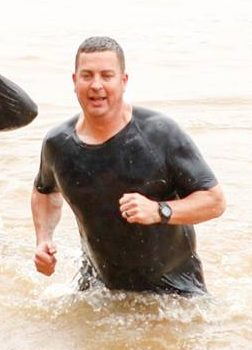
    Sheriff’s Deputies and teams take the plunge in Lake Wateree for charity. | Melissa Cooper

    LAKE WATEREE – About 65 people took the chilly plunge on Saturday at Lake Wateree during the Fairfield County Sheriff Department’s fifth annual Polar Plunge, organizer Bill Dove, an investigator with the department said.

    Sheriff Will Montgomery

    “We raised over $10,000 this year,” Dove said, “which is the largest amount we’ve raised since we’ve been sponsoring the plunge. We had teams from not only Fairfield County, but Lugoff, Camden and Lake Wateree.”

    Those donations go toward the support of the Sheriff’s charity, the Special Olympics of South Carolina.

    Following the plunge everyone was invited to a lakeside lunch.

    The Sheriff’s Office will host several events over the next several months to celebrate the South Carolina Special Olympics and raise money to fund Special Olympics events for these athletes. On May 3, the Sheriff’s Office will participate in the ‘County Line to County Line’ torch run through Congress Street, and they will host Tip-A-Cop at a local restaurant later in the year.

  • Martin: Sheriff’s contract saves Ridgeway $70K a year

    RIDGEWAY – After voting on Aug. 9 to contract with the Fairfield County Sheriff’s office for law enforcement services for the Town of Ridgeway and on Aug. 11 to defund the Ridgeway Police Department, Town Councilman Dan Martin reported that the change would save the Town approximately $70,000 annually.

    “The fact is, we spent $108K on our police department last year. That’s what it cost after deducting the revenue the town took in for traffic tickets,” Martin said. “What we are proposing will be the same or better coverage and will cost us about 39,000 a year.”

    Martin said the town would be getting more police coverage by contracting with the Sheriff’s Department than it had funding its own police department.

    “According to our chief’s own records, he patrolled the town six hours and fifteen minutes per day, on an average of five days a week,” Martin said. Because Culp scheduled longer hours for himself on some of the days, he was on duty only four days during some weeks, Martin explained.

    Martin said that on days/weeks when Culp was away on vacation or training sessions, the town had coverage only from the Sheriff’s department but had no officer on duty within the town.

    “We won’t have this with a contract officer,” Martin said. He said the town would have an off-duty Fairfield County Sheriff’s deputy on duty in the town six hours a day, five days a week every week. He said the Sheriff’s department would continue to provide round-the-clock law enforcement for the town the other 18 hours just as it does now. The on-duty officer would be paid $25 per hour.

    “What we’re doing is equal or better than we have right now,” Martin said. “These off-duty police officers are highly trained, professional men and women who are more than adequately prepared to protect us. No one on this council would allow this town to go unprotected,” Martin said.

    Jones added that small towns are more and more abandoning their police departments for contracted security from county sheriff departments.

    “Blythewood contracts with Richland County, Lugoff with Kershaw County, Jenkinsville with Fairfield County,” Jones said.

    Martin provided The Voice with a list of the some of the biggest expenses the Town had last year in funding its own police department.

    Culp’s total salary expenses – $49K+; office expenses, supplies, equipment, legal and professional – $4,073; utilities – $7,248; fuel and maintenance for two patrol cars – $6,081 and insurance – $10,778. The town recently purchased a new Tahoe for Culp at a cost of approximately $34,000 and there were other miscellaneous expenses.

    There was also the cost of $4,000 for the town to provide court and a judge that are required when the town has a police department.

    “We could use this money in better ways, to provide more and better services to our citizens,” Martin said.

    But Councilman Donald Prioleau disagreed.

    “We aren’t putting the safety of our citizens first,” Prioleau countered. “Chief Culp is a top police officer that raised policing to a professional level and his criminal justice experience is helping to hold down crime. We make three to four times what our foreparents made and they had a police department and we’re getting rid of our police department with the salaries we make today. Let the citizens advise council what they want for safety,” Prioleau insisted. “We’re on the wrong track.”

    “You say we have a great officer. That’s okay,” Martin said. “But what you’re saying is that our officer is better than the Fairfield County Sheriff’s officers. That they cannot do as good a job as our officer.

    “That’s not true.”

    Martin said the contract off-duty officer(s) who serve the town will patrol a mixture of daytime and nighttime hours.

  • Counties differ on animal abusers

    WINNSBORO  – A man convicted of setting a dog on fire is serving a five-year prison sentence, the maximum allowed under state law.

    Another man who dragged a dog with a truck more than a mile didn’t spend one day in prison.

    So what makes these cases different?

    One was prosecuted in Richland County; the other in Fairfield County.

    Hykeem Dontavious Jabar Golson, 23, of Columbia, was sentenced to five years in prison and fined $5,000 after a Richland County jury convicted him in December 2017 of one count of felony ill treatment of animals, according to Richland County court records.

    Golson is one of only two South Carolina defendants to receive the maximum sentence, according to media reports.

    Billy Ray Huskey, 51, of Great Falls, pleaded guilty in July 2016 to dragging a nine-month-old dog with his Dodge Ram pickup truck in Fairfield County.

    Two other dogs were later found emaciated and had to be euthanized.

    Huskey had been charged with ill treatment of animals, torture – also a felony.

    But instead of going to prison, Huskey was allowed to plead to the misdemeanor charge of ill treatment of animals and sentenced to 90 days in prison, suspended to three years of probation.

    Richland throws book at abusers

    The disparity between the Richland and Fairfield cases is representative of how both counties traditionally handle animal abuse cases.

    A recent investigation by The Voice found that of 14 ill treatment of animals cases prosecuted since 2016 in the 6th Judicial Circuit, which includes Fairfield County, very few resulted in actual jail time.

    Often times, defendants either received probation or the cases were nolle prossed, meaning the cases weren’t prosecuted.

    Richland County, however, has quickly developed a reputation for a no-nonsense approach to animal cruelty.

    “Our pets need to be properly cared for and treated with love because they are a part of our families,” Richland County Sheriff Leon Lett said in a news release announcing Golson’s arrest.

    A lot of Richland County’s assertiveness appears to be in allocating resources to combat animal cruelty.

    In 2015, the Richland County Sheriff’s Office founded an animal cruelty task force.

    That year, its founder, senior investigator Holly Wagner, also investigated at least four dog fighting rings, according to a sheriff’s office news release, landing her honors from the American Society for Prevention of Cruelty to Animals and Humane Society of the United States.

    Judicial discretion

    Often times, how defendants are prosecuted hinges on the presiding judge, a point raised during a recent Winnsboro Town Council meeting.

    In June, Police Chief John Seibles told council members that officers have charged several people with cruelty to animals, with some facing felony counts.

    Penalties, however, are set “at the discretion of the court,” Seibles said. Katera Alexander, however, was arrested by a police officer in Seibles jurisdiction and charged with only a misdemeanor after it was discovered that she had tied a pit bull to her porch and starved it to the point that it had to be euthanized by the County’s Animal Control. Seibles’ comments were part of a larger discussion council members were having about proposed revisions to the Fairfield County animal control laws.

    While some Winnsboro town leaders were reluctant to follow the county’s lead, others were open to tougher penalties in more severe cases.

    Councilman Clyde Sanders, for example, said he thinks the town should mirror the county’s $500 fine for cruelty cases.

    “I can’t stand seeing dogs chained in the yard without anything to eat,” Sanders said. “If we catch someone doing that, the fine ought to be high enough to prevent them from doing it again.”

    In the Huskey case, Assistant Sixth Circuit Solicitor Melissa Heimbaugh, who prosecuted, told the Court she thought the state would not win a felony case with the available evidence.

    The presiding judge grudgingly agreed.

    “The State (solicitor) is right, they would have had a high burden to prove your guilt,” Gibbons said. “We have no evidence of intent, so I’m giving you the benefit of the doubt, which I have to do under the law.”

    Huskey faced up to five years in prison, but escaped prison by pleading guilty to the misdemeanor charge. He was also ordered to perform 30 hours of community service and banned from owning a dog.

    “I want to sentence you to the maximum jail time that I can under the guidelines,” Gibbons said. “I’m going to give you not two years of probation but three.”

    Lax laws

    Prosecutorial leniency is one reason most Fairfield defendants have escaped accountability in animal abuse cases, but not the only reason.

    One S.C. House member says South Carolina lags when it comes to meaningful protections for pets.

    “The laws need to be strengthened,” said Rep. Bill Taylor, R-Aiken. “It’s common knowledge that people who torture and abuse other animals are one step away from torturing or harming human beings.”

    In 2014, Taylor introduced a bill that would’ve toughened penalties for animal abusers, making most cases felonies. The measure, however, failed to gain traction.

    That year, though the General Assembly did revise animal abuse laws that cases are now heard in general sessions court versus magistrate or municipal court, where penalties tend to be lighter.

    But it’s not enough, Taylor says.

    “There’s a myriad of bills filed every session about this,” he said. “Very few of them ever get passed.”

    As recently as February, the S.C. Senate introduced a bill, which among other things, tightened anti-tethering laws. The Senate passed the bill, but it died in the House.

    Penalties for violating the tethering law would’ve included up to 90 days in prison and a $1,000 fine.

    The law also required magistrates to receive animal cruelty training and improving shelter standards, but the anti-tethering provisions drew opposition.

    “Serial killers over the years tortured animals at some point,” Taylor said. “These are serious crimes that can lead to other crimes, we need to be serious about this.”

  • Council defunds RWPD and Culp

    RIDGEWAY – After failing on Aug. 9, to finalize a vote to defund its Police Department, the Ridgeway Town Council held a special meeting Saturday, Aug. 11, at 10 am to pass the vote.

    Following executive session at the Aug. 9 meeting, Councilman Dan Martin moved to ‘implement a reduction in force by eliminating funding for the town’s police department personnel, non-personnel and capital expenditures effective Friday, Aug. 10, at 9:01 a.m.”

    Mayor Heath Cookendorfer seconded the motion.

    Before council could vote, however, Councilman Don Prioleau made what he called a substitute motion to call a town hall meeting before defunding the police department. Council, in its confusion, then stumbled into increasingly familiar territory – another parliamentary faux pas.

    “I would call for a town hall meeting where the citizens of the town would be able to help and guide council which way we might proceed,” Prioleau said. “So I offer a substitute motion that would have a town hall meeting for deciding on the police department.”

    A lengthy discussion then ensued on which motion to vote on first and whether or not to vote on the first (Martin’s) motion at all after the second motion failed 3-1.

    At one point, a woman from the audience walked up to the council table, interrupted proceedings and addressed the mayor and council without identifying herself or asking permission to speak.

    “I’m very concerned about something that happened while you all were in executive session,” the woman said as she laid a paper on the council table and pushed it toward the mayor and Prioleau. She then walked back to her seat to the bewilderment of council and the audience.

    Then, without comment, Cookendorfer and Prioleau, returned to bantering over whether to vote on the first motion.

    Finally, Cookendorfer warily accepted Prioleau’s parliamentary tact that the first motion actually won without a vote since the second motion failed.

    Councilman Dan Martin objected to that reasoning, insisting that the first motion still needed a vote. Prioleau prevailed, however, and Cookendorfer announced that the first motion, to defund the police department, passed, 3-1 without a vote.

    Martin then made a second motion to authorize the mayor to sign an agreement of understanding with the Fairfield County Sheriff’s Department to provide law enforcement for Ridgeway.

    “What we’re doing,” Martin said, “is hiring off-duty Fairfield County Sheriff’s deputies to come and patrol our town for however many hours we contract an officer to be here. We will have that officer here to protect the town, and he will not leave during the time he’s on duty,” Martin said.

    “When the contracted officer is not on duty, we will still have the same round-the-clock service from the Sheriff’s department we’ve always had, just like when Chief Culp was not on duty. We still had 24-hour protection provided by the Fairfield County Sheriff’s Department. Plus we’ll have a contracted officer five days a week here in town.

    Councilman Rufus Jones added that Culp would receive three weeks’ pay plus pay for three weeks of vacation upon separation from the Town.

    “It’s a bad day in Ridgeway!” former mayor Charlene Herring, a Culp supporter, shouted out immediately after council voted to adjourn the meeting. She continued to talk loudly as the audience dispersed, but what she said was not clear.

    Armed with advice from the S.C. Municipal Association that the non-vote for the first motion, to defund the police department, was just that – a non-vote, Cookendorfer, on Friday, called a special meeting for Saturday, at which time council voted 3-1 to pass the motion to defund the police department, effectively immediately.


    NOTE: Following the Aug. 9 meeting, The Voice obtained the handwritten note the unidentified woman left on the dias. Titled ‘Evidence of Collusion,’ it stated that Councilman Rufus Jones winked his eye at a person the woman said is well known to be obsessed with causing harm to the chief of police.

    Asked about the wink, Jones said it was a common practice for him to smile and wink at people he knows.

    “Everyone who knows me knows I do that,” Jones said.

  • Mahorsky seeks less restrictions

    BLAIR – A Fairfield County man charged with killing his parents remains at a state mental hospital while a judge mulls his future.

    Matthew Richard Mahorsky, who was found not guilty by reason of insanity in the 2013 shooting deaths, appeared in court June 28 for a hearing to decide whether to ease restrictions on his confinement.

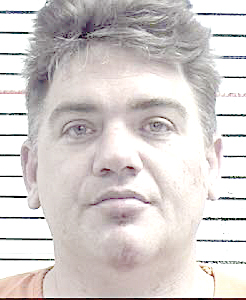
    Matthew Richard Mahorsky

    Mahorsky, 45, of Blair, has been confined at the state mental hospital since the trial concluded in October 2017. He’s being housed in a high security wing, according to prosecutors.

    The S.C. Department of Mental Health wants to remove some restrictions on Mahorsky’s confinement. Solicitors and the Fairfield County Sheriff’s Office, however, vehemently objected to the Department of Mental Health’s request.

    “They were recommending less restrictive measures on him as far as their treatment,” said Riley Maxwell, an assistant solicitor with the 6th Judicial Circuit. “We objected to that, we want him to remain where he is. He is behind a locked fence door. He is secure now.”

    Mahorsky is currently housed at the G. Werber Bryan Psychiatric Hospital in Columbia, according to the Department of Mental Health.

    But agency representatives declined to comment about the June 28 hearing, citing patient privacy laws.

    A spokesman said generally speaking, discharge hearings follow an intensive process that requires approval from a DMH review board, which then makes a recommendation to an agency deputy director, who must request a hearing if they believe one is warranted.

    If so, it’s up to a judge to determine whether or not the patient should be released, said Mark Binkley with DMH.

    “The Court may and usually does impose conditions when discharging an individual found [not guilty by reason of insanity],” Binkley said in an email. “The court’s jurisdiction over the defendant continues for as long as the defendant could have been incarcerated.”

    The S.C. Department of Probation, Parole and Pardon Services normally monitors defendants found not guilty by reason of insanity cases.

    In Mahorsky’s case, though, the DMH is the lead agency since no discharge hearings have been held, said Peter O’Boyle, spokesman for Probation, Parole and Pardon Services.

    “We will not begin monitoring his case until and if he has a Discharge Hearing by [the Department of Mental Health],” O’Boyle said via email. “I believe this would be a determination that he is mentally stable enough to go back to society, but [the DMH] may have to define that for you.”

    O’Boyle said that as of March 31, the agency was monitoring 126 people who had been found not guilty by reason of insanity.

    Defendants found not guilty by reason of insanity are typically hospitalized at the G. Werber Bryan Psychiatric Hospital.

    Patients with prior serious criminal charges are treated in a secure facility at the hospital called Forensic Services, separate from patients who are civilly committed through a Probate Court, Binkley said.

    In April 2014, the state Supreme Court issued an order establishing interagency protocols spelling out the handling of defendants found not guilty by reason of insanity, or NGRI.

    The high court ruled that persons falling under this designation are not considered prisoners because they’ve not been found guilty of a crime.

    “Rather than incarceration, they are committed to care and treatment,” the order states. “The terms of that care and treatment are to be therapeutic and not punitive.”

    The order further states that defendants considered not guilty by reason of insanity be committed to SCDMH custody for a period not to exceed 120 days “for the purposes of evaluation to determine the manner of future care and treatment of the Defendant.”

    After 120 days, an initial evaluation report is submitted to a chief administrative judge, who then reviews the case, the order states.

    Mahorsky was taken into custody shortly after the bodies of his parents, Ruth Marion Mahorsky, 70, and Richard F. Mahorsky, 71, were discovered outside their home off S.C. 215 in Blair.

    His parents had been shot to death in the head. Matthew Mahorsky was charged with two counts of murder and possession of a firearm during the commission of a violent crime.

    Mahorsky emerged from the home about 10 minutes after deputies arrived and surrendered.

    Authorities were told Mahorsky had a history of mental illness following a separate incident in 2004, when he pointed a weapon at his father’s head. Mahorsky received a one-year suspended sentence with three years’ probation in the 2004 incident.

    In May 2013, a judge granted a defense motion to conduct a psychological evaluation of Mahorsky, though his criminal case still went to trial, resulting in the not guilty by reason of insanity verdict four years later.

    “Mr. Mahorsky has an extensive mental health history,” Mike Lifsey, the public defender representing Mahorsky, told Judge Brooks P. Goldsmith at the May 2013 hearing. “There were statements made at the time of his arrest that give issue there as to his competency to stand trial.”

  • Man busted for ‘shake & bake’ meth lab

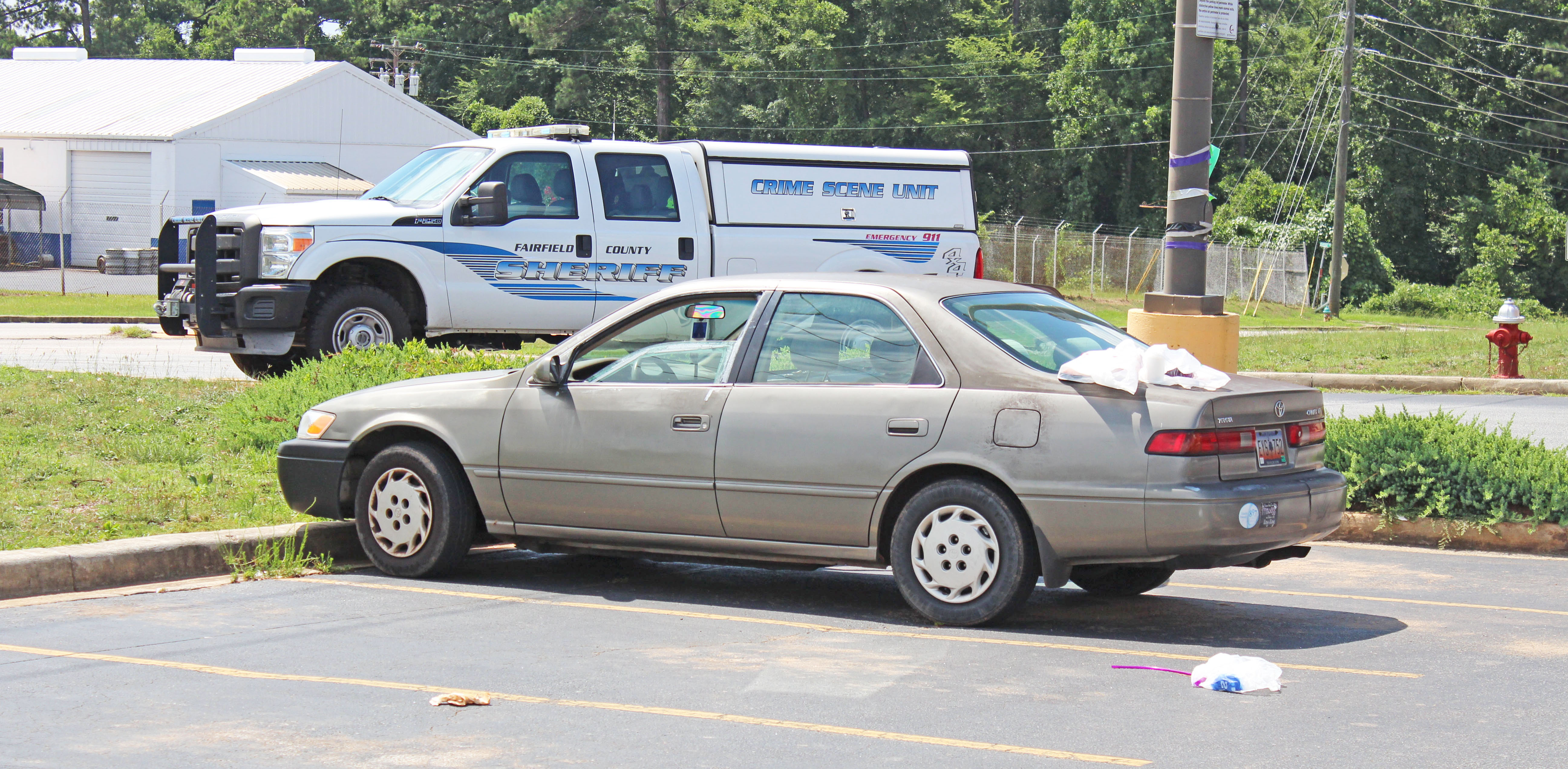
    WINNSBORO – A Winnsboro man was arrested after Fairfield County Sheriff’s deputies discovered he was manufacturing methamphetamine in the back seat of a car in the Bi-Lo parking lot.

    Sanders

    Bradley Alson Sanders, 48, was charged with using a motor vehicle without consent to manufacture methamphetamine in what deputies described as a ‘shake and bake’ lab.

    Sheriff’s deputies said they were notified a little after 1 p.m. on Tuesday that a man wearing a blue button up shirt and carrying a blue book bag had been seen in the Bi-Lo grocery store parking lot for “a couple of weeks” and was “going to people’s cars.” The report said the suspect was also seen in the back seat area of a Bi-Lo employee’s car without permission.

    The suspect was identified by the employee, the report stated. The incident report also stated that officers were familiar with Alston from previous methamphetamine related drug charges.

    When a deputy arrived at the Bi-Lo parking lot, he was told the suspect had been seen walking into the woods after the Bi-Lo employee told the suspect he had been reported to law enforcement. While looking for the suspect, the officer called for backup, then returned to the parking lot to find what he determined was an active meth lab in the back seat of the car.

    The county’s narcotics unit as well as the South Carolina Law Enforcement Division (SLED) arrived and a methamphetamine cleanup crew was brought in to collect, remove and clean up the mobile lab area.

    In the meantime, sheriff’s deputies located Sanders in the wooded area off of Columbia Road near Bi-Lo. Deputies reported Sanders’ book bag and several syringes (needles) that were located in the area and believed to be associated with Sanders, were turned over to the narcotics investigators.

    Sanders was arrested and warrants were obtained for manufacturing methamphetamine 3rd offense, manufacturing methamphetamine 3rd offense within one-half mile of a school and use of a vehicle without permission (unlawful use).

    Bond information was not available to The Voice at press time.


    Related: Sheriff investigates meth lab at Bi-Lo

  • Randal Sisk arrested for animal cruelty

    WINNSBORO – A Winnsboro man has been arrested after a Winnsboro Department of Public Safety (WDPS) officer reported two dogs in a back yard on Hillcrest chained to a tree and tangled in the chain so that one of the dogs could not reach shade. The report also stated that the dogs did not have food, water or shelter.

    Sisk

    Randal Flay Sisk, 57, owner of the dogs, was charged with animal cruelty. Sisk, who was not at home at the time the dogs were discovered at about 10:30 a.m. on Thursday, June 12, turned himself in to authorities at about 1:30 p.m. that day.

    The Fairfield County Sheriff’s Department and Fairfield County Animal Control were contacted, and Animal Control took both dogs to the county shelter.

    One of the dogs, a tan and white male mixed breed, was clipped to a cable on an overhead run in Sisk’s back yard, the report states. A black male mixed breed dog was not wearing a collar, but was secured to the overhead run by a chain tied around its neck.

    After examining both dogs, Veterinarian Dr. Robert Chappell, reported that the tan dog suffered from chronic severe dermatitis (mange) and needed immediate medical treatment, including flea and tick treatment, antibiotics and antifungal treatments.

    Sisk was booked at the Fairfield County Detention Center and released on a $1,000 bond.

    A spokesperson for the animal shelter said the dogs will be held at the shelter until the case is dispensed.

  • Sheriff investigates meth lab at Bi Lo

    See story update: Man busted for ‘shake & bake’ meth lab

    WINNSBORO – On Tuesday afternoon, the Fairfield County Sheriff’s Office investigated a suspected methamphetamine lab in the Bi Lo parking lot in the Winnsboro area. Deputies initially responded to Bi Lo for a complaint of trespassing.

    Emergency personnel is on site.

    Upon arrival, deputies learned that the trespass suspect had unknowingly been in an employee’s vehicle. Upon closer inspection of the vehicle, deputies report they located what was suspected to be a methamphetamine lab. Sheriff Will Montgomery said his department followed established protocol and blocked off the immediate area surrounding the vehicle. He said his personnel who are trained to handle these types of situations were called and are on scene. As an added safety measure, a fire truck was requested to be on standby at the location.

    After a search, the  Sheriff’s Office apprehended the suspect believed to be responsible for the suspected methamphetamine lab. Deputies expect to be on-scene for approximately 2-3 hours while waiting on a specialized cleaning and collection service to arrive for proper collection and disposal of these potentially hazardous items in question.

    “We are thankful to the Bi Lo staff for their vigilance and for quickly notifying our office,” Montgomery said. “Our deputies were on scene quickly to identify this meth lab and to take the proper steps necessary in safely handling it. Investigating methamphetamine labs is a very dangerous part of law enforcement and we want to make sure that this incident is handled in a safe manner. Unfortunately, these processes are time consuming. We appreciate the patience of the public and the staff at Bi Lo while we continue this investigation.”

    The Voice will update as the investigation continues.

  • Bond denied for man who beat teen

    JENKINSVILLE – A Jenkinsville man was charged with assault & battery 3rd degree, assault & battery 2nd degree, burglary, violation of court order of protection (two charges), domestic violence 3rd degree after allegedly using a set of brass knuckles to beat a 15-year old male in the face and assaulting the teen’s mother and grandfather at their home.

    Smalls

    Ervin Smalls, II, 31, was arrested on July 2, 2018 for the assaults that occurred at about 9 p.m. on June 10, at a home on State Highway 215 in Jenkinsville.


    When officers arrived at the home, they found the teen victim, reportedly beaten by the offender, with multiple lacerations and injuries to the face, head area and upper body. A Sheriff’s spokesperson reported that Smalls was a former boyfriend of the teen’s mother and was under a restraining order.

    When Fairfield County Sheriff’s deputies attempted to speak with the teen to ask what happened, he was unable to compose himself and could only say, “Please don’t let me die,” the incident report stated.

    The Fairfield County Emergency Medical Service arrived and, after treating the victim, spoke with his mother. She stated that after she finished washing her car in the front yard, she went inside to take a shower. She reported hearing a loud commotion in the front of the house. She said she got dressed and came into the front room where she found her son lying in the floor covered in blood and the offender assaulting her father wearing black brass knuckles, the report states.

    The woman said she then ran back to her bedroom, found a razorblade and attempted to cut the assailant, but cut herself with the blade instead. She then ran to the front porch where she found a screwdriver and began attacking the offender to get him off her dad, she stated in the report.  She then used her cell phone to call 911.

    The woman stated that when she was making the call for help, the attacker began chasing her. He reportedly caught her at the back door and after allegedly throwing her out the door, ran into a nearby woods.

    The woman told officers she heard two or three shots fired, but was unable to determine if they were fired by the assailant.

    Smalls was arrested 12 days later and taken to the Fairfield County Detention Center. He was later denied bond.