Tag: Fairfield County School District

  • FCSD announces Hall of Fame class

    WINNSBORO – The 5th annual Fairfield County School District Hall of Fame Induction Gala will be Saturday, May 5 at Fairfield Central High School.  Five new members will be inducted into the district’s Hall of Fame, established in 2013 to recognize graduates and others who have made a significant contribution to their community and professions.  The members of the 2018 induction class are Bernice J. Brown, Mary Lee Hendrix, Jennifer M. Jenkins, and posthumous honorees, Walter “Monzell” Simpson and Sally Ruth Thompson.

    All of the honorees are natives for Fairfield County. Brown, Hendrix, Jenkins, and Thompson are veteran educators with the district.  Mr. Simpson served on the Board of Trustees. Tickets for black-tie optional gala are on sale at the District Office.


  • Three vying for Tuesday’s school board election

    WINNSBORO – Lisa Brandburg, Darreyl Davis and Herb Rentz are on the ballot in next Tuesday’s school board special election to fill Beth Reid’s seat on the board. Reid, who represented District 7, passed away in November.

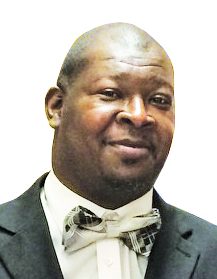
    Davis

    Darreyl Davis, who works in environmental health and safety at Isola, is president of Believers and Achievers, is a past chair of the Fairfield Elementary School Improvement Council and is the current president of the Fairfield Elementary PTO. He is a board member for First Steps and two years ago received the ‘Service Above Self’ award from the Rotary Club of Winnsboro. He was also recognized for his community work by the South Carolina Legislature in 2015.

    The father of six children, two of whom are enrolled in Fairfield District schools, Davis said he has a passion to help kids in the community.

    “I am the right choice to be the voice of the people in District 7 for the Fairfield County School District,” Davis said.

    Rentz

    Herb Rentz, manager of Mid-County Water Company, said he is hoping to continue the work of Reid, his late wife.

    ‘I feel a calling to take on her work,” Rentz said. “Crucial to the successful operation of our education system is accountability. Our results have to correlate appropriately to our expenditures. Our superintendent, as our primary employee, successfully prioritizes our goals and objectives and is responsible for matching our resources so that we achieve maximum efficiency. Policies established by the board are designed to insure that this process continues,” Rentz said.

    Brandenburg, who is emplooyed as Coordinator of Intervention in special services for the Fairfield County School District, has been employed by the District for more than 30 years, serving as a teacher, assistant principal and principal.

    “I feel I’m the candidate most qualified to fill the vacancy,” Brandenburg said.


    Ms. Brandenburg had not responded to requests for a photo at press time.

  • District Takes First Look at Budget

    WINNSBORO – The Fairfield County School Board of Trustees voted 7-0 at their April 16 meeting to pass first reading of their $34,334,464 budget for 2013-2014. The budget, up from last year’s $32,789,140, anticipates an increase of $941,800 in local revenues from 2012-2013, but with an unchanged millage rate of 203.1.

    Kevin Robinson, Director of Finance for the District, told the Board that last year administrators budgeted conservatively in terms of funds from local revenues and actually collected more in local property taxes, late fees and fines than expected. This year, he said, that expected number was bumped up by $800,000. The State’s portion of revenues was also tweaked in the coming budget by an additional $200,000. The additional $1 million is offset by a decrease of approximately $100,000 in other local taxes.

    The 2013-2014 budget also includes a transfer of $291,000 from the general fund to the food services fund, Robinson said, as well as more than $695,000 slated for the Chester County School District to pay for Fairfield County students living in the Mitford area and attending Chester County schools.

    Salaries consume about 85 percent of the budget, Robinson said, with a 2013-2014 increase of $1,025,508, which includes step increases for teachers and non-teaching personnel, as well as an increase in health insurance costs and retirement benefits, but 5 percent each.

  • Board Elects New Officers, Hears from Bond Attorney

    With the swearing in of new member during their Nov. 20 meeting, the Fairfield County School Board also elected new officers for their 2012-2013 session. Newly elected members William Frick (District 6) and Paula Hartman (District 2), as well as re-elected member Annie McDaniel (District 4) took their oaths of office as the meeting got under way. Frick then declined a nomination by McDaniel for Board Chairman, a position that then went to Beth Reid (District 7). Frick was later elected Vice Chairman on a 4-3 vote over outgoing Chairwoman Andrea Harrison (District 1). Harrison was then unanimously elected Board Secretary.

    The Board then received a report from Brent Jeffcoat, a bond attorney with the Pope Zeigler law firm in Columbia, and Mike Gallager, of Southwest Securities, on options for the District to raise money for a new career center.

    Gallager said the District could issue three separate bonds over the next three years to raise the approximately $15 million estimated to be necessary to fund the new facility. Jeffcoat said issuing three bonds would allow the District to raise the fund without the need for a referendum and without millage rates going up to more than 22 mils.

    Bonds issued in 2013 and 2014, Gallager said, would generate $1.5 million each, and a bond issued in 2015 would tack on an additional $12 million. From the 9.9 millage rate at which the District is currently taxing, the initial bonds would take that rate to 13 mils. By 2016 through 2025, the rate would be back down to 11 mils, Gallager said.

    “This does get you very tight on your bond-debt capacity for a couple of years out,” Jeffcoat said.

    “We don’t want to push you right up to the absolute edge,” Gallager added. “The last thing we want to do is build a new building and not be able to have it adequately equipped.”

    McDaniel noted that the District was issuing operating bonds each year, and Gallager said that was not included in his calculation of proposed millage rates. The annual bonds would add about 9 mils to the original figures, he said.

    Jeffcoat said future tax revenues from the new reactors at the V.C. Summer Nuclear Station were also not included in this plan, as they were not expected to begin impacting the County until, at earliest, 2016.

    The Board also voted to move their December meeting to Dec. 11. The meeting will be held at Fairfield Central High School at 6 p.m.

  • Findings Don’t Mar District Audit

    Nearly $1 Million Siphoned from General Fund

    The Fairfield County School District received an “unqualified” report on its annual audit, a Spartanburg CPA told the Board during its Nov. 20 meeting, in spite of two minor findings and questions about a transfer of nearly $1 million from the general fund into the food services fund last summer for the purchase of new cafeteria equipment.

    Chuck Talbert, a CPA with the McAbee, Talbert and Halliday firm, told the Board that the pupil activity fund had been operating in a decentralized manner, creating issues with internal controls over financial reporting. According to the audit, “There is a lack of segregation of duties at all schools related to pupil activity cash receipts and disbursements. This lack of segregation of duties is both in receipts and disbursements as the bookkeeper was responsible for collecting receipts, making the deposits, preparing disbursements and reconciling the bank statements.”

    At Geiger Elementary School, auditors found “instances of missing support for bank deposits and instances of missing supporting documentation for checks.” Also at Geiger, auditors found “instances of bank reconciliations not being completed on a timely basis.”

    At Fairfield Central High School, auditors found “a lack of segregation of duties involving bank reconciliation and documentation for checks drawn on the account; no approval of checks over $500 by the Office of Finance; lack of approval on invoices for payment of goods and services from the checking account; unable to locate canceled checks.”

    These issues, the audit stated, “may be indicative of other internal control deficiencies for pupil activities at the schools.” But, Talbert told the Board, improvements have already been made.

    “We have worked with administration and we concur with procedures they have taken going forward,” Talbert said. “Previously, much of the activity of the pupil activity funds was on a decentralized basis. That is now centralized. I really feel like that is a better control component, to have that centralized.”

    Auditors also found minor issues with the District’s federal financial assistance, including Title I grants. Districts are required to check the Excluded Parties List System for vendors who have been suspended or debarred before expending money from federal programs, the audit states. The Fairfield County School District did not do so. As a result, the audit states, “The District could be subject to claims or future funding could be limited or suspended by the funding agency for failure to comply with the requirements.” Nevertheless, Talbert said, the District received a clean opinion on that matter as well.

    The audit noted that the fund balance for the District at the end of the 2011-2012 fiscal year was $4,611,728 – down $179,584 from the 2010-2011 fiscal year, in spite of the District taking in $600,000 in additional tax revenue this year. This finding sparked questions from Board members about a transfer of $910,460 from the general fund into the food services fund last summer for the purchase of kitchen equipment for District cafeterias.

    “That fund balance transferred over into the food service program was supposed to be approved by the Board,” Annie McDaniel said. She later confirmed that it was not.

    Bobby Cunningham asked if the food service fund was supposed to be a self-supporting entity, and McDaniel said it was designed to be such. But Talbert said the District had changed the food services fund to a special revenue fund.

    “If that occurred, the Board never took action on it,” McDaniel said.

  • Civil Liberties Group Launches Probe into School Districts’ Use of Prayer

    It is no secret that the Fairfield County School Board of Trustees opens their meetings with a prayer, but a January ruling against a S.C. school district in U.S. District Court and new efforts by the American Civil Liberties Union may spell the end of that practice.

    Bolstered by their legal victory earlier this year over the Chesterfield County School District, the American Civil Liberties Union (ACLU) has launched the Religious Freedom Goes to School campaign, aimed, they say, at strengthening religious freedom in South Carolina’s public schools. As part of that campaign, the ACLU sent Freedom of Information Act (FOIA) requests to school districts statewide in an effort to determine if policies are in place to preserve the First Amendment rights of all of their students.

    Since their victory in the Chesterfield case, Victoria Middleton, executive director of the ACLU of South Carolina, said the ACLU has received a number of complaints from across the state. Two weeks ago, the Fairfield County School District received that FOIA request from Susan Dunn, legal director for the ACLU of South Carolina.

    “(This program) is an effort to get an idea of what the policies are at the districts,” Middleton said, “if they do have policies, and the way they can comply with the First Amendment in regard to freedom of religion.”

    In addition to policies, the FOIA request seeks records of all programs, schedules, itineraries, calendars, agendas, minutes or news publications referring to, relating to or reflecting the inclusion of prayer, invocations, benedictions, blessings, proselytizing or other religious remarks or exercises in any school-sponsored event, including (but not limited to) graduation exercises, athletic events, school board meetings, ceremonies and banquets, baccalaureate services, school event calendars, daily announcements and school newsletters.

    This latest campaign by the ACLU is not an effort to prevent individuals from freely and publicly expressing their faith, Middleton said, but an effort to prevent the government – which includes public schools – from imposing faith upon anyone. The government cannot impede, prevent or promote or impose religious exercises, she said.

    “We have children of all faiths, and children of no faith, in our schools,” she said. “A child can pray at school. The ACLU has defended the rights of children to pray in schools. But public schools are not Sunday schools.”

    Middleton would not comment specifically on whether or not the practices of the Fairfield County School Board constitute a violation of the First Amendment, but said opening meetings with a prayer could pose a problem.

    “We’re trying to get the information into us in a systematic way, look at their policies and look at their practices,” she said. “Yes, opening board meetings with a prayer can be problematic, without making a judgment on a particular case.”

    Reached for comment on their policies Friday morning, the Fairfield County School District issued the following statement:

    “The FOIA allows 15 business days within which to respond. The district is still within the time line. A reply is being prepared by Childs and Halligan (attorneys for the district).”

    A phone call to the offices of Childs and Halligan was not returned at press time.

    In Chesterfield, Middleton said, a middle school student was the victim of religious coercion. Teachers were praying over him, she said, and he was being sent to detention for not attending an evangelical pep rally.

    “It’s hard for a 12-year-old to stand up for their rights on their own,” she said.

    In December 2011, that student’s parent sued the Chesterfield County School District, and in January of this year, U.S. District Court judge R. Bryan Harwell ruled in favor of the parent. As a result, Chesterfield was issued a permanent injunction against prayer at school events, and school officials were enjoined from promoting their religious beliefs to students. The Chesterfield School District was also stuck with the plaintiff’s attorney’s fees.

  • No Movement in Fairfield School District Test Numbers

    Results of the 2012 American College Testing (ACT) exams, taken by high school juniors and seniors, and released Wednesday by the S.C. Department of Education show Fairfield Central High School test takers held steady to last year’s results.

    Fairfield Central test takers amassed a composite score of 16.2 on the exams, identical to 2011 results.

    The ACT is a national college admissions examination that consists of subject area tests in English, mathematics, reading and science. The test includes 215 multiple-choice questions and with a “36” as the highest possible score. The test is offered six times per year in the U.S., and is usually taken during a student’s junior or senior year of high school.

    In 2012, 110 students at Fairfield Central took the exam, with average scores of 14.4 in English, 16.9 in math, 16.2 in reading and 16.6 in science. Statewide, the composite score for public school students was 19.9, with average scores of 19.1 in English, 20.1 in math, 20.1 in reading and 19.9 in science.

    Nationally, the composite score for all students and public school students was the same at 21.1, with average scores of 20.5 in English, 21.1 in math, 21.3 in reading and 20.9 in science.

    In 2011, Fairfield Central had 102 students take the exam, with average scores of 14.8 in English, 16.6 in math, 16.2 in reading and 16.7 in science.

  • Freed-Up Funds Flow into Chester

    Although the Fairfield County School Board voted 5-2 in a special called meeting last week to appeal a July 16 ruling by a Circuit Court judge in the Mitford case, one detail of that ruling remained unaddressed – whether or not to seek a court order to delay the delivery to Chester County Schools funds currently being held at the Fairfield County Treasurer’s Office, pending the outcome of the appeal.

    Tuesday night, the Board held their third special called meeting in as many weeks to address that issue, and after more than an hour in executive session, took no action.

    According to Judge J. Ernest Kinard’s ruling, the Treasurer was to release those funds – approximately $1.8 million accrued over the last three years – within 30 days of the July 16 court order. At the time the Board convened Tuesday night, the Board had literally hours before the funds were to be transferred. Any last-minute effort to delay those funds with a court order could have cost the District no less than $5,000, sources close to the School District reported. In the event the District wins the appeal, the funds will be returned with interest, the source said.

    After the meeting, Board Chairwoman Andrea Harrison declined to answer questions about how much the appeal was expected to cost the school district or if the Board would muster an eleventh-hour attempt to delay the delivery of funds to Chester County and how much any such attempt might cost. Instead, Harrison said, the District’s attorney, Armand Derfner, would make a statement on the Board’s behalf.

    However, reached by phone after the meeting, Derfner said he had no such statement.

    “I really think you should get it from them (the School Board),” Derfner said. “They’re really in control of the statement, so you would want to talk to them.”

    Follow-up phone calls to Harrison were not returned to The Voice at press time.

  • FCHS students see 20-point swing between HSAP test subjects

    First-time takers of the High School Assessment Program (HSAP) test at Fairfield Central High School saw a nearly 20 difference between English Language Arts (ELA) scores and Mathematics score in 2012, according to data released last week by the S.C. Department of Education.

    Of the 205 students taking the ELA portion of the test in 2012, 85.9 percent met the HSAP standards. In Mathematics, however, where 204 students were tested, only 67.6 percent met those standards.

    Females performed slightly better than males, with 91.3 percent meeting standards in ELA versus 80.4 percent of their male counterparts. In Mathematics, females outscored males 71.8 percent to 63.4 percent.

    “Implementing a conceptual understanding will be a focus of our curriculum in the coming year,” said J.R. Green, Superintendent of Fairfield County Schools. “Understanding a concept on the surface level used to be enough. Now, students need to be able to apply that knowledge.

    “Number one, we need to make sure our instruction delves a little deeper,” Green said. “And number two, we need to make sure our assessments mirror those that students will receive later on in the year.”

    Statewide, the percentage of first-time test takes passing the high school exit exam increased to 80.1 percent, an increase of 0.7 percent over last year. This is the second time the HSAP passage rate has been above 80 percent since 2004. The mean scale score increased in mathematics for every student subgroup except one, but the mean scale score for English-Language Arts declined in every student subgroup.

    “English and mathematics are the foundational subjects in education,” said State Superintendent of Education Mick Zais. “On the state’s high school exit exam, most student groups increased proficiency in mathematics but every student group declined in English. Students must master skills in both subjects to be successful in their lives after high school. To improve in both areas will require a personalized and customized education in grades K-8 so students are prepared for rigorous high school courses.”

    Zais also raised issue with the structure of the state’s assessment and accountability system. Students usually take End-of-Course assessments in algebra and English in ninth grade, only to take HSAP in 10th grade to fulfill the state’s high school exit examination requirement. The End-of-Course Examination Program (EOCEP) results will be released in September after summer administration results have been received. Both HSAP and EOCEP results are used for federal accountability purposes.

    “Assessments are necessary to measure student achievement and school performance, but the current system is duplicative,” said Zais. “Our state’s accountability system must be modernized to provide a single state and federal report that provides clear, meaningful data to the public and helps teachers improve instruction in the classroom.”

    Achievement gaps (differences in mean scale score) decreased from 2011 to 2012 between white and black students on HSAP English-Language Arts (ELA) but increased for mathematics. The achievement gap between white and Hispanic students decreased for mathematics but increased for ELA. The achievement gap between students who pay full price and students who receive free/reduced meals decreased in ELA. In mathematics, the achievement gap increased even though both groups saw gains in their average scale scores.

    Public school students must pass both the HSAP ELA and mathematics tests to meet the state’s exit examination requirement for a diploma. The HSAP also satisfies the federal requirement to assess achievement in ELA and mathematics in high school. The HSAP is initially administered to students in their second year of high school. Students have additional opportunities to retake any tests not passed. Students must meet the state standard of a Level 2 score or higher in order to meet the diploma requirement. Students must score Level 3 or higher to meet proficiency standards for federal accountability.

  • PASS tests show mixed results for Fairfield County schools

    In numbers released by the State Department of Education last week, the Fairfield County School District continues to show varied results on Palmetto Assessment of State Standards (PASS) tests. Statewide, larger percentages of public school students met state standards on the tests, while achievement gaps narrowed in most grades and subject areas on both assessments, the State Department said.

    State Superintendent of Education Mick Zais said this year’s results were encouraging and that educators and students should be congratulated.

    “Our focus must always be on what happens in the classroom between a teacher and students,” Zais said.  “Credit for these results belongs to the hard work of students, teachers, and parents across South Carolina.  Student achievement should continue to increase if we encourage policies that personalize and customize education for every child.”

    The Highs and Lows, School by School

    Fairfield Elementary

    In the writing assessment test, which was only taken by fifth- and eighth-grade students, 71.1 percent of students tested scored “Not Met” at the fifth-grade level. In English Language Arts (ELA), the school saw its biggest success at the third-grade level, where 45.8 percent scored “Met” and 20.8 percent scored “Exemplary.” The school’s lowest performance in ELA came at the fifth-grade level, where 69.7 percent scored “Not Met.”

    In Mathematics, 38.2 percent of fourth-graders scored “Met,” while 25 percent of sixth-graders scored “Exemplary.” Fifth-graders had the most difficulty, with 56.6 percent scoring “Not Met.”

    In Science, fourth-graders again led the way with 51.5 percent scoring “Met,” while among third-graders, 84.2 percent scored “Not Met.”

    In Social Studies, it was also fourth-graders who showed the best numbers, with 54.4 percent scoring “Met,” while 72.2 percent of fifth-graders scored “Not Met.”

    Geiger Elementary

    In the writing assessment, 54.3 percent of fifth-graders scored “Not Met,” 40 percent scored “Met” and 5.7 percent scored “Exemplary.” In ELA, 50 percent of fifth-graders scored “Met,” 48 percent of third-graders scored “Exemplary” and 55.1 percent of sixth-graders scored “Not Met.”

    In Mathematics, 47.1 percent of fifth-graders scored “Met,” 52 percent of third-graders scored “Exemplary” and 57.1 percent of sixth-graders scored “Not Met.”

    In Science, 43.8 percent of fourth-graders met their objectives, 23.1 percent of third-graders scored “Exemplary” and 66.7 percent of fifth-graders scored “Not Met.”

    In Social Studies, 46.9 percent of fourth-graders scored “Met,” 16.7 percent of sixth-graders scored “Exemplary” and 66.7 percent of third-graders scored “Not Met.”

    Kelly Miller Elementary

    In the writing assessment, 54.3 percent scored “Met,” 20 percent “Exemplary” and 25.7 percent “Not Met.” In ELA, 65.7 percent of fifth-graders met their goals, 41.2 percent of sixth-graders scored “Exemplary” and 25 percent of third-graders scored “Not Met.”

    In Mathematics, 54.3 percent of fifth-graders scored “Met,” 35.3 percent of sixth-graders “Exemplary” and 50 percent of third-graders “Not Met.”

    In Science, 72.2 percent of sixth-graders scored “Met,” 11.8 percent of fifth-graders “Exemplary” and 53.8 percent of third-graders “Not Met.”

    In Social Studies, 62.5 percent of sixth-graders met their goals, 29.3 percent of fourth-graders scored “Exemplary” and 54.5 percent of third-graders “Not Met.”

    McCrorey-Liston Elementary

    In the writing assessment, 53.6 percent met goals and 17.9 percent scored “Exemplary.” In ELA, 48.5 percent of sixth-graders scored “Met,” 46.7 percent of third-graders “Exemplary” and 46.4 percent of fifth-graders scored “Not Met.”

    In Mathematics, 56 percent of fourth-graders scored “Met,” 26.7 percent of third-graders “Exemplary” and 35.7 percent of fifth-graders “Not Met.”

    In Science, 52.9 percent of sixth-graders scored “Met,” only 7.1 percent of fifth-graders “Exemplary” and 64 percent of fourth-graders scored “Not Met.”

    In Social Studies, 62.5 percent of sixth-graders scored “Met,” 14.3 percent of fifth-graders “Exemplary” and 50 percent of fifth-graders “Not Met.”

    Magnet School

    In the writing assessment test, 50 percent of students tested met state objectives and 32.6 percent scored “Exemplary.” In ELA, 88.9 percent of fourth-graders scored either “Met” or “Exemplary.” At the fifth-grade level, 26.1 percent did not reach objectives.

    In Mathematics, 65.2 percent of fifth-graders scored “Met,” while 40.7 percent of fourth-graders scored “Exemplary.” In Science, 78.3 percent of fifth-graders scored “Met,” and 24.1 percent of fourth-graders scored “Exemplary.” In Social Studies, 57.6 percent of sixth-graders scored “Met,” while 62.5 percent of third-graders scored “Exemplary.”

    Fairfield Middle School

    In the writing assessment, 35.1 percent of eighth-graders scored “Met,” while 26.7 percent scored “Exemplary.” In ELA, 44.5 percent of seventh-graders scored “Met,” while 22.9 percent of eighth-graders scored “Exemplary.” In Mathematics, 48.3 percent of eighth-graders scored “Met,” while 19.7 percent of seventh-graders scored “Exemplary.” In Science, 52 percent of eighth-graders scored “Met,” and 16.3 percent of eighth-graders scored “Exemplary.” In Social Studies, 46.3 percent of seventh-graders scored “Met” and 29.3 percent scored “Exemplary.”

    “Over the coming year, we will evaluate and make sure we have a consistent level of instruction across the board, to make sure we don’t drop off from one grade level to the next,” J.R. Green, Superintendent of Fairfield County Schools, said. “These are different groups of students, so you expect some variation, but there shouldn’t be that much variation.”