Tag: Fairfield County School District

  • Green: Gorelick pulls out of Teacher Village

    EDITOR’S NOTE: Minutes before press time, The Voice was notified by Fairfield County officials that Fairfield School Superintendent Dr. J. R. Green had informed County Administrator Jason Taylor that Gorelick Brothers Capital, developer for the Teacher Village, announced the company is withdrawing from the project. The Voice will update the story online as information becomes available. The following story reflects events prior to Green’s announcement.

    WINNSBORO – A North Carolina hedge fund seeking generous tax breaks to build a controversial “Teacher Village” housing project won’t budge on a stipulation that would protect Fairfield County from future lawsuits.

    In an email obtained by The Voice, a representative of Gorelick Brothers Capital of Charlotte, North Carolina, said investors won’t move forward unless Fairfield County shares in the legal risk.

    “The reason why indemnification is an issue is that we are not willing to bear the risk of indemnifying the County,” the memo says. “There is an unpredictable liability for us and we also want the County to be ‘invested’ in this project.”

    Dated Aug. 30, the memo was addressed to Dr. J.R. Green, superintendent of the Fairfield County School District; and Sue Rex, chair of the Fairfield County School District Education Foundation.

    The school district’s board of trustees created the foundation to facilitate development of the Teacher Village, which seeks to build affordable rental homes catering to teachers.

    In the email, the Gorelick representative proposed telephoning Green and Rex to further discuss possible options. He suggested a date of Sept. 4.

    “Do you have some time on Wednesday morning for a call? Maybe 10 am?” the email states. “We received feedback from the County and are at an impasse on one business point (indemnification), but there may be a solution that you could provide for the project.”

    Green said he’d not spoken with Gorelick and could not confirm he had seen the email. He wouldn’t comment further on most other aspects of the email or indemnification.

    “It’s Gorelick’s decision on how they want to handle that with the county,” Green said.

    A Gorelick official couldn’t be reached for comment as of press time.

    Rex affirmed that Gorelick adamantly opposes adding an indemnity clause to any Teacher Village deal.

    “The Gorelick Brothers will not sign an agreement that requires them to indemnify,” she said. “They want this to happen but if that’s the final straw, they’ll walk away.”

    Rex added that the foundation would bear some financial risk with the Teacher Village. If occupancy falls short, the foundation would have to cover any rent shortfalls, she said.

    “We’re responsible after that occupancy rate to make sure that the rent payment [for unrented units] is made every month,” Rex said. “We’d have to still make the rent payment at the end of the month.”

    Teacher Village critics say the email from Gorelick and lack of transparency surrounding it serve as further proof that the county’s indemnification is necessary.

    “They [school officials] were still pressuring the county to make this thing go forward without telling the county they had received an email,” Fairfield County Councilman Douglas Pauley said. “For a year now, the thing we were most concerned about was indemnification for the county, and they knew that.”

    Clause common in county contracts

    Gorelick (pronounced guh-RELL-ick) wants the development designated as a multi-county business park to make it eligible for a tax abatement. The company is seeking a seven-year tax abatement totaling about $600,000 to finance the project.

    Fairfield County has said it’s open to those requests, but also wants an indemnification clause to protect taxpayers.

    County Administrator Jason Taylor said during the last council meeting that indemnification clauses protecting the county are common to any contract the county enters into.

    The county is a co-defendant in a similar multi-county business park lawsuit filed over a student housing project in downtown Columbia. The county is incurring no legal cost on the lawsuit, however, because it has an indemnification clause in the deal that protects the county from liability. County leaders fear a similar suit could arise from the Teacher Village. For that reason, too, county officials say they are seeking similar protection with Gorelick.

    County Attorney Tommy Morgan said at a recent council meeting that legal bills stemming from any Teacher Village litigation could cost “six figures” without an indemnification agreement.

    But Gorelick won’t budge, saying indemnification essentially is a deal-breaker.

    “If they [the county] believe in this project, they should be willing to bear some of the risk,” the email states. “If we are forced to bear the cost of indemnification the risk-reward equation is too negatively skewed for us to continue.”

    Gorelick rejects offer

    County Administrator Jason Taylor recently said the county pitched an alternative option establishing an escrow account into which Gorelick could periodically deposit funds to cover any possible future legal costs of the county.

    “We were told by Gorelick that they would not do that,” Taylor said at the Sept. 9 council meeting. “Then we reached out to the school district and the foundation. We have not found that’s going to happen either.”

    Green said Gorelick should ultimately decide whether or not to pay into an escrow account.

    “That’s [part of] negotiations between Gorelick and the county,” Green said. “The school district doesn’t have the authority to pay into an escrow account on behalf of Gorelick. It’s Gorelick’s decision.”

    Asked directly for the school district’s position on indemnification, Green said “that’s between Gorelick and the county.”

    The indemnification issue first arose at a special Fairfield County Council meeting in November 2018.

    At that meeting, Green called the inclusion of an indemnity clause to protect the county “not reasonable.” The county’s former council chairman felt otherwise.

    “If we are going to be the ones to accept the risk for what many of us see as [someone else’s] property, then there are some conditions that we’d like to talk about,” former council chair Billy Smith said.  “It’s not our project, we’re helping with someone else’s property. They should be willing to pay and hedge that bet on the risk.”

    Since then, several council members have also said any Teacher Village deal should include legal protections for Fairfield County. Council members Bertha Goins, Clarence Gilbert, Jimmy Ray Douglas, Neil Robinson and Pauley are among them.

    Email irks council member

    Some Teacher Village supporters, including education foundation vice-chair Shirley Green, think the county should approve the deal despite the risk.

    At the Sept. 9 council meeting – 10 days after the Gorelick email was sent – Green urged council meetings not to be deterred by potential litigation.

    “Are we afraid to take a chance with someone else’s money? Are we afraid of failure or are we afraid of success?” Shirley Green said. “Don’t let the fear of a lawsuit or failure as it’s known to hold you back from the opportunities for success.”

    Green didn’t mention the Gorelick email in her remarks.

    Pauley thought it was particularly disturbing that neither the district nor the foundation officially disclosed the memo prior to the Sept. 9 council meeting.

    “They are not even considering the taxpayers of Fairfield County. It is very disturbing to me that they were still willing to pressure the county go to forward,” Pauley said.

    “At best,” he continued, “it [the email from Gorelick] confirms our concerns. At worst, it exposes those we considered partners trying to pull the wool over our eyes and over our citizen’s eyes. All for public risk and personal gain.  If Council is the least bit sane, this will end the circus act,” Pauley said.

    The Teacher Village proponents propose offering rent reductions for educators of about $300 a month. Phase I calls for 30 homes with up to 70 homes constructed if the development reaches 100 percent build out.

    If teachers don’t fill the homes, first responders would receive dibs on housing followed by district staff. If empty houses still remain, the general public would be allowed to rent them according to Rex.

    Only teachers, however, would qualify for the rent subsidy.

    But school board trustee Paula Hartman doesn’t think teachers will flock to the Teacher Village as backers hope.

    “I personally don’t think this is going to bring teachers here,” Hartman said. “There’s no proof anybody’s given us that teachers will be the ones in there.”

    Gorelick anticipates spending up to $3.6 million on the development, contingent upon receiving a $600,000 tax abatement from the county. The proposal also includes at least $100,000 from a proviso in this year’s state budget, which would help fund the $300 rent subsidies.

    Green, the school district superintendent, has said he thinks the proviso will be renewed in subsequent years, ultimately becoming permanent, though he acknowledged at a past council meeting there’s no guarantee.

    Rent increases in subsequent years are also possible. In October 2018, Green told council members that rent could increase up to 2 percent a year.

    Gorelick Letter
  • Teacher village hits a snag

    WINNSBORO – The proposed Teacher Village is still on summer break.

    Fairfield County Council has already passed two readings to award tax breaks to Gorelick Brothers, a North Carolina hedge fund, to build the proposed subdivision catering to Fairfield County teachers.

    But third reading remains on hold due to disagreements over inserting an indemnification clause, a sticking point with the county.

    The county wants indemnification to protect taxpayers from potential litigation, but is encountering resistance from Gorelick Brothers and the Fairfield County School District, which is heavily marketing the Teacher Village.

    The Teacher Village wasn’t on the agenda for Monday night’s meeting, but it was a hot topic.

     “In the end, after a year of effort, time and money, the other parties in this potential project have been unwilling to help the county mitigate and manage its associated risk,” Councilman Douglas Pauley said. “So don’t point the finger at the county.”

    Councilman Clarence Gilbert also lamented the apparent lack of cooperation on the indemnification issue. He noted that something as simple as a construction worker accident could expose the county legally.

    “It’s like a contractor telling me he’s going to build a $3,000 house and the only way he’s going to build that house is if I don’t take out insurance on that house,” Gilbert said.

    “It really kind of concerns me that the developer doesn’t want to work with us,” Gilbert continued. “In the nine months that I’ve been here on council, not once have we met with Gorelick Brothers. We have some questions and concerns that we want to ask them, but from what I gather they refuse to talk with us.”

    Clause is common

    County Administrator Jason Taylor said indemnification clauses protecting the county are common to any contract the county enters into.

    One time, when Providence Health and the county couldn’t agree on indemnification, Taylor said that as an alternative, Providence agreed to make annual payments into an escrow account. The account’s purpose is to cover county legal costs should litigation arise.

    Taylor said the county proposed a similar workaround for the Teacher Village, but Gorelick and the school district declined to participate.

     “In using these tax incentives for residential [development], it’s a little bit of a stretch of the law,” Taylor said. “Maybe in the end it will be fine, and we hope it will be fine, but right now it’s an unsettled issue legally. So there’s a little bit more risk for the council in that respect.”

    Developers have also asked for a seven-year tax abatement totaling about $600,000.

    Earlier, during public participation, Lake Wateree resident Jeff Morris spoke supportively of past proposals to include an indemnity clause.

    He also suggested if the Teacher Village doesn’t fill with teachers, tax abatements to Gorelick should prorate downward accordingly.

    “By the time the abatement period runs out, they’ve got 22 acres, a bunch of homes they can do with whatever they want,” Morris added. “The county should be careful about this, thoughtful about it.”

    The Teacher Village also drew two supporters to Monday’s meeting

    Winnsboro resident Shirley Green, who has previously spoken in support of the Teacher Village, urged the county to not let litigation become a roadblock to economic development and teacher recruitment.

    “Are we afraid to take a chance with someone else’s money? Are we afraid of failure or are we afraid of success?” Green asked. “Don’t let the fear of a lawsuit or failure as it’s known to hold you back from the opportunities for success.”

    Chanda Jefferson, a Fairfield County teacher and the state’s teacher of the year, said the county lacks convenient housing for teachers.

    “The time I commute can be time spent in the classroom,” she said.

  • Teacher Village door remains open

    Dr. J.R. Green, superintendent of the Fairfield County School District (right), urges Fairfield County Council to support the Teacher Village as Council Chairman Neil Robinson looks on. | Photos: Michael Smith

    WINNSBORO – Fairfield County is one vote away from approving tax abatements for the Teacher Village, a proposed Fairfield County School District housing project intended to cater to teachers.

    But what agreement Fairfield County may ultimately reach with the school district still remain under wraps.

    After spending 20 minutes behind closed doors Monday night, County Council voted 7-0 to move forward with an ordinance that provides economic development incentives to Gorelick Brothers Capital, a Charlotte, North Carolina investment firm interested in building the Teacher Village.

    Council members did not publicly discuss the Teacher Village agreement. Council Chairman Neil Robinson told council members not to discuss specifics in open session.

    Seeking to assure residents over the lack of details, Councilman Jimmy Ray Douglas said full disclosure of the agreement would come before final reading, which could be scheduled as soon as the Sept. 9 meeting.

    “This will be explained in full before we have third reading,” he said.

    In its current form, the proposed Fairfield County Teacher Village would consist of 30 homes constructed on 22 acres the district owns behind the district office in Winnsboro.

    Teachers would receive first priority, followed by school district employees, then first responders. Another 30 homes would be built if the first phase is successful.

    Rent subsidies of $300 per month would be reserved for teachers only, with monthly rent ranging between $600 and $900, depending on the home. The subsidies would come from funding included in a state budget proviso.

    Gorelick is also asking Fairfield County Council for a seven-year tax abatement totaling about $600,000.

    The final percentage of the tax abatement hasn’t been decided. Gorelick and the county are currently haggling over what the final percentage should be.

    Another major sticking point for the county is the inclusion of an indemnification clause.

    At a joint meeting in November 2018, former Council Chairman Billy Smith pushed for verbiage that would indemnify Fairfield County should any litigation arise relating to the Teacher Village.

    Smith also wanted an agreement to cover Fairfield’s legal expenses should any arise. It was unclear as of press time whether or not either condition found its way into the agreement now under consideration.

    At the November 2018 meeting, Superintendent Dr. J.R. Green said he didn’t think the Teacher Village would drag Fairfield County into litigation. He voiced concerns that delaying action might jeopardize the project.

    “If that’s the takeaway, that’s not reasonable,” Green said. “I don’t know how Gorelick is going to respond to this. The longer this stretches out, the more the likelihood Gorelick pulls out.”

    Supporters plead for Village

    Councilwoman Bertha Goins, a major supporter of the Teacher Village, said the project is needed for economic development and also to provide adequate housing in Fairfield County.

    Fairfield County Councilwoman Bertha Goins expresses her support for the Teacher Village at Monday night’s council meeting.

    “Without going into detail, I’d say we’re looking at the finish line. I did not take this project lightly, I did not take this decision likely,” Goins said.

    Five of the six area residents speaking in public input spoke in support of the Teacher Village.

    Fairfield Elementary teacher Theresa Wiggins told council members the commute from her home in northeast Columbia to work is long, but Winnsboro lacks adequate housing.

    Dr. Jim Rex, former S.C. Superintendent of Education, whose wife serves on a Fairfield County school district foundation that worked on the Teacher Village, also spoke in favor of the housing project.

    “You have the opportunity tonight to do something truly historic,” Rex said. “I urge you not to let this opportunity pass.”

    Lisa Ellis, board member of S.C. for ED, a teacher advocacy group, spoke earlier in the week with The Voice. Ellis said she thinks the Teacher Village and similar teacher housing projects may be more valuable to younger teachers saddled by student loan debt.

    A former Fairfield County teacher now working in Richland Two, Ellis said higher pay is generally more important to veteran teachers than publicly funded housing. Ellis also thinks housing subsidies might make more sense in high cost of living areas, such as California or New York.

    “Ultimately it depends upon where you are in your teaching career,” she said. “If you’re brand new, out of college, it may be a pro for you. (Veteran teachers) have a house, have a mortgage.”

  • School Board spars over new policies

    Hartman: Proposed Policies are Attempt to Control Information, Shut Down Dissent

    WINNSBORO – The Fairfield County School District is taking steps some trustees say are designed to muzzle anyone offering alternative viewpoints.

    At Tuesday night’s monthly meeting, the Fairfield board passed first reading of a pair of policies – one a revision and one a new policy – addressing board member communications.

    An amendment to Policy BEDB restricts questions board members can ask during meetings. The other, BEDL, is a new policy crafted by Board Chairman William Frick that prohibits board members from using electronic devices to communicate with others during meetings.

    The vote to amend BEDB passed 5-1-1. Paula Hartman voted in opposition and Joe Seibles abstained

    The new policy, BEDL, passed 6-1 with Hartman opposing.

    Hartman often casts the lone opposing vote on a board that typically votes in lockstep. She vehemently objected to the policy changes.

    “This is an attempt by the chair, by the superintendent to control information that the public has a right to hear,” Hartman said. “This is simply an attempt to control information and board members you don’t agree with. The amendment is abuse of power to shut out dissent.”

    Hartman continued by asking if the district’s legal counsel had reviewed the policies. Frick said they had not.

    A revision to policy BEDB would compel trustees to present any questions about an agenda item to the superintendent before the meeting.

    “Requests for additional information shall be specific and relevant to the topics on the agenda,” the revised policy states. “Onerous requests or ‘fishing expeditions’ shall be denied.”

    Board member Joe Seibles also voiced concerns about policy BEDB, saying he fears that legitimate questions could be perceived as capricious.

    “My knowledge base may not be at a point where it needs to be,” he said. “What criteria are we using to determine what’s real and what’s phishing?”

    The new policy titled BEDL would bar trustees from communicating electronically with the public during board meetings. 

    The impetus for that policy started with a recent claim by board chairman William Frick.

    In an email obtained by The Voice, Frick wrote — without providing any factual evidence for his claim — that “some board members are engaging in electronic communication with members of the public, including media,” during public meetings. 

    Asked after the meeting if he had attempted to confirm these accusations, Frick said he had not.

    “This conduct will no longer be tolerated,” the email says. “Such behavior is disruptive, inappropriate and likely violates public participation in meetings and receiving information requests from the media.”

    The policy, however, permits board members to communicate with family members during meetings.

    Frick did not say how he would discern who a board member was texting or emailing with. He also did not say what the consequences would be for violations.

    Board members are also encouraged to use devices to conduct research, provided they are “limited to purposes of the meeting.” Examples include viewing board materials or polices, according to BEDL.

    Frick also said during the meeting and afterwards in an interview with The Voice that Hartman had stood up to take a picture during the July meeting, and that it disturbed him.

    The Voice didn’t observe Hartman stand up. She said she took a photo of the audience with an iPad. The District’s video of the meeting is no longer available for viewing on YouTube.

    The S.C. Freedom of Information Act specifically allows anyone at a public meeting to record the proceedings. It doesn’t exempt elected officials.

    Section 30-4-90(c ) states: “All or any part of a meeting of a public body may be recorded by any person in attendance by means of a tape recorder or any other means of sonic or video reproduction” except during executive session.

    The law defines the threshold of a disturbance as being “active interference with the conduct of the meeting.” The Voice did not observe any discernable interference due to photography.

    Jay Bender, a media law attorney with the South Carolina Press Association, of which The Voice is a member, said board members are allowed to take photos during meetings and disputed whether raising an iPad from the dais constituted a disruption or interference.

    Relating to Policy BEDL, the policy prohibiting board member electronic communications, Bender said it likely violates First Amendment protections.

    “I cannot imagine how that [policy] would be legitimate. That’s a classic First Amendment problem,” Bender said. “It’s the substance of the communication that the government wants to block here, which makes it suspect constitutionally.”

    Frick said – again, without presenting evidence to support his claim – that the use of electronic devices has become a distraction.  He also said several school boards in the state have similar policies.

    As to policy BEDB, which relates to board agendas, Bender didn’t think requiring trustees to request information in advance violated any laws.

    However, he does think such policies make it easier for public bodies to avoid accountability.

    “The superintendent is probably afraid somebody is going to ask a question he can’t answer and will make him look bad,” Bender said. “What the chair and superintendent are trying to do is limit the information that can come to the one engaged board member.”

    Frick acknowledged the policy originated after Hartman asked about the cost of the Honors Chorus’ recent trip to Italy.

    Frick said he considered that to be a surprise question.

     “What we’re saying is you can’t ask a surprise question,” Frick said.

    The “surprise question” Hartman asked was an inquiry at the July meeting about how much the Italy trip cost and how many people went on the trip. Superintendent Dr. J.R. Green said at the meeting that he was unable to say.

    Green said it’s unreasonable to expect him to know on command the cost of any district expense, calling Hartman’s questions part of a “gotcha game.”

    “If you ask me a question for a specific dollar figure, it would be unreasonable to suggest I have these figures off the top of my head,” Green said. “There was no expectation that we were even going to discuss the Italy trip.”

    Discussion of the Italy trip, however, was actually initiated by the Superintendent’s Report portion of the agenda, in which Green and other board members discussed and praised the Honors Chorus’ trip. Hartman’s financial question came up during that discussion.

    At Tuesday night’s meeting, Green said the trip cost $77,102.

    In January, the board kicked in $30,000 to help defray costs of the trip, leaving $47,102 from students and their families, Green said.

  • County, FCSD disagree on ‘Promise’

    WINNSBORO – Fairfield County and the Fairfield County school district still have some homework to finish before a plan allowing students to attend college at no cost takes effect.

    County Council on Monday approved its version which would cover college costs for qualifying Fairfield County students enrolling in Midlands Technical College’s Winnsboro campus.

    The vote was 5-1 with Councilman Douglas Pauley opposing. Councilman Mikel Trapp left the meeting before the vote, which followed a 60-minute executive session.

    However, it is not clear exactly what the council actually approved.

    Council members voted to “approve the Promise Program agreement as amended,” according to the motion to approve.

    It was not disclosed in public session what those amendments are.

    Council Chairman Neil Robinson wouldn’t release a copy of the agreement or even a summary of the new amendments, saying after the meeting that the county’s attorney needed time to draft the formal document.

    The S.C. Freedom of Information Act states that negotiations incident to proposed contracts can be discussed behind closed doors, but contracts themselves become public once entered into.

    “These documents are not exempt from disclosure once a contract is entered into,” the law reads.

    The Promise Program’s reception has been mixed since the school district announced the proposal in May.

    A majority of school board and council members have touted the Promise Program as an opportunity for Fairfield students to receive a college education that otherwise would remain out of reach. They also see it as a way to facilitate economic development.

    Critics have raised concerns about cost, lack of course offerings and accountability.

    On Monday night, Ridgeway resident Randy Bright said while he supports the Promise Program’s general premise, the lack of course offerings at MTC concern him.

    “We need to leverage MTC. We need to offer enough classes to make this a viable situation for our Fairfield County students,” Bright said. “The last time I looked the Fall schedule had 12 entire classes. Most of them were germane to basic studies. It needs to be a more robust program.”

    Differences between the agreement signed by the school district last month and what some council members say they want to approve for the Promise Program were enough to concern Councilman Moses Bell, but not enough for him to vote against the deal.

    “Let me discuss my reservation to the new agreement. At this point we do not know whether they [school board members] agree. Do we give them a courtesy review?” Bell asked. “We may be looked upon as a group that can’t keep its word. Yes, I definitely want the promise program to educate the students of Fairfield County, regardless of circumstance.”

    While one council member told The Voice that the school district jumped the gun by signing an agreement last month that the county had not yet agreed to, Bell said he thought the school district should have been allowed to view the county’s modifications before it gave final approval on Monday night.

    Robinson said the county would share its version of the contract [with the school district] now that it is approved.

    “The reason they haven’t got any copies is because this is the official [document] we’ve agreed upon now … I’m sure they will view it and make notes as they see fit.”

    However, at least one council member disagrees that the council has actually approved an agreement at all.

    Councilman Jimmy Ray Douglas told The Voice that council’s vote was only ‘approving’ that the Promise Program is a good thing, not a vote for approval of the agreement that was presented to them in executive session.

    The agreement that was included in the school board packet and voted on was identified as a Memorandum of Understanding.

    Councilwoman Bertha Goins said it is only natural that the agreement the council approved Monday night would evolve from the Memorandum of Understanding that was signed in July. But the July 8 MOU ‘agreement’ signed by representatives of the council, school board and Midlands Tech was half a page long and lacked specifications that were included in the three-page agreement approved later in July by the school board.

    “It’s my understanding this began with the [July 8] MOU to understand the process,” Goins said. “Both parties have the discretion of choosing their own avenue of how to do the proceeds.”

    The Fairfield County school board’s meeting is scheduled for Tuesday, Aug. 20. It will be held at the District Office Auditorium, with executive session starting at 6 p.m. and the regular meeting following.

    An agenda for the meeting had not been published as of Tuesday, though the Promise Program is likely to be discussed.

  • School board OKs $2.3M bond

    WINNSBORO – Fairfield County School District leaders are borrowing another $2.3 million.

    At its July 16 meeting, the district’s board of trustees voted to issue a one-year general obligation bond totaling $2.3 million to finance various school building projects. The vote was unanimous.

    At the July 16 meeting, Kevin Robinson, the district’s finance director, said debt millage would remain at 20.6 mills, the same as last year, which wouldn’t result in any tax increases for residents.

    Robinson said the district requested the $2.3 million bond issue even though it has a surplus that exceeds $2 million. The surplus, he said, is being set aside to fund employee bonuses that were approved earlier this year.

    “So it’s to maintain a good cash flow,” Frick said at the meeting. “What we don’t want to do is budget these out of our surplus funds and something unexpected happens.”

    Bond money will help cover $600,000 in heating and air equipment at Fairfield Central, and also at Geiger, McCrorey Liston and Fairfield elementary schools. It also includes floor tile, carpets, signage and awning improvements at those elementary schools, as well as Fairfield Magnet and Kelly Miller Elementary. Another $50,000 in paving is included at Gordon Odyssey, Geiger Elementary and Fairfield Elementary.

    The bond covers several district wide projects as well:

    • $500,000 — Roof Recoating, Roof Repair Work
    • $300,000 — Computer, Chromebook, Servers, & Clear Touch Panel Replacement
    • $200,000 — Security cameras and door access hardware
    • $200,000 — Reconfigure to control hallway access to classrooms from front door
  • Hartman’s questions unanswered by Frick, Green

    WINNSBORO – After praising the Fairfield School District Honors Chorus’ recent trip to Italy, school officials couldn’t answer questions about how much the trip cost, how many people actually went or questions about funding.

    At Tuesday night’s board meeting, when pressed by board trustee Paula Hartman for participation and cost figures, Superintendent Dr. J.R. Green couldn’t specifically say.

    “It was less than 20 [students], Ms. Hartman. Apparently some were not able to make the trip,” Green said. “I won’t say definitively. I can’t remember what it wound up being, but it was less than 20. I would have to check to say for sure.”

    “And how many adults?” Hartman asked.

    “I couldn’t say for sure either,“ Green answered.

    Hartman then questioned the cost.

    “What was the total that the district paid for the trip?“

    “I couldn’t recall that off the top of my head, Ms. Hartman,“ Green replied.

    In January, the Fairfield County Board of Trustees called a special meeting where they voted to pledge $30,000 in taxpayer money toward a $35,000 down payment for the trip.

    In January, school officials said the $30,000 expenditure was necessary to meet a time-sensitive booking deadline. A school district memo estimated the trip would cost $129,000, with about 30 people attending at a cost of $4,300 per person.

    Green said in January that students would “contribute the vast amount of the cost” by fundraising. An exact breakdown of public versus private funding for the Italy trip was not available late Tuesday.

    Things turned heated when Hartman asked if some district students had been involved in cheating on an exam. Green and several board members pushed back on Hartman’s question, without offering an outright denial.

    “I’m not even going to address that,” Green said. “The fact that you cast that kind of aspersion, whether it’s a student in the STEM program, honors program or a student in a general program, I think is totally inappropriate.”

    Board Chairman William Frick chided Hartman for raising the issue in public because he thought it should have been discussed privately with the superintendent. He also suggested Hartman was opening herself to litigation.

    “Ms. Hartman, I would caution you to not bring up rumors that you heard on the street at a board meeting,” Frick said. “You are libeling a group of people and I would caution you to be careful about that.”

    Hartman defended raising the issue, saying she thought the board should be informed if student cheating was taking place.

    The discussion continued for a few more minutes, ending with Frick slamming his gavel on the dais and ruling Hartman out of order.

  • School board votes to approve the Promise

    WINNSBORO – The Fairfield County Board of Trustees voted 6-0 Tuesday night to approve a detailed Memorandum of Understanding (MOU), pledging the district’s participation and $75,000 in taxpayer money to launch the program in Fairfield County.

    Trustee Paula Hartman abstained.

    Fairfield County Council has budgeted, but not yet awarded, an additional $75,000 for the Promise initiative. Council members discussed the Promise Program in executive session at its July 8 meeting.

    If approved by the County, school district and Midlands Technical College, qualifying Fairfield County students could attend MTC-Winnsboro at no cost. The county has yet to weigh in on whether the program would fund tuition only, or also include books and supplies.

    At Tuesday’s school board meeting, Hartman quizzed district officials about the MOU the district signed Tuesday night, which differs greatly from a document signed at a July 8 ceremony between the county, school district and Midlands Tech.

    “This particular document that’s in front of us, is that what was signed on [July] 8th?” Hartman asked.

    “No ma’am, it is not,” said Board Chairman William Frick. “There was some conversation about what the final agreement would be between the three parties. Since it [the signing] had been scheduled, we chose to go forward [with the shorter MOU]. It was very specifically a non-binding agreement, so essentially that was a ceremonial event that said ‘we intend to do this thing.’ This is the actual document that says ‘we are going to do this thing.’”

    Council has not signed the detailed document passed by the Trustees Tuesday night.

    Hartman isn’t the only person raising concerns about the Promise Program.

    County Councilman Jimmy Ray Douglas has been vocal about his belief that the Winnsboro campus can’t fill classes.

    Councilman Douglas Pauley thinks the details of the program are still too vague.

    Pauley said any money, if approved, should be dispersed in installments based on conditions instead of by lump sum. The final contract should also clearly state academic, administrative and financial details, he said.

    On Tuesday, Superintendent Dr. J.R. Green said approving the Promise Program is a no brainer.

    “To suggest Fairfield County should not engage in this kind of innovative thinking is a bit perplexing,” Green said.

    The detailed MOU passed by the school board requires applicants to have a 2.0 grade point average, which they must maintain at MTC to continue receiving aid.

    Students can receive aid for up to nine semesters and can wait 12 months before enrolling, according to the document.

    Kershaw County’s Promise Program, which also serves students in Sumter, Lee and Clarendon counties, restricts aid to six consecutive semesters. Students must also enroll in the summer or fall immediately after high school, the Kershaw Promise website states.

    Kershaw only offers tuition aid, not books, supplies, lab fees and other costs.

    Fairfield school district is proposing offering aid not only for tuition, but for books and supplies “pending availability of funds.” Greenwood covers tuition and fees.

    Greenwood County offers two-year and four-year aid to students attending Piedmont Technical College or Lander University, respectively, according to the Greenwood Promise website.

    There are no GPA requirements for high school seniors, though students in two-year programs must maintain a 2.0 and students in four-year programs must maintain a 2.5. They must also take at least 12 credit hours a semester and 24 hours a year, the website states.

    Research into the public benefits of Promise Programs is mixed.

    In April, NPR affiliate Michigan Radio published a report saying the Kalamazoo Promise Program, previously cited by Dr. Green as the gold standard of Promise Programs, has faced challenges.

    Less than half of the initial students receiving aid have successfully earned a college degree. Only 15 percent of those receiving degrees are of African-American or Latino descent, the report states.

    “It simply hasn’t changed the socio-economic numbers in our community,” Michael Rice, superintendent of the Kalamazoo school system, told the NPR affiliate.

    A 2018 study by The Education Trust, a nonprofit advocacy group focused on educational equality, states that Promise Programs are often underfunded.

    The report, though, states eligibility requirements tend to impair the effectiveness of Promise Programs.

    “Free college programs that require students to maintain more than half-time enrollment or a GPA higher than 2.0 may shut out the students who stand to benefit the most, including adult students and students who are working while in school,” the report said.

  • County, School District promise free MTC tuition

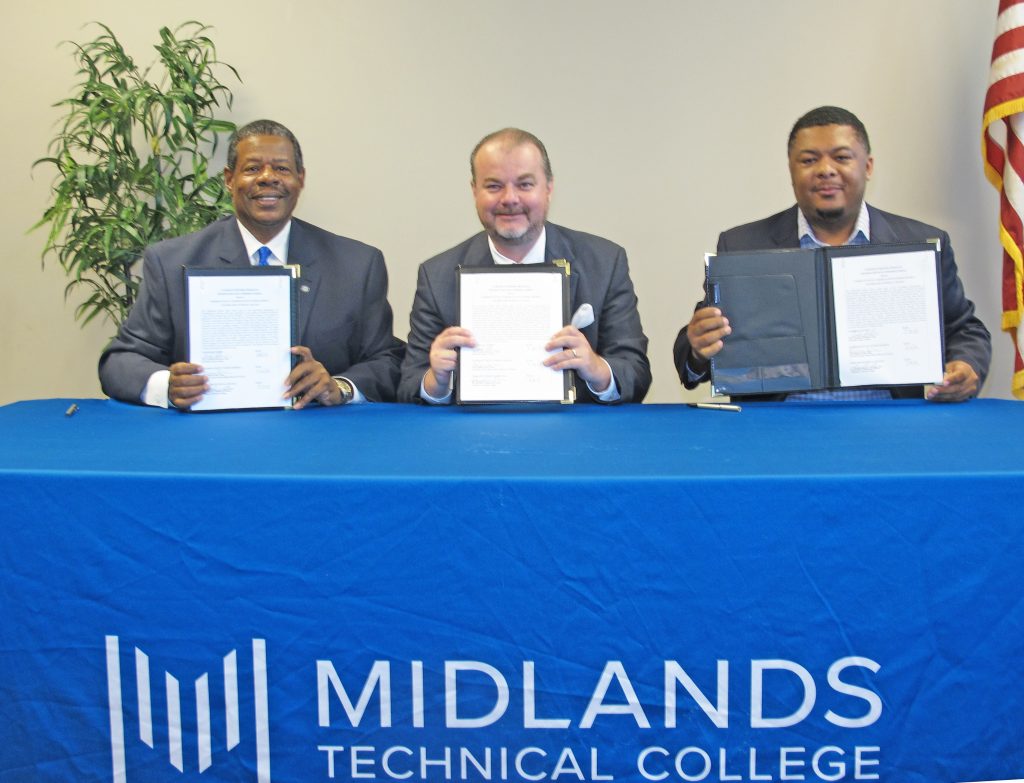
    A memorandum of understanding to create a Promise Program was signed Monday by Midlands Tech President Ron Rhames, Fairfield County School Board Chair William Frick and County Council Chair Cornelius Robinson. | Barbara Ball

    WINNSBORO – Providing free technical college tuition to financially struggling students is noble. Supporters say the Fairfield County taxpayer-funded Promise Program initiative will open college to more students and boost the local workforce.

    On Monday, representatives from Fairfield County, the Fairfield County School District and Midlands Technical College inked a Memorandum of Understanding (MOU), pledging their commitment to the Promise initiative.

    “This is a wonderful program and a way to move our county forward,” County Administrator Jason Taylor said to those gathered at the signing. “A good education is one of the surest ways to guarantee that our children will have access to good jobs and the opportunity for a better future.”

    Later that night, Fairfield County Council discussed in public, and also behind closed doors, its role in the Promise Program, recently pitched by Dr. J.R. Green, district superintendent.

    “Any kid in Fairfield County could go to Midlands Technical Institute at no cost,” Green said. “Students have to apply for financial aid. They’ll look at all the federal and state aid, and Promise revenue will cover the difference. But no one will be required to pay any tuition.”

    Similar programs exist in Kershaw, Sumter, Lee, Green wood, Clarendon and Williamsburg counties, according to the S.C. Technical College System, which governs the state’s technical schools.

    Most counties make free tuition available, but not unconditionally. The only conditions of note in the Fairfield MOU are that recipients must live in Fairfield County and graduate from a public or private school, approved homeschool or have a GED.

    Greenwood prorates tuition aid based on a student’s length of residency, according to the Greenwood Promise Program website.

    Sixty-five percent aid is offered to students attending grades 9-12, but students attending two years or less receive nothing. Full aid only goes to lifetime residents.

    In Sumter County, qualifying students can attend Central Carolina Technical College at no cost provided they maintain a 2.0 GPA and remain enrolled for six consecutive semesters, according to the CCTC website.

    Aid only covers tuition, however. Books, lab fees and other miscellaneous costs aren’t covered, the website states. What the funding covers is not made clear in the Fairfield Promise MOU.

    Promise creates confusion

    There’s some disparity between how some council members, the school district and MTC perceive the Promise Program arrangement.

    The MOU signed Monday describes the deal as a “nonbinding Memorandum of Understanding to announce their intent and purpose to work together to establish the Fairfield County Promise Program.”

    An MTC media advisory announcing the signing states that dignitaries “will sign an agreement that allows 2019 high school and GED graduates living in Fairfield County to attend MTC at no cost.”

    Both the school district and county have budgeted $75,000 for the Promise Program, but neither body has formally voted to authorize any expenditures for the program, though approval is likely.

    At Monday’s council meeting, Councilman Jimmy Ray Douglas repeated prior assertions that MTC doesn’t attract enough students to its Winnsboro campus to justify holding classes there.

    “I’m not against educating children, I’m all for it,” Douglas said. “I’ve been trying to get Midlands Tech to teach classes in the last five years, yet they’ve had no classes whatsoever. It’s a shame we have to pay them $75,000 to start a class.”

    Speaking to The Voice on Tuesday, Councilman Douglas Pauley identified several elements that concern him, namely cost and accountability.

    Pauley said MTC needs to more clearly state how many students plan to attend and what classes will be offered. He said county’s $75,000 share should be doled out in quarterly installments based on MTC’s ability to meet those standards.

    “To give a lump sum of money with no accountability to the taxpayers how that $75,000 is specifically going to be used, I’m not in favor of that,” he said.

    In addition, Pauley said students should be required to take more classes than the six-credit-hour minimum he said other council members support.

    Many traditional student loan programs require students to register for at least 12 credit hours to receive full financial aid.

    Pauley also said students should meet specific academic standards to qualify.

    “To me, with a C average, you’re just kind of coasting along,” he said. “If someone else is paying for your college tuition, you can do better than a C average.”

    Other council members embraced the Promise Program.

    “This is a huge deal to be able to allow our students to go to school tuition free,” Councilman Moses Bell said. “This is big, this is a good thing. This is something we ought to be jumping up and shouting about.”

    Council Chairman Neil Robinson also supports the Promise Program.

    “I just think investing in our future for the kids is definitely something that’s needed in this county so we can have a stronger workforce, a better quality of life,” he said. “We’d be bridging that gap for the workforce.”

    Robinson said the Promise Program would likely receive further discussion at the next meeting set for July 22.

    Transparency concerns

    Government secrecy is also throwing cold water on the initiative for some.

    On Monday night, council members retreated behind closed doors to further discuss the Promise Program. Ridgeway resident Randy Bright chided the council for doing so.

    “You’ve taken a slip back with this Promise Program. There’s lots of confusion, lots of secrecy,” Bright said during public comments. “Why are you talking about this in executive session? This is between governments. You shouldn’t need to talk about this in executive session. It should be open.”

    An agenda for the meeting stated the executive session was for a “contractual matter” to discuss and receive “legal advice regarding [an] agreement between Fairfield County, Fairfield County School District and Midlands Technical College as to the Promise Program.”

    Pauley said he didn’t agree with discussing the Promise Program behind closed doors.

    “I thought that matter pertaining to the Promise Program could’ve been done in an open forum,” he said. “I didn’t see a need for it to be in executive session.”

    Monday night’s executive session was improper because the county had already signed an MOU, said Jay Bender, an attorney with the S.C. Press Association, of which The Voice is a member.

    Bender also called the receipt of legal advice explanation “vaguely worded.”

    “The MOU sounds like a contract to me,” Bender said. “If there’s an MOU, which is a contract, you can’t go into executive session under the rubric of contractual matters.”

  • CIAO!

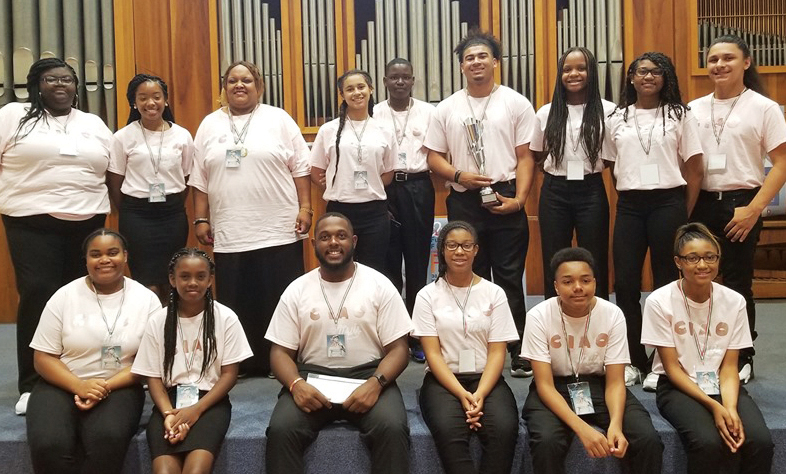
    ITALY – These members of the Fairfield District Honors Chorus are shown here following a performance in Italy. The group and several chaperones spent a week touring and performing in Florence, Rome, Pisa and other places of interest in Italy.