Tag: Fairfield County Council

  • New county grants to require matching funds

    WINNSBORO – During its regular bi-monthly meeting Monday night, County Council passed final reading on an ordinance establishing procedures that will require municipalities in the county to now put up matching funds when requesting funding from the county for public works projects.

    The ordinance applies to capital improvements on a one-time, non-reoccurring basis that serve a defined public purpose such as downtown revitalization, recreation or public safety. The ordinance specifies that the funds must be expended to achieve the overall public need and good.

    The collaborative ordinance will require matches from the towns of at least 15 percent and as much as 50 percent of the request.

    “We did not previously require matching funds from the towns,” Council Chairman Billy Smith said. “For instance, when the Town of Jenkinsville requested $50,000 from the County several years ago for sidewalks, we gave them the whole amount. With this ordinance, we will require a percentage of the requested funds to be matched by the requesting town,” Smith said. “This is a common practice with funding agencies.”

    The first grant issued under the new ordinance is expected to be a $180,000 grant to the Town of Winnsboro for repairing the Fortune Springs swimming pool, Smith said. The Administrative and Finance Committee voted Monday evening, following the Council meeting, to recommend that Council require a 50 percent match ($90,000) from Winnsboro.

    Another request on the horizon is one that was made last year by the Town of Ridgeway. The Town is seeking a total of $500,000 for an extensive sidewalk project and has applied for a $400,000 grant from the SCDOT Transportation Alternative Program (TAP) which requires matching funds of 20 percent ($100,000) from the Town. Of that $100,000, the Town has applied for $43,000 from the Fairfield County Transportation Committee (CTC) and $57,000 from Fairfield County. Under the County’s new collaborative ordinance, Smith said Ridgeway will be asked to match 15 – 20 percent of that $57,000.

    “That’s not much for the Town to pay for $500,000 of sidewalk improvements to the town,” Smith said.

  • Pauley, County answer lawsuit

    WINNSBORO – Attorneys for Fairfield County and Councilman Douglas Pauley have asked the Court of Common Pleas in Fairfield County to dismiss a lawsuit filed Feb. 12 by former Fairfield County Recreation Director Lori Schaeffer.

    Schaeffer’s suit alleged that Pauley illegally interfered with Schaeffer’s employment and was the source of the complaint used to justify her termination by the County.

    In documents filed with the Fairfield County Clerk of Court, Attorneys J. Paul Porter and Elizabeth M. Bowen, of Cromer Babb Porter & Hicks in Columbia, countered that Pauley, as a member of Fairfield County Council, was not a ‘third party’ capable of interfering with any alleged contract between Schaeffer and the County.

    Schaeffer’s suit alleges that she had not received any employment discipline from her hire through 2016, except for one disciplinary action directed to her entire department in the summer of 2017. The County and Pauley answered that “…disciplinary notices contained in Plaintiff’s personnel file speak for themselves.”

    The County and Pauley also stated in their answer to Schaeffer’s allegations that her “employment was terminated effective Sept. 28, 2017, based on a blatant lack of application and inefficiency.”

    The answer also stated that Schaeffer later characterized her termination as a resignation by e-mail correspondence dated Oct. 11, 2017.

    In addition to dismissing the lawsuit, the County and Pauley requested that the Court award them costs, attorneys’ fees and such other and further relief as the Court may grant.

  • FMH on life support

    WINNSBORO – The 800-pound gorilla in the room, also known as Fairfield Memorial Hospital’s mounting financial losses, has for months begged the question – ‘How is FMH going to keep its doors open until the new emergency services facility becomes operational?’

    Month after month, the hospital has tried to stop the bleeding – closing the most unprofitable departments, initiating greater efficiencies in billing and reducing operating costs by more than $2.2 million over the past two years.

    But the financial decline of the hospital continues to snowball, and CFO Tim Mitchell summarized the hospital’s position in no uncertain terms during its monthly meeting on Feb. 27.

    “Fiscal year-to-date operating expenses have decreased by $566,492,” Mitchell told the Board. “But during this same period, gross patient revenues have declined by $1,306,000. Hospital EBITDA (earnings before interest, taxes, depreciation and amortization) for the four months ending Jan. 31, 2018 had a deficit of $692,429.”

    In addition, Board Trustee Randy Bright, who chairs the Board’s Finance and Audit Committee, said during the committee meeting that the current budget is already off by about $400,000 because the hospital has failed to make its revenue projections.

    He feared that the hospital is “on pace for a $2,861,000 loss at the end of the year.”

    With no other options left, the hospital turned to the taxpayers for help, in the form of a $4,000,801 funding request to the Fairfield County Council during its meeting the night before the Board meeting.

    The $4,000,801 would be used for several on-going items, Doscher said, such as replacing the hospital’s heating/air conditioning unit and painting the exterior of the building.

    “Some of the funding request would also go towards the planned digitization of hospital patient records since, as we are winding down, we need to deal with all these paper records,” Doscher said.

    Approximately $1 million of the funding would go to support the emergency department until the end of the year, and the remainder – about $2.7 million – would be used to help the hospital deal with its on-going operating losses.

    The Board approved the $4 million county budget request after the fact, with only Board Trustee Ron Smith objecting.  Smith said the request reflected only a worst case scenario and that he wanted the hospital management to develop a best case and an intermediate case scenario to present to the County Council as well.

    Next Steps

    During the County Council meeting Feb. 26, Council Chairman Billy Smith suggested the County purchase the hospital property and thus have a tangible return on the taxpayer’s investment.   Reached by telephone after the Board meeting, Smith said the next steps for County will be to get an appraisal and inspections of the property in order to evaluate its potential purchase.  This could take several weeks, he said.

    Smith noted that the $1.2 million that the County normally budgets for the hospital is part of the FMH budget request and would be provided in quarterly installments as long as the FMH emergency department remains open.  However, this does not necessarily mean the hospital will get everything it asked for.

    “I am not in favor of providing all of the $4 million regardless of the results of the appraisal,” he said.

    “There was no scenario in which any extra funding will be provided over the $1.2 million that the County has traditionally budgeted for the past 20 – 30 years, unless the hospital property is involved,” Smith said.

    Grim Financial Picture

    Despite Board members’ assertion that the need for more than$4 million is a worst case scenario, the information presented during the Finance and Audit Committee meeting prior to the full Board meeting  again highlighted the hospital’s deficit position caused by an unfavorable patient mix, declining revenues and operating costs that are fixed despite an absence of patients.

    For example, the hospital posted adjusted patient collections for January, 2018 of $429,877. This included payments for patient debt collected through tax offsets and the Governmental Enterprise Accounts Receivable collections (GEAR).  Excluding these payments, the hospital collected about $371,000 last month.

    Excluding the GEAR and debt offset payments, Mitchell said, “we have been averaging about $400,000 a month in patient collections, and that is down considerably from a year ago.”

    Mitchell said the hospital had to use some of its board restricted cash to help make the February payroll. Currently, there is a little more than $400,000 in the two funds.  Mitchell proposed moving $25,000 from each fund for a total of $50,000. The board has previously granted hospital management discretion in using board-restricted cash. The finance committee asked Mitchell to pay back these funds from the expected debt set-off and GEAR collections in March.

    By the end of January, the hospital only had a total of 14.9 days cash on hand.  Normally, Mitchell said, the state disproportionate share (DSH) payments and county appropriation the hospital receives in January will help bolster its cash position, but now it is burning through this money a lot quicker.

    For example, Mitchell said, in November and December the hospital’s accounts payable (the money it owes to vendors for goods and services) increased by $200,000.  As of the end of December, 2017, the hospital owed almost $2.9 million for services and supplies to various vendors, making it necessary to use the county and DSH funds to pay down its debts.

    “It’s all a reflection in our decline in revenues,” Finance and Audit Committee Chairman Randy Bright said.  He pointed out that the last time the hospital received the quarterly government funding, it had 28 days cash on hand.

    “If I may re-cast what Randy is saying …our net asset position at the end of October 2017 was $793,000. Our net assets by the end of January 2018 were $283,000.  That is due to these cumulative losses,” Mitchell said. “That net asset position is before we record our unfunded pension liability which is a minus $8 million.”

    Also telling was that the “good” news in the monthly financial report was apparently due to this winter’s flu outbreak. Admissions to the ER department increased to 762 in January from 581 in December, and, therefore, gross revenue exceeded the amount budgeted for the month for both the ER and the imaging services department.

    Even then, Mitchell said, the fact that the emergency department is becoming a much bigger part of the hospital’s “book of business” is not helping its financial picture but it actually hurting it.  This is, by design, he said, since the hospital has closed its cardiac rehab, Blue Granite and home health departments.

    However, a higher percentage of ER patients are either uninsured or receive Medicaid to help them pay for health care.  Of the hospital’s gross charges, 30 percent are self-pay and 34 percent are billed to Medicaid, which pays the least compared to Medicare and commercial health insurance.

    “Typically, we see reimbursement rates from Medicaid at 18 cents on the dollar and from self-pay 15 cents on the dollar,” Mitchell said.

    “So we are seeing an ‘unfavorable’ mix of patients in the emergency department, which is growing as a percentage of our total business.  That is a recipe for these types of numbers,” Mitchell said.

    What’s not making these numbers worse is that the hospital had a considerably better bad debt experience compared to a year ago, Mitchell said.

    Despite this, he pointed out that while operating costs had declined by $566,492, gross patient revenues had declined by $1,306,142.

    “It would be wonderful if they declined by the same amount, but that’s not the way it works, unfortunately. You have got fixed operating costs that either don’t change or that change by very little.   We still have to staff certain departments with the same compliment of services whether we see one patient or a thousand.”

  • FMH asks Council for $4 M until end of 2018

    WINNSBORO – It was the request County Council members had been expecting from Fairfield Memorial Hospital (FMH) for almost a month – $4,000,801 to keep the hospital open until Dec. 31, 2018.

    During Council meeting Monday evening, the hospital’s Chief Financial Officer, Tim Mitchell, broke the numbers down this way.

    “Included in that number is $1,043,000 for the hospital’s emergency room services,  $154,130 to replace heating/air conditioning unit, $50,000 to paint the exterior of the building and over $1 million for accounts payable 60 days past due. The balance of the request would be potential cash losses through Dec. 31, 2018. Because Mitchell did not always speak into the microphone, other numbers were not audible and Mitchell could not be reached for comment before press time. (A more complete breakdown of the funding request will appear in the March 8 edition of The Voice.)

    Before Council went into executive session to discuss the hospital’s funding request, Council chairman Billy Smith said it is his feeling that the citizens of the County need to get something tangible in return for the funding that’s been requested and that has been paid over the years.

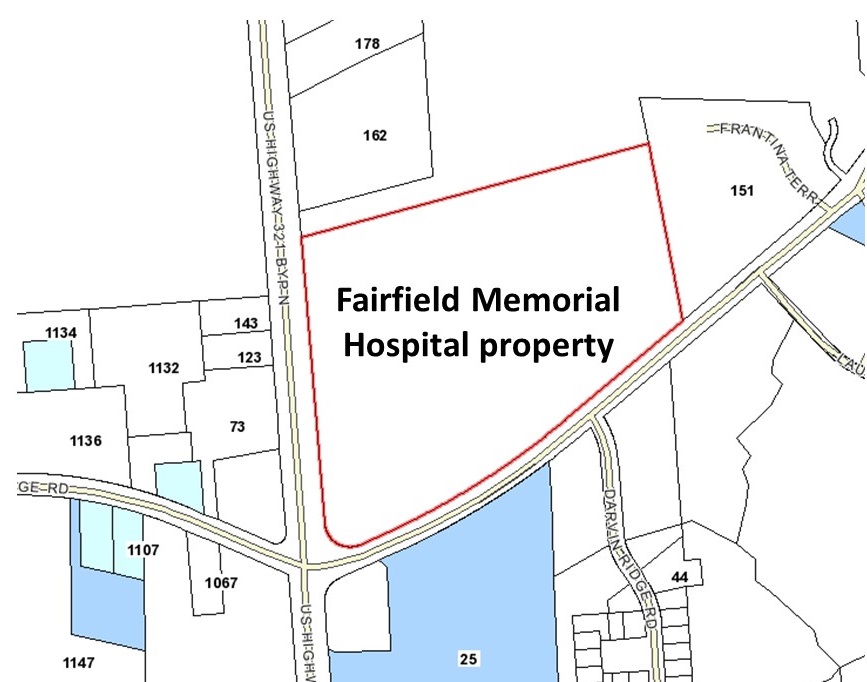
    Smith suggested the County purchase the hospital property and have a tangible return on the County’s investment. As for the timetable for that to happen, Smith said he could not be specific.

    “Providence has a 90-day right of first refusal on the hospital property, so we would need a letter from them saying they are not interested in purchasing it,” Smith said. “There are a couple of leans that would need to be taken care of and we’d need an appraisal of the property which will take some time. I think the hospital [FMH] has expressed that they have enough money to get by until we can work these things out,” Smith said. “But if for some reason we can’t purchase the property, then we’ll have to have an entirely different discussion.

  • County OKs increased pay for EMS

    WINNSBORO – After asking his fellow councilmen to defer a vote on salary increases for the County’s Emergency Services employees last month, Councilman Neil Robinson was quick to reverse course when the item came up on Monday night’s Council agenda.

    As Emergency Services Director Mike Tanner began a repeat of his appeal last month for salary increases, Robinson interrupted him.

    “Mr. Tanner, I think due diligence has already been done, and I would like to make a motion to go ahead and approve EMS for the raises you are asking for,” Robinson said.

    “Second,” Councilman Jim Ray Doulas jumped in.

    With no discussion other than Councilwoman Bertha Goins’ praise for the EMS’s service to the County and a clarification requested by Councilman Douglas Pauley regarding overtime pay, Council voted 7-0 for the salary increase request.

    Tanner had requested the increase in salaries after Richland County offered a 10 percent pay raise for its EMT’s and paramedics, immediately opened eight new positions and budgeted for 48 new positions next budget year with a $2.5 million budget increase for equipment and supplies. Tanner said the potential draw of that offering on Fairfield County emergency services employees is putting the county at risk.

    “Starting pay for Richland’s new paramedics is 19 percent higher than Fairfield’s,” Tanner said, “even with last year’s increase. Our employees work 14 hours a week more and make $19 a week less than those in Richland and Lexington Counties.”

    County Administrator Jason Taylor said the overall increase would cost the county $357,000 annually.

  • FMH asking Council for almost $4 million tonight

    WINNSBORO – Tonight, the Fairfield Memorial Hospital (FMH) CEO is expected to appear before Fairfield County Council to request almost $4 million to cover the hospital’s operating expenses through Dec. 31, 2018, sources have told The Voice.

    That request includes a little more than $2.7 million for operating expenses for the hospital and another $1+ million, which is the amount the County already gives the hospital each year.

    In addition, Council is expected to discuss, in executive session, a possible acquisition of the hospital property by the County. The executive session agenda includes,” the discussion of the potential purchase of real property identified as Fairfield County TMS 126-03-01-001″ (the hospital property).

    The meeting will be held at 6 p.m. tonight at the Fairfield County government complex council chambers, second floor, 350 Columbia Road in Winnsboro.

  • Providence, County break ground for ER

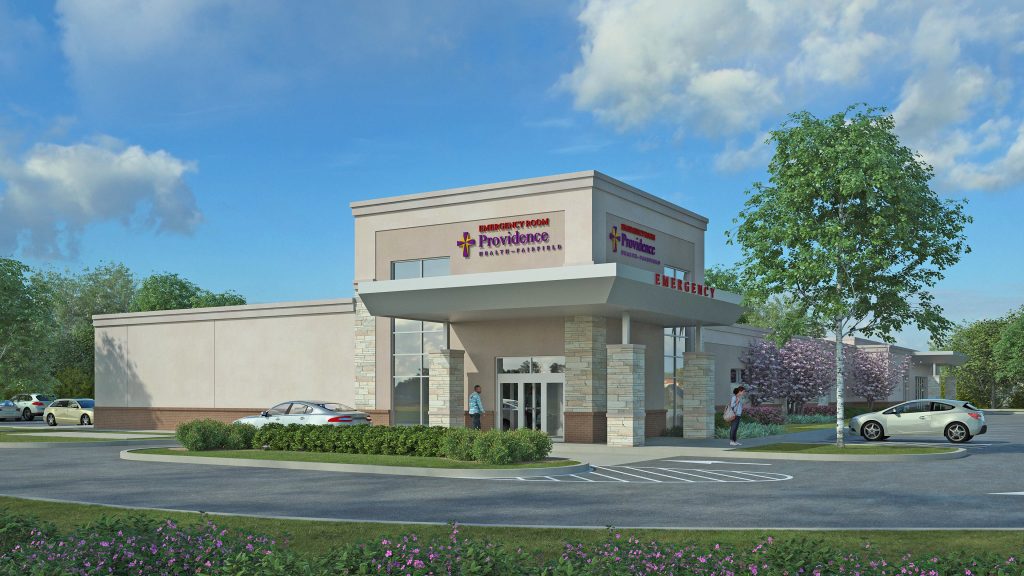
    Breaking ground for the new Providence Health-Fairfield Emergency Room are: Bertha Goins, Vice Chairman of Fairfield County Council; Dr. Roger Gaddy, Fairfield Memorial Hospital Chief of Staff and Mayor of Winnsboro; Susie VanHuss, Chair Board of Trustees Providence Health; Scott Campbell, Market CEO, Providence Health; Catherine Fantry, Fairfield Memorial Hospital Board Chair; MaryGail K. Douglas, Representative District 41; Victor Giovanetti, President Eastern Group LifePoint Health; J.R. Green, PhD, Superintendent of Fairfield County School, Providence Health Board of Trustees Member; Mike Tanner, Director Emergency Medical Services, Upper Midlands Rural Health Network; Suzy Doscher, Fairfield Memorial Hospital CEO; Dr. Cale Davis, Carolina Care; Mark Hood, President and CEO Hood Construction. | Barbara Ball

    WINNSBORO – Ground was broken Feb. 15 for the new Providence Health-Fairfield Emergency Room that will be located on the corner across from BI-Lo Shopping Center at 1810 US Highway 321 Bypass in Winnsboro. Approximately 100 county, town, health care and community officials attended the ceremony and gathered to watch the first dig marking the beginning of construction of the facility.

    Exterior rendering of Providence Health – Fairfield Emergency Room

    “We are proud to collaborate with Fairfield Memorial Hospital (FMH) and Fairfield County to preserve critical access to emergency care for residents of this community,” Scott Campbell, Market Chief Executive Officer of Providence Health, said in opening remarks at the invitation-only event. “This new facility will allow you to have access to 24/7 care from board certified emergency room specialists, and we’re excited about that. This Emergency Room will help transform the delivery of local healthcare services to a sustainable model that better meets the needs of this area.” Campbell said.

    The new emergency room will be approximately 20 miles away from Providence Health’s Northeast hospital campus where patients needing more intensive care can be quickly transferred.

    Winnsboro Mayor Roger Gaddy, who serves a Chief of Staff at Fairfield Memorial Hospital and has been on staff at the hospital since 1979, addressed the crowd, reminiscing how, as a young intern, he was recruited to Fairfield County 40 years ago by current fellow FMH Board member William Tuner who was then serving on Fairfield County Council. Gaddy expressed his appreciation to the County, to Providence Health and its partner, LifePoint Health, for bringing the new emergency room to Fairfield.

    “It’s a great day for Fairfield County,” Gaddy told those gathered.

    Interior rendering of Emergency Room in Fairfield County

    The one-level, 18,000-square-foot building will dedicate 12,000 square feet to emergency services and include 6,000 additional square feet of space for future expansion. Plans for the facility include: six exam rooms (including four treatment rooms and two for future expansion), two trauma rooms, an onsite laboratory and imaging services such as a CT scann, ultrasound and x-ray.

    County Council budgets $1.2 million annually to support FMH’s emergency room, and it passed a resolution in May, 2017, stating that it would continue to financially support FMH’s emergency room operations for up to 18 months or until the new Providence emergency facility is open for business. That resolution also stated that the County will provide $1 million annually for 10 years to Providence Health in support of the new emergency room.

    The new emergency room was made possible in part by the state’s Hospital Transformation Program which supports rural access to healthcare resources and has contributed $3.9 million to this project.

    Providing rural access to health resources is a statewide initiative,” Fairfield Memorial Hospital CEO Suzanne Doscher said. “We are pleased to have found a partner that will continue to offer emergency services to the residents of Fairfield County.”

    Until the new facility opens, in-patient hospital and emergency service will continue to be offered at the FMH location. When the new ER opens, emergency services, radiology and lab services will be offered there.

    County Council Chairman Billy Smith said providence will offer employment opportunities to current FMH employees who satisfy Providence’s customary pre-employment screening requirements and are qualified for comparable positions in the new facility to the extent that these positions are available.

    Smith emphasized that Providence Health is committed to providing needed emergency care to all of Fairfield’s residents and that it has a charity care policy that provides support for community members who lack the ability to pay for needed healthcare services.

    Construction on the new emergency room is expected to be completed in the fall of this year.

  • Lawsuit filed against Councilman and County

    WINNSBORO – Former Fairfield County Recreation Director, Lori Schaeffer, has filed a lawsuit against County Councilman Douglas Pauley and Fairfield County.

    The complaint, filed with the Fairfield County Clerk of Court on Feb. 12, 2018, alleges that Pauley illegally interfered with Schaeffer’s employment and was involved in her termination last fall such that he either insisted upon her termination and/or was the source of the complaint used to justify her termination.

    Schaeffer alleges that the County violated a “clear mandate of public policy such that Pauley could interfere and did interfere in her employment, which is prohibited by the letter and spirit” of the law.  She states that because Fairfield County has a Council/Administrator form of government, its Council members are forbidden from meddling in the day-to-day affairs of that government and from supervising county employees other than the county administrator.

    The suit also cites S.C. Code 4-9-660 which states: “Except for the purposes of inquiries and investigations, the council shall deal with county officers and employees who are subject to the direction and supervision of the county administrator solely through the administrator, and neither the council nor its members shall give orders or instructions to any such officers or employees.”

    Schaeffer, who was hired by the County as Recreation Director in October, 2007, states that Pauley, immediately upon becoming a Council member in April, 2017, “began to nit-pick and micromanage” her work. She alleges that Pauley hassled her, “about miniscule items including an issue with baseball uniforms being late to arrive, the start time for the County’s baseball schedule, schedules generally, and later a wall at the County’s recreation center playground.”

    The suit also cites the following and other ways that Schaeffer alleges Pauley interfered with her work.

    – During the County’s 2017 budget meeting, Schaeffer alleges that she was disproportionately questioned by Pauley regarding the intricacies of her department budget in comparison to other department heads. The suit states that Pauley also asked Schaeffer, but not other department heads, questions that were not germane to the budget.

    – During a meeting with Pauley in Deputy County Administrator Davis Anderson’s office, Schaeffer alleges that Pauley stated to her that “they want you [Schaeffer] and [another person] terminated from the County.”

    – Schaeffer alleges that Pauley interjected himself into her employment when, she states, an unforeseen issue arose due to unpronounced changes in Little League Baseball Rules which precluded three boys from competing in state all-star competition for the 9-10 age bracket due to their age. Schaeffer’s lawsuit states that the boys were permitted to compete in the next bracket up. The suit states that Pauley specifically told Anderson that the issue was disgraceful and that something had to be done about Schaeffer and her department.

    – Pauley, Schaeffer alleges, requested that one of her subordinates be terminated.

    – Schaeffer alleges that when she secured bids that were approved by Anderson and Taylor for a grant-funded scoreboard, the purchase was put on hold when Pauley interjected himself, stating that he could get the scoreboard cheaper.

    – On or around September 5, 2017, Pauley questioned whether proper hiring procedures had been followed in regard to a recreation employee, the suit alleges. Schaeffer states that her employment with the County was terminated on the basis that one of her subordinate employees had failed to perform background checks for a Little League football coach.

    The suit states that the County is liable for Schaeffer’s termination which, it states, violates state law and that she is entitled to recover from the County all damages associated with her termination.

    Schaeffer further states that Pauley is liable for tortious interference with her contract and that she is entitled to damages, from both Pauley and the County, for her diminished earning capacity, lost wages, lost benefits, embarrassment, shock, humiliation, pain and suffering, reputational loss and loss of good will.

    The suit, which requests a jury trial, also states that Pauley’s actions were willful and intentional and asks for punitive damages.

    Asked to comment on the lawsuit, County Administrator Jason Taylor said he had not yet met with the attorney yet.

    “It’s an on-going lawsuit and I really can’t comment at this time,” Taylor said. “Our insurance through the County Association covers us in these kinds of actions.”

    Fred Williams with the law firm Gignilliat, Sabitz and Bettis in Columbia has been assigned to represent the County.

  • Tanner: County at risk as more EMS employees exit

    WINNSBORO – Fairfield County was facing a critical personnel shortage in its emergency services department a year and a half ago, with paramedics and emergency medical technicians (EMT’s) chasing better pay in neighboring counties.

    But a salary increase passed by Fairfield County Council in November, 2016 stopped the bleeding – that is, until Richland County recently upped the ante by again raising the pay for its EMT’s and paramedics.

    “Richland is offering a 10 percent pay raise for EMT’s and paramedics, immediately opening eight new positions, budgeting for 48 new positions next budget year with a $2.5 million budget increase for equipment and supplies,” Tanner said. “Starting pay for Richland’s new paramedics is 19 percent higher than Fairfield’s, even with last year’s increase. With 75 percent of our EMS employees living out of the county, we’re in a difficult spot,” Tanner said.  “While we must be doing something right for them to drive 30 miles over here to work, our employees work 14 hours a week more and make $19 a week less than those in Richland and Lexington Counties,” Tanner said.

    As a result, Tanner said it is increasingly difficult for Fairfield to attract and retain paramedics and emergency medical technicians (EMT’s). He said the shortage has become critical, putting the County’s residents at risk.

    To that end, Tanner asked Council to raise hourly rates for EMT’s from $8.55 to $9.85; paramedics from $13.42 to $15.81; sergeants from $14.77 to $17.66; lieutenants from $16.11 to $18.50 and captains from $17.45 to $19.35.

    County Administrator Jason Taylor said the overall increase would cost the county $357,000 annually.

    Tanner explained the potential crisis for the County.

    “We’ve had to shut down substations, and that has increased response time, affected patient care and could cause us to lose our advanced life support (ALS) care.” Tanner said.

    “DHEC (Department of Health and Environmental Control) requires us to have a paramedic on the truck 95 percent of the time [to maintain ALS service],” Tanner explained. A truck with only basic life support (BLS) service, manned only by EMT’s, cannot perform procedures involving IV’s, defibrillation, intubation, chest tubes, and invasive procedures or administer medication, Tanner said. Paramedics, he said, can perform these and other life-saving procedures.

    “There aren’t many calls we can send a BLS truck to and maintain our DHEC certification. There is a massive difference between BLS and ALS service,” he said.

    “I’ll show you the impact that would have on this county,” Tanner said, backing up his claim with examples of the kinds of life-threatening calls the department makes on a daily basis.

    “EMT’s can do nothing for low sugar diabetics in crisis except put them in the back of the truck, take them to Richland and hope the patient doesn’t die or get permanent brain damage on the way. A paramedic can immediately treat the diabetic on the spot and may not even have to transport them to the hospital. In car wreck situations, when only EMT’s on the truck, a patient with broken ribs can die on the way to the hospital when tension pneumothorax builds from punctured lungs. In that same situation, a paramedic can perform pleural decompression, can manage pain and the patient arrives in stable condition and is taken to surgery,” Tanner said.

    “To run all six trucks every day in the county we must be fully staffed with at least one EMT and one paramedic per truck.

    “Because of the shortage of paramedics, in November we were fully staffed for only 9 days. We were down one truck for 16 days and down two trucks for five days. In December, it got worse and by January, those numbers had deteriorated to the point that we were fully staffed for only one day. That means that an area of Fairfield County was not covered for 30 of 31 days. We’re that short staffed now. We were down to 14.5 days at five stations, 14.5 days at four stations and one day we were down to three trucks running in the county,” Tanner said.

    “When you’re down like that, is it caused because you don’t have lower ranking staff?” Councilman Neil Robinson asked.

    “We can put an EMT in the truck but without a paramedic in the truck 95 percent of the time, we will lose our ALS license,” Tanner said. Last year, Tanner told Council that it is critical to keep the trucks staffed.  “If we can’t keep them staffed, people will die. Paramedics are the primary emergency health care providers in this county. They are the ones who save your life,” Tanner said.

    To the County’s credit, Tanner said, Fairfield EMS has the best equipment and substations of all the surrounding counties.

    “[Long-term], we have a mentoring program in the school system and have reinstated the Explorer Post program to create home grown employees. Our benefits are great,” Tanner said. “We just need to keep up with the competitive pay market.”

    “If we made it competitive a year ago and employees are searching for the higher paying jobs, if we grant it now, what’s to say we won’t find ourselves in this same situation a year from now?” Councilman Douglas Pauley asked.

    “There’s no guarantee,” Tanner said. “But I believe you get what you pay for, and I think every citizen in Fairfield County deserves the best shot at life by getting the top quality paramedic to come save them in their medical or trauma crisis.”

    “But my main concern is their dedication to Fairfield County,” Pauley said. “Do we offer longevity for staying in the county to offset raising the salaries?”

    “We are working for long term solutions. But we don’t just compete against Richland and Lexington Counties. A private service on the DHEC website offers a $20,000 signing bonus to paramedics and $10,000 to EMT’s,” Tanner said. “That’s why we are trying to get more home-grown employees who are dedicated to staying in the county. I think we have a long-term solution in place, but we have to bridge the gap to get there.”

    “I recommend we postpone this until we have further information on it,” Robinson said.

    “The Administrative and Finance Committee recommended the pay raise, not to compete with other counties, but to raise it enough to keep the people here that we’ve got and get some new ones,” Douglas, a member of that committee said.

    “Neil, what is it you need to know?” Douglas asked Robinson. “He’s here now. You can ask him what you need.”

    “I’m not comfortable with the increases,” Robinson said. “I think we need to revisit it.”

    “Mr. Robinson, is your concern, and you and I talked about this earlier, is your concern not with [pay for] the EMT’s and paramedics, but with the leadership positions?” Smith asked.

    “Throwing money at EMT’s is what we’re doing,” Robinson said. “If we’re going to continue to throw money, let’s do it where we need it the most.”

    “I made a personal phone call to Lexington County and got some salaries of EMT’s, paramedics, lieutenants and captains, and their figures were substantially less than the finance committee gave me,” Pauley said. “So, I, too, would like more information before we make a decision on this.”

    But Tanner came armed with current pay stubs of paramedics and EMT’s from Richland and Lexington Counties to back up his requests for higher salaries.

    “The Director of Lexington County EMS told me yesterday that he does not have an EMT who makes less than $60,000 a year. He’s in charge of payroll and budget and there’s no reason for him to give me false information,” Tanner said. “As for salaries at the top, I would get half the increase that paramedics and EMT’s would get. But there needs to be a separation of pay between the paramedic in the field and the people with the most responsibility. Otherwise, why wouldn’t I just go back in the field where there is less responsibility?”

    Council voted 4-3 to defer a vote on Tanner’s request. Council members Dan Ruff, Neal Robinson, Bertha Goins and Douglas Pauley voted to defer the vote. Mikel Trapp, Jimmy Ray Douglas and Chairman Billy Smith voted against the deferral.

  • Resident returns to rezoned land

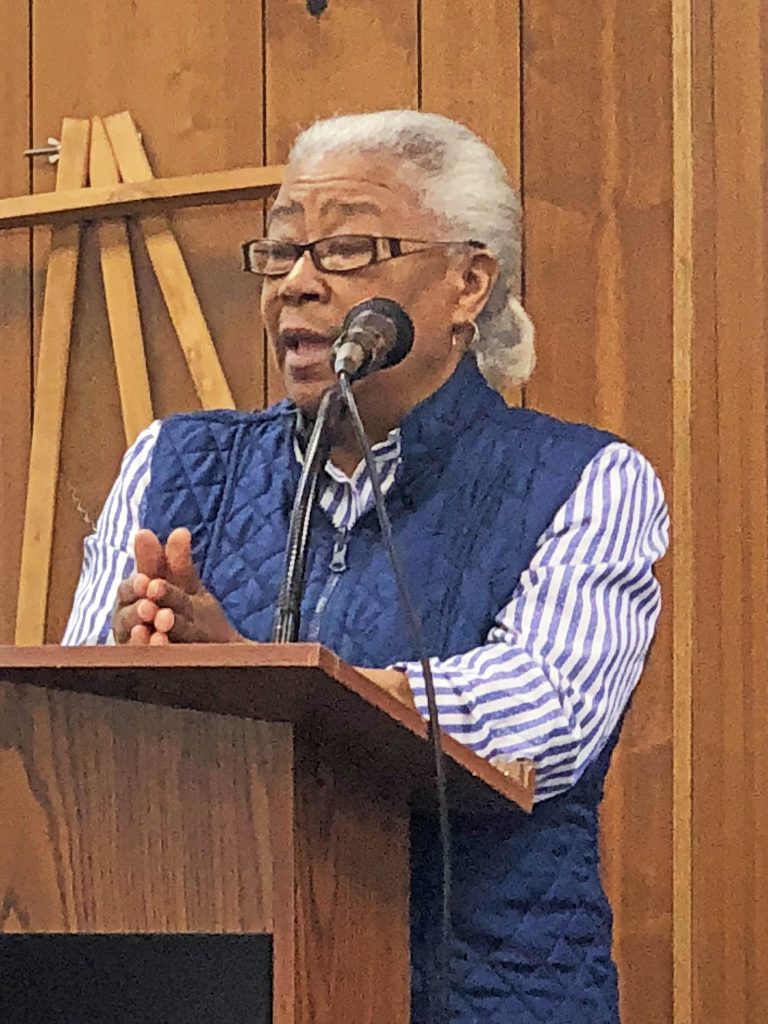
    WINNSBORO – Recognizing extenuating circumstances, Council voted 7 – 0 on the second of three readings to amend the Fairfield County Land Management Ordinance No. 599 in order to rezone a .036-acre property on Bishop Squirewell Road in Ridgeway from R-1 (Single Family Residential District) to RD-1 (Rural Residential District.) The property was recently purchased by Angela Young who told Council that she was from Fairfield County and had come back after 48 years and bought property in Ridgeway for a mobile home.

    Young

    “I had no idea that the property had been rezoned from what it used to be. When I went to the zoning office, they sent me to the assessor’s office where I paid all the taxes that needed paying. That office gave me a permit to move the mobile home on to the property,” Young told council. “I was then sent back to the zoning office and they sent me to the Department of Motor Vehicles (DMV) to get the mobile home registered in my name. I did that and took my paperwork back to the zoning department.” It was at that point, Young said, that she was told the property had been rezoned and that the new zoning would not allow a mobile home.

    “I had already moved my mobile home onto the property and then I was told it was there illegally. During all the processes I went through, no one ever told me that the property had been rezoned in 2012. I would like to get the property rezoned back to what it was before then, because I bought the property to put a mobile home on it, and the assessment office knew that because they gave me the move-in permit for it,” Young said.

    “I would like for you to rezone the property for my mobile home. That’s the only place I have to live. I’ve been living with my nephew and then my sister,” Young said. “My sister is getting tired of me and I’m getting tired of her,” she said, drawing laughter from council members and the audience. “I’m hoping everyone understands where I’m coming from. I’m asking you to do the best you can to help me,” Young said.

    Chairman Smith and County Administrator Jason Taylor expressed their concern to Planning Director Tim Roseborough that Young was able to get through the process without being told that her property had been rezoned. Roseborough confirmed Young’s story of the process.

    “It concerns me that we would let it go that far without picking up on that (zoning),” Smith said.

    Councilman Douglas Pauley welcomed Young back to the County and Councilwoman Bertha Goins apologized to Young for what she had been put through.

    “We’ve had things like this in the past regarding rezoning for mobile homes,” Smith said. “Sometimes we’ve allowed them to do that and sometimes we haven’t, depending on the area. I think we would generally look upon this case in not an unfavorable way. That said, there are some extenuating circumstances – the property was rezoned and sometimes folks don’t know about it. I’m not pointing a finger at anyone, but when folks come in to the Planning and Zoning Office,  we [need to] make sure the first time they come in, that we check [zoning] and not let it go two and three times down the road. Under these extenuating circumstances, I support both this second reading and third reading to rezone this property for Mrs. Young.”

    The motion passed unanimously to rezone the property to RD-1 as requested by Young.