WINNSBORO – Hundreds of new jobs could be coming to Fairfield County in time for Christmas.
But even if third reading of the economic development deal with the unnamed company isn’t finalized until early 2019, it won’t upset too many people.
“We’re really excited about the prospect of this,” said County Council Chairman Billy Smith. “Nothing’s done until it’s done, but everything looks good. All indications are that we’re moving in a positive direction.”
Council members voted 7-0 Monday night on first reading of an ordinance authorizing the county to enter into a fee in lieu of taxes and incentive agreement with the company.
Smith said talks with the firm have been taking place for at least six months. While he said it’s still too soon to identify the industry or where it would be situated, Smith said the company is international.
More importantly, the industrial prospect is expected to create 200 jobs and make a $30 million investment in Fairfield County. Smith said many of the jobs would be well-paying.
“These jobs are going to be good, factory jobs,” Smith said. “We’re not talking about jobs that are paying $8 to $10 an hour. These are good, stable factory jobs, and that’s what we need.”
The new firm comes as welcome news for Fairfield County, which has weathered some economic setbacks in recent years.
Most notably, nuclear reactor construction on the failed VC Summer expansion project resulted in thousands of lost jobs.
That’s on top of more lost jobs when the Winnsboro Wal-Mart closed in 2016.
Fairfield County faced another scare this past summer, when Element Electronics announced plans to eliminate most of its workforce, citing tariffs the Trump Administration slapped on China, where some components of Element TVs are manufactured.
Element reversed course in September when those components were removed from Trump’s tariff list. After turning that corner, Fairfield County is on the precipice of turning another.
“We’ve kind of had a tough road, but we stuck to it,” Smith said. “This will put us in a much better position.”
WINNSBORO – It’s been a rough past few years for Fairfield County animals, with stiff penalties for animal cruelty few and far between.
Some proposed county level ordinance changes, however, could possibly become law by the end of the year.
First reading of an ordinance revising the county’s existing animal control laws could come as early as Monday.
Deborah Richelle, president of the Hoof and Paw Benevolent Society in Blythewood, which worked with Fairfield County on the draft ordinance, said the organization remains hopeful the council adopts the ordinance by year’s end. While Richelle said the suggested improvements are minimal at this point, they are small steps toward tougher laws to protect animals in Fairfield County.
“It’s been a slow march,” Richelle said. “This would be such a great opportunity to see some of the work come to fruition.”
Council Chairman Billy Smith said the revised ordinance is still being tweaked, but noted it includes stricter guidelines relating to tethering, housing and transporting animals.
The proposed changes do not outlaw tethering altogether, but they do set some minimal guidelines that better protect animals and give law enforcement more guidance when responding to complaints, Smith said.
“It says what the length and weight of a tether needs to be so that you don’t have situations such as a Chihuahua with a 20-pound chain that’s two feet long on them, for example,” he said.
Paula Spinale, also of Hoof and Paw, has been working with the county as well. She remains optimistic that the proposed ordinance will pass, crediting Smith for helping to keep the process moving forward.
“There are so many dogs that are on chains 24/7 in this area,” Spinale said. “Somebody needs to help them, to fight for them.”
Monday night’s first reading will be in title only, meaning council members will vote on the measure without any formal discussion. Three readings are required to pass.
Public comments, however, can be made. Council agendas routinely have two public input sessions, the first devoted to agenda items in which a public hearing hasn’t been scheduled, such as the animal cruelty ordinance.
Speakers are allowed three minutes per person, and the session is limited to 30 minutes.
Hoof and Paw is hoping for strong representation at the meeting.
“We’re excited and hopeful for this what this first reading is making possible,” Richelle said. “We certainly will be there, supporting endeavors to get this passed through.
Smith said he hopes Fairfield County’s effort will inspire state lawmakers to enact stronger animal control laws.
“It [the ordinance] is telling the state, ‘we wish you would address these things,’” Smith said. “County ordinances, by law, can’t penalize people the way state law can. The state can charge with felonies, for example, and Counties can only charge with misdemeanors. If the state would address it, they could do much more to solve more of these issues.”
County Council meets at 6 p.m., Nov. 12 at the County building, 350 Columbia Road, Winnsboro 29180.
WINNSBORO – Even though Fairfield County logged an impressive 61.24 percent voter turnout Tuesday, there was little evidence that voters were looking for a change in the direction of the county’s governments.
All the county council and school district incumbents were returned to their seats with the exception of County Councilman Dan Ruff (District 1) who was edged out by Moses Bell with 651 votes (53.98 percent) to Ruff’s 546 votes (45.27 percent). There were nine write-in votes (.75 percent).
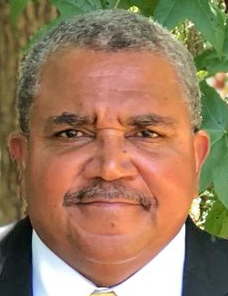
In county council races, the other new face to emerge from Tuesday’s election is Clarence Gilbert who replaces District 7’s County Council Chairman Billy Smith. Smith, who announced in June that he would not seek re-election after his term ends on Dec. 31, said he will be moving to Baton Rouge, LA where his wife, Rachel, is a professor at Louisiana State University.
Gilbert, with 400 votes (40.77 percent), bested two opponents – Lisa Brandenburg with 356 votes (36.16 percent) and Jana Childers with 197 votes (20.08 percent). There were 29 write-in votes (2.96 percent).
Incumbent Mikel Trapp, Sr. retained his District 3 county council seat with 618 votes (58.19 percent) over challenger Peggy Swearingen’s 439 votes (41.34 percent). There were five write-in votes (.47 percent) in that race.
Incumbent Doug Pauley, District 5, won by the largest margin of all the county council candidates with 586 votes (66.47 percent) over Matthew Seibles, Jr. with 304 votes (33.97 percent) and five write-in votes (.56 percent).
In the school board election, all four incumbents were returned to their seats.
Incumbent Sylvia Harrison, District 1, captured 796 votes (65.89 percent) to turn back her challenger, Elliott Qualls with 397 votes (32.86 percent) and 15 write-in votes (1.24 percent).
With 621 votes (56.20 percent), District 7 school board incumbent Darreyl Davis fought off opponent Herb Rentz who had 470 votes (42.53 percent). It was the second time this year Davis and Rentz had run for the seat. Davis defeated Rentz in February in a bid to serve out the last few months of Board Chairwoman Beth Reid’s term that was cut short by her death last winter. There were 14 write-in votes in the Tuesday race.
School board incumbents for District 3, Henry Miller, and District 5, Carl Jackson, were challenged only by write-ins. Miller received 773 votes (98.36 percent) with 13 write-in votes (1.65 percent), and Jackson received 756 votes (97.95 percent) with 16 write-in votes (2.05 percent).
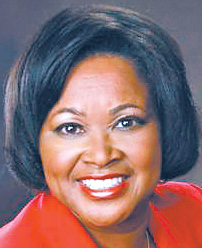
McDaniel
In the race for the District 41 House seat currently held by MaryGail Douglas who was defeated by Annie McDaniel in the June Democratic Primary, McDaniel received 5,923 votes (74.63 percent) to United Citizen’s candidate Fred Kennedy’s 1,941 votes (24.46 percent). There were 73 write-in votes (.92 percent) in the race.
Sixth Circuit Solicitor Randy Newman, Jr. was unopposed Tuesday, taking 4,563 votes (97.42), with 121 write-in votes.
Claudia Dean won the race for the Rocky Creek Watershed, with 40 votes (50.63 percent) over William Wishert with 37 votes (46.84 percent).
In uncontested county races:
County Treasurer Norma Branham, 7,975
County Auditor Peggy Hensley, 7,682
Probate Judge Pam Renwick, 7,793
Soil and Water District Commission, Eric Cathcart, 4,422
Jackson Mill Watershed and Wateree Creek Watershed – Write-in results not available at press time.
All results are unofficial until certified by the County Election Commission Friday morning.
WINNSBORO – Fairfield voters had an opportunity to find out what candidates had to say earlier this week during two candidate forums sponsored by the Fairfield County Chamber of Commerce.
Candidates for County Council Districts 1, 3, 5 and 7 answered questions on Monday evening, and candidates for the School Board of Trustees Districts 1 and 7 answered questions on Tuesday evening. Both forums were held at the Woman’s Club in Winnsboro.
WINNSBORO – Fairfield County political candidates for the Nov. 6 election, will be given the opportunity to have their say during two candidate forums sponsored by the Fairfield County Chamber of Commerce. Both forums will be held at the Woman’s Club in downtown Winnsboro.
The forum for County Council candidates will be held on Monday, Oct. 29, from 6 – 8 p.m. Moderator will be Winnsboro attorney Mike Kelly.
Council candidates are: District 1 – Dan Ruff (incumbent) and Moses Bell; District 3 – Mikel Trapp, Sr. (incumbent) and Peggy Swearingen; District 5 – Douglas Pauley (incumbent) and Matthew Seibles; District 7 – Lisa Brandenburg, Jana Childers and Clarence Gilbert.
Another forum will be held the next evening, Tuesday, Oct. 30, from 6 – 8 p.m. for candidates for the Fairfield County School Board of Trustees and the House of Representatives (Dist. 41). Moderator for the Board of Trustees candidates and House candidates will be Neil Robinson.
School Board candidates include: District 1 – Sylvia Harrison (incumbent) and Elliot Qualls; District 7 – Darreyl Davis (incumbent) and Herb Rentz.
House of Representatives, District 41 includes Fred Kennedy and Annie McDaniel.
The Woman’s Club is located at 102 S. Vanderhorst Street in Winnsboro.
WINNSBORO – An otherwise procedural vote to revise Fairfield County Council bylaws flowed into deeper discussion about how a proposed water and sewer authority will function.
At its Oct. 8 meeting, the council voted 7-0 to approve a resolution to revise the bylaws addressing how authority board members are appointed.
The county and town would each appoint three members to the seven-member authority.
Both bodies would jointly approve the seventh member.
In its early stages, the proposed authority is primarily a joint venture between Fairfield County and the Town of Winnsboro. The Mitford Rural Water District has expressed interest in participating, but nothing has been finalized.
At the Oct. 8 meeting, Councilman Mikel Trapp asked several questions about the size of the proposed authority, how it would be constituted and who else is participating.
“So is any other water company involved besides the Town of Winnsboro?” Trapp asked.
“Initially we’re working with the town of Winnsboro. We do anticipate in the future to reach out to others,” County Administrator Jason Taylor replied. “But to form it initially, we’re working with Winnsboro because they’re the major provider of water and sewer in the county.”
“So [there] is not going to be a board member coming from another water company,” Trapp asked.
“We’re in discussions right now to look at one other water company,” Taylor said, identifying Mitford. Taylor said Mitford reached out to the county.
Trapp later expressed concerns other water companies were being excluded.
“I wasn’t making a statement that someone was trying to take over,” Trapp said. “I was concerned if we asked another member from another water company. It seemed like we’re picking one over the others.”
Earlier this month, the Jenkinsville Water Company’s leader expressed concerns about the authority in an interview with The Voice.
“They said they wanted ‘X’ amount of dollars for you to join a water authority, but they [haven’t said] what it’s going do for you, how it’s going to help, what it’s going to do or anything else,” said JWC president Greg Ginyard.
Taylor said the proposed authority boils down to economic development and industrial recruitment.
Aside from preliminary talks with Mitford, the proposed authority is primarily a Fairfield County and Winnsboro venture. Participation is not compulsory, Taylor said.
“The genesis of this is primarily because our economic development sites, our industrial sites, are served by the Town of Winnsboro,” Taylor said. “We need to make sure those industrial sites are more than just land, but they have the water and sewer so they can attract the industry.”
Later, during a different discussion, county officials said functioning water and sewer services are vital in economic development efforts.
“We’ve got to get our act together. We need to get water in the ground. We need to get sewer in the ground in order to grow,” Ty Davenport, the county’s director of economic development, said. “Our capacity is 34,000 gallons a day. We should have a minimum of 800,000 gallons a day, probably a million gallons. At the [Fairfield County] mega site, we’ve got to have a million gallons. We’ve got a ways to go there.”
Council Chairman Billy Smith said he’d like to see additional water providers join, noting it could shave costs for customers.
“I’d love to see it so we could have everybody in the agreement if we possibly can and take advantage of economies of scale,” Smith said. “They [water providers] sell water back and forth back to one another. If we could get everybody under one roof, that would be a good thing for the citizens of the county and help lower their rates over time.”
WINNSBORO – Taxpayer money, not previously mentioned by the Fairfield County School District Foundation, will help subsidize a ‘teacher village,’ a proposed residential development intended to attract and retain teachers in the District, should the plan move forward.
Under questioning by Council members, Foundation and District officials also confirmed that they do not yet have a contract, executed or proposed, with the village investor. That did not sit well with some Council members who are being asked to approve a multi-county park agreement as well as a seven-year tax refund benefiting the investor.
In multiple public and private pitches, Superintendent Dr. J. R. Green and Fairfield School District Education Foundation Chairman Sue Rex have said first priority for the housing would go to teachers, who would pay between $600 – $900 a month to rent the homes, which are between 1,200 and 1,600 square feet.
District office staff, followed by first responders, could also be allowed to live in the community. After that, others in the community could be accepted as renters.
During County Council questioning on Monday night, however, it was learned that actual rental fees would range from $900 – $1,300, not $600 – $900 a month.
“I’m interested in how you plan to rent these houses for no more than $600 to $900 a month. It seems low for what the tenants would be getting based on the square footage,” Councilman Jimmy Ray Douglas said.
“How will the houses be rented for rates this low?” Douglas asked. “Is it possible the school district will be subsidizing the rental fees?”
Green answered in the affirmative. He said a proviso in the state budget includes funds that school districts can use to recruit teachers. The district would have the ability, Green said, to subsidize each home up to $300 per month, for a total of $108,000 of District subsidies each year.
“We plan to utilize our funding to help reduce the rental rates,” Green said. “We will be supplementing those rates with that retention and recruitment funding. They are looking for a school district to do some innovative things with those funds.”
State lawmakers inserted the proviso that Green referenced into the 2016 state budget, with funding going to the S.C. Center for Educator Recruitment, Retention & Advancement, or CERRA, legislative records show.
CERRA received $1.5 million in 2016. Since then, the appropriation has zoomed to $9.5 million in 2017 and 2018, according to CERRA’s 2017-2018 annual report.
Per the proviso, CERRA’s job is to help districts with teacher turnover of 11 percent or more over the past 5 years to boost teacher recruitment and retention. Fairfield County is among those districts.
In 2017-2018, CERRA spent $12.97 million on its teacher recruitment program, accounting for a majority of its $18.95 million in total expenditures, its annual report states. Fairfield County School District received the third highest allotment, totaling close to $738,000, of all districts drawing from the fund.
Council Chairman Billy Smith asked Green if the proviso money is permanent or if it might not be continued in the future, citing the State Legislature’s budgeting discretion. Green suggested the proviso could be built into the state budget after, perhaps, three or four years, but that is no guarantee.
Council member response to the teacher village varied during Monday night’s meeting.
Councilman Douglas Pauley asked several questions, including whether teachers living elsewhere in the county would receive the $300 rent subsidy as well. Green said they would not.
Pauley also asked about whether the district has looked at other builders or financiers.
Green said they had not. He also said Gorelick is willing to cover the $3.6 million in construction costs, and had the ability to choose the builder on their own.
Green went on to repeat a district talking point that, in addition to recruiting teachers, the village would spur economic development.
Green said Fairfield was the first District to be implementing this kind of teacher housing project and he wanted to have it ready to go by the start of the 2019 school year. He said other districts are beginning to look into doing something similar.
While council members generally praised the District for thinking creatively about ways to recruit and retain teachers, Smith stated that Council would need more documentation and specifics about the project before taking any votes.
As proposed, the Fairfield County “teacher village” would be built on 11 acres of land the district owns behind the district office off U.S. 321 Bypass in Winnsboro. There are tentative plans for a second phase on the other 11 acres.
Rex, the foundation’s director, emphasized that the multi-county business park must be approved by the County to move the project forward.
“We want to put together a template that works so beautifully that the school district, foundation, the county council, the private investors can work together to put this project into place and make it successful,” Rex said.
Before moving forward, the district also must seek approval from the Town of Winnsboro to rezone the teacher village property, a process that could take up to six weeks.
Councilman Dan Ruff said he’s encouraged by the teacher village’s possibilities.
“I want to commend you and the foundation for your creative thinking in this process,” Ruff said. “I think it is fantastic and I hope it works out.”
WINNSBORO – Winding down to Nov. 6, six Fairfield County candidates aren’t worried about the outcome of their races. Norma Branham (County Treasurer), Judge Pam Renwick (County Probate), Peggy Hensley (County Auditor), Henry Miller (School Board Dist. 3), Carl E. Jackson, Jr. (School Board Dist. 5) and Eric F. Cathcart (Soil & Water Conservation Dist. Commission) are running unopposed.
But 15 other candidates are in the hunt, and their campaign signs are popping up in yards and along roadways.
Here are the seats that are up for grabs.
COUNTY COUNCIL
District 1
Dan Ruff
Incumbent Dan Ruff, 61, is running for his second term representing District 1.
I came in to office in 2014 with the stated goal of helping to bring honesty, openness and accountability to the county government.
I think this council has done that and more. We transitioned the county’s struggling health care system to a state of the art emergency room facility that will open the end of this year while maintaining the county’s rehab service; completed critical water and sewer infrastructure for economic development and job creation and created a joint water authority between the county and the Town of Winnsboro.
Representing Ridgeway, I have worked to help council accomplish the following:
Constructed and opened a new Ridgeway Fire Station
Partnered with Ridgeway Town Council to obtain state grant money to improve the sidewalks
Provide road and site work for Ridgeway’s new water tank project
Saved Town of Ridgeway money by providing site work and equipment for installation of new town park playground equipment
Renovated a building in Ridgeway for a temporary library as a permanent library is being planned for the town
Approved a new recreation center for Ridgeway that will be constructed in 2019
Good things are coming to Fairfield County. One of our greatest accomplishments was to put in place a county administrator, Jason Taylor, who has the vision, I believe, to bring the county to its full potential.
Mr. Taylor has focused on reorganizing a number of the county’s departments to make them more efficient and provide better services to our citizens. We are focusing heavily on jobs and economic development.
We have improved the working relationship between the county and the towns, and we are reaching out to assist our towns with grants and projects that will benefit us all.
I am a lifelong resident of Ridgeway and have served 40 years as a deacon and Sunday school teacher at Aimwell Presbyterian Church. I have served on the Ridgeway Town Council, the economic development board and other town and county committees. I have served as a volunteer firefighter and have always stood ready to serve and support Ridgeway in any way that I can.
I am married to Brenda, and I have a son, Daniel. I own and operate the Ruff & Company.
Moses Bell
Moses Bell, 64, is challenging Councilman Dan Ruff for the District 1 seat.
I have lived in District 1 of Fairfield County all my life. I am married to Ruby Bracey Bell of Camden SC for over 43 years. I am active in the community, chairman of the Deacon’s Ministry at Mount Olive Baptist Church in Ridgeway, adult Sunday school teacher, volunteer firefighter and over 30 years of management experience that includes certification as a Six Sigma Black and Lean Manufacturing Project Leader.
I have served on many Fairfield County Boards and Commissions to include chairman of the Fairfield County Rural Fire Board, the Planning & Zoning Commission, the Strategic Planning Commission for the County and many advisory positions. I served as chairman of the Sheriff Success Academy under Sheriff Herman Young who worked with under privileged youth and volunteered at Manning Correctional Institution teaching religious manhood classes and expectations.
I want to seek opportunities for our citizens, who deserve a better Fairfield. If elected, my focus will be on the following: Infrastructure improvements of water, sewage and high-speed internet; Industry recruitment…jobs; resources and facilities for senior and youth recreation; resources for paid firefighters and incentives that enable growth of volunteerism; Improve efficiency of county government resources; fully transparent county government and I will work with the communities to seek input into building a better Fairfield County. I also hope to work with others to bring to Fairfield County free technical education as in 34 other counties/school districts in SC.
Mikel Trapp, Sr.
District 3
IncumbentMikel Trapp, Sr.is seeking a full term after winning his current seat two years ago when the District 3 Councilman Colonel Walter Stewart resigned for health reasons. Trapp also served two terms prior to being defeated by Stewart in 2014. Trapp did not submit information about his candidacy.
Peggy Swearingen,64, is challenging Councilman Mikel Trapp for the District 3 seat for the second time in two years.
Peggy Swearingen
I am running for this seat because I feel that Fairfield County needs someone from District 3 who will speak up and help the other district representatives on our current council in the progress they have made to reign in some of this excessive spending that my opponent helped incur under the previous administration. He voted for and supported the previous county council’s $24 million bond (that we are paying $43 million for). Because of that bond, our county is now so in debt that we can no longer borrow money. Six of our seven current council members (Bertha Goins, Dan Ruff, Jimmy Ray Douglas, Neil Robinson, Douglas Pauley and Billy Smith) are a team whose votes and support have made drastic changes, giving our taxpayers hope that they will be able to survive and thrive. But my opponent for the District 3 seat, voted for that bond.
We need a full team on council who will continue to work for fiscal responsibility and attract jobs for our citizens. We need better fire protection, better police protection and better EMS coverage for our residents.
Douglas Pauley
District 5
IncumbentDouglas Pauleyis seeking re-election after being elected to a partial term when Councilman Marion Robinson resigned due to health reasons. Councilman Pauley did not did not submit information about his candidacy.
Matthew Seiblesis a newcomer to the political arena.
I have two main concerns that influenced me to run for council – jobs and recreation. I am concerned about why, when we bring in jobs, we can’t keep them. I also think it would benefit the county to have a recreation complex for tournaments and regional and district games. I played ball here in this county when I was young and on up till adulthood. My kids played ball here and now my grandkids are playing ball here. I’ve coached football, baseball and basketball. Sports are good for kids and I think the County would benefit from having a really nice sports complex.
Matthew Seibles
I have served on the county’s recreation board, and I am a member and head Deacon at Faith Christian Church. I was employed by the school district for 30 years.
District 7
With Council Chairman Billy Smith stepping down from the District 7 seat on Dec. 31 as he prepares to move to Baton Rouge, LA, three candidates are hoping to take his place.
Lisa Brandenburg
Lisa Brandenburg, 55, ran unsuccessfully last winter for a seat on the Fairfield County School Board. She has now set her sights on County Council.
After much prayerful consideration and reflection, I have announced my candidacy for Fairfield County Council, District 7. I am a native resident of Fairfield County and have dedicated the past 30+ years to serving this community. I am a graduate of Winnsboro High School and Winthrop College, where I earned both my bachelor’s and master’s degrees in education and administration/supervision. I am married to David Brandenburg, Sr. We have two grown children, David and Dori, who each have shown their own dedication to making our county a better place.
For the past five years I have been an active participant at County Council meetings and also attended all Strategic Planning Sessions. I understand the unique needs and challenges facing Fairfield County. I am dedicated to supporting economic development, protecting the environment, producing fair and focused plans, protecting tax dollars and strengthening Fairfield County rather than further dividing it.
Jana Childers
Jana Childers,48, is a first time candidate for public office.
I don’t have a college degree or any background in politics. I am a concerned mom with a passion to make this county a better place for all our citizens.
I am a Navy Veteran and have lived in Winnsboro for over 20 years. I am married to Chris Childers, mom of 6, stepmom to 1, and Memaw to 4. I work in the S.C. Highway Patrol state headquarters and am a member of the First Baptist Church in Winnsboro.
I look forward to meeting the residents in District 7 and I vow to work diligently to make Fairfield County a place we are proud to call home.
Clarence Gilbert
Clarence Gilbert, 58, a lifelong resident of Fairfield County, says he has never run for political office, but has always been active in the community.
I have served on several boards including the Behavioral Health Substance Abuse Board. I am a former corporate regional sales director, serve as a Deacon at St. Mark Baptist Church in Simpson where I also serve as chairman of the stewardship ministry and I am a founding father of the Brotherhood Ministry. I also sing in the Brotherhood Choir.
It’s time for the citizens of this county to put aside our differences and come together to find ways to make our county better for everyone. I don’t have all the answers, but those who know me know that I am honest, will speak up for the betterment of this county and will use a common-sense approach to getting things done. I will not make promises I can’t keep and I will not jump on board because everyone else is going along with it. I will get the facts and make sound decisions. I am particularly concerned about economic development for this county, jobs, recreation, improvements in the county’s water and sewer infrastructure and beneficial relationships between our towns and our county government.
I have owned my own landscaping and lawn service for 18 years. I am married to Deloris and we have two adult sons and four grandchildren.
WINNSBORO – It wasn’t quite as dramatic as the Brett Kavanaugh hearings, but there still was plenty of suspense at Monday night’s Fairfield County Council meeting.
Council members gave final reading to an ordinance authorizing the county to move forward with an $11.5 million plan to build a new government center at the site of the former Mt. Zion Institute.
Though the announced vote was 5-2, Councilman Cornelius Robinson said after the meeting that he abstained (an abstention is recorded as a yes vote according to the Council’s bylaws).
“I believe in this project but I couldn’t convince many of my constituents that it was good thing for the county. Rather than vote no I abstained,” Robinson said.
Council members Douglas Pauley and Mikel Trapp voted against the ordinance.
Trapp didn’t comment on the Mt. Zion project from the dais.
Pauley, one of two holdouts during first and second reading, said he previously abstained so he could gather more information. He expressed concerns about cost.
“Fairfield County is in possession of 80 or more county maintained buildings,” he said. “Adding one more to it would definitely add more cost to the county.”
Councilman Dan Ruff, the other council member who previously abstained, said he remained undecided as recently as Monday morning.
Ruff said he had concerns about traffic and a monument on the property, but ultimately voted yes, saying he didn’t see a better plan to remediate the woes with the County’s current government building. He also thinks it’ll be an economic boost to Winnsboro.
“This has been a very, very tough decision for me,” Ruff said. “This morning I was still very uncertain, back and forth. This to me isn’t ideal, but I haven’t seen a better solution”
The proposal calls for repurposing the Mt. Zion campus into a new government complex. More than half of the funding would come from state and federal tax credits associated with the property.
Once complete, the new complex would be more than double the size of the existing admin building, encompassing nearly 45,000 square feet.
No plans have been announced for what would become of the existing county building.
Ten people signed up to speak specifically about Mt. Zion during public input time Monday night, with a majority of those speaking supportively and urging the council to vote yes.
Claudia Cathcart, the first person to speak, noted that Fairfield County has been struggling to keep jobs.
Council members supporting the repurposing of Mt. Zion have said plans for the new government complex could help increase foot traffic in downtown Winnsboro, and help offset losses after the recent closure of Walmart, as well as the failed nuclear project at V.C. Summer.
Element recently announced it would cut more than 100 jobs, citing Trump administration tariffs, before reconsidering, adding further uncertainty in Fairfield County.
“We’ve had some bad luck in the county,” Cathcart said. “Now is the chance to overcome some bad thoughts. Please vote yes for this project.”
Also supporting the Mt. Zion proposal was Joan Cumbee.
“This is the least expensive and most energy efficient option,” Cumbee said. “It is the only option that will not require a tax increase to do needed repair work.
“The claim that all neighbors are opposed is not true,” she added. “I live in the neighborhood and nobody asked my opinion.”
Winnsboro resident Susan Taylor touted economic benefits the project would bring.
“This is a plan that our county can afford,” Taylor said. “It’s the only plan that our county can afford. I believe that the refurbishment of these buildings would bring property values up.”
Not all supported the plan, however.
Dr. Marie Rosborough, a frequent critic of the Mt. Zion plan, once again voiced her opposition.
“Your budget has increased $13 million over the past three years,” Rosborough said. “That concerns me. Exactly how did you come up with these figures? So many people support your effort if you don’t live next door.”
In the end, however, council members approved third reading following a discussion in executive session.
Right before the vote, Council Chairman Billy Smith, who has pushed in favor of the project since its first proposal, took note of the considerable dialogue the Mt. Zion plan has received.
“That’s the most involvement I’ve seen us have on any issue,” he said, adding, “I hope the involvement continues.” Reached after the meeting for comment on the proposal’s advancement, Smith said, “I’m glad council had the vision to take advantage of such a rare opportunity as this. I think it gives us a shot at revitalizing Winnsboro and making the first step of turning things around. There’s risk in everything that ends up good and I acknowledge that, but if this is successful, in two years, we’ll look back and know we made the right decision. Then in 10 years, we’ll be known across the state for it as a model for others to follow.”
WINNSBORO – “Council will be bringing good news to the public forum Thursday evening [Sept. 20],” Council Chairman Billy Smith reported to The Voice earlier this week, regarding the proposal to repurpose Mt. Zion for new county offices.
“An important part of making this project affordable for the county is for the developer to be able to receive about $5.4 million in tax credits,” Smith said. “To get a majority of those credits, the property must be listed in the National Register of Historic Places.”
To that end, Smith said that on Sept. 12, the county received word from the United States Department of the Interior, which certifies properties for listing status in the National Register of Historic Places, that the Mt. Zion property ‘will likely be listed in the National Register if nominated by the State Historic Preservation Office.’
“And we have also received notification from the SC Historic Preservation Office stating that, ‘The property appears to meet national Register Criteria for Evaluation and will be nominated,’” Smith said.
“This is a big step towards being granted these historical preservation tax credits,” Smith said. “It’s great news for the taxpayers of Fairfield County.”
The two-part tax credit proposal consists of a New Market tax credit of $2.2 million and a historical tax credit of $3.2 million. The state and federal tax credits may also include abandoned building tax credits, according to Rory Dowling of 1st and Main, the North Carolina firm working with the county to renovate the building.
The developer owns the building and will bear the costs of the renovation. To help finance the project, the developer will sell the tax credits to a third party at a discount.
Smith has said the project will cost about $11.4 million total and will be paid for by 1st and Main from several sources – the $5.4 million in tax credits, $1.1 million in equity, and (after the property is developed) the county will buy the building via interest free annual lease payments of approximately $4.9 million over seven years. At the end of those seven years, the county will make a final payment to purchase and take ownership of the property from 1st and Main.
“Getting the tax credits is what makes this project possible,” Smith said.
While project naysayers have criticized the county for not renovating the current administration building or building a new one, Smith said to do either is cost prohibitive.
“[Mt. Zion] is the only thing we can do and afford to do,” Smith said. “It’s not the ideal situation, but when you’re $40 million plus in debt and unable to borrow any more, you have to dig out.”
Smith blamed Fairfield County’s financial predicament on past council members who, he said, borrowed $24 million in 2013, banking on revenues from the failed VC Summer nuclear plant to repay the bond – revenues that never materialized.
“Replacement of just the electrical, HVAC and roof of the current county building would cost over $4 million,” Taylor said. “To renovate and expand that building would cost much more than it would cost to repurpose Mt. Zion, which will offer so much more space.”
“Even if we had the up-front money to renovate the current county building, there would be additional costs to find offices for employees while the renovations were being done,” Smith said. “Building out a temporary location would cost just as much, if not more. In 2015 it was estimated that housing the Courthouse temporarily in the HON building during renovations would cost $3.6 million. That would bring the cost of renovating the current building to right under $7 million and would not include any expansion to meet even our current needs. Those costs would be even higher if quoted today. That would not make sense financially.”
County leaders say the 45,000 square foot Mt. Zion Institute would more than double the existing 21,000-square-foot building to include not only council chambers and county offices, but possibly the recreation, sheriff’s and other departments as well. There would also be space to house the Courthouse offices while renovating the current Courthouse.
The proposed renovation of Mt. Zion would feature more parking, increased police presence and could lead to the county’s 120 employees shopping and eating in downtown Winnsboro, spending more money downtown, Smith said.
Council could take a third and final vote on the project as early as Sept. 24.
Council will hold a public forum on the proposed project Sept. 20 to answer questions that have been submitted by the public and to review and explain the financial and construction details of the project.
Smith said the public will have a chance to talk informally with the developer and council members prior to the developer’s presentation and council’s discussion of citizen’s submitted questions.
If you are going to the public forum, here are the details: Thursday, Sept. 20, 6 p.m. at the Midlands Technical College campus, 1674 U.S. Highway 321 N in Winnsboro.