Tag: Fairfield County Council

  • County defers action on incinerator plan

    WINNSBORO—Fairfield County’s plans to replace a wood chipper with an incinerator is leaving some area residents feeling burned.

    On Monday night, the Fairfield County Council voted unanimously to postpone final reading of an ordinance to rezone 11 acres of county-owned property off Old Airport Road that would allow for the installation of an incinerator.

    County Administrator Jason Taylor said the incinerator option comes with less cost than the current wood chipping facility.
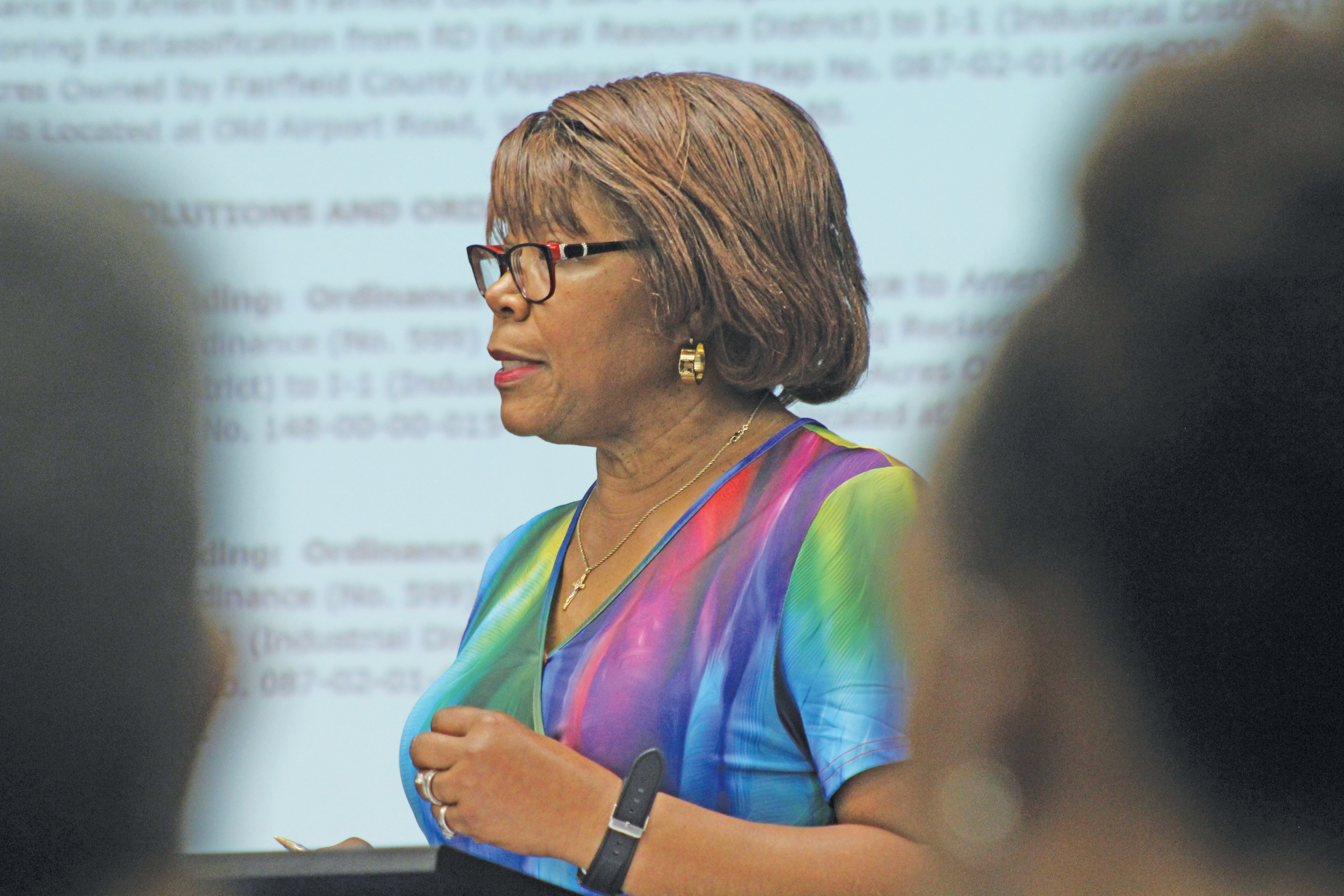
    Fairfield resident Shirley Seibles and others spoke against replacing the chipper with an incinerator. | Michael Smith

    “Some time back we had examined what we were doing out at the chipper site and determined it would be more cost effective to put an incinerator in as opposed to the chipping,” Taylor said.

    The rezoning vote is now tentatively scheduled for July 8.

    Councilman Moses Bell requested the postponement so council members could tour a Richland County facility that utilizes a much larger, but otherwise similar incinerator.

    Bell said he also wanted residents to have an opportunity to tour the facility. A date for the tour hasn’t been set.

    “Could we get a delegation of council to go look at the one in Richland County so we can make sure that we understand all the implications of this piece of equipment so as we vote, we’ll be inclined to know what we are voting for?” Bell asked.

    The council’s vote came following spirited comments from nearby residents, all of whom opposed the incinerator.

    Several residents complained that smoke from burning debris posed a health hazard. They also thought the machinery added blight that would drag down property values.

    “I am so afraid for our community. I feel that our health is at risk,” said Winnsboro resident Shirley Seibles. “Burning releases ashes and hot cinders into the atmosphere. Ash settles and it settles where it may, on porches, vents, shingles, flowers, cars and trucks, children’s toys and lungs. There is a small playground next to where you want to put this incinerator.”

    Seibles said the debris pile has become an eyesore.

    There will be “a mountain of wooden debris across from our homes,” she said. “How long is it going to take to put a dent into this mountain? How are we allowing Fairfield County to be a dumping ground for every surrounding county?”

    Others thought the incinerator posed a public safety threat.

    “I’m in the business of fighting fires and we haven’t been able to control smoke yet,” said John Seibles, police chief for the Winnsboro public safety department and a resident who lives near the chipper site. “How are you going to control that smoke with an open heater? I don’t want to wake up every morning smelling fire, smelling smoke.”

    Brad Caulder, the county’s public works director, sought to assure residents that the incinerator was actually safer, more strictly regulated and less costly than wood chipping.

    “If I wasn’t confident of the results of the machine, it certainly wouldn’t be something I’d be pushing myself. It is a far cleaner process than the chipping now,” Caulder said. “You have carcinogens released every time that you chip. We have more pollutants in the air with the grinding. You have far fewer DHEC restrictions with the grinding than you do with the incinerator.”

    The rezoning request proposed changing the zoning from RD-Rural Resource District, to I-1, Industrial District.

    The wood chipper site sits on 11.32 acres the county purchased off Old Airport Road. The final sale price was unavailable, though the land has a fair market value of $780,000, according to Fairfield County property records.

    Taylor said the county acquired additional property to further increase the buffer zone between residents and the incinerator.

    “The machine is small, no larger than a tractor trailer,” he said.
  • Council reconsiders, passes budget

    WINNSBORO – It took a little longer than expected, but Fairfield County managed to pass its 2019-2020 operating budget Monday night.

    Separately, council members also approved a series of new taxes and fees largely aimed at boosting tourism related revenue.

    The council voted 5-0 to approve final reading of the $45.2 million budget. Council members Douglas Pauley and Mikel Trapp were absent.

    Pauley and Trapp voted against final reading at the May 28 meeting, but for vastly different reasons. The May 28 vote failed 3-3.

    Pauley thought overall spending skyrocketed to unacceptable levels while Trapp wanted more spending, specifically $100,000 for mini-parks in his district.

    Councilman Moses Bell, who previously sought $900,000 in additional spending for a recreation center in his district, also voted against the budget on May 28.

    Bell changed his vote Monday night so Fairfield County could move forward with an operating budget.

    “I felt that the recreation center in Ridgeway should’ve been part of the budget process. I felt very strongly about that,” Bell said. “But again, we need to pass this budget. We really do for the betterment of this county.

    “But as I said earlier, I am very disappointed that we couldn’t move forward with the recreation center,” Bell continued.

    Monday night’s budget vote was set up by a motion to reconsider the council’s 3-3 vote on May 28, allowing the council to avoid restarting the budget voting process from scratch, said county attorney Tommy Morgan.

    “A motion to reconsider is an opportunity for the body, such as county council, to bring back an item for reconsideration no later than the very next meeting,” Morgan said. “What happens is the prevailing party, the party that voted against the budget, is the person that could move to reconsider.”

    Later in the meeting, Council Chairman Neil Robinson said the budget represents a start in helping Fairfield County address infrastructure needs, some of which he said are 15-20 years behind.

    “We are on a good track. Sometimes we argue and fuss, but we get things done,” Robinson said. “No, it’s not what we wanted, but it [the budget] is OK with me. Things are going to happen.”

    In related fiscal matters, the council approved final reading on ordinances to establish a 3 percent tourism development fee and 2 percent hospitality tax.

    The council had previously considered the measures in March, but backed off after several residents voiced concerns about the tax, how it would be implemented and whether it would drive away tourism instead of enhancing it.

    Council members revisited the new fees after soliciting feedback from county residents.

    “We did take a lot of comments from the public and these changes are in response to comments from the public,” County Administrator Jason Taylor said.

    Most of those changes involved spelling out exactly how the taxes and fees would be collected and spent.

    The tourism development fee would be collected on the “rental of hotels, motels, and other lodging establishments” in the county. Money can be spent on tourism-related buildings (such as civic centers, coliseums and aquariums); tourism-related cultural, recreational, or historic facilities; beach access, renourishment, or other tourism-related lands and water access; highways, roads, streets, and bridges providing access to tourist destinations; advertisements and promotions related to tourism development, or water and sewer infrastructure to serve tourism related demand.

    The hospitality tax would be collected on prepared meals and beverages, and could be spent on various tourism-related capital projects, according to council documents.

    Morgan, the county attorney, said an exception would exist for the Town of Ridgeway, which has its own tourism and hospitality taxes. Those taxes would be divided evenly between the town and county.

  • County, school district fund tuition ‘promise’

    WINNSBORO – Fairfield County’s school superintendent says a newly funded program will allow Fairfield County students to attend Midlands Technical College at no cost.

    Critics, however, say the money would be better spent elsewhere.

    Last month, the Fairfield County Board of Trustees voted 6-1 to approve second reading of the district’s $45.2 million budget for 2019-2020. Board trustee Paula Hartman cast the lone dissenting vote.

    The budget does not include a tax increase.

    Included in the budget is $75,000 for the Fairfield Promise Program. On Monday night, the Fairfield County Council approved a similar appropriation.

    It approved a budget amendment to match the $75,000, yielding $150,000 for Fairfield Promise.

    Council members Douglas Pauley and Jimmy Ray Douglas voted in opposition.

    Dr. J.R. Green, district superintendent, described the Promise Program as an initiative that would allow Fairfield County students to attend Midlands Technical College-Fairfield campus at no cost.

    After qualifying students receive any federal and state financial aid, “the Promise revenue would cover the balance,” Green said.

    To qualify, students would need to be a Fairfield County student – it wouldn’t be limited to the traditional public school system – and earn a GPA of 2.5. Green said the Fairfield Promise would resemble a similar program in Greenwood County.

    “It is for any student that is a resident of Fairfield County that graduates from high school,” Green said. “We’re extremely excited about this.”

    The Greenwood program, however, doesn’t fully fund college tuition for every student in the county. It uses a sliding scale that bases scholarship awards on length of residency, according to the Greenwood Promise website.

    For example, qualifying students attending county schools from grades 9 to 12 receive 65 percent funding, while students who began in Grade 5 receive 85 percent. Students starting in grades 10 or later get nothing.

    Only students attending school in the district since kindergarten receive a 100 percent award, the website states.

    Green said the $150,000 appropriation only leaves enough money for the 2019 school year.

    “Obviously with more funding we could go back to the class of 2016 or 2015,” he said.

    District officials said the $75,000 appropriation is not an additional budget item.

    Kevin Robinson, the district’s finance director, said funds were freed up by adjusting other budget expenditures.

    Fairfield County funding, however, is less certain.

    The county funded its share via budget amendment, essentially a one-off that’s not guaranteed year-to-year.

    Pauley said he didn’t oppose the program, but thought it should be funded from municipal grant funds.

    “I’m inclined to vote in favor of it, but we need to pull the money for it from somewhere else in the budget,” Pauley said. “I believe it is important and can be a big help to our youth.”

    Councilman Jimmy Ray Douglas saw the expenditure as taxpayer waste, questioning the value of Midland Technical College’s Fairfield campus.

    “That’s a waste of money. They’ve wasted money ever since they’ve been there. They’ve done nothing for the use of Fairfield County,” Douglas said. “They have tried to get nobody there to take classes and its called Midland Tech campus in Fairfield County, and they haven’t taught anything.”

    Paula Hartman, the Fairfield school board member who voted against the budget, said she didn’t oppose the Fairfield Promise expenditure per se, but did voice concerns about its viability.

    “If it’s something we don’t know we’re going to have, how are we going to budget for it?” she asked.

    Teacher Village update

    In other business, Dr. Green briefed trustees on the progress of the Teacher Village, a proposed housing project designed to lure and retain teachers by building a low-rent subdivision in Winnsboro.

    So far, the district has spent $12,500 in taxpayer money on the project, including $8,500 for surveying costs and $4,000 in legal expenses.

    Hartman questioned why the expenditures were necessary, noting that the Fairfield County School District Education Foundation created to head up the Teacher Village, had $9,100 in its own bank account.

    She also wanted to know why staff didn’t seek board approval for the expenditures.

    Green said a survey was needed to determine the boundaries of the 22 acres.

    “The district absorbed that cost,” Green said.

    As for the legal fees, Green said he previously said there would be legal fees associated with setting up the foundation. He said he provided an estimate, but not a final cost.

    “That was shared with the board,” he said.

    In November 2016, when the board voted to establish the foundation, Green told The Voice that the district would pay roughly $1,000 to register the foundation as a 501(c)(3) organization.

    It was not immediately clear why it cost $4,000 instead.

    The Teacher Village proposes building 30 homes on 22 acres the district owns off U.S. 321 Bypass, behind the district office. Teachers living there would receive taxpayer funded rent subsidies, cutting rent by about $300 a month.

    Gorelick Brothers Financial, a Charlotte, North Carolina firm that would build the development, is also seeking a $600,000 property tax waiver.

  • County Council budget fails; Trapp claims racial bias

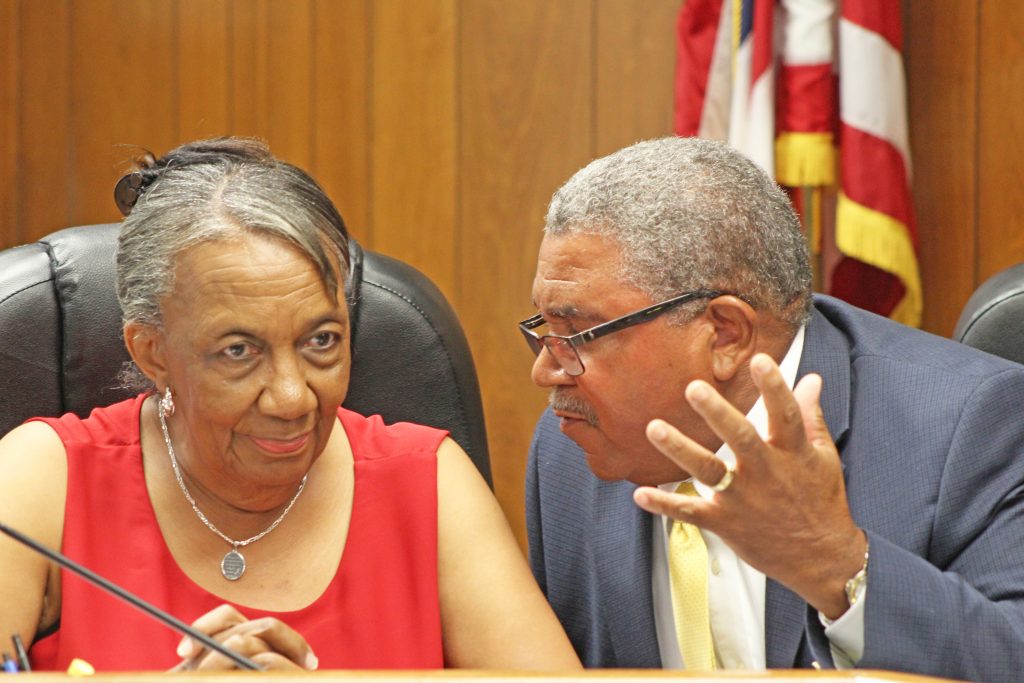
    Negotiations were intense as Councilman Bell sought support from Bertha Goins for the recreation center he wants in Ridgeway. | Photos: Michael Smith

    WINNSBORO – Fairfield County doesn’t have a budget.

    In a 3-3 vote Tuesday night, the proposed $45.2 million budget failed to garner enough support to pass third reading, with one council member claiming the budget was racially biased against African-Americans.

    Council members supporting the budget were Bertha Goins, Clarence Gilbert and Chairman Neil Robinson.

    Trapp

    Douglas Pauley, Moses Bell and Mikel Trapp opposed. Councilman Jimmy Ray Douglas was absent, setting up the tie vote.

    That vote followed a motion to amend the budget to include $900,000 in additional recreation spending – $800,000 for a recreation center in Bell’s district and $100,000 for two mini-parks in Trapp’s district.

    That motion failed 4-2, with Bell and Trapp the only council members supporting it.

    Moments later, Trapp walked out while the meeting was still in progress. He didn’t return.

    Council members took a 15-minute recess before voting, but ultimately weren’t able to muster enough votes to pass the budget.

    County Administrator Jason Taylor said another budget workshop would be scheduled to hash out differences before a re-vote is taken. The county has until June 30 to adopt the budget.

    Judging by comments from council members, reaching a consensus won’t be easy.

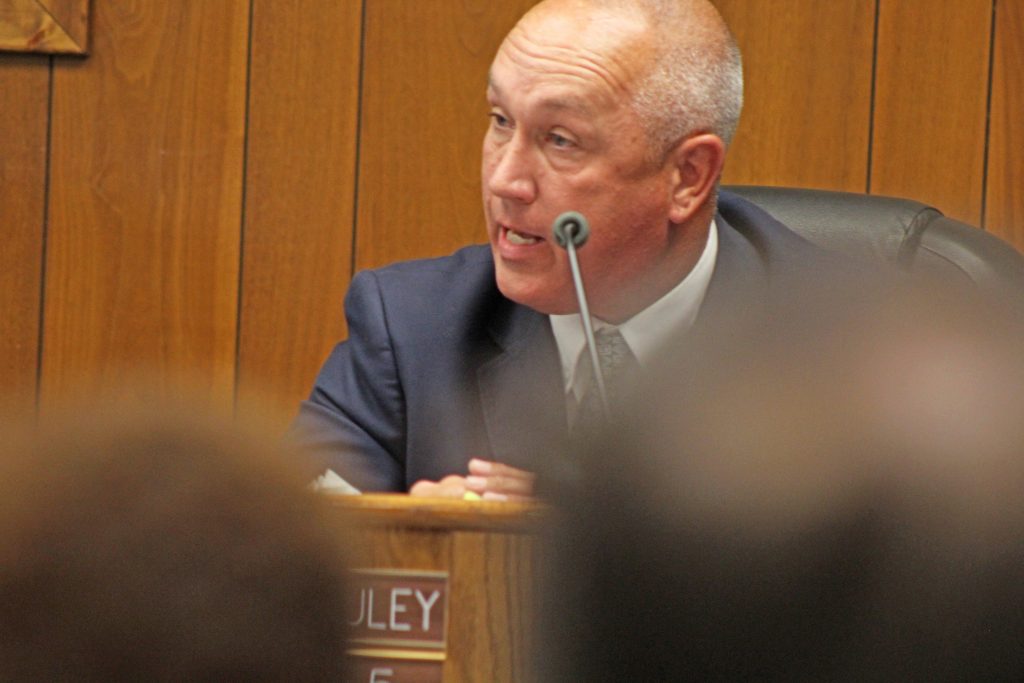
    Pauley opposed the budget over concerns about ballooning budget costs.

    “I cannot vote for this budget because it’s up 12 percent,” Pauley said. “There has been an average of 5.5 percent in annual increases for the past four years.

    Councilman Pauley voted against the budget, saying it was too expensive.

    “Another reason I oppose the budget is because it brings us back to across the board salary increases as opposed to the merit-based system that the last council worked for three years to have put in place,” Pauley continued.

    Bell and Trapp opposed the budget because they wanted to spend more.

    Bell offered to drop his request to $400,000, but the idea never gained traction.

    “I support recreation in local communities,” he said. “Those who write and want to make me a villain, I will proudly wear that as a badge of honor.”

    Trapp claimed the county budget was racially driven. He said it excludes African-Americans while subsidizing a fire station and farmer’s market that he claimed benefit white people primarily.

    “In this budget we don’t have anything for the black community in the county,” Trapp said. “Every time someone asks for something for the black community, it’s always said that taxes are going up.”

    Goins pushed back on claims of racism.

    She said she plans to return a recent award because it recognizes her for being the first African-American elected to Fairfield County Council. She’s returning it because she said she doesn’t believe in labels.

    “When I hear the comments that are made and all the negativity, I have to do what my heart says and what my spirit says, and what I know is true,” Goins said.

    “We all came into this world with our breath, we all will leave this world with our breath,” Goins continued. “We talk about racism all the time, but many times those who talk about it are the racists. Those who talk about it are the dividers.”

    In trying to fund recreation centers, Bell suggested dipping into the fund balance. Although there’s technically about $24 million in reserve, roughly half is already dedicated to the old hospital, the airport and other projects, leaving about $12.7 million in unencumbered funds.

    The county also plans to spend about $8 million over the next several years repurposing the old Mt. Zion building into a new county administration building.

    Bell also proposed spending money left over from the 2013 $24M bond, which he said could help subsidze Ridgeway recreation. Of the $4M left from the bond, about $400,000 to $450,000 in funds are not encumbered, Taylor said.

    Pauley noted that the county budget has benefited Bell’s district greatly. In recent years, Ridgeway has received $150,000 for a park, $100,000 for an EMS station and a $1 million fire station, he said. He said the county has also helped with the water tower and sidewalks.

    “For it to be said that nothing was spent in Ridgeway is absolutely not true,” Pauley said. “A lot of things in Ridgeway might not have been done when Councilman Bell was on council, but a previous councilman got things done in his area.”

  • County unveils ‘new’ market building

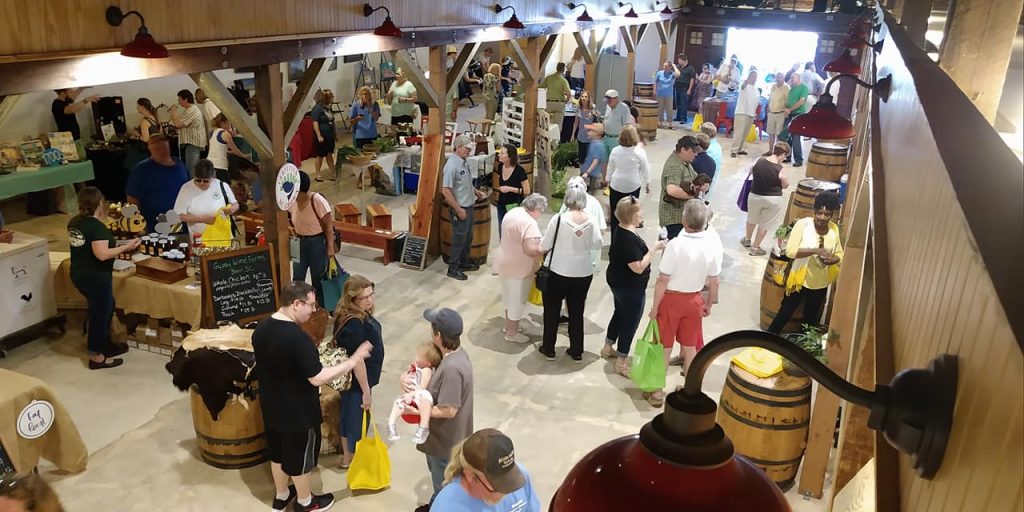
    Opening day at Fairfield’s renovated market building. | Michelle Taylor

    WINNSBORO – The opening of the newly renovated market building in downtown Winnsboro on Saturday was grand. Inside, it featured more than 40 vendors for shopping and a near-capacity crowd ready to buy. It was the place to be from 9 a.m. – 1 p.m.

    Jules Ruff and Lonzo Ruff’s produce sold out in about an hour. | Photos: Barbara Ball

    Located at 117 E. Washington St., behind the clock, the building has served many capacities since the late 1800’s, including a livery stable, bowling alley, and car lot. On Saturday, the building found its perfect fit.

    Prior to cutting the ribbon, both Chamber of Commerce Director Gene Stephens and County Administrator Jason Taylor thanked former Chamber Director Terry Vickers for initially proposing the idea to revive the building.

    “A lot of things we do in local government are very important,” Taylor said. “One of those is to have projects like this that build our community and bring us together. While this project is ending, it will continue as a farmers market and a venue for weddings, reunions and other events. I hope this is the beginning of the revitalization of downtown Winnsboro.”

    The low cost project was paid for with $35,000, donated by the Chamber and matched by another $35,000 from the County.

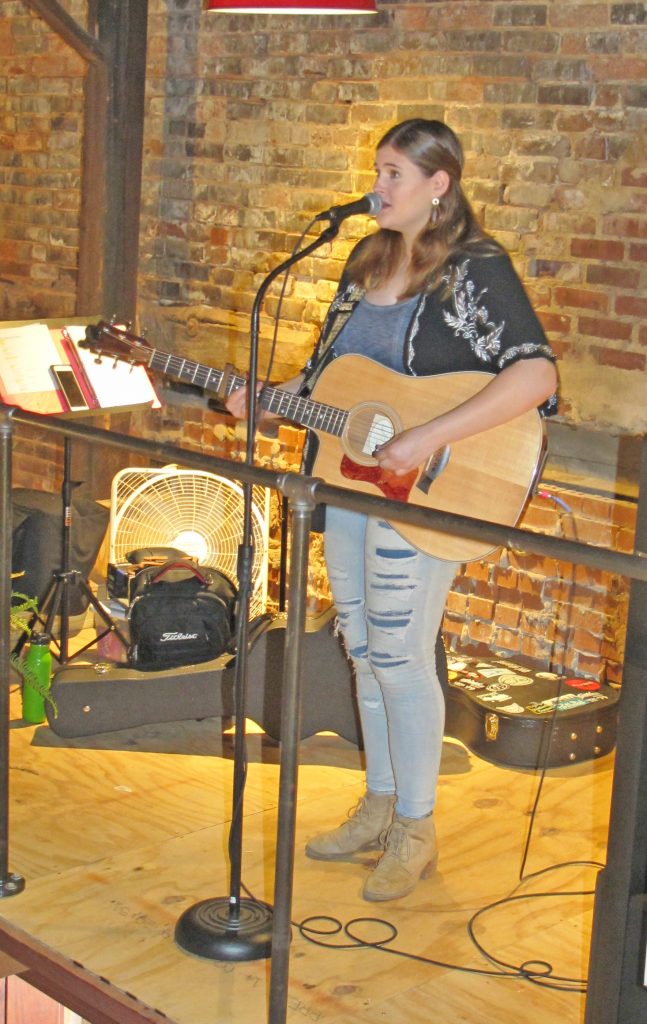
    Sophie Lynch

    Under Taylor’s guidance, county workers have turned the former stable into a show barn.

    Following the ribbon cutting, singer Sophie Lynch entertained from a balcony high above the front doors.

    Shoppers snatched up bargains on collards, potted plants, crafts, fresh veggies and massages.

    Door prizes were awarded every half hour and lunch was available from food trucks lined up in front of the building.

    The building features an open, rustic concept and includes a classroom and a large kitchen that Taylor said will be certified as a DHEC and catering kitchen.


  • Budget tweaks divide Council

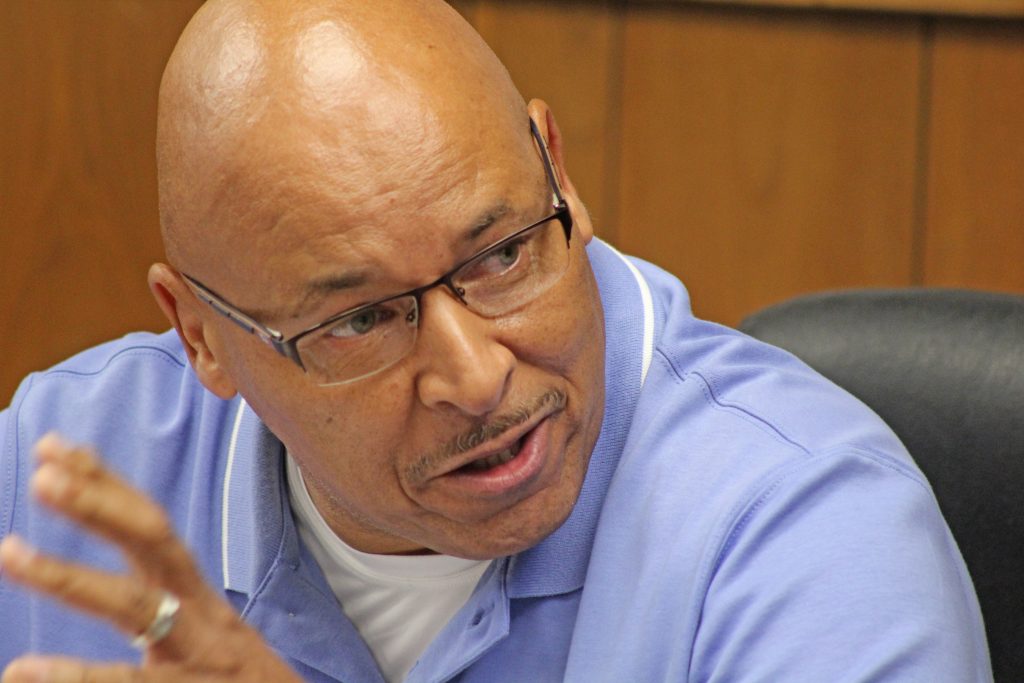
    Councilman Moses Bell, right, and Councilwoman Bertha Goins

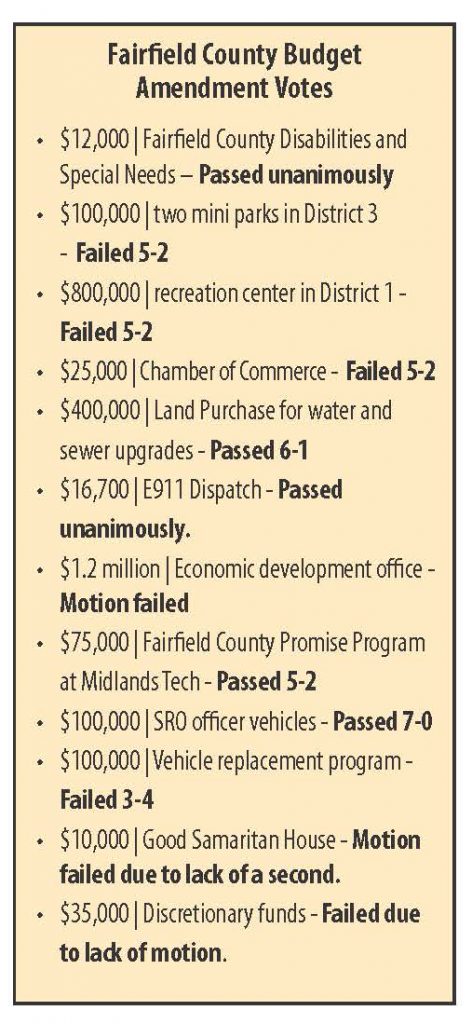
    WINNSBORO – In a series of votes Monday night, council members struck down budget amendments that would have added $900,000 in recreation improvements, $100,000 for vehicle replacement and a $1.2 million economic development office.

    Council members also balked at a proposal to fund individual discretionary spending accounts following public outcry. As one council member suggested, the votes boiled down to needs versus wants.

    “We cannot be selfish and think that we have all the answers,” said Councilman Clarence Gilbert. “I wouldn’t put a playground in my backyard if I knew I needed a refrigerator in my house and I didn’t have enough money for both.”

    Councilman Douglas Pauley, who voted against most of the amendments, raised concerns that the proposed $45.2 million budget rose 12 percent while it increased only an average of about 5 percent during the last four years.

    Reading from a prepared statement, Pauley called upon council members to cite the funding source for their various budget amendments.

    “We might be able to accommodate this by pulling from the fund balance,” he said. “But we will be increasing property taxes if we go down this path.”

    County Administrator Jason Taylor said a few amendments could be funded through other sources, such as bond revenue. But Taylor also agreed that dipping into reserves is unsustainable, noting that a three-mill tax increase would only generate about $450,000.

    “We cannot continue to do it (dip into reserves) year after year,” he said.

    In order to fund every council member’s request, “you’d have to raise taxes significantly,” Taylor added.

    Some council members, however, pressed   for increased spending.
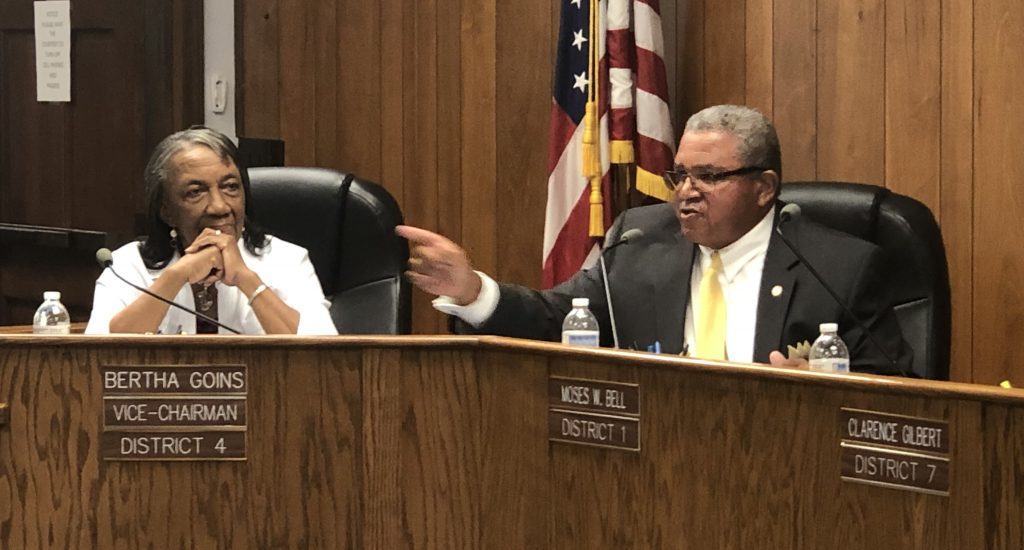
    Angrily pointing his finger at the end of the meeting, Councilman Moses Bell said he was “really disappointed” a majority of council members wouldn’t support his request for $800,000 [toward a $1.5 million estimated cost] for a recreation center in his district [Ridgeway].

    In the end, Council members voted 5-2 against the $800,000 appropriation, with only Mikel Trapp and Bell supporting it.

    Bell claimed from the dais Monday night that the previous District 1 Council member had said the recreation center had been approved. That original approval, however, had been for $500,000, not $1.5 million.

    “The constituents are the same, the district lines haven’t been moved. The only               difference is that I’m here. This was not right what was done,” Bell said. “I am disappointed, I am so disappointed. This is a disgrace to this county.”

    One hot button issue not receiving a vote was a controversial proposal to allocate $35,000 for discretionary spending accounts for council members. If approved, the measure would have given each of the seven council members $5,000 to spend with no restrictions.

    After significant public outcry against the discretionary spending, none of the council members brought it up for vote.

    Five speakers addressed the proposal during public comments.

    “At best it’s Santa Claus at taxpayers’ expense,” resident Carol Turner said. “If $35,000 worth of pipeline could be funded, the money would be much better spent that way. You are not Santa Claus, you are our elected representatives.”

    Councilman Bell, who supported discretionary spending accounts, pointed to Richland County, saying council members there receive $12,000 apiece.

    Jackie Workman, spoke in favor of discretionary funds.

    Ridgeway resident Randy Bright noted that the Richland County discretionary accounts had come under fire following investigative reports published in The State and Charlotte Observer newspapers.

    “Terms like “loose,” “no accountability,” and “chaos” reigned supreme in the story,” Bright said. “Discretionary funds didn’t work before [in Fairfield], don’t work in Richland. It’s outside the true parameters of how our government is set up.”

    Final reading of the Fairfield County budget is tentatively scheduled for the May 28 meeting, which is being held on a Tuesday since Memorial Day falls on a Monday.

    (NOTE: There is an error in the box at right of the story –   $25,000 for the Chamber was actually approved, not denied.)

  • Council finalizing $45.2M budget

    Some Council Members Want $35K Discretionary Fund

    WINNSBORO – Employee pay, infrastructure and vehicle replacement are some of the more costly initiatives in Fairfield County’s proposed $45.2 million budget.

    But it is the comparatively smaller line items that are generating debate.

    Both Councilmen Moses Bell and Mikel Trapp support allocating $35,000 for discretionary funds.

    Each council member would receive $5,000, up from $2,500 that had been approved for council members under the previous (Hinely) administration. The money could be spent for any purpose, according to the proposal.

    When approved previously, discretionary funds were spent on everything from recreation to meals and clothing for children, budget records show.

    At a recent budget workshop, some council members spoke out against handing out discretionary funds to council members.

    “Are you talking about giving each council member $2,500 so he can buy votes?” Councilman Jimmy Ray Douglas said, eliciting laughter.

    Councilwoman Bertha Goins said she thought discretionary funds were an invitation to abuse. She said it would be an accountability nightmare and impossible to administrate so that it’s fair to everyone requesting money.

    “If I had to come out of pocket myself for drinks, water or whatever, I would do that,” Goins said. “But my main priority is getting water and sewer in Fairfield County, because that’s what we need, so count mine (discretionary appropriation) out.”

    Bell, a proponent of budgeting discretionary spending accounts, noted Richland County appropriates $12,000 for each

    of its council members.

    He thought placing accountability on the shoulders of individual council members would mitigate potential abuse.

    “In Richland County, it’s totally discretionary. It’s dependent upon the council members themselves,” he said. “The responsibility is on the council member. They (Richland County) do it very well.”

    County Comptroller Laura Johnson said Fairfield County has funded discretionary accounts in the past, but accountability was lacking.

    “There were no receipts,” Johnson said. “There were no established policies, we were getting to the point where it was to defray the cost of funerals and pay for recreation needs in particular districts.”

    In 2014, the county implemented an application process and formed a review committee, leaving staff to approve or disapprove requests.

    That led to complaints of favoritism when a request was denied or money was used for purposes other than originally requested, Johnson said.

    “We made the mistake of giving them the money first and then ask them to turn in your receipts,” she said. “Then we found that after we got the receipts, it (money) wasn’t used as it was stated in the application.

    “(An) application said it was for healthy eating but you went to McDonald’s or took some people out to Fatz (Café),” she said. “We’ve had applications come in and say we’re going to hand out money to students.”

    The next year, council voted to discontinue discretionary funds altogether.

    During Council’s retreat last month, members focused on improving the county’s image in order to attract more industrial development. One suggestion was to spend a little extra money to build a top notch commerce welcome center near the front of the industrial park that would be the face of the community and rival those in Chester, Orangeburg, Richland, York and Aiken. That could cost as much as $1.2 millon County Administrator Jason Taylor said at the retreat.

    Another concern expressed at the retreat was blight in the county. An additional code enforcement officer to help reduce blight would cost $55,000.

    But Councilman Moses Bell, is looking for $1.5M for a recreation center for his district (Ridgeway) which he said would serve the entire County. Bell proposed the center be built on Highway 21 outside of the Town of Ridgeway adjacent to the county’s recycling center.

    The rec center and a proposed 9 percent pay increase for the Sheriff’s department, if they pass, could make the commerce welcome center and code enforcement officer financially unfeasible.

    The draft budget includes a 3 percent cost of living pay increase for most full- and part-time employees. This is a reversal of the current merit-based pay increases for most county employees, though pay increases in departments under elected officials have been based on cost of living increases.

    The 911 dispatchers would get a 5 percent increase, while sheriff’s department employees would see at least a 6 percent raise. Douglas wants a 9 percent increase for the sheriff’s department.

    The proposed budget includes an extra $109,000 to increase sheriff’s department raises from 6 to 9 percent.

    A 9 percent increase would raise the starting salary for a Fairfield County deputy from $35,000 to $38,000, said Sheriff Will Montgomery.

    “This will make us competitive with other agencies and help us retain deputies as well,” Montgomery said.

    “It would be cheaper than to train new officers,” Douglas said. “Let them have the money they need rather than lose our officers as soon as we get them.”

    Other amendments include six school resource officer vehicles ($263,521), reinstating the vehicle replacement program ($100,000), two mini-parks requested by Trapp for his district ($100,000) and water and sewer land purchases ($400,000).

    Vehicle replacement was a hot topic during the work session, with Bell questioning funding vehicles for SROs.

    “I don’t know why they need new cars,” Bell said.

    Councilman Douglas Pauley noted that SROs perform many other duties aside from monitoring schools.

    “They not only work at the school, but also are subject to answering calls in the community,” Pauley said.

    Two readings have already been given to the budget and council will vote on a list of amendments to the proposed budget Monday, May 13. After one additional workshop following the May 13 vote to give the amendments and county revenues a last look, final reading is scheduled for Tuesday, May 28. The budget takes effect July 1.


    List of Unbudgeted Project Requests

     Others may be added after press time.

    • Additional Code Enforcement Officer to address county blight  – $55,000 (REMOVED)
    • Inmate Pay adjusting from $4 per day to $5 per day – $7500
    • Promise Program to help Fairfield County Residents attend Midlands Tech – $75,000
    • Economic Development Building at the Commerce Park – $1.2 million (REMOVED)
    • 911 Dispatch 5% pay increase – $16,700
    • Two Mini Parks (M. Trapp’s District) – $100,000
    • Water & Sewer Land Purchase – $400,000
    • Chamber of Commerce additional – $25,000 local A & H tax allocation
    • Christ Central Ministries Building Purchase – $55,000
    • Reinstate Council Discretionary Fund – $35,000 ($5,000 each council member)
    • Ridgeway Sports Complex / Recreation Center -$1.5 million
    • 6 % vs. 9% cost of living for Sheriff’s Dept.  – $109,000
    • SRO Officers Cars (6) – $263,521
    • Reinstate Vehicle Replacement Programs – $100,000 annually
    • Additional funding for Disabilities & Special Needs – $12,000 (difference between $43,000 and $55,000).
  • Part 2: Retreat focused on changing image

    WINNSBORO – During Fairfield County Council’s retreat last month, County Administrator Jason Taylor and his staff – Community Planner Chris Clausen, Economic Development Director Ty Davenport and Deputy Administrator Davis Anderson – guided council members through what Taylor called “thoughts, ideas and discussions of where we want to take the county and how we want to work to improve it.”

    The focus leaned heavily on projects to change the county’s image.  The first seven of the 14 projects discussed were published in the April 25 issue of The Voice. The following is a review of the second seven projects discussed.

    Commerce Welcome Center

    “The economic development building is a nice building at the commerce center but it is not really set up for an [economic development] office,” Taylor said. “We’ve looked for a number of ways to add on to that facility. But to show the county off and to do something that’s nice and impressive and get people’s attention, I would suggest we look at something bigger and better out there that helps sell Fairfield County. Something that would let people know we’re forward looking and not just some small, unimpressive office.”

    Davenport said an addition to the current building is estimated to be $400,000. A new stand-alone building is estimated at $1.2 million on the high end.

    “We need to do something that is the face of the community,” Davenport said. “It’s the first thing that prospects see. We need to keep up with the Jones. It needs to be as nice as those in Orangeburg, Aiken, Richland, Chester and York. They all have great facilities. We need to be at this level,” he said.

    ‘I would love to build a new building up near the front of the park so that when you pull up to the park, it catches the eye, like, “Wow, this is Fairfield County?” Taylor added. He conceded, however, that a new build might not be financially feasible when council looks at the budget.

    “We’ll have to see what happens,” Taylor said, adding several possibilities to help fund it.

    “It could house the Water Authority which is a separate entity that generates its own revenue, so it would pay rent in the new building,” Taylor said. “We hope to bring Mitford in and are working with Winnsboro…we’d have 900 new customers almost immediately which would actually generate revenue to help support a new building. We have to have a place for the Water Authority and this would be an appropriate place for it.”

    Sewer Plant Property

    “We need to purchase property for a sewer plant and get it nailed down,” Taylor said. “That’s a top priority.”

    “We plan to design a two million gallon plant expandable to four-million gallons that will initially discharge up to 2 million gallons of effluent a day.” Davenport said.

    “We’ve been working with DHEC on this for a long time, Taylor said. “Commerce awarded us $2 million to survey and preform engineering studies on the megasite. A portion of those funds were also used for engineering studies necessary to design the wastewater treatment plant. We are working with Thomas and Hutton Engineering to get the permitting and design engineering approved by DHEC,” Taylor said.

    Then, when we have someone who wants to locate on the megasite, we drop the hammer and build the treatment plant. They’d be looking at only 15 months of construction instead of 3 – 4 years if they had to start from ground zero.”

    Farmer’s Market

    “Economic Development brings jobs. Community Development makes people who get those jobs want to say here and spend their paychecks here. And that’s what the Farmer’s Market and the Market parking lot are about” Taylor said.

    The County has restored the stable building on East Washington Street with $35,000 from the Chamber of Commerce. Taylor said that while it is being restored for use by the Farmer’s Market, it can also be used as an event center for weddings, reunions, parties and other events that will bring in revenue.

    The County also plans to repave and upgrade the parking lot behind the Market building for parking. Taylor said the idea is to bring people to the downtown area. The events would also bring in revenue for the County. He said it would be a draw for the downtown area.

    “Mom and pop stores and boutiques are what we want downtown. We need an anchor drawing card restaurant downtown. The buildings in downtown are cheap, but it takes a pile of money to get them up and going. We’re looking for more retail and restaurants downtown.”

    Upgrade Fire Stations

    All but about four of our firefighters are volunteers, so if we have a fire during working hours, we have a bad situation,” Anderson said. “To make sure we have round the clock service, we’re going to start improving our fire station living and sleeping areas and showers.”

    “We also need to move toward having more paid staff,” Taylor said. “If we have a huge plant located at the megasite, we can’t tell them we have a volunteer fire service. No, they’re going to want dedicated service. For economic development, we have to assure them that if they have a need, someone’s going to show up.

    Court House

    Taylor said the Court House must be restored because of moisture, mildew and mold and other problems. It is a bond project that was allocated about $2.1 million.

    “But that’s an old number and we’ll need to add about 10 percent more now,” Taylor said.

    Anderson said about $1.3 million is allocated for repairs of the HVAC, lighting and infrastructure for computer systems. To save money, the county asked engineers to estimate costs to work on the building without moving out the employees.

    “So they will be in there working on it at night and by 9 a.m., the employees can go back in to work during the day. The night and weekend work will cost another $300,000,” Anderson said, “plus an additional 10 percent. So we’re going to try to do that – working at nights and weekends and stay within budget.”

    Drawdy Parking Lot

    “When you go down to Drawdy Park in the afternoon, it’s chaos with 200 – 300 kids,” Anderson said. “So we’re going to try to put a parking lot there by the old Everett school, so people can actually park and walk down to the fields instead of cars parking on the graveyard and other places they shouldn’t be. This should make it a better municipal park for the citizens.”

    A-Tax & Penny Sales Tax

    “We recently passed the A-Tax ordinance with projections of revenue at about $250,000 a year,” Taylor said. “This revenue stream will do a lot to help community development. We won’t see immediate results because we’ll let it build up about a year.”

    “We’ve got our attorney working on a penny sales tax,” Taylor said. “That’s something that a lot of communities use to a great effect for growth,” Taylor said. “But before we pass it, we have to figure out exactly where we’re going to designate the revenues to go.”

  • Retreat focused on changing image

    LAKE WATEREE – During Fairfield County Council’s first retreat in more than four years, County Administrator Jason Taylor led the meeting with a staff review of 39 or so projects the county initiated or mostly wrapped up over the last couple of years – Mt. Zion, Fairfield Memorial Hospital, Providence ER facility, the mega site, the animal ordinance, SCE&G lawsuit and website redesign, to name a few.

    Next, Taylor and his staff – Community Planner Chris Clausen, Economic Development Director Ty Davenport and Deputy Administrator Davis Anderson – guided council through what Taylor called “thoughts, ideas and discussion of where we want to take the county and how we want to work to improve it.”

    The focus leaned heavily on projects to change the county’s image.

    The following is a summary of the four hour meeting.

    Make a greater use of grants

    “We have a list of grants we want to throw out to you all, and we need projects to apply for those grants,” Taylor told council members. “We have not pursued grants in the past like we should have. We should always have a Community Development Block Grant (CDBG) going, whether it’s for a library or an infrastructure project. We’re going to restructure how we pursue grants now. There are $500,000 CDBG’s for community enrichment and $750,000 CDBG’s for infrastructure. We can also do blight removal with CDBG grants. The money’s out there but we have to have a project to qualify. We need you all to tell us what you want to see done, because we’re going to aggressively go after grants,” Taylor said.

    Build and improve on a grander scale

    “When we build new stuff, it can be a calling card. We don’t necessarily want the lowest cost and least impressive option,” Taylor said. “We might need to spend a little more money. When we build a permanent library in Ridgeway, we need to build something that makes a statement. Libraries are not just about books anymore. They are also about programs.”

    Water and Sewer Authority

    “The Water and sewer authority is one of the biggest projects on the list,” Taylor said. “For a long time, the county and town realized that neither of us could do it alone – to provide infrastructure throughout this county, maintain it or put it at the level it needs to be as far as distribution lines and capacity to support future growth. One of the first things we’re doing, now, is going out there and just finding out what’s in the ground. Once we know what’s out there we can strategically figure out where we need to fill in the gaps. I think we’ll first have to focus on the I-77 corridor since that’s where we’ll get the most return, initially, on our money. That area [especially the I-77 exits] is a gold mine for the county, and it’s never been developed because we have almost no lines out there. A developer is a lot more likely to come if we have a piece of property with infrastructure permitted and ready to go,” Taylor said.

    Community Development Director Chris Clausen added that there are some CDBG grants available for low-income rural residents who cannot afford to have water lines brought to their homes.

    Project Money from COG

    Taylor said the administration is bringing pressure on the COG to bring projects to Fairfield County.

    “The [COG’s] project grants all flow to Richland and Lexington counties,” Taylor said, “and none to the Fairfield community. The larger metropolitan communities get the money assigned to them for projects. We have to compete for it and put together a competitive grant package which is more difficult.”

    Taylor said he has broached the issue with COG leadership and the Council Chair now sits on the executive board which he thinks will help move money toward the county’s projects.

    “But to [get the grants], we also always need to have projects that fit the grant requirements,” Taylor said.

    Getting rid of blight

    “The biggest owner of blight in Fairfield County is Fairfield County,” Taylor said. “We have 120 – 150 properties in forfeited land trust – properties that land owners haven’t paid taxes on in years, so they come into the county’s ownership. We own about 25 houses in Winnsboro that are falling in.

    “The easiest way for us to start to clean up blight is to start with those properties,” Taylor said. “As we get the titles cleared up, we want to start knocking these houses down. And once they’re knocked down, the lots still have water, sewer and are ready to go for prospective home owners to build on. We might have a chance to bundle all the lots and sell them to a developer for basically nothing with the stipulation that they build x, y and z on the lots…and then we would have tax dollars coming in on those lots and have new housing stock in the middle of town which helps the town.”

    “CDBG does have a grant to help us with blight, but we have to have a neighborhood revitalization plan to pursue that grant,” Clausen said. “We’re looking at that for an area reaching from the former FMH hospital site to the library up to Fortune springs and over to First Baptist Church on Hwy 321. We’re going to have that whole area master planned to look at what can be done to help it be revitalized – everything from a demo plan to what businesses need to be enhanced and what buildings to be repurposed such as some of the school district properties in that area. Once that’s in place, we can pursue the funding through CDBG for blight removal.” Clausen said he has received a quote from the COG for the master plan, but has not had a chance to discuss it with administration.

    New Animal Control Facility

    “Our intake and adoption facilities are separate and we need to combine them,” Taylor said, “maybe where the existing intake facility is. We have more property there.”
    Anderson said it might be patterned after Aiken’s facility where there are inside and outside runs, a ventilation system and water is controlled by the animals.

    “Without asking County to budget it, we are going to try to work with Hoof and Paw and other animal associations within the county and raise money to build these,” Anderson said. “It’s going to be a community effort. Hoof and Paw has done a tremendous job helping us financially with spay and neuters, so we’re going to go to them to help us raise this money.”

    The current adoption center next to Midlands Tech could be turned in to a veterinary clinic for spay and neuter. To that end, Taylor said the county is floating the idea of working with Midlands to offer a vet tech program where students could gain experience at the clinic next door.

    DNR Trails

    Taylor also talked about ways to help the western side of the county grow.

    “We have a great asset along the Broad River – a rail trestle that runs over by Peak. It’s a hidden gem in the state. But it’s a small area. With a DNR grant, we could put something there where you could actually access the Broad River and put a canoe or kayak in, and it fits in with what DNR over all is trying to do. They have greenway paths and trails all the way to Richland. It would help us tie in to that. It will help the western side of the county grow to have an attraction over there. We could put $45,000 – $60,000 in to it and pull another $150,000 into it with a DNR grant and that will generate traffic out there,” Taylor said.

    “That’s for recreation,” Clausen said, “but if we could include fishing in the project as well, we might could pull in up to a $200,000 grant.”

    The remainder of the projects discussed at the retreat will appear in next week’s edition of The Voice.

  • Looking Ahead

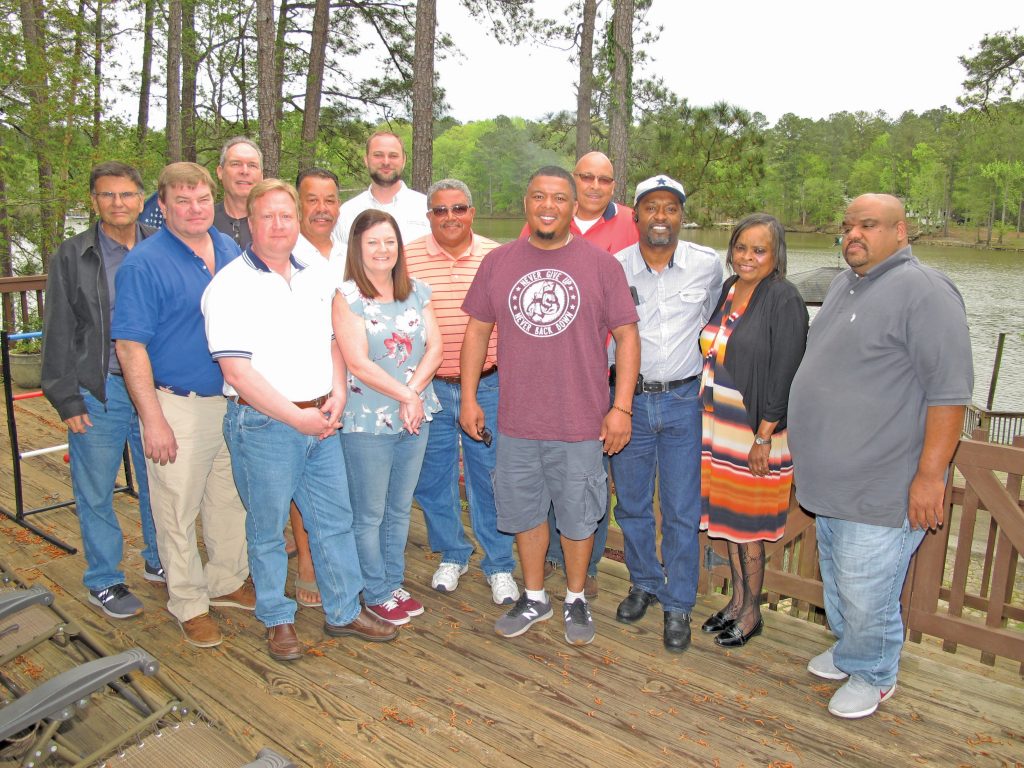
    WINNSBORO – County Administrator Jason Taylor and staff outlined for council members a list of plans and proposals for the county during a Council retreat last weekend at Lake Wateree. From left, front row: Economic Development Director Ty Davenport, Taylor, Clerk to Council Patti Davis, Council Chair Neil Robinson, attendees Rev. Quincy Pringle and Jackie Workman and Dep. County Administrator Davis Anderson. Back row: Attendees Randy Bright and Jeff Schaffer, Councilman Clarence Gilbert, County Planner Chris Clauson, Councilmen Moses Bell and Mikel Trapp. The Voice’s report on the meeting will appear in the April 28 edition.