Tag: Fairfield County

  • Ribbon cut on newly renovated courthouse

    Monday’s ribbon cutting was held at the courthouse’s new rear entrance with town and county council members, school board members, town attorneys and other town and county officials lined up behind the red ribbon, which was cut by County Council Chair Clarence Gilbert, Clerk to Court Dorothy Belton, and County Administrator Vic Carpenter.

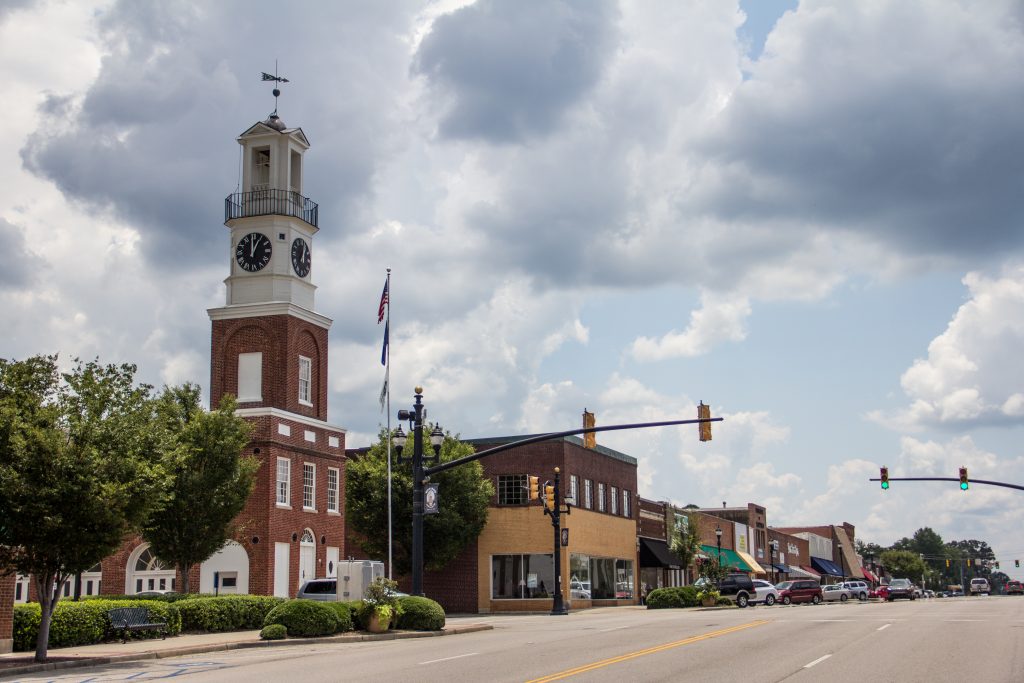
    WINNSBORO – The newly renovated Courthouse in downtown Winnsboro was christened Monday afternoon with a ribbon cutting, speeches and refreshments.

    The new renovations to the circa 1823 Robert Mills designed Courthouse have brought a new look to the more than 200-year-old Courthouse – the back rather than the front.

    Because of safety concerns and other reasons, the stately front entrance to the Courthouse is no longer open to the public. The new glass, steel, and stucco entrance is at the back of the building where security is more easily attainable, and the look is more modern than classic.

    Monday’s ribbon cutting was held at the new rear entrance with town and county council members, school board members, town attorneys and other town and county officials lined up behind the red ribbon that was cut by County Council Chair Clarence Gilbert, Clerk to Court Dorothy Belton, and County Administrator Vic Carpenter.

    Following the ribbon cutting, those attending moved into the main hallway in the older portion of the Courthouse for official remarks from several county officials, then refreshments and photos.

    “Fairfield County is proud of the time and effort it has taken to make this project happen,” said Carpenter, the first of the several speakers that included Clerk of Court Dorothy Belton. “Countless hours of dedicated commitment have led to this ribbon cutting today for the Fairfield County Courthouse.

    “Courthouses represent the ideal we all strive for in this country,” he said. “Their purpose is the blind delivery of justice and the law. Two hundred years ago, this structure was first opened with that goal in mind.”

    Carpenter reminded those in attendance, however, that, sadly, the desired blindness has not always occurred. But, he said the people still, to this day, desire and work towards outcomes that treat everyone equally under the law.

    “Today, we rededicate this Courthouse with that goal in mind,” he said. “The leaders of our Courts and constitutional offices all are charged with upholding the Constitutions of both South Carolina and the United States. The preamble of the U.S. Constitution says it best:

    “‘We hold these truths to be self-evident, that all men are created equal, that they are endowed by their Creator with certain unalienable rights that among these are life, liberty and the pursuit of happiness.’

    “We dedicate today this Courthouse with that overarching goal always in front of us,” Carpenter said. “May we always live up to the standards and expectations placed in front of us.”

    When It All Began

    According to City Directories and History, portions of the current Courthouse were designed by one of America’s early architects, Robert Mills, and built in 1823 by William McCreight & Sons of Winnsboro.

    “The Courthouse was originally only the two-story main court room upstairs with offices beneath. In 1938, a major renovation to the building added the back three story addition as well as the curving case iron stairways on the front.

    “The front section facing South Congress Street and the columns were added at a later date, and the circular stairs were added in 1939 when extensive restoration and enlargement were undertaken,” according to the City Directories and History.

    Jared Davison, Institutional Trust Consultant; Fairfield County Treasurer Norma Branham; Derek Raper, Commercial Banking Senior Vice President; Fairfield County Deputy Treasurer Rhonda Trapp
  • Director of Economic Development Ty Davenport leaving County

    WINNSBORO – Fairfield County Director of Economic Development, Ty Davenport, has announced he will be leaving the county on May 25.

    Davenport

    Davenport is the eighth top county official to leave the county’s employ in the last year including the county administrator, assistant county administrator, attorney, clerk to council and several department heads.. Two more department heads will be leaving later this year to run for public office.

     “During the five years Ty was with the county, he did an incredibly good job,” said Davenport’s former boss at the county, former County Administrator Jason Taylor who is now the Town of Winnsboro Town Manager.

    “He had a long run of sustained economic development that turned the county around,” Taylor said. “As far as recruiting new industry while Ty was here, we brought in 1,000 new jobs and $90 million in new investment.” 

    In 2016, the year both Taylor and Davenport were hired by the county, its unemployment rate was 14 percent and had been in the double digits for years.

    “His work brought the county’s economic development to a vibrant, thriving level and the county’s unemployment rate down to three percent. The pandemic has brought it back up to about five percent,” Taylor said, “but the industry he brought in during his tenure will be responsible for generating over $1 million in new annual revenue for the county starting next year. “

    In 2016, the county had five available industrial buildings standing vacant. Today there are none.

    Taylor also credited Davenport as being significantly instrumental in settling the Dominion lawsuit in regard to economic development.

    “The way we crafted it for the future of the county and the moneys we got for economic development, the bulk of it went to the industrial park and the proposed sewer plant. That has kind of set the stage for future growth and to help keep taxes down,” Taylor said.

    “My involvement with the Dominion settlement in regard to economic development was very satisfying,” Davenport said. “I think it did put Fairfield in a position to compete and win more industry. Jason, Chris (Clauson) and I are very proud of the settlement and the opportunities it gives the county while maintaining our relationship with Dominion, a very important and valued ally.”

    In 2016, the county only had 34,000 gallons per day of sewer capacity available for new industrial users. Working with the Town of Winnsboro, Davenport and Taylor guided the development of a plan to access an additional 500,000 gallons per day within the next two years.

    “This new capacity will enable Fairfield to compete for projects that in the past exceeded the waste water system’s capabilities.” Davenport said.

    “With Jason’s and Chris Clauson’s experience,” Davenport said,” we worked on a two million gallon per day long term sewer solution that, with the funds made available by the settlement, is currently in the works and should be complete in four years.

    “Jason deserves all the credit for the vision and establishment of the Fairfield Joint Water and Sewer System, and I am proud of my contribution to help bring it to fruition,” Davenport said. “The new sewer capacity that will be created by the new facility will be a game changer for the county.”

    County councilman Douglas Pauley said Davenport’s work leaves the county in excellent shape as far as economic development, moving forward.

    “We have a $450,000 square foot graded pad complete and ready for a large industrial user. Grading on a 1,000,000 square foot pad is designed and permitted and will commence in June,” Pauley said.

    “Grading on a 270,000 square foot pad is also designed and permitted and will begin in June with a 100,000 square foot speculative building to be built on that pad,” Pauley said. “And mass grading (over 1.4 million square feet) on the county’s I-77 International Mega site will begin later this month or next.”

    Davenport added that the county has purchased and optioned property for the next 500-acre industrial development using 100 percent grant funding.

    In an email to county employees, Executive Assistant Gwendolyn Ashford released a two sentence notice of Davenport’s departure.

    “This is to report to each of you that Ty Davenport is resigning as Fairfield County Economic Development Director on May 25. We are grateful to Mr. Davenport for his contributions to the County during his time here and we wish him well in his next endeavor.” 

    “Ty has done a great job for the county, and his hard work will pay off for years to come for some of the companies he recruited,” said Taylor who was hired by the county on the same day as Davenport was hired. “I’ve enjoyed working with him while he was here. It was a very productive relationship, and we wish him well in the future.”

    Davenport has not yet disclosed where he will go after he leaves the county, but he said he will still be working in the Midlands.

  • Fairfield seeks broadband expansion

    FAIRFIELD COUNTY – With the announcement of $3.3 million in approved grant funding, Fairfield County is a step closer to its plan to extend broadband Internet service to rural residents.

    The funding approval announced Aug. 26 by the South Carolina Broadband Infrastructure Program will help local communications provider TruVista extend access to households in the county that don’t currently have broadband. And because the money comes from the Coronavirus Relief Fund, it must be spent by the end of the year.

    “They’re going to be connecting homes between now and Christmas,” said Jim Stritzinger, whose Columbia-based consulting company has been working with local leaders on their broadband efforts.

    The $3.3 million for Fairfield is part of $26.7 million approved for broadband expansion statewide. In TruVista’s service area, it also includes $1.4 million for neighboring Chester County and is targeted for communities impacted by COVID-19.

    It’s a helpful step in the effort as officials await word on a much larger grant that TruVista applied for (with the enthusiastic support of Fairfield County leaders) earlier this year through the U.S. Department of Agriculture, which if approved would put more than $20 million toward new broadband infrastructure in the county over the next five years.

    County officials began looking at the issue in earnest two years ago and were awarded a small grant for training to help them access broadband funding. But this year, during the pandemic, the disparity between areas that have broadband access and areas that don’t has taken center stage.

    In the time of social distancing, those who lack broadband access – an estimated 193,000 people across the state – have faced difficulties in three areas needed to carry on life and the economy: education (online schooling), telehealth (online doctor visits), and telecommuting (online work).

    “Households are becoming increasingly reliant on fast, reliable, and always-on internet connection for learning, work or to seek medical care and advice,” said Carla French, President and COO of TruVista, in an emailed statement.

    “Between our partnership with the state of South Carolina and the potential of further USDA ReConnect grant money, we look forward to bringing broadband services to underserved areas in Fairfield and Chester counties.”

    In addition to the planned expansion of infrastructure, TruVista has also been working with school districts to provide broadband connections to households with school-age children, according to the company.

    The immediate concern with education is that, without a reliable connection to participate in online classes, rural students could quickly fall behind.

    Broadband has become so essential in today’s world, Stritzinger compares it to electricity. The effort to expand rural broadband access he compares to the rural electrification effort of the 1930s, which likewise subsidized infrastructure with public funds to connect less populated areas.

    The programs work, he said, by offsetting the higher cost of rural infrastructure enough for the remaining private investment to make sense within the broadband provider’s normal business calculations, making a company’s return on investment similar to that of building infrastructure in more densely populated places.

    Beyond immediate needs, Fairfield County Economic Development Director Ty Davenport said broadband infrastructure will have a major impact on the county’s development future. And it’s critical for any rural community that seeks to be competitive in today’s economy.

    “Internet service is foundational, just like water and sewer. If it’s not there, industry, business – whether it’s commercial or manufacturing – probably isn’t going to come,” Davenport said.

    “[In addition to that], more and more you’re going to see people working away from the office or the plant or whatever their normal workplace is, and they’ve got to be connected. And if they can’t be connected, they’re not going to build or buy a home in a rural part of Fairfield County or any county.”

    Stritzinger said the two grants together – the $3.3 million that was just approved and the larger grant applied for with USDA – will have a major impact on extending broadband access to Fairfield County’s rural communities in need.

    “If the USDA grant comes through as well, the combination of the two of them will help solve Fairfield County’s internet vacuum, or most of it, which is extraordinary,” he said. “It’ll make a major impact – a life-changing impact on Fairfield County. No doubt about it.”

  • County sues over failed roads, bridges

    RIDGEWAY – As Fairfield County plans a major economic development investment by building a water and sewer plant, pending litigation has complicated another multi-million dollar infrastructure project.

    Fairfield County says an engineering firm and general contractor are responsible for the failure of several support walls at the Fairfield County Commerce Center in Ridgeway, according to pending lawsuit.

    Filed February 10, the suit names Alliance Consulting Engineers, Wiley Easton Construction Company and Mutual Casualty Company as co-defendants.

    The suit seeks actual, incidental and consequential damages in an amount to be determined at trial. It also seeks legal fees and interest.

    “As a direct and proximate result of design and construction defects at the Project, the County has suffered and will continue to suffer numerous damages,” the suit states.

    Those damages, according to the suit, include “water infiltration and resultant property damage to the retaining walls, standing walls, asphalt degradation and separation, erosion, costs to repair the defective conditions and damaged property, and additional maintenance expenses.”

    Alliance, Wiley and Mutual Casualty have filed responses denying most of the assertions in the litigation.

    Alliance and Wiley have also filed counterclaims against F&ME Consultants, a subcontractor working for both firms, naming the company as a third party defendant.

    Wiley has filed two additional counterclaims against subcontractors S&ME, Inc. and Soil Reinforcement Contractors; and a fourth counterclaim against Fairfield County, according to court documents.

    No court date has been set. A deadline of September 7 has been set for pre-trial mediation.

    Fairfield County says in its lawsuit that it contracted with Wiley for $6.54 million to build a road and perform water and wastewater improvements at the Fairfield County Commerce Center in Ridgeway.

    Alliance provided some design and construction administration work related to development and construction of the commerce center. Mutual Casualty provided a performance bond to Wiley for the contract amount, court documents state.

    The work involved building mechanically stabilized earth walls, or MSE walls. The walls were built in pairs at three drainage crossings at three culvert locations along a new access road, according to the suit.

    Fairfield County says that in January 2019, it learned the walls were exhibiting evidence of severe failure, and that the defendants knew about the failures as early as November 2018.

    “The excessive deformation and strength failures will require extensive remediation and stabilization to satisfactorily perform for their intended service lives,” the suit states. “The defective conditions are a result of design and construction errors related to storm water management and site drainage.”

    The county also said that the initial contract required substantial completion within 436 days from the Notice to Proceed. However, various change orders pushed the substantial completion date to 836 days.

    The commerce center issue crept into budget discussions during a county budget workshop Monday night.

    “We need those sites open in the industrial park. Those roads and bridges and stuff that need to be redone, what’s been done to Alliance to make them get off their behinds and go to work?” asked Councilman Jimmy Ray Douglas.

    Taylor pointed to the ongoing litigation, noting it would likely impact next year’s budget. The county anticipates spending at least $100,000 extra in legal fees, according to draft budget documents.

    “That’s one of the things that you’ll see reflected in the budget. We do have considerably more in legal fees this time,” Taylor said. “That’s one of the main reasons we do, we do anticipate having to fully go to court with Alliance.”

    In its response, Wiley denies most of Fairfield County’s allegations, including the allegation that Wiley knew about the wall failures weeks before notifying the county.

    “Defendant asserts that it has learned of potential wall failure and has been working with contractors, engineers and architects in an effort to try to repair the issues with the wall,” the response states.

    Alliance’s and Wiley’s counterclaims assert any deficiencies in the walls is the responsibility of F&ME, citing negligence, breach of contract, warranty breaches and other breaches.

    “F&ME undertook and had a duty to Alliance to exercise and use due care in design, construction, inspection, maintenance, management and/or repair of the Project and to avoid injury or damage to Alliance or the work,” Alliance’s counterclaim states.

    Wiley’s counterclaim also blames the other subcontractors, too.

    “The damages alleged by Plaintiffs, if any, were due solely to the actions of S&ME, Inc., F&ME Consultants, Inc. and Soil Reinforcement Contractors, LLC and were not caused by any act or omission on the part of the Defendant,” the countersuit states.

    Neither F&ME nor Soil Reinforcement Contractors had filed a response as of press time, according to the Fairfield County Public Index.

    On April 7, S&ME filed an answer that denies most allegations in Wiley’s countersuit.

    S&ME says it was retained by Soil Reinforcement Contractors to perform some professional design services for the project, and that Soil Reinforcement Contractors build the walls.

    S&ME’s reply also blames Wiley for the wall failures, saying the contractor “contributed to more than fifty percent (50%) to the cause of the damages,” the response states.

    “The intervening and superseding acts of third parties over whom S&ME had no authority, responsibility, or control” were also responsible, the response continues.

    S&ME has asked that the litigation filed against it be dismissed and seeks court costs and other relief deemed proper.

  • County revenue down, expenses up

    WINNSBORO – After a year of robust industrial growth and budget surpluses, Fairfield County’s outlook is much more conservative in 2020-2021.

    Declining tax revenues partially tied to the transfer of lands associated with the collapse of SCE&G and the new arrangement between Dominion and Santee-Cooper, looks to pinch next year’s budget, which council members discussed at a workshop Monday night.

    “We do anticipate revenues being down considerably, by a million to a million and a half potentially,” County Administrator Jason Taylor said.

    Taylor said the county will need to replenish reserves it typically spends on incentives and also matching state funds, further cramping the budget.

    “We’re going to have to be more fiscally conservative this year,” Taylor said. “We are not proposing any capital investments of a large magnitude nor any large projects this year.”

    Fairfield County’s net position surged by $1.9 million in the 2019-2020 fiscal year. Revenues alone were up about $507,000.

    But with the budget tightening, next year’s budget will be heavily focused on providing essential services.

    “It is always important that we protect our revenues so that we can provide our core services that keep people safe, our fire, our EMS, our sheriff’s department. We have to support those services,” Taylor said.

    Monday’s budget workshop was live streamed via YouTube due to the coronavirus pandemic social distancing requirements. Another budget workshop has tentatively been scheduled for Monday, May 4 at 5:30 p.m.

    At Monday’s workshop, some council members asked about the fund balance. Comptroller Anne Bass said the total fund balance has about $22 million, up about $1.33 million from last year.

    However, the county expects to spend roughly $5.5 million from the fund balance to help meet expenses. It’s a practice the county otherwise prefers to avoid.

    “We’ve been very fortunate in the past where we didn’t have to pull from it,” Bass said. “We certainly don’t want to make that dependence greater.”

    Salary increases are a priority in next year’s budget, with an emphasis on lower tier employees, such as mechanics, corrections officers, dispatchers and heavy equipment operators, said Brad Caulder, the county’s Human Resource director.

    Those positions, Caulder said, are extremely hard to fill because comparable positions in the private sector offer considerably higher pay. Offering higher raises to lower wage earners costs about the same as offering more modest increases across the board and is more appreciated than occasional one-time bonuses, he said.

    “You’ve got a lot of industry paying $14, $15, $16 an hour. Our maintenance positions are nowhere near that,” Caulder said. “We can’t fill temporary spots. We would achieve a lot more this way.”

    Council Chairman Neil Robinson and Councilman Moses Bell both liked the tiered approach to raises, with Robinson noting “It brings them up to a level playing field.”

     Lawsuit lifts legal costs

    The proposed budget also includes an additional $100,000 in legal expenses, mostly in relation to a pending lawsuit at the Fairfield County Commerce Center.

    In February, Fairfield County sued Alliance Consulting Engineers and Wiley Easton Construction Company relating to failed road and bridge work at the Commerce Center off Peach Road.

    Councilman Jimmy Ray Douglas raised the issue early in the budget meeting.

    “We need those sites open in the industrial park. Those roads and bridges need to be redone.” Douglas said.

    Taylor pointed to the ongoing litigation [See ‘County sues over failed roads, bridges,’ p1], noting it would likely impact next year’s budget.

    “That’s one of the things that you’ll see reflected in the budget. We do have considerably more in legal fees this time,” Taylor said. “That’s because we anticipate having to fully go to court with Alliance.”

     Bonuses, solicitor office salaries

    In other budget matters, council members questioned two other compensation related proposals — longevity bonuses and solicitor’s office salaries.

    The early budget draft calls for $50,000 for longevity bonuses to be divvied up among veteran employees.

    Caulder said the bonuses have historically been written into past budgets and are paid out around Christmastime. He said some employees with two years of experience who technically didn’t qualify for the bonuses felt left out.

    Councilman Douglas Pauley noted that longevity bonuses should only be paid to workers with longer tenure.

    “I don’t see one year as longevity. I would ask that council consider a period of 10 years or five years,” Pauley said. “If you’re here a year or six months, you’re on probation. I would like to see that restructured.”

    Council members also seemed lukewarm over a request from Solicitor Randy Newman, who’s requesting a $25,189 (28 percent) budget increase, according to budget records. The solicitor’s office also represents Chester and Lancaster counties, and receives additional funding from the state.

    County leaders said the solicitor wants to establish a drug court and also create a salary ladder.

    “This is something he brings up every year. The solicitor has been an advocate for his department, and he’s asking for additional wages to attract qualified applicants,” Taylor said. “That’s what he’s trying to do, to move people up as they prove themselves. We have pushed back on it in the past.”

    Robinson was skeptical of the request.

    “We’re cutting county agencies almost to the bare minimum and we have outside agencies coming in and requesting [funds],” he said.

    Pauley agreed.

    “It’s not the county’s fault that the state isn’t funding him like it should be,” Pauley said. “The state had a huge surplus this year. It’s not the county to pick up what the state’s not funding.”

  • DHEC confirms a Fairfield County resident is infected with the Coronavirus

    BREAKING – The Voice has confirmed with the Department of Health and Economic Control (DHEC) just after 12 Noon that a Fairfield County resident has been verified by DHEC to be the county’s first case of the coronavirus. It was also confirmed that this case does not change the number of cases in the state, which now stands at 33, but was previously counted as a Kershaw County case. 

    The Voice will post more information as it becomes available.

  • Fairfield employment numbers looking good

    WINNSBORO – The unemployment rate for Fairfield County has dropped dramatically in the last year from 5.3 percent in September, 2018 to 4.4 percent in August, 2019 and even lower this last month (September) to 3.3 percent. That is lower than the national rate of 3.5 percent and just slightly above the state’s rate of 2.9 percent

    The announcement was made this week by the Employers Association of South Carolina.

    County Administrator Jason Taylor said that’s good news for Fairfield.

    “That our unemployment rate is going down is one of the things I’m most proud of,” Taylor said. “The flip concern of that, however, is that we’ve got a lot of new industries in the county that are about to announce or are hoping to announce shortly, that will be bringing in 500 – 600 jobs in the next 12 – 14 months. With an unemployment rate that low, we need to be sure we have the labor to support it.”

    Taylor said he wants to draw that labor out of Fairfield, not out of Blythewood and other areas surrounding the county.

    “We’ve got to work on some quality of life issues and residential development to keep them here,” he said. “We’ve been losing population and we want to reverse that. We’d like people to come to work and live here and invest their money here. We don’t want people coming in to take the jobs and then take their earnings back to other towns,” Taylor said. “So we need a labor pool and we need places for that labor pool to live here in Fairfield County. We need that balance.”

     “To have a dependable labor force, we have to have a residential housing stock – which we don’t yet. Building up our labor pool is a two to three year fix,” Taylor said.

    “However, the need for labor for industry is a good problem to have, and I think we’re doing really well.”

    While Taylor acknowledged that there is some concern in the community that Element is currently laying off a number of workers, he said that layoff is cyclical.

    “This is the slow season for Element. Their Christmas production is slowing down now, but I understand they’ll be re-hiring their workers after the first of the year,” Taylor said.

    The State’s unemployment rate, according to the report, is doing equally as well. The number of working South Carolinians moved substantially higher, establishing a new record of 1,311,379.

  • Millage stays the same, but Fairfield bills rise

    WINNSBORO – Fairfield County’s millage rate will remain unchanged for the 2019-2020 budget year, though payers will likely still see a slight increase as the county’s millage rate remains among the highest in the state.

    At the Sept. 9 meeting, County Council passed a resolution setting the millage rate at 181.8 mills, the same as the past year.

    The county’s $26.15 million budget, according to council documents, and associated millage is broken down four ways:

    • General Fund – $23,417,841 (160 mills)
    • Hospital/Emergency Room – $937,000 (7.8 mills)
    • County Debt Retirement – $1,247,184 (10.4 mills)
    • Library Operations – $548,108 (3.6 mills)

    Fairfield County’s millage is the fourth highest in the state, trailing only Bamberg (231.1) and Allendale (224) and Hampton (196.8), according to a 2018 report by the S.C. Association of Counties, the most recent available.

    Berkeley is the lowest at 50.5, the report says.

    With that in mind, Ridgeway resident Randy Bright said during public comments that Fairfield County is already seeing its population decline and raising property taxes would accelerate that decline.

    “I fully understand that you guys are boxed in by the plethora of mistakes made by preceding councils,” Bright said. “And I’m not asking for a reduction in the millage rate, but I implore you to hold the line. Do not raise property taxes.”

    County Administrator Jason Taylor said the current budget does hold the line on taxes, but noted what taxpayers pay this year will be “slightly higher” due to declining sales tax collections.

    Taylor said local option sales tax revenues ordinarily provides a credit to property taxes, but sales tax revenues continue to plunge.

    “That credit has come down and down and down because our retail base has eroded,” Taylor said. “As we have less retail base here, the local option sales tax credit decreases for us.”

  • County announces staff changes

    Johnson

    WINNSBORO – Fairfield County administration has announced several staff changes regarding the vacant Deputy County Administrator position.

    Laura Johnson, who has served the county as Comptroller since 2002, will assume the position of Interim Deputy County Administrator. Johnson’s responsibilities will include project management, operational and financial oversight.

    Johnson is a Certified Public Accountant and has previously served in the State of South Carolina Auditor’s office as well as the South Carolina Department of Public Safety. Johnson is a graduate of Fairfield Central High and Winthrop University where she received a Bachelor’s degree in Accounting.

    Bass

    Anne Bass, who has served as Deputy Comptroller since 2011, replaces Johnson with the title of Interim Comptroller. Her responsibilities will include oversight of all financial operations as well as ensuring compliance with all applicable federal, state and local regulations.

    Bass has previously served as the Director of Accounting and Director of Fiscal Services at Fairfield Memorial Hospital.  Bass is a graduate of Richard Winn Academy and Winthrop University where she received a Bachelor’s degree in Accounting as well as a Master’s degree in Business Administration.

    Caulder

    Brad Caulder, who most recently served the county as Public Works Director, will assume the position of Human Resources Director, providing oversight of all employment and risk management programs, and ensuring compliance with all applicable federal, state and county labor regulations.

    Caulder is certified as a Senior Professional in Human Resources and County Risk Manager. He has previously served Fairfield County as Human Resources Manager and has been employed with the county since 2003. Caulder is a graduate of Richard Winn Academy and the University of South Carolina where he received a Bachelor’s degree in Business Administration.

  • Magazine: Fairfield is SC’s next big boom

    COLUMBIA – An online magazine, Business in Focus, has dubbed Fairfield County as ‘South Carolina’s Next Big Boom’ in the cover story of its February 11 issue.

    The article credited the County’s purchase of a 1,200-acre industrial mega site along I-77 at Exit 34 as the catalyst for the boom – stimulating future economic growth and manufacturing capacity.

    The county acquired the site two years ago with a $3 million investment plus a $6 million grant from the state. Ty Davenport, Director of Fairfield County Economic Development, said the county is currently completing design work for the site’s infrastructure, paid for with another $2 million state grant.

    The article also highlights the county’s other important but frequently overlooked amenities – Lake Wateree to the east and Lake Monticello to the west featuring water sports and fishing as well as the lush rural areas that are havens for hunting, sprawling farms and cattle ranches.

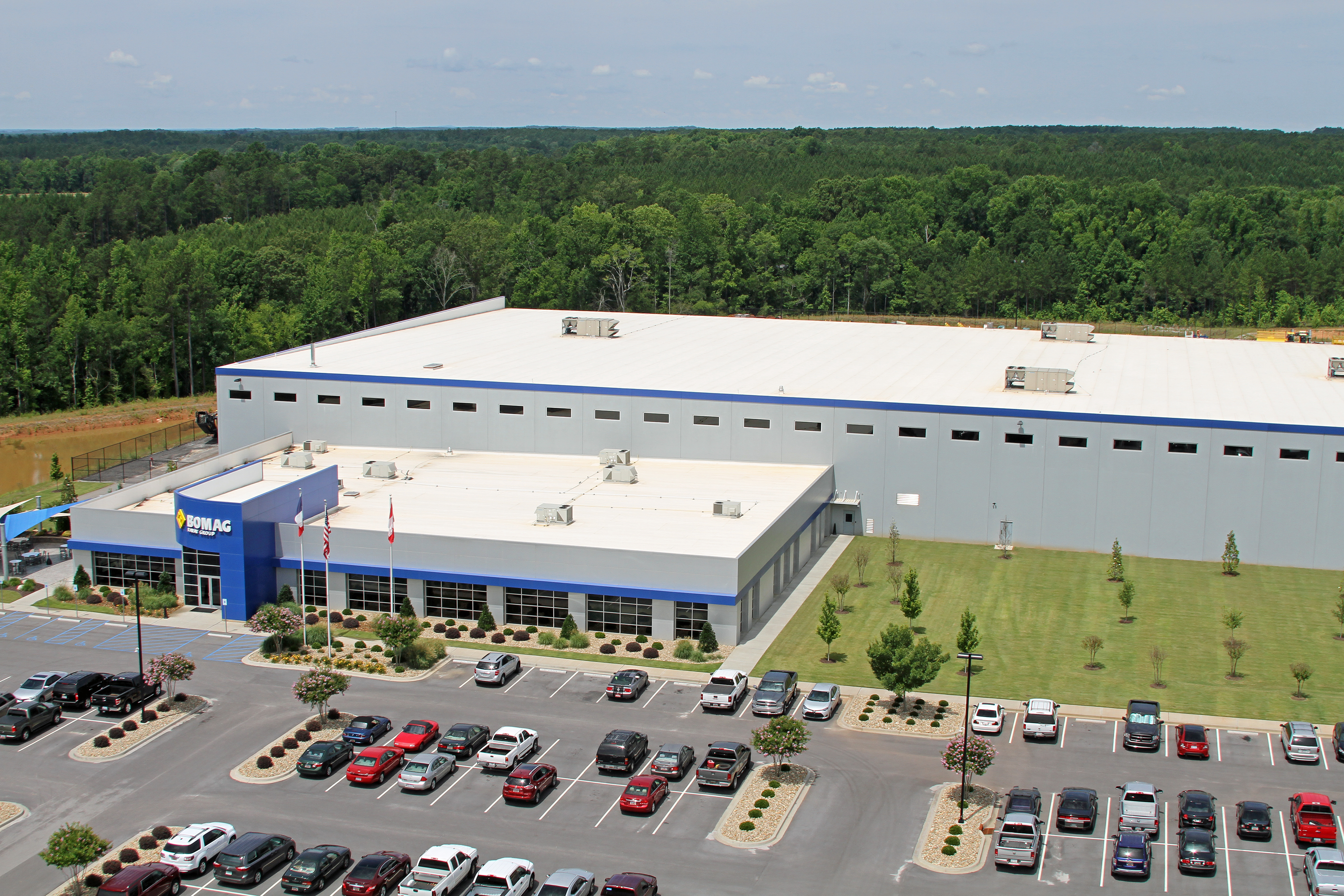
    BOMAG facility in Walter Brown Industrial Park

    “Fairfield County is an untapped resource that a lot of people don’t know about. We really have something good going on here. We’re poised for growth,” Davenport is quoted in the article.

    The magazine targets industrial leaders and manufacturing companies looking for locations.

    “It [the magazine] is designed to be a marketing tool,” Davenport told The Voice, “and it does a great job in this piece on Fairfield.”

    The article points out the county’s ideal location with easy access to airports, seaports and other transportation networks.

    “Within an hours’ drive from the county seat of Winnsboro, residents have access to the Charlotte Douglas International Airport in Mecklenburg County, North Carolina, the fifth busiest international airport in the world as of 2017. When it comes to labor for industry, there is a large pool of more than 500,000 skilled workers who live within a forty-five-minute radius,” the article states.

    “There are really big opportunities here for people who want to grow their businesses,” Davenport said. “The county is on a very solid financial footing which gives us the ability to do projects, install infrastructure and help companies that are moving in. Our workforce is also younger than the national and state average.

    “If, for instance, a major auto manufacturer should show interest in our mega site, we will be able to meet their needs in every way including infrastructure, internet and transportation,” Davenport said.

    The article stated that Fairfield’s Economic Development Office is part of two regional development alliances that help market the county. The first is the Central South Carolina Alliance which is based in Columbia and mainly markets the area’s eight central counties to companies around the world. It also belongs to the South Carolina I-77 Alliance, which represents the five counties through which I-77 runs, known as the I-77 Corridor. This stretch starts out in Columbia and runs to Charlotte, North Carolina.

    “Together, we are promoting the county and all it has to offer – especially in terms of manufacturing and distribution,” Davenport said.

    According to the County’s Economic Development Office, the article states, Fairfield has many sites suitable for commercial, industrial, and distribution activities, making it an ideal spot for businesses.

    “What makes it even better is the fact that South Carolina offers significant incentives that really benefit industry. This means that you can have a facility in Fairfield County and enjoy lower costs while still benefitting from Charlotte and Columbia’s amenities,” Davenport added.

    This budding industrial haven has a lot to offer both new and seasoned manufacturers, the article states. With vision and drive, the magazine concludes that the leadership of Fairfield County is working to grow the county into the economic powerhouse it deserves to be.