Tag: Bertha Goins

  • Fairfield councilwoman countersues JWC

    JENKINSVILLE – Jenkinsville Water Company’s lawsuit against one of its fiercest critics “is atrocious” and “utterly intolerable in a civilized community” according to a response and countersuit recently filed in Fairfield County Circuit Court.

    On March 4, the JWC filed a slander and defamation lawsuit against Fairfield County Councilwoman Bertha Goins, alleging her criticisms damaged the organization’s reputation.

    All told, Goins’ response to the lawsuit lists 13 defenses and six counterclaims. Several defenses note that the JWC has had a long history of trouble with state and federal regulatory agencies.

    Among them is a new revelation that the Environmental Protection Agency (EPA) has labeled the JWC as a “serious violator,” according to the litigation and EPA website.

    The website notes that the EPA found the JWC in non-compliance for nine of the past 12 quarters.

    Further, the site states the JWC has had two quarters with “significant violations” and 20 informal enforcement actions in the past five years.

    In bringing suit, the JWC has said Goins’ past comments that Jenksinville water is “substandard” and contains sediment are untrue.

    “The above-referenced statements are false, defamatory and impugne [sic] the good reputation Jenkinsville Water Co. has with respect to the quality of its water,” the original lawsuit states.

    The JWC and its lawyer have also touted recent state water tasting contests the organization has won.
    However, only a small fraction of the state’s water companies actually entered the contest. Also, the contest officials said they didn’t verify the authenticity of submitted water samples, relying instead on an honors system, a representative of the state rural water association told The Voice.

    The JWC has faced additional violations from the S.C. Public Service Commission and S.C. Department of Health and Environmental Control, according to the counterclaim.

    In her response, Goins asserts the JWC has a duty to provide water “water that is safe for them to drink, to cook with, to bathe in, and to otherwise use in their homes.”

    Upon information and belief, Jenkinsville Water Company has a long history of failing to comply with the rules and regulations of the Public Service Commission…[and it] does this to avoid appropriate oversight of its operations,” the litigation states.

    The counterclaim goes on to say that the JWC routinely violates the state’s Freedom of Information Act, and that the water company is using the legal system to harass and intimidate Goins.

    Goins has requested a jury trial and seeks a slew of unspecified actual, punitive and other damages.

    “Defendant asserts that Plaintiff’s conduct as described herein, and as will be shown at the trial of this matter, is atrocious, utterly intolerable in a civilized community, and so extreme and outrageous as to exceed all possible bounds of decency,” the countersuit states.

    Read more about this developing story in Thursday’s edition of The Voice.

  • Attorney disputes JWC lawsuit against councilwoman

    JENKINSVILLE – Fairfield councilwoman Bertha Goins plans to fight a defamation lawsuit filed by the Jenkinsville Water Company, an organization whose water quality she’s criticized in the past, her attorney said Tuesday.

    “I don’t think there’s a direct statement that would rise to the level of necessitating a lawsuit by a public entity against a private individual,” said attorney Tommy Morgan, who is representing the Fairfield County councilwoman.

    The JWC filed suit on March 4, seeking unspecified actual and punitive damages.

    No court date has been set, though the parties have until September 30 to complete any pretrial mediation. Morgan said Goins plans to defend against the suit.

    “It’s unfortunate that Ms. Goins is being singled out by a public entity such as the Jenkinsville Water Company for raising concerns that many individuals throughout the community have had as to the quality and safety of the drinking water,” Morgan said.

    Government suing a citizen complaining about the government is inappropriate.

    Jay Bender, Media Law Attorney

    JWC attorney Jeff Goodwyn, an attorney representing the water company, said Goins’ statements that the water is “substandard” and that “there is sediment in the water” are untrue.

    “The above-referenced statements are false, defamatory and impugne [sic] the good reputation Jenkinsville Water Co. has with respect to the quality of its water,” the suit states.

    Goins also implied, according to the suit, that there is a “casual connection” between her husband’s medical conditions and JWC water.

    “Defamatory statements have never been protected by the First Amendment,” Goodwyn said. “She said the water had caused her husband to be ill, which is not true. There’s no evidence at all of that.”

    Morgan said Goins never specifically attributed her husband’s illness to Jenkinsville drinking water.

    “She has questioned and wondered about that, but so have many other individuals,” Morgan said. “There’s never been an outright declaration that this is the sole cause of her husband’s illness.”

    The suit also states that Goins would not allow representatives of the S.C. Department of Environmental Control (DHEC) to test her water.

    “She no longer lets DHEC test her water for some reason,” Goodwyn said. “They identified themselves as DHEC workers coming to test her water. She didn’t say ‘next time, make sure you have proper identification.’ She just said ‘don’t test my water anymore.’”

    Morgan said the DHEC official showed up unannounced and without identification, raising concerns about trespassing and personal safety.

    “We all read in the news about people claiming to be police officers and trying to pull people over,” he said. “I’m not quite sure how the Jenkinsville Water Company knows what DHEC was or was not doing on Ms. Goins’ property.

    “If DHEC would like to come out, we’d be more than happy to make the arrangements,” Morgan continued.

    “A little bit of advance notice, a courtesy heads up, would probably go a long way.”

    Jay Bender, a media law attorney specializing in First Amendment issues, but not part of the case, doesn’t think the suit has merit. He said criticizing government activity is constitutionally protected free speech.

    “This was a special purpose district created by the General Assembly,” Bender said. “That makes it part of the government, and the government suing a citizen complaining about the government is inappropriate.”

    The JWC calls itself a private entity in the litigation. However, in 2011 the S.C. Attorney General’s Office issued an opinion that the water company is a public body.

    Additionally, during the early 1970s, the JWC received a series of startup loans and grants from state and federal sources.

    The January 14, 1976 edition of the News and Herald (Winnsboro) includes a story about state lawmakers presenting $20,000 in grant money to the JWC. The story notes the JWC had also received a $130,000 loan and a $38,500 grant from the federal government.

    And there were other government grants over the years, including a $240,000 grant from the Midlands Central Council of Governmnts JWC applied for on Aug. 19, 2014 to cover cleanup costs after JWC received a Notice of Violation from the S.C. Department of Health and Environmental Control (DHEC) for high levels of radium in well 15 on Clowney Road. County Council facilitated that grant by signing off on it.

    That makes the JWC a public body, Bender said.

    “You can stand up on the Statehouse steps and say these guys don’t know what they’re doing, and their water tastes bad, smells bad and looks bad,” he said. “That’s protected.”

    The lawsuit calls significant attention to state and national awards the agency says it has won, including awards for best tasting water in the state in 2017 and 2019.

    In reality, only four or five of more than 240 eligible water providers actually entered the state water tasting contest sponsored by the S.C. Rural Water Association, a non-profit trade association to which the JWC belongs.

    Amy Kinard, the association’s events and marketing coordinator, previously told The Voice that the association doesn’t require contest participants to authenticate the source of the water samples they submit.

    “We give them the benefit of the doubt. We take them at their word. They’re members of our organization,” Kinard said. “Whoever wants to can bring their water samples [to the annual meeting] and they are judged on taste, clarity and a few other things.”

    Morgan said results of a trade show contest aren’t as telling as government testing, which found multiple violations in recent years.

    The S.C. Department of Health and Environmental Control has cited the JWC at least five times since 2010. Most recently, last July, DHEC cited the water company after tests detected radioactivity in water samples, agency documents state.

    “You can ask my kids, and they think the best food in the world is chicken nuggets and fish sticks,” Morgan said. “Tasting water is nothing more than an opinion.”

    He also questioned the authenticity of the JWC water samples.

    “We can’t even be sure that the water that [the JWC] presented actually came from their water system,” he said. “There’s just no way to even verify the water came from the Jenkinsville water system.”

    Goodwyn disputed any assertions that the JWC used water from another source.

    “Jenkinsville Water Company didn’t do that,” he said.

    Former Councilman Kamau Marcharia, in whose district the Town of Jenkinsville lies, said from the dias in 2014 (referring to JWC’s water), “I’ve heard that water is real bad and some peoples’ dogs have become extremely ill from drinking that water,” Marcharia said. “I haven’t heard anything about an individual being sick or having to go to the hospital, but I wouldn’t trust it.”
  • Brown water dogging JWC

    WINNSBORO – Bertha Goins lifted a miniature plastic bottle into the air, its brown contents sloshing inside.

    Her message was crystal clear.

    “Our water was off most of the day. When it came back on, from the Jenkinsville Water Company, this is what came out of the faucet,” Goins said at the Fairfield County Council meeting on Oct. 14.

    “This has been going on for 20 years. Muddy water, contaminated water,” Goins continued. “When children came to drink this water, they don’t know to watch out for contaminants. They don’t know to watch out for bad water.”

    Goins went on to say that in the past 20 years, boil water advisories had hardly ever been issued. She also said thousands of gallons of unmetered water have been sold.

    Yet, she said, the S.C. Department of Environmental Control, or DHEC, hasn’t done enough to hold the JWC accountable.

    “For some reason nobody’s concerned about thousands of people drinking contaminated water,” Goins said. “When this water comes through the line, it picks up everything.”

    JWC president Greg Ginyard said in a phone interview with The Voice that he questioned whether the water Goins displayed at the council meeting actually came from her water lines.

    “That water could’ve come from a creek or a barrel of water,” he said. 

    Ginyard also said DHEC certified lab testers were brought in to test Goins’ water, but he said Goins ordered the testers off her property, saying they were trespassing.

    “My thing is if your water is being tested by the lab that’s certified by DHEC, why would you stop them from testing the water?” Ginyard asked. “She told them that they were trespassing. She stopped it.”

    In June, following reports of a boil water advisory after a water line break, Ginyard said Jenkinsville water is perfectly safe.

    “There’s nothing wrong with our water,” Ginyard said. “The Jenkinsville Water Company is not giving anybody bad water. All our water is potable. We’re fine, we don’t have any problems.”

    Public records The Voice obtained in response to a Freedom of Information Act request show that DHEC has issued nine separate Notices of Violation to the JWC in the past five years.

    Infractions range from not following proper sampling procedures to contaminated water samples, documents show.

    The most serious violation came to light in June when DHEC reported that Gross Alpha radiation levels exceeded the legal limit of 15 pCi/L (picocuries per liter) on two occasions – October 2018 to December 2018 (34 pCi/L) and July 2018 to September 2018 (23 pCi/L).

    In follow-up measurements taken during the July 2019 to September 2019 monitoring period, DHEC recorded a level of 10 pCi/L, records show.

    But because the average of the past four measurements came in at 17 pCi/L, mainly due to the 34 pCi/L reading in late 2018, the JWC was issued a new Notice of Violation.

    DHEC previously found elevated levels of Gross Alpha as well as Radium 226/228 during several monitoring periods in 2013 and 2014, according to violation notices issued in August 2014 and November 2014.

    Gross Alpha levels ranged between 18.1 pCi/L and 24.7 pCi/L.

    Radium 226/228 levels ranged from 5.3 pCi/L to 11.6 pCi/L. The state’s legal limit for Radium 226/228 is 5.0 pCi/L.

    Also in 2014, the JWC was cited after total coliform levels exceeded the state’s legal limit. DHEC issued another violation in January 2015 after the agency said the JWC failed to issue a public notice within 30 days of the violation, documents show.

    In response to The Voice’s public record request, DHEC also provided redacted complaints from Jenkinsville water customers.

    Two complaints describe water that smelled like sewage. One was filed in 2014; the other in 2016.

    In July 2015, another customer complained that the water had been brown for the past three to four months.

    “I told [the customer] that they might have been flushing the area and that would cause anything in the pipes to come through,” a DHEC official wrote in her report.

    One customer called to complain that they thought the JWC improperly charged a reconnection fee.

    “Although they didn’t turn the water off, the disconnection was already in the system,” the complaint says. “[The caller] feels as if they are embezzling money.”

    Several other customers wondered whether the boil water advisory the JWC issued in May had been lifted after a water line break.

    “The water was off 24 hours, it is now restored. Can you all check if the water is safe to drink now?” the complaint said. “Remember this is the same shady water company that has all kind of drama.”

  • Goins fearless of JWC threat

    WINNSBORO – Bertha Goins has until Friday to apologize.

    That’s the day Jenkinsville Water Company lawyers set for the Fairfield County Councilwoman to apologize and retract her criticisms of Jenkinsville water quality.

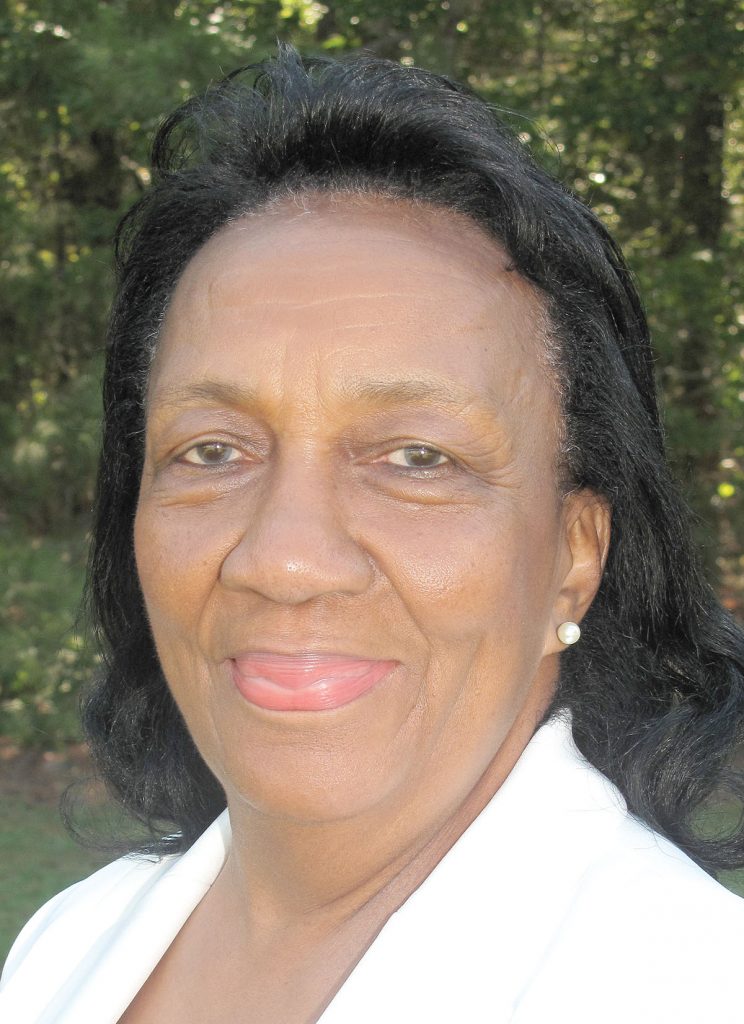
    Bertha Goins

    If she refuses, the bubbling controversy is threatening to spill into the courtroom.

    In a letter obtained by The Voice, attorneys for the JWC say Goins will face litigation if she doesn’t reverse course and keeps making “defamatory” statements about Jenksinville water.

    The letter also demands that Goins publicly acknowledge that she has no evidence the water or piping are substandard. Lawyers gave her 10 days from the June 4 letter to comply or they said they would sue.

    “The JWC has been very patient in refraining from taking legal action to stop her from telling lies, making unsubstantiated disparaging comments, and spreading misinformation about JWC and that patience has run out,” the letter states.

    Goins isn’t backing down.

    County attorney Tommy Morgan, who’s representing Goins in a private capacity, responded with a letter of his own that chides the JWC for threatening legal action.

    “The mischaracterization of statements are being made by JWC against Ms. Goins as shown by its repeated, meritless legal demands,” Morgan wrote. “Ms. Goins will not be silenced by JWC’s threats of legal action and will not respond to the demands made in the June 4, 2019 [letter].”

    Morgan said the JWC’s actions are fiscally irresponsible as well.

    “Ms. Goins is saddened and troubled by the thought that JWC continues to use funds collected by its customers to continue its legal vendetta against her,” the letter continues. “It is hoped that JWC would turn its attention away from harassing its customers to more pressing needs such as ensuring it complies with all testing and reporting requirements under state and federal laws.”

    In its June 4 letter, attorneys for the JWC suggest Goins has a chip on her shoulder because water company members voted her off the board, which lawyers state is why she criticizes the JWC.

    “Since that time, Ms. Goins has consistently criticized the board members that took the other side of this issue, and JWC as a whole, in her efforts to retaliate,” the letter states.

    The letter also calls Jenkinsville water “award winning.” Referencing a 2018 DHEC report, the letter says no water quality violations have been found again on JWC, and asserts that no contaminants above DHEC levels have been detected in seven years.

    Morgan’s response cites a report that stated a different viewpoint.

    “As JWC’s own 2018 Water Quality Report shows, ‘We failed to complete all the required testing of our drinking water for the contaminant and period indicated,’” Morgan’s letter states. “Devoting resources to such tasks would demonstrate JWC’s commitment to providing clean and safe drinking water to its customers.”

    Publicly and through her attorney, Tommy Morgan, Goins has said that threats from the JWC and its lawyers are attempts to silence and intimidate her.

    On April 10, in another letter, Morgan warned the JWC not to threaten his client for exercising her right to free speech.

    “Ms. Goins will not be silenced by Jenkinsville Water Company’s threats of legal action and damages to be sought against her for merely speaking out about the water she receives from Jenkinsville Water Company,” Morgan’s letter states.

    “Despite your meritless legal demand, Ms. Goins will continue to shed light on the matter that Jenkinsville Water Company seems so intent on keeping in the dark,” the letter continues.

  • Goins fights back

    WINNSBORO – Bertha Goins is fighting back.

    A week after a Jenkinsville Water Company attorney issued a cease and desist letter and threatened to sue Goins over comments she’s made critical of water quality, she’s hired her own attorney to safeguard her First Amendment rights.

    Working in a private capacity, Goins’ attorney Tommy Morgan said his client categorically denies making any false and defamatory statements.

    Last Thursday, he wrote back to the JWC’s attorney, demanding that the water company cease infringing upon Goins’ right to free speech.

    “Ms. Goins will not be silenced by Jenkinsville Water Company’s threats of legal action and damages to be sought against her for merely speaking out about the water she receives from Jenkinsville Water Company,” the letter states.

    “Despite your meritless legal demand, Ms. Goins will continue to shed light on the matter that Jenkinsville Water Company seems so intent on keeping in the dark,” the letter continues.

    In a telephone interview with The Voice, Morgan said Goins has no desire to engage in a protracted legal battle. But Morgan noted Goins is committed to speaking freely about water quality issues.

    “We would be happy to have a meeting with the Jenkinsville Water Company over their water quality,” he said. “She was just trying to express her thoughts and concerns.”

    Morgan also questioned why Goins appears to have been singled out.

    “Other individuals spoke to the media about water quality,” he said. “It would be interesting to see if anyone else received a cease and desist letter. This threat of legal action is not going to stop Ms. Goins.”

    Goins has been a frequent critic of not only the Jenkinsville Water Company, but also the Town of Jenkinsville and Greg Ginyard, president of the JWC and the town’s mayor.

    In June 2018, Goins lobbied heavily against a massive annexation effort by the town, which was voted down. Morgan said he couldn’t say whether Goins’ past clashes with the town contributed to the letter.

    “Obviously the water company is distinct and separate from the Town of Jenkinsville,” Morgan said. “Ms. Goins is not focusing on the annexation vote.”

    When asked by The Voice for a comment about Morgan’s response, an attorney representing the water company emailed that, “JWC does plan on making a full response to Mr. Morgan’s letter next week, but we do not see this as a First Amendment issue as defamatory statements are not protected by the First Amendment.”

    On March 28, a Goodwyn Law Firm attorney sent a cease and desist letter to Goins, which disputed remarks she made to various local media organizations stating that Jenkinsville water quality is poor and contains sediments.

    “These false and misleading statements are defamatory and illegal,” the letter stated. “Legal demand is hereby made that you immediately stop such illegal activities.

    “If you continue to make such false and defamatory statements, I have been instructed to take all legal steps to enforce my client’s rights, including filing suit against you, for injunctive relief, slander and defamation seeking all damages allowed by law,” the letter continues.

    Also on March 28, in tandem with the cease and desist letter, the Jenkinsville Water Company sent a separate letter to its members.

    That letter contested of what the JWC calls “erroneous reporting,” and makes several innuendos about being absorbed by larger water companies.

    Both The Voice and The State newspapers, citing public records, have reported that the JWC has been cited by the S.C. Department of Health and Environmental Control.

    Documents obtained by The Voice show the JWC has been cited three times in the past five years, most recently in 2016.

    As for the suggestion that the JWC is facing absorption, the newly formed Fairfield Joint Water and Sewer Authority, which consists of Fairfield County and Town of Winnsboro representatives, has been discussing ways to beef up infrastructure at the I-77 megasite.

    The authority’s chief objective, however, is to attract new industry to Fairfield County, and not to consolidate other water companies. Absorbing the JWC or any other water company has never been discussed.

    Goins has independently called for the JWC to join the authority, but no other council members have made that suggestion.

    Still, the JWC letter takes several jabs at water authorities.

    “When smaller companies are taken over by a larger water system, this historically results in rate increases between 100% and 150%,” the letter states. “We are committed to not letting this happen to JWC members.”

    Morgan questioned the JWC’s statistics.

    “I have no idea where they got that data from,” he said.

  • JWC attorney threatens to sue councilwoman over water criticisms

    WINNSBORO – Bertha Goins is used to being in hot water with the Jenkinsville Water Company.

    A frequent critic of the organization, the Fairfield County Council vice-chair has called out the JWC on a variety of issues, ranging from finances to transparency.

    Goins has also publicly stated she thinks the JWC should be absorbed by a recently formed joint Fairfield County-Town of Winnsboro water authority.

    And recently, in interviews in The Voice and The State about JWC’s water woes, she’s taken aim at Jenkinsville water quality.

    A JWC attorney is fighting back, challenging her assertions that there’s sediment in the water and issuing a cease and desist order to block Goins from further criticizing the water company.

    On March 28, T. Jeff Goodwyn, an attorney with the Goodwyn Law Firm, which represents the JWC, issued the cease and desist letter threatening to sue Goins.

    “If you continue to make such false and defamatory statements, I have been instructed to take all legal steps to enforce my client’s rights including filing suit against you, for injunctive relief, slander and defamation seeking all damages allowed by law,” the letter states.

    At Monday night’s Fairfield County Council meeting, Goins said the letter is an attempt at intimidation. Speaking via speakerphone, Goins was defiant and doubled down on her criticisms of the JWC.

    “I’m going to send a copy of this letter to many people, but I’m going to first send it to the attorney bar association to find out if this is an ethics violation,” Goins said. “Is this a freedom of speech violation to stifle my rights or is it a personal threat?”

    Goins went on to say her husband has been ill for two months, and questioned whether Jenkinsville water quality might be to blame. As for the cease and desist letter, she said it only emboldens her.

    “I want to thank you because you’ve given me a megaphone,” she said.

    Jeff Schafer, a Fairfield County resident speaking during public input at Monday evening’s Council meeting, also questioned the logic of threatening litigation.

    “He [Board chairman Greg Ginyard] is an elected official and our elected officials [the JWC board] have a monopoly on the town of Jenkinsville,“ Schafer said. “We all have a constitutional right to free speech.”

    Jay Bender, an attorney with the S.C. Press Association, said it’s it illegal to take public bodies like the Jenkinsville Water Company to task over issues of public importance.

    “You can criticize a governmental body all you want without being subject to liability,” Bender said.

    The JWC has routinely claimed it’s not a public body despite being formed by an act of the state legislature and receiving hundreds of thousands of dollars from the local, state and federal governments.

    In a 2010 opinion, S.C. Attorney General asserted that the JWC is a public body. In recent court filings, the Jenkinsivlle Water Authority has claimed that it’s not a public body.

    “They’ve been confused for years up there,” Bender said.

    The JWC pushback comes following dual investigative reports in The Voice and The State newspapers.

    According to public records obtained by The Voice, the JWC was cited three times in a five-year period by the S.C. Department of Health and Environmental Control.

    In a letter to its members, the JWC disputed media reports about water quality, saying that Jenkinsville water is among the best in the state.

    The letter also pushed back on the recently created joint Fairfield County, Town of Winnsboro water authority.

    It accuses government officials of trying to jack up water rates by 100% to 150%, and says further that Jenkinsville will never join the authority.

    “JWC has no interest in being absorbed by a bigger water system,“ the letter says. “When smaller water companies are taken over by a larger water system, that historically results in rate increases between 100% and 150%. We are committed to not letting this happen to JWC members.”

    County and town officials have never stated any desire to absorb the JWC. The authority’s stated purpose is to enhance infrastructure at the I-77 mega site as a means to attract more major industry.

    As for water rates, growing the water authority would actually cause them to decrease, Goins said.

    “That is a foolish thing that anybody could say,” Goins said. “The more people involved, the lesser the cost and the better the benefits.”

    Story was updated 4/10/19 at 2:49 p.m.

  • County honors native son Isaac Woodard, Jr.

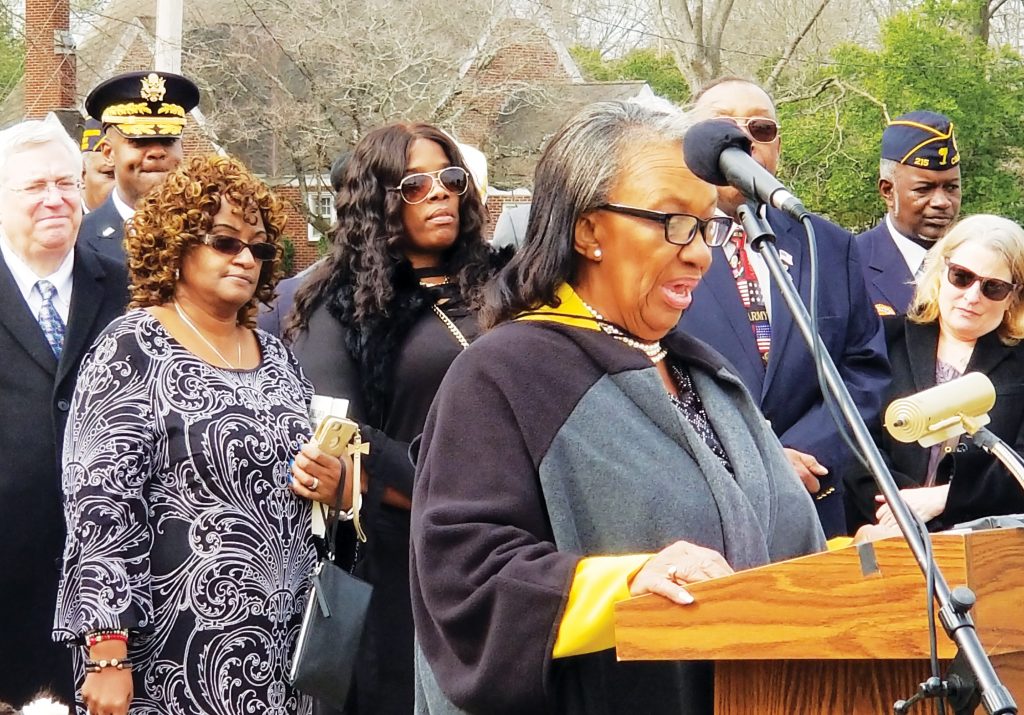
    Fairfield County Councilwoman Bertha Goins reads a resolution from the County during a ceremony honoring Winnsboro native Sgt. Isaac Woodard. Behind her are Woodard’s nephew Robert Young (to Goins’ right) and his family. | Francine Goins

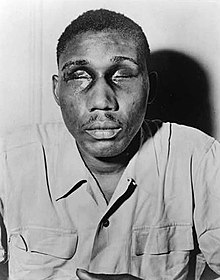
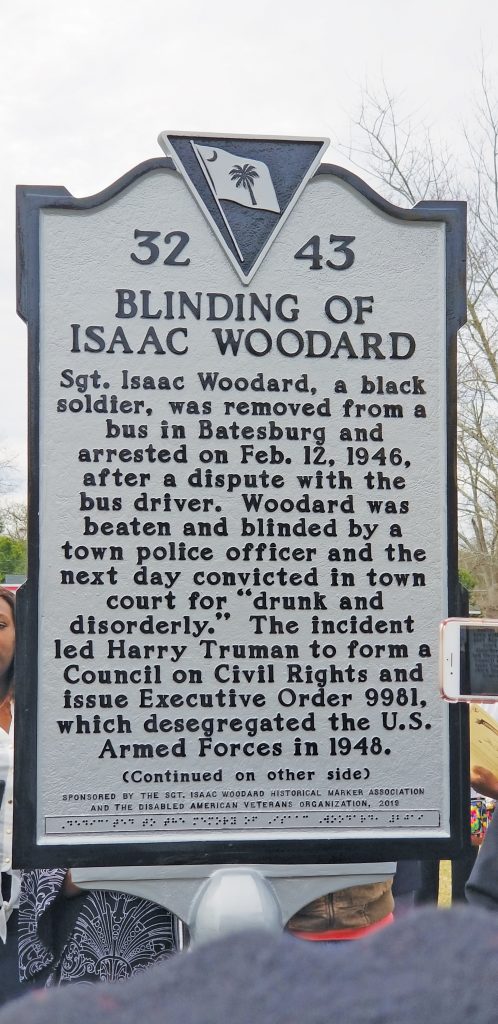
    BATESBURG-LEESVILLE – A commemoration and unveiling of a historical marker in Batesburg-Leesville on Saturday honored Winnsboro native Sergeant Isaac Woodard, a World War II veteran whose savage beating at the hands of a callous, intolerant sheriff helped inspire civil rights in America.

    Woodard

    Fairfield County Councilwoman Bertha Goins, addressing Woodard’s nephew and his family along with a large group of dignitaries from across the state, read a resolution from the County, recognizing Woodard as an American hero. She also recognized his inhumane treatment as a catalyst in this nation’s civil rights movement.

    In a letter read at the ceremony, Winnsboro Mayor Roger Gaddy wrote that he was honored to acknowledge the life of Woodard, recalling Woodard’s and his family’s years in Winnsboro.

    After recounting the events surrounding Woodard’s brutal beating, Gaddy said, “It is with great honor that we are proud to see this historical marker be placed in Batesburg-Leesville to honor and acknowledge his life and service.”

    A booklet at the commemoration titled the “Blinding of Isaac Woodard, Jr,” recounted the events that led up to Woodard’s blinding and to the eventual elevation of civil rights in the United States.

    Isaac Woodard, Jr. was born in Fairfield County, but grew up in Goldsboro, North Carolina. He enlisted in the U.S. Army on Oct. 14, 1942, at Fort Jackson, and served in the Pacific as part of a labor battalion. Woodard received an Honorable Discharge at Camp Gordon, GA, in early February, 1946.

    Along with a contingent of other discharged soldiers, black and white, Woodard boarded a Greyhouse bus on Feb. 12 to travel back home to North Carolina.

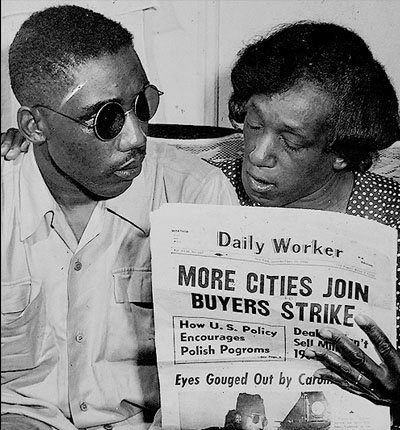
    Isaac Woodard, Jr. with his mother

    A conflict was triggered when the bus driver belittled the Army veteran for asking if there would be enough time for a bathroom break during a scheduled bus stop. It is reported that Woodard argued back. At the next stop, Woodard was met by Chief of Police Linwood Shull of Batesburg who, along with his deputies, beat Woodard savagely with their nightsticks.

    Woodard was later charged with drunk and disorderly conduct before finally being taken to a veteran’s hospital in Columbia.

    The NAACP took up Woodard’s case in the spring of 1946, pressing military officials to provide assistance to the gravely injured veteran while also calling for legal action against Chief Shull.

    By September of that year, NAACP officials met with President Harry Truman who expressed outrage over this assault on a veteran. Shull was tried in federal court but released after the jury deliberated only 30 minutes.

    As news of the attack circulated in the national media, President Harry Truman created the first President’s Committee on Civil Rights (PCCR) which published, ‘To Secure These Rights’ in 1947.

    This groundbreaking report led to the desegregation of the military in 1948 and new federal attention to racial inequality as a matter of both domestic justice and out of concern for Cold War politics.

    For many Americans, Isaac Woodard became a sympathetic figure representing the larger conflicts of Jim Crow emerging after World War II. The public’s response to the vicious attack upon Woodard, as well as the response of President Harry Truman, signaled a major shift in public support for civil rights during the 1940’s.

    Isaac Woodard died on Sept., 1992 in the Bronx, New York where he lived with his nephew, Robert Young, and his family. But Woodard’s death was not the end of his legacy.

    On June 7, 2018, Robert M. Cook II, Municipal Court Judge for the Town of Batesburg-Leesville, issued an order re-opening the case against Woodard and subsequently dismissed all charges against him. The order was granted upon receiving a request from Town Attorney Christian Spradly and Chief of Police Wallace Oswald.

    The Town also moved to dismiss the charges against Woodard.

    “It was a beautiful, emotional, meaningful ceremony,” Goins said. “It did not undo the crime, the injustice or the injury, but it brought well-deserved honor to this man who, through his pain and suffering, made so much possible for the rest of us.

    “It was a privilege to be part of it,” Goins said.

  • Jenkinsville will not appeal annexation vote

    JENKINSVILLE – Jenkinsville will remain the same size for now.

    The Fairfield County town had until noon Monday to appeal results from the June 5 referendum to the state, but an appeal was never filed, said Chris Whitmire, spokesman for the S.C. Election Commission.

    “The SEC has not received any appeals related to Fairfield/Jenkinsville annexation election,” Whitmire said via email, three hours after the deadline.

    If Jenkinsville attempts another annexation vote, state law mandates the town will have to wait another two years, said Debby Stidham, the county’s director of voter registration and election.

    “When an annexation election is defeated either by the voters inside the municipality concerned or within the territory proposed to be annexed, or both, another annexation election within the territory proposed to be annexed shall not be initiated within a period of twenty-four months from the date upon which the voting took place,” the law reads.

    The Jenkinsville annexation effort sought to absorb 143 properties into the town limits. Had the vote succeeded and accepted by town leaders, it would’ve quadrupled the town’s geographic boundaries.

    A prior review by The Voice of impacted properties found that the Jenkinsville tax base would’ve mushroomed by a factor of five.

    Jenkinsville Mayor Gregrey Ginyard previously has said annexation wasn’t a money grab. He said annexation was necessary to attract businesses and spur economic development.

    Speaking during public input at the Fairfield County Council meeting on Monday, Fairfield County resident Jeff Schafer credited Councilwoman Bertha Goins with helping to defeat annexation.

    “You saved the county and town grief with annexing of Jenkinsville,” Schafer said.

    Goins spoke openly against the annexation vote at a council meeting in May, and urged voters to defeat it.

    In the end, that’s what happened. Voters rejected the annexation measure by a 19-15 vote. One ballot against annexation was thrown out because a voter who lived outside the proposed annexation area voted when she shouldn’t have.

    Jenkinsville filed a protest of the election results, triggering a county election commission hearing on June 18. Commissioners, however, upheld the referendum results.

    Lawyers for the town argued several additional properties should’ve been excluded because contiguity was broken when one voter decided to opt out of annexation.

    But commissioners noted that an “opt out” letter from the voter was never sent to the Jenkinsville town clerk.

  • Election commission blocks JV annexation protest

    JENKINSVILLE – Fairfield County election officials upheld the result of the Jenkinsville annexation vote by a more decisive margin than the original referendum itself.

    In a unanimous vote Monday, the Fairfield County Election Commission voted to uphold the results of the June 5 special election that saw the annexation measure fail 19-15.

    Commissioners agreed one vote shouldn’t have been counted, but it wasn’t enough to sway the final result.

    Their decision to uphold the election was largely influenced by a miscommunication regarding a property owner who opted out, according to testimony. His property bordered other contiguous properties, which could have swayed the vote, town attorneys argued.

    Commissioners disagreed.

    One official noted a letter from the property owner was sent to the town’s lawyer, and not the Jenkinsville town clerk.

    “The letter should’ve been sent to the town clerk, and it was not sent to the town clerk,” election commissioner Alice Rice said. “It was sent to the lawyer instead.”

    Betty Trapp, chairwoman of the election commission, said a written order of the board’s findings would be issued as soon as possible.

    Trapp said the town could file an appeal in accordance with state law.

    Section 7-17-60 says appeals must be filed no later than noon Monday following the date of the county board’s decision, pegging the deadline as June 25.

    Had the annexation vote passed and been subsequently adopted by Jenkinsville Town Council, the town would have added 143 properties to its tax rolls, quadrupling the town’s geographical boundaries, according to Fairfield County property records.

    Two witnesses were called during Monday’s protest hearing: Jenkinsville Mayor Gregrey Ginyard and Debby Stidham, director of voter registration and election for Fairfield County.

    Jenkinsville’s protest cited three main arguments:

    The list of eligible voters provided to the polling location included voters outside of the proposed annexation area.

    A blind woman’s vote was incorrectly counted.

    One property owner exercised his right to opt out, which broke continuity with several other properties.

    “At minimum, the above irregularities make the actual outcome of the election uncertain and require a new election,” the protest states.

    Jeff Goodwyn, a Columbia attorney representing Jenkinsville, focused primarily on the contiguity issue in his opening statement.

    Goodwyn said if the property owner who opted out was excluded, it would’ve dramatically impacted the outcome because other properties would have been excluded as well.

    “Without this property, the part of the annexation, it breaks the contiguous nature in the city,” he said. “Their votes were meaningless because they couldn’t possibly be in the town.”

    Ginyard affirmed that position during testimony at Monday’s hearing.

    “There were quite a few votes that shouldn’t have been counted,” he said. “With the vote count being 19-15, with there being eight to 10 votes in that area, that could’ve swung the election either way.”

    Ginyard also testified that a blind woman who voted on a paper ballot intended to vote “Yes.” Her vote was excluded because the “X” didn’t appear in either the “Yes” or “No” boxes, Ginyard said.

    Election officials, however, said there’s evidence countering that statement.

    Commissioners noted the woman cast her ballot at the county election office using an electronic machine, meaning she couldn’t possibly have voted on a paper ballot.

    Stidham did confirm that another voter living outside the annexation area cast a ballot, but noted that wasn’t enough to order a new election.

    Stidham added that before the election, she sent a list of eligible voters to Ginyard for verification, but never received a response.

    “Going by the map I received with tax map numbers, I never got any feedback,” she said. “I assumed we had those registered voters correct.”

    Stidham also said the town never mentioned the voter who opted out.

    “The ‘opt out’ you keep mentioning, we had no knowledge of an ‘opt out,’” she testified. “We received nothing in my office to know there was an ‘opt out’ to even remove those voters.”

    Not mentioned during the hearing were reports that Ginyard was observed inside the polling location, beckoning voters to speak to him before they could register with poll workers and cast ballots.

    Stidham and Fairfield County Councilwoman Bertha Goins told The Voice they witnessed Ginyard calling out to voters. Stidham said she eventually asked Ginyard to allow voters to register.

    A state election commission spokesman previously said when public officials speak to voters before they register, it could be viewed as campaigning inside a polling location, a violation of state law.

    “That certainly would not look good and could be construed as campaigning, interfering, or intimidating voters,” said Chris Whitmire, spokesman with the S.C. Election Commission.

  • Goins blasts JV annexation vote June 5

    JENKINSVILLE—A controversial effort by the Town of Jenkinsville to annex 143 properties is drawing the ire of at least one Fairfield County Council member.

    District 4 Councilwoman Bertha Goins, whose district includes Jenkinsville, issued a scathing indictment of the town’s government and the Jenkinsville Water Company, both of which are run by Greg Ginyard.

    During the council comments portion of Tuesday night’s meeting, Goins urged residents to reject the annexation measure.

    “Enemy and evil took it [Jenkinsville] over and took it down,” Goins said. “Twenty years of hate and bitterness should be enough for Fairfield County.”

    Ginyard couldn’t be reached for comment Tuesday.

    The Voice did ask Ginyard about the annexation vote following the Jenkinsville Water Company meeting in May. His only response was, “It’s in your paper.”

    If the annexation vote passes and is ratified, the town’s borders would grow by a factor of four and the value of taxable property would multiply fivefold, from $2,467,200 to $12.3 million, an analysis of public records found.

    Goins didn’t identify any Jenkinsville officials by name Tuesday night, but her disdain for the JWC and town leadership was made perfectly clear.

    “I’m going to stand against the annexation. I’m going to encourage people to vote against it. We’re divided enough by it,” Goins said. “I’m really ticked off about evil in the community.

    “Twenty years ago a snake came in the community and poisoned the community. I’m going to leave it at that,” Goins continued.

    Goins’ address comes on the eve of the June 5 vote.

    The town is utilizing the “25 percent” method to attempt the annexation, requiring the least amount of public support. Under this method, the vote can proceed with only 25 percent of the 143 property owners petitioning town government.

    In a prior interview, Ginyard declined to say why the town is utilizing the 25 percent method.

    Ginyard did say he supports annexation because he thinks a larger town will make it easier for Jenkinsville to generate economic development.

    The vote was originally scheduled for May 1, but was rescheduled to June 5 since state law mandates that annexation votes be taken within the boundaries of the municipality seeking annexation, said Debby Stidham, the county’s director of voter registration and elections.

    Stidham said the May 1 vote was previously scheduled to be held at the town’s volunteer fire department. But, she said, the town’s traditional voting hub technically lies outside Jenkinsville town limits.

    Now the election will be held at the old volunteer fire department and EMS station on S.C. 213. Polls will be open from 7 a.m. to 7 p.m.

    Stidham said her office hasn’t received any complaints or concerns from voters. She said communications with town officials have been strictly logistical in nature.

    “It’s actually been quiet. So far I’ve not had anybody calling and asking anything,” Stidham said. “I hope that means people are interested and know what they need to know.”

    The deadline for voters to cast absentee ballots by mail expires June 1 at 5 p.m.

    After that, voters can cast absentee ballots in person at the Fairfield County Voter and Registration Office through June 4.


    Related articles:  Jenkinsville prepares to annex 143 propertiesLetter to the Editor: No to Annexation June 5,  Notice of Annexation Election: Town of Jenkinsville,