Tag: A Day Away

  • Revolutionary Road to Walnut Grove

    Here’s a “daycation” you can take this summer or plan for the fall: An 80-mile drive to Walnut Grove Plantation near Spartanburg. About 80 minutes’ drive up I-26 will take you to a farm/plantation of the 1780s that’s on the National Register of Historic Places.

    Named for the walnut trees planted on the property by Kate Moore Barry, Walnut Grove Plantation’s story begins around 1765 when Charles and Mary Moore established Walnut Grove Plantation on a 550-acre king’s land grant. Many of Walnut Grove Plantation’s outbuildings from the 18th century still stand. Among them are a blacksmith shop, wheat house, barn, meat house, a well house with dry cellar, a school and doctor’s quarters. Kitchens of that era generally stood apart from the main dwelling because they were hot, prone to being smoky and, more to the point, they often caught fire. Note how gourds provided useful homegrown wares: bowls, scoops and funnels, all essential to preparing food. You’ll find them more picturesque than plastic bowls.

    Put Walnut Grove Plantation on your fall itinerary if you like. FestiFall, a two-day festival at Walnut Grove, gives visitors an opportunity to see Colonial-era people practice crafts and trades. Aptly named craftsmen like Ike Carpenter of Edgefield demonstrates his pioneer woodworking skills at FestiFall at Walnut Grove. In early days men like Carpenter shaped wood into useful tools and beautiful furniture. A steady hand and an eye for detail rendered oak into functional works of art. See how Ike Carpenter’s handcrafted spoons replicate the look and feel of Colonial America. Today the indispensable wooden spoon brings a pioneering touch to modern kitchens.

    Other craft artists like Greenville’s Mary Alice Goetz come to FestiFall to demonstrate basket weaving. She weaves split oak strands into heirloom baskets that will bring function and beauty to generations of users. See a blacksmith work his forge, a cooper make barrels and other craftsmen demonstrate how essential goods were made.

    In 1961, Thomas Moore Craig Sr. and wife Lena Jones Craig, descendants of the Moore family, donated Walnut Grove Plantation and 8 acres to the Spartanburg County Foundation in a special trust fund. Now the public can tour and learn from this historic site. Walnut Grove Plantation chronicles how free and enslaved people settled South Carolina and other colonies. Part of its story is the fight for independence and the building of a new nation. Take a tour and see that story come alive.

    If You Go …

    Walnut Grove offers guided hourly tours of the site’s 250-year-old buildings. Learn about Colonial and Revolutionary Era history and see reenactors portray people of the time.

     • Walnut Grove Plantation

    1200 Otts Shoals Rd, Roebuck, S.C. 29376.

    $6 per adult, $3 ages 5 to 17, free to infants to 4.

    Call ahead to plan group tours.

    864-576-6546

    www.spartnaburghistory.org/walnutgrove.php

     Learn more about Tom Poland, a southern writer, and his work at www.tompoland.net. Email day-trip ideas to him at tompol@earthlink.net.
  • Myrtle Beach Daze

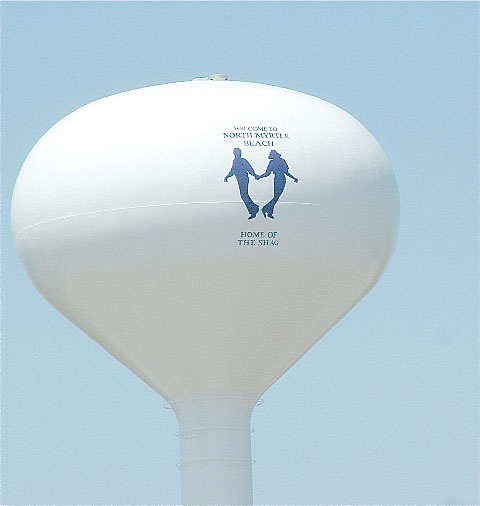
    South Carolina’s beaches are popular, especially in the summer, but one beach is popular year-round. A little over a three-hour and 173-mile drive will take you to a town that was and is an icon. Once known as Ocean Drive, or OD, North Myrtle Beach is the epicenter of all things shag and beach music. Thousands return to North Myrtle Beach fall, winter and spring, to shag and share good times and memories.

    Now you don’t have to be a shagger to enjoy a journey to this dance kingdom. If you recall or are just plain curious about the good old days of open-air pavilions, cars with fins, sno-cones, glowing Wurlitzers, rhythm and blues music and lifeguards, you’ll enjoy a trip to North Myrtle Beach.

    The shag was “the dance” along the Grand Strand in the late 1940s and early 1950s — a memorable time of classic cars, ice cream sodas, cold beer and nights afire with love. Many would look back on this golden era as the apex of youth and romance. It was a glamorous, chivalrous time. As evening fell, the lights of open-air pavilions beckoned. As gleaming lines of surf broke outside pavilions and clubs, couples danced. Neon Wurlitzers and Rock-Olas gobbled change. Shaggers danced along the leading edge of a pop culture revolution in places indelibly etched in memories: the Myrtle Beach Pavilion, Sonny’s Pavilion, Spivey’s, Robert’s Pavilion and other cramped “jump joints.”

    Ocean Drive assumed iconic stature. Lifeguards were bronzed gods. Women were sun-kissed “peaches” to be plucked by men with perfect dance floor cool. There was nothing like an evening of club hopping, and the shabbier they were, the better. Ask shaggers about OD. If you tell them you’re going they’ll want to hitch a ride with you. They’ll regale you with stories of OD and culture-shocking times.

    Back in OD’s heyday, young people were the original rebels and their hangouts were the iconic pavilions. The pavilions were ordinary but exalted. In the early 1980s, a writer for the Greenville Piedmont, Melissa Williams, described Spivey’s Pavilion as “a ramshackle, tattle-tale gray, paint-chipped pavilion. It was an old haunt where people carved their names in wooden booths overlooking the dance floor. It was their domain, where engulfed by friends, their music and their self-designed lifestyle, they could revel in rebellion.”

    All the old pavilions are gone but you can recapture this wonderful time, a bit of Americana, and for certain a South Carolina legend by making the trip to North Myrtle Beach. You’ll see plenty of men wearing penny loafers and old classic beach tunes will mingle with the salt air to take you back in time. You’ll be at the Grand Strand so there’s no way you’ll hurt for restaurants and things to do. Pack a bag ‘cause you may decide to stay overnight.

    If You Go …

    • Fat Harold’s Beach Club

    www.fatharolds.com

    • Beach Memories

    www.beachmemoriesart.com

     • OD Pavilion

    www.odpavilion.net

    *This column consists of excerpts from “Save The Last Dance For Me, A Love Story of the Shag and the S.O.S.,” USC Press, written by Tom Poland and Phil Sawyer.

    Learn more about Tom Poland, a Southern writer, and his work at www.tompoland.net. Email day-trip ideas to him at tompol@earthlink.net.
  • Whitewater Fever

    From springs and steams near Cashiers, N.C., grows a mighty river. Rising as a glittering mountain stream near Whitesides Mountain, the Chattooga flows 10 miles in North Carolina before forming a 40-mile border between Georgia and South Carolina. The river drops 2,469 feet over 50 miles (49.3 feet per mile), creating a wild, dangerous run. The river surges, pools and slashes through Chattooga Country, as National Geographic referred to it. It’s known too as “Deliverance Country,” owing to the 1972 film, Deliverance, that made it a legend.

    Chattooga Country is up in Oconee County, approximately 150 miles away. Take I-26 to I-385 North to I-85 south and take SC-11 at Exit 1 toward Walhalla. It’s slow going in the mountains so allow yourself at least three hours to arrive at your chosen outfitter’s headquarters. A night-before stay is advisable.

    Let’s make a very important point right up front: You do not want to run the Chattooga without the assistance of trained professionals. Note that this column provides three outfitters who can take you down the river. These outfitters provide safety equipment and trained guides familiar with the river’s ways and dangers. The National Forestry Service regulates all three.

    This savage-but-stunning river flows through ancient Cherokee lands and to this day it remains untamed. Dams straddle most rivers in the Southeast; not the Chattooga. It runs free. It attracts people from throughout the world. Fishermen, naturalists, novelists, environmentalists, essayists, filmmakers and the curious come to the Chattooga. Rafters and veteran kayakers brave its Sections III and IV. The river has long attracted thrill seekers, many times fatally. The intimidated cling to its banks and stare.

    Geological forces over millions of years carved out the Chattooga’s path. When first formed, the Blue Ridge Mountains reached higher than the Rockies. Millennia of water and weather whittled away the jagged peaks and carved deep narrow valleys in the terrain. The Chattooga courses through this tumbled topography to become a river steeped in myth. The true Earth lives along this National and Scenic River, the Earth too wild to tame.

    Hurdling downriver between canyon walls, rafters glide, pitch, jostle and buck on an untamable river. Guides who run the Chattooga must be unerring judges of depths, colors and shadows to avoid death traps perfected by geological processes 250 million years old.

    Be advised. Rafters on the Chattooga go from smiling to terror in the blink of an eye. Helmets and lifejackets are mandatory on this river that has claimed many a life. As quick as a pencil point breaks, rafters find themselves hurled into the river where swift currents slam them against rocks. Approach this adventure with a serious attitude. Several deaths have occurred here, one as recently as mid-July 2012.

     Learn more about Tom Poland, a Southern writer, and his work at www.tompoland.net. Email day-trip ideas to him at tompol@earthlink.net.
  • Simple Pleasures, Natural Treasures

    Sixty miles due east you’ll find a town where simple pleasures are the best . . . A taste of artesian water — a crisp 50 degrees — bubbling up from an ancient aquifer . . . A native azalea, its bewitching fragrance sweeter than honeysuckle . . . spring flowers’ shimmering black-water reflections. Hartsville, South Carolina simplicity. Revel in it.

    This beautiful Pee Dee town, a bed-and-breakfast haven stitched to the South Carolina Cotton Trail, resurrects yesteryear’s charm. Faulkner may as well have had Hartsville in mind when he wrote, “The past is not dead. In fact, it’s not even past.” For Hartsville is about simple pleasures of the past. No wonder its homes, history and floral wealth lure wayfarers.

    Hartsville covers 5 square miles, within which man transformed 491 acres of virgin pines into downtown Hartsville. Old Sol rains celestial riches here — 115 clear days a year — and all that energy feeds gorgeous greenery. People are fond of saying that Hartsville is a garden with a town in it. Kalmia Gardens is Hartsville’s pride and joy. May Roper Coker built the garden in the 1930s. With some hard-working men, a mule and enough sweat to float a steamship, “Miss May” sculpted Kalmia Gardens from “laurel land,” embellishing its trails with azaleas, camellias and tea-olives. This arboretum sustains a microcosm of plants extending from the Blue Ridge to the Coastal Plain.

    Descend the boardwalk (435 feet, total) down a bluff through Kalmia Gardens across Black Creek, where tannins steep the water dark as tea. See profusions of mountain laurel, Kalmia latifolia, blizzard the bluff white come May. Journey across the creek where Segars-McKinnon Heritage Preserve displays copious sub-tropical vegetation.

    Climb the bluff to the Thomas Hart house, (1820, National Register of Historic Places). See the museum — a restored post office building also on the NRH. Learn Sonoco’s history and see silver from the Eastern Carolina Silver Company. Yes, silver (Rumors hint that more millionaires live here per capita than any place in the United States.)

    “There’s this notion millionaires live in mansions and drive big cars,” said Kathy Dunlap, Hartsville Museum’s executive director. “They can also live in 20-year-old homes and drive old cars.”

    Kathy should know. South Carolina’s oldest car, the steam-powered Locomobile, sits in the museum. Just outside, native Lawrence Anthony’s “The Performance,” a steel sculpture sporting a coppery patina, celebrates the music, dance and drama flourishing in Hartsville’s Center Theater.

    The good life. That’s Hartsville. Nature, history, gardens and art. Home to Coker College and Sonoco. Far from ordinary, but close to your wayfaring heart.


    Learn more about Tom Poland, a southern writer at www.tompoland.net. Email day-trip ideas to tompol@earthlink.net.

  • The Sites of Landsford Canal

    Up Chester County way, Landsford Canal is so beautiful it ended up in a coffeetable book, “Reflections Of South Carolina” (Clark & Poland). You could say it’s as pretty as a picture. Getting to the canal is easy. From Blythewood and Winnsboro, it is only about 40 miles, much of which is on I-77 North. Go visit Landsford Canal State park and the Catawba River, all blue and rocky, that once upon a time was an avenue of commerce.

    The locks at the south end of Landsford Canal remind us that man can make beautiful structures from rocks. Irish masons crafted the canal’s guardlock, a structure that lowered boats into the canal during floods. The finely cut, precise granite stones still stand, only now lush greenery grows between them where water once stood. In the river, an old diversion dam of rock continues its prolonged tumble. It’s as if time stands still while this old wall decides if it’s going to fall. Men built this diversion dam to direct water into the canal and to offer riverboat pilots a haven during floods.

    People come to the canal all day, especially in May and June when the rocky shoals’ spider lilies burst into large white blooms. Anchored among rocks, the flowers festoon the river. You can see the earth’s true colors in the river and its load of jammed logs: blue, brown, green and white. One of the world’s largest stands of these exquisite white flowers lives here. This large plant has adapted to a very harsh environment and puts on one of the greatest natural “shows” on the East Coast. During their peak bloom from about mid-May to mid-June, these plants blanket the river in white blossoms. Their needs are simple: swift, shallow water and sunlight. Therein lies a problem. Man’s penchant for damming rivers leaves them few places to grow now.

    Riverboat pilots used to ply the Catawba’s waters, but no more. Now kayakers do. Watch folks kayak by, deftly avoiding rocks. On land and by water, people come here to marvel at the old canal. These venerable stone structures stand as monuments to workers who toiled long and hard in the days before power and pneumatic tools came along. And yet their work not only endures, it gives us places stone cold beautiful and places to escape our modern, monotonous version of civilization.

    Fishing, boating and just watching nature are fine activities to enjoy. Playground equipment is on hand for kids. Hike the interpretive trails and see the foundations of an early 1800s mill site. Pack a picnic and enjoy it at a shelter. Spend time in the museum, a restored Great Falls Canal lock keepers house. Check out its pictorial displays. (Open by appointment only. Call to schedule a visit.) You will love every minute of your visit. Keep an eye out for bald eagles, and best of all go when the rocky shoals spider lilies are in bloom from mid-May to mid-June.

     Learn more about Tom Poland, a southern writer at www.tompoland.net. Email day-trip ideas to tompol@earthlink.net.

  • Boneyard Beach Beauties

    Ready for a challenging day trip that’s 180 miles one way by land before heading out to sea? Visit Cape Romain Wildlife Refuge offshore from Awendaw, S.C. Trailer your boat or make plans to ferry over to Bulls Island for a truly wild and awe-inspiring adventure.

    Bulls Island is big. At 5,000 acres, it’s the largest barrier island in the refuge. Take your camera. You’ll want to photograph Boneyard Beach where toppled trees litter the beach for a 3-mile stretch at the island’s northeast end. The Atlantic’s tides undercut the trees’ roots and down they go. Trees with sun-bleached limbs white as marble lie about. The sea-ravaged maritime forest leaves you breathless.

    Another strong draw is wildlife. Beautiful creatures ennoble the refuge. Orange-billed oystercatchers and white egrets stand out against green spartina. Bird watching is good year-round. Birds are busy come summer raising young on the beaches and in the maritime forest. Deer, alligators, raccoons and black fox squirrels live here, but the island’s bird life is famous worldwide. More than 293 species of birds have been recorded on the refuge with most being found on or near Bulls Island. The cup of life overflows here.

    History has laid its hand on the island. Sewee Indians lived here before settlers arrived. Pirates, it is said, hid out in Bulls Bay and the creeks behind Bulls Island. From these hideouts they attacked ships along the coast. The remains of an “old fort” are believed to have been a lookout tower built in the early 1700s. During the Revolutionary War, British warships used the island to replenish supplies. Confederate blockade-runners hid in creeks here. The island is history rich, for sure.

    At Bulls Island you can surf, fish, watch wildlife, picnic, hike and bike. And when you get back to the mainland, visit the Sewee Visitor & Environmental Center at 5821 Highway 17 North in Awendaw. Jointly operated by the U.S. Fish and Wildlife Service and the U.S. Forest Service, the Sewee Center will teach you about the ecosystems of Cape Romain National Wildlife Refuge and the Francis Marion National Forest. And be sure to see the center’s endangered red wolves.

    If You Go …

    • Take I-26 East to exit 212 and go east on I-526 for 12 miles. Exit onto US 17 North; go northeast on US 17 for 10.8 miles. Turn right onto Sewee Road; go northeast 3.4 miles, then turn right onto Bulls Island Road. Follow this road to Garris Landing. Depart by boat from Garris Landing. Bulls Island lies 3 miles off the mainland. The island has a public dock where you can take personal watercraft during daylight hours. You’ll find restrooms, a covered shelter and picnic area.

    • Coastal Expeditions, the refuge concessionaire, operates a ferry that provides regularly scheduled trips March 1 – Nov. 30, Tuesday, Thursday, Friday & Saturday only. Adults $40. Children 12 and under $20. Reservations not required but recommended. Call Coastal Expeditions, 843.881.4582, or visit www.coastalexpeditions.com.

    • Learn more about the refuge at http://www.fws.gov/caperomain/bullsisland.html

    • Sewee Center operates Tuesday – Saturday, 9 a.m. to 5 p.m., 843.928.3368

    Learn more about Tom Poland, a southern writer at www.tompoland.net. Email day-trip ideas at tompol@earthlink.net.

  • Touring the Old South

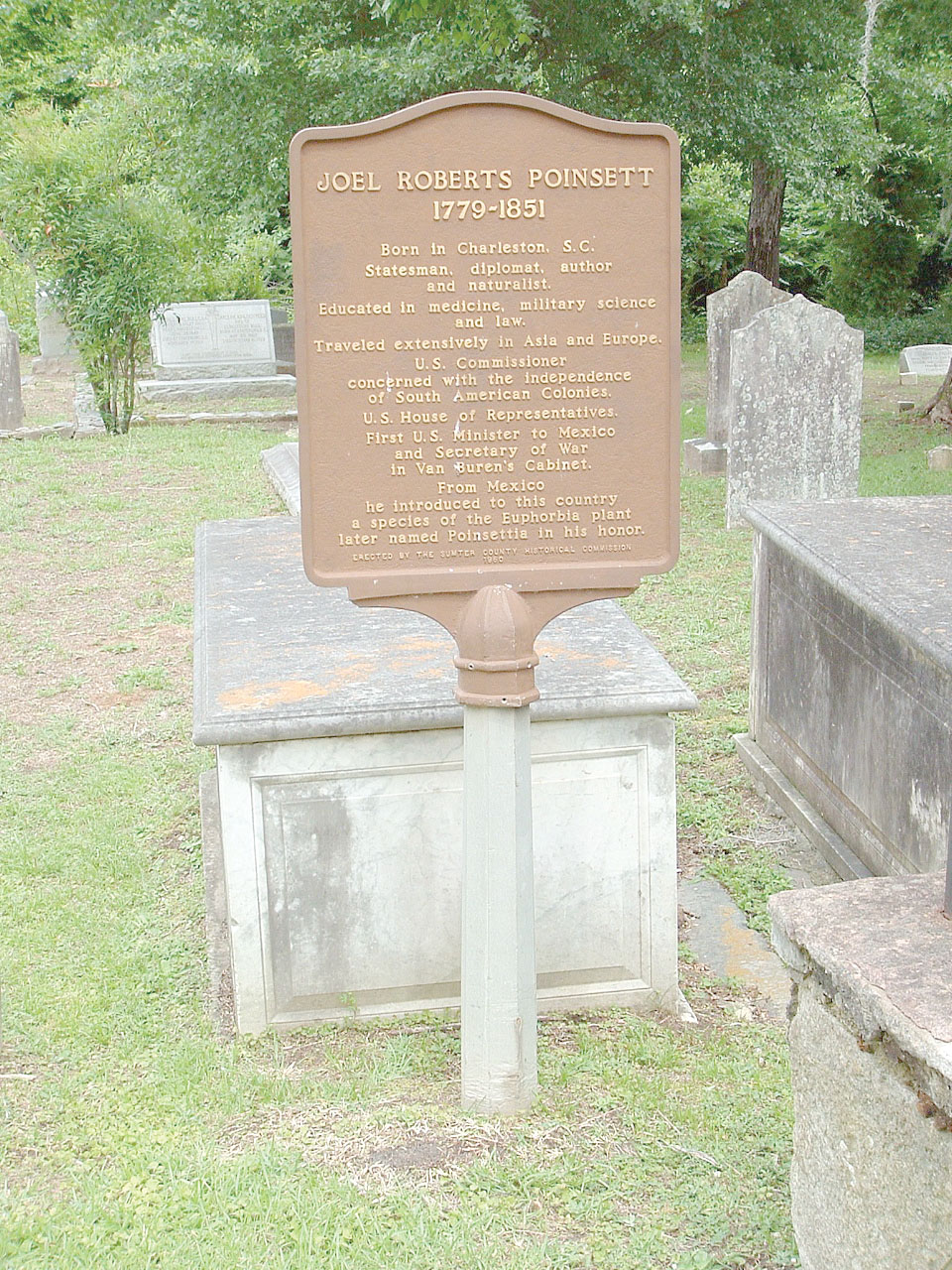
    Nothing says ‘Old South’ quite like an Antebellum cemetery, like the one located at the Church of the Holy Cross in Santee, near Sumter, where you’ll find the gravesite of the man who brought South Carolina the Poinsettia.

    There’s an old road that makes for a great Sunday drive, SC Highway 261. You’ll see historic sites; feel you are in the mountains, yet feel you are at the coast. More than that, you’ll come across the ghosts of history. Best of all, it’s about an hour’s drive southeast. An historical marker greets travelers, reading, “Over it came Indians, pack animals laden with hides, drovers, rolled hogsheads of produce, wagoners, and stagecoaches. The armies of two wars passed over it.” Some called it the King’s Highway.

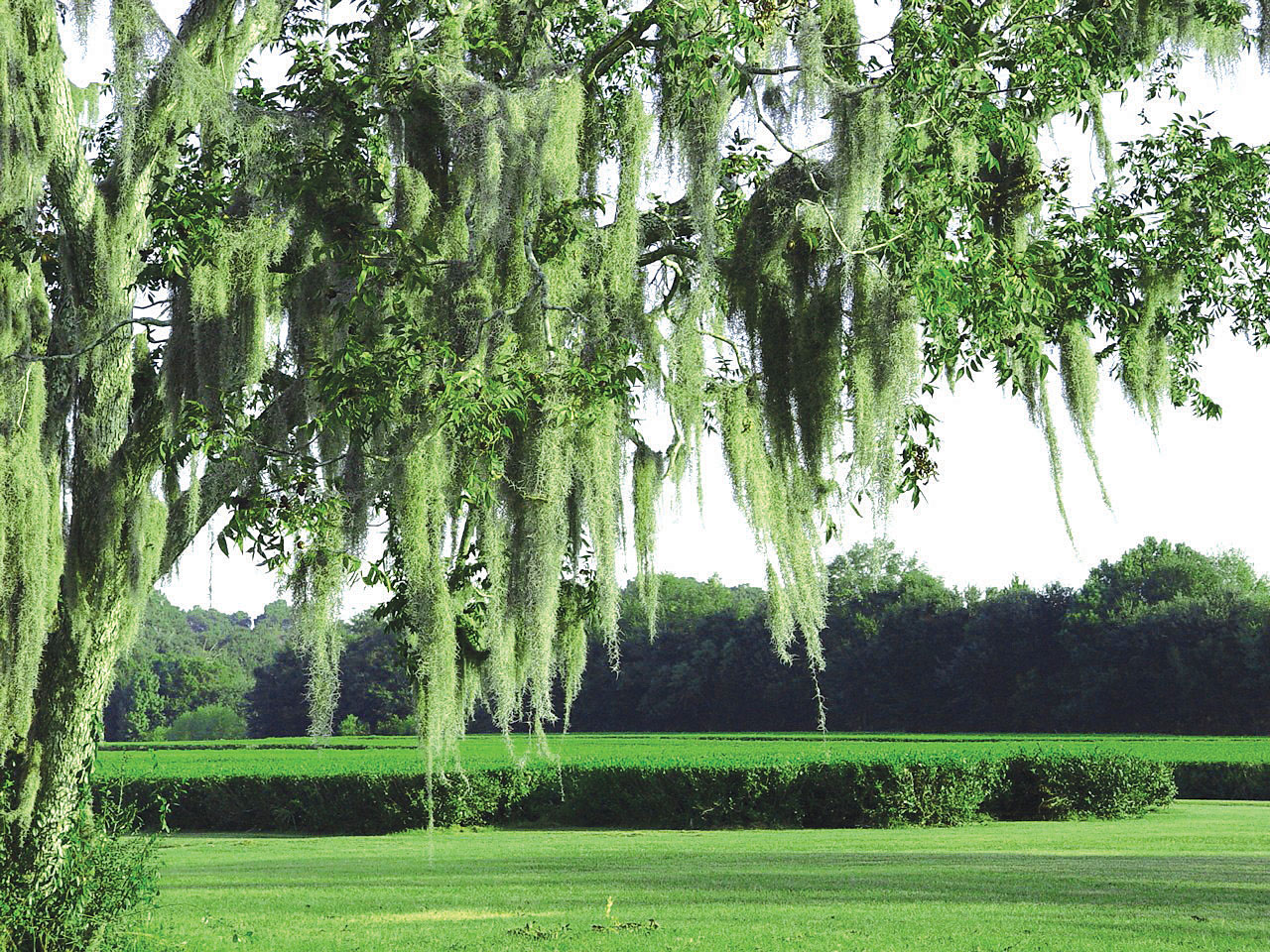
    Highway 261 winds through the High Hills of Santee. This area is rural, isolated and heartbreakingly antebellum. The land plunges, opening up vistas of distant ridges. You think at once of the mountains. It’s a curious sight to see Spanish moss in the mountains, but Highway 261 gives you massive oaks with limbs draped in Spanish moss.

    You’ll find enough history here to fill several good-sized books. For starters, there’s the Church of the Holy Cross. This stately old church was built from 1850 to 1852 of rammed earth. In its old cemetery lies Joel Roberts Poinsett, the man who brought us the poinsettia. A ways down the road, off the beaten path, you’ll come across the grave of General Thomas Sumter, the “Carolina Gamecock.” He earned his nickname when he killed British soldiers for burning down his house.

    Those of you who recall Ken Burn’s Civil War documentary will recognize the name Mary Boykin Chestnut. She grew up in Stateburg, a stone’s throw from Highway 261. Chestnut published her Civil War diary as a “vivid picture of a society in the throes of its life-and-death struggle.”

    Along Highway 261 you’ll find the hamlet of Boykin Mill Pond and its quaint old sanctuary, the Swift Creek Church. In May 1860, approximately 75 young people met at Boykin Mill Pond to picnic right near the church. Late that afternoon, 30 or more crowded onto a flatboat, overturning it. Close to 25 young people drowned, mostly women. You’ll find an old mill here, too. Boykin Mill and its 100-year-old turbines have long preserved a time when mills provided communities cornmeal, grits and flour. A few steps away is the Broom Place, where Susan Simpson makes sturdy, colorful brooms the old-fashioned way.

    As you drive along, the winding oak-shaded lane summons up images of a horse and buggy with men in powdered wigs and women in colonial attire. Then visualize a regiment of Confederates marching down the road, the dust rising around their feet. Imagine Mary Boykin Chestnut seeing the men and reaching for her diary as all, one by one, vanish into the eternal mists we call history. You’ve rediscovered the Old South and it’s just a short drive away.

    Learn more about Tom Poland, a southern writer, and his work at www.tompoland.net. Email day-trip ideas to him at tompol@earthlink.net.

  • Mountain Mecca

    An easy 151-mile drive into the mountains will take you to Asheville, N.C., a place that brings author James Salter’s words to mind: “There is a feeling. That somewhere the good life is being lived but not where you are.” Well, you won’t feel that way in Asheville. Whether its cloudscapes, art deco architecture or upscale cafes, you’ll feel very much alive “where altitude equals attitude.” There’s a timeless quality here as well as a curious mingling of the old and new. Take art deco architecture, for instance. There’s more here than any other Southeastern city except Miami.

    History too. In 1888, George Vanderbilt, grandson of railroad baron Cornelius Vanderbilt and one of America’s wealthiest men visited Asheville with his mother. Smitten, he purchased 125,000 acres, and soaring dreams of a palatial estate took flight, one modeled after 16th century chateaux in France’s Loire Valley. We know it as the Biltmore House & Gardens.

    In 1913, the Grove Park Inn, raised from granite quarried from Sunset Mountain, opens. Set like a jewel in Sunset Mountain at 3,100 feet, the resort overlooks the Asheville skyline and guests feast on sumptuous mountainscapes. Notables Thomas Edison, Henry Ford and Will Rogers stayed here, as did Presidents Franklin D. Roosevelt and Woodrow Wilson.

    Thomas Wolfe, of course, lived here. Born in 1900, Wolfe spent 10 childhood years in his mother’s boarding house, the “Old Kentucky Home.” Wolfe’s epic autobiographical novel, “Look Homeward, Angel,” depicted life in a turn-of-the-century Altamont, a thinly disguised Asheville. It didn’t sit well with many residents. Wolfe, however, did go home again in 1937. Though his book was officially banned there, Asheville gave him a warm welcome. Wolfe drew other writers to the area. F. Scott Fitzgerald wrote in Asheville a smidgen (Grove Park Inn, Suite 441), but his memories perchance may not have been the best. Wife Zelda died in an Asheville sanitarium fire in 1948. Sherwood Anderson dwelled nearby. A short walk from downtown to 53 Birch Street, the Riverside Cemetery slopes steeply to the French Broad River. Thomas Wolfe sleeps at the hilltop not far from O. Henry.

    Wolfe today is a favorite son, part of the charm that beguiles visitors. You see them sitting in bistros, standing in galleries, strolling through craft and antique shops and admiring the art deco architecture. They gravitate to the newly renovated Grove Arcade. Luxury apartments top its 50 shops and restaurants.

    Biltmore Estate is the number one attraction, but once in Asheville you’ll see so much else you like . . . eclectic shops, specialty stores, an art deco skyline and historic trolley tours. The Grove Park Inn, Biltmore Village, the Grove Arcade, the Montford Historic District’s bed and breakfasts, the Thomas Wolfe Memorial, Asheville Museum and art galleries add allure. There’s so much to see, I suggest you start at the Visitors Center. Make this a two-day trip. You’ll be glad you did.

    If You Go …

    • GPS: Visitors Center, 36 Montford Ave., Asheville, N.C. 28801

    • 828-258-6101

    • www.exploreasheville.com

    Learn more about Tom Poland, a southern writer, and his work at www.tompoland.net. Email day-trip ideas to him at tompol@earthlink.net.

  • Riverbanks Safari

    A 31-mile drive can take you to Africa, Australia, the Galapagos Islands and beyond. Go to Riverbanks Zoo in ‘famously hot’ Columbia and learn about animals from the world over. And be sure to walk the footbridge over the Saluda River to the Botanical Garden where you’ll see one of the world’s largest public collections of noisettes. Inhale their sweet perfume and discover their ties to South Carolina.

    More than 2,000 animals call the zoo home, but you won’t see bars and cages. Natural habitat exhibits use psychological barriers such as moats, water and light to keep animals from straying. Strolling through the zoo is akin to going on safari. See ring-tailed lemurs, Grants zebras and African elephants.

    Kids love to feed the giraffes and ride the animal-themed merry-go-round. And the Aquarium Reptile Complex houses Eastern diamondback rattlesnakes, crocodiles, reticulated pythons, moon jellies and green mambas — a name that tells you this is one deadly snake. The zoo is more than a place that houses exotic species, however. The zoo helps protect the earth’s wildlife and promotes the appreciation of diverse life forms.

    History lives here, too. On zoo grounds lie ruins of one of the South’s oldest cotton mills, which Sherman burned. Listed on the National Register of Historic Places, Riverbanks’ 170-acre site has a deep-rooted history dating back to the early 1800s with South Carolina’s textile industry and the Civil War.

    The zoo has an indoor fast-food restaurant, a pizza and sandwich restaurant, and food and refreshment stands. You’ll find a free picnic area at the park’s west end. Unlimited rides and attractions wristbands are available at the front gate for $20/person and include unlimited lorikeet feeding, giraffe feeding, carousel rides, train rides, pony rides, rock climbing and 3D Adventure shows. Gift shops offer unique souvenirs for all ages. Strollers and a limited number of wheelchairs are available for rent.

    Keep in mind that all animals are on exhibit daily except when extreme heat, cold and exhibit repairs or medical reasons take precedent — all of which are fairly rare occurrences. In general, animals are most active when they go on exhibit in the morning and when they return to their evening quarters prior to closing. Plan your visit so you get to see penguin feedings, the gorilla presentation, elephant presentations and more. A day at the zoo and its gardens and historical sites will show you why Riverbanks Zoo is South Carolina’s number one attraction with approximately one million visitors each year.

    If You Go …

    500 Wildlife Parkway, Columbia, S.C. 29210

    Adults: $11.75; Children (3-12 years): $9.25; Children (2 and under): Free

    (Family memberships are a great deal)

    Military (with military ID): $10.75; Senior Citizens (62 and up): $10.75.

    Open Daily 9 a.m. – 5 p.m.

    Extended spring/summer weekend hours: 9 a.m. – 6 p.m. Saturdays and Sundays

    March 29 – September 29.

    803.779.8717

    http://www.riverbanks.org/

    Learn more about Tom Poland, a southern writer, and his work at www.tompoland.net. Email day-trip ideas to him at tompol@earthlink.net.

  • Arrive for Tea Time

    The Charleston Tea Plantation: cool on the coast.

    In the South, iced tea is not just a summertime drink – it’s served year round with most meals. It is the wine of Dixie. And here in South Carolina, the connection with tea is especially strong.

    It’s the first place in the United States where tea was grown and it’s the only state that produces tea commercially. You can see the process in person during a pleasant day trip to the country’s only tea plantation, 20 miles west of Charleston on Wadmalaw Island. There you’ll find the Charleston Tea Plantation, a 127-acre working farm that’s the home of American Classic Tea.

    Wadmalaw Island (just saying that name is a pleasure) provides the perfect environment for propagating tea. With its sandy soils, sub-tropical climate and average rainfall of 52 inches per year, Wadmalaw provides idyllic conditions for Camellia Sinensis. This plant produces both black and green teas and more than 320 varieties grow on the plantation, which bills itself as ‘America’s Only Tea Garden.’

    Take the factory tour where flat-screen televisions guide you down a glass viewing area overlooking the factory. Inhale the heady aroma of fresh tea processing. Learn about the production of their American Classic Tea, the Charleston Tea Plantation’s story and tea’s colorful history. (In colonial days the British went to China to buy tea plants but the Chinese sold them camellias instead, an easy ruse since camellias and tea plants are botanical cousins. That’s how we got camellias!)

    Take the 35- to 40-minute trolley tour and enjoy a scenic ride around the 127-acre farm. William Barclay Hall, founder of American Classic Tea and world renowned Tea Taster, narrates the tour. He’ll educate you about the history of America’s tea garden while challenging your knowledge of tea. A tea bush can live 600 years, and it takes five pounds of leaves to produce a pound of tea.

    Walk the grounds. Stop by the Propagation Hut and read how the plantation selects the best quality plants for new acreage through cloning. Browse the shop where a variety of products feature tea ingredients and connections.

    Bring the family, pack a lunch and see the beautiful tea fields. The Charleston Tea Plantation offers a unique Lowcountry experience, one you’ll appreciate all summer as you sip sweet iced tea.

    Learn more about Tom Poland, a southern writer, and his work at www.tompoland.net. Email day-trip ideas to him at tompol@earthlink.net.