Tag: A Day Away

  • Paddle With the Dolphins

    Reservations required if you really want to see food . . .

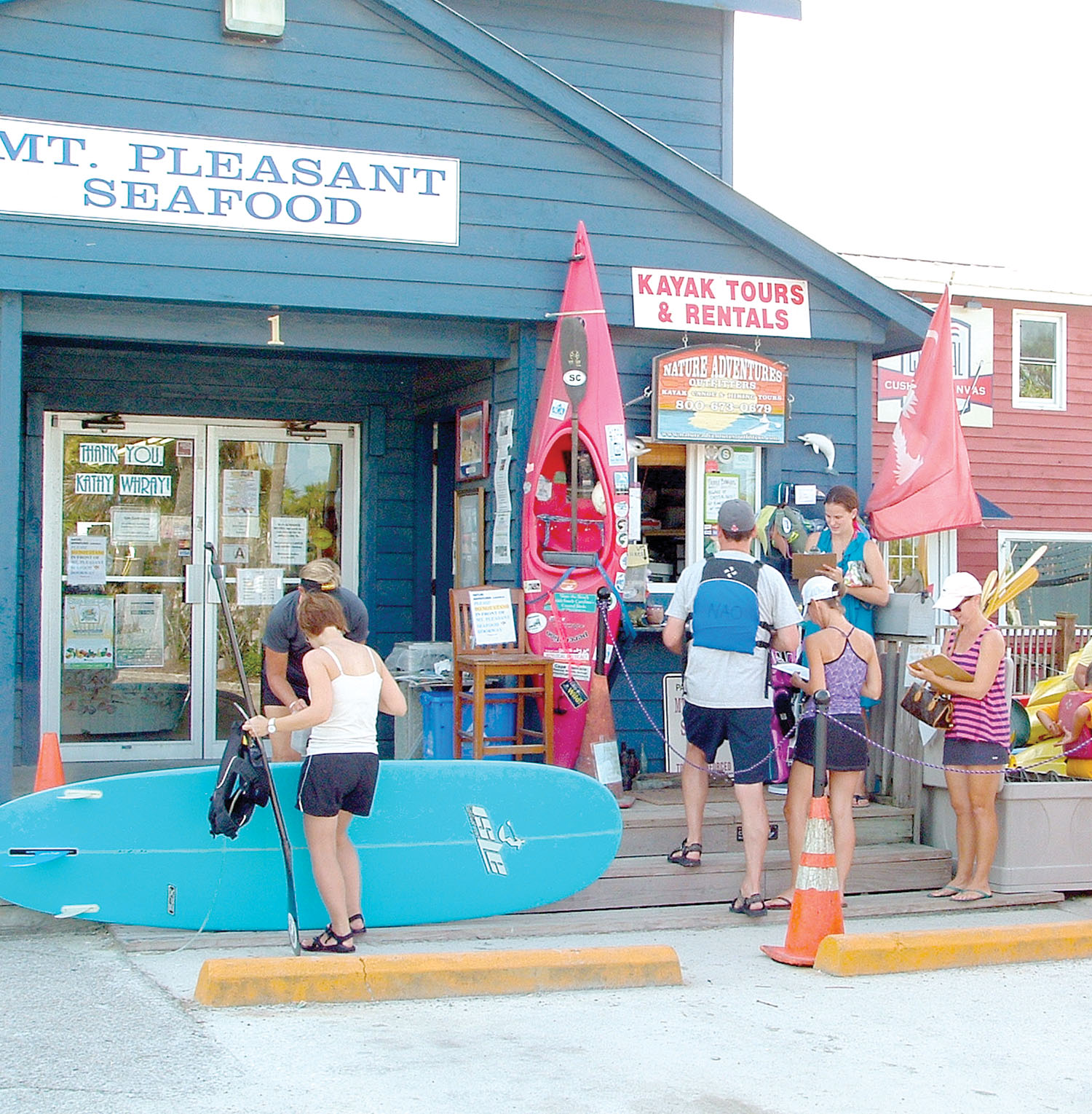
    Everybody knows Shem Creek is a popular venue for seafood down Charleston way. The parking lots are always full. It’s known too for its picturesque shrimp trawlers. But check out Shem Creek proper and you’ll see it’s got more than trawlers and catamarans moored there. You’ll see paddlers in brightly colored kayaks gliding by. You’ll see intrepid souls paddling by, upright on paddleboards. Well, why not join them and paddle with the dolphins, as a motto for Nature Adventures Outfitters proclaims.

    Shem Creek provides a good launch point for exploring Charleston Harbor and tidal marshes. Paddling out of Shem Creek gives kayakers a chance to ride the tides and see wildlife, including dolphins. Yes, you literally can paddle with the dolphins. While shore birds are common, surprises include manatee and sea turtles. Views of man’s creations include Castle Pinckney, Patriots Point, Ravenel Bridge, Fort Sumter and the Sullivan’s Island lighthouse. Don’t be surprised if a vee of eastern brown pelicans glides right over you.

    Why?

    Because kayaking is a stealthy way to observe wildlife. Sitting low in the water, devoid of your human profile, you’re at one with nature. No noisy gasoline engine announces your approach, nor do fumes. You’ll catch a lot of wildlife off guard. Paddle quietly and smoothly and you’ll navigate a place flooded with beauty and wildlife. While seeing wading birds is common, you just might see dolphins, manatee and sea turtles as well. Nature watching is one of kayaking’s true joys. Another perk is exercise.

    You’ll be in capable hands. Guides know their stuff. Guides are university degreed or are certified master naturalists in Biology/Ecology and other related fields. They understand, too, the need to protect our environment. Safety is emphasized at all times. Many guides hold certifications in First Aid / CPR / Lifeguard, Wilderness First Aid, Wilderness First Responder, NOLS, Master Naturalist and more, as well as American Canoe Association and British Canoe Union (kayak) certifications.

    Nothing beats a day on the brine seeing classic Charleston landmarks and wildlife to boot. Expect to hear a lot of shouts: “Look at that dolphin!” “Wow, was that a manatee?” Plan a trip when the tide is high to get the biggest bang for your bucks. Walk-up adventurers are welcome but it’s best to plan an excursion before making the 147-mile trip to Shem Creek. Contact Nature Adventure Outfitters and get the details. You can rent kayaks, canoes and paddleboards and explore on your own or book a family tour. Beginners and ages 4 and up are welcome. The outfitters hold daily tours of two hours, three hours or full day and overnight expeditions. Check out their website. You can book your adventure online. And if you paddle up a good appetite, you don’t have to drive anywhere. You’ll be surrounded by restaurants aplenty.

    Learn more about Tom Poland, a Southern writer, and his work at www.tompoland.net. Email day-trip ideas to him at tompol@earthlink.net.
  • Monarch of the Lowcountry

    Angel Oak on John’s Island, the envy of any Tolkien Ent.

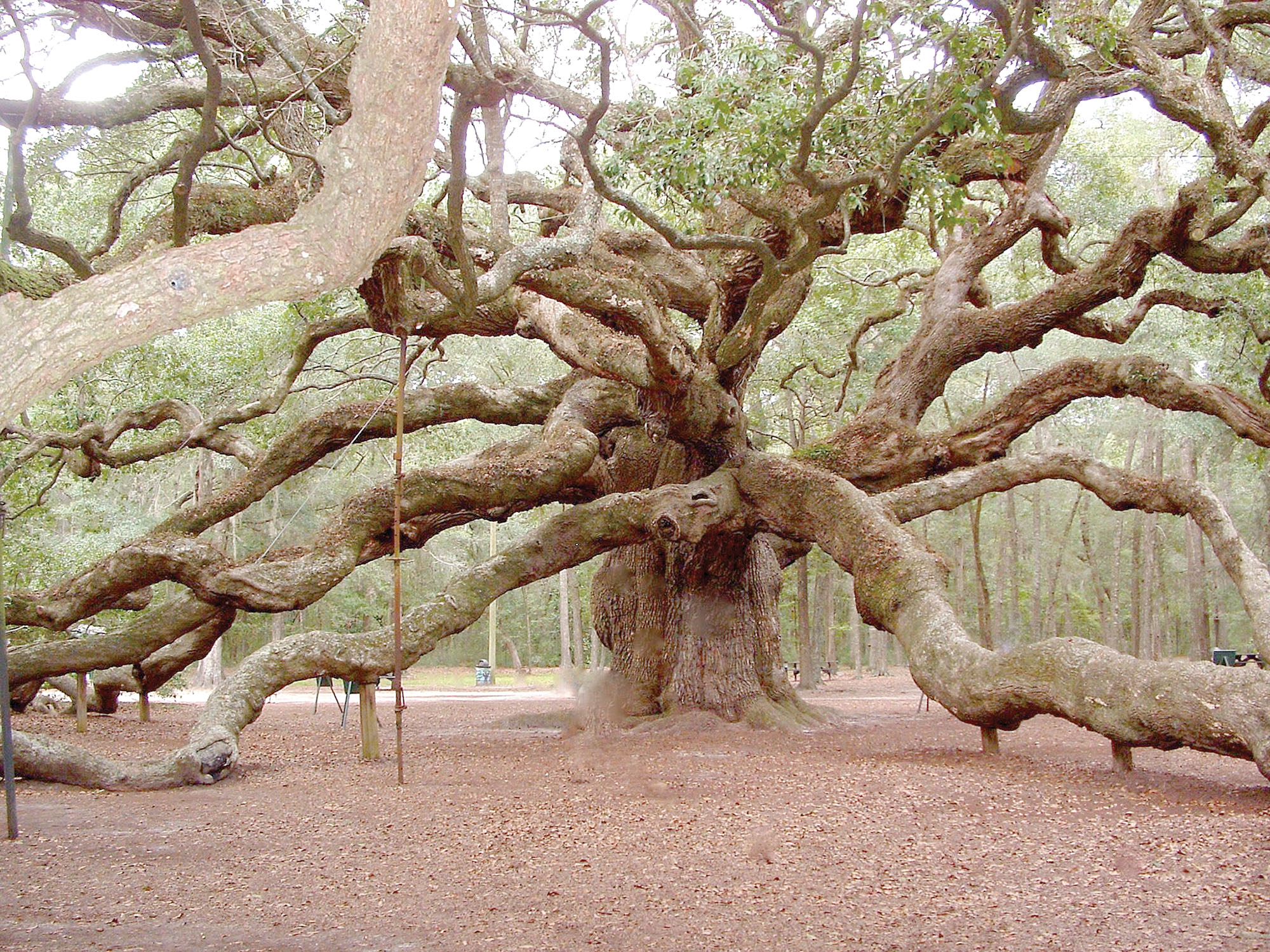
    No one would drive 154 miles to see a tree. Right? Wrong. Down on John’s Island you can see a Southern live oak estimated to be between 500 and 1,500 years old, one of the oldest living things east of the Mississippi River. Most expert estimates place Angel Oak’s age at 1,500 years, but precisely determining this monarch’s age is difficult because heart rot prevents coring (counting growth rings just isn’t possible).

    Want to see this Millennium Tree, this 2004 South Carolina Heritage Tree? Then make a day trip to John’s Island. It’s been said this giant tree and its outspread limbs appears angelic, thus its name. Local legends also maintain that ghosts of former slaves appear as angels around the tree; but neither is how it got its name. No, its name comes from its long-ago owners, Martha and Justus Angel.

    To be sure, old Angel Oak is a modern marvel. That the tree exists is a miracle. A visitor from New England, emotionally moved upon seeing the ancient tree, wrote, “It is hard to believe that over the years, man has not found a reason to get rid of this old tree. The fact that it is still around and lovingly tended gives me hope.” Well put.

    When you walk the grounds around Angel Oak you walk in the footsteps of early settlers and ancestors of the Gullah. Over the years, the 65-foot-high tree has grown out more than up. And over the years its 17,000-square-feet of shade surely has shielded a legion of Lowcountry denizens from the blazing Southern sun. Visitors take note: You cannot approach too closely or climb the tree’s graceful arching limbs, many as big as full-grown oaks themselves (the largest limb has a circumference of over 11 feet).

    Angel Oak possesses those iconic images that proclaim, “You’re in the classic Lowcountry.” To see the majestic oak is to conjure up Lowcountry swamps, blackwater rivers and Spanish moss. Angel Oak and the Lowcountry go together like William Faulkner and Mississippi, like Sidney Lanier and the Marshes of Glynn, like shrimp and grits. You won’t find an antebellum movie about South Carolina that doesn’t show live oaks draped with Spanish moss. In fact, the Lowcountry’s image is forever framed by moss-draped oaks and cypress, and Angel Oak, the star of stars, holds court over them all.

    Revered and held sacred, Angel Oak is a tree for the ages. It’ll hold you in a spell. Finally, when your sojourn at Angel Oak is over, Charleston is just 13 miles away. There’s much to see and do down here. Just one favor before you go: The city of Charleston owns and maintains Angel Oak and its park. Buy something at the Angel Oak gift shop or leave a donation to help protect this tree so vital to all.

     If You Go …

    Angel Oak Park

    Free Admission

    3688 Angel Oak Road

    John’s Island, S.C. 29945

    843-559-3496

    Driving Distance: 154 miles

    Driving Time: 2 hours 44 minutes

    Learn more about Tom Poland, a Southern writer, and his work at www.tompoland.net. Email day-trip ideas to him at tompol@earthlink.net.
  • Ruin and Recreation

    Sorry, The Shamrock Hotel is booked. But there are other great places to stay and things to do and see in Blackville.

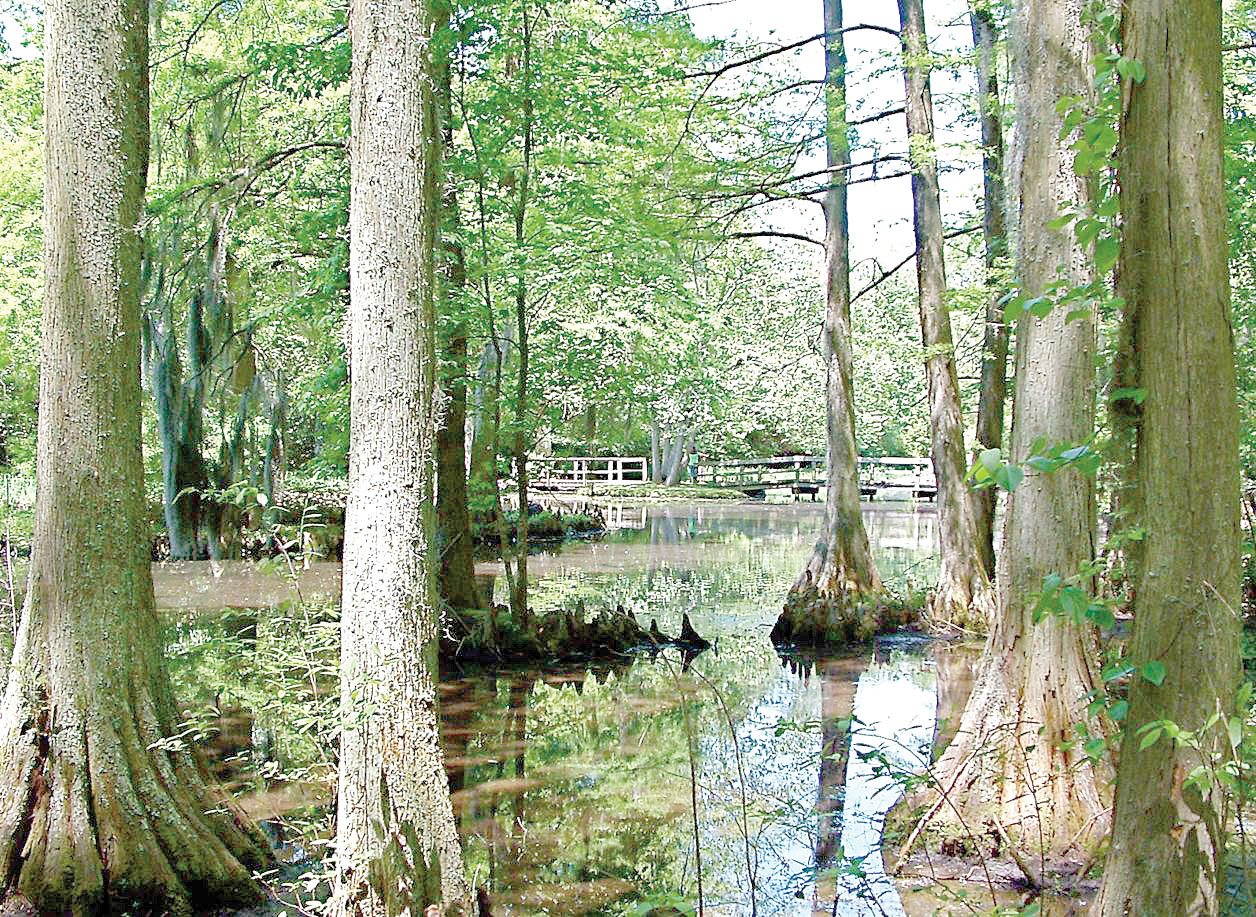
    Drive due south 83 miles (about two hours) and you’ll find the sleepy town of Blackville. Here you’ll find Ray Miller’s Bread-Basket with his famous homemade bread and the Healing Springs, a long-time destination for people seeking natural remedies. Here too you’ll find ruins of the Shamrock Hotel and Barnwell State Park.

    A Mennonite family operates Miller’s Bread-Basket on Main Street. Ray Miller owns Miller’s Bread-Basket, a quaint charming place. Just look for the fellow who resembles Ernest Hemingway. They say the meatloaf is out of this world. You’ll relish the wonderful greens and fried chicken. Take your sweet tooth with you. Lil Stoltzfus, the Pie Lady, makes German chocolate pies, Dutch shoofly pies, pecan pies, chocolate fudge pies, apple pies and others. Try the cinnamon raisin bread. Consider the entrees here Pennsylvania Dutch with a southern touch.

    Just down the street stand the ruins of the old Shamrock. For years Miller has advocated restoring Blackville’s 100-year-old Shamrock Hotel, once a whistle-stop on the old Hamburg-Charleston railroad. In its glory days the Shamrock was a hub of activity where people played poker and pool.

    It’s haunting and beautiful. In its heyday green tiles spelled “The Shamrock” in the lobby’s white ceramic tiles near the entrance. The old hotel has long since crumbled into ruin, a reminder of days when people rode trains, not cars.

    Close by is Blackville’s Healing Springs, known as God’s Acre Healing Springs. Lute Boylston deeded the springs to God in 1944. The deed states that the owner of the land surrounding the springs is “God Almighty.” (He’s always been the owner.) A sign at the springs states, “According to tradition the Indians reverenced the water for its healing properties as a gift from the Great Spirit. They led the British wounded to their secret waters during the American Revolution and the wounded were healed. This historical property has been deeded to God for public use. Please revere God by keeping it clean.”

    Gallons gush forth every minute. Take some jugs with you. Back a ways I knew a woman who would regularly make a 120-mile roundtrip to the springs. Laden with many plastic milk jugs she came home with the therapeutic spring water and swore by it.

    Continue your day at Barnwell State Park. Built by the Civilian Conservation Corps during the Great Depression, this park has a reputation as a great place to fish. Feel like staying overnight? Arrange a stay at one of the park’s cabins.

    Blackville may be a sleepy town but you won’t go hungry and you will find plenty to do. Check out this town in the South Carolina Heritage Corridor. And if some stubborn ailment plagues you, well you just may find a cure at the end of your 83-mile drive south.

    If You Go …

    • Miller’s Bread-Basket,

    No Credit Cards Accepted

    483 Main Street

    Blackville, S.C. 29817

    803-284-3117

     • Healing Springs,

    Free

    Springs Court

    Blackville S.C. 29817

    • Barnwell State Park,

    Free

    223 State Park Road

    Blackville, S.C. 29817

    803-284-2212

    Learn more about Tom Poland, a Southern writer, and his work at www.tompoland.net. Email day-trip ideas to him at tompol@earthlink.net.
  • Bland’s Lovely Mistake

    Swan Lake-Iris Gardens in Sumter – there are worse accidents to have.

    It’s not far to Sumter. Just 66 miles, and it’ll only take about 90 minutes. Head toward Camden and make your way to Highway 378 E/US 76 E then make your way on to Sumter. Soon you’ll see the city give way to an accidental delight: Swan Lake-Iris Gardens.

    The accidental garden, referred to by Southern Living as a “lovely mistake,” developed into one of the finest botanical gardens in the United States. It came about as an accident sure enough. In 1927, Hamilton Carr Bland, a local businessman, was developing 30 acres of swamp and landscaping his home with Japanese irises. But the irises just wouldn’t cooperate. After consulting horticulturists, Bland told his gardener to dig up the bulbs and throw them in the swamp. The next spring, the irises exploded into bloom. This “lovely mistake” developed into one of the country’s finest botanical gardens. It’s also the country’s only public park that features all species of swan.

    You’ll see a lot of wildlife here. Black water studded by cypress knees hosts various waterfowl. The only public park in the United States to feature all eight swan species, Swan Lake-Iris Gardens is also home to some of the nation’s most intensive plantings of Japanese iris, which bloom yearly in mid to late May and last until the beginning of June. The garden also boasts many other floral attractions, including colorful camellias, azaleas, day lilies and Japanese magnolias. A Braille Trail enables the sight-impaired to enjoy the scents and sensations of the gardens.

    Here too you’ll find a butterfly garden and a striking sculpture, Grainger McKoy’s “Recovery Wing.” McKoy’s dramatic 18-foot sculpture of stainless steel represents the wing of a pintail duck in flight. According to McKoy, “This wing position is considered the weakest in bird flight, yet in the artist’s eye is the position with the most beauty and grace. All of us are in recovery somewhere in our lives, as is our environment, of which Swan Lake is a unique part.”

    You can walk trails and a boardwalk through the gardens. When you do, keep an eye out for alligators. You’ll see plenty of swans and birds, but remember that feeding them is not permitted.

    A curiosity is the chocolate garden. Established in 2009, it makes for a whimsical addition. Warn the kids that these plants are not really chocolate. No sampling allowed! Edible plants, such as chocolate cherry tomatoes, chocolate corn and chocolate mini bell peppers, all have a chocolate look but alas the kids will be sad to know they still taste like vegetables. The Chocolate Garden also grows flowers with chocolate-colored leaves, or stems, or centers of flowers, as well as chocolate-looking grasses and a chocolate Mimosa tree.

    More than 250,000 people visit the Swan Lake-Iris Gardens each year. Many come from afar. You, though, are close by and you’ll be glad you made the 66-mile drive to this accidental garden. Perhaps you’ve read about the gardens in Southern Living and Better Homes & Gardens. Why not see it up close and personal? It’s less than a day away.

    If You Go …

    • Swan Lake-Iris Gardens,

    Free Admission

    822 West Liberty Street

    Sumter, S.C. 29151

    800-688-4748

    Open daily

    (except holidays)

    7:30 a.m. to dusk

    www.sumtersc.gov/

    swan-lake-iris-gardens.aspx

    Learn more about Tom Poland, a Southern writer, and his work at www.tompoland.net. Email day-trip ideas to him at tompol@earthlink.net.
  • Ole Town and Mill Memories

    They’re probably not still 5 cents, but they are still cold.

    Make the pleasant 117-mile drive to Central, S.C. and you’ll find a country community of the 1930s, the brainchild of Roy and Pat Collins. While many remember the 1930s as the era of the Great Depression, it was also a time when life was pragmatic and picturesque, a rare combination these days. At Collins Ole Towne you can step back in time and see a vintage barn, old school, barbershop, mill and general store.

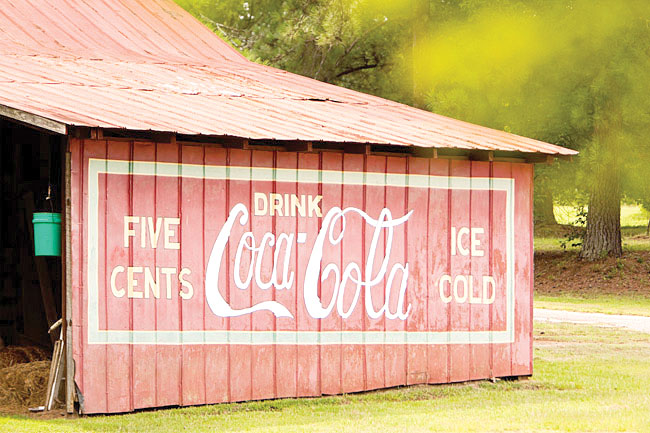
    The Collinses built their community onsite. Much of the material used came from old homes marked for demolition or renovation. What’s truly fascinating is the old general store. Back in olden times, folks needed liniment, castor oil and seeds. You’ll find those as well as memorabilia from life in a small community. Country store paraphernalia from the 1820s into the mid 1950s gives visitors an Americana feeling; and yes, the store has a vintage Coca Cola box.

    Check out the Issaqueena Mill, a three-legged mill with a wooden hopper, once used on large farms and small plantations. Now old plows, telephone conductors, old bottles and relics rest in it. When you’re there, note the old upside down horseshoe above the center post leaking away its good luck.

    The Depression-era barbershop features a reconstructed motorized barber pole, coat rack and several other items used in an old barbershop in Central. The Collinses purchased the barber chair, pedestal lavatory and many other items of interest during their travels.

    The latest addition to Ole Towne is the schoolhouse, which has a bell tower. Pull on the rope and it’s school time again. Sit in an old desk dating back to the early 20th century. See old school books and other memorabilia. Note, too, the wood-burning heater that kept winter’s frigid days at bay.

    Once Collins Ole Towne gets you in a “good old days mood” make the 13-mile drive up to Pickens and visit Hagood Mill. Before refrigerators came along, corn meal had a shelf life of about two weeks. This gristmill near Pickens churned out fresh meal from 1845 until the mid 1960s. You’ll find the mill on Hagood Creek. The water wheel, 20-feet in diameter by 4-feet wide, is South Carolina’s only wooden waterwheel. The wheel and mechanical components were rebuilt in the mid-1970s using as many original parts as possible. Restoration continued in the mid 1980s and mid 1990s. It’s on the National Register of Historic Places.

    Pay attention to the millstones. A revolving upper millstone, the “runner,” and a stationary bottom stone, the “bed,” gave old mills their heart. The stones weigh more than a ton and as they rubbed against each other grooves cut into them created a scissor-like action that grinds grain. To this day a lot of folks believe stone-ground grain tastes better than grain ground by modern roller milling methods.

    A quaint village much like a Hollywood set, a picturesque gristmill, and a drive through beautiful countryside: if those aren’t reasons enough to head to the cooler climes of the mountains, then what is?

    If You Go …

    • Collins Ole Towne

    228 Lawton Road

    Central, S.C.

    www.centralheritage.org

    Call for an appointment to tour the village:

    864-639-2618

    Admission Fee.

     Learn more about Tom Poland, a Southern writer, and his work at www.tompoland.net. Email day-trip ideas to him at tompol@earthlink.net.
  • Barbecue Babylon

    Hite’s Bar-B-Q, the dash between Batesburg and Leesville.

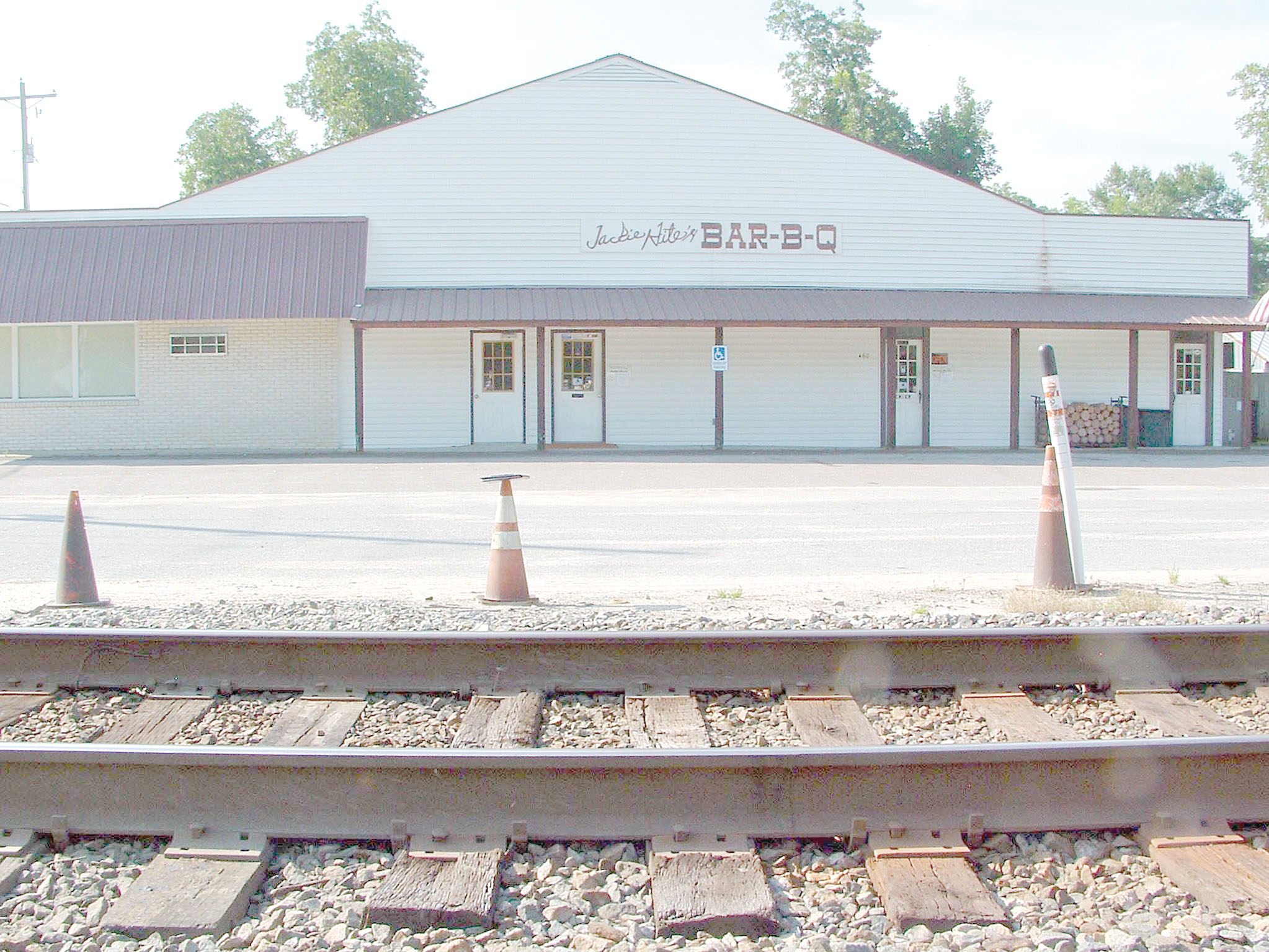
    Pick a day when you will be starving for traditional pit-cooked barbecue and make the 63-mile drive to Jackie Hite’s Barbecue just off Highway 23 in Leesville. You’ll know you’re in the right place when you park by the tracks and inhale the delicious aroma of hogs sizzling over hickory coals. Look for wisps of smoke and look for the patriarch of pork, Jackie Hite, who barbecues hogs the old-fashioned, traditional way. If you park to the side of Hite’s you’ll hear the chop, chop, chop of cleavers, and now and then out front the wailing horn of a Northern Suffolk train barreling by.

    Hite burns 4-foot logs of hickory in a firebox where pitmaster Tim Hyman wears a path to the pits carrying shovels of red coals, which he spreads beneath sizzling half hogs. A picky type once asked Hite how he knew the coals were hot enough. “If them hogs ain’t smoking and ain’t dripping, they ain’t cooking,” replied Hite, who’s been cooking hogs for 42 years.

    Hite’s operation functions like a well-oiled machine. He’s got a veteran crew that knows what it’s doing. “I’ve had the same crew all my life. Some people just like to work,” said Hite. And some folks, make that a lot of folks, just like to eat his barbecue. Inside the buffet you’ll see locals and visitors from afar. “Folks come here from Alabama to fish and they take my barbecue back to Bama. Georgia too,” said Hite.

    Hite takes great pride in the way he cooks pigs — a 25-hour process. “Sloshing mustard sauce on hogs makes it real barbecue,” he said, pulling on the bill of his Gamecock cap. (You won’t catch him without that cap.) Now and then he’ll pull out a 4-foot hickory stick. “Used for two things,” he says. “In school for manners and stirring coals in barbecue pits.” Hite’s a friendly fellow who talks just like he looks and along with good food he dispenses some of life’s lessons. “I could be a cop without a gun. Folks respect me ‘cause I do the right thing.”

    You can boil Hite’s approach down to seven words: hogs, hickory, fire, smoke, sauce and hungry people. As the hogs simmer and mustard sauce rains down on them, the smoke rises to the top of the outbuilding and drifts over the community. Says Hite, “Folks drive through and say ‘man yo place smells good!’ ” Every so often they cover the simmering hogs with giant sheets of cardboard to keep the smoke in. The cardboard refuses to burn. “We don’t throw that kind of heat to it,” says Hite. Outside folks queue up at 10:45, eager to get Hite’s barbecue.

    A food reviewer wrote that it’s worth driving 100 miles to eat at Hite’s. For sure it’s worth driving 63. Make the trip to Hite’s. About $22 will feed two. The buffet opens at 11 o’clock in the morning. Once you get good and full, visit Leesville’s Historic College District and Batesburg’s Commercial Historic District. Walk around a bit. You’ll need to. And know that Jackie Hite, who served as mayor in these parts, put the hyphen between Batesburg and Leesville. “I helped bring these two towns together.”

    Learn more about Tom Poland, a Southern writer, and his work at www.tompoland.net. Email day-trip ideas to him at tompol@earthlink.net.

  • North by Northwest

    Cool off at Issaqueena Falls.

    While the beach grabs a lot of headlines, our Northwest Corner pleases many as a destination, especially when flatter lands bake and sizzle. Not quite 3 hours and 135 miles will take you from 535 feet above sea level to over 1,000 feet and much cooler air, not to mention spectacular views. Strike out for the mountains. Here are six other reasons to drive northwest.

    The Cove Forest

    Nowhere else in the United States will you find as much tree and plant diversity as you will in a Southern mountain cove forest. Green and serene, South Carolina’s bowl-shaped valleys are damp and rich with nutrients. The resultant profusion of plants supports birds, amphibians and mammals. There’s no need to go to the tropics. Drive to the mountains above Walhalla to see green tropical splendor.

    Sunshine in a Jar

    The beehive — among the world’s most efficient factories — converts alpine nectar to honey. Along Highway 11, bees make honey from sourwood blossoms, blackberry vines, trees and flowers. Stop by a roadside stand along the Cherokee Scenic Foothills Highway and get a jar of mountain sunshine.

    Ram Cat Alley, Seneca

    Make the scene Thursday evenings at Ram Cat Alley, a place whose identity began with the cats congregating at the 1908 Fred Hopkins Meat Market. So many cats frequented the alley someone said, “You couldn’t ram another cat into the alley.” Mid-1990’s revitalization took an alleyway of pool halls, bars and meat markets and turned it into a pedestrian-popular place of boutique shops and restaurants. On Thursdays, restaurants and the city set up tables for “Jazz on the Alley.” Dine out in the mountain air and enjoy mountain music that’s a bit sophisticated.

    Majestic Falls

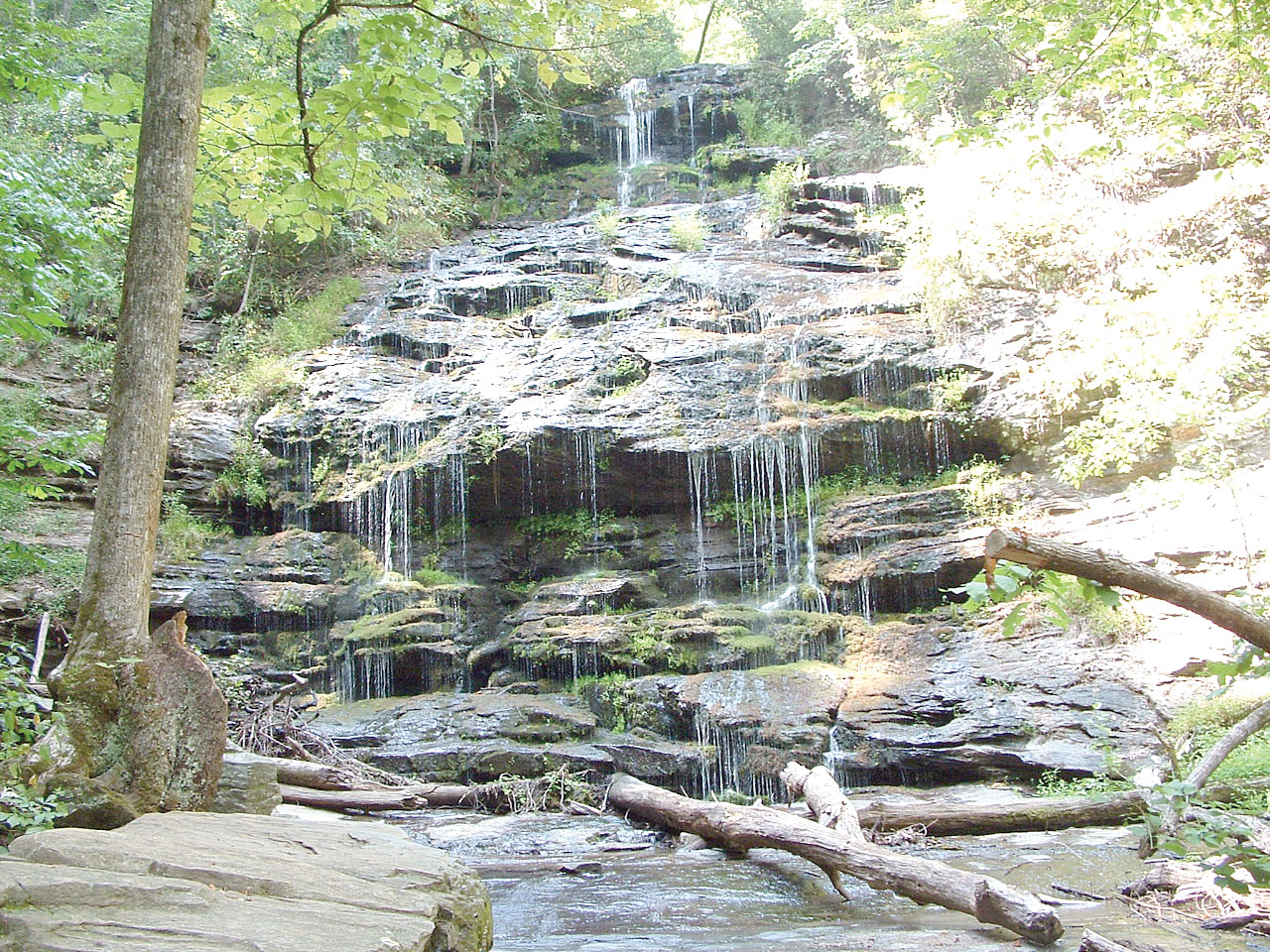
    Make the hike to Cove Falls. It’s a challenging journey but well worth it. You’ll find other falls, too, such as beautiful Issaqueena Falls just below Stumphouse Mountain. Other great falls are to be seen, such as Raven Cliff Falls near Caesars Head and Whitewater Falls where the North Carolina-South Carolina state line pass between the upper and lower falls. Upper Whitewater Falls, near Cashiers, N.C., drops over 411 feet, making it the highest falls east of the Rocky Mountains. Lower Whitewater Falls, located just across the line in South Carolina, drops another 400 feet.

    The Foothills Trail

    For the hardy, hiking is great in the Northwest Corner. Along the Blue Ridge Escarpment trails take hikers back to simpler times when pioneers made their way through mountain forests. Then as now distant views of horizons provided a barometer of how the trails thread through terrain, high enough to be moistened by cloud vapors.

    South Carolina’s Rooftop

    Want to go even higher? Atop Sassafras Mountain — Carolina’s rooftop — you can look over a rippling green land and smoky blue hills. As night draws nigh, wine, yellow, orange and cinnamon hues prevail until shadows reign supreme. (Note: Pinnacle Mountain, the highest mountain within South Carolina, is in Table Rock State Park).

    A trip to the Northwest Corner is sure to take more than a day. Plan an overnight stay. From rustic lodges, to state parks and bed and breakfasts, you’ll find beautiful accommodations. Take a good pair of binoculars, maps and sturdy walking shoes and beat the heat in the green, rolling Northwest Corner.

    If You Go …

    • www.upcountrysc.com

    Learn more about Tom Poland, a Southern writer, and his work at www.tompoland.net. Email day-trip ideas to him at tompol@earthlink.net.

  • Folly Go Lightly

    Beach Bums unite! Folly is a favorite.

    Some say Folly Beach is South Carolina’s best beach and a growing number of people agree. Just 8 miles south of the Holy City, the “Edge of America,” as Folly Beach bills itself, is indeed a special place. I grew up in eastern Georgia far from the coast and one of the great places in my Hall of Fame is Folly Beach. I spent summer vacations there as a boy and “Folly” (one-word status like Elvis!) has reigned special ever since. Nothing’s worse than growing up landlocked once you’ve had a taste of the sea.

    Well you can get a taste of the sea and more by making a 153-mile drive to Folly Beach. Yes, not quite three hours of travel will take you to a 7-mile-long barrier reef that offers much to people of varied interests: super waves for surfing, an old lighthouse, a great restaurant for the health conscious and a place popular with pet lovers. I know because a highly reliable but secret source emailed me: “One place I’ve newly discovered and just love because it is extremely dog friendly is Folly Beach. It totally embraces dogs (in the hotel, on the beach, etc.). There are dogs everywhere and wonderfully behaved.”

    There’s even a Lost Dog Café in this place referred to as one of the last real American beach towns. That and more. My source continued, “There’s this little beach shop area close to the hotel that reminds me of Five Points in Columbia. Plus I am a vegetarian and there is a wonderful vegetarian place there, Black Magic, with about 50 kinds of fresh fruit smoothie combinations. They mix the fruit as you wait.”

    My journalist from the field points out that you’ll find “many good eateries in the little five points place.” Those who prefer more formal eateries will find those, too; plus Charleston is close. My source loves Folly because it “has everything a big beach resort has” so don’t be surprised if you don’t make it to Charleston.

    Now about that name, “Folly.” We all know about Seward’s Folly, that foolish purchase that gave us Alaska and its wonderful resources. Like Alaska, neither is Folly Beach bedeviled by a “foolish” perception. When early settlers in their creaking ships first saw the pristine, tree-lined coast here, it was their first sight of trees in a long, long time. Rejoicing, they christened their newfound Eden “Folly.” Why? Because “Folly” is an old English word meaning cluster of trees or thicket. So there.

    No, there’s nothing foolish about Folly Beach. In fact it’s just the opposite. It is the new cool place to go. You can relax and take in nature. You can spend a dog day afternoon on the beach, surf, catch a glimpse of loggerhead turtles, bicycle, kayak or drop a line from the fishing pier. Just be sure you go earlier than later. It’s good to beat the crowd when you’re headed to the Edge of America.


    If You Go …

    • Official Website of Folly Beach:

    www.southcarolinaparks.com

    Learn more about Tom Poland, a Southern writer, and his work at www.tompoland.net. Email day-trip ideas to him at tompol@earthlink.net.

  • The Freshwater Coast

    South Carolina has two coasts. The famous one along the Atlantic and a surprising fresh water coast along the Georgia line. You’ll find lots of water to the west and some wonderful state parks. To get there you’ll negotiate 102 miles of backroads and state highways with a pinch of I-26 and US 378 thrown in. The drive will take about two hours and you’ll find that it takes you through some beautiful countryside. Let the journey be part of the destination.

    We seldom think of our fresh water coast. It’s there though. The Chattooga, Tugaloo, Lake Hartwell and Clark Hill Lake create an unbroken water wonderland from Modoc to Mountain Rest. The waters run the gamut from whitewater to pools, tributaries, rivulets and impoundments. One major impoundment, Clark Hill, is the third-largest manmade impoundment east of the Mississippi River. It and the surrounding area are today’s destination.

    Fishing, swimming and just floating on Clark Hill Lake entertain many a family come summer. Known to South Carolinians as Lake Thurmond, the lake’s traditional name is Clark Hill. Along its Palmetto State shores are several state parks: Calhoun Falls State Park, Hickory Knob, Baker Creek and Hamilton Branch Park. Just across the Georgia line is Elijah Clark State Park.

    You’ll find plenty to do. The area offers ample opportunity to view wildlife. Osprey and bald eagles wheel above, and don’t be surprised if you see seagulls too. Apparently they like the fresh water coast as well.

    Hickory Knob State Park provides the opportunity to golf along lakeshores. And then there’s the nearby Little River Blueway, which bills itself as “The Wild Side of South Carolina.” Over in McCormick County, Kirk Smith of Outdoor Initiative knows that people like the lake and Blueway for reasons not always obvious. Take mountain biking. The Wall Street Journal highlighted the Little River Blueway Adventure Area’s Forks Area Trail System as one of only two flow trails east of the Mississippi and the only trail in the Southeast. The Blueway offers bikers 156 miles of single track. And if you’d rather, you can tour the Blueway’s 50-mile scenic drive at daybreak.

    The Fresh Water Coast is a great place to visit. It has hundreds of beautiful campsites, skeet shooting and numerous historical sites. The Blueway even has a scenic 50-mile drive that takes you through the Heritage Corridor and Scenic Savannah River Highways, country roads and unpaved forest service roads. You’ll cross a few single-lane steel covered bridges along the way, throwbacks to the 1930s. The Scenic Drive will take you by several historical sites, including the Long Cane Massacre Site, Badwell Cemetery, Huguenot Worship Site and the Willington History Center, to name a few.

    History, beauty, wildlife, outdoor recreation and more are yours if you head west to South Carolina’s Fresh Water Coast. Escape the other coast’s clamoring crowds and congestion and enjoy serenity in a place where you set the pace.

    If You Go …

    • South Carolina Parks, Recreation, & Tourism

    State Parks 803-734-0156

    www.southcarolinaparks.com

    • Elijah Clark State Park

    Lincolnton, Georgia 706-359-3458

    www.gastateparks.org/ElijahClark

    Learn more about Tom Poland, a Southern writer, and his work at www.tompoland.net. Email day-trip ideas to him at tompol@earthlink.net.

  • Holy City Getaway

    Charleston just has a way of making you feel special. If you’re like me the moment you turn onto Meeting Street you feel so much better. The everyday world you left behind is just that. Behind. A 145-mile drive. That’s all it takes to get the feeling you’re in Europe.

    Walking the Holy City’s streets provides a feast for the senses … beautiful buildings, beautiful people, the clop-clop-clop of horse-drawn carriages, tantalizing aromas from restaurants and lilting accents from the world over please the ear. Conde Nast’s readers declared Charleston the world’s number one tourist destination in 2012. History, restaurants, churches, old cemeteries and more make the Holy City a favored place. Five million tourists visit Charleston each year. They come to see one thing – and here’s the main point: Charleston is the attraction.

    Is it ever. The city serves up delights at every turn. Excuse my long list, but what a list! Walled gardens, sweetgrass baskets, historic venues, the old market, Rainbow Row, cascading fountains, cobblestone streets, sumptuous restaurants, magnificent architecture, the Battery, gallant boutiques, old cannon, tolling bells, gas lamps, and everywhere you look you see historic societies, preservation societies and related foundations. The past is closely guarded here. And from where does the Holy City get its endearing sobriquet? Majestic steeples. You can’t walk 15 feet without encountering historic markers and plaques. The National Register of Historic Places works overtime here. The list can go on and on but let’s dot the “I” with that pleasure known as she-crab soup.

    Many Southern cities are renowned for their wrought iron gates. Savannah comes to mind, but Charleston towers over others when it comes to wrought iron artistry. The incomparable artistry of the late Philip Simmons, a blacksmith, graces the Holy City from one end to the other.

    Yes, the city is a pure delight. The glimmer of gas lamps brings a touch of ambience from the 1880s to homes and streets. Something as simple as watermelon-red crepe myrtle blossoms falling onto cobblestone streets says, “You’re in Charleston.” And what an irony that walking among its hauntingly beautiful old cemeteries makes you feel more alive than ever.

    Summer makes for a great time to see this charming shrine of the South. Drive south and walk about. Sure, Rainbow Row gets a lot of glory but other streets have their charm. Walk down Queen Street. Looking a bit like Rainbow Row on East Bay Street it’s in the French Quarter and one of Charleston’s more photographed venues. Charleston has it all. Add the meticulously preserved architecture of renowned homes and a certain fort in the harbor where a war began and the Holy City steeps in history. Take a good camera, a keen appetite and comfortable shoes. Walk the Holy City and leave all things ordinary behind.

    If You Go …

    Make your way to I-26 East and follow it until the road ends on Meeting Street and do it soon.

    Learn more about Tom Poland, a Southern writer, and his work at www.tompoland.net. Email day-trip ideas to him at tompol@earthlink.net.