Tag: A Day Away

  • Connecting to the Past

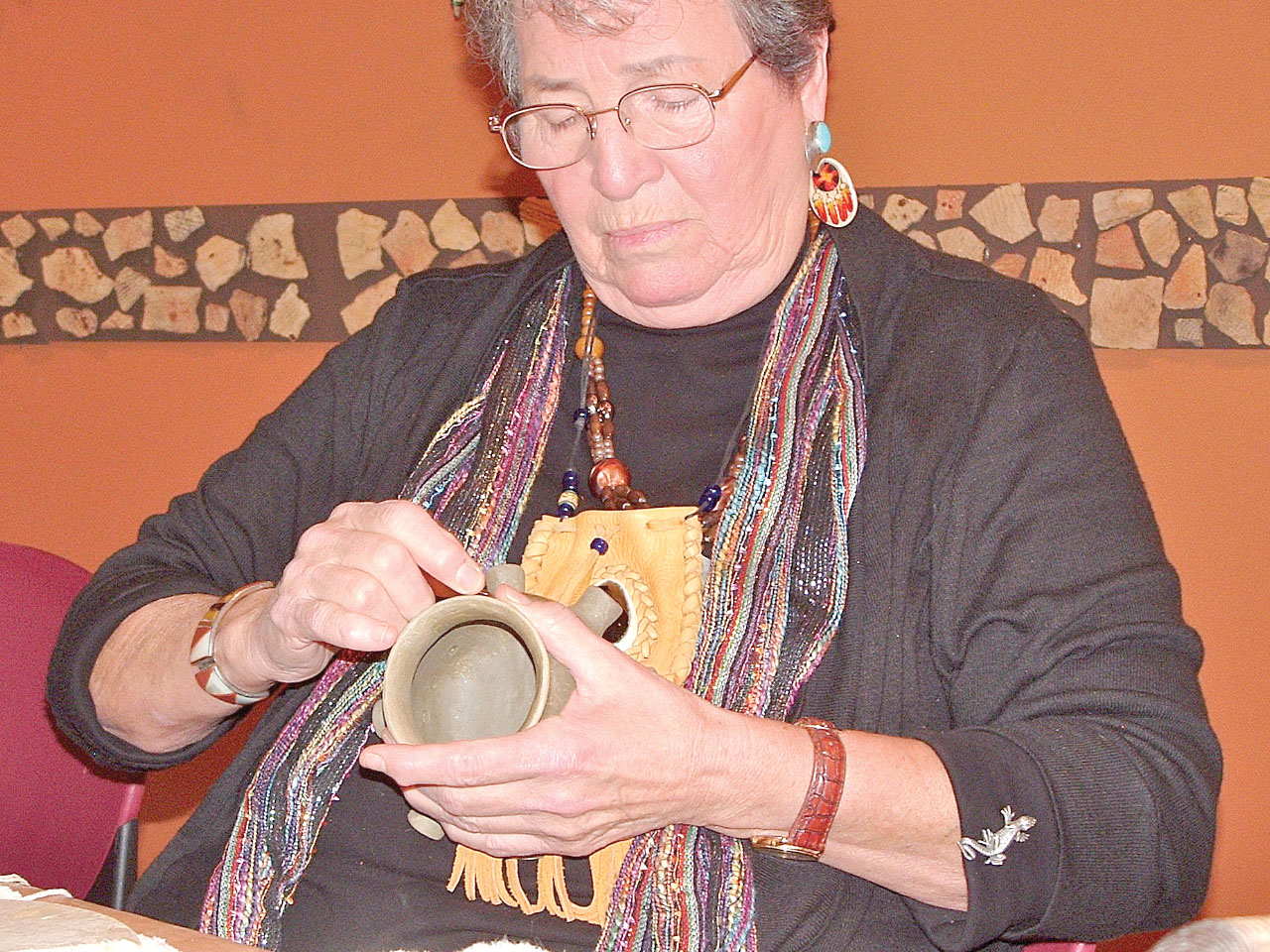
    Caroleen Sanders, artist in residence at USC-Lancaster’s Native American Studies Center, shows you how it’s done.

    This daytrip’s a breeze. Drive just 30 minutes and you can see beautiful examples of South Carolina’s oldest active art form – Catawba pottery. Catawba women still make pottery using traditional methods, thereby maintaining a link with their past. Catawba pottery is highly prized. Down Charleston way, some cooks feel that okra soup and other dishes can’t be prepared properly without a Catawba pot’s slow, steady cooking.

    At 119 South Main St. in Lancaster you’ll find the Native American Studies Center, part of the University of South Carolina Lancaster. There you’ll see beautiful pottery. Established in August 2012, this comprehensive center for the study of South Carolina’s Native American peoples offers you the chance to view the single largest collection of Catawba Indian pottery in existence, learn about Native Americans in the Southeast, participate in educational classes and programs, and observe archaeology, language and folklore and oral history labs.

    This area is rich in history. Lancaster and its environs have long been home to the Catawba Indian Nation. They have a reservation here. And they have something else, something special, something the Catawba have kept secret for hundreds of years: sacred clay holes.

    Caroleen Sanders is the center’s artist in residence. A talented potter, her mission is to restore purity to how the Catawba make pottery. (“Catawba,” you probably know, means “People of the River,” and that river of course is the Catawba.) Finding a good seam of clay, says Caroleen, provides a rush like finding a vein of gold. “Pure clay is blue and it won’t dissolve,” she adds, holding a lump of clay that’s soft and satiny smooth.

    When potters go to dig clay, they get into holes where the best clay is six feet down. Standing in a hole they all but disappear. Once they have a goodly amount of clay they cover the hole with brush and straw so interlopers can’t easily find it. Several challenges exist as the clay holes or pits go. Snakes, for one. A bigger threat, however, is so cleverly hiding a hole that it’s location becomes lost. “Forgetting it’s there is a threat,” says Caroleen.

    Getting the clay is when the real work begins. “The clay has to be cleaned,” says Caroleen. And it’s not cleaned once but several times. “I pour it through three screens to strain it. In time it clings to my hands like honey.” Caroleen and other skilled potters turn that honey into enduring art.

    Drive to Lancaster and see not just hundreds of years of Native American history but the Catawba nation’s rare and priceless connection with the land. Chief of the Catawba Nation, Chief William Harris, addressing the House Interior Appropriations Subcommittee, said: “The tradition of pottery making among the Catawba, unchanged since before recorded history, links the lives of modern Catawba to our ancestors and symbolizes our connection to the earth and to the land and river we love. Like our pottery, the Catawba people have been created from the earth, and have been shaped and fired over time and so have survived many hardships to provide a living testament to our ancestors and to this place we call home.”

     If You Go …

    • Native American Studies Center
    119 South Main St.
    Lancaster, South Carolina
    • 803-313-7172

    • Mondays by appointment only

    • Tuesday, Wednesday, Friday & • • Saturday 10 a.m. – 5 p.m.

    • Thursday, 10 a.m. – 7 p.m.

    • Sunday, 1 – 5 p.m.

    • www.usclancaster.sc.edu/nas/index.html

    Learn more about Tom Poland, a Southern writer, and his work at www.tompoland.net. Email day-trip ideas to him at tompol@earthlink.net.
  • Lights Before Christmas

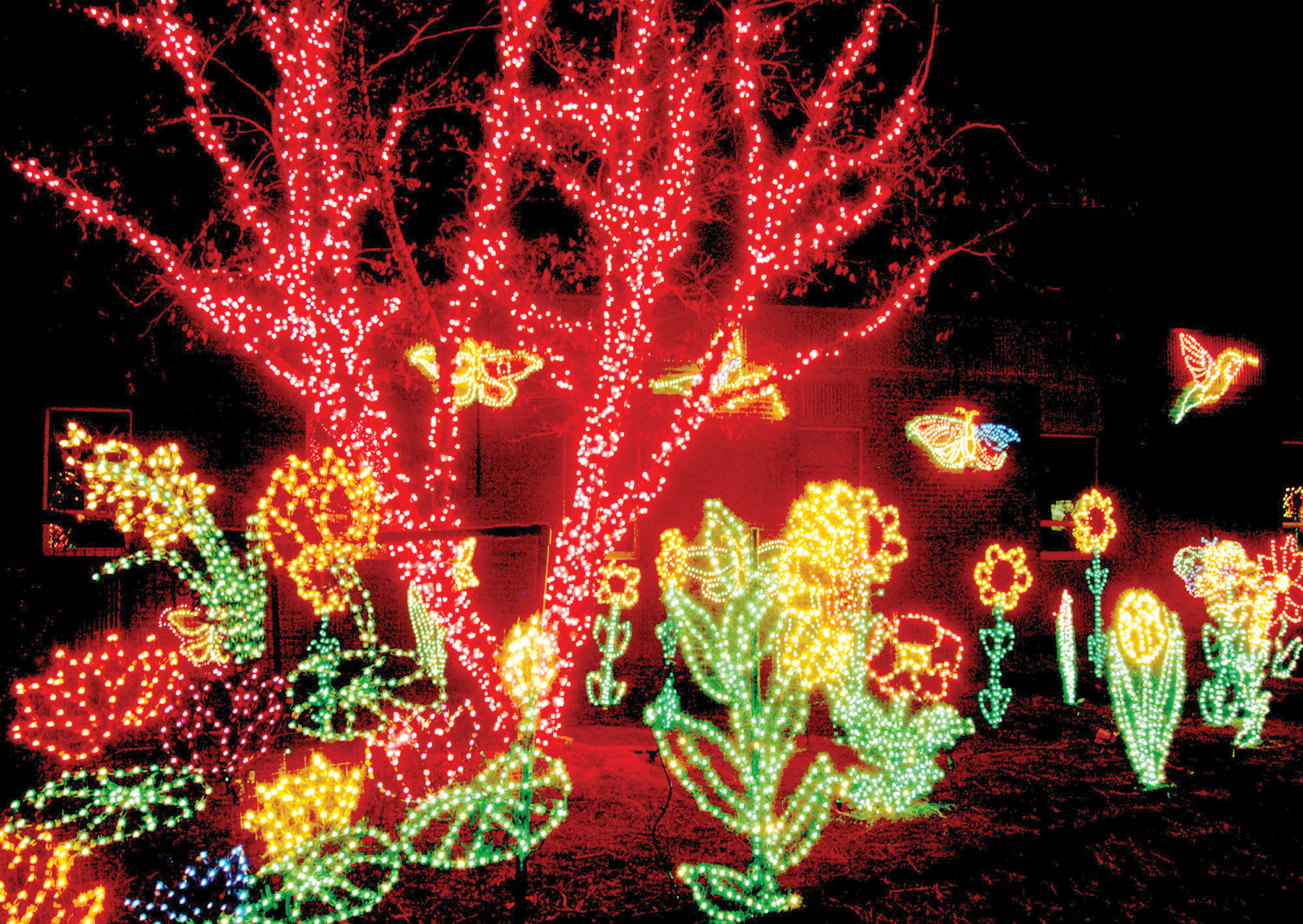
    Riverbanks Zoo: They’ll leave the light on for you.

    Head south 36 miles to Columbia and look for dazzling lights, snow clouds and illuminated animals, trees and more. Visit Riverbanks Zoo and Garden up until Dec. 30 and witness Columbia’s longest-running holiday tradition, “The Lights Before Christmas.” It’s a holiday spectacle you don’t want to miss. Plan a late start for this daytrip for the zoo’s one million twinkling lights come on between 5 and 9 p.m.

    This year marks the 26th annual Lights Before Christmas at Riverbanks Zoo and Garden. Each evening the zoo delights children and adults when twinkling lights and countless animated images come alive. The images represent some of Riverbanks’ more popular animals. More than 350 sparkling silhouettes of giraffes and other animals burst with color. Palmetto trees dazzle the eye and everywhere you look lights shower zoo grounds with color. It’s a nighttime spectacle not to be missed. In fact even the most Scrooge-like adults will enjoy the effects of a million twinkling lights, music and electric wildlife.

    There’s plenty to do. Roast marshmallows at the jingle bell bonfire. Pay a visit to Santa and take in the sounds of the Music in Motion lights spectacular. Want to see snow at Christmas? At Riverbanks Zoo and Garden it snows every night! And if the weather turns seasonal and a chill bites the air, warm up with hot chocolate, marshmallows and seasonal foods.

    As for the zoo’s residents, the various animals, you probably won’t see many. They’ll be asleep; but don’t let that discourage from going this holiday season. The light show will mesmerize you and again your best chance to see a “white Christmas” is at the zoo. Many people make the Lights Before Christmas a seasonal tradition. For them going to the zoo ranks right up there with mistletoe, caroling, eggnog and decking the halls!

    Note: The zoo will be closed Dec. 24 and 25. All Riverbanks members are eligible to receive one free visit when they show their membership card and picture ID at the gate; guest passes are not accepted. If you want to avoid waiting in a long line, go to the zoo’s website and pre-order tickets.

    The show has a limited run, so make plans now to put some nighttime joy in your world. Be smart and pre-order tickets so you best spend time enjoying the lights and not be stuck in line.

    If You Go …

    • 500 Wildlife Parkway, just off I-126 at Greystone Blvd., Columbia, S.C.

    • Monday – Saturday,

    10 a.m. to 4 p.m.

    • $10 Adults, $8 Children 3-12, $3 Students, Children under 3 free

    • 803-779-8717

    • www.riverbanks.org/events/lights-before-christmas.shtml

    Learn more about Tom Poland, a Southern writer, and his work at www.tompoland.net. Email day-trip ideas to him at tompol@earthlink.net.

  • Take a Winter Hike

    Cold weather, early dark and stressful holidays are the perfect time for a winter getaway where your tension will melt away. Just 32 miles south lies a place in the city that’s nothing like the city. In the heart of the South Carolina Midlands sprawls a state forest with a deep and rich history. Bordered on one side by the Broad River, Harbison State Forest is one of the largest public greenspaces inside a city’s limits in the eastern United States. Hard to believe Columbia is just 8 miles away.

    Here’s a place where you can beat the winter blues. Hike or bike its 31 miles of roads and trails and enjoy some winter daylight and get something more: history itself, for here’s where Catawba and Cherokee tribes found sustenance in woods and waters of the Broad River. When European settlers arrived, an oft-used Broad River ford in the forest came to be known as Deutsche volk. Today we know the area as Dutch Fork. Now, as then, you can walk these woods as Native Americans and European settlers did. See landscapes free of leaves. Get close to the Broad River and see the Broad River rapids where a rocky ridge extends across the river, visible evidence of why we call this region the Falls Line.

    The Harbison Environmental Education Forest proper has 18 miles of trails where you can cycle, hike, jog or walk. Be alert to deer, bird species and the common grey squirrel. You’ll find ample trails sure to meet your level of adventure. Trail difficulties range from easy to moderate to moderately difficult and difficult.

    The Harbison Environmental Education Center, a 5,000-square-foot log building, serves as a classroom that teaches visitors about the forest. Encircling the Education Center, the Learning Trail hosts four outdoor classrooms where you can learn about the complexity of forest ecosystems (The forest consists of approximately 67 species of trees).

    You’ll find plenty of reasons to take a break. A short walk down the Discovery Trail you’ll find a pine Gazebo in a meadow. Here and there are smaller picnic areas. Strike out north about 1/3 mile up the trail across from the Gazebo Field and you’ll come to the Eagle Shelter, a great setting where traffic lights, honking horns and the crush of city life seem far, far away.

    A winter hike offers a time when you can see farther, be free of pesky insects and not work up a sweat. Keep in mind some basic rules. Whatever you carry in, pack out (You’ll find drinking water and restrooms at the picnic area). Bicycles are allowed only on designated trails. Wear approved helmets when cycling. You can canoe here too, but save that for warmer weather.

    Now’s a good time to beat the winter blues and holiday stress with a short daytrip to a beautiful, bountiful green space. Head to Harbison State Forest and leave your winter worries behind.

    If You Go …

     • Parking passes required of all visitors. Get them at fee boxes, online, and the Education Center.

    • Harbison State Forest
    5500 Broad River Road
    Columbia, S.C. 29221
    • 803-896-8890

    • www.state.sc.us/forest/refharb.htm

    Learn more about Tom Poland, a Southern writer, and his work at www.tompoland.net. Email day-trip ideas to him at tompol@earthlink.net.
  • The Bay Primeval

    Cypress trees thrive at Woods Bay.

    Drive 87 miles southwest to the little town of Olanta and you’ll see a landform some folks believe meteors created — Woods Bay. It’s not the only bay, though. Thousands of Carolina Bays stipple the landscape from New Jersey to Florida (Aerial laser technology confirms a million.) The most beautiful fleck North Carolina, South Carolina and Georgia. A bit like divots, most bays occur in the Carolinas, hence “Carolina” Bays. We’re lucky to have a state park that preserves Woods Bay, a great example of a large bay yet to be destroyed by man. Yes, a drive of about 110 minutes will take you to this fascinating place, rich with wildlife and botanical wonders.

    We call places like Woods Bay “bays” because bay trees — magnolias and laurels — dominate many of these pockets. At ground level they look like, well, like swamps. Chances are you’ve driven by many a Carolina bay and didn’t realize it. From the air, however, they are elliptical depressions oriented from northwest to southeast and parallel to each other.

    Recently I went back to Woods Bay. It’s so remote and isolated you’ll hear no evidence of man save a jet now and then from Shaw Air Force Base. If you stand still and listen you’ll hear what sounds like rain. Organic rain! Acorns, leaves and twigs fall continually.

    I was glad to see Woods Bay hasn’t changed much; a good thing. Years ago I helped make a film that explored the bays’ origins and extolled them as wildlife oases. I often shot footage at Woods Bay. Serene and isolated. Those words still describe Woods Bay. No, three words — all with equal weight — serene, isolated and primeval. Once upon a time I captured ancient creatures on 16-millimeter film. An anhinga drying its wings. A gator gliding past water lilies. A stubby cottonmouth braiding through cypress knees. Turtles sunbathing on logs. Primeval denizens. I felt like I was in 1800s Botswana.

    There was a boardwalk, too, from which I filmed birds. (Woods Bay always delivered a profusion of wildlife … osprey, carnivorous plants, wood ducks and otter.) Today a new and far superior boardwalk will take you past sunning snakes and turtles and all types of luxuriant plant life. It’s a great place to hone your wildlife photography skills.

    Coming back may years later, my film days behind me, I still find Woods Bay to be as delightful as ever. As November’s autumn light lit up orange cypress needles their images danced across black waters. I too reflected. Woods Bay and its fellow bays are quietly doing what they’ve always done: controlling floods, purifying water, stockpiling carbon and giving man a place to sort out things. Add clean air, sediment retention and nutrient recycling to the benefits. And add two things that banish humdrum: beauty and mystery, especially mystery.

    The origin of Woods Bay and other bays most likely is long-term wind and wave action that gradually shaped the bays and piled sand at their southeastern ends. Don’t let that rather bland theory keep you from seeing a miraculous place. Pack a picnic. You’ll find a picnic shelter there and don’t miss the adjacent millpond. It’s rich with wildlife and photo opps too! And when you drive in you can’t help but notice the snowy-white sand rim that is a beautiful hallmark of Carolina bays.

    If You Go …

    • 11020 Woods Bay Road

    Olanta, S.C. 29114

    • 843-659-4445

    • Free Admission, 9 a.m. to 6 p.m.

    • Open daily from 8 a.m. to sunset

    •www.southcarolinaparks.com/woodsbay/introduction.aspx

    Learn more about Tom Poland, a Southern writer, and his work at www.tompoland.net. Email day-trip ideas to him at tompol@earthlink.net.
  • Where the War Turned

    Reenactors take aim at the British army at Cowpens.

    ’Tis a small place, this town called Cowpens, but it looms large in our country’s fight for independence. Just nine miles out of Spartanburg, Cowpens and its rich history is about 104 miles away. The unusual name comes from the fact that this area was an overnight stop for men driving cattle through the area. It’s a place, too, that one British military leader wished he had never visited.

    A daytrip there will take you to a pasture-like setting key to the winning of the Revolutionary War. If a bit of a history buff lives in you, you’ll be right at home at the Cowpens National Battlefield near Chesnee. It was here that a classic-but-rare double envelopment military maneuver took place, one studied to this day by military strategists and historians. Officers still draw up the battle on paper and pour over the decisions and movements of both armies and their leaders. They seek to understand why the “double envelopment” maneuver worked, as well as how to defend against it.

    The battle took place Jan. 17, 1781 when Brigadier Gen. Daniel Morgan of the Continental Army took on Lt. Col. Banastre Tarleton’s British forces. Morgan’s decisive victory at Cowpens became a turning point in the Revolutionary War. Gen. Morgan fought in the French and Indian War 20 years earlier and he was a seasoned and creative leader. He had a grasp of war and knew how his men would react in battle. And he had a pretty good idea what Tarleton would do. At 26, “Bloody Ban” Tarleton was to be feared. He gave little quarter and was known for fighting until his last man fell.

    Though known for his boldness on the battlefield, Tarleton turned tail and fled when Morgan outflanked, surrounded and turned the tables on him. The Redcoats weren’t coming. They were running for their lives! Morgan’s “double envelopment” strategy of dividing his troops and attacking the British army’s flanks delivered victory in less than an hour. This battle, an important link in a chain of events, led to the defeat of the British and independence for the colonies.

    Head up to Cowpens National Battlefield and envision the scene where Morgan and Tarleton faced off. You can drive the 3.8-mile auto loop around the battlefield’s perimeter and get a feeling as to how the British were surrounded.

    Featured at the battlefield is a walking trail and marked road tour, a picnic ground and a visitor center with exhibits, memorabilia and a multi-image presentation. You’ll see a reproduction of a 3-pounder cannon, other weapons of the Revolutionary War period and exhibits.

    At 845 acres it’s a big place. Plan a good day here. Walk the interpretive trail. Take a picnic lunch or a cooler loaded with steaks, hot dogs, what have you. The park has picnic tables, grills and restrooms. Be sure to visit the circa 1828 Robert Scruggs house while at the park. History was made here and it’s waiting for you.

    If You Go …

    • 4001 Chesnee Highway

    Gaffney, S.C. 29341

    • 864-461-2828

    • 9 a.m. to 5 p.m. all year (Closed Thanksgiving)

    • www.nps.gov/cowp/index.htm

    Learn more about Tom Poland, a Southern writer, and his work at www.tompoland.net. Email day-trip ideas to him at tompol@earthlink.net.
  • Blackville’s Healing Springs

    Yes, you can drink the water. That’s really the whole point, isn’t it?

    Drive south 80 miles and you’ll come to what well may be the only property deeded to God. You’ll find this unique place near Blackville. It’s well-known and popular Healing Springs. People have long made pilgrimages to this Barnwell County site to fill jugs, bottles and whatever works with water. It’s not for the taste, though the water tastes fine. No, they come to take the reputed healing powers back home.

    Healing Springs has long been considered special. We can go back to pre-European times when Indians considered the waters sacred. They bathed in the springs for restorative power when ailing or injured. The springs’ fame skyrocketed during the American Revolution. An historical marker chronicles the legend. “By tradition, Healing Springs got its name during the Revolutionary War. In 1781 after a bloody battle at nearby Windy Hill Creek, four wounded Tories sent inland from Charleston by General Banastre (the Butcher) Tarleton were left in the care of two comrades who had orders to bury them when they died. Luckily, Native Americans found them and took them to their secret, sacred healing springs. Six months later the Charleston garrison was astonished by the reappearance of the six men. All were strong and healthy.”

    Springs have long held a prominent role when it comes to a hot topic these days, our health. When modern medicine fails many people turn to springs hoping to heal various ailments. Back a ways I knew a woman who would regularly make a 120-mile roundtrip to Blackville. Laden with plastic milk jugs, she’d come home with the therapeutic spring water and swore by it.

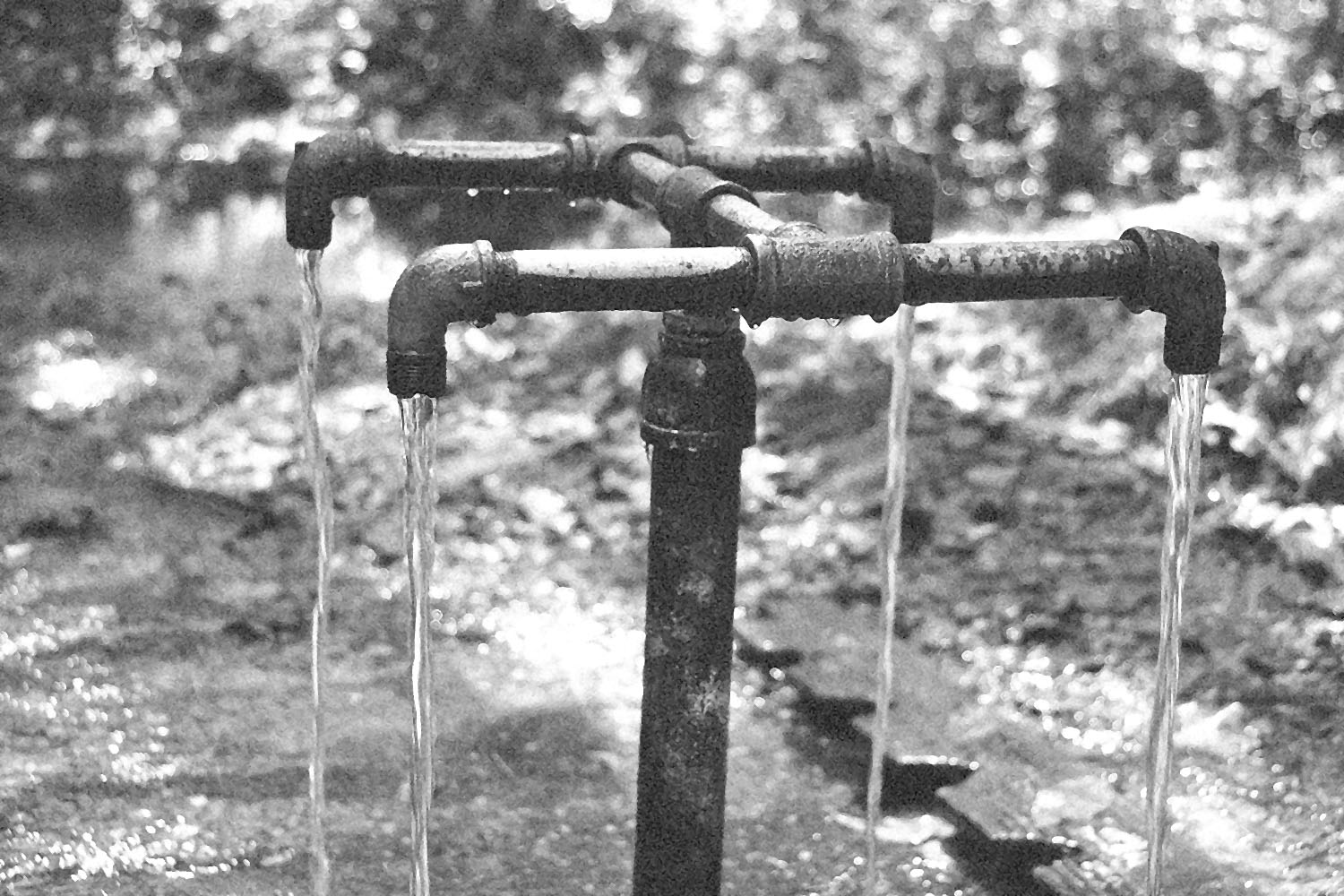
    The water surges out of the ground in three places where four-spigoted fixtures make it convenient to collect. I stopped by the springs recently and three people were filling milk jugs and soft drink bottles with artesian water that surged up and out pipes. One lady told me she was from Pennsylvania. I have no doubt the water she collected was headed for the Keystone State. Folks come from all over. Some describe the springs as “a hidden gem in the middle of nowhere.” This hidden gem has ample parking and a picnic area. A sign urges people to revere God by keeping his property clean.

    Blackville’s Healing Springs, known as God’s Acre Healing Springs, is indeed famous and it’s true that no one owns it. Lute Boylston deeded the springs to God in 1944. The deed states that the owner of the land surrounding the springs is “God Almighty.” (I’d say He’s always been the owner, wouldn’t you?) Gallons gush forth every minute. Healing waters are just 80 miles away. Get some jugs and hit the road. Once you’re loaded up with water, drive into Blackville and enjoy Amish-Mennonite cooking at Miller’s Bread-Basket in Blackville at 483 Main St.

     If You Go …

     • Springs Court, 3 miles north of Blackville on Hwy 3/Solomon Blatt Ave. Turn onto Healing Springs Road, then make a quick right at Healing Springs Baptist Church. The springs are behind the church.

    • Open daily, dawn to dusk. Free.

    • Read more here: www.roadsideamerica.com/story/12456

    Learn more about Tom Poland, a Southern writer, and his work at www.tompoland.net. Email day-trip ideas to him at tompol@earthlink.net.
  • The Tunnel to Nowhere

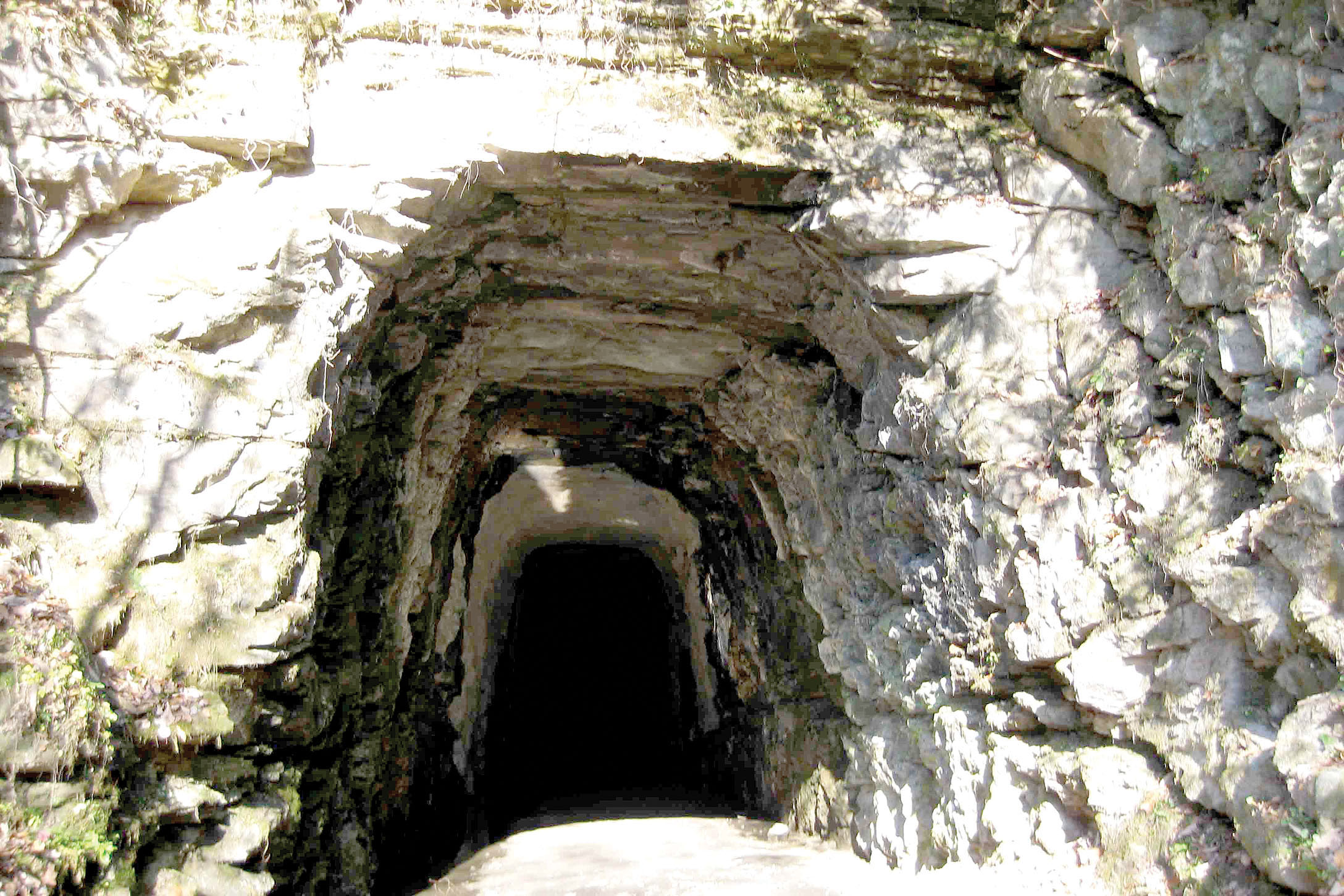
    The mouth of the Stumphouse Mountain tunnel – enter if you dare!

    A drive to Walhalla runs about 143 miles and not quite three hours. Follow S.C. Highway 28 out of Walhalla into the Appalachian Mountains and you’ll discover a tunnel where men performed backbreaking labor pursuing a railroad dream. You’ll also see a beautiful waterfall.

    I made the drive north out of Walhalla early one fall day. I visited Issaqueena Falls and its three stair-stepping cascades in the early morning. The air was cool and crisp. Approaching the falls I saw water flowing over an edge — a bit of a disappointment, but then I walked down the trail to its right and there a treat greeted me. Falling dramatically, early light glittering on a filigree of aquamarine water, I beheld Issaqueena Falls.

    A short walk uphill took me to Stumphouse Mountain, where a 1,600-foot tunnel fell short of creating a railway passage from Charleston to Cincinnati. Check out Stumphouse Tunnel, the Upcountry’s black hole. Enter its hand-chipped, reverberating, dripping shaft that’s 1,617-feet long. It’s so dark in there man can’t even pipe in daylight. No bats though . . . or are there? Enter if you dare.

    Irishmen chipped and drilled through though solid granite, hoping to link Charleston to the Midwest. Hard to imagine what difficulties they encountered. Stumphouse Mountain tunnel reminds us of their failed 1850’s attempt to link the port of Charleston to the cities of the Midwest by rail. After six years, the Civil War and a lack of money brought the backbreaking work to a halt. The tunnel had been excavated to a length of 1,617 feet of the planned 5,863 total feet. Some 100 years later, Clemson University used the tunnel to age blue cheese but relocated the operation to air-conditioned cheese ripening rooms where they were able to duplicate the conditions indoors, chiefly the 85 percent humidity and constant 56 degrees Fahrenheit. The tunnel measures 17-feet wide by 25-feet high. About midway in a 16 x 20-foot airshaft shoots 60 feet up to the surface. As a result, a steady breeze flows out of the tunnel. It also leads to condensation and the tunnel is generally wet.

    As for Issaqueena Falls and its beautiful 200-feet cascade, legend holds that the Indian maiden, Issaqueena, rode to a nearby fort to warn of a pending Indian attack and then escaped pursuing Indians by pretending to leap over the falls, while actually hiding beneath them.

    The City of Walhalla operates a park at Stumphouse Mountain Tunnel and Issaqueena Falls, which has picnic facilities and trails. It’s open daily from 10 a.m. to 5 p.m. except Christmas Day and inclement weather. Admission is free but there is a fee to reserve the large picnic shelter. The park does not have camping facilities or drinking water. Outhouse restrooms and picnic sites exist.

    Camping is available at nearby Oconee State Park and other beautiful falls such as Whitewater Falls are nearby. A hiking trail is also nearby. Make the trip and see the black tunnel and glittering waterfall, studies in contrast that make the park so compelling.


    If You Go …

     • Stumphouse Mountain and Issaqueena Falls

    www.oconeecountry.com/stumphouse.html

    • 864-638-4343

    Learn more about Tom Poland, a Southern writer, and his work at www.tompoland.net. Email day-trip ideas to him at tompol@earthlink.net.
  • That Old Time Religion

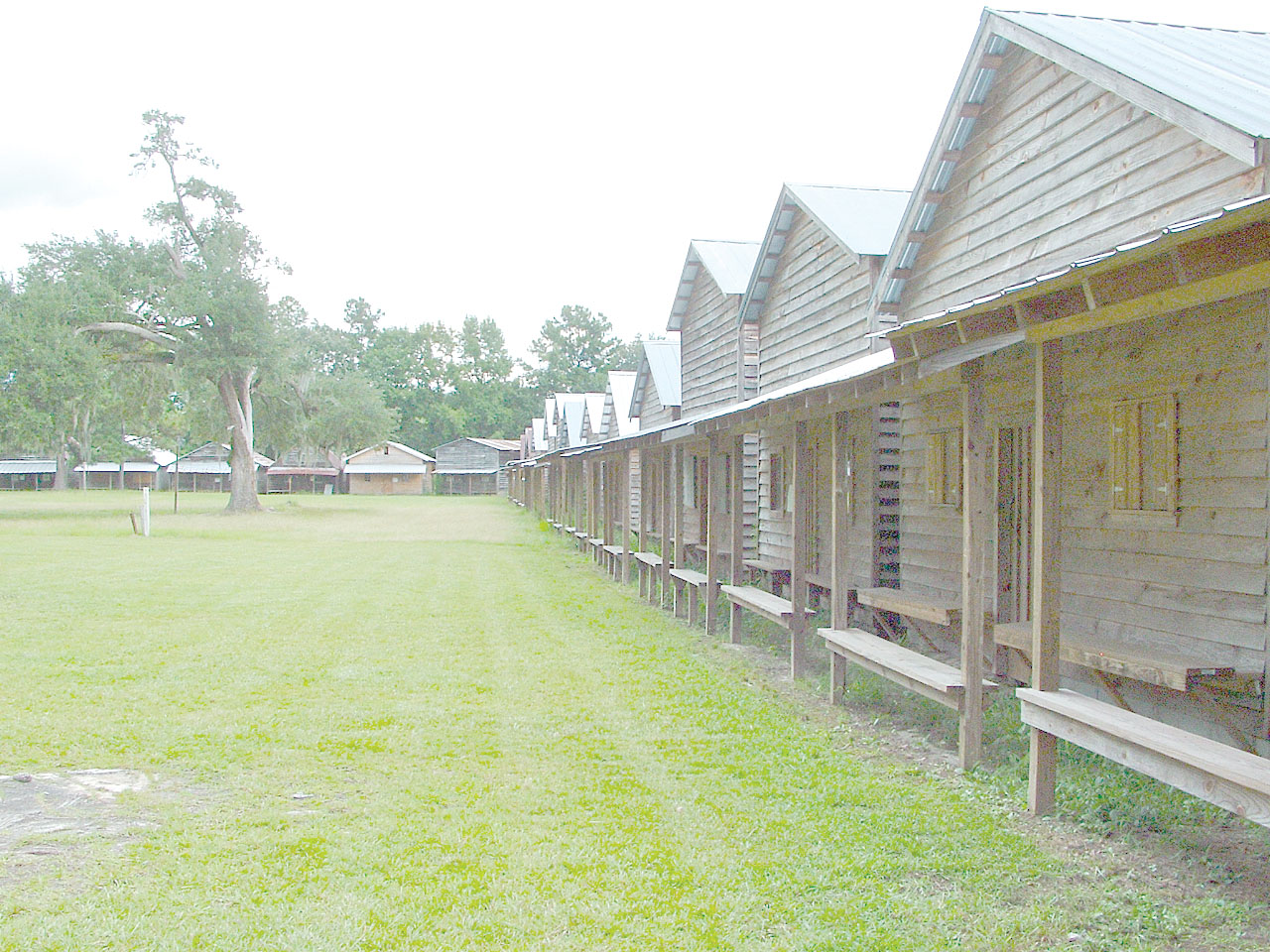
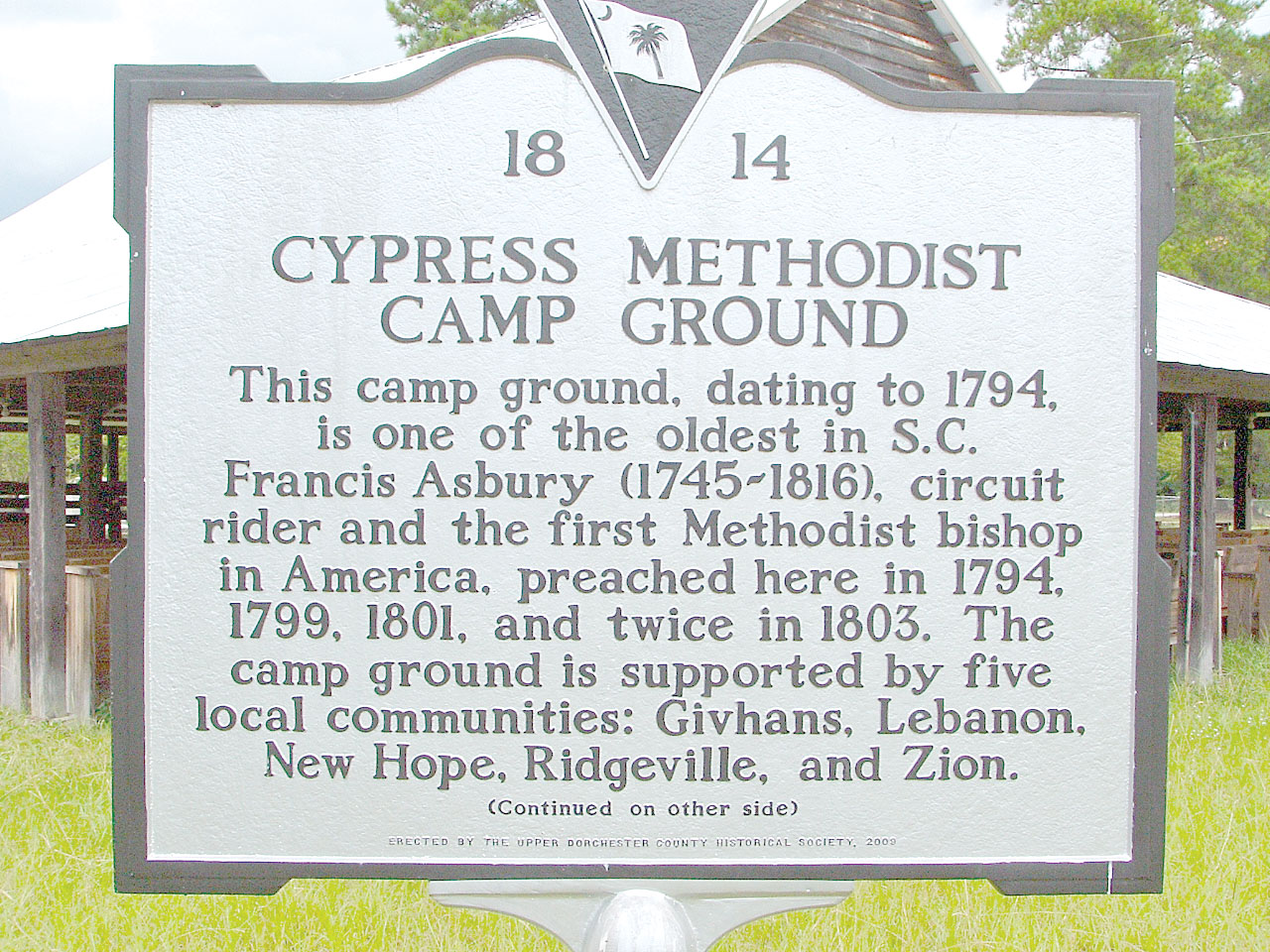
    The Cypress Methodist Camp Ground tabernacle near Ridgeville.

    Two hours’ drive will take you back to 1794 and some old-time religion. Drive south 113 miles to the Ridgeville vicinity and you’ll find the soul of the South, The Cypress Methodist Camp Ground where old time religion is alive and well. Such camps were once common throughout the South and to see one is to step back into history. Cypress Methodist Camp Ground continues to host annual weeklong camp meetings, a carryover from the Great Awakening in American religious life that swept through the American colonies in the 1730s and 1740s.

    This daytrip is a good place to find peace and quiet, a time to reflect. Cypress Camp Ground has a beauty all its own and it’s no flash in the pan. Folks have been gathering here to sing, pray and hear the Gospel for 219 years. Families own the tents and specific guidelines determine how they are passed down. It’s an heirloom, a heritage.

    I went and parked beneath a big oak dripping Spanish moss and walked the grounds, trying to imagine what a meeting must have been like in the old days. It had to be full of sounds, sights and sensations, Gospel songs ringing out, maybe an old foot-pedal organ too. Greens and sweet potatoes cooking. Lots of good food and conversation. For sure, far-flung families looked forward to a bit of a reunion. Kids played and laughed while old folks caught up.

    Across the lane running along side the campground stands a row of around a dozen privies. Lined up, they look like an old-fashioned version of the plastic portalets we see at festivals today. The old wooden outhouses possess more class by far. Some were padlocked and two had wildflowers blooming yellow in front.

    The campground takes the general shape of a rectangle bordered by “tents.” Calling the rough-hewn wood cabins “tents” is a carryover from the days when people slept in canvas tents. These cabins, roughly rectangular, are generally 1.5 stories with earthen floors. In the center of the rectangle stands the tabernacle, an open-sided wooden structure. Its pews, washed by rains blowing in, are weathered and worn smooth by many a rear end.

    Other campgrounds are out there off the beaten path but you seldom hear of these throwbacks to the days when folks would live and pray together a week at a time. That old-time religion was rustic and it was passionate and it carries on. It was a time for the Lord and a time for family. More often than not it was hot, and now and then cold. The winds cut right through the walls. Sleep did not come many nights but each morning broke with hope in the air.

    “We’re going to camp.” Those words carry the weight of well over 200 years. People carry on the tradition, living in a rustic religious way for a week once a year. They don’t need plumbing, televisions or air conditioning. Just give them that old time religion. It’s good enough for them. Go see for yourself.

     If You Go …

     • Highway 182 in the Ridgeville vicinity. For more information and photos visit www.nationalregister.sc.gov/dorchester/S10817718003/

    Learn more about Tom Poland, a Southern writer, and his work at www.tompoland.net. Email day-trip ideas to him at tompol@earthlink.net.
  • The Upstate Renaissance

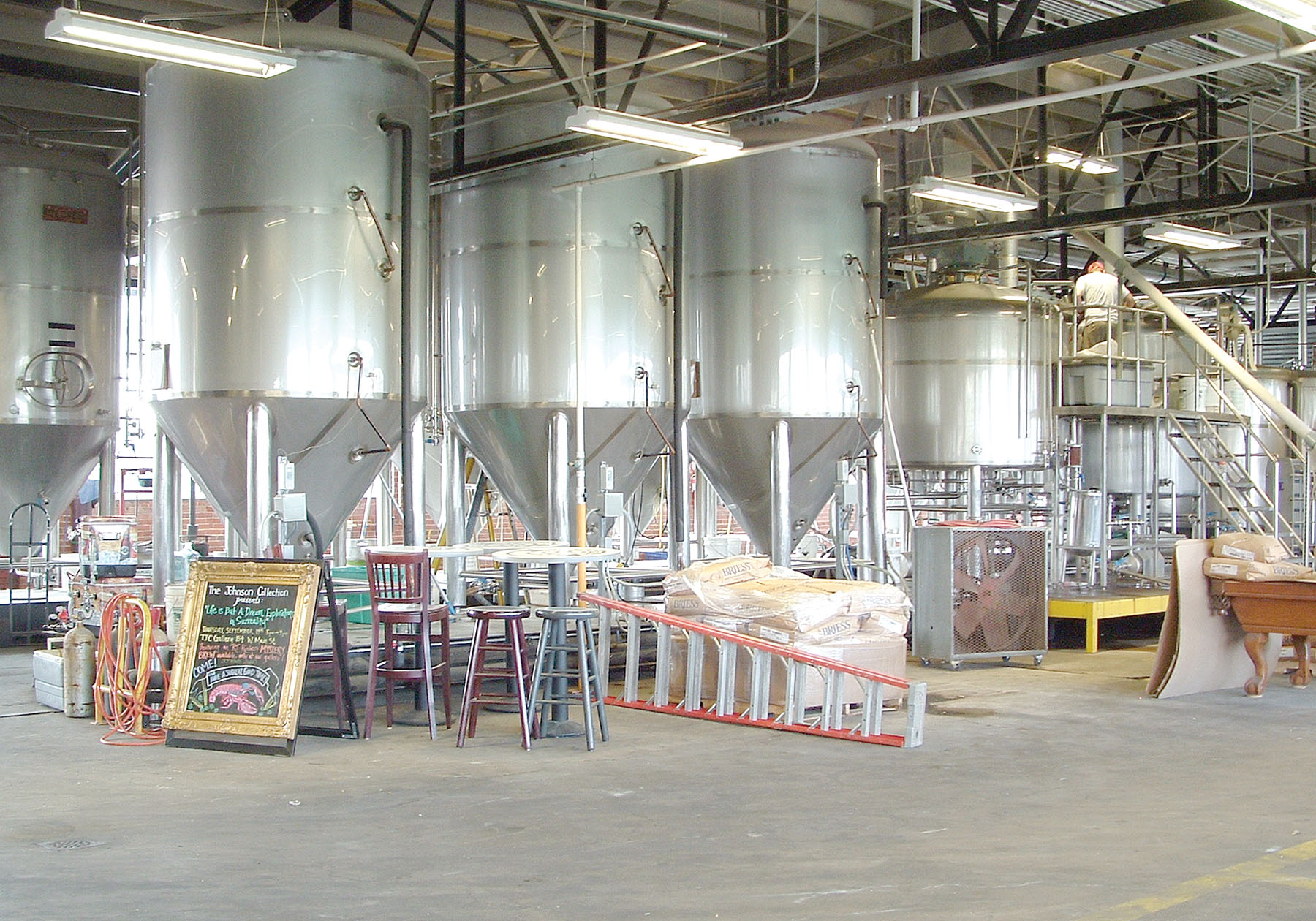
    Mmmm . . . Beer! Made in Spartanburg. Drive up and have a pint. (Photo/Tom Poland)

    Make the 90-mile journey to West Main Street in Spartanburg and you’ll find an engaging art collection, a savory restaurant, unique bookstore and exceptional microbrewery.

    A tree-lined thoroughfare spirits you into the city’s downtown district. Parking is free. And the aforementioned attractions line the same side of the street. Here’s a great opportunity to appreciate the Johnson Collection at 154 West Main. Lynne Blackman, Public Relations coordinator, describes the gallery as “a presence, not a place.” The collection consists of more than 1,000 pieces. “The collection is all fine art of the American South,” said Blackman. You can see the work of native southerners, itinerant artists, Charleston Renaissance artists and others here. “Looking back, it was always the sense of place that drew George and me to beautiful pictures — pictures that capture not only the glorious landscape of the South, but that also enliven its unique culture and dynamic history,” said Susu Johnson. TJC, as it’s known, focuses on African-American and female artists.

    At 186 West Main you’ll find the Hub City Bookshop, a revolutionary independent bookstore. Each book purchased nourishes new writers and helps launch authors into the literary world. The store shares the ground floor of the landmark Masonic Temple with Little River Coffee Bar and Cakehead Bakeshop. Executive Director Betsy Teter oversees this vital literary center. She considers the store “an indie store for serious readers,” specializing in literary fiction and nonfiction. The shop does not carry romance, how-to, or travel, but along with Hub City Press titles, stocks a sampling of everything else, including children’s/YA, sports, humor, poetry, mystery, food and sci-fi. It also has sections for used books and “the best of independent presses.”

    Enjoy lunch at 226 B West Main Street. That’s where Cribbs Kitchen serves up great burgers, salads, wraps, pesto crusted trout and more. Appetizers include tempura shrimp skewers, pork and collard green egg rolls, and buttermilk fried calamari. The Classic Burger is as good as you’ll get. The menu has entrees sure to please all.

    At 226 A West Main Street you’ll smell the sweet fragrance of beer brewing. Solar-powered R.J. Rockers Brewing Company became Spartanburg’s first brewery in 1997. Owner and brewer Mark Johnsen set out on a mission to provide the Upstate with the best micro-brewed beer people ever tasted. Following his service in the 1991 Gulf War, Mark was stationed in Germany, where he learned as much as possible about brewing from the experts. The good folks at R.J. Rockers believe their beer makes the world a better place. They invite people to the brewery Thursdays and Fridays from 5 to 7 p.m. and Saturdays from noon to 4 p.m. Join them for a pint.

    Stroll Spartanburg’s West Main and you can satisfy your soul’s craving for art and good books and good food and beer. Just a 90-mile drive and well worth it.

    If You Go …

    • The Johnson Collection, 154 West Main, Tuesdays and Thursdays, 11 a.m. to 6 p.m. Always open third Thursdays from 5 to 9 p.m. for Spartanburg’s Art Walk. No fee. www.thejohnsoncollection.org/tjc-gallery

     • Hub City Bookshop 864-577-9349, www.hubcity.org/bookshop/about/

     • Cribbs Kitchen, 864-699-9669: Closed Mondays, Tuesdays and Wednesdays from 11 a.m. to 10 p.m., Tuesday through Sunday from 11 a.m. to 10 p.m. www.cribbsonmain.com

     • R.J. Rockers, 864-585-BEER (2337), www.rjrockers.com

    Learn more about Tom Poland, a Southern writer, and his work at www.tompoland.net. Email day-trip ideas to him at tompol@earthlink.net.

  • A Bridge Not Too Far

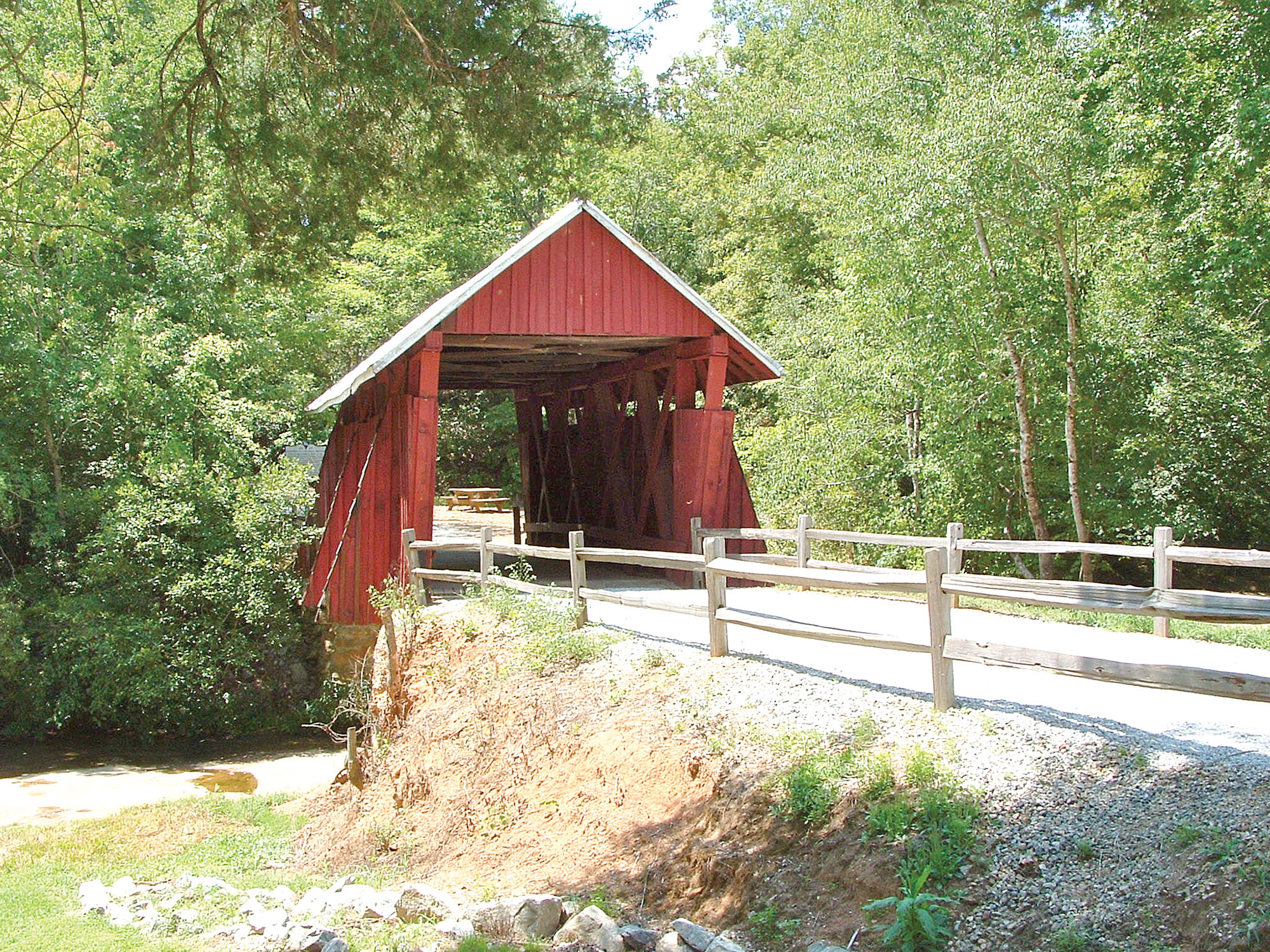
    Campbell’s Covered Bridge in Landrum: vintage Americana.

    I never saw an authentic covered bridge until Clint Eastwood directed and starred with Meryl Streep in “The Bridges of Madison County.” Genuine covered bridges in these parts are as rare as hens’ teeth. Several years ago, though, I came across the real deal: a covered bridge up in northern Greenville. It was late afternoon when sunlight comes in so low everything is gold and lustrous, and driving into it is hard. A bit blinded as I rounded a curve, I got a treat as my eyes adjusted — Campbell’s Covered Bridge.

    You can see it too. Just make a two-hour, 112-mile drive to Landrum. You’ll find the covered bridge near the small town of Gowensville. It’s South Carolina’s last remaining covered bridge and it crosses Beaverdam Creek. Greenville County owns the bridge and closed it to traffic in the early 1980s. It was added to the National Register of Historic Places on July 1, 2009. Major renovations have kept the bridge in good shape.

    In 1909, Charles Irwin Willis built the 38-foot long, 12-foot wide pine structure. The bridge was named for Lafayette Campbell, who at the time of the bridge’s construction owned 194 acres in the immediate area. Campbell owned a nearby gristmill and he let his property to be used for the bridge’s construction. Willis was no dummy. He knew area farmers could better bring their corn to his mill across the creek.

    The Greenville County Recreation District has transformed the surrounding acreage into a park where visitors can picnic, explore the foundations of the old gristmill and home site, wet their feet in Beaverdam Creek and learn about the area through interpretive signage.

    I loved the old bridge. I got out and walked inside the bridge, struck by its narrow width, just right for horse-drawn buggies. Through cracks in the wooden flooring, I saw and heard Beaverdam Creek running cold and swift over rocks below. Everything was peaceful, the air a bit chilled. I stayed there a while trying to envision the many years long ago when old cars and carts rolled through and no one gave a second thought to the bridge’s uniqueness. I’m sure it made for a nice spot for couples, once the busy day settled down, a “Bridges of Madison County” spot, so to speak, for lovers. I walked out from the bridge as darkness settled in, and just then a young couple drove up. They looked at me, a stranger, as if I didn’t belong there, and I didn’t.

    I was glad to see the old bridge still had allure, still had its pull on romantic souls. It will pull on yours too. It’s there. The bridge and surrounding area are quiet, peaceful and beautiful. Pack a picnic come fall when the leaves burst with color and visit this rare bit of Americana. Be sure you take photos of this rare covered bridge. Once you’re ready to move on you’re not far from SC Highway 11, the Cherokee Foothills Scenic Highway. Look for mountain vistas, handmade quilts, apples, apple jelly and honey for sale. Return home with great moments to remember.


    If You Go …

    • Campbell’s Covered Bridge

    171 Campbell Covered Bridge Road

    Landrum, S.C. 29356

    Learn more about Tom Poland, a Southern writer, and his work at www.tompoland.net. Email day-trip ideas to him at tompol@earthlink.net.