Blog

  • Penny Tax Rep Applicants Narrowed to Three

    BLYTHEWOOD – The subcommittee tasked with selecting a person to represent Blythewood on Richland County’s proposed 15-member Penny Tax oversight committee, has narrowed the field from seven to three: Bill Wiseman, Malcolm Gordge and Sean King. An alternate choice to be considered is Ronald Friday.

    The committee made their selections from resumes only, without calling the applicants in for interviews. Mayor J. Michael Ross, who chairs the committee, said the committee will meet again on Jan. 15 at 6 p.m. at the Town Hall to interview the three finalists and make a final selection. The representative selected by the committee will be confirmed by Town Council before being recommended to the County Council for the 15-member oversight committee.

    The oversight committee will include one representative from the incorporated towns of Eastover, Forest Acres, Arcadia Lakes, Irmo and Blythewood; three representatives from the City of Columbia and seven representatives selected by County Council from the unincorporated areas of the County.

  • Kennedy Takes Top Job at Sumter

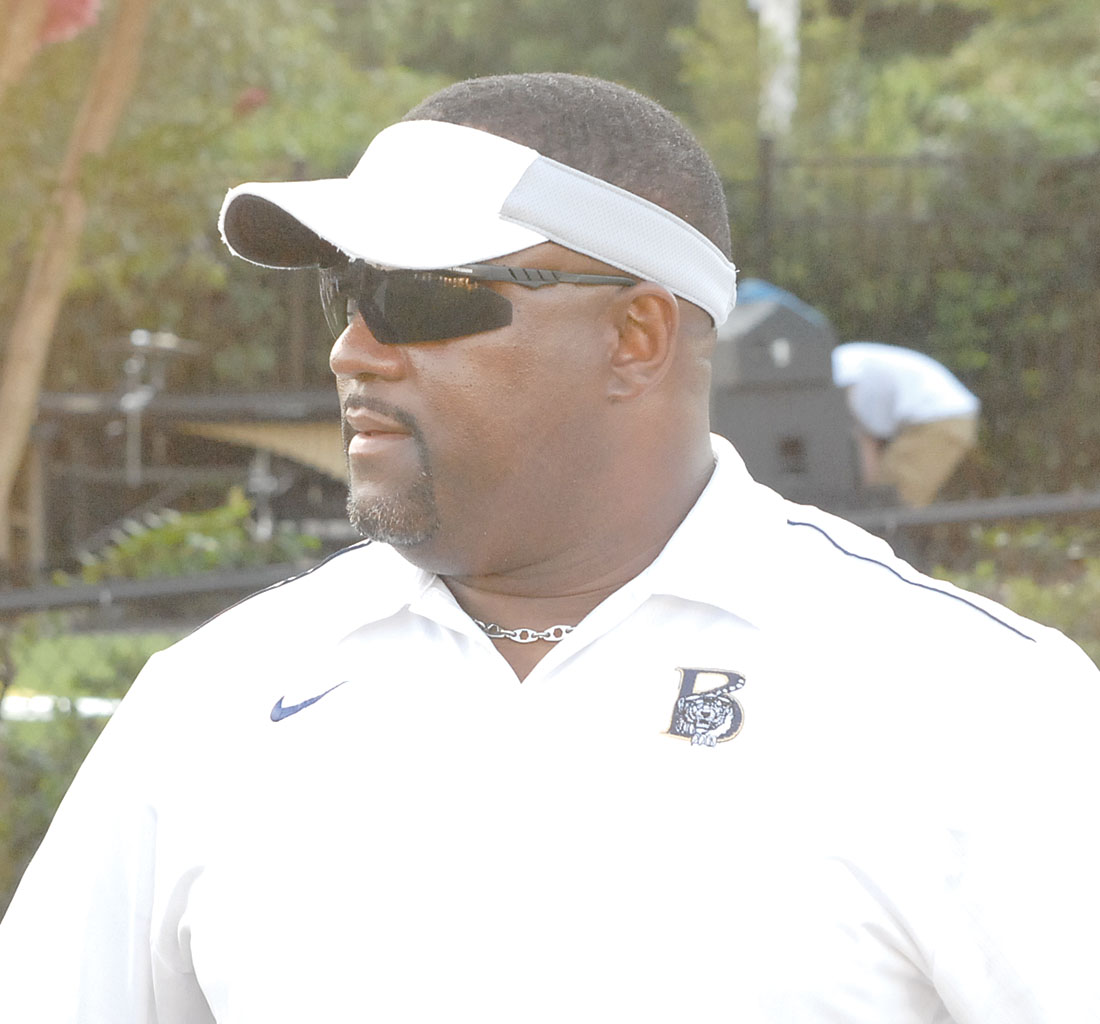
    Regie Kennedy

    BLYTHEWOOD – Blythewood’s head football coach, Reggie Kennedy, announced this week that he is leaving the Bengals’ program to take the job as head football coach and athletics director at Sumter High School. Kennedy has spent the last two seasons at Blythewood and led them to a 9-3 record this past season, which included a share of the region IV-4A title. In his first season the Bengals ended 7-7 with an appearance in the state semifinal game. With all the success and relationships created over the past two years the decision to leave Blythewood was not one that Kennedy took lightly.

    “It was a tough decision to leave Blythewood,” he said.

    Kennedy has 17 years of head coaching experience (131-81), including 14 years as an athletic director. Although he had only served as head coach at Blythewood, the opportunity to reestablish himself as an athletic director at a class 4A school was one he could not refuse.

    “I was away from athletic director for two years and you know I really missed it,” he said.

    Blythewood’s Principal Keith Price and athletic director Vince Lowry are now on the hunt for the Bengals’ next head football coach. Both options of promoting from within or hiring from outside are being considered. Lowry hopes to have the position filled in the next two weeks and he said he has been very pleased with the job Kennedy has done the last two seasons.

    “When we hired Reggie we needed someone to establish stability and get the program going back in the right direction,” Lowry said. “And he definitely did that in the two years he was here. He has done an exceptional job.”

    Kennedy is currently splitting time between Blythewood and Sumter, while he awaits on a ruling from the school district that could release him before his obligated date of July 1.

  • Sharpe Inks Second Deal for Community Center

    BLYTHEWOOD – At a special called Blythewood Town Council Meeting Tuesday night, Council passed an ordinance to authorize the mayor to execute a contract, dated Dec. 31, 2012, to sell the 5-acre Blythewood Community Center property to Sharpe Properties, LLC for $1.5 million. That’s less than half the $2.65 million that the Town contracted to sell the property to Sharpe for a year earlier.

    Under the new contract with the Town, Sharpe Properties, which is owned by Larry Sharpe of Blythewood, paid $150,000 in earnest money that was applied to the purchase price. Another $350,000 is due at closing, set for Jan. 31, and the remaining $1 million financed by the Town with a one-year purchase money mortgage, is to be paid in two installments: $500,000 (plus accrued interest) by June 30 and a final payment of $500,000 (plus accrued interest) by Dec. 31, 2013.

    According to the contract, the interest rate will be equal to the short-term applicable federal rate for January 2013. The contract stipulates that if, after an inspection period that ends Jan. 21, Sharpe determines that the zoning on the property is unsuitable, he has the option to terminate the contract and receive a refund of his earnest money.

    Sharpe let the first contract, signed Nov. 16, 2011, expire on Oct. 27, 2012 after three extensions. In backing off that contract, Sharpe cited concerns he had about zoning issues and future projects planned by the Town that might negatively affect the property’s marketability. Sharpe told The Voice that he was particularly concerned about the Town’s plan to build a road through the property and a roundabout (traffic circle) at one corner of the property. He also had questions about how the new Town Center District zoning and any future widening of Blythewood Road might negatively impact the property. Last August, approximately 10 months after Sharpe signed the first contract, Council passed an ordinance requiring buildings constructed on six specific intersections in the Town to be built three stories high. Sharpe said he owned properties at five of the named intersections. The Community Center property was one of those sites. Sharpe said he was unaware the ordinance was in the offing when he agreed to purchase the property. Two months later, Sharpe did not renew the contract.

    A month following the expiration of the contract, Council voted to scale the zoning ordinance back to a timetable that would not require three-story buildings until Jan. 1, 2018. Town administrator John Perry cited developers’ push back against such requirements under the current economic climate as the reason for amending the ordinance.

    In an interview with The Voice on Tuesday, Sharpe said some negotiation is ongoing with the Town government as to whether the Town still plans to build a road through the property and whether it still plans to build a roundabout at the corner of the property. Sharp said that was yet to be settled, but he said he and the Town had reached an agreement regarding compensation for any negative impact the future widening of Blythewood Road might have on the property and its improvements.

    Mayor J. Michael Ross announced at the October Town Council meeting that the Town was going to have the property reassessed before putting it back on the market. When asked about the amount of the second assessment, Ross told The Voice that the Town’s attorney, James Meggs, had arranged the assessment and that Meggs had recommended that he (Meggs) not divulge the assessment amount to Council members. The mayor told The Voice that he (Ross) negotiated the second contract with Sharpe without knowing the new assessment of the property.

    Prior to the first sale, the property was assessed at $2,125,700 by commercial real estate agent and appraiser Jake Knight, who was subsequently hired by the Town Council to market the property for an asking price of $2.75 million. Council voted to pay Knight a guaranteed monthly fee of $1,500 for up to 18 months. Since Knight had the option to represent both the buyer and the seller, he would also receive a 4 percent commission in addition to the guaranteed monthly payments. When Sharpe’s sales contract expired in October, the Town had paid Knight $27,000 plus expenses. Under the second contract, Sharpe has agreed to pay Knight an undisclosed amount for his sales commission. According to Perry, the Town has no further obligations to Knight.

  • Close in Life and, Finally . . . Close in Death

    Sometimes the most intriguing historical tales are preserved by only the most tenuous thread – a fading recollection, a yellowed journal page, a crumbling tombstone.

    The stately, red brick Fairfield County Museum on South Congress Street in Winnsboro is a treasure trove of such local lore. On a recent day at the museum, director Pelham Lyles pointed out a fascinating example from Fairfield County’s Civil War past. It’s the account of an emancipated slave’s affectionate kinship with his former master. Lyles noted that the story shows how unexpectedly heartwarming relationships could sometimes be forged even in the most un-heartwarming circumstances.

    In this case, the circumstance was slavery. Born as a slave and given as property to Thomas William Brice of Woodward when they were both children, Isaiah Moore grew up not just as a slave but as a close companion of Brice. It is reported that they fished and hunted together and passed much of their time in each other’s company. When the Civil War broke out, Moore accompanied his master to battle, where Brice fought with Columbia’s Sixth Regiment. Amid the harsh conditions of war, they journeyed north – possibly as far afield as Tennessee and Virginia.

    But Lyles said the story took a surprising turn when Brice, in the thick of fighting, suffered devastating injuries and was left for dead.

    “Apparently,” she said, “when Isaiah heard about his master’s severe predicament, he left the security of the camp area to head out alone or, perhaps with a horse, to find him.”

    Moore eventually found Brice and carried him on horseback to safety. He tended carefully to his master’s wounds and health for the duration of the war, and in the years after remained a dedicated helper as Brice went on to pursue farming and business.

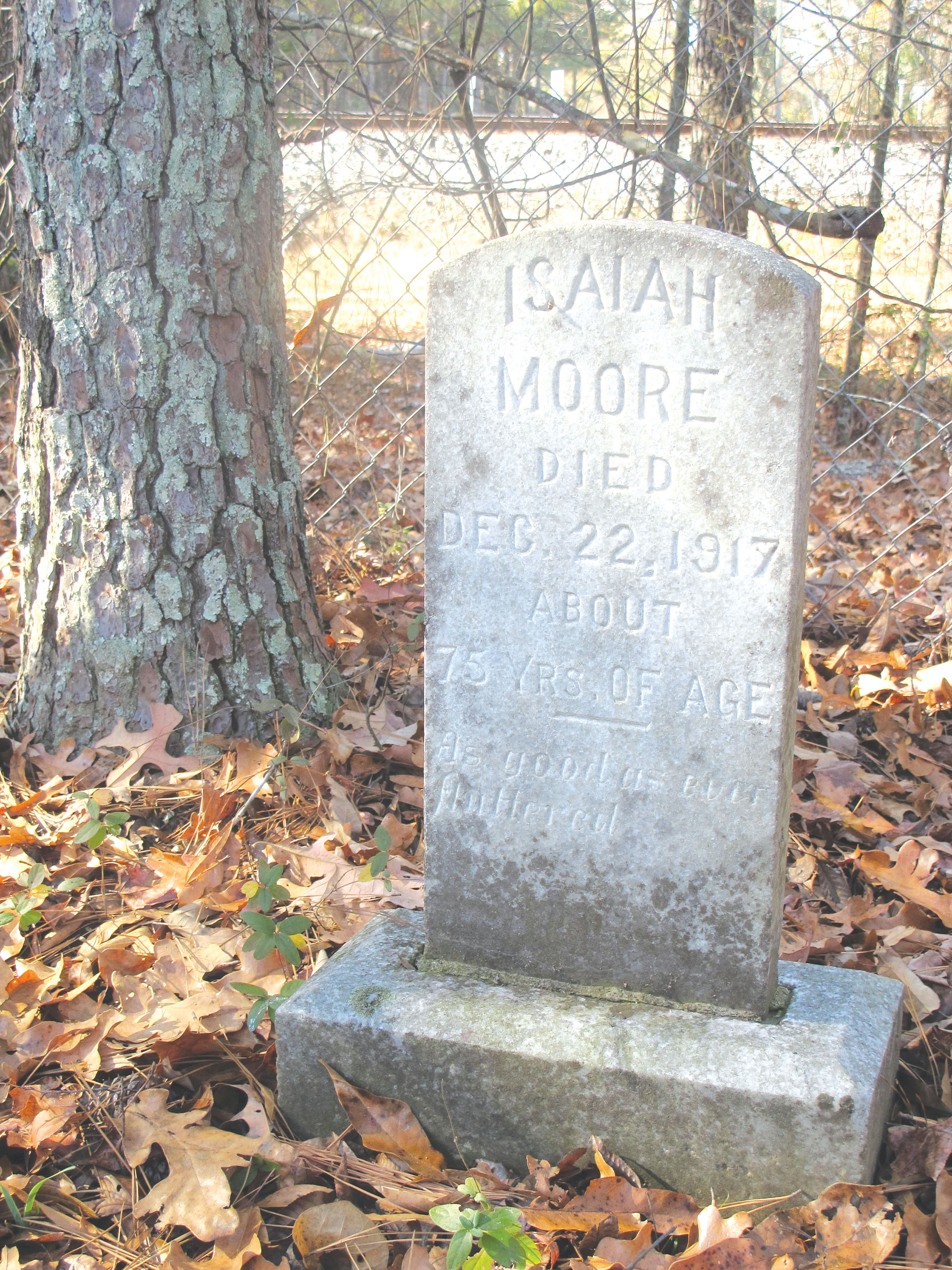
    When Brice died in 1908, he was buried at the historic Concord Presbyterian Church on Chester Road about 7 miles north of Winnsboro outside of Woodward. It is the church where both men worshiped together, although in separate sections of the church. Such was the men’s lifelong friendship, however, that when Moore died nine years later, his final request was to be buried near Brice.

    The problem, Lyles said, is that in those days, the church did not allow African-Americans to be buried within the wrought-iron perimeter of the cemetery. Instead, Moore was buried just outside the fence, as near to Brice as possible but still separated – symbolically and physically – by the barriers of the era.

    It took another five decades before several members of the Concord church – including one of Brice’s descendants – were able to successfully petition to expand the cemetery fence.

    The newly created perimeter enfolded Moore’s grave instead of excluding it. At long last, he and Brice could rest peacefully, not only as steadfast friends, but as equals.

  • Fairfield Nets New Buses in State Buy

    The S.C. State Department of Education announced last week the delivery of a new fleet of buses for S.C. schools, including five that will be heading for Fairfield County.

    “The State Superintendent of Education and State Legislators have taken a much appreciated step towards updating the bus fleet in South Carolina,” said J.R. Green, Superintendent of Fairfield County Schools.

    This is the first state purchase of newly manufactured buses since 2008. After all deliveries are completed, 342 new school buses, equipped to transport students with and without disabilities, will be in service in state-owned bus shops across South Carolina.

    The new buses will replace all 1984-1987 model buses and some of the state’s 1988 model buses. The new buses have an average fuel efficiency of 7.5 miles per gallon, a 29 percent increase over the 5.8 miles per gallon of the replaced buses.

    The State shelled out $28,054,260 for the new buses ($82,030 per bus), with 88 percent of the money coming from state lottery funds and 12 percent from the general fund. The new buses replace 6.8 percent of the state’s fleet.

    “Transporting students safely to and from school is a priority for the Department and school districts,” said State Superintendent of Education Mick Zais. “These buses are more fuel efficient, less expensive to maintain and are equipped to transport students with disabilities. Today marks the first step in modernizing the nation’s oldest school bus fleet.”

    Fairfield County Schools was targeted for seven new buses. It was not determined when the remaining two buses would be purchased or delivered. Neighboring Chester County has been assigned three new buses, but received none in this round of purchases.

    Newberry will receive all three of their three assigned replacement buses. Richland County will receive one of their 19 assigned new buses.

  • New Writer Plugs into Richland 2

    During the past few years of regularly attending Richland 2 School Board meetings, I noticed two trends that compelled me this past election to seek a seat on the Board. First, very few community members attend meetings. It takes a couple months of attending the meetings and a bit of time researching the agenda to effectively follow the information. This precludes parents from dropping by a meeting on an off-chance they have free time from child rearing activities. Secondly, very little discussion occurs during the public session and even less history or research is presented to the public.

    Using new-found time with my youngest leaving for college, I began researching the trends of project-based learning, industrial arts programs and technology use in educational settings, to name a few. I made appointments with District employees to understand our goals, called school superintendents around the county for their perspective, picked the brain of USC researchers and just as importantly, gathered groups of parents for after-work discussions.

    It seemed to me that information about the educational opportunities of Richland 2 were not readily assessable to parents. The community is asked to partnership in ways that are wider and deeper than ever before. But the Board and District Executive Office are frequently unable to get answers quickly to the public.

    My unsuccessful run for School Board in Richland 2 was a disappointing loss this past November, but it did not dilute my resolve for the community of R2SD to have ready access to information about our education issues. It is reasonable to expect community partnerships and parent participation to have the “authentic experience” the District says it wants for each and every participant. So the purpose of this regular column is to report on our local educational issues, provide interesting research and fodder for you the reader.

    Besides regularly reporting on Richland 2 School Board meetings, there are several topics on my radar that I will be discussing from time to time:

    • What are project-based learning programs? Are they effective? How do they differ from more ‘traditional’ teaching methods?

    • What are the changing demographics in Richland 2 that are frequently cited by the District? How are they specifically being addressed and change measured? How are other districts handling similar concerns?

    • What are the roles of guidance counselors and social workers? How are they different?

    • How does the new Student Activity Center impact the offerings at our current high schools?

    • How much of a worry is our three-year downward trend in state ranking? Or SAT scores? How does the fifth wealthiest school district in the state have poor or failing individual schools?

    As the months go by, please contact me with your questions and suggestions at stevie@blythewoodonline.com. I look forward to hearing from you and sharing commentary and reporting on a regular basis.

  • Rimer Pond Road Targeted for 48-Inch Water Line

    BLYTHEWOOD – Residents along the east side of Rimer Pond Road in Blythewood received letters in the mail just before Christmas from the City of Columbia’s Department of Utilities and Engineering, asking for permission to survey their properties and take soil samples.

    The letter, written by Hector Garcia, Right-of-Way Agent for the Department’s Real Estate Division, stated that the City of Columbia is planning what it calls improvements to the water system for the Town of Blythewood.

    That ‘improvement,’ is a giant water line, 48-inches in diameter, aimed not at the Town of Blythewood, but toward private properties along the east side of Rimer Pond Road. The line will run from the water tower on Rimer Pond Road (at Highway 21), to Hardscrabble and eventually to the Kershaw County line.

    The purpose of the proposed water line, according to Joey Jayco of Columbia’s Water and Engineering Department, is to improve water pressure and flow services to Northeast Columbia.

    “It is also our intent to provide water service to the properties along Rimer Pond Road,” Jayco said.

    Residents in the unincorporated areas of the county, like those on Rimer Pond Road, who agree to receive Columbia water are required to sign a water covenant agreeing to be annexed into the City of Columbia should their properties ever become contiguous with the city.

    Some Rimer Pond Road residents who received the letter told The Voice that they plan to organize a group meeting of their neighbors to discuss the situation.

    One resident, Gene Lee, said he would expect the City to send out a representative at some point to talk to the affected residents as a group.

    For now, the letter received by the residents states, “a study is under way to determine the location of such improvements and, as part of the study, it is necessary to perform survey work and soil testing on a portion of the properties.”

    The letter asks residents to sign and return the letter, giving written permission for the study to commence. Jayco said the Department has already received some responses to the letter.

    Jayco said the surveyors must have written permission from a homeowner before they can go on a property to survey or test the soil.

    Most of the homes and farms along the two roads are situated on large acreage properties. Their water is supplied from water wells on their properties.

    Jayco said that once the surveying is completed by W. K. Dickson & Company, the contracted civil engineering firm, the City would determine where the line would be constructed, then begin acquiring easements from property owners.

    Jayco said there was a possibility the line could be constructed on the other side of Rimer Pond Road, which has more open space and fewer homes.

    “That will be decided after the survey work is finished,” he said.

    Garcia, who was on vacation, could not be reached before press time, but Paxton Williams, another Right-of-Way Agent with Columbia’s Utilities and Engineering Department, said the water line would be constructed about 15-feet, more or less, inside the private property lines.

    The letter to residents stated that, during the survey phase, “No trees will be cut or other physical damages inflicted to your property or its improvements.”

    Once the City acquires the easements, however, Jayco said trees and other improvements in the acquired easements could be removed by the City. Jayco said he expected the entire survey and easement acquisition process to be completed in about a year.

    Asked if the City would pay property owners for the easements, Jayco said the City would, in some circumstances, consider giving the residents a water tap as payment.

    “With the addition of a tap,” Jayco said, “a property should increase in value. So the net return would be zero. It’s all a negotiation. If a tap is already there, we might pay the appraised value of the easement. It depends on the situation.”

    Asked if residents would be able to continue to use their water wells if they accepted a tap from the City as payment for the easement, Jayco said the residents would be encouraged to use the tap water, but not required to.

    John Litton, assistant Chief of the Bureau of Water at South Carolina’s Department of Health and Environment Control, said that, as far as he knew, residents with taps could continue to use the well water for any use, including drinking water.
  • CPA Gives Winnsboro Finances Thumbs-Up

    Winnsboro – The Town of Winnsboro received an unqualified opinion on their year-end audit from Bill Hancock, a CPA with the Brittingham, Brown, Prince and Hancock accounting firm. Hancock delivered his findings to Town Council during their Dec. 18 finance meeting.

    Hancock said the Town spent $7,700 more than had been budgeted for 2012 general fund, but told Council that out of a $3 million budget, they were “pretty close to where you need to be.” Winnsboro actually spent $3.2 million less than budgeted out of the utility fund in 2012, Hancock said, attributing that to the rise in gas and electricity prices.

    The Town’s net assets also increased by $290,000 this year, Hancock said.

    “Out of a total spending budget $14,400,00 and change, that means you brought in a little over 1 percent more than you spent,” he said.

    The Town took on no new debt in 2012 and did not make any capital purchases that were not already budgeted, Hancock said.

    Following Hancock’s presentation, Kathy Belton, the Town’s Finance Director, delivered her November finance report to Council. Belton said general fund expenditures were up by more than $14,000 compared to last November. Utility revenues were down by $83,000 versus last year, while utility expenditures were up by $70,000 over November 2011.

  • Ridgeway May Raise Parade Standards

    Ridgeway – Requirements to enter and participate in the Ridgeway Christmas parade could become more strenuous next year, and that would suit at least one local merchant just fine.

    Judy Miller, owner of Just Around the Corner in Ridgeway, expressed her dissatisfaction with this year’s parade at the Dec. 13 Ridgeway Town Council meeting. The event, she said, had become less of a parade and more like absolute chaos.

    “A parade is an organized public procession,” Miller said. “And in my opinion, (this year’s parade) was very unorganized.”

    Miller said her opinion reflects the opinions of many of the other downtown merchants.

    “Every one of them felt exactly as I did,” she said. “It (the parade) had lost its theme, it had lost any kind of organization, any kind of intent other than to just make noise. No one thought it did the businesses any good. The tradition of a Christmas parade seems to have been lost in our town.”

    Miller said that even though the town’s rules for the parade prohibit the throwing of candy and other items during the parade, candy was thrown at this year’s event, some of which struck Miller in the head. Miller also said parade participants riding on top of cars – not in sunroofs or in open convertibles – presented a potential hazard. Miller added that the motorcycles in this year’s parade were a noisy distraction, some of which spun their wheels and threw up large amounts of smoke and exhaust into the air.

    Miller didn’t just protest the parade, however, but also offered to help with the organization of next year’s parade.

    Councilman Donald Prioleau said some of the motorcycles in this year’s parade may not have been actual parade entries, but rode into town and joined the parade at the last minute. He also said that it was difficult to get as many high school marching bands as the parade has had in the past because so many schools have cut their budgets, making transportation of their bands to parades difficult. Prioleau also said that the town didn’t even have a line item in the budget to help finance the parade. Such a line item, he said, could possibly help the town assist in the transportation of high school bands in the future.

    Prioleau said the town would attempt to find out which motorcycle clubs were operating their bikes in a disruptive manner and ban them from next year’s parade.

    Ridgeway Mayor Charlene Herring said the town should find a way to better enforce parade regulations, including perhaps limiting the number of motorcycles. Prioleau said the town should encourage area churches to enter actual floats into the parade and educate them on where floats can be rented. An entry fee may also be required for future parades, Herring suggested; but Prioleau appeared less than enthusiastic about such a fee.

    “I’ve seen three towns that have lost their parades because of entry fees,” Prioleau said.

    “We’ve already lost it,” Miller chimed in. “When you’ve lost control of something, you’ve lost it.”

    Council ultimately decided on a new parade committee to devise suggestions for the improvement of next year’s parade.

    In other business, Council accepted the bid of $1,930 from Thomas Oswald to paint the Old Town Hall cupola. Oswald’s bid was the lowest among three bidders for the job, which included Proven Tucker ($2,840) and Lewis Brazell ($2,350).

  • Winnsboro Man Killed in One-Car Accident

    Winnsboro – A Winnsboro man was killed last weekend when his 2001 Jeep Cherokee crashed off Highway 269 in the early morning hours of Dec. 23.

    Fairfield County Coroner Barkley Ramsey said 21-year-old Stephen Roof, of Old Roof Road in Winnsboro, died at approximately 3 a.m. Dec. 23 from injuries sustained in the one-car accident. The wreckage, however, was not discovered until 7:15 a.m., according to the S.C. Highway Patrol. The Highway Patrol said Roof was traveling east on 269 when the Jeep ran off the left side of the road and overturned several times. Ramsey said the Jeep left approximately 460-feet of skid marks on the roadway leading up to the curve where Roof left the road, 1.6 miles south of Winnsboro. Ramsey said once the Jeep left the road, it continued out across a nearby field, flipping several times before it finally came to rest some 400 feet from the main road. Roof had been visiting friends in Columbia earlier that evening and was not expected home that night, Ramsey said. That, and the distance from the main road of the wreck, account for the delay in discovering the accident, he said.

    The Highway Patrol said Roof was wearing a seat belt at the time of the accident, which remains under investigation. Ramsey said that speed appears to be a factor in the fatal crash.