Blog

  • Water Capacity, but no Grants for Campground

    RIDGEWAY – A local campground looking to expand their number of units will be able to get water from the Town of Ridgeway, Mayor Charlene Herring reported during Town Council’s March 13 meeting; however, Herring added, she found no available grant dollars to help offset the cost of installing the water lines.

    During Council’s Feb. 21 meeting, Chris Curtiss, owner of the Little Cedar Creek Campground on East Peach Road in Ridgeway, asked the Town to provide a 6-inch, 1,250-foot waterline to the campground. Curtiss said he plans to expand his 30-acre campground from 28 units to 58 units and that the S.C. Department of Health and Environmental Control requires expanded water capacity for the additional 30 units. He said the residents of his campground shop in Ridgeway and that the expansion of the campground could bring considerable economic development to the town.

    Last week, Councilman Russ Brown said Curtiss was not asking the Town to pay for the installation of the water lines, but only asking if the Town had the capacity to serve the expanded campground and if the Town could assist in locating grant funds.

    “We have the water available,” Herring said. “I could not find any grants, since these are not really permanent homes and not low- to moderate-income people.”

    Herring said Curtiss was also looking to add two fire hydrants to the grounds, for which she would have to contact Interim County Administrator Milton Pope.

    Softball Season

    Will Prioleau, President of the Ridgeway Co-Ed Church Softball League, reported to Council that the league was getting ready to enter its fifth year of play. What began with just four teams has grown to an 11-team league, with games played every Saturday between April and October. Games are played at Rufus Belton Park in Longtown and at the downtown Ridgeway field, on alternating Saturdays.

    County Councilman Dwayne Perry (District 1) was on hand at last week’s meeting and told Prioleau and Council that they could count on his support at the County level for the league, in spite of recent criticism levied against Council for how they spend their annual discretionary funds of $3,500 each.

    “We’ve kind of been under attack these last couple of months – and for some things rightfully so,” Perry said. “It was put out there that Council members were trying to ‘buy votes’ by supporting different organizations, but I will continue to support the Town of Ridgeway. The softball league is one of the things I really try to support and always have since its inception and I will continue to support that.”

  • Challenger Declares for District 5

    WINNSBORO – Although election season may be a few months from heating up to a full head of steam, this week a candidate emerged to challenge County Council Chairman David Ferguson in District 5. Making his announcement Monday night at the Fairfield County Democratic Convention at the County Courthouse, Eugene Holmes threw his hat into the ring of Fairfield County politics.

    Holmes, 79, was born and raised in Washington, D.C., where he worked for the Department of Labor for 27 years before retiring with his wife, Fairfield native Margaret Pauling Holmes, to their Fairfield County home on Charming Circle, where they have lived for the last four years. They have two children and three grandchildren, all in the D.C. area. In addition to working for the federal government, Holmes said he was also a substitute teacher in Maryland and substitutes here in Fairfield County now as well. He also serves as third vice chair of the Fairfield County Democratic Party and is a volunteer worker with the Fairfield County Chapter of the American Red Cross.

    What drew Holmes into the political arena?

    “I wasn’t satisfied with the dictatorship-type system we have here with our County Council,” Holmes said. “Citizens don’t have any say at all at County Council meetings. And I’m not happy with the amount of money that isn’t accounted for. There is also a lack of transparency. I want a transparent government, not a dictatorship.”

    Holmes said he was also concerned about what he sees as an excessive rate of taxation in Fairfield County.

    “If I had realized how high the taxes were in Fairfield County when we were looking to buy a home, we wouldn’t have bought in Fairfield County,” Holmes said.

    With the filing deadline not until July, Holmes said he has only just begun to collect signatures on his petition to be included on the November ballot. Potential candidates must collect signatures from at least 5 percent of the registered voters in their respective districts to qualify.

  • Final Fagan Road Shooting Suspect Captured

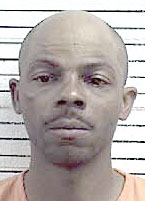
    Rico Barber

    WINNSBORO – The final suspect in a Feb. 28 shooting outside a home on Fagan Road has been arrested, the Fairfield County Sheriff’s Office said Monday.

    Rico Olearotic Barber, 37, whose last known address was listed as Highway 21 N., Ridgeway, was captured at a night club in Chester County on the night of March 14 by Chester County Sheriff’s deputies and agents from the S.C. State Law Enforcement Division. He was booked into the Fairfield County Detention Center the following morning, charged with attempted murder.

    Barber has been pegged as the shooter in the Feb. 28 incident that sent Tyrone Kelly, 38, to Fairfield Memorial Hospital with a through-and-through gunshot wound to the shoulder and a grazing wound on his right temple.

    According to the original report of the incident, Kelly was involved in an argument with DeAntray L. Dye, 29, of Caution Drive, Winnsboro, outside Kelly’s home at 824 Fagan Road on the night of Feb. 28. Kelly told investigators that during the argument Dye instructed a second man, who Kelly then identified as Jarrett Omar Lawson, 24, of Circle Street in Great Falls, to shoot Kelly.

    Lawson turned himself in during the early morning hours of March 2 and he was initially charged with assault and battery with attempt to kill. Lawson was released on a $25,000 personal recognizance bond on March 3 after Kelly backtracked on the identity of the shooter. Dye turned himself over to police last week and also faces a charge of attempted murder.

  • One Wood Hosts SEC Title Meet

    BLYTHEWOOD – South Carolina returns to action at the 2014 SEC equestrian championships, which will take place March 28-29 at One Wood Farm in Blythewood. The Gamecocks are the No. 1 seed for this year’s championship, and will face No. 4 seed Texas A&M in the opening round on March 28.

    The winner of that meet and the winner of the Georgia/Auburn meet will face off in the SEC championship meet, scheduled for 2 p.m. on March. 29. One Wood Farm is located on Syrup Mill Road across from Cobblestone Park.

  • Manor $1.7 Million Over Original Budget

    BLYTHEWOOD – Members of Town Council spent the better part of a four-hour work session last week trying to put a fine point on how much the Town has paid for constructing and furnishing the new town park and Doko Manor. It also suggested setting up a reserve fund for repairs and maintenance expenses of the Manor.

    According to a report prepared by the Town’s financial consultant, CPA Kem Smith, and presented to the Council by Interim Town Administrator Jim Meggs, the direct costs, so far, to construct the Doko Park and Doko Manor add up to roughly $7.2 million, not the $5.5 million originally planned. And 30 years of interest payments will eventually add another $3 million to the total cost of the park. Additional funding over the $5.5 million came from the $1.5 million sale of the community center.

    Smith’s report shows a balance of $100,000 left in the park fund. But the projects that are completed and not yet paid for (rest rooms, sod for the athletic field, irrigation and dumpster enclosures) add up to about $230,000 according to information Meggs said he received from former Town Councilman Paul Moscati who oversaw the work on the park for the Town for the last two years.

    “That’s going to leave the Town in the hole about $130,000,” Councilman Bob Mangone said.

    Councilman Tom Utroska summed Council’s predicament up by saying, “There is no money left to build any of the other structures initially planned for the park including the amphitheater, spray ground, farmer’s market, activity center/soccer complex, skate park, clock tower, an additional playground area, the final layer of asphalt on the park roads and other amenities.”

    Construction of some of these features were dependent on an additional general obligation bond Council initially passed for the park in the summer of 2010, but which was later rescinded by Council after the voters presented a petition calling for a referendum on the bond.

    Of the $600,000 paid to Rick McMakin’s Land Plan Group, Inc. for design fees for the park, $130,611.22 was spent for designs for a soccer/recreational complex that never materialized. Smith’s listing of direct costs for the park also included $489,508 for bond issuance costs and legal fees.

    Meggs told Council that, beginning in 2013, the Town began making direct transfers that totaled $1,398,100 from the Town’s general fund to the project fund to pay for park features.

    “Basically, what we were doing,” Meggs said, “was taking general fund monies and fattening the project fund that would otherwise have drawn its money out of the bond proceeds.”

    Massa noted that it was an unusual situation to issue a revenue bond, then set the debt service up with general fund money.

    As conversation around the table turned to the over-budget costs of the Manor, Massa, a CPA, lost his cool.

    “Oh that’s good!” he said. “We overran a project by 30 percent and lied to the people of Blythewood about it. The original project was promised to cost $5.5 million, then we put in another $1.5 million from the sale of the community center that we thought was going to be used to pay off bonds and do other things.”

    Mayor J. Michael Ross, during whose term the manor was constructed (though it was approved by the former Council just weeks before Ross and Councilmen Jeff Branham and Roger Hovis took office), defended the project saying, “However many people come and tell you they are upset that we’ve spent this much, they come to me and say they love the Manor. The people ahead of us built a Manor that turned in to our community center. The park was only $5.5 million from the beginning. The Manor added $2.1 million. If we are over budget, it was that we had a $1.5 million sale of the community center and a $2.1 million Manor was built. If you look at the park alone, how much are we off from the bond and the money we got?”

    “We should not have commingled the money (bond and community center sale,)” Massa argued.

    Utroska agreed, saying, “It was commingled because the prior group decided they were going to build a $2.1 million building and they only had $1.5 million. Many of the original (structures) planned for the park weren’t built because we used some of that money on the Manor. I argued four years ago against spending $5.5 million on a park. If you look back at documents from 2001, the idea for a nice park in Blythewood was picnic tables and swings. When it’s all said and done, we have the park and Manor and we can’t undo that. Now I’m concerned about the maintenance and operating expenses.”

    Massa agreed, saying, “To the people who say (the Manor) is beautiful and lovely, it’s going to be beautiful and lovely for about five years if we don’t have the money to repair and maintain it.”

    Mangone accused the former Council of diverting funds to build the Manor and said he thought someone should be held accountable.

    “But I’m not ready to throw anybody in jail. We could spend more on legal fees to hold people accountable,” he said, backing down from his threat. “But I think everyone should know (what happened.)” He added, “It was touted, ‘Oh, everything is great,’ and it really wasn’t.”

    “The only conclusion we can finally draw until we have the final numbers is that we don’t have any money left (for the park) and will have to take money from somewhere else to finally pay for all this,” Massa lamented.

    Utroska added, “And if you add what the Manor is costing us in addition to this, it gets plum scary.”

    Massa suggested passing a resolution in the upcoming budget meeting to set aside a percentage of the Town’s Hospitality Tax funds for a reserve for repairs and maintenance.

    “Then, right off the top, that (Hospitality Tax) money goes away,” Massa said.

    Massa said that means those in the community who traditionally request ‘x’ amount of hospitality funds for events “may get something less than ‘x.’ next time.”

    In other business, Council discussed the need to set goals for 2014-15 and the status of filling employment vacancies in the Town Hall. While Council discussed in executive session the hiring of a new town clerk, they did not vote to fill the vacancy. Mangone announced that nine people have applied for the town administrator’s position, but Council continued to be unsure exactly what they are looking for in the position – whether they want someone with both administrative and zoning/planning experience or two separate employees. Mangone asked Council to consider the possibility of helping bring social service and mental health programs to the town. Council members agreed that would be a good idea. The mayor asked Massa to work with the Town’s CPA to come up with a preliminary budget for the next workshop to be held on Tuesday, April 15, starting at 9 a.m.
  • Cutting Costs at Doko

    Blythewood – Town Council and the Mayor’s Park Committee met separately last week to look at ways to cut operating and maintenance costs for the park and Manor. For its part, Council has already raised rental fees for the Manor and is looking to initiate a minimum-use fee of about $35 per hour to cover overhead expenses like heat, air conditioning, electricity, an attendant and other costs to the Town. Any group using table cloths, napkins and other equipment would pay standard charges, and ‘free’ use of the facility would be very limited and would be charged the minimum-use hourly fee.

    Councilman Tom Utroska said he has been working closely with the new Director of the Manor, Booth Chilcutt, and that they agree the Town must charge for minimum use of the facility.

    “We have costs associated with use,” Utroska said. “It’s not fair that the Town is covering the overhead costs for some groups to use it at no charge.”

    According to a list of expenses and revenues provided by former Director Martha Jones last fall, the Town was not only allowing the Richland 2 School District and others to use the Manor for free, but was also sometimes laundering tablecloths and napkins for the groups without recouping the costs. At a recent Town Council meeting, Councilman Bob Massa questioned why Bravo Blythewood was allowed to use the Manor free of charge for 24 play rehearsals when the play was being performed at Westwood High School.

    While the District sometimes paid token fees, it has used the Manor free more than other groups and he suggested that, in the future, the District be limited to free use only when that use involves students in certain charitable or educational endeavors and that they pay the minimum-use rate to cover overhead expenses plus the cost of any equipment used. He suggested all other administrative uses by the District, whether during the day or in the evening be paid uses. In all fairness to the District, though, a town official quoted a District official as saying, “We have other places to meet, and we were actually surprised that you’re not charging us to use the Manor.”

    “The minimum-use fee will only cover our basic costs, not wear and tear,” Utroska told Council.

    Mayor J. Michael Ross said he has asked all Town boards, committees and commissions to begin meeting in the Town Hall planning room instead of the Manor unless they need to accommodate a large audience.

    Utroska said the Town is still operating the Manor at a loss and that it has to contribute, on average, about $2,000 per month right now to cover the Manor’s monthly expenses. Massa suggested that Council pass a resolution at the upcoming budget meeting to allocate funds from the Town’s Hospitality tax to fund a reserve.

    Jim McLean, chairman of the Mayor’s Park Committee, said the Committee is also considering ways to economize in the park, primarily through energy savings by cutting off every other street light in the park and turning off all walking trail lights after midnight.

    “Fairfield Electric has indicated that this is a possibility with a modest investment of about $25 per light to add a cell at the top of the light poles,” McLean said.

    The Park Committee’s primary goal, however, is not to find ways to economize in the park, but to prioritize features to be built. While there is no more money in the park’s coffers according to Council, the Park Committee is still hoping to find economical ways to add features that were originally planned.

    “We’re looking for better pricing on all the remaining park features,” McLean said. “Plus we’re looking to reduce the size and scope of some features to make them less costly and more attractive to individuals who might want to donate funds to build them.”

    Both the Park Committee and Town Council will meet separately again on Tuesday, April 15 at the Town Hall. The Park Committee will meet at 6 p.m. and Council’s meeting is set for 9 a.m. until noon or so. The public is invited to attend both meetings. Call 754-0501 for more information.

  • History & Nature

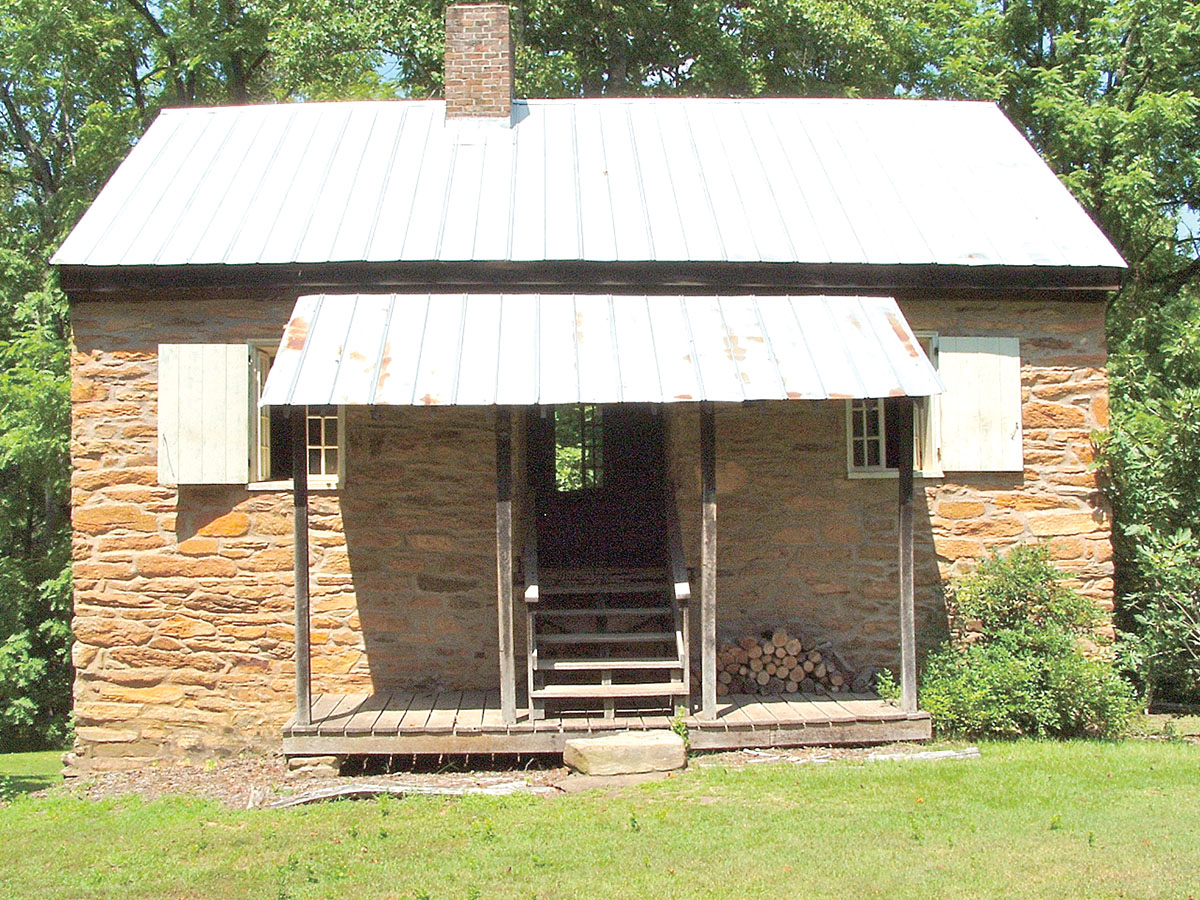
    She’s a block – House!
    Oconne Station served the S.C. State Militia from 1792-1799. See it, and lots more at Oconee Station State Park.

    A destination with history and natural allure opened on March 1. Get some comfortable walking shoes and a stout hiking stick and head to the northwest corner of the state. In one trip you’ll see 18th and 19th century South Carolina while enjoying spring wildflowers, cool air, low humidity and stunning mountain vistas covered in splendid shades of new-leaf green. Rocks, water and nature. It’s all here.

    You’ll see an old military compound, Oconee Station, that became a trading post. See this solid enduring stone blockhouse that the S.C. State Militia used as an outpost from around 1792 to 1799. The blockhouse was built as a haven from Indian attacks. Thirty of the “hardiest and best hunters” defended the blockhouse. See the nearby William Richards House as well.

    Here you’ll get a beautiful mix of history, nature and outdoor recreation. A 1.5-mile nature trail connects hikers to a trail leading into Sumter National Forest. The trail ends at Station Cove Falls. Camp at nearby Oconee State Park if you like before summer heat and pesky insects arrive. The park has rustic, Civilian Conservation Corps-era cabins and a lake with a swimming hole. You can rent a canoe and fish. Hike wooded nature trails that wind through the foothills region. Trails connect with the Foothills Trail, South Carolina’s 80-mile wilderness hike on the Blue Ridge Escarpment. One trail connects Oconee Station with Oconee State Park.

    Particularly rewarding is the hike to Oconee Station Falls, known also as Station Cove Falls. I hiked it one summer afternoon and though it seemed longer than it is (.7 mile). On a hot day the falls at the end make the effort worth it. I find Oconee Station Falls to be one of the state’s more beautiful falls. The hike takes 25 minutes to half an hour and as you walk you’re moving through a mountain cove forest. Crossing a sandy stream I saw a huge cat-paw print and both bobcat and mountain lion crossed my mind. When you get to the falls, its 60-foot stepped plummet makes you stare. Go on a spring day. Look for wild flowers such as trillium, mayapple, pink lady’s slipper orchids, bloodroot and redbud. Take a picnic lunch and relax at the boulders at the base of the falls.

    Take Highway 34 to I-26, on up to S.C. 11, the Cherokee Foothills Scenic Highway, a treat itself. About three hours and 148 miles will take you to Walhalla. From Walhalla, take S.C. 183 north to S.C. 11. Take S.C. 11 north for two miles. Signs show the way to Oconee Station State Park. Turn left onto Oconee Station Road and follow two miles to Oconee Station.

    If You Go …

    Oconee Station Historic Site

    Admission: Free

    Days and Hours of Operation: March 1 to Nov. 30, 9 a.m. to 6 p.m., daily.

    Historic structures are open from 1 to 5 p.m. Saturday and Sunday with guided tours available.

    Get more information at www.southcarolinaparks.com/oconeestation/introduction.aspx

    For information on Oconee State Park visit www.southcarolinaparks.com/oconee/introduction.aspx


    Learn more about Tom Poland, a Southern writer, and his work at www.tompoland.net. Email day-trip ideas to him at tompol@earthlink.net.

  • STEM Group Takes State Route on Bond Issue

    WINNSBORO – Midland’s STEM Charter School (MSCS), which met with some uncertainty from County Council’s Presentation Committee last month, officially withdrew its request Monday for Council’s assistance in acquiring a bond to help kick-start the school.

    Interim County Administrator Milton Pope told the full Council Monday night that Steve Cox, attorney for MSCS, had informed him that MSCS would instead “move forward with a state-level hearing” in order to obtain a bond for renovations and construction of the proposed school.

    Late last month, Cox told the Presentation Committee that the County’s approval, in the form of a resolution, for the $39,261,000 bond would be nothing more than a technicality, required by the Internal Revenue Service for the school to meet its tax-exempt status. There would have been no risk to the County and the County would not be liable should the school default, County attorney John James told the committee in February.

    MSCS had been slated for a second meeting with the committee Monday night just 30 minutes prior to the meeting of the full Council. That meeting was scrubbed, however, after Pope received notice from Cox that the school had indeed opted to take their case to the state.

  • Council Moves on Zoning Error

    WINNSBORO – A plot of land on River Road near Lake Wateree that fell through the County’s rezoning cracks back in 2011 took its first tentative steps toward being returned to its intended use Monday night when County Council passed first reading on an ordinance to reclassify the property to B-1 (limited business district).

    The 2.37 acres at 4361 River Road had been rezoned from R-1 (single-family residential) to B-1 in 2004, Interim County Administrator Milton Pope said, and was purchased in August of 2011 by Harry M. Parker Jr. Shortly thereafter, Council began rezoning property across the county as part of its new land management ordinance. When Council approved the new land management ordinance in December of 2011, Parker’s property was reverted back to its original R-1 designation.

    “I don’t think the county intended for that to happen,” Pope said. “There were no improvements on the property, so it was looked at as undeveloped and it got picked up with other zoning overlays to restrict commercial zoning development around the lake.”

    Winnsboro attorney John Fantry, who represents Parker in the rezoning matter, said he was encouraged to see Council willing to correct an obvious oversight.

    “(This ordinance) indicates to me that when a mistake is made, and one that is not intentional, our County government will proceed to move forward with means to correct it,” Fantry said. “I applaud you and I hope we would do that for anyone who finds himself in a similar situation.”

    Councilman David Brown (District 7) asked if there were not some safety mechanism that the County could put in place to allow staff or administration to correct similar errors, thereby alleviating the necessity of an aggrieved party having to go through the rezoning process.

    “The Planning Commission or either the Planning Department could approve it and let somebody start using it, instead of us slowing an individual down 90 days going through the process,” Brown suggested.

    But Pope said that even if a zoning classification is made in error, the County was legally bound to go through the required readings and public hearing process, allowing the public the right to comment on any proposed changes. However, Pope added, any fees associated with applying for rezoning in the event of such an error would be refunded by the County.

    Council also gave the OK to replace six vehicles for the Sheriff’s Office, at a cost of $188,511.88. While Pope said that the funds had been budgeted by Council, he noted that the Finance Committee, which had made the recommendation to purchase the vehicles, had also recommended adjusting the budget by $8,511.15 to fill the order. The vehicles were state contract vehicles, Pope said, and were procured through the bidding process.

    The purchase of a new control panel for the Detention Center was put on hold, Pope said, after all the bids for the item came back over the $200,000 approved by Council. The panel will have to be re-bid and come back to Council through committee, Pope said.

    Pope also informed Council that the architectural/engineering firm of Godwin, Mills & Caywood had been retained to begin inspections on Drawdy Park, where a 50-foot section of retaining wall, constructed by Four Brothers Construction under the supervision of S2 Engineering, collapsed in January. Pope said the firm will inspect other buildings and projects completed by S2 in the county as well. The County will also begin procurement on a scope of work to address safety issues at the Dutchman Creek pedestrian bridge, Pope said.

    The County’s $3.5 million recreation plans will officially have some shepherding, as Pope announced the County had retained the services of Kenneth Simmons & Associates (KSA) to act as consultants. KSA will review Council’s master plan of proposed recreation projects to determine costs, maintenance and staffing. Estimates will then be reviewed by Council and plans will be trimmed accordingly, Pope said.

  • Suspect Charged in Fagan Road Shooting

    DeAntray L. Dye

    Shooter Remains at Large

    WINNSBORO – One of the men wanted in a Feb. 28 shooting incident on Fagan Road is behind bars, having turned himself in to Fairfield County Sheriff’s Office investigators earlier this week.

    Capt. Brad Douglas said DeAntray L. Dye, 29, of Caution Drive, Winnsboro, handed himself over to police Sunday and is now behind bars at the Fairfield County Detention Center, facing charges of attempted murder. A second suspect, a Great Falls man the Sheriff’s Office asked to not be identified, remains at large. The second suspect has been fingered as the shooter in the Feb. 28 incident that sent Tyrone Kelly, 38, to Fairfield Memorial Hospital with a through-and-through gunshot wound to the shoulder and a grazing wound on his right temple.

    According to the original report of the incident, Kelly was involved in an argument with Dye outside his home at 824 Fagan Road on the night of Feb. 28. Kelly told investigators that during the argument Dye instructed a second man, who Kelly then identified as 24-year-old Jarrett Omar Lawson, of Circle Street in Great Falls, to shoot Kelly. Witnesses inside the home told investigators that they heard two gunshots, then saw Kelly run into the house, bleeding from a wound in his left shoulder. A witness at the scene drove Kelly to Fairfield Memorial Hospital, where he was treated and released.

    Lawson turned himself in during the early morning hours of March 2 and he was initially charged with assault and battery with attempt to kill. Lawson was released on a $25,000 personal recognizance bond on March 3 after Kelly backtracked on the identity of the shooter. The Sheriff’s Office said they now have corroborative information that the sought-after Great Falls man, and not Lawson, was the shooter. The Sheriff’s Office is coordinating with units in Chester County in the search.