Blog

  • Legal Troubles Follow Granite Mining Partner

    Boggs Paving Faces Federal Indictment

    WINNSBORO – As Rockton Thruway residents band together to seek assurances that the operators of a proposed granite quarry near their homes will be a good neighbor, reports surfaced last week that raised a red flag on the welcome wagon.

    Winnsboro Crushed Stone, LLC submitted its application for a mine operating permit to the S.C. Department of Health and Environmental Control (DHEC) on March 13 (http://www.scdhec.gov/PublicNotices/Land/) for approximately 923 acres off Rockton Thruway. Last week, The Voice learned that one of the principals in company is facing a 29-count indictment by the U.S. Department of Justice for fraud.

    Carl Andrew Boggs III and his paving company, Boggs Paving, Inc., and five alleged co-conspirators were charged last July with conspiracy to defraud the U.S. Department of Transportation (USDOT), conspiracy to commit wire fraud, conspiracy to commit mail fraud, money laundering conspiracy, money laundering and wire fraud for a scheme lasting more than 10 years and involved more than $87 million in government contracts, according to the U.S. Attorney’s Office of the Western District of North Carolina. Six of the seven defendants are also charged with mail fraud.

    Dorothy Brandenburg, who has been the point person in the community activity opposed to the mine, said the Boggs indictment doesn’t bode well for future operations in Fairfield County.

    “As a local resident, I realize that the integrity of businesses that are allowed to operate in Fairfield County is a direct reflection of the county itself,” Brandenburg, speaking on behalf of herself and not for the anti-quarry group as a whole, said. “Who we allow to operate today will have a lasting impact on our future. The affiliates of this new corporation have, in my opinion, already provided significant evidence that we can expect nothing more than broken agreements and questionable operations. By extension, I question the judgement of those around the county that are consciously working with someone bearing a record such as Boggs.”

    According to allegations contained in the indictment, from 2003 to 2013 Boggs Paving fraudulently obtained state and federally funded construction contracts by falsely certifying that a disadvantaged business enterprise (DBE) or a small business enterprise (SBE) would perform and be paid for a portion of the work on such contracts. The indictment alleges that Styx Cuthbertson Trucking Company, a road construction hauler based in Monroe, N.C., and owned by Styx Cuthbertson, was a certified DBE and SBE used by the defendants as a “pass-through” entity to obtain state and federal contracts.

    “To create the illusion that Styx was doing and being paid for the necessary work, the indictment alleges that, among other things, the conspirators ran payments through a nominee bank account in Styx’s name but funneled checks back to Boggs Paving and its affiliates, which were not DBEs or SBEs but were doing the actual work,” according to the U.S. Attorney’s Office. “. . . each time a deposit was made into the nominee account as supposed payment for construction work performed by Styx, a Boggs Paving employee would immediately cut a check from that Styx nominee account to the Boggs entity or another firm that had actually performed the work. In return . . . Styx Cuthbertson received a kickback for allowing his name and DBE status to be used by Boggs Paving.”

    A spokesperson with the N.C. Department of Transportation (NCDOT) said Boggs currently has three contracts worth more than $10 million with the state. Two of those projects are nearing completion, while the third was awarded in March 2013 and got under way this month. Over the last five years, Boggs has been paid approximately $55.2 million for work with the NCDOT, the spokesperson said.

    Since Boggs Paving has not been convicted, the spokesperson said, there is nothing in N.C. state law prohibiting the company from bidding on future state-funded projects.

    “Boggs Paving has been indicted but not convicted of any charges, and there is not a state law that says the contractor has to be removed from a project,” the NCDOT said. “Our legal staff is engaged with federal authorities, remaining observant for any new developments. Should anything change, our legal team will advise what necessary action must be taken moving forward.”

    The indictment also put Boggs Paving in hot water with the S.C. Department of Transportation (SCDOT), who since 2008 has handed Boggs Paving more than $200 million in contracts for road projects. Styx Trucking was also the designated DBE on 31 of the 93 S.C. projects. Last year, the Federal Highway Administration (FHWA) temporarily suspended Boggs and Styx from receiving any future contracts for North or South Carolina projects. A spokesperson for the SCDOT said none of the projects currently under way with Boggs Paving have been suspended, but that there were no new contracts in the Boggs pipeline. The suspension by the FHWA, handed down on Sept. 4, 2013, means Boggs Paving will not be allowed to bid on any federally funded projects while the case is pending, the SCDOT spokesperson said.

    Boggs and his alleged co-conspirators were scheduled to appear in court last August. The case has since been continued until September, according to a Department of Justice spokesperson, with jury selection to begin Sept. 16. Phone calls to Columbia attorney Pete Strom, the lead attorney defending Boggs, as well as to Boggs Paving, were not returned at press time.

    Adding to Boggs’ legal headache was a Notice of Violation (NOV) issued by the Union County, N.C. Department of Zoning for operating an illegal dirt dump site off Stallings Road near I-485 in Matthews, N.C. The NOV was issued on Feb. 27 to Stallings Farming LLC, a corporation that lists one of its principal managers as Monroe Bypass Constructors, whose registered agent is Carl A. Boggs III.

    Stallings Farming has since filed for a text change for the regulations governing the stockpile of materials for highway construction projects, according to Brian Matthews, Executive Director of Union County’s Planning Department. The company has also filed for a hearing with the County’s Board of Adjustors for an interpretation of the zoning regulations.

    “There is a hole in our provisions,” Matthews said last week. “There’s nothing to allow for a temporary stockpile of material for highway projects, and there should be.”

    The hearing is scheduled for June, Matthews said. Meanwhile, the dirt pile remains. Questions to a spokesperson for Winnsboro Crushed Stone regarding how much of the LLC is currently owned by Boggs and whether or not Boggs intends to hold on to that percentage were not answered at press time.

  • Chairman Cleared of Ethics Charges

    Three Others Pay Fines

    WINNSBORO – Allegations of official wrongdoing by Fairfield County Council Chairman David Ferguson were formally dismissed by the S.C. State Ethics Commission last week. The Commission also dismissed seven of 11 counts levied against Councilman Mikel Trapp, with the District 3 Councilman paying a $500 fine for the remaining charges. Two other Council members also officially resolved their cases with the Commission by paying fines, according to Consent Orders that were posted to the Ethics Commission website Monday.

    Ferguson was issued a Notice of Hearing last January after the Ethics Commission found probable cause that the District 5 Councilman had allegedly used his office to obtain an economic interest for himself by vacationing in County funded lodging following the conclusion of the annual S.C. Association of Counties’ summer conference in Hilton Head. The four counts against Ferguson covered July of 2010, 2011, 2012 and 2013. The Ethics Commission dismissed the charges “because Fairfield County incurred no additional expenses for a longer rental period of resort property” following the conclusion of the conferences, Commission documents state.

    “I didn’t have any doubt about it to begin with,” Ferguson said, “because I didn’t do anything wrong. I followed protocol and what the County has done for years and years. If I had thought there was anything wrong, I certainly wouldn’t have done it.”

    Trapp was fined and issued a written warning for misstating his County income on Statement of Economic Interest (SEI) forms in 2011, 2012 and 2013. The Commission called Trapp’s violation “inadvertent.” Trapp was also accused of “knowingly using his official office to obtain an economic interest for a family member when he voted to allocate” funds “to his sister-in-law’s employer, CIC, Inc.” Trapp’s notice of hearing stated that the allocations came on July 1, 2011; July 7, 2011; July 10, 2012; and July 15, 2013. The amounts allegedly allocated were: $2,500 on July 1, 2011; $1,234 on July 7, 2012; $3,500 on July 10, 2012; and $2,500 on July 15, 2013. Those charges were dismissed, as were allegations that Trapp had also overstepped boundaries during his stay on Hilton Head in July of 2010, 2011 and 2013.

    Vice Chairman Dwayne Perry was accused in March of three counts of misstating income on his SEI forms, from 2011 to 2013. Commission documents state that Perry reported $23,382 on his 2011 SEI, but had received $24,649.92. Perry reported $26,492.92 on his 2012 SEI, but received $27,467.92; and on his 2013 SEI, Perry reported $25,910.82 but received $27,583.92, according to Commission documents. The Ethics Commission also defined Perry’s violations as “inadvertent,” and levied a written warning and a $375 fine against the District 1 Councilman.

    Councilman Kamau Marcharia also received his Notice of Hearing in March for one count of misstating Fairfield County income on his 2013 SEI. Commission documents state that Marcharia reported $16,000 on his SEI, but received $18,643.04. The Ethics Commission also called the District 4 Councilman’s violation “inadvertent” and issued a $125 fine and a written warning.

    All three fines have been paid, the Ethics Commission said Monday. The Commission said that a Consent Order was expected soon for Councilwoman Mary Lynn Kinley. Kinley was issued a Notice of Hearing in January for four counts of overstaying her time on Hilton Head during the Association conferences from 2010 through 2013, as well as for two counts of failure to disclose County income. Complaints against Councilman David Brown and Councilwoman Carolyn Robinson are still pending.

    “This was petty,” Ferguson said. “It was something done intending to hurt someone’s reputation and that was all. Now that we’ve got an answer back, we can get back to County business and get away from all this stuff that is trivial.”

  • Peach Country

    Millions of Peaches –
    And a whole lot more in and around Edgefield, S.C.

    About 50 miles southwest you’ll find a place and season Van Gogh would have loved. Come spring, South Carolina Peach Country, a land where Highway 23 threads through acres and acres of peach trees, would have delighted the legendary artist. Winding along, that little highway will take you through Ridge Spring, Ward, Johnston, and on toward Edgefield where you’ll find great expanses of pink peach orchards blooming and things other than peaches.

    Van Gogh found a sense of renewal in a peach tree’s delicate blossoms and so will you. A carpet of pink cloaks the sandy hills, a sight that has seduced many a photographer. Keep an eye on the farm reports and you can catch the orchards in full bloom and later make a return trip to get split-oak baskets filled with sweet Carolina sunshine: a treat hard to resist.

    In 1984, the peach became South Carolina’s official fruit, and with good reason. A tree-ripened peach may well be the greatest-tasting fruit of all. Loving care attends this state fruit. Tender and easily bruised, hands pluck peaches, not machines. When peaches turn a creamy yellow color they’re ready to be plucked. Soon you’ll see “Peaches For Sale” signs along roads where trucks heavy with peaches back up along the shoulder. (The split oak baskets will come in handy.)

    In addition to gorgeous orchards, your journey will take you past interesting places. Driving through Ward you’ll spot an exceptional cemetery beside Spann Methodist Church. The church had its start around 1805 as part of the plantation of John Spann Jr. The cemetery came to be in 1840. The founder of Ward, Clinton Ward, his wife Martha, and their only child, Josephine, sleep here. Josephine stands atop her monument. She died at age 6.

    The statue of Clinton, with his period-vogue lamb chops and beard, stands atop a tall monument but Martha merely has a large sphere atop hers. Unusual too is the cast iron statue of a deer at the cemetery gate. The statue of a dog by a tree stands near the railroad track. Ward’s marker, his wife’s, the deer and the dog made the Smithsonian’s Inventory of American Sculpture. The church and its cemetery made the National Register of Historic Places. Not your ordinary graveyard. Nor is this your ordinary day trip. Travel on to Edgefield, the home of 10 governors, and you’ll spot colorful fiberglass turkeys at street corners and on porches. Edgefield is home to the National Wild Turkey Federation. As the 10 governors go, they are Andrew Pickens, George McDuffie, Pierce Mason Butler, James H. Hammond, Francis W. Pickens, Milledge Luke Bonham, John C. Sheppard, Benjamin R. Tillman, John Gary Evans and J. Strom Thurmond.

    Edgefield has a strong history of potters too. Plantations here led to a demand for large-scale food storage and preservation. In the 1800s, slaves made alkaline glazed, traditional pottery much as they had in Africa. Particularly notable were the “grotesques” or “voodoo jugs” upon which slave potters applied facial features.

    Peaches, politicians, pottery, and a pleasant trip. That’s what a day trip over to Peach Country delivers.

    If You Go …

    • Take a camera, and a healthy appetite for peaches.

    Learn more about Tom Poland, a Southern writer, and his work at www.tompoland.net. Email day-trip ideas to him at tompol@earthlink.net.

  • Major Earns National Honors

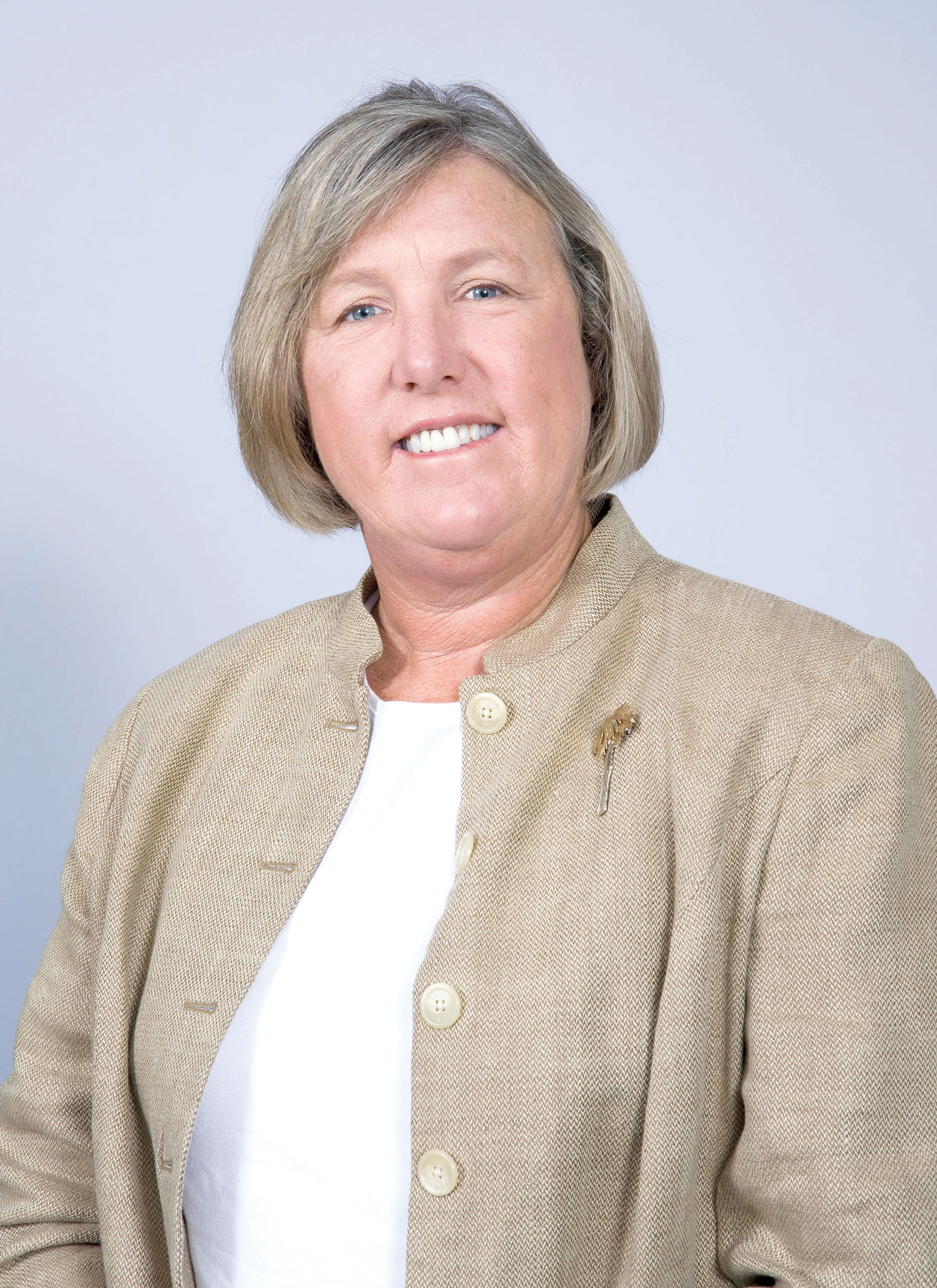
    Boo Major

    BLYTHEWOOD – University of South Carolina head equestrian team coach Boo Major has been named 2014 National Coach of the Year, it was announced Tuesday by the National Collegiate Equestrian Association.

    “This is a big honor for Boo and we felt she was very deserving of this award,” said Meghan Cunningham Corvin, president of the NCEA and head coach at UT-Martin.

    Major, who just completed her 17th season at the University of South Carolina, was voted national coach of the year by her peers. She guided the Gamecocks to a 15-3 record this season and their second straight Southeastern Conference championship, becoming South Carolina’s first team to win back-to-back SEC titles. She was also voted SEC Coach of the Year for the second year in a row. South Carolina finished as the national runner-up this season, losing to Georgia in a tiebreaker in the national championship.

    “I’m honored to receive this award from such an outstanding group of coaches,” Major said. “I certainly share this with my assistant coaches Ruth Sorrel and Carol Gwin, along with our entire team. We had a special group this year that was committed to winning another championship, and it was a great feeling to win the SEC Championship at home in front of our wonderful fans.”

    The NCEA head coaches voted on the coach of the year award last week at its annual summer meetings in Orlando, Fla.

  • Former Mayor Dead at 80

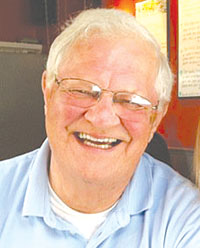
    Pete Amoth

    BLYTHEWOOD – Former Blythewood mayor Pete Amoth, 80, died Monday following a short illness. Elected mayor in January 2004, Amoth served only one term. While he won a landslide victory with a 67 percent turnout after a politically tumultuous campaign, his tenure as mayor was largely unexceptional. He is not remembered so much for his accomplishments as mayor, as for his run for office and for his role in changing the balance of power in a government bent on industrializing more than half the town against many of the residents’ wishes. His campaign was remarkable in that it fully engaged the town’s residents in the political process.

    As a member of the Town’s Planning Commission in 2003, Amoth began speaking out against proposed industrial zoning that he feared would turn out to accommodate nothing more than common manufacturing. He also campaigned successfully against the previous government’s plans to sell the Blythewood Community Center property as a way to raise funds to build a large park and meeting place next to the Town Hall. He not only spoke out in public meetings, but regularly published editorials and letters in the town’s newspaper. Amoth’s political momentum was boosted further when the Town Council attempted to reprimand him for his writings and public speeches, and called for him to meet with them in a closed executive session. Amoth rallied public support and refused to meet privately with Council.

    Amoth was also in the forefront when 60 residents filed three initiative petitions with circuit court, one of which called for Town Council to discontinue their practice of appointing non-residents to the Town’s Planning Commission and appoint only electors (voting residents of the Town.) In response to the three petitions, Town Council filed three civil actions against the 60 residents asking the court to make the residents pay court costs and more if Council prevailed in the case. Again, Amoth and his supporters rallied the public and the Council backed down from the lawsuit. Four months later, a circuit court judge ruled against the 60 on two of the petitions, but ruled that the Council had to either pass an ordinance in compliance with the petition to appoint only electors or hold a referendum and let the people decide the issue. Four days after the ruling, Amoth was elected mayor and his administration passed the ordinance allowing only residents on town boards.

    While Amoth’s administration was fraught with questionable hirings and firings at Town Hall, he broke new ground in several areas, including hiring a high end legal firm in Columbia to represent the town, a practice that continues today. After leaving office, Amoth continued to be active in community issues and ran, unsuccessfully, for mayor again in 2012. Although he was criticized by many of his supporters for doing little to move the town forward during his administration and for failing to carry out his campaign promise to build a new community center on the 5-acre Blythewood Community Association property, he left the town unleveraged with no debt, no millage and millions in its coffers. See obituary on page 8.

  • Driver in Fatal 2012 DUI Gets 20 Years

    WINNSBORO – A Beaufort man charged with felony DUI for his role in a fatal car crash in 2012 was sentenced to 20 years in prison last week by 6th Circuit Court judge Brian Gibbons.

    Ricky Lance Deel, 36, entered guilty pleas on May 6 for felony driving under the influence causing death, reckless homicide and two counts of felony driving under the influence causing great bodily injury. Gibbons sentenced Deel to 20 years for felony DUI causing death, 10 years for reckless homicide and 15 years for each of the felony DUI causing great bodily injury counts, according to the 6th Circuit Solicitor’s Office. The sentences are to run concurrently.

    Deel was arrested and charged on Nov. 18, 2012 after the 2000 Saturn he was driving southbound on I-77 in Fairfield County side-swiped a 2010 Dodge Durango carrying a family on vacation from Michigan. One teenager in the Durango was killed and another was paralyzed as a result of the accident, which occurred near the 41 mile marker.

    The family, from New Boston, Mich., was traveling southbound in the right-hand lane on I-77 in the Durango when their vehicle was side-swiped at 6:50 p.m. by Deel’s Saturn, which swerved out of the left-hand lane. The Durango overturned and a passenger, 16-year-old James Franklin Williams, was ejected from the vehicle and into the northbound lane. Barkley Ramsey, Fairfield County Coroner, said Williams was then struck and killed by several passing cars. Williams was not wearing a seat belt at the time of the collision. Shannon Henry, 18, was also ejected from the Durango and left paralyzed as a result of her injuries. Four other passengers and the driver in the Durango were transported to Palmetto Richland Hospital. Ramsey said the family was traveling from Michigan to Florida to embark on a cruise to the Bahamas.

    Deel’s blood alcohol level was determined to be .09 percent at the time of the accident, the Solicitor’s Office said. An investigation by the S.C. Highway Patrol revealed that Deel was traveling in excess of 100 MPH at the time of the crash.

    The case was prosecuted by Assistant Solicitor Riley Maxwell. Deel was represented by Mike Lifsey, Chief Public Defender of the 6th Circuit.

  • County Budget Gets Final Nod

    WINNSBORO – Council gave the final OK to the County’s 2014-2015 budget Monday night with only minor adjustments, none of which affected the bottom line from preliminary figures hashed out in Council’s work sessions. With a general fund of $25,665,917 and a special revenue fund of $7,629,997, the total 2014-2015 County budget weighs in at $33,295,894, down 1.06 percent from $33,598,604 last year, and includes no tax increases.

    The budget also includes $2,500 per district in discretionary funds, an item that attracted several comments from the public prior to Council’s final vote. During a work session on May 5, Interim Administrator Milton Pope said his staff was crafting a new policy governing the expenditure of those funds, but as of Monday night that policy was still in the works.

    “I’m not opposed to helping school kids, or anything like that, which is the way some of this has been spun, but there are ways to do those sorts of things without making it look like the money comes from an individual Council member,” District 7 resident Billy Smith said during the first public comments portion of the meeting. “There’s also ways to do those things without going through religious organizations.”

    Pat Williams of District 2 said the expenditure of discretionary funds should come before the full Council for a vote before the funds are dispersed, while Selwyn Turner, also of District 2, said the fund should be eliminated entirely.

    “If you would stop this $2,500 per district, you could save $17,500 in fiscal year 2014 and you would remove suspicions that are cast upon your group with red flags all over the place,” Turner said.

    Council members have exceeded their allotted $2,500 in the past, Turner said, while some money has been passed through churches and “questionable organizations for questionable use.” According to the S.C. State Ethics Commission, Councilman Mikel Trapp (District 3) doled out $2,500 on July 1, 2011 and an additional $1,234 six days later to CIC, Inc., a nonprofit for which his sister-in-law works. When that report became public last February, Pope said Council members had $3,500 in their discretionary funds in 2011; however, Trapp’s contributions exceeded that by $234.

    “What is going on here?” Turner asked rhetorically. “Isn’t it time we said goodbye to such deceitful and suspicious practices as slush fund, doubletalk, discrimination? Eliminate the discretionary fund.”

    Prior to Monday’s final vote on the budget, Pope said no discretionary funds will be dispersed until Council has approved a new policy.

    “There will be no distribution of funds until we actually approve the new policy for this, which actually has to go to committee, through our committee process,” Pope said. “That’s what everyone agreed to, so that’s what that process is.

    “Fairfield County is not the only local government in the state of South Carolina that has funding or special funding that’s not earmarked for special normal general fund operations,” Pope added, “but I do believe we need additional criteria on the policy to make the policy clearer so that we can answer some of the questions that have been asked about the policy itself.”

    Councilman Kamau Marcharia (District 4) said he had some concerns about the new policy, indicating that only individual Council members truly understood the needs of the respective districts. Marcharia’s district includes McCrorey-Liston Elementary School, he said, which has a large number of students on the free or reduced lunch program.

    “When school is out during the summer, those kids are hungry, they don’t have food,” Marcharia said. “Their mothers and fathers work two minimum wage jobs and they don’t have enough to provide for the kids. There’s information that comes to you in your community that normally you won’t hear about. Who else on Council is going to go with me to all these different sites and set up the meetings and talk to people over a period of time? I don’t see it’s such a simplistic thing that if I can’t make a decision about what I know to be factually wrong in my community to help someone, if I can’t make that decision, how do you gather that information to make that decision?”

    At press time, no date had been established for a vote on the new discretionary fund policy.

  • Council Considers PR Post, Newsletter

    Brown: Media Neglecting ‘Good’ News

    WINNSBORO – ‘No new taxes’ wasn’t the only news to come out of County Council’s budget workshop on April 5. Councilman Mikel Trapp proposed that the Council hire a public information officer and publish its own countywide newsletter to enlighten the people of the County. Council Chairman David Ferguson agreed.

    “We talked about a newsletter the other day, and I think if I read you right, that’s something that most of the Council thinks would be advisable,” Ferguson said. “But a County Information Officer would be an additional salary to pay.”

    Councilwoman Mary Lynn Kinley also revealed that Council had been discussing “hiring a public relations person to help us get started. I honestly think we need a good PR person,” Kinley said.

    When Councilwoman Carolyn Robinson questioned how they would mail the newsletter out so that everyone in the county received it, Kinley suggested, “We could purchase lists of addresses for mailing.”

    Councilman David Brown also thought the newsletter was a bright idea for Council.

    “One of the biggest drawbacks of County Council is that what we are doing isn’t being broadcast to the people,” Brown said. “The good news about the County is not getting out there.”

    Brown said he didn’t think the county’s two newspapers and TV station were doing enough to get good news about the Council to the people.

    “You have people in the County who have no idea why they are paying taxes or what we’re doing as far as making decisions for Fairfield County,” Brown said. “We’re in the process of doing something monumental as far as this I-77 Alliance is concerned. How many people know this?” he asked. “It will make a difference for this county, Chester and others.”

    As an example, Brown brought up the $24 million bond that Council passed last year.

    “We have a plan for that bond and we shared that plan here a couple of times and at Rotary. We have a good staff and they do a good job, but no one knows what we’re doing. It’s creating a life of distrust because people are not aware of this stuff,” he said. “When we did the $24 million bond, we had in there what we were spending money on. . . . No one knew this. And it was presented to the public properly.”

    Brown said, “We need to plan ahead and we need to toot our own horn and communicate that to the public. We need to all be working together.”

    Information outlining how the $24 million bond is to be spent was published in a quarter page chart in an article about the bond in the April 4, 2014 issue of The Voice.

  • County Discussion Skirts Law

    WINNSBORO – Showing little regard for state open government laws, County Council veered completely off agenda Monday night to discuss and then vote on a letter of support for Fairfield Memorial Hospital in its endeavors to partner with a larger facility. The item was nowhere listed on Monday night’s agenda for the regular Council meeting.

    Questioned about the abandonment of the agenda, Interim County Administrator Milton Pope said the letter was considered an “emergency item,” as the hospital’s consultants required the letter in order to present a proposal package this week to the Richland County healthcare facility considering the partnership. Questioned further, however, Pope admitted that he had been aware of the need for the letter as long ago as last Wednesday (May 7), when Council’s Hospital Committee met with the Fairfield Memorial Board of Directors to discuss the partnership process.

    “The public is short-changed when Council discusses matters not on an agenda,” said Bill Rogers, executive director of the S.C. Press Association, and advocate for open government. “They can’t hear the debate or make comments without knowing an item is up for discussion.”

    Rogers also noted that the S.C. Attorney General has said “emergency” exemptions to notice required in the Freedom of Information Act must relate to a time sensitive issue.

    “If they knew of the letter in advance, it isn’t an emergency under the law,” Rogers said.

    Read before Council by Pope, and signed by Chairman David Ferguson (District 5), the letter states, in part: “. . . I would like to offer support of the endeavors of Fairfield Memorial Hospital to affiliate with a larger facility in order to sustain its position in the county. We all know how important a hospital is to our community, not only for our residents but for the future development of our economy. Without a hospital, the county would not be able to recruit industries that provide jobs to our residents.. . .”

    The letter also said the County’ long-range plan included the construction of a new hospital “within the next five to six years,” and stated that the County “would be willing to work with the new partner in fulfilling this goal for the county . . .” That detail raised questions from some Council members and sent Pope back to his office for a 15 minute recess to amend the letter.

    “I agree we need to support the hospital, but I don’t think we need to put a time frame in there on building a new hospital,” Councilwoman Carolyn Robinson (District 2) said. “We don’t even start supposedly getting our first funds in from (the V.C. Summer Nuclear Station) reactor 2 until 2019. That would be pushing the next elected officials up against the wall in order to accomplish something in five or six years. I respectfully request we remove the number of years.”

    Although the letter clearly stated that the County would only agree to “work with” any new partner in building a new facility, and did not commit the County to building a new facility entirely on its own, Councilman David Brown (District 7) said he was concerned that the County might get stuck with a huge construction bill, as well as a new facility that did more to help Richland County and less to help Fairfield County.

    “What if this new partner wants us to build a $100 million hospital?” Brown asked. “If someone comes in here and wants us to build a showplace down on I-77, that would help northeast Richland County more so than Fairfield County at an unbelievable cost. Are we obligating ourselves to that?”

    Pope said the intent of the letter was merely to show the County’s continuing support for the hospital, and not to lock the County into any construction agreements. Nevertheless, Ferguson asked Pope to remove the language. Following the brief recess, Council reconvened and voted unanimously to approve the letter.

  • Proposal to Open Quarry Sets Community on Edge

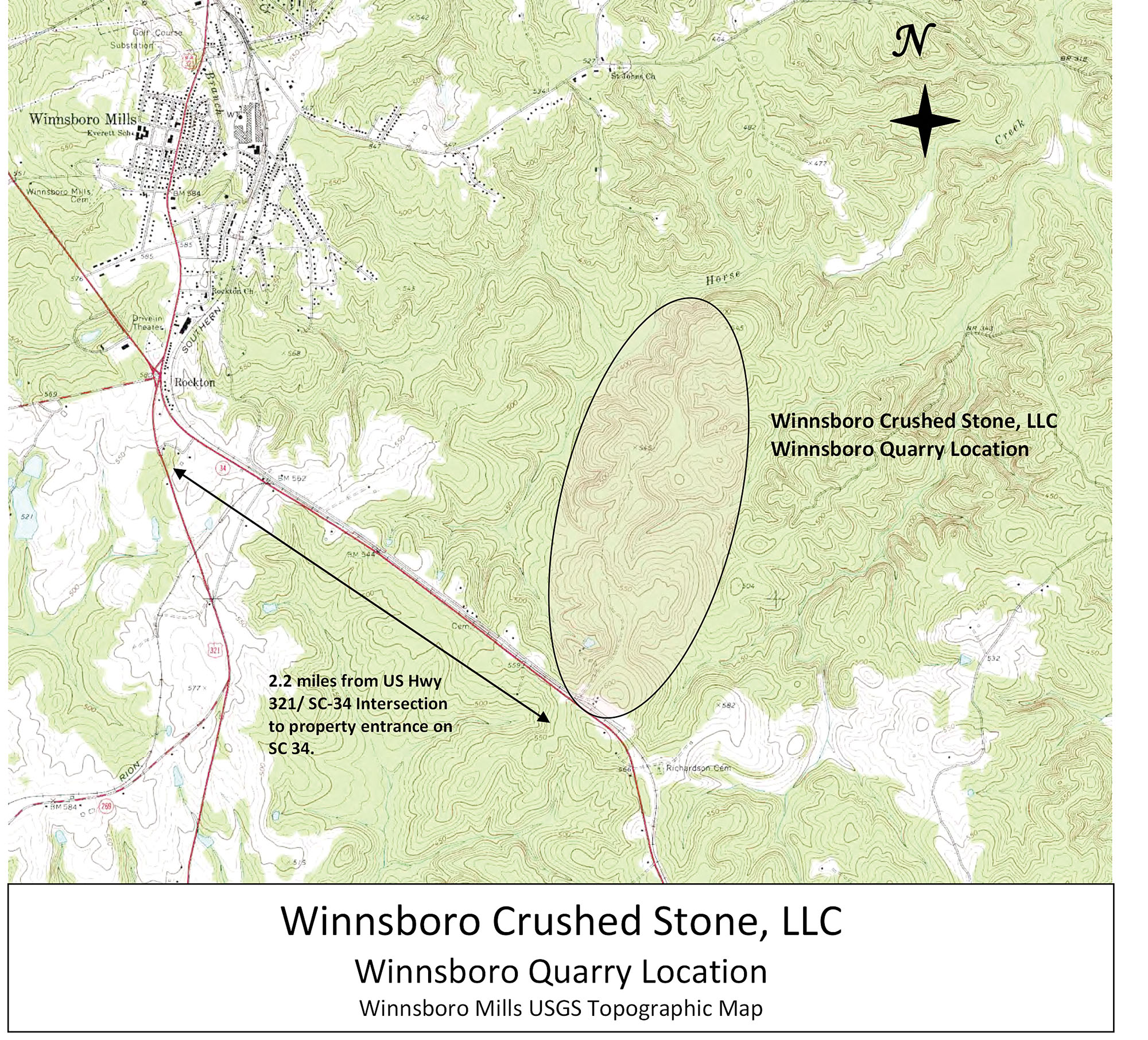
    The location of the proposed Winnsboro Crushed Stone Quarry.

    WINNSBORO – A proposal to mine granite from a portion of a more than 900-acre tract near the Rockton Thruway and process the stone into gravel has local residents up in arms. While the permit, submitted by Winnsboro Crushed Stone, LLC, is still pending before the S.C. Department of Health and Environmental Control (DHEC), residents of the surrounding area came before County Council Monday night to express their opposition to the quarry and ask Council to do the one thing it can do to kill the project.

    “The proposed quarry is in an area zoned as residential,” Dorothy L. Brandenburg, a Rockton Thruway resident said, “and the residents who live in the surrounding areas wish for that property to not be rezoned.”

    Winnsboro Crushed Stone, whose home office is listed as Monroe, N.C., according to documents available on DHEC’s website, submitted their application on March 13, but inspection of the land began more than a year ago. Archeologists with Brockington and Associates, Inc. of Charleston visited the site between April 15 and April 19 of 2013 at the request of Kennedy Consulting Services, LLC of Lexington, a group working for the Boggs Group, Inc., also of Monroe, N.C. According to their report, also available on DHEC’s website (www.dhec.sc.gov/environment/lwm/publicNotice.htm), the purpose of their visit was to help the Boggs Group obtain necessary permits to open and operate a granite quarry within a 569-acre tract.

    While the survey team stated that 10 archeological sites and six isolated finds were located on the property, the sites and finds were “small, low density prehistoric lithic or historic artifact scatters,” and were ineligible for the National Register of Historic Places.

    Between March 22 and April 16, 2013, Palmetto Environmental Consulting, Inc., of Lexington, visited the site to conduct an assessment of federally listed threatened and endangered species, as well as state listed rare, threatened and endangered species. Their report concluded that a “potential habitat for 10 of the 17” state and federal protected species known to occur in Fairfield County “appears to be located on the site,” none of the listed species “were readily observed” during their field investigations.

    But endangered species, as well as the method by which granite would be extracted from the site, were among the concerns expressed by Brandenburg’s mother, Lisa, during the first public comment portion of Monday’s meeting.

    “We have endangered species on our properties,” Lisa Brandenburg said. “The use of dynamite, the railroad spur that will be put in, the extra traffic on 34 is going to make it hazardous and a death trap for anybody trying to drive in and out on 34.”

    The mining application of Winnsboro Crushed Stone indeed notes the use of “blasting” as part of the mining process, but states that “all structures near the Winnsboro Quarry site that are not owned by Winnsboro Crushed Stone are located beyond ½ mile from the nearest point of blasting.”

    Interim County Administrator Milton Pope said that the County was not notified of the mining proposal until May 7, and since then, “there have been absolutely no other communications with the County about this mining application.”

    Chairman David Ferguson (District 5) instructed Pope to send a letter to DHEC requesting a public hearing on the mining proposal. The application expires on June 2.

    The property in question is located approximately 4 miles southeast of Winnsboro, 2.2 miles from the intersection of Highway 321 and Highway 34 and is accessible by the Rockton Thruway. The property owners are listed in the application documents as: Coleman Land & Timber, LLC (Hartsville, S.C. – 485.5 acres); Amos Davis Coleman, et. al. (Winnsboro – 349 acres); Jenkins & McLeod, LLC (Winnsboro – 35 acres); Quay W. McMaster (Winnsboro – one 43-acre tract and one 7-acre tract); and S.C. Electric & Gas (Columbia – 3.7 acres).

    The application states that 184.6 acres will be affected by mining and bonded; 185.6 acres will be affected by mining with bonding deferred; 147.4 acres for future reserves or future impact; and 405.6 acres for undisturbed buffer.