Blog

  • Council Tables Policy Revisions

    WINNSBORO – County Council tabled a vote Monday night on adopting revisions to the County’s procurement manual after Councilwoman Carolyn Robinson (District 2) asked for additional time to review the proposed changes.

    Changes to the policy include requiring Council’s approval for purchases over $25,000, as well as the definition of “close family” members related to County employees. Those members are defined as “spouse, sibling, in-laws, uncle/aunt, or cousin,” and are used to determine conflicts of interest in awarding contracts or purchases in the new manual. The previous policy placed no threshold for Council approval, provided the purchase was a budgeted item, leaving purchases at the discretion of the Procurement Director and the County Administrator, and contained no definitions of family members.

    The proposed policy gives the Director of Procurement authority to make purchases up to $15,000. Change orders less than 10 percent of the original contract price, or in the amount of $10,000 must be approved by the Administrator under the new guidelines. Change orders greater than 10 percent or more than $10,000 require Council’s approval.

    Language defining conflicts of interest has been amended to include County officials in addition to employees of the County and the Office of Procurement to ensure the County does not enter into any purchasing agreement that would constitute a conflict of interest. New language added to the conflicts of interest portion of the manual states, in part:

    “Any purchase or contract within the purview of this manual in which the Purchasing Director or any officer or employee of the county is financially interested, directly or indirectly, or which is, in any other manner, in conflict with state ethics laws, as they may be amended from time to time, shall be void if the other party knew or should have known of the interest or conflict; provided, however, that, before the execution of a purchase or contract, the County Administrator shall have the authority to waive compliance with this section when he or she finds such interest to be so remote or indirect as to be inconsequential and not in violation of law.”

    County employees, elected officials or close family members are barred from bidding on County contracts “if that individual is authorized to exercise decision making authority or responsibility with regard to that contract for the county, and any such person is declared to have a conflict of interest,” new language inserted into the manual states, and County Council members may not bid on or be a subcontractor for any County contract.

    Monday night, Interim County Administrator Milton Pope told Council his staff had added new language regarding subcontractors to the revised manual, to ensure subcontractors pay any applicable inspection fees and obtain any required permits for the specialty for which they are a subcontractor.

    The revised policy manual in its draft form can be viewed in its entirety on the County’s website, www.fairfieldsc.com.

  • Committee OK’s Renovation Manager

    Courthouse Project Recommendations go to Full Council

    WINNSBORO – Fairfield County Council’s ad hoc committee for the County Courthouse voted Monday evening to recommend to the full Council a project manager for Courthouse renovations and an architect for the Courthouse’s temporary location.

    The committee, composed of Council Chairman David Ferguson and Council members Carolyn Robinson and Kamau Marcharia, voted 3-0 to recommend Greenwood architectural and engineering firm Davis & Floyd to oversee the renovations and Lexington architectural firm Mead & Hunt to provide the design for the temporary quarters. Davis & Floyd will cost the County approximately $104,000, according to Milton Pope, Interim County Administrator. Pope said Council had the option of putting the work back out for bid, but since the County has already spent nearly $40,000 with the firm for preliminary work, and since the firm already has everything in place to begin work, he recommended Davis & Floyd.

    Timing also played a role in Pope’s recommendation. Funds for the Courthouse renovations are coming directly from the County’s 2012 bond issue of $24.06 million, and with 36 months from the date of the issue to spend that money, Pope said even sticking with Davis & Floyd “would be cutting it close.”

    “We want to make sure we fully utilize the money that we already spent for the preliminary work,” Pope told the committee.

    The cost of Mead & Hunt has yet to be negotiated, Pope said later.

    Mead & Hunt will redesign the HON Building, located on Highway 321 N. near the Midlands Tech campus, into which the Courthouse offices will move prior to renovations getting under way. Mead & Hunt’s design has to be approved by Council, Clerk of Court Betty Jo Beckham and Chief Justice Jean Toal of the S.C. State Supreme Court before a contract with HON’s current occupants, the S.C. State Emergency Preparedness Office, can be finalized. Mead & Hunt is the same firm with which the County contracted last year to provide a study and recommendation for the Courthouse relocation for $15,575.

    The committee said renovations may not even begin on the Courthouse for another year. The full Council will take up the committee’s recommendations at their July 14 meeting.

  • Brown: I’ve Had Enough

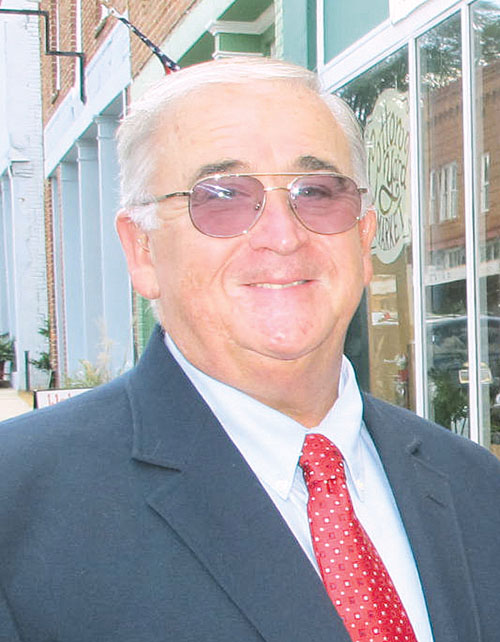
    David Brown

    District 7 Councilman Won’t Seek 9th Term

    WINNSBORO – Following this year’s election cycle, and for the first time in more than three decades, there will no longer be a Brown sitting on County Council. David Brown, the 32-year incumbent from District 7 who has been battling throat cancer for the last year, announced his retirement in a letter to The Voice Tuesday afternoon.

    In his letter, Brown said the bipartisan deal-making days of progress in the 1980s and 1990s were a thing of the past as politics in Fairfield County and nationwide has degenerated into a stalemate of “name-calling, lies and negativity,” and he has simply had enough.

    “I’m tired,” the 64-year-old Brown said in a telephone interview with The Voice Tuesday. “I’ve done it long enough. I’ve done it for half my life. It’s time to let some other young person have it, someone who’s not controlled by any certain group, someone who stands on his own two feet. That’s what I’m hoping will happen now that I’ve made this announcement.”

    Brown, in his letter, said Council struggles to find common ground, and the constant criticism of Council’s every move by local municipalities and the county’s state legislative delegation – while at times deserved – has taken its toll on him and is holding the county back.

    “The war of personalities that we continue to see from all angles of our elected leadership in Fairfield County is not helping to move our county forward,” Brown wrote. “While the infighting continues, the only people being hurt are the future generations of Fairfield County. The welfare of this county is bigger than personality and popularity contests, and our elected leadership should come to that realization.”

    Brown told The Voice that Council’s recent decision to turn over long-term planning duties to the Central Midlands Council of Governments (COG) to help prepare the county for the great influx of wealth expected in 2019 from the first of two new nuclear reactors at the V.C. Summer Nuclear Station in Jenkinsville was just one example of his frustration. That decision drew significant criticism from State Sen. Creighton Coleman and State Rep. MaryGail Douglas, who have been trying to bring the County to the table with SCANA and Santee Cooper to craft a long-term plan.

    “You go in there and you don’t say much and what you do say makes sense, and then the legislators are going to criticize it,” Brown said. “The best thing we could do was to go with the COG for that plan. The plan (Coleman) wanted to do wasn’t going to go anywhere. I wanted something that could get passed (by Council).”

    During his 32 years as a Councilman, Brown has devoted himself to economic development in Fairfield County. In the 1980s, he was a member of a Council that helped usher in an economic boom for the county, with Mack Trucks, Standard Products and the RiteAid Distribution Center, all of which was a joint effort, Brown wrote. In the 1990s, Brown and Council worked across party lines at the state and national level to help bring the first international industrial park in the state to Fairfield County – the park that bears his family name on Cook Road.

    As the political climate changed, Brown told The Voice, and bipartisanship became anathema, economic development opportunities dried up.

    “I devoted myself to economic development so my children and grandchildren wouldn’t have to leave Fairfield County just to make a living,” Brown said. “I’m leaving without that dream being fulfilled, but hopefully some of the things we’re working on now will open some opportunities up. I dedicated my life to putting industry in the park that has my dad’s name (Walter Brown) on it, but I never got paid for economic development.”

    Brown, who sits on the COG as a private sector member, said he hopes to continue his service to the county there. In the meantime, he said, he will devote his time to being a grandfather to his two grandchildren – Emma, 20 months, and Walt, 3 months.

    “This Saturday will be the one-year anniversary of finishing my cancer treatment,” Brown said. “Going through cancer changes the way you look at things. If I can be a halfway decent granddaddy, I deserve that. Being a granddaddy is where I’m needed.”

  • Anomaly Hill

    What’s a ‘Monadnock?
    You’re looking at it, on Parson’s Mountain.

    A 93-mile trek through Greenwood to Abbeville will take you to the Long Cane District where a geographic anomaly revives memories of Oconee and Pickens County vistas. Parson’s Mountain, a monadnock, sits alone overlooking the forest below as it stretches to the horizon. Geologists call this type of hill a “monadnock,” which is a technical term for a mound of hard rock left when all the surrounding land erodes away. It towers 832 feet over the Sumter National Forest. It’s a tough, winding climb to the top but worth it. Peering through the green canopy of broad-leaved, deciduous trees, the earth drops away into blue haze. It’s especially beautiful when fall colors arrive.

    Dreams of El Dorado died on this rugged mountain. Feel up to a challenging climb? Take the spur that branches off the westernmost portion of trail and you will climb past Civil War-era gold mines to the summit. I made the climb. Up top stands a fire tower and I found a strange arrangement of stones that appear to be a compass. Stones spell out “N.” You’ll find an upright toilet in the woods just behind the tower. Use at your own risk.

    Growling engine sounds float up through the canopy . . . more than 12 miles of off-road trails crisscross the mountain’s flanks. Come fall, fluorescent orange will dot the greenery along the Morrow Bridge and Midway Seasonal Camps as hunters arise and go forth.

    From the top of the mountain you get a great view of the mixed pine and hardwood forests of the Piedmont. It’s quiet atop Parson’s Mountain, though a diamondback rattler rustled tall grasses right by the trail leading to the top. My walk down was much faster.

    Nearby is the Parson Mountain Lake Recreation Area. A calm, 28-acre man-made lake distinguishes the wooded land. It’s a picturesque area with a 23-acre campground devoted to tent and trailer camping. People like to hike and fish here. Fishermen come here to catch bass, crappie, bream and catfish. Wading birds, including great blue heron, frequent the lake. A good-size picnic area sits near a swimming area (no lifeguards on duty).

    The area offers relaxation and solitude as well as easy access to a variety of recreation activities. The day use area was designed with an earthen pier, a pedestrian bridge and a boat ramp for non-motorized boats.

    Before you go, inquire to see if the area is open. It’s open seasonally from May 1 through Nov. 15. Even if the area is closed, it’s worth the drive to see how Parsons Mountain rises above the land, a mountain seemingly left behind by the Blue Ridge Mountains.

     If You Go …

    454 Parson’s Mountain Road
    Abbeville, S.C. 29620

    864-446-2273

    • From Abbeville go south on Route 72 to South Main Street; turn left and look for signs.

    Open from 9 a.m. to 9 p.m. during daylight saving time

    • $3-day use fee per vehicle. $7 per campsite per night. Self-serve fee station. Campsites are first come-first served.

    • GPS coordinates: GPS: 33.80497, -81.931278

    • www.fs.usda.gov/recarea/scnfs/recarea/?recid=47187

    Learn more about Tom Poland, a Southern writer, and his work at www.tompoland.net. Email day-trip ideas to him at tompol@earthlink.net.

  • Tree Ordinance One Vote from Becoming Law

    BLYTHEWOOD – A proposed Landscape and Tree Preservation ordinance that has been in the works for more than a year is one final vote away from becoming law. If passed in its proposed form, the ordinance would require not only all new residential and commercial development in Blythewood’s Town Center District (TCD) to conform to stricter rules and regulations for landscaping and tree preservation, but, after five years, all established commercial and residential properties in the TCD would have to conform with the ordinance as well.

    Conformity will mean that owners of these properties must establish landscape buffers and achieve a minimum tree density on their properties. Tree density will be based on a Density Factor Unit (DFU) that takes into consideration the number, size and sometimes specimen of trees in relation to the size of the property. It is a point system for tree protection, explained the Town’s planning and zoning consultant, Michael Criss.

    What if a property has no trees? Criss said the property owner would have to either plant the required DFU or contribute to the Town government’s fee-in-lieu Tree Fund established to fund the planting, maintenance and replacement of trees on public rights-of-way and public property within Blythewood town limits.

    For properties that will not bear the required density of trees for whatever reason (perhaps they are already paved with impervious surfaces or have underground or overhead utility lines), the Town/Zoning Administrator will have the authority to allow/require property owners to achieve alternative compliance by making a financial contribution to the Tree Fund in equivalent monetary value of the trees not planted. Such decisions by the Town/Zoning Administrator are subject to appeal to the Board of Zoning Appeals and then Circuit Court. The equivalent monetary value of a tree includes the total costs of the tree, professional planting, maintenance and guarantee.

    Criss said the proposed ordinance would be more demanding on commercial properties than on residential properties, requiring tree density for commercial properties to be 50 percent greater than for residential properties. For example, under the point system, a treeless half-acre single-family residential property will be required to be planted with a DFU of 20 units per acre, equivalent to 10 2-inch-caliper trees. A half-acre commercial property would require a DFU of 30 units per acre, equal to 15 2-inch-caliper trees.

    Compared to the current landscape and tree preservation code, the proposed ordinance adds a five-year conformity provision in the TCD, bases tree replacement on overall tree density rather than inch for inch tree diameter, gives more protection to the largest trees, adds commercial building foundation planting and has more specific planting areas and plant numbers for parking lot islands.

    For existing single-family residential properties, Criss said the proposed ordinance increases the tree diameter that can be removed without a tree removal permit, from 6 inches up to 8 inches. Landscape plans for ground cover, flower beds, or shrubbery would still not be required.

    The ordinance specifies the kinds of trees to be planted on properties in the town limits unless they are otherwise approved by the Town/Zoning Administrator. The Administrator will also have the authority to require landscape plans to be prepared by qualified designers.

    “The primary goal of the tree protection ordinance,” Criss said, “is to maintain and protect the large healthy trees in the town. The proposed ordinance is biased in favor of saving large healthy trees rather than removing and replacing them, and replacement trees are preferred over contributions to the Tree Fund.”

    While new builds on commercial and residential properties outside the TCD will be required to adhere to the ordinance, established land uses outside the TCD will not be required to conform to the ordinance after the five year period. However, commercial properties inside and outside the TCD would be required to conform if major improvements are made to the structures on the properties through renovations or expansions.

    Mayor J. Michael Ross told The Voice that the final vote would not be taken on the landscape and tree preservation ordinance at the Monday evening regular Town Council meeting. The proposed ordinance is available for review at the Town Hall during regular hours, and a public hearing is required to be held prior to that vote. The next Town Council meeting is Monday, June 30, at 7 p.m., at the Manor. For questions about the ordinance contact Michael Criss, the Town’s zoning and planning consultant, at 754-0501.

  • Rockton Group Granted Council Time

    WINNSBORO – Fairfield County Council’s Presentation Committee voted 3-0 Monday night to allot 10 minutes at Council’s June 23 meeting for opponents of a proposed granite quarry off Rockton Thruway near Winnsboro. Dorothy Brandenburg, who represents the opposition to the quarry, said she wanted to review for Council the list of the community’s concerns so that Council might then ensure the S.C. Department of Health and Environmental Control (DHEC) is aware of those concerns.

    “One of the key things I want to present is getting everybody on the same page, so the Council knows what we want, the people of the county know what we’re looking for and DHEC will know what we’re looking for,” Brandenburg said. “The way (DHEC) presented it to me is they have a checklist of things they go through and these studies that I requested don’t have to be addressed unless they are requested.”

    Council Chairman David Ferguson (District 5) said that the application for the mining permit by Winnsboro Crushed Stone, LLC is entirely in the hands of DHEC, but that the County does have a role in making sure the community’s questions are addressed.

    “The Council doesn’t have a say-so about this,” Ferguson said, “but what our responsibility is is to make sure that the questions are answered so they can be understood by the public and all the questions get answered.”

    Brandenburg also asked the committee, which consisted of Ferguson, David Brown and Dwayne Perry, if the County planned to revise their existing land use management ordinances to make them more stringent for future mining operations. Milton Pope, Interim County Administrator, said there were no plans to revise the ordinances, and that the County had in fact just updated the ordinances two years ago.

  • Board OK’s Budget

    WINNSBORO – The Fairfield County School Board voted 4-2 on June 12 to give final approval to the 2014-2015 budget of $35,548,351. Board member Annie McDaniel (District 4), who joined the meeting by telephone, and Board member Paula Hartman (District 2) voted against the budget. Board member Andrea Harrison (District 1) was absent.

    After the meeting, Hartman said she cast her vote in the negative because she had not received information she had requested regarding teacher salaries.

    “I was trying to judge people (whose salaries) hadn’t been frozen,” Hartman said. “Others are getting raises. Quite a few teachers have been frozen. I was asking how long they had been frozen and how much they were making.”

    Hartman said she had requested a list of salaries over $50,000 a year, but said that Board Chairwoman Beth Reid had denied her request. Reid said the salary list was not provided because the Board as a whole did not request that information. District salaries over $50,000 a year are public information, Reid said, which could be obtained with a Freedom of Information Act (FOIA) request.

    “She can certainly have that information under the Freedom of Information Act,” Reid said, “but individual Board members should be reminded that individual Board members have no power. The Board as a whole can request information. If she wanted that information, she could have it under the FOIA.”

    McDaniel, who signed off from the meeting after casting her ‘No’ vote, said later her concerns centered on the superintendent’s contingency fund.

    “While I fully support all funding for children and instructional purposes as well as effective and efficient central support for our district, I cannot in good faith as a trustee for the district vote for a budget that allows over $40,000 (in) funding without board approved guidelines and accountability,” McDaniel wrote The Voice in an email this week, “particularly since I have been denied the expenditure detail transaction report from the accounting system for the current year ‘discretionary’ expenditures.”

    In response to McDaniel’s questions during discussion of the budget, Reid and Superintendent J.R. Green confirmed that the fund stood at $42,500 for the coming fiscal year, and while the fund was labeled a “contingency” fund it was to be used at Green’s discretion.

    “I support a district approved contingency account, but not a ‘discretionary’ account,” McDaniel’s email continued. “Finally, I am concerned about the board’s authority to approve taxpayers’ dollars to be used at one individual’s ‘discretion’.”

    The 2014-2015 budget carries the same millage rate – 203.1 mills – as last year’s budget, according to Kevin Robinson, Director of Finance. Revenues are expected to increase by $1.2 million, Robinson said, as a result of an increase in the property tax base, while expenditures – chiefly in salaries and benefits – will rise by approximately $1 million.

    The Board also gave approval of a Tax Anticipation Note (TAN), not to exceed $5.7 million, to help carry the District through January when the majority of tax revenues come in. Last year the District issued a TAN of $6.1 million. The note will be acquired through the S.C. Association of Governmental Organizations (SCAGO), which reduces the cost for such loans, Robinson said. While Robinson did not yet have numbers for the 2014-2015 interest rate, he said last year’s rate was around 1 percent.

    Prior to taking up the budget, the Board voted 4-2 to accept a bid of $12,582 from John R. Frazier, Inc. to harvest 10 acres of timber around the existing Career and Technology Center. It was the only bid received by the District on the project, which was bid out by Forest Land Management, Inc. The timber is being harvested to prepare the Career Center for its new role as headquarters of the District’s Transportation Department once construction on the new Career Center, between the middle and high schools, is complete.

    McDaniel and Hartman voted against accepting the bid. McDaniel said she wanted to know what efforts the District made to reach out to local companies to encourage them to submit bids, and Hartman said she felt like the Board should have waited to vote until additional bids had been received.

  • COG Deal Under Fire at Joint Meeting

    WINNSBORO –After an hour of pleasantries and general government updates in the Midlands Technical College conference room Monday night, tensions rose at the quarterly Fairfield County intergovernmental meeting as the discussion turned to the County’s recent decision to hand over their strategic long-term planning duties to the Central Midlands Council of Governments (COG).

    County Councilman David Brown (District 7) proposed the partnership during Council’s May 27 meeting and said then that the COG-led plan would help prepare the County for the massive influx of cash expected to start rolling in in the next five years from the two new nuclear reactors under construction at the V.C. Summer Nuclear Station in Jenkinsville. But that decision was questioned Monday night by members of Fairfield County’s legislative delegation, who said they have been trying to organize a plan for those revenues for months. State Sen. Creighton Coleman (D-17) and State Rep. MaryGail Douglas (D-41) both said they have been fending off attempts at the state level by counties intent on siphoning off V.C. Summer revenues for use in their home counties, and a cohesive plan for the use of that money is essential to those efforts.

    “We have tried to initiate conversations for plans for this county with that windfall of money coming,” Douglas said, addressing County Council Chairman David Ferguson (District 5) and County Administrator Milton Pope. “Can you tell me when we can look to have that meeting with County Council, or shed some light on that?”

    When Pope reviewed the May 27 vote to partner with the COG, Coleman aired his frustrations.

    “What gets me is, I met with you, with MaryGail, sent two letters trying to get together on this plan,” Coleman said. “I had SCE&G and Santee Cooper that would pay for that plan. That would pay for it. And I have yet to get any kind of cooperation from the County saying that we’ll sit down at the table and get together. Nothing. We’ve got a letter from (the Town of Winnsboro), everybody but the County, the Town of Ridgeway, Jenkinsville, the school district, everybody but the County.”

    But Ferguson said he, too, was frustrated and that the County had attempted to set up numerous meetings with Coleman with no results.

    “It certainly is frustrating,” Ferguson said. “It’s frustrating that for 18 months we tried, this Council tried, to have a sit-down meeting with you as a collaborative group – “

    “When?” Coleman interjected, then said, “I’m not going to argue with you.”

    “No, because I’ve got the correspondence I sent you,” Ferguson continued, “and you sent it back, so don’t sit there and tell me you’ve tried to meet with us.”

    “I’d like to see that letter,” Coleman said.

    A few moments later, County Council Vice Chairman Dwayne Perry (District 1) read from a letter he had pulled up on his email account. Perry said the letter was dated May 20, and addressed to Coleman and Douglas. The letter outlined the County’s intentions to work with the COG while also inviting the delegation to “participate in the upcoming process.”

    “Creighton, I will tell you, I’m thinking you are involved in the process,” Perry said. “I didn’t realize we were trying to not invite you all to be in this process. I’m reading this letter and we’re saying we want you to be involved, we want you to come to the table. Maybe I’m misunderstanding.”

    Brown said his May 27 motion was not meant to be exclusive of anyone wanting to participate in the planning process, but was instead only intended to keep the County from having to create a planning department.

    “This has nothing to do, I don’t think, with the idea of Central Midlands regional planning council,” Douglas said, “because we know that’s what they do. They do a good job. What has happened is that as we have anticipated this money coming – I mean a boatload of money is coming our way – and here we are, we don’t really have a plan in place and whenever we tried having some conversation about it, it never went anywhere. And then to read in the paper that Central Midlands was going to be the planner for it . . . it has the appearance that a door is shut to two people in the delegation. That’s the way I feel. Whether you like it or not, that’s the way I feel.”

    Pope, meanwhile, made it perfectly clear that at the end of the day the future V.C. Summer revenues would be controlled by the County.

    “Let’s be clear about this: the moneys that are going to be coming to the County are going to be moneys that are going to be coming through fee in lieu (of ad valorem taxes),” Pope said. “Let’s be totally clear about this. What that means for everybody else is, if that money comes through fee in lieu, that comes through the auspices of County Council, because that’s the way those things are structured.”

    Efforts at the state level by other counties attempting to gain some control over that money, Pope said, were still a threat, and the County needs the support of the legislative delegation to beat back those attempts.

    “In the letters we wrote to you that’s exactly what we said,” Coleman replied, “and if we want to be able to defend and protect that money down there at the Statehouse, the first thing you have to do is have a well-thought-out plan that the whole community is involved in making that decision.”

    “I don’t think, or I have not heard from one Council member that I work with, that they do not want involvement from (the legislative delegation),” Pope continued. “Also, I was directed by this Council to, certainly, in my email to open the invitation to the delegation to be able to do that.”

    Councilwoman Mary Lynn Kinley (District 6) said Council would not move forward on a plan without including input from all parties.

    “We have never said we would just vote on what Council wants,” Kinley said. “We would be crazy not to include you all. We started these intergovernmental meetings years ago because we felt like we need input from everybody in the county.”

    Dr. Roger Gaddy, Mayor of the Town of Winnsboro, tried to throw a little cold water on the fire, saying the main issue appeared to be communication between the interested parties.

    “I think it’s all about communication,” Gaddy said. “Once you open up the opportunity then there’s a responsibility to have a specific time and date set to make sure everybody’s on the same page about sitting down and talking about it. . . . You invited us to the party you just didn’t tell us when it was.”

    Gaddy said that he will assume the chairmanship of the COG next month, and in that role he will do everything he can to encourage the COG to include all of Fairfield County’s municipalities in the planning process.

    “If we get SCE&G and Santee Cooper to pay for it, that’s good,” Gaddy added, “especially with the feeling they funded this first study (the Genesis study) and very little was done. I think it’s imperative for the County to send some communication to them to let them know what they have implemented in that study that was done to give them some assurance they didn’t throw their money down an empty well and I would encourage you to do that.”

    Ferguson said Council would vote on a meeting date to discuss planning for future V.C. Summer revenues at Council’s June 23 meeting.

  • Quarry Foes Get DHEC Meeting

    WINNSBORO – Members of a group of local citizens opposed to a granite quarry slated for a plot of land off Rockton Thruway will have an informal meeting with representatives of the S.C. Department of Environmental Control (DHEC) next week.

    Dorothy Brandenburg, who heads the group, announced the meeting Monday night while appearing before County Council’s Presentation Committee. Tuesday, DHEC confirmed that a meeting is tentatively scheduled for June 26 at 3 p.m. at the County Administration Building.

    “Our goal is to provide as much factual information as possible and answer whatever questions are posed by this small group of residents,” a DHEC spokesperson said Tuesday. “At this meeting, the residents will help us determine if a larger community meeting would be helpful prior to a public hearing.”

    Brandenburg said Monday night that an invitation was also extended to Winnsboro Crushed Stone, LLC, the applicant for the mining permit.

    “As we move forward, if they come in here we don’t want to be that thorn in their side that never includes them on anything,” Brandenburg said Monday. “That just causes problems in the long run. We want to be on as good a standing as we can in case they do come in because we want to make sure they’re doing what they need to be doing.”

  • Ridgeway Approves Budget, Water Rate Hikes

    RIDGEWAY – Town Council passed final reading on a $576,905 budget for fiscal year 2014-15. That amount includes $217,550 in the general fund and $359,355 in a water and sewer fund. Although a public hearing on the budget was scheduled prior to the meeting, no one signed up to speak. Council also passed first reading to amend Sections 4 and 6 of the Water and Sewer Ordinance that would increase rates on water and sewer by 78 cents per thousand gallons for all customers.

    It was announced that the Town received a Rural Infrastructure Authority grant for $220,000 to upgrade its wastewater treatment plant to include changing from disinfection with chlorine to UV disinfection and improvements to aeration and flow monitoring. For its part, the Town will have to come up with $18,900 in local funds plus pay for engineering and permits for the project.

    Council also announced that the Central Midlands Council of Governments (COG) and the S.C. Department of Transportation (DOT) will once again hold meetings to receive public input concerning truck traffic through downtown Ridgeway to determine the safest route. Mayor Charlene Herring said that while public meetings were previously held on this matter, and that 77 percent of those attending did not want to change the route, she said there were a number of misconceptions that the COG and DOT would like to clear up in continued public meetings.

    Following an executive session at the end of the meeting, Council voted unanimously to request bids for the engineering and permitting fees for the upgrades and changes to the Town’s water treatment plant. It also voted to submit an application for a lease agreement with Norfolk South Railroad to lease property located in the middle of the Town and known as the cotton yard.

    “We frequently have to call the railroad about the cotton yard because we use it for so many things. So when we called not long ago, the person at the railroad suggested we just lease the property,” Councilman Russ Brown told The Voice. “They gave us a good rate and told us we would be responsible for insurance on it. Our goal is to sign the lease, accept their terms and get the insurance. That’s great for us.”

    Brown said that as soon as the mayor signs the contract the Town will release the cost of the lease agreement.