Blog

  • Diggin’ Ditch Pond

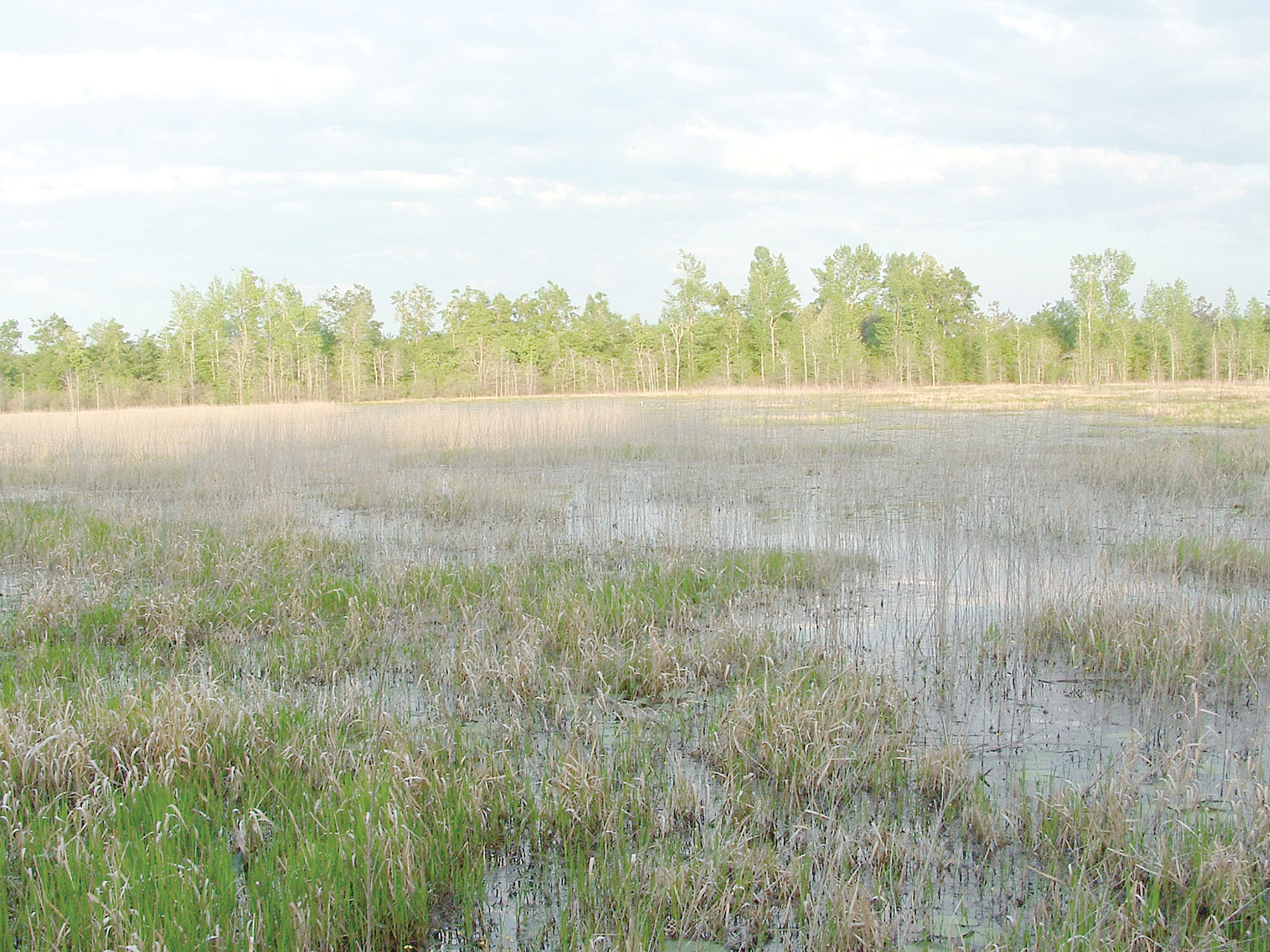
    Ditch Pond Heritage Preserve, near Williston, S.C. (Photo/Tom Poland)

    Drive south-southwest about 85 miles to Williston, S.C., and on Highway 78 near SC 781, you’ll see a small lane that leads to Ditch Pond Heritage Preserve. Ditch Pond, as it’s called, is a Carolina bay that takes its name from ditches that attempted to drain the bay. Despite the ditches, Ditch Pond is relatively undisturbed, a rarity as Carolina bays go. And as many Carolina bays go, it’s a rich repository of wildlife and vegetation.

    I went there back in late April. Though I was closer to the Piedmont than the Lowcountry, Ditch Pond gave me the feeling I was down near Beaufort or Charleston. A short walk from the entrance, I found myself in an alleyway of large oaks and Spanish moss. The skeins of Spanish moss hung long and majestically and late afternoon light lit up as if on fire.

    I made my way to the boardwalk that extend into the bay’s open area and here the sunlight slanted low against a distant edge of trees with light bark and willowy canopies. Between that and far away edge and me, gallinules hopscotched across lily pads and herons stalked the shallows as braces of ducks jetted overhead. To the far left of the end of the boardwalk a patch of blooms the color of margarine broke the greenery. Must have been blooming bladderworts. The sunlight, fading from its all-day travels, yielded a soft incandescent glow to everything and the cumulative effect seduced me into thinking, “Beautiful and wild like Africa, just like Africa.” I half expected to see a herd of wild beasts thunder down to the water edge only to blunder into an ambush by big crocs.

    Ditch pond sits in Aiken and Barnwell counties. The S.C. Department of Natural Resources owns and maintains Ditch Pond Heritage Preserve, some 296 acres. Ditch Pond, about 25 acres, was first documented in 1973 as a Carolina bay. Eight rare plant species of concern inhabit the property, including blue maidencane, Robbin’s spikerush, creeping St. John’s wort, piedmont water milfoil, awned meadow beauty, slender arrowhead, Florida bladderwort and piedmont bladderwort.

    Be sure to take a camera. Find a good spot to sit and be still and wait to see what creatures venture forth. If you go, I hope your luck is as good as mine. Just before leaving — it was getting dark — I walked over to photograph the DNR signs. Glancing across the sandy parking lot I spotted a crumpled green wad of paper — a $5 bill. You see, it pays to take day trips to places off the beaten path.

    If You Go …

    No fee

    No facilities

    Do not disturb any plants.

    Stay on the trail.

    Ditch Pond Heritage Preserve/Wildlife Management Area

    Latitude 33.41542, Longitude -81.47137 [PK367]

    Williston, S.C. 29853

    Directions: From Williston, drive west on US 78 for approximately 3.0 miles and the parking area is on the right.

    www.dnr.sc.gov/mlands/managedland?p_id=103

    Learn more about Tom Poland, a Southern writer, and his work at www.tompoland.net. Email day-trip ideas to him at tompol@earthlink.net.


  • Sign Appeal Gets Review

    BLYTHEWOOD – The Board of Zoning Appeals (BZA) is scheduled to meet Monday evening to hear the appeal of an administrative denial for multiple signage on a commercial property on Blythewood Road. The meeting was rescheduled from July 14 when the Board could not convene for lack of a quorum.

    The appeal is being brought by Sandy Khan, owner of the State Farm Insurance office located in front of the IGA on Blythewood Road. In May, Khan asked former interim Town Administrator Jim Meggs to allow her to place two signs on her property – one for her insurance business and a second for the Chamber of Commerce and Visitors’ Center, both of which are located in a building at the back of Khan’s property. That building also houses the Blythewood Artists Guild, and all three offices rent space from Kahn. Meggs denied the request.

    There are currently four signs on the property – a large sign on the front of the property that advertises State Farm Insurance, the Blythewood Artists Guild and the Visitors’ Center; an approximately 3×4-foot free-standing sign at the back of the property advertising the Blythewood Artists Guild; a smaller sign in the side window of the Guild and an approximately 3×3-foot sign on the front porch of the Guild. An additional sign for the Chamber and Visitors’ Center would bring to five the number of separate signs on the property.

    In a memorandum dated July 11, Meggs updated the BZA on the issue, explaining that, “Only one sign is permitted.” Kahn is appealing the decision to the BZA, saying she feels that because two of her tenants (the Chamber and Visitors’ Center) are civic organizations, they should be exempt from the requirements of the sign ordinance that other businesses in the town must follow.

    The meeting is scheduled for 7 p.m. Monday at the Manor.

  • Crews Race to Beat Clock on Rimer Pond Road

    With time running out before heavy school traffic begins to flow, crews make haste on Rimer Pond Road. (Photo/Barbara Ball)

    BLYTHEWOOD – The deadline is looming for construction crews on Rimer Pond Road to finish straightening and widening the road’s curve and have it paved and ready to go by Aug. 31. With schools in Richland District 2 starting on Wednesday, Aug. 20, and the Rimer Pond Road detour still in place, traffic along Langford Road, Highway 21 and Blythewood Road is expected to be backed up during heavy traffic hours. The S.C. Department of Transportation (SCDOT) closed Rimer Pond Road to thru traffic on April 14.

    Jason Fulmer, Project Manager for the construction, told The Voice last week that he thinks the work will be finished and paved on time.

    “To accommodate moving the road over as much as 50 feet from center line in some places, we had to move utility lines, cable lines, gas and sewer lines. We also installed storm water pipes, but there are no water lines in that area,” Fulmer said. “I think everything is looking good to open the road on time.”

    The curve that wraps around Felix Rimer’s Pond has long been a high accident area and is being re-aligned for safer travel starting between the entrance to Eagles Glen and Perfecting Faith Church and continuing to a point near where the road intersects with Adams Road, according to Fulmer.

    Besides moving the road in some areas, Fulmer said the crews are also widening it about 2 feet on each side and paving the shoulders for safety. He said the road will still be two lanes, but will have guardrails and rumble strips installed at the low point in the curve where there are a couple of creeks alongside the road.

    When a statistical comparison was made a few years ago with other one-half mile sections of roads around the state with high crash incidents, the curve on Rimer Pond Road easily met the qualifications for improvement – 20 crashes in four years with 12 of those being injury crashes, according to Joey Riddle, Safety Program Engineer for SCDOT. But during construction, traffic has been detoured though downtown Blythewood causing an increase in traffic congestion in downtown Blythewood and on main roads leading into and out of the town, especially at times when school traffic on Langford and Rimer Pond roads is heavy.

    Libby Roof, Executive Director of Communications for Richland School District 2, told The Voice that the District has notified parents in the area about the detour and advised them to take it into consideration when dropping off or picking up their children.

    “We have posted updated bus schedules on our District website and some may be different than last year,” Roof said, “so parents need to check those.”

    She also reminded parents that traffic is always worse the first couple of days of the new school year and could be expected to be very congested with the detour still in place.

  • P.C. Previews Cobblestone Plans

    BLYTHEWOOD – The face of Cobblestone may soon be changing, and members of the Planning Commission, viewing the proposed changes for the first time at a work session Monday night, want to be sure the community has an opportunity for input. But representatives from D.R. Horton, the developer now holding the reins at Cobblestone, told the Commission that at this stage they were only willing to present the plans in a public meeting format, and not to residents individually.

    “I think that it would be a little bit irresponsible to just put it out there, if they’re just sitting there in their living room sitting and looking at the document without having someone like us to answer their questions,” D.R. Horton’s Ben Stevens told the Commission after Commission Chairman Malcolm Gordge asked if the developer planned to make the revisions available to residents. “We prefer to do it in a controlled environment where their questions can be answered.”

    Stevens said as the project progressed “it would be a good idea” to get input from residents, but not at this stage. That prompted a word of caution from Commissioner Buddy Price as well as a stern rebuke from Bob Mangone, a Town Councilman attending the work session as a Cobblestone resident.

    “You’ve got a lot of people who live out there now who really need to be brought along in the process,” Price, also a Cobblestone resident, said, “and it’s a mistake, I think, to present anything that’s really changing the dynamic of the community. Don’t do this in a vacuum. I think it would be irresponsible for us to take a look at something and give some kind of final blessing on it if we haven’t gotten some kind of feedback from the community.”

    Mangone said he was concerned that there has been, thus far, no community input into the plans and that, at this point the plans do not, contrary to Horton’s claims otherwise, represent the residents’ vision for Cobblestone.

    “When will you come to the great unwashed and uneducated of Cobblestone and allow us some access to your wonder plan?” Mangone asked the Horton group. “I find that very insulting, by the way, that we couldn’t look at a basic plan and not have some way of commenting on it. We’re not all engineers but we’re not all dolts, either.”

    But Andrew Allen, the Horton representative who presented the majority of the plan to the Commission Monday, said the purpose of his presentation was to open the plans to the public. Horton was not, at this stage, seeking approval from the Commission, but only presenting a draft plan. A more detailed, final version of the plan will come before the Commission at a later date, he said, and would still need a final OK from Town Council.

    Cobblestone operates as a Planned Unit Development (PUD), with customized zoning unique to the neighborhood. Michael Criss, the Town’s Planning and Zoning consultant, said the changes presented Monday night would require an amendment to the existing PUD. That amendment would also have to be approved by the Planning Commission, he said, before going to Council for a final OK. The original PUD for Cobblestone was approved in 2003, and Allen said it was out of date and out of step with what Horton had in mind.

    “It is our feeling that PUD no longer represents our vision for the community, the community’s vision for Cobblestone or D.R. Horton’s vision for Cobblestone,” Allen said. “So it is our desire to come up with a new PUD, get that approved, that more closely resembles what everybody’s vision for Cobblestone is.”

    The Changes

    Allen told the Commission that Horton plans to reduce the number of proposed dwellings at Cobblestone from 1,251 units to 1,100 units, converting some areas that had been slated for multi-family units into single-family unit developments. Near the front of the neighborhood, as well as in the middle, Allen said there were tracts that had been zoned for 24 units per acre and would have included apartments. Instead, he said, Horton plans for town homes at a much lower density of four to 10 units per acre.

    “Cobblestone is more of a single-family community and we feel that the new Master Plan needs to reflect that,” Allen said.

    The back gate in the Primrose area, Allen said, would be converted into a functioning gate, “to relieve some of the traffic flow for this community so a lot of the residents in the back can use the Syrup Mill Road exit.” Driveways on homes along Primrose Drive, he said, would be removed from exiting onto Primrose and would be placed on an adjacent side street.

    “That lets Primrose be kind of the main thoroughfare through the back section and you can drive down that without people backing out onto Primrose,” Allen said.

    Horton also plans for additional amenities in the back section of Cobblestone, including a swimming pool and clubhouse, along with a corresponding parking lot. Commissioner Mike Switzer, also a Cobblestone resident, asked if an additional tennis court or fitness center might also be included, especially considering the amount of green space left intact by Horton’s revised plan. But Stevenson said another tennis court or fitness center was not in the works and that the green space, while it appears open and viable on paper, was simply not so.

    “It’s a pretty topographically challenged space,” Stevenson said. “That whole section . . . there are a lot of hills and a lot of slope there. To be able to provide a large footprint of an amenity there would be a challenge, for anybody. Not saying that things like that can’t be done, but it might not be the most effective use for that space.”

    Allen said Horton hopes to come back to the Planning Commission soon for final approval, as the developer is selling homes in the neighborhood at a swift pace. An exact time frame, however, was not made public.

  • World War II Memorial Gets Boost

    WINNSBORO – An effort to erect a memorial to Fairfield County service members who gave their lives in World War II took a step forward Monday night when County Council approved matching funds for the project, headed by Winnsboro resident Bill Haslett. Council OK’d $10,000 in funds to match what Haslett said he would raise to place the memorial in Mt. Zion Memorial Park in Winnsboro.

    Haslett said Tuesday that he plans to raise $30,000 total for the project, which will include the memorial, flags and benches. Haslett said that he will also be seeking $5,000 from the Town of Winnsboro. He said he has a bid of $20,000 from Phillips Granite in Winnsboro to construct the monument, but is still looking for a designer.

    Haslett said he is giving himself a 60-day window in which to raise the funds, and that he hopes to have the memorial up this fall. An account will be set up this week, he said, at First Citizens Bank where donors can make contributions to the Fairfield World War II Memorial Fund. Any contribution is appreciated, he said, or donors can give at four different levels – the Individual level, at $37 (that’s $1 for each Fairfield County native who lost his life in the war); the Utah Beach level, at $500; the Omaha Beach level, at $1,000; and the D-Day Liberation level, at $5,000 or more. Haslett will also be selling memorial bricks at $200 each.

    Anyone wishing to contribute can reach Haslett directly at 803-815-1011.

  • Town Taps Mediator in Water Dispute

    WINNSBORO – In a special meeting held almost entirely in executive session on July 17, Town Council voted 3-0 to pursue arbitration in its dispute with the Town of Blythewood over the termination of a water franchise agreement and to hire Robert Bachman as the Town’s arbitrator in the matter.

    Last April, Blythewood abruptly and without warning passed a resolution to terminate the agreement that transferred annually approximately $13,000 from Winnsboro to Blythewood for use of Blythewood right-of-ways necessary for Winnsboro to access, service and maintain water infrastructure. While Blythewood reads the contract as effective until 2016, Winnsboro maintains that the agreement is binding until 2020. According to the contract, disputes over the agreement are subject to arbitration in accordance with S.C. law. It will now be up to Blythewood to appoint an arbitrator, Winnsboro Mayor Roger Gaddy said, and the two arbitrators would appoint a third before negotiations could begin.

    John Fantry, Winnsboro’s legal counsel on water and utility issues, said in April that a termination of the agreement would not necessarily prevent Winnsboro from selling water to customers in the areas surrounding the Blythewood town limits, but would require Winnsboro to bypass the Blythewood right-of-ways. But a termination of the agreement would, however, require Winnsboro to sell the infrastructure lying within the town limits to Blythewood at fair market value, according to the contract.

    While Blythewood may not be in a financial position to purchase Winnsboro’s infrastructure, sources told The Voice last week that the City of Columbia may be interested in making the purchase and operating the system on Blythewood’s behalf. After last week’s special meeting, Fantry said such a proxy purchase was acceptable under state law.

    Currently, Winnsboro has approximately 750 taps in and around Blythewood. Winnsboro collects 1.5 percent on each water bill and transfers that money to Blythewood annually.

  • Council OK’s Spending Policy

    Community Grants Carry Stipulations

    WINNSBORO – In spite of some criticism voiced against the move during the first public comment portion of Monday night’s meeting, County Council unanimously approved a new policy governing how discretionary funds are expended, rechristening the funds “Community Enhancement Grants.” With the 7-0 vote, Council gave the OK to a policy that was hashed out in a July 14 Administration and Finance Committee meeting.

    “This has come under great scrutiny,” Council Chairman David Ferguson (District 5) said just before the vote, “but when we’re helping children go back to school and that kind of stuff, it means a great deal. A little means a great deal.”

    Some of that scrutiny came early on Monday evening when District 2 resident Selwyn Turner, who on several previous occasions has called on Council to eliminate the fund altogether, accused Council of using the money to buy votes.

    “A discretionary fund by any other name is still a discretionary fund,” Turner said. “You can call it ‘enhancement funds’ all day long if you wish but it still stinks to high heaven just like a discretionary fund.”

    Regardless of what one calls the fund, Turner said, “it is a deceptive fund that makes our Council members look good and generous in the eyes of their constituents so that ultimately they will be reelected by the recipients they collectively choose to receive the $2,500 per district funds that appears to be coming from Council members instead of the taxpayers.

    “Let the churches tend to the charity in their community,” she said. “Let the schools or individual clubs tend to needy students and you tend to the progress of Fairfield County.”

    But Council deflected that criticism, with Interim Administrator Milton Pope noting that, “From the totality of this Council and consensus of this Council, all of your spending is actually discretionary.”

    Councilman Kamau Marcharia (District 4), meanwhile, took the charges personally.

    “We have young people when school’s out who are literally hungry, who do not have food, and we help them with food and I’m trying to woo them to get votes or I’m trying to steal something from the public? Don’t imply that with me,” Marcharia said. “I’ve never tried to feed somebody who is hungry, go into the community and rip people off with $2,500 to get a vote. This is not what this is about.”

    Although discretionary spending by Council members under former County Administrator Phil Hinely sometimes strayed from its $2,500 limit, included a rather informal paper trail and required the approval only of the Administrator, the new policy installs a series of hoops for applicants to jump through and puts a competitive spin on the process.

    “It’s a competition for the best programs the community wants to get involved with,” Pope said during the July 14 committee meeting.

    The funds will still be limited to $2,500 per district and require the completion of a four-page application, accompanied by an IRS Form W-9. Charitable organizations will be required to provide the County with a copy of their 501 (c) or 501 (c) 3 designation form or a copy of their registration form from the S.C. Secretary of State’s Office. The funds will be disbursed in increments up to $500 each.

    According to the new policy, the County will award grants to fund the following types of projects:

    Back to school supplies for K-12 students;

    Community Enhancement programs/initiatives for churches, non-profit or other eleemosynary (charitable) groups that serve individuals or families in need;

    Community Improvement Grants – programs/initiatives that improve the quality of life for neighborhoods, identification signs, beautification, etc.; and

    Youth, Adult and/or Elderly programs/initiatives that support wellness, health fairs and related services to improve the overall quality of health in the community.

    Applicants will have to describe in detail for the County how they intend to spend the funds, and a review panel will evaluate and score the applications based on the community and/or district benefit, the number of citizens served, the organization’s ability to deliver services and the countywide impact of the grant award. Special consideration will be given, Pope said, to organizations that are collaborating with other groups to deliver services.

    Once the application has made it through staff, it will then come to full Council for a final vote. Grant recipients will be required to provide the County with receipts for how the funds were used and organizations found to have made questionable or unauthorized purchases with the funds, Pope said, may be barred from receiving future grants.

  • Consultant Deals Renewed

    BLYTHEWOOD – On Monday evening, Town Council renewed the contracts of the Town’s financial consultant, CPA Kem Smith; its IT Support Services consultant, Kevin Williamson and its auditor, Reginald McConnell. Smith’s and Williamson’s contracts were renewed for one year terms through the end of fiscal year 2014-2015, with minimal changes to the scope of work. McConnell’s contract was renewed through December.

    Smith agreed to continue her services at no increase in costs to the Town. The Town pays her firm a monthly fee of $3,150 and hourly rates for her and her staff for certain additional work.

    Williams agreed to continue his contract at $2,950 per month, $50 less per month than last year.

    McConnell raised his annual fee from $8,000 to $10,500. Smith said McConnell’s fee increase was based on additional work anticipated for the Manor’s new enterprise fund and other required changes as a result of auditing standard updates effective Dec. 15, 2012, that were not in the previous engagement letter for the 2012 and 2013 audits. At its last work session, Council discussed engaging a new auditor after the current audit is completed.

    Council May Discontinue Offering Wi-Fi

    Council also asked Williams whether he felt the Town should continue to provide Wi-Fi service in the downtown area. The service, which was initially provided by the Keith Bailey administration to enhance the Blythewood gas station/hotel stop for travelers, is not regularly used except by a couple of what Williams thinks are small businesses in the town. Mayor J. Michael Ross said he felt the town’s Wi-Fi coverage is so limited and the cost of providing it is so great that “it seems to me a waste of money.” He suggested the issue be on the agenda of the next Town Hall work session.

    Syrup Mill Property Rezoned

    Council unanimously passed final vote to rezone a property on Syrup Mill Road from Rural Estate (RE) to Rural (RU). Property owner Jeremy Tesimale requested the rezoning so that he could subdivide the 4-acre property for sale. RE zoning is similar to RU except that RE requires a minimum acreage of 4 acres, while RU zoning requires a minimum of 1 acre.

    Tesimale told the Planning Commission in June that his rural neighborhood is a mixture of RE and RU zoning and that he had told them about the rezoning and that they did not object.

    Council Makes Cultural Donation

    Council voted unanimously to donate $300 to the Cultural Council of Richland and Lexington counties. The donations were begun during the Bailey administration, which contributed $2,500 in both 2011 and 2012. Last year the Town donated $1,500.

    “I’m not sure how this got started or how much we benefit from it as a town,” Ross told Council members. “But a $300 donation comes with two tickets to a Cultural Council dinner that would be a great networking opportunity for Booth (Chilcutt, the Town’s Cultural Center Director).”

    Town Administrator Gary Parker told Council the donation was not specifically budgeted, but the donation could come from either ‘Advertising’ in the general fund under Operations, which has $5,000 budgeted or from the Hospitality Tax Fund where $12,000 is budgeted for Events and Farmers’ Market Allocation.

    (Kem Smith’s budget report will appear in the Aug. 8 issue of The Voice).

  • Residents Want Light Bills Paid

    Annexation Documents Missing

    BLYTHEWOOD – Ashley Oaks resident Jeff Henry appeared before Town Council on Monday evening to inquire about a document he said he asked Town Hall for last fall but has never received. The document is the original annexation petition, with signatures, that was submitted by residents of Ashley Oaks when the neighborhood annexed into the town in July 2001.

    Henry told Council that he thinks the document contains information that could cause Mayor J. Michael Ross to reverse instructions he gave last summer for the Town to stop paying the monthly electric bill for the street lights in Ashley Oaks. The mayor and town attorney Jim Meggs told Henry at the meeting that they have looked for the petition for months and cannot find it. They said they didn’t know what more they could do.

    Henry said, by law, the Town must produce the document and sited S.C. state statute 5-3-150, which states, “the petition and all signatures to it are open for public inspection at any time on demand of any resident of the municipality or area affected by the proposed annexation or by anyone owning property in the area to be annexed.”

    That statute also states that the “municipality must give notice of a public hearing . . . by written notification to the taxpayer of record of all properties within the area proposed to be annexed . . .” That the public hearing must include “a statement as to what public services are to be assumed or provided by the municipality . . .”

    Henry produced an undated letter to the residents of Ashley Oaks, signed by Lorraine Abell, town administrator in 2001, extolling the benefits of annexing into the town and promising the provision of lighting and mowing to Ashley Oaks upon annexation into the town. He pointed out that the letter states, “Please consider the enclosed petition as a request to annex property identified on the attached petition.” Henry said that letter was obviously sent out to the residents with the petition and proves the government promised to pay for the street lighting in Ashley Oaks if residents annexed.

    “If you can produce the original petition with this letter attached to it, then I think that is proof the Town government agreed to pay for lights, their installation, the maintenance and the electric bill for those lights,” Henry said.

    Henry said the letter, signed by Abell, together with the signed petitions, constitutes a contract between the Town and the residents of Ashley Oaks for the Town to provide the lighting and other benefits.

    At last October’s Council meeting Henry recounted that after the annexation and until 2006, the lighting and mowing for the subdivision were provided by developer Mike Shelly. After that time these services became the responsibility of the homeowners. The late M.B. ‘Pete’ Amoth, who was then mayor of the town and a resident of Ashley Oaks, agreed to honor what the residents said was the Town’s agreement to take over the lighting and mowing.

    But during the summer of 2013, Henry said the residents began to be billed for those services.

    “We didn’t get a letter or anything, just started getting a bill,” Henry said.

    Almost 90 percent of the residents signed a petition saying they want the Town to keep the original agreement they say it made with them when they annexed into the town in 2001, Henry told The Voice.

    Ross told Henry at the October meeting that he, personally, had pulled the plug on the Town paying that service.

    “And I stand by my decision,” Ross said. “I don’t think it’s fair for the Town to pay for one subdivision’s street lighting and not the others. And the Town can’t afford to pay them all.”

    “The Town made the agreement to do this if we would annex into the town, and the government should keep its word” Henry said Monday night, insisting that the Town Hall produce the original petition of signatures and any attachments.

    Meggs explained that there were no such records in Town Hall, that he had spent much time over several months looking for the document. He said there are many boxes of documents packed in a storage facility that haven’t been gone through, but that the task is overwhelming. Meggs did agree to continue to look into it. But Councilman Bob Mangone said that wasn’t enough. Mangone said he probably wouldn’t have been “as patient as Mr. Henry has been.”

    “I think that if we have to hire a temp to go through those boxes, then we should make a priority to do that,” Mangone said. “To just say we are going to keep working on it isn’t fair to him.”

    The Voice contacted former Planning Commission chairwoman Bobbie Young, who was the primary coordinator of the petition to annex Ashley Oaks, to ask if she had kept a copy of the original petition before presenting it to Town Hall.

    “I’m sure I have it,” Young said, “but finding it will take a few days.”

    Young said she did not recall if the petition, signed by Abell, was attached to the signatures.

    “But it could very well have been,” she said. Young said she hoped to come up with the copy of the document in a week or so.

  • Manor Has Banner Month

    Booth Chilcutt, Events and Cultural Director for the Manor (left), delivered a pleasant surprise at Monday evening’s Blythewood Town Council meeting, reporting that the Manor’s revenue and expenses finally broke even during the month of June.

    BLYTHEWOOD – With a new Events and Conference Center Director and stricter rental policies, the Manor appears to be pulling out of the financial nose dive it has been in since opening day in March 2013. In a report to Town Council on Monday evening, the facility’s new Director, Booth Chilcutt, said June was the most active and profitable month for the Manor to date, bringing in gross receipts of $9,866, almost breaking even for the first time.

    Of the 20 events held at the Manor during June, all but three were rentals. The three non-rentals were town government meetings. Praising his assistant, Pat Connolly, and their staff, Chilcutt reported event frequency for June was one event per every day-and-a-half.

    The Town’s CPA, Kem Smith, said expenses and lack of oversight and control of finances were problems during the first year of operation. In her budget report on Monday evening, Smith praised Chilcutt, who took over as Director in January, for the Manor’s improved revenue, attributing the upturn to new policies, higher rental fees and new events.

    “I can see it’s turning around,” Smith said.

    Explaining the turnaround to The Voice, Chilcutt said, “There are no more freebies at the Manor,” referring to the large number of free usage of the building and equipment by the Richland 2 School District and others during the first year of operation.

    “The school district now pays the same rental rates as the general public. Community and civic organizations now pay basic hourly rates ranging from $30-60 depending on the size of the room,” Chilcutt said. “We treat the Manor like the business it is. It’s a wonderful amenity for the community and it’s less expensive than anything comparable in the area, which makes it attractive for all sizes of social and business events.”

    Chilcutt said he doesn’t think June is a fluke.

    “We only have five open Saturdays from July 2014 through June 2015,” he said. “The rest are already rented.”