Will Montgomery: 2,787 (56.25%)
Keith Lewis: 2,168 (43.75%)
JENKINSVILLE – The owner of a campground near the V.C. Summer Nuclear Station has filed a lawsuit in the Court of Common Pleas against the Jenkinsville Water Company (JWC) after the company turned down a request to increase the number of sites at the campground.
In the suit filed Sept. 28, Glenn E. Bowens, a Winnsboro attorney representing Broad River Campground, LLC, alleges a breach of contract by the water company, as well as a breach of contract “by a fraudulent act.” The suit also seeks a declaratory judgment to determine the rights of both parties in respect to an Oct. 28, 2009 agreement in which the water company agreed to provide up to 8,050 gallons a day of water to Phase 1 of the Broad River Campground.
Under the 2009 contract, the daily consumption of water per site was estimated at 175 gallons per day, with the number of sites not to exceed 46 without written approval by the Jenkinsville Water Company. The water company agreed to consider increasing its commitment of water if the campground wished to expand, the lawsuit states, “but only if that can be done without negatively impacting other customers of the water system.”
In 2011, Dee Melton, owner of the campground, requested and received approval for an additional 24 sites. The daily consumption of water per site was lowered to 53 gallons per day, based on a water study and use history since 2009 of the campground. The 8,050 gallons per day limit, meanwhile, remained in place.
Last May, Melton requested an additional 50 sites and sought from the Jenkinsville Water Company a willingness to serve letter, which is required by the S.C. Department of Health and Environmental Control (DHEC). While the lawsuit states that Melton did not request an increase of actual water beyond the 8,050 gallons per day limit, the water company “has unreasonably refused permission for the additional campsites.”
That refusal, the lawsuit alleges, constitutes a breach of the parties’ contract.
The suit further alleges that Jenkinsville Water Company President Gregrey Ginyard and other members of the JWC Board of Directors “acting in furtherance of their personal interests, have conspired, obstructed and prevented the (JWC) board from approving” the requested letter to DHEC.
“The Plaintiff (Broad River Campground) was told by a member of the (JWC) board that her vote was controlled by Ginyard,” the suit alleges. “The Plaintiff was also informed by two additional board members that Ginyard has ‘his puppets’ on the board.”
“Everybody knows that’s not true,” Ginyard said last week. “If it was vice versa and someone was saying someone was controlling Greg Ginyard’s thoughts, I would be angry. That’s saying that these people don’t have a mind of their own.”
Melton, whose request to the JWC Board for reconsideration was turned down Monday night, would not comment in detail about the pending lawsuit. He did say, however, that his campground was, at present, only using about 20 percent of the water allocated to them by the JWC.
“We offered to work with them and they don’t seem to be willing to work with us,” Melton said.
“People get angry because things don’t go the way they want them to go,” Ginyard said. “Nothing in this world goes your way all the time and you’ve got to accept it. That doesn’t mean it was done wrong. On a 10-member board, I am just one vote.”
The JWC’s refusal to provide the willingness to serve letter to DHEC has caused the Broad River Campground to lose revenue, the suit alleges. Melton and his attorney have requested a jury trial and are seeking punitive damages, attorney fees and consequential damages.
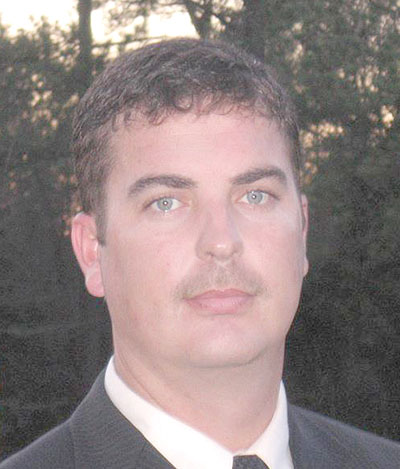
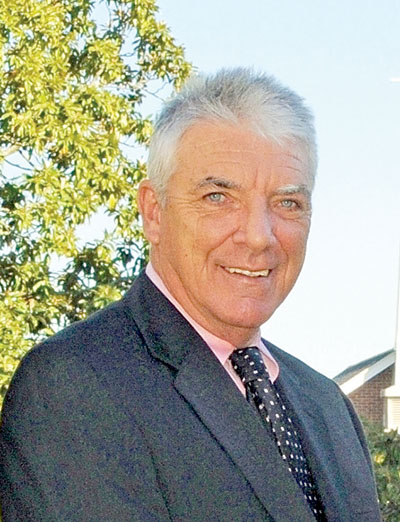
Montgomery Gets Nod from Richland County Sheriff
WINNSBORO – Ricky Gibson, whose bid for Sheriff came up short in the Sept. 30 special election Democratic primary, has thrown his support behind Keith Lewis in advance of this Tuesday’s primary runoff. Lewis, currently Chief Deputy at the Fairfield County Sheriff’s Office, faces Richland County deputy Will Montgomery in Tuesday’s vote.
“He’s already in office and in a position to keep the continuity of the department together,” Gibson said. “He will be able to address any issues straight from the start, instead of having to find out what the issues are. He has made a pledge that he will actively address any and all issues brought to him and I am taking him at his word.”
Gibson earned 925 votes in the Sept. 30 primary, good enough for a third-place finish behind Lewis’s 1,595 and Montgomery’s 1,613. Those votes will be highly coveted by both candidates leading up to Tuesday’s winner take all vote. Gibson said he and Lewis will hit the campaign trail this week to round up votes in areas where Lewis under-performed two weeks ago and focus on areas where turnout was soft.
“I feel in those areas people were reluctant to come out and vote,” Gibson said. “We have to stress the importance to the county of that vote.”
Gibson said he has known Lewis for nearly the entirety of Lewis’s 30-plus-year career and said he believes Lewis will be a unifying force for the county.
“I believe he will be able to unify the county, for the benefit of everyone in the county,” Gibson said.
Lewis was endorsed early in his campaign by outgoing Sheriff Herman Young, who stepped down in late July for health reasons. A special election to fill out the remaining two years on Young’s term will be held Nov. 18, but with no Republicans filing, Tuesday’s runoff will all but officially fill the position.
Montgomery, meanwhile, received the endorsement this week of his employer, Richland County Sheriff Leon Lott.
BLYTHEWOOD – Barring any last minute glitches, Rimer Pond Road should open Friday morning according to Jason Fulmer, S.C. Department of Transportation’s (DOT) Project Manager for construction.
“We’re trying our best to get it open,” Fulmer told The Voice on Tuesday. “It’s all finished except for a couple of minor things that can’t be completed until we receive the proper environmental permits. But we can fix those after the road is open by just closing a lane during low traffic times.”
Major improvements to the road included realignment of the road where it bends around Felix Rimer’s pond.
“We took out one of the three curves in that section,” Fulmer said, “and lessened the severity of the other two. We’re just finishing installing a good bit of guardrails in the worst areas of the curve, on both sides of the road, and we extended some of the culverts to lessen the slope from the road to make it safer.”
Fulmer said the road was widened in some places up to five feet on the inside of the curve and two feet on the outside and along the straightaway. Since work began on the project last April, crews relocated power lines and a sewer force main and installed several drainage pipes.
“Things happen at the last minute,” Fulmer said, “but right now all things point to opening the road on Friday morning.”

A buddy of mine lived in Florida for a few years and what he missed most were the seasons, especially fall and its splendid colors. You can have flat, sandy, mono-season Florida. I’ll take a granite ledge that hangs 1,000 feet over a valley carpeted with red, yellow and orange leaves every time.
As summer winds down, the dwindling of chlorophyll is a beautiful thing. As the sun sets earlier, as temperatures drop, summer’s green palette gives way to autumn’s shades of red, orange and gold. Of late November has been the time when trees burst with brilliance. Typically, foliage in South Carolina’s mountains has peaked later in the fall because of warm weather with bursts of color here and there.
Planning a trip when the colors peak is not easy, especially if reservations are in order. You’ll find websites and weathermen galore who try to predict the peak season (elevation and latitude make a difference).
Predicted with accuracy or not, the arrival of fall colors kicks off a tourism season. For many, driving through the Upstate into the North Carolina mountains is an annual pilgrimage. Rather than a long day trip, I like a three- to four-day adventure. I plot a rambling, roundabout route that goes up through Greenville, up to Walhalla, into Highlands, N.C., over to Brevard, Hendersonville and on to Asheville, the town where Thomas Wolfe and O. Henry sleep by the French Broad River.
I enjoy departures from the main route. You’ll find that a lot of small towns in the mountains hold festivals during fall. If you plan a fall color trip be sure to build in some time for explorations. Go to South Carolina’s rooftop, Sassafras Mountain. See its maples flaunt their colors. Look for roadside stands selling apple jelly and other treats from the land. Among the stands’ offerings are pumpkins and gourds. Rainbow foliage finds rivals in red apples, golden honey and bright jams and jellies. Look too for wild grapes and vineyards. Take your time. Stop and buy honey – sunshine in a jar – and apples too. Check out an Appalachian tradition, handmade quilts for sale.
Driving from Brevard to Hendersonville, look for the cemetery where Thomas Wolfe’s legendary “Look Homeward Angel” stands with outspread wings. Detour to Flat Rock and tour Connemara, the home where Carl Sandburg lived, now a national historic site.
On to Asheville. In his memoir “Burning The Days,” James Salter writes, “There is a feeling. That somewhere the good life is being lived but not where you are.” That’s how I feel about Asheville. I spent a few days there on assignment for a magazine. One morning there as crystal clear as a photo taken by a fine Hassleblad. Deer grazed in the meadow behind the estate. Fog rolled in and auburn deer faded into gray phantoms. Sunlight burnt off the fog and blazing fall foliage lay upon October’s hills like sun-struck jewels.
Fall colors are one of Earth’s better performances. There’s music in the leaves and there’s no resisting their siren song. Keep checking the forecasts and enjoy the absence of green.
If You Go …
Check websites that predict fall color:
www.weather.com/outlook/driving/fallfoliage/statelist/
gosoutheast.about.com/od/wintereventsfestivals/ss/fall_foliage_8.htm
Check the Table Rock Foliage Cam
www.southcarolinaparks.com/trip-planning-tools/photos-videos/webcams/table-rock-state-park/
Learn more about Tom Poland, a Southern writer, and his work at www.tompoland.net. Email day-trip ideas to him at tompol@earthlink.net.
Cobblestone Makeover Clears P.C. Hurdle
BLYTHEWOOD – After a promised meeting with residents of Cobblestone Park last month, developer D.R. Horton brought a proposed zoning map amendment for the neighborhood before the Planning Commission on Monday evening that was unanimously approved and recommended to Town Council for approval. The matter will go before Town Council for first reading on Oct. 28.
The proposed zoning map amendment calls for a revision of the existing University Club/Cobblestone Park Planned Unit Development (PUD) that will reduce the total number of allowable residences from 1,250 to 1,142, converting some areas that had been slated for multi-family units into single-family unit developments. Near the front of the neighborhood, as well as in the middle, some tracts are currently zoned for 24 units per acre and would have included apartments, Horton representative Ben Stevens said. Instead, Stevens said Horton plans to build no more than 10 town home units per acre in those sections, limiting to 112 the number of multifamily units that can be built.
“This will make for a less dense, more attractive look overall for the neighborhood,” Stevens added. The original zoning for Cobblestone Park was approved in 2003.
In addition, Stevens requested that 2.4 acres of property where the tennis courts are located be rezoned to R-4 for a model home court featuring five higher-end model homes that would be adequately screened with landscaping. Stevens said the tennis courts are in bad shape and that the model homes court would improve the parcel.
While some Cobblestone Park property, including the entrance, is assigned to a Town Center zoning district, the approved amendment would fold all the neighborhood property into the new PUD zoning district.
The zoning amendment process has brought emotional responses from residents in the neighborhood, including members of the Town Council and Planning Commission who reside in Cobblestone, some of whom control the vote on whether to approve Horton’s request for the zoning amendment. Three of the five members of Town Council and three of the seven members of the Planning Commission live in Cobblestone.
On Monday night, Town Councilman Tom Utroska addressed the Commission during public comment time, saying he was speaking as a Cobblestone Park resident, not as a Councilman. He said the meeting between the residents and Horton representatives on Sept. 29 was generally contentious.
While he thanked Horton for meeting with the residents, Utroska found fault with the size of the drawings Horton presented for the residents to examine and said residents were worried that a proposed model home court might depress home values in the neighborhood. He also complained that residents had too short of a notice for the meeting, but noted there was a good turnout with about 60 residents attending.
“It’s up to the Commission to decide if there will be an open public hearing about the zoning change and about the addendum to the PUD,” Utroska told the Commissioners.
Later in the meeting, the Town’s planning consultant, Michael Criss, said it is the Council who is charged with conducting zoning map amendment public hearings.
“Under state law, Council can delegate public hearings to the Commission,” Criss said, “but so far Council has chosen to hold those zoning map amendment hearings themselves.”
First reading will be held at the next regularly scheduled Council meeting on Oct. 28.
BLYTHEWOOD – Blythewood business owners may get an unexpected reprieve from the sign ordinance passed in 2009 that calls for the majority of non-conforming signs to be replaced with conforming signs by February 2015.
According to a recent survey conducted by the Town Planner Michael Criss, there are 27 ground-mounted non-conforming signs in the town. The taller signs along the interstate for McDonalds, the Sharpe Shoppes BP, Comfort Inn and Holiday Inn Express have until 2020 to conform. With the 2016 deadline only a little over a year away, Planning Commission Chairman Malcolm Gordge said on Monday night that “Town Council is anxious to explore every avenue in addressing those non-conformities rather than continue with the drop-dead date for compliance.”
Gordge said Council is rethinking the sign ordinance and that it is “obviously going to cause some difficulties for local businesses, especially those with the larger signs. What’s being proposed,” Gordge said, “is a work session with representatives of the Commission, the Board of Architectural Review and the Chamber of Commerce. Primarily, we want to get some feedback to determine how the businesses perceive this requirement to comply with the ordinance, what the impact on their businesses might be and what the costs and difficulties might be so that we have plenty of time to come to a compromise.”
Gordge told The Voice that he would like for the group to meet at least once before Council’s November meeting so they would have time to forward to Council some feedback before that meeting. Town Administrator Gary Parker said he wants to get notices out to businesses with non-conforming signs at least a year before the ordinance deadline.
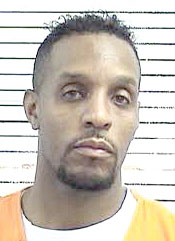
WINNSBORO – A Winnsboro man is behind bars after confessing to back-to-back armed robberies late last month.
Stephen Delano Jackson, 40, of 249 Ashford Ferry Road, was arrested outside a home on Maple Street on Sept. 30, Public Safety Chief Freddie Lorick said last week. Jackson was identified by clerks from the Master Shell convenience store as the man who walked into the store earlier that afternoon with a handgun tucked into his waistband demanding money. Jackson reportedly fled the Master Shell with $80 in cash from the register and got into a gray Chevrolet Impala parked right outside the store.
When the call came in on the Master Shell holdup, Lorick said, investigators were still following up on the Sept. 25 armed robbery of the Dollar General on the Highway 321 Bypass. According to Lorick, a man later identified as Jackson came into the Dollar General at approximately 8:40 p.m. and asked one of the clerks to show him where the deodorant was located. The clerk escorted Jackson down one of the aisles where Jackson then stuck a hand under his shirt and told the clerk that he would start shooting unless she opened the registers and handed over the cash. Jackson made off with an estimated $500 in cash, fleeing on foot.
The Fairfield County Sheriff’s Office brought out their bloodhound team and searched the area, but with no luck. Lorick said the video from the security cameras, however, gave investigators a pretty good look at the suspect.
Five days later, at around 1:30 p.m., Jackson struck again, walking into the Master Shell, showing clerks a handgun tucked into his pants and demanded money. Witnesses were able to note the license plate numbers on the Impala after Jackson left the store and police later stopped the car near Palmer and Frazier streets.
Jackson was not in the car at the time, and the driver, 23-year-old Christopher Eugene Jamison, told investigators that he had only offered to give Jackson a ride to the Master Shell and had no idea Jackson intended to pull a holdup. Lorick said Jamison’s account rang true and Jamison faces no charges connected to the robberies.
Lorick said Jamison told investigators that he had dropped Jackson off outside a home on Maple Street, where he was picked up by police later that day. Neither the money nor the gun have been recovered, Lorick said. Lorick said Jackson reportedly place the remaining money on the tailgate of a pickup truck parked in the yard of the Maple Street home, but when investigators returned to the scene the money had vanished and witnesses at the scene claimed to have no knowledge of the money.
At press time, Jackson was being held at the Fairfield County Detention Center, facing two counts of armed robbery. No one was injured in either incident, Lorick said.
WINNSBORO – Candidates running in the Nov. 4 election for Fairfield County Council districts 3, 5, and 7 participated in a forum sponsored by the Fairfield Chamber of Commerce at the Winnsboro Women’s Club on Nov. 11. Mikel Trapp, incumbent for District 3, did not attend and current councilman for District 7, David Brown, did not participate since he is not running.
Participants included retired Col. Walter Larry Stewart and Tangee Brice Jacobs (District 3), David Ferguson, Eugene Holmes and Marion Robinson (District 5) and David Brandenburg, Clyde Sanders and Billy Smith (District 7). Due to health issues, Brandenburg had to leave, assisted by his wife, about half way through the forum. Candidates answered prepared questions as well as questions submitted by citizens in attendance.
The moderator, Ron Smith, first asked the candidates to share information about their background, education and training. All but Brandenburg and Holmes said they were raised in Fairfield County.
At one time or another during the forum all of the candidates, except Ferguson, called high taxes the County’s number one problem and the biggest impediment to growth and an improved quality of life in the County. In most of her answers, Jacobs reiterated her desire that Council listen to the community.
Asked if they thought Council did the right thing by issuing the $24 million bond and if they thought the bond should have been put to a vote by the citizens, all of the candidates, except Ferguson, agreed that the $24 million bond was a bad idea and that it should have been put before the public for a vote. Smith added that the issuance of general obligation bonds (to pay off the $24 million bond) could drive the ultimate cost of the $24 million bonds to $50 million. Sanders at first said he could see both sides of the issue, but concluded that the bond should have been voted on by the public. Ferguson defended the $24 million bond saying “it was borrowed for infrastructure. The folks who do economic development said Fairfield County lacked an industrial park and that type stuff.” But he said the industrial park had to have sewer and water to make it grow. Robinson criticized the $24 million bond, saying, “All these years we’ve been getting money from the nuclear plant and we should have been putting some money aside. The County has not been smart in spending.”
Asked how they thought the $3.5 million in recreational funds should have been spent and distributed in the County, again, all but Ferguson objected to how Council disbursed these funds.
Stewart said, “I went to the County Council meeting, and I heard only one (recreation) plan presented for a vote. There should have been more than one. There are many organizations out there, like the YMCA, that already have programs on the shelves that they could put in place here, probably at less cost.”
Robinson said he was “not in favor of (the newly approved) mini parks that have no water, no restrooms and not enough parking space. Many of the mini parks we have now have no maintenance.” Robinson, Stewart and Sanders said they favor three or four nice community centers distributed throughout the county. Both Robinson and Sanders also called for better utilization of the county’s transit system in transporting residents to those centers. Robinson also noted that J. R. Green, Superintendent of Fairfield County Schools, had opened up the school gyms for youth recreation and he called on the County to better staff those recreation opportunities.
Holmes criticized Council members for “not touching the rec center still in the box.” He also said the Council’s presentation for its new recreation plan was “a sole source presentation, not applicable to what we need in Fairfield County.”
Asked about their long-range goals for the County, Smith said, “Simply to move it forward, to get it to a place where good businesses and good people want to come here and where they can afford to come here. We need to improve the quality of life for our citizens and assure positive opportunities. We need good paying jobs.” He said to accomplish this, the citizens will have to make changes on County Council.
For his long-range goal, Ferguson said, “We must work together in a civil manner. Seeing everyone trust and work together is my prayer and vision for Fairfield County.”
Jacobs called for “a sustainable water supply to attract businesses and improve quality of life for our residents. Our leadership has to be held accountable.”
Robinson said his long-range goal is to lower property taxes. He also wants a detailed plan for how the V.C. Summer money will be used as well as a contingency plan for essential county services should the nuclear reactor revenue not materialize.
Holmes also wants to see property taxes lowered and wants to see a better recreation plan and more input from citizens.
Sanders said his long-term goal for Fairfield County is to establish an educated, skilled and trained workforce. “We’re working toward that but we can do better.”
Stewart said he would like to streamline government, improve the county’s infrastructure and quality of life and create a system that produces sustainable jobs for the community. “We can do that by effectively using the resources we have now,” he said. “We have to operate more like a business, and when we offer a company incentives, those incentives need to be commensurate with what we expect to get back in return.”
Other areas touched on: Smith said if he is elected he will call for a reduction in Council’s salaries. Both Jacobs and Stewart said it was time for members of County Council to stop playing the race card. “I went through the ‘50s and ‘60s and the civil unrest and being sprayed with a fire hose, etc.,” Stewart said. “I lived that. But it’s time to move on and start working together. It’s time to put away the race card.”
A report on the forum held for candidates for District 1 – Dwayne Perry, Dan Ruff and Michael Squirewell – will appear in the Oct. 10 issue of The Voice.
What Else We Learned from the County’s Sept. 22 Presentation
WINNSBORO – Parker Poe bond consultant Ray Jones was the bond council who worked with the Fairfield County Council and helped draft the legal documents for the $24 million bond issuance in March 2013, and for the smaller general obligation (GO) bonds issued in February and August of this year.
After The Voice first revealed last March that the County was issuing GO bonds to make installment purchase payments on the $24 million bonds, on Sept. 22 Jones, at the County’s request, explained the bonds to the public during a County Council meeting.
During his presentation, Jones identified meetings in which he claimed the issuance and financing of the $24 million bonds were fully and publically explained. But digital recordings of those meetings obtained by The Voice from the County through Freedom of Information Act (FOIA) requests do not bear out those claims.
Not only were the bonds not fully and publicly explained, but the public was fed misinformation by then County Administrator Phil Hinely and some Council members that may have impeded the public from taking advantage of a 60-day window in which they could have forced a referendum (vote) on Ordinance 614 which provided for the future issuance of an unlimited number of GO bonds. [Note: SC Statute 4-9-1220 provides that “Within sixty days after the enactment by the council of any ordinance authorizing the issuance of bonds, notes or other evidence of debt the repayment of which requires a pledge of the full faith and credit of the county…a petition signed by qualified electors of the county equal in number to at least fifteen percent of the qualified electors of the county…may be filed with the clerk of the county council requesting that any such ordinance be repealed.]
Instead of explaining to the public on April 15, 2013, that Council had on that date passed Ordinance 614 which set the GO bonds in motion (and which could have been repealed through petition within 60 days), it was reported in the newspaper that both Hinely and Council members said Council had acted at that meeting (April 15, 2013) to issue the $24 million bonds. But the $24 million (IPRBs) had actually been issued on April 7, and not by the County but by the Fairfield Facilities Corporation (FFC), a non-profit corporation created by the County with a resolution passed two weeks earlier, on March 25, 2013.
At last week’s meeting, Jones explained to the public for the first time much of the plan behind the bond issuances, how the bonds work, what role the FFC played in the bond financing plan and what options are available to the County for paying off the bondholders.
Jones said the first goal of issuing the $24 million IPRBs was to finance certain projects such as its industrial parks, other facilities in the county and recreation facilities. He said Council wanted to “keep the millage steady so as to protect the County’s debt capacity.” To that end, in 2013, both Hinely and Council Chairman David Ferguson insisted that the $24 million bonds would not increase the County’s ad valorem tax rates, but stopped short of explaining that, instead of letting the County’s 10.4 debt service millage decrease to zero in 2019 when the County’s 2009 $6.5 million bond is paid off, Council made provisions to issue semi-annual GO bonds that would keep the debt service up at a 10.4 millage rate for up to 22 years with decreasing millage for another five years.
That level of millage would bring in approximately $1.3 million in property taxes per year, or about $35 million total over the life of the $24 million bonds. A chart provided by the County through a FOIA request, and which was printed in the Sept. 19 issue of The Voice, graphs this debt service tax revenue.
In his presentation, Jones pointed out that that millage revenue produced by issuing a number of new GO bonds (up to the County’s full debt capacity under the law without voter approval), along with some cash from the general fund, would be enough to make all of the County’s installment payments (totaling approximately $43 million) to the FFC over the life of the $24 million bonds. Jones said the County could make all of its payments to the FFC without tapping any of the revenue from the V.C. Summers Nuclear Plant.
What are IPRBs?
Because the County did not have a stream of revenue (toll road, water company, etc.) it could not issue traditional revenue bonds to pay for its desired projects. General obligation bonds require voter approval for amounts over the County’s bonded debt limit, which is about $4.5 million. So, to borrow $24 million, the County turned to what many lawmakers call a legal but unorthodox installment plan of finance. Jones explained the four elements that made this plan of finance work for Fairfield County.
A nonprofit entity (the Fairfield Facilities Corporation) was created by Council on March 25, 2013, to issue debt on behalf of Fairfield County to finance and construct capital projects. The FFC leases those projects from the County while it improves them over the life of the bond.
The County then acquires from the FFC incremental interests in the projects over time through installment purchase payments, which are in the same amount as the payments the FFC makes to pay off the $24 million IPRBs.
As provided in this kind of financing, the County may use any funds available to make the installment payments (including GO bonds). Traditional revenue bonds can not be paid for with general obligation debt.
The FFC pledges the installment payments it receives from the County as security for the debt (bonds) issued to finance the projects.
When the County has made all of its installment purchase payments, the projects once again become assets of the County.
What Does Ordinance No. 614 Say?
• It provides for the County to issue GO bonds to make the installment purchase payments to the FFC and those payments also serve to purchase (buy back), incrementally, portions of the projects during the life of the $24 million bonds.
• It identifies the projects the County wanted improved/purchased/constructed.
• It allows the County to use a nonprofit corporation (the FFC) to assist with the construction and financing of the projects.
• It authorizes the County to purchase the projects back from the FFC.
• It secures revenue received from the nuclear plant for the purpose of funding infrastructure in the County, including the projects.
Jones insisted that the IPRBs are a sound and legal financing structure, pointing out that the Internal Revenue Service recognizes the nonprofit (FFC) as a valid corporation, worthy of exemption from federal taxation; that national bond rating agencies have consistently assigned some of their highest ratings to this method of finance and that the S.C. Supreme Court upheld the structure and it has been utilized by at least seven other counties, including Lancaster and Chester.
He did not mention, however, that IPRBs have been in the crosshairs of the General Assembly since at least 2006 when the Greenville School District ran up $1 billion in debt by financing school facilities in this manner. The General Assembly put an end to the practice for school districts by tightening up loopholes in the law that allowed this kind of high risk financing for them. State Rep. F. Gregory Delleney Jr. (R-43), Chairman of the House Judiciary Committee, sponsored House Bill 3105 in January 2013 to end IPRB financing, which he calls a rouse. He says the nonprofit corporation is a shell. “The people should be able to vote on a bond referendum of that magnitude,” Delleney said.
Next, a look at why the County issued a GO bond on Aug. 7 that was larger than needed to make its installment payment.