Blythewood Concedes on Contract, Continues to Push for Sale
BLYTHEWOOD/WINNSBORO – Blythewood Town Council Monday night gave the OK to what amounts to a letter of surrender in the squabble over the expiration date of Blythewood’s water franchise agreement with the Town of Winnsboro, putting to rest a debate that has lingered for the better part of nine months.
“. . . we will not challenge Winnsboro’s position concerning the expiration date of the current Franchise Agreement,” the letter from Blythewood Mayor J. Michael Ross states. “Therefore, we stipulate that it expires on June 30, 2020. There will be no need to arbitrate this question.”
Last April, Blythewood Town Council blind-sided Winnsboro with a resolution to divorce itself from Winnsboro water, claiming an expiration date of 2016. Such a move would have triggered the sale of Winnsboro’s infrastructure in and around Blythewood. In November, the City of Columbia, at Blythewood’s request, offered Winnsboro $1.4 million for the system, but that offer was rejected by Winnsboro Town Council and their Mayor, Roger Gaddy.
Addressing Blythewood Town Council during their Dec. 22 meeting, Gaddy explained that Winnsboro needed the Blythewood arm of its system to help secure a multi-million-dollar bond as part of a plan to run a water line from the Broad River into Winnsboro’s reservoir.
“For us to run this water line to the Broad River we’re going to have to float about a $10 million bond,” Gaddy said on Dec. 22, “and to do that, northeast Richland County is important to us because it’s an area of potential growth.”
The project should be completed by 2017, Gaddy said.
Both mayors have also previously told The Voice that they are not entirely satisfied with the franchise agreement, and during the Dec. 22 meeting Gaddy offered to renegotiate the contract.
“You think this franchise fee is flawed, as do we,” Gaddy said during his presentation. “We would certainly like to work with ya’ll about redoing the franchise agreement (in a way) that we both agree is fair and equitable.”
Blythewood’s Jan. 27 letter, however, made no mention of reworking the deal and neither Ross nor Gaddy could be reached for comment at press time.
What Blythewood’s Jan. 27 letter does indicate, meanwhile, is that Blythewood is still determined to find a buyer for the system.
“Our joint energies should be directed towards settling on a purchase price for the Winnsboro distribution system as it exists in Richland County to the Fairfield County line,” the letter states.
Chip Harriford, (right) manager of operations of Royal Greens, and his son, Scott, show off a freshly planted seed tray of lettuces in front of the 176,000-square-foot Charm building in Ridgeway where they will soon open to the public what will become the national headquarters of a wholesale/retail hydroponic growing operation.
RIDGEWAY –
A hydroponic growing business, Royal Greens, is setting up shop in downtown Ridgeway where it will soon headquarter a national wholesale company supplying greens and other organically grown vegetables to the likes of US Foods, Sysco and Whole Foods.
Director of Operations Chip Harriford, 52, said the hydroponic and, later, aquaponic components of the business will fill the inside of the 176,000-square-foot Charm building by next October. The grounds surrounding the building will be covered in raised-bed gardens, butterfly gardens, bee hives, chickens, and a 500-foot length of wall of the building will be covered in a vertical garden of seasonal flowering plants. Harriford said he also hopes to incorporate local artwork and yard art on the grounds among the plants.
While Royal Greens is mainly geared toward wholesale customers, it will also offer retail sales to the local public.
“Customers can purchase live lettuces, kale and other greens including 15 types of romaine and 20 types of basil,” Harriford said. “We’ve already planted 30,000 heads of lettuce and will offer over 60 varieties of lettuce when we open in March. The company will eventually offer beans, tomatoes, peppers, hens’ eggs and a variety of flowering plants.”
Harriford said an equally important offering is the economic development component of the business: jobs for people in the community – lots of jobs.
“We’re now hiring about 20 employees. We’ll hire 100 by the end of the year and 500 within five years,” Harriford said.
Plus, he said, the company is committed to providing a living wage with the lowest wage jobs starting at $12 an hour and going up to $18.
“We hope that people working here will also support businesses in Ridgeway and the surrounding communities. It’s a win-win,” he said.
Another plus for the community, Harriford said, is the business’ sustainability.
“We’re about as sustainable as we can be and that keeps prices low for customers. Nothing in the local offerings will cost more than $1 per pound, except for specially picked items that are $1.25 per pound. We incorporate numerous environmentally friendly features, like 300-gallon rooftop rain barrels to catch water for the business. And of course, as we add businesses across the country we plan to reclaim old, abandoned buildings, like this one,” he said, surveying the cavernous interior of the Charm building, “instead of building new ones.”
While Royal Greens will not be offering boat ride tours of the hydroponic facility like those at the popular ‘The Land’ hydroponic exhibit at Epcot in Disneyworld, it will offer walking tours through the facility for shoppers and tourists alike.
“It’s a great way for visitors to see people working in a hydroponic garden and to learn about the process. Our goal is to not be just a commercial facility but also an educational resource for the community,” Harriford said.
Harriford, a Columbia businessman, and his son, Scott, have been creating the Royal Greens company over the last few years, and while it’s a family business at heart, they are also poised to become a major commercial player.
It all started, Harriford said, when Scott, now 21, began studying hydroponics in 2010, as part of a high school research project, and quickly realized it as an excellent business idea. To get a feel for the different aspects of a produce supply business, he spent time working at a variety of places, such as Rosewood Market and City Roots, a 3-acre family run urban farm in Columbia.
At the time, Chip Harriford was the Chief Operating Officer of NDR Energy Group, a Charlotte-based company, and had previously worked as a business consultant for companies that worked with renewable energy.
“I knew absolutely nothing about hydroponics,” Harriford said. “But Scott convinced me, and he and I developed a business plan.”
They tried a few different avenues before attending an EngenuitySC business meeting in Columbia, a monthly gathering of entrepreneurs and tech people.
“That’s where I met Dr. Simon Hudson, a professor of Hotel, Restaurant and Tourism Management at USC,” Harriford said, “and he’s been a wonderful mentor to us.”
Through their connection with Dr. Hudson, they were able to work with graduate and undergraduate classroom teams in USC’s Colleges of Business and Information Technology, which helped the Harrifords organize an overall business model, an agri-tourism component and a social media strategy.
“The students worked with us, produced an end product, and got a grade for it. We were able to put a lot of other people’s brain power together,” said Harriford, who has a bachelor’s degree in Economics and an MBA from USC. Scott will graduate in December from USC’s College of Hospitality, Retail and Sport Management.
Harriford then secured funding from a venture capital group in Florida where he worked with investors Garry Merritt and Steve Nelson. Those and other investors, including a tribe of Delaware Native Americans in Oklahoma, initially settled on a building in the Poconos, but Harriford wasn’t thrilled with the cold, rainy weather they encountered during the inspection. He asked if he could try finding a better place for the company, and the investors agreed, as long as he could secure a suitable location within two weeks.
So Harriford opened his rolodex, and the first call he made was to Fairfield County realtor George McCutcheon, with whom he’d worked years before. McCutcheon connected Harriford with the Charm building in Ridgeway, which had been abandoned for 20 years but was in good condition.
“I was already familiar with the area so I went to the Ridgeway Town Council and they worked very rapidly to help us,” Harriford said. “Within 10 days, they convinced our investors that Fairfield County and Ridgeway were worth the gamble. So a decision was made, checks were written, and 30,000 heads of lettuce have already been planted! We had to get started quickly to meet our supplier deadlines.”
Harriford said he will be working through economic development issues with Fairfield County and the Fairfield Chamber of Commerce over the next few months.
Royal Greens is currently leasing the Charm building and hopes to make it a permanent home. It will soon function as the headquarters and training center for an expected 20 additional facilities – each over 100,000 square feet – that will be developed over the next five years, beginning with locations in New Jersey, Pennsylvania, Oklahoma and Florida.
“We use the same business strategy that Amazon does, which is to place facilities near our customers and significantly reduce transportation costs,” he said. “Our produce is delivered within 8 hours of harvest, and stays within a 200-mile radius. We do sell to restaurants and small stores, but our primary focus is the big boys – national wholesalers and regional distributors who can buy by the truckload. We’re close, we’re flexible, we can grow exactly what they want, we can promise delivery and they can come see us at any time – plus, we know that we have the best prices!”
Harriford said that a big part of building a successful business is creating a place that enhances the community and brings people together.
“We’ve got good people around us, and we’re in a good place,” Harriford said. “The building and the community of Ridgeway are great. We’re very happy here.”
Royal Greens is hosting a Grand Opening for the public on March 19 at its location in the Charm building at 200 E. Church St. Harriford promises a wonderland of organically grown lettuce greens – over 60 varieties – and a day of fun for the community. For more information email sarah@royalgreens.biz.
BLYTHEWOOD – The six- month verbal tussle between Town Council and Cobblestone Park developer D.R. Horton over the proposed rezoning of the neighborhood progressed to higher decibels at Monday evening’s Council meeting, D.R. Horton’s attorney, Kyle Dillard, told the Council, “I do have serious questions about due process and issues implicated by Council in proceeding to a vote (tonight).”
Dillard was referring to comments made by D.R. Horton engineer Tom Margle, who said earlier that the developer had been denied a request to be on the agenda for Council’s Jan. 15, 2015, work session where he felt communication could have been better and earlier facilitated prior to the Public Hearing, which was held Monday evening.
Councilman Bob Massa responded that “the agenda must be issued 24 hours prior to the meeting and the Town did not get D.R. Horton’s message that it wanted to be included until after the 24-hour period had begun. So because we don’t want to run afoul of the state law (making changes to the agenda), Council and the Mayor decided not to add you to the agenda.”
But later in the meeting, Councilman Bob Mangone said that, “Council was polled as to whether or not we would add D.R. Horton to the agenda because we have the right to add items to the agenda now. (The S.C. Supreme Court struck down the agenda requirement last June). But we felt that because of the sensitivity to the issue, that if we were to add that to the agenda of a work session that was held during the daytime, that would not be sufficient opportunity to give input. That is my understanding as to why you were not added to the agenda,” Mangone said.
Dillard said he also had concerns about why more Council members who live in Cobblestone were not required by the State Ethics Commission to recuse themselves from voting on the issue. Mayor J. Michael Ross and councilmen Tom Utroska and Mangone, three of the five-member Council, live in Cobblestone Park. Only the Mayor was advised by the Ethics Commission to recuse himself because he owns a lot in the section of the neighborhood D.R. Horton is proposing to be rezoned.
“Given my understanding of the interest that these residents (members of the Council) have and my understanding of the spirit of the statute, further consideration should be given to that issue,” Dillard continued. “A vote tonight would (have the) taint of a denial of due process. I remind Council that for zoning ordinances like any restrictions upon freeze of land or disfavor of law must be construed narrowly. Listening to the comments tonight, the only ones that have been made that are pertinent relate to density, which is being reduced (by the proposed ordinance), which is generally favored and to traffic, which is being reduced, which is generally favored.”
Dillard warned that there had been no comments made that would give Council a valid reason to vote against the proposed amendment.
Town Administrator Gary Parker interrupted Dillard to say, “There is no vote. This is first reading.”
Dillard said he was under the impression there would be a vote on the issue at the meeting. The agenda, in fact, listed “Consideration of Cobblestone PDD Amendment” as an action (vote) item. Dillard continued, saying, “All considerations vital to the question of zoning that have been raised at this hearing weigh completely in favor of accepting the proposed amendment.”
Two residents of Cobblestone Park, George Logan and Ed Skeffington, spoke to the issue of several lots near the neighborhood’s gated entrance that D.R. Horton proposed to zone R-4 to accommodate five model homes in place of the old tennis courts.
“We are dead set against model homes (in an area) where we all disburse during the day,” Logan said, lamenting that more residents had not attended the meeting. Logan also said he understood from an earlier neighborhood meeting with D.R. Horton representatives that the company said the proposed models in the R-4 section would not be built. He said he felt the implication was “never.”
Ross Oakley, an engineer with Thomas & Hutton, representing the developer, said the point made at the meeting “was to hold off on model homes for five to 10 years and then see if they are needed.”
Margle told the group, “Let me be clear that we are eliminating model homes from the R-4 area.”
Margle said that without the proposed rezoning, he didn’t know “how long D.R. Horton can continue to fund the deficit of the Home Owners Association with the clubs, common areas, open space and private roads. It’s a very large ticket.”
At one point, Parker spoke up to tell the speakers and Council that there would be discussion time during the meeting when he thought some of the questions and concerns regarding the zoning issue could be cleared up.
The sticking point with residents of Cobblestone was clearly two-fold: the R-4 zoning that would allow the developer to, at any time, build model homes in that area; and what they feared would be increased traffic resulting from additional homes built in the neighborhood, even though Michael Criss, Town Planner, explained that the new zoning proposed by D.R. Horton represented 506 fewer total dwelling units(1,666 to 1,160) in Cobblestone Park than are allowed under the current zoning. Oakley said that reduction in dwelling units would equate to 100 fewer vehicle trips per day.
In the end, Council members generally expressed opposition to the R-4 zoning. Massa and Mangone both said they would not favor a vote for the proposal unless D.R. Horton eliminated the R-4 zoning altogether. Councilman Eddie Baughman said he thought that if the R-4 zoning and model homes near the gated entrance were eliminated everyone would feel better about the proposed rezoning.
Utroska continued to hammer the traffic issue, saying he had in his possession a traffic study taken at Blythewood Road in the vicinity of Cobblestone Park that showed an increase from 7,000 vehicles per day (sometime in 2013) to 12,000 vehicles per day in October 2014. When asked by Margle to name who had conducted the study, Utroska would not reveal that information. When pressed further by Markle, Utroska agreed to share the study with him privately.
Council voted to defer the vote and send the matter back to the Planning Commission for further review. The Planning Commission had previously recommended it to Council for passage.
The proposed amendment is now on the agenda for discussion at the next Planning Commission meeting set for Monday, Feb., 2, at The Manor.
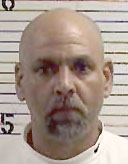
WINNSBORO – A Winnsboro man was arrested last week after Narcotics investigators with the Fairfield County Sheriff’s Office discovered a methamphetamine (meth) lab inside his Hudson Street home.
Mark Allen Walker, 49, of 802 Hudson St., was arrested Jan. 23 and charged with manufacturing methamphetamine, disposal of methamphetamine waste, violation of the Hazardous Waste Management Act and violation of the Pollution Control Act. At press time Walker was being held at the Fairfield County Detention Center, with his bond set at $33,000.
The Sheriff’s Office said they were tipped off on the investigation by a member of the community. In addition to the makings of a meth lab found inside the home, investigators also found a collection of items and ingredients that are only used together in the production of methamphetamine.
Outside the home, investigators located several areas in the back yard where waste products from meth production had been burned and buried, prompting the two environmental charges against Walker.
“We take these meth lab investigations very seriously,” Sheriff Will Montgomery said. “Even small-scale meth labs such as this one pose a serious threat to our environment.”
Former Fairfield County Sheriff’s deputy Buddy Wilkes Jr. has put his experiences in law enforcement in writing.
CHAPIN – In October of 1981, Earl Douglas “Buddy” Wilkes Jr. was a newly minted Fairfield County Sheriff’s deputy. Just hours into his first day on the job, he realized that “for better or worse, people take notice of you when you’re wearing a lawman’s uniform.” His adventures and experiences during the next seven years as an officer of the law in Fairfield County could fill a book.
And now they have.
Wilkes’ recently published memoir, “The Way I Remember It – the Sheriff’s Office,” is a charmingly funny read.
The collection of anecdotes spans his years as a deputy, sergeant and captain in Fairfield County during the 1980s. The fast-paced, mainly humorous vignettes run the gamut, from a “haunted” Halloween jailhouse, to deer hunting misadventures, runaway prisoners and a stolen cash register recovered at the end of a trail of change. Every page contains a memorable character, including, he writes, “a likeable Yankee, one of the rare breed that didn’t know it all.”
While most of the book recounts Wilkes’ own experiences, several gems feature the adventures of co-workers, like the story about an officer dealing with a man driving very much under the influence of something other than alcohol. The Fairfield County patrolman noticed the fellow’s 280-Z sports car just off the shoulder of the newly finished I-77. As Wilkes tells it, the car was “stuck up to the axles in mud. [The officer] walked up to the driver’s window and saw that the guy was just driving and driving, motor running, wheels turning, but going nowhere in the deep, slick Fairfield County red clay.”
He tapped on the window to get the driver’s attention.
“The guy looked at the patrolman and panicked. He geared down and floored it, getting the Z car up to what he thought was warp speed. He looked out the window again, and when he saw the Patrolman still standing there, he totally freaked, put on the brakes, and surrendered.”
Wilkes, a Fairfield County native, graduated from Richard Winn Academy in 1977 and went on to earn a degree in English from the Citadel. He retired as a Fairfield County deputy in 1987 and hired on with the South Carolina Law Enforcement Division (SLED) in 1990. After 30 years in law enforcement, he now lives in Chapin with his wife, Tracey. He retired from SLED last year as a captain.
In his book, Wilkes paints a nostalgic description of rural Fairfield County, and the stories brim with ‘oh-wow’ glimpses of a long-ago world. The ‘80s was a time in Fairfield County when “common sense and a sense of humor were the most important attributes a lawman could have,” Wilkes writes. “Virtually every call we answered involved someone we knew or were kin to.”
“Fairfield County is in my DNA,” he said in a phone interview with The Voice.
But before Wilkes rolls out great stories of practical jokes, dispatch calls and courtroom comedy, he takes the reader all the way back to the beginning, to his first day on the job, recalling his trip to the “old school” haberdashery and uniform shop in Columbia to be fitted for his uniform. It was a “creaky old place [that] smelled just like it should, of woolen suits, leather and floor wax.” Then he headed out on his first call – a rookie deputy with an eye for the interesting and a penchant for memorable details of entertaining antics.
Already at work on his next book, Wilkes has tentatively titled it, “Driving Strom Thurmond.” It’s about his years at SLED and his experiences driving Sen. Strom Thurmond around South Carolina during Thurmond’s last Senate campaign in 1996.
“Many people don’t know that Thurmond actually created SLED in 1947 when he was governor,” Wilkes said.
“It was like driving Elvis Presley around,” Wilkes said with a laugh. “Everywhere we went, people knew him, and he knew them. We’d arrive in some tiny little town and he’d get out of the car and start calling people by name. It was quite an experience.”
Wilkes said it was a fascinating period of time and admitted, “I’m getting addicted to the research!”
He said he hopes to finish his new book by summertime. In the meantime, look for “The Way I Remember It…” on Amazon as an e-book or in paperback.
JENKINSVILLE – The Jenkinsville Water Company at its annual meeting on Jan. 14 elected two new members and re-elected another to serve three-year terms on its 10-member board of directors. The water board also, in a closed-door session, re-elected Gregrey Ginyard as its president and Joseph McBride vice president.
The three-year terms for seats held by Mary White, Bertha Goins and Aquilla O’Neal were opened for nominations at the Jan. 14 meeting. White was re-elected in the vote for the first seat, 30-22, over Goins. Goins was nominated for each of the three vacancies, losing in each race.
Amanda Metz was tapped for the second vacancy, beating out Goins 30-21. Goins faced two others in the final opening, incumbent board member O’Neal and Julie Brendell. Brendell won the bid with 23 votes. Goins garnered 20 votes, while O’Neal took only 6.
Goins has been a vocal critic of the board in recent months, questioning how the board handled a request for a willingness to serve letter for additional campsites at the Broad River Campground. The board denied that request last year, and last September Glenn E. Bowens, a Winnsboro attorney, filed a lawsuit against the water company on behalf of the campground and its owner, D. Melton.
The lawsuit alleges that the water company broke its 2009 agreement with the campground. Under the 2009 contract, the daily consumption of water per site was estimated at 175 gallons per day, with the number of sites not to exceed 46 without written approval by the water company. The water company agreed to consider increasing its commitment of water if the campground wished to expand, the lawsuit states, “but only if that can be done without negatively impacting other customers of the water system.”
In 2011, Melton received approval for an additional 24 sites. The daily consumption of water per site was lowered to 53 gallons per day, based on a water study and use history since 2009 of the campground. The 8,050 gallons per day limit, meanwhile, remained in place. Melton’s request last May for the willingness to serve letter did not, according to the lawsuit, seek to increase that limit.
In her final meeting as a board member last week, prior to the election of new members, Goins again raised the issue of the campground, chastising her colleagues. Goins said she wanted to see, in writing, how Melton’s request would have negatively impacted residential customers of Jenkinsville Water.
“We do have problems on the board,” Goins said. “To deny somebody just so we can push or force somebody out is an injustice.”
Ginyard, on the other hand, said the decision was the will of the majority.
“You don’t turn on your board just because board members don’t agree with you,” Ginyard said. “We didn’t void any contract. We didn’t do anything we weren’t supposed to do. We can’t be bullied into ‘give me what I want or I’ll sue’.”
At no time, Ginyard said, did the water company or the board tell Melton he could not use all of his 8,050 gallons per day maximum.
Treatment Plant
Prior to the election of new members and the debate over the campground, Ginyard updated company members on plans for the company to build a water treatment plant on the Broad River. Ginyard said the company had applied for a $5 million grant from the U.S. Department of Agriculture (USDA) to construct the plant, which would treat up to 1 million gallons of water per day from the river.
Ginyard said the USDA had accepted the application with conditions and the company was now working with engineers to select a site for the plant. Additional paperwork on the grant was due to the USDA in the next four to six months, Ginyard said, and environmental impact studies would be required before breaking ground. The project would take two years to complete, he said.
“This could help solve some of the water problems in Fairfield County,” Ginyard told The Voice Tuesday, “if everybody works together.”
WINNSBORO – With the owners of an approximately 4-acre tract at the end of Creech Road in Blythewood seeking to have that property developed into a multi-family senior living development, Winnsboro Town Council Tuesday night agreed to provide a willingness to serve letter for up to 20,000 gallons of water per day. That agreement, however, came with what is becoming a standard contingency, according to John Fantry, Winnsboro’s attorney for water and utilities.
“It would be contingent upon the developer entering into a development agreement, as we’ve done in the past, then we would commit the water, in this particular project, in 2016,” Fantry told Council. “If it needed to be phased, based on what the design is, we would phase it in so we would have a reasonable impact upon our citizens.”
The request was made by Darren Rhodes of Fowler Realty and Land Services in Columbia on behalf of the property owners, Margaret Dubard, Linda Peake and Bonnie Martin. No developer has yet made a bid on the property, Fantry said.
Rhodes told Council the plans for the property entailed 64 two-bedroom, two-bath units, with each unit expected to require 300 gallons of water per day. Construction is not planned to begin before January of 2016, Rhodes said, with the project expected to be completed in one phase. The property (tax map number R15100-05-06) is located at the end of Creech Road in Blythewood, behind the Russell and Jeffcoat offices.
Red Gate
Following up on a vote at their Jan. 6 meeting to provide a willingness to serve letter for 100 taps over the next two years to property at Blythewood and Syrup Mill roads, Council voted to authorize Town Manager Don Wood to execute that letter, making the commitment official. The property was formerly under development by Red Gate Development, but is currently owned by Arthur State Bank. The letter comes with the same contingency as the Creech Road property.
WWII Memorial
Bill Haslett, who is heading up a committee to have a World War II memorial placed on the grounds slated to be developed into a park at the old Mt. Zion School, appeared before Council Tuesday night, asking them to release the $5,000 in matching funds Council promised him last year. Haslett said his committee has met their end of the bargain, raising $16,000 for the project. County Council also agreed last year to kick in $10,000 in matching funds, and Haslett said he would be asking them to cut a check as well later this month.
Councilman Clyde Sanders suggested Council hold a joint work session with Haslett’s committee and the developers of the park to ensure the both projects are properly coordinated. Sanders also put a motion on the floor to release the funds, but withdrew that motion after Councilman Danny Miller stressed that the work session should come first.
Haslett said the project was on a tight schedule if it was going to meet its projected Memorial Day dedication on May 25. As for the park, Connie Shackleford, the Town’s Grants Coordinator, said those plans had not yet been received by the Town but were due any day now. The completion date for the park is Sept. 15, she said.
Water Department Buys
Council also approved requests from the Water Department for a replacement control panel at lift station 19 near Richard Winn Academy, as well as a replacement pump at a total cost of $6,657.95. The department’s request for a replacement service truck was also approved by Council. The 2004 Ford regular cab four-wheel drive with Triton 5.4 diesel engine with just under 50,000 miles on it will cost the town $20,470.
BLYTHEWOOD – Town Council took a look at its hiring policies and procedures during their Jan. 14 work session. While Councilman Bob Massa reported that the Town’s hiring policies adhered closely to those of the S.C. Municipal Associations’ handbook, he said he would like to change the Town’s policy to require the Town government to solicit from both inside and outside Town Hall when hiring.
Town Administrator Gary Parker said he had no objection to that, but would suggest promoting from within first when possible.
“Then, if there are no great internal candidates, we’ll go outside,” Parker said.
The discussion follows the Town’s recent hiring of the Town’s outside legal consultant, Jim Meggs, as the Town’s attorney as a full-time employee, not a consultant. The job was not posted or advertised before Meggs was hired.
In regard to nepotism (hiring relatives of elected officials), Councilman Bob Mangone took the discussion a step further, suggesting the Town should not purchase from or do business with relatives of elected officials or those appointed to the Town’s boards and commissions.
Parker said that while that is standard with governments, the law sometimes recognizes that in small communities, contracting or making small purchases from relatives of town officials is allowed because it is almost unavoidable. The issue is expected to be on the agenda for a vote at the Jan. 26 Council meeting.
Valentina’s (a.k.a. Blythewood House of Pizza) got on board early. This time next year, all Blythewood businesses may have to conform.
Town Planner Warns of ‘Fudge Creep’
BLYTHEWOOD – The controversy over the January 2016 deadline for compliance with the Town’s sign ordinance continued to percolate during a 5-hour Town Council work session on Jan. 14, but at last appears to be nearing an end.
During the session, three of the five Council members were leaning heavily toward maintaining the current sign ordinance, adopted in 2009. At the Blythewood Architectural Review (BAR) board meeting Tuesday evening, where a recommendation on proposed changes to the current sign ordinance was on the agenda as an action item, Town Administrator Gary Parker conceded to BAR members that wording was being drafted for the Jan. 26 Town Council agenda to leave the current ordinance intact.
Last week’s work session opened with a suggestion that had been backed in previous discussions by Mayor J. Michael Ross – that a 10 percent variance be allowed on sign dimensions for all current signs. In presenting the item for discussion, Parker referred to the proposed variance as a ‘fudge factor.’
Councilman Bob Massa, however, opposed fudging, saying some fudging leads to more fudging.
“Leave it (the current sign ordinance) out there and deal with it on an individual basis,” Massa said. “If it (the sign) is 4 inches over, that’s fine, but if you build in a 10 percent fudge factor, that’s an additional three feet on a sign that’s only supposed to be 32 square feet. That’s a pretty big variance.”
Massa gave the example of an unwritten understanding by the public that the police won’t pull a driver over for going just 5 miles over the speed limit.
“We, as a society, have stretched that to 15 miles over the limit. We do what we can get away with. So if there’s a 10 percent fudge factor, we know it’s out there and we fudge to 15 percent. That’s only 5 percent more,” he said with a shrug. “I could bring you a design for a 32-square-foot sign and you approve it, but I could tell my contractor to stretch it out that extra 3 feet because I’ve got a 10 percent variance.”
Town Planner Michael Criss agreed saying, “There is the potential for fudge creep.”
Massa said the Town was just trying to maintain uniformity.
“We’re not telling businesses what materials or designs to use. There’s enough discretion (with the zoning administrator) to provide variance relief,” Massa said. “The language in the ordinance is there because we thought that was a fair standard to build to. If (business owners) can’t build to that standard for some reason, then they can come in and talk about it and we can make a decision. The ordinance is what it is. It’s the target.”
Current Ordinance Allows Variances
Parker agreed, explaining that the ordinance, as it is written now, actually allows for some discretion on the part of the zoning administrator regarding signage size. He said, for example, that wall signs have a size limitation but a provision allows the zoning administrator to decide whether a larger wall sign might be more appropriate for a larger area.
“Then,” Parker said, “the administrator has the latitude to overrule the dimension requirements.”
Criss said there was additional discretion. “If the sign is 6 inches to the nearest foot, it might give the administrator 6 inches to play with – round up, round down,” Criss said.
Ross, who has favored making changes to the 2009 sign ordinance, said more than 60 percent of the businesses could have to put up new signs to comply with the ordinance.
Parker pointed out, however, that while about “Sixty percent of the current signs might be out of compliance, most of them only marginally exceed the current requirements and fall within the discretion I have to say, ‘You’re okay’.”
Ross said he felt businesses needed “to know they are going to have to replace that sign. There will be a cost. It’s in black and white. It’s got to be 4-feet-by-8-feet now. It will look good, but I believe there will be a backlash from the businesses,” Ross added.
In the end Ross conceded that the ordinance was passed five years ago and that it will result in making the town look better.
“Maybe we could offer a seminar that would show businesses how to offset their costs,” Ross said. “We could bring in an expert to tell them how to write this off.” He continued, however, that a 10 percent variance would be a good idea.
No Outcry of Opposition
Parker said he didn’t think there would be an outcry of opposition to enforcing the ordinance. Parker said letters went out to all business owners last week explaining the need for compliance by next January, and that only six business owners/managers had called, mostly the larger businesses with high-rise signs. And those, he said, were not complaining but just asking questions.
During the BAR meeting on Tuesday evening, the board verbally agreed not to vote on the issue, even though it was listed as an action item on the agenda, saying they felt the current sign ordinance came about because of the community’s desire for the town to have a nice appearance.
McLean Calls for Minimum Standards
But BAR member Jim McLean did suggest the sign ordinance be amended to address minimum standards for signs.
“Signage does set the tone for the town,” McLean said, referring to the lack of rules and regulations for the upkeep and maintenance of signs in the town.
BAR member Curtis Brown pointed out that the current ordinance (155.442 sec. E) does address maintenance of signs, but that there are no teeth in the ordinance to make business owners maintain their signs in good appearance.
In other business, the BAR re-elected Michael Langston chairman and elected Curtis Brown vice-chairman. They also decided, without voting, though it was on the agenda as an action item, to ask McLean to create wording to propose that the Blythewood Historical Society be designated as an advisor for the recommendation of historical structures within the town.
WINNSBORO – County Council launched its 2015 session Monday night by tapping Councilwoman Carolyn Robinson (District 2) as its new chairwoman. Robinson took five of the seven votes in the secret ballot election. Councilwoman Mary Lynn Kinley (District 6) earned two votes.
Councilman Kamau Marcharia (District 4) was elected vice chairman with four votes over District 5 newcomer Marion Robinson’s three votes. Marion Robinson, Dan Ruff (District 1) and Billy Smith (District 7) were all sworn in earlier in the evening in a ceremony prior to Monday’s meeting.
“I know we are going to have some changes,” Carolyn Robinson said after her election as chairwoman. “One of the things is we are going to have to continue to promote economic development. It’s most important for our county, but in order to meet the challenges that are going to be facing us, we’re going to need to communicate and to work together so that we can face all of the problems, all of the challenges that are presented to us.”
On the Road Again
Chairwoman Robinson, adding the item to the agenda after the meeting had convened, informed Council that State Rep. J. Gary Simrill (R-46, York County) and his House Transportation, Infrastructure and Management ad hoc committee had met earlier in the day to consider moving forward with a state plan to turn over to S.C. counties about half of the state’s roads and highways. Part of that plan, she said, includes a promise to fully fund the state’s local government fund, but even that, County Administrator Milton Pope said, would not be enough for counties to maintain roads.
“We don’t have anywhere near the funding to take over and to maintain state roads,” Pope said. “In regards to the local government fund, that’s really a separate issue altogether. The state actually owes local governments to be able to fund the local government formula fully, as to what’s due for local governments to where we can help to reduce taxes on the local level. Combining those two issues, it’s a little skeptical packaging it that way. Even if we were to get what’s fully funded, that’s not going to go anywhere near where we need to be.”
On Robinson’s recommendation, Council voted to send a letter detailing their opposition to the Simrill plan to every member of Simrill’s committee, as well as to Fairfield County’s local legislative delegation.
State Sen. Creighton Coleman (D-17) told The Voice last month that he was not in favor of turning over state roads to the counties, adding that he did not think the plan would muster enough votes to pass.
“It’s a pretty radical idea,” Coleman said in December. “To me, it’s a state problem and the state ought to find a solution.”
Jenkinsville Sidewalks
Jenkinsville Mayor Gregrey Ginyard, addressing Council during Monday night’s second public comment session, asked Council for support in completing a sidewalk project in the western Fairfield town. Ginyard said three-quarters of the project, from Buttercup Lane to approximately a quarter of a mile shy of Baltic Circle where the Lake Monticello Park is located, had been completed using Department of Transportation grant money. To take the sidewalk all the way to the park, Ginyard said Jenkinsville is applying for another grant and needs $100,000 in matching funds. Ginyard said the town only needed half of that – $50,000 – from the County, and in two installments of $25,000 each in 2015 and in 2016. Ginyard said Jenkinsville didn’t need the cash right away, but did need a letter of commitment from the County by March to submit with their grant application.
Council took no action on Ginyard’s request Monday night.
Meeting Schedule
Council also reviewed and approved their meeting schedule for the remainder of 2015, voting to delay their Feb. 22 meeting until 7 p.m. to accommodate a drop-in at the Carolina Events Center to honor former Sheriff Herman Young.
During the discussion, Smith noted that the Aug. 10 meeting had been listed as ‘canceled’ on the schedule. The meeting would have come on the heels of the annual Association of Counties conference on Hilton Head Island, but Smith pointed out that the conference ran from Aug. 2 through Aug. 5.
“You would have five days to get back from Hilton Head to Fairfield County,” Smith said, and moved to hold the regularly scheduled meeting.
Ruff seconded the motion, which passed with only Mikel Trapp (District 3) voting in the negative.