Blog

  • Railroad Lease on Hold

    RIDGEWAY – Pushed into a corner by Norfolk Southern last year to formally lease property it had used free of charge for decades, Town Council stalled on second reading of an ordinance authorizing the lease of the Cotton Yard during their Feb. 12 meeting.

    The $300 a year lease would also require the Town to purchase liability insurance for the property at $1,000 a year. Mayor Charlene Herring told Council in December that the railroad company is reviewing leases and properties all across the state, forcing municipalities to either lease the lots and accept liability or see the lots fenced off. In Ridgeway’s case, at least two buildings stand on the property – the police station and the fire station – and the railroad would demand their removal unless the town agreed to a lease.

    “Before we just jump into this lease, I think it might be in our best interest to maybe double check on where the future of (the fire station) stands,” Councilman Russ Brown said during the Feb. 12 meeting.

    The County is planning to build a new fire and EMS station at Rufus Belton Park, approximately 9 miles out of town at 5087 Park Road. Herring said there were tentative plans of using the building, once the fire department has relocated, as a new branch to the Fairfield County Library. Brown wanted to know if, by signing the lease for the property, the town might also inadvertently be taking responsibility for the building. Herring agreed to contact the County and work out those details.

    Councilman Heath Cookendorfer, meanwhile, suggested renegotiating the $300 a year lease with the railroad. Citing a lease agreement made in 2008 in Claypool County, Ind., where Norfolk Southern settled for $1 a year, Cookendorfer said Ridgeway may be able to get a similar deal.

    “Since some type of precedent has been made with that,” Cookendorfer said, “maybe that’s something they would entertain coming back and speaking with us and talking about the possibility of getting the lease cheaper than what it is now.”

    Herring answered that the railroad had indicated that $300 was as low as they would be willing to go, adding that the 2008 Claypool County deal may also be headed for a review by the company. Still, she said she would ask.

    “It’s definitely worth asking the question,” Cookendorfer said.” I would rather get a ‘no’ than assuming a ‘yes’ or a ‘no’.”

    Hospitality Tax

    Brown presented Council with findings from last week’s meeting of the Economic Development Committee, emphasizing the need for Ridgeway to adopt a hospitality tax.

    “There’s a burden on the budget, the general budget, for the Town,” Brown said. “There are things that the Town needs but there are not funds there to support them. To help the town be productive, (a hospitality tax) may be worth considering. It’s a good option. It’s better than having property taxes increase.”

    Brown said there are already state laws on the books governing how a hospitality tax works and for what the money it raises can be used. Brown said the maximum allowable tax was 2 percent, which could be charged on prepared meals.

    “It’s got to go to a handful of things,” he said. “It can go to tourism related buildings; recreational, cultural or historical facilities; highways, roads, streets and bridges; advertising and promotion; and water and sewer infrastructure.”

    Tina Johnson, a Ridgeway business owner who sits on the committee, was in the audience and agreed.

    “I think it would be good for the Town,” Johnson said. “It’s a way to get the money that’s needed to run the Town.”

    Council accepted Brown’s notes as information.
  • County Cuts New Bond

    Some Council Members in the Dark

    WINNSBORO – County Council has issued another general obligation (GO) bond in the amount of $306,000. Signed by Council Chairwoman Carolyn Robinson on Jan. 13, 2015, the bond was filed with the Fairfield County Clerk of Court on Jan. 16.

    Robinson said the revenue from the GO bond is earmarked for payments to the Fairfield Facilities Corporation (FFC), a non-profit shell corporation created by Council on March 25, 2013 for the purpose of issuing $24 million in bonds which the FFC then uses to pay for certain County renovations, recreational facilities and other projects. The County then issues GO bonds to pay the FCC which, in turn, uses that revenue  to pay off the $24 million bond.

    Asked about the new bond on Tuesday, four of the seven County Councilmen told The Voice they had not been informed that the bond was issued or that it was going to be issued. A fifth councilman had not returned phone calls from The Voice at press time and a sixth referred all inquiries about the bond to Robinson. Robinson told The Voice that a representative of Parker Poe, the County’s bond attorneys, brought the bond documents for her to sign and that she believes the GO bonds will continue to be issued at regular six-month intervals until the $24 million bond is paid off in 2042.

    “I am embarrassed to say I know nothing about the issuance of a new bond,” Councilman Billy Smith told The Voice on Tuesday. “And I am surprised I haven’t been told about it since it was issued more than a month ago.”

    The County will pay Parker Poe a $20,000 issuance fee on the $306,000 bond, and the bond document includes a schedule of principal payments to be paid in the following increments: $59,714 on March 1, 2017; $60,341 on March 1, 2019; $149,695 on March 1, 2021 and $36,250 on March 1, 2022. According to the bond document, interest on the bond is due each March 1 and Sept. 1 through maturity (March 1, 2022), commencing Sept. 1, 2015. Robinson told The Voice that she does not know how much interest or other fees the County is paying on the bond.

    The new bond is the third GO bond issued by the County since February 2014. The bonds were authorized by Ordinance No. 614 that was adopted by Council on April 15, 2013, following three readings and a public hearing in Council chambers. Passage of the ordinance allows the County to issue an unlimited number of GO bonds in any amount so long as they do not exceed the County’s bonded debt limit, which was $4.5 million as of March 2, 2013. And even if a GO bond does not exceed the bonded debt limit, the public has a 60-day period during which they can force a referendum (public vote) on the ordinance. If the referendum defeats the bond issuance, the County can not issue the GO bonds.

    Some who oppose the bonds say they were not aware the County had passed the ordinance to levy the GO bonds.

    According to digital recordings of the three meetings in which the ordinance was voted on, Council only read the title of the ordinance, but did not discuss or go into an explanation that the GO bond issuances provided for in the ordinance were planned to pay for the $24 million bond or the millage consequences for tax payers. Instead, it was reported by Fairfield County newspapers that members of Council said, on April 15, 2013, that Council had, that evening, passed a $24 million bond. That did not happen. Council passed Ordinance 624 that night. The $24 million bond was never passed by Council. It had been passed three weeks earlier by the non-profit shell corporation. The newspaper also reported that Hinely said the $24 million bonds would not come with a tax increase. But no mention was made that the GO bonds authorized by Ordinance 614 that evening would keep the county’s debt millage at a higher level over a longer period of time than if the GO bonds not been issued.

    At a Council meeting last September, Parker Poe bond attorney Ray Jones shed new light on how the $24 million bonds and the newly issued GO bonds would affect the County’s debt millage. In response to questions as to whether the revenue from the two new nuclear units would materialize in sufficient time to make the payments on the $24 million bond, Jones said the County is not dependent on the new revenue from the nuclear plant to pay off the $24 million bonds. Rather, he said, the plan is for the County to continue issuing GO bonds over the life of the $24 million bond without exceeding the County’s current 10.4 debt service millage.

    When asked by Tom Connor of Ridgeway if there was any possibility of a tax decrease for the taxpayers from the County’s current annual 10.4 debt service millage (1 mill = $126,954) over the duration of the payoff of the $24 million bond, Jones said, “This model says we will not go over 10.4 mills. That’s all I can tell you.”

    A chart provided by County Administrator Milton Pope in September and published in The Voice on Sept. 19 showed that eventhough the County’s 2009 ($6.5 million) bond will be paid off in 2019, the County’s10.4 mills of debt service will continue for tax payers until 2040 and to a lesser degree until 2047 as the GO bonds continue to be issued to pay off the $24 million bond.

  • Decision Looms on Cobblestone Zoning

    BLYTHEWOOD – With several items of business left over from two recent work sessions and last month’s Council meeting, Council is expected to have a full agenda on Monday, including a long awaited decision on the Cobblestone Park proposed zoning amendment and an expensive advertising campaign for The Manor.

    Town Administrator Gary Parker met on Wednesday, shortly after The Voice went to press, with D.R. Horton representatives Ross Oakley and Tom Margle, Town Councilman Eddie Baughman, Planning Commission Chairman Malcolm Gorge, Town Planner Michael Criss, District Permits Engineer Tyler Clark and staff from the S.C. Department of Transportation (DOT) to hash out whether or not the Town can require D.R. Horton to conduct a traffic study for Syrup Mill and Blythewood roads as a result of the developer’s proposed building plans in the Primrose section of the neighborhood. Although D.R. Horton’s plans call for 506 fewer homes in the neighborhood overall, some members of Council who live in Cobblestone are insisting that because of additional homes being built in the Primrose section of the neighborhood, the traffic could increase on Syrup Mill Road. The item is expected to be on the agenda for first reading.

    Another matter that continues to plague Town Hall and that was discussed at the Feb. 12 work session is how to stop the financial bleeding of The Manor. Parker suggested the possibility of hiring advertising resources to market the facility, especially for weekday and business events. Parker’s suggestions included an advertising campaign with Columbia Metropolitan Magazine or Columbia Business Monthly, pointing out that Columbia Metropolitan’s advertising package costs $10,950 and reaches more readers than a comparable package with Columbia Business Monthly, which costs $17,000.

    Parker also suggested hiring a marketing consultant with the idea of improving bookings at the Manor during Monday through Thursday. He said the cost would be over $10,000 and be followed by the cost of implementing the advice of the marketing consultant.

    Other items expected to be voted on are a proposed Industry Appreciation Week, the use, scheduling and charges for the Doko Park’s fields and the completion of park gates at Sandfield and McLean roads.

    The meeting begins at 7 p.m. at The Manor on Monday.

  • Storm Wreaks Havoc

    Ice, Ice Baby –
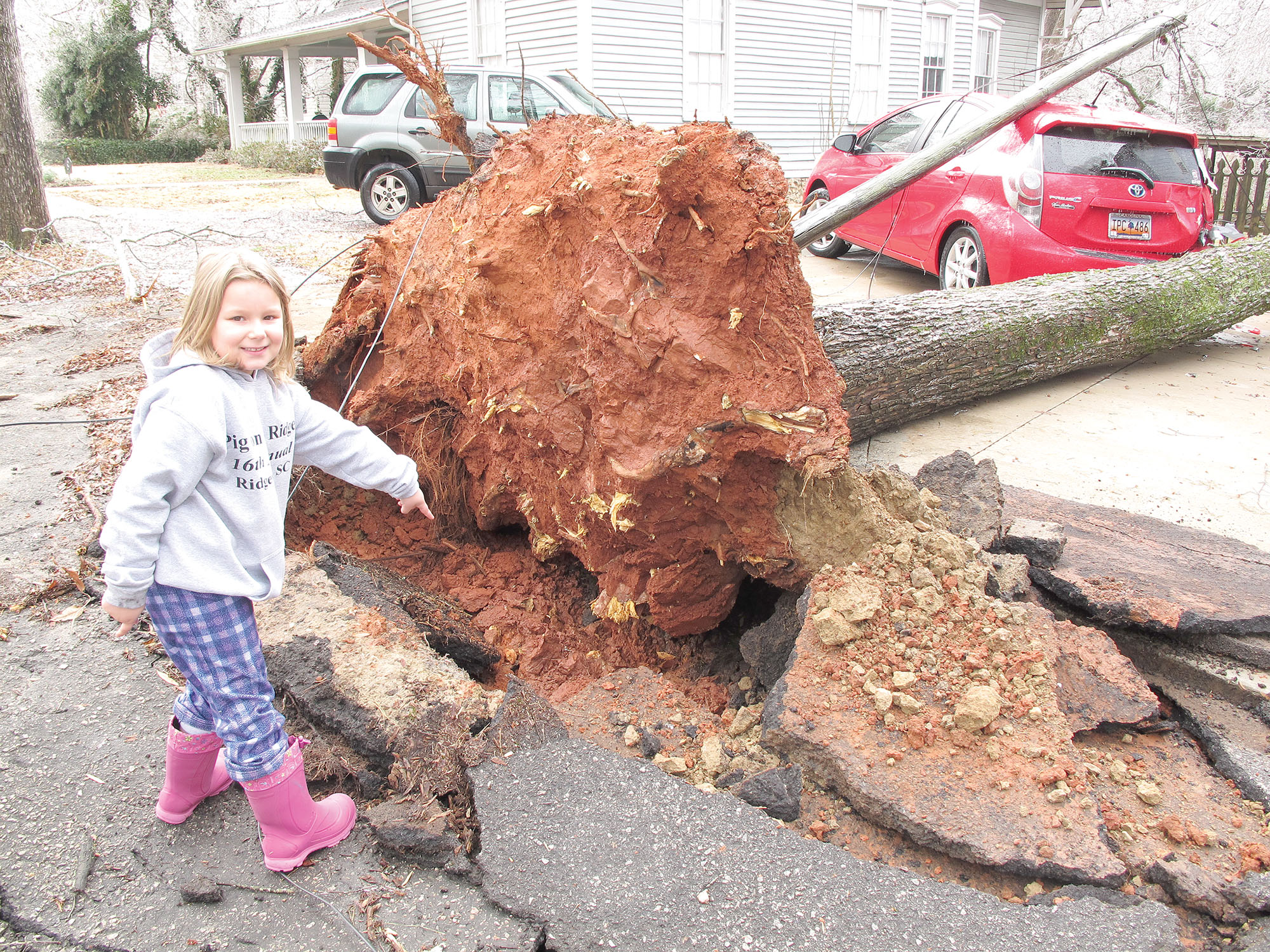
    While most of Blythewood and Fairfield County woke up to a beautiful winter wonderland of ice-coated trees and fences Tuesday morning, Taylor Harrison of Ridgeway awoke to find a large iced tree had fallen on the rear of her red 2013 Prius and had taken with it a telephone pole that landed on the top of the car. Harrison’s younger sister, Rosalee, 8, is shown here dramatically describing her reaction to the devastation caused in the family’s yard by the ice storm. (Photo/Barbara Ball)

    BLYTHEWOOD/FAIRFIELD COUNTY – While the Midlands largely escaped the brunt of the winter storm that ripped through the Southeast late Monday night and into Tuesday morning, leaving more than 100,000 homes without power in the Upstate, Fairfield County and a portion of northeast Richland County took some minor punishment.

    Monday night’s storm dumped approximately a half-inch of ice on the area, coating trees and power lines and making roads hazardous for travelers. The Fairfield Electric Co-Op reported that around 1,800 customers were affected by the storm overnight as ice-laden trees succumbed to the additional weight and bowed into power lines. By mid-morning on Tuesday, the Co-Op said that number had been cut to approximately 500 customers – 100 in northeastern Richland County and 400 in Fairfield. Most of the damage occurred in the corridor between Blythewood and Ridgeway.

    Crews were still on the job Tuesday afternoon, being assisted by crews from the Edisto Electric Co-Op from Bamberg. All power was expected to be restored by Tuesday evening, the Co-Op said.

    In Winnsboro, ice began forming around 5 p.m. Monday and by 11 p.m. the first reports of power outages began to trickle in. William Medlin, Director of the town’s Electrical Department, said the outages peaked at around 1,200 customers. By 2 p.m. on Tuesday, however, Winnsboro crews had whittled that down to just two remaining customers.

    Fairfield County schools were closed Tuesday, and many of Tuesday night’s games in the first round of the state basketball playoffs in the girls’ bracket were rescheduled for Wednesday, including Fairfield Central’s visit to Indian Land. The Lady Bengals’ first-round game at Goose Creek, meanwhile, remained on schedule.

  • Local Couples Still Carrying Their Torches

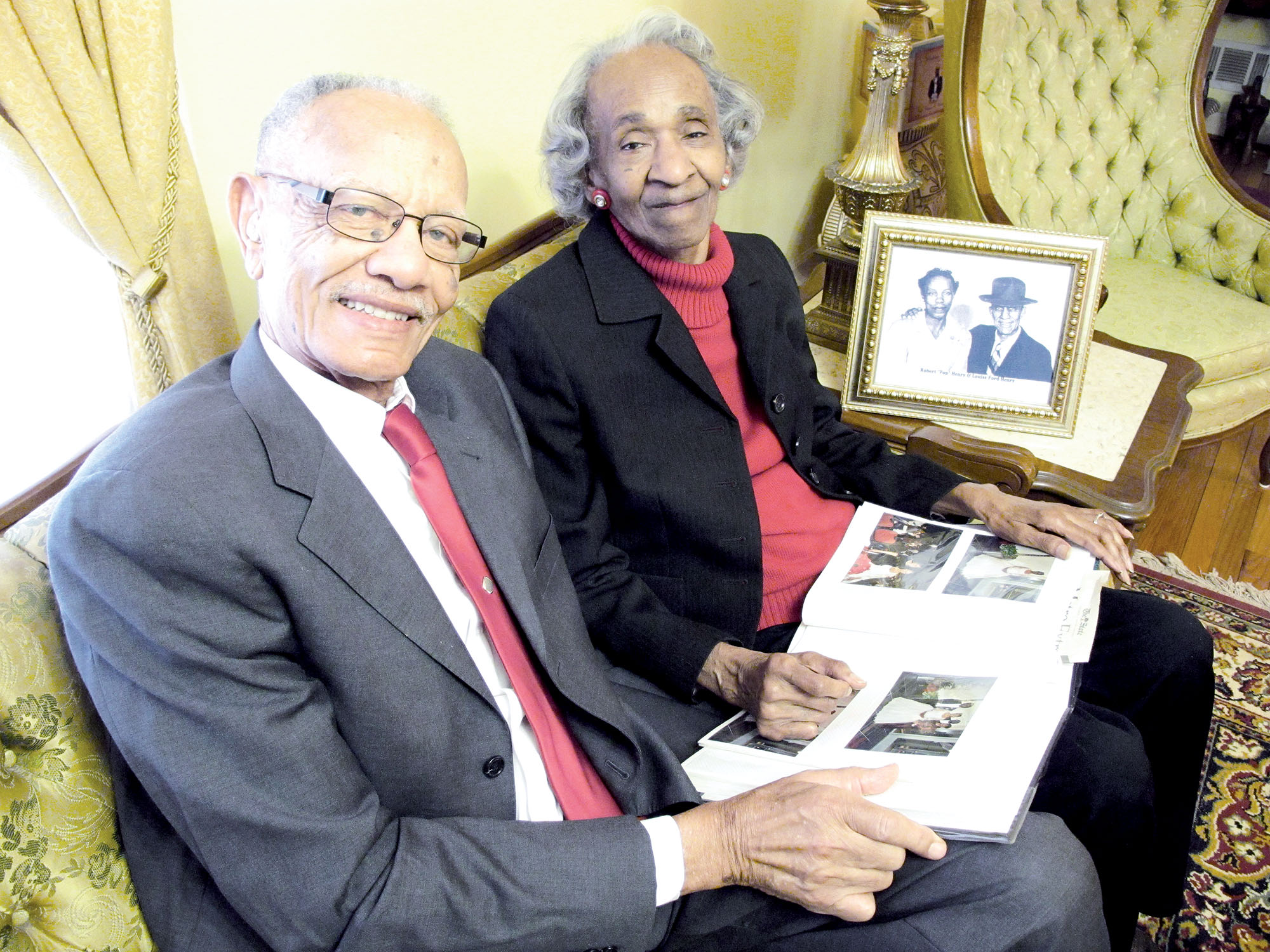
    Taft and Evelyn Henry of Winnsboro reminisce about their 62 years of marriage as they look pour over a family album. The two say they treasure time with each other and their family.

    The Henrys: Can I Walk You Home?

    WINNSBORO – Lifelong Fairfield County residents Taft and Evelyn Henry have been married for 62 years, and they say the secret to a long and happy marriage isn’t anything fancy or elaborate.

    “The biggest thing is to be friends,” Evelyn said. “If you’re friends, you’ll go a long way. You’ve got to like each other – that’s very important!” she said, adding with a laugh, “It’d be pretty miserable to stay married for 62 years to somebody you don’t like!”

    The Henrys, who raised two children and now have two grandchildren and a 6-year-old great-grandchild, met while they were both students at Fairfield County Training School, as it was known at the time.

    “He asked to walk me home,” she recalled fondly. “That’s how we started talking.”

    Evelyn graduated in 1947 and went on to earn a bachelor’s degree in education from USC, while Taft earned his GED, joined the Army and served in the Korean War. They maintained a long-distance engagement for three years before marrying in 1952 at her parents’ home.

    Then they set off to see the world together. They were stationed in Virginia and then Germany before returning to settle in Fairfield County. Evelyn taught at McCrorey Elementary School and eventually retired as the school’s principal for a 30-year education career. Taft retired from Fort Jackson after 22 years of service.

    “I won’t say it’s all been a bed of roses!” she said with a laugh. “Everybody gets upset with each other from time to time. But we know how to calm down and talk things out. We have respect for each other – that’s how you work things out.”

    She said the family’s years together have been rich in laughter and happiness.

    “There are so many fun memories,” she said. “For instance, when the children were small, they would always have a Saturday conference with their daddy out on the porch, to give him the rundown of the week. One week, they could hardly wait to talk to him – they ran out to the porch and excitedly informed him that ‘Mama cursed! Mama cursed!’ So he asked – a little scared, I think! – ‘well, what did she say?’ And the children said – ‘on the drive to school, she called us hellcats!’” Evelyn laughed at the memory. “They had gotten to fussing in the backseat and I called them hellcats. They thought that was some pretty bad cussin’!”

    She said the family’s longtime involvement in church life has been a big source of strength.

    “Even when we were stationed in Germany,” she said, “we got in there and got involved with the church. I was a moderator of the ladies’ group, and my husband worked with the men. It was wonderful to be a part of the church group, and to have people like that to talk to.”

    Evelyn said the couple’s decades together have been filled with love.

    “It’s been interesting,” she said with a smile. “It’s been a very good life together.”

  • Local Couples Still Carrying Their Torches

    Don and Kat Daniels of Blythewood, married for 64 years, stand next to their restored 1929 Ford Model A truck that they frequently drive around the town and show off in the annual Christmas parade.

    Mr. & Mrs. Daniels: See You in Church

    BLYTHEWOOD – Kat Smith, a Ridgeway girl, was 19 when a church friend, James Sharpe, introduced her to Don Daniels at a Sunday afternoon football game in a field near Daniels’ father’s store on Lorick Road in Blythewood. She did not know that Daniels had arranged with Sharpe to make the introduction. Now she recalls that it all just sort of conveniently fell into place as Daniels ended up tagging along with Sharpe and Kat to church services that evening.

    “And the rest is history,” she said with a smile as she reached over to clutch her husband, Don’s, hand. “We’ve been going to church together ever since.”

    After 64 years of wedded bliss, the Daniels credit their deep abiding faith in God and their work with their church for their long, happy years of marriage that has produced two sons, four grandchildren and two great grandchildren, most of whom live close by in Blythewood. Their son Alex, a Hollywood stunt man and actor, and his wife, Carolyn, the 1992 Miss America, and their three children live in California.

    “But they visit Blythewood quite often,” Kat said. “Carolyn was in town with the children recently to judge the Miss South Carolina contest.”

    “We’ve had a good life,” Don, a WWII veteran, said. “We go to church and have always been involved with our children’s and grandchildren’s lives.”

    Kat was, for the most part, a stay-at-home mom and looked after grandson Will during his growing up years while his parents, who live next door, were at work. “He was always over here. It has been a blessing living next door to Don and Linda,” Kat recalled.

    Kat still works in her flower garden and even has a year-round greenhouse in the back yard. Don tools around town in his 1929 Ford Model A pickup truck from which he and Kat can be seen waving every year during the Blythewood Christmas parade. Until a few years ago, the couple, now in their 80s, used to make yearly visits to see Alex and his family and take in Hollywood where their son regularly introduced them to the rich and famous. While they say it was lots of fun, they were undaunted by the glamour and were always glad to get back home to their quiet rural Blythewood existence, their family, friends and fellow church members.

    So what’s their secret for a happy marriage over the course of 64 Valentine Days?

    “Well, life is no bed of roses,” Kat offered, looking over at her husband. “And we’ve had our ups and downs. But that’s how life is. I once heard a woman say that she and her husband never had an argument. That woman,” Kat smiled, rolling her eyes, “was probably telling a story. Besides, if you haven’t had some disagreements along the way, then you haven’t had the joy of making up.”

    “We have always just stayed in there and served God and let Him direct us,” Kat said. “Our prayer was always that our children and grandchildren would grow up to be in church on Sunday morning, and they are, wherever they are, every one of them,” she said smiling proudly. “We couldn’t ask for more than that.”

  • Council Skipping Town for Retreat

    WINNSBORO – In spite of urgings from one member of the public to do otherwise, County Council Chairwoman Carolyn Robinson (District 2) announced Monday night that Council would be holding their Feb. 21 retreat one county away.

    Ridgeway resident Randy Bright had asked Council during the meeting’s first public comment segment to hold the retreat locally, so that it would be more accessible to constituents. Nevertheless, Robinson later announced the retreat would be held at the Midlands Technical College campus on Farrow Road in Richland County.

    “We’re using that facility because we put money in the pot for educating the children and everything and it’s something that is available to us so that’s where we have chosen to have it,” Robinson said.

    Councilwoman Mary Lynn Kinley (District 6) later asked Robinson if she would consider holding the retreat at the Midlands Tech campus in Fairfield County, but Robinson said adequate space was not available there.

    “We only have one room available to us there,” Robinson said. “We need two rooms.”

    Robinson also said the White Oak Conference Center had been considered, but was “cost prohibitive.” Council can use the Farrow Road campus for free, she said.

    “We tried to think of some (other local) possibilities,” Robinson said, “and we didn’t come up with any.”

    The retreat is scheduled for 9 a.m. until 4:30 p.m. and is open to the public. The campus is actually located just off Farrow Road at 151 Powell Road in Columbia.

    Committee Split

    Council voted to split the Policy and Development Committee into two new committees Monday night. By unanimous vote, Council created the Public Affairs and Policy Committee, comprising justice and personnel procedures, environmental and public safety, land planning and zoning; and the Public Resources and Development Committee, covering health, education and recreation, public facilities and transportation, welfare and community relations.

    At the suggestion of Kinley, Council agreed to try the new format for six months and bring it up for review.

    In Congress

    With no members of Council attending next weekend’s National Association of Counties legislative conference in Washington, D.C., Council discussed items to be included in a letter to U.S. Rep Mick Mulvaney and senators Lindsey Graham and Tim Scott, detailing the County’s needs for potential federal assistance.

    County Administrator Milton Pope told Council the letter would include requests for hospital funding, assistance with water and sewer infrastructure, internet access and the County’s aging 9-1-1 system. Kinley suggested including a request for assistance in funding a new library project in Ridgeway, while Councilman Kamau Marcharia (District 4) asked Pope to also include incentives for housing developers.

    “We have one of the poorest stocks of housing in the state,” Marcharia said. “Is there a way where we can entice or invite developers to come with some kind of incentives to start building some homes or houses?”

    Late Start

    Council rescheduled the start time of their Feb. 23 meeting to 7:30 p.m. to allow Council members to attend that evening’s ceremony honoring former Sheriff Herman Young. Young will be awarded the Order of the Palmetto at an event beginning at 5:30 at the Carolina Event Center, 1122 Highway 321 in Winnsboro.

  • Jenkinsville Sidewalk Grant in Limbo

    WINNSBORO – Efforts by the Mayor of Jenkinsville to obtain matching funds for a sidewalk grant may have hit a snag this week as County Council’s proposal Monday night essentially put the County Transportation Committee (CTC) on the hook for the whole bill.

    Jenkinsville Mayor Gregrey Ginyard last month requested $50,000 in matching funds from the County, in increments of $25,000 over the next two budget cycles. Ginyard told Council then that he would be seeking an additional $50,000, in similar installments, from the CTC to make up the $100,000 in total matching funds necessary to obtain a grant from the S.C. Department of Transportation.

    The proposal went through Council’s Policy and Development Committee on Jan. 29, which recommended taking the funds not out of the County’s general fund but instead from District 4’s portion of state money that is distributed to counties for road paving projects. Monday night, the full Council voted to accept that recommendation, but not before Councilman Kamau Marcharia (District 4) offered an alternative motion – to take the money from the general fund.

    Chairwoman Carolyn Robinson (District 2) said it was her impression from a CTC meeting last week that, since the state paving money is managed by the CTC, the CTC felt Council’s proposal meant, ultimately, that the entire $100,000 would be coming from the CTC. Marcharia agreed and his motion went to the floor, with Mikel Trapp (District 3) providing a second.

    “I just don’t feel comfortable with us doing this,” Councilman Billy Smith (District 7) said. “I think it sets too much of a precedent across the county.”

    Councilwoman Mary Lynn Kinley (District 6) asked Marcharia to withdraw his motion and asked Council to consider the original recommendation, then meet with the CTC Tuesday night.

    “This is gas tax money that our citizens have paid,” Kinley said. “I think whether it comes out of their pocket or ours, it’s due the citizens of Fairfield County. Until we get a ‘No’ from (the CTC), I say we ought to stick with (the original recommendation).”

    Marcharia agreed, although he said he was “not optimistic” the CTC would be on board, and Council then voted unanimously to accept the original recommendation.

    Tuesday night, however, Marcharia’s prediction proved accurate.

    The CTC

    According to David Williams, Chairman of the Fairfield County CTC, his committee manages C Fund money – money from the state gas tax – distributed annually to Fairfield County for road paving and other related projects. Twenty-five percent of that money the CTC sends to the DOT for maintenance of state roads within the county. The rest, the CTC divvies up among projects on a priority list, one road at a time, one district at a time.

    The Jenkinsville sidewalk project covers a state road, and Ginyard requested CTC matching funds from the DOT’s 25 percent. Council’s proposal would take the other half of those matching funds from the CTC’s 75 percent, specifically from the portion to be used in District 4.

    “Actually, at that point, the funds are totally under the CTC,” Williams said at Tuesday night’s CTC meeting. “Whether it be (from the) 25 percent allotment to the DOT or whether it be part of the road paving fund. It all, bottom line, is CTC money. It’s obvious that Council is not interested in putting skin in the game, currently, as we speak today.”

    Taking the County’s share from the CTC, Williams said, would ultimately mean someone in District 4 would not be getting their road paved on schedule. Clifton Hendrix, a CTC member who also lives in the Jenkinsville community, said Council’s current proposal was a break from tradition.

    “Historically, when Council has come to us for funds to partner with them, they have provided money and we’ve provided matching funds,” Hendrix said. “It’s always been like that. They have never come to us and said get the money from a particular district to do something in that area.”

    Prior to the discussion, the CTC heard some opposition to the entire project. Dawkins resident Jeff Schaffer told the CTC the project was “a joke” and “a waste of County money.”

    “We have a sidewalk that starts nowhere and goes nowhere and we have a population of 48 people, I believe, more or less,” Schaffer said. “I think we need to have the money put where most of the people or the majority of the county will get the most use out of it.”

    In his neighborhood, Schaffer said, there were plenty of roads that needed asphalt.

    The CTC agreed to pony up, however. With only three members of its eight-member committee present and voting, the CTC voted to provide the matching funds, “contingent upon Council, or whoever, comes up with the other $50,000,” Williams said.

    The ball is back in the County’s court, to be taken up at their Feb. 23 meeting in time to meet Jenkinsville’s deadline of March 1 to submit the grant application.

  • Trapp: Repayments Will Stop

    District 3 County Councilman Mikel Trapp

    College Cannot Verify Identity Theft Claim

    WINNSBORO – Facing a new election in his district in three weeks, incumbent County Councilman Mikel Trapp (District 3) made an unusual campaign pledge near the close of Monday night’s Council meeting, vowing to end his reimbursement to the County of more than $26,000 in tuition assistance.

    Trapp made the pledge after District 2 resident Beth Jenkins, speaking during the meeting’s second public comment segment, asked Council if any provisions had been made to recoup the money should Trapp lose the March 3 election to either of his challengers – Walter Larry Stewart or Tangee Brice Jacobs. Trapp, who stopped receiving tuition assistance from the County just before a July 8, 2013 opinion from the S.C. Attorney General’s Office classified such payouts as improper, voluntarily began reimbursing the County in $100 increments, taken from his monthly County paycheck. According to County records, Trapp had received $26,806 from the County for tuition assistance while he pursued a degree in business from Columbia College.

    But responding to Jenkins Monday night, Trapp completely reversed course.

    “Whether I’m elected or not,” Trapp said, “the County will get a note telling them to stop taking any money from my check, regardless. You want to know the date when I will continue paying? That will be the first of never.”

    Trapp then turned the discussion into a race issue.

    “You keep mentioning the citizens and taxpayers,” Trapp said, although Jenkins mentioned neither in her comments. “All the citizens and taxpayers I’ve seen come to that mic were white. I haven’t seen any blacks come complain about tuition reimbursement. It’s a 60 percent black population. If they had a problem they would come up here and let me know. The only problems brought here are someone from Saving Fairfield.”

    Trapp also said someone had obtained his Social Security number and had made an attempt to retrieve his records from Columbia College, but that the unnamed person in question had committed one critical error in the attempt.

    “Next time one of you tries to go to Columbia College with my Social Security number and try to get my personal information, make sure you take someone with color to their skin,” Trapp said. “They know what color I am down there.”

    In spite of the serious nature of Trapp’s allegations, the Councilman said after the meeting that he had not filed a police report. He said he may do so in the future. Trapp also would not say when the alleged incident occurred.

    The Columbia College registrar’s office, meanwhile, said they had no record or recollection of anyone other than Trapp requesting his records.

    In October 2013, Winnsboro attorney Jonathan M. Goode filed a lawsuit in the Sixth Judicial Circuit trying to recoup Trapp’s tuition money, as well as cash paid out by the County in lieu of supplemental health insurance to Trapp, Councilwoman Mary Lynn Kinley (District 6) and former Council Chairman David Ferguson (District 5). The suit was dismissed in January 2014 when Judge R. Knox McMahon ruled the plaintiffs lacked standing to pursue their claims.

  • City Seeks Rimer Pond Road Easements

    BLYTHEWOOD – The Residents on the south side of Rimer Pond Road received letters this week from the City of Columbia offering them $1 for at least a 20-foot permanent easement across the front of their properties to install a 48-inch water main along the length of the road. The line will eventually extend to the Kershaw County line and loop back to Northeast Columbia.

    About half of the road’s residents received letters signed by Hector Garcia and the others received letters signed by Trey Sturkie. Both are Right-of-Way Agents for the Real Estate Division of the City of Columbia Department of Utilities and Engineering.

    The letters contained drawings depicting the location and dimensions of the easements on the properties residents were being asked to grant to the City of Columbia.

    Garcia met with several residents including Trey Hair and Doug Skroback on Monday morning after Hair called to request more information. Garcia told Hair and Skroback that the property easements would not be considered ‘takings,’ but rather permanent and exclusive easements that would eventually be subject to condemnation in the event the City was not able to reach a settlement with the property owners.

    Documentation accompanying the letter explained that while the property owners would still own the 20-foot easements, the City would have certain rights including that of ingress and egress at all times for the purpose of constructing, operating, reconstructing and maintaining a water main and with the right to remove shrubbery, trees and other growth and improvements from the easement and construction area.

    “That 20-foot setback is where you cannot put any permanent structure, any buildings,” Garcia said. “It’s designed and reserved for right of way.” Garcia told the residents that the City could at any time remove any plantings or improvements or future plantings or improvements from the easement.

    Asked about financial considerations for the easements, particularly those with brick gates, fencing and expensive landscaping, Garcia said that would be determined on a case by case basis. Both Garcia and Jason Shaw, manager of the project (when he was interviewed by The Voice in June of 2013) said representatives for the City would meet with property owners at a location on the road before they would begin asking residents to sign easements. Asked why this had not been done, Garcia replied that he did not know.

    The letters received last week stated that the water line was for the purpose of providing adequate fire protection and water quality near the Town of Blythewood and that it is a high priority project that the City of Columbia has targeted to complete as soon as possible. But in a phone interview in early January of 2013, Joey Jaco, an employee in Water and Engineering Department, told The Voice that the purpose of the proposed water line was to improve water pressure and flow services to Northeast Columbia.

    “It is also our intent to provide water service to the properties along Rimer Pond Road,” Jaco said.

    Jaco also said those residents who agree to receive Columbia water must sign a covenant to be annexed into the City of Columbia should their property ever become contiguous with the City. Some residents on the road already receive Winnsboro water.

    A meeting of the road’s residents is planned for 3 p.m., Sunday, Feb. 15 at The Village Church, 574 Rimer Pond Road in Blythewood. For information, call 786-7754.