Blog

  • Manor’s Economic Drag Burdens Town Budget

    Mangone: Fish or Cut Bait
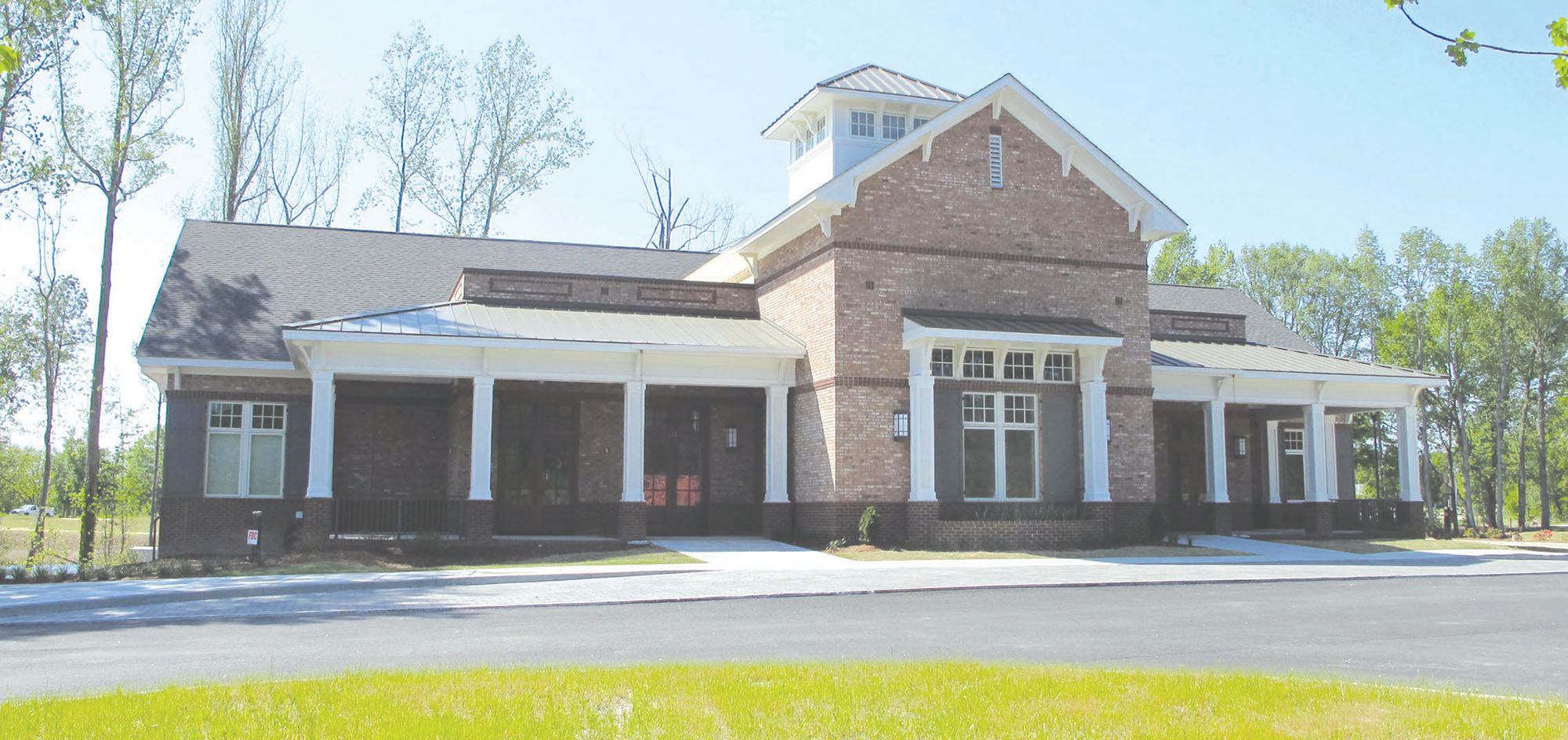
    Conceived and sold to the public as a profit-making venture, Doko Manor has created a drain on Town finances.
    Conceived and sold to the public as a profit-making venture, Doko Manor has created a drain on Town finances.

    BLYTHEWOOD – Despite The Manor’s now successful weekend rentals, the facility’s continuing financial quagmire was still the hot topic at Town Council’s annual retreat, held at The Langford-Nord House in Blythewood on Saturday. The bottom line was the urgent need to “stop the bleeding” and generate revenue.

    After hearing a presentation from a local woman about how she would market the facility, Council members discussed options that included hiring professional marketers, introducing a website exclusively for The Manor and utilizing various social media and video presentations.

    “We keep going in the hole every month and we’re just trying to get to a place where we can break even,” said Councilman Tom Utroska. “Unfortunately, there wasn’t a lot of forethought, in my opinion, when The Manor was built. You can’t hold more than one meeting at a time (in the large reception room) on weekends because of sound proofing, even though the room is dividable into four parts. We’re going to have to zero in on rentals during the week.”

    Councilman Bob Mangone agreed, saying, “Weekday meetings are where we have to get our revenue.”

    “We talk about this every day at Town Hall,” Mayor J. Michael Ross told the group. “We’ve looked at having a website for the Manor. We’ve met with the Gannet people (USA Today), WLTX and a videographer. We’re looking at the next step. We’ve got to get somebody to promote it.”

    “Whatever we do,” Mangone said, “we have to have an end point that says this is how much incremental income we’ll bring in for the money we spend. If we’re going to spend a chunk of change advertising The Manor, we need to bring in significant income and not go further and further in the hole.”

    “Every month we have a $4,000-$5,000 deficit,” Ross said. “We don’t have anything else in the town that’s drawing that kind of deficit. We’ve got to do something.”

    Town Administrator Gary Parker made a number of suggestions, including issuing a Request for Quotes (RFQ) for a website to promote the facility, but he expressed his own consternation at the dilemma the Town faces as expenses for The Manor accumulate.

    “This is a unique animal in my experience,” Parker said. “I have never had a situation where I was managing a municipality and had such an aspect of operation as this one (The Manor).”

    As frustration made its way around the table, Councilman Tom Utroska vented.

    “We keep talking about it and do nothing,” Utroska said. “We need to stop the bleeding. We’ve tried various and sundry approaches, but we’re basically in the same place we were a year ago. We’re still hemorrhaging.”

    “A compelling event creates a decision,” Mangone told the group. “Our compelling event (The Manor) is becoming chronic. It needs money to win the battle. You must line everything up to see if you can win the battle. We have a community center that, by design, was to be a revenue source. Now we’re in the event planning business. I’m not sure the Town should be in the restaurant or event planning business. We need to fish or cut bait.”

    Councilman Bob Massa disagreed with Parker about putting out an RFQ as a first step.

    “The RFQ takes time,” Massa said. “We need to get a website up right away.”

    “You’re looking at well over $5,000,” Parker said, “and normally when I’m seeking a company to spend that kind of money with, I’m going to do an RFQ.”

    An RFQ, he said, would take six to eight weeks.

    Town Attorney Jim Meggs confirmed that such a purchase would require a competitive bid process. The Council directed Parker to draft an RFQ to send out as soon as possible.

    “I’m going to work on that this week and begin the process of recruiting a marketing person who would work on filling weekday vacancies,” Parker told The Voice.


     

  • Town Talks Tax

    Fear of Shortfall Prompts Millage Discussion

    BLYTHEWOOD – During Town Council’s annual retreat on Saturday, an agenda item titled ‘Revenue Issue’ turned out to be a presentation by Town Administrator Gary Parker to prepare the citizens of Blythewood for a property tax in the not too distant future.

    Parker reviewed a laundry list of the Town government’s increasing financial burdens along with ways the town’s citizens would benefit from a property tax. More to the point, however, he told Council members, “We don’t know exactly where we stand until we get into the budget workshop for this coming year. My fear is that we are going to see a shortfall already in the coming year.”

    Parker said that while a shortfall would not mean the Town won’t be able to sustain services in the upcoming budget year with current revenues, “we can’t sustain the Town’s operation in future years unless we have additional revenue sources,” he said.

    While Parker laid the need for additional revenue squarely at the feet of projected growth (25,000 population by 2025, according to the town’s Master Plan), Councilman Tom Utroska cast doubts on the numbers with his own collection of previous growth prognostications, one of which put the town’s population at 10,000 by 2015. According to the U.S. Census Bureau’s annual estimates of the resident population (released for municipalities in May 2014), Blythewood had only 2,298 residents as of July 1, 2013.

    “We don’t have a property tax in Blythewood,” Parker said. “Consequently, we are trying to fund services through other very limited revenue sources.”

    However, services currently provided in the Town of Blythewood (such as police and fire protection, garbage collection, water, sewer and power services) are provided by Richland County through Intergovernmental Agreements (IGA’s) or through other municipal or privately owned utilities. Parker suggested growth would eventually be a contributing factor “down the road” in the need to levy a property tax in the town.

    At one point, Utroska, who made it known he was not in favor of levying a property tax on the citizens, brought the call for a tax full circle back to the various financial tribulations of the park and Manor (see story, page 1).

    “The real equation we have is with the town park and The Manor,” Utroska said during heated comments about the proposed property tax. “As long as we continue to provide more and more stuff for the park and Manor, the deeper we’re going to go into debt. We need to neutralize expenses at the Manor. A hundred residents went to a town meeting and said this would happen.”

    In addition to Utroska, Council members Bob Massa and Bob Mangone also expressed opposition to levying a property tax.

    Before he would agree to levy such a tax, Massa said he would pose two questions to the citizens in the form of a public referendum (vote): 1) Are you in favor of a small millage to maintain the park? 2) Are you in favor of a small millage to maintain the roads in the town (those owned by the Town government)?

    Utroska said he wanted the citizens to have a say in whether they would support a property tax. He also said he didn’t want to pass a tax until there is a specific need for one. Mangone added that while he had not campaigned against levying property taxes, as such, he told Council that he did say during his campaign, “I have never voted for a tax increase and couldn’t imagine doing that in the future.”

    “Three of us (himself, Massa and Utroska) ran on platforms aimed against continuing building the park and Manor,” Mangone added. “I’ll be chained to the graders before I see a penny (of public money) spent on the amphitheater. The park foundation can raise private money to build it, but until we can meet the basic needs of the citizens I can’t justify spending town money on the amphitheater.”

    It was just last month, however, that Council voted unanimously to give the park foundation $3,000 for seed money.

    Parker disagreed that the citizens should be polled on a property tax.

    “The people elected the Council to make decisions for them,” Parker said. “Council members are the ones who really have the knowledge and information about whether or not a (property) tax is needed. If you put it on the ballot, the (people’s) knee jerk reaction will be ‘No.’ But people don’t understand all the costs that are involved in a municipal operation that the governing body understands. That’s why they elect Council members – to represent them. A referendum on a property tax would endanger support for it. You as elected officials should make that decision.”

    “I don’t dismiss what you’re saying,” Mangone told Parker, “but saying the citizens don’t understand, and that Council knows what’s best – that’s what got the last group un-elected.”

    In the end, Parker managed to get Council’s buy-in for what he called a good, very expensive public education effort, to convince citizens of the need for a property tax and before it is levied. Still, there are other major road blocks the Town must overcome before actually levying a property tax, specifically Act 388, passed by the state legislature in 2006 that has thus been interpreted by the S.C. Attorney General’s office: if a municipality does not currently have a property tax, it can never have one. The Act 388 formula amounts to “0 existing millage rate multiplied by annual percentage of permitted millage rate increase = 0.”

    Blythewood is one of a handful of towns in the state that does not have a millage, much less a property tax. The Amoth administration voted to do away with it in 2004. Without a millage, the Town cannot, under Act 388, legally establish a millage and levy taxes.

    The intent of the law has long been questioned by the Municipal Association of S.C. (MASC), and Parker suggested that Council, with the help of MASC, find out once and for all whether the legislature in passing Act 388 actually intended for a Town without a millage to never be able to have one. Council agreed that would be a good idea before asking voters to support a property tax.

    Other ways suggested to increase the town’s revenue included issuing debt millage, which Parker said the Town would be allowed to do under Act 388 (such debt millage could be issued with General Obligation (GO) bonds); levying impact fees on developers and bringing in more industry into the town which Parker said would provide a greater ratio of revenue than that provided by residences.

    Parker pointed out, however, that impact fees could only be used for capital improvements, not for the Town’s operations and maintenance expenses. And even if the Town did pass an ordinance to issue a GO bond, which must be paid for with property taxes, voters would have 20 days, from the date of publication of the Notice of Adoption of the GO bond ordinance, to meet certain requirements to force Council to either rescind the bond ordinance or vote to hold a public referendum on it.


  • Proposed Policy Change Pits Board Against FOIA

    WINNSBORO – With the final reading pending on a revision to the School Board’s policy on how for-the-record statements are recorded in meeting minutes, the Board Chairwoman has indicated some uncertainty in how, or even if, the policy change can move forward. One of the minds behind the state’s open records law, meanwhile, has weighed in on the revision, calling the proposed change “problematic.”

    The Board passed first reading of the revision during their Feb. 17 meeting on a 4-2 vote, with Annie McDaniel and Paula Hartman offering the only opposition to Chairwoman Beth Reid, Henry Miller, William Frick and Carl Jackson (Andrea Harrison was absent from the Feb. 17 meeting). The proposed changes to Policy BEDG, Minutes of Board Meetings, would limit for-the-record comments by Board members to “written materials germane to the public agenda.” Those materials would be limited to five pages, front and back, unless granted a special exception by the Board chairperson. The statement “must be presented in writing to the board’s secretary or the board chairman at the time of the meeting.”

    The written statements would be “designated as an attachment to the minutes,” the revision states, and not as part of the minutes themselves. The chairperson would also have “the prerogative to rule any such request out of order for the reason that such materials are not germane to the agenda, are inappropriate as an attachment or that the materials are otherwise publicly available; such ruling by the presiding officer will stand unless overturned by the board majority.”

    The S.C. Freedom of Information Act (FOIA), however, which governs, among other things, how public bodies maintain records of meetings, contains no such provisions or restrictions regarding the minutes of meetings. Placing restrictions at the local level on a state law is “problematic,” according to Bill Rogers, Executive Director of the S.C. Press Association.

    “That is a problem,” Rogers said this week, “when they can stifle Board members from putting things on the record that they (the majority) don’t agree with.”

    Reid said the intent of the policy revision was not to silence the minority, but was instead an effort to make the compilation of minutes more efficient. An overwhelming number of for-the-record comments during every meeting, Reid said, was hampering efforts by the Board clerk to compile minutes in a timely manner. Furthermore, she said, the District consulted with it attorneys from the Childs and Halligan Law Firm before proposing the change.

    “We have from legal counsel advice that (the policy revision) does meet the standard of the FOIA,” Reid said.

    Reid added that the policy is taken verbatim from a policy that has been in place at the Lexington-Richland 5 school district since at least 2012. But Rogers said Lexington-Richland 5 has a poor track record when it comes to transparency.

    “Lexington-Richland 5 is not a good role model for openness,” Rogers said.

    Frick, a Winnsboro attorney who serves with the Public Defender’s Office, placed the motion to adopt the change on the floor during the Feb. 17 meeting. This week, however, he said he was on the fence heading into the second and final reading.

    “I don’t know if I can vote in favor of it as it is written,” Frick said, “but I do think something needs to be done about (the number of for-the-record comments).”

    Frick said he supported the revisions in first reading so that the Board could discuss the issue.

    “I knew we would have a second vote on it,” he said.

    Reid told The Voice this week that changes could be implemented to the revision prior to final reading.

    “I want to work together to make it right,” Reid said. “We don’t want to stifle freedom of speech. We don’t want to violate the law or create the appearance in any way that it’s more than it is, which is to make the minutes more efficient in the future.”


  • ‘Drugstore Cowboy’ Suspect Rounded Up

    Richard Ray Shaver
    Richard Ray Shaver

    WINNSBORO – An Elgin man who led police on a three-county chase last week may be responsible for a string of pharmacy hold-ups in at least two counties.

    The chase ended just shy of the Richland County line in Fairfield County on Feb. 25 as Fairfield County Sheriff’s deputies hemmed in the 1996 Mercury being driven by 37-year-old Richard Ray Shaver on I-77 in what is known as a ‘rolling roadblock.’ With two cars in pursuit, deputies were able to position several other cars in front of Shaver’s Mercury, gradually slowing him to a stop on the side of the highway.

    Maj. Brad Douglas said Shaver surrendered without a fight once the chase came to an end at approximately 4:30 p.m. Investigators found several bottles of prescription pain medication inside the vehicle, Douglas said.

    The chase began in Rock Hill at approximately 3:45 p.m. when Shaver reportedly entered the K-mart on 2302 Cherry Road, approached the counter at the pharmacy and ordered the pharmacist to “give me all of the drugs,” according to an incident report from the Rock Hill Police Department (RHPD). During the robbery, Shaver kept one hand inside a jacket pocket, pretending to have a gun.

    The pharmacy handed over approximately 11 bottles of Oxycodone, the report states, and Shaver fled the scene in his Mercury. RHPD officers searching the area shortly after the incident spotted the Mercury heading south on I-77. Officers hit their blue lights, but Shaver failed to yield.

    Shaver is also suspected of robbing the pharmacy at the Publix grocery store at 2186 Cherry Road in Rock Hill on Jan. 26. Fitting the same description – bearded white male, early thirties – the suspect robbed the Publix pharmacy in nearly the same manner. With one hand inside a jacket pocket, pretending to have a gun, the suspect made off with seven bottles of Oxycodone just before 4 p.m. on Jan. 26.

    Surveillance photos circulated by the Richland County Sheriff’s Department in January seem to indicate Shaver as being involved in a pair of similar robberies in December and January. On Dec. 17, a man fitting Shaver’s description robbed the Rite Aid on Decker Boulevard using the same method. On Jan. 5, a suspect also fitting Shaver’s description entered the CVS Pharmacy on Forest Drive, implied that he had a gun and ordered the pharmacist to hand over an unknown amount of prescription narcotics.

    At press time, Shaver, of Fort Jackson Road in Elgin, was being held at the Fairfield County Detention Center where locally he faces charges of failure to stop for a blue light and possession of a controlled substance. The RHPD, meanwhile, has four outstanding warrants for Shaver – two for armed robbery and two for trafficking Oxycodone.

    Attempts to reach the Richland County Sheriff’s Department were unsuccessful at press time.


  • Winnsboro Man Dies from Hit-and-Run Injuries

    COLUMBIA – A Winnsboro man died Saturday morning at Palmetto Richland Memorial Hospital from injuries incurred after being struck in a hit-and-run incident on Farrow Road on Feb. 27.

    Richland County Coroner Gary Watts said Paul Lewis Fee, 56, of High Hill Road in Winnsboro, was pronounced dead early Saturday morning. According to the S.C. Highway Patrol, Fee, an employee with the S.C. Department of Transportation, had parked his department’s 2009 Ford utility truck on the side of Farrow Road and was performing road maintenance there at approximately 8:30 p.m. on Feb. 27. A 1984 Ford pickup truck traveling down Farrow Road struck Fee then crashed into Fee’s truck. The driver abandoned the pickup and fled the scene on foot.

    The driver turned himself, the Highway Patrol said, to the Richland County Sheriff’s Department in at approximately 5:30 p.m. on Saturday. The Highway Patrol said Ray Pickett, 59, a Richland County resident, has been charged with hit-and-run involving a death.

  • DHEC OK’s Quarry Permit

    COLUMBIA – Winnsboro Crushed Stone, LLC, the company with designs on quarrying granite at a proposed stone crushing plant off Rockton Thruway in Winnsboro cleared one more hurdle this week. On Tuesday afternoon, the S.C. Department of Health and Environmental Control (DHEC) said they had approved the company’s air construction permit.

    While local citizens raised numerous concerns about air quality and dust control at the proposed plant at a Nov. 20 public hearing, DHEC said Tuesday that those concerns “do not legally prevent issuance of the permit.”

    “Additionally,” DHEC said, “because Winnsboro Crushed Stone, LLC has demonstrated that it can comply with state and federal air quality regulations, DHEC is required by law to issue the requested permit.”

    Air Permit Number 1000-0038-CA, as well as the department decision, can be viewed on DHEC’s website at: www.scdhec.gov/Environment/AirQuality/ConstructionPermits/PermittingDecisions/.

    DHEC said parties wishing to appeal the decision may do so on the same website.

    Dorothy Brandenburg, spokesperson for Rockton Thruway residents opposed to the quarry, said her group’s main concern remains local water quality and availability.

    “There are laws that pertain to ground water that we feel have not been adequately addressed in the application,” she said. “With that being said, I am interested in hearing if the company has made any further attempts to provide answers to Town Council regarding the request for an intent to serve letter.”

    Brandenburg also said DHEC’s OK was “not a complete ruling as land and waste management also issues a permit that would pertain to our requests.”


  • Council Retreat Slated for Saturday

    BLYTHEWOOD – Town Council will hold its annual retreat on Saturday, March 7 at the Langford-Nord House in downtown Blythewood. “The public is invited,” said Town Administrator Gary Parker. While Parker said there will not be a public comment section on the agenda, there will be time before, after and during breaks to talk with members of Council about issues.

    Top agenda items during the morning session will include a discussion on the marketing of The Manor, budget planning and format change and the acquisition of municipal software. Following a 45-minute lunch break, Council will discuss several revenue issues and the administration’s vision for the future with emphasis on the Town’s comprehensive and Master plans as well as commercial development.

    Also on the afternoon agenda is a discussion about storm water runoff problems and solutions for the town and approval of funds for the Midland Small Business Forum and Council of Governments (COG) personnel services.

    The meeting will last from 9 a.m. until about 4:30 p.m. The Langford-Nord House is located at 100 McNulty Street.


  • Rimer Pond Road Faces Zoning Threat

    BLYTHEWOOD – About 10 residents of Rimer Pond Road appeared before the Planning Commission Monday night to express their concerns about a letter the Mayor received from a Chapin resident seeking his support for a potential commercial zoning request on property he owned on Rimer Pond Road. The request is to change the zoning on the property from Rural (RU) zoning to Rural Commercial (RC) zoning, which would, according to an employee in the Richland County Planning Department, permit many kinds of businesses including liquor stores, restaurants, grocery stores, convenience stores with gas pumps, pawn shops, motor vehicle sales and more.

    In the letter, dated Feb. 17, John L. Warren stated that he was giving the Town government a “heads up on a request I am making (to Richland County Council) to rezone from rural to commercial a piece of property adjacent to the Town of Blythewood.” The property is located on Rimer Pond Road about 600 feet from Highway 21, just outside the Blythewood Town limits in the unincorporated area of Richland County and subject to Richland County zoning, not Town of Blythewood zoning.

    Warren’s letter also asked for Mayor J. Michael Ross’ support in his (Warren’s) effort to have Richland County Council re-zone the property. The letter further stated, “Though I would hate to do this to the community, if we can’t get it rezoned, we plan to divide the property and locate mobile homes on (it), which would in turn be rented to generate income.”

    Trey Hair, a resident of Rimer Pond Road, told The Voice before the meeting on Monday night that Warren’s threat of mobile homes was no threat to the residents.

    “We already have mobile homes on the road,” Hair said. “They’re homes. It’s commercial zoning that threatens our rural existence.”

    Warren’s letter was copied to Town Administrator Gary Parker and to Planning Commission Chairman Malcolm Gordge who, it was later learned by The Voice, was asked by the Mayor to reply to Warren.

    In that reply, dated Feb. 24, Gordge said, “The Mayor and I have discussed your desire to amend the zoning of the property in question from Rural to Commercial and we would like to help you if at all possible.”

    Gordge went on to say that “the staff at Town Hall and myself would welcome the opportunity to chat with you informally and under no obligation about your plans and how the Town might help.”

    Gordge also advised Warren that in order for the Town to help him he would need to annex the property into the Town. Gordge further stated that Warren could “feel free to write, call or e-mail me in confidence at any time.”

    While Warren’s letter was disclosed at the Planning Commission meeting, Gordge’s reply to Warren was not. Gordge did, however, supply a copy of the reply to The Voice when it learned about it the next day and asked for it. Both Gordge and Mayor Ross told The Voice they have had no response from Warren.

    During public comment time Monday evening, Hair told the Commission, “We’ve been before you before, opposing the commercialization of Rimer Pond Road. While we are not residents of the Town, we are in the community. We shop here, attend Blythewood churches, Blythewood schools and participate in the community’s activities. We would ask that you support us, the majority who do not want the commercialization of Rimer Pond Road, rather than support (Warren) who has never lived here, will never live here and simply bought the piece of property to rezone it and sell for a profit,” Hair continued. “It may have been a bad investment on his part, but once it becomes commercial, that commercial will domino right down the road.”

    Warren came before Town Council in 2009, saying he purchased the property on the strength of the Town’s then-proposed Master Plan that designated a portion of the road where it connects to Highway 21 as a commercial ‘node.’ Residents on the Road repeatedly appeared in large numbers before both the Blythewood Planning Commission and Town Council to ask that commercial zoning be limited to Highway 21 and not be brought down Rimer Pond Road.

    Town Councilman Bob Massa, who was then a member of the Town’s Planning Commission, told The Voice on Monday that the Town government, at that time, agreed to the residents’ requests and did not further pursue commercial zoning on the road. However, the Master Plan still reflects the commercial ‘node.’

    Hair told the Commission that with the proposed eventual widening of the road and the City of Columbia currently working toward laying a 48-inch water main along the road, “if commercial zoning gets a foothold, the road will quickly become another Clemson Road.” Rimer Pond Road is lined primarily with large acre properties and farms along with several neighborhoods including Eagle’s Glen and Cooper’s Pond.

    “We live here,” Hair said. “We don’t have a sign like Cobblestone, but it is our community, and I just want to go on record against commercial zoning on Rimer Pond Road. And I ask for your support in our objections to commercial zoning on our road.”

    Gordge told Hair, “We have some sympathy with your views, but that area has been earmarked (by the Town’s Master Plan) for some type of commercial zoning. But your comments will be helpful to us in the future.” Gorge said that commercial zoning might not be as bad as the residents envision.

    “It’s easy to for you to say it’s not going to be as bad as I feel it will be,” Hair said, “but once the commercialization begins, we won’t be able to stop it. It will domino.”

    Commissioner Marcus Taylor, however, told Hair that when the issue comes before Richland County, “I think we (Commission) just have to go down and support you guys’ opinion. Taylor said he knew there had been efforts in the past to commercialize the road, and I know you don’t want it. So when we find out (when it will come before Richland County) I’ll go down with you.”

    Gordge asked if the road’s other residents in attendance were in accord with Hair’s comments and they all said they were.

    Warren’s request, along with another request by developer Patrick Palmer for 5 acres of commercial zoning further down the road, across from Blythewood Middle School, is scheduled to be on the Richland County Planning Commission’s agenda at its next meeting on April 6 at 1 p.m. in the County building at Harden and Hampton streets in Columbia. Suzie Haynes, who prepares agendas for the County’s boards, told The Voice that both Warren’s and Palmer’s applications are for Rural Commercial (RC) zoning.

    Changing the Record

    In other business, Gordge spoke on behalf of Commissioner Mike Switzer, who was absent, asking that the minutes to the February Planning Commission meeting be changed to reflect that Switzer had, at the February Town Council work session, apologized for remarks he had made at the February Planning Commission meeting criticizing the Mayor and Town Council for being anti-business. Even though the apology was not made at a Planning Commission meeting, Gordge asked that the Planning Commission minutes be changed to reflect the apology.


  • Stewart Wins Special Election

    Walter Larry Stewart
    Walter Larry Stewart

    WINNSBORO – In November, a recount cut his deficit to a mere 4 votes. Tuesday night, Walter Larry Stewart needed no such recount, nor an official protest to stake his claim to the District 3 County Council seat.

    In a stunning reversal of November’s results, which gave incumbent Mikel Trapp the narrow win, Stewart overthrew Trapp, 429 votes to 380.

    The turnout was considerably lower than on Nov. 4, when Trapp pulled in 489 votes, Stewart 484 (485 after the ensuing mandatory recount) and Tangee Brice Jacobs, the third candidate on the ballot, 147.

    Jacobs managed just 34 votes in Tuesday night’s do-over.

    While the weather, the odd timing and the unprecedented nature of the special new election may have stunted turnout, the results, Stewart said, turned on campaign styles.

    “We ran a good, clean, honest campaign,” Stewart said after the results became final. “My opponent slipped into all kinds of dirty tricks and falsehoods. My opponent played too many tricks, and it backfired on him. You can only play so many tricks and people will eventually see through what you’re doing.”

    Nowhere was that more true, Stewart said, than in the Mitford precinct where Trapp mustered only 3 votes to Stewart’s 111. Stewart also fared well in Gladden Grove (Stewart 28, Trapp 4), Hickory Ridge (Stewart 45, Trapp 0, Jacobs 6) and White Oak (Stewart 58, Trapp 34, Jacobs 1), while holding a slight edge in Feasterville (Stewart 52, Trapp 46, Jacobs 13) and Horeb-Glenn (Stewart 21, Trapp 18, Jacobs 2).

    Trapp’s largest support came in his back yard at the Blair precinct where he took in 134 votes to Stewart’s 34 and Jacobs’s 9.

    With the election frenzy behind him, Stewart said it was time to begin focusing on the future of Fairfield County.

    “Now it is time for healing,” Stewart said. “It is time for us to get past all the negativity we have heard over the last nine months. It is time to come together and work together to make Fairfield County a better place for our families.”

    Stewart said his first mission will be to improve the quality of life for the county’s senior citizens, many of whom, he said, lack fresh water and live in substandard housing.

    “We’ve got plenty of money in this county,” Stewart said. “We’ve got to start spending our money on the right things.”

    Gov. Nikki Haley ordered the new election last December after the State Election Commission upheld a ruling by the Fairfield County Commission that at least five voters in the Nov. 4 election in District 3 had been given the incorrect ballot style. With the margin of victory at only 4 votes, the five incorrect ballots were enough to trigger a new election.

    Election results will be certified Friday morning.

    Information on when Stewart would take office was not available at press time. Phone calls to Trapp were also not returned at press time.


  • Lady Eagles Return to Title Game

    Jessie Stidham watches her shot fall Thursday against Dorchester. (Photo/Robert Buchanan)
    Jessie Stidham watches her shot fall Thursday against Dorchester. (Photo/Robert Buchanan)

    SUMTER – Before the 2015 season began, the Richard Winn Academy Lady Eagles set a goal to return to the SCISA Class A state championship game. Thursday night, the Dorchester Academy Lady Raiders were the last team in their way.

    Richard Winn’s great team play led them to a 53-27 victory over the Lady Raiders to advance to the 2015 SCISA Class A state title game.

    The Lady Eagles started the game on a 6-0 run as they used their full-court pressure to generate points. Dorchester Academy used their length to slow down the output of RWA’s potent scorer Jaycie Johnson, who poured in 40 points in a dominant performance against Curtis Baptist in the quarterfinals. The Lady Raiders made an effort to make sure to contain Johnson on the offensive end. But Richard Winn’s team play helped lead the Lady Eagles to a 17-6 lead at the end of the first quarter.

    Turnovers plagued the Lady Raiders early in the second frame, fueling a 6-0 RWA run to open the quarter. Dorchester Academy continued to fight, however, as they cut the lead to single digits near the end of the half. Jessie Stidham then stepped up and destroyed the Lady Raiders’ momentum, burying a jumper at the buzzer to give the Lady Eagles a 29-16 halftime lead.

    The Lady Eagles kicked the third quarter off with a 7-0 run as they began to run away with the game, benefiting from a suffocating defense that stifled Dorchester Academy’s offensive production. While the Lady Raiders kept Johnson under wraps, they could not stop Richard Winn’s overall ball movement on offense. The Lady Eagles used a 12-4 scoring run to end the third with a 41-20 lead as their goal to return to the title game became 8 minutes from reality.

    Dorchester Academy scratched and clawed, but could not match the Lady Eagles’ all-around team chemistry as Richard Winn ended the final frame on a 12-7 run to advance to the championship game.

    “I could not be more proud than my team right now,” REWA head coach Jason Haltiwanger said. “We stated at the beginning of the year we wanted to hoist that trophy up for our fans and for our school. Now we are a game away from making that a reality.”

    The Richard Winn Lady Eagles will face Holly Hill Academy for the Class A SCISA state title Saturday, Feb. 28, at the Sumter Civic Center at 11 a.m.

    RWA: 17-12-12-12 – 53
    Dorchester: 6-10-4-7 – 27

    RWA: Jessie Stidham 17, Jaycie Johnson 4, Bailey Taylor 4, Cassidy Branham 6, Alyssa Atkerson 17, Emily Brigman 5. Dorchester: Julianna McAlbany 13, Julia Smoak 12, Kindal Gray 2.