Blog

  • Rimer Pond Road Issue Heads to County Planning Commission

    The owners of properties on opposite ends of Rimer Pond Road are asking Richland County for commercial zoning that, if granted, would allow the first commercial zoning on the rural road.
    The owners of properties on opposite ends of Rimer Pond Road are asking Richland County for commercial zoning that, if granted, would allow the first commercial zoning on the rural road.

    Property Owners Seek Commercial Zoning
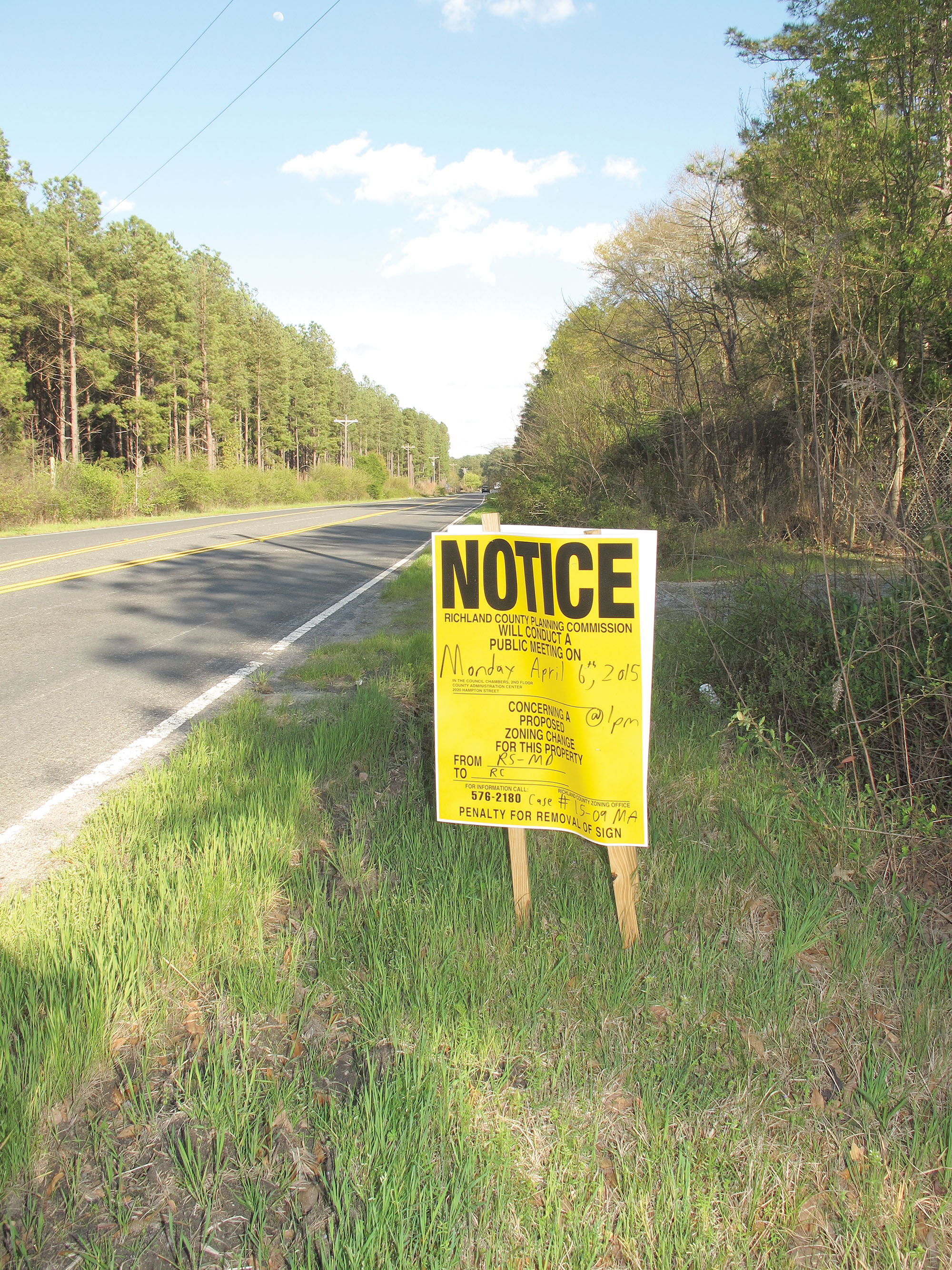
    Yellow signs posted to notify residents on Rimer Pond Road of proposed commercial zoning on the road.
    Yellow signs posted to notify residents on Rimer Pond Road of proposed commercial zoning on the road.

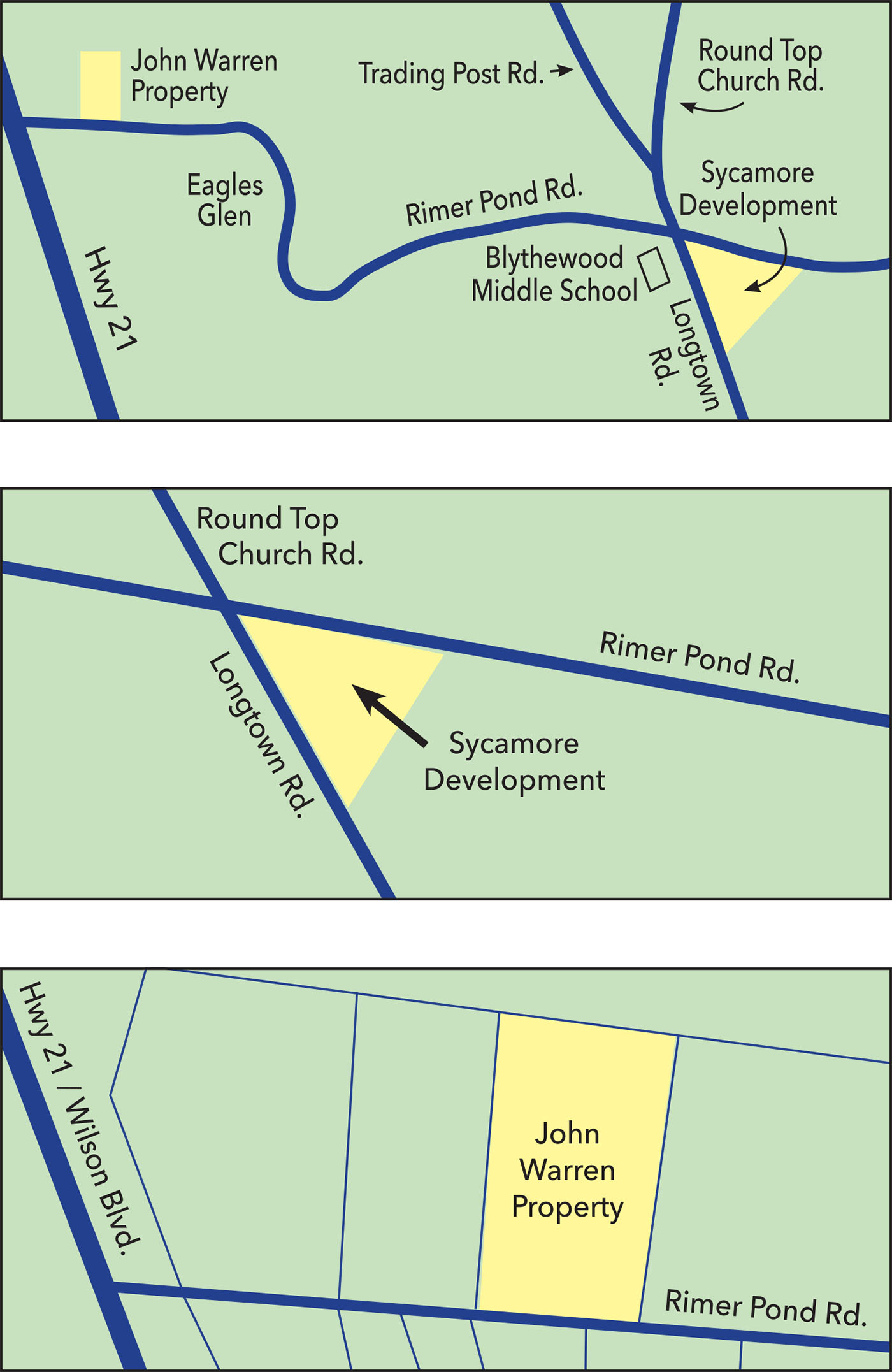
    BLYTHEWOOD – The owners of two separate properties on Rimer Pond Road will come before the Richland County Planning Commission Monday at 1 p.m. to request the zoning on their properties be changed from Rural (RU) to Rural Commercial (RC). One is a 2.76 acre parcel (tax map number R15100-06-26) owned by John Warren of Chapin and located about 700 feet from Highway 21. The other is a 5.23 acre tract that is part of a larger 31.23 acre parcel (tax map number R20500-04-27) owned by Pat Palmer of Sycamore Development LLC and located at the intersection of Rimer Pond Road and Longtown Road across from the Blythewood Middle School.

    The Richland County planning staff has recommended (to the Planning Commission) against commercial rezoning of the Warren parcel near Highway 21 but recommended in favor of Rural Commercial zoning of the 5.76 acre parcel located at Longtown Road and Rimer Pond Road.

    There is no other commercial zoning on the entire length of the road and the staff report acknowledges that the area is surrounded by wooded areas and large acre properties. According to Suzie Haynes, Boards & Committees Coordinator for Richland County, RC zoning allows many kinds of businesses including liquor stores, restaurants, grocery stores, convenience stores with gas pumps, pawn shops, motor vehicle sales and more.

    The Planning Commission is a recommending body to County Council and has no zoning authority. Council makes all final decisions regarding zoning. The Commission is also not obligated to adhere to staff recommendations.

    Historically, residents of the road have turned out in large numbers at hearings in the County to protest commercial zoning proposed along the road. But Trey Hair, a resident of the road who works in Columbia, said holding the hearing in the middle of a work day always prohibits many residents from attending.

    “These meetings should be held in the evenings so everyone who wants to can attend and speak out,” Hair said.

    Mary Lee, whose family has owned a farm on the road for almost 40 years, has spoken out against commercialization of the road at a number of Planning Commission and County Council meetings. And she plans to be there again on Monday.

    “We are a rural area with mostly farms, churches, schools, large-acre residential properties and some neighborhoods,” Lee said. “Once commercial starts, it will move down the road.”

    When contacted by The Voice about the 5.23 acre property further up the road, Palmer of Sycamore Development, LLC, who both owns the property and is Chairman of the Richland County Planning Commission that will be hearing and voting on the rezoning request, would not comment, saying he did not want to answer any questions regarding the rezoning.

    It was previously reported in The Voice that the owner of the other property, Warren, wrote a letter to Blythewood Mayor J. Michael Ross on Feb. 17 seeking the mayor’s support for the commercial zoning request. Warren wrote in the letter, “Though I would hate to do this to the community, if we can’t get it rezoned, we plan to divide the property and locate mobile homes on (it),” which Warren said he would rent out.

    The mayor told The Voice he asked the Town’s Planning Commission Chairman, Malcolm Gordge, who is appointed to the Commission and has no jurisdiction over the zoning, to reply to Warren. The Voice obtained from Gordge a copy of a letter dated Feb. 24, in which Gordge wrote to Warren, “The Mayor and I have discussed your desire to amend the zoning of the property in question . . . to Commercial and we would like to help you if at all possible.”

    Gordge went on to offer the assistance of the Town Hall staff to help Warren achieve his goal of commercial zoning for the property.

    When a number of Rimer Pond residents opposing the commercial zoning attended a Blythewood Planning Commission meeting on March 2 where the letter from Warren was on the agenda to be discussed, Gordge did not reveal that he had corresponded with Warren offering his help.

    During public comment time at the meeting, Hair, speaking for other residents in attendance, told the Commission, “While we are not residents of the Town, we are in the community. We shop here, attend Blythewood churches and schools and participate in the community’s activities. We would ask that you support us, the majority who do not want the commercialization of Rimer Pond Road rather than support (Warren) who has never lived here, will never live here and simply bought the piece of property to rezone it and sell for a profit. Once it (Warren’s property) becomes commercial, that commercial will domino right down the road.

    “We live here,” Hair said. “We don’t have a sign like Cobblestone, but it is our community and I just want to go on record against commercial zoning on Rimer Pond Road. I ask for your support in our objections to commercial zoning on our road.”

    Gordge told Hair, “We have some sympathy with your views, but that area has been earmarked (by the Master Plan) for some type of commercial zoning.”

    But Town Councilman Bob Massa, who was a member of the Town’s Planning Commission when the area was designated in the Master Plan for commercial zoning, told The Voice that the Town government (previously) agreed to the residents’ requests and did not further pursue commercial zoning on the road. However, the Master Plan still reflects the commercial ‘node.’

    Gordge told Hair that commercial zoning might not be as bad as the residents envision.

    “It’s easy for you to say it’s not going to be as bad as I feel it will be,” Hair said, “but once the commercialization begins, we won’t be able to stop it. It will domino.”

    The hearing for the rezoning of both properties will be held at the Richland County Building at the corner of Harden and Hampton streets in Columbia. Residents who would like to speak at the hearing must sign up to speak prior to the beginning of the meeting, which begins at 1 p.m. April 6.

    For information about the hearing or to receive an agenda and packet of information about the two properties, call Haynes at 576-2176. Residents can also contact Hair at thair@coastalscience.com.

  • Baseball Tourney Hits Blythewood

    SCDI_LogoBLYTHEWOOD – The S.C. Diamond Invitational, Blythewood High School’s 10-team, five-day baseball tournament, kicked off with four games Tuesday and is in full swing heading down the weekend stretch.

    In its fifth year, the Invitational continues to draw some of the top teams in the state at the Class 3A and Class 4A level. This year’s tourney features 4A’s top-ranked Summerville High School, along with Belton-Honea Path High School, tops in 3A. Other ranked teams include Greenville Senior High Academy (fourth in 4A), Wren High School (fifth in 3A), River Bluff High School (eighth in 4A) and the hometown Bengals (seventh in 4A).

    Also joining the competition this year are Wren, Lexington, Socastee and Mauldin high schools, all out of the 4A ranks.

    As in years past, this year’s tourney features a plethora of baseball talent destined to play at the collegiate level. Players bound for the University of S.C., Clemson, The Citadel, the College of Charleston, Furman University, USC-Lancaster, Lenoir-Rhyne University, Newberry College and Spartanburg Methodist College all grace the field at this year’s Diamond Invitational.

    The Invitational opened with a pair of games Tuesday, featuring Blythewood and Lexington in the nightcap, followed by four games Wednesday. Thursday (April 2), action gets rolling at 9:30 a.m. with Summerville and Belton-Honea Path opening a day of five games. Blythewood will once again hold down the final slot of the day, facing Greenville at approximately 7:30. Friday will also see five games as the final standings begin to shake out. The evening will also feature a home run derby and base-running competition at 6:30. Games begin at 10 a.m. Saturday, leading up to the tournament championship game at 6 p.m. A full schedule of games is below.

    All games will be played at Blythewood High School. Fans can get a tournament pass for $25, while individual day tickets are $7.

    Live broadcasts of the Friday and Saturday games, hosted by Lucas Vance along with the editor of the Independent Voice newspaper, James Denton, can be found on Facebook at: www.facebook.com/bhathletics. Broadcasts may also be found at: http://www.makeavoice.com/shoutcast/tuneinlinks.php?file=m3u&host=69.4.225.73&port=8000


    Schedule

    April 1

    Noon: Mauldin vs. Socastee

    2:30 p.m.: Greenville vs. Wren

    5 p.m.: Belton-Honea Path vs. White Knoll

    7:30 p.m.: Blythewood vs. River Bluff

    April 2

    9:30 a.m.: Summerville vs. Belton-Honea Path

    Noon: Mauldin vs. Lexington

    2:30 p.m.: Wren vs. River Bluff

    5 p.m.: Socastee vs. White Knoll

    7:30 p.m.: Greenville vs. Blythewood

    April 3

    8:30 a.m. Belton-Honea Path vs. Mauldin

    Noon: Socastee vs. Summerville

    1:30 p.m.: River Bluff vs. Greenville

    4 p.m.: Wren vs. Lexington

    6:30 p.m.: Home Run Derby & Base-Running Competition

    7:30 p.m.: 10 vs. 9

    April 4

    10 a.m.: 8 vs. 7

    1 p.m.: 6 vs. 5

    3:30 p.m.: 4 vs. 3

    6 p.m.: Championship Game.

  • Council OK’s Water, Lifts Annexation Ban

    WINNSBORO – Town Council gave the OK last week for water for a pair of Blythewood projects, one of which settles a dispute that has been brewing since 2008.

    Council unanimously approved up to 42,800 gallons a day for 107 residential lots on a 31.23-acre tract at 502 Rimer Pond Road in Blythewood, while also approving 25,000 gallons per day for 5 acres of commercial property adjoining the tract. The agreement puts to rest a beef by Sycamore Development, LLC, which had, in 2008, planned to develop three parcels there into a 300-home subdivision. The developer received a Capacity and Willingness to Serve letter from Winnsboro for 250 residential lots with the understanding that the water taps were to be prepaid by Sycamore once the water line went in on Rimer Pond Road.

    That water line was completed and accepted by Winnsboro in July of 2009, but Sycamore never prepaid for any taps.

    The subdivision never materialized, and two of the three parcels have since been sold off. Sycamore still holds a 31.23-acre parcel at 502 Rimer Pond Road that it also wants to unload but cannot, according to documents obtained by The Voice last summer, because Winnsboro allegedly refuses to enter into a Capacity and Willingness to Serve agreement with prospective buyers.

    During their March 17 meeting, Council amended the original resolution for water to include the commercial property. Council also agreed to amend a previous arrangement for a retirement community, initially planned for a 4-acre tract at the end of Creech Road in Blythewood, behind the Russell and Jeffcoat offices. While the amount of water will remain at the 20,000 gallons a day approved last January, the Town said the developer, Fowler Realty and Land Services in Columbia, now plans to build the 64 two-bedroom, two-bath units on the north end of Main Street in Blythewood, across from the BP Station.

    Annexation

    Council voted unanimously during their March 17 meeting to lift the moratorium on annexation into the Town limits, opening the door for properties to annex into the Town.

    Capital Expenditures

    Council gave the OK to three items for purchase during the meeting: a forklift for the Electric Department ($16,700), doors for the lab at the wastewater treatment plant ($3,645) and a steam cleaner for the Streets & Sanitation Department ($4,125).


  • Trooper Involved in Winnsboro Crash

    WINNSBORO – No one was seriously injured, but traffic came to a crawl Friday evening after a S.C. Highway Patrol (SCHP) vehicle smashed into a 2006 Nissan driven by a Winnsboro woman at the intersection of Highway 34 and Highway 321.

    According to a report from the Fairfield County Sheriff’s Office, which handled the wreck, the Highway Patrol’s 2012 Chevrolet SUV, driven by Cedric Dewayne Morgan, was traveling north on Highway 321 at approximately 5:15 p.m. Friday when he activated his blue lights and accelerated to pursue a speeder. As Morgan approached the Highway 34 intersection, a 2006 Nissan four-door, driven by Keisha C. Jackson of Winnsboro and traveling south on Highway 321, attempted to make a left-hand turn onto Highway 34, crossing paths with Morgan’s SCHP SUV.

    The SCHP vehicle rammed into the rear passenger side of the Nissan, spinning Jackson around into Highway 34, where her car came to rest facing north. The Chevrolet SUV, meanwhile, overturned in the right north-bound lane of 321 and skidded off onto the side of the highway where it came to rest facing south.

    The report estimated Morgan’s speed at the time of the collision at 70 MPH, while Jackson’s speed was estimated at 5 MPH as she made the turn. Damages to the SCHP’s Chevrolet were estimated at $20,000, while damages to Jackson’s Nissan were estimated at $7,000.

    Access to Highway 321 from Highway 34 was still blocked at the S.C. Railroad Museum an hour after the accident as Fairfield County Sheriff’s deputies redirected traffic down Golf Course Road. The north-bound lanes of Highway 321, meanwhile, were blocked at Industrial Park Road.

    It was not known at press time if any charges would be filed as a result of the accident.


  • Move to Police Comments Heads to Committee

    WINNSBORO – Although one citizen spoke out against the idea, and while three members of Council were lukewarm on the notion, County Council voted 7-0 Monday night to refer to committee a proposal to limit what members of the public may discuss during the two public comment segments of Council meetings.

    “You cannot argue against the truth that free speech is essential to democracy and is a bulwark to tyranny,” Ridgeway resident Randy Bright told Council during the meeting’s firsts public comment session. “Council has Roberts Rules of Order and reams of federal speech laws to enhance orderly and productive meetings. Why do we need more laws? Why do we need more restrictions?”

    Councilman Kamau Marcharia (District 4) brought the matter up during Council’s March 16 meeting, asking Council to consider closing the floor to public comment that strayed from the County’s turf, or that deviated into unsubstantiated and personal verbal attacks against elected officials serving on other public bodies. Marcharia told The Voice after the March 16 meeting that he was thinking specifically of the recent request made to Council by Gregrey Ginyard, Mayor of Jenkinsville, for $50,000 in matching grant funds for the completion of a sidewalk in the Western Fairfield town. Marcharia noted that public opposition to Ginyard’s request was accompanied by verbal attacks against Ginyard in his role as president of the Jenkinsville Water Company, with those attacks insinuating that Ginyard had mishandled or misappropriated water company funds.

    “I wanted it to go before the committee to take a look at that and see whether or not we’re responsible for other elected officials,” Marcharia said Monday night, “or what the public can say about other people that are not in our purview.”

    Councilman Dan Ruff (District 1) said he did not think the bylaws would have to change very much in order to address Marcharia’s concerns, provided Council abided by Roberts Rules of Order and provided the Chairwoman maintained order at the meetings.

    Councilman Billy Smith (District 7), while agreeing to send the item to committee, also agreed with Ruff.

    “I think that our bylaws and Roberts Rules of Order already preclude certain personal affronts or things of that nature,” Smith said. “I think our code of conduct in our bylaws takes care of that, so I don’t see a need for us to change anything.”

    “I would say to you, Mr. Smith, that over the last 18 months there have been some very derogatory things said to Council members,” Marcharia said. “Threats and intimidations and people had to be removed from Council, and it’s in our bylaws to stop that, to gavel that and apparently folks didn’t have any respect for us with that so I think we need something in place that when that happens we are able to legally with our authority put a stop to it.”

    Councilwoman Mary Lynn Kinley (District 6) said the topic, and not merely the content, of public comments needed to be addressed.

    “We have issues that are brought (to us) that we have absolutely no control over,” she said. “Water is a typical example. I don’t think we need to hear water issues and concerns when really have nothing to do with it. Things that we can do something about, yes; but things we have no control over, that’s one thing I wanted to have changed.”

    Councilman Walter Larry Stewart (District 3) said Council should be careful not to create “unmanageable legislation,” while Ruff added that Marcharia’s concerns apply to both the public and to Council members.

    “I understand what Mr. Marcharia is saying, but I know that it happens on both sides of the fence,” Ruff said. “People need to be respectful on both sides, and I think it’s really up to the Chairman to moderate and keep everything under control on both sides.”

    “And if I may, Madame Chairman,” Stewart said, “you already have that power. So let’s not go too far off the deep end.”

    With the 7-0 vote, Robinson said the matter would be referred to the Administration and Finance Committee, which consists of Robinson, Kinley and District 5 Councilman Marion Robinson.

    Later, during the County Council time portion of the meeting, Smith indicated that his decision on the matter had already been made.

    “I just have to add that I think the government is the citizens’ tool,” Smith said, “and so if the citizens can’t come and tell us what they want, then we can’t do what our job is, so I certainly won’t be supporting that.”

    “I’m glad to have everybody come and speak,” Ruff added. “Good, bad or whatever.”


  • Council Revisits Bylaws

    WINNSBORO – Technical changes to County Council’s bylaws, passed during Council’s March 16 meeting, got a second look Monday night after research by a freshman Council member brought the items back to the floor.

    The changes passed March 16 on 5-1 votes (then District 3 Councilman Mikel Trapp was absent) involved calling to order and chairing the first meeting of the new year following an election, and the election of officers during the first meeting of the new year. Previously, the bylaws left those duties exclusively in the hands of the chairperson, without regard to the end of his or her term. Chairwoman Carolyn Robinson (District 2) said on March 16 that the chairmanship officially ends each year at midnight on Dec. 31. Calling the first meeting of the year to order, she said, must then fall to the County Administrator. Council accepted Robinson’s changes, as well as a similar change calling for the Administrator to preside over the election of officers.

    Monday night, John E. James, Council’s attorney, said it was not “illegal or unlawful” for an unelected staff member to temporarily preside over those two meetings. However, Councilman Billy Smith (District 7), the lone dissenter in the March 16 vote, said he had conducted some additional research of his own.

    “With all respect to our County attorney, and I appreciate him looking into this for us, I also reached out to the attorney at the Association of Counties,” Smith said, “and that attorney said that he would advise us not to have a staff member preside over a meeting such as that and if we could indeed use an elected official for that.”

    Robinson placed the motion on the floor to call for the Council member with the most seniority to preside over those meetings. Smith offered the second and the motion carried, 7-0.

    Plantation Pointe Road

    The question over whether or not Plantation Pointe Road in the Lake Wateree community had been accepted by the County into its road system or if it was still a private road was sent to the Public Services and Development Committee for research.

    Walter Bierer, a resident of the area served by the road, told Council during the meeting’s first public comment segment that the developer who had built the homes in the area, as well as the realtor who had sold him the lot, both told him as long ago as 2007 that while the roads were definitely private at that time, the County was in the process of assuming responsibility for the maintenance and upkeep of Plantation Pointe and the surrounding roads.

    “It looks like this was almost a done deal almost 10 years ago,” Bierer said, “and somewhere it got lost in the process, whether it was the paperwork or the lack of paperwork or politics or whatever. I don’t know where it got lost. But the developer is gone, so he can no longer help us out, so this evening I’m just asking for your help in this matter.”

    In his report to Council, however, County Administrator Milton Pope said the road had not been accepted into the County system and was still private. He requested the item be sent to committee, “so we can do the full vetting and research on it,” he said.

    The road issue came full circle during County Council time when Councilman Kamau Marcharia (District 4) addressed recent criticism of Council’s decision to pony up $50,000 in matching funds for the completion of a sidewalk in Jenkinsville. Faye Sandow asked Council to consider revisiting the vote during Council’s March 16 meeting, and Monday night Randy Bright asked Council if the unbudgeted expenditure was truly a wise use of taxpayer dollars. Each referred to the project as the “sidewalk to nowhere.”

    “That sidewalk is there to provide a service for the community,” Marcharia said Monday night, adding that the sidewalk would provide safe access to the nearby park.

    Marcharia was interrupted during his comments, however, by District 3’s newly seated Councilman, Walter Larry Stewart.

    “Madame Chair, point of order,” Stewart interjected. “We are here to work together –”

    “This is county council time, Mr. Stewart, and I am speaking,” Marcharia cut in. “I am speaking. When you –”

    “The question (is) that you maintain law and order in here,” Stewart interrupted again. “We don’t want to incite folks.”

    Marcharia, addressing Robinson, said, “You need to put him in check.”

    When Robinson said Marcharia would be given another minute to speak, Marcharia said Council had made the right decision in supporting the Jenkinsville sidewalk. Similar consideration, he said, should be given to the Plantation Pointe Road issue.

    “Even though its private and they have their own money,” Marcharia said, “I would support them if it’s going to enhance the quality of life in their community.”

    Ridgeway Recreation

    Pope reported to Council the 3-2 decision by Ridgeway Town Council on March 12 to decline asking the County to consider relocating the future District 1 recreation site from Highway 21 near Smallwood Road into the Town limits at Church and Means streets. Pope said the County will be moving forward with plans to construct the facility at its Highway 21 location.

    Stewart later said he felt the entire recreation plan may need to be reviewed.

    “I am uneasy with our whole recreation plan for the County,” Stewart said. “I’m not sure where we stand on that, but it is my gut feeling that says we need some more citizen input on our recreation plan.”

    “We’ll get you an update on that,” Robinson answered.

    Capital Expenditures

    Council gave final approval to a laundry list of expenditures, recommended from the Administration and Finance Committee’s March 16 meeting.

    Council unanimously approved $153,799 for a motor grader and $149,992 for a pair of dump trucks for the Public Works Department; $35,000 for eight new roll-off containers and $16,050 for a pair of turn mowers for the Solid Waste Department; and $68,238 to replace three vehicles in the Planning, Building and Zoning Department.

    Council also approved $123,000 for a track hoe for the Solid Waste Department on a 6-1 vote, with Stewart voting against the buy. Stewart said he felt the track hoe was “overkill” for the department, adding that he wondered if the County’s existing equipment wouldn’t work just as well. Pope, however, said the track hoe was a more versatile piece of equipment that would free up the existing front-end loader for other work.

    Council unanimously awarded the new landscaping contract to Asbury Landscaping of Laurens for $34,500 a year. Asbury will take on landscaping duties at the County Government Complex, the Courthouse, the Midlands Technical College campus, both phases of the Walter Brown Industrial Park and at the spec building at the Fairfield Commerce Center.

    Finally, Council awarded Goodwyn, Mills and Cawood with the $35,000 contract to assess the roof of the Detention Center and provide engineering and oversight of a replacement roof, which will be tackled in next year’s budget.


  • Assault on Minutes Fails

    No Motion for Second Reading

    WINNSBORO – A move by the Fairfield County School Board to revise the way for-the-record statements are recorded in meeting minutes was stopped dead in its tracks when it failed to get the motion necessary to bring it to the floor for second and final reading during the Board’s March 17 meeting.

    While the effort to amend the Board’s policy on minutes, which some critics said was merely an attempt to silence the Board minority and that conflicted with the state’s open records’ laws, may have perished, efforts to simplify the way minutes are kept may be ongoing.

    The proposed changes to Policy BEDG, Minutes of Board Meetings, would have limited for-the-record comments by Board members to “written materials germane to the public agenda.” Those materials would have been limited to five pages, front and back, unless granted a special exception by the Board chairperson. The chairperson would also have had the power to rule such materials out of order and exclude them from the official minutes.

    “I think it’s dead,” Board Chairwoman Beth Reid (District 7) told The Voice this week. “What we’re looking at now is an interpretation of our current policy. I am checking around on some legal opinions on exactly what the FOIA (S.C. Freedom of Information Act) entails regarding word-for-word transcriptions of minutes.”

    The S.C. FOIA, under Section 30-4-90, requires that all public bodies keep minutes of public meetings. Minutes must include, but need not be limited to: 1) The date, time and place of the meeting; 2) The members of the public body recorded as either present or absent; 3) The substance of all matters proposed, discussed or decided and, at the request of any member, a record, by an individual member, of any votes taken; and 4) Any other information that any member of the public body requests be included or reflected in the minutes.

    It was the Board’s attempt to reword the fourth provision that raised eyebrows.

    “That is a problem,” Bill Rogers, Executive Director of the S.C. Press Association, said earlier this month, “when they can stifle Board members from putting things on the record that they (the majority) don’t agree with.”

    Board members Paula Hartman (District 2) and Annie McDaniel (District 4) both questioned the proposed changes during the Feb. 17 meeting. Early in the March 17 meeting, Hartman again raised her objections.

    “I wanted to say that I still think (the policy amendment) is against the FOIA,” Hartman said after the Board had approved the agenda. She was ruled out of order by Reid, who told Hartman the Board would address the policy when it came up under the superintendent’s report.

    McDaniel, during the first reading debate, said the policy change was nothing more than an attempt by the Board’s majority to muzzle its minority.

    “Disrespect for the minority on the Board, that’s what’s causing this,” McDaniel said on Feb. 17.

    But Reid said the attempted policy change was not an effort to silence the minority, but to make life easier for the Board clerk. Reid said after first reading that said so many for-the-record statements were slowing down the compilation of the minutes.

    “I understand the sentiment,” Board member William Frick (District 6), a Winnsboro attorney, told The Voice this week, “but legally, I don’t know what you can do.”

    Frick, who placed the motion on the floor to approve the policy change during its first reading on Feb. 17, said his view of the policy changed over the last 30 days.

    “I looked at it and realized my interpretation was not correct,” Frick said. “I thought it would allow you to say what you wanted to say at the meeting and submit written material. That’s not correct.”

    Frick said the provision giving the chairperson the authority to reject for-the-record statements created a problem that he could not overcome and support. Revisiting the policy, he said, may also be a waste of time.

    “As far as someone wanting to revise it and change it, I say good luck,” Frick said. “The way I look at it is we’ve got other things to worry about, so let’s move on.”


  • Rediscovering Camp Discovery

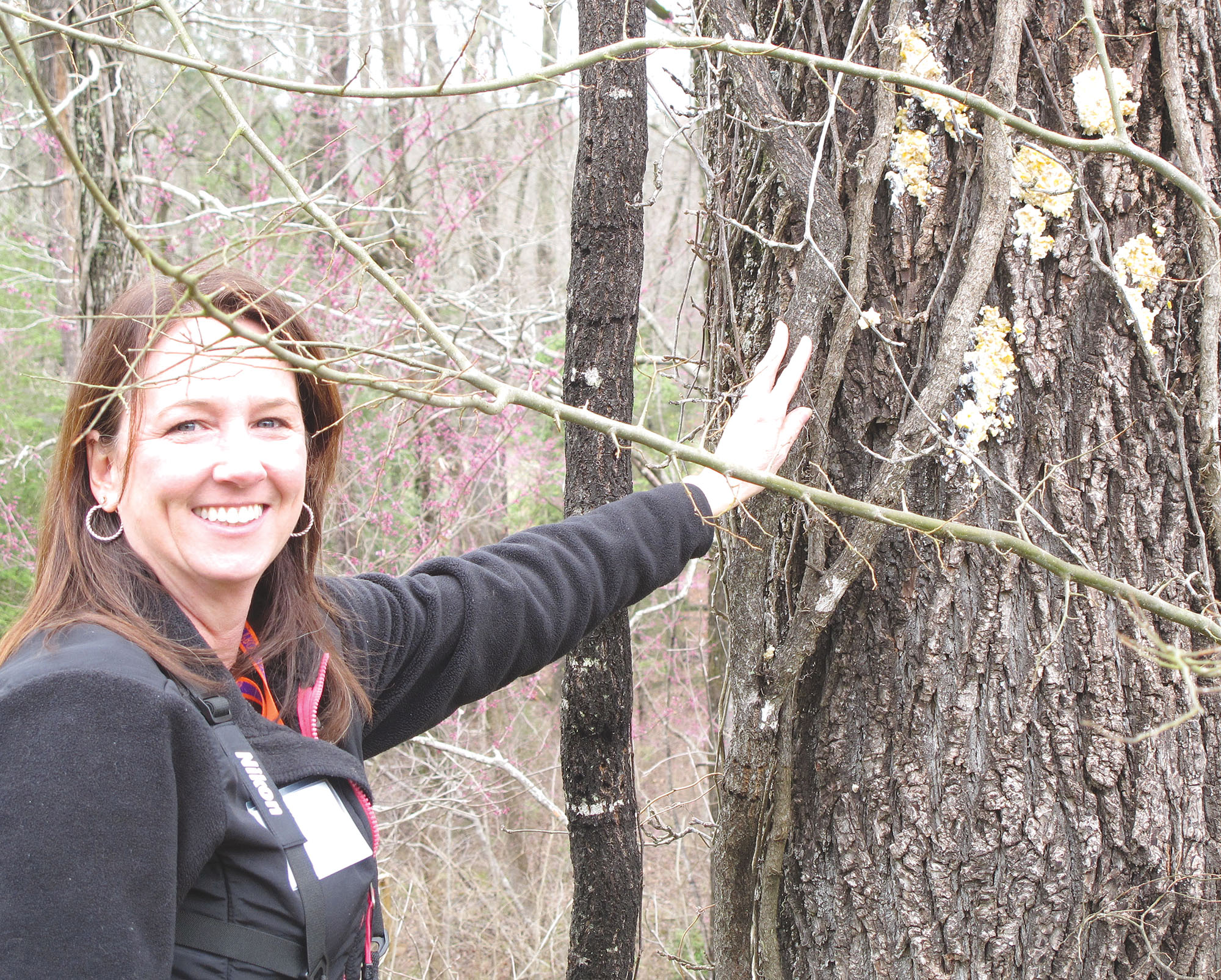
    Joanna Weitzel, Executive Director of Camp Discovery, explains to a nature class how suet is smeared on a tree to feed birds in the winter.
    Joanna Weitzel, Executive Director of Camp Discovery, explains to a nature class how suet is smeared on a tree to feed birds in the winter.

    BLYTHEWOOD – After 30 years of offering a traditional camp experience combined with academic, social and emotional enrichment opportunities, Camp Discovery has broadened its horizons, offering experiences in nature that provide enrichment opportunities far beyond anything done at the camp in the past – unique nature-based experiences for all ages, said Joanna Weitzel, Executive Director of the camp.

    One of those unique experiences happened last weekend when the camp hosted, in partnership with the S.C. Wildlife Federation, one of 12 classes required for certification as a Midlands Master Naturalist. Instructed by Naturalist Austin Jenkins, the day for the 20 enrollees began in the camp’s classroom with hands-on activities that focused on the history of South Carolina’s woodlands. They then moved into the woods for field training. Each of the 12 sessions focuses on a different topic relevant to the geographic region (Midlands). Three of the classes for this group will be held at Camp Discovery.

    Weitzel explained the program and its importance to the camp.

    “The S.C. Master Naturalist Program,” she said, “is coordinated by Clemson University, and is a statewide corps of volunteers providing education, outreach and service dedicated to the beneficial management of natural resources and natural areas within their communities. When Austin arrived and saw the camp, he was amazed at the opportunities it offers.”

    Two other classes are scheduled at Camp Discovery this spring and summer. The program also offers a Junior Naturalist program. The next Junior Naturalist class, water ecology, designed for ages 8-12, is being offered at the camp on Saturday, April 25 from 10 a.m. – noon, and space is still available, Weitzel said.

    Below are other programs being offered at the camp throughout the year. Some can be signed up for now:

    GNAT (Giving Nature a Try): This nature-based program gives preschool children and adults an opportunity to learn together in a safe, nurturing environment, opening the door to self-discovery, kindness and a respect for other living things. Two more classes are available for spring with new classes resuming in August. Sign up for individual programs or the season.

    Earth Keepers Camp: Register now for this summer program that combines the best of science, nature, animals and outdoor exploration to bring out the “wild” in every child! Kids ages 6-12 comb the diverse habitats of Camp Discovery to learn about life, big and small, and why it calls Camp Discovery home. Four different weeks are available.

    Discovery Days: The Camp’s most popular program will be getting a new look this fall. Discovery Days will be incorporating extensive, hands-on Science, Technology, Engineering & Math (STEM) based activities, focusing on the real-world application of the STEM disciplines for children in kindergarten through eighth grade. Programs delve deeply into science, technology, engineering and math using experiential, hands-on activities in nature within a fun and discovery-based curriculum.

    Learners to Leaders (L2L): What better way to grow than through experience? That’s what L2L is all about. Youth and young adults are provided meaningful service learning opportunities to support academic achievement, enhance outdoor learning and better communities. Students address a need, identify solutions and implement plans of action while gaining a better understanding of themselves. They explore and develop ways to apply classroom knowledge in a practical setting while contributing to their communities.

    Tools for Life: Using hands-on and brain stimulating activities, participants are challenged think differently, communicate clearly, explore their individual strengths and learn how to work with others – all while having laughs and unexpected fun. By combining supportive recreation activities with structured experiential activities in a safe, emotional setting, the focus is placed on enhancing skills such as trust, team work, communication and positive self-concepts benefitting youth and adults.

    Camp Discovery’s April 11 Open House will be held rain or shine and no reservations are required. Registrations are currently being accepted for GNAT’S, Earth Keepers Camp and for spring and fall school programs. For more information about the programs, visit www.campdiscoverysc.org.


  • Group Seeks Funds for Doko

    BLYTHEWOOD – With no money left in the Town’s budget to complete the various features originally planned for the Doko Park, Jim McLean is heading up a foundation committee whose goal it is to raise funds for those features, including an amphitheater, farmers market, athletic fields and clock tower.

    In February, Town Council voted to give the Foundation $3,000 in seed money to apply for 501(c) 3 tax-exempt status so it can solicit corporate and individual contributions. During the meeting the board decided to add three more members to its six-member board, which includes, besides McLean, his nephew Neal McLean, Buddy Price, Beverly Frost, Bob Massa and Ken Baldwin. They also added Chris Keefer, a member of the Town Hall staff who also is the recording secretary for the board. The bylaws call for nine board members.

    At the suggestion of Town Attorney Jim Meggs, the board agreed to hire a member of Meggs’ law firm, Callison Tighe & Robinson, to assist them in the application process for tax exempt status. Since the committee can only add to the park those features already approved by Town Council, it was decided to create a prospectus, prioritizing items for which donations will be solicited.

    The only item thus far approved by Council for fund solicitations is the amphitheater band shell. While no firm bids have been sought for sound and lighting of the amphitheater, McLean told the board that the manufacturer of the amphitheater has given them a firm price for erecting the facility and that they estimate the lighting and sound will bring the total to $200,000.


  • Development Gets OK for Water

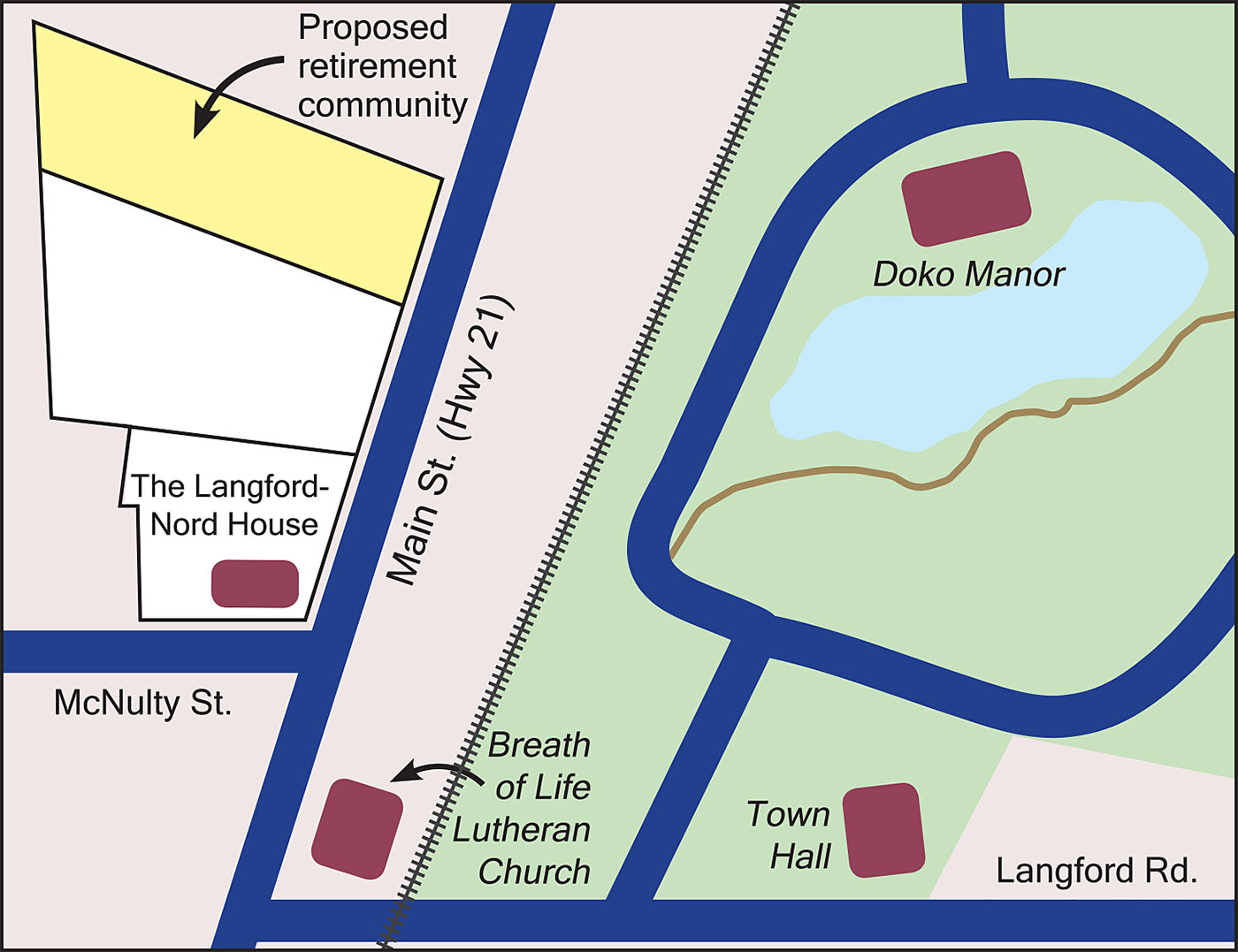
    Developers of a 64-unit retirement community, proposed for Main Street, got the green light for water last week from the Town of Winnsboro.
    Developers of a 64-unit retirement community, proposed for Main Street, got the green light for water last week from the Town of Winnsboro.

    BLYTHEWOOD – After being granted a willingness to serve letter from the Town of Winnsboro last January for up to 20,000 gallons of water per day for a proposed multi-family retirement community to be located on Creech Road in downtown Blythewood, Darren Rhodes of Fowler Realty and Land Services in Columbia asked Winnsboro’s Council last week to amend that arrangement.

    While the amount of water will remain at 20,000 gallons per day, Council said the developer has moved the location of the project and now plans to build the 64 two-bedroom, two-bath units on approximately 4 acres on Main Street across from Blythewood Consignment. Each unit is expected to require 300 gallons of water per day.

    Council agreed to the change. The agreement came with what is becoming a standard contingency, John Fantry, Winnsboro’s attorney for water and utilities, told The Voice last January.

    “It would be contingent upon the developer entering into a development agreement, as we’ve done in the past, then we would commit the water, in this particular project, in 2016,” Fantry told Council. At that time no developer had made a bid on the property, Fantry said. The property is owned by R & S Wilson Properties LLC of Mt. Pleasant, S.C.

    Blythewood Town Administrator Gary Parker told The Voice that he had had conversation with Rhodes about the proposed development but that, so far, no one has brought any plans for the project to the Town Hall.

    “It’s my understanding that the developer may still be looking at other areas,” Parker said. “I don’t know whether the site has actually been finalized.”

    While Rhodes could not be reached for comment before press time, he told the Winnsboro Town Council in January that construction is not planned to begin before January of 2016, but that it is expected to be completed in one phase.