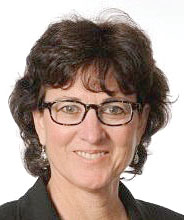
Kim Kacsur operates Tricia’s Trunk, a clothing ministry located at Sandy Level Baptist Church in Blythewood.
BLYTHEWOOD – When folks in Blythewood are down on their luck and need a great looking outfit to wear for a job interview or nice clothes for their kids to start school in, they can find just what they need, at no cost, at Tricia’s Trunk, a unique, spacious shopping boutique located on the second floor behind the sanctuary of Sandy Level Baptist Church.
“While Tricia’s Trunk is a clothing ministry,” explained Kim Kacsur who operates the store, “it’s much more than a thrift shop. We have very nice, clean, current, clothing and shoes (much of which is high-end labels) for all members of the family, and there is no charge. We just want to make people’s lives better.”
There are three separate rooms for men’s, women’s and children’s clothing.
Kacsur got the idea for Tricia’s Trunk a couple of years ago when she and other members of Sandy Level were looking for a way to honor Tricia Goodwin, a much loved member of Sandy Level who died three years ago of cancer at the age of 44.
“Tricia was so stylish, so beautiful and so much fun,” Kacsur said. “We just loved her. Once when I was complaining about my clothes, she joked, ‘I’ll come over and give you some pointers.’ So I thought a clothing ministry would be a great way to remember and honor Tricia.”
Kacsur, who spends 30-40 hours a month sorting, cleaning and displaying clothing on racks, says she picks through the donations and offers only the best. She contacts local school’s social workers and asks them to let families in need know about Tricia’s Trunk. But she said most of their ‘customers’ hear about the ministry from others in the community.
Sandy Level Baptist Church is located at 408 Blythewood Road in Blythewood. Tricia’s Trunk is open the third Saturday of each month with their next open date Aug. 15. For more information, call 803-754-1299.
BLYTHEWOOD – Road improvements scheduled for Blythewood under the Transportation Penny Tax program are now formally incorporated into the program and are under way, Richland County Transportation Director Rob Perry told Town officials last month.
Perry met informally with Town Administrator Gary Parker, Michael Criss and Planning Commission Chairman Malcolm Gordge in early July to give the Town an update on the road improvements for Blythewood proposed under the Penny Tax program.
Gordge passed that information along at the Planning Commission meeting on Monday evening.
“Now, we are interested in how this process will roll out,” Gordge told the Commissioners. “Rob explained to us that bonding is now in progress and that the acquisition of the necessary rights-of-way will commence in 2018 or 2019.”
Completion of the improvements is estimated between 2021 and 2022.
Gordge said that while the County roads project will be funded by the Penny Tax, that revenue will be coming in more slowly than the work is completed. He said the County is issuing a series of bonds to fund the various projects, such as dirt roads, up front and at the same time they are borrowing, they will be paying off the debt with the revenue from the Penny Tax.
“The bonds are guaranteed by the revenue stream from the Penny Tax over the years,” Gordge said.
Ed Parler, the Town’s Economic Development consultant, who was sitting in the audience, spoke up to suggest that the Town might want to push forward the road improvements scheduled for Blythewood.
“What would be good,” Parler told the Commission, “would be if the Town had some kind of alternate financing to push ours forward in anticipation of the money coming back in the future and retiring that debt.”
Of the proposed Blythewood projects, the top priority is widening Blythewood Road from I-77 to Fulmer Road. The Town’s remaining projects are all located in the Town Center District – widening Blythewood Road from Main Street to I-77, improving McNulty Road, completing the Creech Road Connector, adding a traffic circle at the intersection of Creech and Blythewood roads and another one at the main entrance to Cobblestone on Blythewood Road.
Further information about the process of obtaining rights of way can be found on the richlandpenny.com web site.
BLYTHEWOOD – Candidates who want to run in the upcoming Blythewood general election may file from now through Sept. 2. Voters will be electing a mayor and three council members.
Those wishing to be on the ballot for the Nov. 3 nonpartisan election must file a Statement of Candidacy with the Blythewood Town Clerk during regular business hours, 8:30 a.m. – 5 p.m., before the filing period ends at 5 p.m. on Sept. 2.
Filing fees are $10 for mayoral candidates and $5 for town council candidates. The next term for the mayor’s seat, currently held by J. Michael Ross, ends in 2019. The next terms for the two council seats currently held by Bob Mangone and Eddie Baughman, also end in 2019. The unexpired term for the council seat recently held by Bob Massa, who resigned in June, expires in 2017.
Only residents of the Town who are registered by Oct. 3 are eligible to vote in the Nov. 3 election. To register, contact the Richland County Board of Voter Registration at 803-576-2240 or go to www.richlandonline.com.
Voting will be held at Blythewood Park, 126 Boney Road, from 7 a.m. – 7 p.m. For more information, call Town Clerk Melissa Coward at Town Hall, 765-0501.
WINNSBORO – A Winnsboro woman was arrested last week by agents from the S.C. Law Enforcement Division (SLED) and charged with defrauding the state of more than $12,000.
Cynthia I. Fish, 55, of Jackson Creek Road, was arrested July 24. According to the arrest warrant, Fish, while employed as Director of the Winnsboro Active Day Center (WADC) at 219 N. Congress St., presented fraudulent invoices and other paperwork to the Central Midlands Council of Governments Area Agency on Aging for home care that she allegedly provided as a representative of WADC. However, the warrant continues, Fish collected, co-signed and cashed the checks, totaling approximately $12,440, and converted the funds into her own personal use.
The alleged fraud, the warrant states, took place between December 2008 and November 2012.
Fish was booked into the Fairfield County Detention Center on July 24 and released on a $5,000 surety bond later that same day. She was officially charged with breach/obtaining signature or property under false pretenses, value $10,000 or more. If convicted, Fish could face up to 10 years in prison and a fine of up to $500 for the felony charge.
WINNSBORO – The Fairfield County School District received mixed results earlier this month with the release of Advanced Placement (AP) test scores, but those results, according to Dr. J.R. Green, Superintendent, came with some very encouraging numbers.
The highlight of the exams, administered at the end of the 2014-2015 school year, came from the AP Calculus numbers. AP exams are scored on a scale of 1-4, with scores of 3 and 4 receiving college credit. Of the nine students taking the AP Calculus exam, Green said two students scored a 3, while one student earned a 4. Four students received a score of 2.
“Historically, these are the best results I have been able to uncover,” Green said. “I could see this year the cultural shift where students were invested in preparing for the exam. We had kids coming in before school started to prepare and we had kids coming in on Saturdays to prepare. When proper instruction meets a commitment from students, success happens.”
Green said AP Biology scores were also improved. Of the 22 students taking the exam, Green said, five earned a score of 3 while 14 earned a score of 2.
Although scores of 2 do not earn college credit, Green said those students still benefit from the experience. They typically find their first year of college, where they see the same material again, a much easier experience, he said.
The District’s numbers in AP English (broken out into two exams – AP Language and Composition and AP Literature and Composition) and the newly added AP U.S. History indicate more work needs to be done.
Of the 12 students taking the exam in AP Language and Composition, only one earned a 3; six earned a score of 2 and five eked out a 1. Of the 17 students taking the exam in AP Literature and Composition, no college credit was achieved. Eight students earned a score of 2 and nine earned a 1.
Of the 11 taking the AP U.S. History exam, only one earned a 2 while 10 earned a 1.
“I am optimistic these results will improve,” Green said. “Regardless, it is beneficial to expose students to the rigor of AP courses.”
Green said many students who could potentially score well on AP exams have in recent years opted instead to take dual credit courses in association with Midlands Technical College. Those students have experienced considerable success, Green said, with all 10 students taking English 101 last year earning college credit. Five of those students, he said, earned A’s. All eight taking English 102 also received college credit, with another five A’s in that class.
Next year, Green said, the District will offer Math 110 for dual credit, with plans to offer Math 111 in the future. Green said the District may allow students completing and receiving credits in both dual credit classes to sit for the AP exams in their respective subjects.
Green said the District has been rebuilding its AP program since it was, for the 2011-2012 school year, discontinued under Superintendent Dr. Patrice Robinson.
“We are reestablishing our AP culture,” Green said, “and I can see we are heading in the right direction.”
WINNSBORO – Town Council at their July 21 meeting called for the voluntary reduction of water use by Winnsboro Water customers following the declaration by the S.C. Department of Natural Resources (DNR) of moderate drought conditions in Fairfield and Richland counties.
Reading from the proclamation, Winnsboro Mayor Roger Gaddy said the goal was to reduce water use by 20 percent among residential customers and 15 percent by commercial customers. To that end, residential customers are asked to limit water use to 65 gallons per day, per person, with a maximum household use of 200 gallons per day.
Other voluntary restrictions include:
• Eliminating the washing down of sidewalks, driveways, parking lots, tennis courts and other hard-surfaced areas;
• Eliminating the washing down of buildings for purposes other than immediate fire protection;
• Eliminating the flushing of gutters;
• Eliminating the domestic washing of motorbikes, boats, cars, etc.;
• Eliminating the use of water to maintain fountains, reflection pools and decorative bodies of water for aesthetic or scenic purposes, except where necessary to support aquatic life;
• Reducing watering of lawns, plants, trees, gardens, shrubbery and flowers on private or public property to the minimum necessary; and
• Reducing the amount of water obtained from fire hydrants for construction purposes, fire drills or for any purpose other than firefighting or flushing necessary to maintain water quality.
The voluntary restrictions will remain in effect until the DNR Drought Committee determines drought conditions have ended.
WINNSBORO – County Council amended its agenda Monday night to allow Interim Administrator Milton Pope to present a resolution detailing elements of a potential fee-in-lieu-of-taxes (FILOT) agreement.
Councilman Billy Smith (District 7) voted against the agenda change, citing a recent amendment by the State Legislature to the S.C. Freedom of Information Act making the addition of action items to an agenda without at least 24 hours’ notice illegal, barring emergency circumstances. Smith, who also voted against approval of the agenda, was the only Council member to do so.
According to the new wording of Section 30-4-80 of the FOIA, if a vote is to be taken on an item and it is the final vote on the item, adding it to the agenda with less than 24 hours’ notice requires a 2/3 vote of members present and finding of emergency or exigent circumstances.
When the item came up for discussion, Pope told Council that he requested its late inclusion because he wanted details of the agreement made public before the scheduled Aug. 10 second reading and public hearing on the FILOT.
Pope said the proposed FILOT for the economic development project code named “Project USA” would require the company to invest $125 million in the project over five years and create 75 new jobs. They would be taxed at a 6 percent assessment ratio, he said, with real property not subject to reassessment.
Pope also said the County would be partnering with the Town of Winnsboro to extend a natural gas line to the undisclosed project site at no cost to the company. The company would also be seeking rezoning of 180 acres of the proposed project site, Pope said.
Council unanimously approved the resolution.
Rocky 1 Road Rezoning
Council also gave unanimous approval to the rezoning of 0.75 acres at 67 Rocky 1 Road from RD-1 (Rural Residential) to RC (Rural Community).
Councilman Kamau Marcharia said there were close to 100 different types of businesses and industries allowed in RC that were not allowed in RD-1 and that the public might want to know what those were. Smith, however, said he didn’t find anything allowed under RC that wouldn’t fit in with the area.
“There are 42 different things allowed in RC that are not allowed in RD-1,” Smith said. “Horses, hardware stores, paint stores … I wouldn’t think there is anything that would not fit. This is in my district, I know where it is, and I don’t think there would be any objection over there. I have not heard any objection to this.”
Heating and Air
Council gave the OK to a total of $27,809 to replace a 5-ton heating and air conditioning unit at the Magistrate’s Court ($7,000) as well as a 10-ton unit ($12,809) and a 5-ton unit ($8,000) at the Department of Social Services (DSS) building. The Magistrate’s Court unit and the 10-ton DSS unit were both recommended by the Administration and Finance Committee two weeks ago. The additional 5-ton DSS unit was added to the list Monday night, Pope said, as that unit just went down last week. All units are being purchased from and installed by Cudd Heating and Air of Chester.
Compensation Study
Council also unanimously approved $24,386 to hire The Archer Company of Rock Hill to conduct the County’s salary and compensation study.
Board Appointments
Council filled the following vacancies Monday night on boards and commissions: Board of Assessments, Gordon Doty (representing District 6); Construction Board of Appeals, David Brandenburg (District 7); Hospital Board, Clarence Gilbert (District 6); Library Commission, Jean McCrory (District 2) and Paul Dove (District 5, reappointment); and Planning Commission, Tommy Wright (District 6, reappointment).
WINNSBORO – Members of the Fairfield Memorial Hospital Board of Directors confirmed last week the selection of Suzanne Doscher, 54, as their next Chief Executive Officer. Doscher replaces Mike Williams on Sept. 1. Williams, who has served as CEO for the last seven and a half years, announced his retirement late last May.
Board member Boyd Brown, who served on the search committee, said Doscher was selected from a list of four finalists culled from nine initial candidates.
“I think we made a great hire,” Brown said. “She’s an experienced administrator from Georgetown Hospital who understands administration, who understands policies and who has a relationship with healthcare professionals across the state. She came to us highly recommended by the S.C. Hospital Association.”
Doscher has served the Georgetown Hospital System since 2001, rising from Assistant Administrator to Vice President of Operations. During her tenure there, she has been responsible for $330 million in revenue and 175 full-time employees. She also established a Research Affiliation Agreement between the hospital and the Medical University of S.C. (MUSC).
Doscher was selected over three other finalists, each of whom had current or former ties to Fairfield Memorial Hospital (FMH). Those three were: Dr. Shane Mull, head of the Emergency Room at FMH; Karen Reynolds, Health Information Manager at FMH; and Brent Lammers, CEO at Alleghany Memorial Hospital in Sparta, N.C. since January 2014, but a former administrator at FMH in the 1990s.
Brown said Doscher’s lack of Fairfield ties made her an attractive candidate.
“She comes into her role without any connections to Fairfield County, which I think is good,” Brown said. “It’s a new set of eyeballs. She knows nothing about county politics or any of the local cliques. She is going to be strictly healthcare oriented.”
Born in Virginia but raised in Missouri, Doscher came to S.C. after graduating high school in 1979 to attend the College of Charleston and has remained in the state ever since. She earned her BA in chemistry from the C of C in 1983 and a BS in medical technology from MUSC in Charleston in 1985. In 1996, she earned her Master’s in healthcare administration, also from MUSC.
Doscher began her work in the healthcare field as a Medical Technologist at Charleston Memorial Hospital in 1985 and over the ensuing 10 years worked her way up the ladder at an assortment of Charleston area hospitals. In 1996, she took the position of Administrative Resident at Newberry County Memorial Hospital, eventually rising to Vice President for Support Services in 1999.
Doscher said she was attracted to the position by Fairfield Memorial’s size and the surrounding small-town atmosphere.
“I’m a ‘small-hospital girl’,” Doscher said. “I was at Newberry County for five years and I like the smaller hospitals. I like the small towns where you know everybody and everybody knows you.”
Doscher will take the reins of a hospital that has struggled financially in recent years, obtaining emergency loans from the County just to meet payroll and falling behind on its contributions to the state Retirement System. Over the last year and a half, FMH has been in partnership negotiations with a Richland County hospital, a process Doscher said she thinks she can move forward.
Doscher will receive a salary of $130,000.
Phone calls to John McGraw, Chairman of the Board of Directors, were not returned at press time.
WINNSBORO – Prompted by the death of two horses shortly after their release from County custody (see the July 10 & 17 editions of The Voice), County Council during their July 14 meeting voted to send an animal cruelty ordinance to committee.
The ordinance was one of four recommendations made to Council by Interim County Administrator Milton Pope, and on Monday evening the Public Affairs and Policy Committee took the matter up for the first time. The committee, chaired by Mary Lynn Kinley (District 6) and filled out by Billy Smith (District 7) and Walter Larry Stewart (District 3), said a comparison of the County’s existing animal control ordinance to state law found only enforcement issues left to address.
“We already have a state law, and we shouldn’t be in here to write this long epistle,” Stewart said. “The only thing that we may need to do in coordination with the Sheriff and Animal Control is to supplement certain sections that would give them the authority to do their jobs.”
Kinley said she was “appalled” that the horses in question had been allowed by their owner to deteriorate into such poor condition without the owners facing consequences. During Council’s July 14 meeting, Pope said it had been the County’s practice in the past to not press charges against owners who willingly surrendered their animals to the County. The now deceased horses, however, were in the County’s custody for nearly a month before they were officially released by the owner, according to documents obtained by The Voice through a Freedom of Information Act (FOIA) request.
Monday evening, Kinley asked Sheriff Will Montgomery what his department’s policy was regarding the deferral of charges for owners who turn over neglected or abused animals to the County.
“We don’t have anything in our policies, as far as that goes,” Montgomery said.
“There’s no policy?” Smith asked again.
“Nothing that’s in writing,” Montgomery answered.
Furthermore, Montgomery said, his office was not even made aware of the rescued horses at the time they were taken in by Animal Control.
Smith then asked Montgomery if there would be any hesitancy on the part of his deputies to pursue charges in a similar case, if they were made aware of it. Montgomery said there would be none at all; and if for any reason his office could not pursue the case, he said, he would ask the S.C. Law Enforcement Division (SLED) to do so.
“If we were contacted, we would definitely do a report on it,” Montgomery said, “and if needed, we would do whatever we needed to do to press charges.”
Kinley then asked David Brown, the County’s senior Animal Control officer in charge of the shelter, how his department typically handles animal cruelty cases.
“We make the recommendation (to the Sheriff’s Office),” Brown said. “We go out and see if we need to make a recommendation. If we feel we need (the Sheriff), we make a recommendation to him.”
After the meeting, The Voice asked Kinley why no such recommendation had been made last May when the mare and her colt were first taken from the pasture in Blair.
“I asked the same question,” Kinley said. “The Sheriff’s Office, in the past, their policy was to, if they turned it over to the County, the animals, then there would be no charges. (Montgomery) said there is not such policy.”
“The problem was there wasn’t a process that we did every time,” District 5 Councilman Marion Robinson, who attended the meeting as an observer, interjected.
An automatic recommendation to the Sheriff’s Office by Animal Control for prosecution on potential cruelty cases, Robinson said, was not required. The revised animal control ordinance may include such a requirement, he said.
Pope, on July 14, also recommended to Council that the County initiate an education program for horse owners. Monday, he said that might best be accomplished through a partnership with Clemson University. Pope also on July 14 recommended keeping an equine vet on retainer, and on Monday he said that had already been implemented. The mare and her colt were tended by Dr. Robert Chappell, a small animal vet used almost exclusively by the County.
Finally, Pope suggested that the County should identify additional rescue groups who could take custody of abused or neglected horses and provide them with care.
Services from one such local group, The Hoof & Paw Benevolent Society, are already available to the County. In the case of the mare and colt, however, Hoof & Paw was not made aware of the horses until after they had spent nearly a month in County custody.
Addressing County Council during their regular meeting Monday night, Minge Wiseman, vice president of Hoof & Paw, said she had recently been asked by the County to develop an equine rescue plan.
“Putting a plan on paper is not very difficult,” Wiseman said during the second public comment session of the meeting. “Implementing that plan can be. An effective plan cannot be executed without adequate funding and manpower. The expenses involved in providing care for a healthy horse costs between $150 and $250 per month. Caring for an emaciated horse, those expenses can double because of additional medical costs.
“Without providing the necessary funds, why even talk about a plan?” Wiseman continued, “Where that money comes from, I don’t know. But this I do believe: while it will be costly, it is the right thing to do. These animals deserve as much attention and consideration as a neglected dog on a chain in a yard with no shelter and no food.”
Regarding dogs on chains, Kinley also suggested the revised ordinance address dogs left tied up all day in yards on short chains. She also said the definition of adequate shelter for animals may need to be strengthened or clarified, and added that a limit may need to be set on the number of dogs allowed per home in densely populated areas.
A draft of the revised ordinance is expected to be available for review within two weeks.
And then there were none – Council holds forth in an empty chamber Monday after the Chairwoman cleared the room.
WINNSBORO – A plea Monday night from students, teachers and administrators from the Midlands STEM Institute Charter School (MSICS) for funding assistance from County Council met with a cool reception from the Council Chairwoman who eventually cleared the chamber after her third warning to refrain from applause was violated.
Chairwoman Carolyn Robinson (District 2) gaveled the standing room only audience twice after appeals for funding by a pair of elementary aged children elicited enthusiastic applause and warned that a third such outburst would result in the clearing of the chambers. Robinson then asked a small contingent of the STEM supporters to leave the meeting before proceeding with the second public comment segment of the night.
“I think Mrs. Brown (Clerk to Council, Shryll) advised you that you could not discuss funding with us tonight,” Robinson said after asking the supporters to exit.
Council’s bylaws contain no prohibition against requesting funding during the second public comment portion of the meeting, stating only that “Input will be for items not currently on Council’s agenda or under Council’s consideration. The subject matter shall be related to and limited to items, issues and topics regarding Fairfield County.”
“Council does not have anything to do except collect the taxes on your tax notices for schools,” Robinson continued. “This is a subject that has to be dealt with with your Fairfield County delegation, which is Sen. (Creighton) Coleman and Mrs. (MaryGail) Douglas, as well as your school board. County Council has zero to do with funding for schools. If you had been attending our budget work sessions you would have seen there’s not one thing in our County budget that associates and deals with Fairfield County schools.”
Asserting a point of order, Councilman Billy Smith (District 7) asked Robinson to hold her comments until County Council time, as she had similarly requested of Councilman Kamau Marcharia earlier in the meeting. Nevertheless, Robinson forged ahead, telling Smith she was “taking personal privilege.”
In Roberts Rules of Order, under which Council operates, a “point of privilege” allows a council member to interrupt a speaker to complain about room temperature, lighting, noise, etc. It does not, however, provide a member a platform from which to engage in open debate or dispense their opinion on a subject.
“You need to also check and see the lawsuit that’s out there and has been out there a long time with Chester County,” Robinson continued, addressing the remaining STEM crowd. “They’re doing the same thing of trying to get the funds to go to Chester County for the students in Chester to go there that you’re doing right now with this school.”
Robinson’s uncertain reference to the four-year-long Mitford Case left many in the audience scratching their heads. The lawsuit, filed by Fairfield County Schools in July of 2010, was an effort to block legislation that required Fairfield to pay Chester County Schools 103 percent of Chester’s prior year per-pupil cost for each of the approximately 200 Mitford student enrolled in Chester schools. The case reached its end a little over a year ago when the S.C. Supreme Court ruled 3-2 in favor of the legislation and of Chester County Schools.
State education per pupil dollars – a little more than $5,700 – follow students to whatever public school they attend, including Chester County and including the STEM Charter School. What the 2010 legislation achieved was to send an additional $10,000 or so in local funds along with it – funds that do not currently follow students to charter schools.
When public comment continued, Marie Milam, Executive Director of MSICS, told Council that the school had been squeaking by on the $5,709 in state per pupil money, yet accomplishing great things. Barred from asking directly for financial assistance, Milam asked Council for moral support.
“We are a struggling school, in terms of finances,” Milam said. “All new schools go through that. We are asking for your support in terms of your voice, in terms of your opinions, in terms of your judgment.”
Closing the public comment segment, Douglas (D-41) told Council she was disappointed in how the applause for the children was gaveled away.
“I am embarrassed,” Douglas said. “I’m embarrassed at what these children witnessed here tonight. They don’t know that it is the School District that controls that money. I have sat here on many occasions and have seen children come to this place and we have applauded them, we have encouraged them. And for us to let them leave tonight without that encouragement for having come, I am disappointed in that.”
But it was Smith’s chiding of Robinson during County Council Time that elicited the applause that broke the camel’s back.
“I’m embarrassed by what happened here tonight,” Smith said. “We shouldn’t conduct ourselves up here that way. If we’re not going to allow clapping, Madame Chair, we don’t need to allow it any time. We had clapping earlier in this chamber and nothing was said because it was something that we were all amenable to and we all appreciated it. Some folks may not appreciate what those folks from STEM came in here and said, but I certainly did and I don’t see a problem with applause if we’re going to allow it at another time.”
The ovation for Smith was short lived. Robinson dropped the gavel and called for the room to be cleared. Only Council, members of the administrative staff and the media remained.
With the room now virtually empty, Smith was allowed to continue his comments.
“You already got most of them I was talking to out of here,” Smith said to Robinson. “We ought to be fair about things. If we’re going to allow something, then allow it. If not, then don’t. Either way I’m fine. But let’s just set a decision and then go from there.”
Robinson said applause was reserved for presentations. The public comment segments of the meetings, in which each speaker is limited to 3 minutes, are for receiving information and for discussion items.
“Asking for funding during that 3 minutes is not a presentation,” Robinson said. “For them to have properly done this tonight, they should have come to the Presentation Committee and asked for a time to come and make that presentation to us.”
Councilman Dan Ruff (District 1), however, said the matter could have been handled with a softer touch.
“I understand that applause rule,” Ruff said, “but I think there are some times when we can allow a little latitude, especially when there’s children involved, and maybe a little bit more diplomatic way of handling it when they do applaud.”
When Robinson asked Ruff for specific suggestions on how the matter could have been handled, Ruff said it could have been done in “a little kinder way.”
“Say, ‘I appreciate ya’ll’s interest in this, but we have an applause rule that we can’t allow it’,” Ruff offered. “I think it’s just a better way of handling it so we don’t disrupt everything like happened here tonight. I’m not condemning you; I just think there’s a better way—”
“I already asked them three times,” Robinson interrupted.
“I guess it was the way you asked,” Ruff said.
“I’m sorry?” Robinson asked.
“That’s just my opinion,” Ruff said. “I’m just making a suggestion.”
When Councilman Walter Larry Stewart (District 3) also suggested Robinson could have handled it better, Robinson for the second time in her tenure as Chairwoman referred to her own rashness.
“Sitting in this position, you have to make snap decisions and you can’t always think how ya’ll want us to think,” she said. “The adults sitting there should have been able to tell those children to behave and not participate.”
Robinson also called her decision last June to change her vote and support cuts to County allocations to social programs a “snap decision” (see the June 12 edition of The Voice).
Robinson did receive some support, however, from Marcharia (District 4) and Mary Lynn Kinley (District 6).
“This is a business meeting,” Kinley said, “and my thought is why did they not come at budget time? I think the budget time is for those kinds of requests. In a business meeting you have to have your rules and you have to abide by them or you’re going to have chaos.”
“You gave them ample warning not to do that,” Marcharia agreed, “but maybe we definitely need to make it clear – we’ve always had that rule about clapping.”
Still, Marcharia said, Council was not likely to be viewed in a positive light after Monday night.
“You go on their Web site tonight and we’re going to look like animals,” he said.