Blog

  • The Power of the Purse

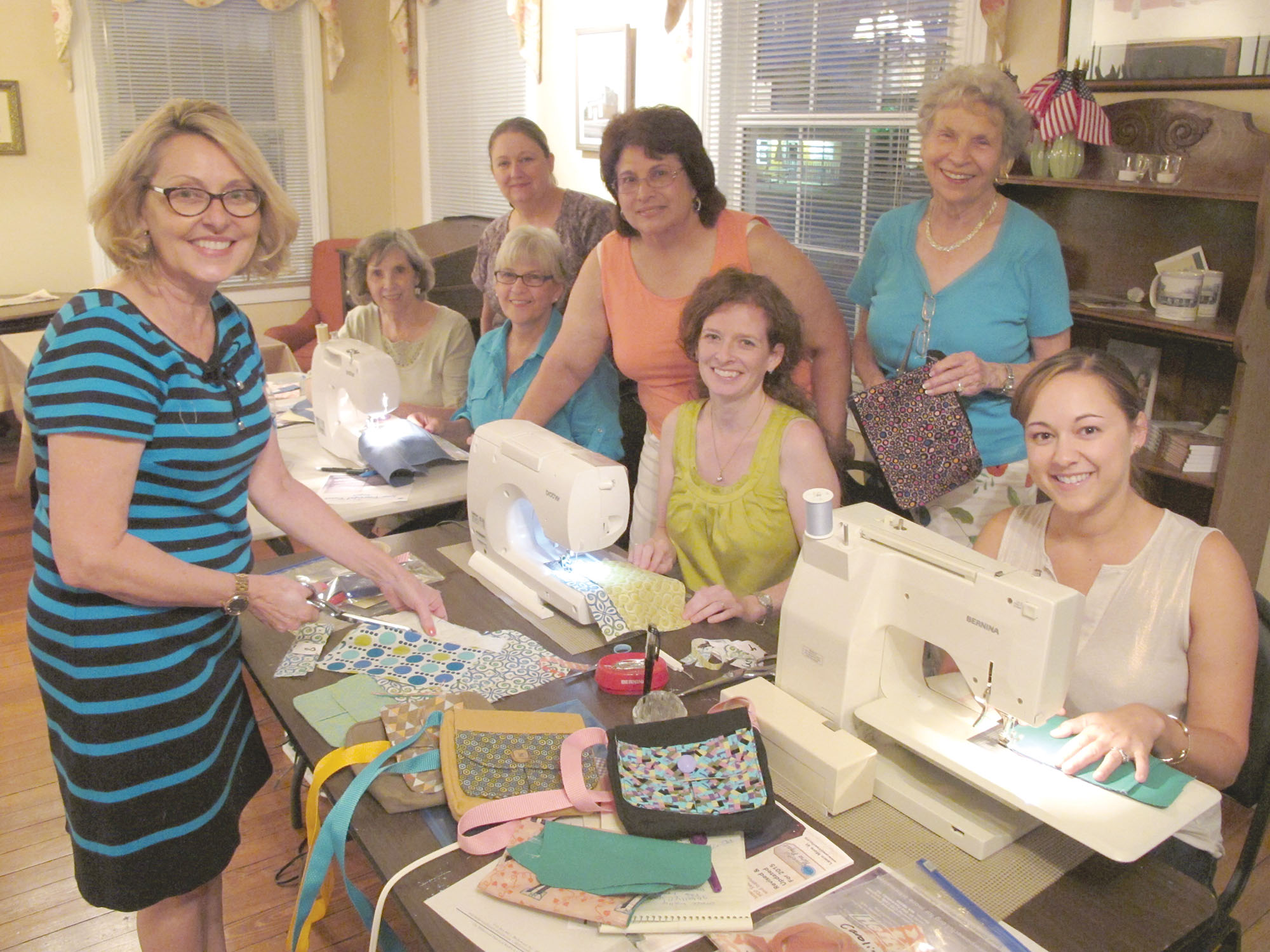
    Participating in a sewing bee at the Langford-Nord House in Blythewood to sew purses for school girls in Zambia are organizer Kem Smith, Gail Corn, Lynne Richardson, Frankie McLean (seated), Vivian Bickley, Lisa Smith, Jeanette Smith and Caroline Burgos. The women, who brought their portable sewing machines, produced nine purses during the bee.
    Participating in a sewing bee at the Langford-Nord House in Blythewood to sew purses for school girls in Zambia are organizer Kem Smith, Gail Corn, Lynne Richardson, Frankie McLean (seated), Vivian Bickley, Lisa Smith, Jeanette Smith and Caroline Burgos. The women, who brought their portable sewing machines, produced nine purses during the bee.

    BLYTHEWOOD – Eight women from Blythewood and the surrounding community recently toted their portable sewing machines to the Langford-Nord House on McNulty Road for an old fashioned sewing bee. Their focus on that evening was a project to help keep teenage girls in Zambia in school.

    That project is the Sew Powerful Purse Project and by the end of the evening the women had stitched together nine stylish but utilitarian purses, the likes of which might be found in any upscale boutique for women.

    But regardless of how good they look, how can purses help keep girls in Zambia and other poverty stricken countries in school?

    “For these girls who live in dire poverty, a purse is not a frivolous fashion,” said Kem Smith, a Blythewood CPA who has spearheaded the world-wide project locally. “It is a way the girls, as they come of age, can bring their necessary personal and sanitary supplies to school. Without a purse and these supplies, they will have to stay at home several days each month, missing at least six weeks of school each year. When the girls miss school, they fall behind. If they drop out, they will probably have no second chance for a better life.

    “Statistics show there is an 80 percent chance they will become HIV positive,” Smith said. “This very simple thing, a purse, can be their lifeline to staying in school.”

    In these countries, education is instrumental in the war on poverty, Smith explained, especially when poverty is so extreme that large families have to share a one-room hut with no running water or electricity, sleep on floor mats and never have enough to eat. And it is the females who, because they are female, are the most vulnerable to losing that fragile chance for a way out – an education.

    To prepare for the Blythewood project, Smith, a meticulous seamstress, scoured fabric stores, selecting sturdy, colorful, washable fabrics for the purses and various color-coordinated fabrics for linings, flaps and shoulder straps. Using a pattern supplied by the Sew Powerful Purse Project, Smith cut out fabric pieces and separated them into Ziploc bags to be distributed to the women at the sewing bee. Each bag contained everything, including buttons and instructions, needed to construct one purse.

    Smith said she was motivated to participate in the project by her own realization of extreme poverty, which came when she was 13 and her dad, an Army colonel, was stationed in Ethiopia.

    “He wrote to me of the living conditions there, of the lack of opportunity, of the hunger, poverty and sickness,” she said. “That was in 1968, but in parts of Africa, this description of life remains much the same today. Education can be the way out, sometimes the only way out for both girls and boys. But this simple purse can be a powerful tool for keeping the prospect of education alive for the girls.”

    Jason Miles, the CEO of the Sew Powerful Purse Project, and his staff will deliver the purses made by the women at the Langford-Norse House to Zambia.

    “Each young woman receiving a purse will attend a health class and receive her purse filled with necessities – soap, underwear and feminine supplies – so that she can stay in school every day until she graduates,” Smith said. “It’s really so little we have to do to make such a big difference for these girls.”

    Smith said more sewing bees are planned in Blythewood and she would like to see them organized in surrounding communities as well.

    “We need more help,” Smith said. “For those who do not sew, they can contribute funds for the much needed supplies for the purses. Both purse and money contributions will go directly to the project. As long as there is one woman anywhere that lacks opportunity because she is a woman, our work is not done.”

    To find out more about the purse project, go to SewPowerful.org or contact Smith at krs@kemsmithcpa.com or call her at 803-786-5200.
     

  • Former Councilwoman Pleads Guilty

    Cauthen Faces 2 Years in Insurance Scam

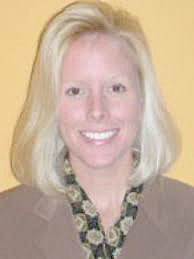
    Katie Cauthen
    Katie Cauthen

    NASHVILLE, TENN. – Former Blythewood Town Councilwoman and attorney Kathleen (Katie) Devereaux Cauthen will face around two years in federal prison after pleading guilty in a Tennessee court last week.

    Cauthen had been charged with two felony counts in a U.S. District Court in Nashville, Tenn. in a healthcare fraud and embezzlement scheme. The charges include conspiracy to commit “theft or embezzlement in connection with health care” and misprision, the failure to report the commission of a felony to judicial authorities. In an unannounced 35-minute hearing held last week, Cauthen officially changed her plea to guilty and admitted the criminal acts for which she is charged. Though Cauthen has pleaded guilty, her full plea agreement is still under seal by the court and she will not be sentenced for more than a year. She remains free on bond.

    With the advice of her court-appointed attorneys, Cauthen acknowledged in plea hearing documents that she faces 21-27 months in prison. However, at her 11 a.m. Aug. 29, 2016 sentencing, if she has lived up to her agreement the conspiracy charge against her will be dismissed and Cauthen will plead only to misprision.

    “Fully understanding my rights to plead ‘not guilty’ and fully understanding the consequences of my plea of guilty, I wish to plead ‘guilty’ and respectfully request the Court to accept my plea more fully set out in the plea agreement,” the document signed by Cauthen and one of her two attorneys states.

    The term of imprisonment is set by the federal sentencing guidelines, taking into account the seriousness of the offense, criminal history and other factors. With her continued cooperation, Cauthen will be hoping to be granted a “downward departure” by her sentencing judge. If a defendant is honest and provides substantial aid and information to the U.S. Attorney’s Office, those prosecutors can recommend her offense level be lowered and sentence reduced by the guidelines.

    Cauthen’s case has been delayed on multiple occasions as she has been helping the U.S. Attorney’s Office make a case against her alleged co-conspirators. Charged separately from other conspirators, Cauthen was never indicted, but rather agreed to a federal criminal information.

    Four of Cauthen’s alleged co-conspirators – William Worthy of Isle of Palms; Bart and Angela Posey of Springfield, Tenn. and Richard H. Bachman of Austin, Texas – were indicted by a federal grand jury in Nashville in June 2013. That case was scheduled for trial in U. S. District Court in Nashville in January, but has been moved up and now is unlikely to see a jury until August 2016. Some of those charged in this case are also cooperating with the U.S. Attorney’s Office and so are likely to accept a guilty plea and not go to trial. According to U.S. Department of Justice statistics, more than 95 percent of federal criminal defendants plead guilty to charges.

    In charges filed June 16, 2014, the former Councilwoman is alleged to have aided others in a scheme purported to provide health care benefit coverage to more than 17,000 individuals and multiple employer groups in various states. It claims that although holding themselves out as providing health care coverage, the defendant and her co-conspirators did not comply with either state or federal regulatory requirements. Cauthen and her co-conspirators are alleged to have collected more than $28 million in insurance premium payments.


  • SLED Closes Book on Vote-Buying Probe

    WINNSBORO – A preliminary probe by the state’s highest law enforcement agency into allegations of votes being bought and paid for in last fall’s Democratic primary runoff in the race for Fairfield County Sheriff has come up empty, a spokesperson for the S.C. Law Enforcement Division (SLED) confirmed last week.

    SLED opened the inquiry just days after the Oct. 14 primary runoff between then Richland County Sheriff’s deputy Will Montgomery and Keith Lewis, who was Fairfield County’s Chief Deputy at the time. Shortly following Montgomery’s 2,787-2,168 victory, Debbie Stidham, Director of Fairfield County Voter Registration and Elections, told The Voice that she had received complaints from two independent sources who alleged that money had changed hands in exchange for votes in the race. Stidham said she forwarded those complaints to Dunstan Padgett, who was Fairfield County’s interim Sheriff at the time, and Padgett, according to protocol, notified SLED.

    “We received reports of irregularities – bribes – from two different sources,” Stidham said last October. “We thought it was best to be proactive about it.”

    But last week, a SLED spokesperson said agents had found “no substance for justification” of a full-blown investigation into the allegations, and the case had been closed.

    With Lewis eliminated in the runoff, and with no Republican candidates declaring, Montgomery was easily elected Sheriff with 1,970 votes last November. Lewis has since taken a position as an investigator for the Sixth Circuit Solicitor’s Office.


  • County Issues 3rd GO Bond

    Mills Chart color Sept 19 copyWINNSBORO – Fairfield County Council has issued a new general obligation (GO) bond in the amount of $306,000, according to records in the Fairfield County Clerk of Court’s office. The bond was filed July 22, but at press time The Voice had no information as to how it was distributed or the cost of issuance. Interest on the bond over a six-year period is $46,100.18.

    This is the third GO bond Council has issued since February 2014. In March 2013 County Council created a shell corporation (Fairfield Facilities Corporation) for the purpose of borrowing $24 million to pay for certain County properties and projects. To have use of these properties and projects, Council agreed to make semi-annual installment purchase payments to the shell corporation in the same amount as the payments the shell corporation was making to pay for the $24 million bond.

    Since Council did not have the revenue to make those payments, it passed an ordinance on April 15, 2013 that allowed the County to issue an undisclosed number of GO bonds, without permission of the taxpayers, to make those installment payments. Those bonds are then paid back with property tax revenues.

    Howard Duvall, retired Executive Director of the S.C. Municipal Association, put it simply.

    “This (shell corporation) allowed the County to borrow more money than it could afford to pay back,” Duvall said, “and to levy taxes on the residents to pay off that debt without getting their permission to do so.”

    While a 60-day window allowed the voters of Fairfield County to initiate a petition to stop the GO bond ordinance from going into effect and thus stop the issuance of the GO bonds, the plan was not spelled out for Fairfield County voters at meetings or in newspaper interviews. While the title of the ordinance was read aloud in Council chambers each time it was voted on, it was not discussed or explained and did not specify an amount for the bonds to be issued, a date of issuance or the number of bonds authorized by that ordinance.

    At the same time, at Council meetings and in newspaper interviews, former County Administrator Phil Hinely and members of Council further confused the issue of what exactly had been voted on, whether intentionally or negligently, by wrongly referring to Council’s vote for what was actually the GO bond ordinance, as a vote for the $24 million bond.

    A year later, on Feb. 14, 2014, the first GO bond authorized by the ordinance was issued in the amount of $769,177.88. By then the 60-day window for initiating a petition to rescind the bond ordinance had closed.

    The Voice also quoted Hinely and the County’s then Director of Economic Development, Tiffany Harrison, as saying the $24 million bond would not increase taxes. But a chart distributed last year by the County’s administration showed that it is the GO bond debt (which was levied to make the interest on the installment purchase payments on the $24 million bonds) that keeps the county’s debt millage at an elevated level of approximately 10 mills (or about $1.27 million) each year from 2020 until about 2042, at which time it will begin to decrease, reaching zero by 2047. From 2013 – 2019, approximately 1 mill per year is levied to pay for GO bond debt initiated by this ordinance. The Council is currently issuing GO bonds at a rate of two each year. The total property taxes needed to pay the interest on the installment purchase revenue payments over 39 years is approximately $30 million.

    While making an explanation about the payoff of the $24 million bond during a County Council meeting last year, the County’s Interim Administrator, Milton Pope, said it was planned from the beginning to make the interest payments on the $24 million bond with property tax revenue from these GO bonds. He said the interest payments do not depend on income from the V.C. Summer nulear plant.

  • More Charges for Former Pastor

    Walter Carrington Ballenger III,
    Walter Carrington Ballenger III,

    FLORENCE – A former pastor of Gordon Memorial United Methodist Church in Winnsboro, who was charged last month in Columbia with sexually abusing children, was hit with another charge last week in the City of Florence.

    The Florence Police Department said Walter Carrington Ballenger III, 59, of Haven Ridge Court in Columbia, was arrested Aug. 13 after investigators received allegations that Ballenger, while visiting Florence in July, had sexually assaulted an 11-year-old child. Ballenger was charged with criminal sexual conduct with a minor, second degree. He was released from the Florence County Detention Center on Aug. 14 on a $40,000 surety bond.

    Ballenger was arrested on July 13 in Columbia on one charge of third degree criminal sexual conduct, alleged to have occurred on June 27. Shortly after Ballenger’s arrest, the Columbia Police Department said their investigation led to additional charges of two counts of second degree criminal sexual conduct in which Ballenger is accused of touching two children in a sexual manner.

    Ballenger was released from the Alvin S. Glenn Detention Center in Columbia just days after his July 13 arrest on a pair of $100,000 surety bonds.

    At the time of his arrest last month, Ballenger was the pastor of Grace United Methodist Church, at 410 Harbison Boulevard, Columbia. Until approximately one year ago, Ballenger was pastor of Gordon Memorial United Methodist Church at 502 Fifth St. in Winnsboro, where he had served for approximately seven years.

    The Fairfield County Sheriff’s Office said no allegations related to Ballenger’s time in Winnsboro had yet surfaced.


  • Council OK’s New Water Rates

    RIDGEWAY – With little fanfare and no discussion, Town Council passed first reading on Aug. 13 of an ordinance to amend water and sewer rates that had jumped more than 10 times as high as necessary last June.

    “I don’t mind admitting there was a mistake made,” Councilman Russ Brown told The Voice in June. “It was an honest mistake. It’s only fair to be consistent with what Winnsboro does.”

    Brown’s comments came on the heels of the revelation in the June 19 edition of The Voice that Council’s across the board rate increase of $1 per 1,000 gallons dramatically exceeded the .098 cents per 1,000 gallons increase passed onto Ridgeway by the Town of Winnsboro.

    During their July meeting, Council voted 3-1 to revise those rates to make them consistent with Winnsboro’s increase. Councilman Doug Porter, who was absent from the Aug. 13 meeting, cast the lone dissenting vote.

    “We have reluctantly raised (water and sewer rates) when we have had to,” Porter said during the July 9 meeting. “Most of our city revenue comes from water and sewer. And we have capital projects we need to address. I think we would have asked a little bit more than that. We are losing ground to (water supplier Winnsboro).”

    According to the ordinance, which will get its second reading Sept. 10, minimum monthly residential water rates inside the town limits will now be $15.10 for the first 1,000 gallons (as opposed to $16 approved in June) and $5.17 for each additional 1,000 gallons (vs. $6.07 approved in June).

    Residential water customers outside the town limits will be charged a monthly minimum of $20.10 for the first 1,000 gallons (vs. $21 in June) and $6.42 for each additional 1,000 gallons ($7.32 in June).

    Commercial water customers within the town limits will now face a minimum monthly charge of $18.10 for the first 1,000 gallons ($19 in June) and $5.17 for each additional 1,000 gallons ($6.07 in June). Commercial water customers outside the town limits will pay a minimum monthly charge of $23.10 for the first 1,000 gallons ($24 approved in June) and $6.42 for each additional 1,000 gallons (vs. $7.32 approved in June).

    Residential sewer rates for customers inside the town limits would now be $12.10 for the first 1,000 gallons (vs. $13 approved in June) and $4.52 for each additional 1,000 gallons (vs. $5.42 in June). For residential sewer customers outside the town limits, those rates would be $13.10 for the first 1,000 gallons (vs. $14 in June) and $5.67 for each additional 1,000 gallons (vs. $6.57 approved last June).

    Commercial sewer rates inside the town limits would be amended to $16.10 for the first 1,000 gallons (vs. $17 in June) and $4.67 for each additional 1,000 gallons (vs. $5.57 in June). Outside the town limits, those rates would now be $19.10 for the first 1,000 gallons ($20 in June) and $5.67 for each additional 1,000 gallons (vs. $6.57 approved in June).

    According to the ordinance, the new rates would take effect in September.


  • Career Center Canopy Debate Stalls

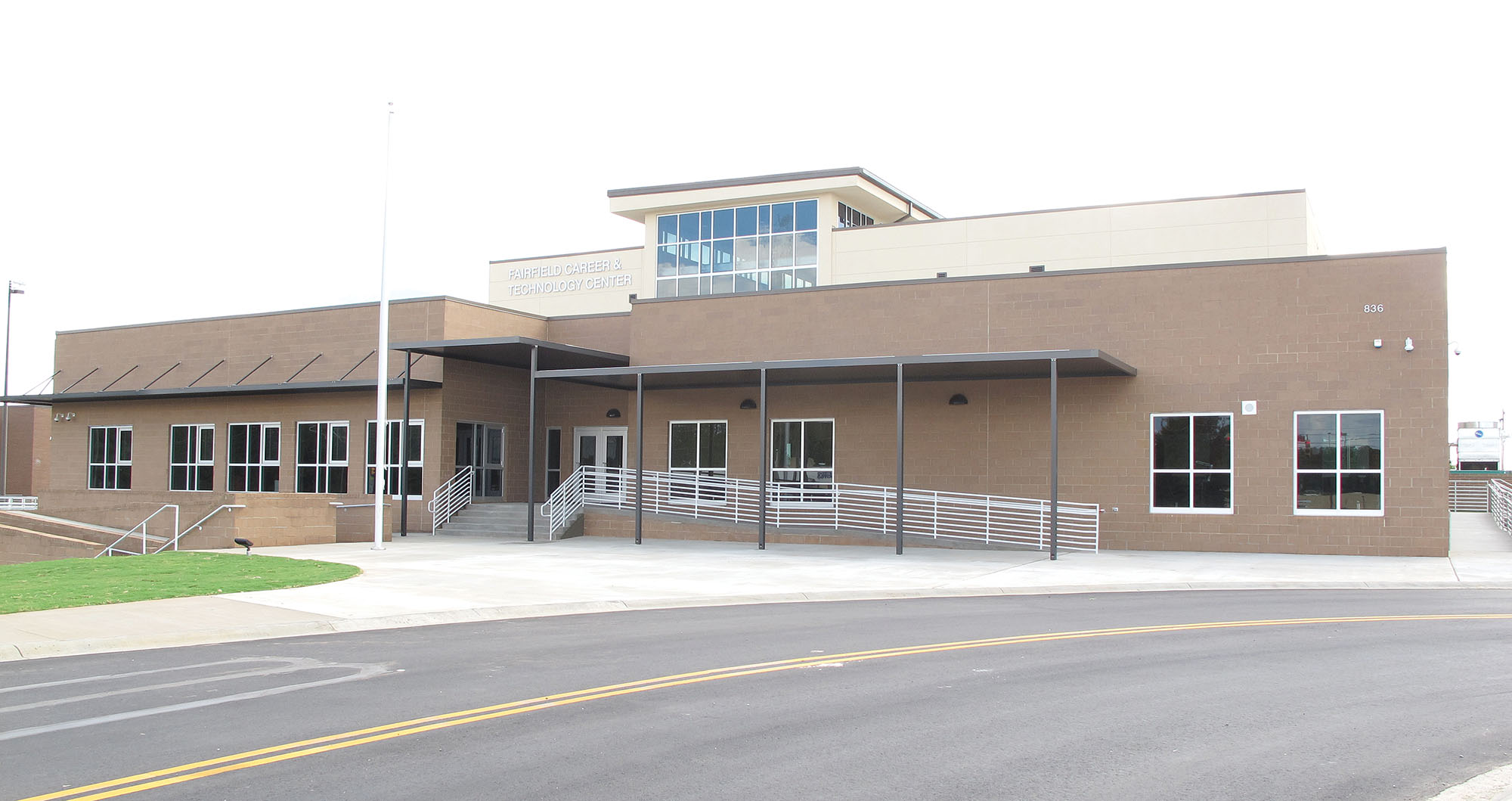
    The new Fairfield County Career & Technology Center.
    The new Fairfield County Career & Technology Center.

    WINNSBORO – Discussion by the Fairfield County School Board Tuesday night about whether or not to construct a covered walkway between the Middle School and the new Career and Technology Center veered off course momentarily into money spent on security systems and the Superintendent’s contingency fund, but ultimately settled with the Board tabling the matter.

    Dr. J.R. Green, Superintendent of Schools, presented the Board with an array of options for the canopy, ranging from $79,000 to $186,000 (see the Aug. 14 edition of The Voice), but said his concerns involved the effectiveness of a canopy that would have to be approximately 17-feet high in order to accommodate bus traffic, as well as the how the late addition would affect the overall look of the facility.

    “If the canopy is 17-feet tall, unless you get a rain that is coming directly down, will it provide much coverage?” Green said, adding, “They did such a good job constructing a facility we can be proud of, I would not want to put something that is gaudy that crosses the road that really takes away from the facility.”

    An option, Green said, would be to construct a covered walkway along the sidewalk of the Middle School, and a second covered walkway along the Career Center sidewalk, leaving the 24-foot span of driveway uncovered. That option, which Board member Henry Miller (District 3) put on the floor as a motion, would cost the District $79,000, according to the bid submitted by Ventilated Awnings Corp. William Frick (District 6) seconded the motion.

    But Board member Annie McDaniel (District 4) did not like the sound of that alternative.

    “By not ensuring our children do not get wet in their transition from the Middle School to the Career Center, how does that affect our students?” McDaniel asked.

    When Miller answered that a 17-foot-high covered walkway spanning the drive would not, in fact, ensure that students remained dry, McDaniel asked, “Are we saying the children coming from the high school are more important than the children coming from the middle school?”

    “We don’t want to phrase it that way,” Miller said. “We want to make sure that any time we spend our money that it’s spent in the right way. If we’re going to build something and it doesn’t make sense and they’re still going to get wet, why throw away that money? Let’s make rational and smart decisions. That’s all I’m saying.”

    McDaniel then blasted Dr. Green for his $40,000 contingency fund, “to do whatever he wants to do with and doesn’t have to bring accountability back,” she said; and the board for spending $180,000 on a security system. When Chairwoman Beth Reid (District 7) tried to steer McDaniel back onto the topic of the canopy, McDaniel concluded, “but we don’t want to spend the money for our babies so they don’t get wet?”

    “If we spend money on this and it’s 17-feet high and the kids still get wet,” Miller said, “somebody is going to look at us and say that was pretty foolish.”

    At Frick’s suggestion, Miller withdrew his motion and Frick followed by withdrawing his second. Frick then moved to table the discussion until all four companies bidding on the project could bring architectural renderings back to the Board for review.

    In the meantime, Green said, the District had purchased 25 umbrellas, which are kept at the Middle School and used by students walking from there to the new Career Center in inclement weather. Green said there were never any more than 21 students moving back and forth between the two buildings at one time.

    “And I’m proud to say, Ms. McDaniel, that I took that money out of that superintendent’s contingency fund to purchase those umbrellas,” Green said. “So it is being put to good use.”

    During the canopy discussion, McDaniel also revealed that she had called the architects to question them about the canopy. After the canopy matter had been tabled, Reid asked individual Board members to refrain from calling the architects, and instead to rout their questions through District channels.

    But McDaniel refused.

    “That’s a violation of First Amendment rights,” McDaniel said. “If I want to call the architect or anybody else that’s doing business in this district, I will call them, so you and all the board members will know that.”


  • Public Hearing Slated for Rezoning

    BLYTHEWOOD – A public hearing will be held on Thursday night, Aug. 20, prior to Town Council’s second and final vote on whether to rezone 636 acres along Community Road for industrial use. The new zoning classification, Light Industrial-2 (LI-2) was requested by Richland County for an industry it says is interested in the site. No discussion, opposition or questions were raised during first reading at the June 29 Council meeting.

    While the LI-2 zoning district will allow a wider variety and greater intensity of manufacturing uses than the Town’s current Limited Industrial District (LI), Town Administrator Gary Parker said LI-2 supports Council’s new focus on economic development policies in the Town’s proposed Comprehensive Plan. That plan is currently moving through the Planning Commission and should go to Council for a vote in September.

    Ed Parler, the Town’s consultant for economic development, has said the LI-2 zoning will help the Town establish a regionally significant industrial site.

    Fees for Tree Removal/Park Use

    Thursday evening’s Town Council agenda includes a proposed ordinance that will add several fees to the Town’s fee schedule. Under that ordinance, a landscape/tree removal fee will be charged for the Town to review such projects. These fees would be established at $25 for residents for an individual lot review, $500 for a commercial lot review and $1,000 for a subdivision review.

    New fees are also proposed for those who bring plans before the Board of Architectural Review that are subject to review by the Town’s consulting architect.

    “According to our consulting architect, a fair design review fee for a plan would range between $500 and $1,000, depending on the type of plans and number of changes to be reviewed,” Parker said. “We therefore recommend setting the fee at actual cost of the architect charges up to $1,000.”

    The current charge for appearing before the Board of Architectural Review is $100.

    The ordinance would also reduce the zoning map amendment fees to cover only the cost of ads, posting the property and mailing of notices. Parker suggested that could reduce fees from about $500 to $250.

    There will also be a separate proposal to set fees for the rental of various facilities in the town park. A $30-per-hour fee for residents ($35 for non-residents) is proposed for the amphitheater and soccer field and $25-per-hour fee for residents ($29 for non-residents) is proposed for the multi-purpose field.

    Budget Amendment

    A final vote will be taken on an ordinance amending annual capital, operating and enterprise fund budgets for the Fiscal Year 2015-2016.


  • Fire Destroys Blythewood Home

    Volunteer and City of Columbia firefighters extinguish the last remaining flames that destroyed a Pine Grove Road home Sunday morning. (Photo/Barbara Ball)
    Volunteer and City of Columbia firefighters extinguish the last remaining flames that destroyed a Pine Grove Road home Sunday morning. (Photo/Barbara Ball)

    BLYTHEWOOD – An early morning blaze Sunday laid waste to a home on Pine Grove Road.

    The Columbia Fire Department said more than a dozen trucks responded to the home at 1126 Pine Grove Road after receiving an emergency call at 6:40 a.m. Sunday. By the time the first trucks arrived, the house was in full blaze, with flames leaping from the second story windows. No one was at home at the time of the blaze, a Fire Department spokesperson said, and there were no injuries sustained by fire crews in their battle with the inferno.

    Firefighters did conduct an initial search of the home upon their arrival, but were quickly withdrawn as the fire fully engulfed the structure. Just after firefighters called off their search, the spokesperson said, the second floor collapsed into the ground floor of the home.

    The spokesperson said the home had apparently been burning for some time prior to the call coming in, and when crews arrived the house was 80 percent engulfed. A ladder truck was ultimately dispatched to the scene to dowse the remainder of the flames.

    At press time, the cause of the fire was not known and the incident remains under investigation.


  • Council OK’s Water Transfer, Considers Security Measures

    WINNSBORO – Town Council during their Aug. 4 meeting voted unanimously to transfer the water agreement for Holly Bluffs subdivision in Blythewood from S.C. Pillon Homes, Inc. to D.R. Horton-Crown, LLC.

    John Fantry, the Town’s utilities attorney, said Council originally agreed to furnish 24,800 gallons per day to the prospective 62-home subdivision in 2011, when it was known as Summer Trace and owned by the Bessinger family of Columbia. The agreement passed to S.C. Pillon Homes when the Bessingers sold out to the Georgia developers in 2013. S.C. Pillon Homes sold to D.R. Horton-Crown last year.

    The transfer of the water agreement gives D.R. Horton-Crown the green light to start building on the property, located on Blythewood Road.

    Security

    Councilman Clyde Sanders proposed that Council should invest in a security system for Town Hall and the Town’s annex building on W. Washington Street.

    “We watch the news at night and people are walking into places and shooting people,” Sanders said. “Everybody says that can’t happen in Winnsboro, but it happens everywhere. We’re spending money on parks and recreation and everything else, and we’ve not had anything happen in the town of Winnsboro; but do we have to wait for something bad to happen in order to say that we need to provide security? I don’t think so.”

    Town Manager Don Wood said Council had budgeted $14,000 this year for a security system, and Sanders moved to put that money to use. Councilman Stan Klaus seconded the motion, which passed 3-1. Councilman Jackie Wilkes voted against the measure.

    Following executive session, Sanders amended his motion to cap the expenditure at $10,000.

    STEM Institute

    In a presentation to Council, Wanda Carnes, Vice Chairwoman of the Midlands STEM Institute, made an appeal for assistance with utilities heading into the 2015-2016 school year. Carnes said the school has recently added three modular buildings to accommodate an enrollment that has increased from 72 children last year to 155 in grades K-6 this coming year.

    “We are in need of water, sewer and power for these three modular (buildings),” Carnes said. “Specifically, per the plans, we need 1,200 feet of 2-inch PVC pipe, and 350 feet of 4-inch PVC pipe.”

    Carnes also asked Council if the Town could waive the sewer tap fee. She also said the school would provide the Town with a letter waiving any liability if the Town would perform the installation work.

    Council took no action on Carnes’s request, but after the meeting confirmed that the Town does not provide similar utilities assistance for other schools in the county.