Blog

  • Council Takes Jab at Media

    WINNSBORO (Jan. 15, 2016) – During County Council’s annual retreat held Saturday in Richland County, Councilwoman Mary Lynn Kinley (District 6) had harsh words for the media, saying it was spreading misinformation to the public about the County and not letting people know what Council is doing.

    Ironically, Kinley did not mention that the County did not give notice or information about the retreat to the media or the public until just before 5 p.m. on Thursday, less than two days before the start of the meeting, but still within public notice requirements. The retreat was held at the Midlands Technical College (MTC) off Farrow Road for the second consecutive year.

    While Council Chairwoman Carolyn Robinson (District 2) told The Voice last week that there was no charge for the facility, sources on Council confirmed that the County paid $1,500 to a facilitator for the meeting even though Interim County Administrator Milton Pope ended up conducting the meeting.

    Specifically, Kinley called for hiring a County Public Information Officer to combat what she called “misinformation that goes out (in the media).”

    “There’s so much of it out there,” she said. “We need to put the word out there with our own spin about what we’ve done. I think we need to have something coming from our organization to the public. We need the information to come from one source – the County. That (public information) person could come and talk with each one of us to see how he/she could help us in our districts. That’s a caring touch we need to have right now with what the County has going on.”

    Kinley gave as an example “misinformation put out against the pellet plant,” but gave no specifics.

    “It takes a lot of time to get the details out there. And, to me, that would be the details of information for what we need to get out there,” she said.

    Councilman Kamau Marcharia (District 4) agreed.

    “Over the last two years, Council has constantly been under attack for not giving out information. Intentional misinformation is put out there. We need a professional person to give the public accurate information and do it with our right decision. We don’t even respond to attacks on Council,” Marcharia said.

    Councilman Walter Larry Stewart (District 3) questioned the value and expense of creating such a position. District 7 Councilman Billy Smith agreed, saying he could not support hiring someone for that position.

    “We have different views and opinions (on Council), so we might have someone putting something out that some of us don’t agree with,” Smith said. “Sometimes misinformation is a perception. It may not be misinformation at all. I think we need to tread lightly here.”

    Kinley then backtracked, taking a different tack.

    “The (public information) person could work with administration to let the public know what services are available in the County, where they could go to get information,” she said.

    “Don’t we have someone who answers the County phones who could put callers in touch with the services they’re seeking?” Smith asked.

    Both Kinley and Robinson shook their heads ‘no.’

    “With more employees per capita than any other county, I find it hard to believe we don’t have at least one person who can help direct callers,” Smith said.
     

  • Minor Findings, Unfunded Mandates in County Audit

    WINNSBORO (Jan. 15, 2016) – Although the Elliot Davis auditing firm noted two findings in its 2015 audit of Fairfield County, the firm reported to County Council Monday night that they had issued an “unmodified opinion” of the County’s financial statements.

    “Based on our audit procedures, we in our opinion believe that your financial statements are materially correct,” Brian D’Amico told Council Monday. “As we performed our audit tests, we didn’t find any material misstatements as part of our audit work.”

    The County’s bottom line, however, did diminish from 2014 as a result of new accounting standards that require local governments to show their share of the unfunded liabilities from the State Retirement System and the Police Officers Retirement System. Fairfield County’s share of that burden, D’Amico said, came to $19.3 million.

    “It’s one of those thing that we have to put on our books,” Interim County Administrator Milton Pope said. “Through the process of this new accounting rule, we have to take on the liability for those things.”

    The cash contribution the State is requiring the County to pay, D’Amico said, has not changed and is being remitted on a regular basis. How the liability will affect the County’s credit rating, he said, remains to be seen.

    “This is the first year that any governmental agencies will be recording this, so what we haven’t really seen is how this ultimately going to affect your credit ratings,” D’Amico told Council. “The next time you would have a bond issuance and you should send them these financial statements, it’s almost like you’ll have to have a separate conversation (to say) here’s my balance sheet with the pension liabilities, but here’s what my balance sheet would look like without it for them to give you fair understanding of the true financial position of the County.”

    Cedar Creek Road Property

    D’Amico noted that last year’s sale of County owned property on Cedar Creek Road netted the County more than $1 million. However, that property had not been previously recorded in the County’s past financial statements. The Finance Department notified auditors of the error, D’Amico said, then went back and evaluated other properties that might also have not been recorded.

    “In doing so, we calculated a restatement related to these pieces of property, and that totaled $923,000,” D’Amico said. “It was a handful of properties. That was one of our findings.”

    When the properties were originally purchased, prior to 2003, financial statements were reported on a cash basis, D’Amico said, “So when you would make a land purchase, you didn’t have to capitalize it, you didn’t have to put it on your balance sheet.” In 2003, standards changed, he said, and the County hired a third party to reevaluate the County’s position to include all land, equipment and buildings.

    “These pieces of property were just missed as part of that,” D’Amico said.

    Treasurer’s Office

    Auditors also found in the Treasurer’s Office that a third party is completing bank reconciliations on behalf of the Treasurer.

    “That would be OK, except that we need someone else to review, preferably the Treasurer or someone in her office, to review those and make sure those reconciliations are taking place appropriately, correctly, accurately,” D’Amico said.


  • Council to Reconsider Courthouse Move, Makeover

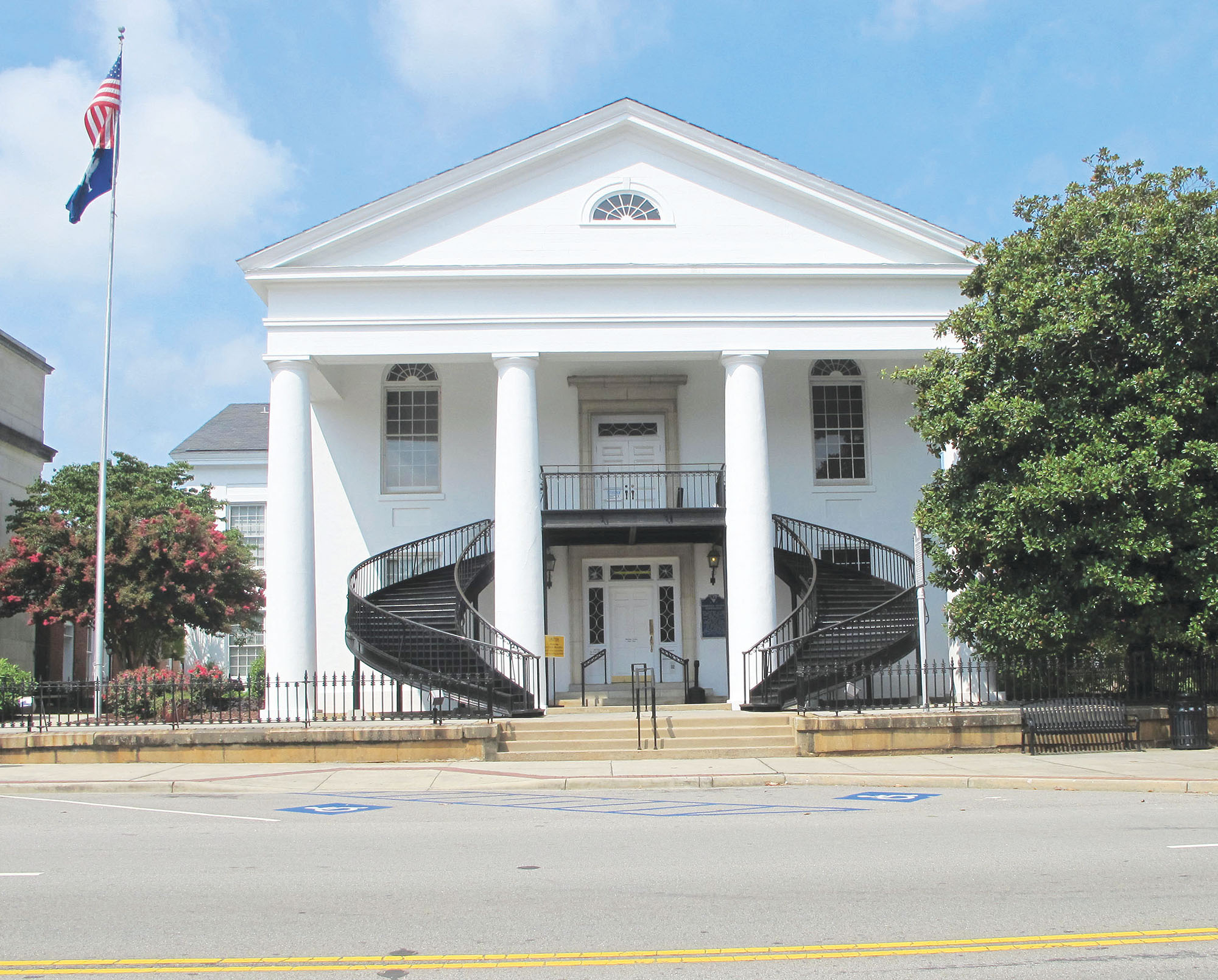
    FF Courthouse copyWINNSBORO (Jan. 15, 2016) – After two years of planning the renovation of the County Courthouse and the construction of a temporary Courthouse in the Hon Building to serve Fairfield County during that renovation, those plans may have to be scrapped due to cost, Interim County Administrator Milton Pope told Council members during their annual retreat Saturday. The news prompted Council members, at the end of the meeting, to place the Courthouse renovation at the top of their priority list for the coming year.

    While renovation of the existing Courthouse will cost $1.9 million, and is within the project estimate outlined in the 2013 $24 million bond, that estimate did not include $3.5 million it will take to construct a temporary Courthouse in the Hon Building, Pope said.

    “Nobody thought about that. The initial estimate was based on what someone kind of thought the project would cost. Now, we have the actual numbers,” Pope said. “And an estimate is not the same as actual cost. We’re going to have to restructure the projects’ estimates. It’s not that the money’s not there, but it’s not in a particular bucket.”

    Pope said the problems with moving the Courthouse to the Hon Building and renovation of the current Courthouse are multiple.

    “(The Courthouse in the Hon Building) is temporary and we aren’t going to be able to find a business (to move in to it) that needs a court room. We would be walking away from almost $4 million. Then the big question (with the current Courthouse) is it’s a challenging space based on how it was built for today’s needs. To make it ADA compliant, have jail cells in the back, a lot of people say they wouldn’t want to move back,” Pope said. “But the County Courthouse has to be located in a municipality in the County Seat. So we would have to annex the Hon Building property if we stayed in it.”

    “What would be the estimate to build a new Courthouse?” Chairwoman Carolyn Robinson (District 2) asked.

    “New construction is sometimes more cost effective than renovation,” Pope said. “If we were to decide to do that, it would be a new issue altogether. But we could use the engineering plans and architectural drawings we already have on any location.”

    “There are some major decisions we need to make,” Pope told Council.

    He said his recommendation would be to finalize the prices on some of the other bond projects before tackling the Courthouse renovation. Moving bond money from one project to another to cover costs would have to be affirmed with a resolution by Council, Pope said.

    When asked about a timeline for completing the various bond projects, Pope said that would be worked out in this year’s budget process.

    Other goals

    After listing the Courthouse renovation as their most critical goal for the coming year, Council added the following as their next top priorities: 1) conduct a county department performance audit, 2) improve the quality of life for the county’s citizens, particularly seniors, and 3) provide water and sewer infrastructure for western Fairfield County.

    Lesser priorities included:

    –complete the fire/EMS/recreation projects

    –adopt a new and revised animal control ordinance

    –lower the tax burden on the maximum number of citizens

    –install signage at the County lines and other locations

    –implement the classification and compensation study

    Pope also announced that the County was recently close to making an offer to a candidate for Director of Economic Development, but that it had not worked out. He said he had re-advertised for the position and, in the meantime, was handling the duties for that position with the help of the Central SC Economic Development Alliance.

    Pope told Council that the County’s fiscal health is good and that the County’s total fund balances have grown from $8,457,166 in 2013 to $15,147,442 in 2015.


  • Ridgeway Cop: Risks in Moving Police HQ

    RIDGEWAY (Jan. 15, 2016) – A potential weakness in the plan to relocate the Ridgeway Police Department from its Palmer Street station and into the Century House was hashed out during Town Council’s Jan. 7 work session, but not entirely resolved.

    Pointing to the arrest last month of a man wanted out of Tega Cay, N.C. on assault charges, Officer Christopher Culp asked Council to consider the potential risks of having to detain a violent suspect in a Century House office.

    “On an average day, I’m trying to figure out how many times we bring an individual, if the police station moves here, how many times a day that you would actually bring someone here that could be potentially dangerous,” Councilman Heath Cookendorfer said.

    Anyone, Cookendorfer argued, has the right to walk into the police station just as they do the Century House, so the danger to bystanders would be the same.

    “The difference is, if they come into the police department, they already have a problem,” Culp said. “If they come in here, you’ve got people coming in to pay their water bill, or they’re coming in to look around or something. If I get somebody that’s committed a murder, attempted murder, assaulted an officer, and let’s say I bring him in and he decides (he’s) not going in, he decides to fight, so if we’ve got a group of people standing in the front door when I bring him in, I can’t control that.”

    Cookendorfer questioned why such a dangerous suspect would even be brought to the local station in the first place, and not delivered directly to the Fairfield County Detention Center. Culp said paperwork is required to transport a prisoner to the Detention Center, paperwork kept at the police station.

    “You’re not going to keep warrants inside your vehicle,” Culp said. “If I stop someone out there who has warrants on them, I have to come back, come into the police department and I have to bring them in because I can’t leave them in the car unattended, bring them in, get the warrant, and then transport them back to the police department.”

    Culp acknowledged that assistance was available from the Sheriff’s Office; however, if all units were tied up at the time, he would be on his own.

    Culp also said that the mere presence of a police station attracts more dangerous customers than just a town hall.

    “See how we’re having this meeting tonight? The police department would be here and it would be active,” Culp said. “Let’s say (someone) walks in, battling mental illness, with a gun. All of our lives are in danger here, versus over there at the police department, there’s only one person and I’m trained to handle a situation like that.”

    But Cookendorfer said the relocation of the police department was a financial issue, above all. According to Cookendorfer, it costs the Town $477 a month to operate the police station at its current location – and that is, he said, including the cost of Internet service, which the police station does not currently have. It costs the Town $408 a month to operate the Century House, he said.

    Speculating that the Town could rent the police station for $600 a month, Cookendorfer estimated that the Town could add, after the Railroad took its cut, $2,304 to its budget every year.

    Culp, meanwhile, said he has written more than 100 citations in his first two months of duty, with charges ranging from $200 to $1,275 per ticket. If that trend continued, the police department could more than make up for the rent and utilities.

    Cookendorfer pointed out that of the $4,990 in fines collected in December, the Town’s share was $1,963, with the remainder going to the State.

    “It’s a money thing,” Cookendorfer told Culp. “Talking about moving the police department here, we talked about (it) before you (Culp) came on staff. You knew about it and I understand during the interview you talked about moving here. Your salary was based on the fact that we thought we (were going to be renting out the police station). That was part of our decision, finding money.”

    “However the town thinks is best, I’ll run that job,” Culp said. “I just want the employees and Councilmen to know that this is a big liability. It’s going to happen.”


  • Half of H-Tax Unpaid

    RIDGEWAY (Jan. 15, 2016) – Owners of a pair of Ridgeway business could be on the hook for fines or even jail time for not kicking in their share of the Town’s hospitality tax, according to documents obtained from Town Hall this week.

    The issue came to light at Town Council’s Jan. 7 work session as Mayor Charlene Herring suggested revisiting the ordinance to ensure it was clear on the payment schedule and that it included penalties.

    “Some people were given the option to pay once a year, some people were given the option to pay every three months, some were given the option to may once a month,” Herring said.

    But Herring was reminded by the Town Clerk that those options were only part of Council’s initial discussions of the tax. The ordinance, which passed second reading last May and went into effect on Aug. 1, clearly states that the tax (2 percent on the sale of prepared meals and beverages) is due once a month, no later than the 20th day of the month.

    Of the Town’s four establishments subject to the tax, only two – the Old Town Hall Restaurant and City Gas – have made their monthly contributions. The Tea Room and the Ridgeway Station Café have made no payments.

    In 2015, the Town took in a little more than $2,559 in hospitality taxes from the two businesses making their payments.

    Town Clerk Vivian Case told Herring during the Jan. 7 meeting that the Town had sent out late notices to the Tea Room and the Station Café, but had received no response.

    According to the ordinance, hospitality taxes not paid on time “shall be subject to a penalty of five percent of the sum owed for each month or portion thereof until paid.”

    Failure to pay the tax, the ordinance states, “shall constitute a misdemeanor punishable by a fine of not more than $500 or imprisonment for up to 30 days, or both.”

    Council is expected to revisit the issue during their Jan. 14 regular meeting.


  • Developer Blasts BZA

    BLYTHEWOOD (Jan. 14, 2016) – Harold Pickrel, the developer of Blythecreek subdivision on Boney Road, took rejection badly Monday night after the Board of Zoning Appeals (BZA), on a 2-2 vote, turned down his request for a variance that would have allowed him to build nine homes 10 feet closer to the street.

    “You can all go to Hell!” Pickrel told the Board as he stormed out of the meeting room, loudly slamming the front door as he left The Manor.

    Before leaving, Pickrel spewed out several expletives, telling Board members, “You’ll see me in court. You gave people in Cobblestone variances and you shot mine down. If that’s a fact, I’m suing you.”

    Earlier in the meeting, Pickrel told the Board he purchased the property in 2005 but has since sold all but 19 of the lots in the development to residential developer D.R. Horton. Pickrel said Horton requested the variance on the remaining lots because the topography of the property, which is located on Boney Road adjacent to Oakhurst subdivision, is challenged with drop-offs up to 20 feet on the back side of some the lots.

    He applied to the BZA for a variance to reduce the required 25-foot front setback to 15 feet. If he had to meet setback requirements, the homes would have no back yards because of the drop-offs or he would have to cut away more trees on the back of the lots to accommodate the houses, Pickrel said.

    Board Chairwoman Sabra Mazyck told Pickrel that the Board had to follow five criteria set out in the state statute for granting a variance. She said she did not feel his request met all those criteria.

    Reading from the statute, she told the Board, “The fact that property may be utilized more profitably, should a variance be granted, may not be considered grounds for a variance.”

    “I promise you,” Pickrel said, “there is no profit in Blythecreek. It’s about leaving the trees.”

    He later said that it would be cost prohibitive to build up the drop-offs.

    While Board members Ray Fantone and Pat Littlejohn agreed with Pickrel that the drop-off at the back of the lots constituted extraordinary and exceptional conditions (one of the five criteria) for building homes, Board member Ron Friday blamed Pickrel for the predicament he found himself in.

    “When you laid out these lots you knew what you were faced with, the topography, the lots,” Friday told Pickrel. “When I first looked at this, I said ‘This is about the drop-off at the back of the lot.’ When you laid this out, all these factors (trees, drop-off) should have come into play.”

    “If we can’t get a variance,” Pickrel told the Board, “then the lots can’t be built on. At some point you can’t build a $100,000 retainer wall on a $22,000 lot. That renders it unbuildable. We’d have to build a much smaller home to fit the lot. “

    In an attempt to make his case, Pickrel said, “I’ve built out over 30,000 lots and we’re granted variances all the time. Builders sometimes build over the line. There are things you have to do.”

    “We can’t just say OK, go on and do that ,” Mazyck told Pickrel. “We have to follow the rules set before us. We can’t just give it to you. We have to follow the law.”

    After the tie vote rendered a failed motion for the variance, Pickrel told the Board, “You just killed the neighborhood. That’s idiotic what you just did.”

    Because the BZA is a quasi-judicial board, appeals of its decisions must be made to Circuit Court.


  • Ridgeway Man Killed, 3 Injured in Collision

    RIDGEWAY (Jan. 8, 2016) – A Ridgeway man was killed Monday morning in a head-on collision on Highway 21 that also sent three others to the emergency room.

    The Fairfield County Coroner’s Office said Richard Durham, 46, of 246 Carolina Drive, Ridgeway, was killed on impact when his 1991 Nissan pickup truck veered into oncoming traffic at approximately 10:15 a.m.

    According to the S.C. Highway Patrol, Durham was traveling north on Highway 21 near Roller Coaster Road, approximately 7.8 miles north of Ridgeway, when he crossed into the southbound lane. Durham’s pickup truck slammed head-on into a 2013 Hyundai driven by Kurt Fleshman, 52, of Winnsboro. Fleshman and two passengers were transported by EMS to Richland Memorial Hospital. Their condition was not known at press time. All parties were wearing seat belts at the time of the collision, the Highway Patrol said.

    At press time, the cause of the accident was still under investigation.


  • Pup on the Mend, FCSO Opens Probe

    WINNSBORO (Jan. 8, 2016) – Three weeks after a young dog suffered horrific injuries consistent with having been dragged behind a vehicle, the Fairfield County Sheriff’s office has issued an incident report and announced it is launching an official investigation “to determine if this was an intentional act and, if so, to identify the individual, or individuals, responsible.”

    The dog, meanwhile, is making a steady recovery, according to Dr. Robert Knight of Fairfield Animal Hospital where the dog has been treated since it was found on Dec. 13.

    As reported in the Dec. 25 issue of The Voice (“Community seeks answers after dog dragging incident”), the dog was discovered in the woods of Carolina Adventure World about 200 feet off Camp Welfare Road near the entrance to the park by four horseback riders who brought him to the animal hospital. A hospital spokesperson told The Voice that the dog’s injuries were only a few hours old when he was brought in.

    The Fairfield County Sheriff’s Office was notified of the incident two days later on Dec. 15, and Sheriff Will Montgomery told The Voice on Dec. 18 that his office was “looking into the incident,” but he said at that time there was no evidence that a crime had been committed.

    In the meantime, the Hoof & Paw Benevolent Society, the veterinarian and a number of citizens in the Fairfield and Blythewood communities, took up the dog’s cause and, with the help of social media, began collecting donations for the dog’s medical care and the surgeries he would need, including surgery by a specialist to repair his kneecap. At press time, those donations topped $4,000, according to the animal hospital’s website.

    Hoof & Paw members have also raised more than $1,500 in reward money for information leading to the arrest and conviction of anyone who might be responsible for the dog’s injuries, said member Kathy Faulk,

    “The more we can raise,” Faulk said, “the better chance we have of someone coming forward with information.”

    And it is continuing to come in, Faulk added.

    The Fairfield County Sheriff’s office is helping Hoof & Paw members distribute flyers with information about the reward,

    “The Fairfield County Sheriff’s Office treats any offenses against animals very seriously,” Montgomery stated in his press release on Tuesday. He also thanked those who brought the dog to the veterinarian as well as the veterinarian who is providing care.

    “We are currently working closely with Fairfield County Animal Control and the Hoof and Paw organization and have distributed flyers in the area around Carolina Adventure World,” Montgomery said.

    While Susan Knight, spokesperson for the animal hospital, said the dog appears to have been a pet, she said no one has come forward to claim or identify him.


  • Broad River Water Line May Bring Rate Hikes

    WINNSBORO (Jan. 8, 2016) – Rising water and sewer rates have been a fixture in the Town of Winnsboro’s annual budget in recent years, yet the utility has struggled to break even, borrowing money from the gas and electric departments. But with the Town’s ambitious Broad River project scheduled to break ground this spring, and with a $14 million loan from the S.C. State Revolving Fund approved in November to pay for it, water and sewer is going to have to do better than break even.

    And water and sewer rates are likely to climb at a consistent rate into the next decade.

    “The whole goal is to get (rates) up to where all the utilities would be self-sufficient,” Town Manager Don Wood said, “rather than one having to rely on the revenues from gas and electric to make everything balance.”

    Town Council voted unanimously Tuesday night to accept the recommendations of a rate study conducted by the Willdan Group that would bump water rates up 4 percent each year beginning July 1, 2016 through the 2019-2020 fiscal year. Rates would increase 5 percent in the 2020-2021 fiscal year.

    Sewer rates would increase at 7 percent a year through 2020, with a 5 percent increase in 2020-2021.

    “We’re doing this bond to get to the Broad River to ensure we have enough water, so a significant amount of that revenue has to come from water and sewer,” Winnsboro Mayor Roger Gaddy said. “You can transfer some from the other utilities, but you’ve got to have a certain amount of it from water. We looked at the rates and we’ll increase the rates some at what we think is a tolerable level … so that we can make sure that we generate enough revenue to satisfy the State Revolving Fund people.”

    But although Council voted Tuesday to accept the study, the increases won’t become a reality until Council votes to incorporate them into next year’s budget.

    “We accepted the study and the rate increase,” Gaddy said, “but we’ve still got to do the budgeting process, which means they (the rates) could still be off.”

    The Broad River pipeline is expected to bring approximately 1 million gallons of water a day into the Town’s reservoir. The $14 million Revolving Fund loan carries an interest rate of 1.88 percent.

    Wood said the Willdan study cost the Town $40,000.

    If the Willdan rate increases are implemented, the water system is projected to have a final balance at the end of the 2020-2021 fiscal year of $163,513 – a monumental increase from the projected 2016-2017 loss (without the rate increase and without fund transfers from gas and electric) of $102,291.

    In the first year alone, the recommended rate increase is expected to turn the $102,291 loss into a $129,249 gain, again without fund transfers from other utilities.

    The sewer system, without the rate increase, is projected to lose $88,303 in 2016-2017, even with a fund transfer of $700,000. With the increase, and including the projected fund transfer, the system is estimated to come out $22,887 to the good.

    As the rate increases continue, and the fund transfers decrease, the sewer system is projected to come out $21,793 ahead by the end of the 2019-2020 fiscal year. That includes a projected fund transfer of $100,000 from other utilities. In the final year of the increase scale, the sewer system appears to be in the negative once more by $55,763; however, that figure includes no fund transfer. And, when combined with the water system’s gains, the entire system would be $107,750 in the black.


  • Mt. Zion Fails Code Inspection

    WINNSBORO (Jan. 8, 2016) – The Friends of Mt. Zion Institute (FOMZI), battling for the better part of the last two years to restore the former Mt. Zion Institute school buildings and stave off the wrecking ball, received some less than encouraging news from Winnsboro Town Council Tuesday night.

    “One portion of it (FOMZI’s contractual deadline), we’ve passed,” FOMZI Chairwoman Vicki Dodds said after a protracted executive session with Council, “the 18 months to bring the property up to code. The inspector has pronounced that it’s not (up to code), which is no surprise. There are cracks in the bricks.”

    The deadline to stabilize the buildings on the property to meet Winnsboro’s Dangerous Building Code expired on Sept. 4, and 11 days later FOMZI spent another long night in executive session with Council. While faux windows were installed last summer on the front of the school building, the rear of the building had not received the same attention. Following the Sept. 15 meeting, Dodds said the rear windows were left open to allow the interior to completely dry in.

    But Tuesday night’s revelation that the building – with or without faux windows – is in violation of the Dangerous Building Code, could spell the end of Mt. Zion Institute.

    “When is the drop-dead date? I don’t know,” Winnsboro Mayor Roger Gaddy said, “but it is rapidly approaching, I can tell you that.”

    FOMZI inked a deal with the Town on Nov. 27, 2013, and on March 4, 2014 Council OK’d an ordinance to transfer the property, located at 205 N. Walnut St., to FOMZI. According to the agreement, FOMZI purchased the property and its four buildings (the Mt. Zion School, the auditorium and gymnasium, the cafeteria and the Teacherage) for $5, but with the caveat that the buildings had to be stabilized within 18 months to meet Winnsboro’s Dangerous Building Code or be torn down.

    FOMZI’s 30-month benchmark, which comes this September, calls for the group to hire a contractor or developer for the historic rehabilitation of the buildings. And on that front, at least, there may be some encouraging news, according to Dodds.

    “The end of 30 months is when it’s kind of cut-bait time,” she said. “There is some interest (from a developer).”

    Gaddy said Council has given FOMZI 45 days to produce the developer.

    “We just want to know if he’s in or out,” Gaddy said. “We don’t want it to be six or 12 months while you decide if you’re in or out.”

    Gaddy said the prospective developer has made two visits to the site, and although that may be an encouraging sign, it is a movie Gaddy and Council have seen before.

    “We did Red Clay, we dealt with Dru Blair, we dealt with Dru Blair talking to Jim Rex about a school thing, we talked about the High School Hall of Fame, we talked about Midlands Tech,” Gaddy said. “If you’ve explored all these educational, housing and cultural things and none of them have come to fruition, then I think you’ve run the gamut.”

    Dodds and FOMZI, for the time being at least, will press on.

    “We’re continuing on,” Dodds said. “For a little while, anyway.”