Blog

  • Low-Income Fears Fuel Mt. Zion Debate

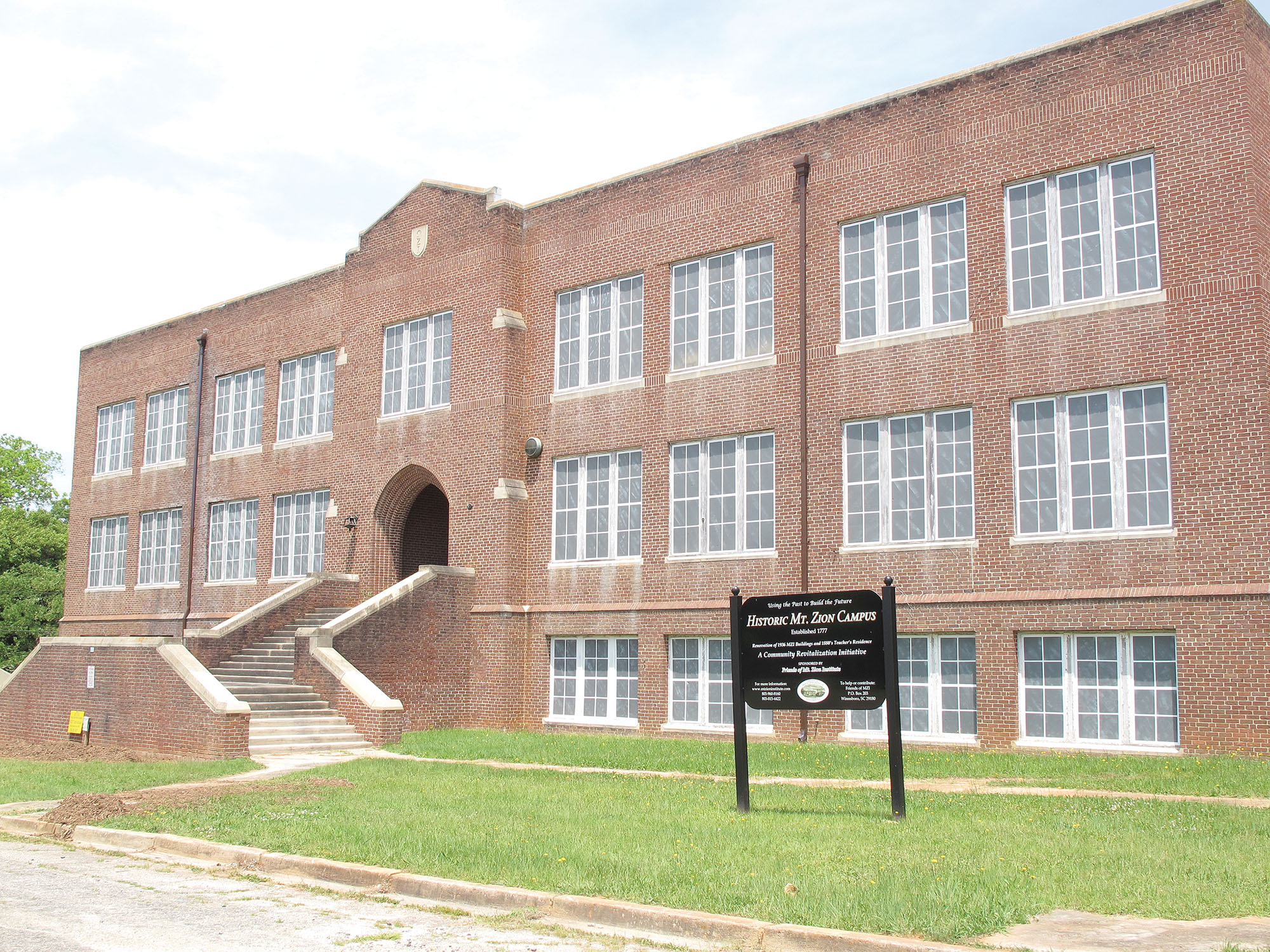
    The faux windows went up last summer, but Tuesday night the debate was less about Mt. Zion’s exterior and more about what – or who – could be residing in its interior.
    The faux windows went up last summer, but Tuesday night the debate was less about Mt. Zion’s exterior and more about what – or who – could be residing in its interior.

    WINNSBORO (Feb. 19, 2016) – Emotions ran high Tuesday night as residents spilled out of Town Council chambers and into the hallway for what may have been the last appeal for the life of Mt. Zion.

    Leading the charge for demolition was Marie Rosborough, who presented Council with what she said was a survey she conducted last week of neighborhood residents pitted with the question of whether or not they favored a plan to convert the old school building into senior living apartments. All but two respondents, she said, were flatly opposed to the notion.

    “We don’t want apartments,” Rosborough said. “It needs to be torn down. We ask Town Council to please close this issue, tear the building down and move on to some more pressing issue you have. You’ve done everything you can do.”

    Boyd Brown, who delivered to Council last Friday a letter of intent from developer Rob Coats, did his best to quell fears that Mt. Zion, even if intended for market-level senior living apartments, might end up as a low-income housing project.

    “This is not low-income housing. I’ve heard that from about three or four people today,” Brown told Council. “The Banyan Foundation (Coats’s non-profit organization) does do low-income housing projects – fact. This project does not score in the H.U.D. database to qualify for the 4 percent tax credits for low-income housing, nor does it score the other tax credits for low-income housing.”

    Mayor Roger Gaddy, however, subjected Brown to intense interrogation on the potential use of federal money on the project. Brown said that, as far as he knew, there would be no federal loans or grants, but that federal and state historic tax credits may be applied.

    “One of the Council’s concerns is if there’s any federal money involved,” Gaddy said, “any taxpayer money involved and the market-value apartment – it’s not even zoned for that now – if that were to occur and it not be successful and the federal government wants their money back, then they tell you you’re going to open it up to low-income housing. Council is not interested in even talking to anybody that’s going to use any federal money that’s going to put that neighborhood at risk.”

    Brown acknowledged Gaddy’s concerns, and said that federal historic tax credits were different than loans and grants.

    “We can do a workshop on federal tax credits and state tax credits,” Brown said, “and explain how that is what is driving all this growth in Columbia and even places like Edgefield and Lake City.”

    Dina Borda, an attorney living on Bratton Street, countered Brown’s claims by producing articles of incorporation for a company called The Peaks at Raleigh, Inc., filed in N.C. in 1998. The Peaks later became the Banyan Foundation, she said, and according to the articles was almost exclusively involved in low-income housing projects.

    “I am not saying I am against any kind of development,” Borda said. “I would just like to know the scope and method of execution before any contract is executed so that we can make an informed decision as to what’s going to occur. But I am absolutely against low-income housing.”

    Brown rebutted later, noting the date (1998) and the name on the articles, but said Coats does represent some of the people named in the articles.

    “These article of incorporation are from North Carolina. They are now in Alabama. This is dated,” Brown said. “You can Google search anything and you’re going to find all sorts of information. But I am here to tell you this is not going to be low-income housing. During the due diligence period if you want to go so far as to put that in the contract, if we ever get to that, I’m sure he will be just fine putting it in the contract.”

    But Gaddy said a contract means nothing if the federal government is involved.

    “I’m telling you the federal government is not going to loan him a dime for this project,” Brown said.

    “I don’t want any association, period,” Gaddy replied.

    “The council is going to have to have significant reassurance – I mean significant reassurance – that there would not be one iota of a chance and there would be some ramifications liability-wise if that would occur,” Gaddy continued. “I think that certainly is a major concern when you tell us the Banyan Corporation is the one doing it, from my standpoint, and the (articles) say that (low-income housing) is their sole purpose.”

    Vickie Dodds, Chairwoman of the Friends of Mt. Zion Institute (FOMZI), said she agreed with opposition to low-income housing. But what she didn’t understand, she said, was the feeling from those who “just want it torn down for the sake of tearing it down.”

    Responding to a point made by Faye Johnson, that the buildings were not historic buildings, Dodds said the old school had been approved for submission of placement on the National Historic Register.

    “All we have left to do it is finish the editing of the actual application,” Dodds said, “which cannot happen unless they (the Registry) qualify it as permissible to be on there. They consider anything over 50 years to be historic.”

    Betty Gutschlag also spoke up for Mt. Zion, saying it was an opportunity for retiring seniors to stay in their community. But when Rosborough spoke up again, she made it clear that it made no difference to the majority of respondents to her survey what type of apartments Banyan has in mind.

    “The residents who signed it (her survey) said ‘No, we don’t want Mt. Zion turning into apartments’. No conditions,” Rosborough said.

    Rosborough was interrupted by shouts from the back row.

    “Do you speak for everybody in the community?” Pelham Lyles asked. “The whole town?”

    Gaddy lowered the gavel and Rosborough attempted to continue, but Lyles interrupted again, shouting, “You didn’t put it in everybody’s mailbox!”

    When Gaddy called Lyles out of order, she exited the chambers.

    “We would hope you would consider what the community wants,” Rosborough finally concluded. “We’ve been talking about this for 15 years, at least. Now you want to add some more of this same over and over. You need to put an end to this because it will never end if you don’t.”

    Brown asked Council for 180 days for Coats to perform his due diligence on the project.

    “I’m not going to be unrealistic about this,” Brown said. “If there comes a point during that 180-day due diligence period where we just realize it cannot be done, we’re going to call you that day and tell you.”

    Gaddy said after the meeting that Council would consider Brown’s request.


  • County Issues New Bond

    $306,000 Bond Fifth in Two Years

    WINNSBORO (Feb. 19, 2016) – Fairfield County Council has issued its fifth general obligation (GO) bond in barely more than two years, this one in the amount of $306,000.

    The new bond, like the four previous GO bonds, is being issued to pay off the County’s $24 million bond debt.

    In a circuitous arrangement, County Council created a shell corporation in March 2013 that enabled the County to borrow $24 million for specific economic development projects. A month later, on April 15, 2013, Council passed an ordinance that allowed the County to issue GO bonds to pay off that $24 million debt. The GO bonds would provide funds from property taxes to make installment purchase payments to the shell corporation which it (the shell corporation) would use to pay off the $24 million debt.

    After the first GO bond was issued Feb. 12, 2014, surprised residents complained that the County’s scheme to make payments (to the shell corporation) to pay off the $24 million bond debt with a string of GO bonds had not been explained to the public by Council in open meetings. And the GO bond ordinance was short on specifications as to the amount of the bonds to be issued, date of issuance and the total number of bonds authorized by the ordinance.

    So long as the bonds issued did not exceed the County’s eight percent debt limit, Council could issue bonds without the voter’s permission. Even so, the state statute provided a 60-day window that allowed the voters of Fairfield County to initiate a petition that could have forced a referendum on the GO bond ordinance, effectively halting the issuance of the GO bonds altogether. But elected officials and newspaper accounts may have derailed any such petition effort by wrongly referring to the ordinance passed on April 15, 2013 as the $24 million bond, not the GO bond ordinance which was subject to the initiative petition.

    Adding further confusion, then County Administrator Philip Hinely and then Director of Economic Development Tiffany Harrison, were quoted in The Voice as saying the $24 million bond would not increase taxes. But a chart obtained in 2014 from the County showed that it is actually the GO bond debt (that is continually levied to make the installment purchase payments on the $24 million bond) that keeps the County’s debt millage at an elevated level of approximately 10 mills (or about $1.27 million) each year until about 2042, at which time the debt millage will begin to decrease steadily, reaching zero by 2047.

    While the County borrowed $24,690,000 to pay for economic development projects, it will repay $43,200,663 for just the principal and interest on that bond debt, according to the bond document.

    Although County officials have long aligned the payments for the $24 million bond debt with the dates the County would realize additional income from the second and third units at V.C. Summer nuclear plant, the County’s Interim Administrator Milton Pope, noted during a joint meeting of the Fairfield County Council and the Fairfield County Legislative Delegation in 2014, that the semi-annual installment purchase payments on the $24 million bond do not depend on income from the V.C. Summer nuclear plant. He said it was planned from the beginning to pay off the $24 million bond with property tax revenue from GO bonds.


  • Library Plans Unveiled

    Architect Jennifer Charzewski, Associate Principal of Liollio Architecture of Charleston, explains the firm’s final plans for the Blythewood Library renovation to Shirley Carter, Manager of the Library, left, and Library Associate June Smith, right, during the unveiling of the plans at the library earlier this month. (Photo/Barbara Ball)
    Architect Jennifer Charzewski, Associate Principal of Liollio Architecture of Charleston, explains the firm’s final plans for the Blythewood Library renovation to Shirley Carter, Manager of the Library, left, and Library Associate June Smith, right, during the unveiling of the plans at the library earlier this month. (Photo/Barbara Ball)

    BLYTHEWOOD (Feb. 18, 2016) – The community got its first peek Feb. 6 at final plans for the renovation of the Blythewood Branch Library as well as a 2,400 square foot addition to the facility. Architects from Liollio Architecture were on hand to answer questions and explain the changes to be made to the library.

    Architect Jennifer Charzewski told those gathered around the renderings that the reconfiguration of the existing space and the addition will provide for more program space, two large gathering areas, a quiet adult area, a sunroom overlooking the outdoor area to the side of the building, a children’s and family area, a nursing mothers’ room, a multi-generational computer room, a copy center, tutor room and other areas including a maker room or teen space, outdoor programming space as well as parking lot enhancements.

    Focus areas in the library will include education and growth, teen engagement and arts and literature, Charzewski said.

    The Town’s Board of Architectural Review granted a conditional approval of a Certificate of Appropriateness for the project in November. The final approval will come once the Board approves the shade of grey paint to be used on the building’s exterior.

    The architectural goal, Charzewski told the Board last November, is to achieve a timeless look for the 1992 building with painted brick, vertical windows and inclusion of the natural outdoor setting with the sunroom, window placement and additional trees and shrubbery.

    Bids are expected to go out in March with construction to begin in May.


  • Ridgeway Takes Aim at Sidewalk

    Police Station Move Sparks Compliance Debate

    RIDGEWAY (Feb. 18, 2016) – The sidewalk near Ridgeway’s Post Office has been a sore spot – and an eyesore – for Town Council for several years. Worse than that, it has been a hazard; and repairing it is an expensive proposition.

    With the State Legislature still scrambling to find money just for bridges and roads, sidewalks are not even on the back burner. Repairing Ridgeway’s broken stretch between the Lopez house and the Post Office on 290 S. Palmer St. could run the Town as much as $200,000, according to Ridgeway Mayor Charlene Herring.

    But during Council’s Feb. 11 meeting, Herring said local resident Dwight Robertson had volunteered his labor and if the Town can come up with the approximately $5,000 to cover material, grading and removal of the old concrete, the sidewalk could soon be on the mend.

    Council voted unanimously Feb. 11 to cash in one of their Certificate of Deposits (CDs) to fund the project, provided the Town has a CD that is nearing maturity. The project will also need the approval of the S.C. Department of Transportation (DOT), which legally owns the sidewalk.

    Herring said she had recently sent a letter to the DOT and was awaiting a response. Once the DOT provides specifications for the project, Town Clerk Vivian Case said this week, and a firm dollar amount was established, the Town would tap into a CD.

    Police Department

    Relocation

    Council also scheduled the relocation of their Police Department from 160 S. Palmer St. to the Century House at 170 S. Dogwood Ave. for Feb. 27. Still in question, however, is how Council will secure their current chambers once it has been converted into a police station.

    Installing a gated door on the room could cost the Town around $800, Councilman Heath Cookendorfer said during the Feb. 11 meeting. But a pair of cipher locks, he said, could be installed on the existing doors for less than $100. Cipher locks use a digital code for access instead of a key, and Cookendorfer suggested officer Christopher Culp and the Town Clerk have a code for the office.

    “The only problem with that is you can’t have a bunch of codes floating around,” Culp told Council. “When you start issuing keys and codes, everybody’s responsible for what’s in here. You can’t issue keys and codes out to people who aren’t in the police department. If you have people coming in, you have evidence (in the office), you’re all subject to subpoena to court based on did you have a key to this office or a code to this office.”

    Storing evidence is another upgrade Council will have to consider. Culp told Council that the evidence locker currently in use is not a “proper evidence locker,” and the Town should invest approximately $130 in a new one.

    Councilman Donald Prioleau, who supervises the Police Department, said the Ridgeway P.D. was outdated and not in compliance with state guidelines. The department desperately needs to be modernized, he said, and the move to the Century House was a good opportunity to begin some of that modernization.

    “How long have we been operating in that police station (on S. Palmer Street) with no issue?” Cookendorfer asked. “How long?”

    But just because the department has skated by in the past, Prioleau said, was no reason to skate into the future.

    “This police department is so far behind, we’re not in compliance. So what we need to do is revisit this and make sure we’re in compliance with the state statute,” Prioleau said. “We’re behind on everything. It’s been all right, but is it right?”

    Herring said an inspection of the department by SLED, were it conducted today, would likely leave Ridgeway facing a fine for non-compliance with standards on storage of evidence and vital records. Cookendorfer called that “speculation,” but said that he would research the law to determine who could and could not have access to the department.

    Meanwhile, Council agreed to advertise for the rental of the soon-to-be formal police station on S. Palmer Street. Council set the rent for the building at $600 a month, utilities not included. Council will also have to obtain permission from Norfolk-Southern Railway, which owns the property on which the station sits, to lease the building. Half of the rent would also have to be paid to the railway, as well as a one-time fee of $750.


  • Five File for Town Council Races

    RIDGEWAY (Feb. 18, 2016) – Filing for the 2016 Ridgeway Town Council election closed at noon on Feb. 5, with five candidates lining up to vie for three of the five seats.

    Sitting Councilman Doug Porter, whose four-year seat is in play this cycle, is not seeking another full term on Council. Instead, Porter has filed to fill out the remaining two years on the seat left vacant by Russ Brown, who resigned from Council last fall after moving to Winnsboro.

    Also making a run for the two years left on Brown’s term is former Ridgeway mayor and ex-Councilman Rufus B. Jones Jr.

    Three others have filed for the two four-year terms open this year. Longtime Councilman Donald Prioleau is seeking reelection to his seat, while Tina Johnson, owner of Over The Top Boutique, and Angela Harrison are also making runs for the seats currently held by Porter and Prioleau.

    The election is April 5, with voting held at the Ridgeway Volunteer Fire Department, 170 S. Palmer St. To be eligible to vote in the April 5 election, voters must be registered by March 7. To register, contact the Fairfield County Board of Voter Registration at 315 S. Congress St., Winnsboro; or call 803-635-6255.


  • Roaring Winners –

    Miss BHS copy

    BLYTHEWOOD (Feb. 18, 2016) — ‘Welcome to The Roaring Twenties’ was the theme for the 2016 Miss Blythewood High School pageant held in the school’s auditorium on Saturday night. Of the 15 contestants, crowns were won by Meredith Covert, left, Miss Freshman and Miss Grand Talent; Mollie Hanna, Miss Sophomore; Zaylee Butler, Miss Blythewood High School; Carlisle Cooper, Miss Junior and Miss Fundraiser and Michele Armstrong, Miss Senior. Megan McCuthcheon was voted Miss Congeniality.


  • Penny Tax on the Menu at The Manor

    BLYTHEWOOD (Feb. 18, 2016) – The public is invited to a Lunch & Learn event on Feb. 23, intended to fill in the blanks about Blythewood’s proposed road improvements under Richland County’s penny tax road improvement program.

    Sponsored by the Blythewood Chamber of Commerce, the information session will be presented by officials from Richland County, SCDOT and Blythewood Town Council who will discuss traffic circles, bike lanes, sidewalks, new roads and streetscapes that are planned for the town and the outlying areas in 29016 and that are to be paid for with Richland County’s penny tax.

    The program will be held from 11:30 a.m. – 1 p.m. at The Manor. While the event is free to Blythewood Chamber members and their guests, a $5 fee is charged for non-members. A free Chick-Fil-A lunch will be available to those who register in advance at blythewoodchamber.com.


  • Quarry Opponents Ready for Appeal

    WINNSBORO (Feb. 12, 2016) – Residents of Rockton Thruway and the Middle Six community will get one more shot next week in their efforts to keep a rock quarry out of their back yard.

    The S.C. Mining Council will hold an appeal hearing Feb. 16-19 in the Board Room of S.C. Department of Health and Environmental Control (DHEC) at 2600 Bull St., Columbia. Residents are appealing the mining permit (I-002053) granted by DHEC last April for Winnsboro Crushed Stone, LLC.

    According to the appeal, filed last June, DHEC overlooked elements of the Clean Water Act during its permitting process, failed to provide environmental justice for minority and low- to moderate-income residents in the area and committed errors in its evaluation of state approved safety regulations.

    Winnsboro Crushed Stone intends to mine granite on 365.8 acres of a 923.2-acre tract off Rockton Thruway. According to the appeal, the permitted area includes natural wetlands, as well as water sources for local residents. The quarrying and processing of granite uses quite a bit of water, and while the mining company has said that water would be a fixed amount contained within a closed system of ponds, the appellants are worried about loss of water pressure and loss of water in local streams as the proposed mining pit delves deeper into the water table.

    ” . . . if pit drawdown depressurizes the local surficial aquifer, then there is likely to be significant loss of water to surface streams, and subsequently the wetlands area,” the appeal states.

    Appellants are also asking Crushed Stone to install one or more near-surface aquifer monitoring wells. DHEC’s requirement that the company install monitor wells and observe pre-mining water levels for six months is not enough, appellants say, to produce a complete study. Instead, they are asking that the pre-mining conditions be monitored for 12 months. Those wells also need to be deeper than the recommended 150 feet, appellants say, in order to “mirror the depth of local area drinking wells where the water level is known to be.”

    “How do you protect pre-mining conditions of groundwater, when you don’t have any data on what the pre-mining conditions are?” Dorothy Brandenburg, the community liaison for quarry opponents, asked rhetorically when contacted by The Voice this week.

    Appellants also state that their requests to DHEC for “evidence of sufficient evaluation of the wetlands” have not been honored. Noting a letter from the Army Corps of Engineers, which advises against work on or around the wetlands until the company receives Approved Jurisdictional Determination, appellants are asking the Mining Council’s Appeals Board to “reconsider this permit until an adequate Environmental Impact Study can be completed and evaluated.”

    Another DHEC oversight in the permitting process, appellants claim, is failure to note that a required map demonstrating entrance and exit routes of mining traffic had not been included in the application.

    “This is yet another oversight of (DHEC), concurrent with other mistakes made in the permit issuance,” the appeal letter states. “In their response to questions from citizens, (DHEC) employees claim that pointing to a map at the public hearing is sufficient evidence for intended operations.”

    While Rockton Thruway residents opposed to the quarry have gotten the lion’s share of attention, the appeal states that the Middle Six community, just on the north side of the permitted area, has gone largely ignored, thereby giving rise to the charge of “lack of environmental justice.”

    The hearing begins at 9 a.m. each day in room 3420. A final order, according to DHEC regulations, will be due within 30 days of the conclusion of the hearing.


  • Hearing Scheduled in Dog Dragging Case

    Billy Ray Huskey
    Billy Ray Huskey

    WINNSBORO (Feb. 12, 2016) – The Fairfield County man who was arrested last month on a felony charge of Ill Treatment of Animals in the Dec. 13 dragging incident that left a 9-month old dog severely injured, faces jail time of 180 days to five years and a fine of $5,000 if convicted, Lt. Lee Haney, Animal Control Officer with the Fairfield County Sheriff’s Office told The Voice on Tuesday.

    Members of the Hoof and Paw Benevolent Society posted a $1,500 reward for information leading to the arrest and conviction of any person(s) responsible for the dog’s injuries, and witnesses came forward in January, identifying Billy Ray Huskey of Forest Lake Circle near Mitford as the man they believed responsible for the dog being dragged.

    Haney said additional charges could be brought against Huskey in connection with the injured dog as well as two other dogs that Huskey reportedly abandoned following the dragging incident.

    All three dogs, along with another dog that was found dead of unknown causes the next day, were discovered off Camp Welfare Road by four women riding horses through Carolina Adventure World near White Oak at approximately 2:30 p.m., Dec. 13.

    Laura Collins, one of the riders, told The Voice that the injured dog was found lying near a bush at the edge of a horse trail about 200 feet from Camp Welfare Road, a paved road that runs alongside Carolina Adventure World. The women brought the dog to Fairfield Animal Hospital in Winnsboro where it has undergone multiple surgeries. The other two dogs were picked up by Fairfield Animal Control and brought to the Fairfield Animal Hospital two days later in emaciated condition with severe mange, vet tech Susan Knight told The Voice. One of those dogs, she said, died several days later.

    Knight told The Voice that the dog who suffered the dragging incident has made remarkable progress in his recovery, but is still awaiting surgery to repair a knee cap.

    The incident is being investigated by Lt. Haney, and information from that investigation will be presented in Circuit Court by Assistant Solicitor Riley Maxwell of the Sixth Circuit Solicitor’s Fairfield County office. A probable cause hearing is scheduled for April 6 in the Fairfield County Magistrate’s Court.

    Huskey, who was booked into the Fairfield County Detention Center, has been released on a $5,000 surety bond.


  • Deadline Looms for Mt. Zion

    Developer May Come to the Rescue

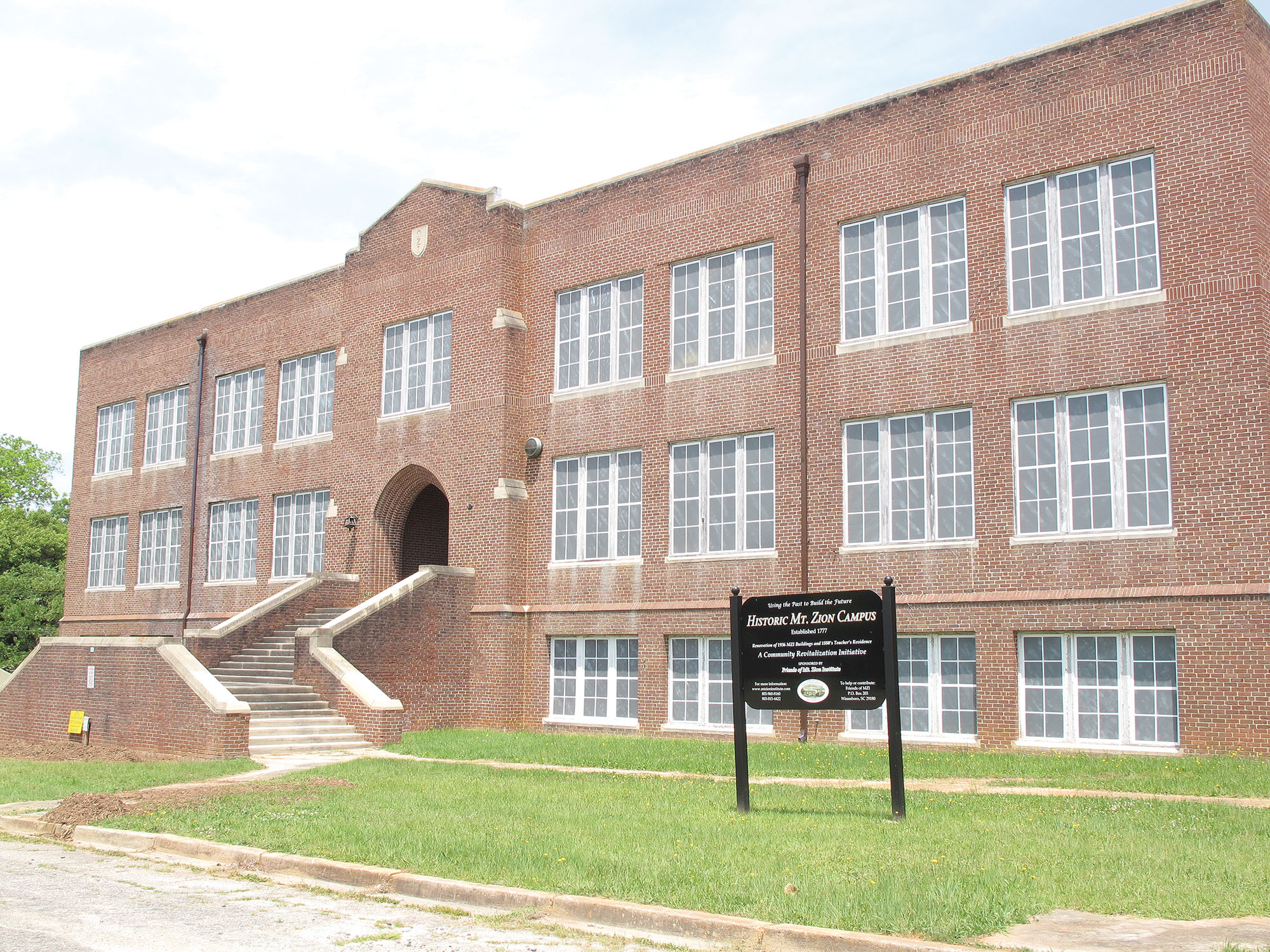
    Next week may be FOMZI's last stand.
    Next week may be FOMZI’s last stand.

    WINNSBORO (Feb. 12, 2016) – Next week could be the end of the line for a local citizen’s group battling to save the Mt. Zion Institute from the demolition man, unless Town Council is willing to wait a little longer for a proposed developer to get into the game.

    The 18-month deadline for the Friends of Mt. Zion Institute (FOMZI) to stabilize the buildings elapsed last Sept. 4. While faux windows were installed on the front of the school building last summer, FOMZI learned from Council during their Jan. 5 meeting that the building had failed to pass a Town inspection.

    Vickie Dodds, FOMZI Chairwoman, said the inspection was skewed to fit Council’s agenda to demolish the buildings.

    “They have stretched the inspection report to suit their purposes,” Dodds said. “They have stretched the wording of the ordinance to suit their purposes. And when I say ‘They,’ I mean Roger (Gaddy, mayor).”

    Gaddy said he disagreed with Dodd’s assessment of the inspection and said the Town hired an outside inspector to perform the work specifically to avoid any perception of bias. But the Mayor has never concealed his feelings toward the former school site.

    “When I became mayor, I said Mt. Zion would be torn down in 90 days,” Gaddy told The Voice after a Sept. 1 Council meeting, adding that he had made that pledge 10 years ago.

    Dodds said Gaddy has also expressed to FOMZI the Town’s concern for liability, should anyone be injured by loose bricks falling from the school building. However, she said, the Town has no such liability.

    “We own the building,” she said. “We carry the insurance on it. They are disseminating erroneous information.”

    And although the building failed its inspection, she said there were no bricks loose enough to fall.

    But Gaddy said the Town had been advised by legal counsel that should someone be injured because of an unstable building, the Town could be on the hook.

    “The Town’s liability is knowing it’s an unstable building and not doing anything about it,” Gaddy said, “not requiring the owners to do anything. Our legal advice was that we were vulnerable.”

    Council officially approved the transfer of the property, located at 205 N. Walnut St., on March 4, 2014. FOMZI purchased the site and its four buildings (the Mt. Zion School, the auditorium and gymnasium, the cafeteria and the Teacherage) for $5, with the caveat that the buildings had to be stabilized within 18 months to meet Winnsboro’s Dangerous Building Code or be torn down. The contract also gave FOMZI 30 months in which to hire a contractor or developer for the historic rehabilitation of the buildings.

    But, Dodds said, this Tuesday’s Council meeting might be the end of the road.

    “Tuesday would be the deadline to do everything they think we should already have done,” Dodds said. “And that’s not going to happen. I’m not sure what we can do to please them.”

    A developer willing to stabilize the building, Gaddy said, would go a long way toward pleasing them.

    Dodds said after the Jan. 5 meeting that FOMZI had received significant interest from a developer, who had made two visits to the site. That developer, Rob Coats, was introduced to Mt. Zion by Boyd Brown.

    “I was approached by a developer independently of FOMZI,” Brown said. “I’m not getting a fee for it. He has developed several old school buildings, and he was looking for one around here. He made two visits to Mt. Zion and said it was a better fit than any project he has yet done.”

    Brown said Coats is interested in converting the school building into market-rate apartments for seniors.

    “We’ve got an aging population here, and we have to cater to them at some point,” Brown said. “It would be a good deal. And this is someone who actually has some experience in restoring school buildings in rural areas.”

    Brown said he plans to have a letter of intent from Coats delivered to the Town late this week. But even then, he said, the project would be 180 days out from launch while Coats performed his due diligence. Hopefully, he said, that would not be a deal killer.

    “Those buildings have sat there empty for 25 years,” Brown said. “It can wait another 180 days.”

    While Gaddy said the Town would not be willing to wait another eight or nine months, whether or not they will sit tight for six months remains to be seen.

    “That would be a Council decision,” Gaddy said.