Blog

  • Public Shows up at Meeting, Councilman Calls Cops

    Kamau Marcharia
    Kamau Marcharia

    RIDGEWAY (April 15, 2016) – During a special called meeting of Fairfield County Council last week at the Fairfield Commerce Center on Peach Road, Councilman Kamau Marcharia called 9-1-1 when three members of the public showed up for the meeting which was, in fact, open to the public.

    Macharia’s call was placed just before 2 p.m., before the April 6 public meeting was called to order and before Council had voted to enter executive session for the purpose of interviewing candidates for the County Administrator’s position.

    “We’re holding an executive session,” Marcharia told the 9-1-1 dispatcher, “and folks from the Saving Fairfield County, and, even though we haven’t started in our meeting, (are) asking questions. They have threatened me before. We need an officer down here now!”

    Marcharia went on to say, “They’re intervening in the process, even though we haven’t gone into executive session. They’re in there questioning us and demanding information and they need not be here.”

    Bob Carrison, who along with Jeff Schaffer and Elizabeth Jenkins had showed up at the meeting, characterized their presence and behavior differently. And none of the Council members who were present when the three arrived reported them being threatening demanding or intervening.

    “Obviously that Council member (Marcharia) has a limited understanding of democracy and the Freedom of Information Act,” Jay Bender, a First Amendment attorney in Columbia who represents the S.C. Press Association, said. “If an elected representative is threatened by a citizen’s question on a public matter, that representative doesn’t deserve to hold office.”

    Bertha Goins, who lives in Marcharia’s Council district and is running against him in the November elections, agreed and made her feelings known at Monday night’s Council meeting during the public comment time.

    “Our community can no longer survive under weak, frivolous, childish nonsense such as using our law enforcement as a scare tactic against the very people you represent,” Goins said in a prepared statement.

    Carrison said he asked members of the Council when the three arrived at the Commerce Center if Council had entered executive session.  When Council told him the public meeting had not yet been called to order, Carrison said, “We sat down and told them we were here because we want them to know how important this is to us.

    “We talked a little more,” Carrison said. “I would call it a reasonable dialogue. There were no threats. No yelling. Jeff said nothing. Beth said nothing,” Carrison added. Carrison’s “reasonable dialogue” was conducted with Chairwoman Carolyn Robinson (District 2).

    After Monday night’s regular Council meeting, Robinson similarly characterized the conversation she had with Carrison, calling it “respectful.”

    It was during that conversation at the Commerce Center that Marcharia reportedly packed his things together and left, making the 9-1-1 call from the parking lot.

    “Kamau came in with Sgt. Mull,” Carrison recalled. “Another deputy arrived as Carrison, Schaffer and Jenkins were leaving, and according to the Sheriff’s report, all three left without incident. In a WIS-TV news story the following day, Jenkins said she left feeling intimidated by the 9-1-1 call. Also in that news segment it was reported that Fairfield County Sheriff Will Montgomery said no one was arrested and that he did not plan to arrest anyone.

    Explaining to The Voice on Monday why he called   9-1-1, Marcharia said “I wanted the police there. They were supposed to be there. They were running late. I didn’t want them (the public) to compromise our executive session.”

    Meetings of public bodies like the one at the Commerce Center are open to the public, according to the S.C. Freedom of Information Act. Provisions of the law allow public bodies to conduct portions of meetings in executive session, out of public view, but not before first calling the public meeting to order and voting openly to enter into the closed session.

    Members of the public can be removed from meetings if they are being willfully disruptive; however, both Carrison and Robinson said this was not the case. Councilman Billy Smith (District 7) agreed.

    “I did not see a reason that would necessitate 9-1-1 being called,” Smith said Monday.

     

  • County Floats Loan to Hospital

    WINNSBORO (April 15, 2016) – Fairfield Memorial Hospital got a shot in the arm Monday night as County Council agreed to loan the healthcare facility more than $400,000; albeit, with strings attached.

    The loan of $423,092.38 comes less than a month after Council voted to OK the early release of $366,750.54 in quarterly budgeted hospital funds, and was the culmination of Ordinance 661, which amended the County’s 2015-2016 budget in order to accommodate the financing.

    “Fairfield Memorial Hospital provides care to thousands of residents a year, many so critically ill that they couldn’t make it to another hospital,” Sue Doscher, the hospital’s CEO, told Council during Monday night’s public hearing on the ordinance. “If that was your family, cost is not an issue. Spare no expense in saving the lives of our loved ones.”

    Doscher was one of 10 people – Council’s maximum – to speak during the hearing and urge Council to pass the ordinance.

    The hospital’s original request, made on Feb. 15, was for $451,773. Interim County Administrator Milton Pope told Council during the Feb. 15 meeting that $305,523 of the requested funds was targeted for a CT and MRI maintenance agreement. The remainder, he said, was to cover the implementation fee of the new Wellness Works program, for which the hospital at that time had already signed up.

    Radiology generates about two-thirds of the hospital’s revenue, Harry Palmer told Council last night. A radiologist with Fairfield Memorial, Palmer said the hospital performs approximately 20-25 CT scans a week, to the tune of $40,000, and five to nine MRI scans a week, for about $14,000 – if the aging machines are up and running. If the CT or MRI machine goes down, he said, the hospital is not only faced with a loss of revenue, but also the expense of paying out of pocket for replacement parts, which can range between $100,000 and $300,000.

    “We as a board have worked many many hours trying to make sure that we do everything possible to keep that hospital open,” James McGraw, Chairman of the hospital’s board of directors, said during the public hearing. “Neighboring hospitals are closing around us, we have a challenge before us. But believe me we are almost there.”

    Prior to the hearing, during the first public comment portion of the meeting, two members of the public questioned Council’s process in how they went from the original $451,773 request to what Pope said in previous meetings was a “placeholder” figure of $200,000 in the ordinance to what the ultimate number would be by the end of the evening.

    “I was told that the figure of $200,000 was more or less just a place-keeper,” Bob Carrison said, “that at tonight’s meeting when the ultimate number comes out we’ll all know exactly what’s happened as far as the discussions and what requests were made and what decisions Council had made to try and help the hospital.”

    Carrison said he wanted to see the hospital succeed, but that he would “like to see an explanation of your thought process and what you guys decided to do in executive session and how you came up with the numbers and whether or not you considered taking money, making a budget amendment taking money from the general fund that was left over from perhaps the fuel or some other line item and moving it into this item,” he said, “which could have been done through a budget amendment the same way as the $200,000. It’s just a little bit confusing to us.”

    Beth Jenkins echoed Carrison’s sentiments, asking Council to vote against an ordinance that was “not transparent” and “not specific” until a breakdown of the funding and where it will go could be made public.

    Strings Attached

    When Council brought the ordinance to the floor, Billy Smith (District 7) amended the motion to approve, turning the $200,000 placeholder figure into a $423,092.38 loan. The loan carries the following contingencies, which must be met by the hospital before Council will consider any future funding requests:

    The funding shall be based upon a two-month period beginning May 1 and ending June 30, 2016. At the end of this period, Fairfield County (all Council members) shall be provided a written ‘term sheet’ of contractual expectations by Fairfield Memorial Hospital and any potential real affiliates(s) or partner(s).

    Fairfield County (all Council members) shall receive a copy of Fairfield Memorial Hospital’s application for S.C. DHHS ‘Transformation’ Funding.

    Fairfield County (all Council members) shall receive a copy of the regulatory requirement guidelines which must be met for an application to be granted by SC DHHS ‘Transformation’ Funding.

    The Fairfield County Council Chairperson or its Council member designee(s) shall be invited to attend all Executive Session or merger/Acquisition Meetings of Fairfield Memorial Hospital.

    Fairfield County (all Council members) shall be granted direct access to an potential or real affiliate(s), partner(s), consulting firm(s) or legal representative(s) of Fairfield Memorial Hospital to gather information regarding any potential requests to or financial commitments of Fairfield County (Council).

    Fairfield County (all Council members) shall be provided written monthly updates on the financial and operational status of Fairfield Memorial Hospital.

    Fairfield County (all Council members) shall be provided a written plan of action on any potential improvements or discontinuations regarding any Fairfield Memorial Hospital departments or services continually operating at a loss for the past three months or longer.

    Council passed the ordinance facilitating the loan unanimously.


  • NFL Pro-Bowler, Former Bengal Makes Big BHS Donation

    Blythewood High School graduate and NFL Pro-Bowl defensive back Justin Bethel presented a check for $100,000 to the Blythewood High School Education Foundation on Friday. Shown with Bethel are Dr. Sharon Buddin, Chairwoman of the BHS Education Foundation; Gabriel Bethel (brother); Brenda Bethel (mother); Dr. Keith Price, Richland School District 2 Assistant Superintendent, BHS Principal Brenda Hafner and BHS Athletic Director Vince Lowry. (Photo/Barbara Ball)
    Blythewood High School graduate and NFL Pro-Bowl defensive back Justin Bethel presented a check for $100,000 to the Blythewood High School Education Foundation on Friday. Shown with Bethel are Dr. Sharon Buddin, Chairwoman of the BHS Education Foundation; Gabriel Bethel (brother); Brenda Bethel (mother); Dr. Keith Price, Richland School District 2 Assistant Superintendent, BHS Principal Brenda Hafner and BHS Athletic Director Vince Lowry. (Photo/Barbara Ball)

    BLYTHEWOOD (April 14, 2016) – A string of three consecutive NFL Pro Bowl selections and a contract extension with the Arizona Cardinals may have changed Justin Bethel’s life, but they haven’t changed his character.

    “I’m a giver. I love to give back,” Bethel said last Friday after presenting his Alma mater, Blythewood High School, with a check for $100,000. “I feel like, the position I’m in, I make enough money to take care of myself and take care of the people who helped me get to where I’m at.”

    Bethel’s donation will go toward Blythewood High School’s culinary arts program and athletic program, both of which Bethel was a part during his tenure as a Bengal.

    In 2006, Bethel’s junior year, he was part of the Bengal’s Class 3A state championship team. Bethel went on to play four seasons of football at Presbyterian College and was selected by the Cardinals in the sixth round of the 2012 NFL draft.

    He has been selected to the Pro Bowl on special teams for the last three seasons.

    “Blythewood will always be special to me, not only because I was lucky enough to be a part of the state championship team, but also because a lot of the coaches I know are still there and it’s always good to see them when I am home,” Bethel told The Voice just before his first Pro Bowl appearance in 2014. “It means a lot to me. I have some great memories there.”

    Bethel presented the check during a school-wide ceremony on April 8, during which Blythewood High also bestowed upon Bethel its first Order of The Bengal, which honors distinguished alumni. The recognition, while humbling, was not entirely necessary.

    “If it had been up to me, none of this would be happening,” Bethel said modestly. “I would have just given them the money and no one would have been the wiser.”

    Bethel was on crutches for the ceremony, recovering from postseason surgery, but said he would be ready for training camp this summer. He racked up 46 tackles, a pair of interceptions and had a touchdown to his credit this season as the Cardinals battled their way to a division title. Arizona made it as far as the NFC championship game where they were ultimately bumped off by the Carolina Panthers.

    Bethel said he plans to organize a 7-on-7 football camp for Midlands schools this June, but also stressed the importance of education in pursuing one’s athletic goals.

    “If you have that dream, still get your education,” Bethel said. “At the end of the day, the NFL lasts for only so long. You have to have something to fall back on.”


  • Park Tops Workshop Agenda

    BLYTHEWOOD (April 13, 2016) – Choosing a security system for the Park and Manor and placing restrictions on the use of grills and bounce houses in the Park will be two of several topics discussed by Town Council at its monthly workshop on Thursday, April 14, at The Manor.

    “We expect to have several proposals for security systems available at the workshop,” Town Administrator Gary Parker told The Voice.

    Council has, for a couple of months, been discussing the purchase of a security camera system for the Town Park, Hoffman House and Manor.

    “Staff has felt that some kind of security system should be installed given the vandalism in the park and other potential issues,” Parker said. “Such a system would cover most of the Town Complex.”

    Council is considering a system that will record footage of all activity around Town Hall, Doko Manor, the public restrooms, fields behind Doko Manor and several other locations around the property as well as record the license tags of all cars entering and exiting the complex from Langford Road.

    Grills and Bounce Houses

    In a workshop preview packet, Parker noted that he felt it was time Council addressed the increasing number of inquiries the Town is receiving about the use of grills and bounce houses for private events in the park.

    “Most parks that allow grilling of food have a designated area with picnic shelters and tables,” Parker said. “If we establish a designated area, possibly with fixed-in-place grills, that may be fine. But it’s probably not a good idea to let people bring their own grills and cook food anywhere they have rented some space for their event. I have misgivings about that Park area getting messy with spilled grease or ashes. There is a reason that states, counties and other municipalities have established picnic areas,” Parker added.

    Parker said the Town had budgeted for and picked out picnic tables.

    “But we have not designated a picnic area,” he continued. Parker said the Park’s picnic area should probably be away from the playground, ball fields and amphitheater.

    Bounce Houses

    As for bounce houses at private events in the park, Parker suggested Council consider some of the tragic news stories about the inflatable play houses. He said the Town’s Municipal Association of South Carolina Risk Management team recommends against the Town allowing the use of bounce houses in the park.

    “There have been several incidents over the year, becoming more frequent with more frequent use of these, in which windy conditions caused them to blow over and, in rare cases, actually become airborne causing serious injury and fatalities,” Parker said.

    During the workshop, Council is expected to address whether to allow the use of mechanical rides at private events in the Park such as train ride and hay rides.

    Also on the agenda are discussions about the placement of way finding signs in the downtown area, increasing the number of Wi-Fi ‘hot spots’ in the town and painting the Town Hall.

    The workshop is set for 9 a.m., Thursday at The Manor and is open to the public.


  • Columbia Man Killed on Highway 213

    WINNSBORO (April 13, 2016) – A Columbia man was killed Saturday after running a stop sign on Jackson Creek Road.

    According to Fairfield County Coroner Barkley Ramsey, George Tyrone Bookert, 53, of Sutters Mill Road, Columbia, was pronounced dead at the scene of the accident. The S.C. Highway Patrol said Bookert was driving a 1989 Nissan pickup truck north on Jackson Creek Road at approximately 10:35 a.m. on April 9 and disregarded a stop sign at the intersection of Highway 213. As Bookert drove through the stop sign, a 2007 Dodge pickup truck traveling east on Highway 213 struck Bookert in the driver’s side door.

    Ramsey said Bookert was ejected from the Nissan on impact. He was not wearing a seat belt at the time of the collision, the Highway Patrol said. The driver of the Dodge pickup truck was transported by EMS to Palmetto Richland with non-life-threatening injuries.


  • Two Drown in Mitford Pond

    MITFORD (April 13, 2016) – The bodies of two men were pulled from a private pond off Nickey Road last week after the boat they were in sank.

    Fairfield County Coroner Barkley Ramsey said a Department of Natural Resources Dive Team recovered the bodies of Freddie Boulware, 25, of Chester Ave., Great Falls, and Daniel Vonni Adams, 28, of Pinewood Ave., Lancaster at approximately 3 p.m. on April 7. Ramsey said the bodies were found about 30 feet from the bank in approximately 10 feet of water, not far from where they were last seen disappearing below the surface.

    Ramsey said Boulware, Adams and a third man identified only as Adams’s brother had made their way onto the private property around noon on April 6 without permission. They discovered a paddle boat on the banks of the pond and took it out onto the water. The boat, Ramsey said, had a hole in it and soon began taking on water and eventually capsized. Adams’s brother was able to swim safely to shore, Ramsey said. The victims, he said, were not strong swimmers and drowned.


  • They Were the Champions of ‘58 and ‘59

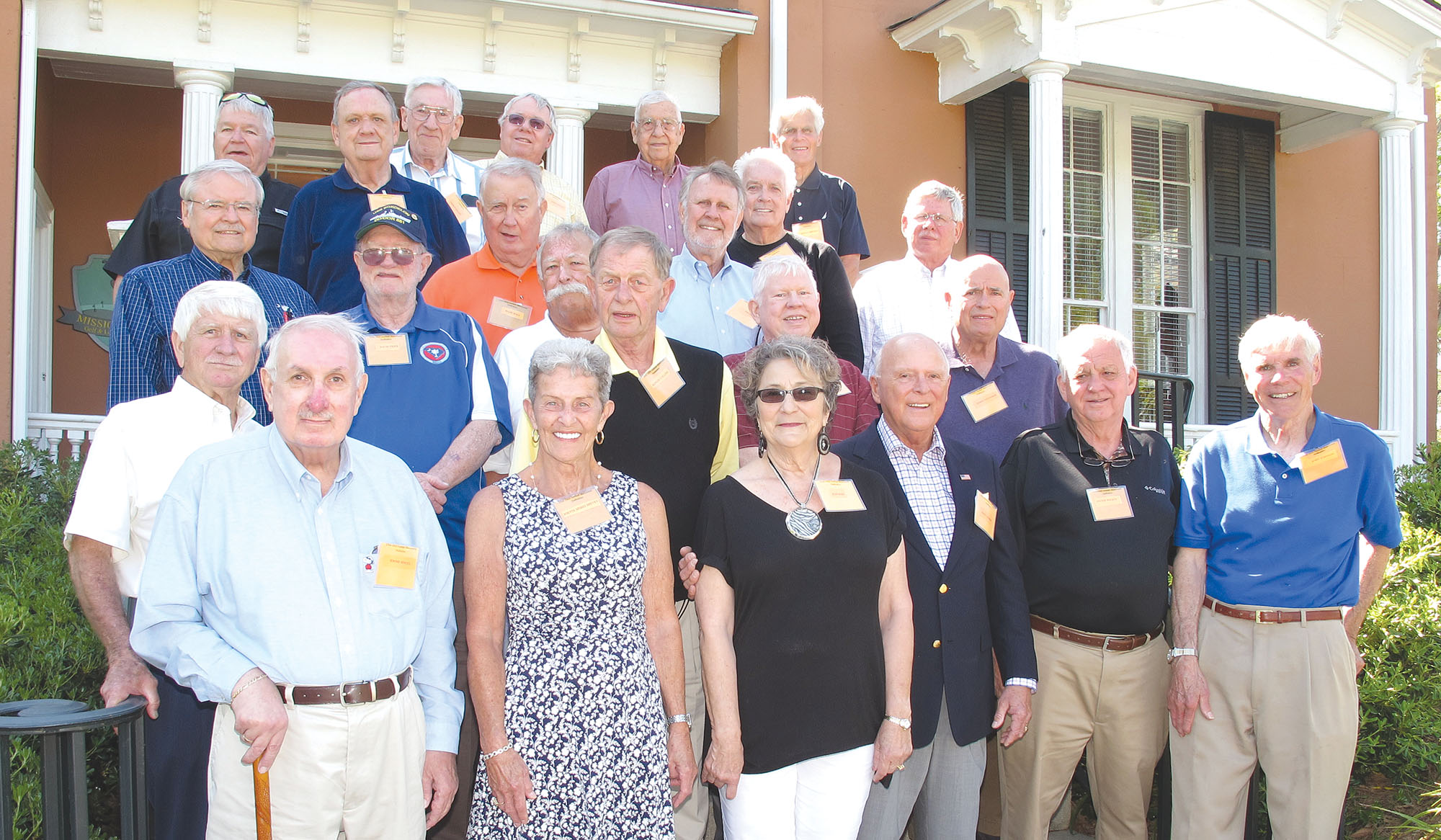
    Players and cheerleaders from the ‘58 and ‘59 championship teams gather on the steps of Mission Ridge after a reception in their honor.  First row: Jerome Mincey, cheerleaders Joette Spires Spivey and Jean Bass Harwell, Sonny Sanders, Jackie Wilkes, John Johnson. Second row: Buddy Gunter, David Frier, Bucky Ellison, Ronnie Collins, Bill Calkins, Tommy Stevenson. Third Row:  Gene Mincey, Wade Hall, Jim Hudson, Don Lewis, Rusty Price. Fourth Row:  Billy Carter, Grady Cotton, Theron Wilson, Bobby Ficklin, Coach Jack Herndon, Oliver Johnson. (Photo/Barbara Ball)
    Players and cheerleaders from the ‘58 and ‘59 championship teams gather on the steps of Mission Ridge after a reception in their honor. First row: Jerome Mincey, cheerleaders Joette Spires Spivey and Jean Bass Harwell, Sonny Sanders, Jackie Wilkes, John Johnson. Second row: Buddy Gunter, David Frier, Bucky Ellison, Ronnie Collins, Bill Calkins, Tommy Stevenson. Third Row: Gene Mincey, Wade Hall, Jim Hudson, Don Lewis, Rusty Price. Fourth Row: Billy Carter, Grady Cotton, Theron Wilson, Bobby Ficklin, Coach Jack Herndon, Oliver Johnson. (Photo/Barbara Ball)
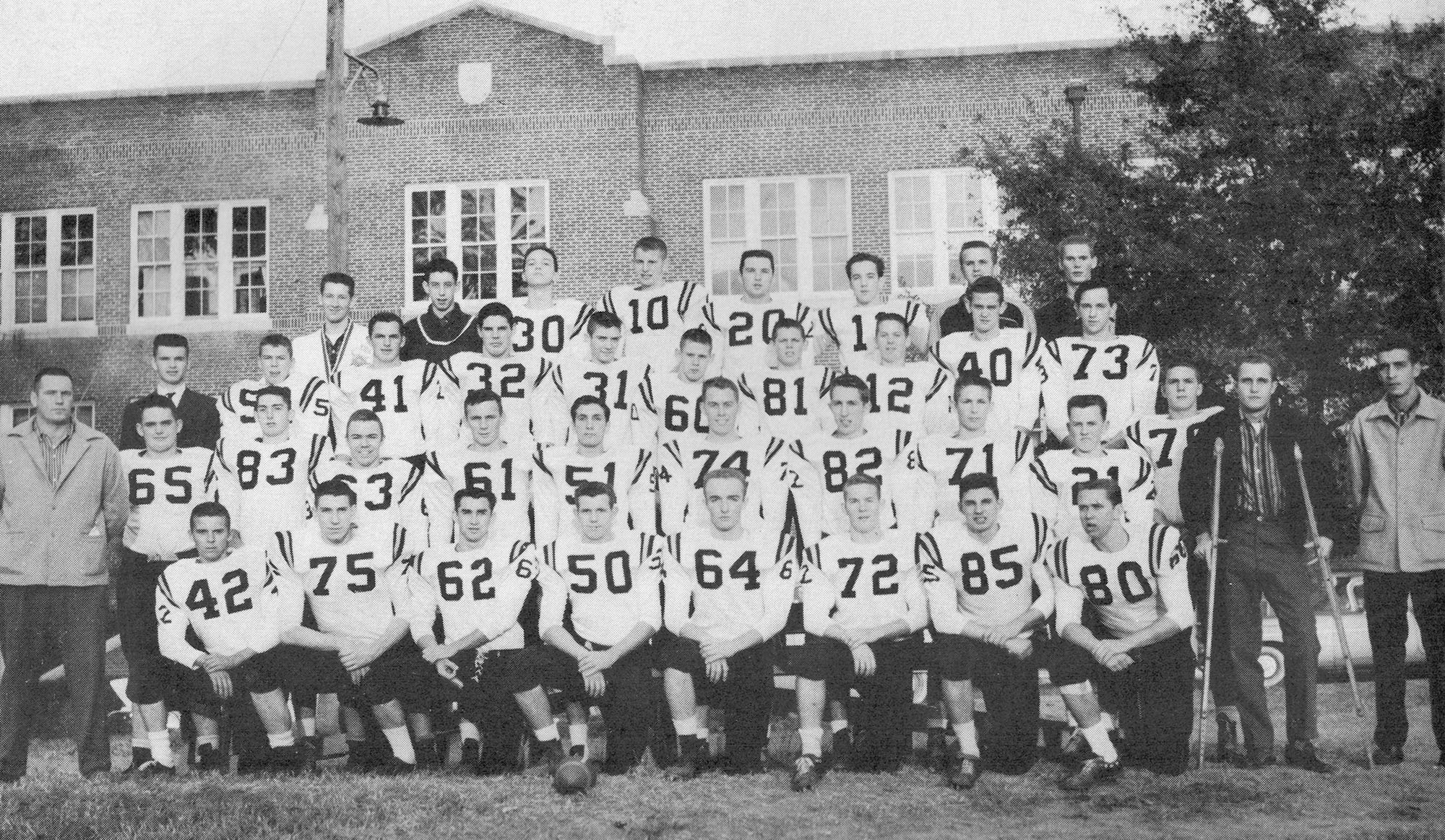
    The 1958 Mt. Zion Institute Wildcats.
    The 1958 Mt. Zion Institute Wildcats.

    WINNSBORO (April 8, 2016) — “The headline on The State newspaper read: ‘Winnsboro winless, scoreless, looses again,’ and it was more than we could take,” said Wade Hall, former right tackle on the 1958 State Champion Mt. Zion football team, in remarks to those attending the dedication of a monument on Saturday honoring that football team and the 1959 football team who were state champions the following year.

    “We got together that summer and said that was going to end,” said Hall. Indeed, according to the ‘58-’59 Tusitala yearbook, the Mt. Zion Wildcats’ were a potent squad that fall, routing Saluda 35-0 in the season opener. Similar scores followed: 6-0, 13-0, 2-0, 7-0, 18-3, 3-0 with only one loss and that was by only 1 point.

    “I was a senior that year,” Jackie Wilkes, now a Winnsboro Town Councilman, recalls. “We’d worn the same jerseys since I was in 10th grade. Because it looked like we might get to the state championship, the school decided late in the season to buy us new jerseys. I think they must have found a good buy on some, because the lowest number on the ‘new’ jerseys was 59,” Wilkes said, laughing. “Our quarterback’s number was in the 60s.”

    There were other obstacles for the team that year and funny remembrances as well.

    “That grassy area out front of Mt. Zion was our playing field and our practice field,” Wilkes said. “So it didn’t have much grass on it. It was always either muddy or dusty. Sometimes the referee would have to call time just for the dust to settle.”

    Nevertheless, by the time the Wildcats finished the year with a 26-0 state championship victory over Batesburg-Leesville, they had shut out 9 teams and allowed only 26 points the entire season.

    The next year was a remarkable repeat with the ‘59 Wildcats not only going undefeated, but never scoring less than 19 points in a game.

    Following the dedication at Mt. Zion, the former teammates, cheerleaders were honored by their families and friends with a reception at Mission Ridge.

    “Those were a couple of great years,” said Ronnie Collins (‘59), recalling the teams’ glory days. “And we were two great teams.”


  • White Oak Survives Pellet Plant Threat

    WINNSBORO (April 8, 2016) – The European energy company that had planned to locate a wood pelleting plant near White Oak may have hit its final snag last month when two key pieces of property it needed were bought up by a local LLC, effectively blocking the proposed plant’s access to railway lines.

    AEC Pellet 1 USA, a subsidiary of Spain-based Abengoa, announced its plans to construct the plant last August. Efforts to rezone more than 180 acres on Cason Road brought nearly a dozen White Oak residents and property owners to County Council’s Oct. 12 meeting to protest before second reading of the rezoning ordinance.

    The plant would grind lumber into wood pellets, which are used as fuel in European power plants and are marketed as an alternative, renewable energy source. Production of the pellets, however, has come under fire from critics who cite dangerous levels of pollution generated by the plants.

    According the company’s permitting and application documents on file with the S.C. Department of health and Environmental Control (DHEC), emissions generated by the facility would include particulate matter (less than 10 micrometers in diameter and less than 2.5 micrometers in diameter), nitrogen oxides, carbon monoxide, sulfur dioxide, Volatile Organic Compounds (VOC) and Hazardous Air Pollutants (HAP).

    The rezoning was put on indefinite hold in December after Abengoa filed for bankruptcy protection in its home country. Last week, the company made a similar filing in U.S. Bankruptcy Court in Wilmington, Del.

    While a number of Abengoa’s subsidiaries were included in the U.S. bankruptcy filing, AEC Pellet 1 USA was not among them.

    Emily Zucchino, a campaign organizer with the Asheville, N.C. environmental advocacy firm Dogwood Alliance, told The Voice last week that it was doubtful Abengoa would abandon its plans for a wood pelleting plant so easily.

    “My belief is that this is a very lucrative business with lots of subsidies going into the industry,” Zucchino said. “This (pellet plant) could be a way for Abengoa to pull themselves out of the hole.”

    But with the purchase last month of two pieces of land between the proposed Cason Road site and the railway, the White Oak location is off the table.

    KWOB, LLC, registered with the S.C. Secretary of State’s office last December by Columbia attorney J. Derrick Jackson, snatched up the properties on March 15. According to Fairfield County tax records, KWOB paid a total of $480,000 to Thomas W. Peterson, Willene K. Peterson and Keith D. Peterson for 10 acres at 5590 and 56 U.S. Highway 321 North, and approximately 5 acres at 183 Ibis Lane. The total market value for the properties is, according to tax records, $90,000. The records also indicate that the Petersons are members of the KWOB, LLC.

    With the White Oak site no longer viable, Zucchino said she was concerned the company might be considering another site in the county. A source within the County government, however, told The Voice this week that AEC Pellet 1 has not approached the County with an alternative site.


  • Fee Waivers Under Fire

    WINNSBORO (April 8, 2016) – A request by the U.S. Nuclear Regulatory Commission (NRC) for the Fairfield County School Board to waive building use fees for district facilities came under fire at the School Board’s March 15 meeting.

    Kevin Robinson, Director of Finance, presented several requests from outside organizations asking that the board waive the fees for use of school buildings. The NRC asked for a fee waiver for the use of McCrorey-Liston Elementary School for a public meeting on the V.C. Summer Nuclear plant; Gethsemane Church and Sunday School union asked for fees to be waived for use of McCrorey-Liston for six days for Vacation Bible School; V.C. Summer asked for a fee waiver for use of the track at Fairfield Central High School for a physical fitness test for its security response team; and the Fairfield Salkehatchie service group asked for fees to be waived for using the high school to house mission volunteers for a week.

    Board member Annie McDaniel (District 4) noted that the school district could be reimbursed from governmental agencies for the use of the schools.

    Board chairwoman Beth Reid (District 7) replied that the motion was that the fees be waived.

    McDaniel said she would like to amend the motion under consideration by the board, “that we not waive the fees, because we can get reimbursement for the use of the facilities.”

    “Why would we not want to waive fees for an agency that contributes mightily to our budget every year and for whom we have waived the fees for who knows how many years?” Reid asked.

    McDaniel said that waiving the fees should be based on need.

    “Why should we waive the fees (for V.C. Summer) when we have students in that area who have been complaining because, when we first built that high school in the area, we promised those parents that we would pay for those students’ (transportation to) extracurricular activities,” McDaniel said. “We have not been truly honoring that except for some athletic events. Please help me understand why we would not want the money back when we could get reimbursed?”

    Contacted by telephone after the meeting, McDaniel told The Voice that it was her understanding that when the district had closed McCrorey-Liston and Winnsboro high schools and consolidated them under Fairfield Central, the parents in the outlying county areas were assured that the district would pay for transportation for the students for extracurricular activities at the school.

    She said this was still an on-going issue in the poorest and most remote areas of the county, and in fact had been raised at a recent town hall meeting held by Superintendent Dr. J.R. Green at McCrorey-Liston School of Technology.

    During this meeting, the parents were told that the district doesn’t have the money to help the students attend extracurricular events. Her frustration, McDaniel said, is that she talked with an (NRC) representative who said the NRC would not have problems paying an invoice for the use of the school facilities.

    “Why would you want to give to the wealthy and not give to those in need?” McDaniel asked, stating that she did not have a problem waiving the fees for Salkehatchie because students in that organization use their own money to buy materials and renovate houses in the community.

    Reid said the board does not determine the use of facility but determines only if there will be a fee waiver.

    Board policy on the use of school facilities by non-school groups states, the “board restricts the use of these facilities to recognized non-profit community organizations…. City and county activities may use some school facilities for activities on a non-profit basis without a facilities charge. The district will charge these groups for utilities, security, and custodial services.”

    The policy further states that, “When school facilities are used by non-school persons, a school employee must be present while the facility is in use. The group using the facility will pay for the employee’s services.”

    Also, administrative rules for the district state, “The board requires the administration to also establish a facility fee schedule for the areas deemed appropriate for community use as part of this policy. Consideration is given to school-related and non-profit organizations and lower fees are charged in an effort to encourage community use; however, it is the intent of the board to recover any direct expense incurred as a result of such usage. Requests for fee waivers will be referred to the board. Any organization may request a fee waiver.”

    Responding to a question from Paula Hartman (District 2), Superintendent Green responded that the cost to use school facilities would vary depending on the event, but estimated that for a couple of hours it would “probably be a couple hundred dollars.”

    Hartman said the use of the school facilities seems to be growing more and more, and she would like the board take a closer look at its policy.

    McDaniel asked Green if the Democratic Party had paid any fees recently when they used the middle school. Green said they had not. McDaniel further pointed out that the school board was not even presented with a fee waiver request from the Democratic Party and that it was not reviewed by the board. Under further questioning by McDaniel, Green also conceded that he had allowed another church, the House of Prayer, to store equipment at one of the schools without completing a facility usage request.

    Henry Miller (District 3), who earlier had stated that since the NRC gives the district “$21 million” a year, said he wasn’t going to fight them on the issue of fees and pronounced the “school is community … we are one,” and that the board should encourage the community to come to the district: “I would wish that we had more churches, more businesses to come to our schools.”

    The board voted on McDaniel’s amendment — that Dr. Green invoice the government entity (NRC) so the district can be reimbursed for the use of the school facilities. The motion failed 5-2. The board then passed the original motion, that the fees be waived for use of the McCrorey-Liston School of Technology by NRC, 5 (Reid, Miller, and Board members William Frick – District 6, Sylvia Harrison – District 1, and Carl Jackson – District 5) to 2 (McDaniel and Hartman). The board also approved the fee waiver request for Gethsemane, with 5 voting yes, Hartman voting no, and McDaniel abstaining, and unanimously approved the two fee waiver requests for the use of Fairfield Central High School.

    When The Voice asked Robinson after the meeting whether the fee waiver meant that the organizations would also not have to pay for the costs of utilities, security and custodial services for the use of the schools, he stated that if the waiver is approved, any fees the district would normally charge would be waived, and the organization would not have to pay anything to use school facilities.


  • IGA Coming to Winnsboro

    State Sen. Creighton Coleman outside the future home of the IGA grocery store in Winnsboro. (Photo/Barbara Ball)
    State Sen. Creighton Coleman outside the future home of the IGA grocery store in Winnsboro. (Photo/Barbara Ball)

    WINNSBORO (April 8, 2016) – When Walmart closed up shop at the end of January, it took with it more than just Fairfield County’s largest retail outlet. It also left Bi-Lo as the only grocery game in town.

    That monopoly is now over.

    This week, State Sen. Creighton Coleman (D-17) announced that IGA (Independent Grocers Alliance) will soon be moving into the site once occupied by Food Lion in Fairfield Square, 133 Highway 321 Bypass S. The Food Lion closed its doors in 2012, leaving shoppers with only Walmart and Bi-Lo to choose from for their grocery needs.

    “Negotiations have been going on for some time with IGA,” Coleman said, “but I didn’t think it was proper to say anything until the contract was signed. It’s signed. They’re coming.”

    The effort to bring a second grocery chain into Fairfield County was a joint one, Coleman said. State Rep. MaryGail Douglas (D-41) joined forces with Coleman to help lure the IGA, and Coleman said the County government and the Town of Winnsboro worked together to get the deal done.

    “After Walmart left, MaryGail and I started looking around and IGA was the logical choice,” Coleman said. “They came about two weeks ago and we met with them and the realtor at the store and looked at the site. And we contacted the Town and the County and asked them to look at incentives, and both were willing to sweeten the deal until IGA could get their feet under them. Everyone worked together.”

    Once Coleman and Douglas had established the contacts, Coleman said, the legislators stepped aside and allowed the realtor, the County and the Town work through the details.

    “We’re just elated they’ve decided to come,” Douglas said. “They’re coming at a really good time.”

    Milton Pope, Interim County Administrator, said IGA was capitalizing on an incentives deal the County had floated after Walmart’s exodus. In an effort to attract new retailers, the County shortly after the Walmart closing committed up to $100,000 in marketing and incentives to bring in business. IGA, Pope said, was offered $50,000, paid out in two annual installments of $25,000 each.

    “I also asked Council if they would direct me to reach out to the Town to get them to offer things,” Pope said. “There was a very positive response from the Town.”

    Winnsboro Mayor Roger Gaddy said Tuesday night that the Town offered some concession to IGA on building permits and inspection fees to aid in the grocer’s transition.

    It was not known at press time when IGA planned to open for business, and efforts to reach the company and the realtor involved in the deal were unsuccessful at press time. But Coleman said he didn’t think Fairfield would have to wait too long.

    “I would think pretty quick,” Coleman said. “They’re already paying rent.”

    And IGA may not be the last storefront to make a new home in Winnsboro. Coleman and Pope both said this week that several businesses were looking at the former Goody’s store, also in Fairfield Square; however, neither would disclose who was doing the looking.