Blog

  • RW Council agenda shorts FOIA

    Ridgeway Council members sailed through a lengthy agenda last Thursday, voting on amendments to five ordinances and a resolution that were designated on the agenda as action items. They also voted on one expenditure for which there was no indication a vote would be taken, agreed on one without a vote and tabled another expenditure without voting to do so.

    Four items were listed under the heading ‘Police Report’, one of which was voted on even though there was no indication that any of the four were to be voted on. The first item, titled ‘reimbursement for mileage/meals for employees’ was discussed, then voted on, passing unanimously, 4-0. Councilman Heath Cookendorfer was out of town.

    Specifically, Council discussed whether to reimburse Police Chief Christopher Culp for meal expenses he incurred during a recent trip to The S.C. Association of Police Officers in Myrtle Beach. Culp had asked to be reimbursed for his meals at the conference.  Mayor Charlene Herring said the Town had no policy for that but asked if they should reimburse Culp anyway.

    “We definitely need a policy,” Councilman Don Prioleau said. “I spoke with the Chief this afternoon about it. I don’t care who you send to a conference you take care of the room and meals and mileage,” Councilman Don Prioleau said. “We’re less than a municipality if we can’t take care of not only the Chief but any employee. Definitely in the future we’ve got to come up with some kind of guidelines to follow.”

    “Should we go ahead, then? Are we in accord that we’ll go ahead and reimburse him for what he’s incurred?” Herring asked.

    Council voted 4-0 to reimburse him the full amount for his meals during the conference.

    Fuel Cards

    A discussion about whether to purchase fuel cards for the three Town vehicles was tabled without a vote to do so. Each card would be tied to a certain vehicle and could be used anywhere, but the monthly charge for each card would be $35.

    Council again discussed whether to paint the Crown Victoria, but held off for the second time as they questioned whether the car was worth the investment. The Town would only be purchasing the paint. The Fairfield County School District’s Career Center would paint the car.

    The Council discussed magnetic signs for the doors of the two Town pickup trucks. It was the fourth item under the Police Report. The cost for signs for each vehicle would be $52.

    “We’re all in agreement so we don’t need to vote on this,” Herring said. “It’s in the ordinance.” Asked later what she meant, she said that because the expense is not over $500, they don’t have to vote on it.

    The Town’s purchasing ordinance does not address not voting on expenditures under $500, it only addresses the requirement to seek bids for expenditures over $500.

    After voting to approve the monthly financial report, Council discussed where they stood on several bids on designated capital expense items, and voted on only two of the five listed expenditures.

    Surveillance Cameras for Town

    Council voted to accept the low bid, $6,900 submitted by Capture it Surveillance, for security cameras for the Town. The other two bids were from KR Systems for $11,356.44 and Truvista for $19,282.

    “The only thing with the $6,900 is that the $11,000 and the $19,000 bids probably have more quality cameras,” Prioleau said.

    “The big difference that I noticed was that the $6,900 has a 16-channel DVR whereas the other two have 32-channel DVR, but are we really going to need 32 cameras,” Councilwoman Angela Harrison asked. “The 16-channel will cover us I think.”

    Council also voted to have someone apply preservative to the Town Hall deck at a cost of about $450.

    Councilman Doug Porter said he had not finished getting bids for heating/air for the Welcome Center. Other council members said more time was also needed for bids for Christmas decorations, the annual Christmas on the Ridge event and repair work on the teacherage.

    No More Trucks

    Five amendments of ordinances were also passed unanimously.

    Final reading was given to an ordinance addressing the need for trucks to observe the truck routes around the Town.  The ordinance states that all trucks in the regulated vehicle classification within the Town shall not be operated over and along the ‘no through truck routes’ which are designated as W. Church Street and Coleman Highway, Dogwood Avenue and Ruff Street, Dogwood Avenue and W. Church Street, Palmer Street and W. Church Street and Palmer Street and Ruff Street. Exceptions are made for emergency, Town and delivery trucks.

    Citations for Junkers

    First reading of an amendment was passed to the ordinance governing the storage of junked motor vehicles on both public and private property. The changes will now allow the Ridgeway Police Department to issue a written citation when any junked motor vehicle or motor vehicle accessories have been stored or permitted to remain on any private or public property in excess of 30 days by the owner.

    The 30-day window is calculated based upon the date of receipt for a certified notice from the Town. After the allotted time-period, the Town may remove the vehicle from the property.

    Bidding amended

    First reading also passed on an amendment to the part of the Town’s purchasing ordinance that deals with the securement of bids. Currently, Council is be required to secure three bids for any services, supplies, materials or equipment over $500. The new amendment would require three bids for items costing over $1,500. Porter said the amendment was patterned after a Kershaw County procurement ordinance.

    “So that means if it’s under $1,500, you don’t have to get the three bids?” Harrison asked.

    “That’s right,” Prioleau said.

    No Overnight Parking

    Council also passed first reading to amend the ordinance that regulates the parking of vehicles in the Town. A new provision was added to establish three-hour maximum parking time on Main Street and no overnight parking with the exception of law enforcement and emergency vehicles. The ordinance also specifies no overnight parking on any property owned or leased by the Town unless for special Town approved events with the exception of law enforcement and emergency vehicles.

    MOU with County

    Last, Council signed a resolution approving the memorandum of agreement between the Town and Fairfield County to handle building and code enforcement for the Town. The resolution had already been signed by the County.

    “The reasons for the nature of this request are that the County already issues building permits to the citizens of Ridgeway, but the town does not have a code enforcement division,” Herring said.

    “The Town employs a part time zoning administrator, Rick Johnson, who lives in Ridgeway but isn’t available to monitor building issues. Construction and property nuisances,” Herring said. “And the Town does not want to rely on the Chief of Police to monitor civil issues.”

  • Judge: JWC must turn over records

    WINNSBORO – Last week, Sixth Judicial Circuit Court Judge Brian Gibbons ruled on a motion to produce documents in a case that he said “has been going on too long,” and ordered the Jenkinsville Water Company (JWC) to turn over documents it had previously refused to produce to the owner of Broad River Camp Ground (BRCG), a JWC customer located near the V.C. Summer Nuclear Station.

    After listening to about two minutes of arguments each from BRCG’s Winnsboro attorney Glen Bowens and JWC’s attorney Hanna Stetson of Turner Paget Law Firm in Columbia, Gibbons ruled quickly in BRCG’s favor.

    Addressing JWC’s attorney, Gibbons continued.

    “You’re to turn in this information. I give you 45 days. And I want this case mediated before the end of the year.”

    BRCG’s owner, D. Melton, filed a lawsuit in October, 2014, against JWC alleging a breach of contract and a breach of contract “by a fraudulent act” after the company turned down the owner’s request to increase the number of sites at BRCG in Jenkinsville.

    According to the suit, JWC claimed a water shortage and lack of water capacity as a reason for denying approval of the request for additional campsites.

    During the ensuing three years, the suit alleges, Melton has submitted formal requests on three occasions to JWC for documents that could, the suit states, prove or disprove JWC’s claim. In the motion filed to compel JWC to produce the documents, Melton alleges that he has had little response to those requests.

    The documents that must be handed over, according to the suit, are expected to serve as evidence to refute JWC’s claim of water shortage and lack of water capacity. Those documents include information about the amount of water available to JWC, the number of its customers, the number of new customers added and the amount of water those customers use. The requested documents relate, the suit alleges, to the number of customers added to the system, billing and usage records, well production and operation and water loss.

    The suit also seeks a declaratory judgment to determine the rights of both parties in respect to an Oct. 28, 2009 contract in which the water company agreed to provide up to 8,050 gallons a day of water to Phase 1 of Melton’s Broad River Campground.

    Under that 2009 contract, the daily consumption of water per site was estimated at 175 gallons per day (gpd), with the number of sites not to exceed 46 without written approval by JWC. The water company agreed to consider increasing its commitment of water if the campground wished to expand, the lawsuit states, “but only if that can be done without negatively impacting other customers of the water system.”

    Because the campground was not using all of the 8,050gpd that JWC agreed to provide in 2009, there was a surplus of water available to the campground. Based on the usage records, provided by JWC, the suit states that in 2012 each campsite was using approximately 10.4gpd, not the previously estimated 175gpd. That year, Melton requested and received approval from JWC to open an additional 24 sites. The daily consumption of water per site was lowered to 53 gallons per day, based on a water study and use history since 2009 of the campground.

    “The 70 campsites at the estimated usage rate of 53gpd are using 3,710gpd, leaving a surplus of 4,340gpd from the 8,050gpd JWC agreed to provide,” the suit claims. This still left the campground with a surplus of water available based on the 8,050gpd limit which remained in place, the suit states.

    In May, 2014, Melton requested an additional 49 camp sites and sought from JWC a willingness to serve letter, which is required by the S.C. Department of Health and Environmental Control (DHEC) before the new waterlines could be constructed.

    “The new (49) campsites at 53gpd would only use 2,597gpd, leaving a surplus of 1,743gpd,” the suit states. While the lawsuit further states that Melton did not request an increase of actual water beyond the 8,050gpd limit, the water company “has unreasonably refused permission for the additional campsites.”

    That refusal, the lawsuit alleges, constitutes a breach of the parties’ contract.

    “JWC’s claim that it does not have the water capacity to provide water service to the 49 campsites suggests that JWC is selling the surplus water from the 8,050gpd to other customers, which is preventing [the campground] from using more of the water it contracted to receive and JWC agreed to provide,” the suit alleges. It further claims that, “The practice of selling water allocated to one customer to other customers is an unfair and deceptive trade practice.”

    In an amended complaint, Melton alleges that the documents he is requesting from JWC are evidence that JWC gives preferential treatment to residential customers over commercial customers as well as evidence of the scope of the preferential treatment given to residential customers.

    Melton states in the suit that JWC has refused to produce the requested documents in an effort to prevent the campground from refuting JWC’s claims of water shortage, lack of water capacity, adverse impact on existing customers, from proving a violation of the waiting list policy and JWC’s unfair trade practice of selling water allocated to one customer to other customers and preferring residential customers to commercial customers.

    In addition to asking the Court to grant the motion for JWC to turn over documents, Melton’s suit also asks JWC to pay the costs the campground has incurred in bringing the motion.

  • Commercial zoning of Rimer Pond on agenda

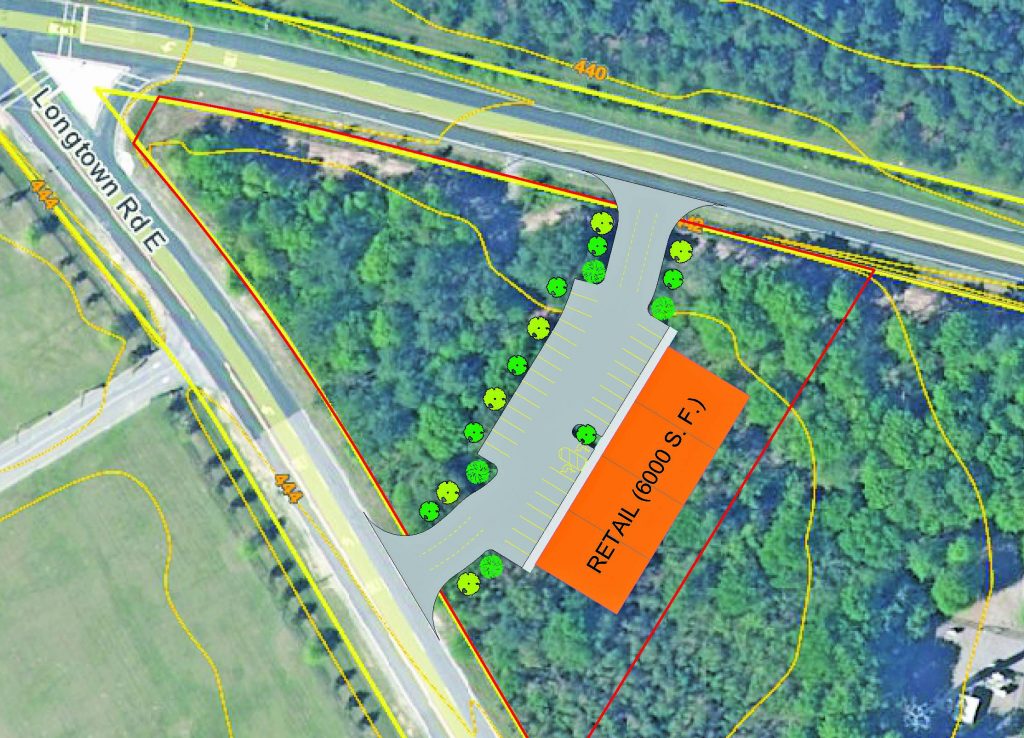
    BLYTHEWOOD – Developer Hugh A Palmer will be back before the Richland County Planning Commission on Oct. 2, to request commercial zoning on Rimer Pond Road. The request is for the 5.23-acre parcel at the intersection of Rimer Pond Road and Longtown Road West, across from Blythewood Middle School. Palmer is asking the County to rezone the property from Medium Residential zoning (RS-MD) to Neighborhood Commercial (NC) zoning.

    Palmer has requested other commercial zoning for the property three times in the last three years, sometimes facing hundreds of residents in opposition, including Blythewood Mayor J. Michael Ross. In June of 2015, Palmer withdrew the request when he did not have the votes on Council. Later that year, in November, Council denied the request with a 5-5 tie vote. The third loss came Feb. 28, 2017, with Palmer receiving only one vote from Council.


    Developer Hugh Palmer’s request for commercial zoning of a parcel at the intersection of Rimer Pond Road and Longtown West Road will be heard at the Richland County Planning Commission at 1 p.m., Oct. 2. Speakers for or against must sign up prior to the start of the meeting.

    “I propose small retail development that would serve the needs of and be convenient to the surrounding area, to the people that already travel this area every day,” Palmer told Council at the February meeting.  “This area is changing, whether these folks in here like it or not.”

    He said his request fell within the boundries of the County’s land use plan, had County staff’s approval and met the standards for the commercial zoning he was requesting.

    “Those should be the questions that matter here tonight,” he said.

    Neighbors disagreed.

    “We enjoy the rural setting,” Christopher Henchy of Eagles Glen said. “No one on Rimer Pond Road wants commercial development on our road.” There is no other commercial zoning on the road.

    Boyd Brown, a lobbyist speaking on Palmer’s behalf, held up a petition that he said was signed by 125 people in the community who supported the rezoning. However, none of the signers showed up at the meeting.

    Palmer told Council his goal was to bring commercial conveniences to the neighborhood, but speaker after speaker repeated, “We don’t want it. We don’t need it.” Residents pointed out repeatedly during the public comment session that there was already adequate neighborhood commercial entities within a four-mile radius to serve their needs.

    To make his point that commercial zoning would bring the criminal element to the Rimer Pond Road area, Trey Hair handed out to Council members neighborhood crime maps that showed only a handful of crimes committed in a one-mile radius of the proposed commercial site. A map of the same time frame and radius of a nearby commercial intersection was almost sold with symbols showing where crimes had been committed.

    A neighborhood Facebook page, Keep it Rural, which was a hub for neighbors seeking and providing information during the three rezoning attempts, became active again on Tuesday within hours of the zoning request sign going up on the property.

    NC zoning, according to the Richland County land use code, is intended to accommodate commercial and service uses oriented primarily to serving the needs of persons who live or work in nearby areas. This district is designed to be located within or adjacent to residential neighborhoods where large commercial uses are inappropriate, but where small neighborhood oriented businesses are useful and desired. But, according to the County’s desired development pattern, commercial development should be limited to Rural Activity Centers.

    Permitted land uses are listed in the Richland County zoning ordinance for NC zoning, Other uses are permitted if the property owner receives permission from the Board of Zoning Appeals.

    The request will first go before the Planning Commission for a recommendation before going before County Council for three votes.

    Palmer’s son, Patrick, who was either a member of or Chairman of the Richland County Planning Commission during each previous request, had served 12 years on the Commission before resigning earlier this year shortly after the third rezoning request for the property failed in February, 2017. Patrick recused himself each time the issue came before the Commission.

    The Planning Commission is scheduled to vote on the rezoning at 1 p.m., Monday, Oct. 2.  Those who want to speak for or against the issue, must arrive a little early to sign up.

    NOTICE: Location for the meeting has been changed from the Council Chambers in the County Building to the second floor of the Main Richland County library at 1431 Assembly Street in downtown Columbia. The change of venue is due to ongoing renovations at the County Building.

  • Crashed roof update

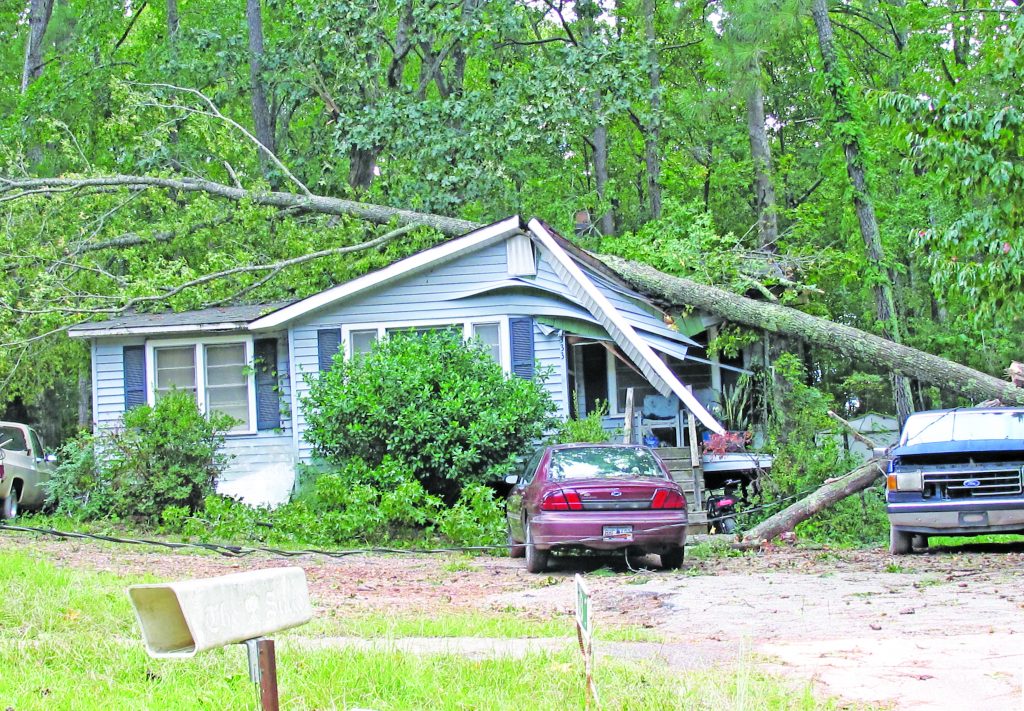
    BLYTHEWOOD – After high winds dispensed by Hurricane Irma slammed a tree across the roof of the Boney Road home of Willie and Jeanette Belton last week, prospects looked grim for the future of the home. With no home insurance to pay for the removal of the large tree laying across the length of the roof and framing boards sticking through the ceiling inside, some observers questioned whether the home that Belton built just before the couple was married in 1966 could be repaired. It would, after all, probably take a crane to lift the tree off the roof.

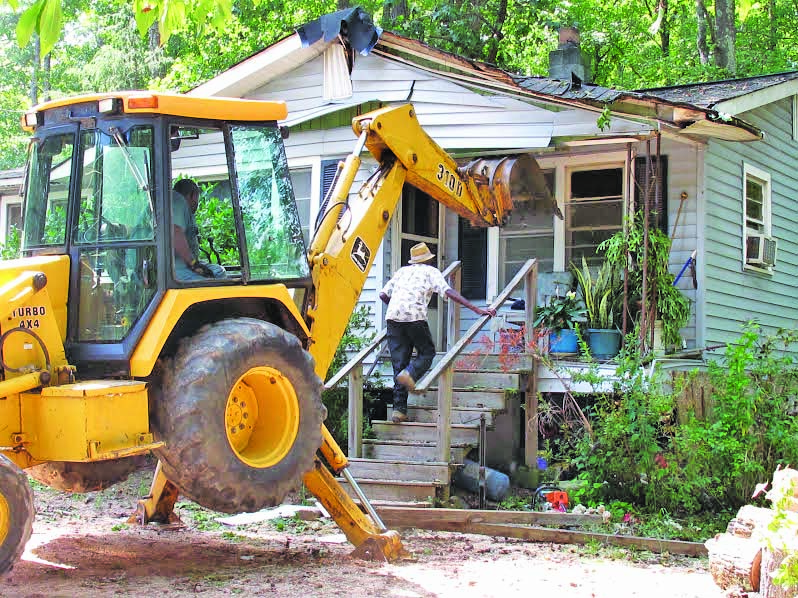
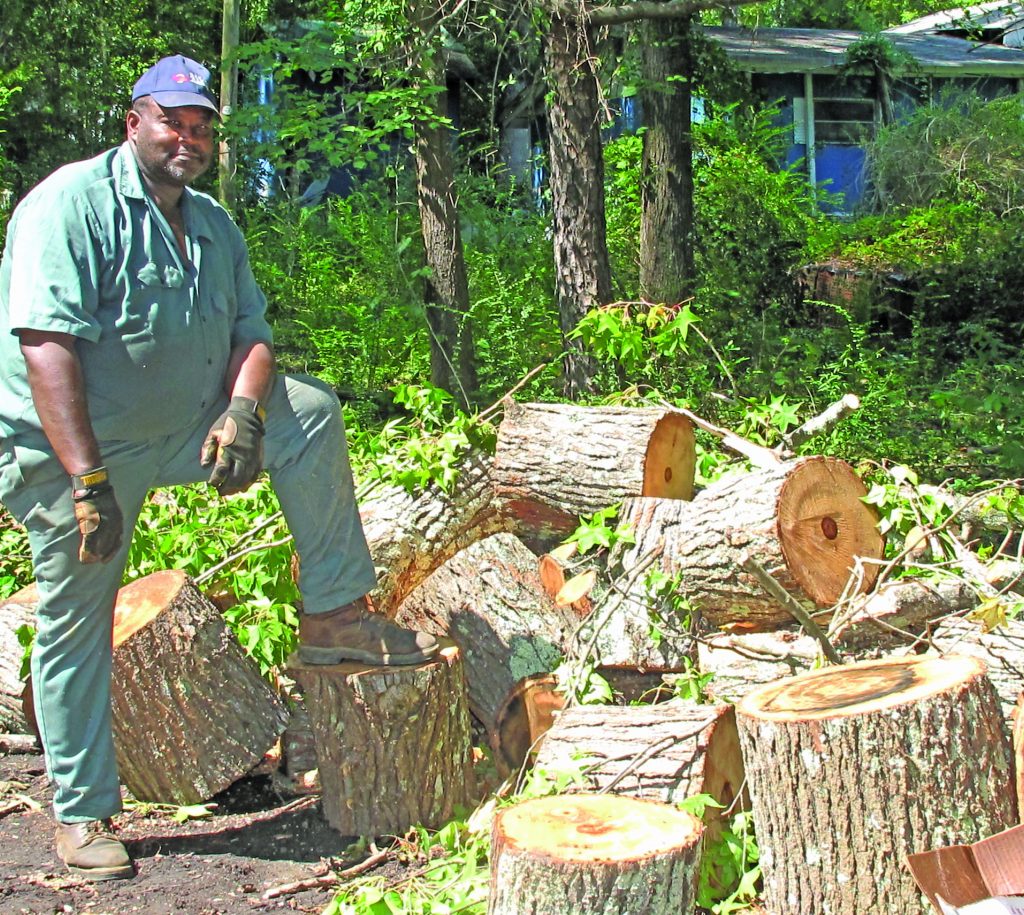
    Raymond Palmer, owner of Raymond Palmer Construction, showed up with his backhoe to load the cut up tree into his dump truck.

    Nevertheless, Belton insisted that he and his wife would stay in the home they have shared all their married life.

    “We can get it fixed,” he insisted, “We have friends and family in the construction business. They’ll help us,” Belton said.

    And he was right.

    A couple of days later those friends and family showed up and began the daunting task of cutting the tree into two-foot sections and throwing them off the roof.

    “It took us about three hours,” said Raymond Palmer who owns R. Palmer Construction in Blythewood. “Kendall Robertson, Darryel Canzater and some other people helped with it, so it didn’t take too long,” Palmer said with a shrug.

    Raymond and Tommy Lee Palmer use the backhoe shovel to lift and stabilize the front porch roof so the front door will open.

    The next day, Palmer and his brother Tommy Lee Palmer returned with a backhoe and dump truck to load up and haul off the tree sections, advising Belton that the tree was too old for him to use for firewood. The brothers then used the backhoe bucket to raise and stabilize the front porch roof that had been blocking the front door. They also covered the damaged areas of the roof with heavy black roofing paper to protect it from rain until the roof can be repaired.

    Then, Saturday afternoon, a woman representing Masedonia Baptist Church on Highway 21 between Blythewood and Ridgeway, dropped by with a donation of money collected by some members of the church.

    “And there may be some more coming after Sunday,” the woman told Belton as she handed him a sealed yellow envelope and patted his hand.

    Raymond Palmer

    “We’re all family here,” she said, talking about the church relationship with the Beltons who attend Bethel Baptist in downtown Blythewood. But she said she is also a cousin of Belton’s and that the extended family includes Beltons, Palmers, Griffins and others.

    And members of other churches say they, too, will be making donations.

    Town Councilmen Eddie Baughman and Larry Griffin, also a relative, stopped by to check on the Beltons and find out what they need. Baughman later contacted several churches in the Blythewood area who have volunteer mission groups among their members who help out in such emergencies.

    “There are resources in our community and it’s a wonderful thing when friends and family are there to help,” Baughman said. “There was a lot of damage to that house and, with no insurance, it would be a big expense. I’m just thankful no one was injured, and I’m thankful to those friends and family who have stepped up to help the Beltons.”

  • Big grab growing in Winnsboro

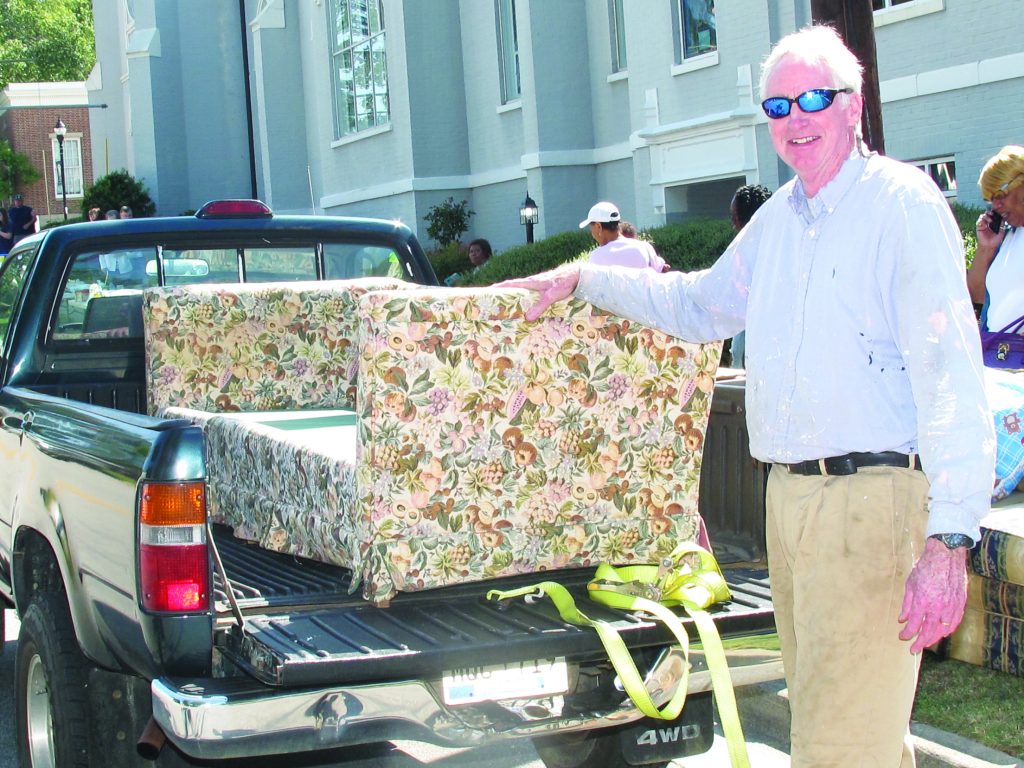
    Richard Johnson grabbed a like-new couch at the First Unitd Methodist Church sale for his daughter who recently finished graduate school and moved into new digs.

    WINNSBORO – “This was truly a great weekend for Winnsboro,” Fairfield Chamber of Commerce Director Terry Vickers said of this year’s 85-mile Big Grab yard sale.

    “The fourth year was the charm for us, I think. We more than doubled the vendors that participated last year,” Vickers said. “And many of them made big bucks, especially some of the churches and youth groups.”

     
    One of the biggest money makers every year is the First United Methodist Church which, this year, brought in over $9000. Church volunteers worked hard, hawking their wares from the corner of Washington and Congress Streets, volunteering to take purchases to the customers’ cars.


    This happy mom found just what she was looking for – a camouflage style lamp for her son to study by.

    Rev. Craig Bailey, pastor of First Baptist Church on Highway 34 said he received more than money from the shoppers at his booth. He reported being able to talk with many shoppers, some of whom were evacuees, who were in need of comfort and prayer. While he said his intention was to donate proceeds from his booth to the church’s youth group, he said the event turned out to be an outreach mission for him.
    Fairfield Memorial Hospital employees joined the vendor crowd on Saturday as did many residents in homes around the city center.


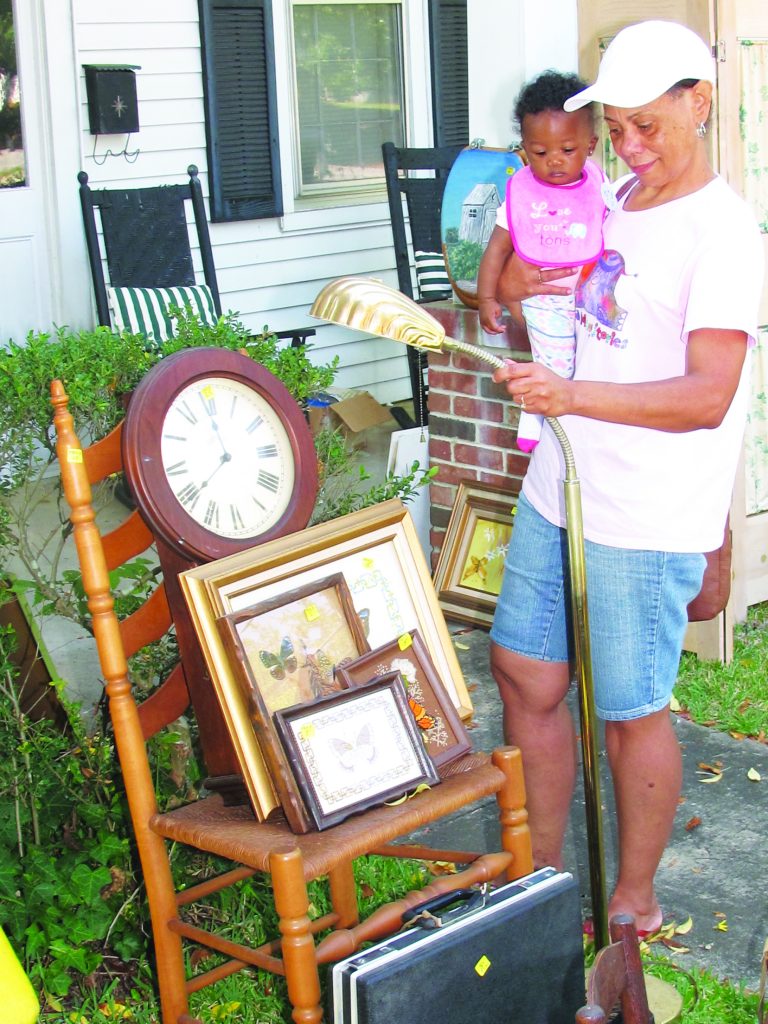
    These two decided on a find gold crooked neck lamp outside a residence on Washington Street.

    “Highway 21 has always been a hotspot on the Big Grab route,” Vickers said, “but this year even more so. Purity Lodge must have had a hundred vendors at the entrance to Ridgeway.”

     
    Heading south on Highway 321, shoppers found another bunch of vendors that were not there last year.

     
    “Beulah Methodist Church was at first one of the few vendors on 321,” Vickers said. “This year there were vendors all along Blythewood Road into Winnsboro.”

     
    Vickers said she was glad to see the event grow. “It not only allows some of our merchants and residents to make a little extra money, but it brings people to town who might not otherwise have make the trip,” Vickers said.
    “It was great weather and we had a great time. Now,” she said, “it’s almost time to start planning for next year.”

  • 15 years in the making


    Fairfield Behavioral Health Services kicked off its Recovery Month activities in honor of September’s National Recovery Month with the groundbreaking of a new outpatient treatment facility. “Much prayer, preparation, perseverance and the power of partnerships got us to this point,” says Vernon Kennedy Sr., Executive Director. “Thank you to all who attended and special thanks to Mr. David Whitaker, Funeral Director and Owner of Palmetto Funeral Services for allowing us to use your grounds, chairs, tent and podium.” This new outpatient treatment facility will be a tremendous enhancement for service delivery for clientele, families, staff, Board of Directors, partners and the community at large. It will provide better privacy, opportunity for expected growth, adequate space, and a more practical location.  Pictured are Coroner Chris Hill, left, Attorney Kay Boulware (FBHS Board Member); Councilman Doug Pauley (FBHS Board County Liaison); Councilman Bertha Goins, Jannita Gaston (FBHS Board Member); Rev. Qunicy Pringle (FBHS Board Chair); Councilman Neil Robinson; Alan George, (First Community Bank); Vernon Kennedy Sr. (FBHS Executive Director); andSheriff Will Montgomery.

  • Sandy Level to celebrate 160th

    Sandy Level Baptist Church | Photos/Barbara Ball

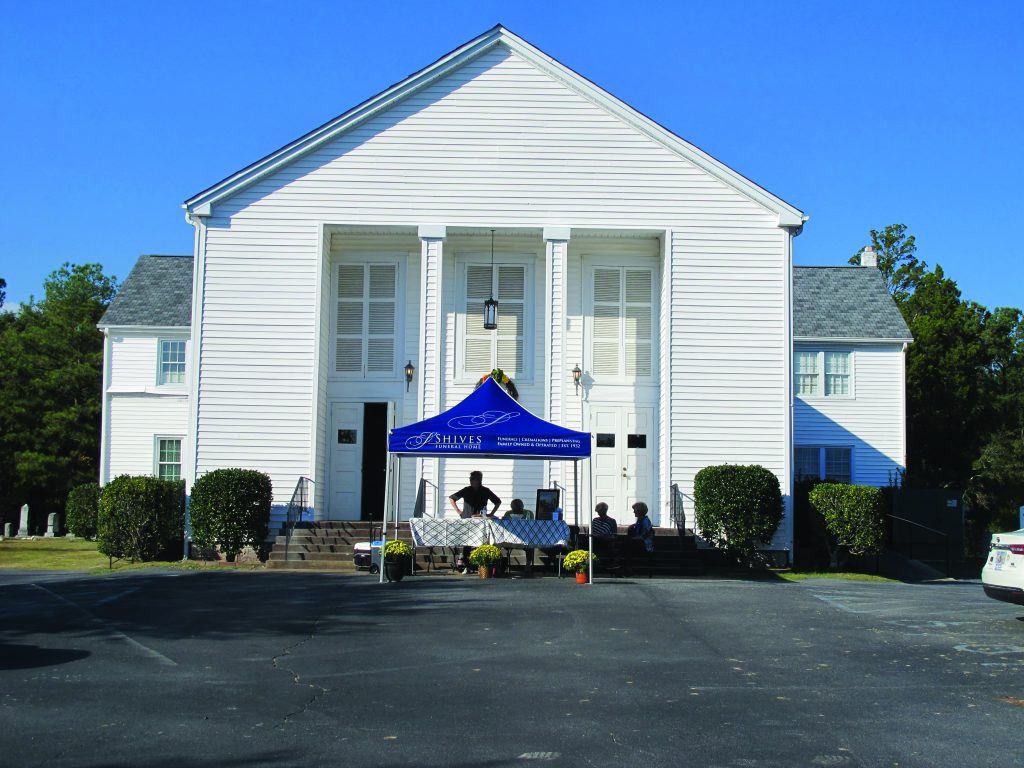
    Sandy Level Baptist Church will host a Homecoming of past members on Saturday, Sept. 17, to celebrate the church’s 160th anniversary. The church is one of the oldest in the Blythewood community and predates the town.

    While the current sanctuary was dedicated on December 7, 1856 at the current Blythewood Road location, the congregation existed in the area since the late 1700’s. The early congregation was known as 25 Mile Creek Church. Bethel Baptist Church on Boney Road was formed by members who left Sandy Level following the Civil War.

    During a cemetery tour last year conducted by the Blythewood Historical Society and Shives Funeral Home, the tour began inside church, then moved outside into the cemetery where guides waited at the gravestones of some of church members who had also been some of the Town’s founding fathers.

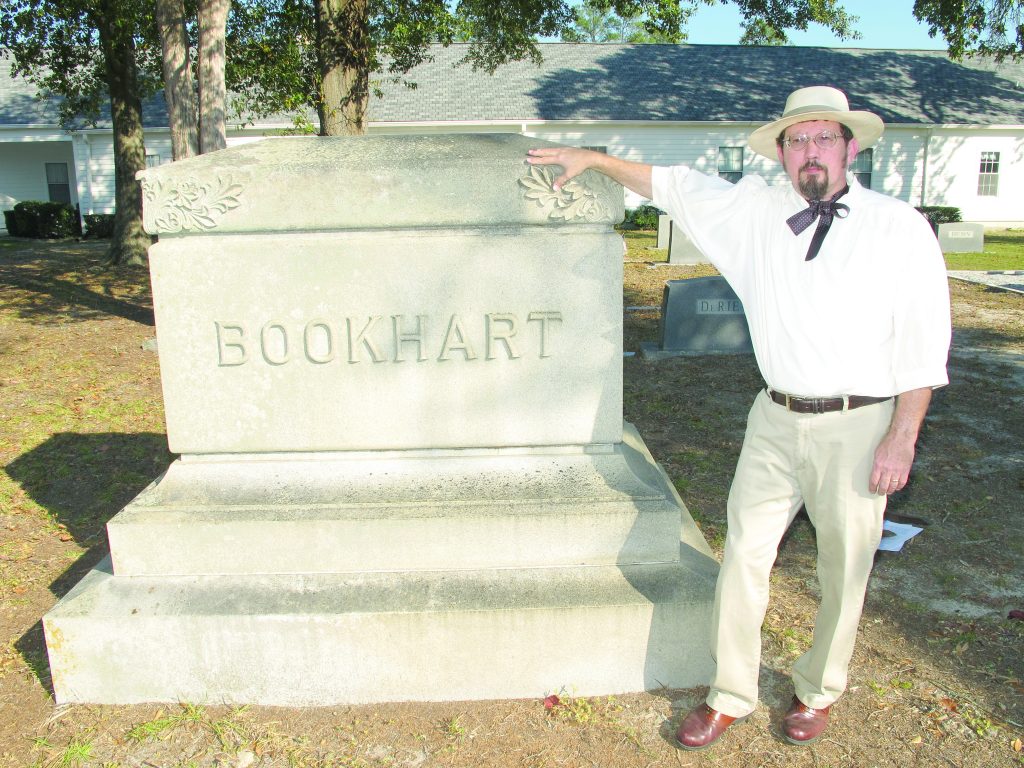
    One of those who contributed much to the church and to the community was Dr. Samuel Bookhart who is buried in the shadow of the sanctuary.

    Former Town Councilman Wade Dorsey stands next to the gravestone of one of his ancestors, Dr. Samuel Wingard Bookhart, a founding father of the Town who is buried in the shadow of Sandy Level Baptist Church.

    Blythewood’s Wade Hampton Dorsey, dressed in period clothing, stood at the gravestone of his ancestor, Dr. Bookhart. Dorsey, a former Blythewood Town Councilman and former president of the Historical Society, spoke in the role of Bookhart, imparting the family’s history.

    “I joined Sandy Level Baptist Church in 1856 when I was 27, and remained a member until the day I died. We were building a new meeting house, this very one that still stands today. Cynthia and I gave $700 to paint it. I served as Clerk for almost 50 years! In those days whites and blacks, slave and free attended church here together . . .”

    After the Bookharts built a school for girls on the grounds where Cobblestone Park now sits, a teacher at the school suggested naming the school The Blythewood Female Institute after the surrounding beautiful woods. And from that, of course, the town was called Blythewood.

  • Council candidate field grows to five

    BLYTHEWOOD – The Blythewood Town Council race field of candidates had grown to five as of the filing deadline on Thursday, Sept. 7.

    Leavitt

    Courtney Leavitt, a resident of Cobblestone Park, was the last to through his name in the hat 10 minutes before filing ended.
    Courtney joins four others in the race: incumbent Larry Griffin, Bryan Franklin, chairman of the Town’s Planning Commission and two other Commissioners, Donald Brock and Michelle Kiedrowski.
    Terms for the seats are four years with a $500 monthly salary. Voters in the election must have registered by Oct. 7, 2017.
    To register, visit the County Board of Voter Registration at 2020 Hampton Street in Columbia. For information, 576-2240.

  • Big Grab was big all over again

    BLYTHEWOOD – Thousands of sellers and grabbers returned to the roost last weekend when they converged on Blythewood, Ridgeway and Winnsboro for the annual 85-mile yard sale.
    “What a weekend for Blythewood,” Organizer Mike Switzer, Executive Director of the Blythewood Chamber of Commerce said.
    Shoppers came from all over South Carolina, the east coast and as far away as New Hampshire. While everyone from Florida to South Carolina was playing the waiting game with Hurricane Irma, the weather was perfect during the weekend and vendors say the sales were brisk.
    We had evacuees from Florida telling us they were staying in our hotels and were looking for something to do,” Switzer said.
    While vendors were set up in the towns, a growing number set up shop on Highway 21 between Blythewood and Ridgeway and along Highway 321 between Blythewood and Winnsboro. There was a large contingent of tents at the old Blythewood Community Center grounds as well.
    Lis Humphries, owner of Blythewood Consignment said that with more vendors setting up in the park, there was less traffic and less sales in the shops along Main Street and McNulty Road.
    And at the end of the weekend, many vendors donated the things they had left to Habitat for Humanity who’s truck drove away full.
    “I still get a lot of calls about the traffic at the Big Grab,” Mayor J. Michael Ross told The Voice, “But it’s only two days out of the year. And it was great having all these visitors to our town.”

  • Irma sends tree crashing into home

    Willie James Belton built the home in 1966, the year he and Jeanette were married. They say they’re staying.

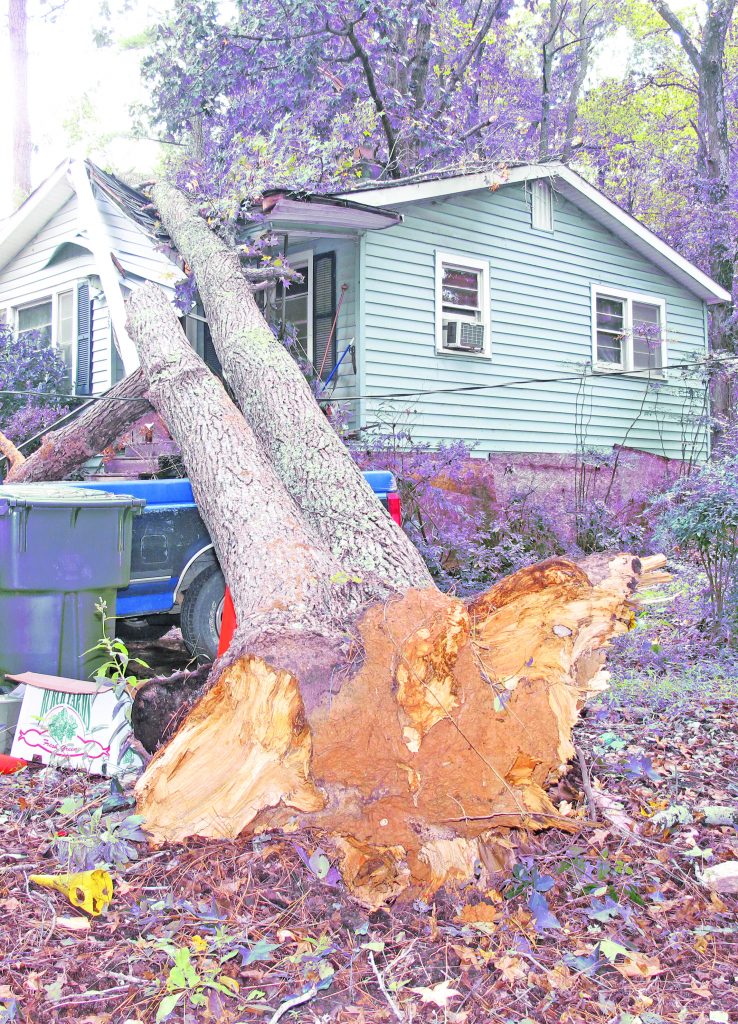
    BLYTHEWOOD – Willie James Belton, 78, and Jeanette Belton, his wife of 51 years, were sitting down to a late lunch in their home on Boney Road about 1 p.m. on Monday when gusty winds dispensed by a weakening Hurricane Irma sent a giant tree crashing into the roof of their home.

    “It made the whole house jump. Like that,” Willie demonstrated with a jolt of his body. “I never went through anything like that. Scared me, I couldn’t think what was happening.”

    Inside the home, boards poke through the living room ceiling and the bedroom ceiling is cracked and bulging.

    “We didn’t sleep in the bedroom last night,” Jeanette said on Tuesday, pointing to a large section of damaged ceiling directly above the bed.

    “It looks like it might fall through,” she said, looking up at the ceiling with a worried look.

    High winds spawned by Hurricane Irma blew down a giant tree that sliced through the roof of this home on Boney Road. | Photos/Barbara Ball

    Nevertheless, the Beltons said they don’t plan to leave the home they have shared for all their married life.

    Even though the damage was daunting, inside and out, Willie said they plan to repair the house and stay there.

    “I built this house before we got married,” Willie said. That was in 1966. “I’m from Fairfield County, but I’ve lived in Blythewood for 57 years.”

    It had been an idyllic cottage when it was new. The Beltons raised their four children. One of their daughters, Terry Belton, lives next door and helps look after her mom and dad who is partially disabled.

    But repairing the home will not be a simple thing since the couple does not have insurance coverage on the home.

    The ceilings in the living room and one bedroom were damaged by the fallen tree when it pushed rafters through the living room ceiling and left cracks and bulges in the ceiling of the couple’s bedroom.

    “That’s ok, we can get it fixed. We have friends and family in the construction business. We’ll make it,” he said, with a convincing smile.

    An SCE&G crew showed up about 3:30 p.m. on Tuesday to repair an electric line that strung across the Belton’s front yard, hanging low, from a pole across Boney Road to their daughter’s home next door.

    The uprooted tree fell across Belton’s pickup truck before slicing the roof.

    While the Belton’s are worried about the damage to their home and the cost to repair it, Willie is undaunted.

    The tree top came to rest on the far side of the Belton’s home.

    “When we get that tree off the roof, I’ll get it cut up for wood for the stove. We’ll get it fixed,” he repeated, then paused, looking down at his hands, then up. “We have friends and family. We’ll be ok.”