Blog

  • Summer concerts coming to amphitheater

    BLYTHEWOOD – A summer concert series is being planned for the Palmetto Citizen’s Amphitheater in Doko Park, with a total of nine family friendly concerts that will begin in June.

    While the plans are still tentative, Martha Jones, president of Bravo Blythewood, said she is announcing the plans now so Bravo Blythewood will have time to survey the community to find out what kind of music and what bands residents want to hear.

    “The concerts will be held on Thursday evenings, with four concerts in June, three in July and two in August,” Jones said. “We are thinking the Aug. 2 date might be a big back-to-school bash that would be free.”

    Jones said Bravo Blythewood will be using a professional concert promoter to handle the bands, vendors, marketing, ticket sales and to oversee the concerts. The cost for the entire series, including the cost for the concert promotion company, will range from $80,000 – $150,000. That cost, she said, might be paid for upfront by the Town Hall, then ticket sales with maybe a $2 surcharge could be used to help pay back that cost to the Town. Jones said Bravo would also be looking to use A-tax money and sponsorship sources to help fund the series.

    “We’ll be sending out the surveys soon,” Jones said, “and I hope everyone will respond and let us know what they want to hear.”

  • FMH on life support

    WINNSBORO – The 800-pound gorilla in the room, also known as Fairfield Memorial Hospital’s mounting financial losses, has for months begged the question – ‘How is FMH going to keep its doors open until the new emergency services facility becomes operational?’

    Month after month, the hospital has tried to stop the bleeding – closing the most unprofitable departments, initiating greater efficiencies in billing and reducing operating costs by more than $2.2 million over the past two years.

    But the financial decline of the hospital continues to snowball, and CFO Tim Mitchell summarized the hospital’s position in no uncertain terms during its monthly meeting on Feb. 27.

    “Fiscal year-to-date operating expenses have decreased by $566,492,” Mitchell told the Board. “But during this same period, gross patient revenues have declined by $1,306,000. Hospital EBITDA (earnings before interest, taxes, depreciation and amortization) for the four months ending Jan. 31, 2018 had a deficit of $692,429.”

    In addition, Board Trustee Randy Bright, who chairs the Board’s Finance and Audit Committee, said during the committee meeting that the current budget is already off by about $400,000 because the hospital has failed to make its revenue projections.

    He feared that the hospital is “on pace for a $2,861,000 loss at the end of the year.”

    With no other options left, the hospital turned to the taxpayers for help, in the form of a $4,000,801 funding request to the Fairfield County Council during its meeting the night before the Board meeting.

    The $4,000,801 would be used for several on-going items, Doscher said, such as replacing the hospital’s heating/air conditioning unit and painting the exterior of the building.

    “Some of the funding request would also go towards the planned digitization of hospital patient records since, as we are winding down, we need to deal with all these paper records,” Doscher said.

    Approximately $1 million of the funding would go to support the emergency department until the end of the year, and the remainder – about $2.7 million – would be used to help the hospital deal with its on-going operating losses.

    The Board approved the $4 million county budget request after the fact, with only Board Trustee Ron Smith objecting.  Smith said the request reflected only a worst case scenario and that he wanted the hospital management to develop a best case and an intermediate case scenario to present to the County Council as well.

    Next Steps

    During the County Council meeting Feb. 26, Council Chairman Billy Smith suggested the County purchase the hospital property and thus have a tangible return on the taxpayer’s investment.   Reached by telephone after the Board meeting, Smith said the next steps for County will be to get an appraisal and inspections of the property in order to evaluate its potential purchase.  This could take several weeks, he said.

    Smith noted that the $1.2 million that the County normally budgets for the hospital is part of the FMH budget request and would be provided in quarterly installments as long as the FMH emergency department remains open.  However, this does not necessarily mean the hospital will get everything it asked for.

    “I am not in favor of providing all of the $4 million regardless of the results of the appraisal,” he said.

    “There was no scenario in which any extra funding will be provided over the $1.2 million that the County has traditionally budgeted for the past 20 – 30 years, unless the hospital property is involved,” Smith said.

    Grim Financial Picture

    Despite Board members’ assertion that the need for more than$4 million is a worst case scenario, the information presented during the Finance and Audit Committee meeting prior to the full Board meeting  again highlighted the hospital’s deficit position caused by an unfavorable patient mix, declining revenues and operating costs that are fixed despite an absence of patients.

    For example, the hospital posted adjusted patient collections for January, 2018 of $429,877. This included payments for patient debt collected through tax offsets and the Governmental Enterprise Accounts Receivable collections (GEAR).  Excluding these payments, the hospital collected about $371,000 last month.

    Excluding the GEAR and debt offset payments, Mitchell said, “we have been averaging about $400,000 a month in patient collections, and that is down considerably from a year ago.”

    Mitchell said the hospital had to use some of its board restricted cash to help make the February payroll. Currently, there is a little more than $400,000 in the two funds.  Mitchell proposed moving $25,000 from each fund for a total of $50,000. The board has previously granted hospital management discretion in using board-restricted cash. The finance committee asked Mitchell to pay back these funds from the expected debt set-off and GEAR collections in March.

    By the end of January, the hospital only had a total of 14.9 days cash on hand.  Normally, Mitchell said, the state disproportionate share (DSH) payments and county appropriation the hospital receives in January will help bolster its cash position, but now it is burning through this money a lot quicker.

    For example, Mitchell said, in November and December the hospital’s accounts payable (the money it owes to vendors for goods and services) increased by $200,000.  As of the end of December, 2017, the hospital owed almost $2.9 million for services and supplies to various vendors, making it necessary to use the county and DSH funds to pay down its debts.

    “It’s all a reflection in our decline in revenues,” Finance and Audit Committee Chairman Randy Bright said.  He pointed out that the last time the hospital received the quarterly government funding, it had 28 days cash on hand.

    “If I may re-cast what Randy is saying …our net asset position at the end of October 2017 was $793,000. Our net assets by the end of January 2018 were $283,000.  That is due to these cumulative losses,” Mitchell said. “That net asset position is before we record our unfunded pension liability which is a minus $8 million.”

    Also telling was that the “good” news in the monthly financial report was apparently due to this winter’s flu outbreak. Admissions to the ER department increased to 762 in January from 581 in December, and, therefore, gross revenue exceeded the amount budgeted for the month for both the ER and the imaging services department.

    Even then, Mitchell said, the fact that the emergency department is becoming a much bigger part of the hospital’s “book of business” is not helping its financial picture but it actually hurting it.  This is, by design, he said, since the hospital has closed its cardiac rehab, Blue Granite and home health departments.

    However, a higher percentage of ER patients are either uninsured or receive Medicaid to help them pay for health care.  Of the hospital’s gross charges, 30 percent are self-pay and 34 percent are billed to Medicaid, which pays the least compared to Medicare and commercial health insurance.

    “Typically, we see reimbursement rates from Medicaid at 18 cents on the dollar and from self-pay 15 cents on the dollar,” Mitchell said.

    “So we are seeing an ‘unfavorable’ mix of patients in the emergency department, which is growing as a percentage of our total business.  That is a recipe for these types of numbers,” Mitchell said.

    What’s not making these numbers worse is that the hospital had a considerably better bad debt experience compared to a year ago, Mitchell said.

    Despite this, he pointed out that while operating costs had declined by $566,492, gross patient revenues had declined by $1,306,142.

    “It would be wonderful if they declined by the same amount, but that’s not the way it works, unfortunately. You have got fixed operating costs that either don’t change or that change by very little.   We still have to staff certain departments with the same compliment of services whether we see one patient or a thousand.”

  • Town retreat set for Saturday

    BLYTHEWOOD – Town Council’s annual day-long working retreat will be held this Saturday, March 10, at The Manor in Doko Park. According to Mayor J. Michael Ross, this year’s retreat will be larger and different from past retreats in that he and Council are making an all-out effort to include resident participation this year.

    “The public has always been invited to our retreats,” Ross said. “But not many of them ever attend. This year, we want them to attend. Even if they cannot come for the whole day, maybe they can stop by for a few minutes and make their voices heard. We can’t do what the people want if we don’t know what they want.” Ross said.

    “We’re going to have a citizen’s comment section after each discussion item during the day. And, as always,” Ross said, “there will be ample time during the meeting for open citizen comment, so whether a citizen comes for morning session or afternoon session, they will be encouraged to engage with Council.”

    The retreat will be held from 9 a.m. until approximately 4 p.m. and will include a Taste of Blythewood, a special luncheon, from 12 – 1 p.m., prepared by the town’s restaurants.

    Council has sketched out a preliminary list of topics.

    “We’re going to talk about the plan of Columbia and Richland County to form a consolidated government and what that will mean for us,” Ross said. “It might be beneficial to our 29016 Blythewood neighbors to annex into the Town so they can vote and to pre-empt Columbia’s and Richland County’s plan that could possibly force their annexation into Columbia,” Ross said.

    Ross said he also wants to discuss other topics including creating a new baseball/softball complex in the town to host tournaments, a multi-use trail plan, a vending stand ordinance and perhaps an economic development report on potential development of businesses in the town.

    “We hope folks will let us know if they are coming to the retreat so we will know how to plan. But please plan to attend,” Ross said. “We’ll be shaping the next year and years to come.”

  • Blair brush fires burn 125 acres

    WINNSBORO – Multiple brush fires were reported Saturday afternoon in the Jenkinsville area along Highways 215 and 213. Fairfield County Fire Chief Jason Pope said the fires, which were first reported a little after 2 p.m., consumed about 125 acres.

    Thirty emergency personnel were on scene as well as 11 fire and emergency units including multiple fire engines, tankers and brush trucks, an EMS unit, the rescue squad, a rehab unit, an airplane, the Fairfield County Sheriff’s Office and the Winnsboro Department of Public Safety. Support was also requested from the Forestry Commission, and emergency units responded from Newberry County, Pope said.

    The fire was controlled at about 5:30 p.m.

    “No one was injured and, thanks to the quick actions of our volunteer firefighters, no homes or structures were damaged,” Pope said. “The forestry units have contained the fires, but they burned through the night and into Sunday.”

    The Fairfield County Sheriff’s Department is investigating the cause of the fire.

  • Harrison has plans for Pig on the Ridge’s revenue

    RIDGEWAY– After Ridgeway Town Administrator David Hudspeth cashed in 10 Pig on the Ridge CDs in January, prior to their maturity, and deposited that cash into the Town’s General Fund, Town Councilwoman Angela Harrison made a motion at the Feb. 26 meeting that could eventually strip the Pig on the Ridge steering committee of its ability to determine to which charities the festival’s proceeds are given in the future.

    In addition, an item on the March 8 agenda would, if passed, establish financial procedures for the administration of the POR and other festivals.

    The motion came out of an agenda item Harrison asked to have placed on the docket: “Consideration of education grant opportunities for Ridgeway students in District No. 1, Ridgeway.”

    These grant opportunities could be funded, Harrison announced, with profits from Pig on the Ridge and other Ridgeway festivals.

    “Let’s have a charitable purpose of how we can use it [POR profits.] I’ve looked into what we can do…I’m looking at scholarships and ways to give back to our kids. I think it is really important that we use some of our festival revenues…and put it into an educational grant,” Harrison said.

    Before making her motion, “To meet with community and school leaders and partners to develop a budget for an education grant for the whole community,” Harrison unleashed 20 minutes of rapid-fire criticism of the popular barbecue festival that was created 19 years ago by four Ridgeway men: Town Councilman Don Prioleau, former Ridgeway Mayor Rufus Jones, Tom Connor and local Pit Master J. W. Joye. Some years before his death, Joye stepped down and was replaced by Henry Dixon. Prioleau, Jones, Connor and Dixon comprise the POR steering committee and oversee the planning, marketing and management of the festival, the largest barbecue festival in the state for 15 years.  The event is manned by a volunteer army comprised primarily of residents from the community.

    Talking rapidly as she handed out multiple rounds of documents to Council members in dramatic fashion, Harrison took the POR organizers to the woodshed before zeroing in on the agenda item that could eventually transfer control of the POR funds from the steering committee to the community/school committee overseeing education grant opportunities.

    Harrison first lambasted the POR for its out-of-date filing status with the Secretary of State’s office, saying that POR should be in a category for charitable organizations that take in more than $20,000 in sponsor and vendor fees, which the POR does. In that category, the POR would be required to list revenues, expenses and a statement of its charitable purpose with the Secretary of State, not just the Town government. Instead, the festival’s status remains as it was originally filed with the Secretary of State…as an ‘exempt’ charity that brings in less than $7,500 annually.

    “So, the information at the Secretary of State’s office is not correct and we need to have it fixed,” Harrison said.

    Harrison presented no proof, however, that the POR steering committee had made any missteps in reporting revenues and expenses to the Town’s auditor or to Town Hall, which, Prioleau said, has always handled the POR funds. Nor was any proof presented that the POR steering committee had mishandled any of the POR funds in any way.

    Following the Council meeting, Prioleau told The Voice that the failure to update the Secretary of State filing was an unintentional oversight. According to the Secretary of State’s office, that correction can be made by Town Hall in May when the filing is due to be renewed.

    “All this show tonight wasn’t necessary to get a new form filled out,” Prioleau said.

    Next, Harrison said she had “recently sat down and traced the expenditures and revenues from the POR festival and realized that it’s not really giving back to our community as much as it could.”

    She was critical that some of the profits from each POR festival were held in a CD for use as seed money for the next POR festival. Prioleau said the CDs were also used to make large purchases for the town that would exceed the profits from a single year, such as a town clock.

    When Prioleau tried to speak, explaining how ex-Ridgeway Mayor Gene Wilson had helped the POR get organized during its first year and how decisions were made early on to set aside seed money for each successive year’s POR festival, Harrison interrupted him.

    “I’m trying to give you the whole picture,” Prioleau explained to Harrison.

    “I know the whole picture,” Harrison shot back, with a laugh.

    “I listened to you, now…,” Prioleau said before he was again interrupted.

    “Ok, the whole picture,” Harrison said.

    “After the last POR festival, I passed out checks for $300 each to 21 or 22 churches and Geiger Elementary. We’ve donated a lot of money to the community over the years – over $10,000 to renovate the Century House, over $10,000 for a special piece of fire department equipment that we had to save a couple of years for, money to Hurricane victims and to flood victims through the Red Cross, and more,” Prioleau said. “The money in the CDs is just to be sure we have money for the next festival. Now, if you have questions,” Prioleau said, “you need to come to the table and sit down and see what we need to do, but if we’re going to have the festival year after year, either the Town will have to fund it or…”

    “The Town is funding it!” Harrison interrupted again.

    As Prioleau tried to talk, Harrison continued to talk over him.

    “The Town has been funding it,” Harrison said. “You can’t say the Town has not been funding it. It’s been funded by the Town!”

    Prioleau again asked Harrison to let him finish.

    “Pig on the Ridge has never been in the red, not even the first year…” Prioleau said before being interrupted again.

    “I’m not saying you were,” she said.

    “You’re saying the Town is funding Pig on the Ridge,” Cookendorfer interjected and was joined by Prioleau as they emphasized in unison, “but that’s money raised by Pig on the Ridge that the Town is paying out.”

    “I totally understand that,” Harrison said, before changing the subject and repeating, again, that the POR was not filed properly with the Secretary of State.

    “If you’re saying Pig on the Ridge money is not spent properly…,” Prioleau said.

    “You didn’t file it properly, Donald, is all I’m saying,” Harrison said, all the while filming Prioleau and Cookendorfer on Facebook Live with her phone throughout the meeting.

    Cookendorfer told Harrison that she was painting only half the picture.

    “Really?” Harrison asked with a smile and began talking over Cookendorfer again.

    “I am asking to be able to talk without being interrupted,” Cookendorfer said.

    “It’s all right here,” Harrison continued, ignoring Cookendorfer’s plea.

    “Can you stop interrupting?” Cookendorfer asked.

    Mayor Charlene Herring, who had been hesitant to gavel Harrison’s repeated interruptions, instructed Cookendorfer to go ahead and vote on the motion and ask his questions later.

    Cookendorfer insisted he should be allowed to ask questions about the paperwork Harrison handed out since she had not shared it prior to the meeting.

    Asked later by The Voice if she had spoken to Cookendorfer, Prioleau or the other members of the POR steering committee about the Secretary of State information prior to the meeting, Harrison said she had not.

    At Councilman Doug Porter’s suggestion, Herring allowed Cookendorfer to finish asking questions.

    Finally, Harrison segued into a several-minute soliloquy, elaborating on her stated motion and her plans for the education grant committee.

    The vote on the motion passed 3-2 with Herring, Harrison and Porter voting for and Prioleau and Cookendorfer voting against.


    Story updated 3/8/18 at 10:00 to correct Town Council’s meeting date, which is March 8. 
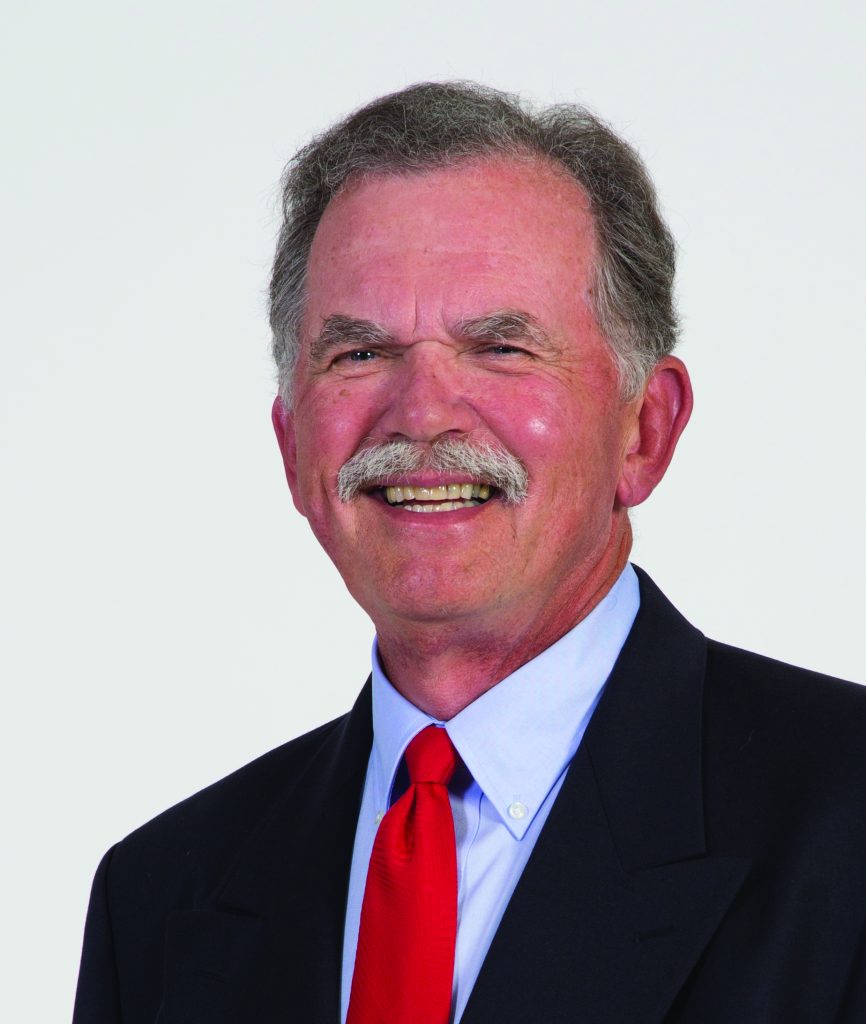
  • Tom Utroska named to BZA

    Utroska

    BLYTHEWOOD – Former Town Councilman Tom Utroska, who resigned his Council seat last fall, is back – this time as a volunteer. Utroska was appointed to the Board of Zoning Appeals last month by Council.

    Retired from the railroad industry, Utroska has served numerous positions in the town government since 2010. He has served on the Planning Commission as a member and as Chair, Board of Zoning Appeals, the Mayor’s Ad-hoc Park Committee and was elected to Council in 2014.

    The Board of Zoning Appeals is a quazi-judicial board that hears zoning appeals from residents and businesses. Decisions of the Board are appealed to circuit court. Members of the Board serve four year terms.

  • SCDOT to repair Blythewood Road Bridge

    BLYTHEWOOD – A 24/7 project to  repair the Blythewood Road bridge spanning I-77 is set to begin by March 15, a  spokesperson for the South Carolina Department of Transportation  said Tuesday.

    The project is supposed to be complete by the end of April, but it could take longer. The traffic pattern will not be detoured for the project since the bridge is wide enough to stage the construction so that the lanes can shift and be moved.

    However, there will still be one lane open in each direction throughout the project except when two turning lanes will have to be removed on separate weeks. There will also be some temporary daytime land closures when the staging is being set or shifted.

    Interstate I-77 below the bridge will experience night time lane closures during painting, jacking and bearing repair of the bridge.

    Once the work commences, it will continue 7 days a week until the repairs are complete.

  • Residents’ input sought for Blythewood Road widening

    BLYTHEWOOD – Plans for widening Blythewood Road will be presented during a public meeting on Thursday, March 22, from 5-7 p.m. in the Muller Road Middle School gymnasium.

    The community has been invited to join Richland County representatives for the public meeting to review plans for the road widening project.  Citizens will have an opportunity to learn about the proposed project which is being funded by the Richland County Transportation Penny Program.

    Beginning at 5 p.m., those attending can review displays of the proposed project. At 6 p.m., the Richland Penny Program representatives will make a brief, formal presentation. Citizens will then have the opportunity to make formal, verbal comments regarding the project.

    The school is located at 1031 Muller Road in Blythewood. For more information, call 844-RCPenny or go to www.richlandpenny.com.

  • BW tree law may have loophole

    BLYTHEWOOD – Whether it’s a loophole or a misinterpretation of the law, some residents and some Council members say the Town’s Landscaping and Tree Preservation Ordinance allows developers to abuse the ordinance in ways that can affect large areas of land.

    The stated purpose of the ordinance is to prevent “indiscriminate, uncontrolled and excessive destruction, removal and clear cutting of trees upon lots and tracts of land…” All residential, commercial or industrial lot owners wishing to remove trees of certain kinds and sizes must comply with a complex list of rules and regulations, the ordinance states.

    At issue is Section 155.390 which lists exceptions to the ordinance. One of those exceptions, (H), states that those projects are exempt “which have received major subdivision or site plan approval prior to the effective date of this subchapter and amended major subdivision and site plans.”

    Town Attorney Jim Meggs suggested that Council might want to review the ordinance to be sure it is clear in regard to section (H).

    Town Council will hear public testimony at their March meeting regarding amendments to Ordinance and amendments to repeal section 155.390 (H) exempting certain projects from landscaping and buffer yard requirements (Sections 155.380, et seq.)

    The public hearing will be held at 7 p.m. on Monday, March 26, 2018 at The Manor. The issue is also expected to be discussed at Council’s annual retreat on Saturday, March 10.

    The texts related to this amendment are available for public inspection in the office of the Town Clerk at Town Hall during regular working hours, and also will be available at the public hearing.  Please call Town Hall at 803.754.0501 for further information.

  • Matthews invested as Family Court Judge

    WINNSBORO – Winnsboro attorney Debra Matthews was elected Family Court Judge for seat 2 in the Sixth Judicial Circuit on Feb. 7, to fill the unexpired term of the Honorable W. Thomas Sprott, Jr. Matthews’ investiture was held on Monday, March 5 in the Courtroom of the Fairfield County Courthouse.

    Judge Paul E. Short, Jr. presided over the investiture that was attended by many elected officials, judges and local attorneys as well as Matthews’ family and friends.

    Several of her colleagues spoke during the ceremony, including Family Court Judge Gwendolyn Jones, who told the audience that she has been friends with Matthews since the two, as young attorneys, began their law careers in Winnsboro.

    “Patience and a calm demeanor are the most important characteristics needed for this difficult job,” Jones said, addressing the audience. “Family Court is an extremely emotional area and, Debra, you possess these necessary characteristics, without a doubt. You are firm and deliberate, yet calm and courteous at all times.”

    “I want you to understand that you cannot fix every situation that comes your way, no matter how hard you try. All you can do is your best,” Jones said.

    In offering guidance to Matthews for what lies ahead in her new career, Jones referenced Matthews’s husband who died last summer after battling cancer for several years.

    “Although you were the wife of a residential builder for 28 years, the mother of two sons who are residential builders and you, yourself, hold a residential builder’s license, you cannot fix it all.

    “My dear friend, Debra, you are strong, resilient and a smart, beautiful addition to the bench. Welcome to our wonderful family court. You’ll do well,” Jones said.

    Winnsboro attorney and longtime friend Creighton Coleman praised Matthews for “doing things right.”

    “She has good corporate skills, she has a good temperament, a good work ethic and she’s honest and trustworthy,” Coleman said.

    “Historically, the Sixth Circuit is known to produce some of the finest judges in South Carolina,” Coleman said. “In my opinion, Debra, you will emulate those judges who have served South Carolina well. You will do a great job. We’re proud of you.”

    The investiture concluded with Matthew’s sons, Jody and Raymond, Jr., assisting their mother in donning her robe. Matthews then raised her sons’ hands high and smiled broadly.

    Following the investiture, a reception was held at the Woman’s Club.

    Matthews earned her Bachelor’s degree in Political Science at Stockton State University and her Juris Doctorate degree in 1999 from Widener University in the State of Delaware.

    After being admitted to practice in 2001, Matthews opened a private practice in Winnsboro. As a general practitioner, she concentrated in civil and criminal litigation with a heavy emphasis on family law.  Matthews has served as guardian ad litem and as a contract attorney with the South Carolina Commission of Indigent Defense for vulnerable adults, abuse and neglect cases.  She has handled a variety of family law cases.  Her practice also entailed consumer bankruptcy filings in the United States Bankruptcy Court since 2002.

    Judge Matthews was certified as a family court mediator and circuit court mediator in 2010, and is admitted to practice in the state and federal courts in South Carolina. She is an active member of the community, having served on the Mid County Water Board, the 6th Judicial Circuit Public Defender Board and the Public Defender Selection Board. Matthews has dedicated her time to the South Carolina Bar pro bono and mock trial programs and serves in her church, St. Theresa’s in Winnsboro, on the finance committee.