Blog

  • BW Physical Therapy expands, touts local service

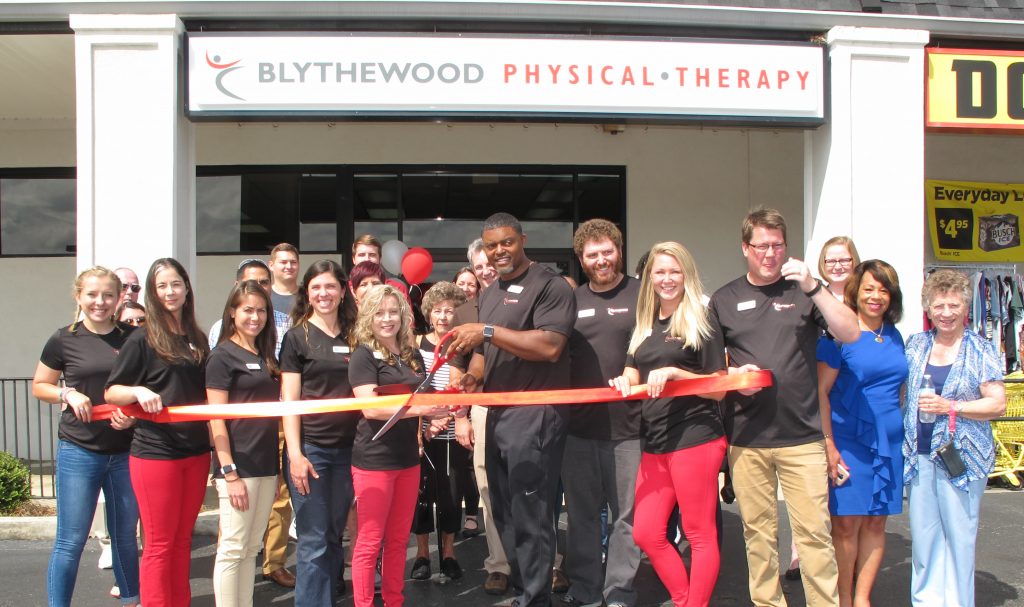
    The employees and friends of Blythewood Physical Therapy celebrated the office’s expansion with a ribbon cutting on Friday. Manning the shears are Physical Therapist Joye Mizell and Supervisor Brian Gray. | Photos: Barbara Ball

    BLYTHEWOOD – When Bruce Filler opened Blythewood Physical Therapy in McNulty Plaza in July, 2011, he was the only physical therapist on duty to treat the location’s first patients. Serving the community is how he grew his business.

    Today, Filler has nine employees at his Blythewood office who treat 40-50 patients per day, but in a new McNulty Plaza space that is double the size of the first one.

    ”It was a much needed move,” Dr. Bryan Gray, the new facilities’ physical therapist supervisor, said during a re-open house and ribbon cutting last Friday that celebrated the expansion with food, door prizes, corn hole competitions and free shoulder and back massages given by massage therapist Jeff Cullen.

    “The additional space allows us more floor room for agility and balance training, things we couldn’t do in the previous office,” Gray said. “Plus we have a break room now that allows us to see patients during the lunch hour, which is a real patient convenience.”

    With the new space and a variety of therapy specialists, including two therapists certified in the McKensie technique for back pain, Gray said his staff can handle just about every physical therapy need.

    “With our capabilities, there’s no reason for folks out here in Blythewood and Fairfield County to go downtown to Columbia for physical therapy,” Gray said. “We encourage folks in the community to tell their doctors that they want to come here for their therapy, and their doctors will write them referrals. Patients don’t always know they have that right.

    “The different with us is that, unlike large clinics that have patient quotas to fill each day, we have one goal – to make our patients better. Filling quotas can interfere with the quality of care,” Gray said. “Here, patients find less of a corporate type environment and more of a community feel. We have a lot of patients in the community that we become friends with. After their experience here, they frequently refer their friends and family members,” Gray said.

    “When our patients come here, we want them to have an overall good feeling about their care,” Gray said. “I think they do.”

    Blythewood Physical Therapy offers a work reconditioning program, does functional capacity evaluations and impairment ratings, pelvic floor rehab as well as therapy for orthopedic, neurological, arthritis, TMJ, vestibular/balance problems, auto accident injuries, sports injuries and work related injuries.

    For more information about Blythewood Physical Therapy, go to www.crcrehab.com or call 803-728-0421. The office is located at 428-3 McNulty Road in Blythewood. Hours are Monday – Friday from 8 a.m. – 6 p.m.
  • PC, BAR approve COA for hotel

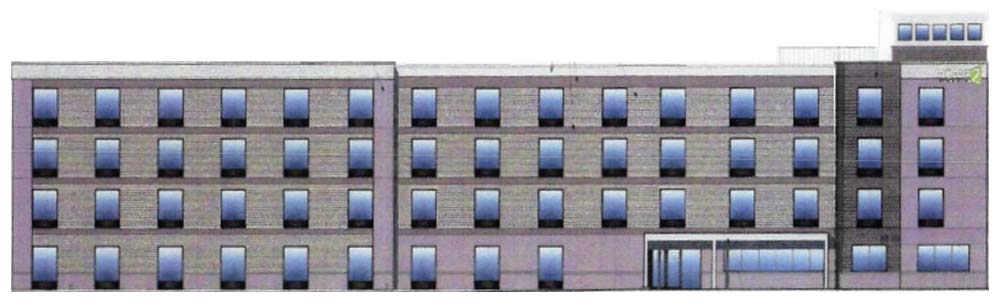
    Hilton Home 2 Suites coming to Blythewood.

    BLYTHEWOOD – Third time was the charm for representatives of the Hilton Home 2 Suites who appeared before the Planning Commission Monday night requesting approval of a site plan for a four-story, 88-bed hotel they hope to construct on a 1.93 acre lot between I-77 and San Jose’s restaurant.

    While serious concern was expressed by commissioners about the hotel’s lack of a direct access to Creech Road and the traffic impact the hotel would generate in an already traffic-challenged intersection at Creech and Blythewood Roads, the plan was approved 4 – 1 with Commissioner Marcus Taylor voting against.

    Ed Parler, Blythewood’s economic development consultant, spoke up for the project saying it fits with the overall plan for the town.

    “The hotel is the highest and best use for this piece of property,” Parler said. “There are no property taxes [in Blythewood], so bringing hospitality taxes, accommodation and sales taxes and state share value revenue means it will be the highest economic benefit for Blythewood.”

    Parler further cited the traffic study that was initially requested by the Planning Commission and initiated by engineer Roger Dyar on behalf of Carter Engineering, as of low significance.

    Based on the review of the site and Dyar’s analysis, he concluded that: the site will produce 496 additional trips per day; that the overall effects on the peak hour traffic flow would be minimal and that traffic flow should be acceptable at the proposed access point onto Creech Road.  At this location, all exiting traffic will make a right turn and then make a u-turn at some point to the south on Creech Road.

    The study also recommended that a triangular island be constructed at the access point onto Creech Road to force all exits to be right turns.

    Dyar said the details of this design will be handled by the site civil engineer and will need to comply with SCDOT Access and Roadside Management Standards and Highway Design Manual standards.

    “I think Paragon [the hotel’s parent company] has done everything they could to make the intersection as good as they can,” civil engineer Jeff Carter of Georgia-based Carter Engineering Consultants said.

    Tome Morgan, the project architect, said he expects construction to take 9 to 14 months.

    Paragon hotel company owner Ricky Patel said the hotel will create 16 full time jobs and six part time jobs.

    Immediately following the Planning Commission meeting, the Blythewood Architectural Board (BAR) met to consider a request from the hotel’s representatives for a Certificate of Appropriateness.

    Morgan displayed the elevation plans for the project and discussed material selections with the Board.

    Morgan said the two prototype renderings of a modern design that Home 2 used elsewhere are stark and use hardy board architecture.

    “I did not think they would be well received in a place like Blythewood where citizens care about architecture,” Morgan said. “Instead, we have designed a building covered with Cherokee moss town brick with a pewter colored mortar, hardy board and hardy shake shingles with dark bronze colored metal around the windows,” Morgan explained. “The rich colors create a three-tier approach as opposed to the modern look.”

    A feature that seemed to please the commission is a fence between the hotel and the interstate made with brick columns and wrought iron connecting sections.

    While Blythewood’s architectural advisor Ralph Walden said the building was well designed with nice features and more interest than the two neighboring buildings, he suggested replacing the hardy plank shakes with a darker brick than the moss town brick.

    The motion to approve a COA with changing the hardy shakes to a darker accent brink and to bring the brick up to the top of the first floor passed unanimously.

    Town Administrator Brian Cook explained that the approval would be conditioned by staff approval of a final landscaping plan and any required engineering specifics, the inclusion of a fence along the I-77 ramp and Blythewood Road, signage options and by subsequent approval of SCDOT, SCDHEC and Richland County, water/sewer provider and any other applicable reviewing entity.

  • Judge extends voter registration through Oct. 17

    COLUMBIA – Citizen in all counties in South Carolina now have more time to register to vote ahead of the 2018 General Election after the court earlier this week ordered the voter registration deadline extended to Oct. 17.

    The 10-day extension was said to be necessary to protect the voting rights of South Carolina residents due to the widespread impact of Hurricane Florence. Many citizens have been displaced and many county voter registration offices were closed for considerable periods of time.

    While the deadline was extended due to the impact of Hurricane Florence, the October 17 deadline applies to voters in all counties.

    There are a number of ways to register, including the following:

    Register online at scVOTES.org before midnight, Wednesday, Oct. 17 (requires SC Driver’s License or DMV ID Card).

    Register using the My scVOTES mobile app before midnight, Wednesday, Oct. 17 (available in the Apple and Google Play stores, requires SC Driver’s License or DMV ID Card).

    Download a voter registration form from scVOTES.org.  Complete and return the form to your county voter registration office:

    By fax (must be received before midnight, Wednesday, Oct. 17).

    By email attachment (must be received before midnight, Wednesday, Oct. 17).

    By mail (must be postmarked by Wednesday, Oct. 17).

    Register in person at your county voter registration office. Most offices will close at 5 p.m. on Wednesday, Oct. 17 for in-office registrations. Check locally for specific hours.

    Already registered? Visit scvotes.org and click “Check My Registration” to make sure your registration is up-to-date.

    Get contact information for your county voter registration office at scVOTES.org.

  • Blythewood gas station robbed at gunpoint

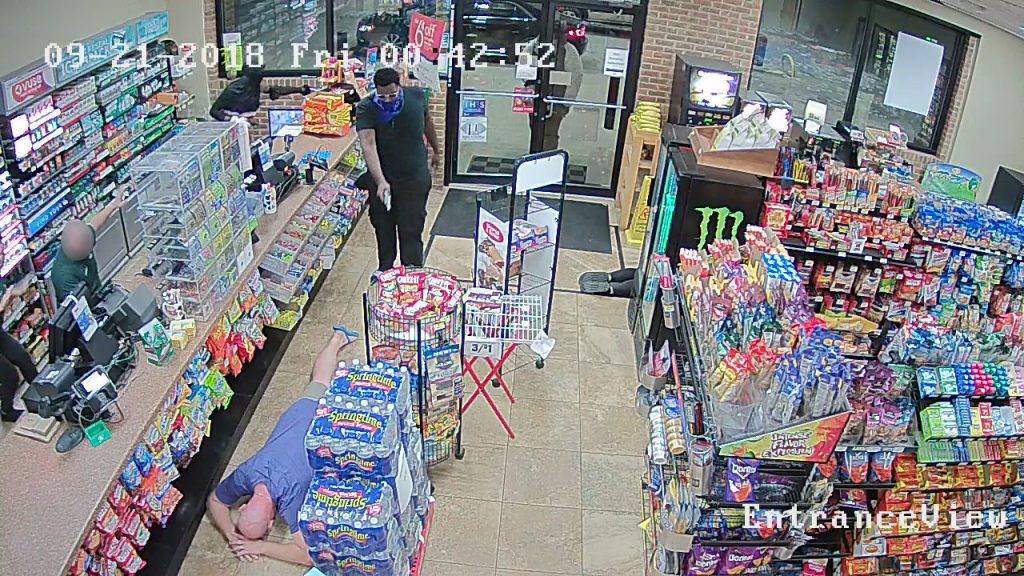
    Four robbers fired shots and threatened employees during Sharpe Shoppe heist on Blythewood Road. | Store Surveillance

    BLYTHEWOOD – Richland County deputies are looking for four suspects who robbed a service station in Blythewood at gunpoint last week.

    The incident took place early Friday morning, Sept. 21, at the Exxon service station located at 230 Blythewood Road at about 12:30 a.m.

    Surveillance video from the station shows the four suspects enter the store and rob it at gunpoint.

    “They burst into the store, fired a handgun into the ceiling, and one jumped the counter and took money from the cash register,” said station owner Larry Sharpe, Sr. “They tried to rob the safe, but couldn’t.”

    Sharpe said there were five or six customers in the store at the time who were forced to lay down on the floor during the robbery. Two of those customers were also robbed, Sharpe said.

    One of the suspects also fired a second shot into the ceiling as the four fled the scene.

    Anyone with any information about the robbery or the identity of the suspects is urged to contact Crimestoppers by calling 1-888-CRIME-SC (888-274-6372) or visiting www.midlandscrimestoppers.com and emailing a tip. Your identity will be kept anonymous, and if your tip leads to an arrest, you could be eligible for a cash reward of up to $1,000

  • R2 bond discussion set for WHS

    BLYTHEWOOD – Another school bond referendum presentation will be held in Blythewood on Oct. 8 at 6 p.m. at Westwood High School, located at 180 Turkey Farm Road. Richland School District Two is inviting the community and media to learn more about the bond referendum at two upcoming information presentations.

    Two bond referendum questions will appear on the Nov. 6 ballot. One asks voters to approve the issuance of bonds not to exceed $468,406,000. Richland 2 School District is billing the referendum as a safety/security bond that will bring improvements at schools and for buses, improvements to academic learning spaces, additions and improvements to arts/athletic facilities and technology infrastructure improvements.

    Find information about the bond referendum at www.richland2.org/bond.

  • Admin details aired in forum

    WINNSBORO – If people left a recent Mt. Zion Institute forum with reservations, it wasn’t due to a lack of information about the proposed project.

    Fairfield County Council members, staff and the developer spent two hours Thursday evening addressing residents’ questions about the project during a forum at Midlands Tech-Fairfield Campus.

    If built, the $11.5 million project would repurpose the Mt. Zion property into a new county administration building. It would stand three stories tall and span 45,000 square feet, more than double the current 21,000-square-foot structure. The total cost to the county would be about $8 million over seven years.

    “We’d like this to be the first of many revitalization efforts in Winnsboro and Fairfield County,” said Rory Dowling with 1st & Main, a Raleigh, North Carolina firm working with the county on the project.

    If approved, construction could start as soon as April 2019 and be completed by summer 2020.

    “I think it’s going to be a fantastic asset once it’s completed,” Dowling said. “We hope to have this agreement in place shortly.”

    Earlier this month, council voted to approve second read ing of the project following an executive session discussion.

    “If you really and truly want growth, there’s going to be changes. Folks say they want it, but some of them pull back on it a little bit,” said Council Chairman Billy Smith. “You’ve got to have a little vision to make it grow; things don’t happen on their own.”

    Sixty-four questions – all submitted by only 12 people – were answered at Thursday night’s forum.

    An informal drop-in meeting, which included renderings of the proposed project, preceded the forum.

    One by one, county staff drew citizen questions from a fish bowl. Questions ranged from the cost of renovating the existing county building to what will happen to it if a new building is constructed.

    In response to one question, Dowling pledged that 1st & Main wouldn’t build multi-family housing on the site should the county building project fall through.

    County leaders said a deed restriction prohibiting multi-family housing could be built into the contract. The property itself isn’t zoned for that, either.

    “Our zoning doesn’t allow for it to be used for multi-family and we would never use it for that,” County Administrator Jason Taylor said. “Our only use would be as an administration building.”

    Council members, some of whom have remained silent about Mt. Zion, spoke up at Thursday’s meeting.

    Councilman Cornelius Robinson expressed concerns about the fate of a monument at the Mt. Zion property, but also voiced optimism for the project’s potential.

    “It would just add value to the neighborhood,” Robinson said, comparing the project’s potential to a similar one that helped revitalize Greer.

    Councilman Dan Ruff, who’s abstained from previous votes while searching for more information, said he’s also interested in the monument.

    “I would like to address this in some form,” he said.

    Ruff and other council members said there’s no Plan B for the property if an administration building isn’t built there.

    “If we can’t make this happen, nothing is ever going to happen on that property, so you might as well tear it down,” Ruff said. “Folks need to consider that as well, what might happen after demolition.”

    A big point of discussion revolved around money.

    Responding to a question about alternate options, County Administrator Jason Taylor said renovating the existing administration building would be north of $8.5 million.

    About half of the cost would come from housing county staff at a temporary facility during renovations. It would also cost several hundred thousand dollars in additional taxpayer money to solicit bids, county officials said.

    Although Mt. Zion would appear more costly at $11.5 million, a majority of that amount would be paid for with tax credits. The remaining $3 million to $4 million would come from lease payments stretched out seven years.

    “We’re essentially getting an $11-$12 million dollar project for $8 million,” Taylor said.

    Council members fielded several questions about the potential of default, either by the county or 1st & Main. Smith said the larger issue would be the cost of inaction.

    “I don’t think default is an option. The biggest problem isn’t what’s going to happen to this property, it’s where in the heck are these people going to work?” Smith said. “I don’t think they want to work on the street. I don’t care if we have one employee, they have to have a place to work.”

    Council discussed finalizing the project in executive session Monday night during the council meeting, but the third and final vote isn’t expected for at least another two weeks.

  • FCSD per pupil revenue highest in state

    WINNSBORO – There’s no apparent shortage of revenue flowing into the Fairfield County school district.

    A recent S.C. Department of Education report estimates the Fairfield school district is projected to receive $21,803 in per pupil revenues in 2017-2018, the highest in South Carolina.

    Clarendon 1 came second at $19,137, followed by Richland 1 ($18,791) and McCormick ($18,139). The state average was $13,214, according to the report.

    Fairfield revenues have steadily risen since 2013-2014, when they were $18,023 per pupil.

    In addition, more than 200 fewer students are enrolled today than four years ago. Per pupil revenue still rose despite enrollment that fell from 2,652 to 2,421, records show.

    Figures in the report are based on estimates that were current as of Sept. 6, 2017. They do not reflect bond revenues, which would exclude the district’s $20 million bond issue in 2013 to build a new career center.

    “Projections for FY 2016-17 and FY 2017-18 are estimates based upon recent and historical trends in local, state, and federal funding and are subject to revision,” the Department of Education website states.

    “These figures include revisions made since the adoption of the [2017] Appropriation Act,” the website continues. “Please note that pupil estimates are based on 135-day enrollment figures for K5-12 and do not include 4 year olds.”

    While year-to-year funding has consistently hit new plateaus in Fairfield, student achievement has not.

    The school district has reported generally favorable graduations rates of 90 percent or higher since 2015, greater than the 84.6 percent state average, according to Department of Education report card data.

    Between 2012 and 2014, the district averaged between 76.6 and 80.8 percent, trailing state averages at the time.

    Fairfield, however, substantially lags in the number of students seeking two- or four-year college degrees, data shows.

    In 2016, less than half (48.9 percent) of Fairfield graduates pursued post-secondary study, far behind the state average of 70.8, according to 2017 report cards, the most recent available.

    Fairfield’s college enrollment rate plunged to 37.2 percent in 2014, report card shows.

    District Superintendent Dr. J.R. Green said student success is measured in different ways.

    “It’s not as simple as saying if you spend a certain amount of money, you get a certain amount of results,” he said. “We’re investing in every way we can to move the achievement needle.

    “The reality is there are students who can be successful, but not at a four-year institution,” Green continued. “It doesn’t mean these kids aren’t sufficient. Poverty has an adverse affect on a kids’ ability to be successful academically.”

    The Department of Education report comes amid public criticism from one Fairfield County council member who recently questioned the amount of tax revenues the district receives.

    During the Sept. 10 council meeting, Councilman Jimmy Ray Douglas publicly stated from the dais that the district has improperly received more than $11 million in tax revenues, attributing the overages to inflated millage rates.

    Green has vociferously denied the district received any windfalls.

    He did, however, say per pupil revenues don’t paint a full picture of district revenue streams.

    Green said while Fairfield is a high-poverty county, the district is unique from other struggling South Carolina districts in that it receives substantial boost via the V.C. Summer nuclear plant.

    “We are exceptional in that we have a nuclear facility that funds $1 out of every $2 in support of our students. If the nuclear plant didn’t exist, we’d be in extremely poor shape.”

    Green said revenues pay not only for educational expenses, but also capital improvements and other non-instructional costs.

    He noted that some Fairfield per pupil revenues are actually spent in neighboring Chester County, per a Supreme Court ruling that requires the school district to pay about $3,542 in local funds for every student in the Mitford community who attends school in Chester County.

    The ruling impacts between 100 and 200 students.

    In 2018-2019, student transfers are expected to cost Fairfield County schools about $626,000, an increase of $74,150 over last year, according to district budget figures.

  • Doko Depot sale held up by deed issue

    BLYTHEWOOD – After a year of planning, a year of construction, a year of searching for and finding a buyer, the Town of Blythewood has spent almost another year waiting to close the sale of the Doko Depot. And the wait is not over.

    Mayor J. Michael Ross announced at Monday night’s Town Council meeting that further delays are expected in the closing of the Town of Blythewood’s contract for the sale of the property.

    The sale has been plagued with delays since shortly after the contract was signed in January. The latest delay is the result of discovering defects in title in some of the land the Depot sits on.

    Ross said those defects related to the donation of the property to the Town years earlier.

    “We are in the process of remedying those issues,” Ross told The Voice in August.

    A portion of the land under contract was originally conveyed to the Blythewood Volunteer Fire Department by Charles W. Proctor in 1971, Ross said. In his deed, Proctor reserved a reversion of title if the property ceased to be used for fire department or other community uses.

    The same parcel was conveyed to the Town after the volunteer service was discontinued but it was still subject to the reservation by Proctor. Proctor passed away in 1976 leaving no children. His wife died shortly thereafter.

    Not knowing about the title issue at the time, Council voted last December to authorize Ross to sign a sales contract with Columbia realtor Wheeler & Wheeler to purchase the property. Last April, Don Russo told The Voice that his company, Freeway Music, was negotiating a contract to lease part of the building from Wheeler & Wheeler who was in the process of purchasing the building from the Town.

    It was also announced that a popular Lexington restaurant is planning to lease the other part of the building.

    Ross said Council learned that the Town’s sale of the former Proctor land (to Wheeler & Wheeler) for uses unrelated to fire department or other community use could cause a reversion in title.

    To keep from jeopardizing the closing while the legalities are being worked out to prevent a reversion of title, Council passed a resolution Monday evening approving the extension of inspection periods for the contract of purchase and sale of the Doko Depot property and authorizing the mayor to execute contract documents pertaining to such extensions.

    Ross said the resolution is provided as a procedural step towards a final closing on the Doko Depot property.

    “I don’t expect this last delay to last more than 60 to 90 days and then, I hope, we can close the deal,” Ross told The Voice following Monday night’s meeting.

  • Harrison’s criticism of council mailings backfires

    RIDGEWAY – During last week’s town council meeting, which amounted to little more than ‘he-said she-said,’ Councilwoman Angela Harrison, who had not attended the last three town council meetings, complained that someone had made public a letter of complaint written to town hall by Dr. Roberta Howard, Assistant Principal of Geiger Elementary School. Harrison said she was sure it was a council member who had made the letter public and that a citizen had then forwarded Howard’s letter to Fairfield County School Superintendent J. R. Green, complaining that Howard had written the letter.

    While Harrison offered no proof that any of the council members had made the letter public, correspondence to the town government from citizens is generally public information and can be obtained by any citizen or the media with either a verbal re quest or a Freedom of Information request (Sec. 30-4-30 of the Freedom of Information Act).

    Harrison charged that council members send out emails or other correspondence without first sharing a copy with her.

    “So you’re saying you’ve never shared any of these complaints with the public? Councilman Dan Martin asked.

    “Huh?” Harrison asked Martin.

    “You’re saying you never shared any of these emails with the public? Martin repeated.

    “I was just saying that…” Harrison began.

    “I’m asking you,” Martin interrupted, “did you share any of these emails with anyone in the public?

    “Yes” Harrison said. “But did I try to ruin someone’s life by calling Dr. Green to complain about freedom of speech? This is America. This is freedom of speech. We all have a right and none of us should be retaliated against because we’re speaking it. I feel retaliated against because I’m not being afforded the information that’s coming out of this council or from the mayor or anybody else. And people are getting accosted,” Harrison continued.

    “No one should be standing on the porch and be accosted by anybody because they asked a simple question. If you’re telling people to go attack other people, things need to come to a stop. This is America, not Russia,” Harrison said. “You are messing with people’s lives.”

    Harrison claimed she had been accosted, but did not give any details of the incident.

    “So if I’m understanding this, you said you sent out a correspondence without letting council see it first?” Mayor Heath Cookendorfer asked Harrison.

    “Yes, I did,” Harrison said.

    “Who did you share it with,” Cookendorfer asked.

    “The NAACP,” Harrison answered.

    “That is the only one you shared information with?” Cookendorfer asked.

    “Yes, that I’m aware of,” Harrison said.

    Martin picked up a paper from his desk.

    “I was given this the other day,” Martin said. “You posted on social media that you had forwarded an email to WLTX,” Martin said, and read from what he said was a copy of Harrison’s Facebook post: ’This is a sad day for Ridgeway. There definitely needs to be an investigation [in]to all the ‘mistakes’ in our system and all the complaints against employees that are ignored. The emails keep coming…’”

    “Yep,” Harrison interjected.

    Martin continued reading from Harrison’s post.

    “‘This particular one [email] proves collusion. I stand against conspiracy,’” Martin read.

    “Then you got a response from a citizen that said, ‘So did I. I sent it to all three [TV] stations, SLED and the FBI and more,’” Martin continued as Harrison talked over him.

    “So you shared it [email] with WLTX-TV, the NAACP and our citizens,” Martin said.

    “We can share anything we want.” Harrison said. “So, yeah.”

    “So what I’m hearing is that you want us to provide all the information with you that we send out,” Cookendorfer said to Harrison. “But you say you sent an email to WLTX-TV, the NAACP and a citizen. Did anyone else on council see that document?”

    Harrison pointed out that they now have the information she posted.

    “You want us to provide you with our information,” Cookendorfer repeated, “but you don’t want to provide us with your information.”

    In the end, Harrison agreed that she, too, would provide the town with any correspondence she sent out, saying it would be a joint effort.

    In other business, council disclosed that the Church of Jesus Christ of the Latter Day Saints had scheduled a workday in Ridgeway for April 2019 and wanted suggestions as to where in the town their clean-up services might be best used.

  • Martin: email complaints, praises mostly bogus

    RIDGEWAY – A rancorous Ridgeway Town Council meeting last week was marked by repeated interruptions from Councilwoman Angela Harrison who spent the better part of the meeting chastising other council members for perceived slights, including not sending her every communication that emanated from each council member while she was on an extended summer vacation [July and August], during which she missed three council meetings.

    Mayor Heath Cookendorfer informed Harrison that she could have copies of council’s communications upon request and that the town clerk would provide them to her as time permitted.

    But Harrison wanted more.

    “I want a copy every month of every bank statement for every bank account, including the investment fund,” Harrison fired back. “Under the Freedom of Information Act, I have a right to that.”

    Among her string of criticisms, Harrison questioned whether complaints that council received over the last couple of years against former Ridgeway Police Chief Christopher Culp might have been ‘bogus.’ She asked if council had investigated those complaints.

    The Voice obtained copies of those complaints from town hall through a Freedom of Information request in June and published many of them last summer. Most could be traced to individuals in the community. Some had brought their complaints before before the public at council meetings.

    Councilman Dan Martin said he had looked into an additional group of 41 emails submitted over a very short time, beginning June 19, five days after the June meeting when a motion was made (but not voted on) to terminate Culp, and ending July 26.

    Martin said of those 41 emails, 27 praised Culp and 14 criticized two town employees who, he said, had not had a single complaint in their employee files over the more than 10 years that each had been employed by the town government.

    “Something smelled fishy,” Martin said.

    He said that since the 41 emails contained no phone numbers or addresses for verification he contacted all the writers by return email and invited them to bring their complaints to town hall, Martin said.

    ‘If you do not respond in seven days,’ the email from town hall stated, ‘your email will be considered null and void.’

    “We got one response that stated the writer was too busy to respond,” Martin said.

    Martin said he tried to verify the authenticity of the 41 emails.

    To find the source of each email, Martin said he went to the server for each email received and requested that the password for that email address be texted to the phone number associated with the email. He said he received the last two digits of each phone number associated with the emails.

    ”I received the last two digits of the phone numbers associated with 35 of the emails. Nothing came up for the other six,” Martin said.

    According to Martin, the results of his investigation, based on the last two digits of the phone numbers pointed to only nine phone numbers being associated with the 35 emails.

    He gave the following breakdown of the two digit numbers – 16 phone numbers ended with 35, five ended with 50, four ended with 77, three ended with 29, two ended with 53, two ended with 81, one ended with 90, one ended with 91, and one ended with 96.

    Martin said the coincidence of so many phone numbers ending with the same two digits in such a small sample is mathematically unlikely.

    “It doesn’t make any sense,” Martin said. “As far as I’m concerned, those emails are pretty much all bogus.

    “Going forward,” Martin said after the meeting, “we need to ask that when anyone communicates their complaints, compliments or suggestions to the town hall, that they include their names, addresses and phone numbers so that we can get back to them and properly address the issue,” Martin said.