Blog

  • New industry could bring 200 jobs

    WINNSBORO – Hundreds of new jobs could be coming to Fairfield County in time for Christmas.

    But even if third reading of the economic development deal with the unnamed company isn’t finalized until early 2019, it won’t upset too many people.

    “We’re really excited about the prospect of this,” said County Council Chairman Billy Smith. “Nothing’s done until it’s done, but everything looks good. All indications are that we’re moving in a positive direction.”

    Council members voted 7-0 Monday night on first reading of an ordinance authorizing the county to enter into a fee in lieu of taxes and incentive agreement with the company.

    Smith said talks with the firm have been taking place for at least six months. While he said it’s still too soon to identify the industry or where it would be situated, Smith said the company is international.

    More importantly, the industrial prospect is expected to create 200 jobs and make a $30 million investment in Fairfield County. Smith said many of the jobs would be well-paying.

    “These jobs are going to be good, factory jobs,” Smith said. “We’re not talking about jobs that are paying $8 to $10 an hour. These are good, stable factory jobs, and that’s what we need.”

    The new firm comes as welcome news for Fairfield County, which has weathered some economic setbacks in recent years.

    Most notably, nuclear reactor construction on the failed VC Summer expansion project resulted in thousands of lost jobs.

    That’s on top of more lost jobs when the Winnsboro Wal-Mart closed in 2016.

    Fairfield County faced another scare this past summer, when Element Electronics announced plans to eliminate most of its workforce, citing tariffs the Trump Administration slapped on China, where some components of Element TVs are manufactured.

    Element reversed course in September when those components were removed from Trump’s tariff list. After turning that corner, Fairfield County is on the precipice of turning another.

    “We’ve kind of had a tough road, but we stuck to it,” Smith said. “This will put us in a much better position.”

  • Ridgeway council deals with losses

    Sidewalks reduced from 1.7 miles to 3,375 feet

    RIDGEWAY – Ridgeway Town Council gave the official green light Thursday night to a $500,000 sidewalk construction project that started out as 1.7 miles (8069 linear feet) of sidewalk throughout the town and ended up as only 3,375 linear feet of sidewalk along the north side of S.C. 34 – for the same $500,000 price.

    As proposed by Councilwoman Angela Harrison two years ago, the sidewalks were designed to connect the town’s historic downtown with the new town park and playground, improve sidewalk access to 600 town residents and improve pedestrian safety along S.C 34.

    Harrison initially said the new sidewalks would create a network of five miles of sidewalks along major thoroughfares and Ridgeway’s historic walking tour to promote transportation alternative tourism visits and economic growth for Ridgeway.

    But she told Council members last week that the $500,000 will now cover only 3,375 linear feet of ADA (Americans with Disabilities Act) compliant sidewalk beginning at South Means Street and continuing to Long Road.

    The project was paid for with $11,400 from the Town as part of a $57,000 matching grant from Fairfield County, $43,000 from the Fairfield County Transportation Committee (CTC) and $400,000 from the South Carolina Department of Transportation’s (SCDOT) Transportation alternative Program (TAP).

    The unanimous vote from council came after a lengthy discussion about the 65 percent increase in price over the two-year course of the project’s approval.

    “The price has increased from $100 a square foot to $250 a square foot over the past two years because that is how long it has taken me to work the system to get this to happen,” Harrison stated.

    Councilman Dan Martin questioned the validity of Harrison’s figures, saying that council received a proposal from her as recently as August that showed the town was getting 1.7 linear miles of sidewalk for $55 per linear foot.

    Harrison responded that the change in the figures was because of information provided by SCDOT, but had no other explanation as to why the project was not finalized earlier at the lower cost. Harrison missed four council meetings in 2018, between May and November.

    “DOT is the one who filled out the application. When those figures changed, I can’t do anything about that and when I looked at the project and looked at what the management fees are at this point those figures have changed,” Harrison said.

    She said further discussion on the prices would need to be directed to SCDOT.

    Other discussions focused on the responsibility for future maintenance of the sidewalks upon their completion. According to town documents, the Town of Ridgeway must assume all responsibility for maintenance for the life of the sidewalks.  More than half the sidewalks being constructed are outside the town limits, making the city legally responsible for a county sidewalk.

    Councilman Donald Prioleau likened the council’s discussion over the project’s details to “beating a dead horse” and urged the council towards its ultimate approval.

    “A person was killed on 34. Now, the city will take care of what is within town limits. All we have to do is go back to the county and let them adjust it (the contract). I’m for this 300 percent,” Prioleau stated.

    Prioleau made his motion immediately after his statements, and the vote was taken without further debate.

    The council also picked up discussions on a water line upgrade for the south end of Highway 34 where residents do not have access to fire hydrants. Harrison volunteered to spearhead research on the project with the town’s public works department and is expected to bring more information to council at a future meeting.

  • Teacher Village lacking site plan

    WINNSBORO – As Fairfield County school officials press forward with plans to build a subdivision catering to teachers on property it owns behind the district office, those plans appear to be stymied until the property is rezoned. But the district has not yet submitted the required site plan for that rezoning to be initiated, according to Town of Winnsboro officials.

    School district officials are seeking to rezone the property from C-2, which allows commercial uses, to a residential zoning classification to accommodate single family detached dwellings, Winnsboro Zoning Director Billy Castles said.

    But Castles said it is not possible to determine what zoning the school should apply for until it submits a site plan.

    “That site plan must comply with the zoning district. We can’t change zoning to comply with the site plan,” Castles said.

    Castles added that the very limited discussion about the Teacher’s Village has primarily been with the school district, not the Fairfield County Education Foundation which initiated and is coordinating the project.  Castles noted the district as of Tuesday had only submitted preliminary drawings, not a site plan, for the Village.

    “What the district submitted was not materially sufficient (for determining zoning),” Castles said.

    “The site plan must include details about the development, such as lot size, setback measurements, where the homes are to be located on the lots, water and sewer infrastructure, street paving, curbing and other technical details,” Castles said.

    The Winnsboro Planning Commission was scheduled to discuss the Teacher Village at a meeting Wednesday after The Voice went to press.

    “This workshop will hopefully explain exactly what they [district officials] need to do for their site plan to comply with the zoning,” Castle said.

    Once a site plan is submitted, the approval process after that could take between eight and 12 weeks, Castles estimated. That time frame, he said, does not include other prerequisite steps, such as providing stormwater solutions and subdividing lots for tax purposes, functions falling to other county and state agencies.

    “This is strictly a zoning issue for us,” Castles said. “It has nothing to do with approval or disapproval of the project.”

    Skeptism grows

    Winnsboro Mayor Roger Gaddy said he hasn’t formed an opinion about the proposed “Teacher Village,” but he does have concerns.

    “I don’t know how providing education for the children of Fairfield County morphed into a real estate development and home rentals,” Gaddy said.

    “My impression was the purpose of the school district is to educate our children and prepare them for higher education,” Gaddy added. “I have concerns that we’re diverting our focus from education to real estate.”

    Dr. J.R. Green, district superintendent, has said the teacher village has two primary purposes – to recruit and retain more teachers and also to encourage economic development.

    “If you live in Columbia, you drive by 15 schools every day. It’s harder to retain people if they are constantly traveling from Lexington, Columbia or Rock Hill,” Green told Fairfield County Council members on Oct. 22.

    “Imagine 70 people living here making $50,000 a year,” Green added. “That’s a $3 million impact to our community, people going to our restaurants, going to our grocery stores, going to our pharmacies.”

    At Monday night’s council meeting, Fairfield County residents speaking during public input held a different view.

    One of them was Lake Wateree resident Jeff Morris, who said even if the Teacher Village fills with teachers, only a small percentage of Fairfield teachers would actually be living there.

    Morris also questioned the motives of hedge fund owners, who in exchange for a seven-year tax abatement, would finance and maintain the development.

    “It would seem to me that if these properties do not house teachers or first responders, then the abatement shouldn’t be available,” he said. “Otherwise we’re giving a public benefit for a private enterprise for no return to the public. I would urge you to be very careful about how you agree to that.”

    Ridgeway resident Randy Bright agreed.

    “The first speaker on the teacher village was spot on. You should be very, very cautious,” Bright said, emphasizing the second ‘very.’

    As proposed, the Teacher Village would be built on 11 acres of land the district owns behind the district office off U.S. 321 Bypass in Winnsboro.

    The idea is to provide low cost housing for teachers, with rents ranging from $600 to $900 a month. However, only teachers would qualify for the discounted rents, made possible through taxpayer funded subsidies from the state.

    If the development isn’t fully populated with teachers, housing would become available to district office staff, followed by first responders. They would not qualify for the subsidy and would pay $900 to $1,200 a month in rent, district officials have said.

    The Teacher Village property is part of a larger parcel that also includes the district office. The district acquired the land from the S.C. Department of Transportation, which deeded the land to the district in 2013 for $5, according to Fairfield County property records.

  • FCHS student dies in car crash

    WINNSBORO – A 17-year Fairfield Central High School student, Sammy Cornelius, Jr. of Winnsboro died in a two-vehicle crash at approximately 8:16 a.m. Tuesday morning.

    Cornelius’ 2007 Honda Civic was traveling east on Reservoir Road near Rion Road when it crossed the center line and was struck by a 2001 Honda Accord driven by Nadine Washington, 67.


    Washington was wearing a seatbelt and was injured in the accident. Cornelius was not wearing a seatbelt as was declared dead at the scene.

    A popular senior, Cornelius was a talented drummer, a member of the school band, Beta Club and student government. He was named FCHS Homecoming King last month and is being remembered by friends on his Facebook page as “an all-around great kid.”

    “Man, I’m just hearing the word on Sammy Drums Cornelius. It crushes my heart to hear (this about) a hardworking young man doing everything right…just not fair!” one student posted. Another posted: “Such a wonderful, talented young man who I just knew I would see on a music awards show one day.”

    The accident remains under investigation by the Fairfield County Coroner’s Office and the South Carolina Highway Patrol.

  • New restaurant opens in Blythewood

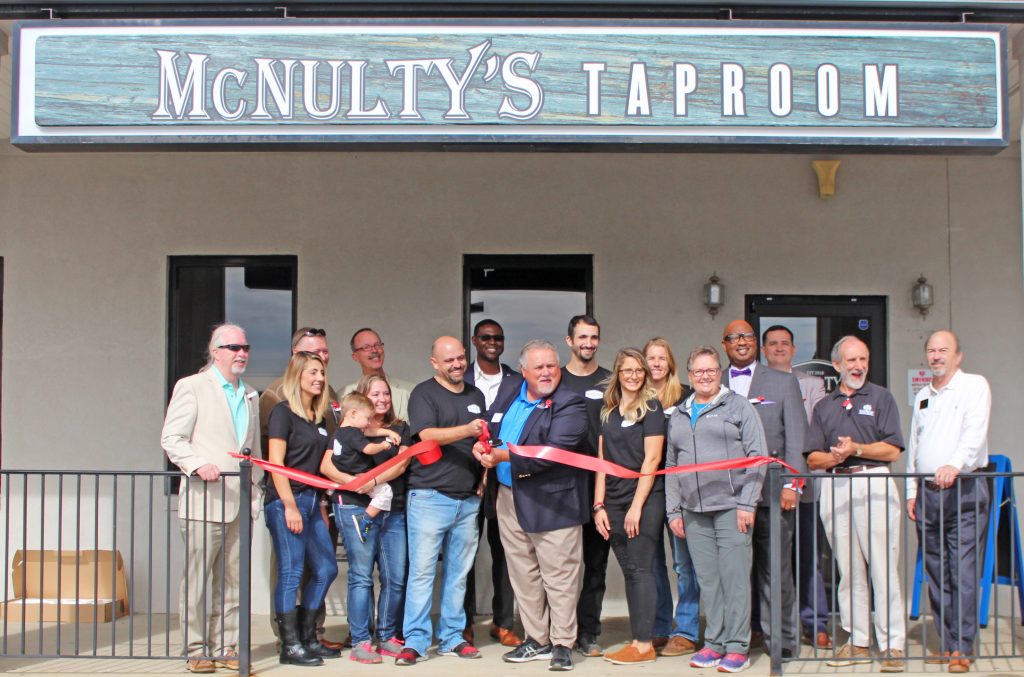
    BLYTHEWOOD – McNulty’s Taproom opened on Nov. 3 with co-owner Larry Phillips and Mayor J. Michael Ross cutting the ribbon. New owners, Phillips and Michael Faulk, state the restaurant features lunch, dinner and 25 beers on tap. The restaurant features daily specials, including Taco Tuesday, Pasta Wednesday and Crab Leg Thursday. Shrimp, smoked wings, fried oysters and pizza are also on the menu. The restaurant is located at 420 McNulty Street, formerly occupied by The Nutty Squirrel. For more information, visit https://www.facebook.com/McNultysTaproom.

  • Ridgeway must now pay for access to Cotton Yard

    RIDGEWAY – The town council of Ridgeway learned last week that it must pay a lease fee to access the town’s own Cotton Yard it purchased earlier this year, essentially making its purchase and control over the property a hollow accomplishment.

    According to information presented during the town council meeting on Nov. 8, the town received an invoice from Norfolk Southern Railroad in the amount of $320. Mayor Heath Cookendorfer told council that upon his request for further explanation of the invoice, he was told that the town is being required to enter into a leasing agreement with the railroad every year from now on to gain access to the Cotton Yard which the town purchased in May at the price of $80,000.

    Whether attorney Kathleen McDaniels, who handled the closing on the property for the Town, knew at the time of the purchase that the easement was not included in the property purchase is now a hot subject of inquiry for the town.

    “This is a situation where we kind of all inherited this issue, so at this point in time I am going to go to the next level to find out why this information was not a part of the (purchase) discussion,” Cookendorfer stated Thursday night.

    The purchase of the .6 acre cotton yard property was a process begun in 2014 by former mayor Charlene Herring. For decades, the town was allowed unrestricted use of the cotton yard, but in 2014, Herring began corresponding with Norfolk Southern about the limitations of its use – without the approval of town council.

    Through the course of 2014 through 2016, Herring contacted the railroad directly regarding a sod truck and several ‘for sale’ vehicles that parked on the property. All contact made by Herring was done against the advice of council, actions that were repeatedly condemned by the panel.

    Because one such user of the property was Rufus Jones, a former political opponent of Herring’s, some openly questioned the motives of Herring’s contact with the railroad. Herring, however, said at the time that she had received questions from members of the community about the vehicles parking on the lot.

    Despite warnings from then-council member Cookendorfer and others on council that Herring was “poking a sleeping giant” by making repeated contact with the railroad about the property, Herring continued.

    In 2016, railroad officials responded to the town with an ultimatum; purchase or get off the property. Norfolk Southern threatened to install a fence to ensure the town could not utilize the property without purchasing it.

    With only three votes from the five-member council in favor of the motion, Herring pushed forward with the purchase just weeks before the election for a new mayor.

    The total cost of the property included approximately $20,000 in survey costs and legal fees which were paid by the town to McDaniels to close the deal. Cookendorfer told the Voice that his office will be drafting a letter to send to McDaniels for clarification on the purchase details.

    In addition, the town has yet to receive the deed to the property, something that McDaniels had said the council would have further information on within 30 days after closing in June. Cookendorfer said his letter to McDaniels would request information on both issues.

  • BHS student published in academic journal

    BLYTHEWOOD – Blythewood High School Junior Abhimanyu Sailesh will present two papers at the prestigious peer-reviewed 2018 International Conference on Computational Science and Computational Intelligence (CSCI’18) to be held in Las Vegas, Dec. 13 – 15.

    The IEEE (Institute of Electrical and Electronics Engineering) Journal, which will publish Sailesh’s papers in the fall of 2019, describes itself as the most reputed world-wide academic publication in the fields of computer science, electrical and electronic engineering.

    Sailesh’s two papers, “Comparison of two image enhancement techniques: Histogram Equalization and Gamma Method” and “High Frequency Emphasis Filter Instead of Homomorphic Filter”, were written in collaboration with Dr. Naima Naheed and two other undergraduate senior students in the department of Computer Science, Physics, and Engineering at Benedict College.

    “My papers getting published is a great achievement because I spent the entire summer working on it,” Sailesh said. “I believe it opens a lot of opportunities for me because I have gotten it published in an adult scientific journal, and I can present it at various conferences.”

    Sailesh has won numerous academic competitions and honors at BHS. He and fellow student Samuel Cathart were recognized at the State Fair last year for winning the IT-ology Innovation Challenge as the state’s top student innovators.

    Sailesh and Cathart created a portable element synthesizer that runs on solar and or water power and can be used for tasks such as charging cell phones. The project was a class assignment, but students were encouraged to submit their results to the IT-ology Innovation Challenge.

    Sailesh also finished as runner-up in the 2017 South Carolina State History Bee as well as the Bowl Championships at North Greenville University in February. Sailesh accomplished these fetes as a one-member team competing against four-member teams.

  • Delinquent Tax Notices run 11/21

    WINNSBORO – Fairfield County’s 2018 delinquent tax notices will make their first appearance inside next week’s issue of The Voice. If you forgot to pay your property taxes, or if you’re hoping to get a good deal because someone else forgot, you can find the listing of properties in next week’s paper.

    Property owners with outstanding bills will have this chance to make good with the Tax Man. But on Dec. 10, the auctioneer takes over.

    That’s when prospective buyers will have the opportunity to bid at the County Courthouse on properties whose owners did not pay their outstanding taxes. Winning bidders will see their money go into an escrow account where it will earn interest for one year. Delinquent property owners will have that year to come up with those back taxes. If they do, the winning bidder keeps the interest. If not, the winning bidder becomes the new property owner.

    Notices will appear three successive weeks – in the Nov. 21, 29 and Dec. 6 issues of The Voice.

  • Council taking first vote on new animal cruelty law

    WINNSBORO – It’s been a rough past few years for Fairfield County animals, with stiff penalties for animal cruelty few and far between.

    Some proposed county level ordinance changes, however, could possibly become law by the end of the year.

    First reading of an ordinance revising the county’s existing animal control laws could come as early as Monday.

    Deborah Richelle, president of the Hoof and Paw Benevolent Society in Blythewood, which worked with Fairfield County on the draft ordinance, said the organization remains hopeful the council adopts the ordinance by year’s end. While Richelle said the suggested improvements are minimal at this point, they are small steps toward tougher laws to protect animals in Fairfield County.

    “It’s been a slow march,” Richelle said. “This would be such a great opportunity to see some of the work come to fruition.”

    Council Chairman Billy Smith said the revised ordinance is still being tweaked, but noted it includes stricter guidelines relating to tethering, housing and transporting animals.

    The proposed changes do not outlaw tethering altogether, but they do set some minimal guidelines that better protect animals and give law enforcement more guidance when responding to complaints, Smith said.

    “It says what the length and weight of a tether needs to be so that you don’t have situations such as a Chihuahua with a 20-pound chain that’s two feet long on them, for example,” he said.

    Paula Spinale, also of Hoof and Paw, has been working with the county as well. She remains optimistic that the proposed ordinance will pass, crediting Smith for helping to keep the process moving forward.

    “There are so many dogs that are on chains 24/7 in this area,” Spinale said. “Somebody needs to help them, to fight for them.”

    Monday night’s first reading will be in title only, meaning council members will vote on the measure without any formal discussion. Three readings are required to pass.

    Public comments, however, can be made. Council agendas routinely have two public input sessions, the first devoted to agenda items in which a public hearing hasn’t been scheduled, such as the animal cruelty ordinance.

    Speakers are allowed three minutes per person, and the session is limited to 30 minutes.

    Hoof and Paw is hoping for strong representation at the meeting.

    “We’re excited and hopeful for this what this first reading is making possible,” Richelle said. “We certainly will be there, supporting endeavors to get this passed through.

    Smith said he hopes Fairfield County’s effort will inspire state lawmakers to enact stronger animal control laws.

    “It [the ordinance] is telling the state, ‘we wish you would address these things,’” Smith said. “County ordinances, by law, can’t penalize people the way state law can. The state can charge with felonies, for example, and Counties can only charge with misdemeanors. If the state would address it, they could do much more to solve more of these issues.”

    County Council meets at 6 p.m., Nov. 12 at the County building, 350 Columbia Road, Winnsboro 29180.

  • Bell, Gilbert win County Council seats

    No surprises in school, Dist. 41 races

    WINNSBORO – Even though Fairfield County logged an impressive 61.24 percent voter turnout Tuesday, there was little evidence that voters were looking for a change in the direction of the county’s governments.

    All the county council and school district incumbents were returned to their seats with the exception of County Councilman Dan Ruff (District 1) who was edged out by Moses Bell with 651 votes (53.98 percent) to Ruff’s 546 votes (45.27 percent). There were nine write-in votes (.75 percent).

    In county council races, the other new face to emerge from Tuesday’s election is Clarence Gilbert who replaces District 7’s County Council Chairman Billy Smith. Smith, who announced in June that he would not seek re-election after his term ends on Dec. 31, said he will be moving to Baton Rouge, LA where his wife, Rachel, is a professor at Louisiana State University.

    Gilbert, with 400 votes (40.77 percent), bested two opponents – Lisa Brandenburg with 356 votes (36.16 percent) and Jana Childers with 197 votes (20.08 percent). There were 29 write-in votes (2.96 percent).

    Incumbent Mikel Trapp, Sr. retained his District 3 county council seat with 618 votes (58.19 percent) over challenger Peggy Swearingen’s 439 votes (41.34 percent). There were five write-in votes (.47 percent) in that race.

    Incumbent Doug Pauley, District 5, won by the largest margin of all the county council candidates with 586 votes (66.47 percent) over Matthew Seibles, Jr. with 304 votes (33.97 percent) and five write-in votes (.56 percent).

    In the school board election, all four incumbents were returned to their seats.

    Incumbent Sylvia Harrison, District 1, captured 796 votes (65.89 percent) to turn back her challenger, Elliott Qualls with 397 votes (32.86 percent) and 15 write-in votes (1.24 percent).

    With 621 votes (56.20 percent), District 7 school board incumbent Darreyl Davis fought off opponent Herb Rentz who had 470 votes (42.53 percent). It was the second time this year Davis and Rentz had run for the seat. Davis defeated Rentz in February in a bid to serve out the last few months of Board Chairwoman Beth Reid’s term that was cut short by her death last winter.  There were 14 write-in votes in the Tuesday race.

    School board incumbents for District 3, Henry Miller, and District 5, Carl Jackson, were challenged only by write-ins. Miller received 773 votes (98.36 percent) with 13 write-in votes (1.65 percent), and Jackson received 756 votes (97.95 percent) with 16 write-in votes (2.05 percent).

    McDaniel

    In the race for the District 41 House seat currently held by MaryGail Douglas who was defeated by Annie McDaniel in the June Democratic Primary, McDaniel received 5,923 votes (74.63 percent) to United Citizen’s candidate Fred Kennedy’s 1,941 votes (24.46 percent). There were 73 write-in votes (.92 percent) in the race.

    Sixth Circuit Solicitor Randy Newman, Jr. was unopposed Tuesday, taking 4,563 votes (97.42), with 121 write-in votes.

    Claudia Dean won the race for the Rocky Creek Watershed, with 40 votes (50.63 percent) over William Wishert with 37 votes (46.84 percent).

    In uncontested county races:

    County Treasurer Norma Branham, 7,975

    County Auditor Peggy Hensley, 7,682

    Probate Judge Pam Renwick, 7,793

    Soil and Water District Commission, Eric Cathcart, 4,422

    Jackson Mill Watershed and Wateree Creek Watershed – Write-in results not available at press time.

    All results are unofficial until certified by the County Election Commission Friday morning.